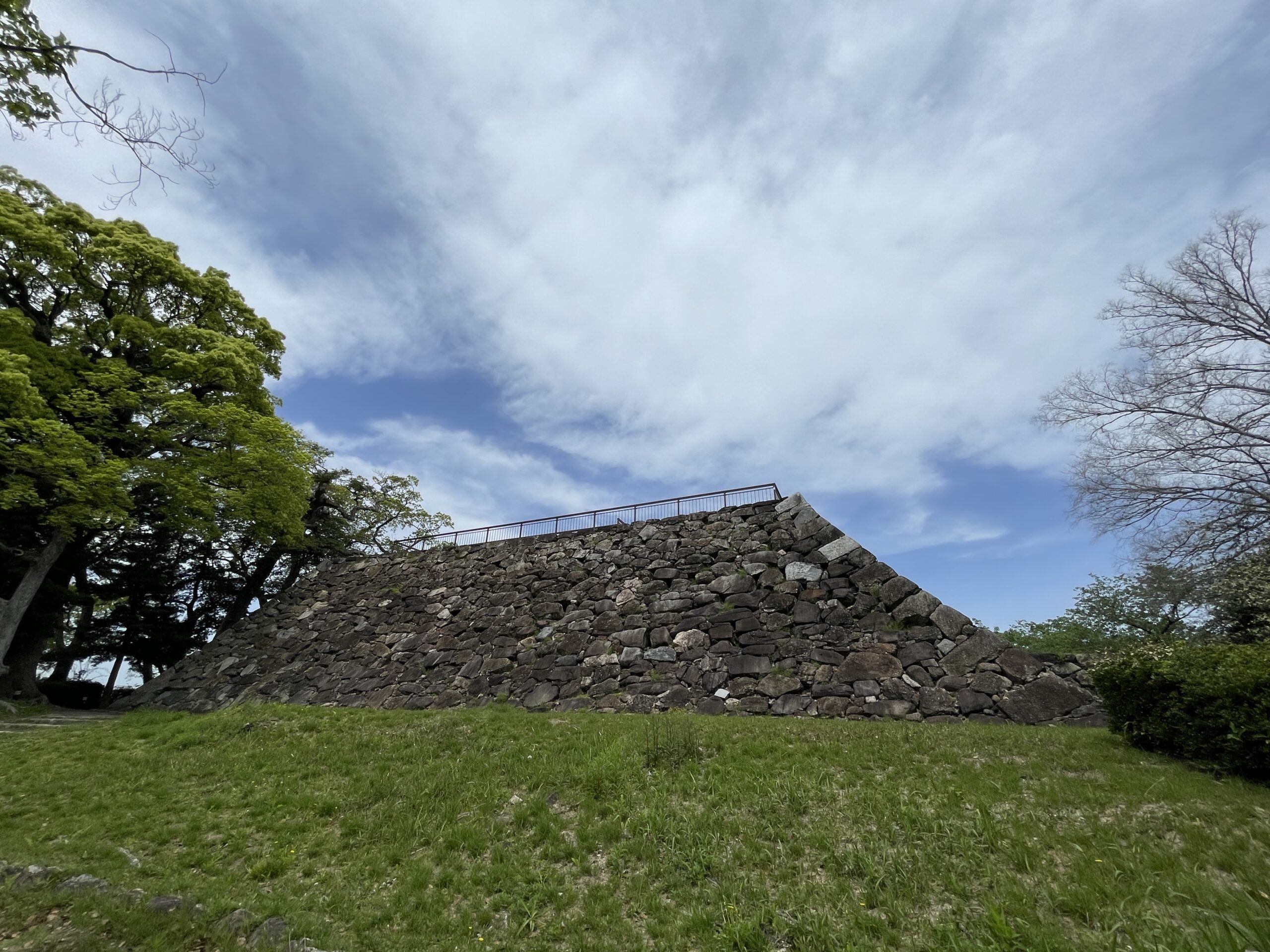
No keep — but the stone walls say more than enough. The nozurazumi masonry here was larger and sturdier than I expected, and looking up at it gave me that happy, wide-eyed feeling.
🗺️ See the walking route in photos → Castle Hopping: Fukuoka Castle Route Map (April 2026)
More from this place → Castle Hopping: Fukuoka Castle (June 2026)
What Kind of Castle Is Fukuoka Castle?
Fukuoka Castle was built by Kuroda Nagamasa (黒田長政), who received 520,000 koku of Chikuzen domain as reward for his role at the Battle of Sekigahara. He built it alongside his father, Kuroda Kanbei (黒田官兵衛 [Kanbei]), renowned as a master castle builder. Construction ran from 1601 (Keichō 6) and took about seven years.
Did this castle ever have a tenshu (天守 — the iconic main tower)? It’s still an open question. Some say one existed before being demolished, though no definitive proof remains today. As I walked the ruins, picturing “might the tenshu have stood right here?” turned out to be genuinely enjoyable.
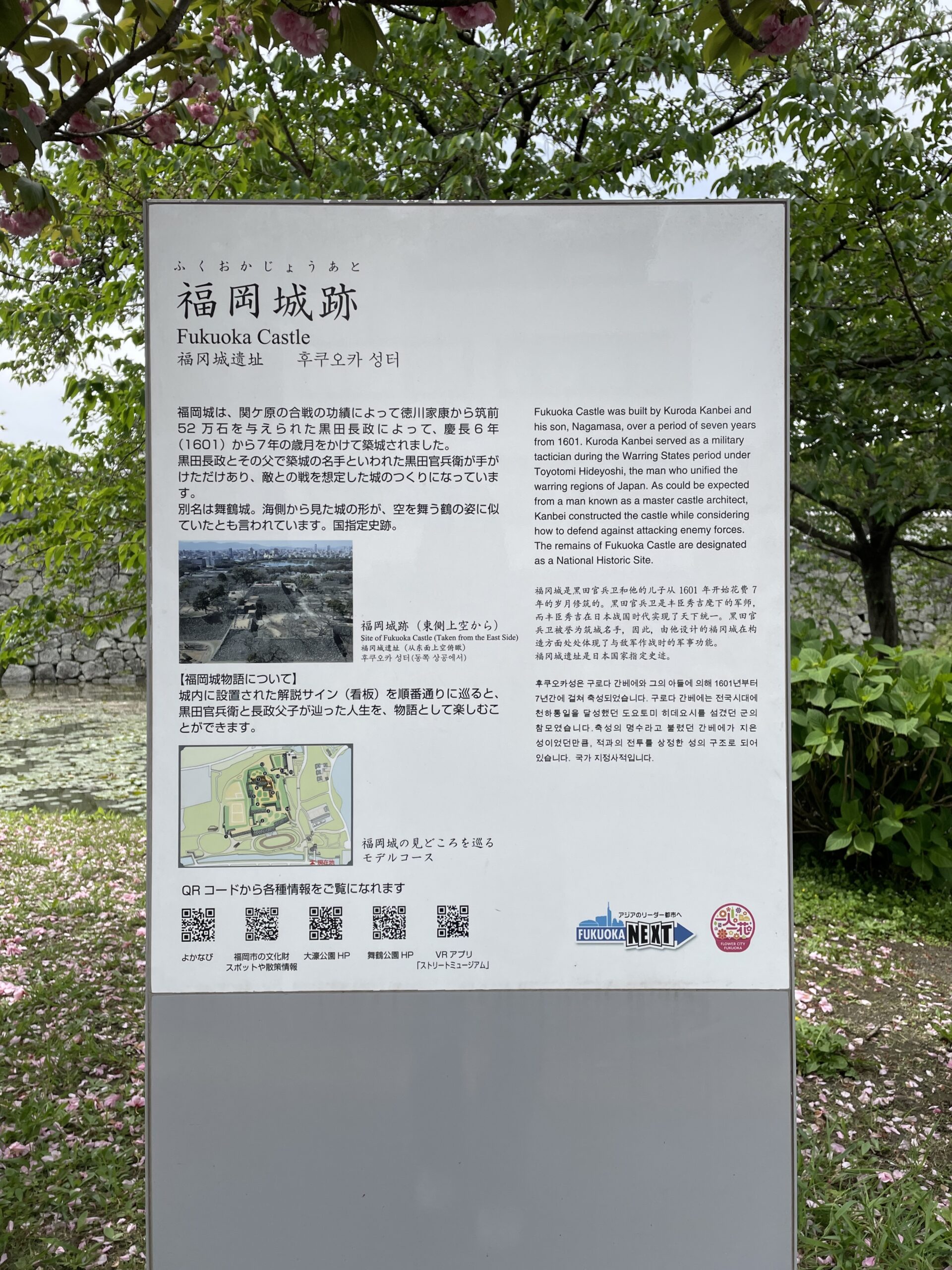
The nearest station is Ohori Koen (大濠公園) on the Fukuoka City Subway Kuko Line. There’s also a route from Akasaka station, depending on which areas you plan to visit. I’d recommend checking in advance — the site is enormous.
Stone Walls That Overwhelm — The Restoration Full of Love
Simply Standing and Looking Up at the Nozurazumi Stone Walls
The first moment I stood in front of the walls, I was genuinely surprised by how large and solid they were. Most are built in the nozurazumi (野面積み [nozurazumi]) style — stacking natural, rough-hewn stones without shaping them — and each individual stone, different in form, is firmly set in place.
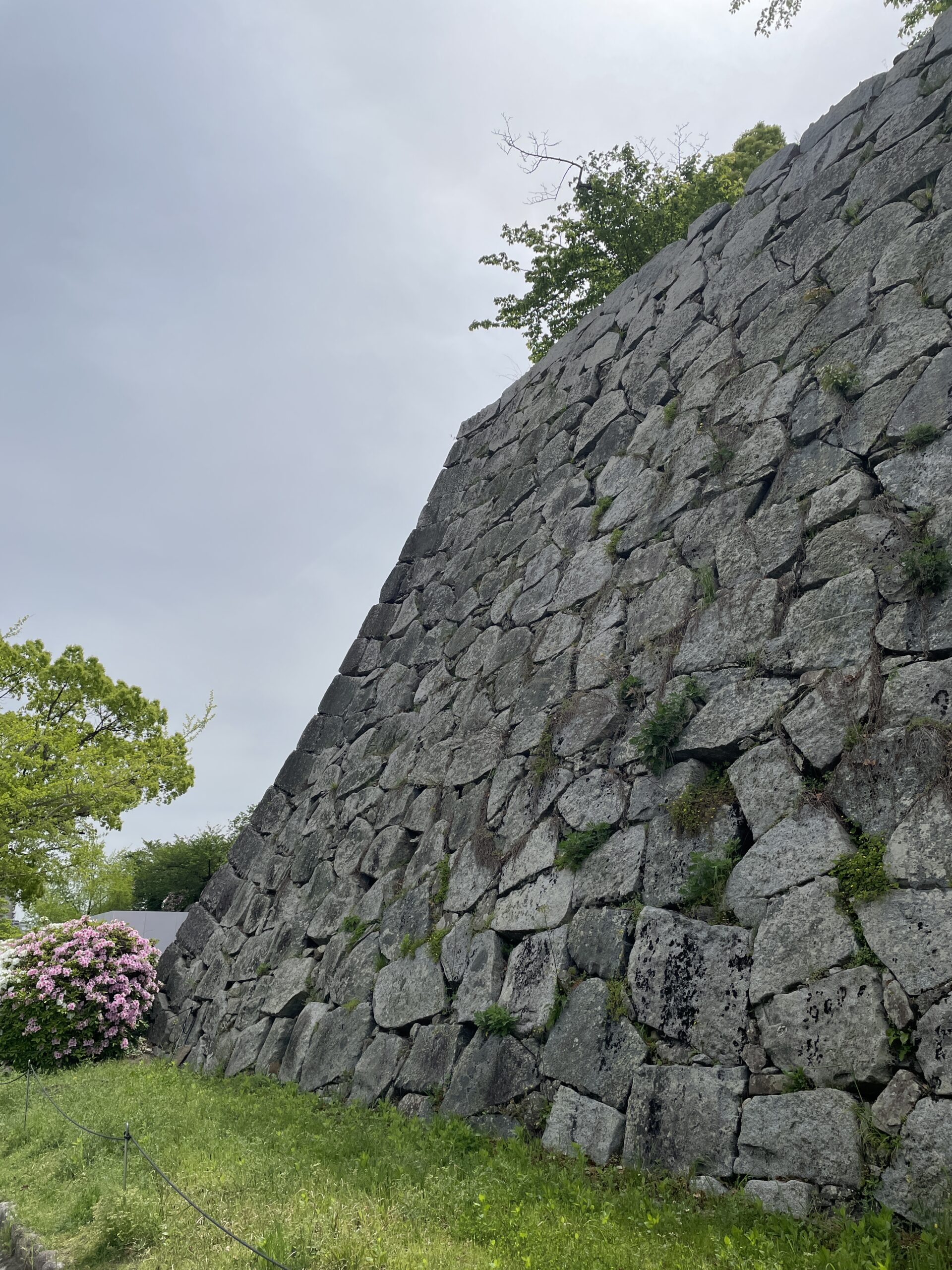
The slope stretches upward, well beyond arm’s reach. I’m no castle expert, but knowing that human hands piled all of this stone was enough to make my chest feel full.
I imagined climbing it. I did not succeed. (laughs)
A Repair Site That Made Me Genuinely Excited
Walking along, I came across a section of stone wall undergoing repair. The craftspeople seemed to be off for the day, so no work was happening — but looking down at the stones laid out in rows below was, unexpectedly, just as enjoyable.
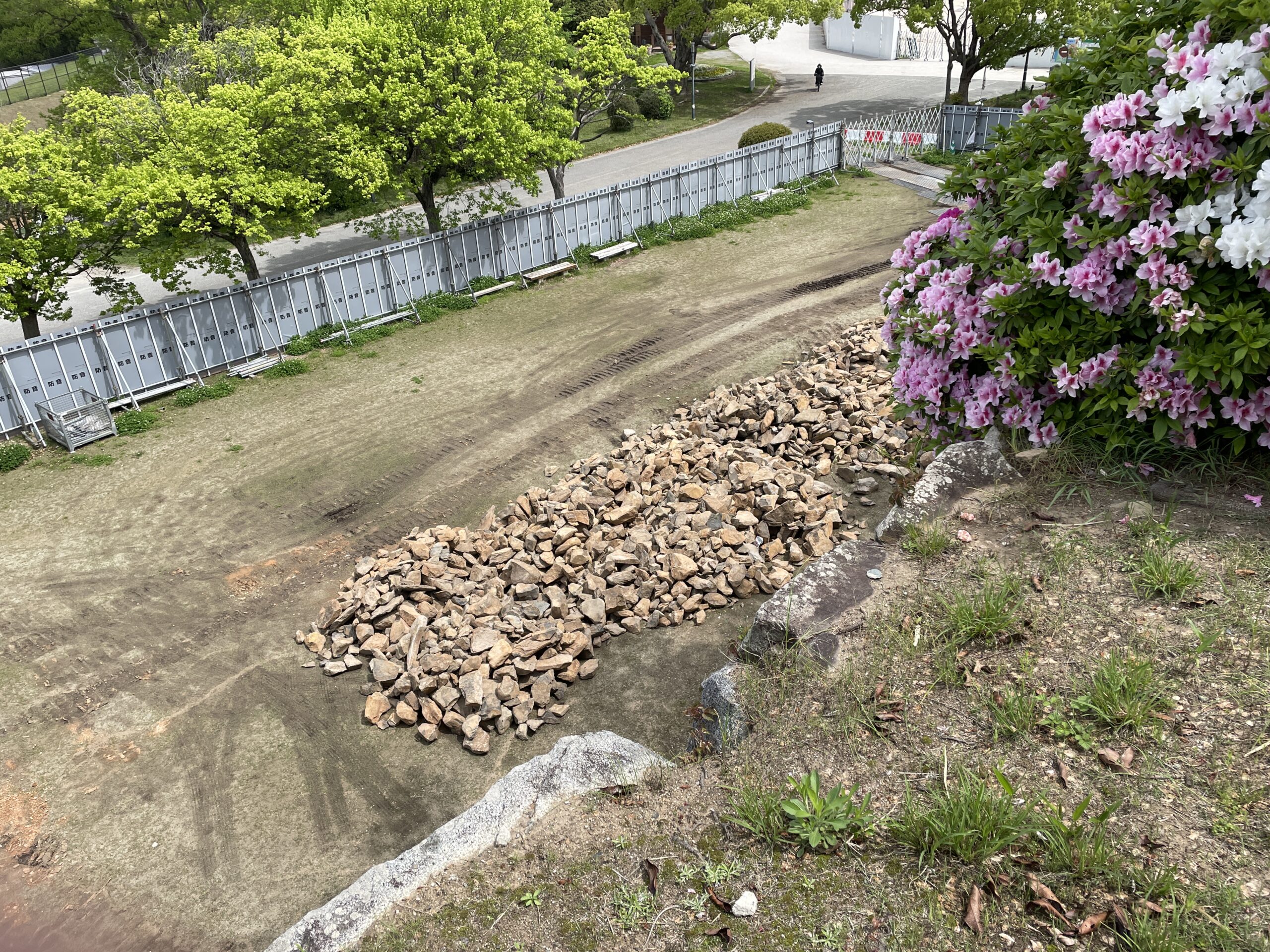
I have no idea how they figure out which stone goes where, but that uncertainty only made me more curious. “Next time I want to spy on them actually working,” I thought. Encountering a place mid-process, not yet complete, is one of the real pleasures of solo travel.
The Shiomi Yagura: Love for Fukuoka Castle, Made Visible
The newly restored Shiomi Yagura (潮見櫓 [Shiomi Yagura]) is another spot I’d urge you to visit.
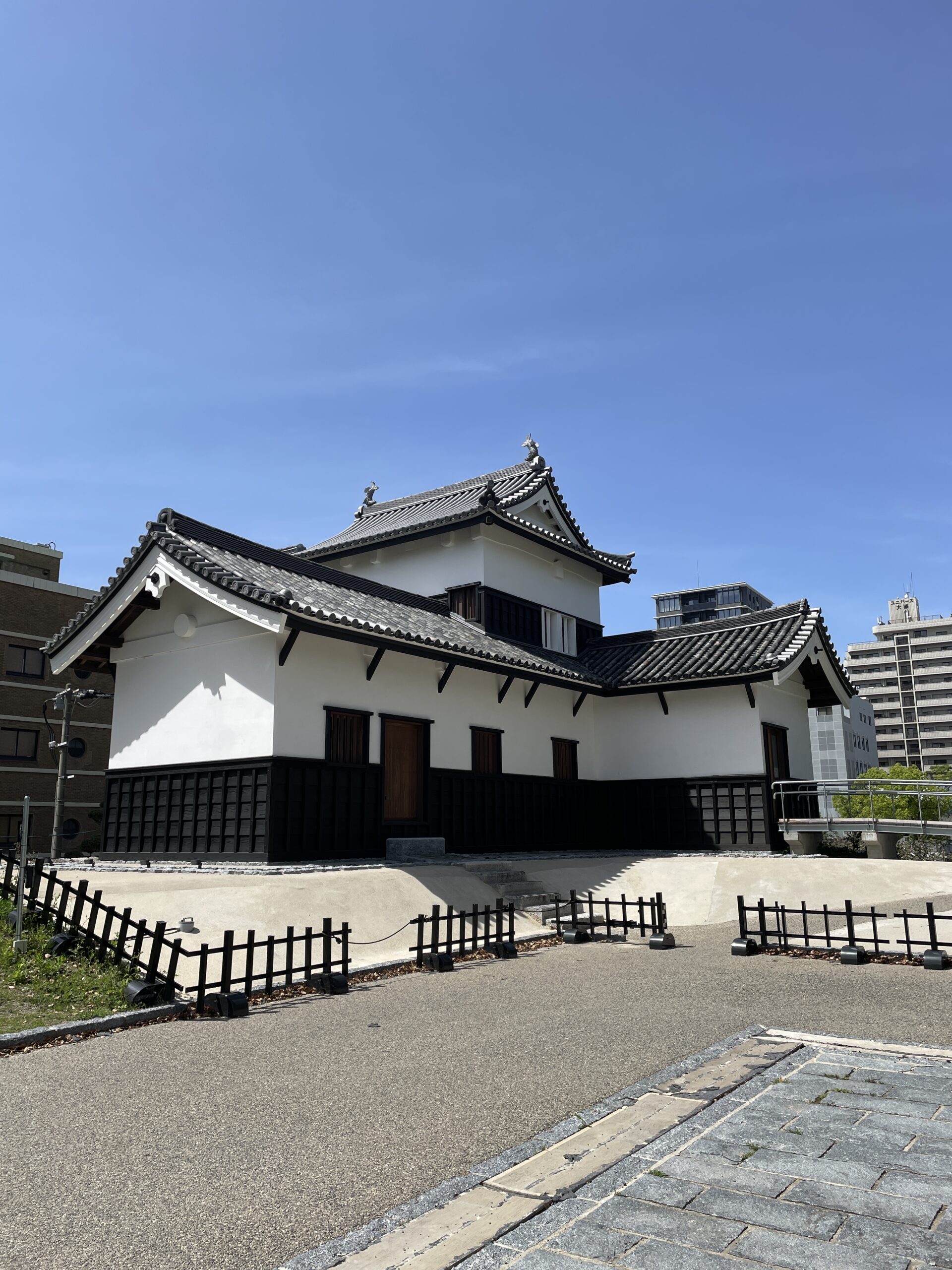
It was rebuilt using traditional construction methods while also incorporating carefully preserved original timber. Even the new wood has a kind of dignity about it — but when you know that old material was lovingly reused alongside it, the care the restorers have for Fukuoka Castle seeps through.
It turns out that when the ridgepole was raised, a plaque in the ceiling identified this structure as the Shiomi Yagura. What had long been called the Tsukimi Yagura (月見櫓 [Tsukimi Yagura] — moon-viewing turret) for years was actually this one — and what everyone thought was the Shiomi Yagura turned out to be something else entirely. Learning through research and making new discoveries is part of what I love about visiting castles.
A note: both the Shiomi Yagura and the Tamon Yagura (多聞櫓 [Tamon Yagura]) have limited interior opening hours, so I’d recommend checking in advance.
Traveling Back in Time with Street Museum
The Street Museum app was a lot of fun.
Point your phone at various spots and CGI reconstructions of the buildings that once stood there appear, with commentary. Rather than “wow, amazing technology,” it’s the quieter “oh — what was this place like?” that lingers. You find yourself glancing at it repeatedly.
Even with nothing visible in front of you, having a reconstructed image there makes the space feel inhabited, as if you can sense the presence of people who once lived there. It expanded the joy of walking castle ruins considerably.
Four Gojo-in Stamps — and the Clear One Is Absolutely Worth It
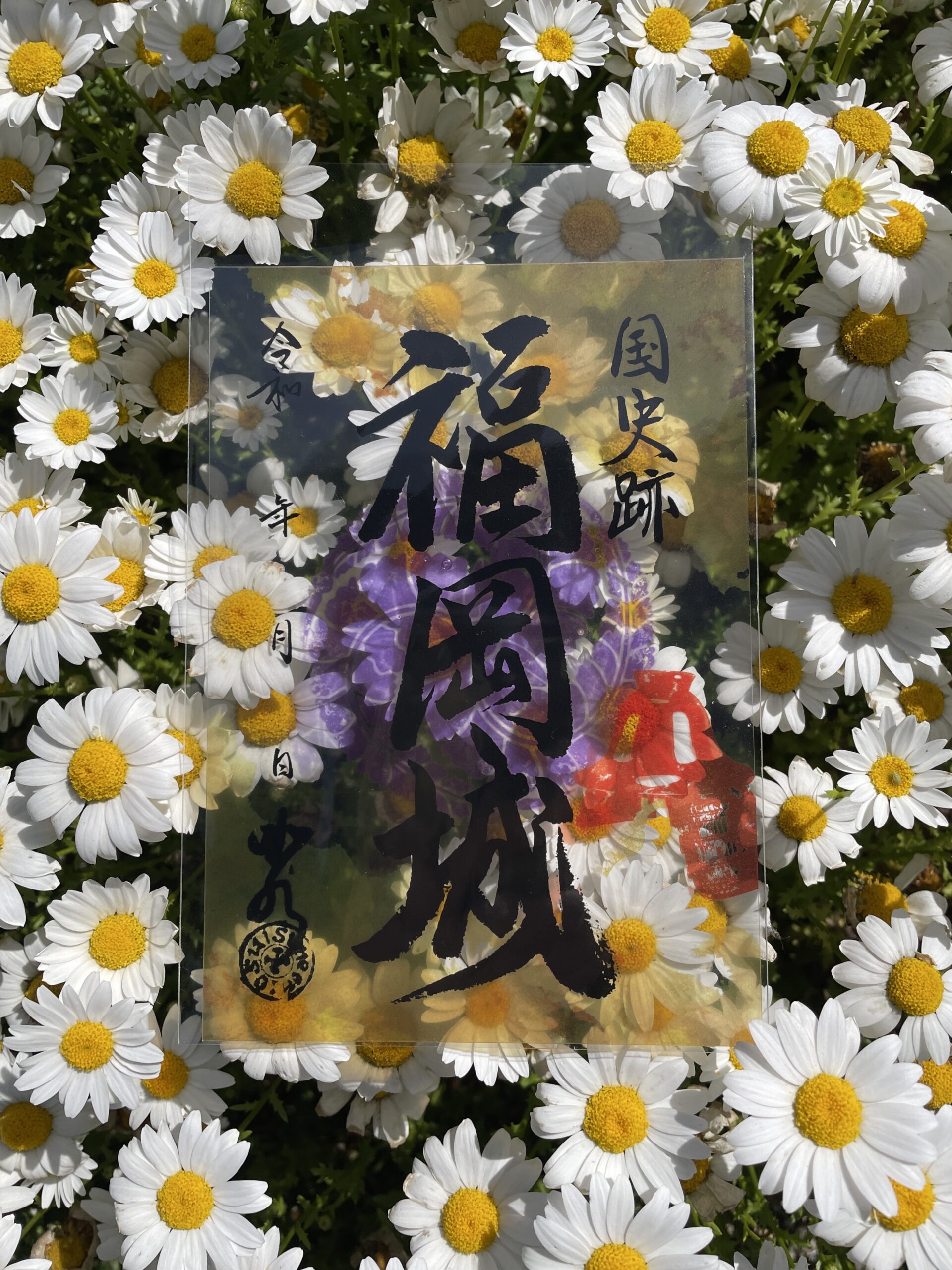
The year-round gojo-in (御城印 [gojo-in] — decorative castle stamp) selection includes four designs: two standard paper versions (Kuroda Kanbei and Kuroda Nagamasa), a silver-foil Nagamasa, plus a clear-film Kanbei. I went ahead and collected all four.
I was on the fence about the clear version, but a staff member told me: “Lots of visitors hold it up against the castle — their favourite spot — then photograph through it.” That settled it immediately. I tried it right away.
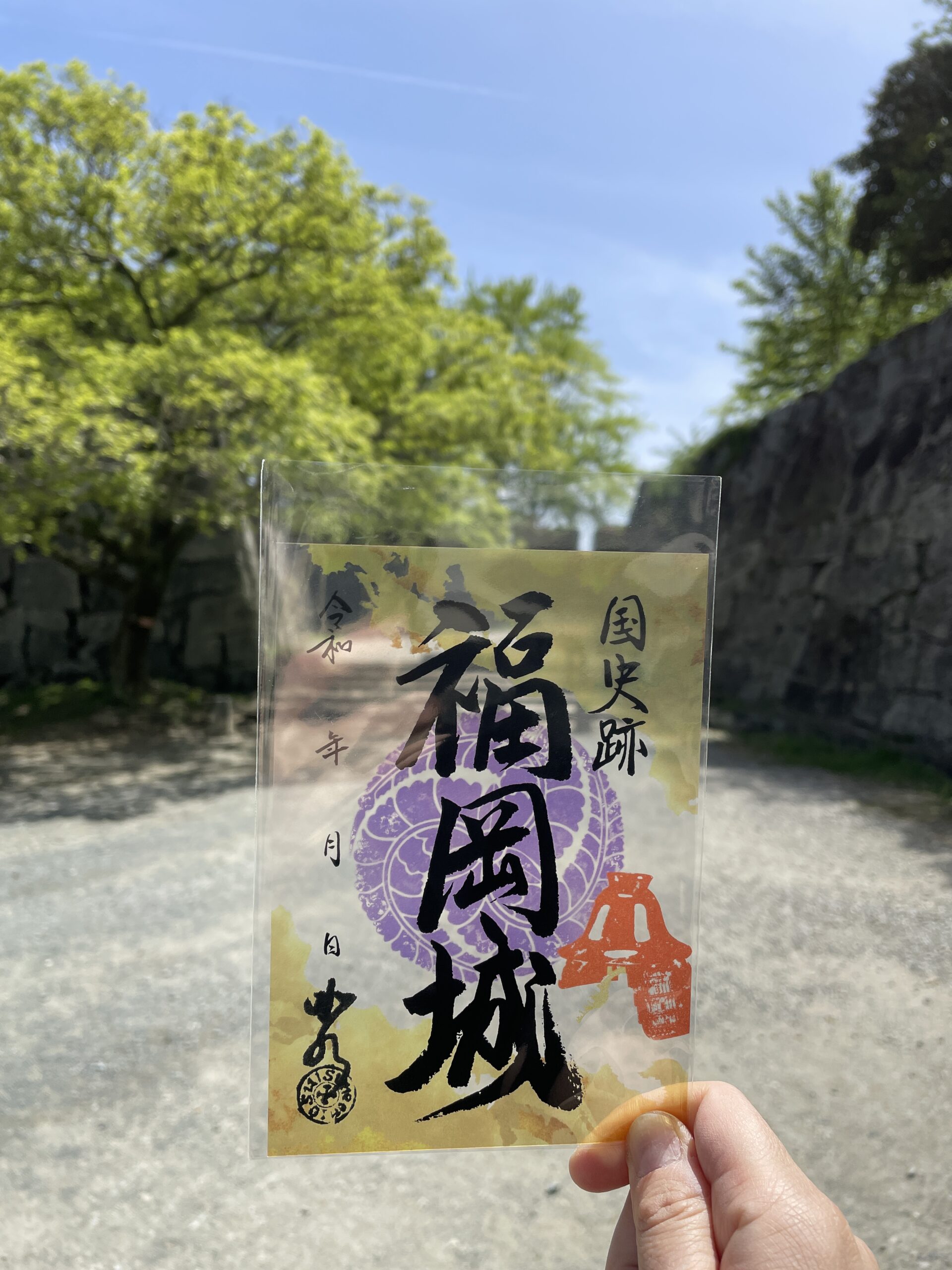
First: the stone walls as backdrop. Then: the flower beds. Different backgrounds, dramatically different impressions — it’s really enjoyable. If you find a clear-film gojo-in for sale, please try it — you won’t regret it.
Final Thoughts
No keep, but the stone walls speak volumes. Fukuoka Castle Ruins was larger than I’d expected and entirely pleasant to wander through. Relatively few crowds, and I could take in the stone walls and the moat at my own pace — that was a genuine pleasure.
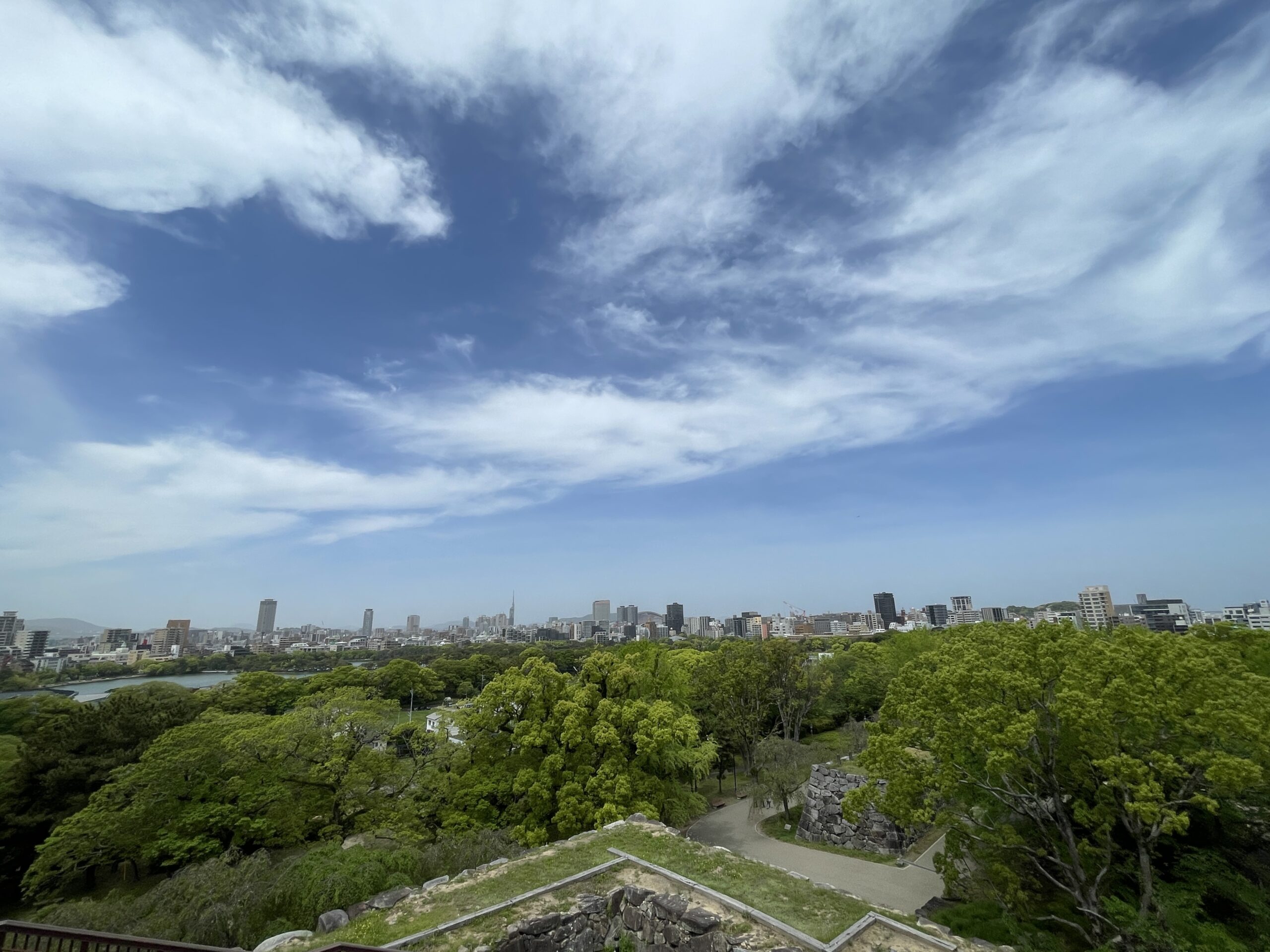
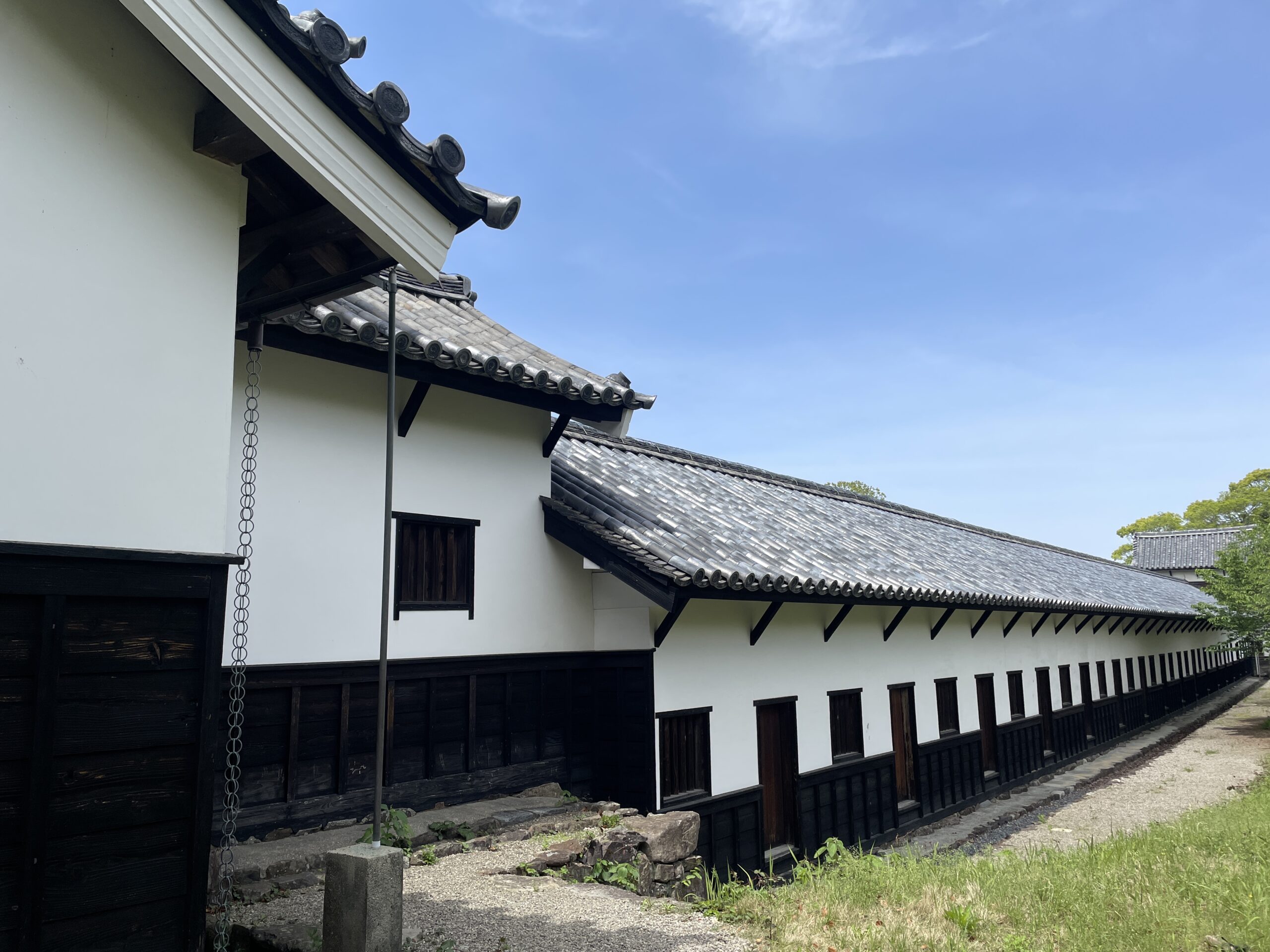
The Tamon Yagura is tucked away in a corner, and perhaps for that reason, there was an almost unsettling silence — barely another person around.
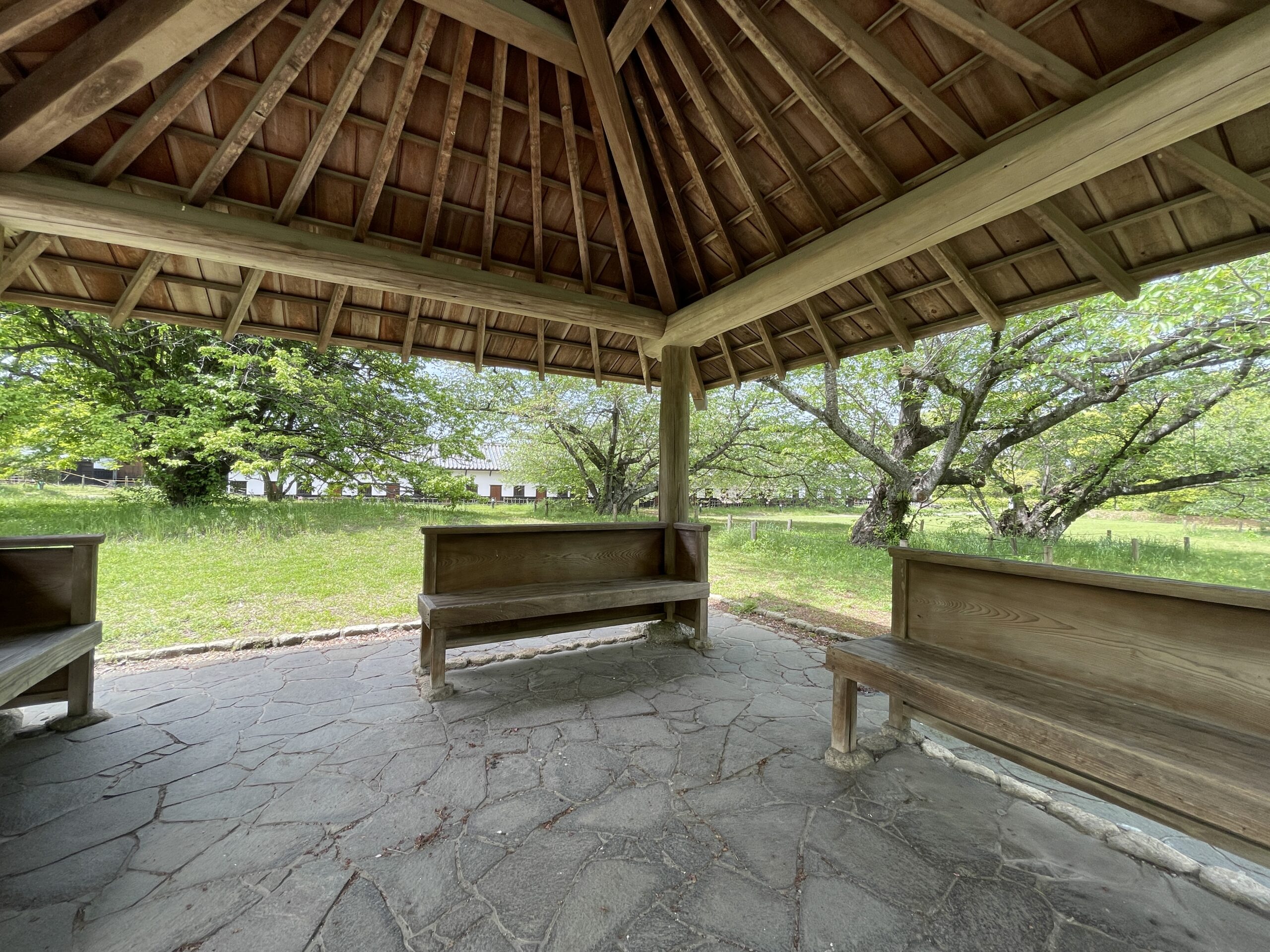
I sat on a nearby bench alone, drank tea, and rested for a while. Frankly luxurious.
I ran out of time on this visit and couldn’t make it to Fukuoka City Art Museum or Ohori Park — those are for next time. I’d also love to sneak a look at the craftspeople actually at work on the stone wall repairs.