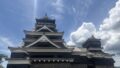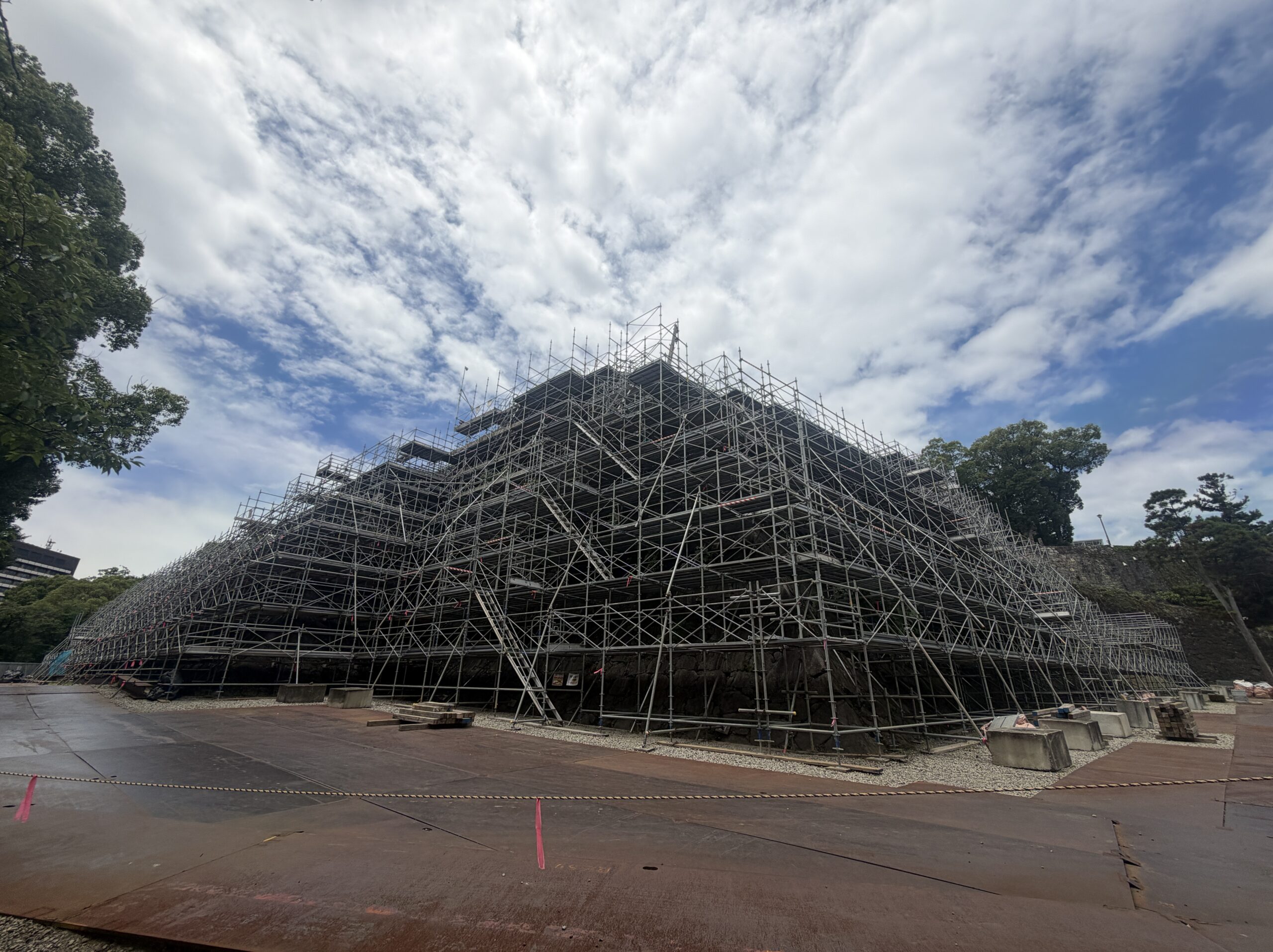
What stayed with me most wasn’t the keep, or the stone walls, but the sight of the restoration workers quietly getting on with their job. Watching the fallen stones being returned, one by one, to in which they belong — I got to be there for a little of that process. (The stone walls are wonderful too, mind you — I do love them…) And yes, today was another great one.
See the walking route in photos → Castle Hopping: Kumamoto Castle Route Map (June 2026, Day 2)
What kind of castle is Kumamoto Castle?
It was built by Kato Kiyomasa, a master of castle construction, and is famous for being all but impregnable. The more you learn, the more “impregnable” starts to feel like an understatement — even just walking the outer perimeter, you sense you’d be picked off long before you got close. Kumamoto Castle is sometimes counted among Japan’s three great castles, and it is vast. It suffered terrible damage in the 2016 Kumamoto earthquake, and restoration is still very much under way.
If you only want to see the keep, you can manage it in a day. But try to walk the stone walls and moats as well, and a single day is nowhere near enough. In the end it took me two.
Stones waiting their turn, and a site finally in motion
The first thing to catch my eye — again, after the day before — was the fallen stones from the walls. Each one tagged with a number, lined up in neat rows alongside black sacks and backing stones (guri-ishi, the smaller fill stones). The tags record exactly in which each stone came from, so it can be returned to its original spot. The patience it must take is dizzying. (More on this in part one → Castle Hopping: Kumamoto Castle (June 2026, Day 1))
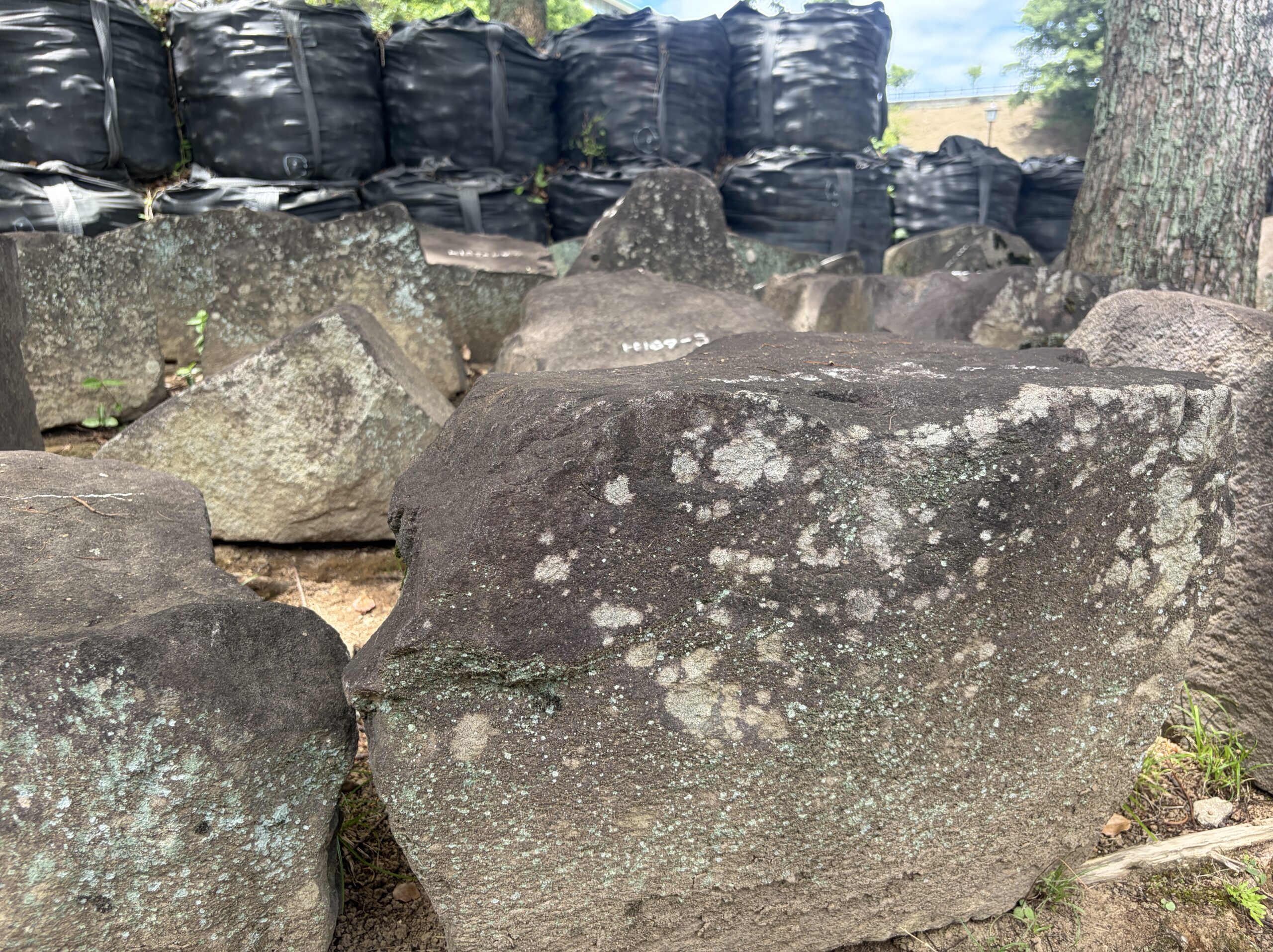
An enormous number of stones, waiting quietly as if queuing for their turn. The sight alone was enough to fill me up.
Then on to Iida-maru. When I visited Fukuoka Castle, I’d written that “next time I’d love to sneak a look at the work actually in progress.” Today, that wish came true. A crane was running; workers were handling stones. You can’t see inside the temporary roof, but this — this is a site in motion.
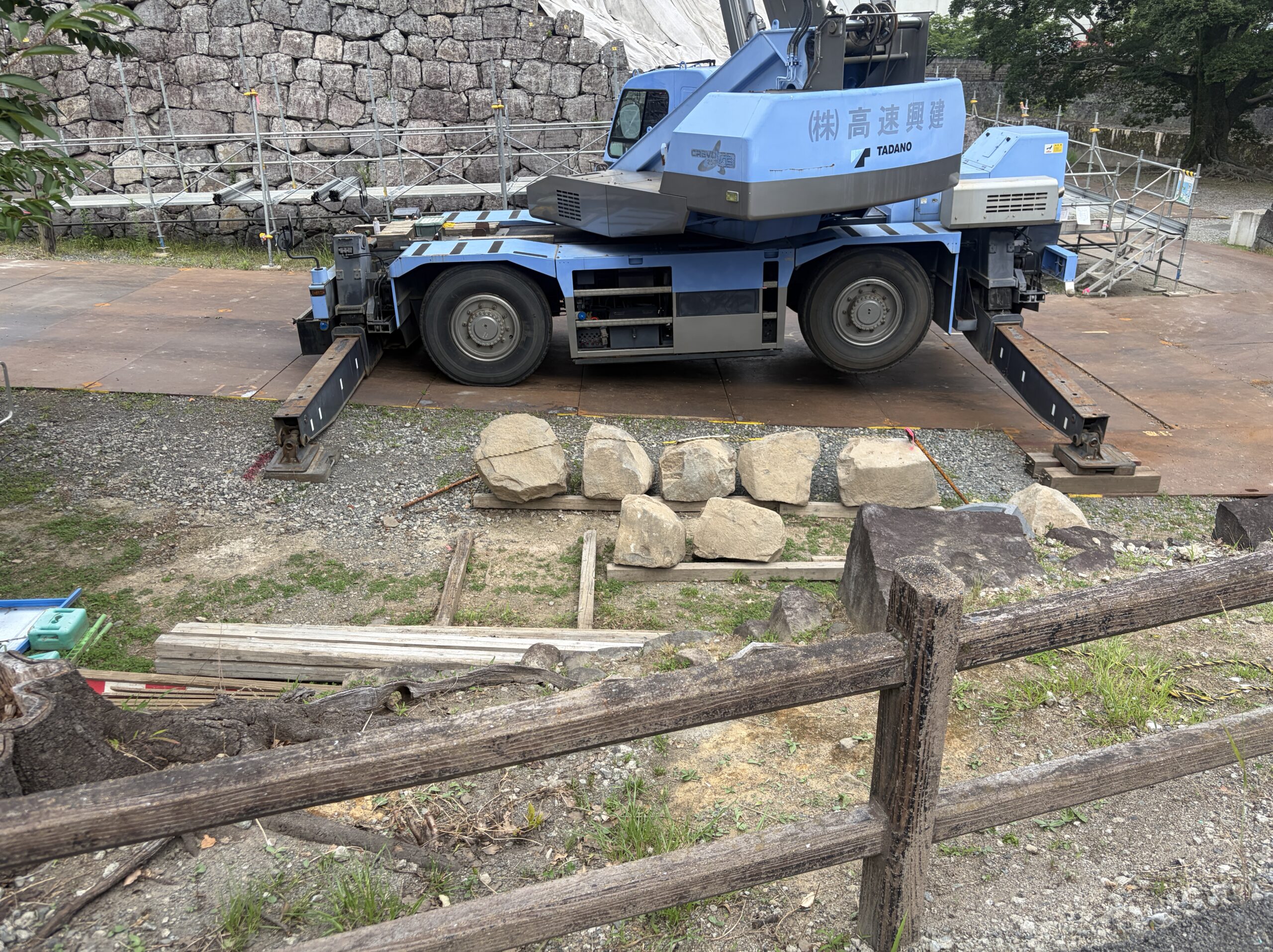
Right beside it, neatly dressed stones were lined up as if waiting to be placed. Maybe one of those stones will return to the wall soon. The thought warmed me right through. Some stretches looked almost ready for the next stone.
Inside the keep: so much I didn’t know
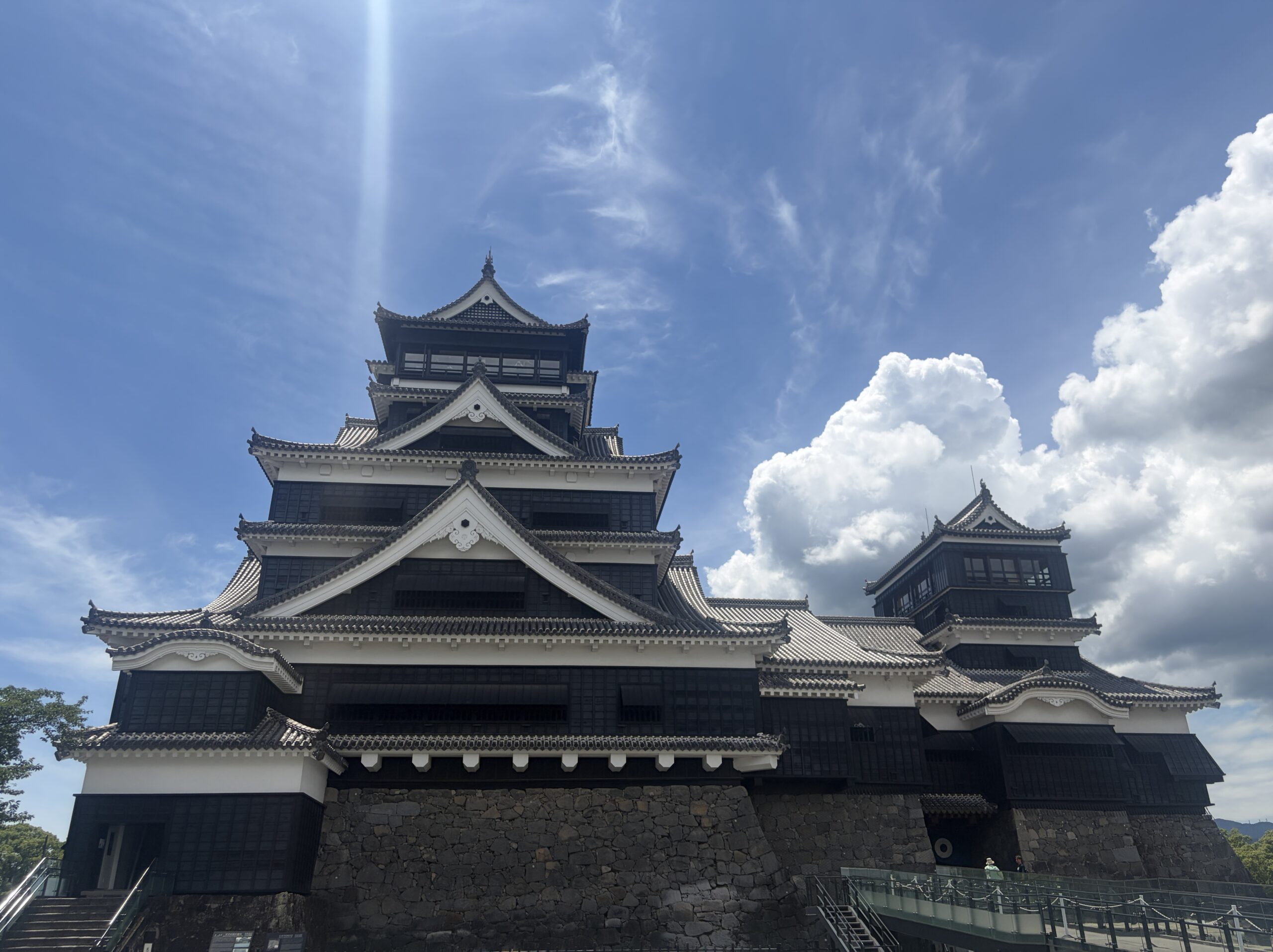
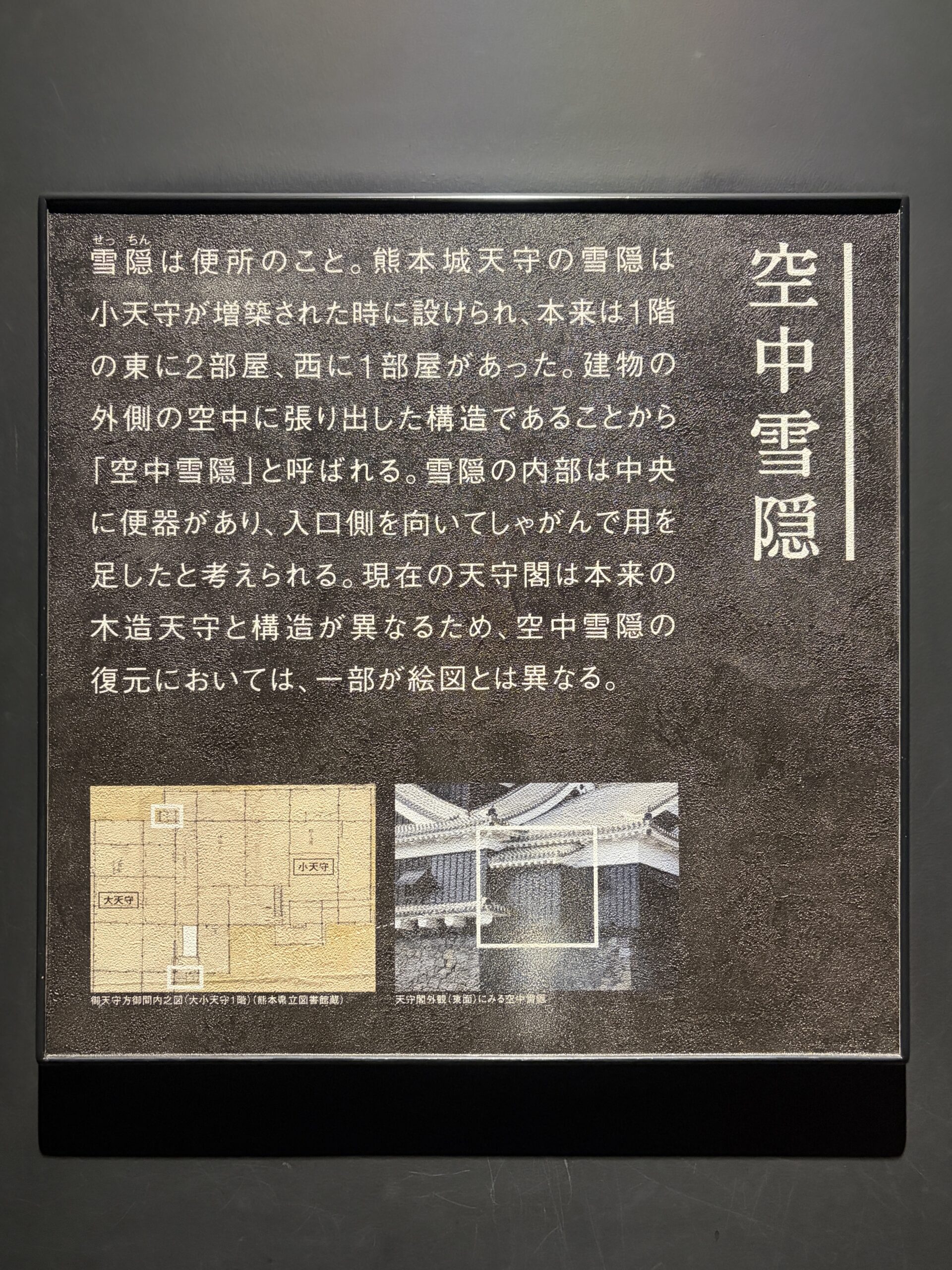
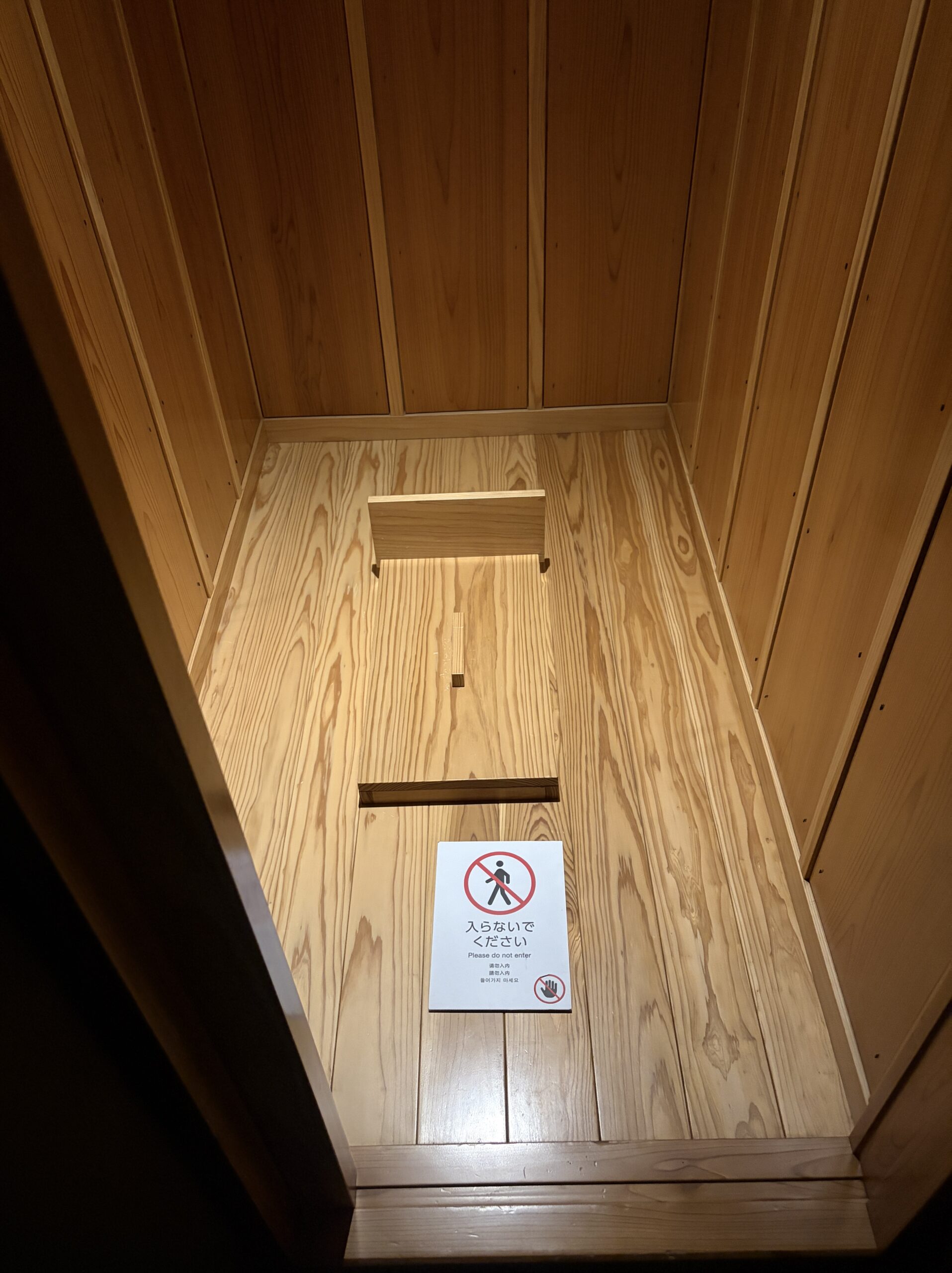
The exhibitions inside the restored keep are so rich that reading everything would take hours. The kuchu-secchin (“aerial privy”, a toilet cantilevered out into open air beyond the building) was a particular delight. (It actually featured on a recent episode of the NHK programme Bura Tamori, with the presenter Tamori visiting it — I was thrilled to have stood in the same place.) That said, the brand-new cypress cubicle didn’t look remotely like somewhere you’d actually use, which felt a touch odd (laughs).
The view from the keep is splendid, too — except I got so absorbed in looking down at the nawabari (the overall layout and design of the castle) rather than the townscape that I barely took any photos of the scenery. I’d meant to picture Kato Kiyomasa standing here declaring “what a view,” but I was far too busy with the layout (laughs).
Old photographs, laid over the now
The keep’s displays included old photographs of Kumamoto Castle taken back in the Meiji era. I went hunting through my camera roll for shots from the same place and angle, to set the two side by side. Even if you can’t stand in exactly the same spot, when the corner of a stone wall or the line of a turret lines up, that alone is a quiet joy.
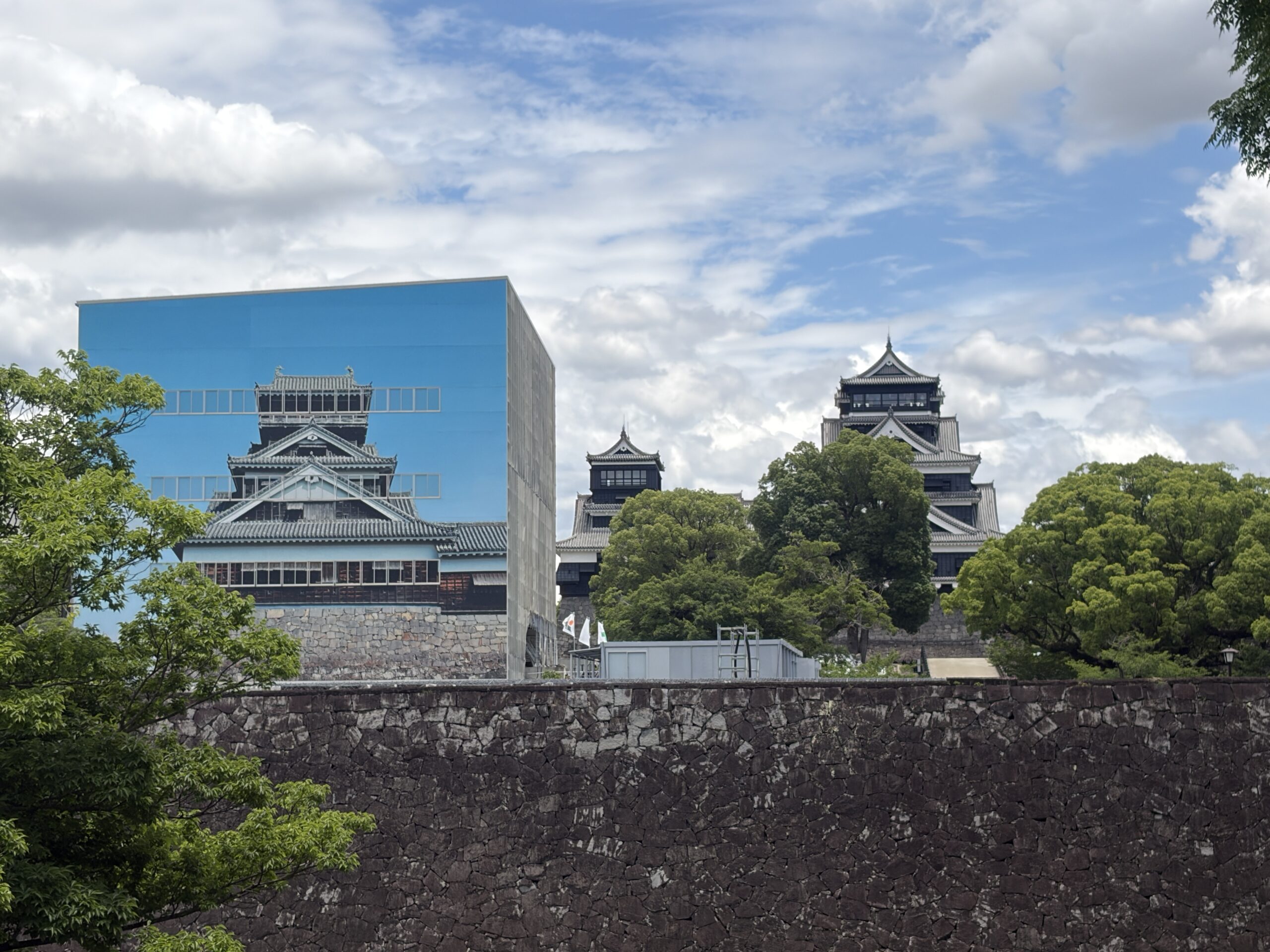
What’s changed, and what remains. Taking another wander after looking at the old photos, the layers of time across the castle grounds felt that much more vivid.
I became a reconstruction castle lord
This time I made a donation at the Fukko Joshu (literally “reconstruction castle lord”) office beside the rest area in the Ninomaru plaza, and signed up properly. I’d actually tried the day before, but they only take cash and I had none on me… so I came back with cash in hand, and off to the office I went.
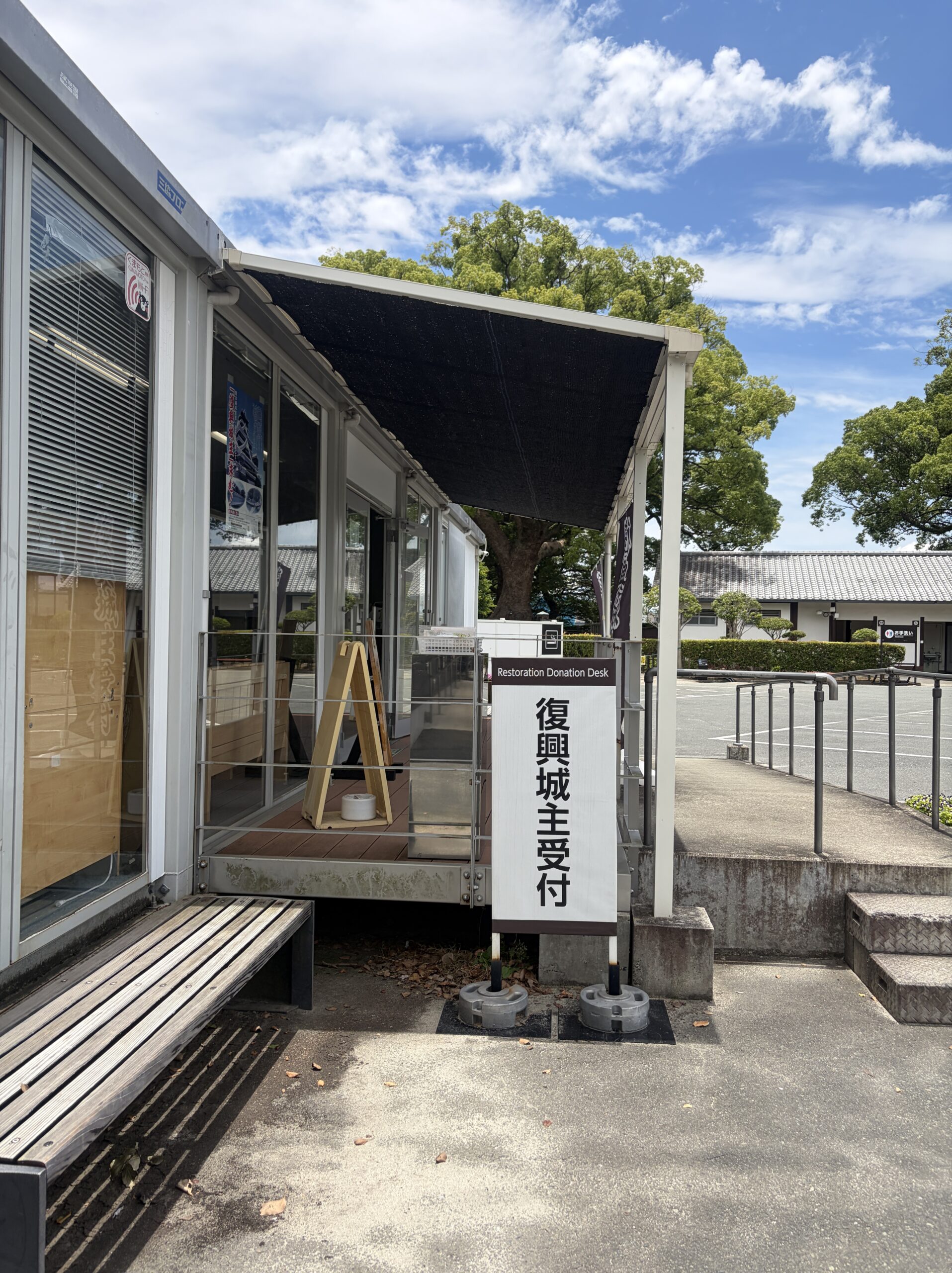
I’d heard that a digital donor board is shown on a monitor on the fourth floor of the keep, so I went straight up to try it — only my name hadn’t appeared yet. Well, of course not. I’d only just signed up (laughs). One more thing to look forward to next time.
If even a little of it helps the restoration along, that makes me happy. Rooting for this place, wholeheartedly.
Final thoughts
If it were only the keep, perhaps you could breeze through. But once I started taking my time over the stone walls, the moats and the turrets, two days still weren’t quite enough — that’s how vast this castle is. There were quieter corners and unhurried stretches of time, too, so I could look around at my own pace, which was lovely.
Ten years on from the earthquake. Recovery is inseparable from the Kumamoto Castle of today. The fallen parts, the mended parts — all of it together is what makes today’s Kumamoto Castle. Those stones, waiting their turn, going back one by one to in which they belong — I’d like to keep returning to see how the story unfolds. As a reconstruction castle lord, naturally (laughs).