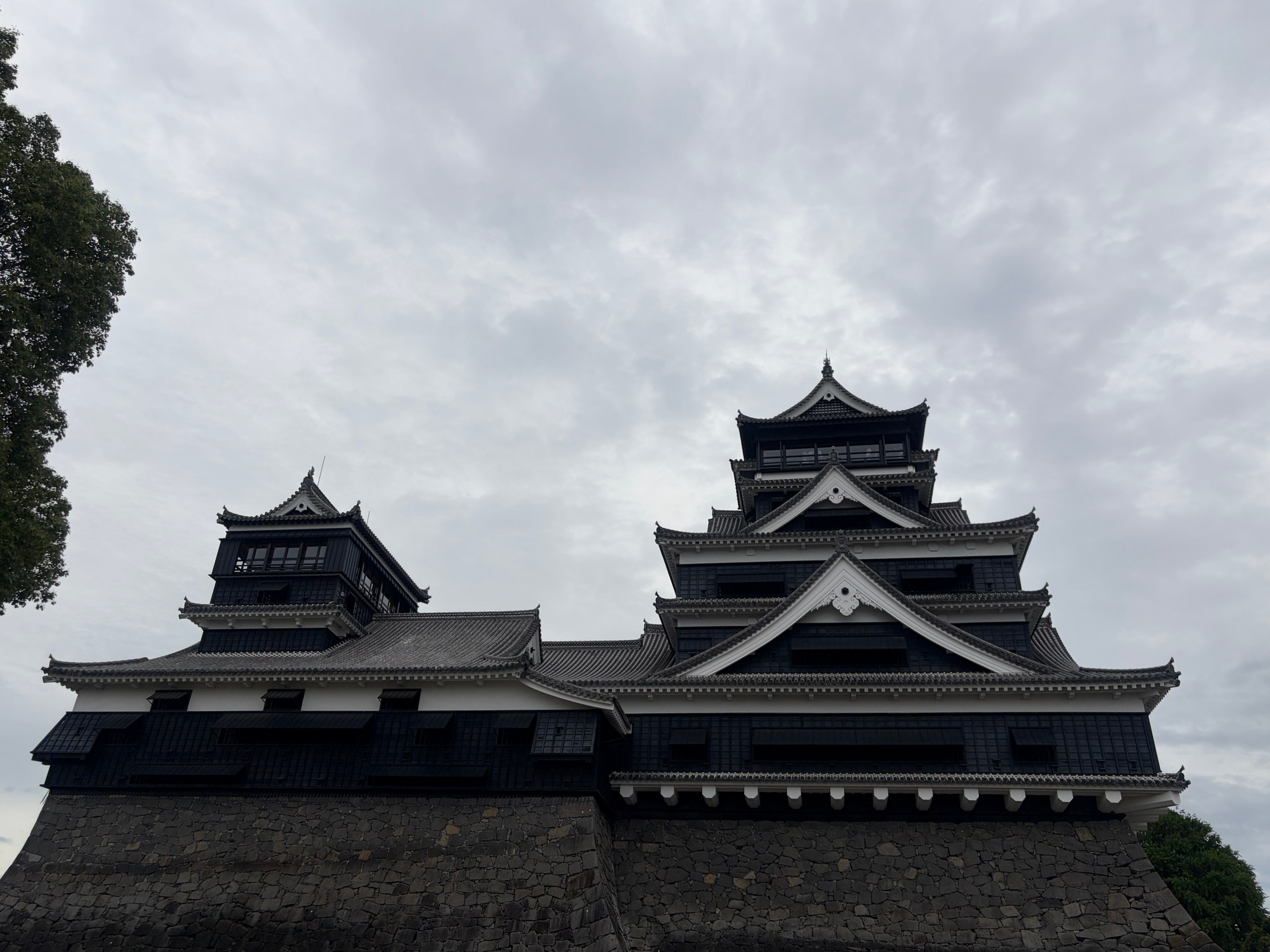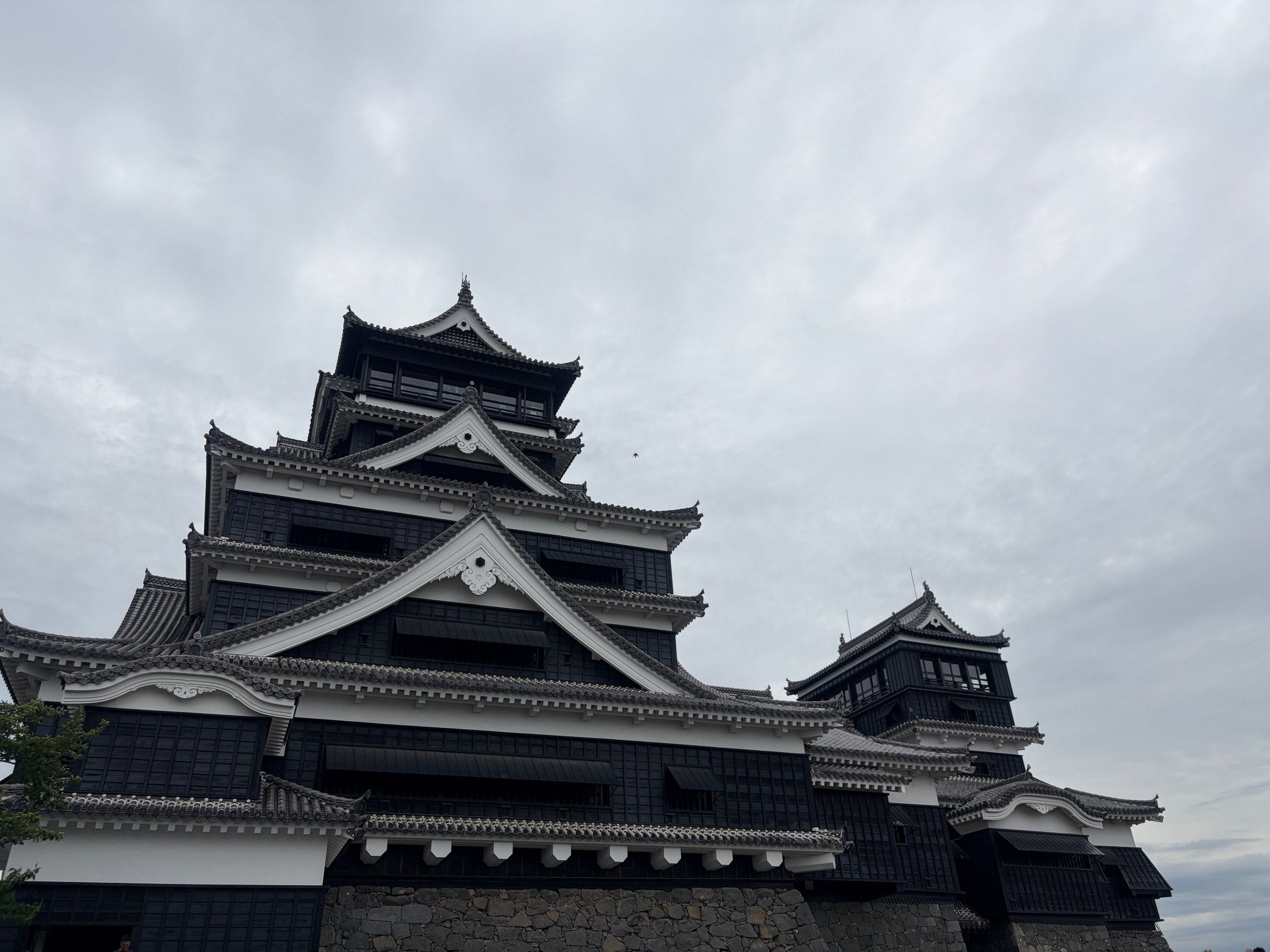
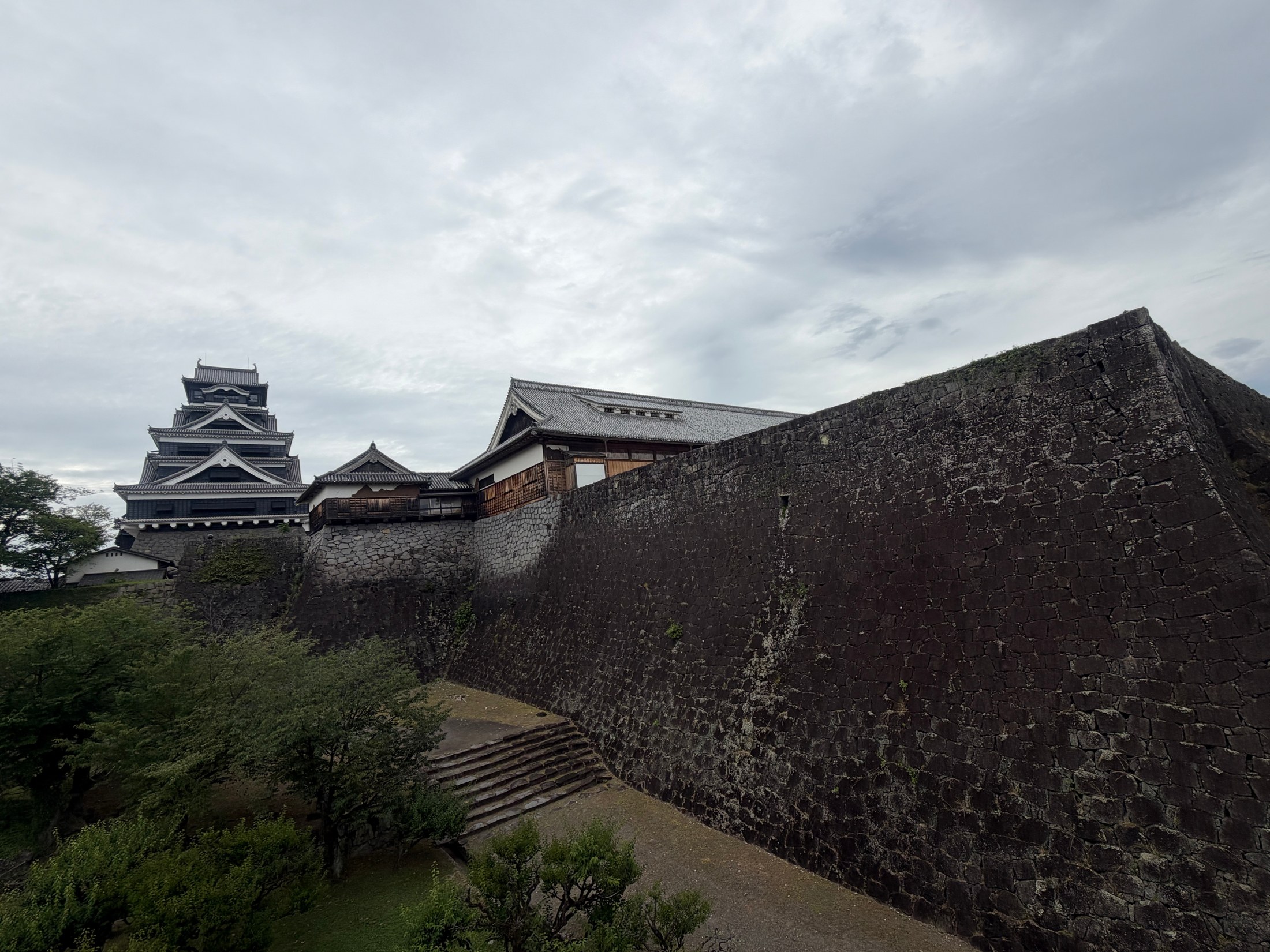
The castle keep has been brought back to life, yet right beside it the stone walls still lie in ruins. Restored spots and untouched ones sit side by side in the very same view, and every time I looked up my heart swung from joy to a little sadness. A whole day spent wandering solo through Kumamoto Castle as it is right now, mid-recovery. It got me a bit teary here and there — but yes, today too was wonderful.
Read Day 2 → Castle Hopping: Kumamoto Castle (June 2026, Day 2)
See the walking route in photos → Castle Hopping: Kumamoto Castle Route Map (June 2026, Day 1)
What kind of castle is Kumamoto Castle?
Built by Kato Kiyomasa and completed in 1607 (Keicho 12). It’s famous for its musha-gaeshi stone walls — walls that rise gently at the base but curve outwards ever more steeply towards the top, to keep attackers from climbing.
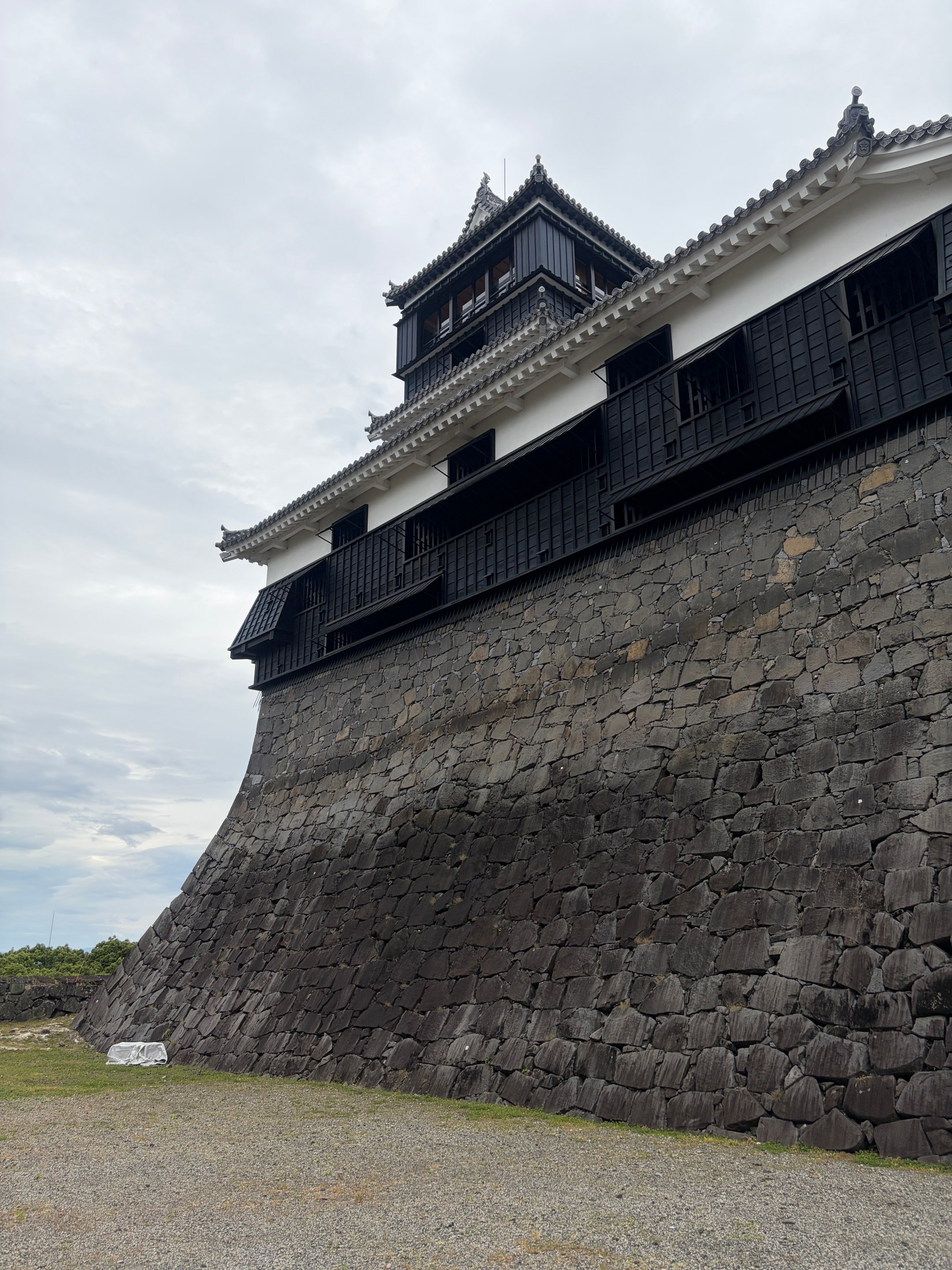
The castle was badly damaged in the 2016 Kumamoto earthquake, and restoration work is still going on all over the grounds. The projected completion date? 2052. A 35-year road — the kind of timescale that makes your head spin. A castle isn’t something you build once and you’re done, are you, I found myself musing right there at the entrance.
First up: the “Miracle One-Pillar Stone Wall”
Come in over Gyoko Bridge and you’re straight onto the restoration viewing route — an instant baptism. Blue tarpaulins draped over fallen stone walls, a crane sitting there, the scars of the quake still raw.
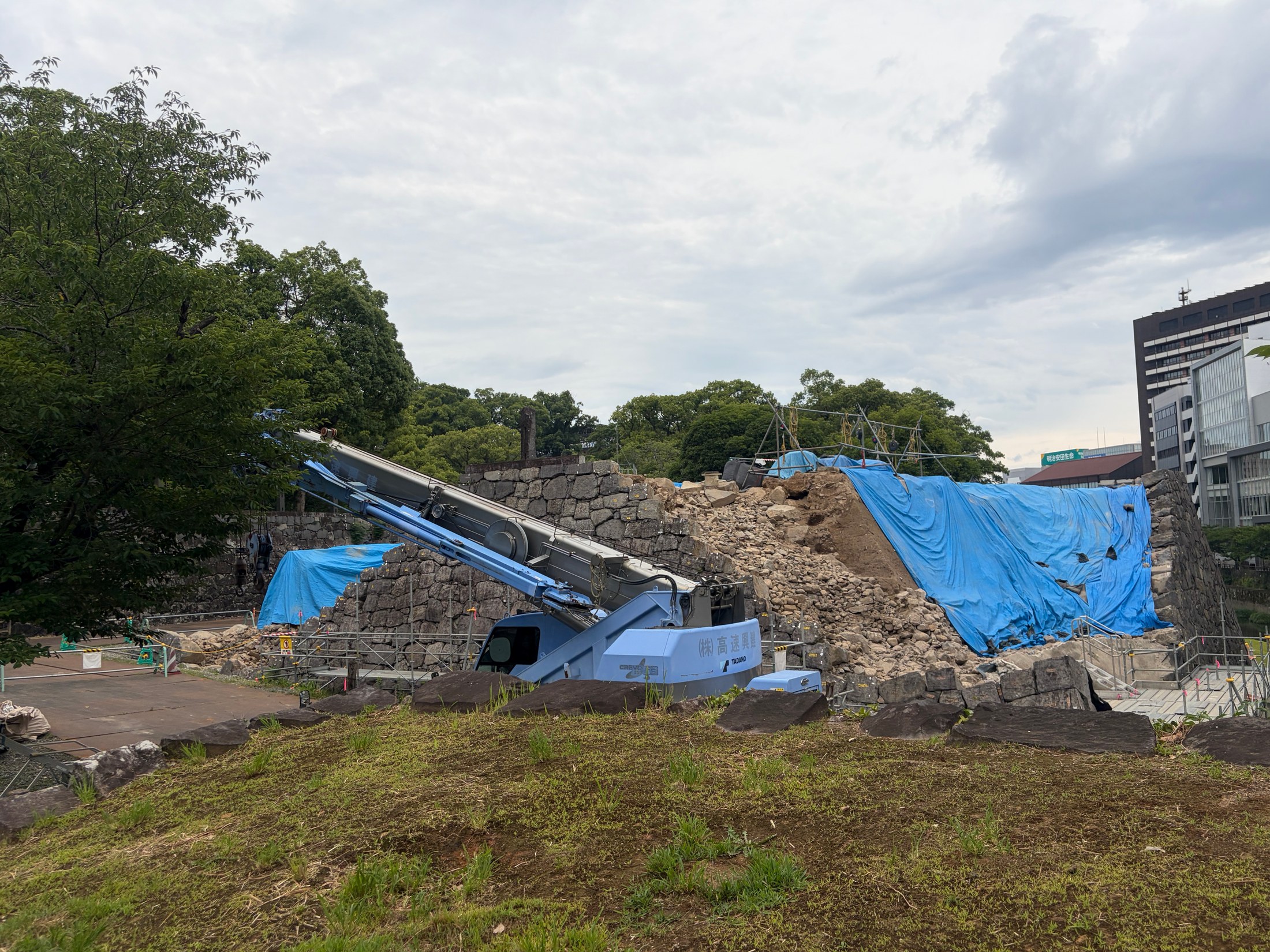
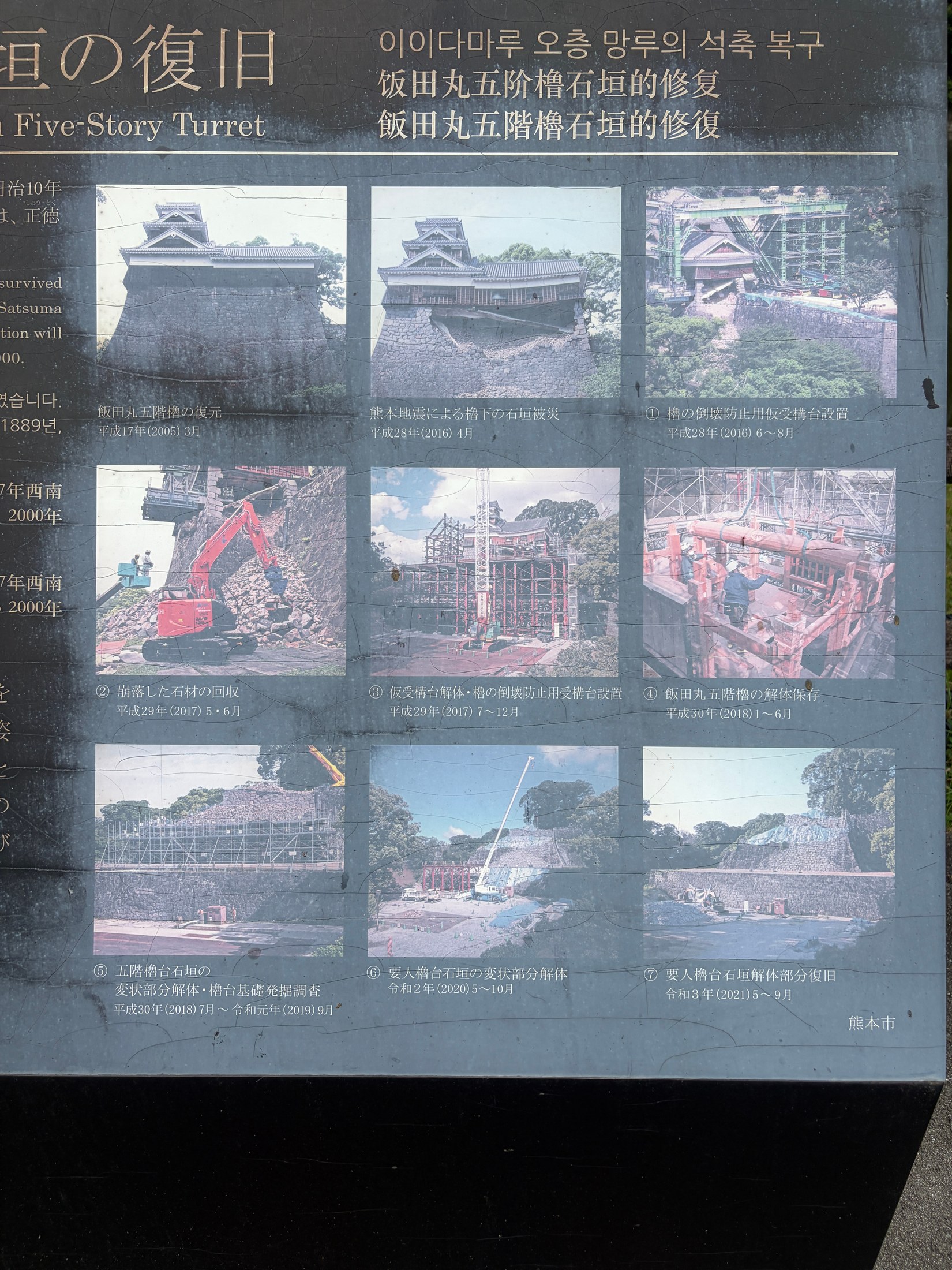
The Iida-maru Five-Storey Turret is known for the “miracle one-pillar stone wall.” After the quake, the corner stones alone supported the turret. That view is no longer there: the turret was dismantled to preserve old timbers, the wall was re-stacked in 2024, and rebuilding is now planned toward 2028. I was a little sad to miss the miracle, but happy to see the work moving forward.
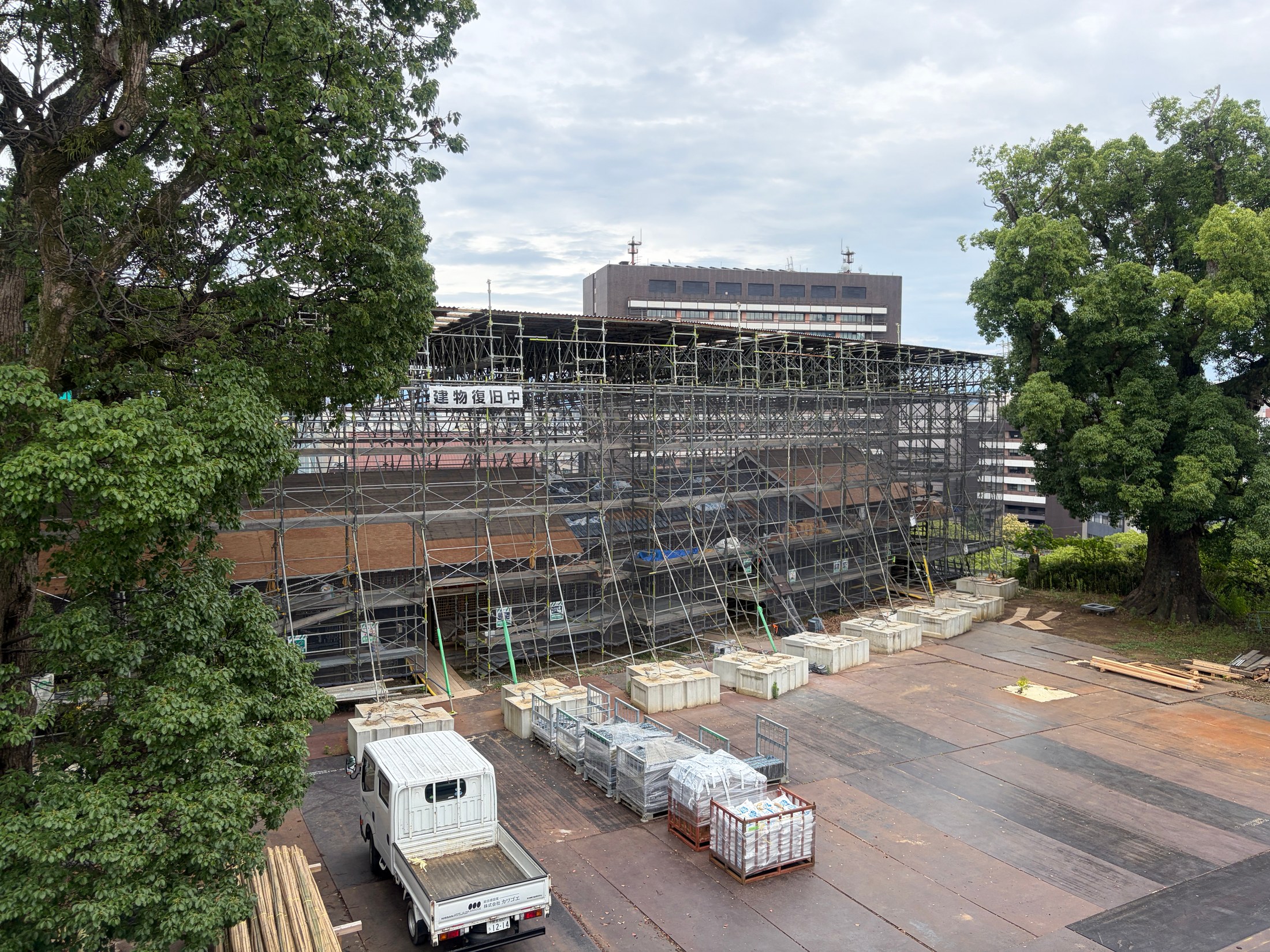
These days there’s a raised walkway called the Special Viewing Passage, so you can look down on the restoration site as you go. Beside rows and rows of roof tiles, a little sign reads “wall clay fermenting.” Apparently even the clay for the walls is left to rest and ferment for a year — getting to peek at these patient, painstaking steps might be a pleasure unique to right now.
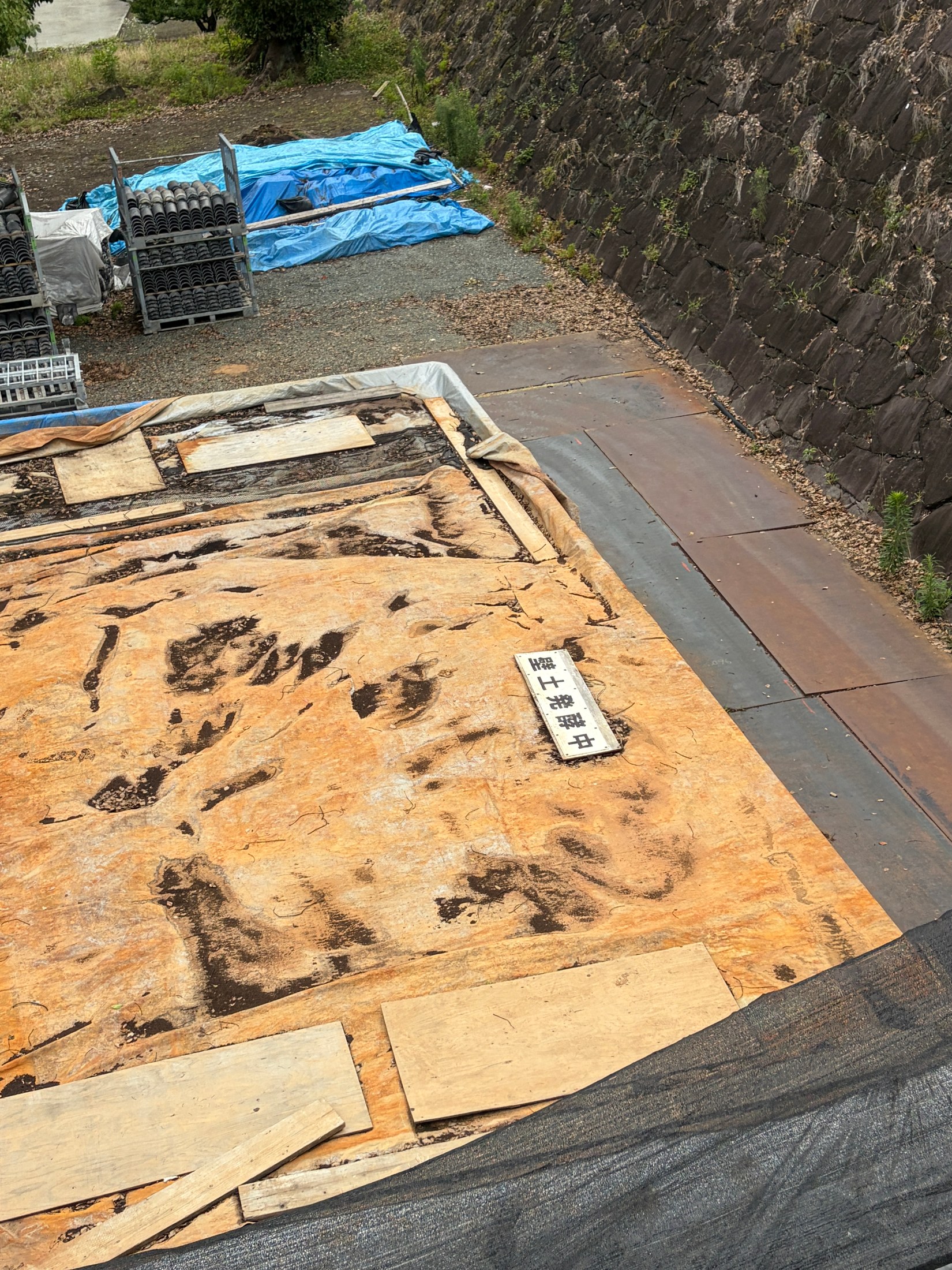
At Wakuwaku-za, the craftspeople’s words got me
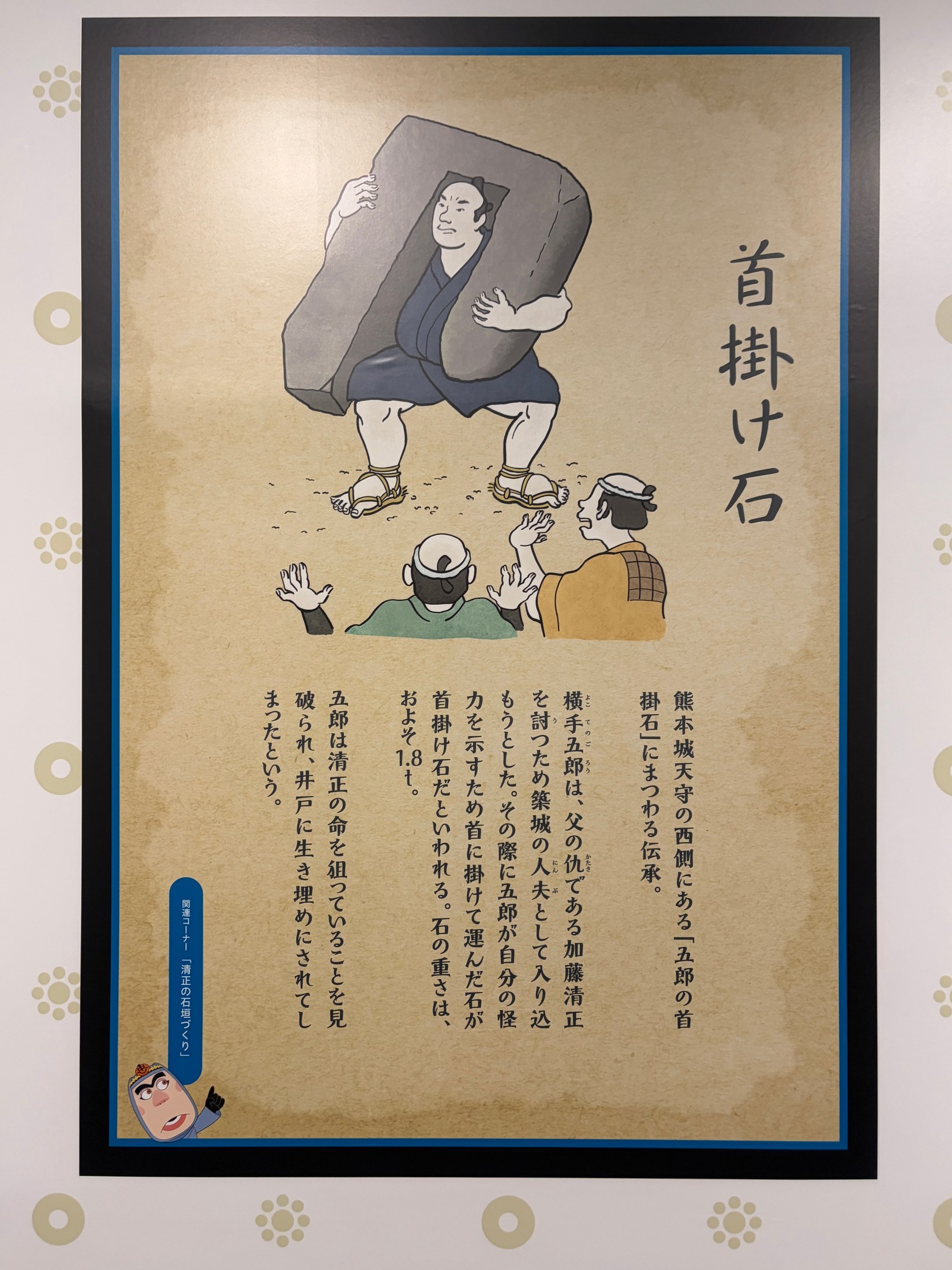
Wakuwaku-za, the Kumamoto Castle Museum, was fun too. I smiled at the gentle legend exhibits, including Yokote Goro and the Kubikake-ishi stone.
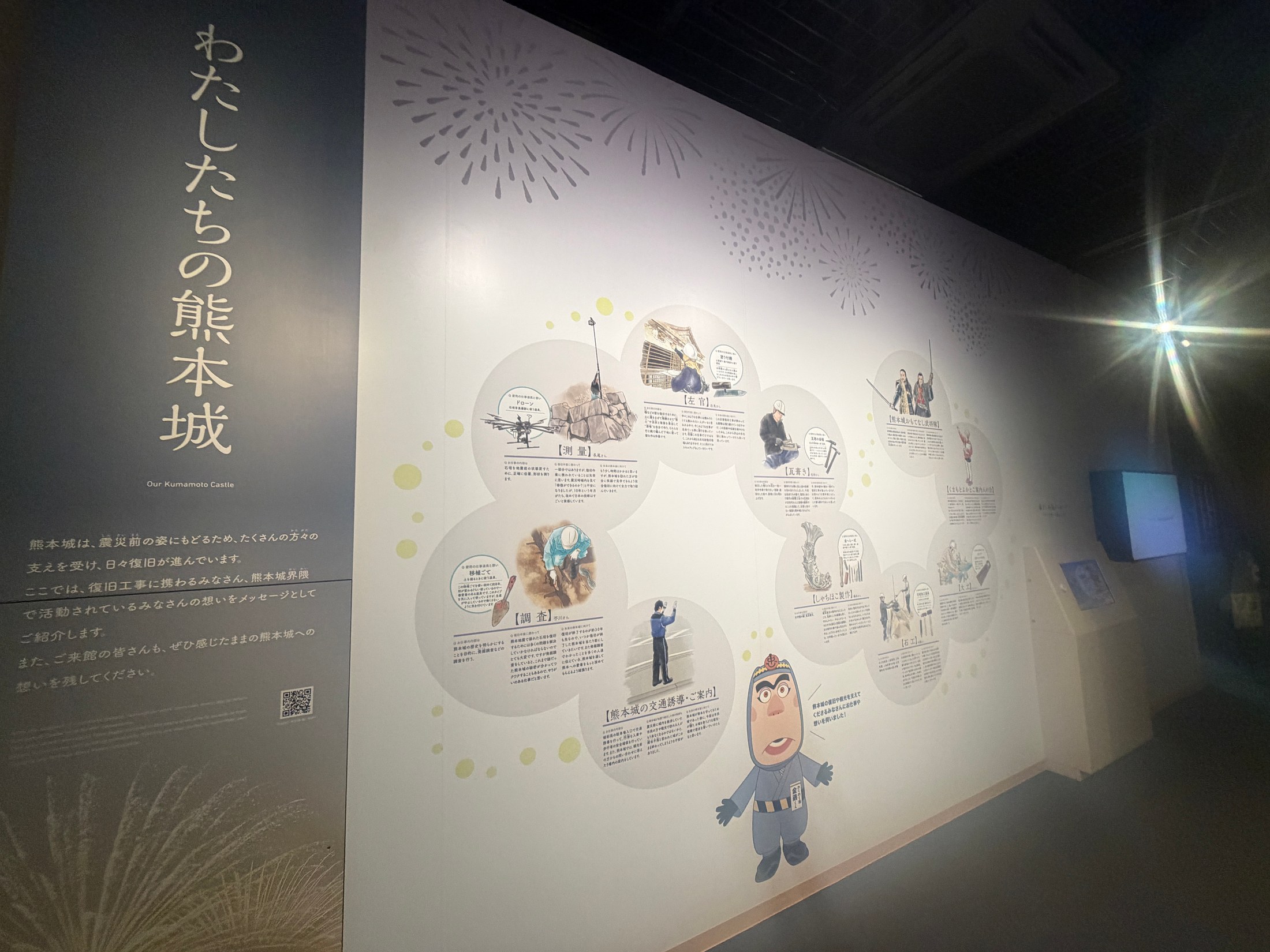
What stayed with me most was the craftspeople’s corner: surveyors, plasterers, roof tilers, stonemasons, carpenters, each speaking about tools and restoration work. There were lines about tools as extensions of the hand; a trowel passed from a former colleague; a wish for the castle to become an ordinary view again someday. I got unexpectedly emotional.
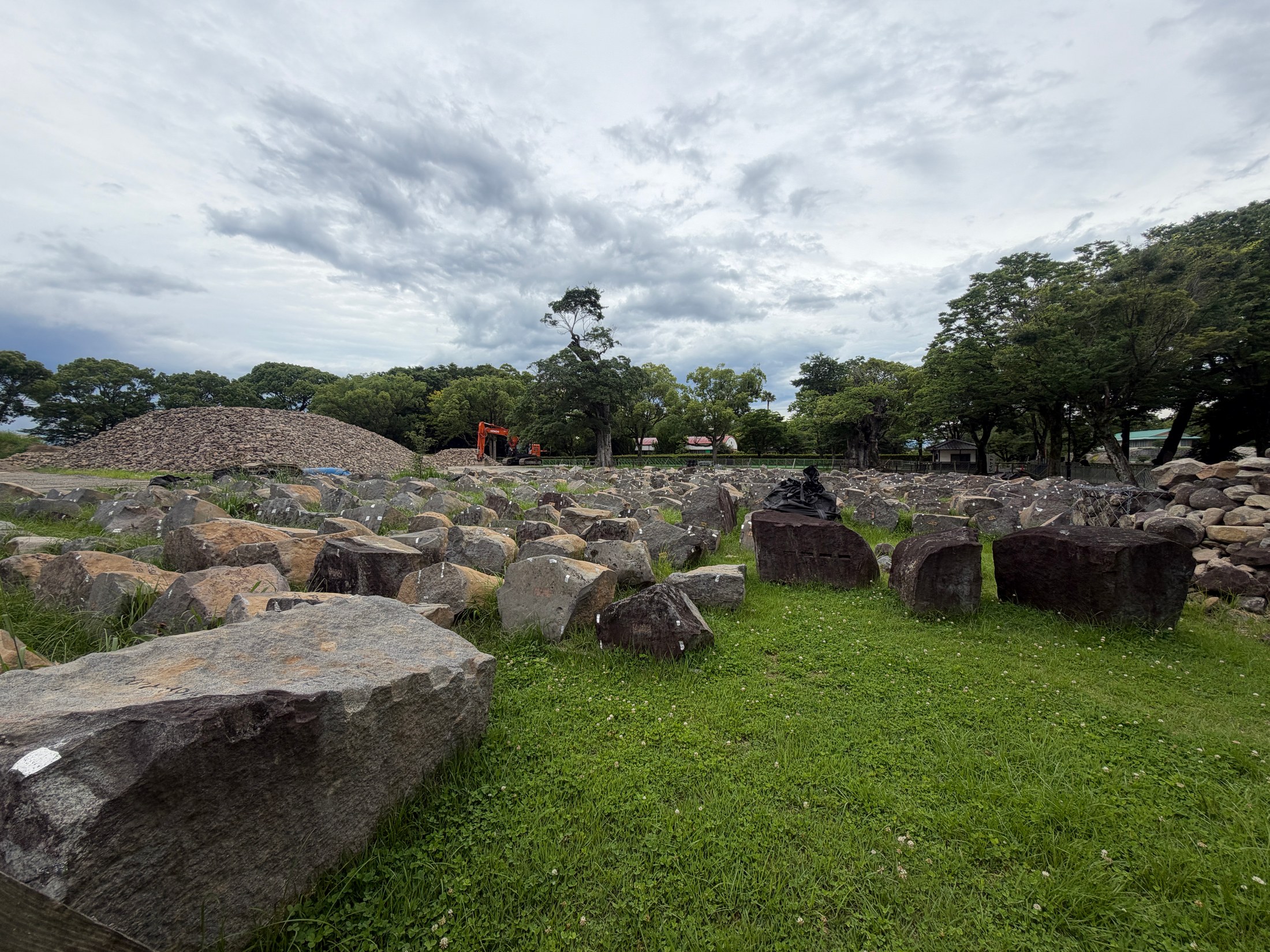
For the old craftsmen, “the techniques of their day were everything.” Today’s makers have far more advanced techniques, yet they deliberately trace the old methods to do the repairs. That tension, that working while casting your mind back to those times… there must be hardships the old craftsmen never knew. Thinking all this, I burned this view — one I can only see now — into my memory. (In a way, getting to see the guri-ishi (the small filler stones packed inside a wall)… and the sight of all those stones lined up as if waiting their turn, is honestly a feast for the eyes… perhaps not the most respectful thing to say, but I’m wholeheartedly cheering the restoration on.)
The stone walls say it all
Kumamoto Castle’s stone walls are something else. The Niyo-no-Ishigaki (“stone walls of two styles”) is in which a steeply pitched newer wall has been added onto Kiyomasa’s gently sloping older one. You can compare the two “curves” side by side, with the keep visible beyond — a wonderful view. And because the walkway, which didn’t exist before the quake, sits a little higher up, you can’t go down to spots like the damaged renzoku-masugata corners — but in exchange you get to see them from an angle you normally never would.
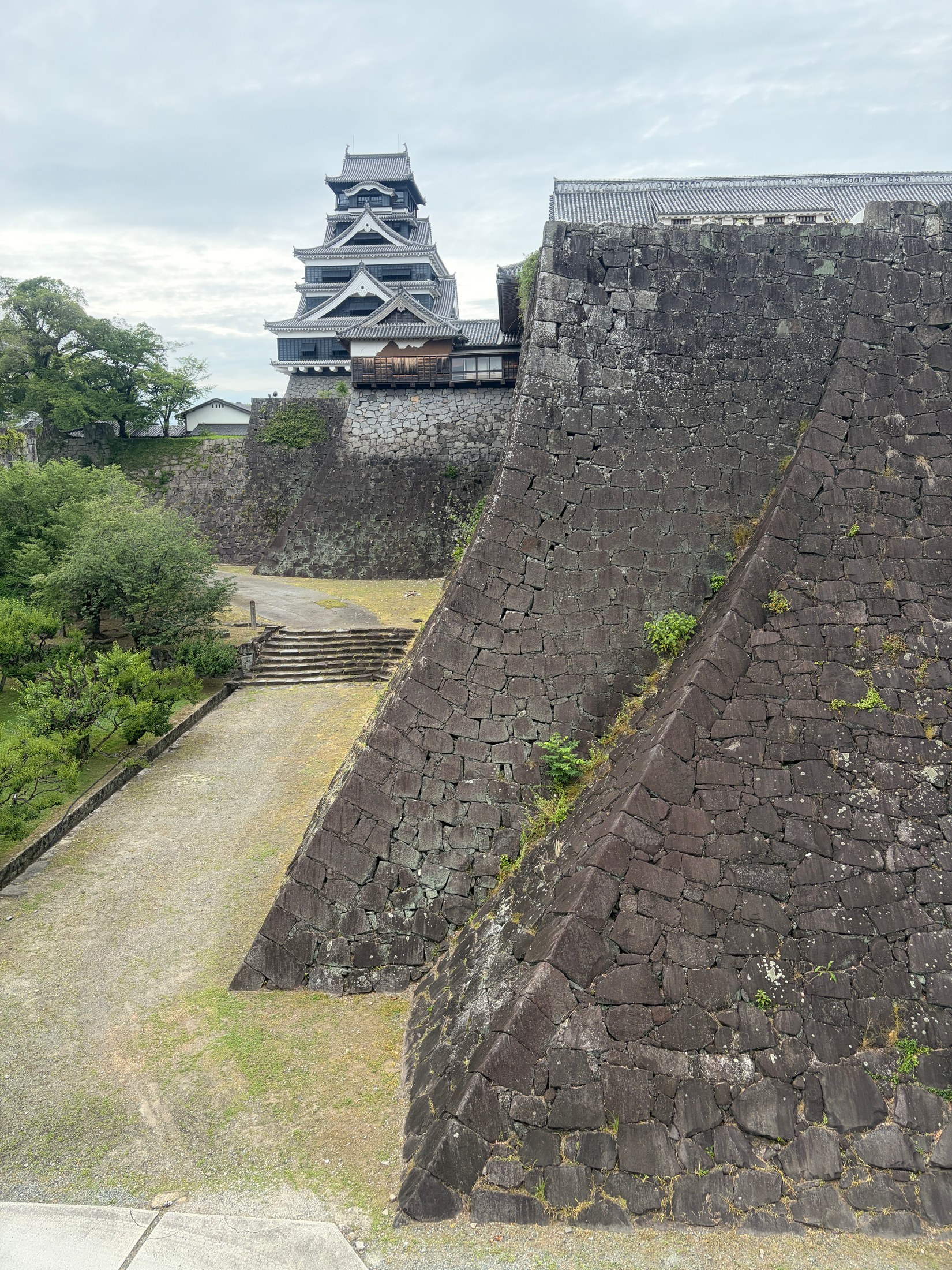
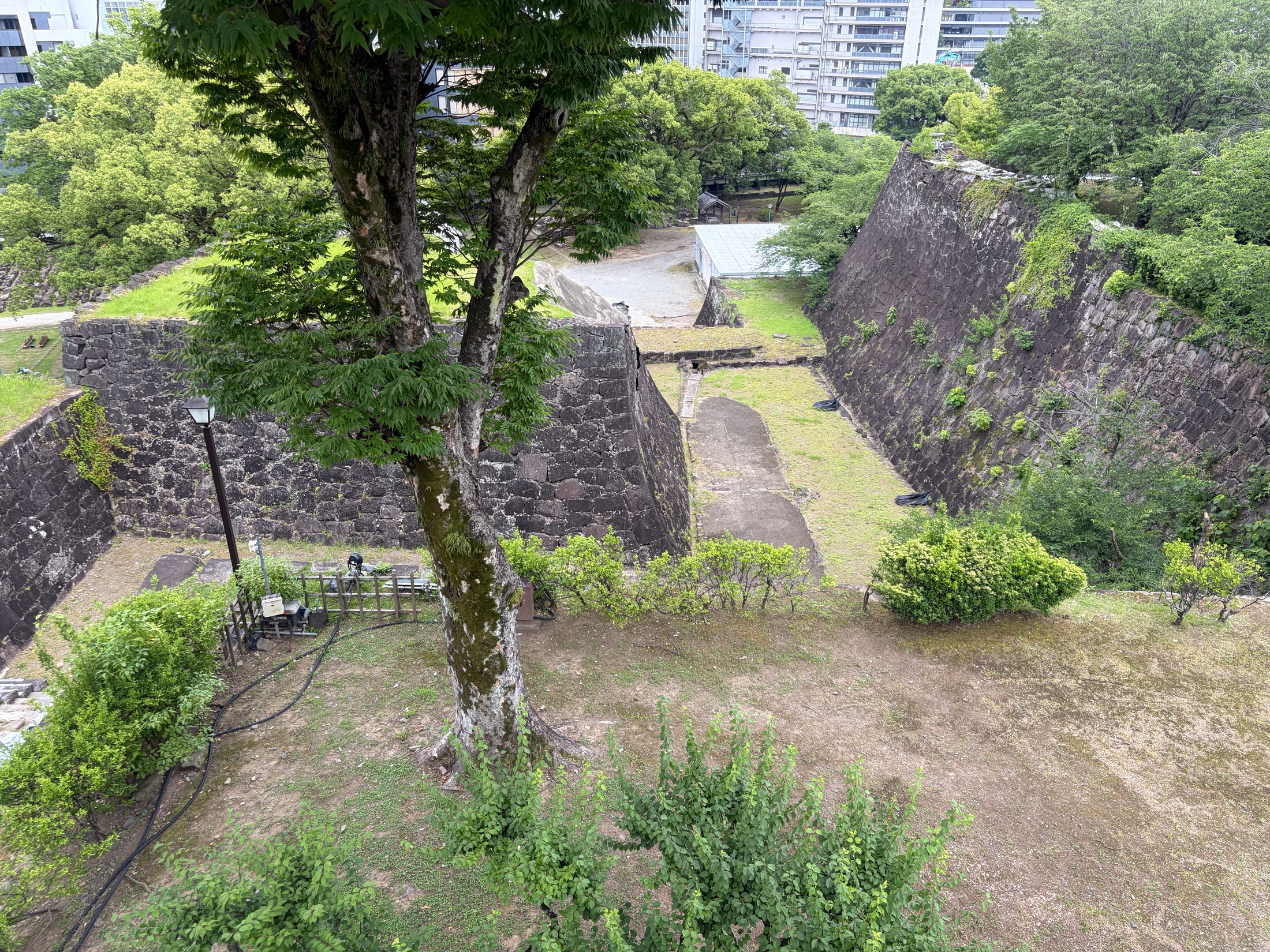
The renzoku-masugata (the route into the honmaru, doglegging a full six times — a defensive trick) is another thing you can only look down on right now. And honestly, it’s like a maze. Awful for an attacker — I’d be done for at the very first turn, no doubt about it, I thought, gazing off into the middle distance on someone else’s behalf.
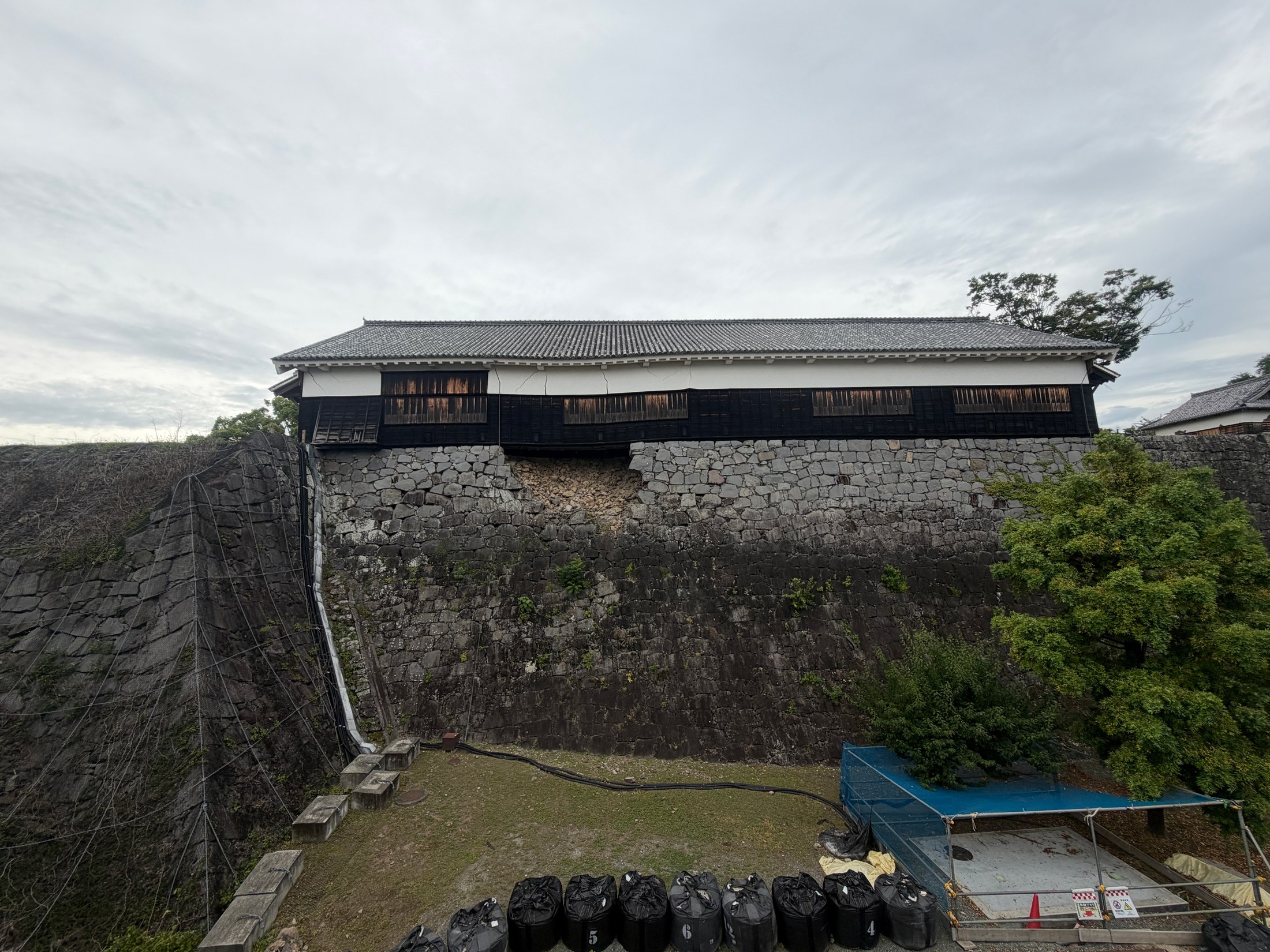
And then Sukiyamaru. The stone wall has collapsed and the building looks like it’s floating in mid-air… the scars of the quake left exactly as they are. I was lost for words. Not everywhere is neatly mended. These views, too, are ones I want to take in properly.
Burned, but reborn
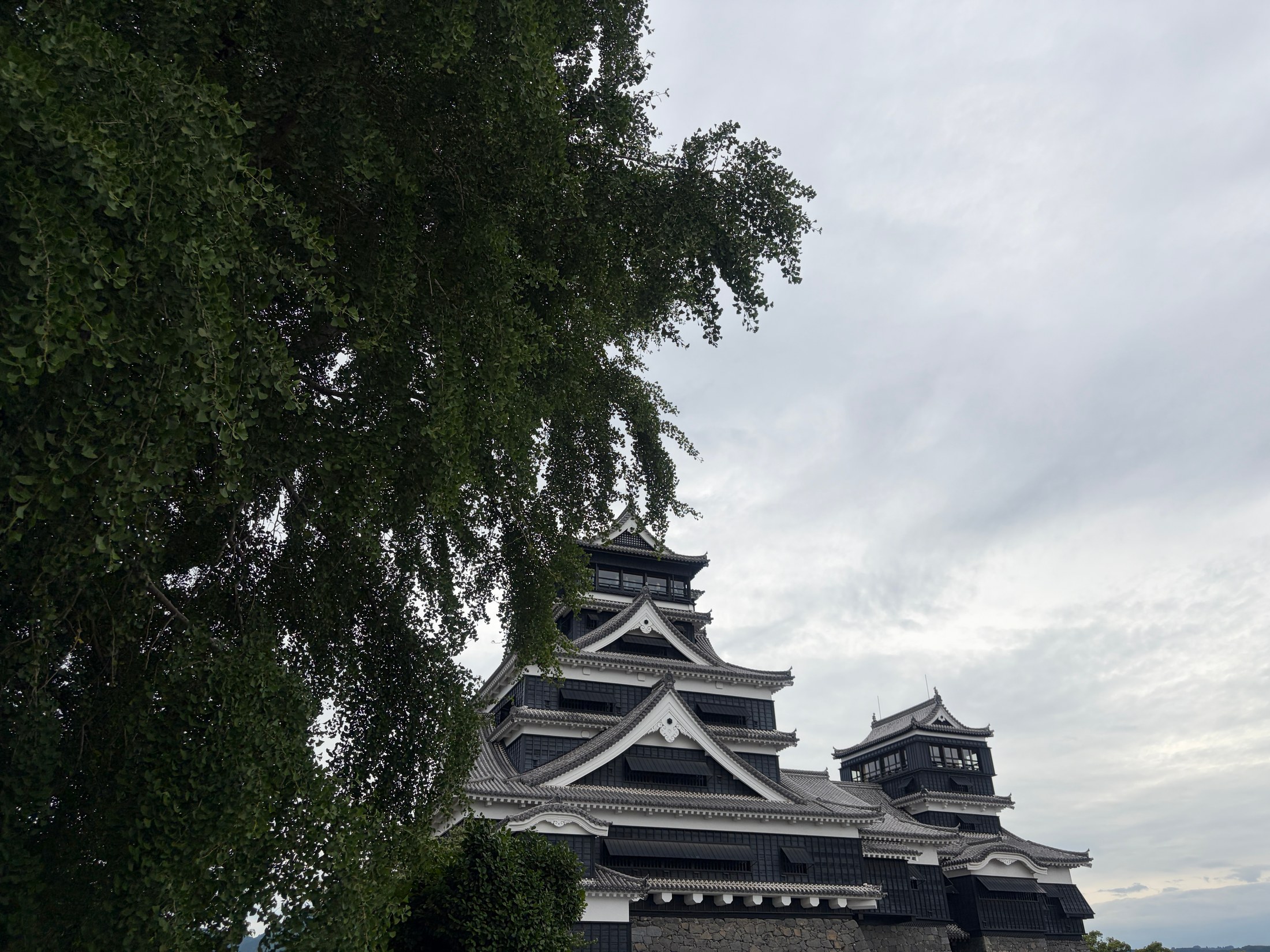
Last of all, the great ginkgo. Said to have been planted by Kato Kiyomasa himself, it burned down along with the keep in the fire of the 1877 Satsuma Rebellion — yet from its scorched roots it sprouted again, and grew into the magnificent tree it is today.
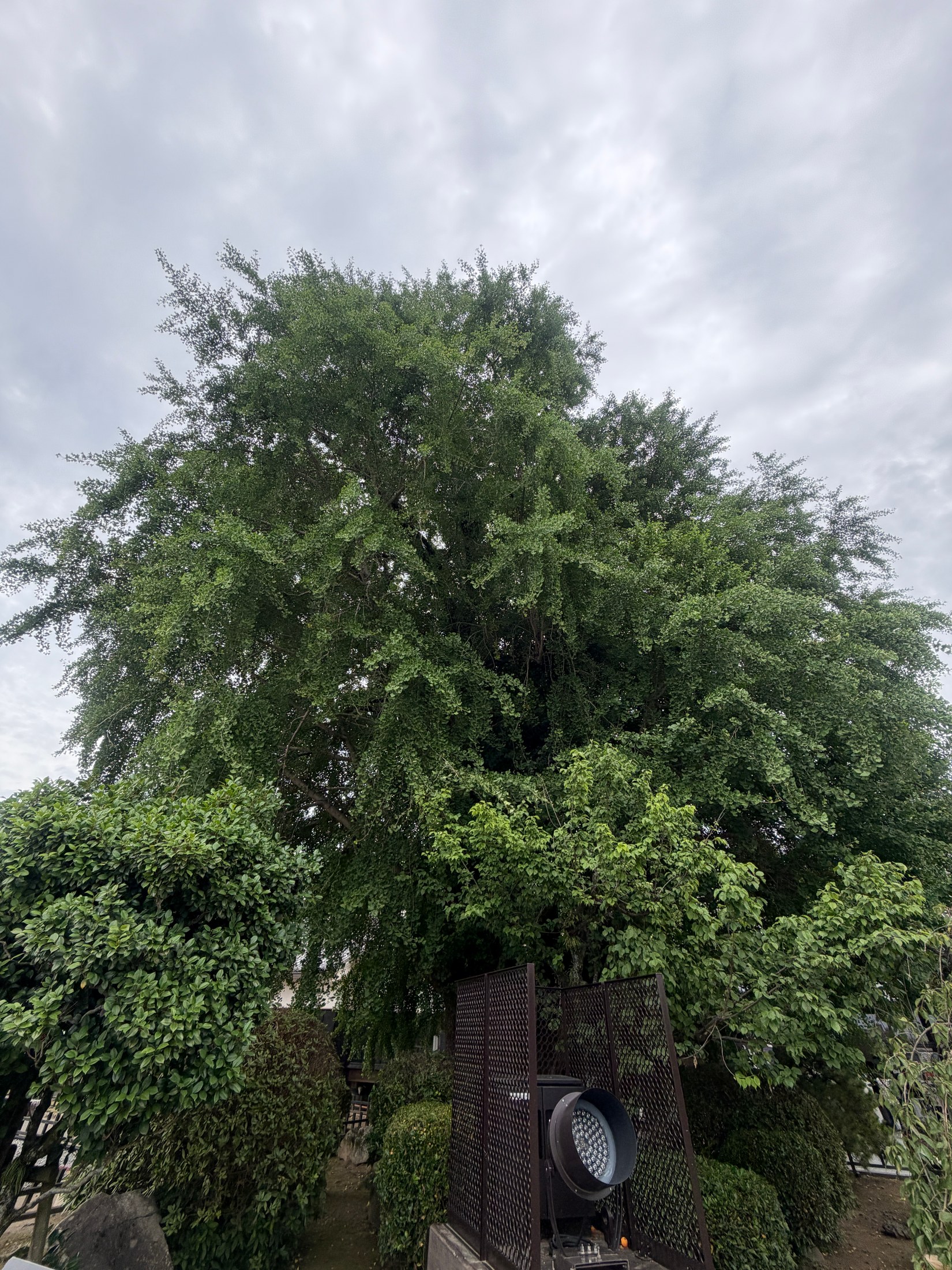
I looked up at the black keep, itself reborn from the earthquake, through the tree’s green branches. A tree that once burned and a castle that was once wounded, caught in a single frame. It felt like watching Kumamoto Castle’s recovery itself — I could have gazed at it foreveeer.
In closing
Places fully restored, and places not yet touched. I spent a whole day walking through both at Kumamoto Castle. It isn’t a buzzing, crowded tourist spot — which is exactly why it felt just right for quietly taking in the “now” on my own.
There’s far too much to see, so the inside of the keep will have to wait for tomorrow 💤