Sitting on the bench at the site of the Matsu no Roka (the Pine Corridor), I looked up at the trees, thinking of Shichinosuke Nakamura’s Enya Hangan. November had been full of Chushingura for me: the full-length Kanadehon Chushingura (The Treasury of Loyal Retainers) at the Kabukiza, plus the Ako Gishi-den (tales of the loyal retainers of Ako) on Hakuzan TV, the YouTube channel of the kodan storyteller Kanda Hakuzan. So, going with the flow, off I went to Edo Castle. As always, today was the best.
🗺️ See the route I walked, in photos → Castle Hopping: Edo Castle Route Map (November 2026)
More from this place → Castle Hopping: Edo Castle (March 2026)
My Edo Castle Walk This Time
The site of Edo Castle is broadly split into two areas. One is the Kokyo Gaien (Imperial Palace Outer Garden), with its moats, its gates. You can walk here at any time. The other is the Kokyo Higashi Gyoen (East Gardens of the Imperial Palace), where the sites of the Honmaru, Ninomaru, Sannomaru (the main, second, third baileys) are open to the public. Entry is free, but it’s basically closed on Mondays as well as Fridays, with a bag check at the entrance.
In March I walked only the East Gardens, entering by the Hirakawa-mon Gate. This time I set off from Hibiya Station, made a loop of the Outer Garden, then went into the East Gardens through the Ote-mon Gate.
The Outer Garden Is Simply Huge
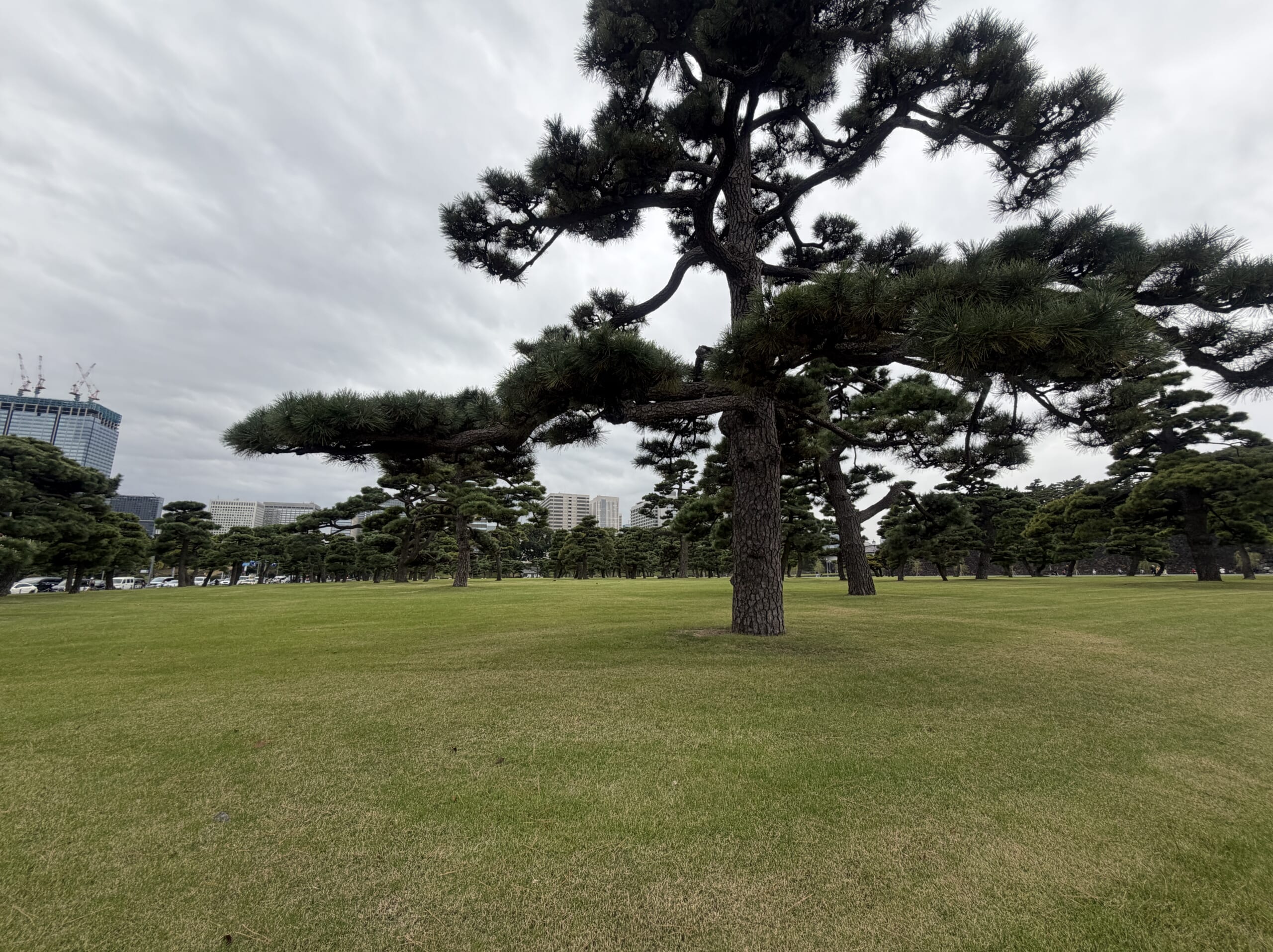
Up at street level, there’s the moat straight away. Scenery with a moat is lovely, isn’t it? A wide plaza of lawns plus gravel, lined with neatly tended pines, stretches on forever. It’s just huge! It was cloudy, yet simply walking about felt good.
The Seimon Gate, Nijubashi, a Peek at Fushimi Yagura
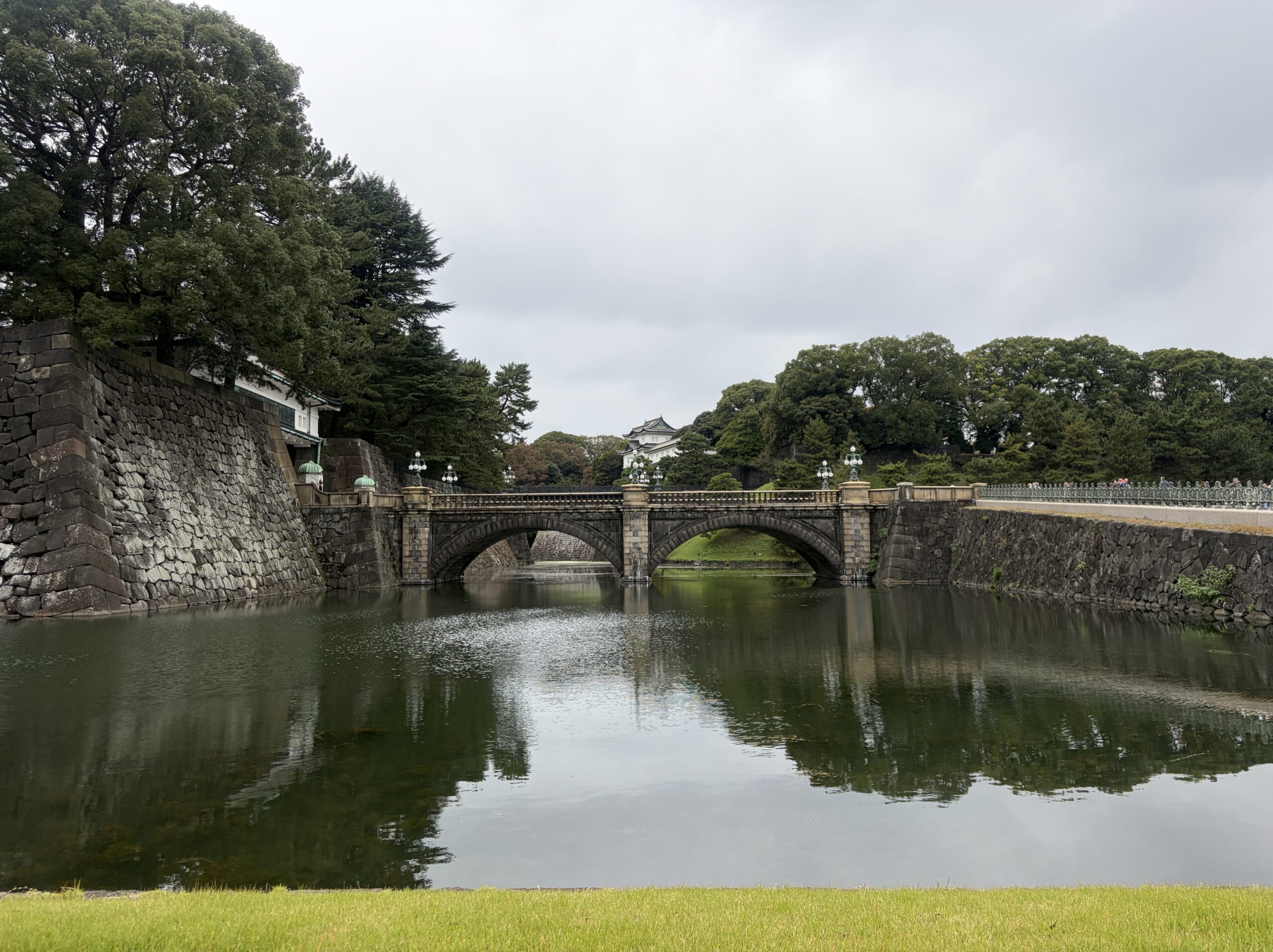
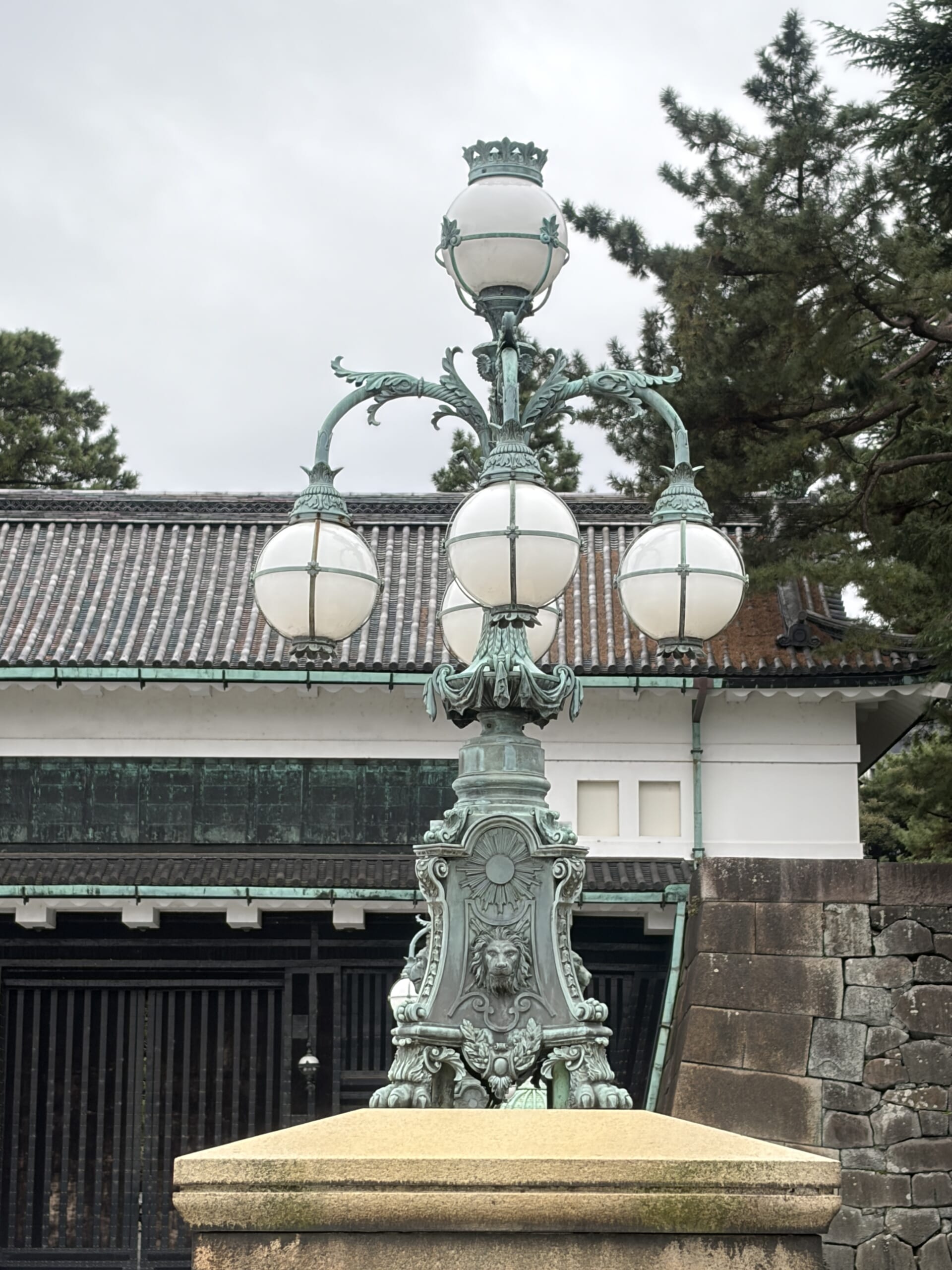
At the Kokyo Seimon (the Main Gate of the Imperial Palace), the balustrades of the stone bridge, the kazari-dento (ornamental lamps), were so lovely that I ended up photographing nothing but the decorations.
Nijubashi is actually the iron bridge you see at the back. The name apparently comes from the Edo-period wooden bridge, whose girders were built in two tiers, one above the other (niju means “double”). I knew this from a book, but if you came without knowing, you’d probably end up wondering, “So which one is Nijubashi?”
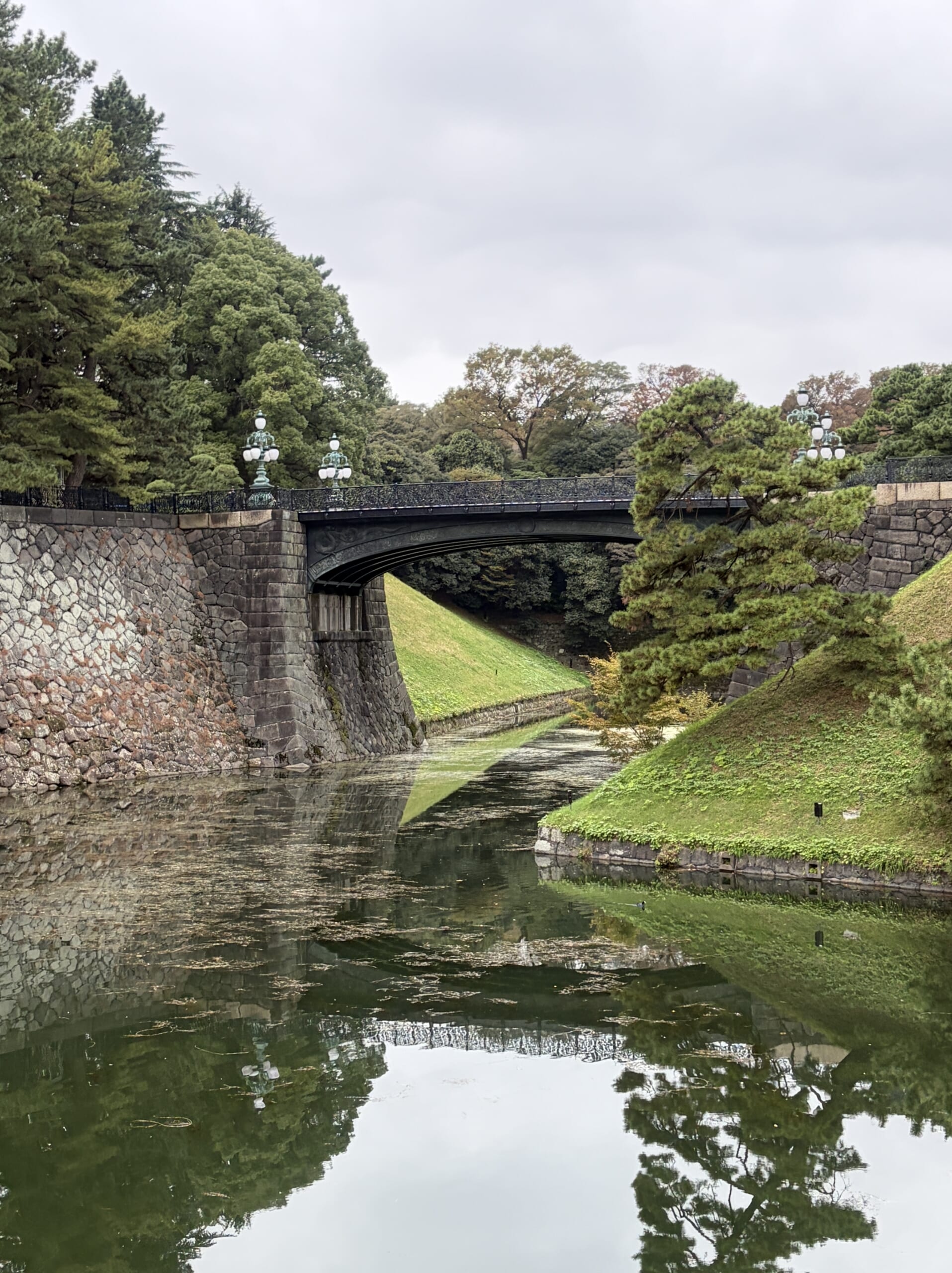
Change your angle, there’s Fushimi Yagura peeking out behind the stone bridge. I want to get closer!
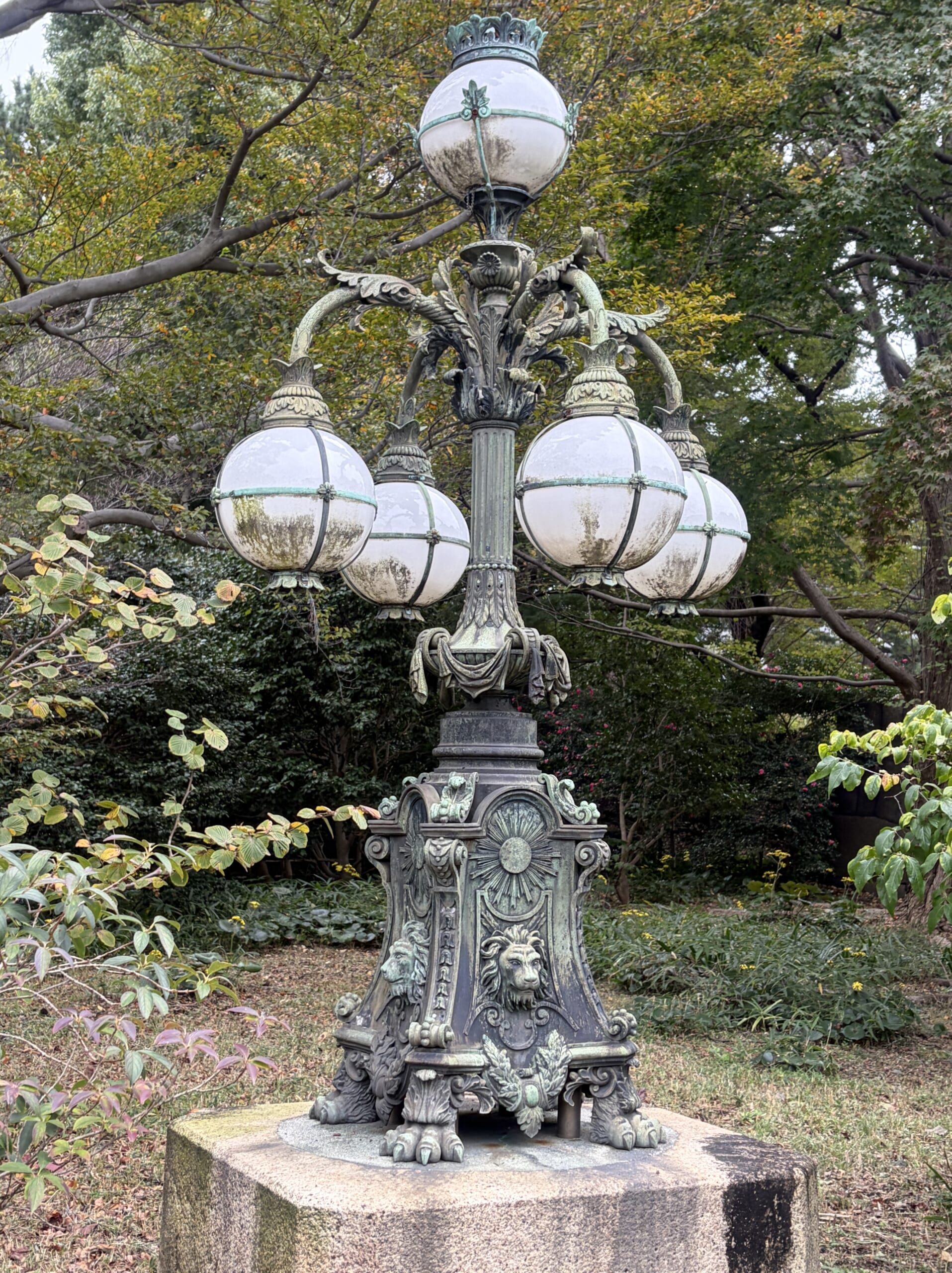
Later, I met the old ornamental lamp from the Seimon stone bridge again, in the East Gardens. It even has lion decorations. I want a lamp like this at home. (What kind of mansion would I need to live in? (ha))
Lost Inside the Sakuradamon Masugata
Sakuradamon is built as a square courtyard (masugata) enclosed by an outer korai-mon gate plus an inner yagura-mon gate. Looking from outside, stepping into the masugata, going back out again… after a few rounds, I lost track of which side was the inside (ha). Since you go through one more gate from the masugata, this side must be the inside. At last, I got it.
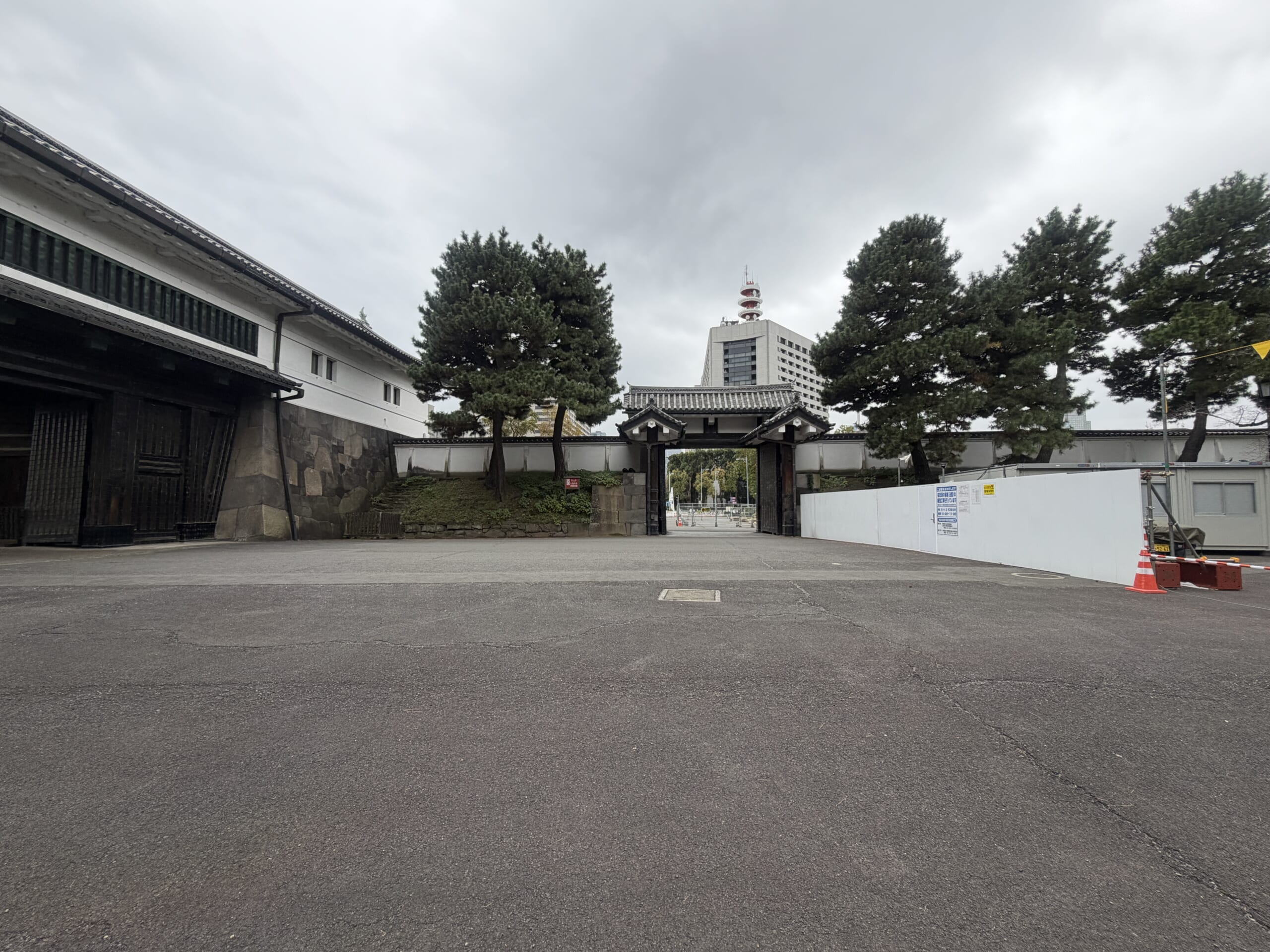
At the Kikyomon Gate, comparing the old picture on the information board with the view in front of me was so much fun that next time I’d like to walk here with a book of old photographs.
Around the East Gardens
Gazing at Sakurada Tatsumi Yagura across the moat, I reached the Ote-mon Gate. Quite a walk… well, it is huge.
A Break at the Brand-New Ote Rest House
At the bag check before entry, there was hardly anyone on my way in, so I breezed straight through. On my way back, though, there was a long queue. Even if it takes time, it’s necessary so everyone can visit safely.
Just inside is the Ote Rest House (Imperial Palace Visitor Center), which opened only in November. The café as well as the shop had very long queues.
What made me happy was the toilets. Castle toilets are often outdoors, so if there are bugs, I can’t help getting jumpy. These are indoors, new, very clean. No bug worries at all! With a cocoa from the vending machine, I took a break, looking out through the glass at the stone steps, the greenery.
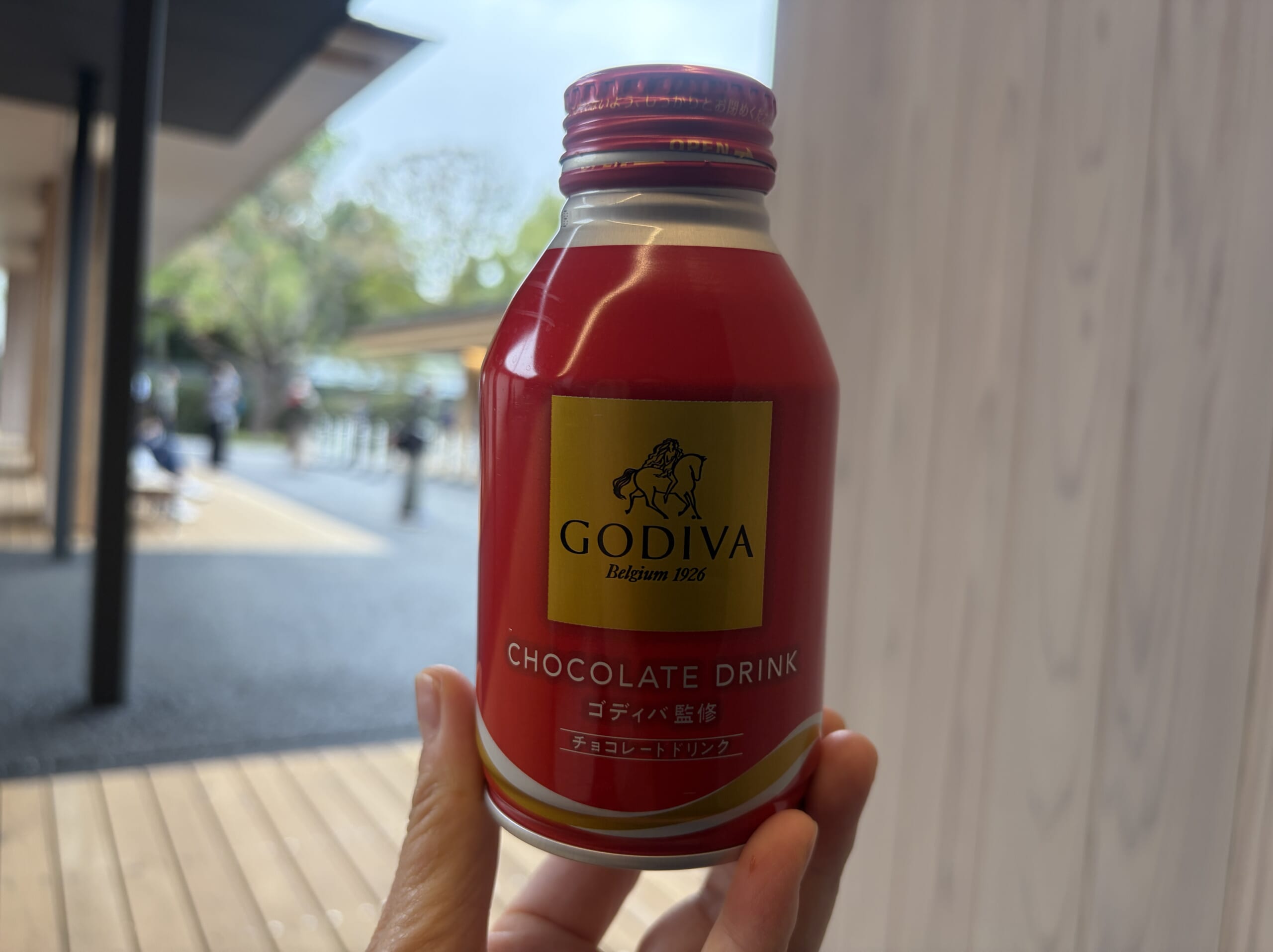
From there, I went further in, visiting the bansho (guardhouses). The deeper you go, the fewer retainers are let through, aren’t they? Meeting the lord must have been hard work, I thought.
The Calm Ninomaru Woods, Cascading Chrysanthemums
The Ninomaru zokibayashi (woodland) is a very calm forest. Seeing the waterfall in the garden reminded me of Yukio Mishima’s The Sea of Fertility, specifically Spring Snow, the first volume. It’s the scene where Satoko finds the body of a black dog at a waterfall, then points it out without the slightest hesitation.
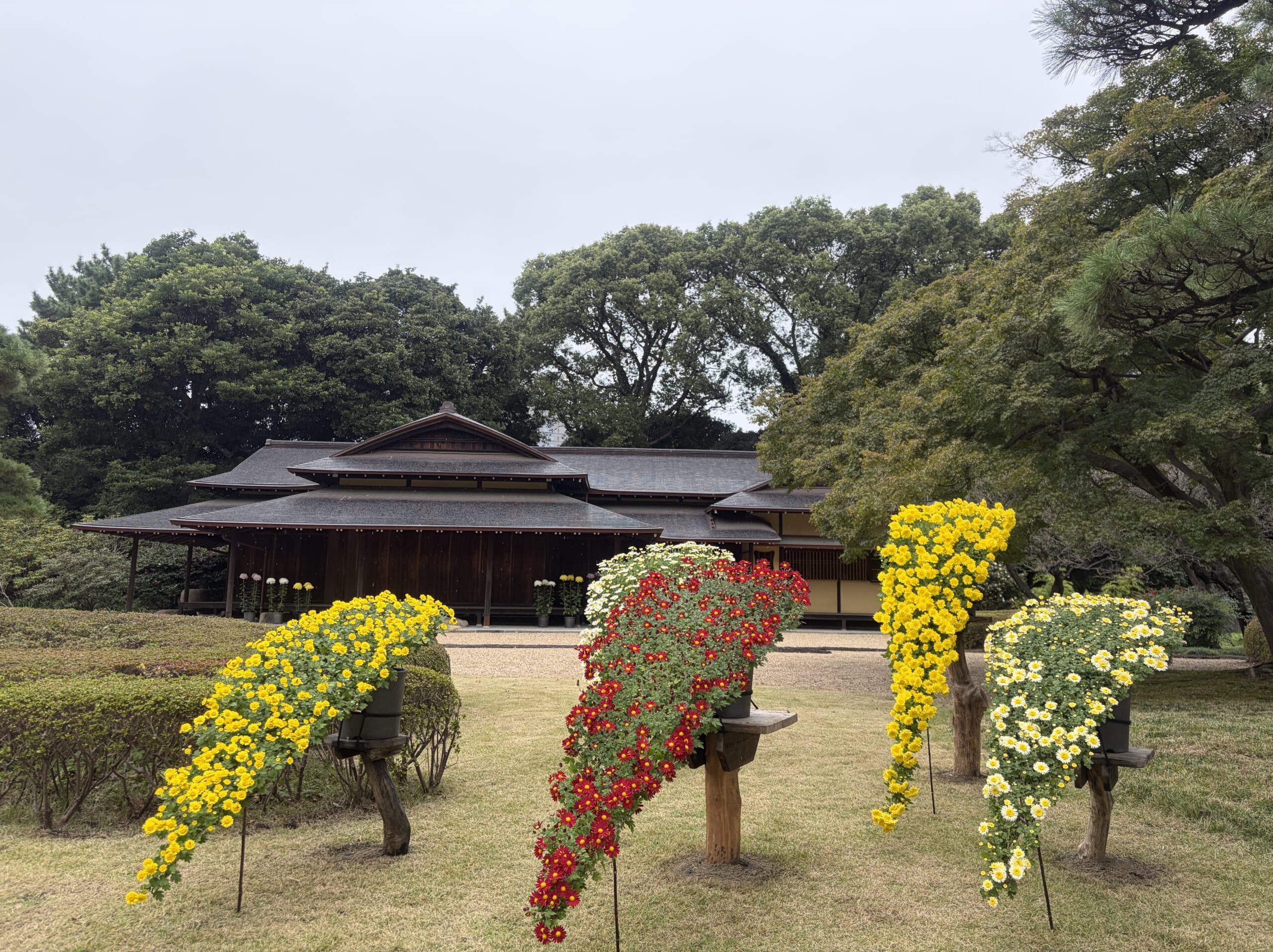
Around the Suwa no Chaya (Suwa Teahouse) were kengai-giku (cascading chrysanthemums: small-flowered chrysanthemums trained to hang down like plants growing from a cliff). Up close, a lovely scent. It’s chrysanthemum season.
The Keep Model, Today’s Yaana
Shiomizaka Slope is quite steep. Near the top, there was a stone wall where irregular stones sit right next to neatly shaped ones. Edo Castle has all kinds of stone-wall styles. Maybe they differ by era? Interesting.
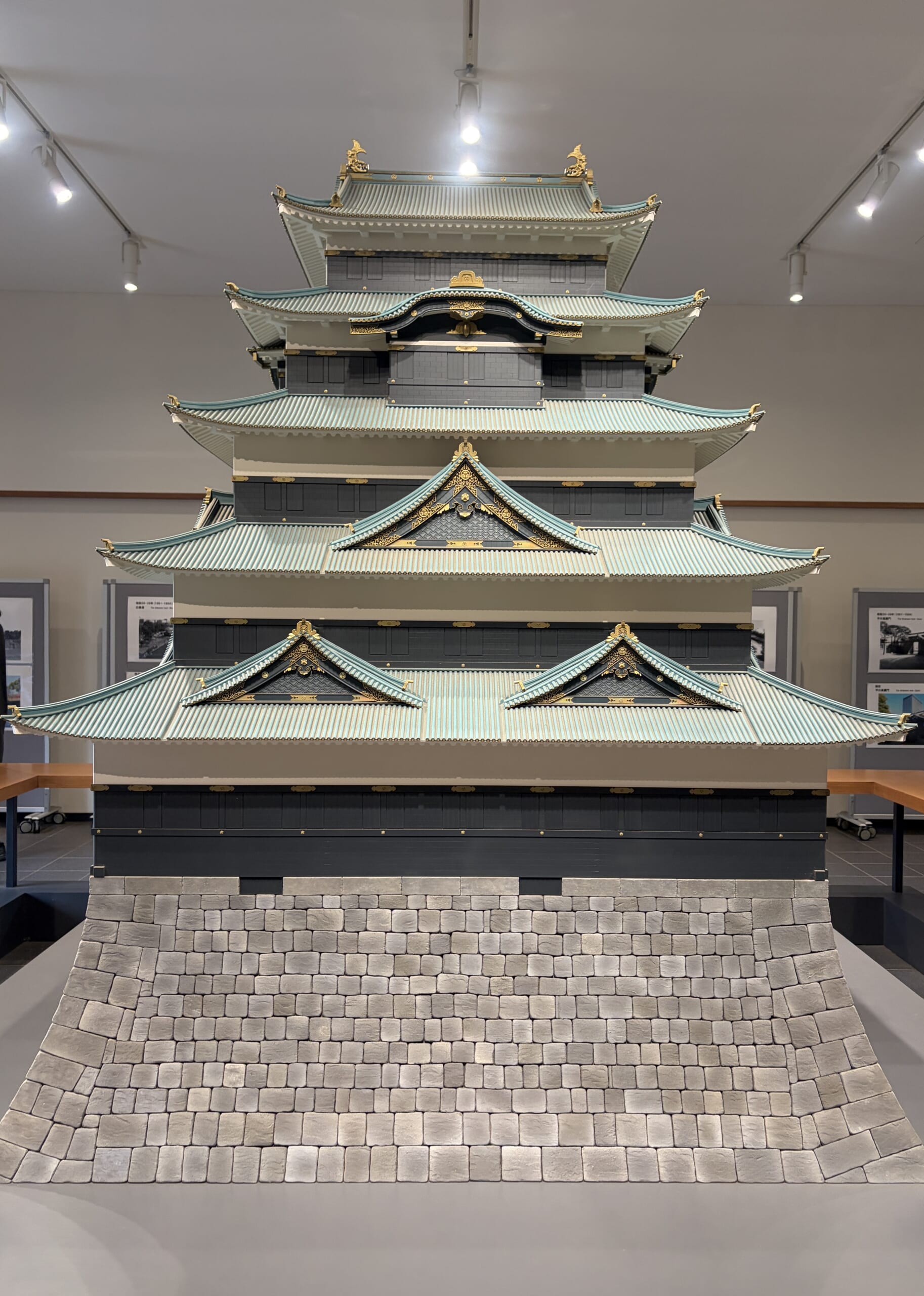
In the Honmaru rest house, there’s a reconstructed model of Edo Castle’s keep. The real thing was apparently about as tall as a 20-storey building. To think such a magnificent keep once stood here! I’d have loved to see it… Azuchi Castle, Edo Castle: someday I’d like to see the real ones… won’t they rebuild them? Once I started reading the explanations, time just melted away 🕰️
The lawn around the site of the Ooku (the shogun’s inner quarters) is so wide, it feels wonderful. So why is no one here?
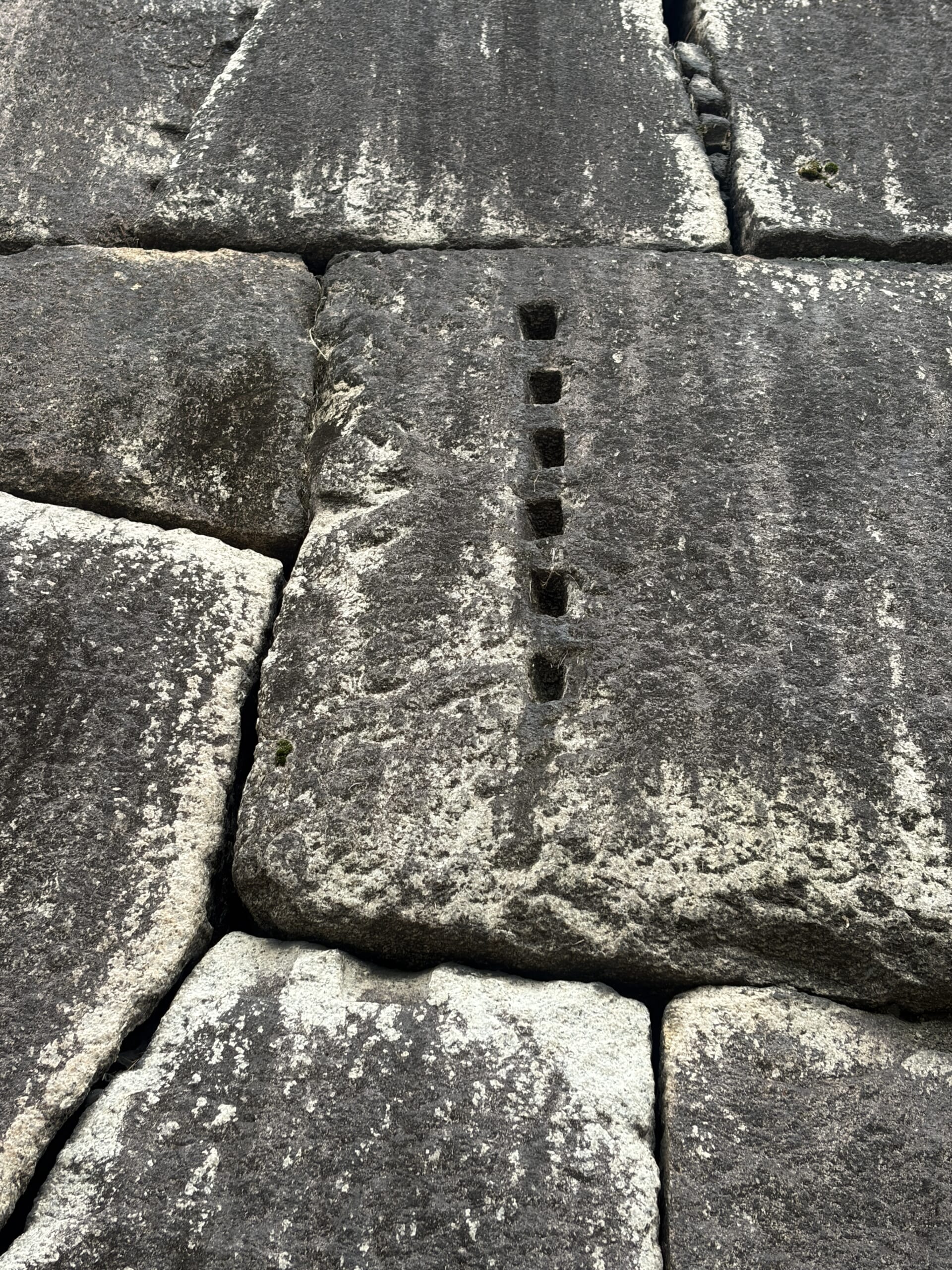
This time I didn’t climb the tenshudai (keep base); I simply looked up at it from below. Yaana (holes carved to split the stone) were lined up on it too: today’s yaana, found. At the Kitahanebashi-mon Gate, I looked outside, then turned round. Suddenly, the keep base.
The Day’s Main Event: The Bench at the Pine Corridor Site
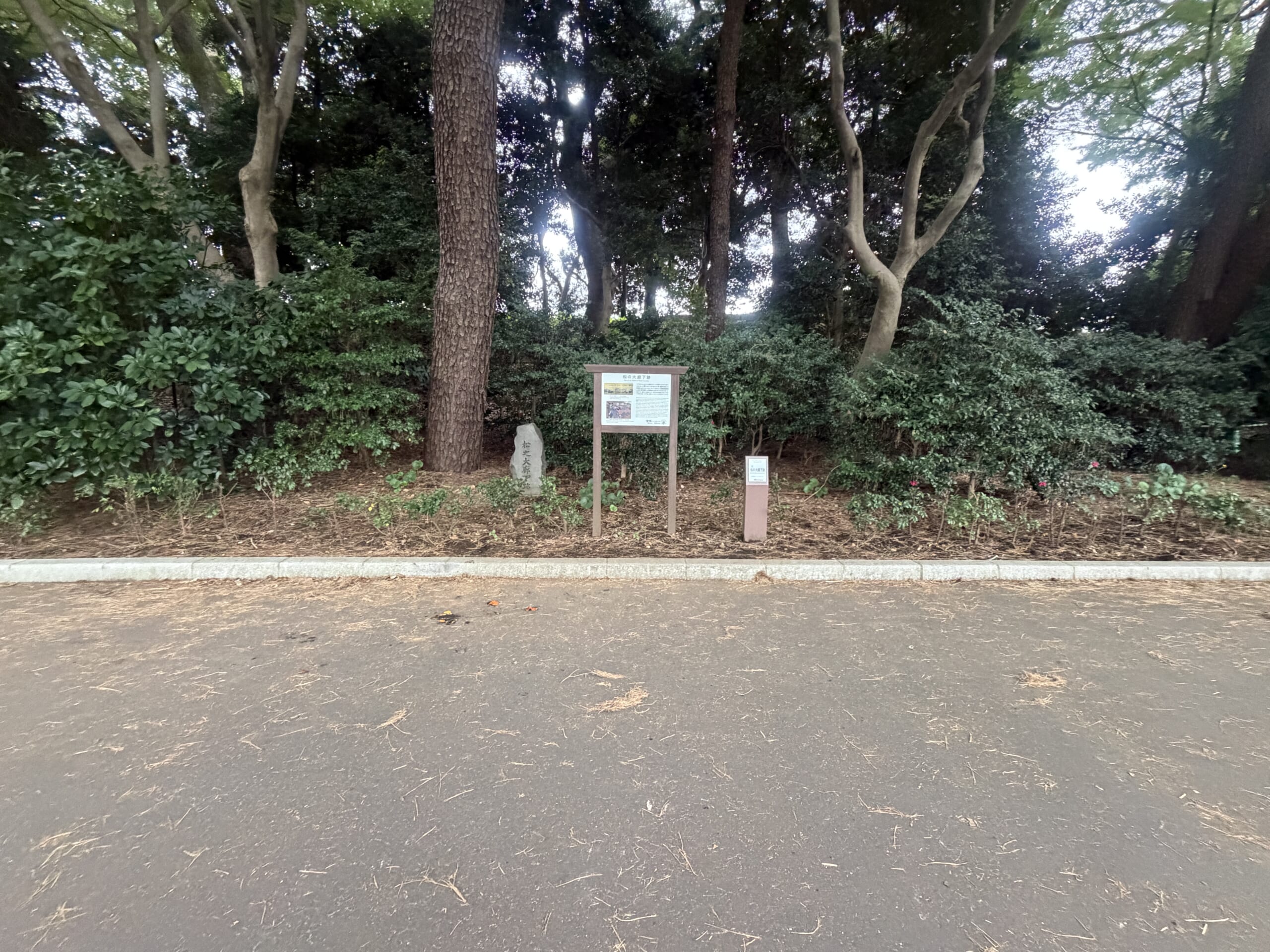
After stopping by the stone chamber, at last I reached the signpost for the “Matsu no Roka Site”. Today’s main event!!!!!
The Matsu no Roka was a long corridor running from the Ohiroma (Great Hall) of the Honmaru Palace to the Shiroshoin hall. In 1701 (Genroku 14), it was here that Asano Takumi-no-kami attacked Kira Kozuke-no-suke with his sword, the start of the Ako Incident. In the play, Asano becomes Enya Hangan; Kira becomes Ko no Moronao.
Now there’s just a stone marker with an information board, standing among the trees. There was a bench facing them, so I sat down.
Looking up: sky through the gaps in the leaves. Of course, what came to mind was Shichinosuke’s Enya Hangan. It must have been a shocking event at the time, yet I found myself thinking, “It’s very peaceful here now, you know.”
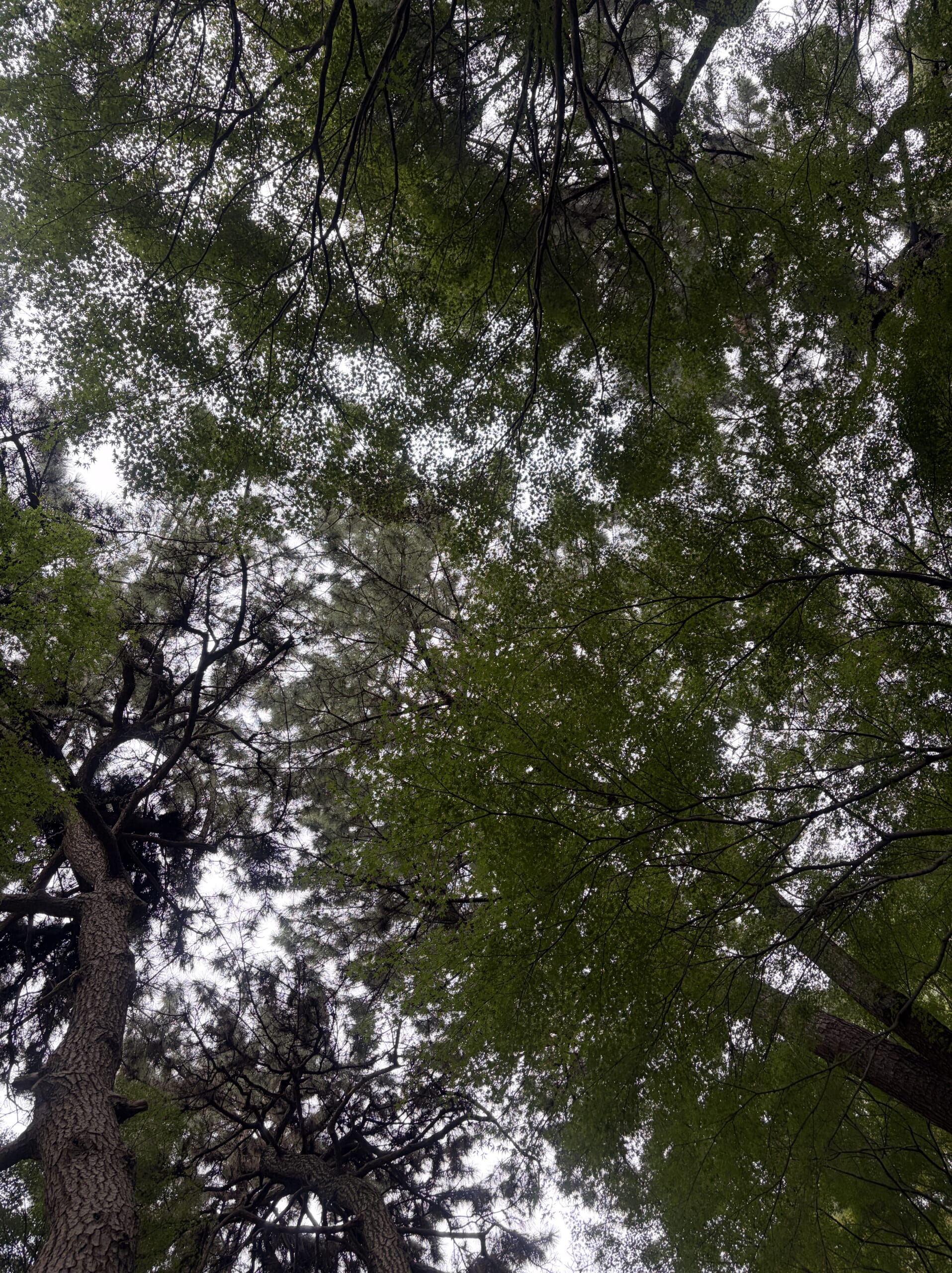
Still, to think it happened here, in this very place, back then… it’s painful, sad, frustrating. The place hasn’t changed, yet you can let your thoughts travel across time. That’s what I love about places with history.
Summary
On the way back, I looked up at Fujimi Yagura, then went to the Kaju Kohinshu-en (heritage fruit orchard). Persimmons hung everywhere. Mandarins look nice too~. Passing the Obansho guardhouse, then the Nakanomon Gate site, I came back to the Ote-mon Gate.
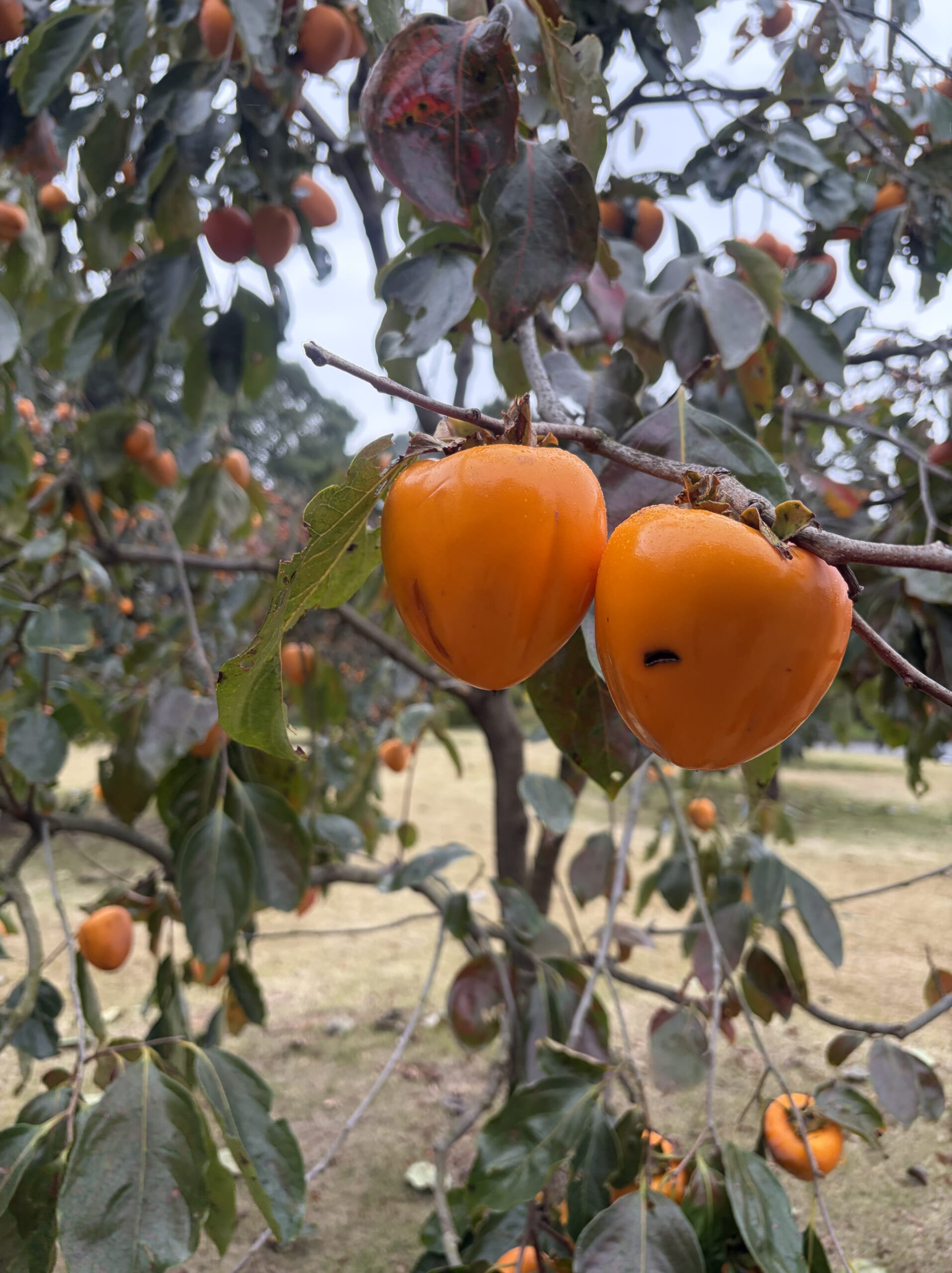
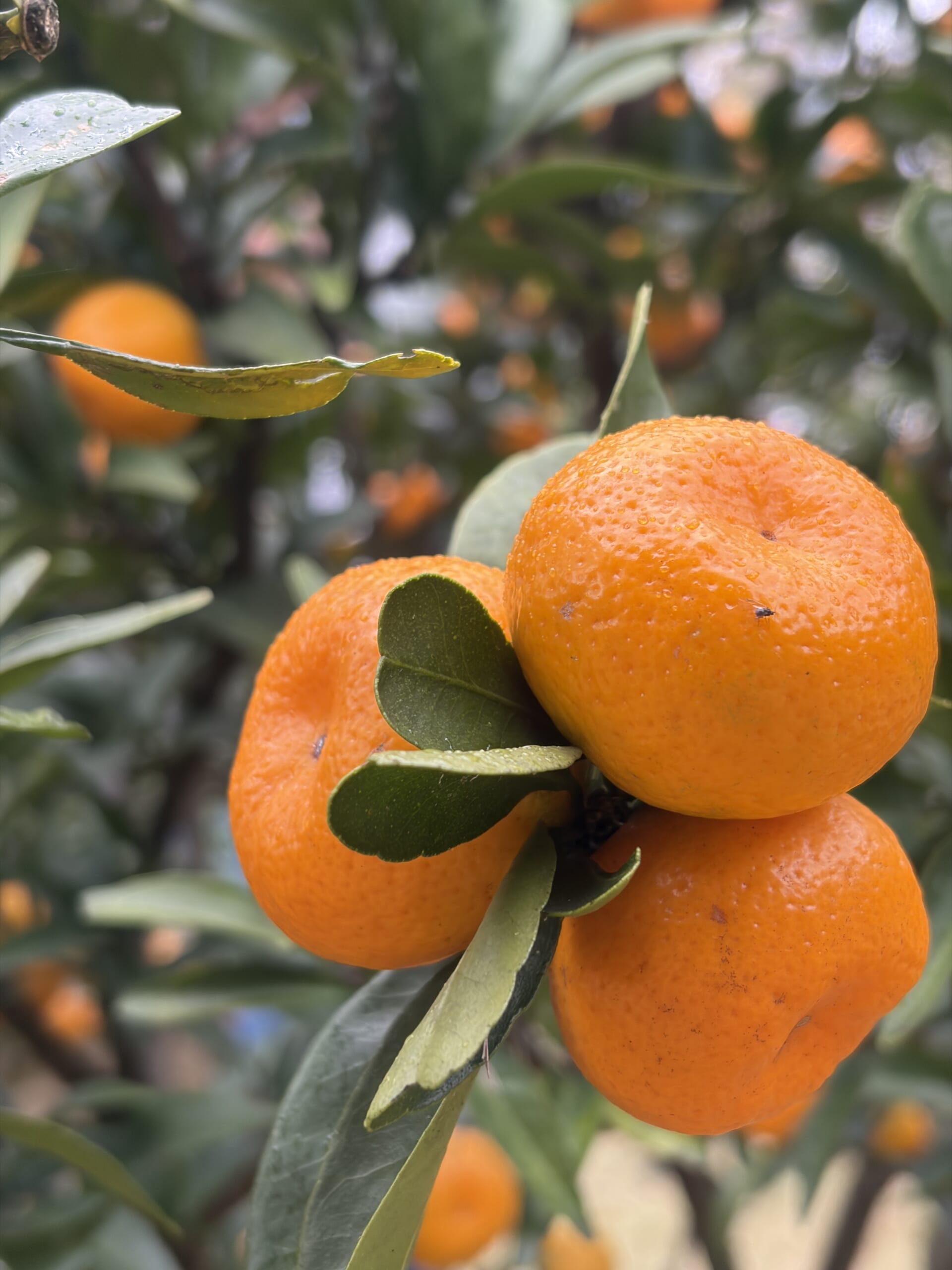
There’s still so much more to see, but that’s it for Edo Castle today. Afterwards, I headed straight to Sengakuji Temple to pay my respects at the main hall, as well as at the graves of the Ako retainers. From the Pine Corridor to Sengakuji: a day full of Chushingura. I’ll tell you about Sengakuji in a separate post.
Next time at Edo Castle, I’d like to do a full lap round the Hanzomon side, just like the Imperial Palace runners. Once that’s done, it’s finally time for the outer moat. I’m thinking of walking around the Yotsuya, Akasaka-mitsuke area.