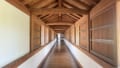
My first time at Himeji Castle. What stayed with me most wasn’t the pure white keep… it was the long, straight corridor of the Hyakken Roka in the Nishi-no-Maru (West Bailey). Clear blue skies, with plenty of heat to match. As always, today was the best.
🗺️ See the route I walked in photos → Castle Hopping: Himeji Castle Route Map (October 2026)
What Kind of Castle Is Himeji Castle?
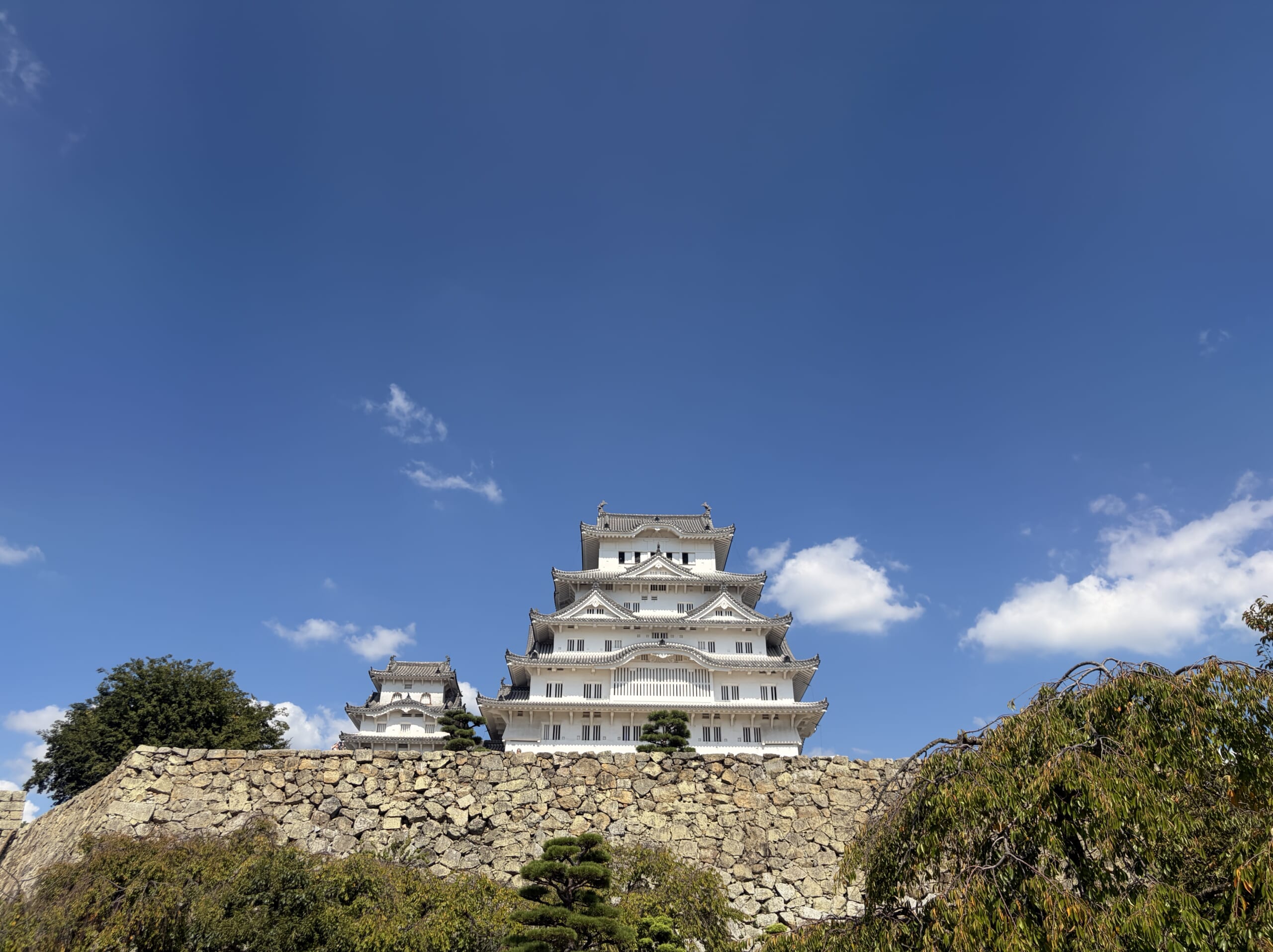
A UNESCO World Heritage Site with a keep complex designated as a National Treasure, it is one of Japan’s signature castles. Its white plaster walls have earned it the nickname “Shirasagi-jo” (White Heron Castle).
Its keep is a genzon tenshu, an original keep that survives as it stood in the Edo period, the largest of them all. Another feature is its renritsu-shiki (connected) style: the main keep is linked to three smaller keeps by watari-yagura (turrets that join one building to the next).
Highlights All the Way to the Keep
You can see the keep from Himeji Station, but from there it looks pretty far away.
Through the Ote-mon Gate, it’s hot, with crowds everywhere. As expected of a World Heritage Site~. At the “Nishi-no-Maru Chaten” teahouse in Sannomaru Square (it’s named after the West Bailey, yet it stands in the Third Bailey), I picked up my first gojoin (castle seal).
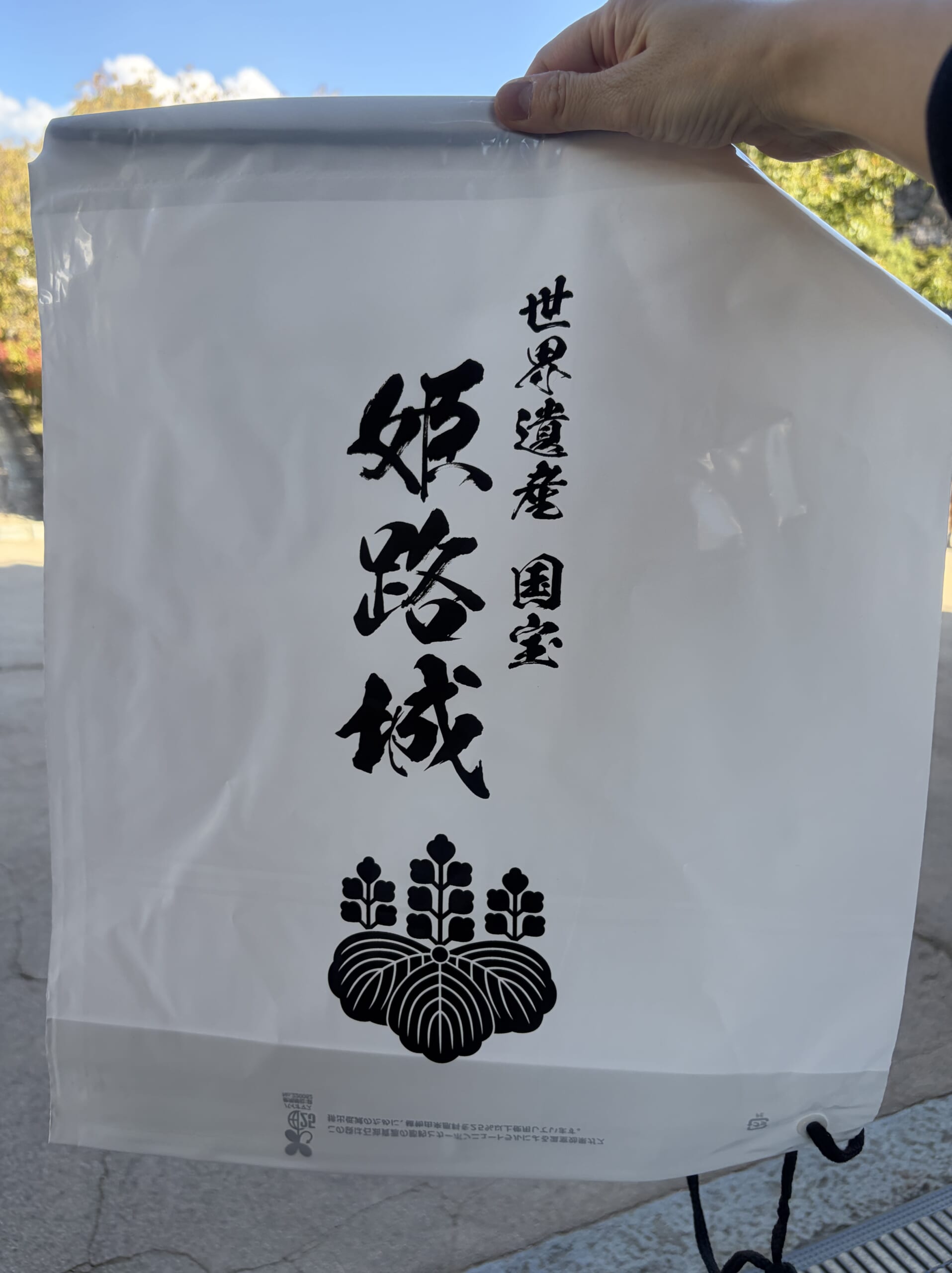
At the entrance, you’re handed a bag for your shoes. Outdoor shoes aren’t allowed inside the keep, nor in the Hyakken Roka, so you carry them around in this bag. Plus, you get to take it home afterwards. What a lovely bag🫶
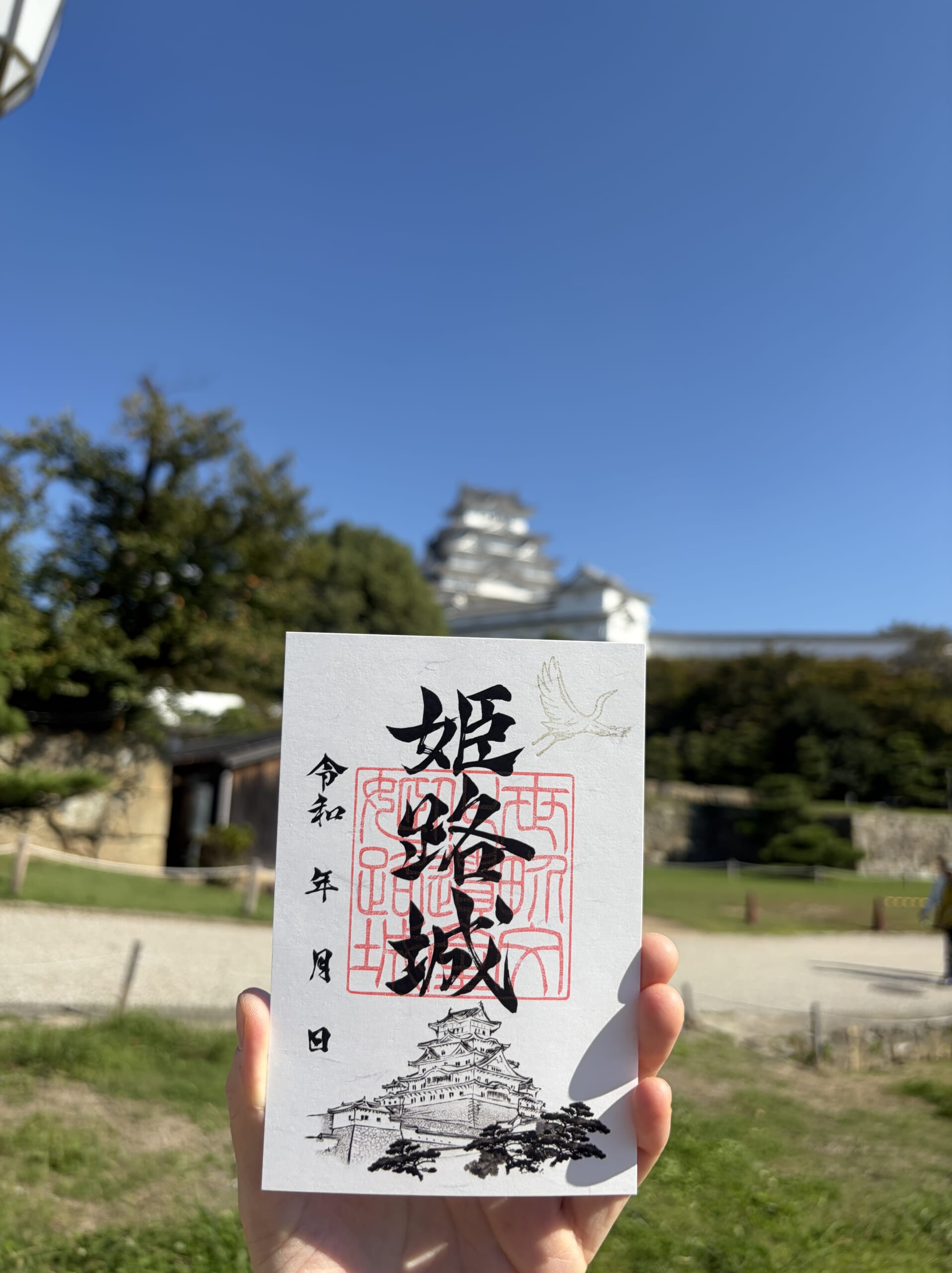
Along the path to the keep, there are rows of round, triangular, square sama (small openings for aiming guns at the enemy outside, also used for bows). I couldn’t help peeking through them: “Taking aim from the sama.”
Inside the Original Keep, Every Angle Is Fascinating
Shoes off, into the main keep. It’s crowded, yet my eyes keep going to the pillars, the beams.
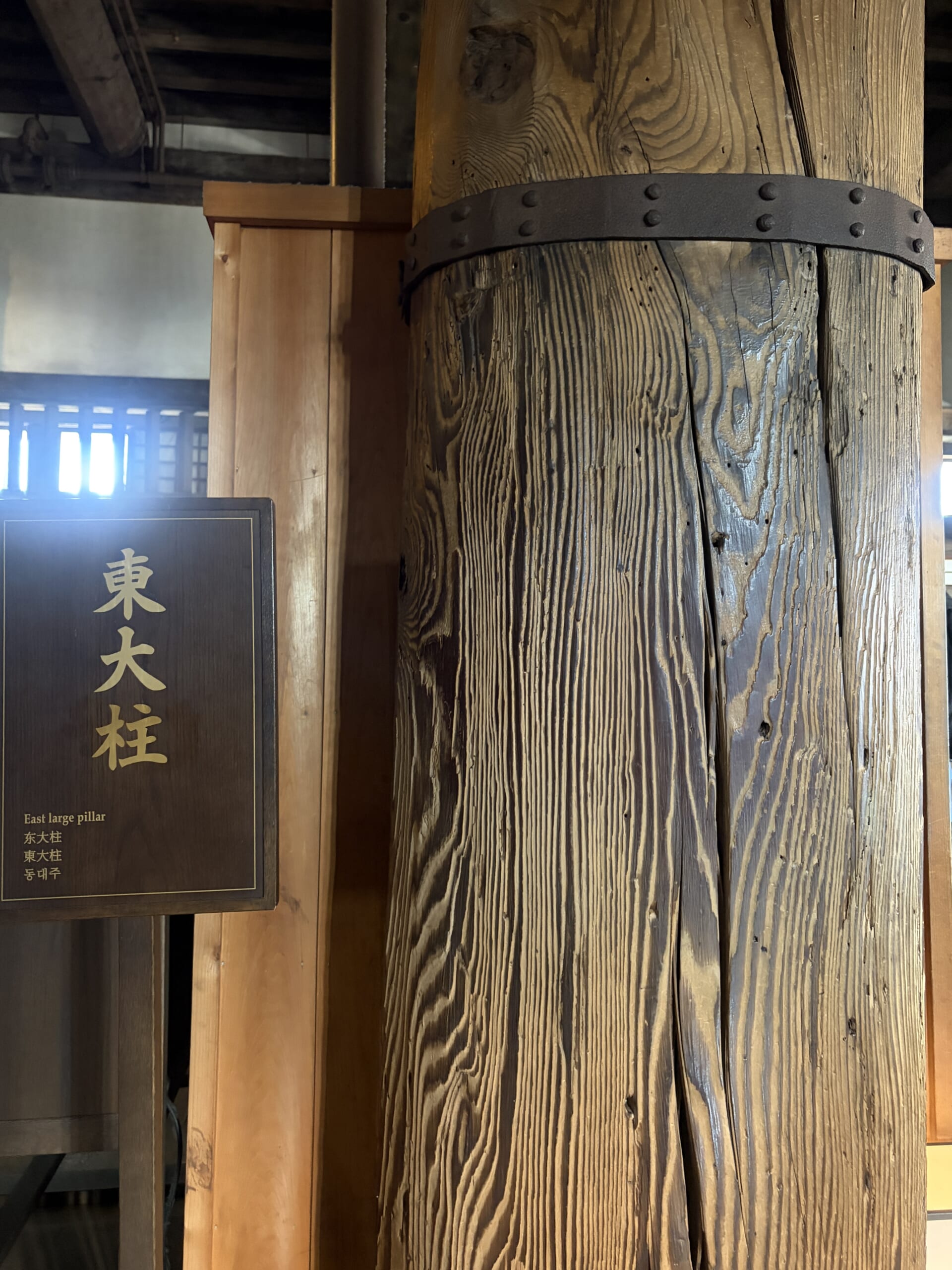
The West Great Pillar with the East Great Pillar, which hold up the keep, look like thick pillars driven straight through the building😳 An armoury, weapon racks lined up along the walls, a mushakakushi (a hidden space where warriors lay in wait). How many people could fit in there… Imagining weapons lined up here is pretty scary.
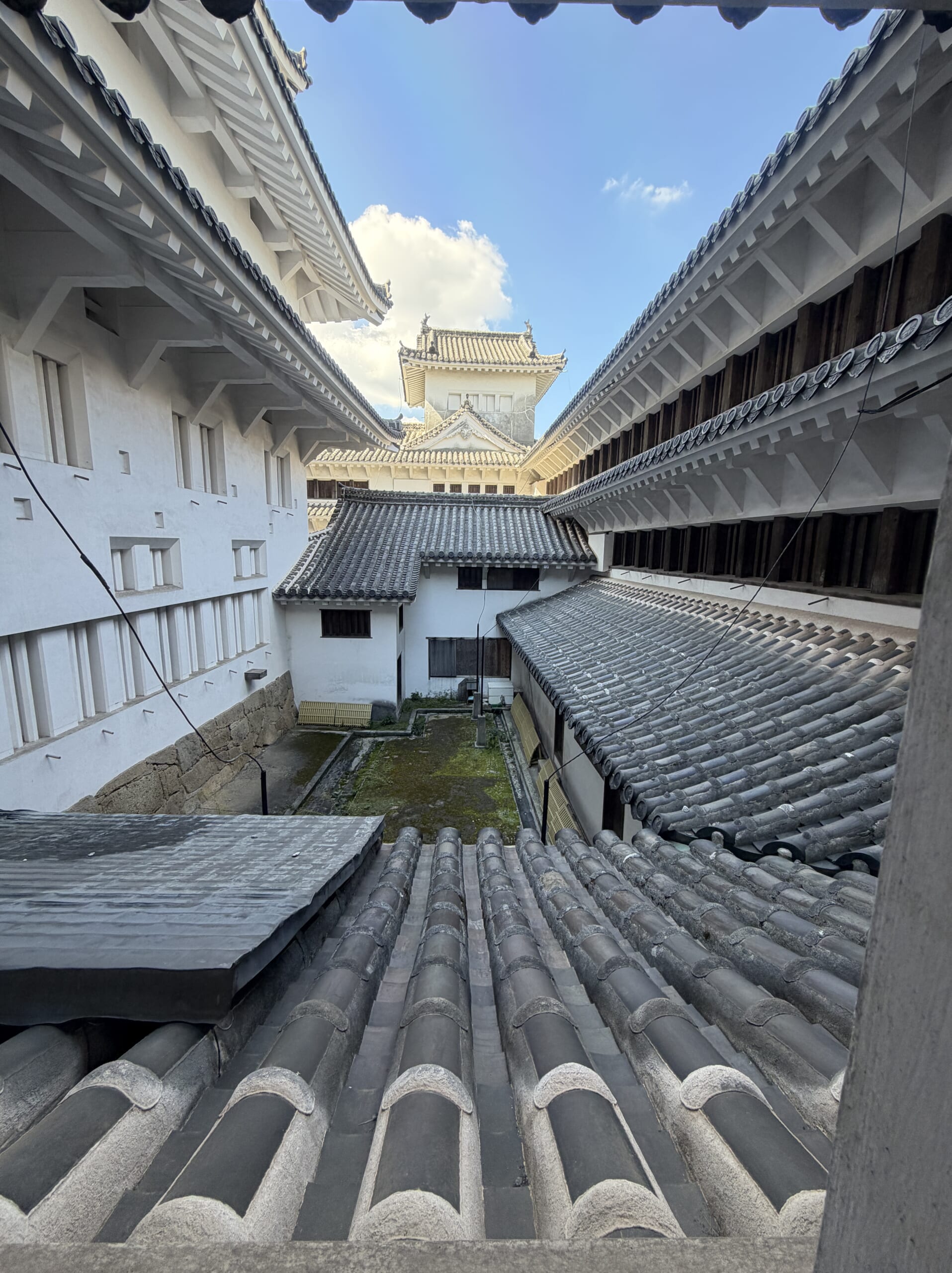
From the windows, a view of roofs, white walls layered one over another. Until now I’d only visited castles with stand-alone keeps, so I was a little moved: this really is a magnificent keep.
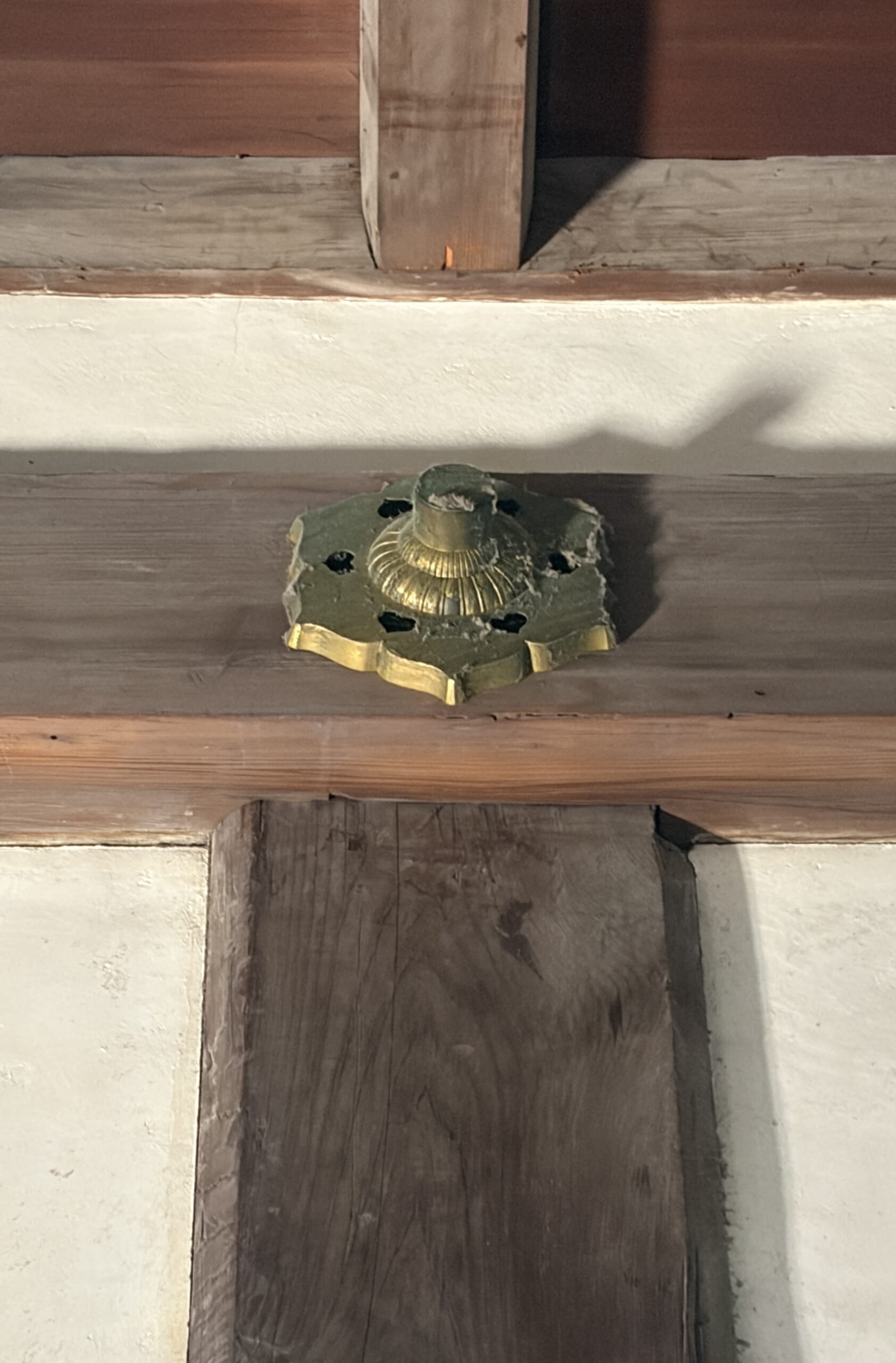
Kugikakushi (decorative metal fittings that hide the nail heads), the wood grain, the way the beams are joined. Original keeps really are cool wherever you look. Maybe that’s why I took so many photos (haha).
On the top floor, a staff member kindly explained everything in detail. It was a sacred place where the lord would sleep during a siege, also where he would commit seppuku if the worst came to pass. Because it was such a special room, the nail covers were apparently decorated with gold leaf, a little of which still remains near the top.
This top floor is also the setting of Izumi Kyoka’s Tenshu Monogatari (The Castle Tower). When it was staged at the Kabukiza, I couldn’t get tickets, nor have I seen the Cinema Kabuki version yet… I want to see it~~.
Stone Walls, Legends
After leaving the keep, I walked around the grounds looking at the stone walls. Even ancient stone coffins from burial mounds were used in them. Does that mean gathering stones was so hard they had to use coffins?
I’d heard there are lots of kokuin (marks carved into the stones), so I searched as I walked, but hardly found any (haha). When I spotted something that looked like one: “A kokuin?! Found one?!”
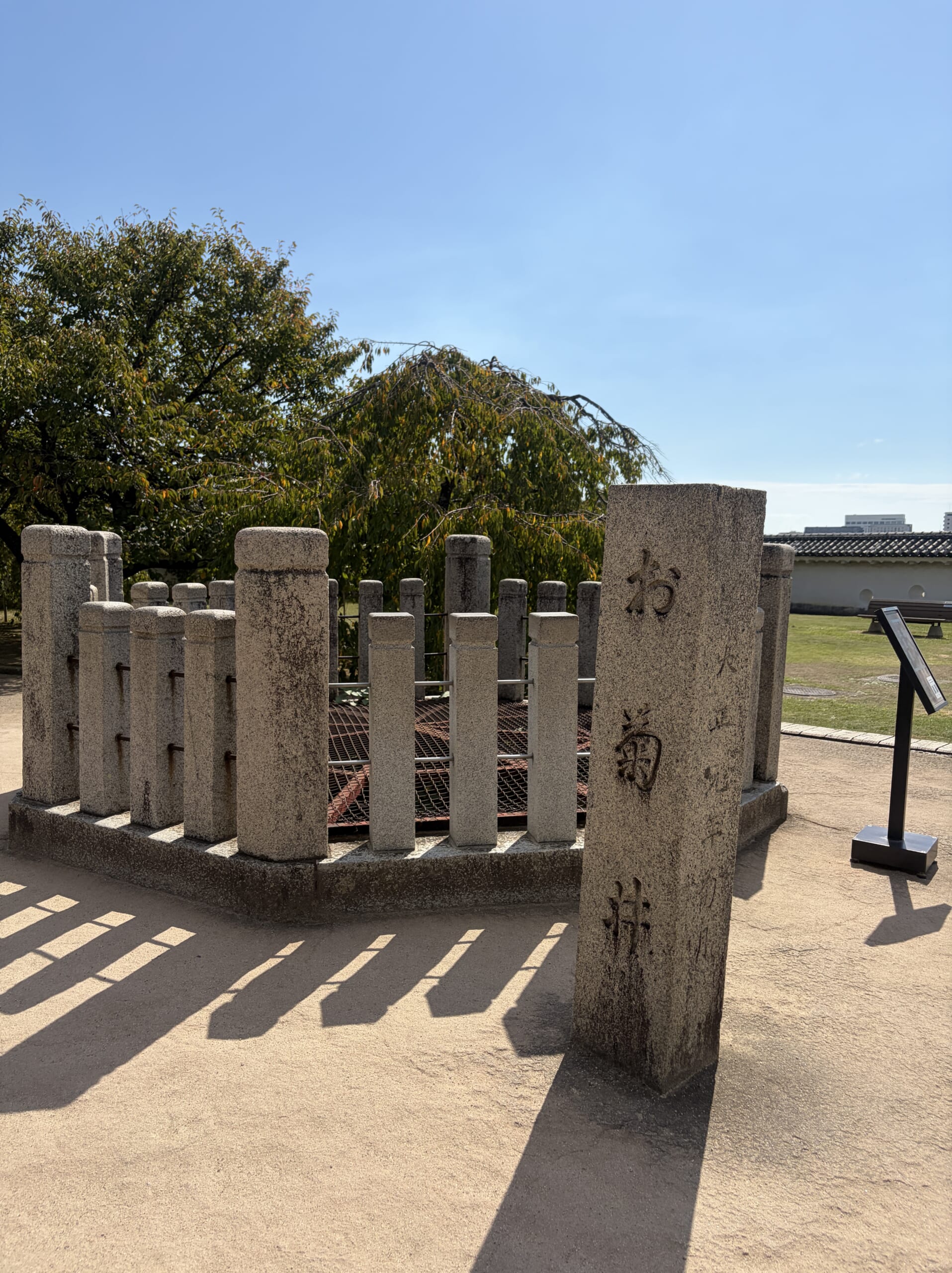
At Okiku’s Well, reading the board about Banshu Sarayashiki (The Dish Mansion of Harima): “Wait, so this isn’t the same as Oiwa?!” I’d mixed her up with Oiwa from Yotsuya Kaidan, which I’d seen as Cinema Kabuki. The kabuki play Bancho Sarayashiki is set in Edo. Here in Himeji, a story about Okiku has been passed down too. Still, wells really are scary~.
The bench with a view of the keep: it was too hot, so no one was sitting there, but I really think it’s the best seat in the house!
A Bird in a Cage, in the Hyakken Roka
Back to the Hishi-no-Mon Gate, then on to the Hyakken Roka in the West Bailey. It’s a long corridor once lined with the rooms of the ladies-in-waiting.
The corridor stretching dead straight is wonderful. Then again, some sections wind about surprisingly.
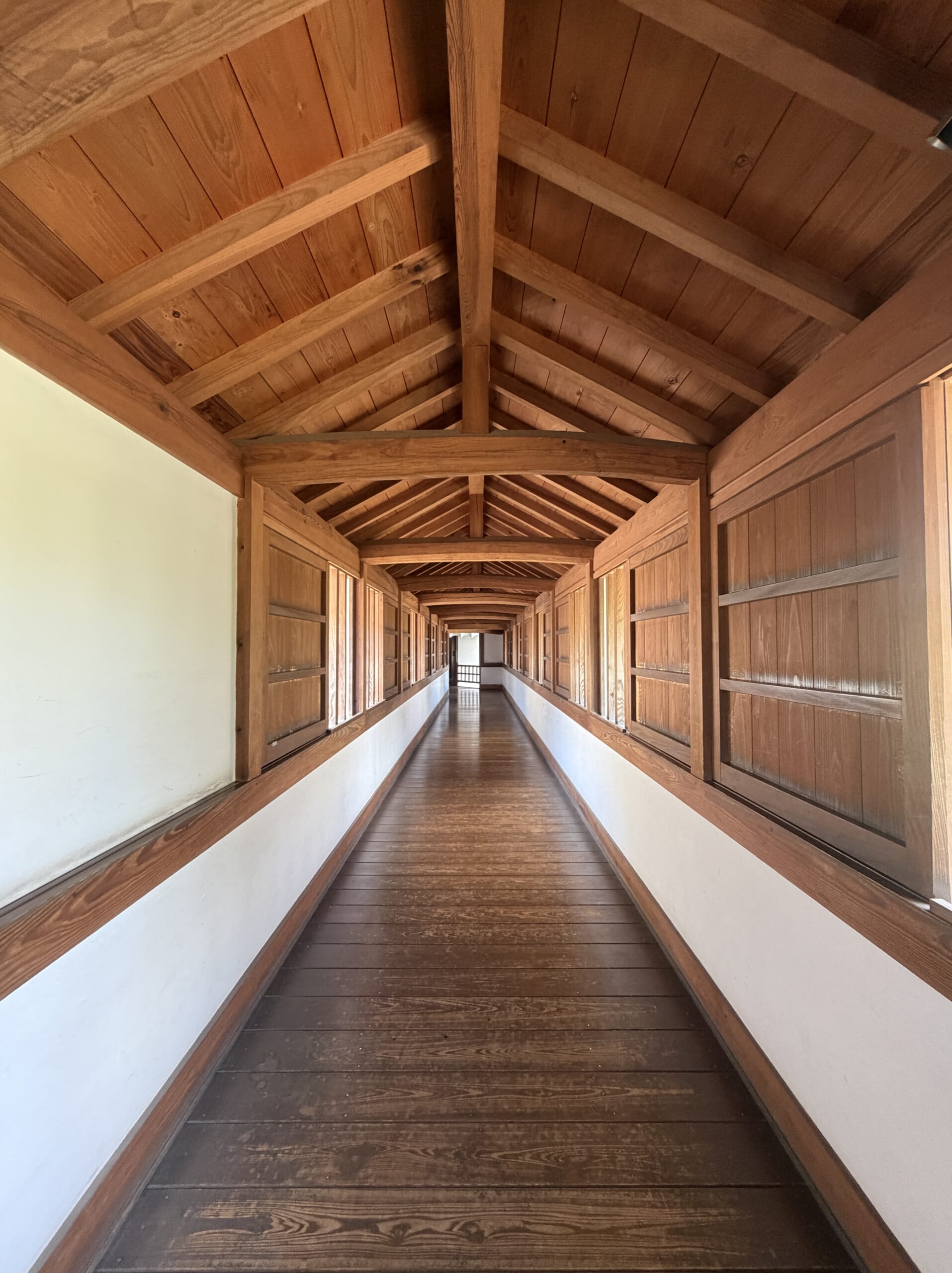
Back then, it was probably so busy that an empty corridor was unthinkable. But the view now is so beautiful. Without today’s flood of information, what must it have been like to spend day after day with the view from those windows? I found my thoughts drifting there~.
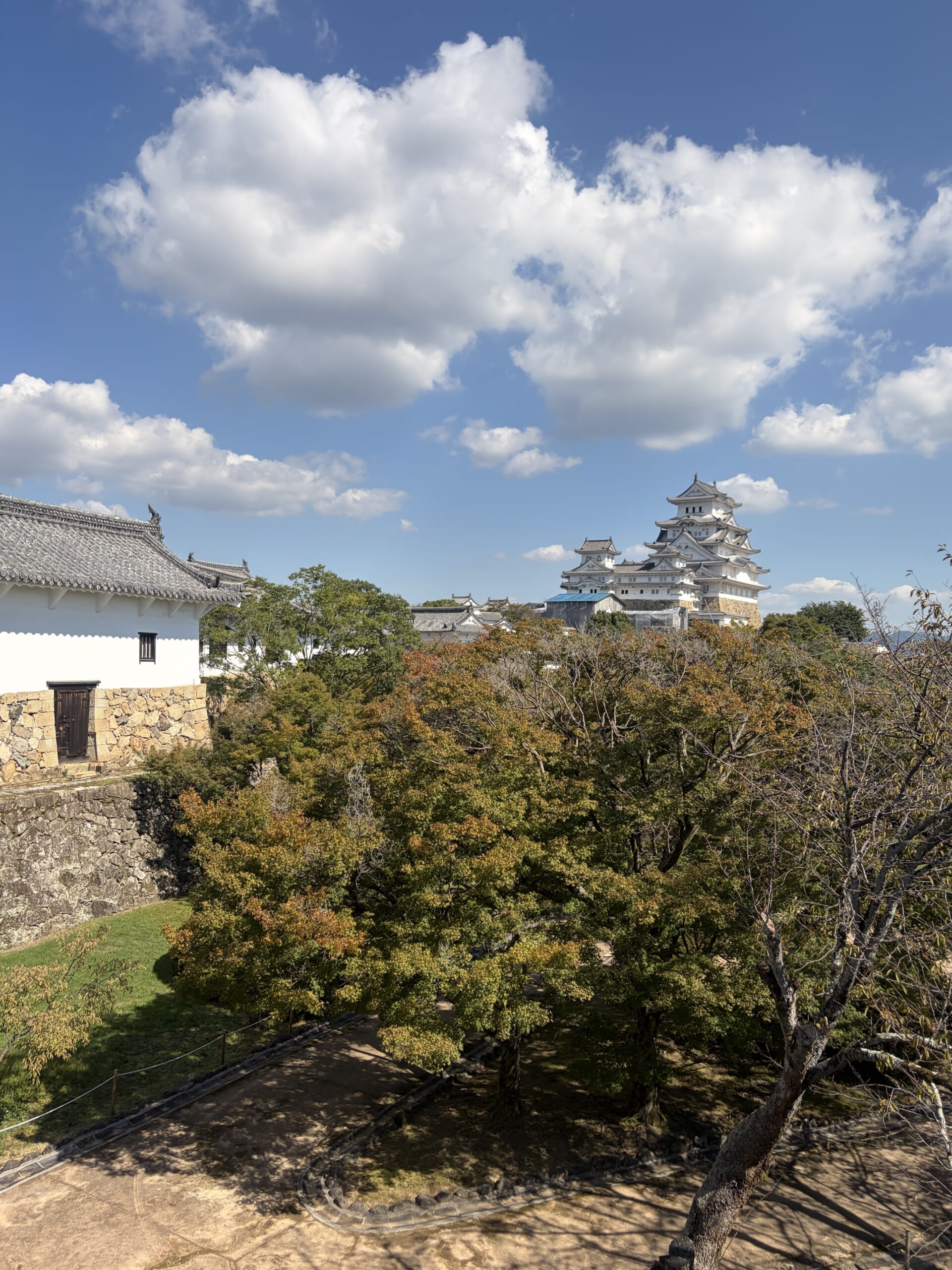
Beyond the window stood a surprisingly magnificent kinmokusei (fragrant olive tree). Such a lovely scent, so soothing. The display of tsugite (joinery that connects one piece of timber to another) was fun too. The carpenters who could craft such work are amazing. On the wall opposite the rooms, a row of sama. This was a place that had to be well defended too.
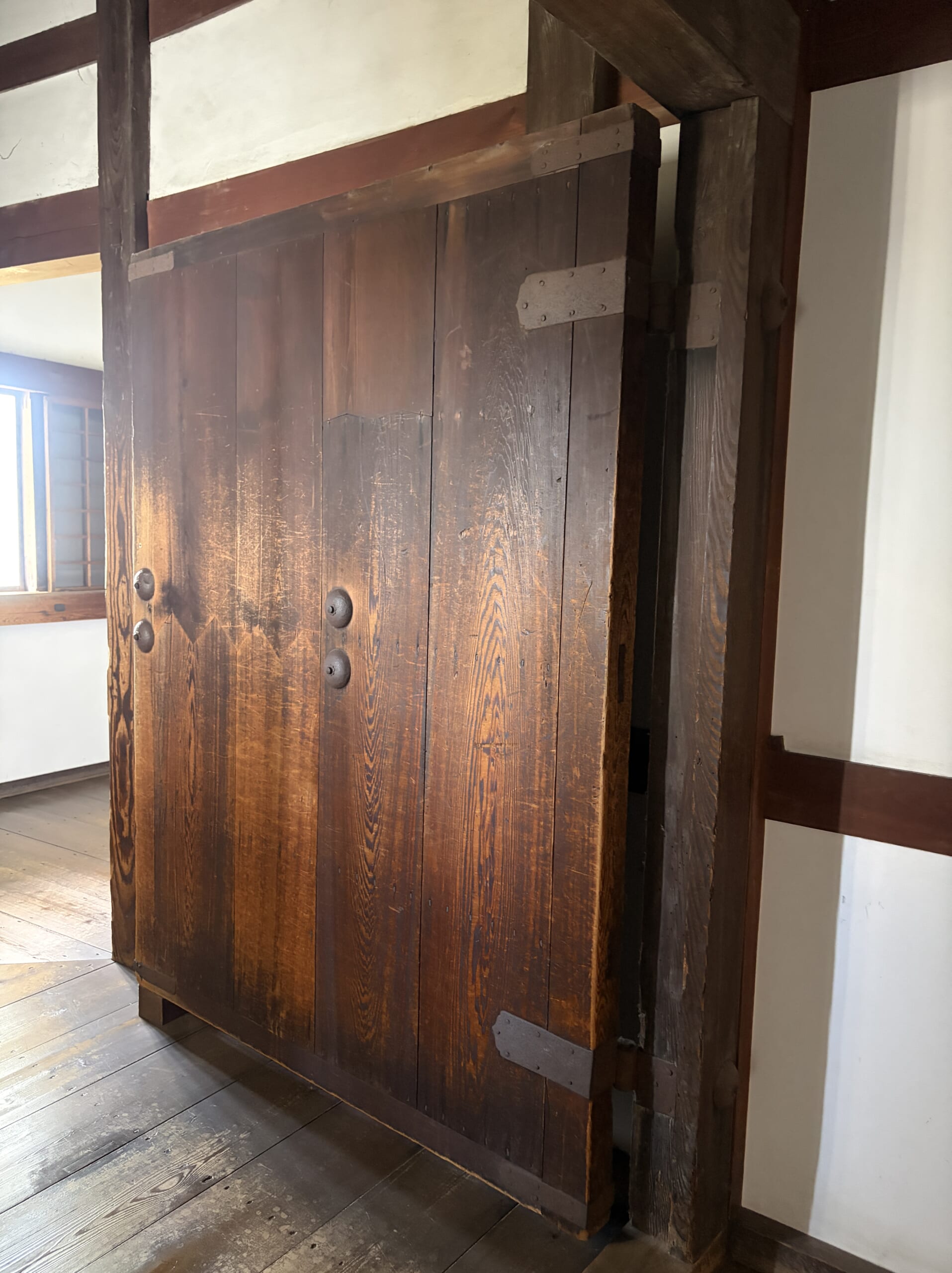
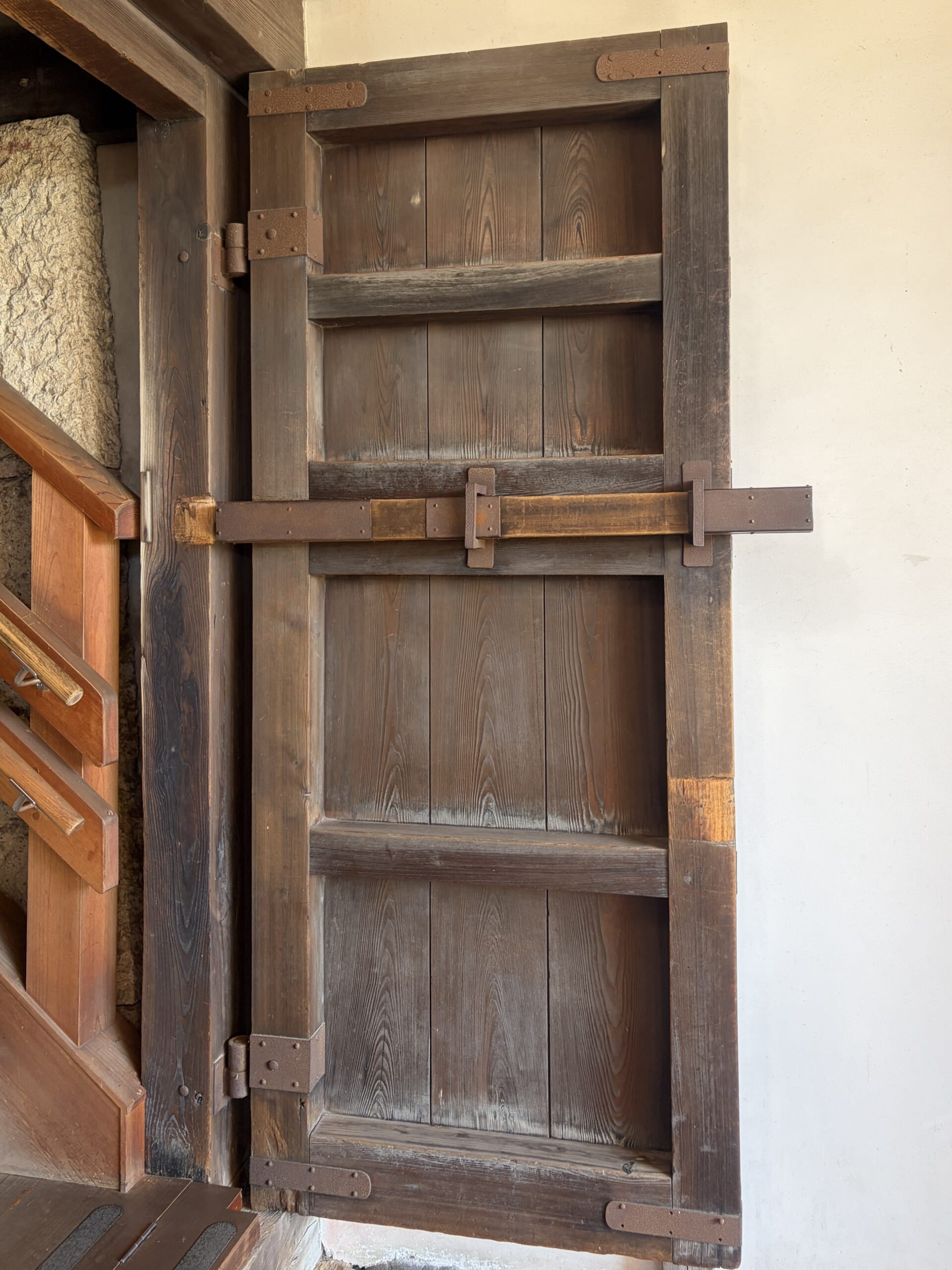
Then there were the big doors that caught my eye. According to the information board, these odo (great doors) were shut at night to protect the area where the women lived. But with so many great doors, a door at the bottom of a staircase, a kannuki (wooden bar lock) on the exit… every one of them looked hard for women to get through, hard to open, hard to shut, so I end up feeling shut in. Is that just me? Maybe the men helped, so the women never needed to do it themselves… With sama built all along the corridor, I imagine men guarded the women from the corridor? But if the men were protecting them properly, why would great doors be needed?… A little like a bird in a cage. I wonder what it was really like.
At the end of the corridor is the Kesho Yagura (Make-up Turret), linked to Princess Sen. Princess Sen, a granddaughter of Tokugawa Ieyasu, remarried Honda Tadatoki after the Siege of Osaka, coming to Himeji with him. They lived as a devoted couple… but Tadatoki died young, so Princess Sen had to leave Himeji. How heartbreaking….
On the way out, I also bought a second gojoin at the Himeji Castle shop next to the exit gate.
A Break at Kokoen Garden
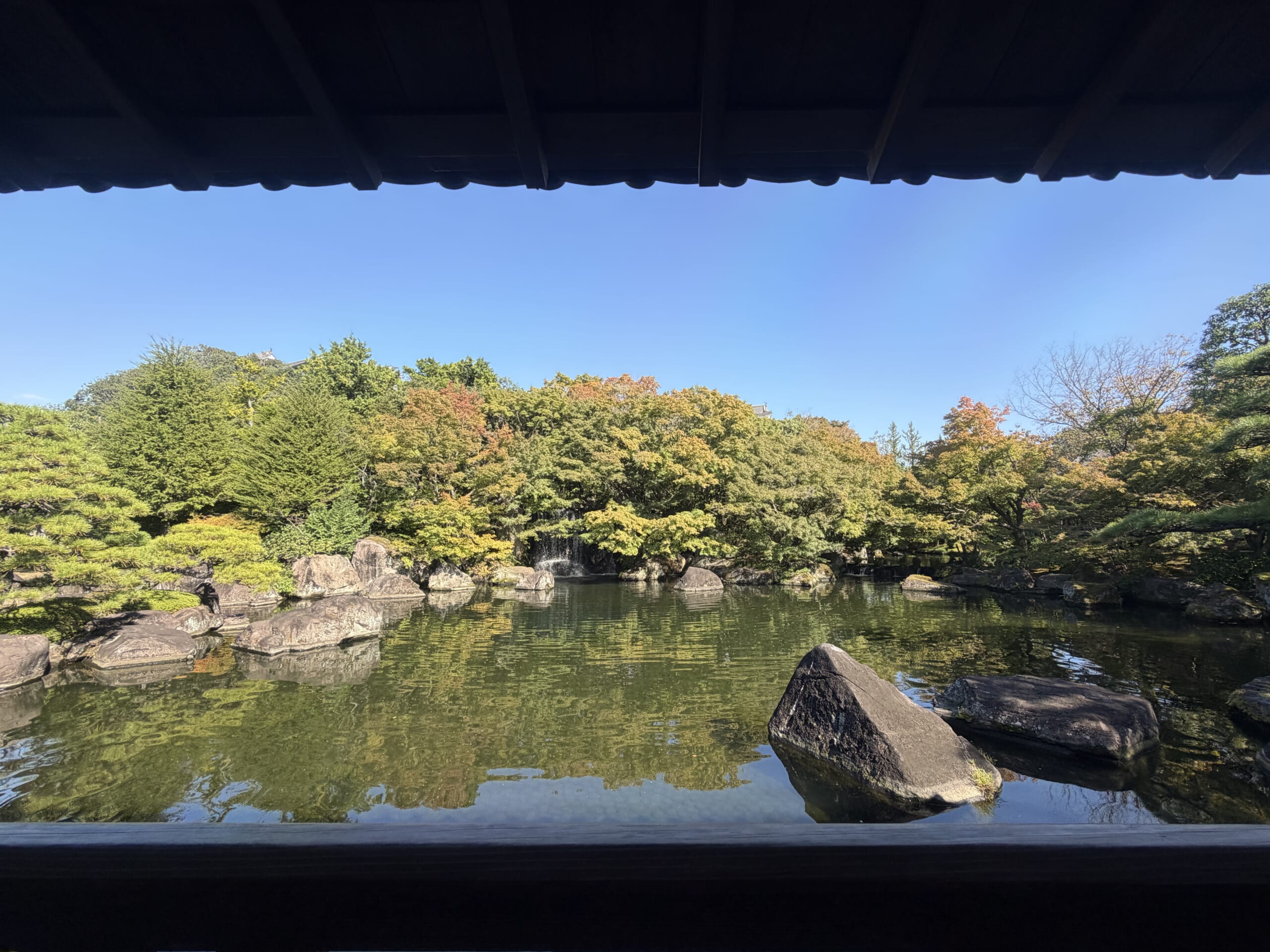
With my combined ticket, I went next door to Kokoen Garden. Shade from the trees, the sound of water: “So cool~.”
The garden is kaiyu-shiki (a stroll garden, enjoyed as you walk around it). It’s man-made, yet I enjoyed it thinking its beauty must be carefully calculated. I spotted lots of people tending the garden too. Daily care must be the secret to its beauty… what hard work~. In the pond: magnificent koi, plus lots of tiny baby koi.
Summary
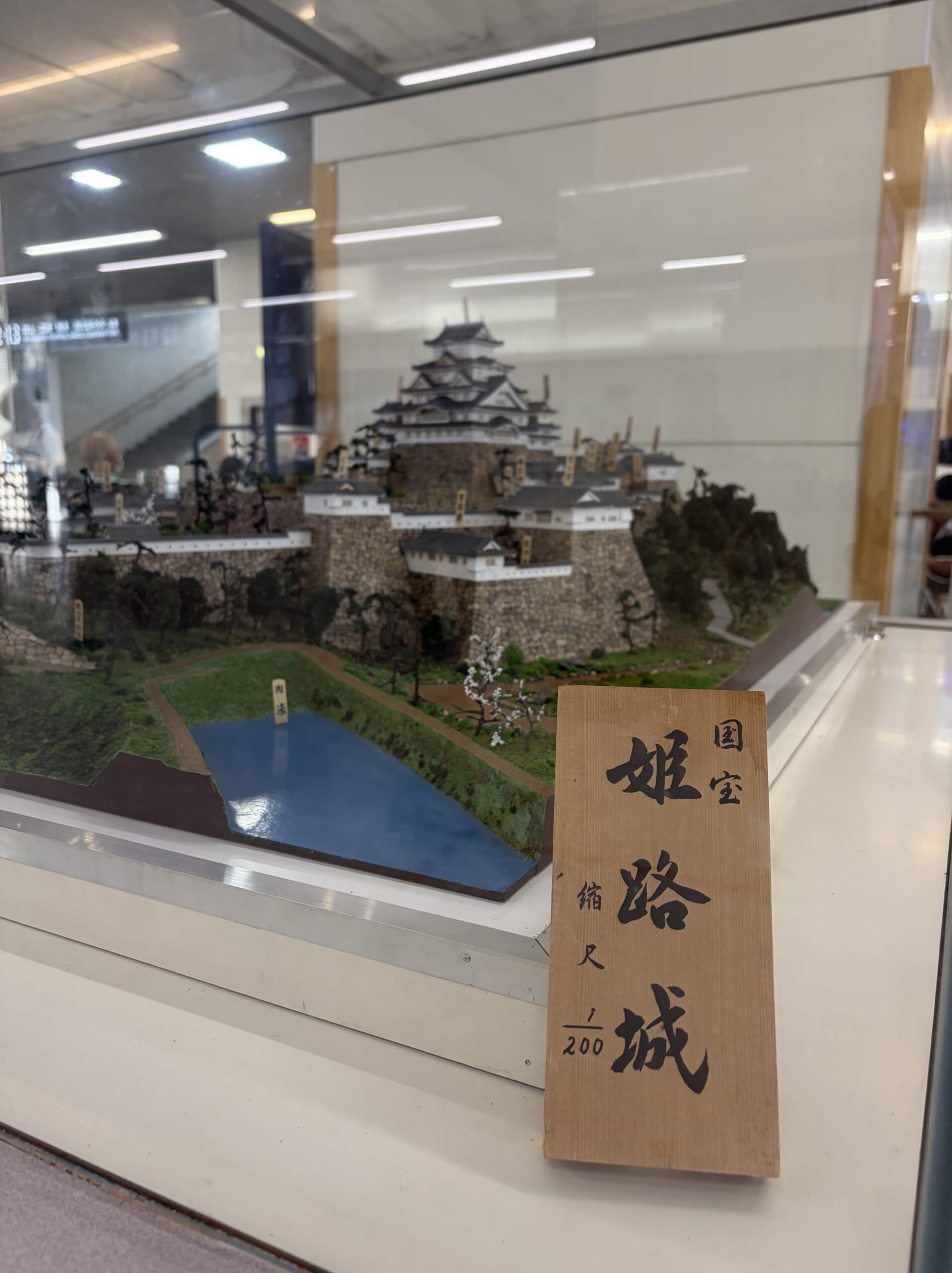
At Himeji Station, I found a diorama of the castle. Looking at it, there were places I hadn’t been. Even after walking for about five hours, I still haven’t seen enough. I’ll have to come back… Next time, I’d like to ride the boat on the inner moat too. According to someone from Himeji, the castle looks beautiful from the Otokoyama side. I simply have to go💨
For souvenirs, I picked up sweets from Goso Monaka Honpo at the Omiyage Kaido shopping area in the station. The Castle Florentin was crispy, delicious. As for the Yuzu Cheese Monaka plus the Senhime An Pie, they’re so cute that I’m going to keep them on display until right before their best-before date🫶
Not just the keep: the corridors, the doors, the stone walls all let you imagine the people who once lived here. That’s the kind of castle it was.