My second time at the Fukuoka Castle ruins. I’d barely set off from Akasaka Station when the lotus filling the moat stopped me in my tracks. A relaxed visit this time, by a different route. As always, today was the best.
More from this place → Castle Hopping: Fukuoka Castle (April 2026)
See the walking route in photos → Castle Hopping: Fukuoka Castle Route Map (June 2026)
A second visit, taking it easy
My first visit was all about being overwhelmed by the stone walls — the second bailey, the main bailey, the small keep, the Shiomi Yagura, the Tamon Yagura… “I want to see everything!” and dashing about. This time, a comfortable second go. Not quite “I know the place inside out”, but being able to wander without trying too hard is the joy of a return visit. I’d already completed the set of goshuin (castle seal stamps) last time, so today was simply about taking it slow, by a slightly different route from before.
Fukuoka Castle was built by Kuroda Nagamasa, together with his father — the master castle-builder Kuroda Kanbei — over seven years from 1601. Whether it ever had a keep is still a mystery to this day… but as it happens, that very “mystery” turns out to be something of a star this time. (More on that later…)
Stopped by the lotus on the moat
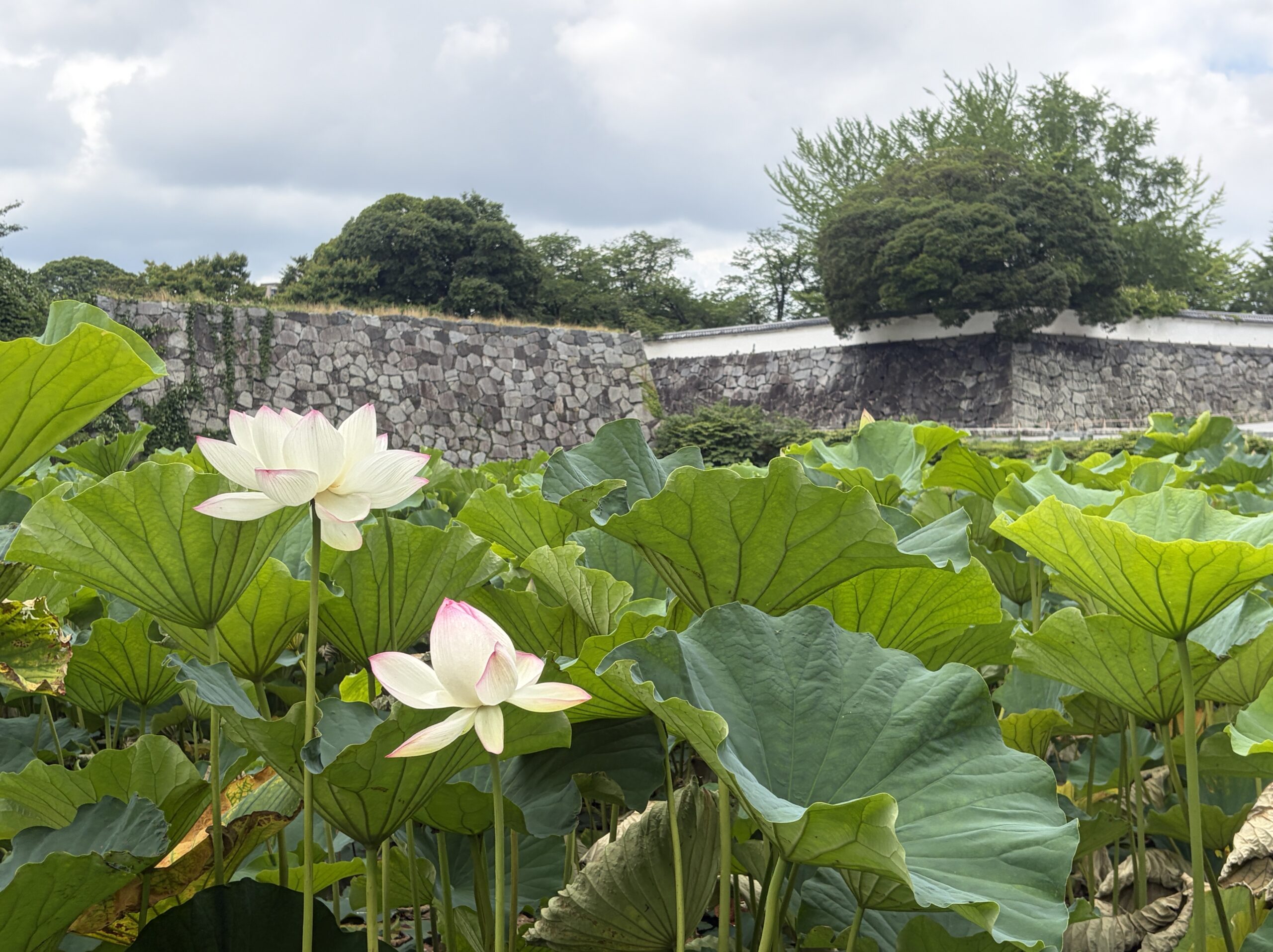
Setting off from Akasaka Station, the first thing to greet me was the lotus on the moat. Completely unexpected. White petals tipped with the faintest pink, spread right across the moat — I stood still for a while. I hadn’t come for lotus, yet it felt like a sudden little reward. And you can’t help wondering just how much lotus root must be down there under all this… (ha).
The stone walls, and the stones waiting their turn
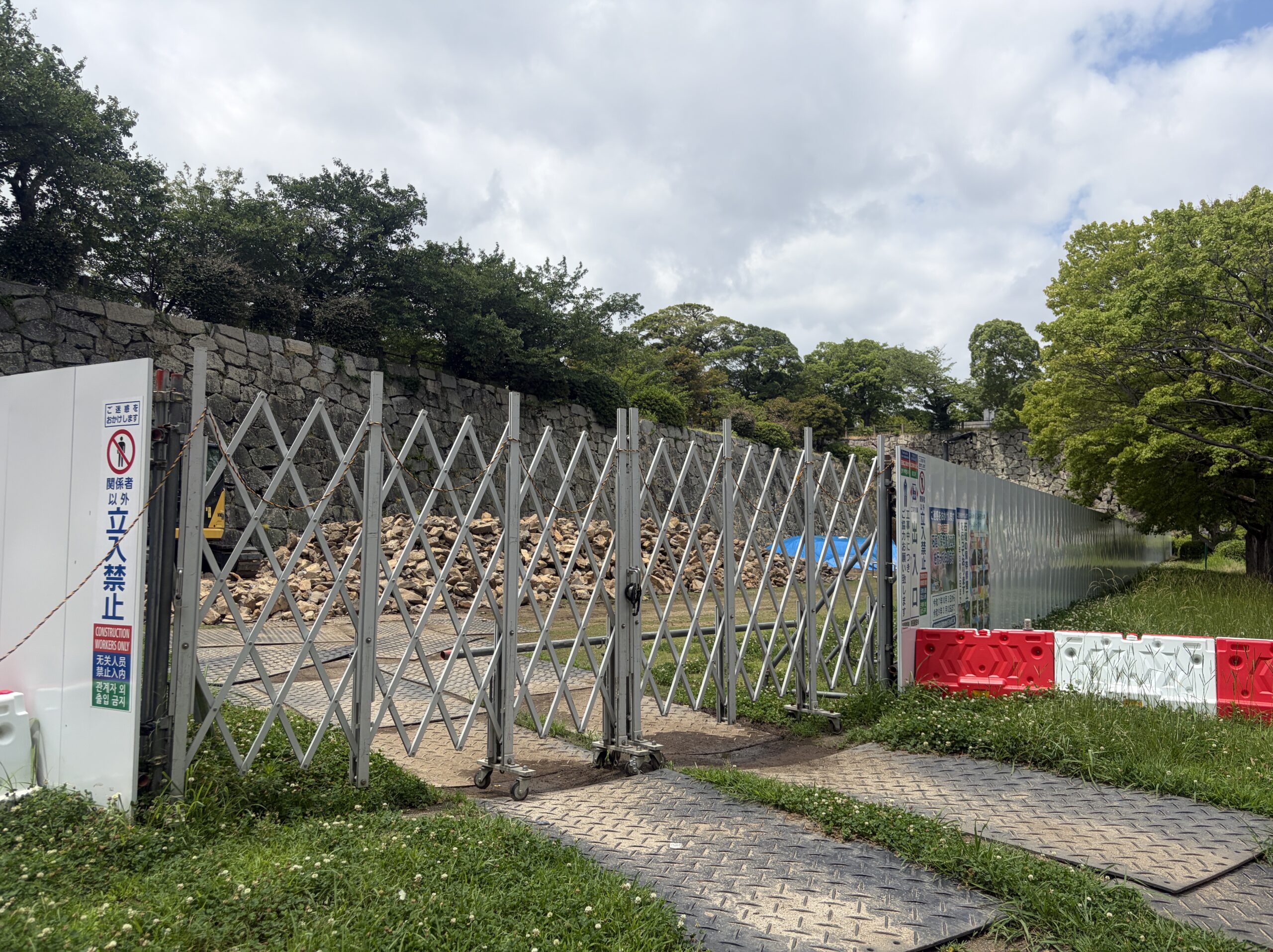
Walking on, the stone-wall repair site I’d seen last time came into view. Had the pile of stones grown…? Or maybe not? To be honest, my memory’s got a bit muddled up with the stone walls at Kumamoto Castle, in which I’d been recently (ha). I also got to see a few stones that were, presumably, waiting their turn to go back into place — a treat for the eyes. 👀
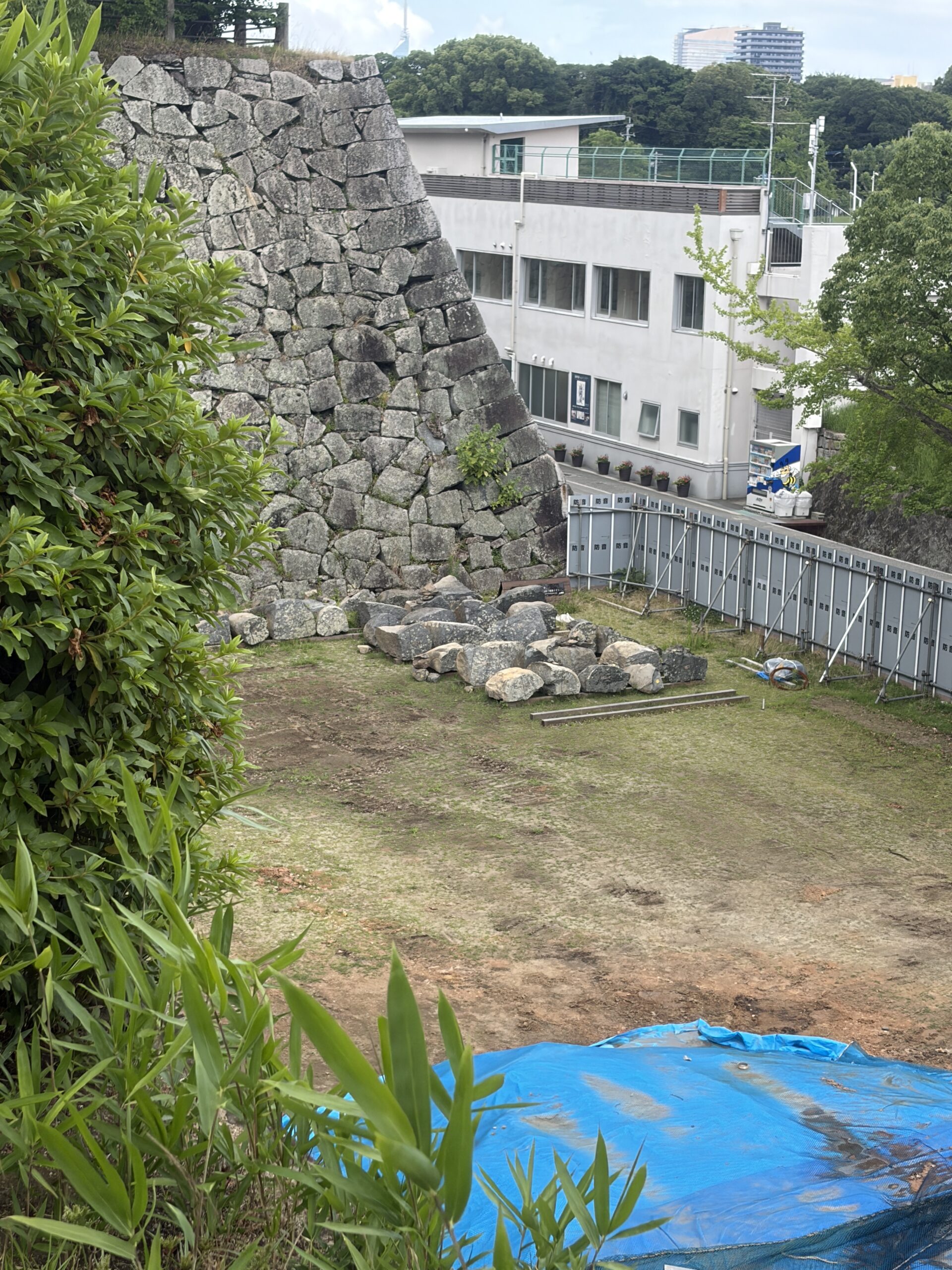
From the second bailey towards Matsunokizaka
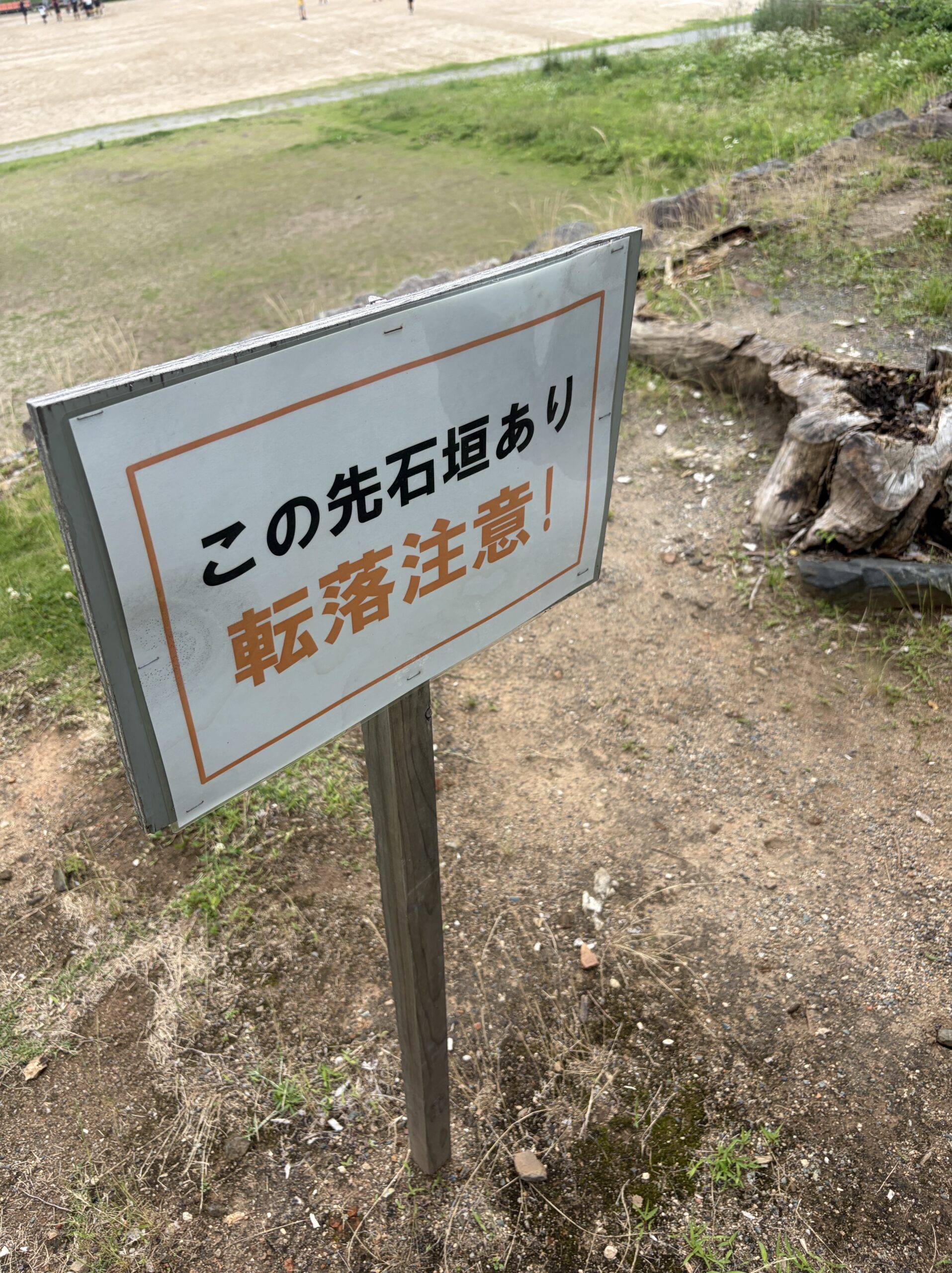
Last time I went from the second bailey to the main bailey, but this time I took a different route, by way of a slope called Matsunokizaka. Before the slope there’s the second bailey, and just in front of its stone wall stood a sign: “Stone wall ahead — beware of falling!” There’s no fence to speak of — a relationship built on a single sign (ha). The wall isn’t all that high, but wander on without noticing and take a tumble, and it’s certainly high enough to break a bone. Scary.
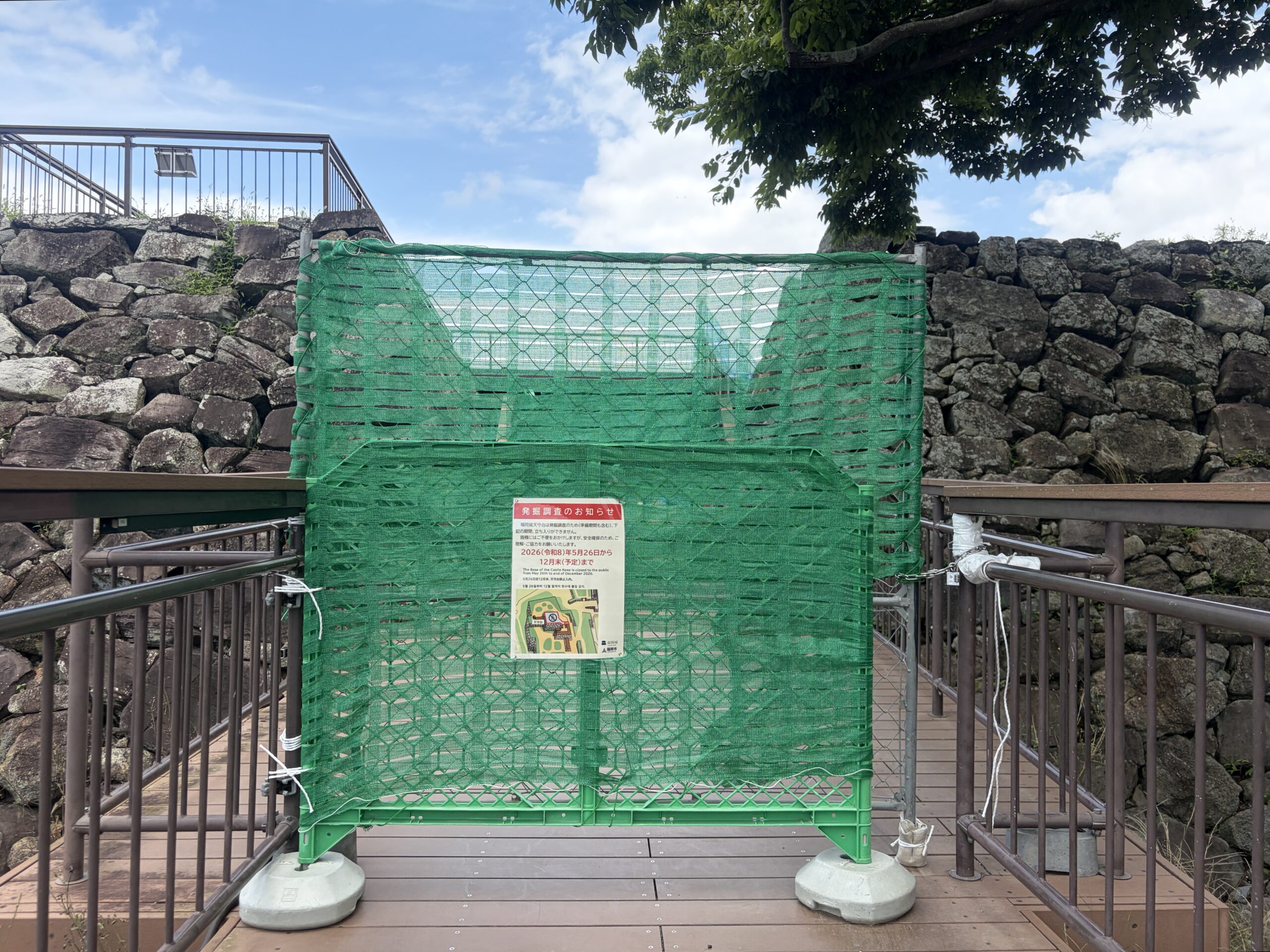
The keep base is resting, for now
Up through the avenue of weeping cherry trees, on towards the main bailey at last — and the keep base. “Here we go!” …and then: a notice board reading “Closed for excavation.” Off-limits until the year’s end, apparently.
At first I thought, “Oh,” but it turns out — and here’s the thing — it’s a dig to confirm whether the long-rumoured “phantom keep” really existed. The trigger was the recent discovery of a historical document stating that a keep had once been built. The very thing I’d wondered last time — “was there a keep right here?” — might just be answered by this excavation. Even short of a flat “the keep existed!”, perhaps it’ll move things along a little. I can’t stop wondering what might emerge from behind that green netting. Here’s hoping for even one small new discovery.
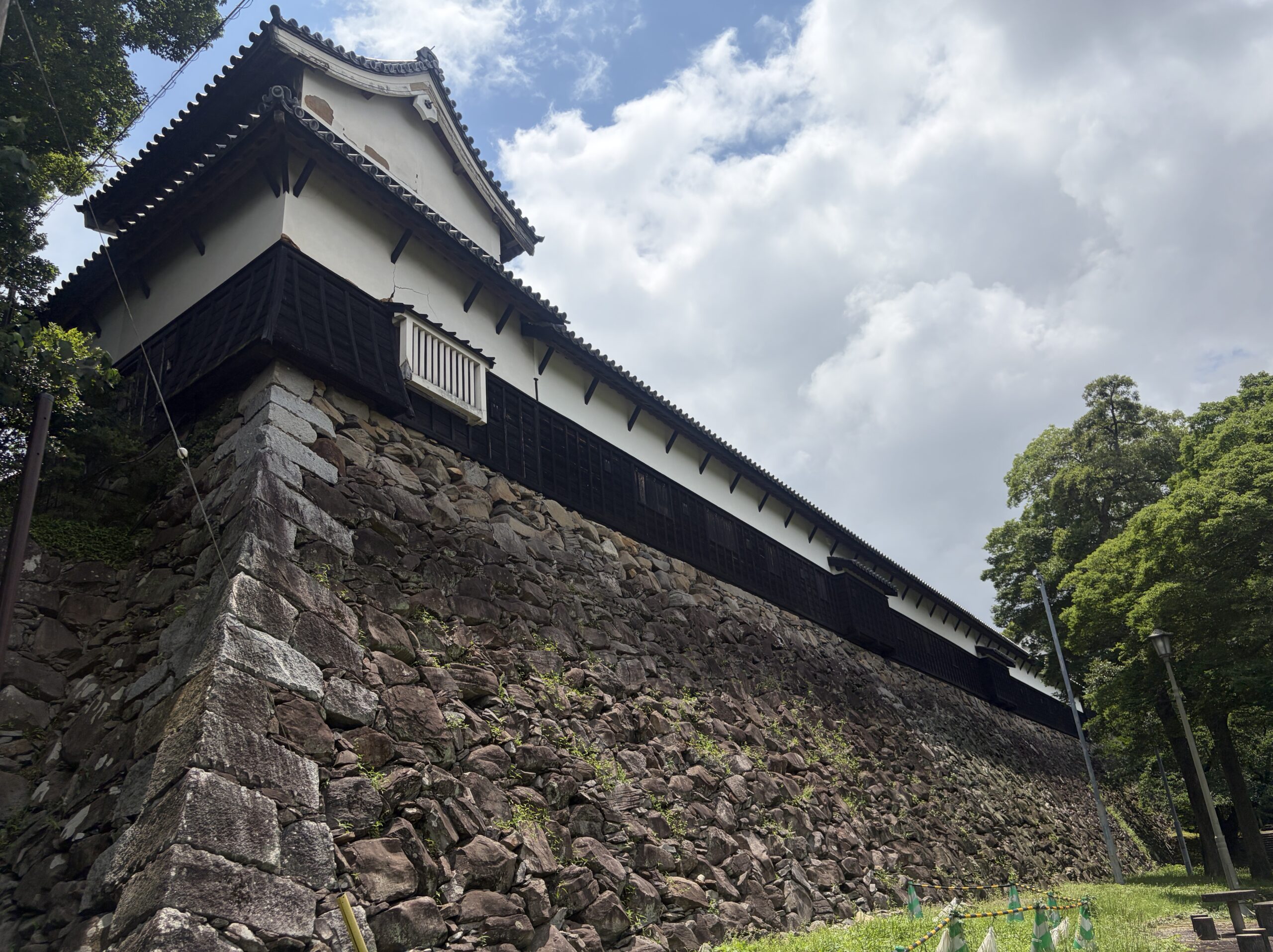
The Tamon Yagura — from below this time
The Tamon Yagura, a nationally designated Important Cultural Property and one of the castle’s surviving turrets. Last time I rested with a cup of tea on the bench right beside it, but this visit was early summer. The grass and trees had grown thick, fairly humming with the promise of mosquitoes. Too scared of being bitten to go near the undergrowth, I ended up just gazing up at it from below. How you walk a castle changes with the season, too — another discovery you only make on a return visit. A lesson the mosquitoes taught me (ha).
In closing
What struck me, walking around, is that Fukuoka Castle is “under construction” all over right now. ⚠️ The stone walls are being repaired, the keep base excavated, and the ancient Korokan is being reconstructed too. It looks asleep, and yet it’s quietly on the move — changing a little each time you come.
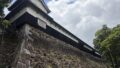
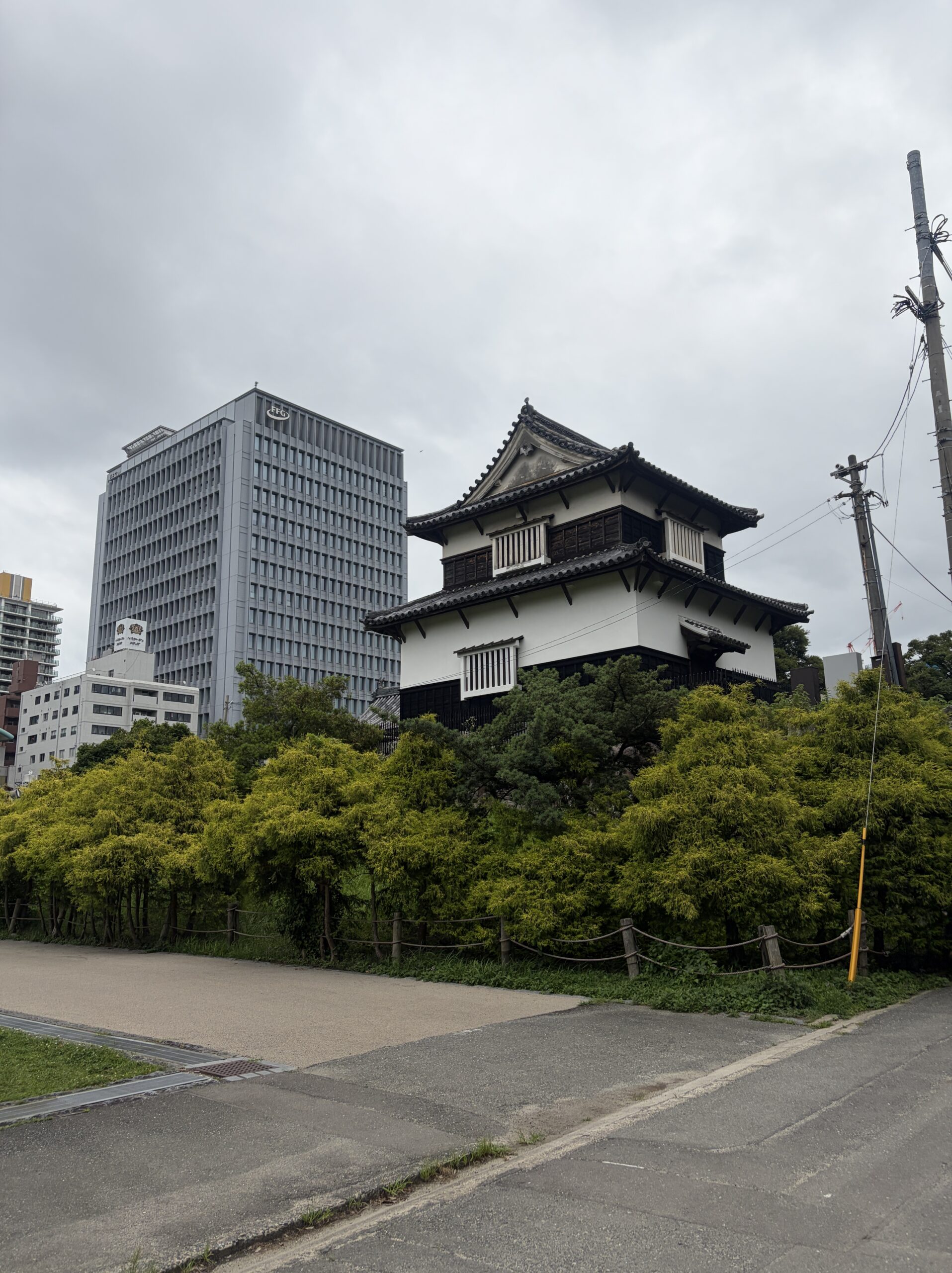
On the way back, the Shiomi Yagura I looked up at in the third bailey had modern buildings lined up right behind it: a scene in which past and present are all jumbled together. That, too, is part of what Fukuoka Castle is now, I thought — rather moved by it.
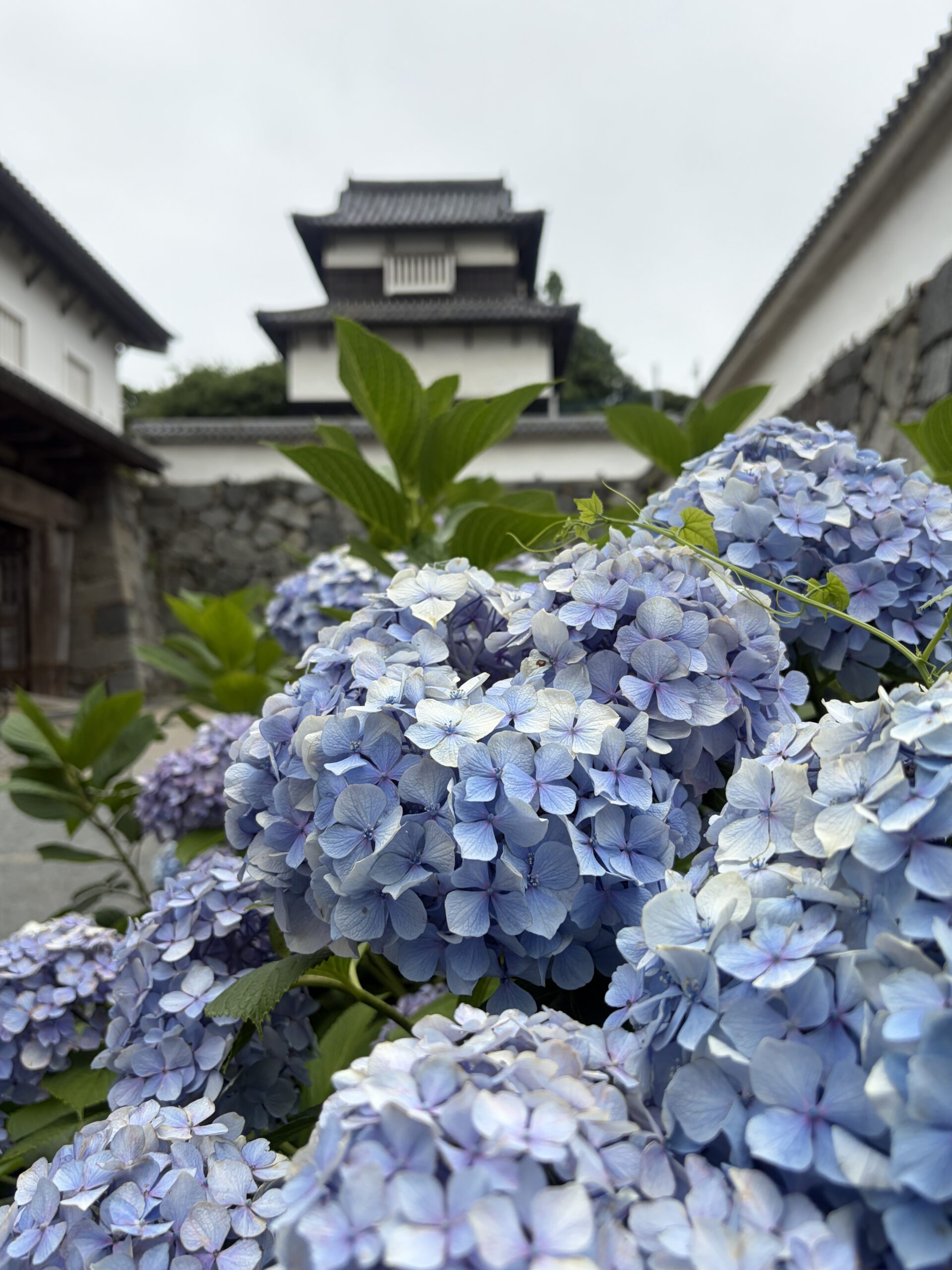
At the entrance, masses of blue hydrangeas. Castle and seasonal flower caught in a single frame — I drank in Fukuoka Castle in the rainy season.
Later that day, I also went on to the neighbouring Fukuoka Art Museum and Ohori Park.
Come at a different time of year and the same place looks completely different. Next time, I’d like to return once the excavation results are in. The mystery of the keep — I wonder how it will turn out.