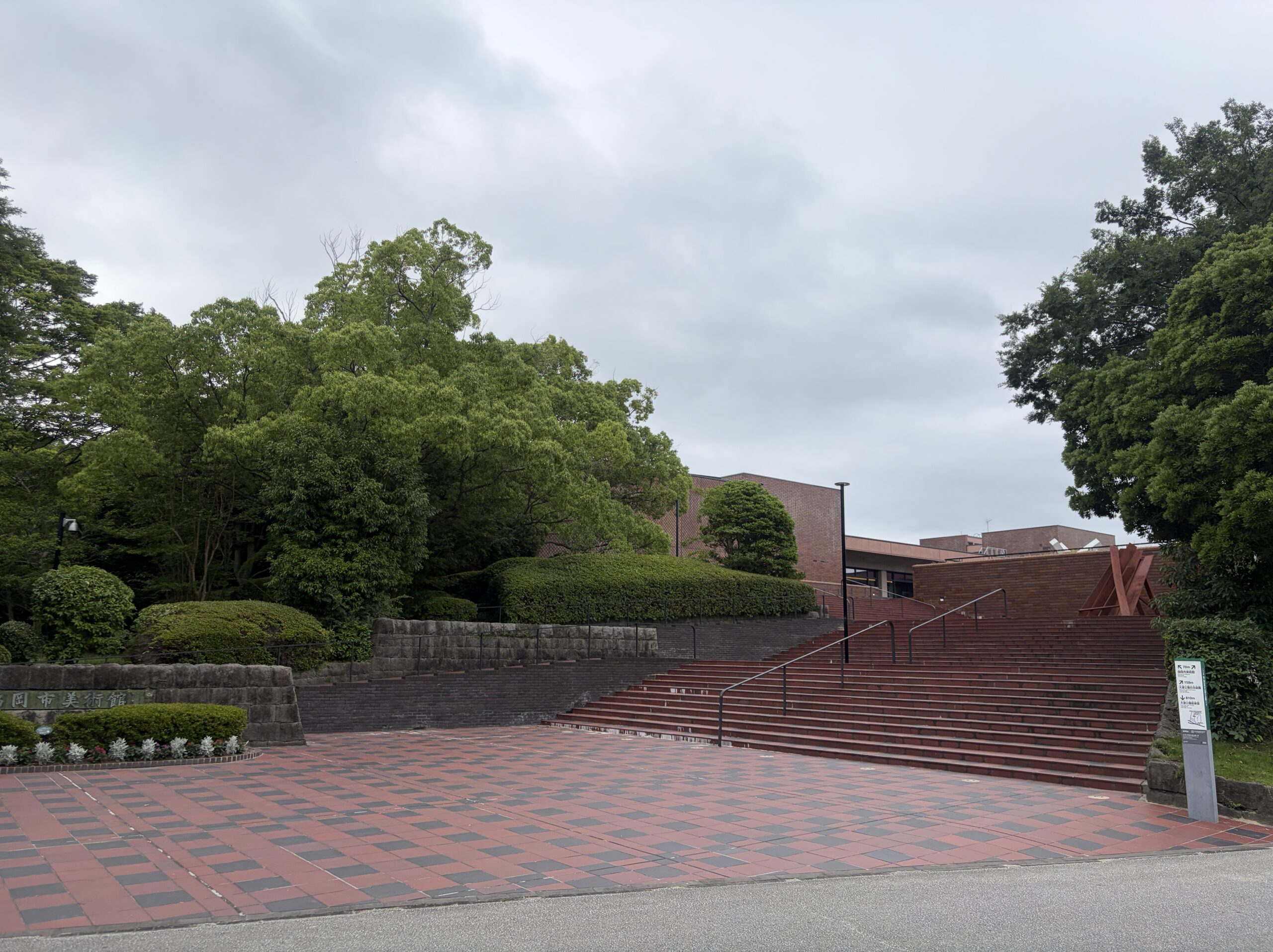
After walking around Fukuoka Castle, I popped into the Fukuoka Art Museum right next door. The red building in Ohori Park, you know the one. I’d meant to just look in for a moment, but the sheer range of it was something else, and I ended up lingering for ages. As always, today was the best.
The red museum by Ohori Park
A calm, understated building, its outer walls clad in reddish-brown tiles. It was designed by Kunio Maekawa, a giant of modern Japanese architecture. He studied under Le Corbusier, and this museum opened in 1979 (renewed in 2019).
Greeted, right away, by Heian-period Buddhist statues
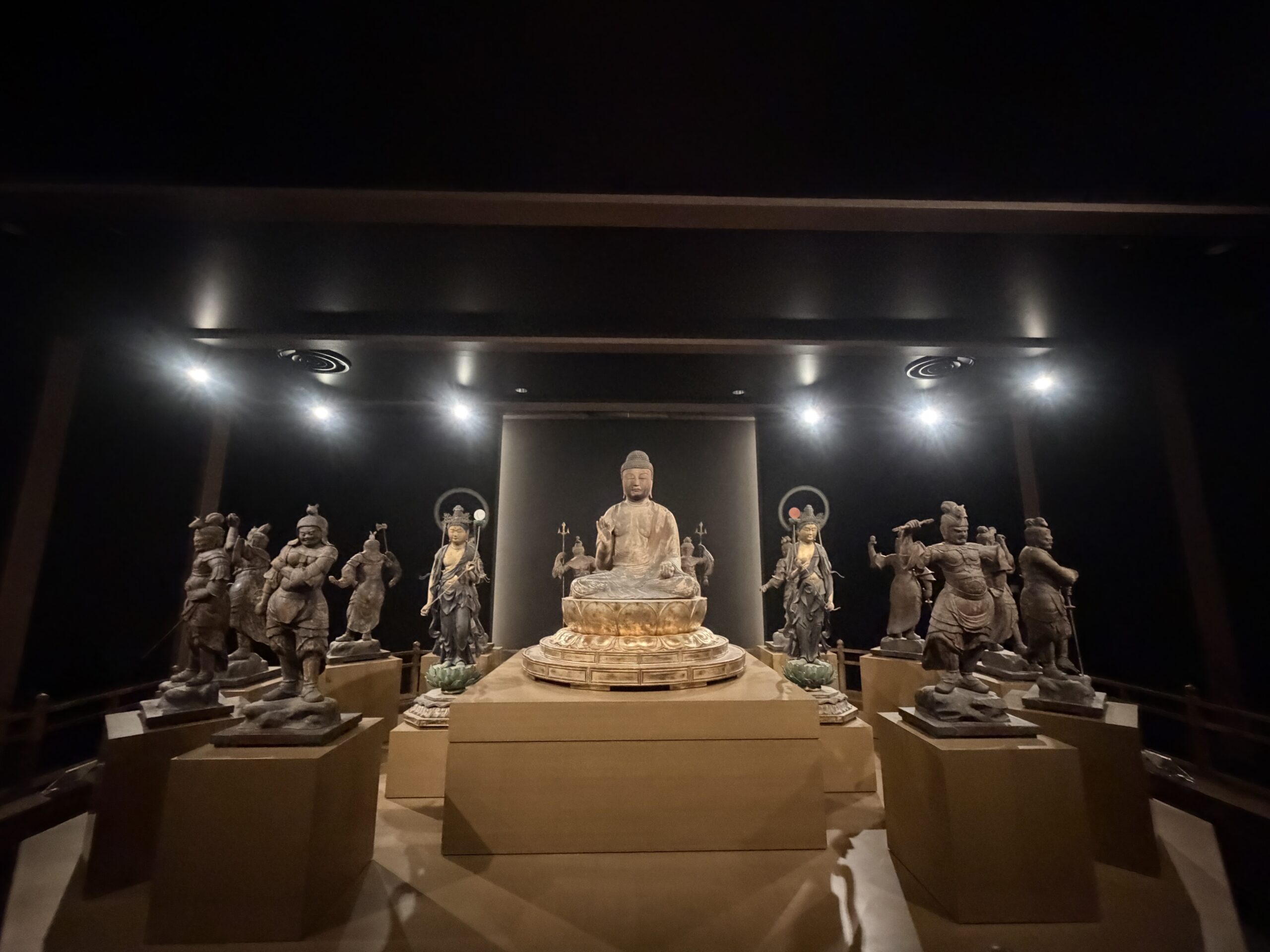
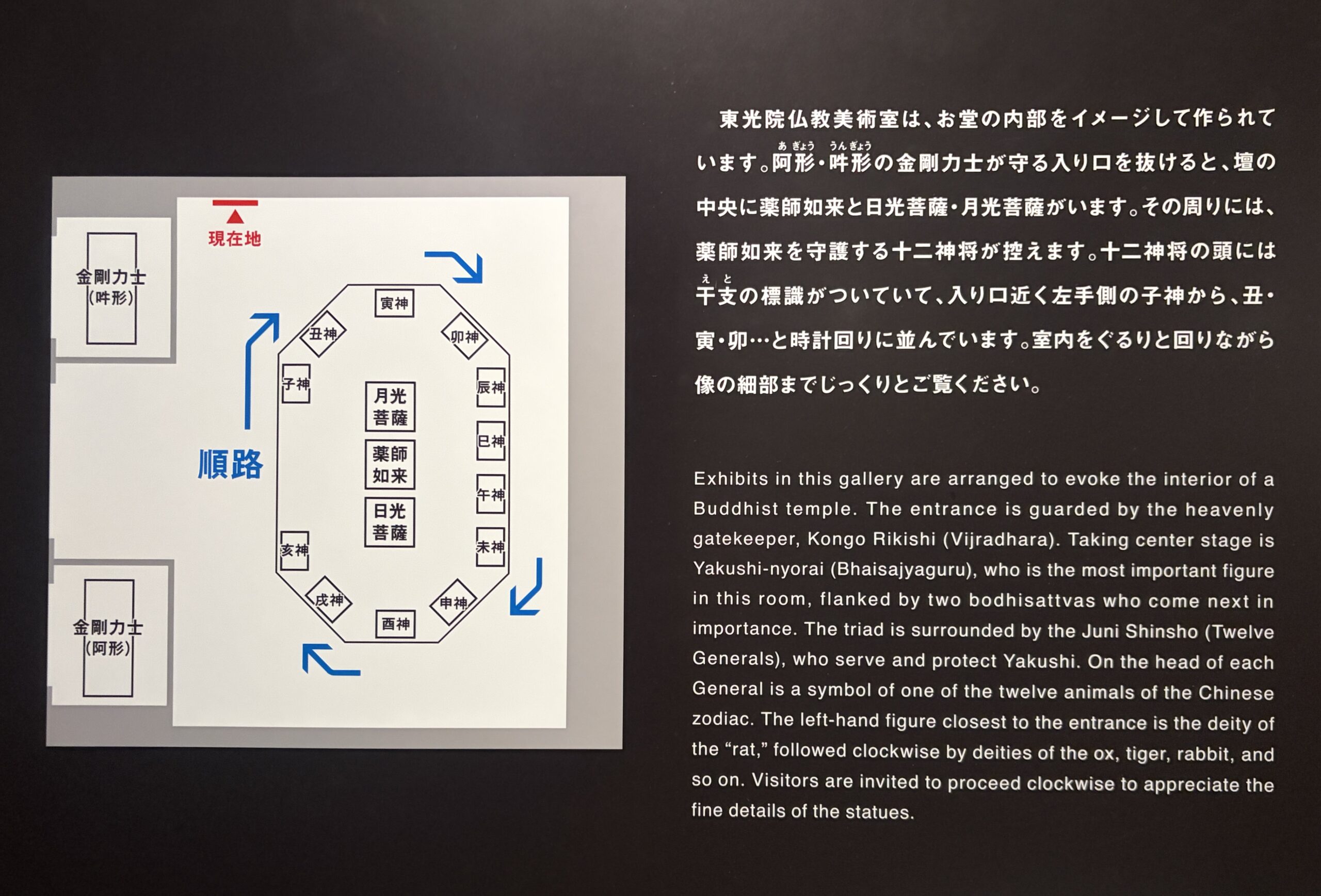
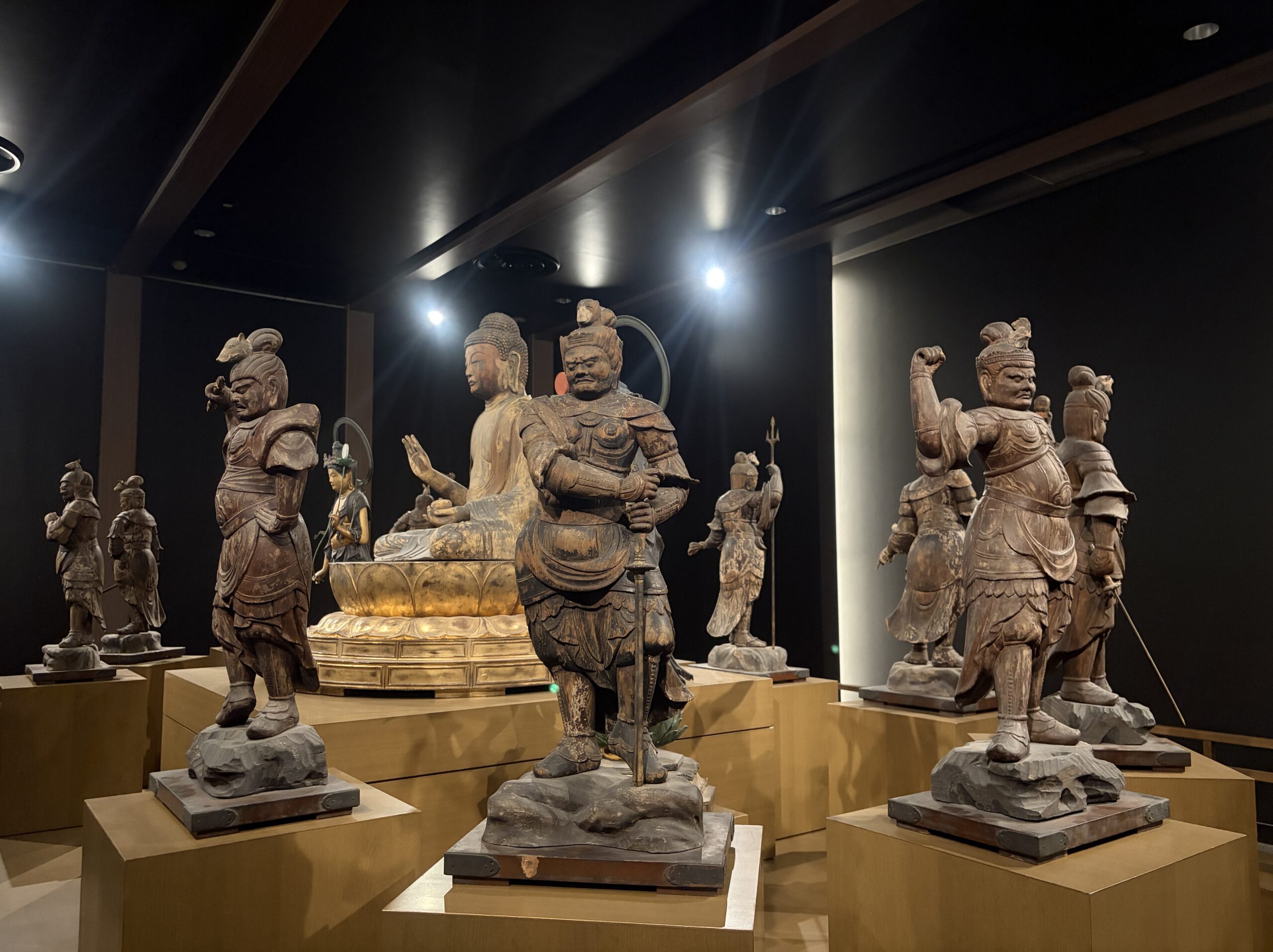
Into the “Tokoin Buddhist Art Room” on the first floor — a room lined with Buddhist statues once handed down at Tokoin, a temple in Hakata.
At the centre, Yakushi Nyorai (the Medicine Buddha). Flanked by the Nikkō and Gakkō Bodhisattvas, with the Twelve Heavenly Generals ranged all around. The display feels like standing inside a temple hall, and it was wonderful. Each of the Twelve Heavenly Generals has a zodiac animal perched on top of its head, so hunting for your own zodiac sign is quietly good fun.
Being wood carvings, look closely and you’ll spot chips here and there, with a weapon that should have been in a hand now missing sometimes too. But you fill in the gaps in your head as you look. To think they’ve survived all the way from the Heian period — once you do, even the missing bits start to look like part of their charm. Though, well, it’d be nice if they were all still there, of course.
Sengai’s bird puzzle
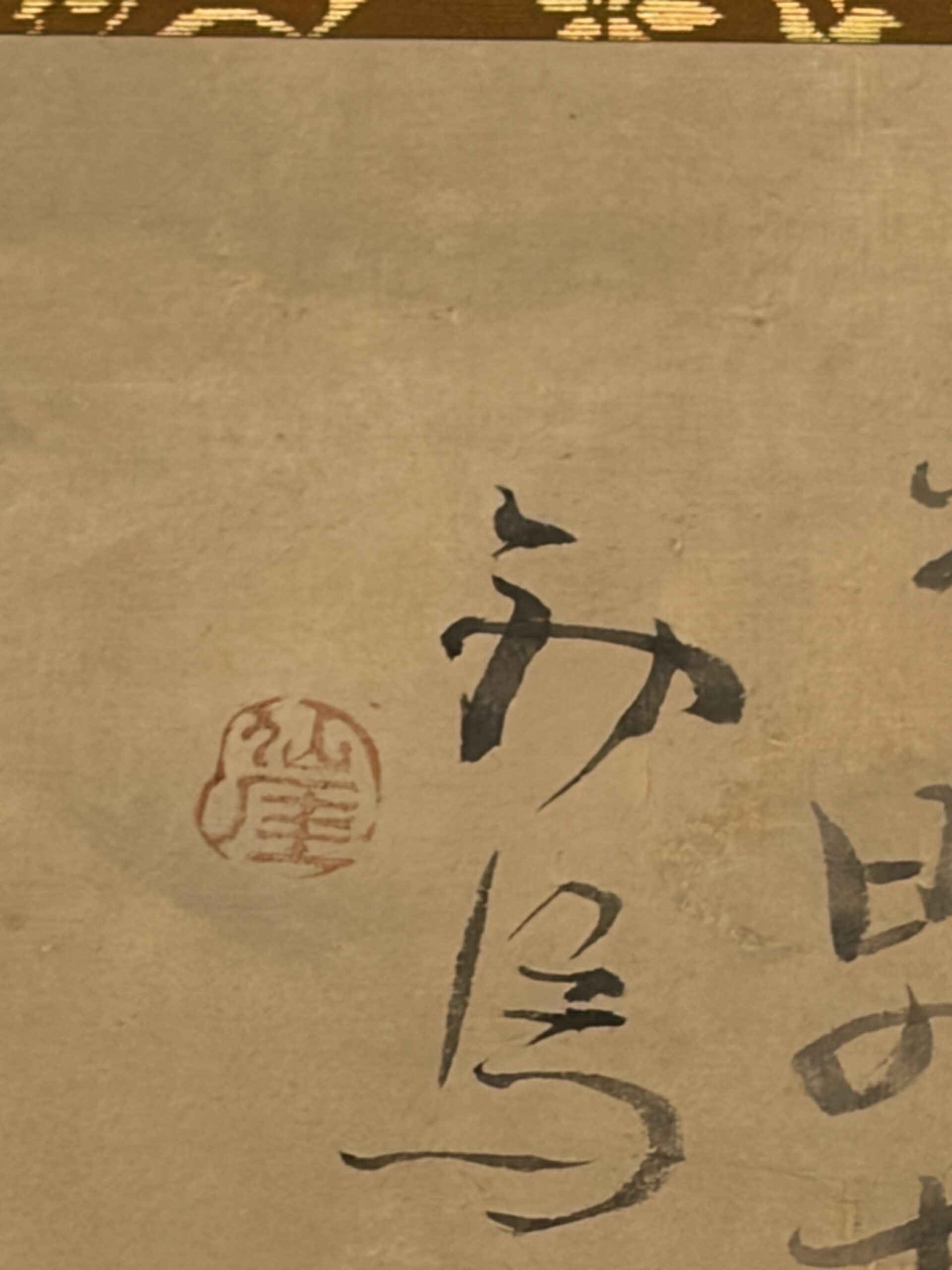
What stopped me in the antique-art corner was a hanging scroll with words added by Sengai — a monk with Hakata connections, known for his loose, characterful Zen paintings.
The panel beside it asked me to spot the bird. Wait — bird? I stood there having a staring contest with the scroll for a while. Now that you mention it… it does sort of look like a bird, maybe? “Sengai, really?” I thought, quietly ribbing him — and ended up gazing at it for a good long while, just as intended.
Modern art surprises
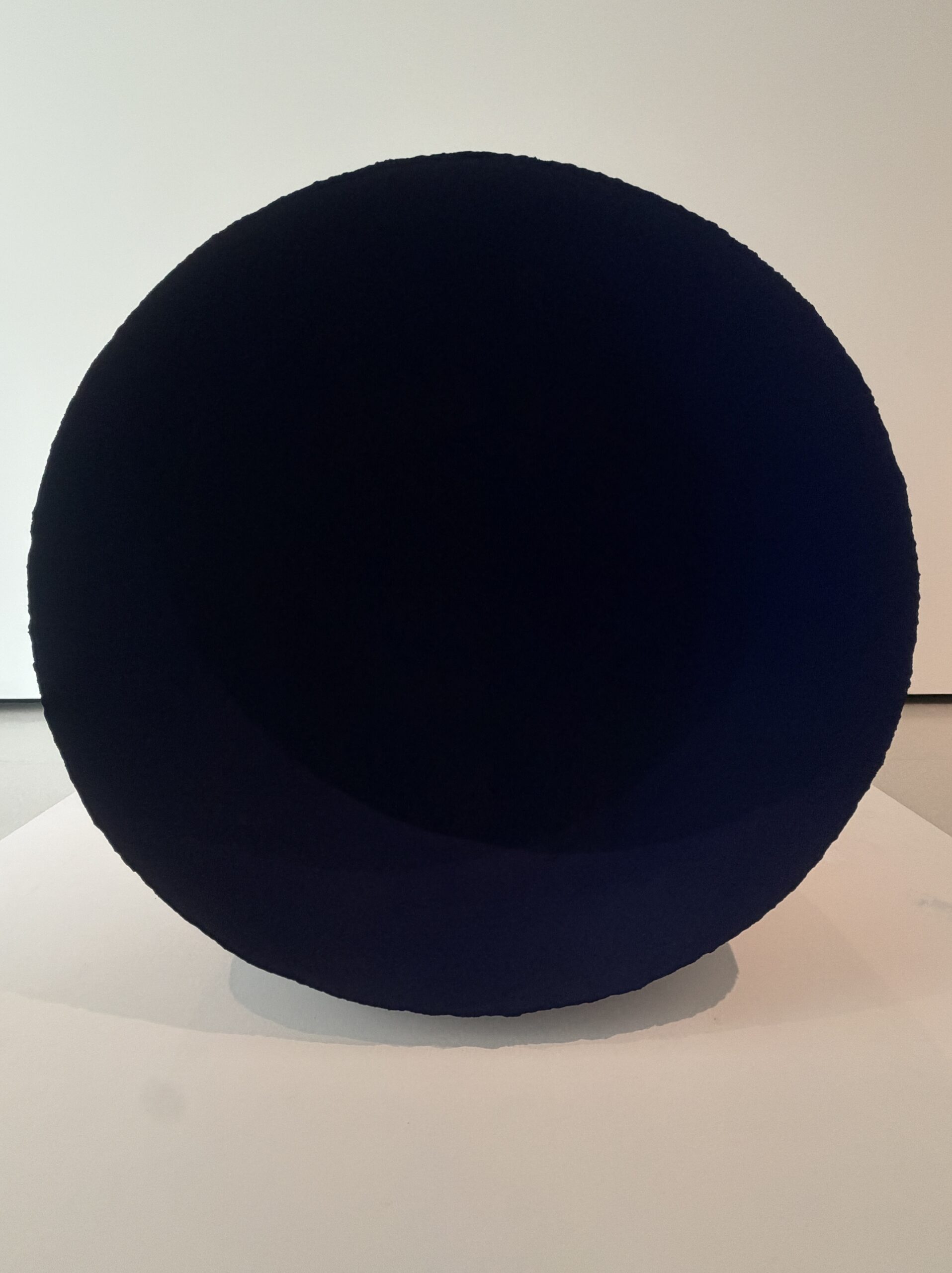
The next room genuinely surprised me. The modern and contemporary galleries included a work by Anish Kapoor, titled in Japanese as “虚ろなる母.” Honestly, I had not expected to meet a Kapoor work here, so I nearly made a sound. I stayed quiet, but my face probably said, “Oh!” The piece felt like a deep black emptiness, strangely pulling my eyes inward.
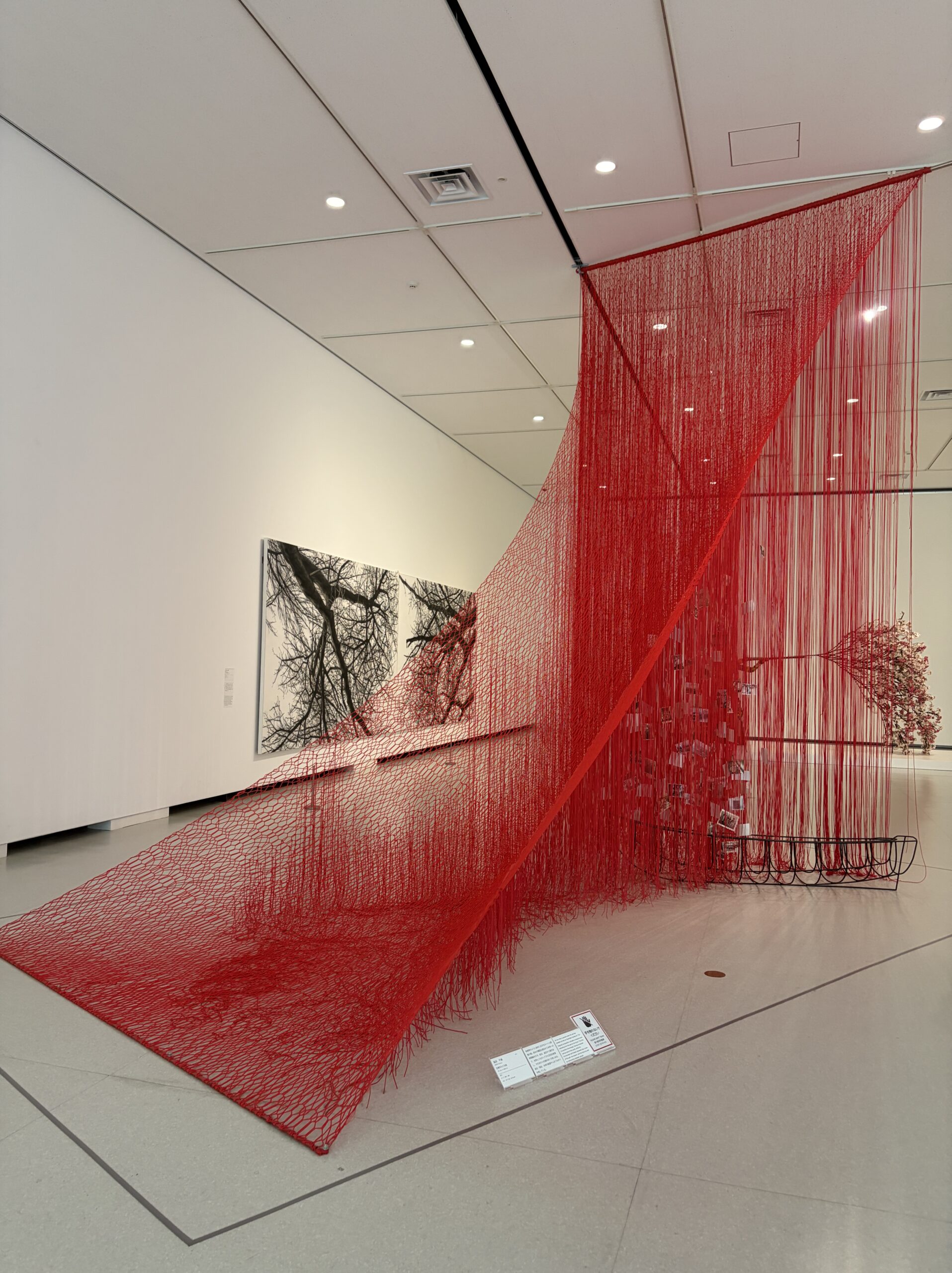
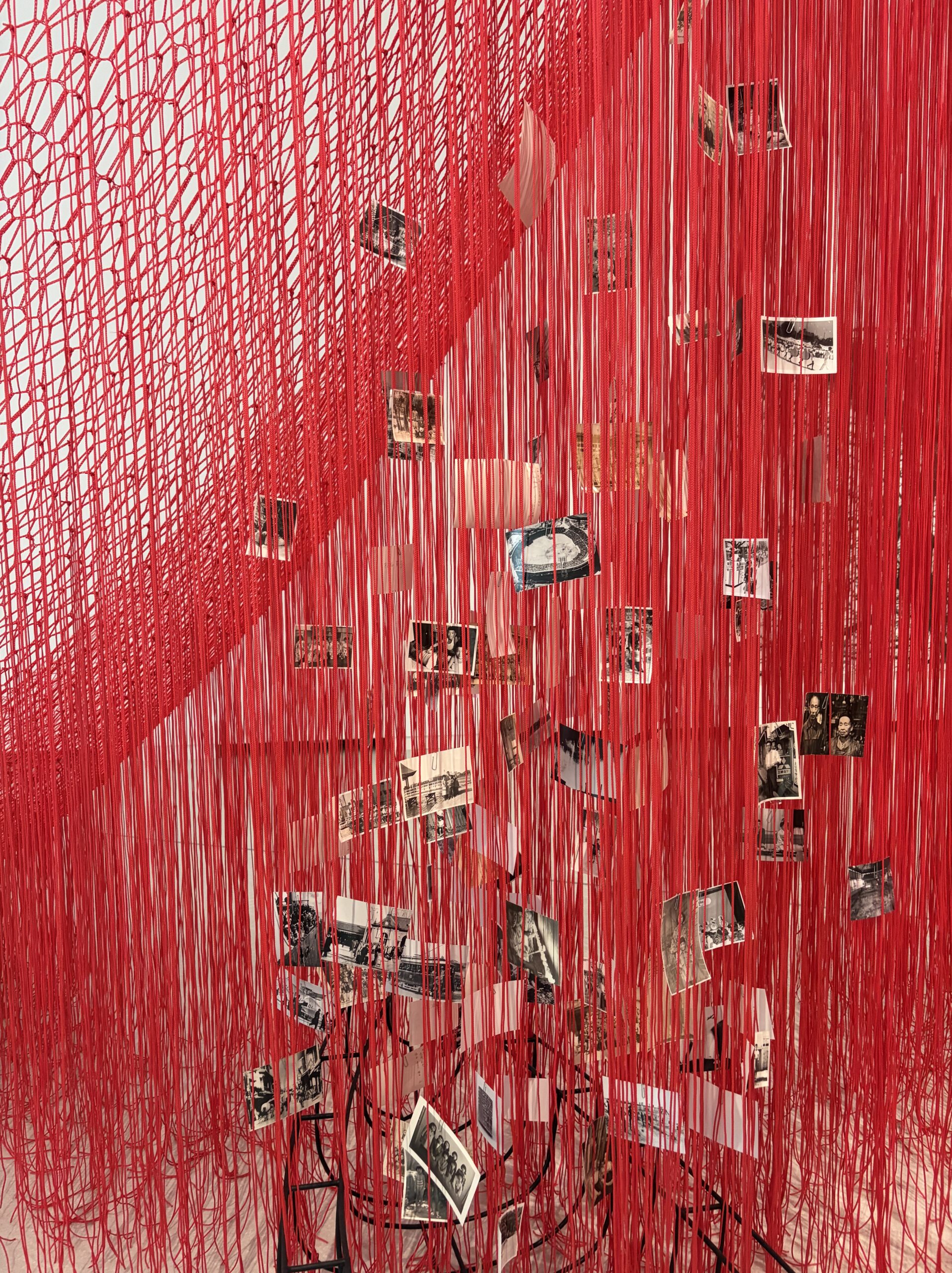
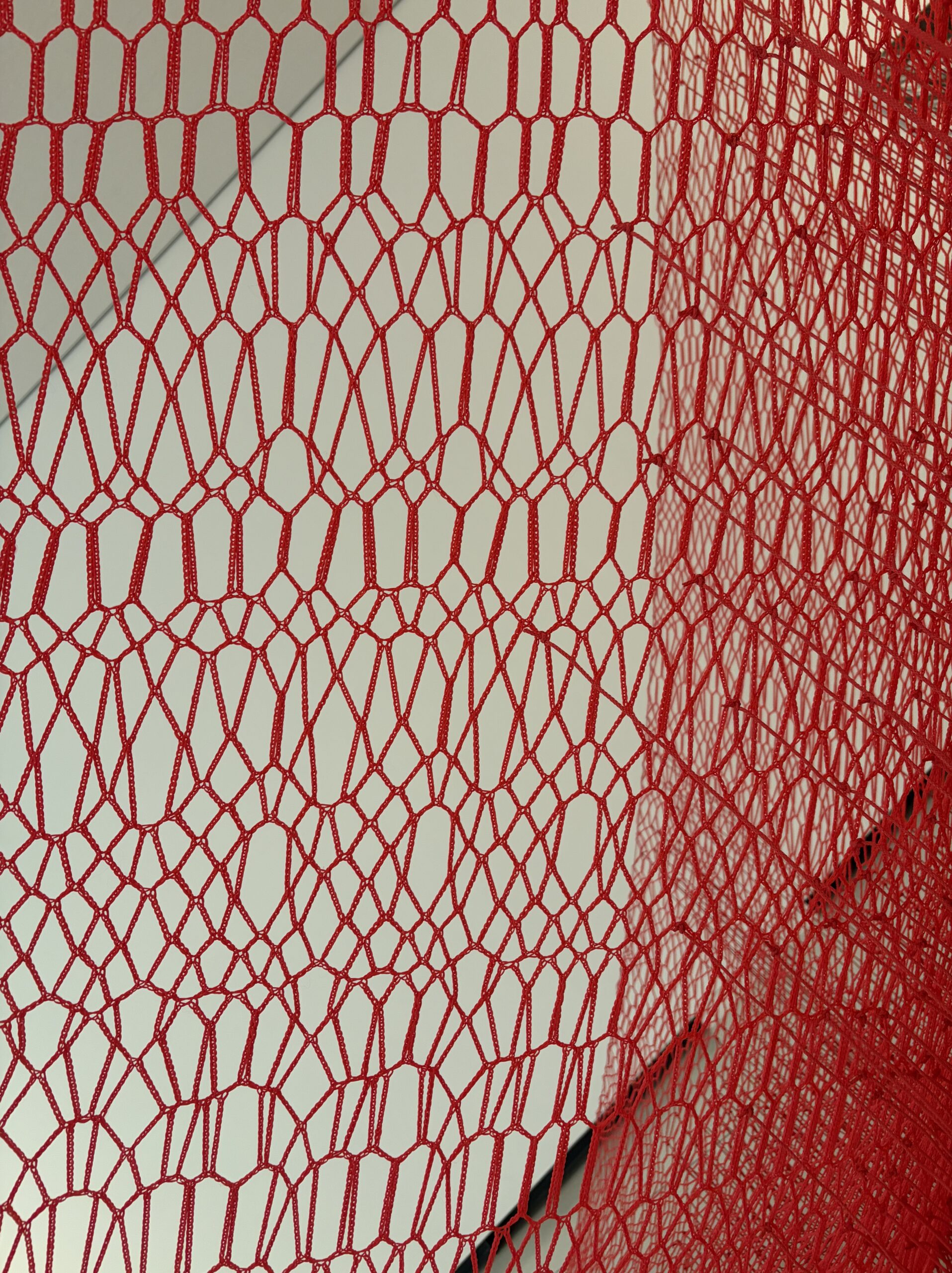
And then, just beyond it, Chiharu Shiota’s “The Ship of Memories.” An installation of an iron boat frame, with red thread strung right across the space. To begin with Buddhist statues and, somehow, end with Chiharu Shiota. It was the best.
In closing
I’d actually wandered in half-hoping a Sengai or two might be on show in the collection — and came away having enjoyed everything from Heian-period Buddhist statues to contemporary art, all under one roof, at the Fukuoka Art Museum. Only the one Sengai this time, but plenty else to be satisfied with. I’m looking forward to future chances to see more.
Even as a total beginner, I kept circling through two simple reactions: this one feels familiar, and this one is a mystery. Time slipped by before I noticed. I’d dropped in so casually after the castle, and came out completely full. Next time, I’d like to set aside more time and take it slowly.
Later that day, I also stopped by neighbouring Ohori Park.