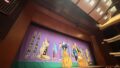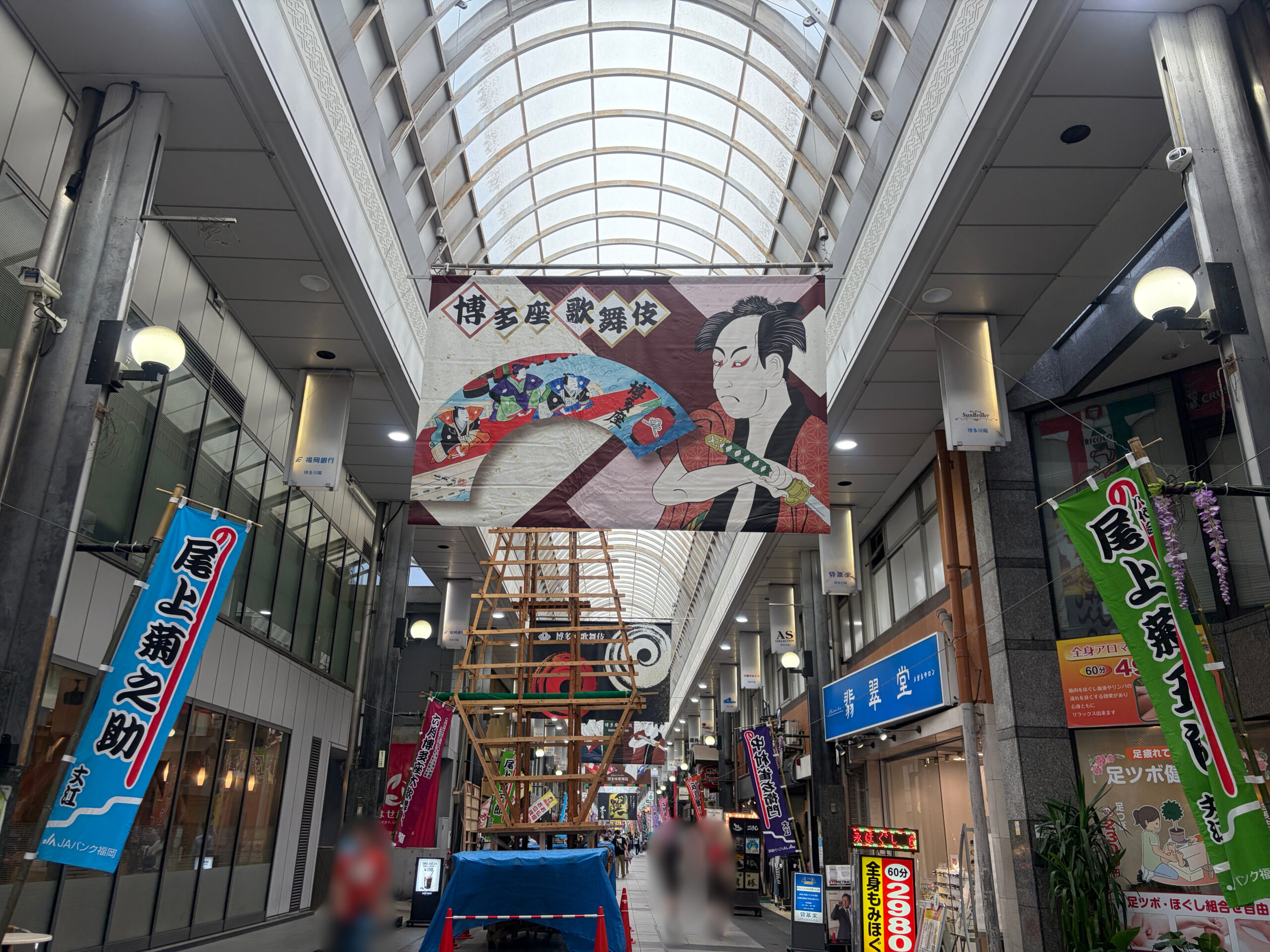
On the way to the Hakataza, I cut through the Hakata Kawabata shopping arcade — and it was lined end to end with kabuki banners. “Wait, this is happening?” My spirits were climbing before I’d even reached the theatre. Then the celebratory curtain knocked me flat too. As always, today was the best.
Read about the Evening Show → Hakataza Grand Kabuki: Evening Show (June 2026)
What is the June Hakataza Grand Kabuki?
This run celebrates a double name succession: Onoe Kikunosuke stepping up to become Onoe Kikugoro VIII, and his son Onoe Ushinosuke becoming Onoe Kikunosuke VI. A father-and-son succession, with the Hakataza as the grand finale among the major theatres — a truly auspicious occasion.
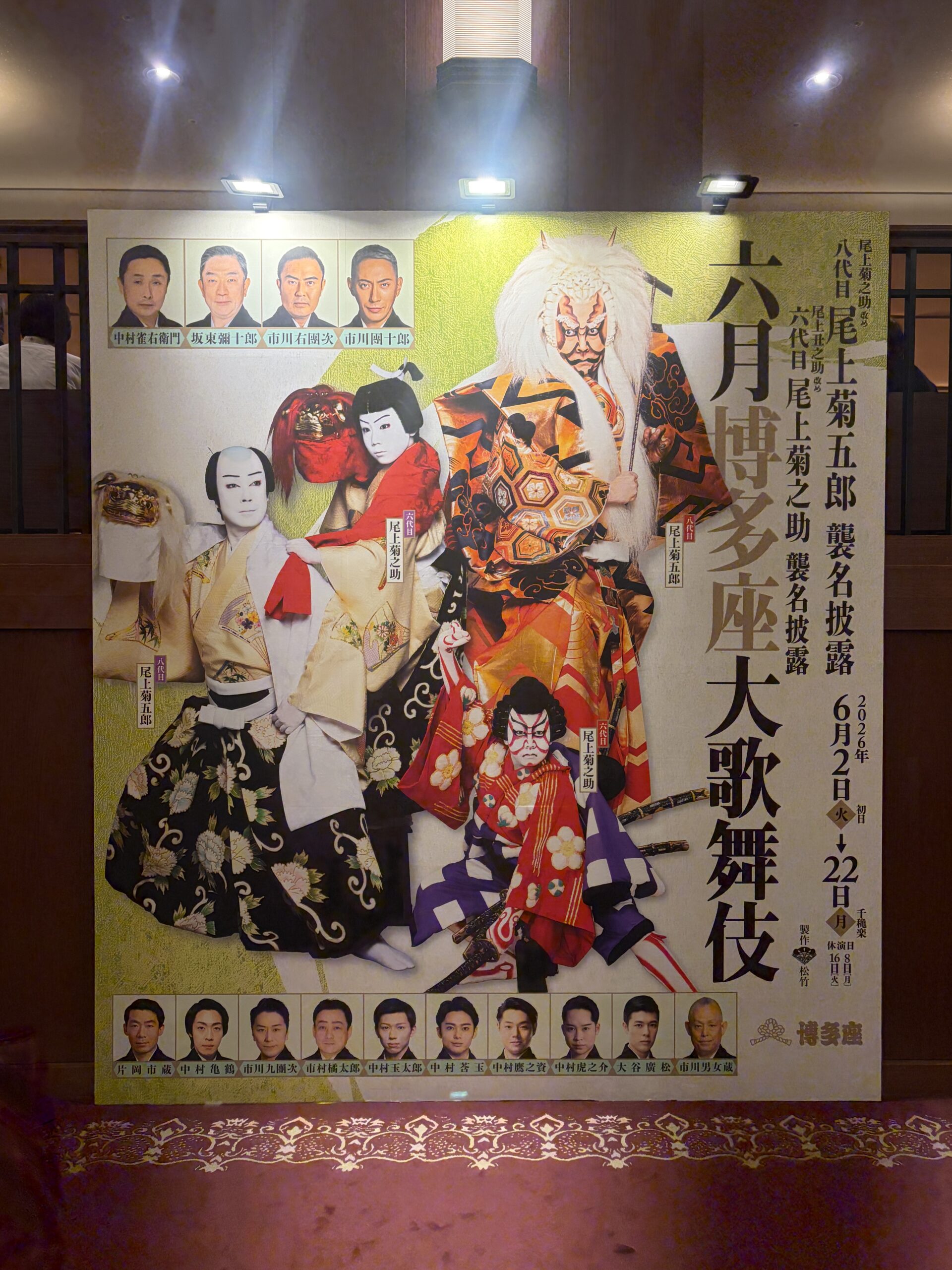
The matinee has three pieces: the celebratory opening dance Kotobuki Shiki Sanbaso; Kurumabiki, from Sugawara Denju Tenarai Kagami, brimming with the appeal of aragoto (the bold, powerful, stylized acting style); and Ibaraki, a signature piece of the Otowaya (the Onoe family’s acting house). Both Kikugoro and Kikunosuke take on major roles — just reading the casting got me excited.
The Hakata Kawabata arcade, the whole street in a kabuki mood
On the way to the theatre, I went through the Hakata Kawabata shopping arcade. It was hung with a big “Hakataza Kabuki” banner, actor portraits, and rows and rows and rows of nobori banners. I couldn’t stop walking-and-gawking — dangerous.
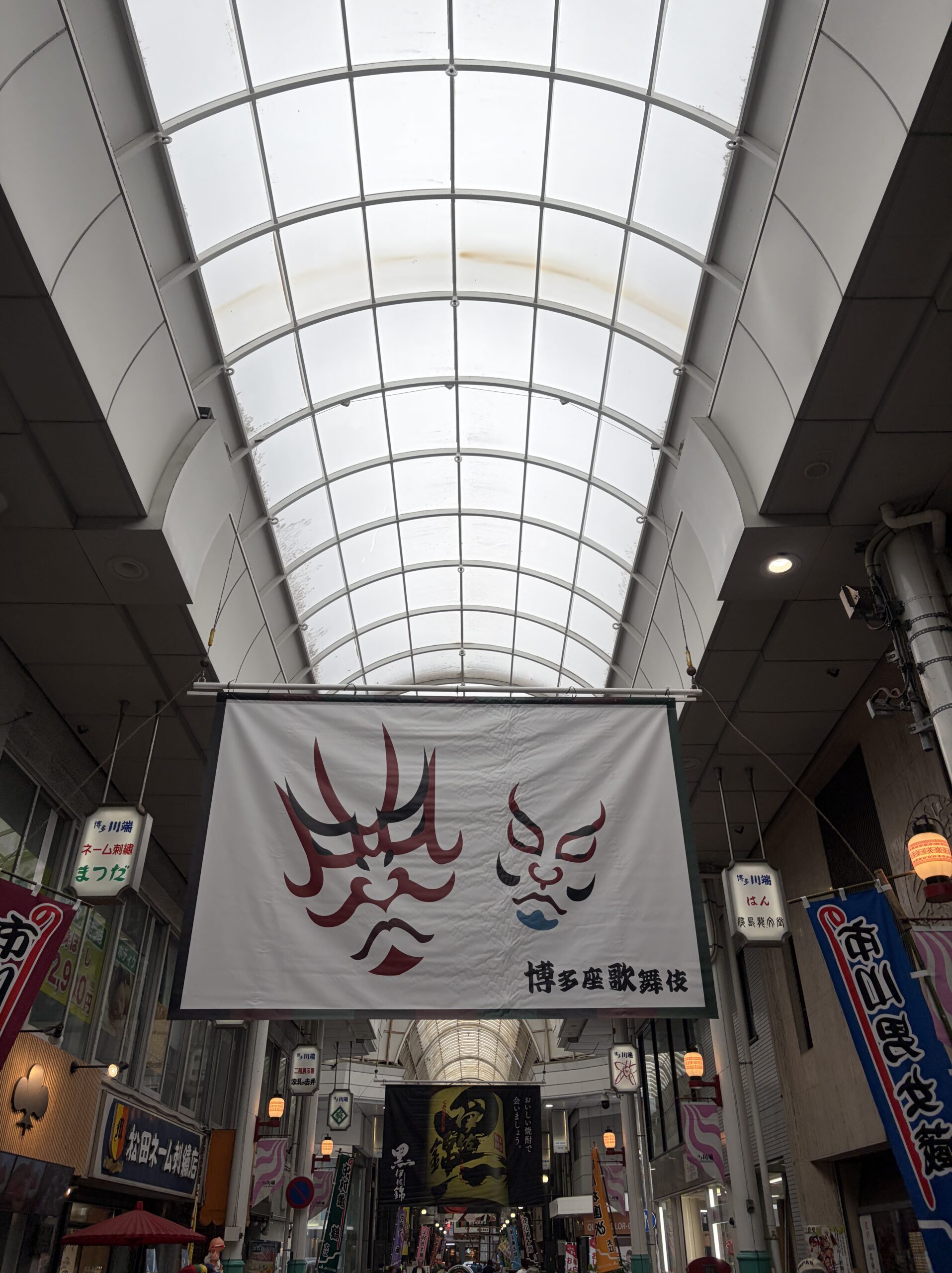
The first one I spotted was the pink banner for Nakamura Kangyoku. “Wait, hold on — he’s in the matinee? Yesss!” And up another notch I went.
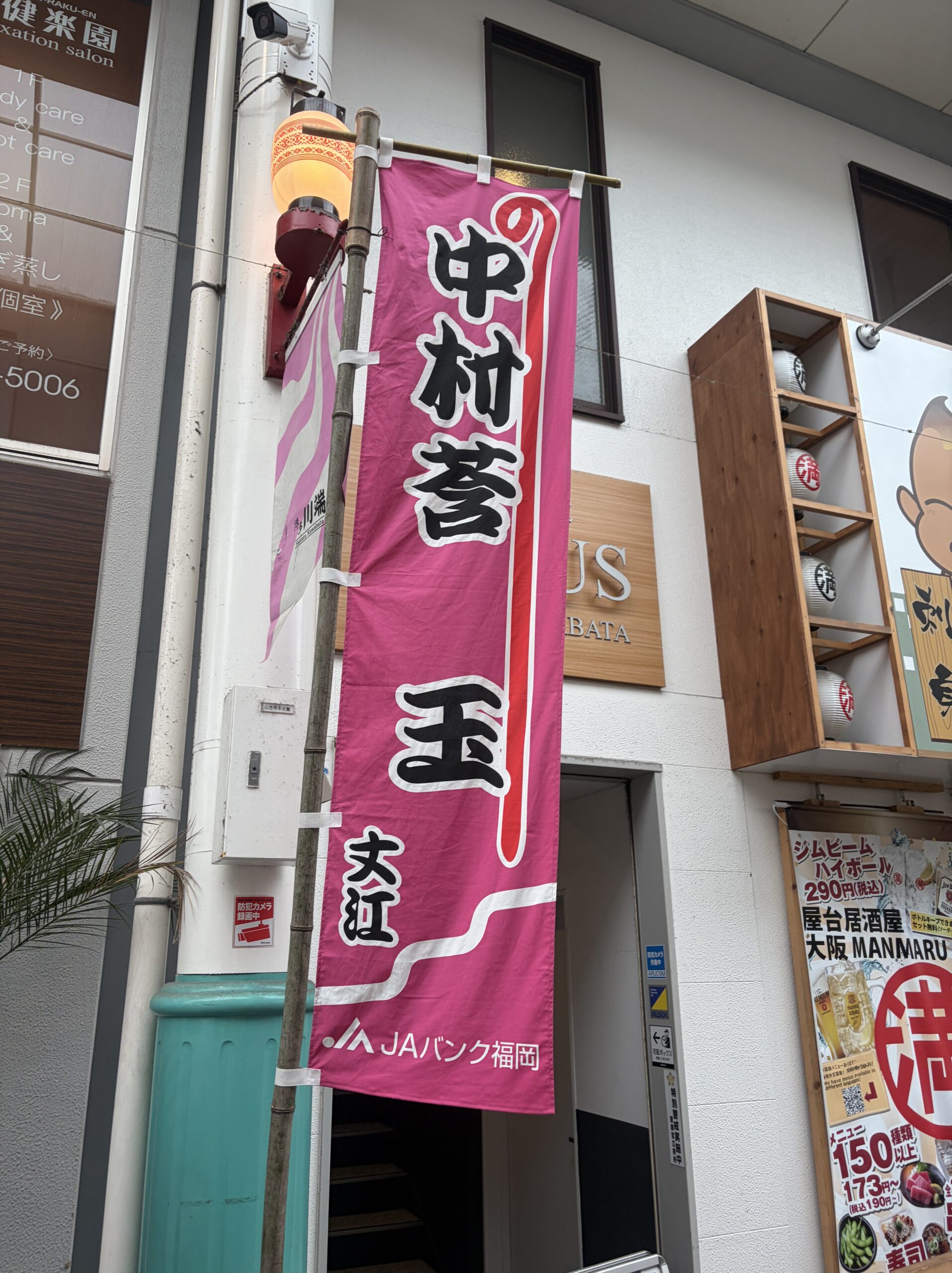
Next came a blue Onoe Kikunosuke banner, followed by a green Onoe Kikugoro banner. The street had turned into a Kabuki Appreciation Month display, and I caught myself muttering, “I mean, come on.”
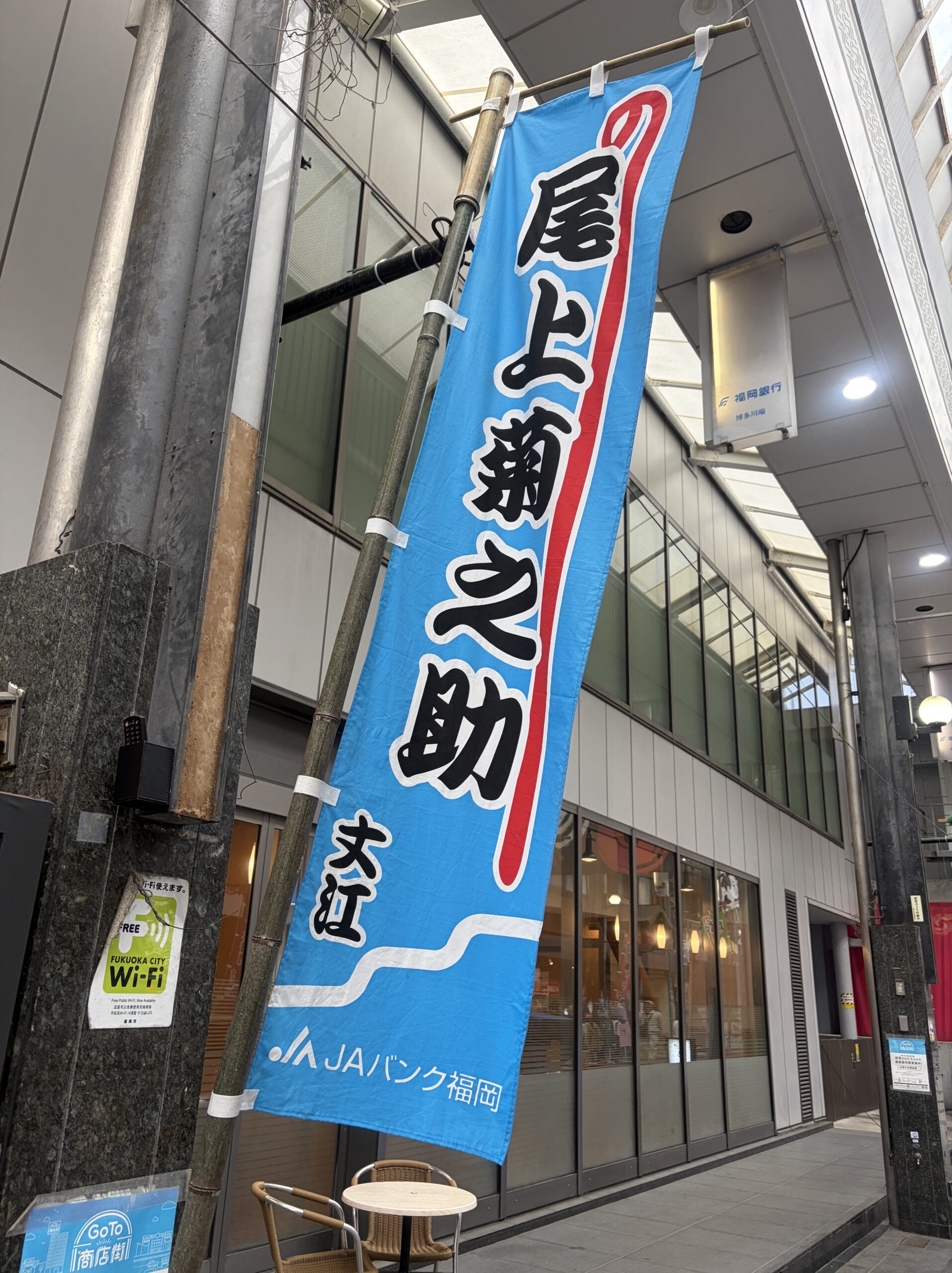
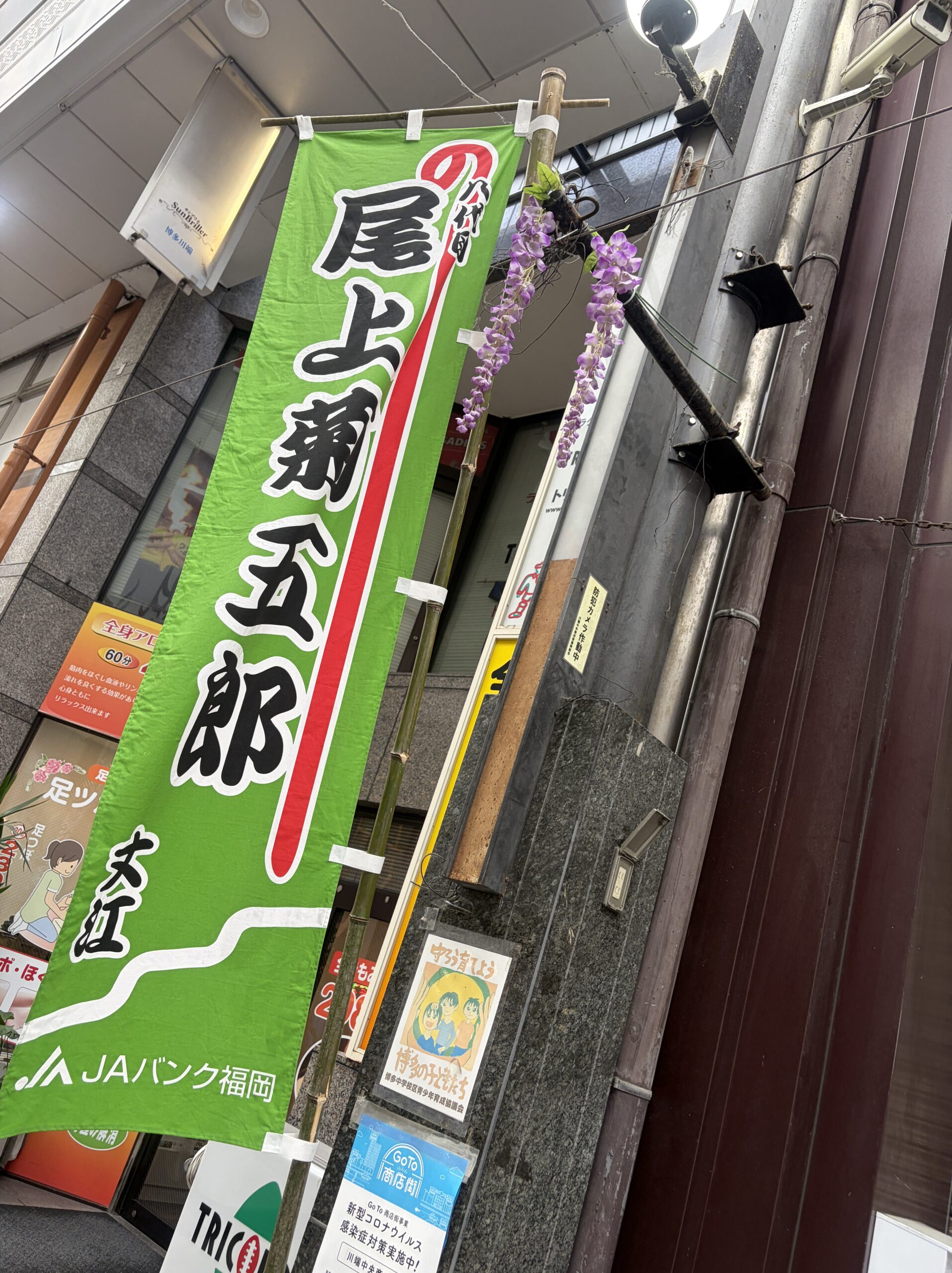
Out of the arcade, and the Hakataza is right there. Light rain was falling as I reached the front of the theatre. Even under grey skies, looking up at the building only ramped up the excitement.
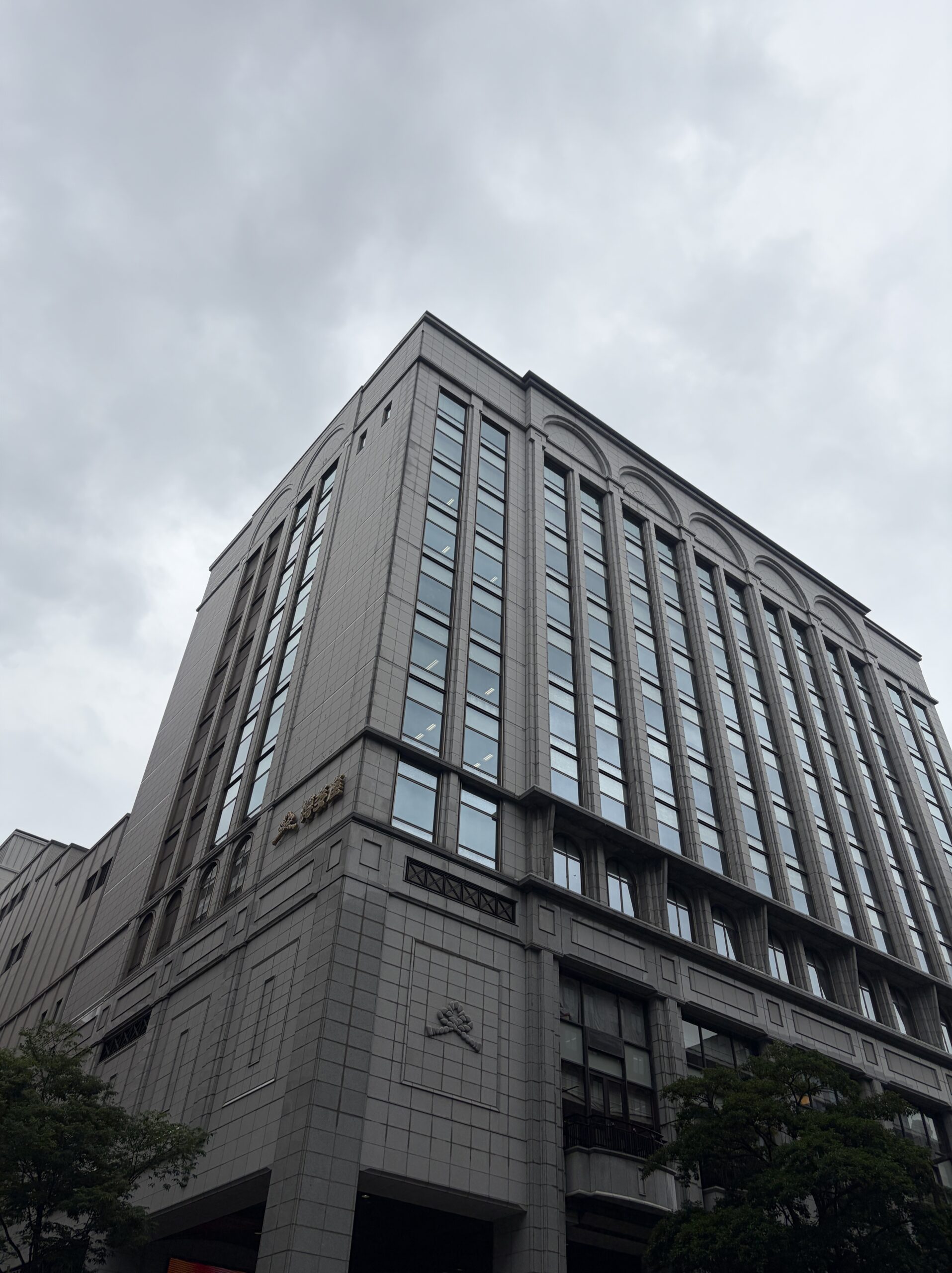
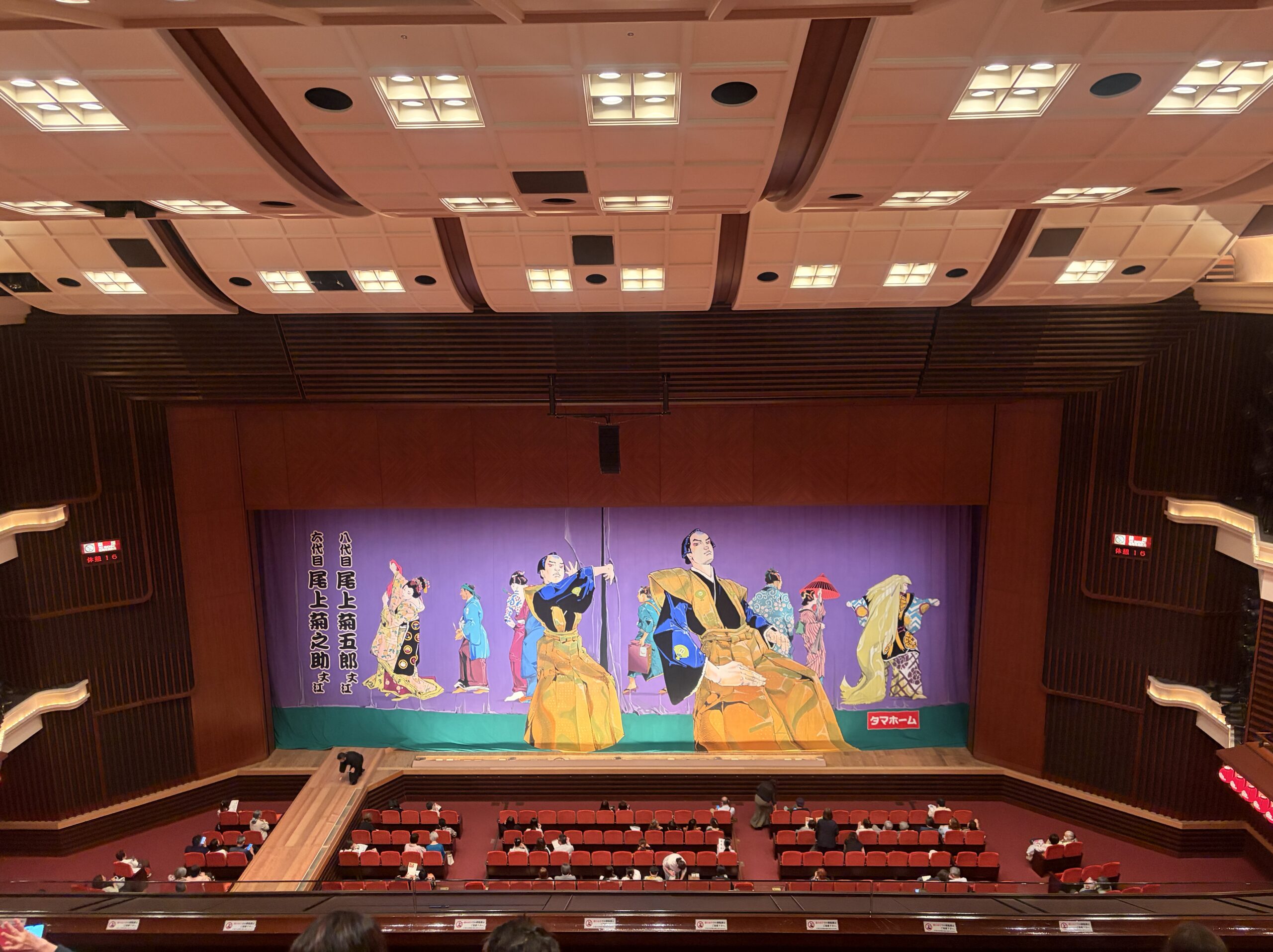
Floored by the celebratory curtain (and floored the day before too)
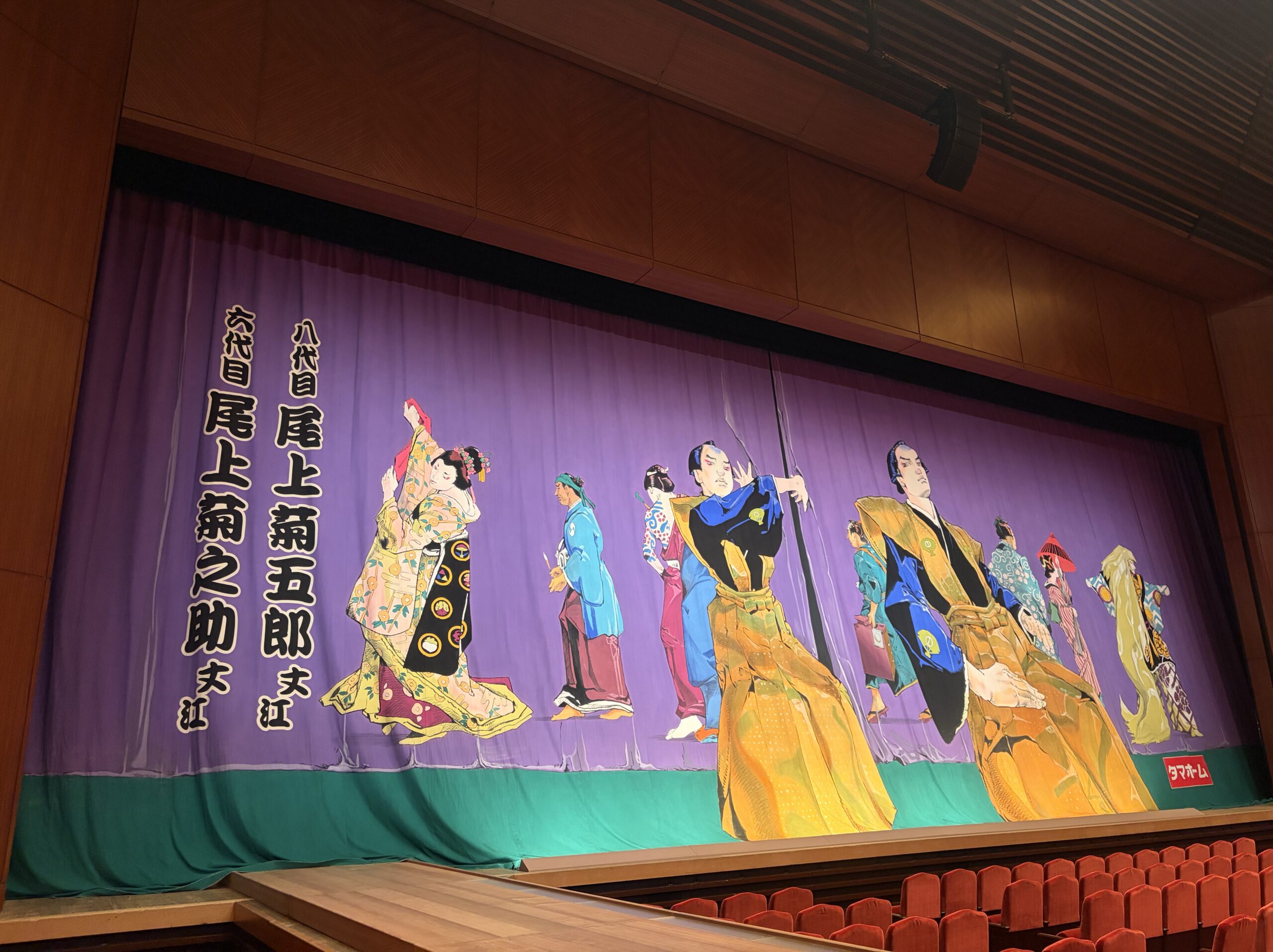
I took my seat, looked up — and there it was, the purple iwaimaku (celebratory curtain), filling the whole space above me. Kikugoro and Kikunosuke right in the center, struck in their finest poses, and the instant I saw it: “JoJo poses.” (lol) I knew the merch was out and I knew the curtain existed, but in front of the real thing I was moved all over again. Saw it yesterday, moved again today. My camera roll went entirely purple. Too many shots.
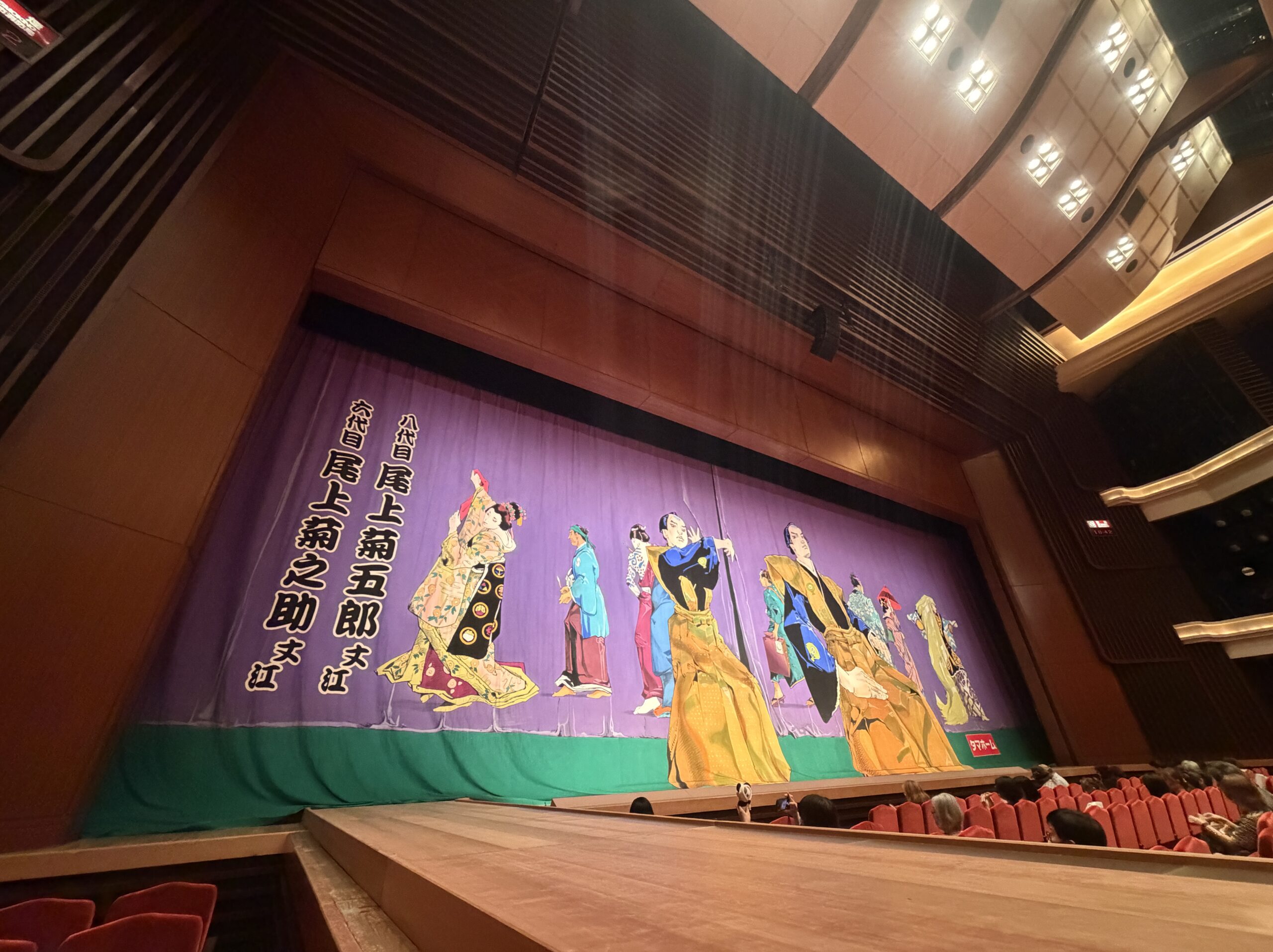
My seat was front-ish on the stage-left side, a so-called “dobu-seki” right alongside the hanamichi (the walkway that runs through the audience). Before the show, I went up near the dead-center front-row seats to shoot the curtain from straight below. “So cool! The straight-up-from-below angle is unreal — gorgeous!” And again, too many photos. Purple camera roll, the sequel.
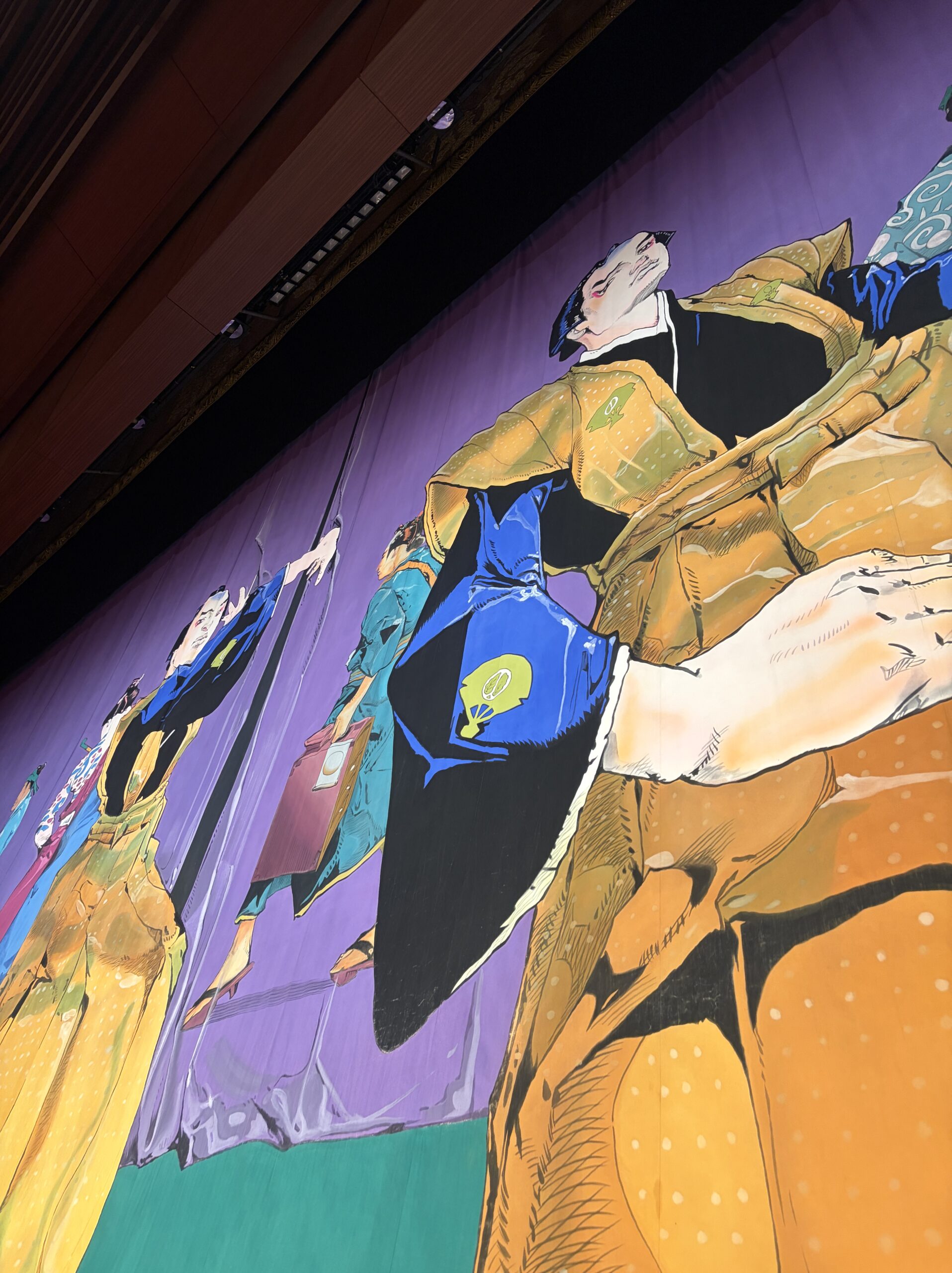
The matinee’s three pieces
The opener, Kotobuki Shiki Sanbaso. You often hear the word “kotohogu” (to celebrate, to bless) — I love how festive that sounds. Otani Hiromatsu’s Sanbaso was lovely.
Next, the Umeomaru of Kurumabiki — the new Kikunosuke. And honestly, this kid is frightening (in the best way). He’s only twelve. Raised by a father (the new Kikugoro VIII) who is deeply devoted to the art, he must have trained relentlessly. In the program, Kikugoro speaks about how much his son has grown over the past year — and just as he says, you could feel it pouring off the stage: a confidence, like he was giving every bit of what he has right now. His posture when he strikes a mie (a pose in which the actor freezes mid-motion and snaps into it — the quintessential “so THIS is kabuki” moment) is just beautiful. Yoga-wise, perfectly aligned, I’d say (lol). I also got to see his light, nimble tobi roppo (a bold exit, bounding down the hanamichi as if leaping through the air — peak “THE kabuki”), and he left me thinking: I want to see him again.
And Ibaraki, with the new Kikugoro VIII as Ibaraki Doji. In the first half he appears as the aunt, Mashiba, paying a visit to Tsuna — played by Danjuro — but his true form is the demon whose arm Tsuna once cut off. According to the earphone-guide commentary, this Ibaraki Doji has four fingers. Normally a demon has three, because it lacks “wisdom” and “compassion.” But Ibaraki Doji, having the “wisdom” to disguise himself as the aunt and deceive Tsuna, earns a fourth — ahh, I see, I thought, nodding along. The tobi roppo at the end, once he’s turned into a raging demon, was so cool I literally died. Lately I’ve been lucky enough to catch Kikugoro in these powerful roles from the very same angle — a feast for the eyes.
The son’s Umeomaru and the father’s Ibaraki Doji. Two tobi roppo in a single day — what a luxurious matinee! I’d love to see it once more, but today is senshuraku (the final day of the run).
The Hakataza is a joy before and after the show, too
For lunch during the interval, the show-exclusive “Iwai Gozen” (celebration set). Red rice (sekihan), sashimi, tempura, simmered dishes, and a clear soup — a gorgeous spread, perfect for an auspicious day.
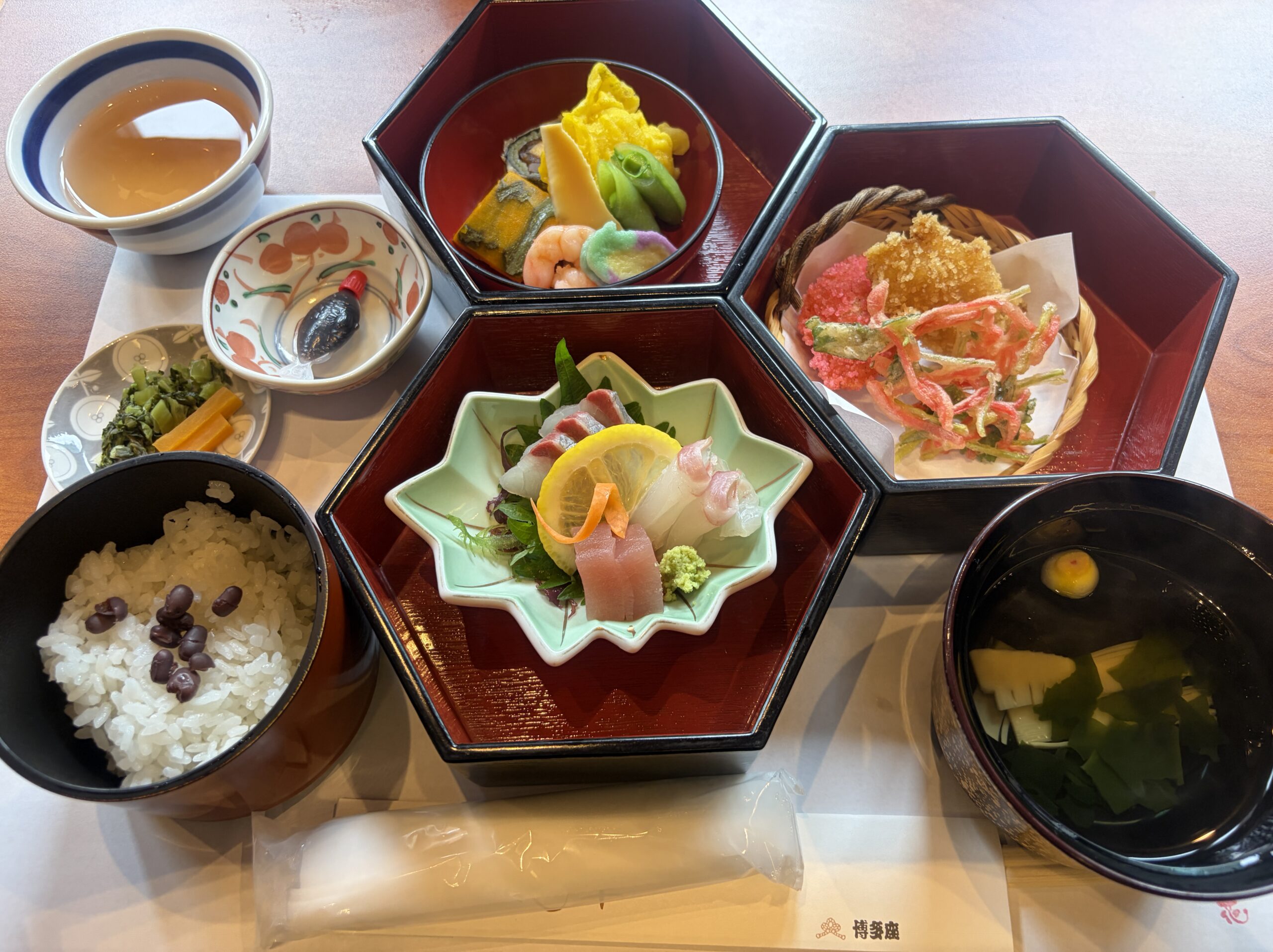
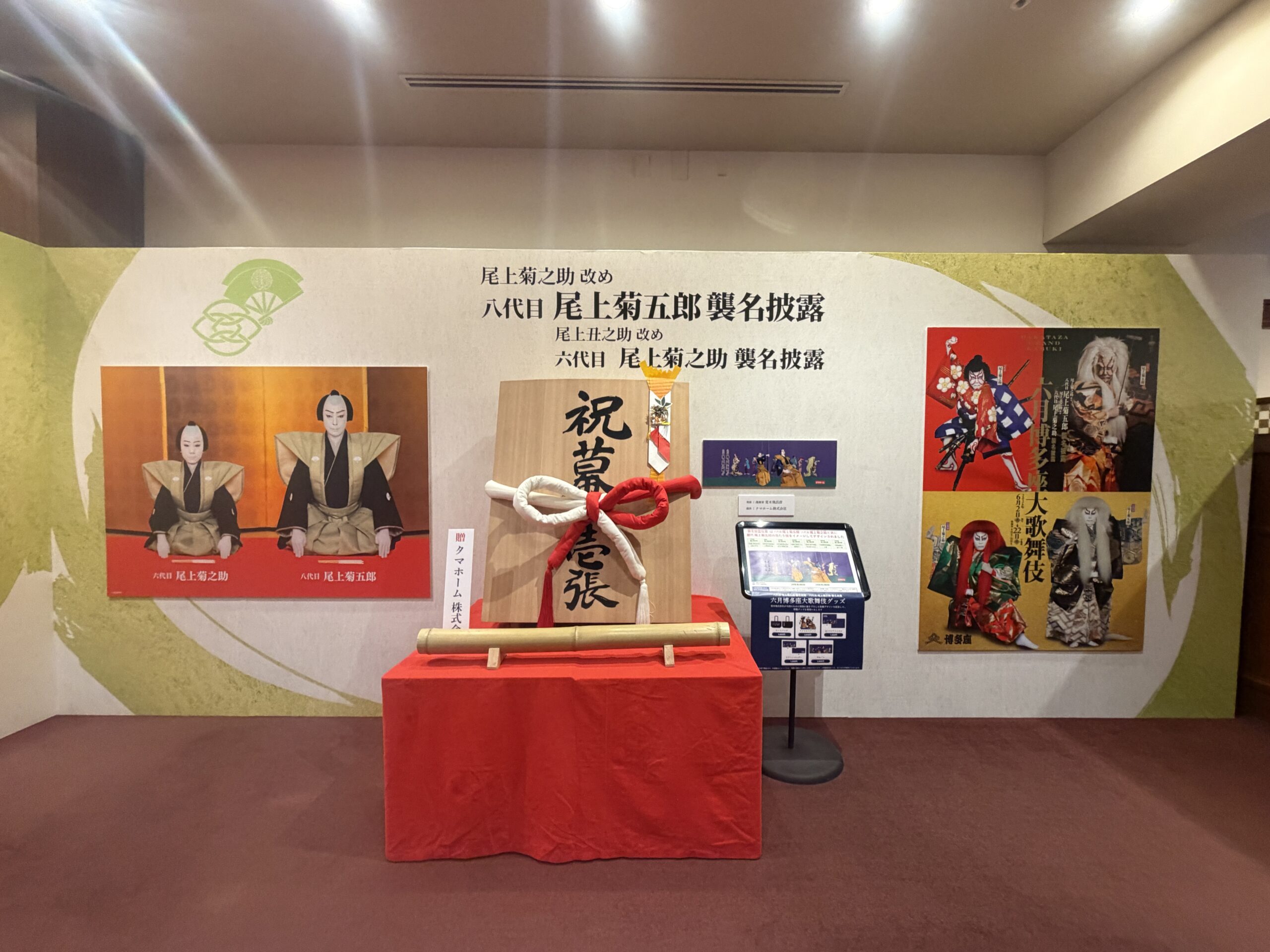
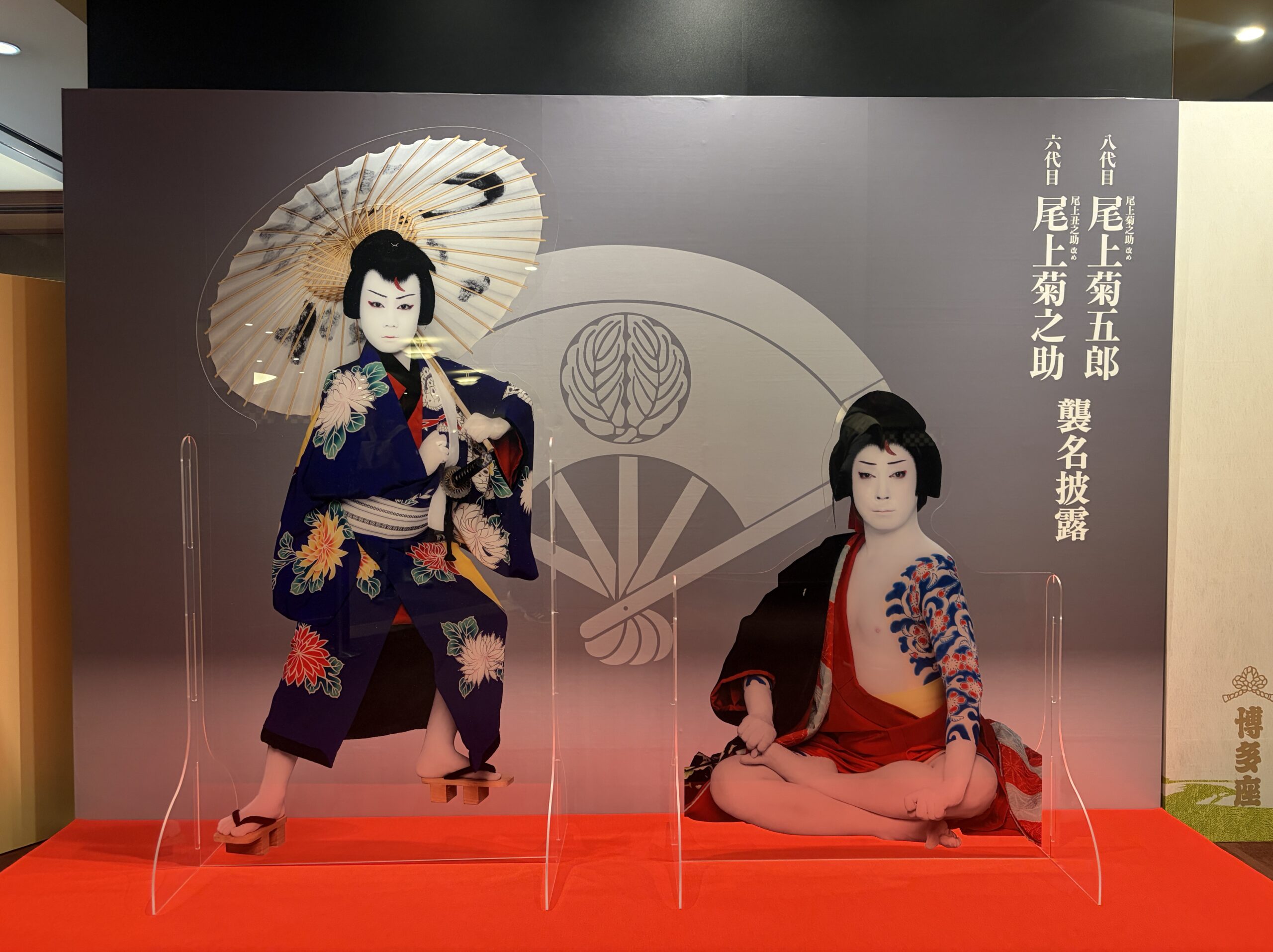
The second floor had a name-succession exhibition plus a photo spot, so wandering around before and after the show is fun too.
Up on the third floor, you can take in the whole stage, the hanamichi, and the seating in one sweep — it really brought home how big the Hakataza is. What a wonderful theatre.
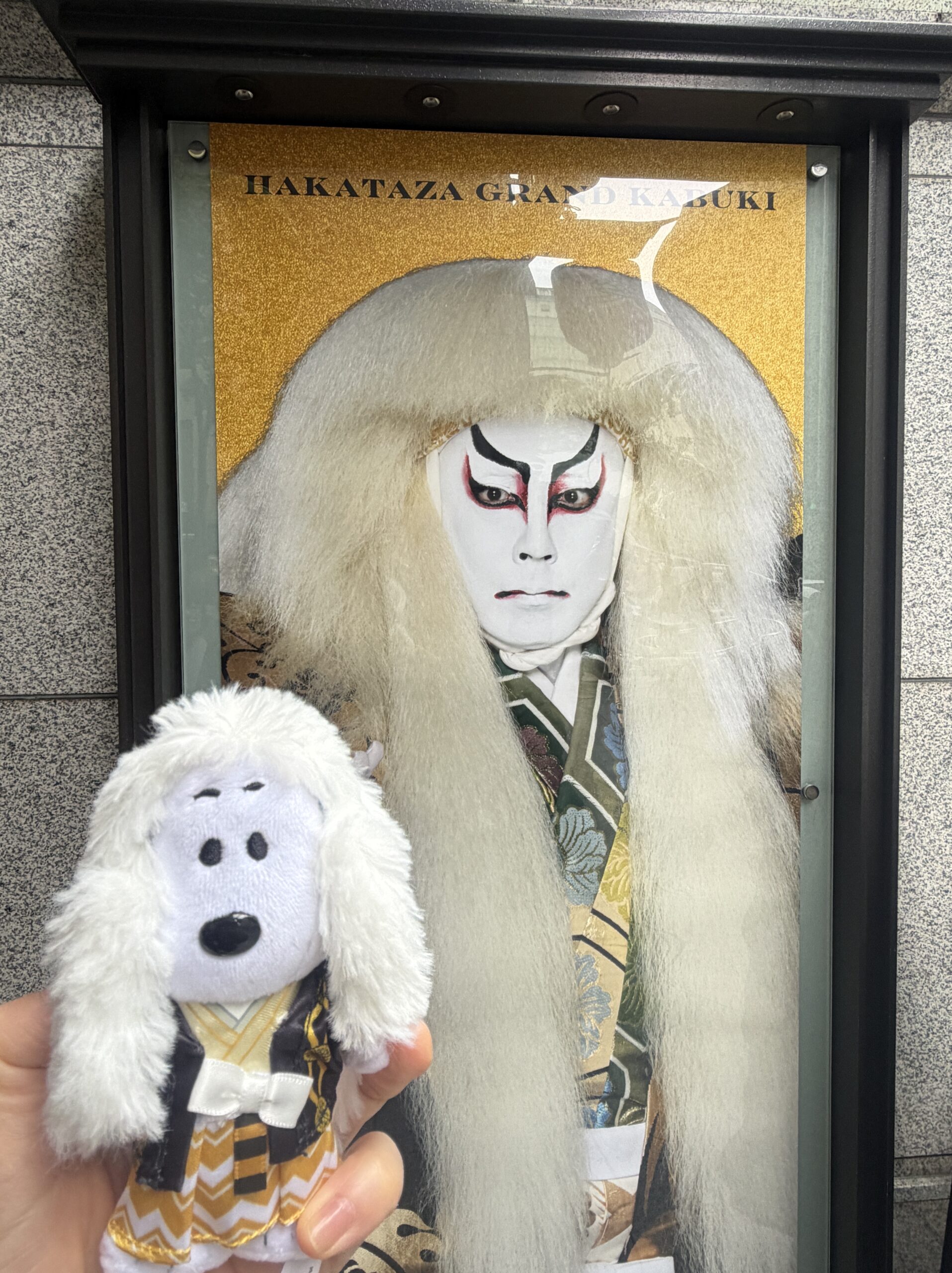
For merch, I managed to snag just the parent-lion Renjishi Snoopy! I even got to photograph it with the poster of Kikugoro as the parent lion — so happy. And I did my little Ibaraki Doji bit with it (lol).
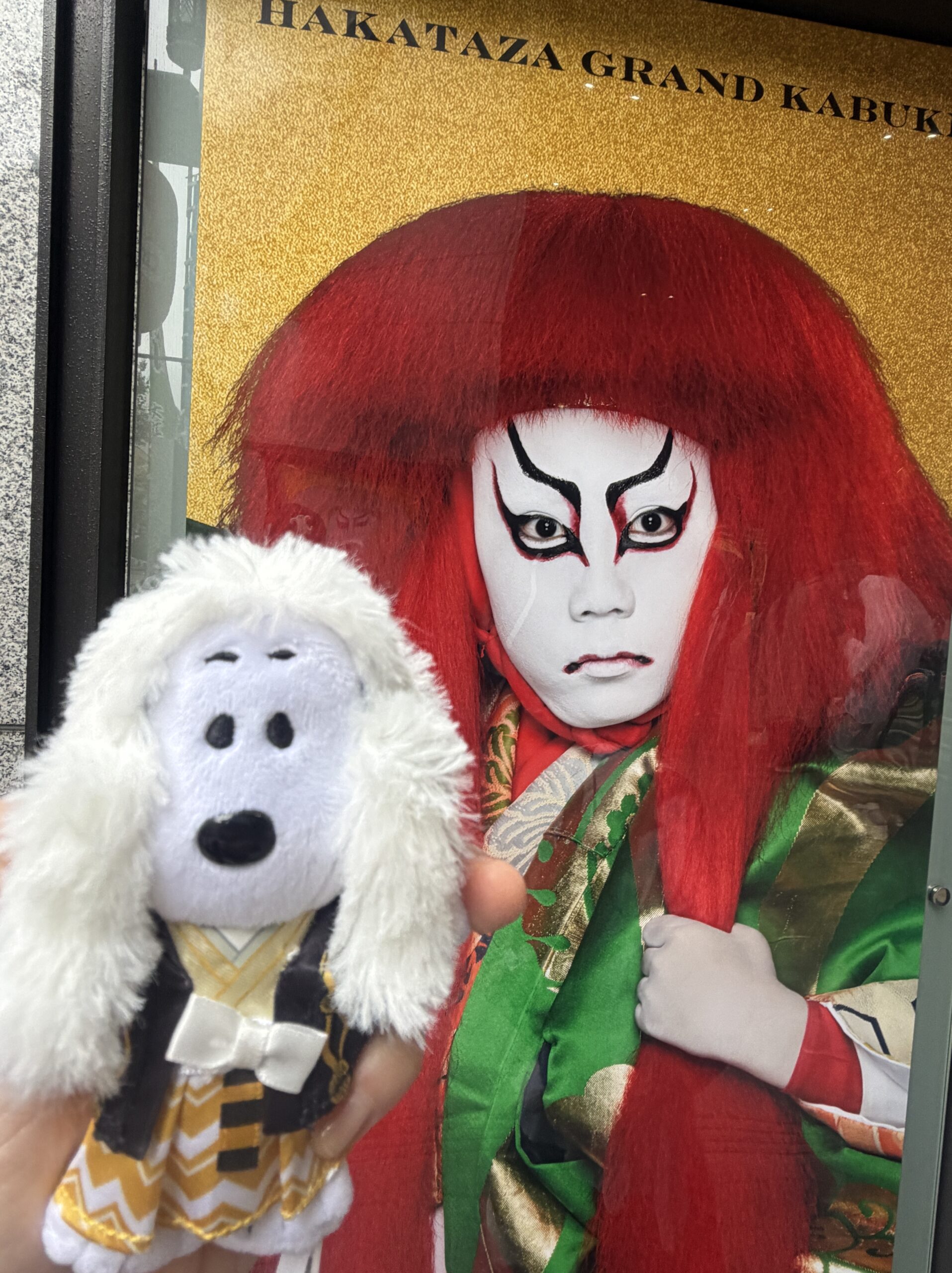
Wrap-up
Today was senshuraku, the final day. One last photo of the celebratory curtain. “So this is really the end…” and a quiet wave of wistfulness washed over me.
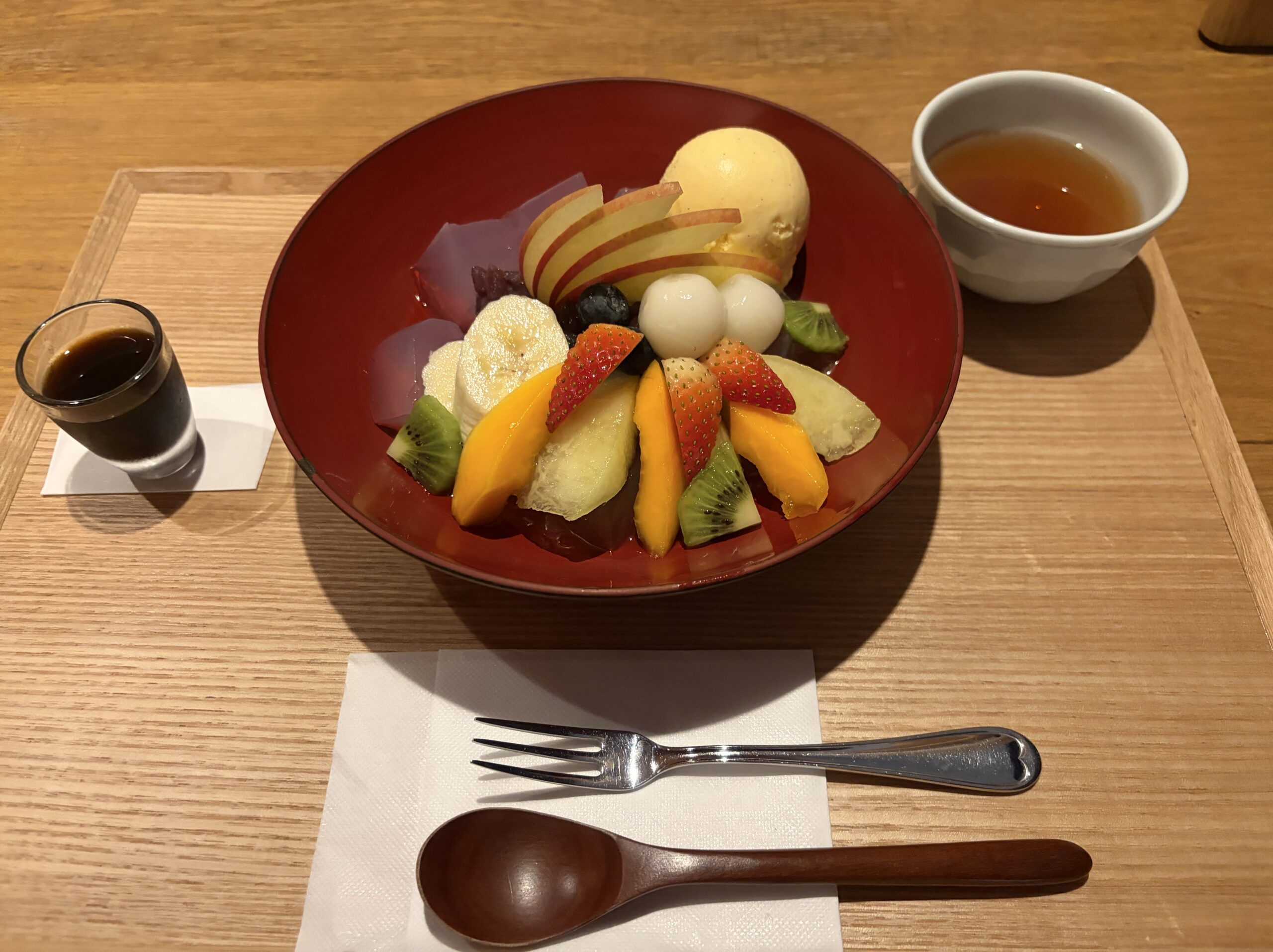
After the show, I made a beeline for the wagashi shop Suzukake, right across from the Hakataza. Savoring sweets while still wrapped in the afterglow — exceptional. (More about Suzukake in a separate post.)
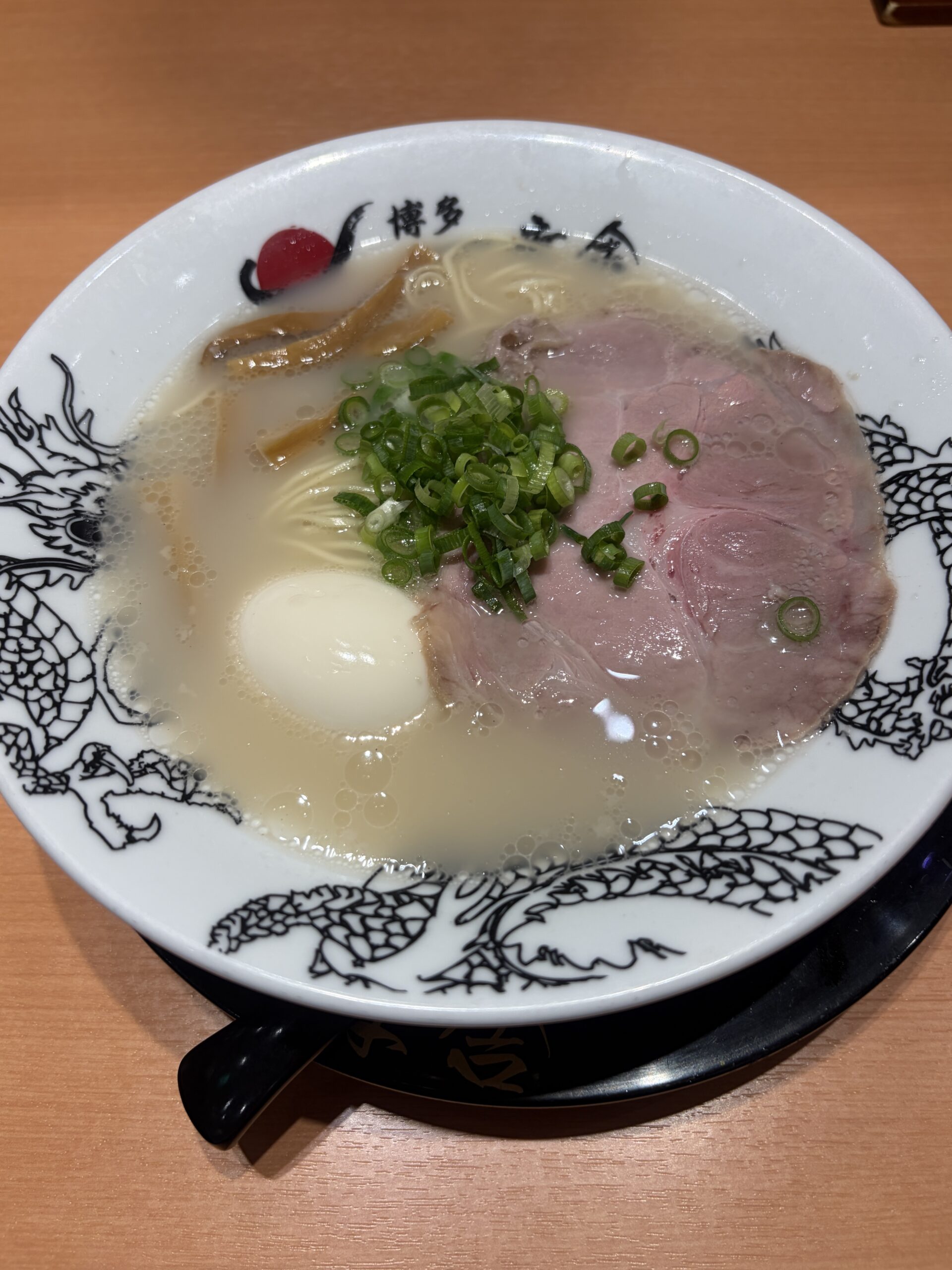
And before heading home, one more bowl at Fukuoka Airport’s “Ramen Runway.” The end of a trip is, of course, ramen. (Also in a separate post.)
Father and son, two name successions in a single day. The town and the theatre — all of Hakata wrapped in a celebratory mood. Solo trips: I just can’t quit them. Belly full.
Related Links