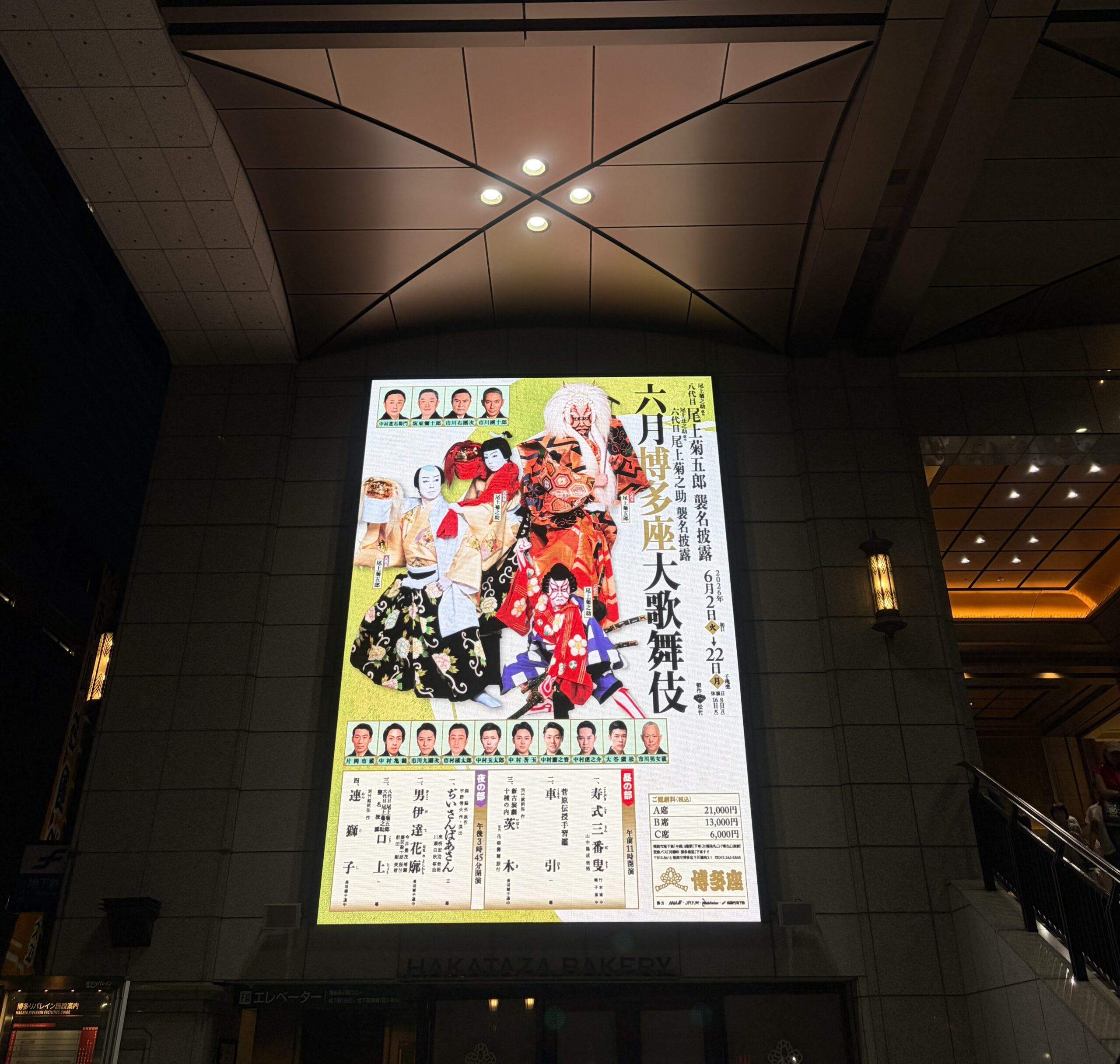
I wasn’t expecting to well up at a lion dance, but there I was. My very first visit to the Hakataza, and I happened to catch the naming-ceremony night for Kikugoro Onoe VIII and Kikunosuke Onoe VI. Another wonderful day, as always.
Read about the Matinee → Hakataza Grand Kabuki: Matinee (June 2026)
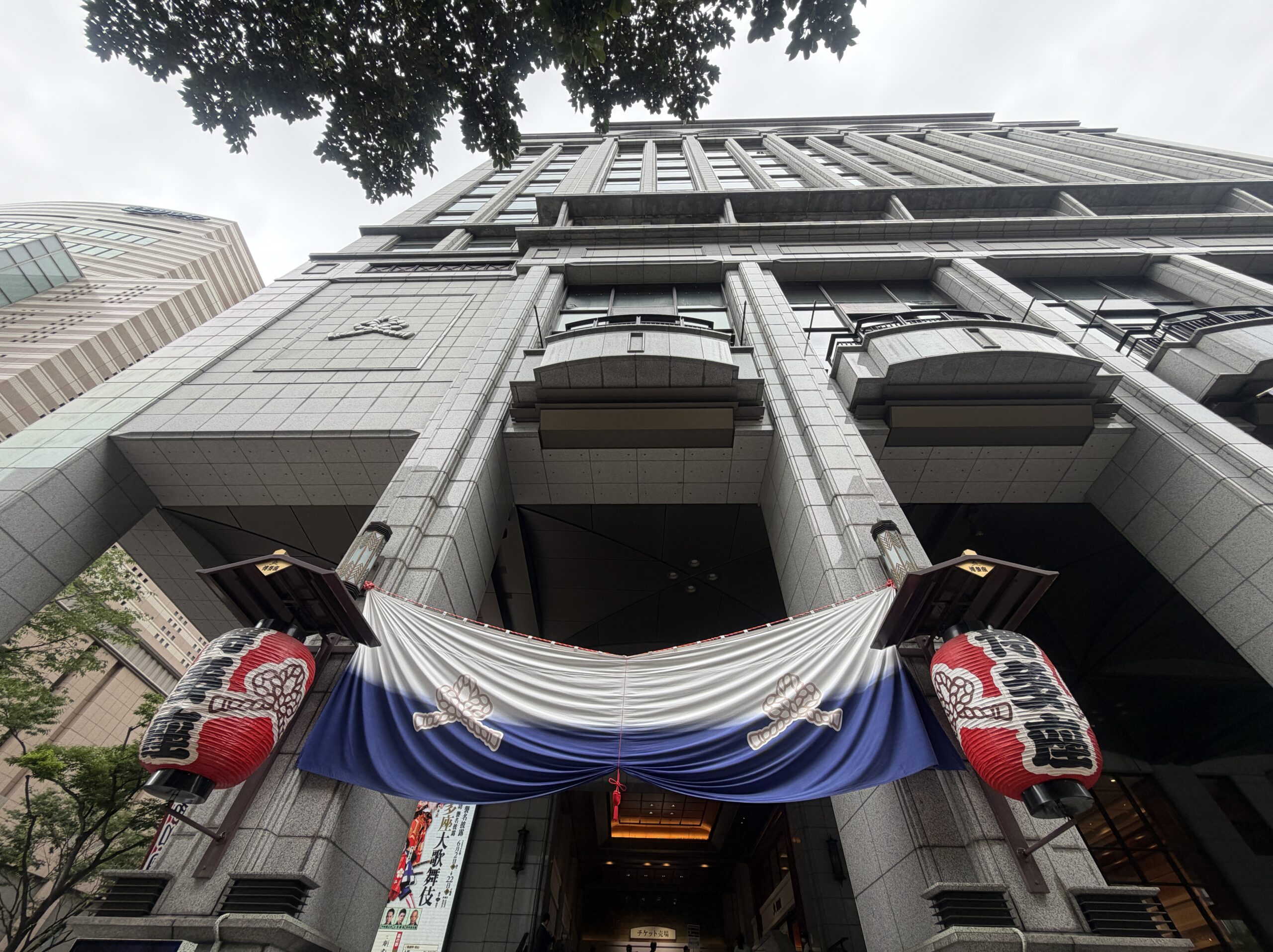
What is the Kikugoro and Kikunosuke name succession?
A shumei (name succession) is the celebratory run in which an actor takes on a great stage name. This time a father took the name Kikugoro Onoe VIII and his son the name Kikunosuke Onoe VI – a double succession, father and son together. The Hakataza run is the grand finale of a tour that has travelled the country, and the whole theatre was glowing with celebration.
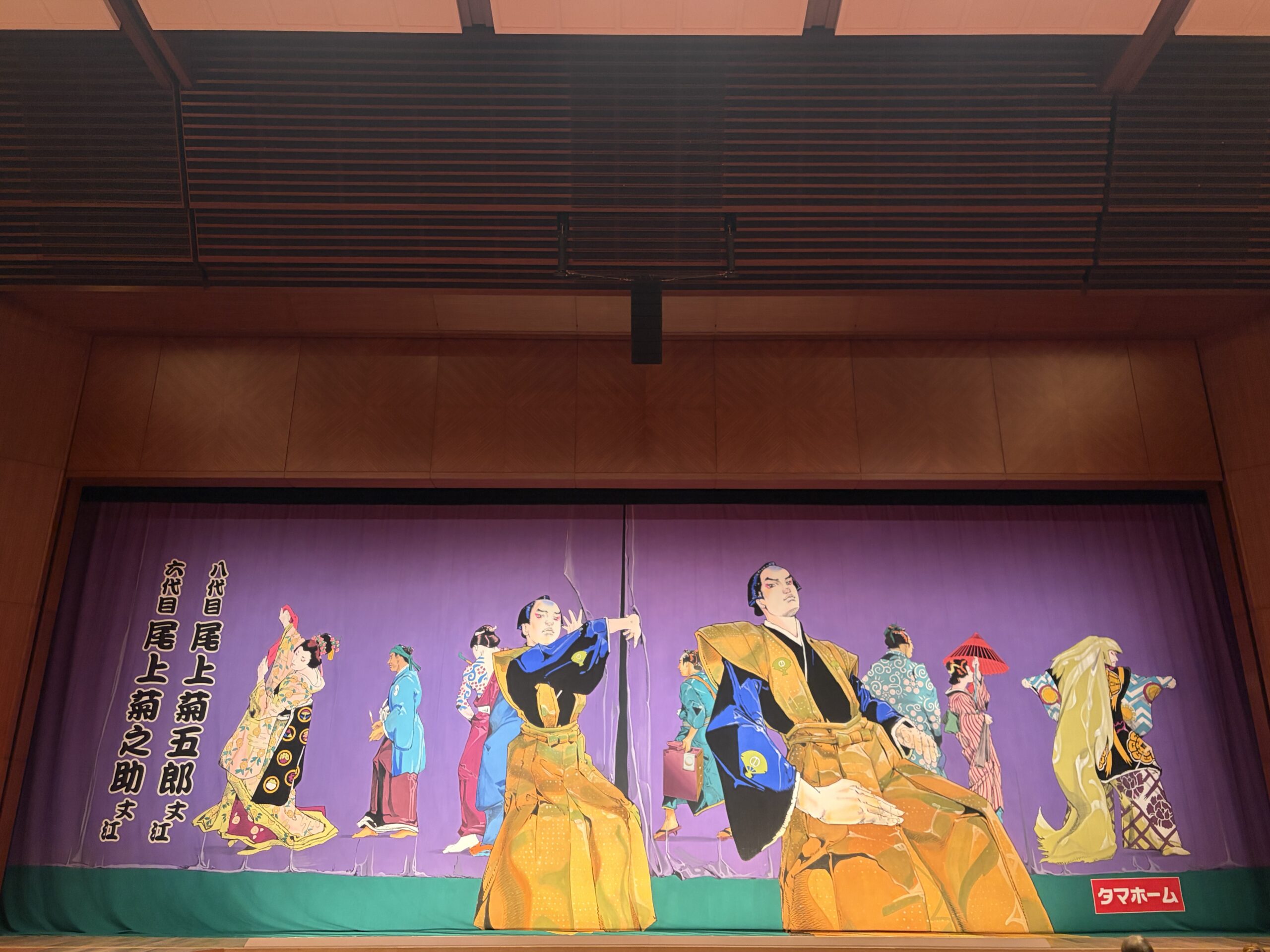
Bowled over by Hirohiko Araki’s stage curtain
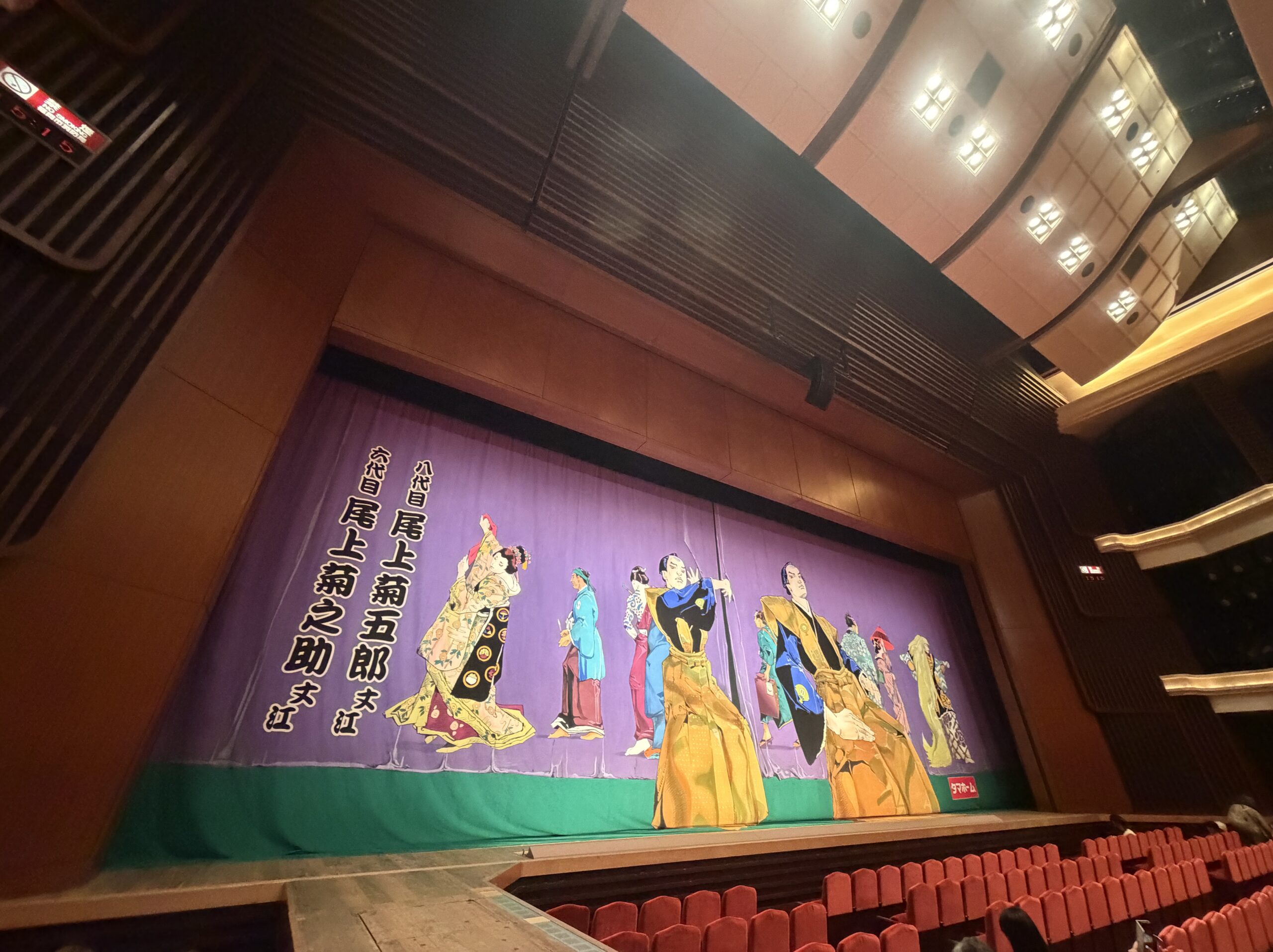
When I looked up after taking my seat, the shukumaku (celebratory stage curtain) stopped me in my tracks – it had been designed by Hirohiko Araki, the creator of JoJo’s Bizarre Adventure. Kabuki actors rendered in that unmistakable style, lined up right across the curtain. Quietly hilarious and utterly gorgeous all at once.
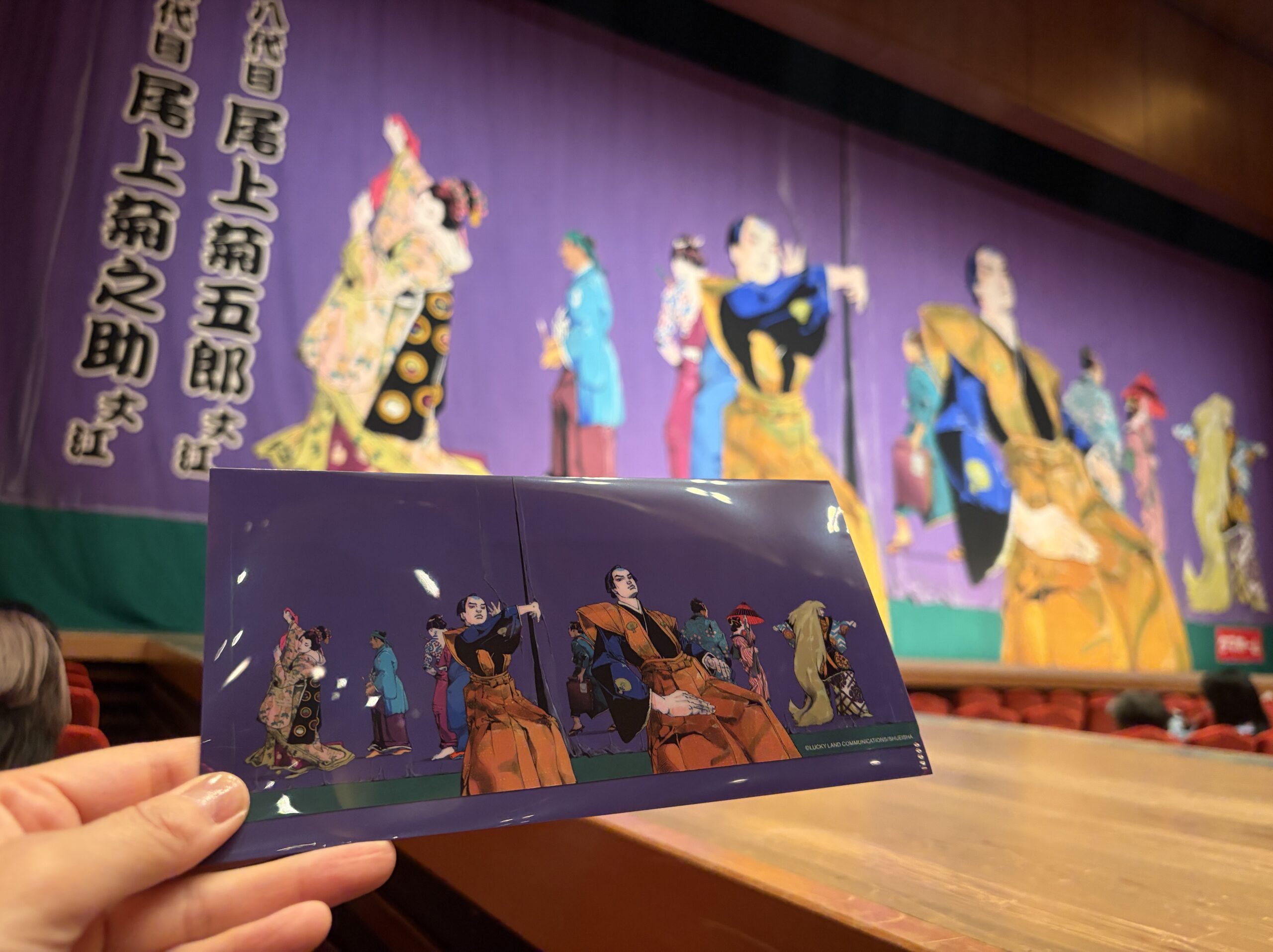
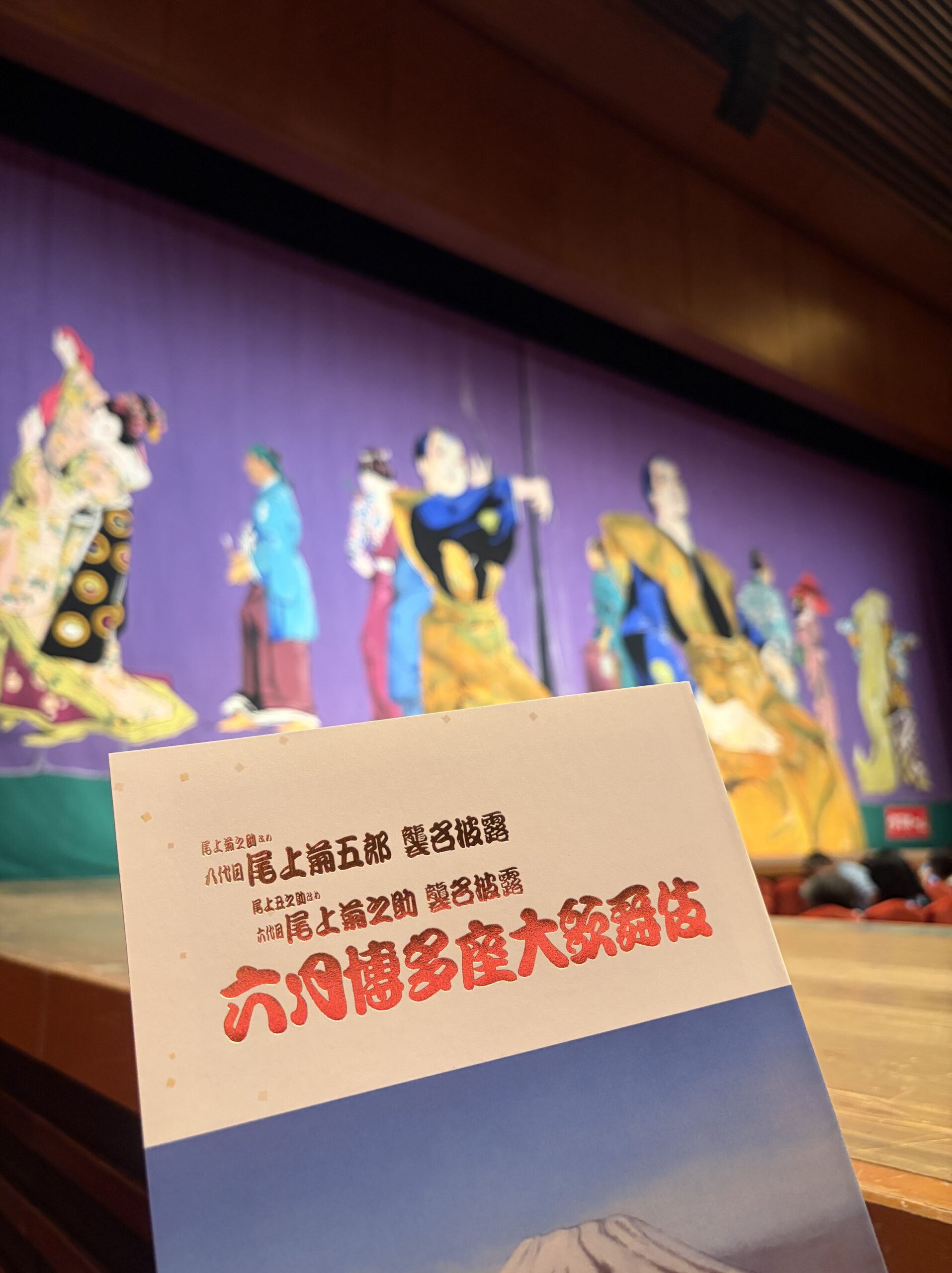
At the shop I found a ticket holder and an A4 clear file in Araki’s design, and picked them up along with the sujigaki (the programme booklet). Properly splashed out. Then I spotted a Snoopy Renjishi mascot keyring – I’ve walked past these at the Kabukiza without buying before, but here at the Hakataza, on a night when Renjishi itself was on the bill… I want it. If it’s still there at tomorrow’s matinee, I’m getting it. This can only be fate. (And after all that, somehow I didn’t buy it today. Why, me, why. lol)
The Evening Show programme
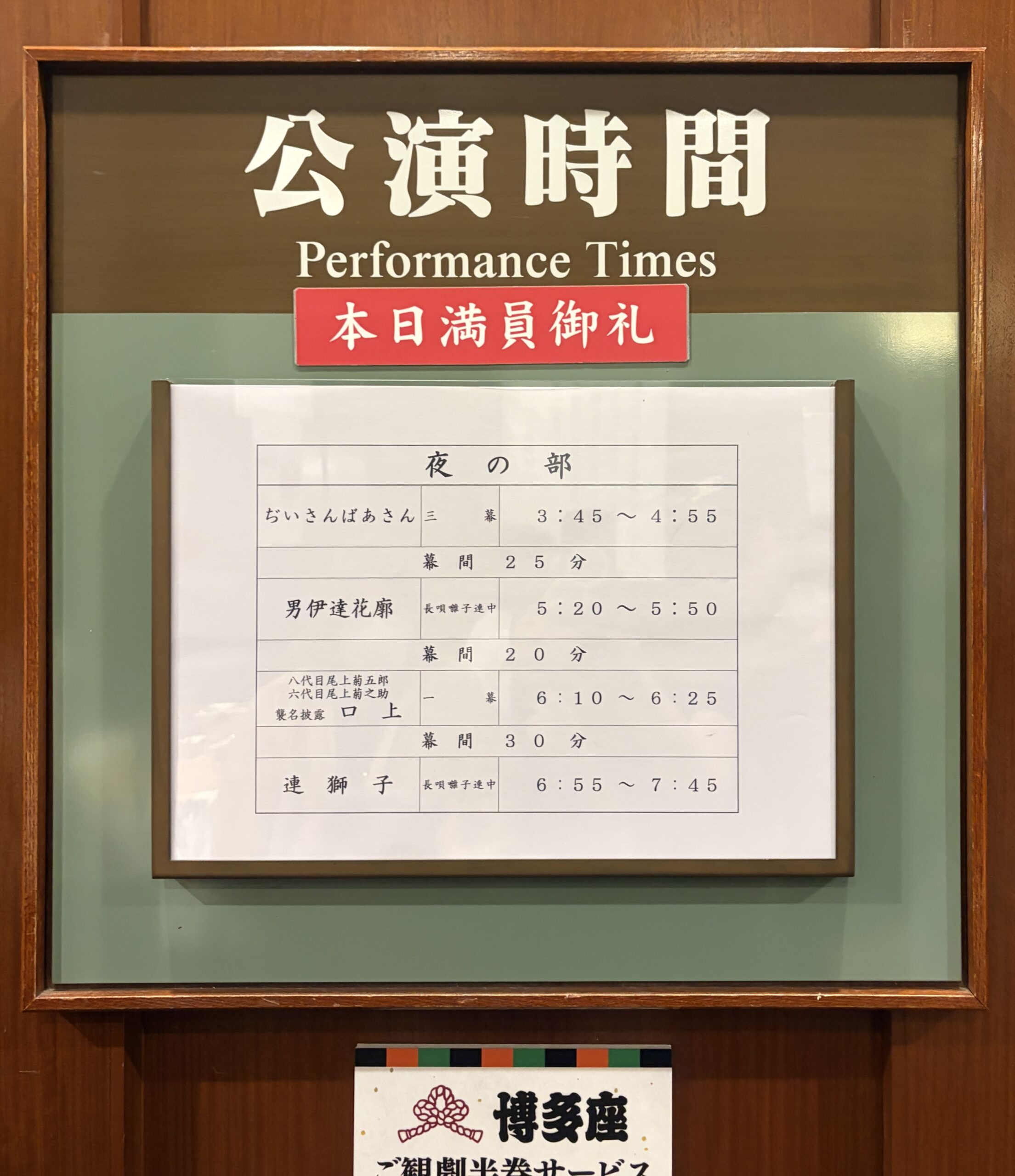
Jiisan Baasan
A modern kabuki piece based on a short story by Mori Ogai. The hero, Iori, loses his temper in a quarrel while away on a posting and kills a colleague; his wife, Run, is left behind. What should have been a one-year posting stretches, through one thing and another, into 37 years apart. It was first staged six years after the war ended – and when I imagine how many couples were separated back then, and what they might have felt watching this very story, my eyes start to sting.
After 37 years, the two finally meet again. Iori still has the same old habit he can never shake – touching his nose – and the instant Run sees it, the 37 years vanish entirely and the two slip straight back into the couple they had always been. That moment, more eloquent than any words, brought me to tears. Kikugoro’s Iori and Jakuemon Nakamura’s Run were charming both young and old; I completely fell for the pair of them.
Otokodate Hana no Yoshiwara
Danjuro Ichikawa’s otokodate (a dashing, chivalrous man of old Edo) was simply too cool. The mie (the dramatic frozen pose), of course, but every small gesture and his whole bearing – sheer style. He was so cool that someone behind me let out an audible gasp. That cool.
The Kojo
The kojo is the segment in which the actors line up in formal kamishimo robes to offer their congratulations. Jakuemon, Yajuro Bando, Danjuro, and the father-and-son pair of Kikunosuke and Kikugoro sat in a row. Danjuro’s story of bringing saury along to an overseas performance and grilling it had the whole house in stitches. The new Kikunosuke seemed to be right in the middle of his voice breaking, wrestling with his delivery but giving it everything – go on, you’ve got this! I cheered him on in my heart. Apparently Danjuro’s son Shinnosuke Ichikawa and Kikunosuke are the same age, just as their fathers are – you can’t help feeling it’s fate.
Renjishi
A lion dance based on the Noh play Shakkyo, portraying a parent lion and its cub. The legend it dances tells of the parent kicking its cub into the ravine and raising only the one that climbs back up. Because it was a real father and son dancing, I kept layering each scene over the two of them – and found myself wondering whether kabuki training, too, is carried out with that same blend of sternness and deep affection, just like Renjishi itself.
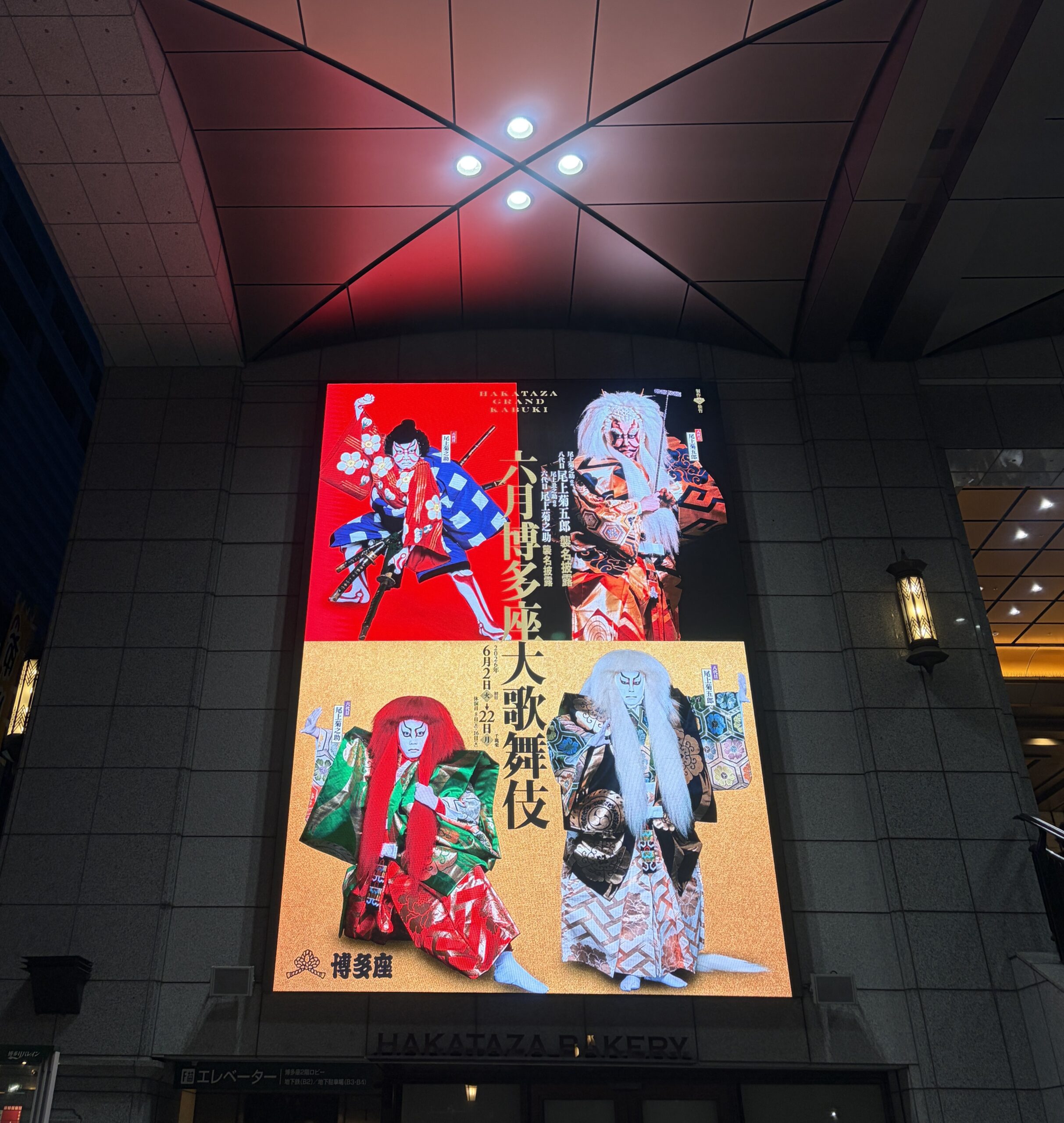
Kikunosuke, the cub, danced every movement with such confidence that it was a joy to watch; whatever doubts there may have been, he showed not a flicker of them on stage – a wonderful professionalism that moved me. And the parent lion, Kikugoro, walking the hanamichi in the very same composition as the Nikki Danjo (the villain) I once saw him play at the Kabukiza – that sent a shiver through me all over again. The climactic kebi-furi (the spectacular whirling of the long manes) was the best, times a thousand.
Closing thoughts
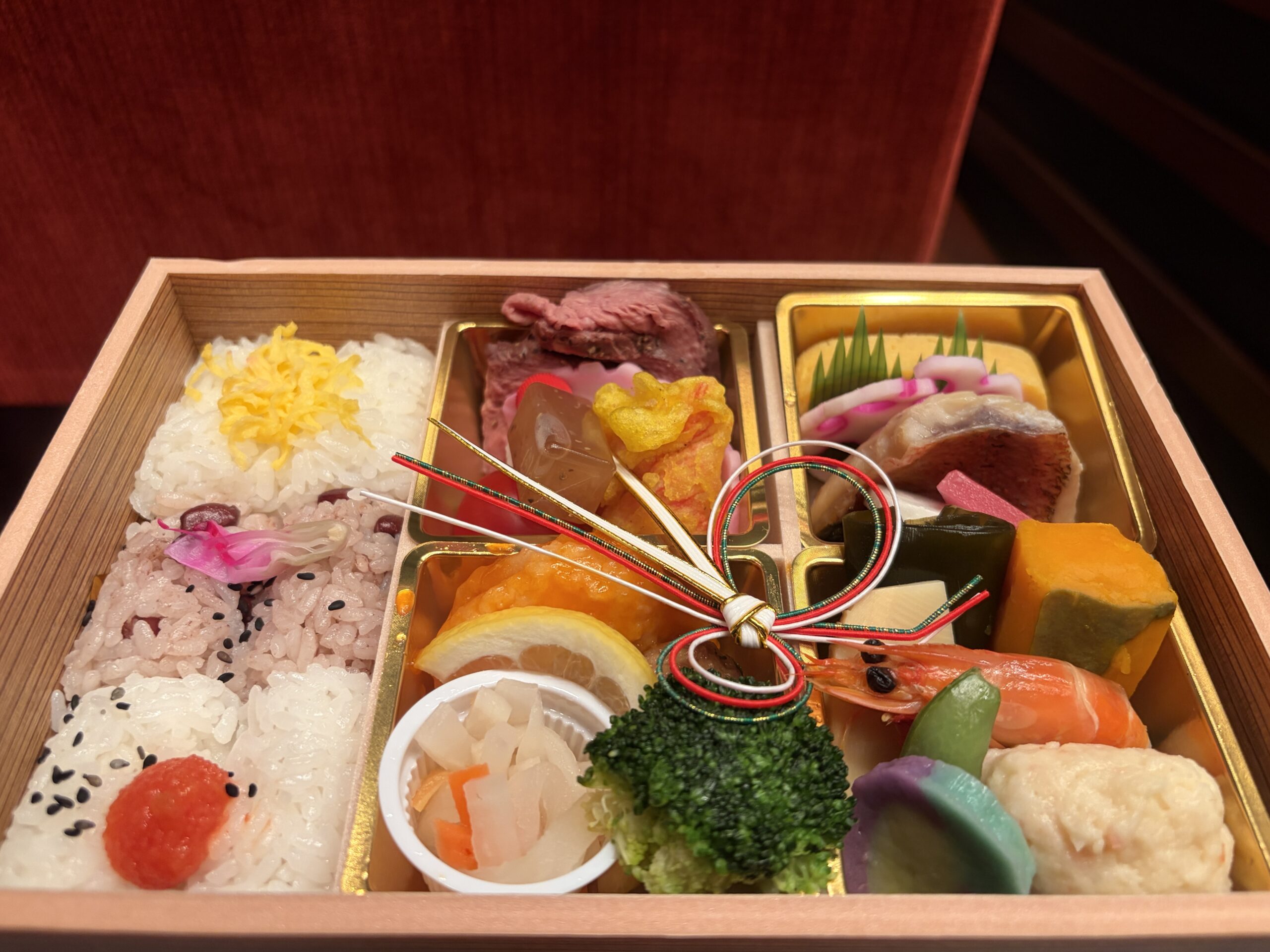
My first visit to the Hakataza: roomy seats, no sense of being hemmed in even with a full house – a lovely, easy theatre to watch in. The “Celebratory Special Makunouchi Bento” I had during the interval was brimming with festivity too; I went “wow!” the moment I lifted the lid.
A name succession, a passing of the torch, and serendipity all round – a packed evening. Picturing those two of the same age (Kikunosuke and Shinnosuke) standing side by side on stage in the years to come, I can hardly wait to see in which kabuki goes next. Though, honestly, I just want to see Kikugoro again soon. (Wait – that’s in which you land? lol)
Related Links