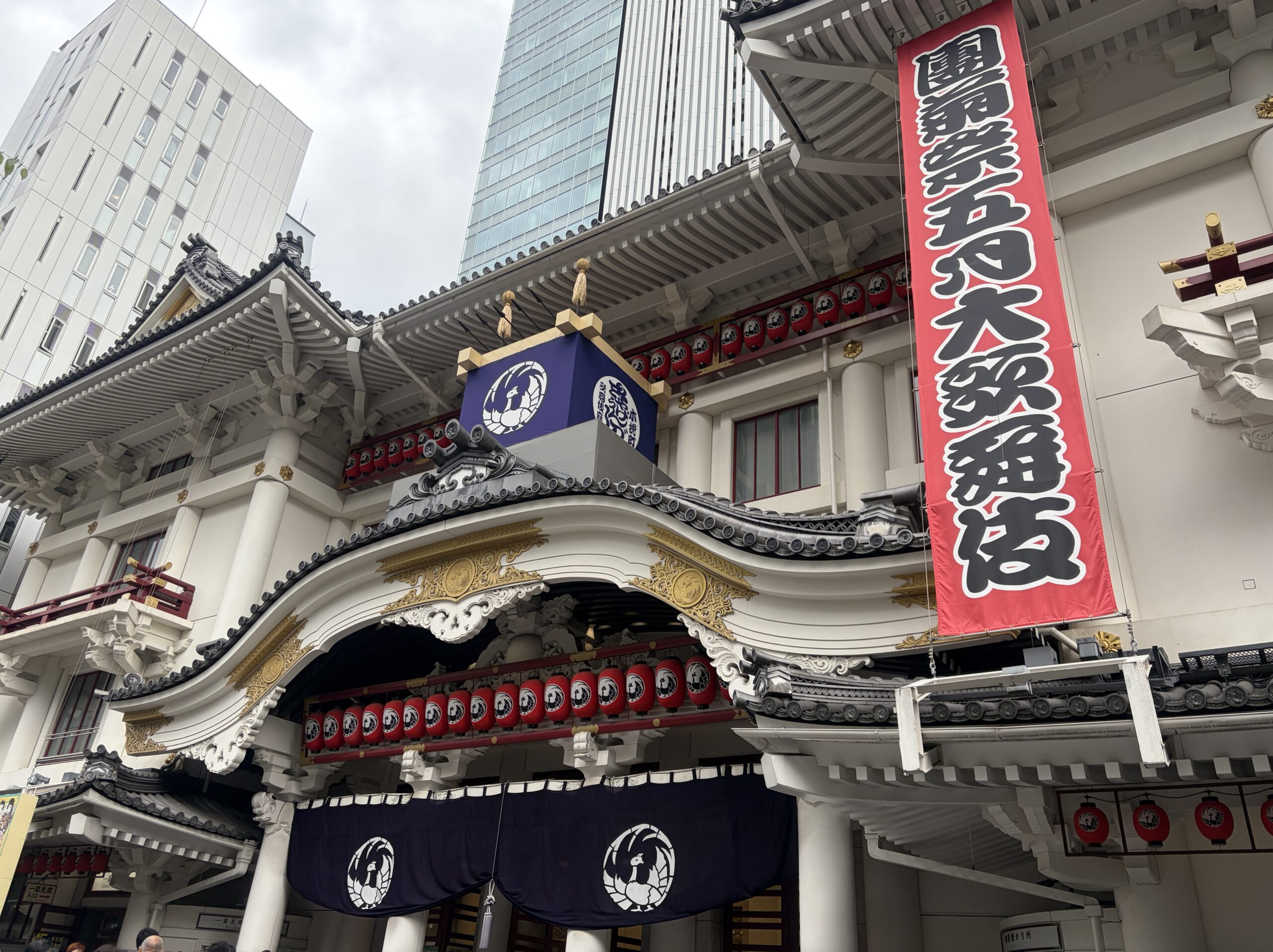
Seated right beside the hanamichi (runway), with Shoroku Onoe just inches away from me—the hem of his kimono brushing against my seat! On top of that, this performance included the official name-taking ceremony for Tatsunosuke Onoe III. As always, today was simply the best.
Read about the Evening Show → Dan-Kiku Festival: May Program at the Kabukiza Theatre, Evening Show (May 2026)
What is the Dan-Kiku Festival?
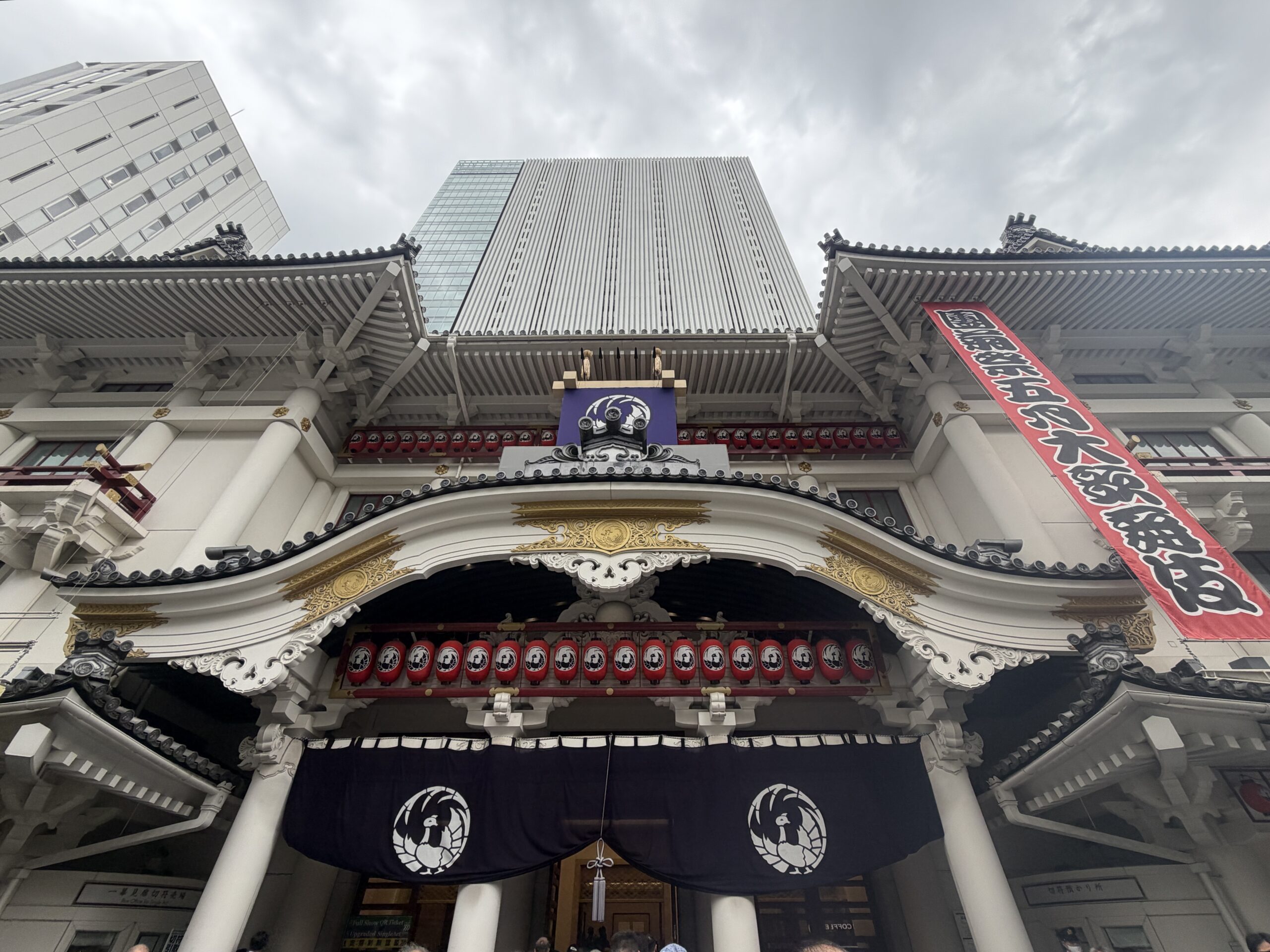
Every May, Kabukiza hosts the “Dan-Kiku Festival (Dan-Kiku Sai),” an annual May tradition celebrating the great achievements of Danjuro Ichikawa IX and Kikugoro Onoe V. Its name combines “Dan” plus “Kiku.” There’s a special atmosphere unique to this time of year, and many fans anticipate it all year.
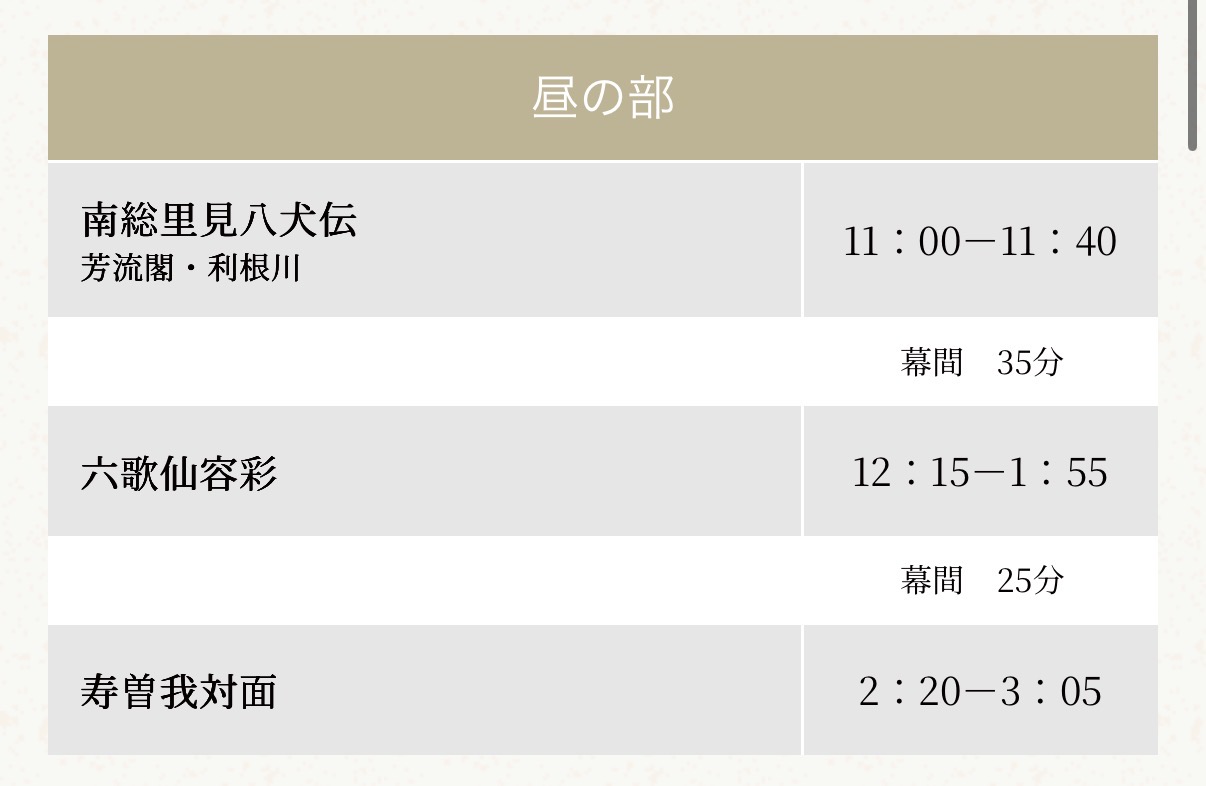
The matinee program featured three works: Nanso Satomi Hakkenden (Horyukaku / Tonegawa scenes), Rokkasen Sugata no Irodori, plus Kotobuki Soga no Taimen. The name-taking ceremony took place during Kotobuki Soga no Taimen.
A Special Seat: “Hanasoto” (Beside the Runway)
My seat today was in the front section of the first floor, beside the hanamichi—what’s known as “hanasoto” (literally “outside the flower path”), also called the “dobu seki” (gutter seat). It’s the section just outside the hanamichi (the elevated runway extending from stage into the audience). Because the runway sits slightly higher than the surrounding seats, those right beside it feel a little sunken—which is how the playful nickname “dobu” (gutter) came about.
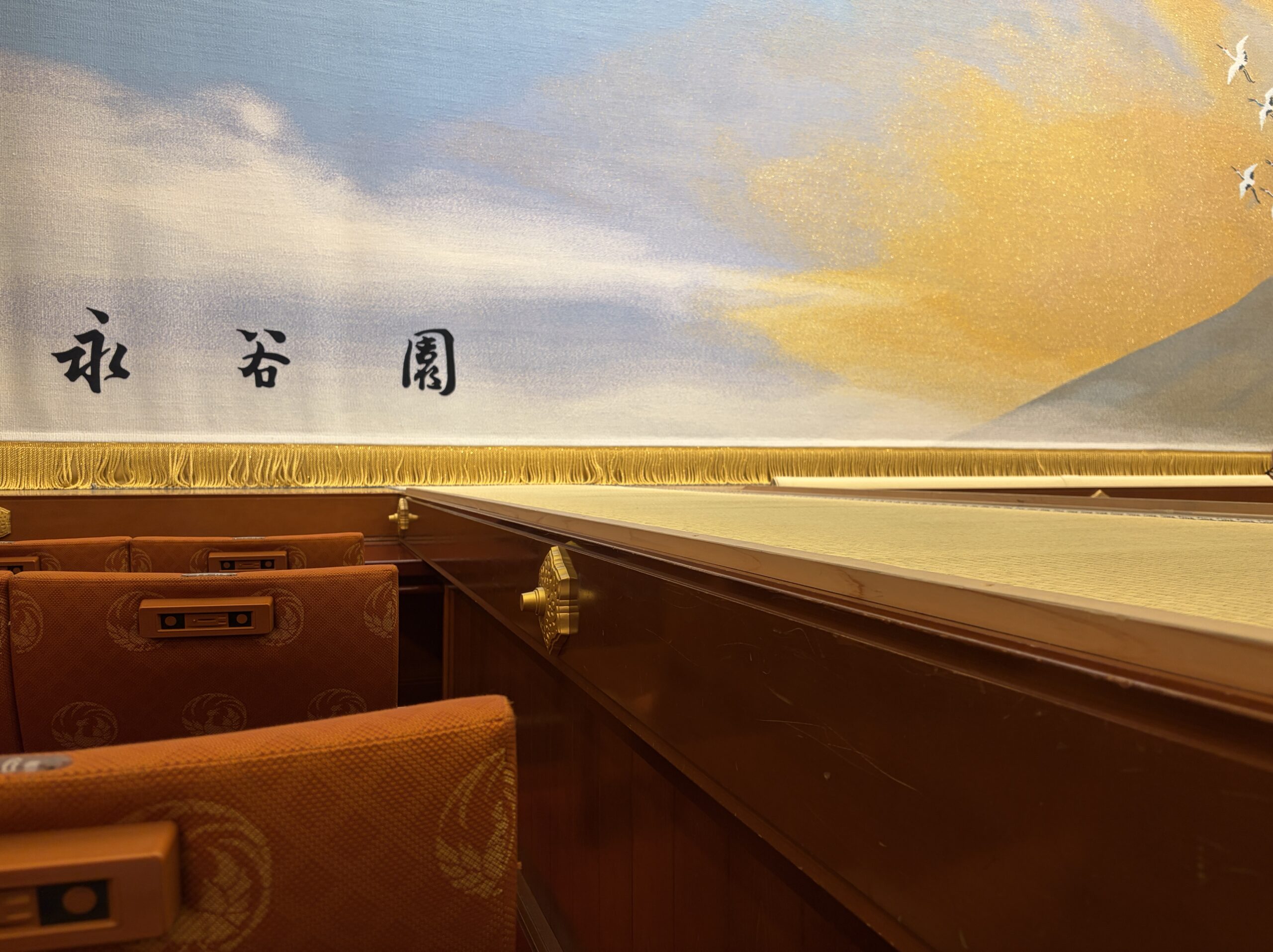
These seats are generally considered less ideal than those on the inner side of the hanamichi, but they’re also one of the best-kept secrets in the house: actors pass literally right in front of you. And since you’re on the outer side, nothing blocks your view of the main stage either—a clear sightline all the way through! Today, I got to experience all the magic this seat has to offer.
A Day Full of Music
In Nanso Satomi Hakkenden, the upstage side featured ozatsuma—a bold, ceremonial style of music used in kabuki’s “aragoto” (heroic) pieces. The shamisen player rests one foot on a wooden platform on the upstage side, striking the strings with dramatic force. Just the sound alone hits hard. Ukon Onoe, who had me laughing the night before, was outstanding in this piece too—couldn’t ask for more.
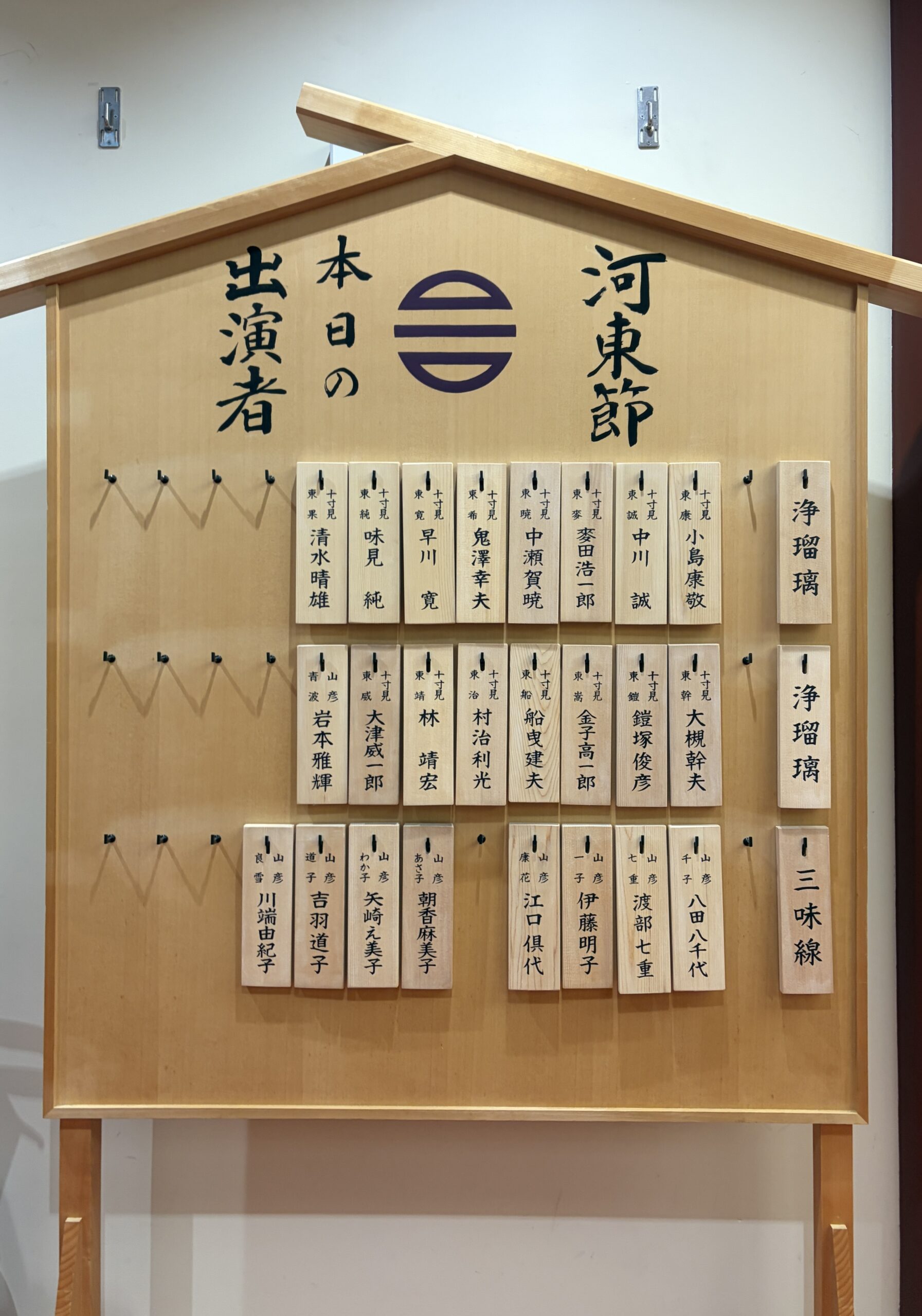
In Rokkasen Sugata no Irodori, the interplay of nagauta (long song) with kiyomoto musicians was gorgeous. My eyes followed Kikugoro while my ears chased the music—eyes and ears both running marathons👀👂. The movements, the costumes, the atmosphere—everything was beautifully composed, and I was simply mesmerized.
Heart-Pounding Kotobuki Soga no Taimen and the Succession
The grand finale of the matinee was Kotobuki Soga no Taimen with the succession ceremony. Sakon Onoe, now Tatsunosuke Onoe, took the role of Soga Goro, with his father Shoroku Onoe serving as his “kouken” (on-stage attendant).
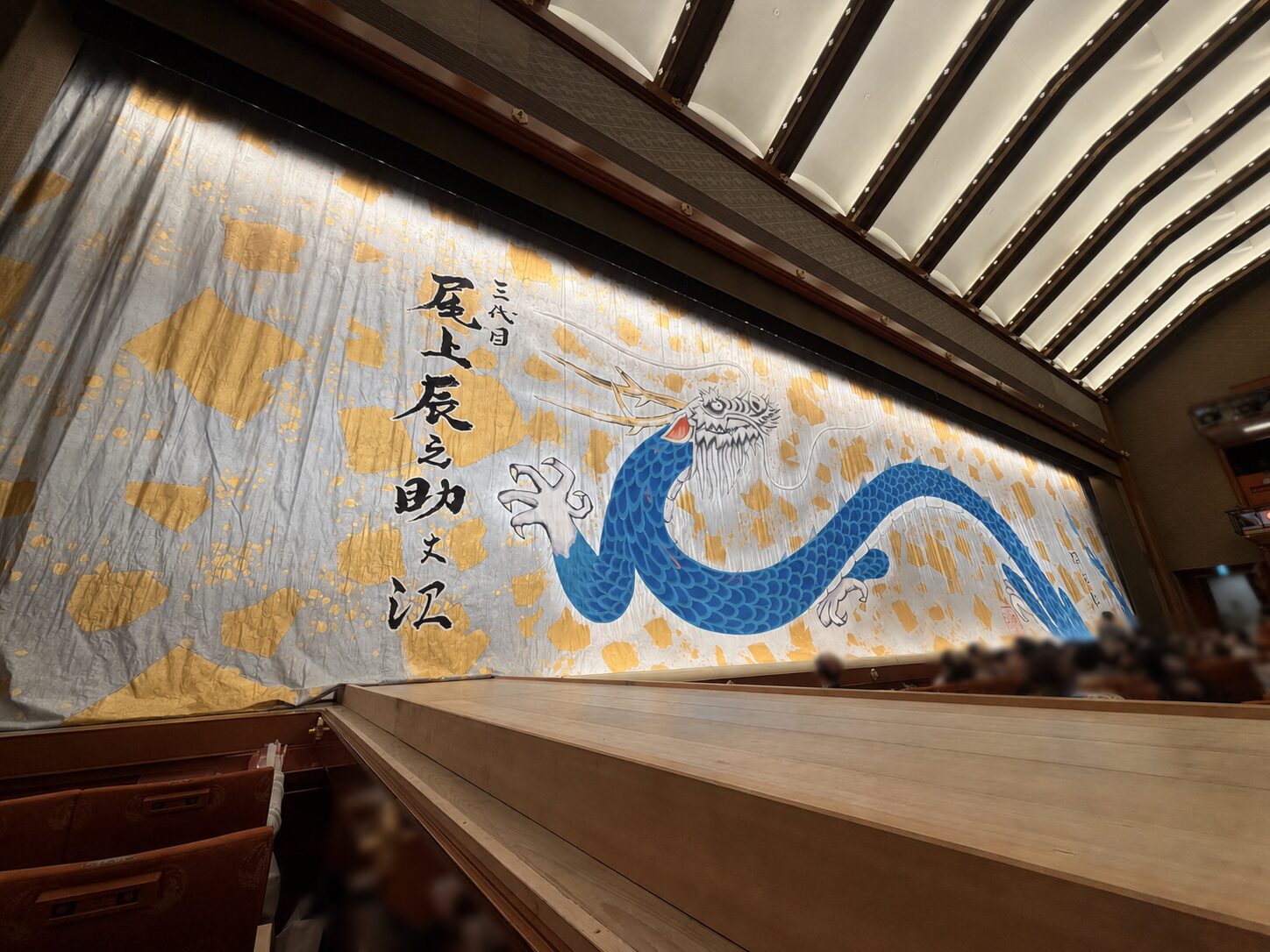
During the intermission, the earphone guide played an interview with Tatsunosuke, in which he spoke about having his father as his kouken—a particularly moving touch👂
When Tatsunosuke performed at the “shichisan” (the key acting spot along the hanamichi), the hem of his kimono fluttered toward my seat. I couldn’t see what was happening directly, but from the direction of the “agemaku” (the curtain at the runway’s entrance), I sensed a swift, silent movement—and the next moment, Shoroku had gracefully adjusted the kimono’s hem. He then took his position right at the edge of the runway, supporting Tatsunosuke throughout.
He was right next to me. Truly. Inches away. With Shoroku so close and the kimono hems literally swinging into my space, I could hardly watch the play normally—what a glorious problem to have (laughs)! I even opened my nose wide to see if I could catch the scent of the kimono fabric, but alas, completely scentless. Oxygen deprivation imminent (just kidding). This is the true joy of the hanasoto seat.
Succession-Commemorative Bento
During intermission, I treated myself to the special bento prepared in honor of the succession. It was like a compact version of the menu I had at Hanakago the day before—beautifully presented, perfectly portioned for a relaxed in-theater meal. There’s something extra special about eating a celebratory bento on a celebratory day. My stomach has been having its own festival these past two days, dining alone!
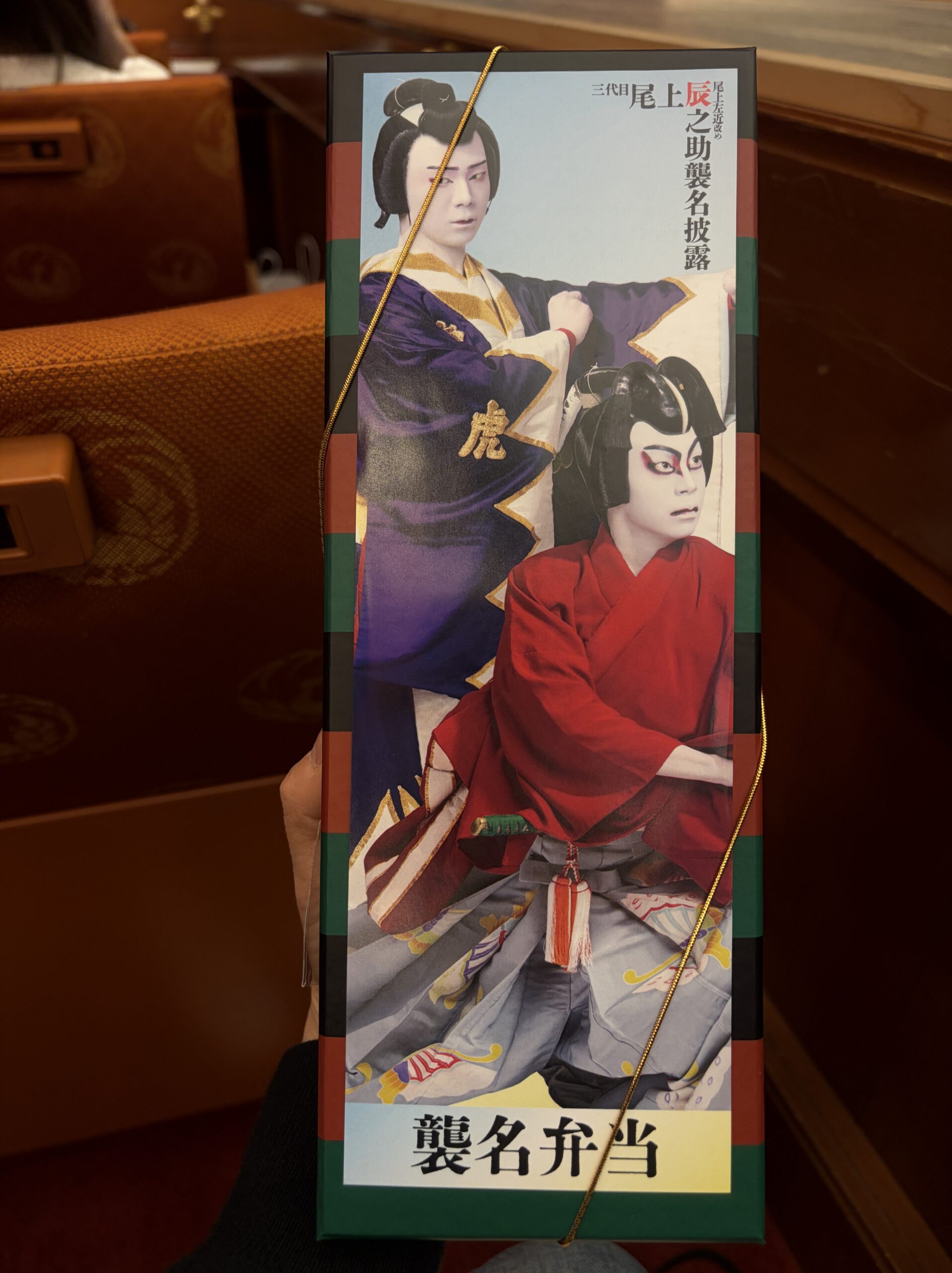
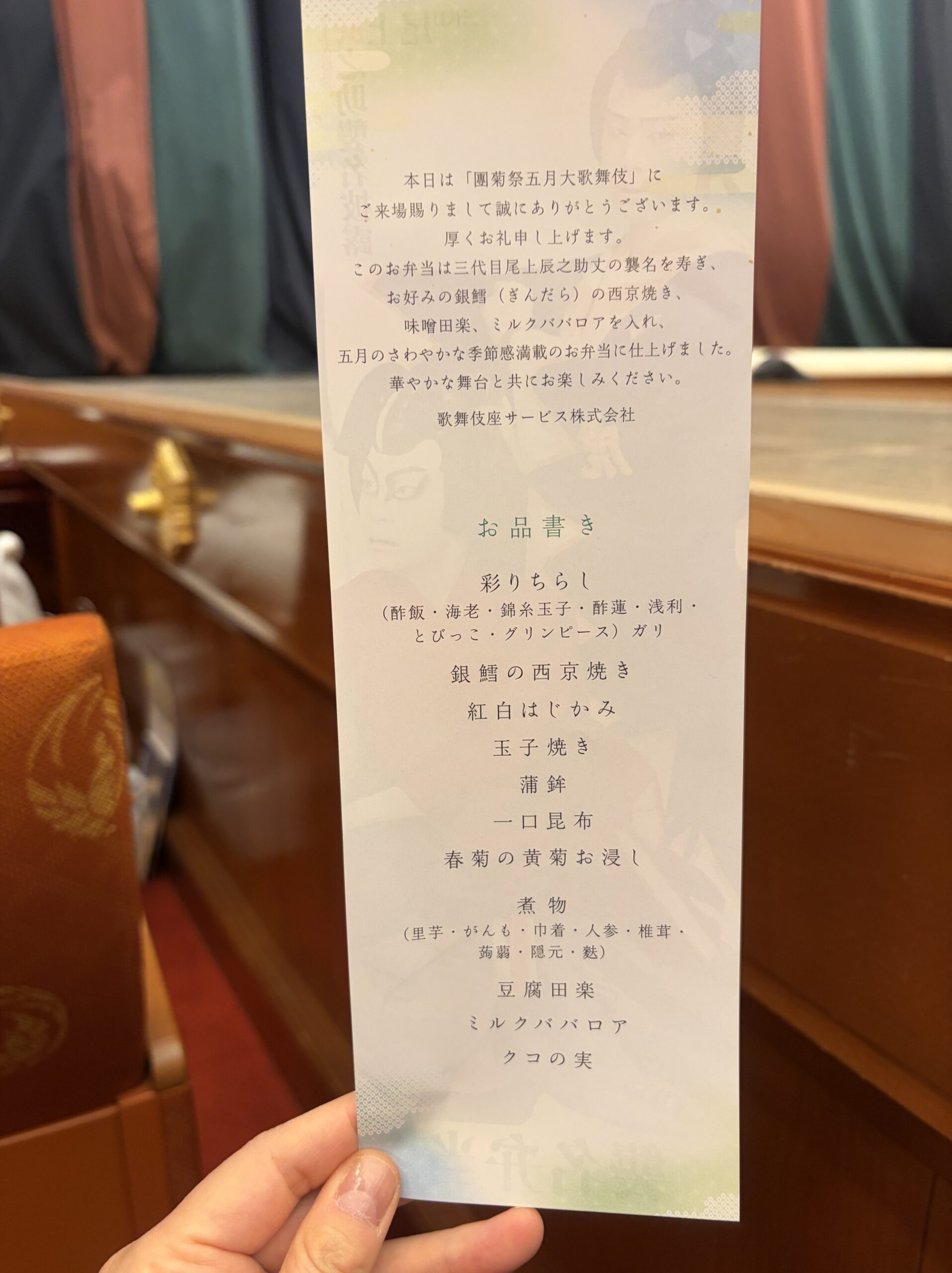
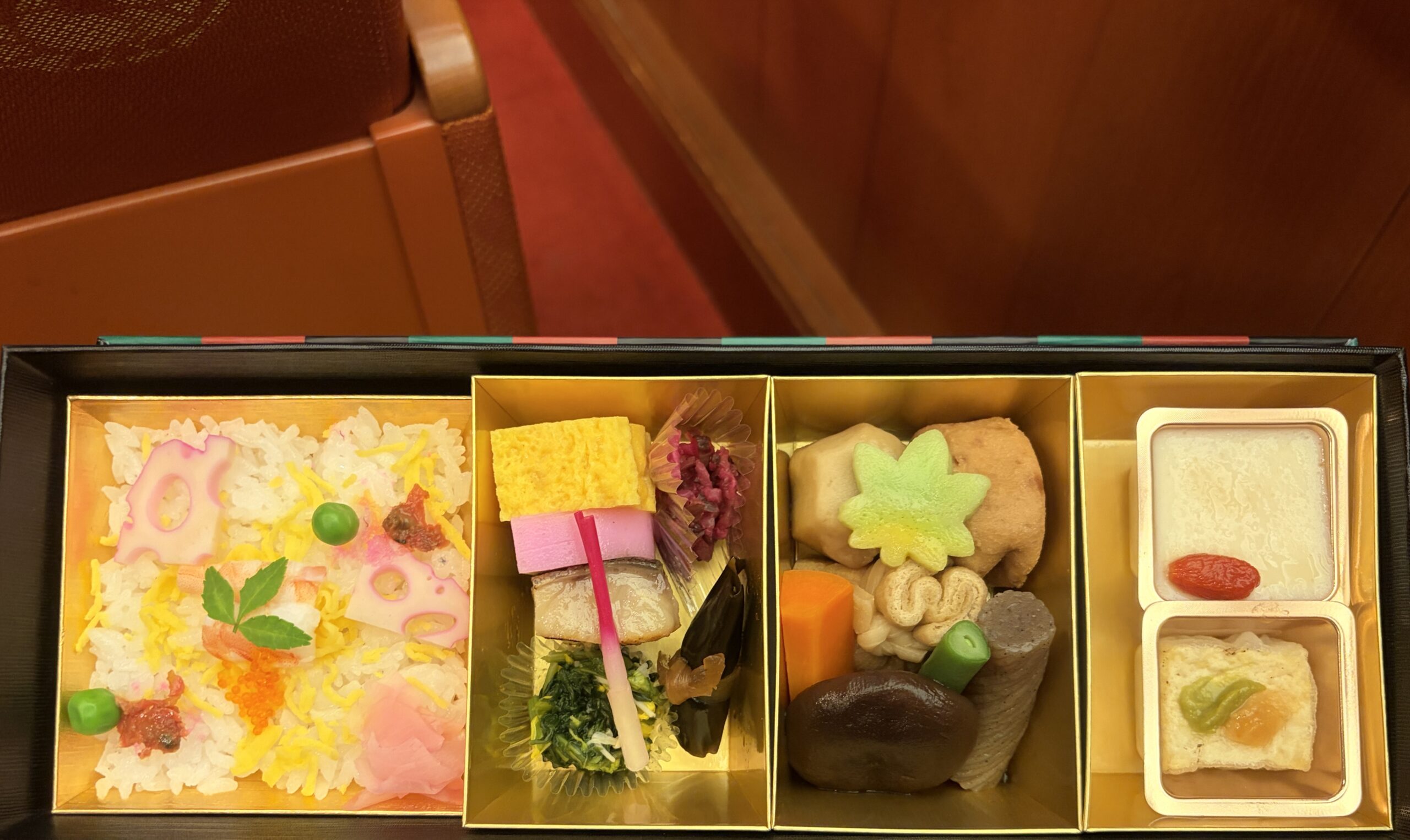
A quick tip: the “yagura” (the bento sales area in the Kabukiza basement) gets very crowded before the performance, so it’s worth heading there a bit early. You can also find your seat first and pick up your bento at a more leisurely pace afterward.
Final Thoughts
Kabuki isn’t just about the acting—the songs and music are an equally important part of the experience, which means there’s never a dull moment. Today was a day of pure musical abundance: a feast for the eyes and ears alike.
Worth noting: Ukon Onoe appeared today as a kabuki actor, but he also performs as a kiyomoto-style “tayu” (chanter) under the name “Kiyomoto Eijudayu.” Seeing him in this dual role is rare and absolutely fascinating—a side of Ukon you don’t always get to witness. (I caught a glimpse of it during Yoshitsune Senbon Zakura… but that’s a story for another post.)
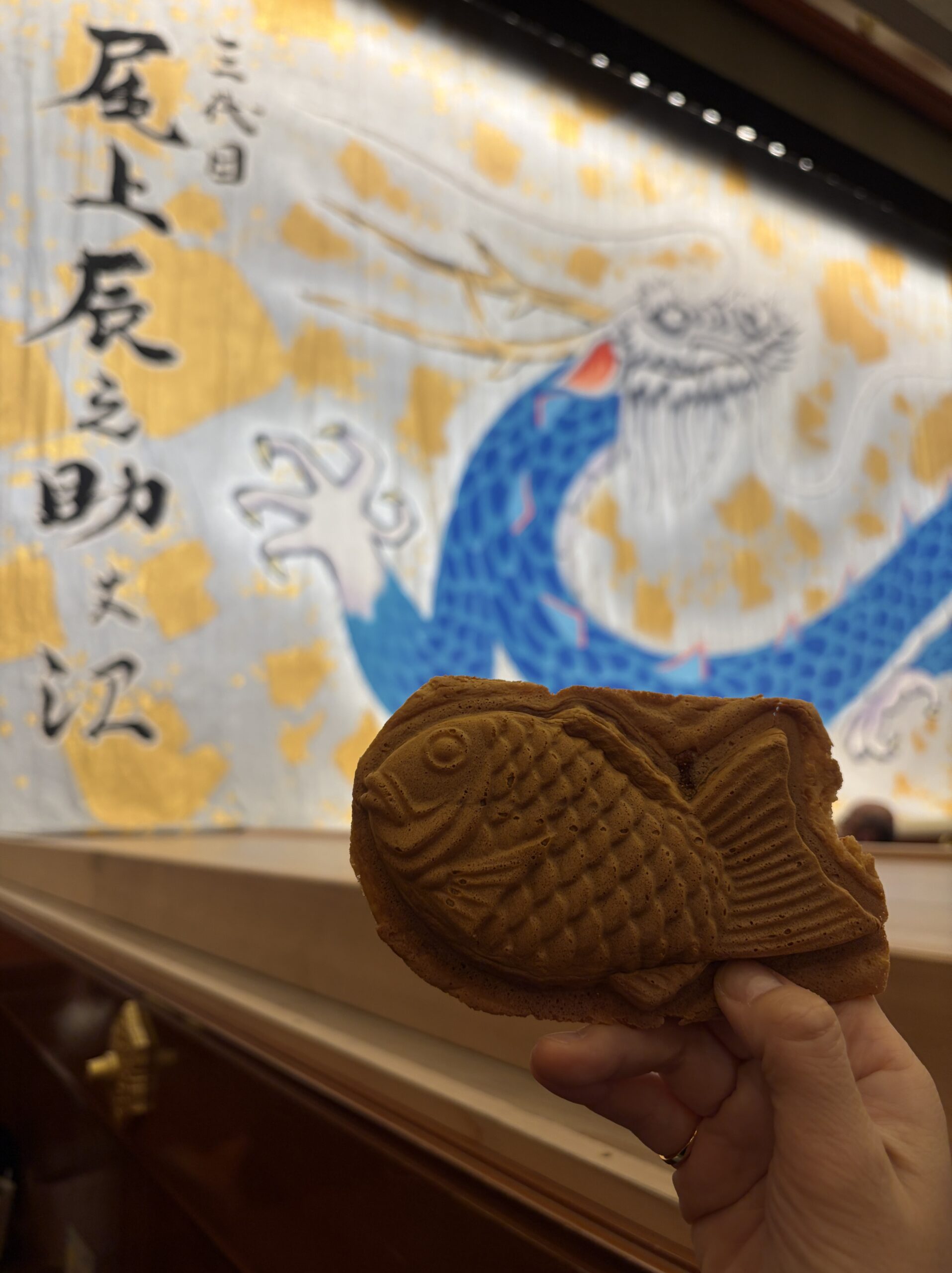
From the thrilling hanasoto seat to the festive succession atmosphere, the Dan-Kiku Festival matinee was everything I could have hoped for. There really is something a little special about Kabukiza at this time of year. Already looking forward to next year⭐️
Latest ticket release schedule → https://happy-go-solo.com/ticket-release-schedule/
Related Links