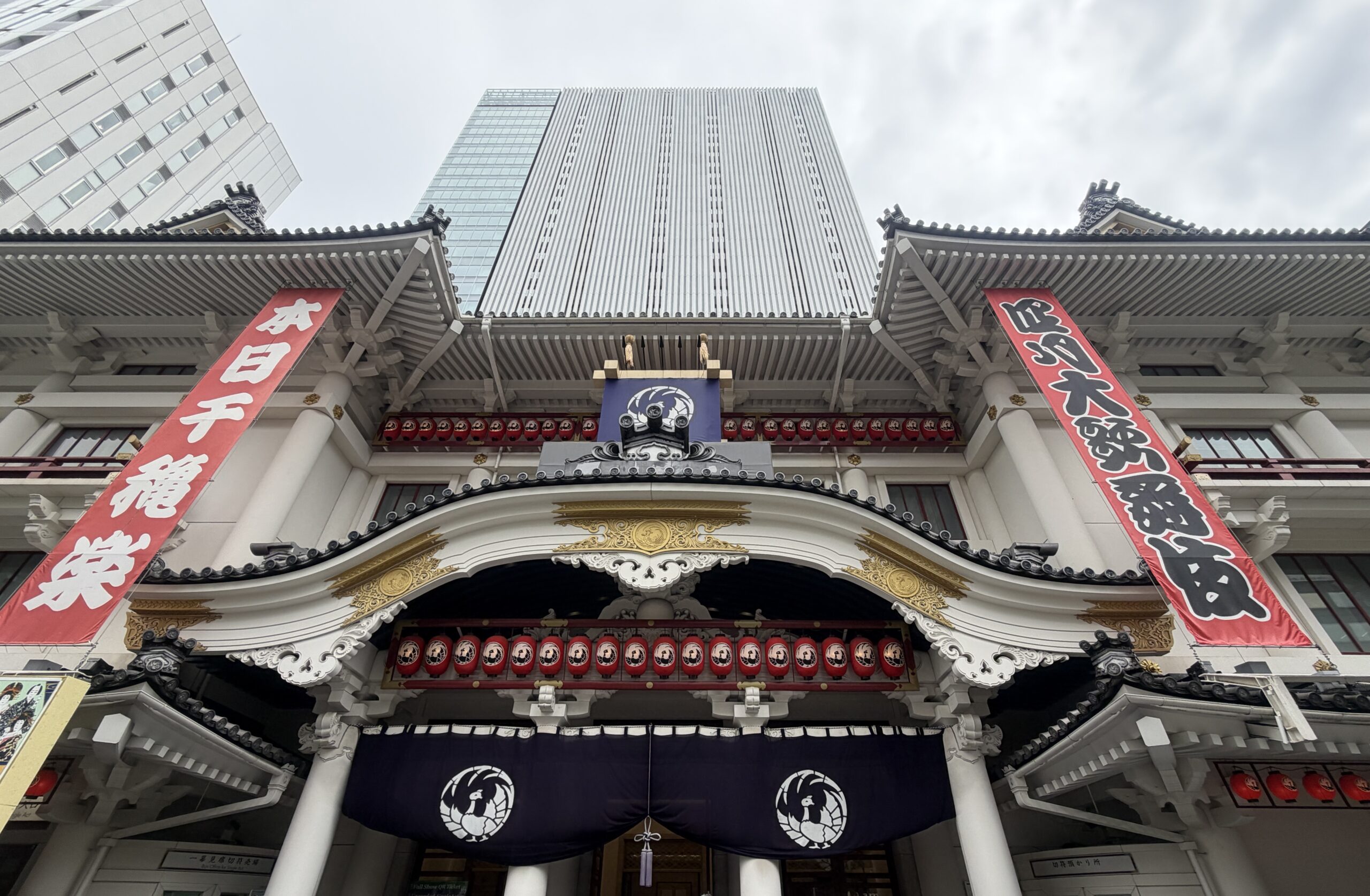
Couldn’t take my eyes off Kikugoro’s performance across three roles. Tears welled up at Masaoka’s “yo de kashatta.” Got completely blown away by Nikki Danjo on the hanamichi, viewed from my hanagai dobu seki. The senshuraku (closing day) atmosphere at Kabukiza had the kakegoe (audience calls from the upper gallery) ringing out louder than usual, at least to my ears. Maybe it was just me, but the energy from the audience felt unusually high. Today, as always, was the best.
Read about the Evening Show → April Program at the Kabukiza Theatre: Evening Show (April 2026)
What is “Uraomote Sendai Hagi”?
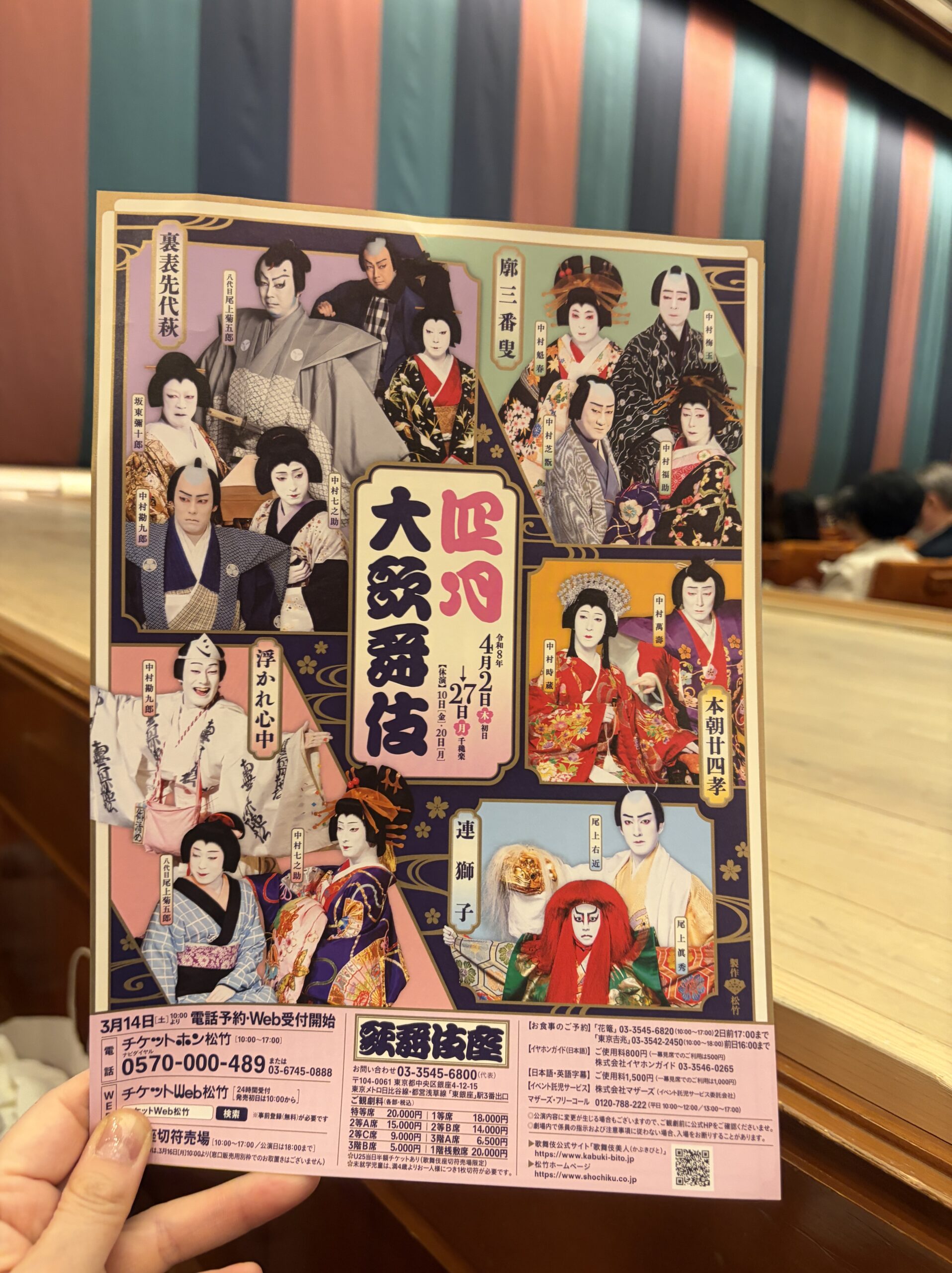
The matinee this time was a full-length production (toshi-kyogen) of “Uraomote Sendai Hagi.” Toshi-kyogen means staging a play across multiple scenes so the full storyline comes through. Since kabuki plays are often performed as standalone scenes, getting to see one in this form is a real treat.
The formal title of the play is “Ume Momiji Nishiki no Dateori,” commonly known as “Uraomote Sendai Hagi.” The word “uraomote” points to two strands of the story.
The omote, or front side, follows the succession dispute in the Ashikaga household, with Masaoka and Nikki Danjo at its center. The ura, or back side, follows Kosuke’s crime against Doeki, a town doctor. Poison plus money tie those strands together ☠️💰
As the two sides alternate, you gradually start to see how the poison and the money connect the whole story. That’s the beauty of the structure. It’s not just Masaoka’s tragedy – Kosuke’s villainy is running in parallel behind the scenes. So that’s what “uraomote” means, you realize after the curtain falls.
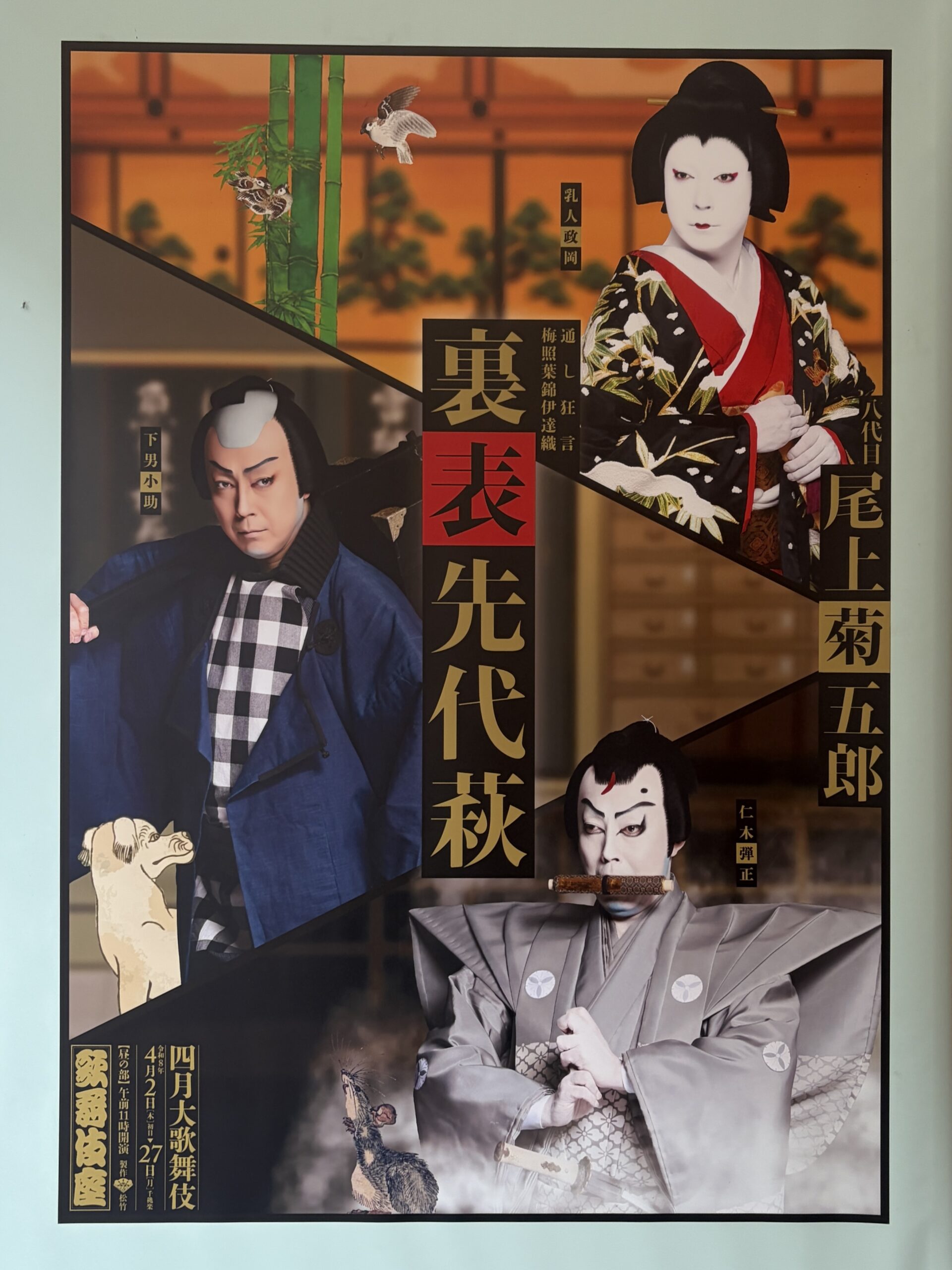
If the Kosuke and Doeki scenes at the beginning make you think “wait, Masaoka hasn’t appeared yet?” – don’t worry. Once the Goten (palace) scene arrives, the poison thread clicks into place.
I’d been looking forward to this one ever since Shichinosuke talked about its highlights during the talk segment at March’s Nakamura-ya performance. This time, Kikugoro played three roles – the manservant Kosuke, the wet nurse Masaoka, and Nikki Danjo – with Nikki Danjo being his very first time in the role. Playing the leads of both the front and back worlds, all by himself – what an extravagant casting…!
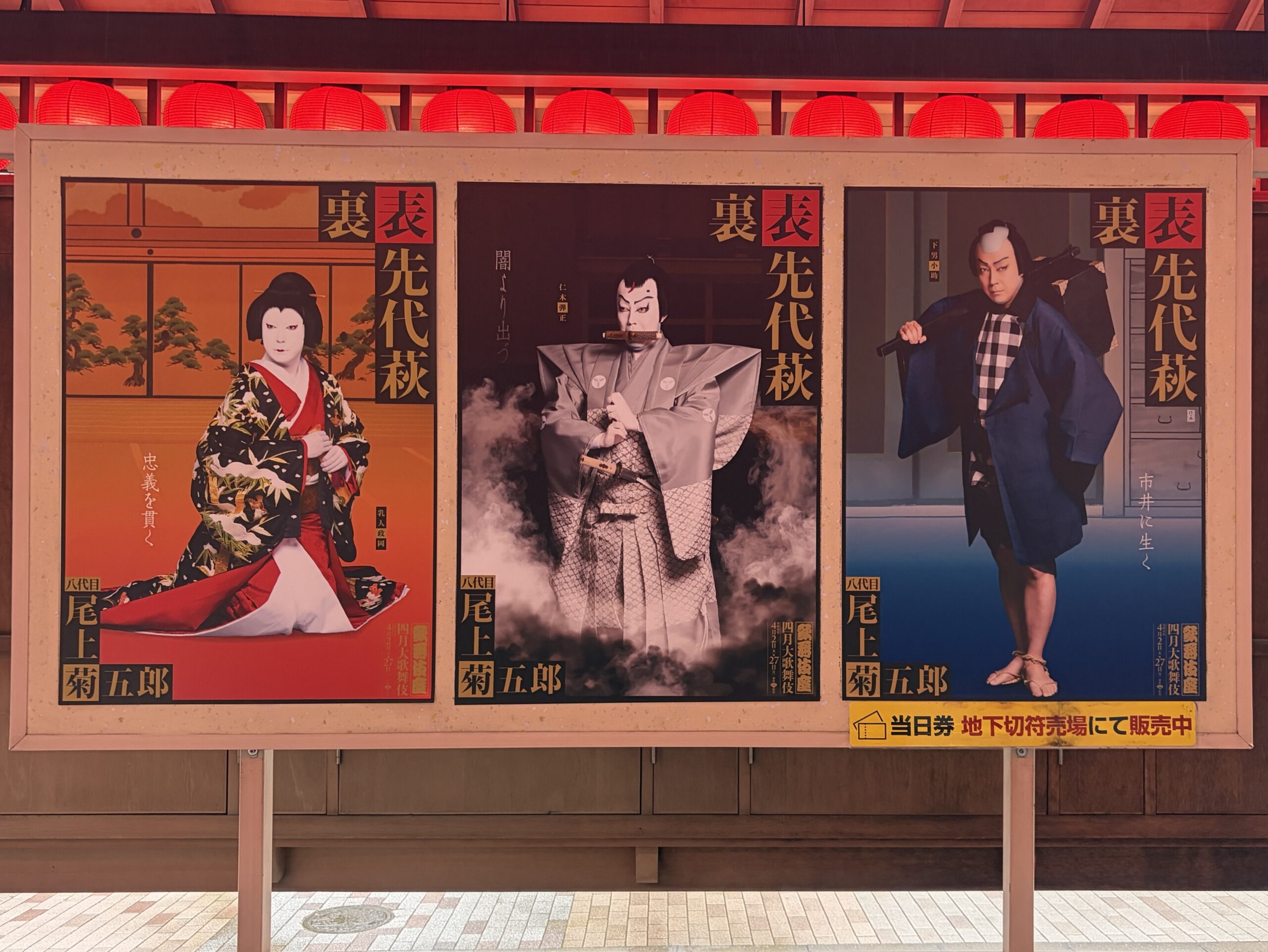
Kikugoro’s Three Roles – A Day You Couldn’t Look Away
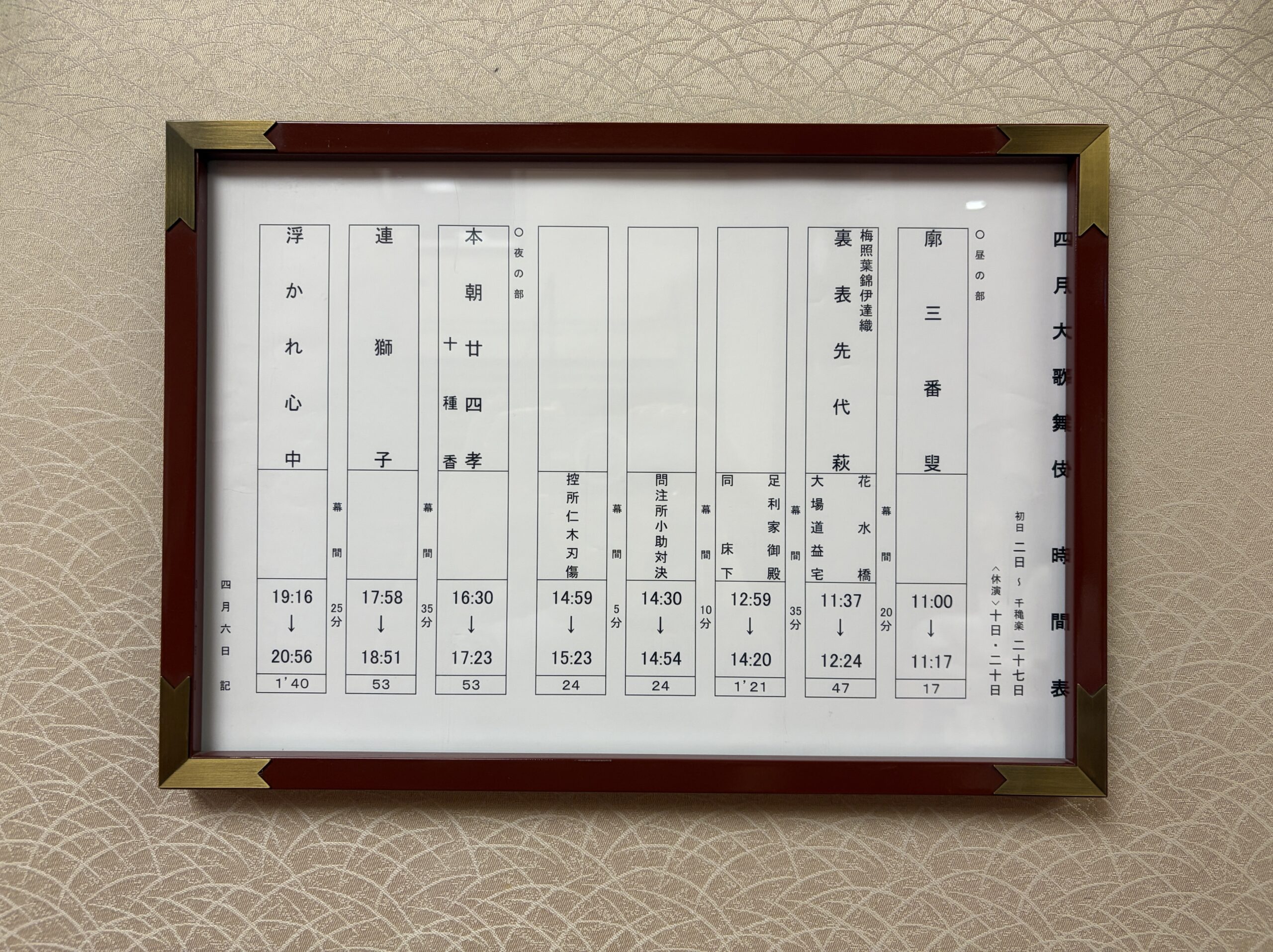
When you hear “full-length production,” it’s tempting to think “this is going to be long…” But with Kikugoro inhabiting three roles so completely, I couldn’t look away for a second. It flew by. Before I knew it, the show was over. Maybe I fainted somewhere in the middle.
After all, the three roles this time were Masaoka and Nikki Danjo from the front world, and the manservant Kosuke from the back world.
The Masaoka who’d just been thinking of her child as a mother would reappear in the next scene as the seductive Nikki Danjo, and then take on yet another face as Kosuke from the “ura” side. My head knew it was the same person, but the air around him changed completely.
“When will he appear next?” I kept thinking, never letting my guard down – and suddenly the curtain was falling. Yep, I probably did faint.
Tears at Masaoka’s “Yo de Kashatta”
I couldn’t bear the Masaoka scene.
Let me lay out the story 👀
1. Masaoka is the wet nurse to the young lord Tsuruchiyo. Wary of poison, she insists Tsuruchiyo eat only food she prepares herself – that’s how thorough she is.
2. She also drills it into her own son Senmatsu day after day: “When the time comes, you must protect Lord Tsuruchiyo.”
3. One day, Sakae-gozen from the enemy faction arrives bearing sweets as a visit gift: poisoned sweets, of course. But she’s high-ranking, so the gift can’t be refused, and Masaoka is at a loss 🥹
4. Senmatsu, seeing this, leaps out and gobbles up the sweets before Tsuruchiyo can! (Aaaaaahhhh!!)
5. Yashio – in a panic that the poison will be discovered – accuses Senmatsu of the impudence of eating his master’s sweets, then stabs him to death. Killing him just to cover up the evidence… how brutal. Well, I mean, she IS from the enemy side, so I guess “brutal” is correct.
6. Even as her son is killed before her eyes, Masaoka doesn’t change her expression. If she cried here, it would reveal that Senmatsu had taken Tsuruchiyo’s place. Seeing this, Sakae-gozen jumps to the conclusion that Masaoka had swapped Senmatsu and Tsuruchiyo, and had let their side kill Tsuruchiyo – so Masaoka must actually be an ally.
7. And then Sakae-gozen hands over the renpanjo (a signed pledge listing the conspirators’ names) to Masaoka. The actual evidence, just casually handed over. Once everyone has left, Masaoka finally returns to being a mother… and that’s when she says “yo de kashatta” (you did well) to Senmatsu.
8. After that, when Yashio comes back to attack her, Masaoka strikes her down. Satisfying, but heartbreaking… And then a rat appears, snatches up the precious renpanjo, and runs off with it. Wait, it’s not over yet?! Just let me sit with Masaoka’s emotions for a moment, please.
…Spelled out like this it sounds like a thriller, but really, this scene cannot be watched without tears.
For a child who, just as she had taught him, kept his promise to his mother and gave his life to protect his master – the words “yo de kashatta,” meant to honor him.
Only after everyone is gone does Masaoka finally speak to Senmatsu.
“Yo de kashatta.”
That one phrase, and I was completely undone.
Masaoka, who had to hide her mother’s face for so long, finally gets to be a mother again. The wait is unbearable. Long. Unbearable.
Nikki Danjo on the Hanamichi, Viewed from the Hanagai Dobu Seki
And then there’s that rat that ran off with the renpanjo… whose true identity is none other than the seductive Nikki Danjo appearing on the hanamichi.
My seat this time was, once again, my favorite hanagai dobu seki – on the outer side of the hanamichi (the walkway extending from the stage out through the audience), with actors passing right by you. Clear sightlines. Actors walking the hanamichi pass right under your nose. What a wonderful seat.
Before Masaoka’s tears could even dry, the seductive Nikki Danjo appeared on the hanamichi.
The sheer power of his presence – it was hard to believe he was really right there in front of me. I’d just been sobbing, and now I was completely overwhelmed by his commanding presence.
Maybe it was because of senshuraku, but the kakegoe really seemed to ring out that day. Maybe it was just me, but the audience’s energy felt a touch higher than usual.
I think this might be the first time I’ve come out of a show feeling genuinely dazed. Yeah, I probably did faint today 😵
How to Spend the Day When Watching Both Matinee and Evening
This time I was seeing both the matinee and the evening performance. When the matinee ends, you can leave the theater and come back in for the evening show, but on this day I just waited in the lobby.
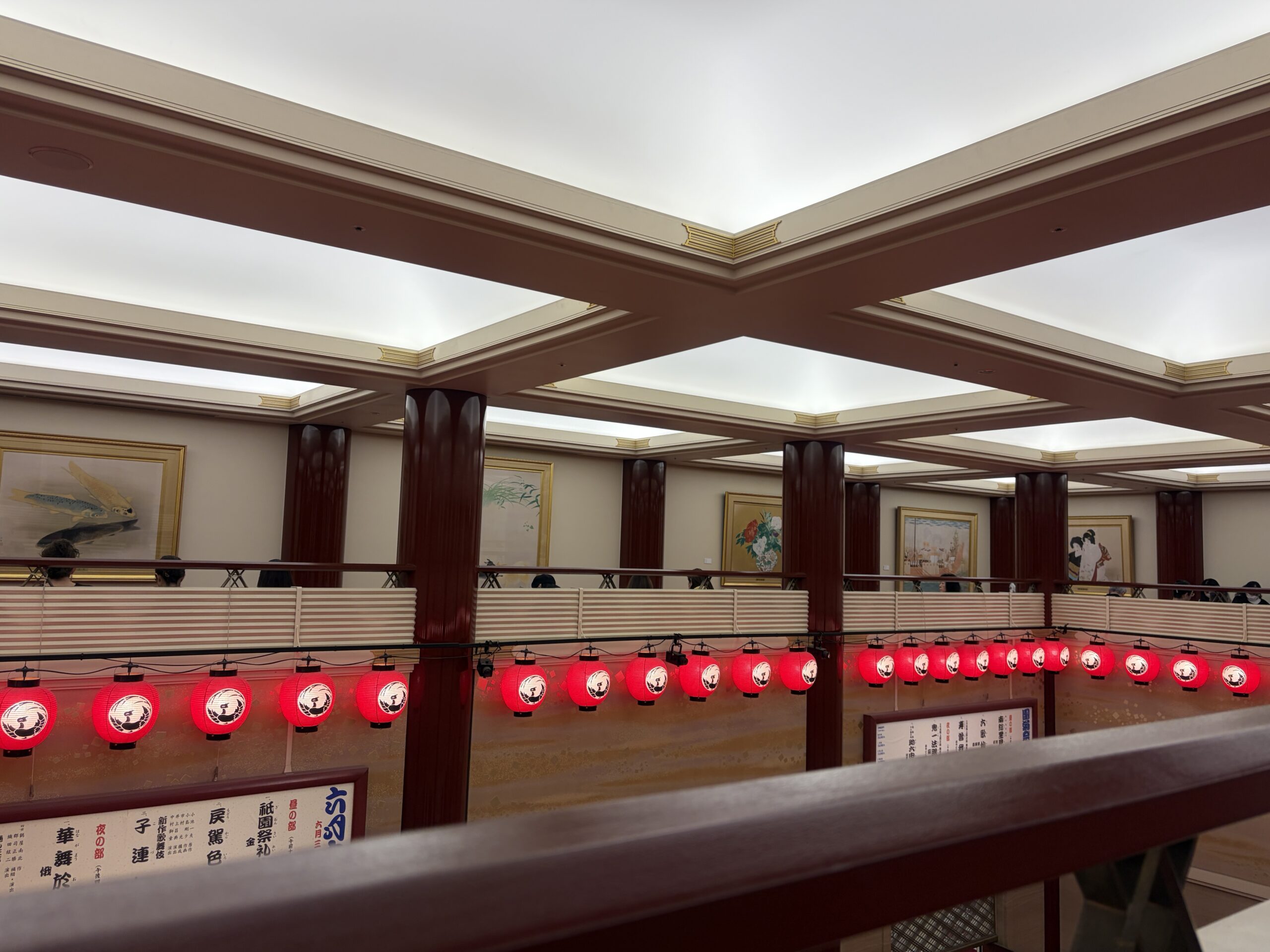
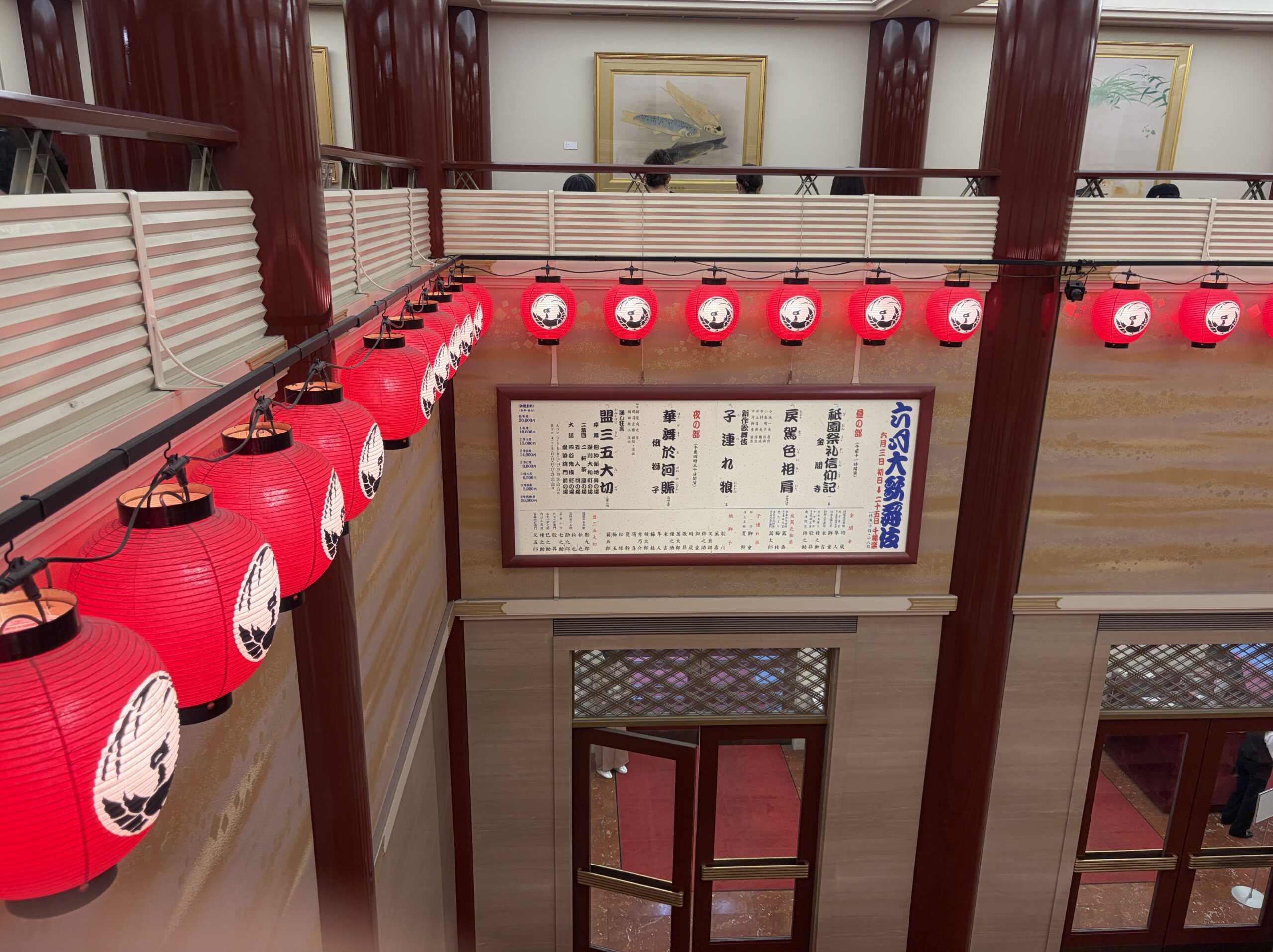
Just have one of the staff on the 2nd floor lobby tear the ticket stub for your evening show, and then you only need to wait for the auditorium to open again. Right after the matinee ends, the lobby empties out and gets nice and quiet. With a coffee in hand, you can really sink into the lingering feelings from the matinee ☕️
And after this, the much-anticipated Renjishi from the evening program!
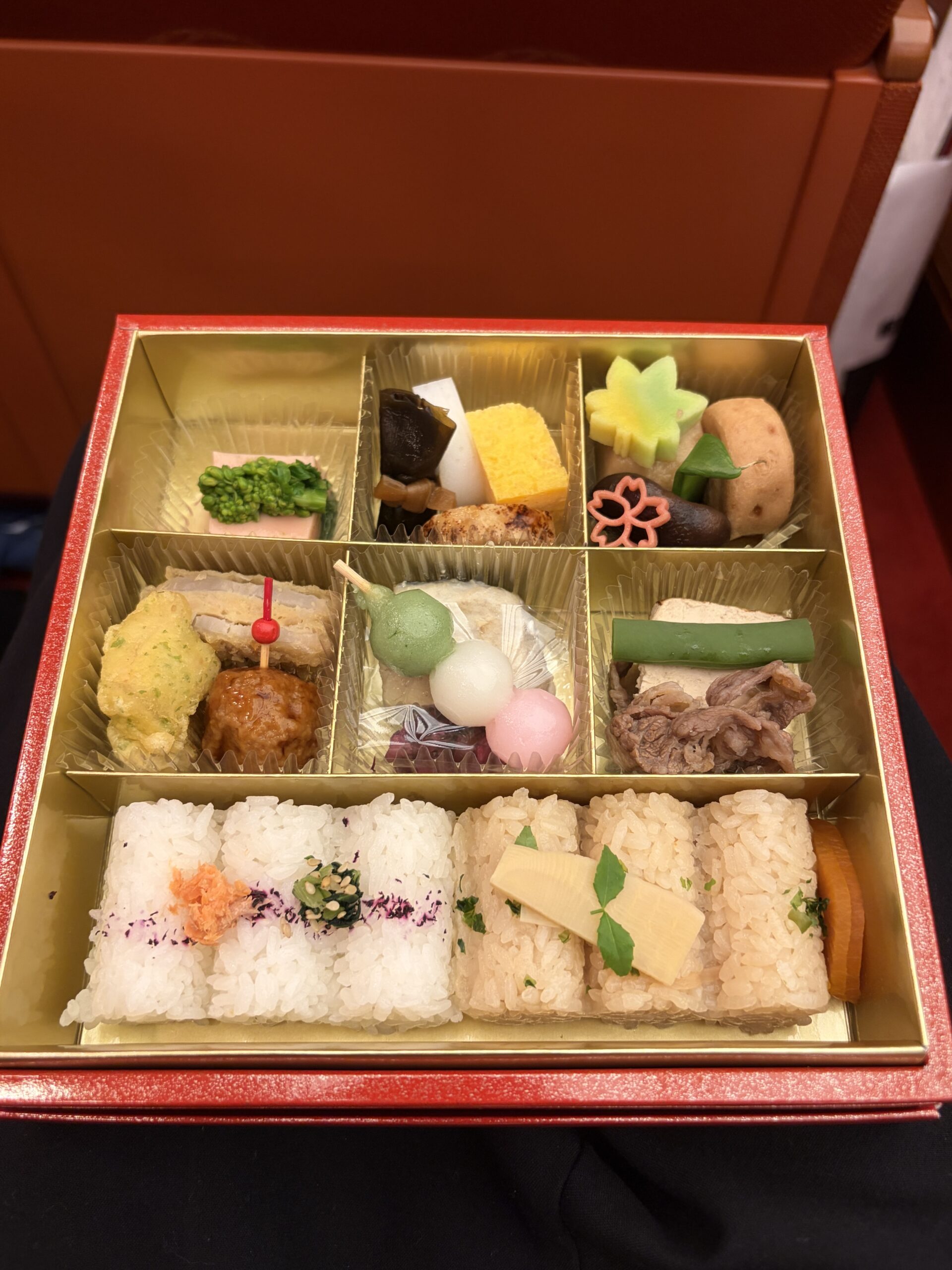
By the way, the bento was the special April Grand Kabuki version 🍱
Colorful and pretty, perfectly matching the celebratory mood of senshuraku. I savored each piece slowly.
Conclusion
The atmosphere of senshuraku, Kikugoro’s three roles, and the power of the hanamichi seen from the hanagai.
So many different faces of kabuki packed into a single day – I sat dazed for a while after the curtain came down.
Watching the play in its full form really does have its own pleasure – the way scenes connect and build on each other.
…Even if it is long.
But if there’s another toshi-kyogen, I’ll definitely want to go see it.
Today, as always, was the best.
Related Links