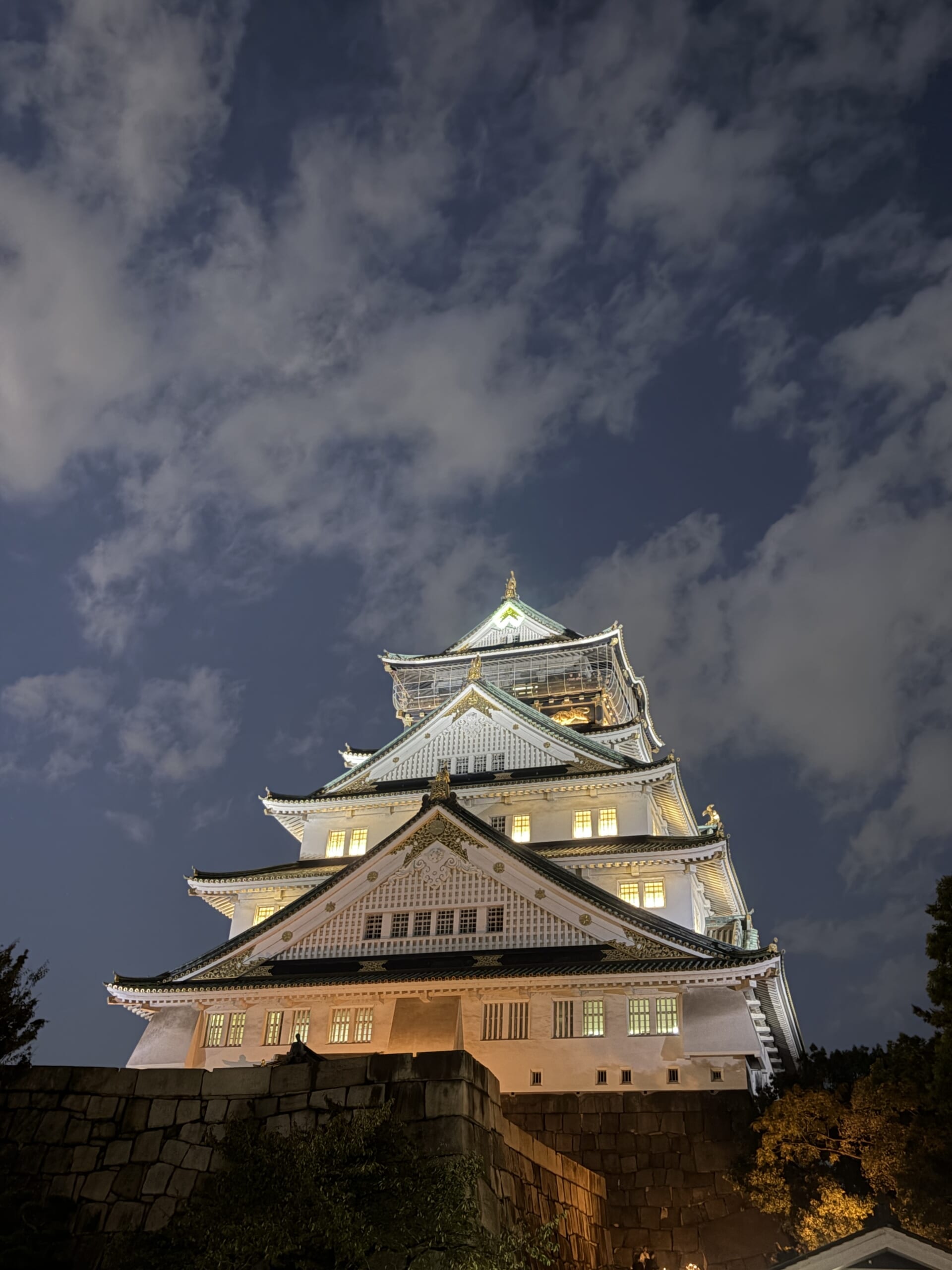
Timing my visit with the takigi noh held that night in the Nishinomaru Garden, I headed to Osaka Castle in the late afternoon. As I walked towards my goal, Wall No. 58 on the south outer moat, the scenery kept changing, from the outer moats at dusk to the lit-up main keep. Once again, today was the best.
🗺️ See the route I walked in photos → Castle Hopping: Osaka Castle Route Map (October 2026, Second Visit)
More from this place → Castle Hopping: Osaka Castle (October 2026)
The takigi noh I saw afterwards → Osaka Castle Nishinomaru Takigi Noh 2026: First Night (October 2026)
What Is Wall No. 58?
The stone walls you see at Osaka Castle today were rebuilt by the Tokugawa shogunate after the Sieges of Osaka. Feudal lords from all over Japan each took charge of a section, known as a choba (an assigned work section). The overall layout (nawabari) is said to have been designed by the master castle builder Todo Takatora.
“Wall No. 58” (58-go-heki) is one of the stone walls on the inner side of the south outer moat (the Ninomaru side). According to a column by Osaka Castle Main Tower, six families shared the work on it. From east to west: Hosokawa, Honda, Wakebe, Endo, Ikoma, Todo. The western corner was the job of the Todo family of the Tsu domain in Ise. The stone walls of the south outer moat were built in 1628, in the final stage of the Tokugawa rebuilding.
From the East Outer Moat at Dusk, to Aoyamon Gate, Tamatsukuri-guchi
This time, I started from JR Osakajokoen Station. A different entrance from last time. I walked past Osaka-jo Hall towards the castle.
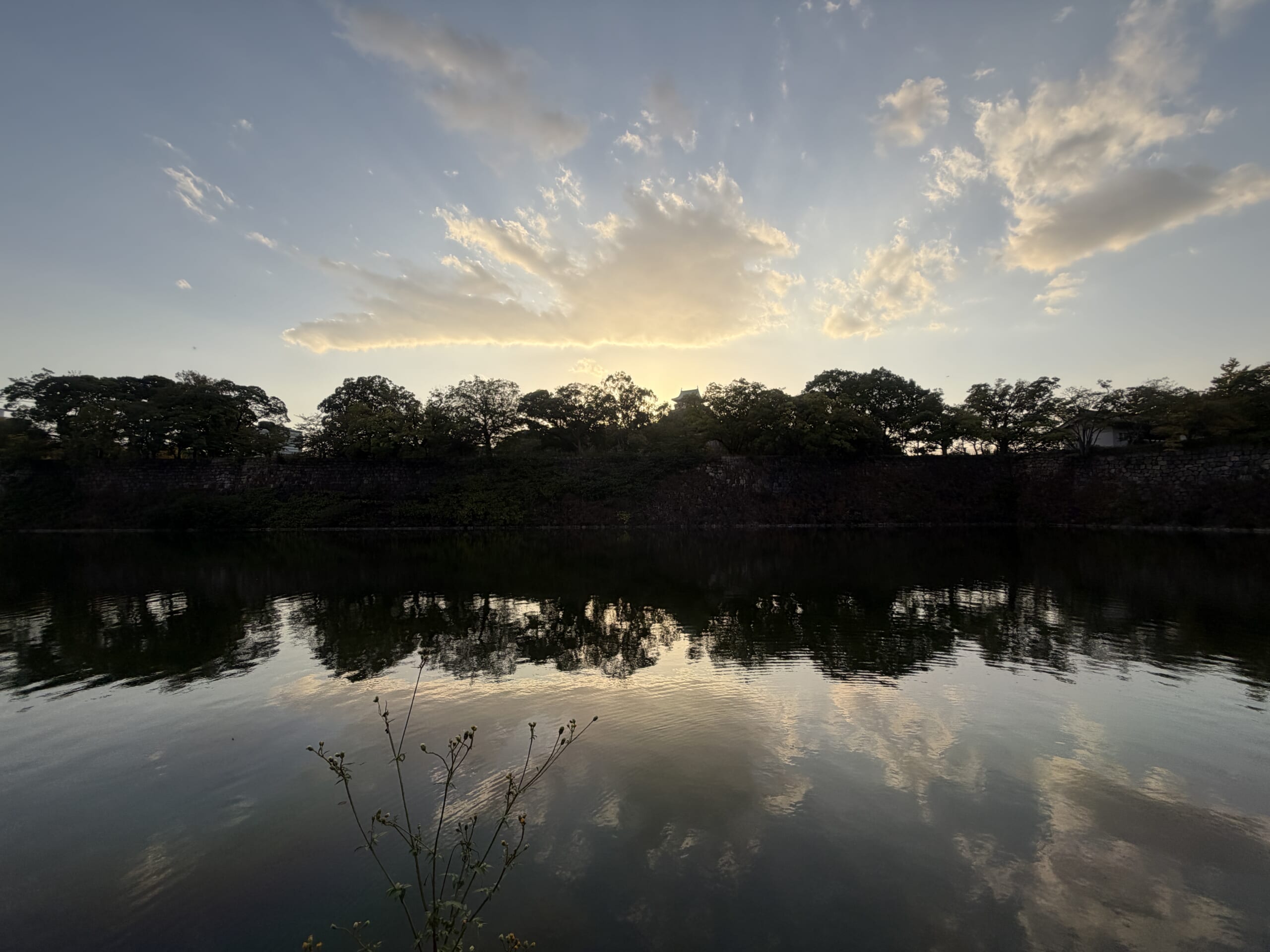
The first castle spot: the east outer moat. The evening sky with the trees reflected on the water. A view I could gaze at forever. The breeze felt cool, too. So pretty.
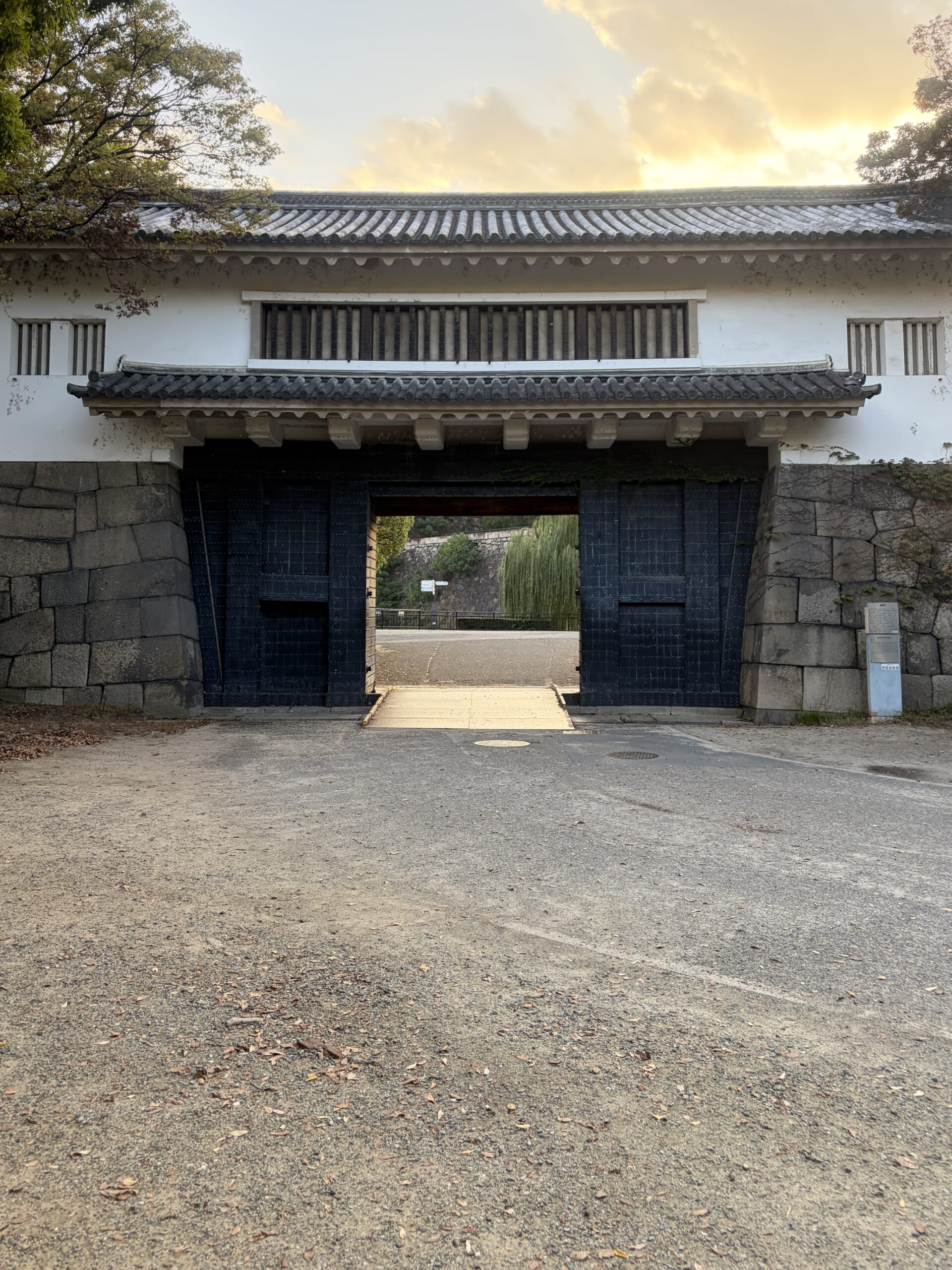
The Aoyamon Gate is the entrance on the north-east side of the Ninomaru (outer bailey). In the stone wall near the gate, I found a kokuin (carved mark). Now, which family’s mark was this again…?
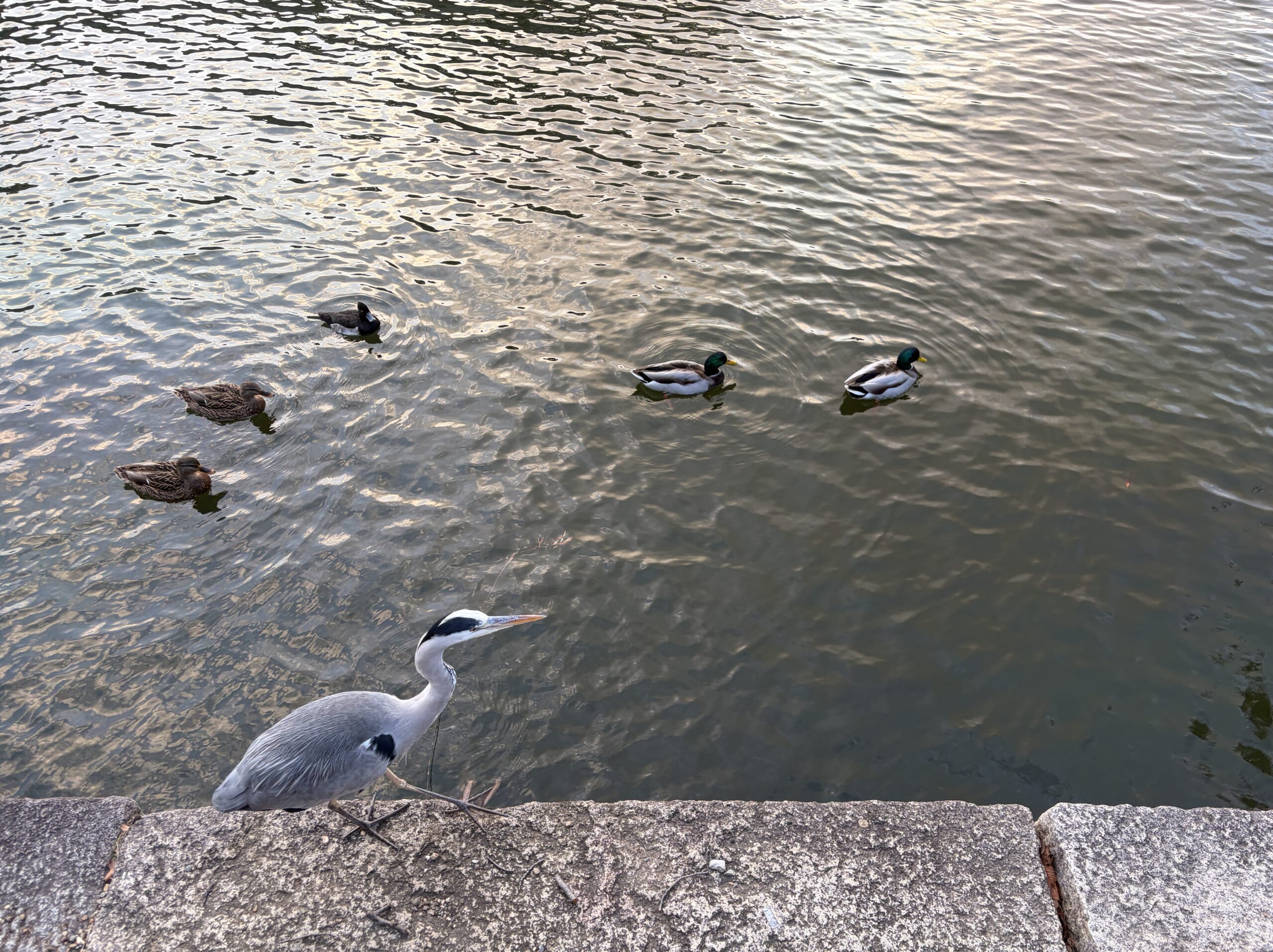
After passing through the Aoyamon Gate, instead of heading to the Gokurakubashi Bridge, I followed the inner moat towards Tamatsukuri-guchi. Along the way, some ducks plus a heron came over to me. As the heron passed in front of my camera, it lowered its head as if to say, “Sorry, just squeezing past,” which made me laugh. Maybe they wanted food? They all gathered round me, as if I were Mutsugoro-san, Japan’s famous animal lover (haha)
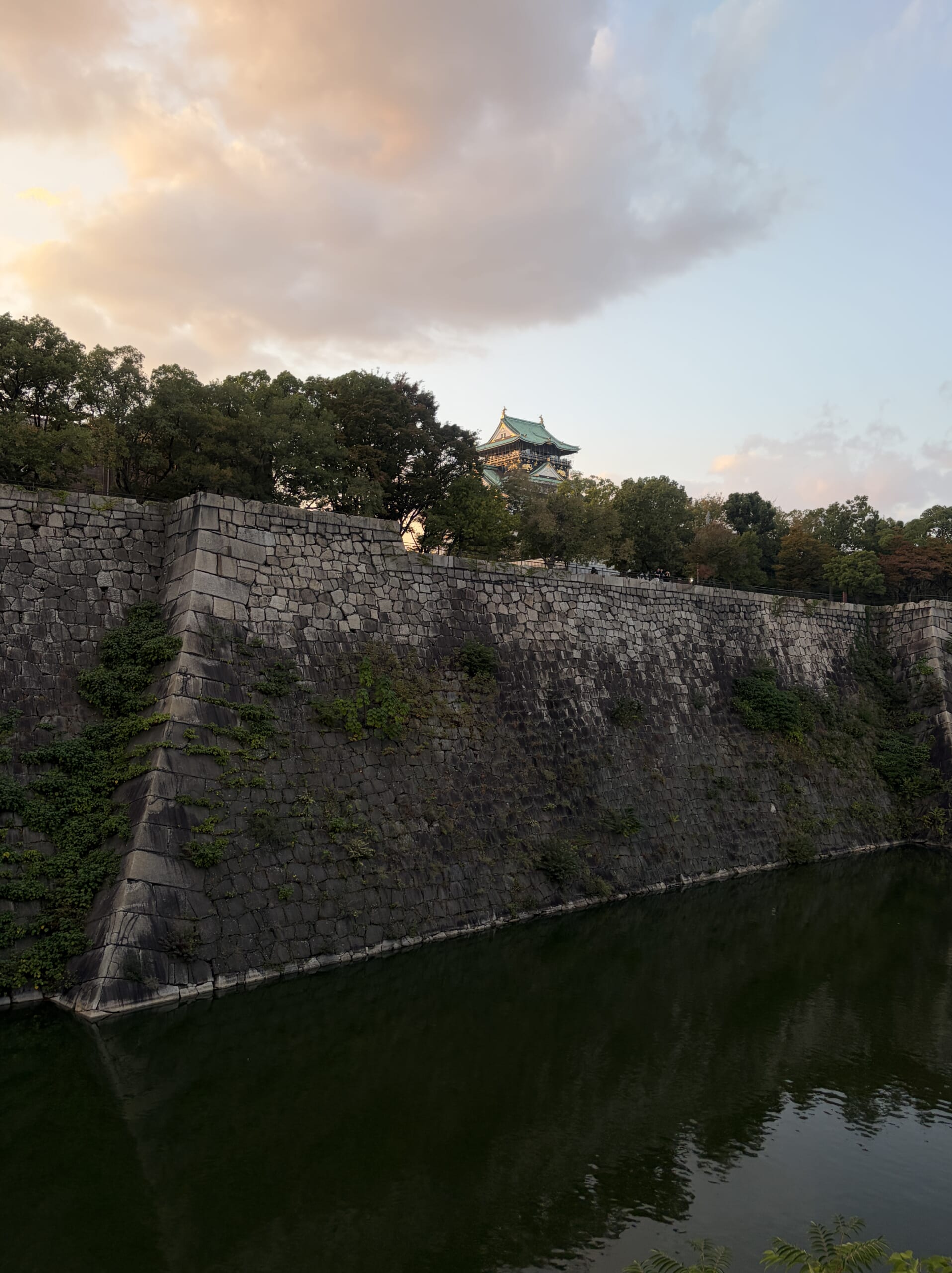
On the east side of the inner moat rise the high stone walls of the Honmaru (inner bailey). So tall, really. This eastern wall is about 32 m high, said to be the tallest stone wall of any Japanese castle. If someone told me, “Go ahead, you may climb it!”, would I even have the stamina?
Via the Gangizaka Slope, I came to Tamatsukuri-guchi. Looking up at the sama (loopholes: openings for firing guns, arrows at the enemy) from the outside, a simple question came to mind: at this distance, isn’t it actually hard to aim? Then again, attackers would probably be taken down long before getting this close. By the way, I came through Tamatsukuri-guchi last time too. “I’ve been here before,” I thought, but going in versus coming out really changes how it feels. Who knew the direction you pass through a gate could make it this much fun 😂
To Wall No. 58 on the South Outer Moat
Through Tamatsukuri-guchi, the Ichiban-yagura Turret comes into view. Almost there, my goal: Wall No. 58!
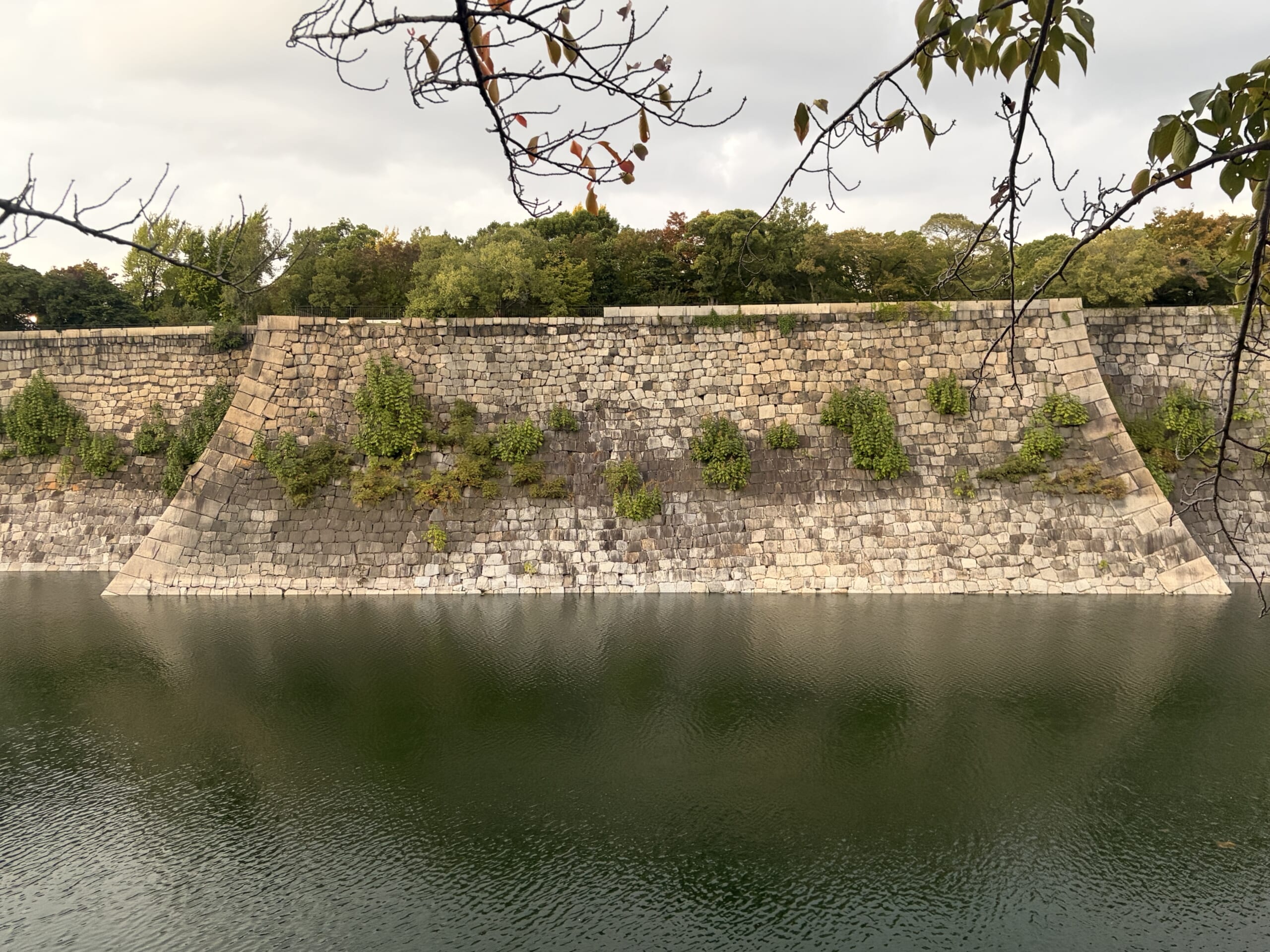
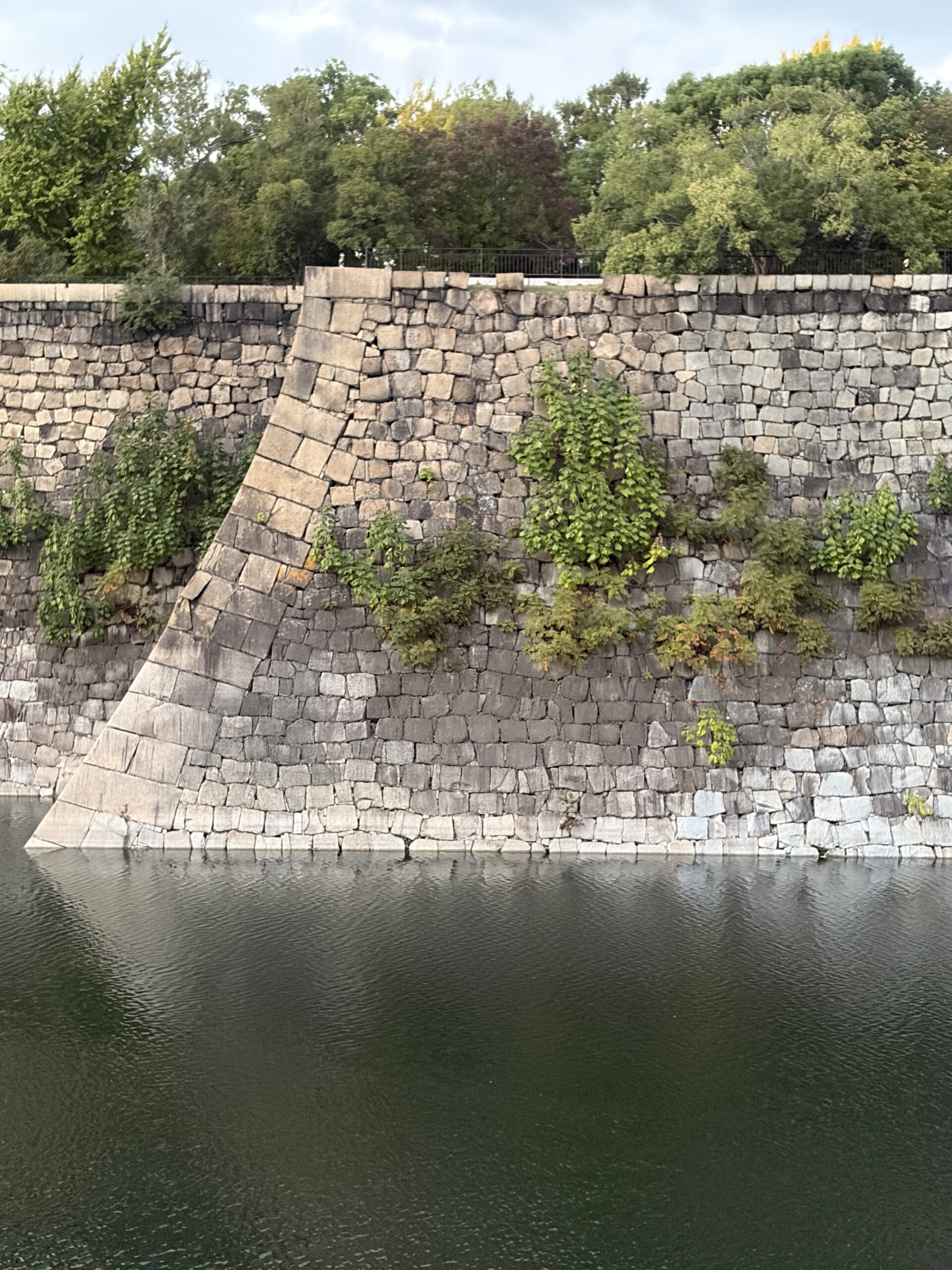
Wall No. 58!
…I found it, but the moat is so wide that the wall is a long way off, hard to see properly… The south outer moat is up to about 75 m wide, so no wonder. Still, what a splendid moat, with tall, massive, cool stone walls. I also took close-ups across the moat of the part built by the Todo family. I wonder if Takatora came by to check on the work from time to time. “Oi, how’s it going?!” Something like that?
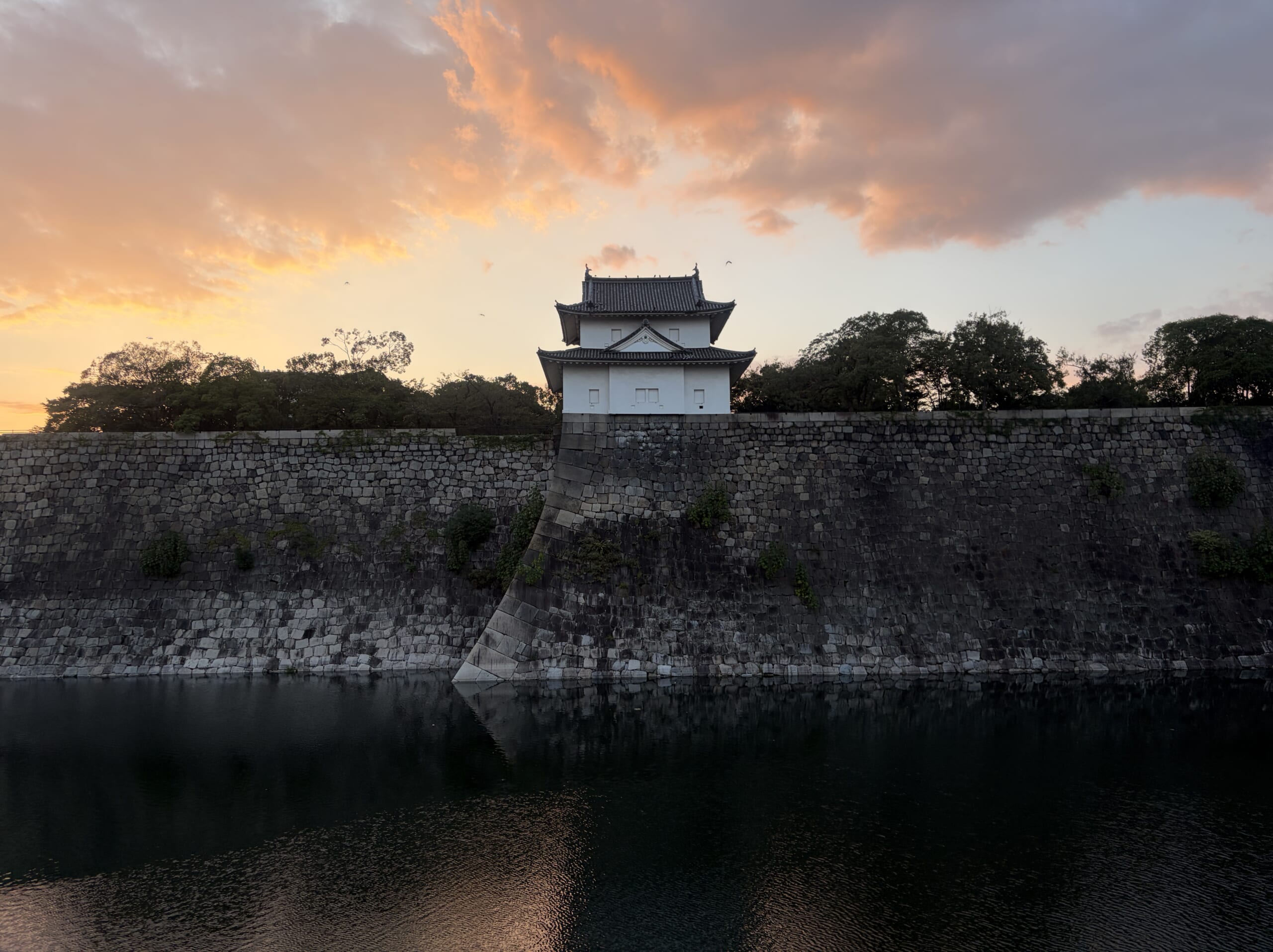
After that, I walked west along the south outer moat to the Rokuban-yagura Turret. Seven turrets once stood on top of the stone walls of the south outer moat. Today, only two remain: the Ichiban-yagura, plus this Rokuban-yagura.
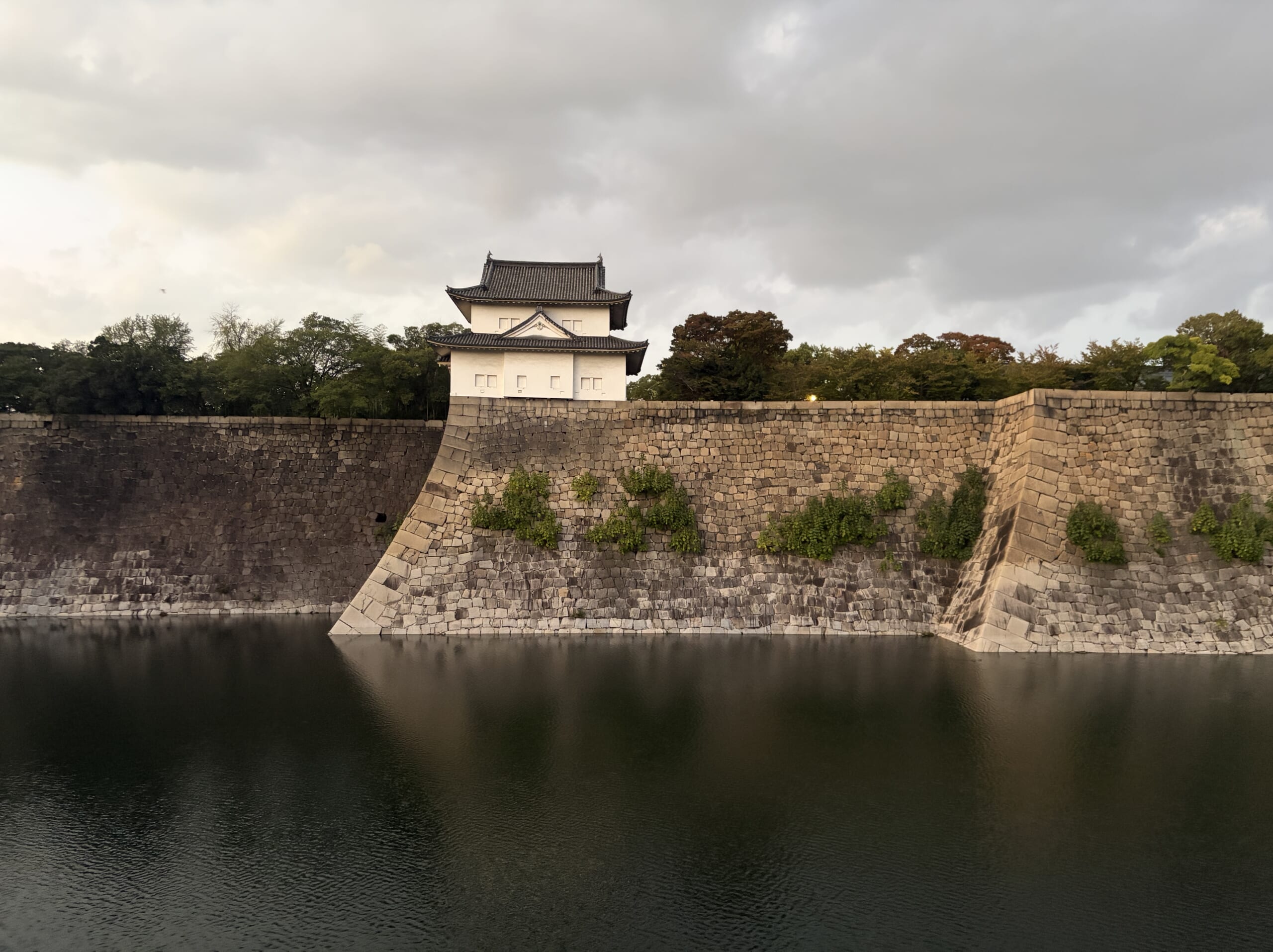
As I walked, I also noticed that the colour of the stone walls varied from place to place. I had wondered if it was damage from the air raids, but according to the Osaka Castle Main Tower column, the colour of the stones can differ depending on the feudal family that supplied them. On Wall No. 58, the cluster of bluish stones apparently marks the Ikoma family’s section. Could the colour differences I saw be the same? The stone wall at the back of the keep was a different colour too, a darker, blackish shade. On the north-east side of the keep’s stone base, there are apparently still traces of a bomb that fell in a 1945 air raid, knocking the wall askew. Maybe stone walls change colour for all sorts of reasons.
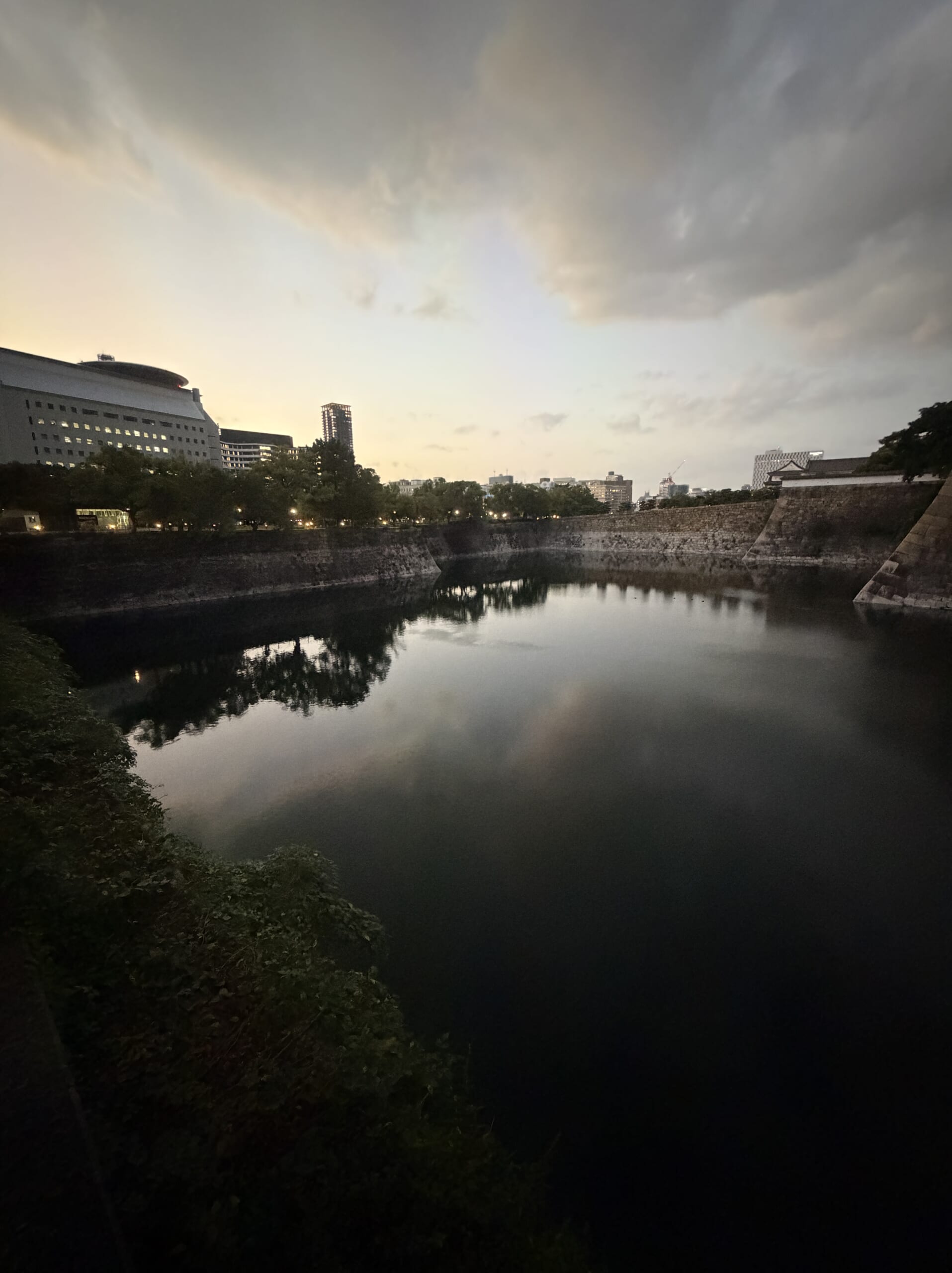
Anyway, the south outer moat is so wide! Heading round towards the Otemon Gate, the moats zigzag in an interesting way. It was just around sunset, with lovely reflections on the water. My favourite time of day.
The Giant Stones of Ote-guchi, the Lit-Up Main Keep
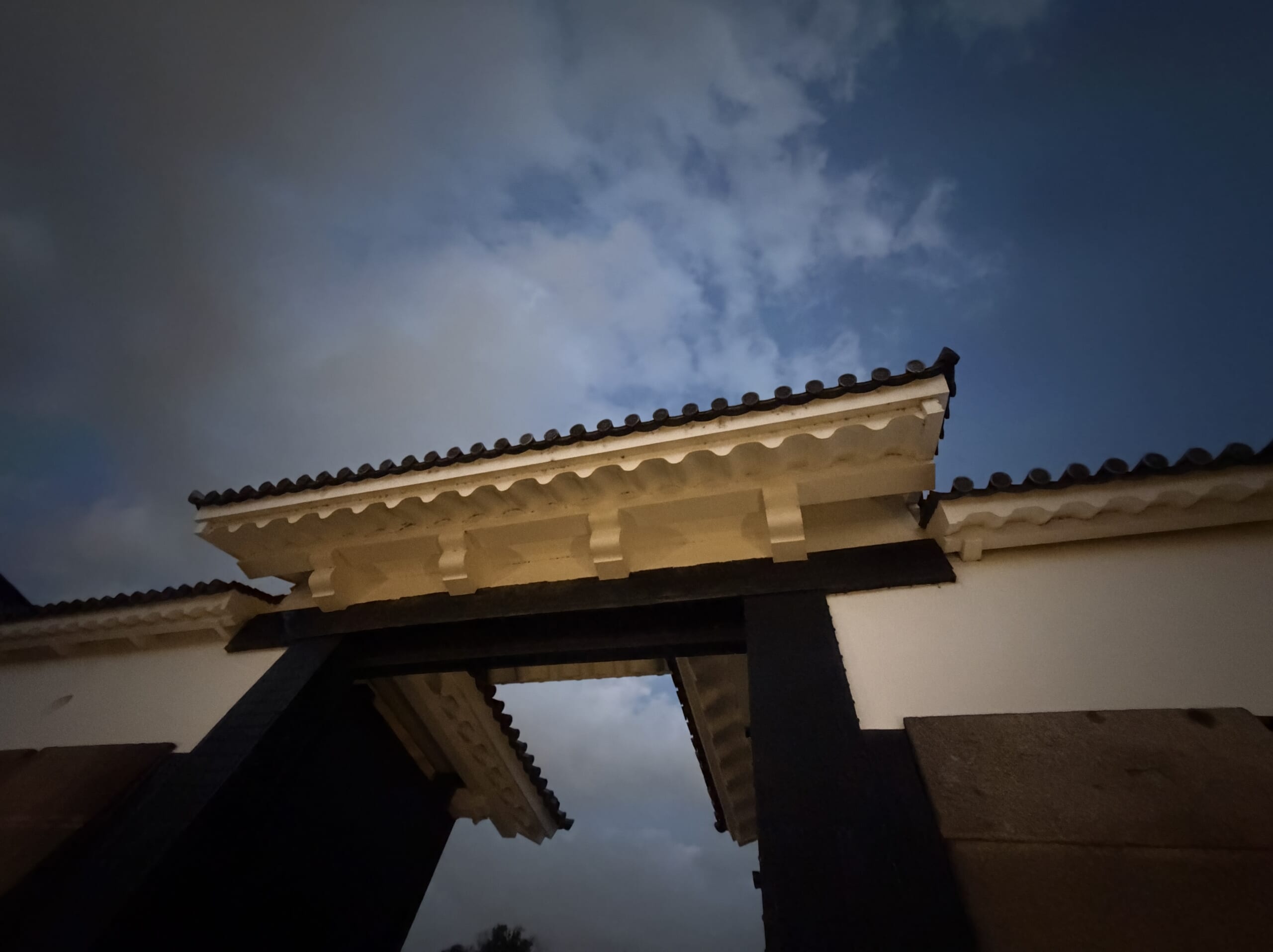
After dark, I passed through the Otemon Gate into the castle grounds. Right inside, in the masugata (a square enclosure of stone walls that stops attackers from charging straight in), giant stones stand in a row. Way too big (haha)
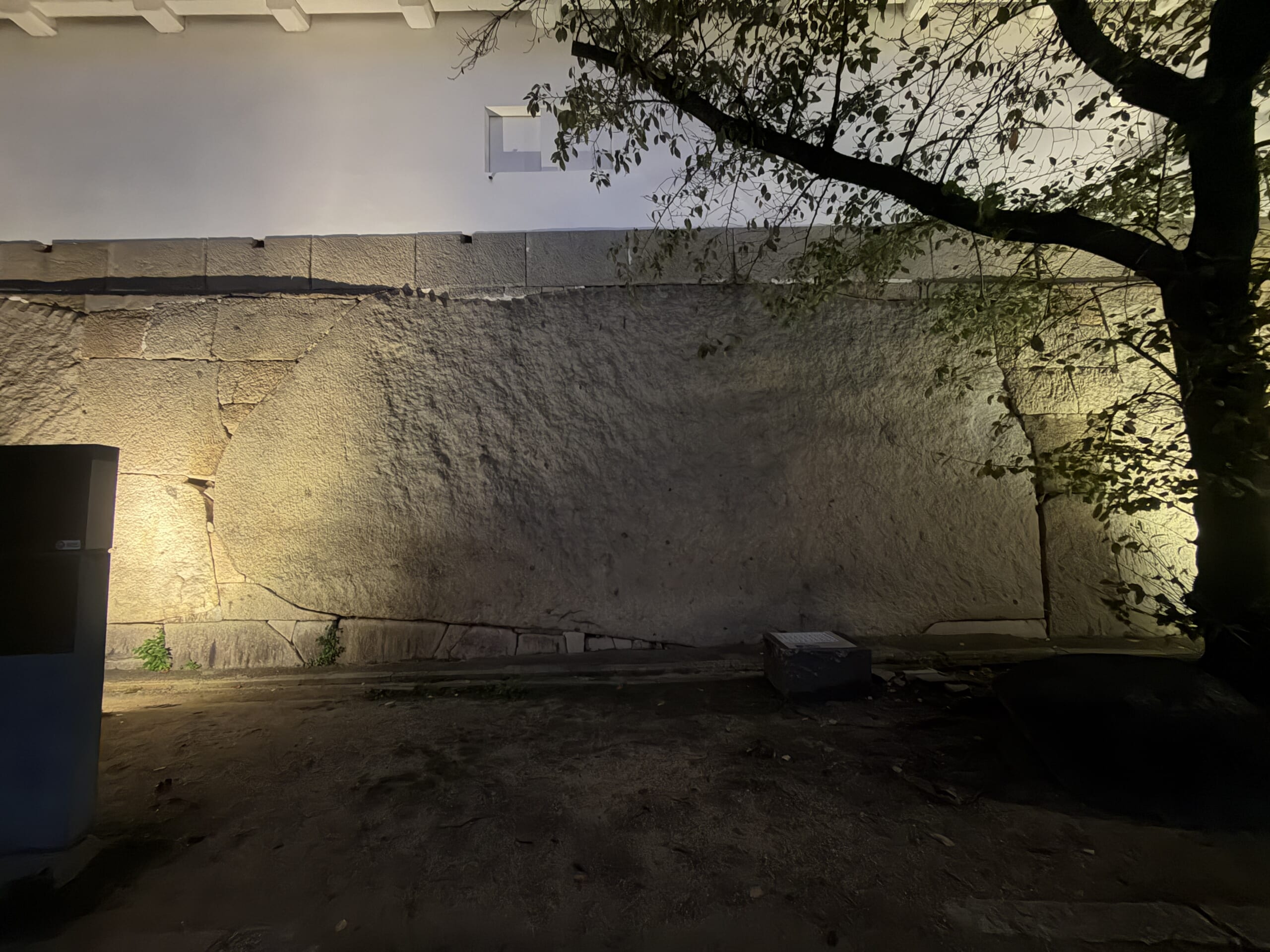
The Ote Mitsuke-ishi straight ahead is apparently the fourth largest stone in the castle. What’s more, the three giant stones here were sliced from one huge rock, three slabs from a single boulder. Sliced giant stones… So if you looked really closely at the wedge-hole marks, would they line up perfectly? Hmm, maybe it’s not that kind of slicing? Wait, what kind of slicing, then?
Last time I saw the Tako-ishi plus the Higo-ishi, but unless you see all the giant stones in a single day, you can’t really compare their sizes. Every time I see one, my sense of scale resets.
Passing the Nishinomaru Garden, I saw a big sign for the takigi noh I was going to later. It seems same-day tickets were available too, with staff guiding people to them. But first, I dashed to the Honmaru to pay my respects to the lit-up keep 🤲
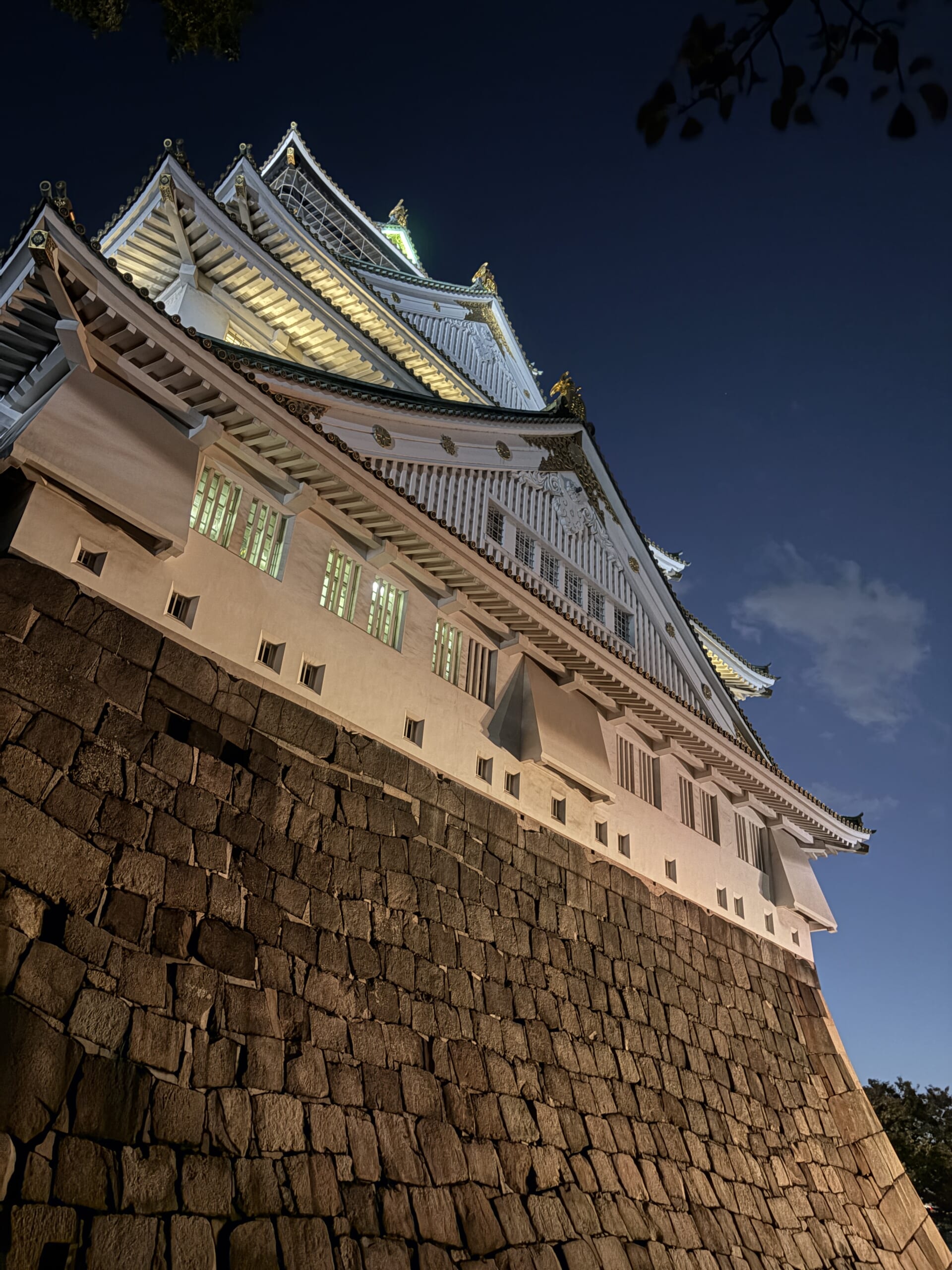
I walked all the way round the keep, glowing white in the lights: from the front, from the side, from the back. This, at least, is a view only our own era can offer. Thanks to the power of modern technology, I got to feast my eyes on a beautiful sight 🥹 I rarely make a special trip to see illuminations, so it felt really fresh.
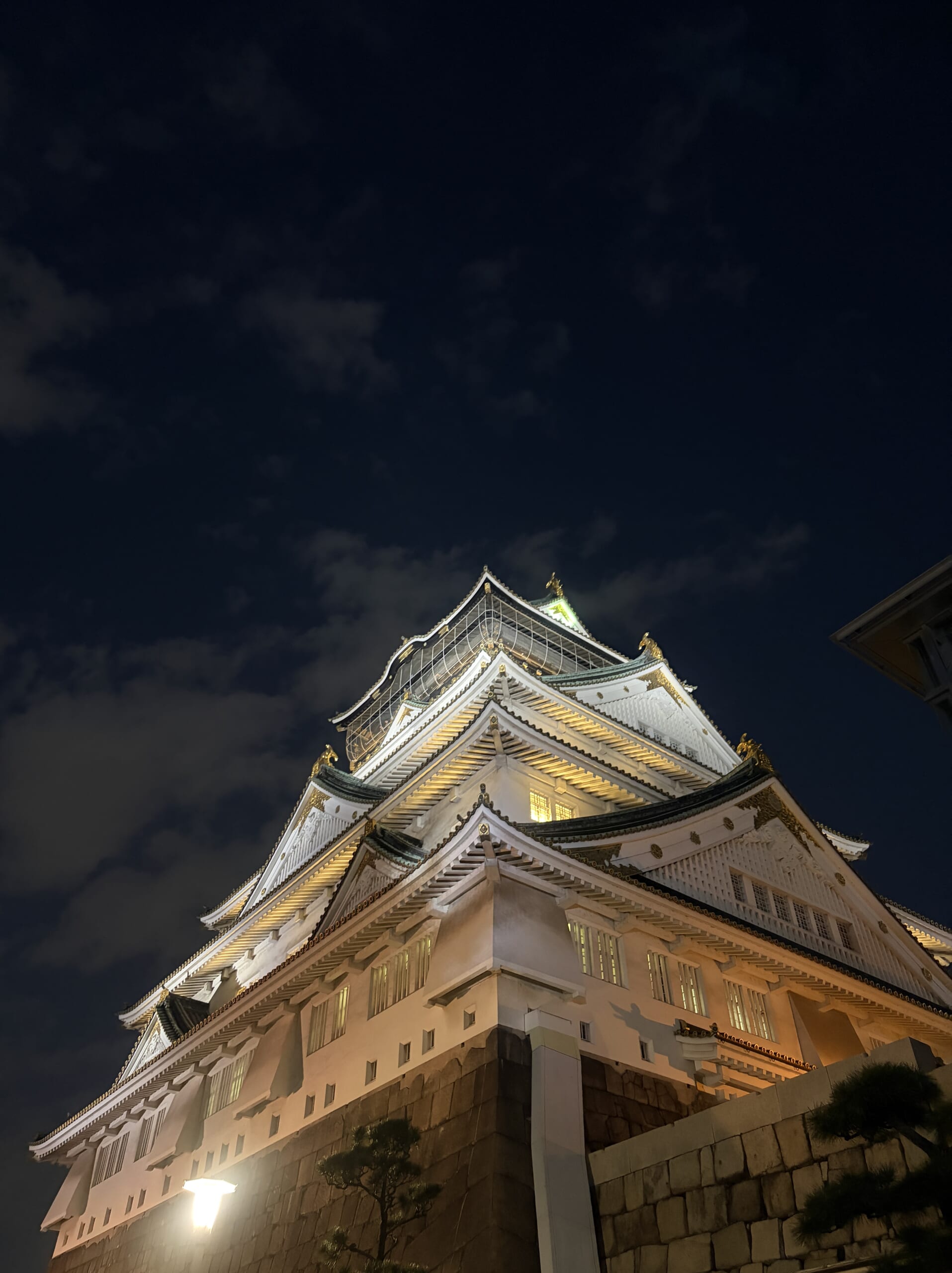
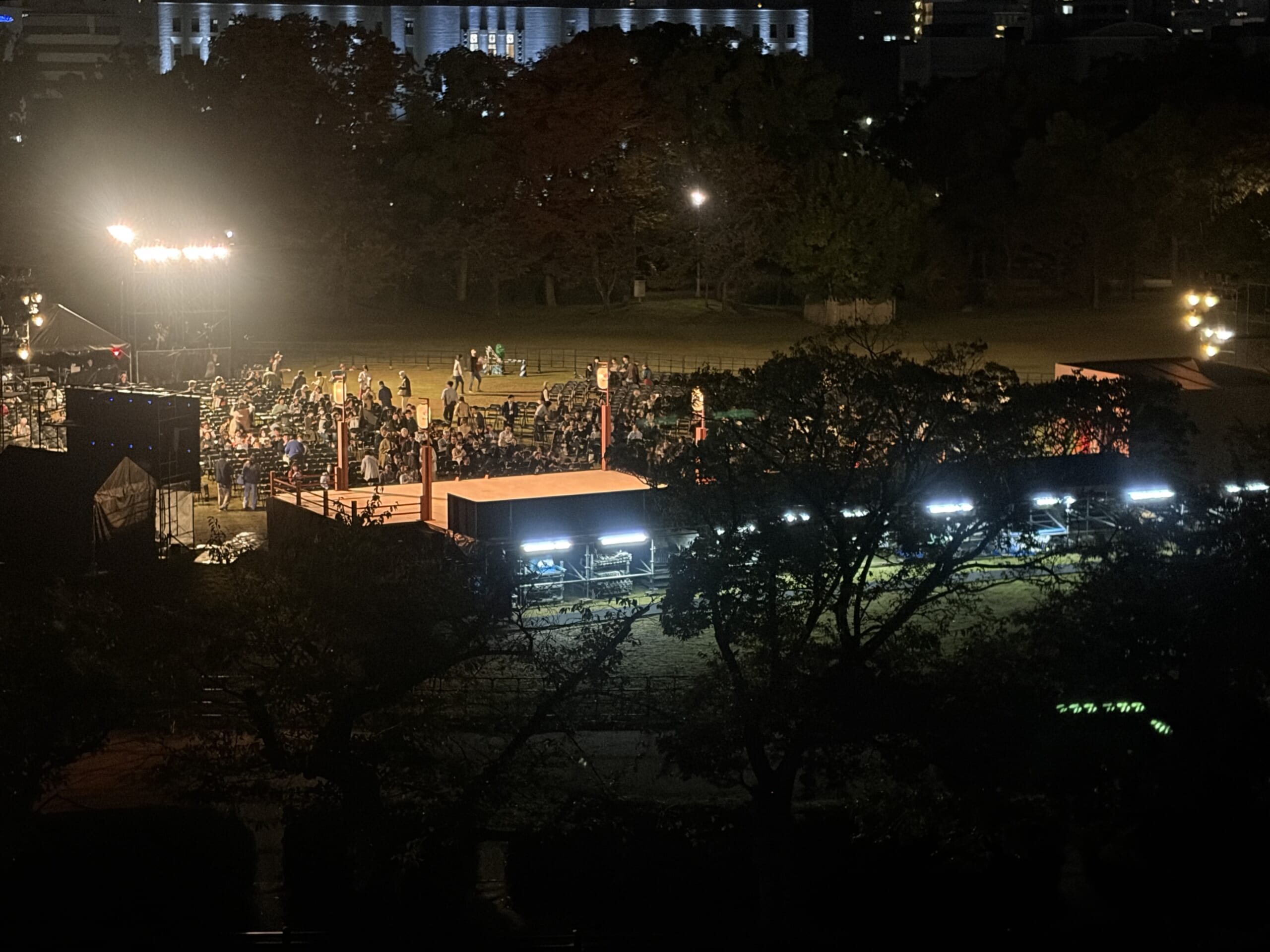
Peeking down from the Honmaru into the Nishinomaru Garden, I could see the noh stage with its seating. Amazing!! Time for me to head over too!
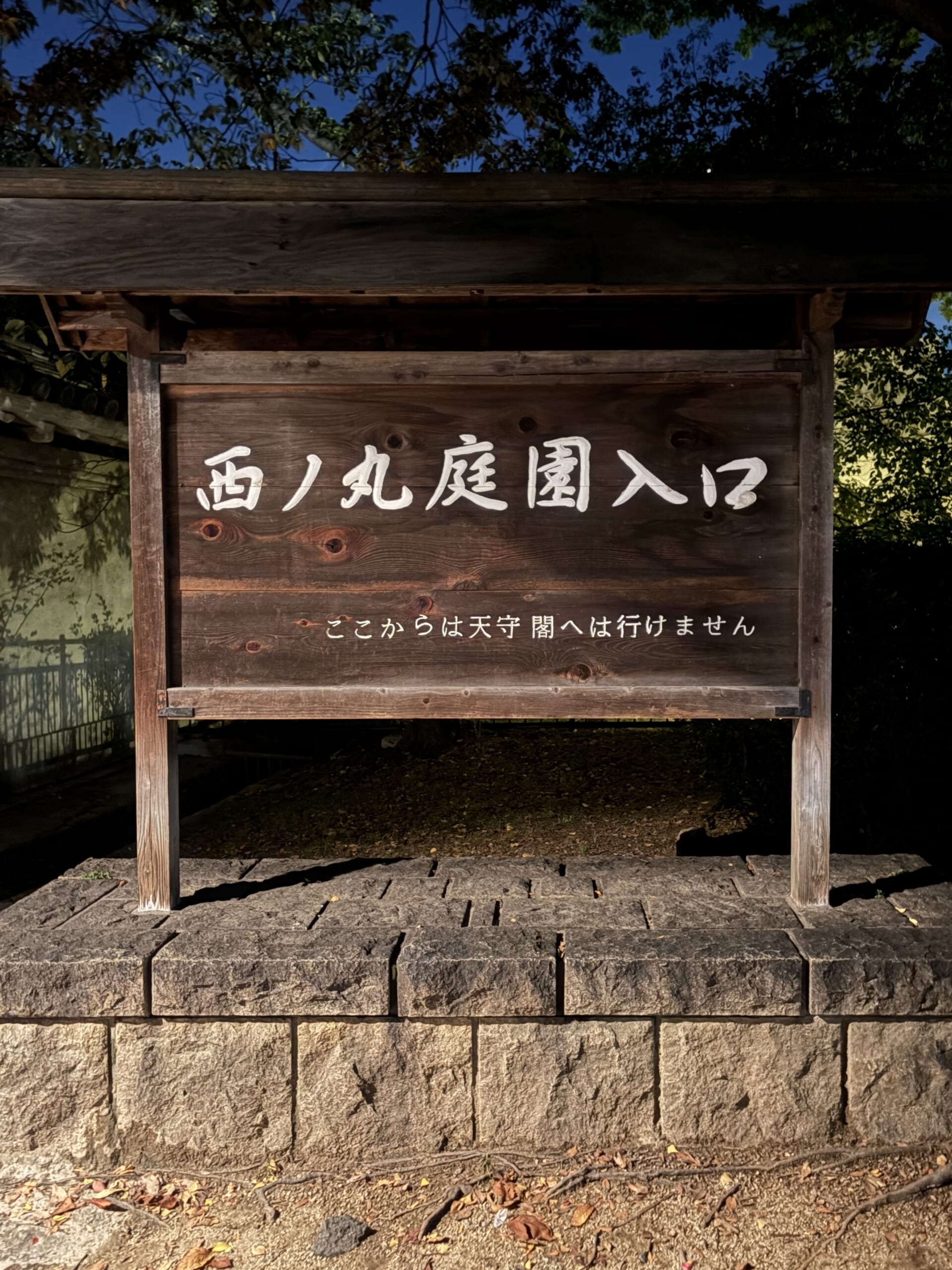
Taking a last look at today’s keep, I checked out the yaana (wedge holes: carved to drive in wedges, splitting the stone) on the giant stones by the Sakuramon Gate. Arriving at the entrance of the Nishinomaru Garden, that’s it for this castle walk. The rest of the story continues in my takigi noh article.
Wrapping Up
From Osakajokoen Station to the entrance of the Nishinomaru Garden, taking it slowly along the way, it took about two hours. From sunset to the illuminations, the scenery kept changing as time went on. It was a slightly chilly day, but walking warmed me up, so it was just right for a stroll. Castle walks really suit autumn, winter, early spring. I’m going to visit lots of castles this winter 🏯
Looking at the big Osaka Castle Park map, I thought, “Visiting every spot on this map could be fun!” Now I’m planning my next walk. How many hours would it take? Actually, as I walked, I was daydreaming about staying at a hotel nearby someday, exploring the castle grounds from the morning. Then maybe I could compare all the giant stones in one day.