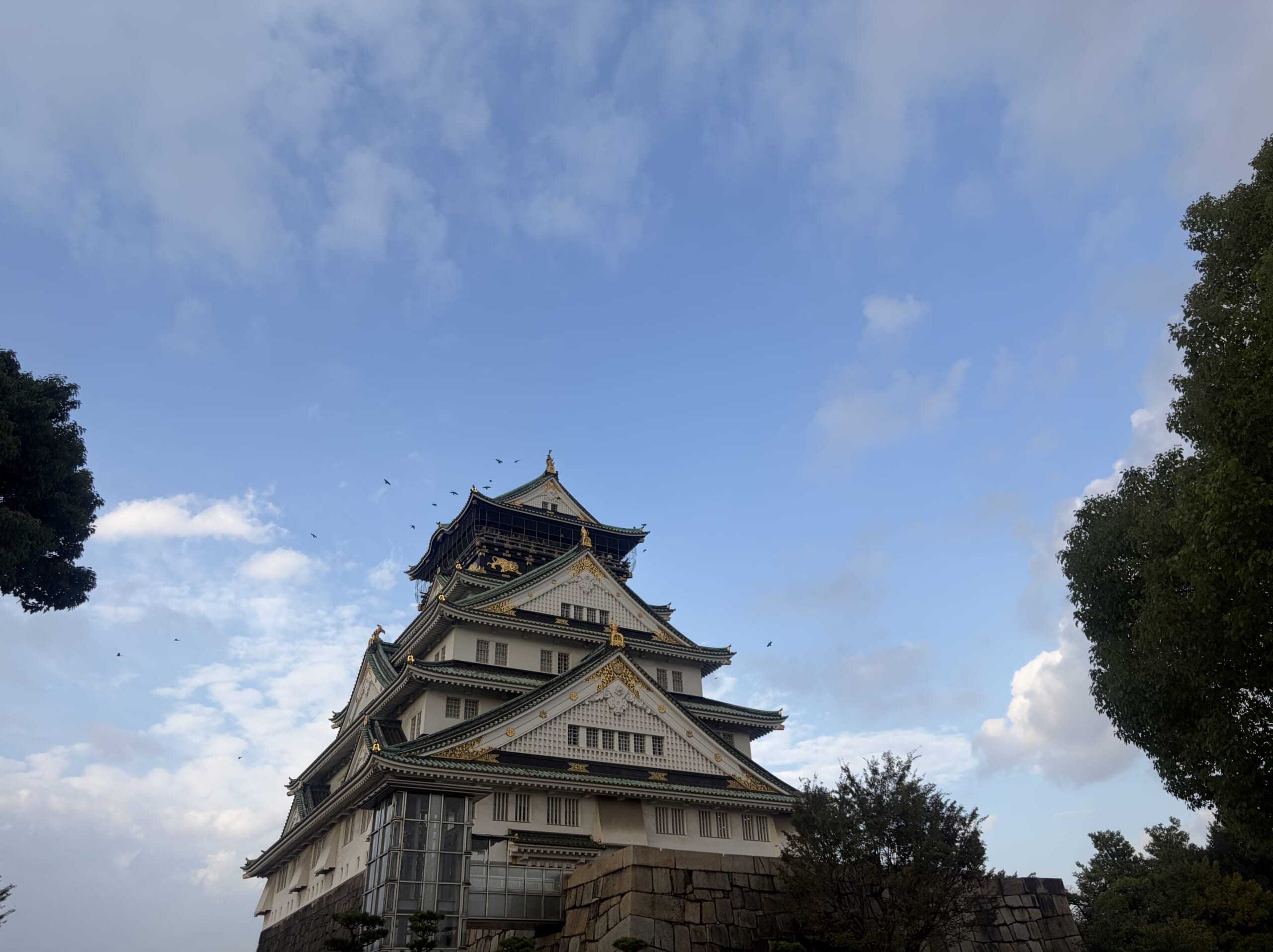
“It’s just a recce, so I’ll only have a little wander.” That was my mood as I set off around Osaka Castle. After three hours of walking, I had seen about a fifth of it, maybe even less… Osaka Castle is far too big. Once again, today was the best.
🗺️ See the route I walked in photos → Castle Hopping: Osaka Castle Route Map (October 2026)
More from this place → Osaka Castle Nishinomaru Takigi Noh 2024 (October 2024)
- What Kind of Castle Is Osaka Castle?
- From Morinomiya Station, Towards a Distant Keep
- Stone Walls That Stop Me in My Tracks
- A Quiet Path, Worlds Away from the Bustle of the Honmaru
- Past the Dry Moat, to the Giant Stones of Sakuramon
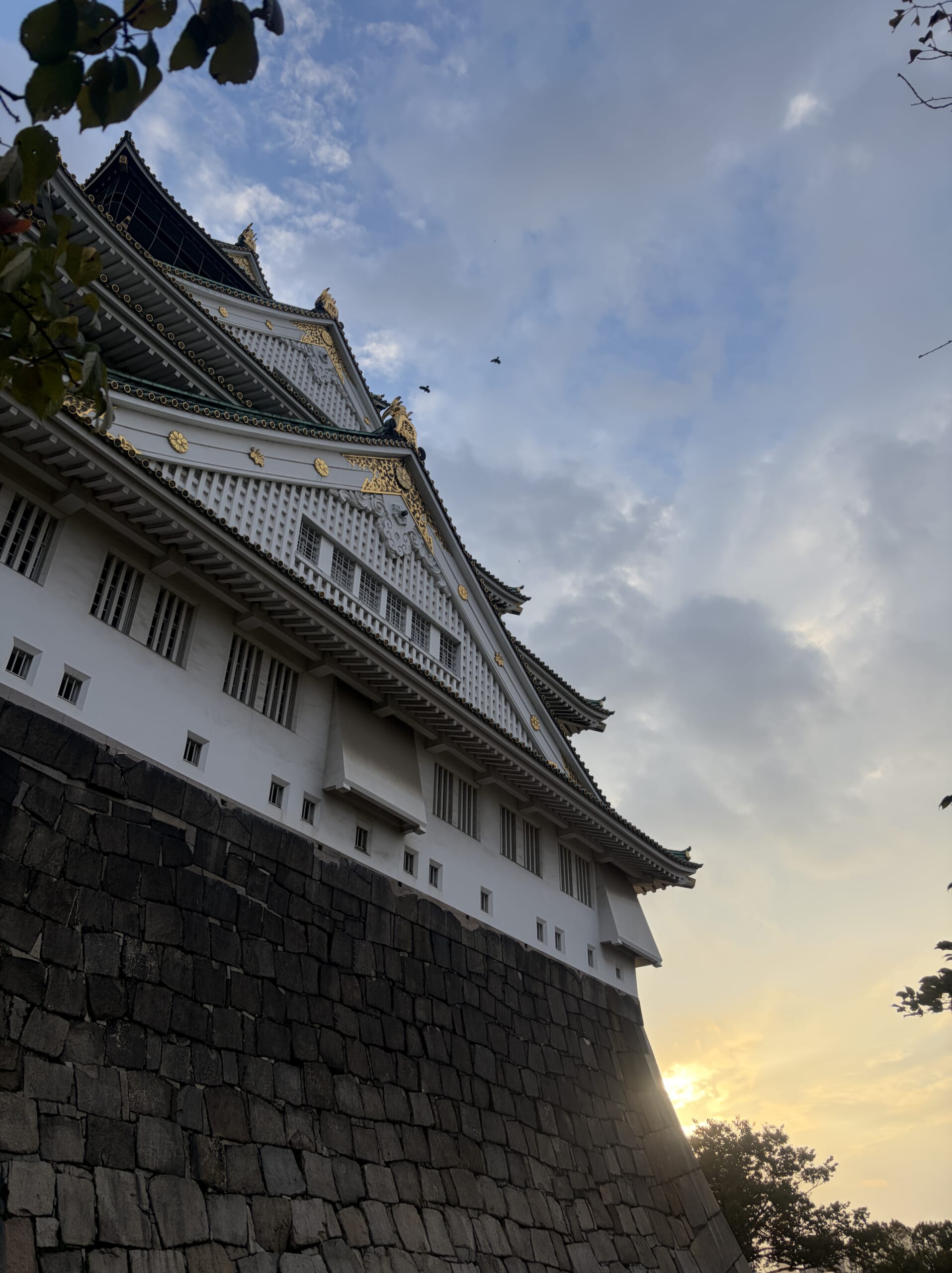
- The Main Keep, Seen from the Outside, All the Way Round
- Hunting for Carved Marks: A Joy, Yet a Challenge
- A Sudden Downpour, Plus the Giant Stone of Kyobashi-guchi
- Wrapping Up
What Kind of Castle Is Osaka Castle?
Osaka Castle was begun by Toyotomi Hideyoshi in 1583. But Hideyoshi’s castle fell in the Summer Siege of Osaka in 1615. After that, the Tokugawa shogunate rebuilt it, calling on feudal lords from all over Japan. The stone walls, the moats, everything you see today dates from this Tokugawa era.
The main keep burnt down after a lightning strike in the Edo period. Today’s keep is the third one, rebuilt in 1931 with donations from the people of Osaka. In October 2026, it was recommended for designation as a national Important Cultural Property. Very recent news.
From Morinomiya Station, Towards a Distant Keep
I had walked around the castle before, but this was my first time going with the mindset of “I’m here to see the castle properly!” I set off at around 14:30 from Exit 3-B of Morinomiya Station.
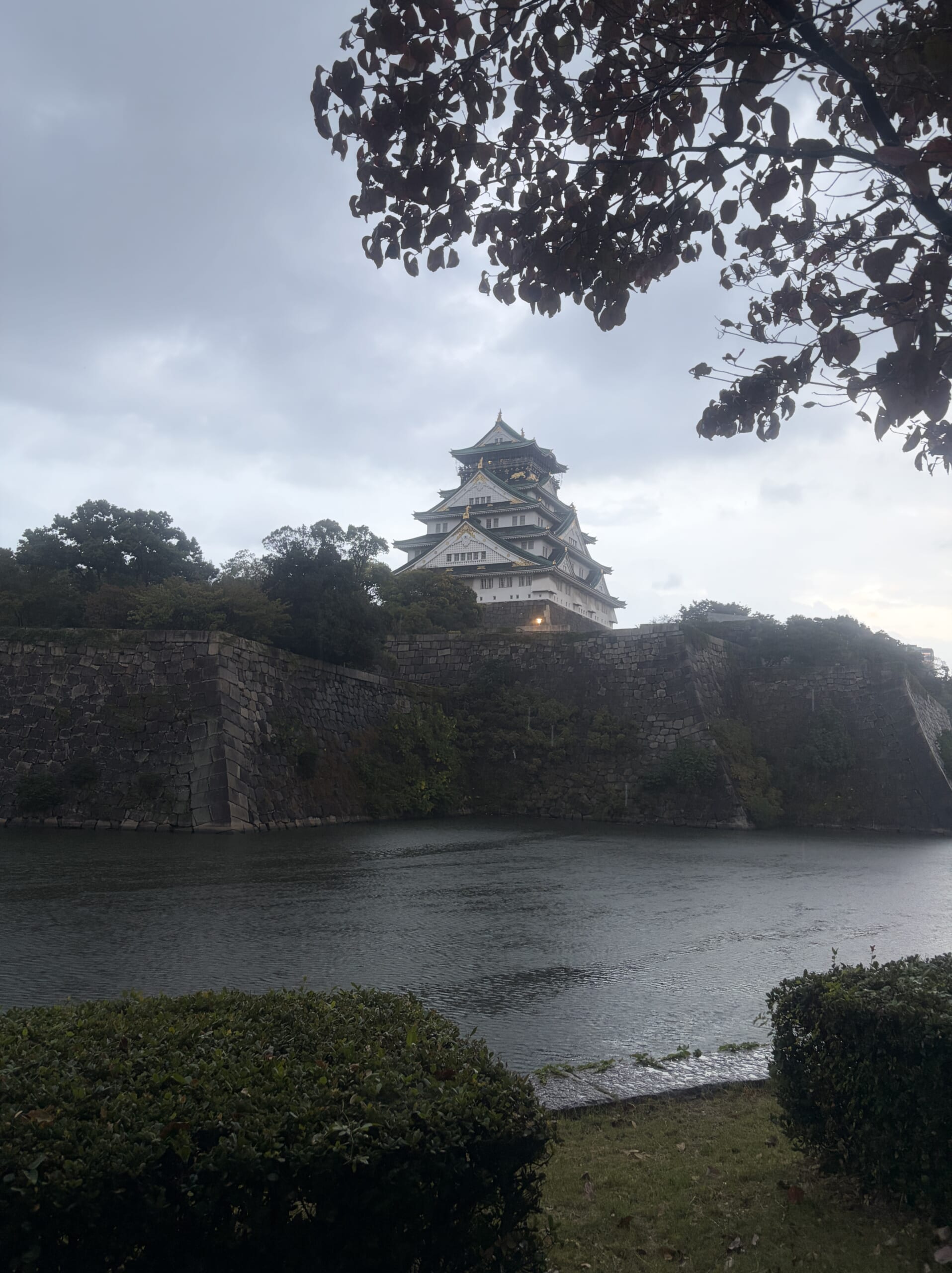
Above ground, the keep looked very far away. Already, it felt huge. In the park I spotted a sign for the special opening of the turrets, making a mental note: “I really want to go to this~”
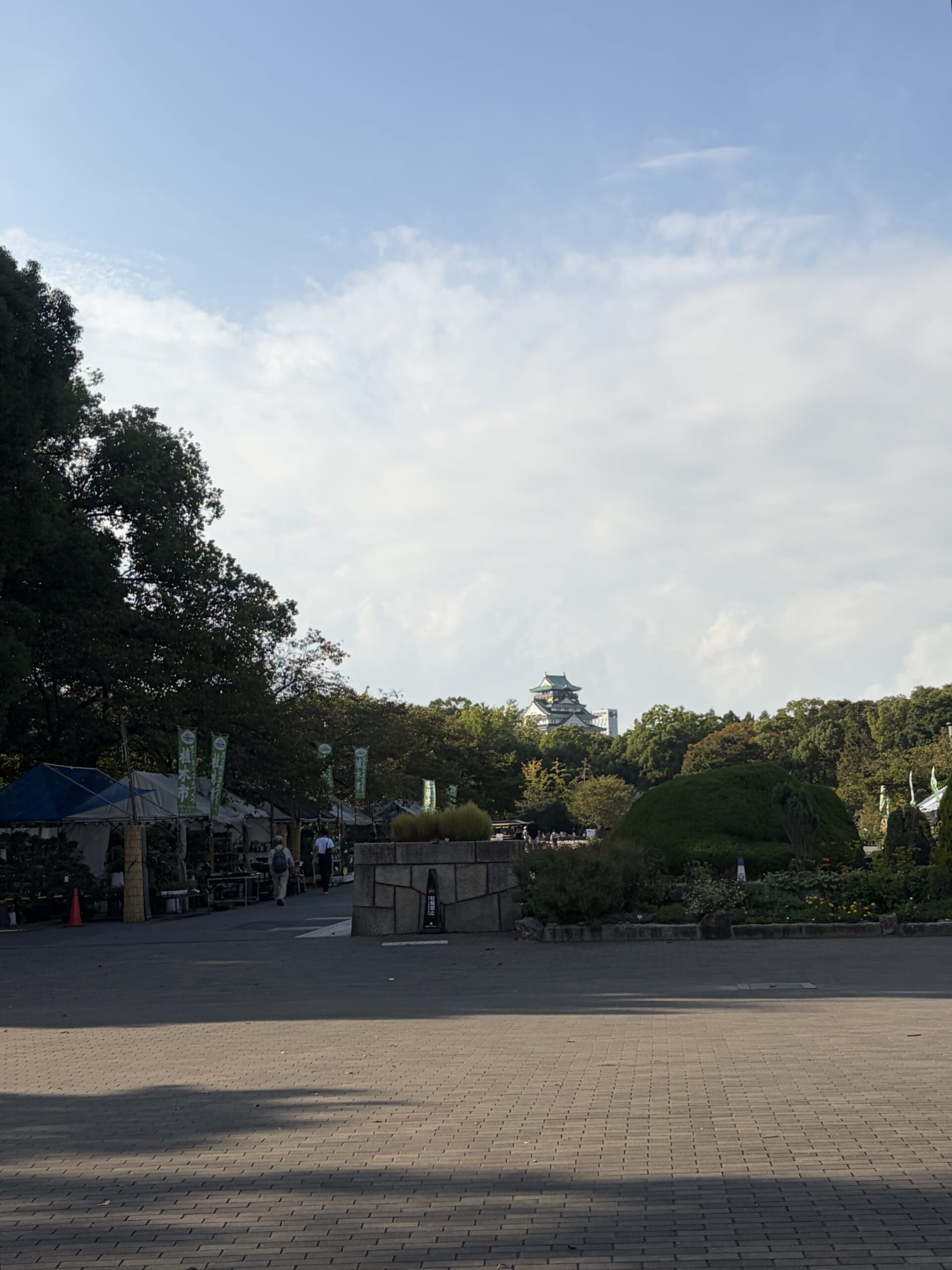
I climbed the steps beside the Osaka-jo Ongakudo concert venue, heading towards the Tamatsukuri-guchi Entrance through dappled sunlight. Along the outer moat, there were several benches with a view of the Ichiban-yagura Turret. A little further on, there was even a bench with a closer view. “How lovely~,” I thought, gazing at it, when an ANA plane flew overhead. I’m usually the one looking at Osaka Castle from a plane window, so it was a small joy to be on the other side, looking up ✈️
Stone Walls That Stop Me in My Tracks
Loopholes, Wedge Holes at Tamatsukuri-guchi
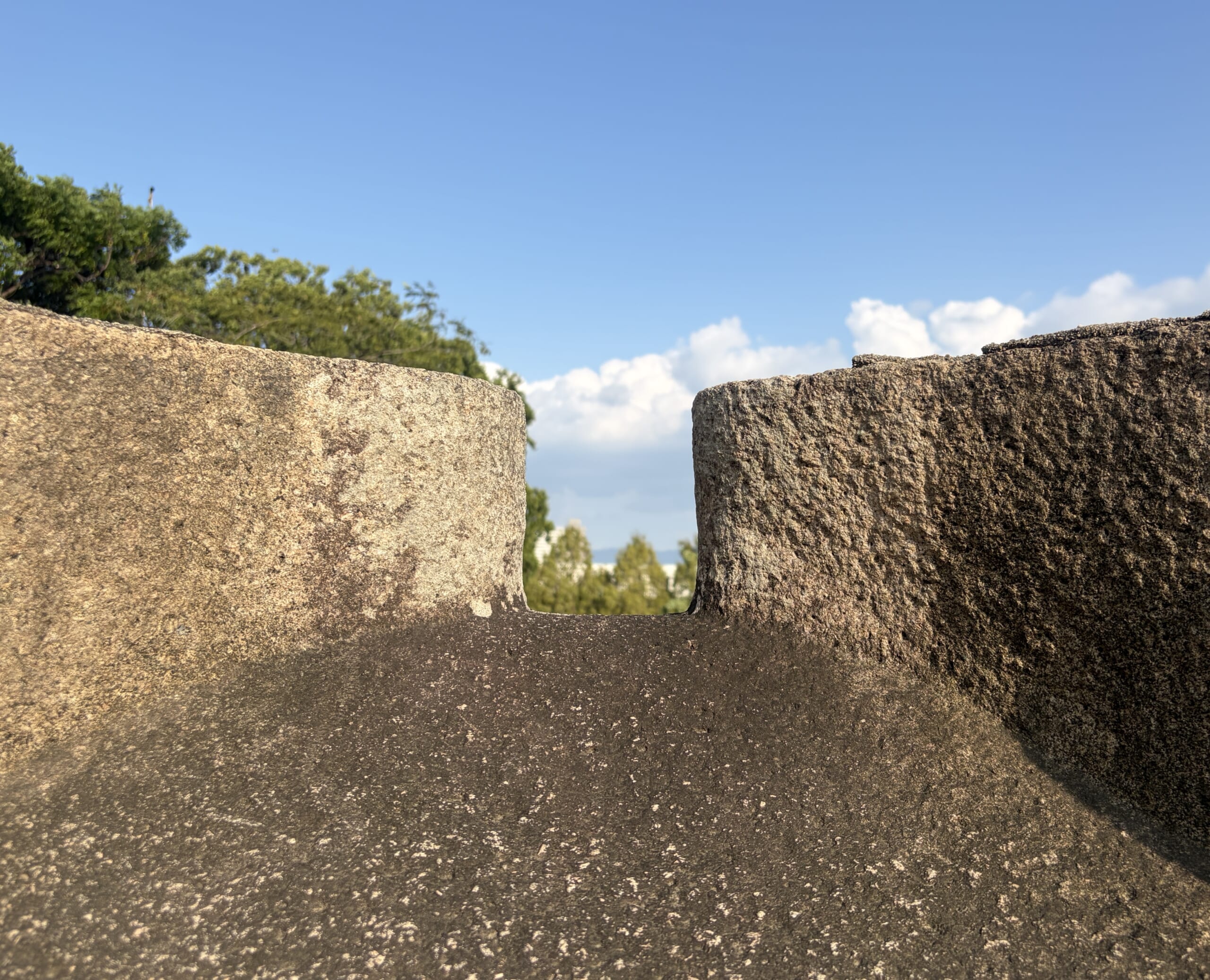
Into the castle grounds through the Tamatsukuri-guchi Entrance. The sama (loopholes: openings for firing guns, arrows at the enemy) lined up along the top of the stone wall were so lovely that I couldn’t stop taking photos (haha)
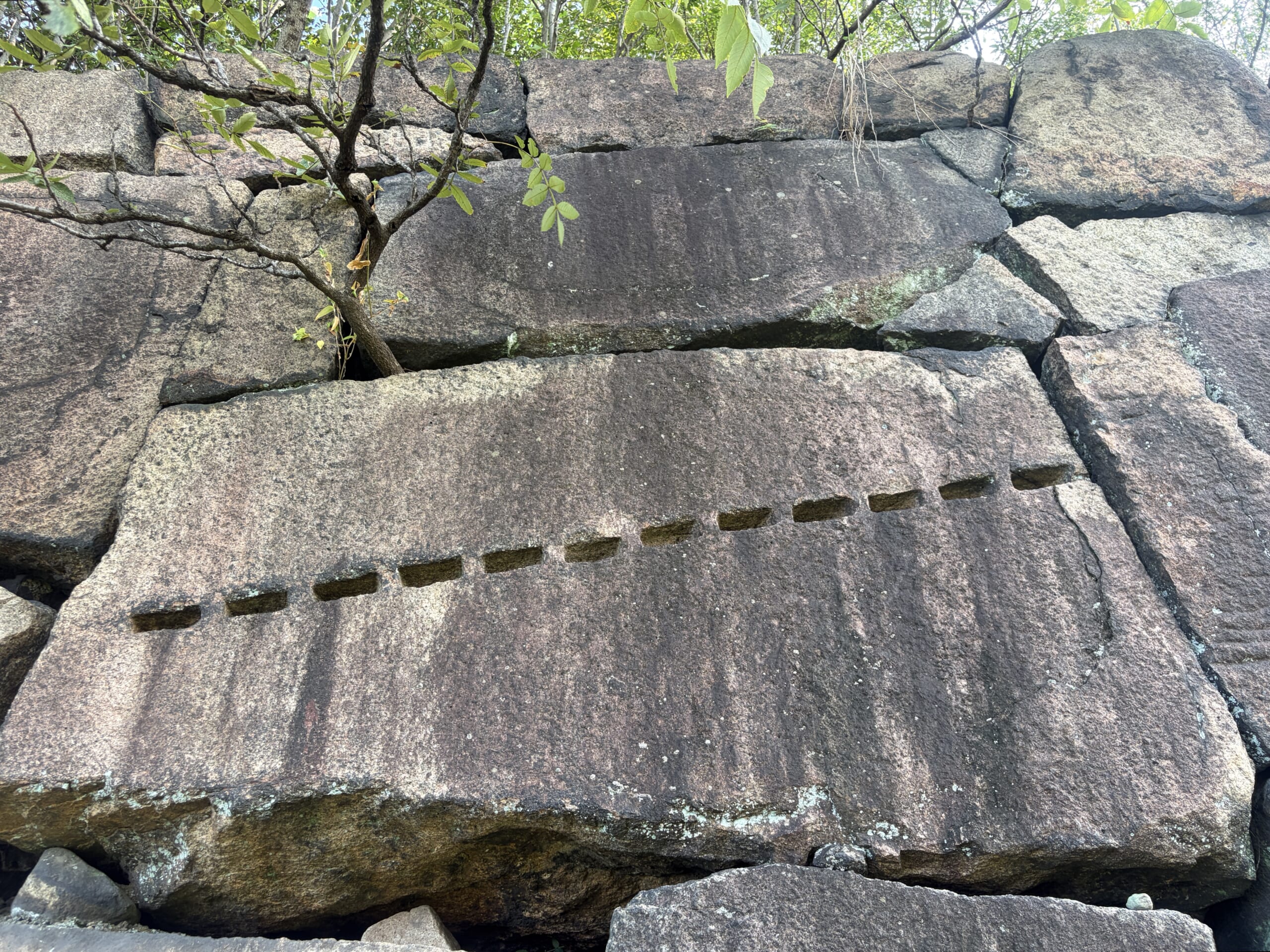
The big stones also had rows of yaana (wedge holes, carved to split the stone). The stones at Osaka Castle are all huge, so even the wedge holes look somehow bold.
At Last, the Ichiban-yagura Turret I Saw Across the Moat
I finally reached the Ichiban-yagura Turret I had been admiring from across the outer moat. Seven turrets once stood along the south outer moat. Today, only two survive: this one, alongside the Rokuban-yagura Turret.
A Quiet Path, Worlds Away from the Bustle of the Honmaru
From the Ichiban-yagura, I headed south to the path on the south side of Hokoku Shrine. This became my favourite spot of the day.
At a spot overlooking the south outer moat, there was a stone just right for sitting on, so I took a break in the shade. Barley tea, a few photos, a long look at the stone walls. I listened to the big ginkgo tree swaying in the wind. It was a hot day, but the breeze felt wonderful.
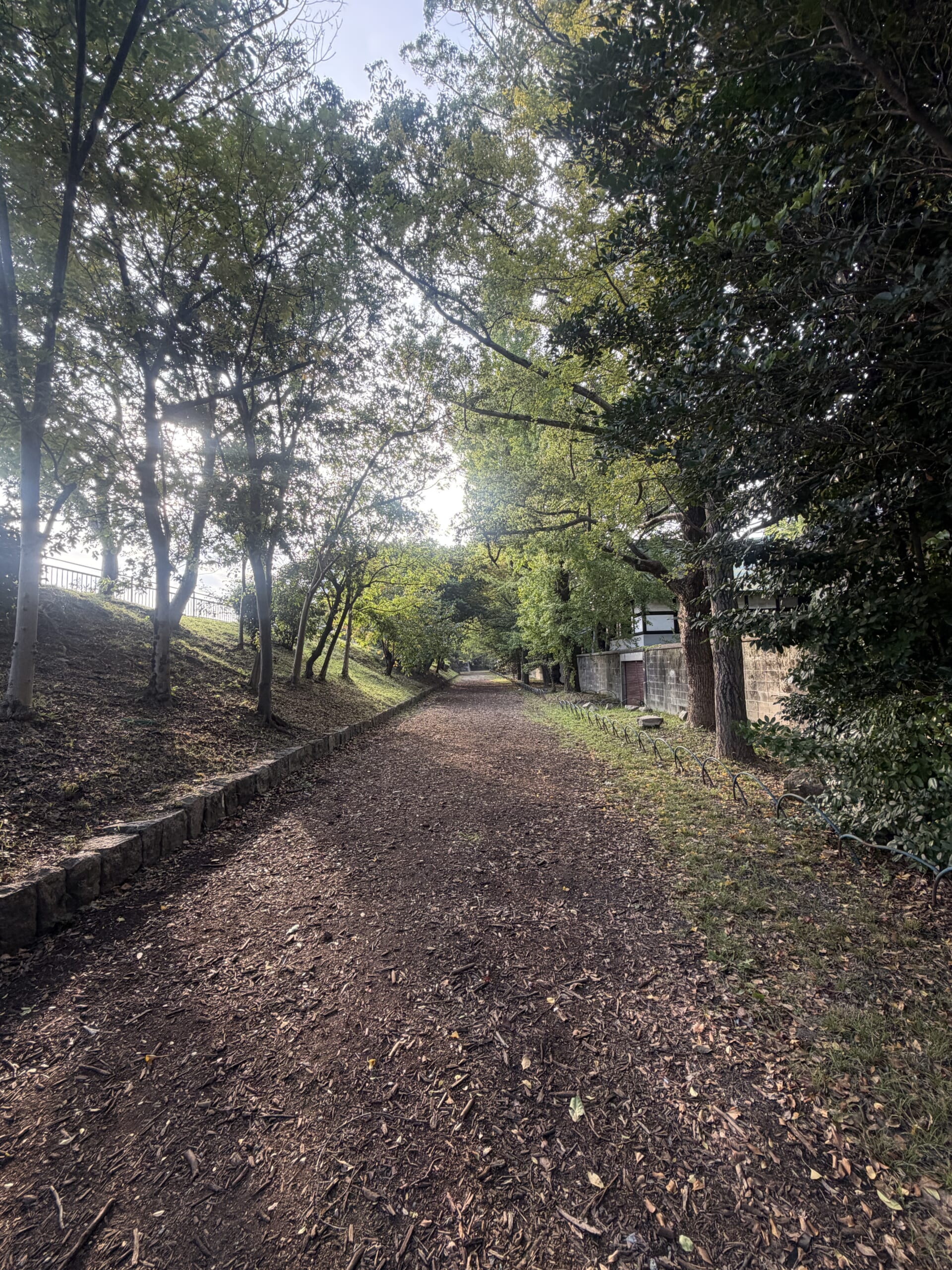
No one came. So quiet, so peaceful, it felt as if no one would ever come, not in a lifetime. Totally different from the Honmaru, packed with tourists. I could hardly believe this was part of Osaka Castle too. I love it here.
Past the Dry Moat, to the Giant Stones of Sakuramon
Walking on along the quiet path, I came to the Rokuban-yagura Turret. In one place, small stones were visible through a gap in the stone wall. Apparently small stones called guriishi (rubble fill) are packed behind stone walls, so maybe that’s what they were…?
Beyond that lay a moat with no water: a karabori (dry moat). Stone walls with a carpet of green, a completely different view from a water-filled moat. It seems this moat was dry from the very start, yet nobody knows why it was never filled with water.
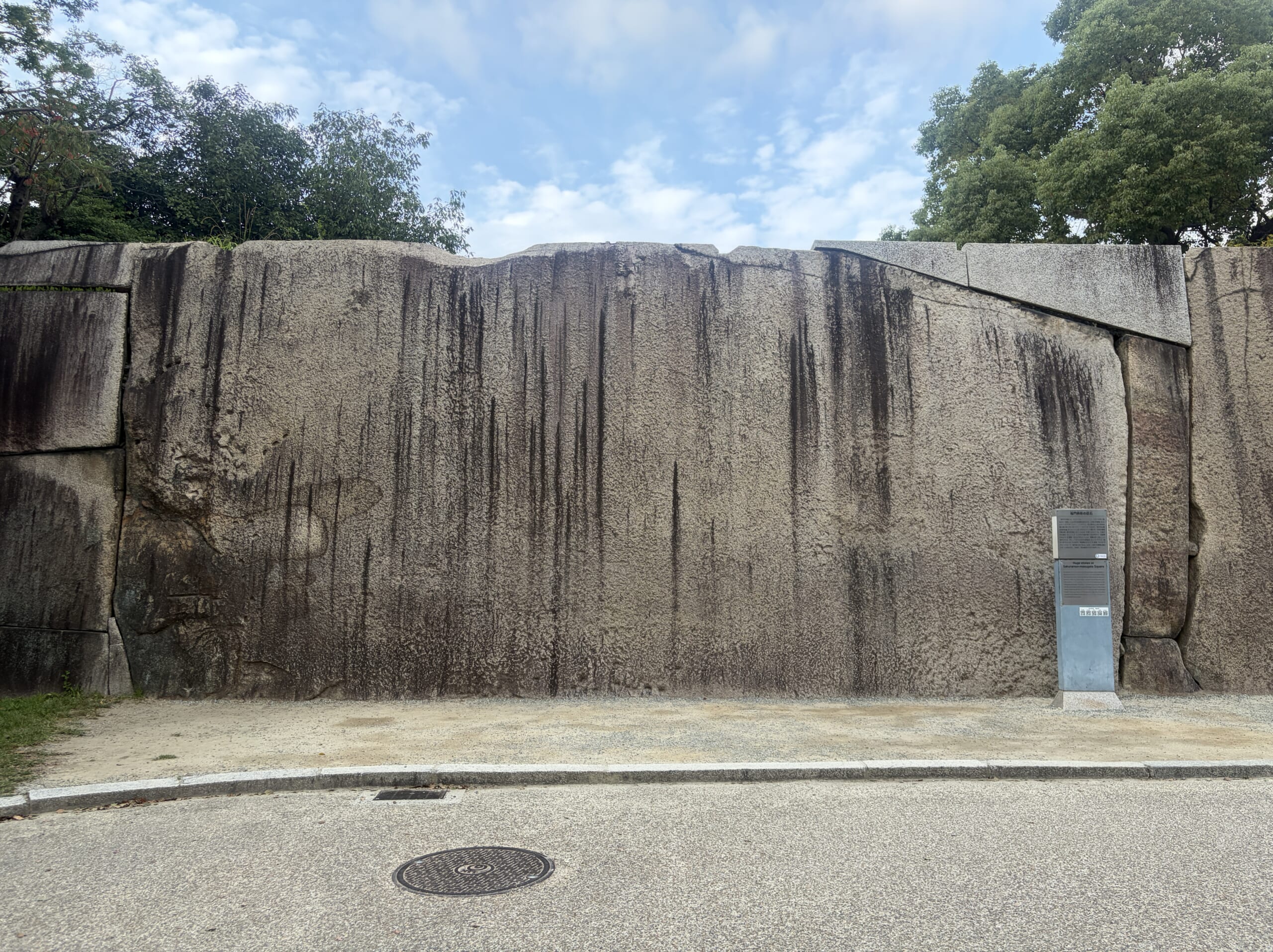
Through the Sakuramon Gate, the crowds suddenly grew. Right in front of me: enormous stones. The one straight ahead, the Tako-ishi (Octopus Stone), weighs about 108 tonnes, the largest stone in the castle. The Furisode-ishi (Kimono Sleeve Stone) on the left is apparently the third largest. Amazing! Unbelievably huge! …Though, with so many huge stones at Osaka Castle, my sense of scale gradually goes haywire (haha)
The Main Keep, Seen from the Outside, All the Way Round
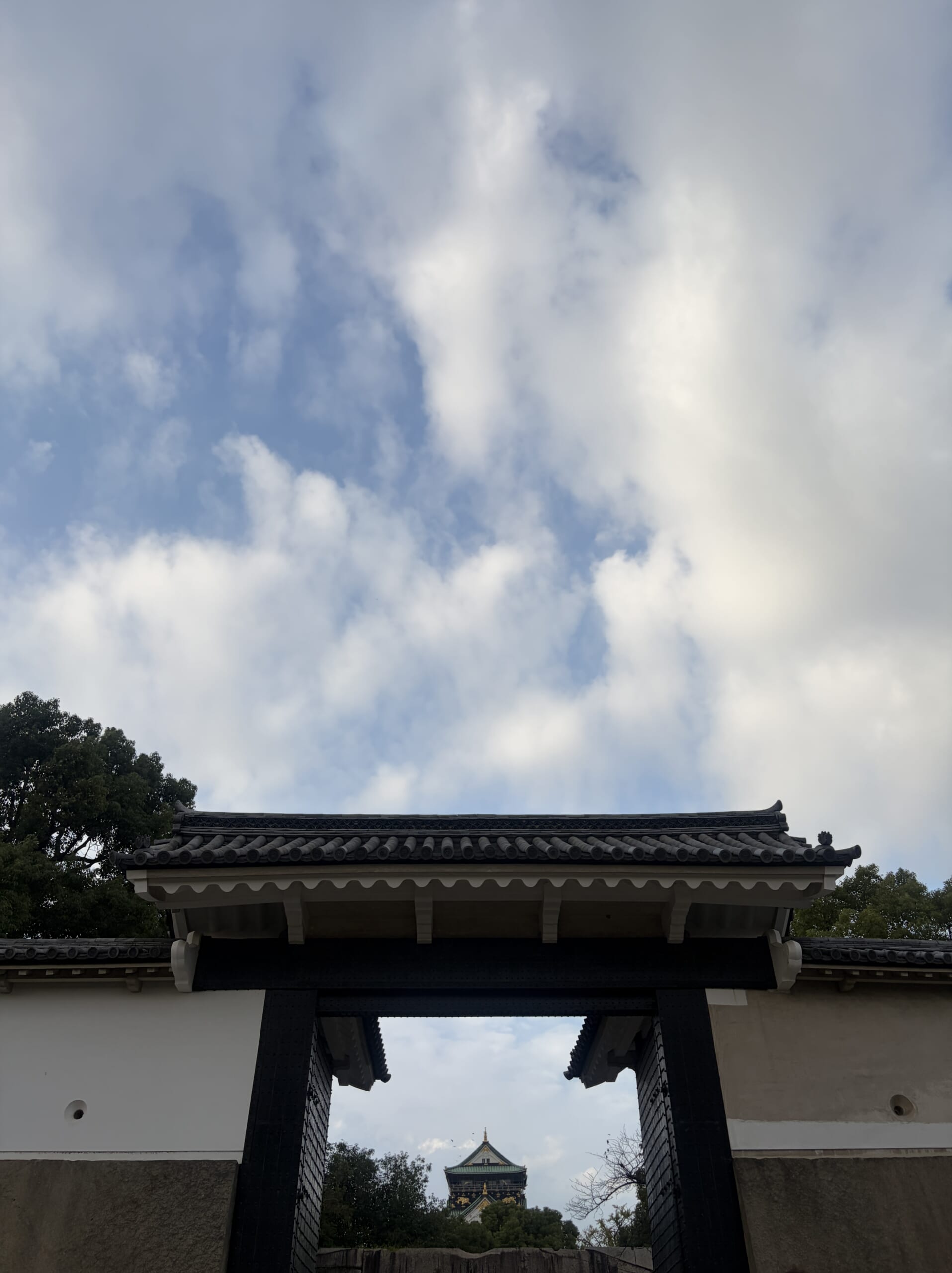
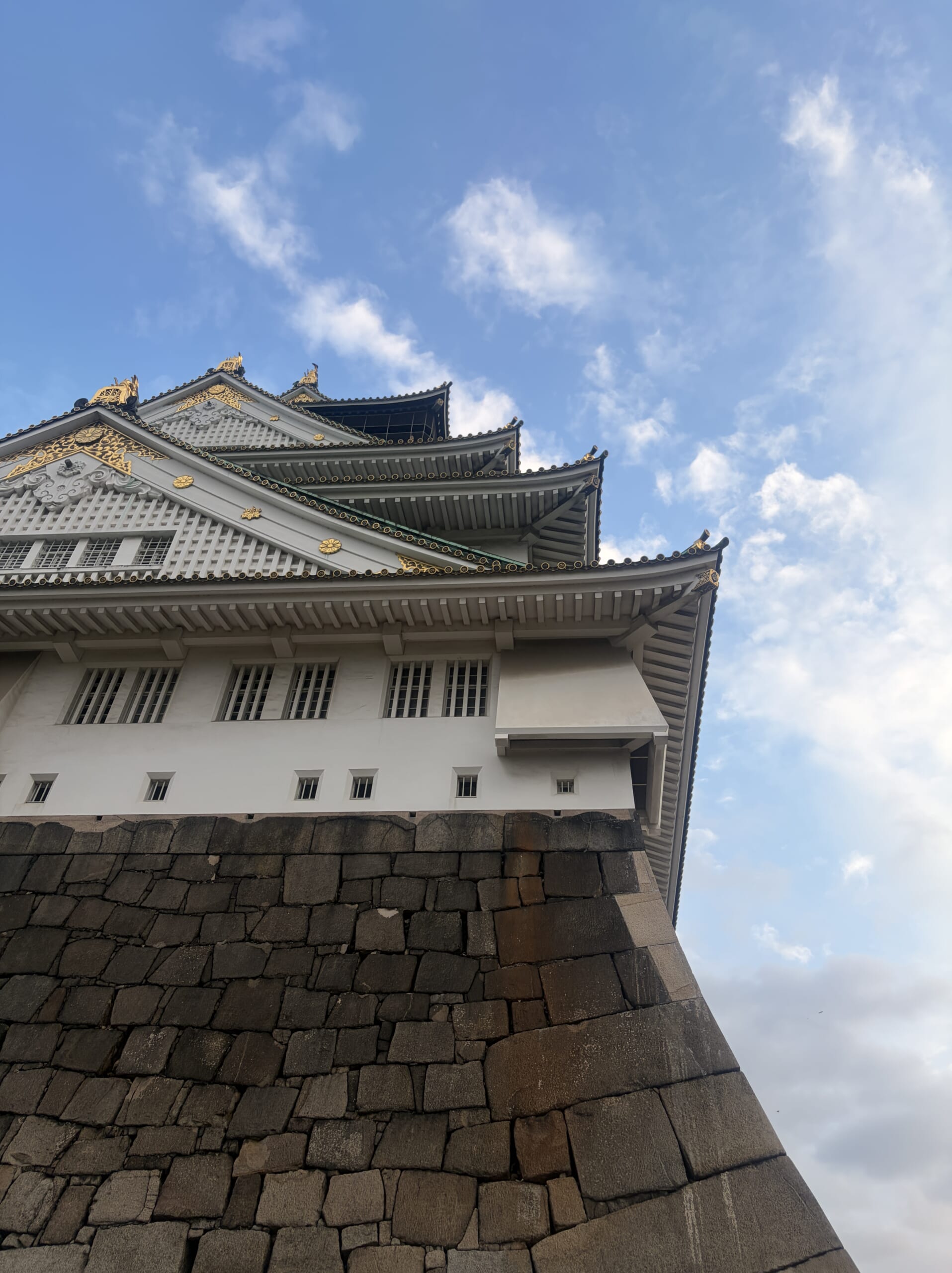
This time I didn’t go inside the keep. Instead, I walked all the way around it. From each new angle, it looks quite different.
Looking up at the stone wall at the back, I wondered, “Is this Todo Takatora’s work?”, but couldn’t confirm it. I couldn’t find the stone wall along the south outer moat said to have been built by the Todo family either, so that’s homework for next time.
I found impressive ishi-otoshi (openings for hurling stones down on attackers climbing the walls). I also tilted my head at one spot, thinking, “Hang on, isn’t this stone wall a bit out of line?!” According to a nearby sign, in an air raid on 14 August 1945, the day before the war ended, the stone wall on the north-east side of the keep was knocked askew. Could that “misalignment” be from this…?
Tired of photographing the keep, I glanced up to see a sunset. Even resting on a bench, this was the view. Could it get any better?
Hunting for Carved Marks: A Joy, Yet a Challenge
Leaving the Honmaru through the Yamazato-guchi Demasugata, I went into the Kakushi-kuruwa (Hidden Bailey). Here I found kokuin (carved marks) on the stone walls. These marks were carved as identifying marks by the feudal lords who shared the work of building the walls. The moment I spotted one, what a thrill!!
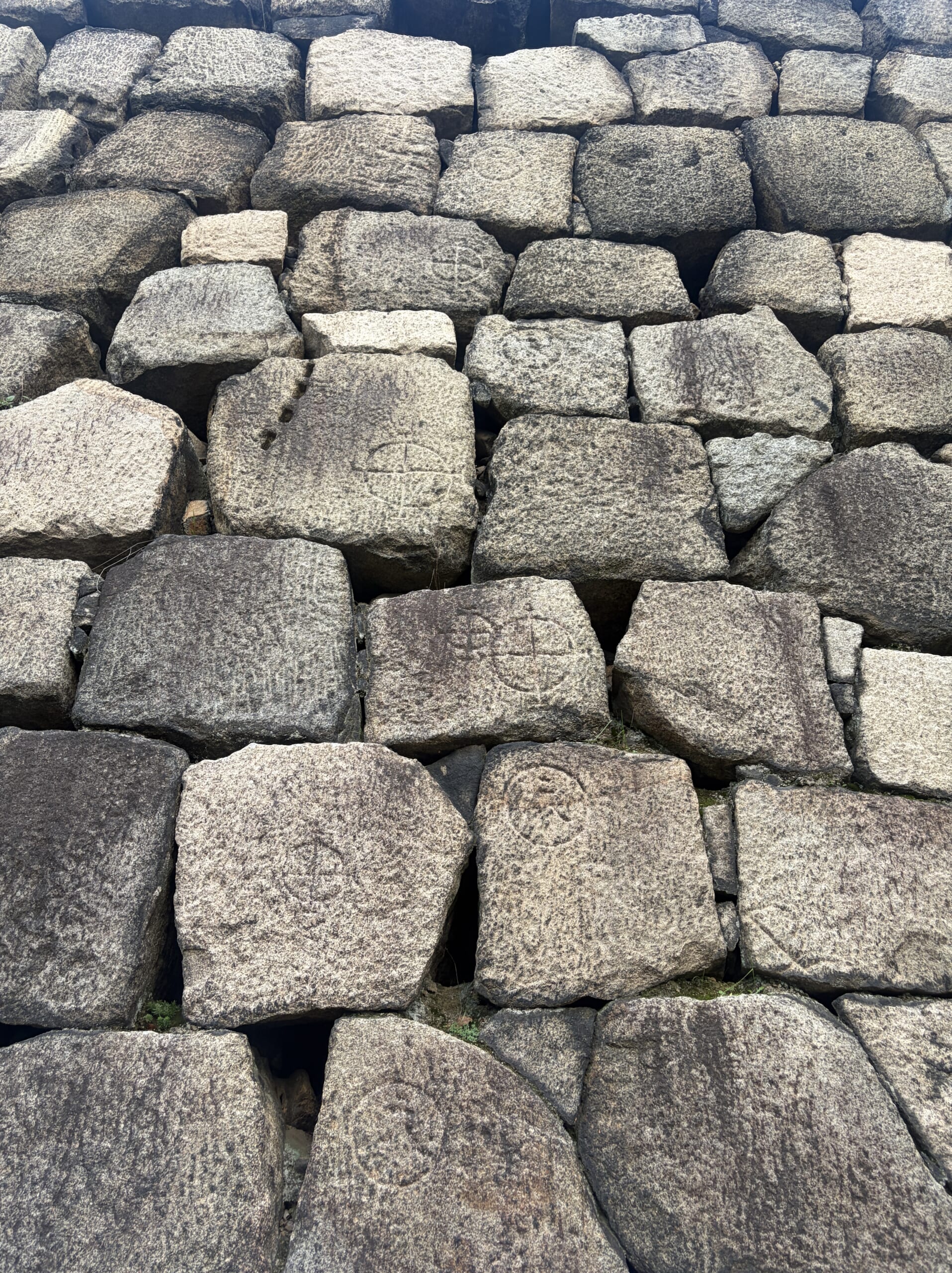
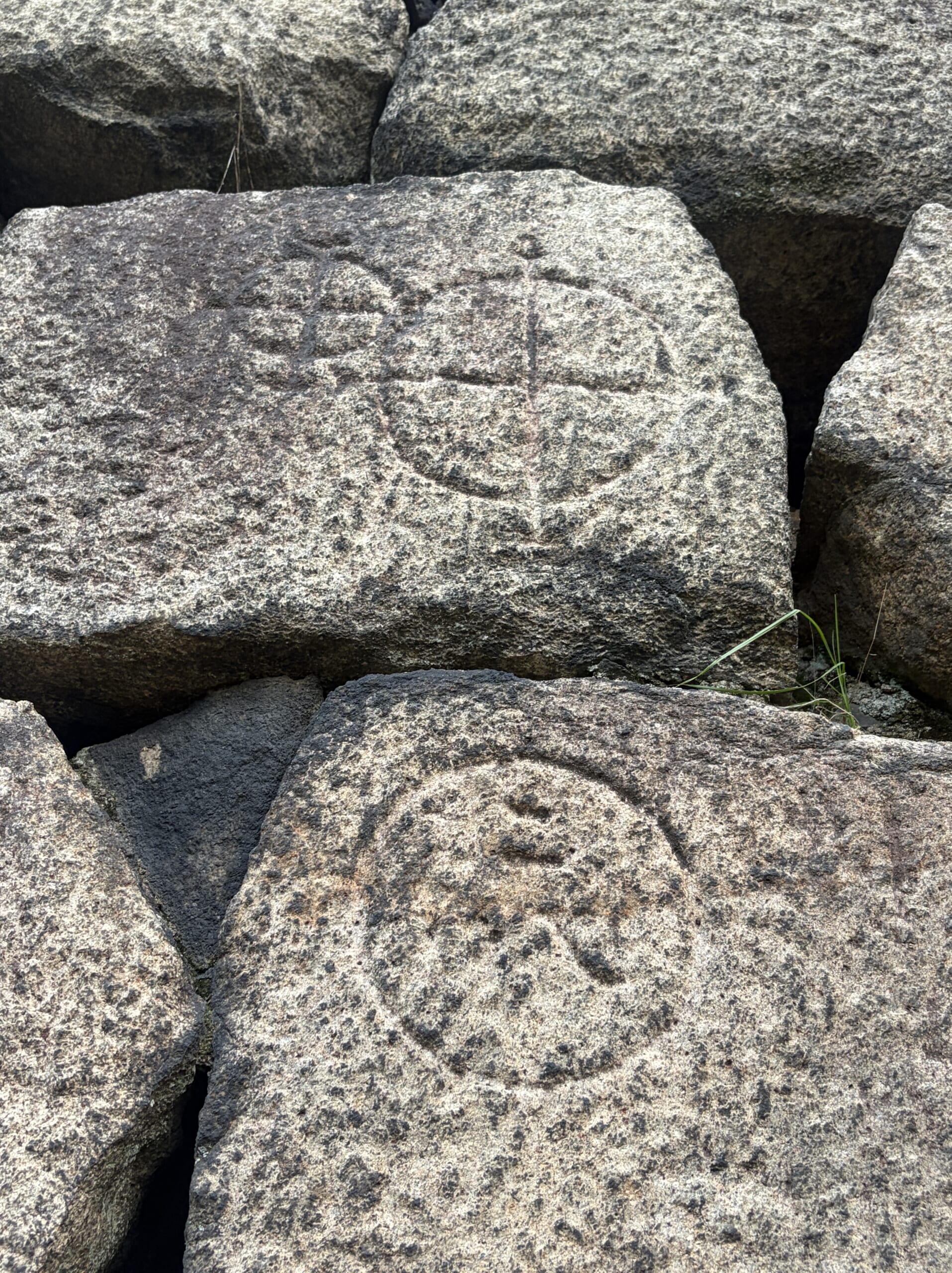
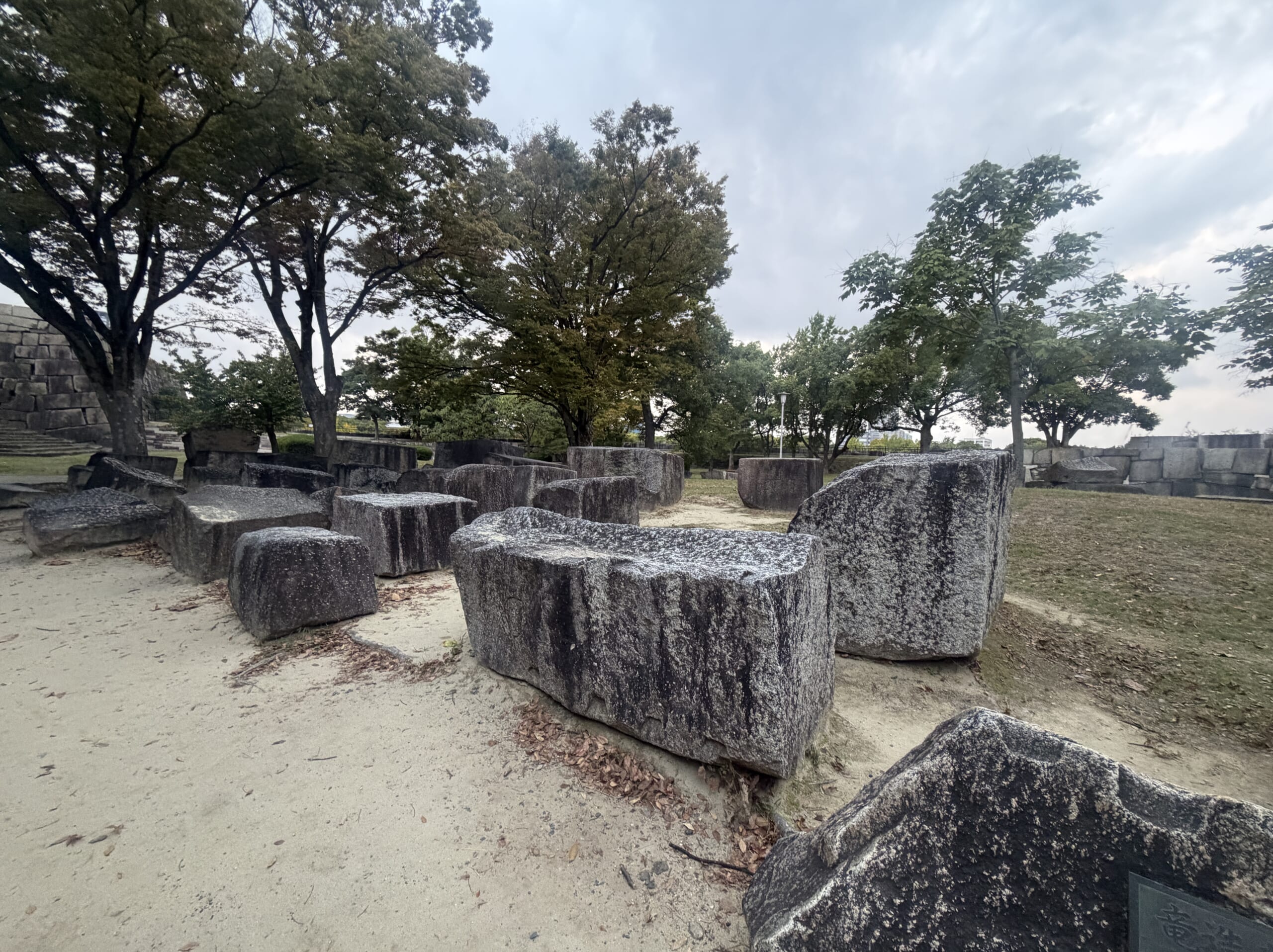
After that, I went to the Kokuin-ishi Hiroba (Carved Stone Plaza), where stones with carved marks have been gathered together. There were so many stones, yet clear marks were surprisingly hard to find. It took real effort. The ones at the Kakushi-kuruwa might have been easier to spot!
A Sudden Downpour, Plus the Giant Stone of Kyobashi-guchi
Only moments ago I had been photographing the keep under a blue sky, but near the inner moat, it suddenly started to rain. I put up my small umbrella straight away, but I never imagined it would turn into such a downpour… Lots of visitors from overseas were sheltering from the rain too. It was fierce, but it stopped in under twenty minutes.
At the Kyobashi-guchi Entrance, where the lights had just come on, I met another giant stone. Among the giant stones of the Kyobashi-guchi Masugata, the Higo-ishi is apparently the second largest in the castle. So, so big. Now I want to find every giant stone in Osaka Castle.
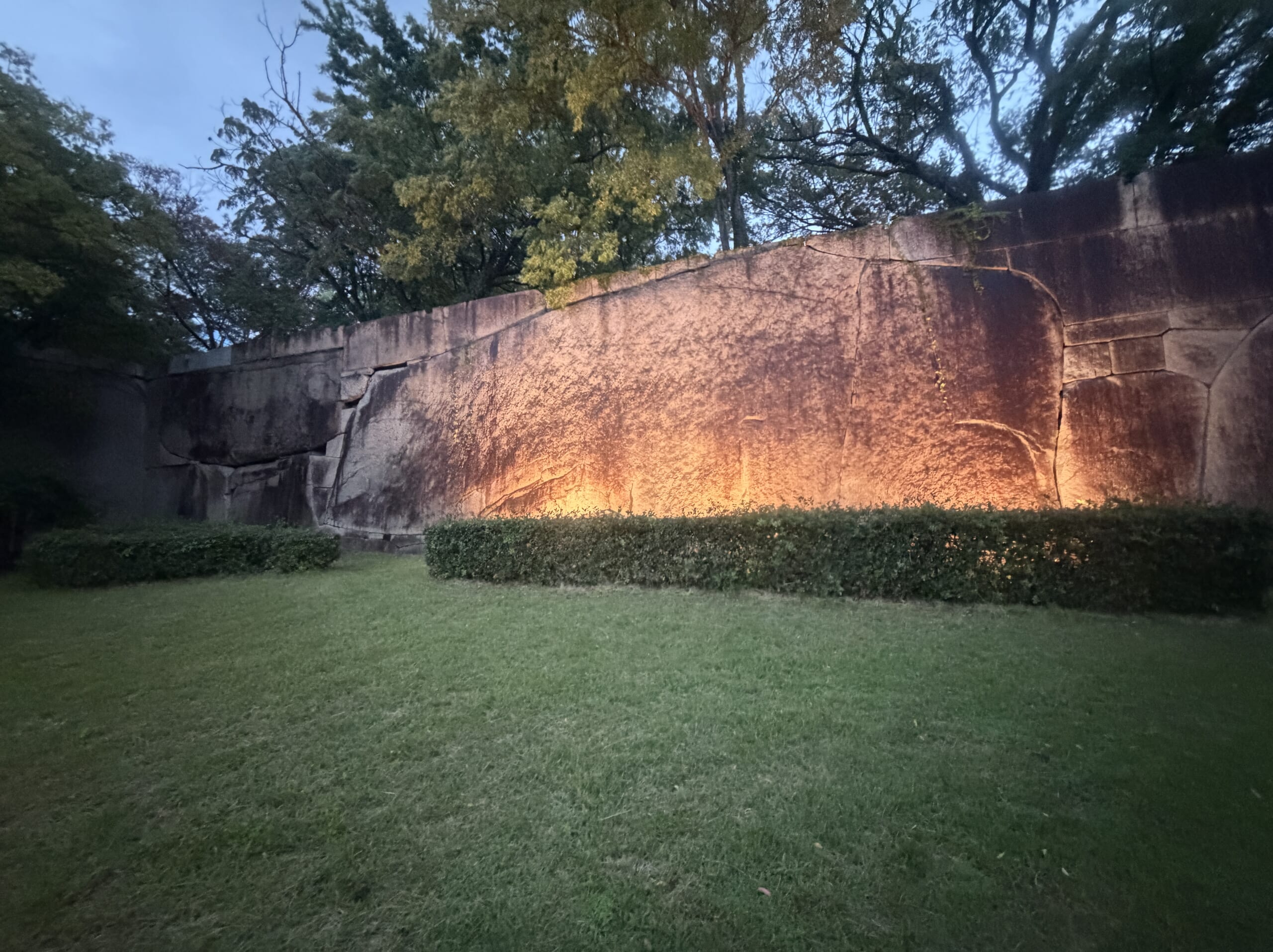
I left the castle grounds through the Kyobashi-guchi Entrance, then walked along the outer moat towards the Otemon Gate. At around 17:30, that was it for the day.
Wrapping Up
Even after about three hours of walking, half? No way. Maybe a fifth? Even less?! That’s all I managed to see. I can’t help going through every gate I come across, which might be another reason I made so little progress.
Next time, I’m thinking of starting from the Otemon Gate: first a full lap of the outer moat, then a lap along the inner moat, taking in places like the Nishinomaru Garden, edging closer to the Honmaru bit by bit. Oh, next time I’ll come in comfortable trainers (haha)
It looks like my Osaka Castle walks will go on for a while yet ⭐️ What fun~