You can’t go inside the main keep, but Nagoya Castle is still a delight. If anything, because you can’t climb the tower, you end up savoring the stone walls, the turrets, and the garden properly — and before I knew it, I had walked a full lap around the castle. What I got most absorbed in? The masons’ mark hunt.
See the walking route in photos → Castle Hopping: Nagoya Castle Route Map (July 2026)
What Kind of Castle Is Nagoya Castle?
Nagoya Castle was built by order of Tokugawa Ieyasu as a “tenka-bushin” — a nationwide construction project that mobilized daimyo lords from all over Japan. Work began in 1610, and the stone base of the main keep was built by Kato Kiyomasa, famed as a master castle builder. The great keep, famous for its golden shachihoko (tiger-fish ornaments), was rebuilt after burning down in the war, but it is currently closed due to seismic concerns. You can only admire it from the outside (a full wooden reconstruction is in the works — something to look forward to!).
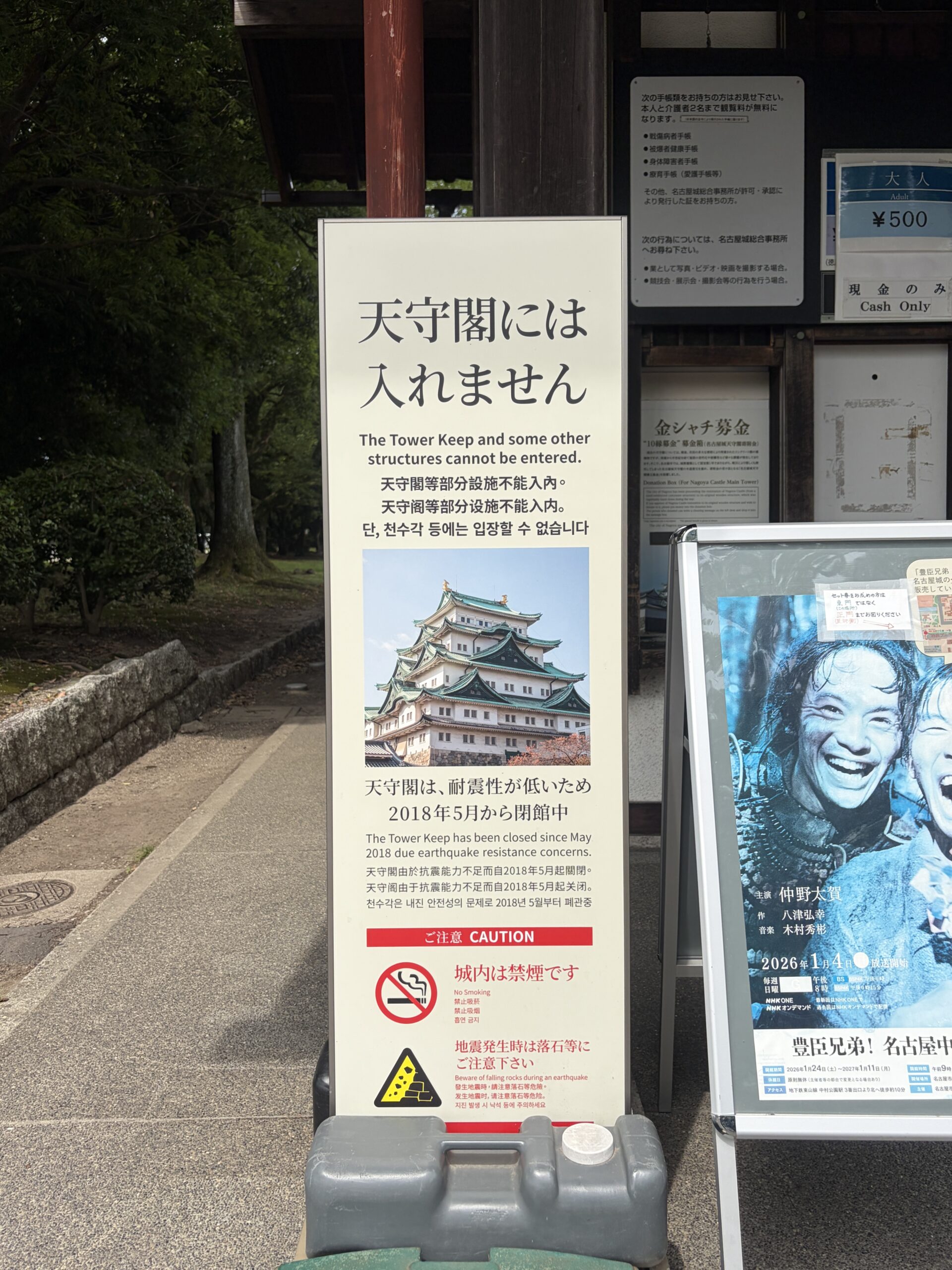
“If you can’t enter the keep, is there even much to see?” — if that’s what you’re thinking, same here. I completely agreed.
And I was completely wrong.
A Leisurely Stroll Through Ninomaru Garden
Entering through the East Gate, my first stop was Ninomaru Garden. Everyone else headed straight for the keep, so there was hardly a soul around!
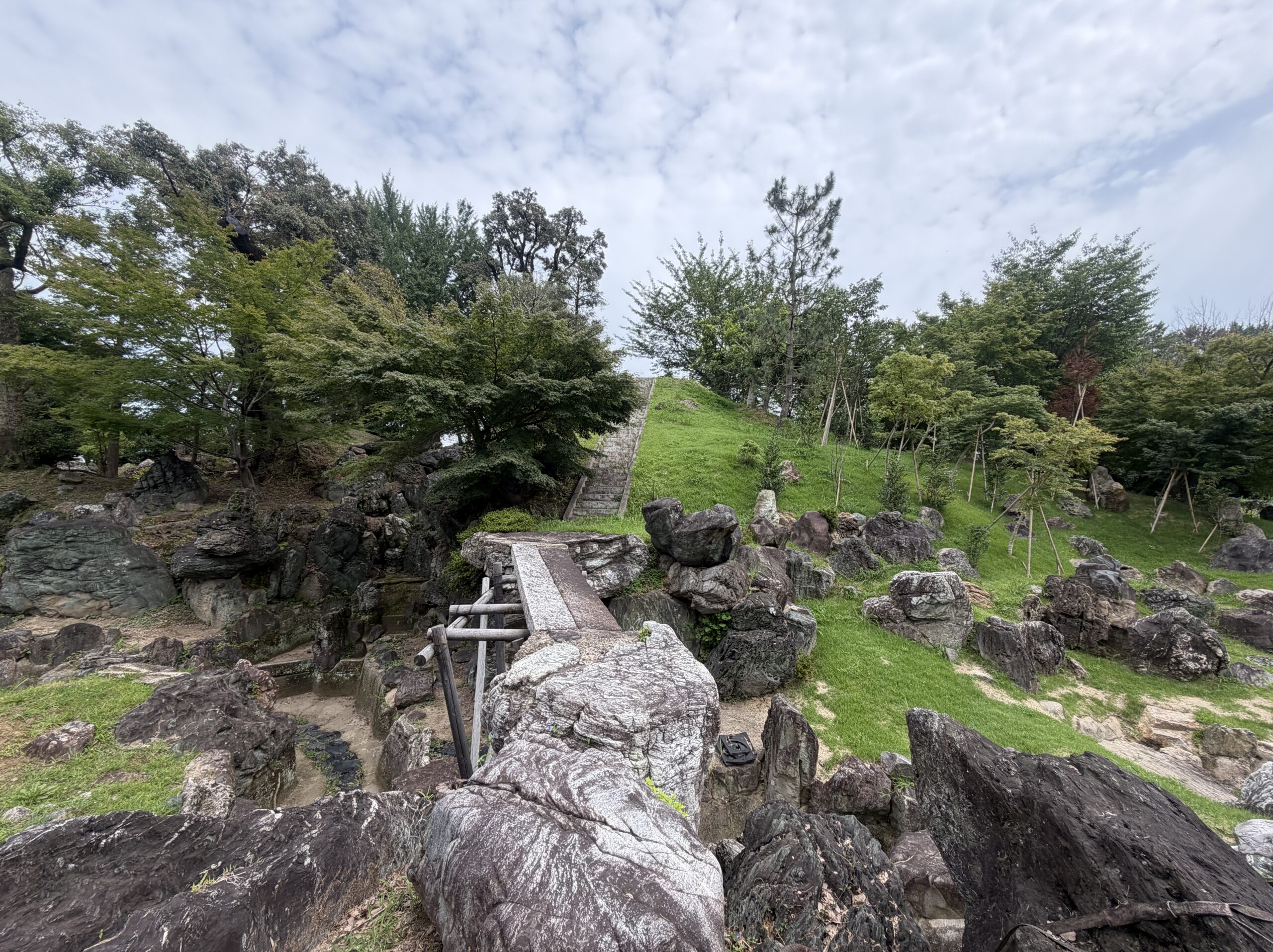
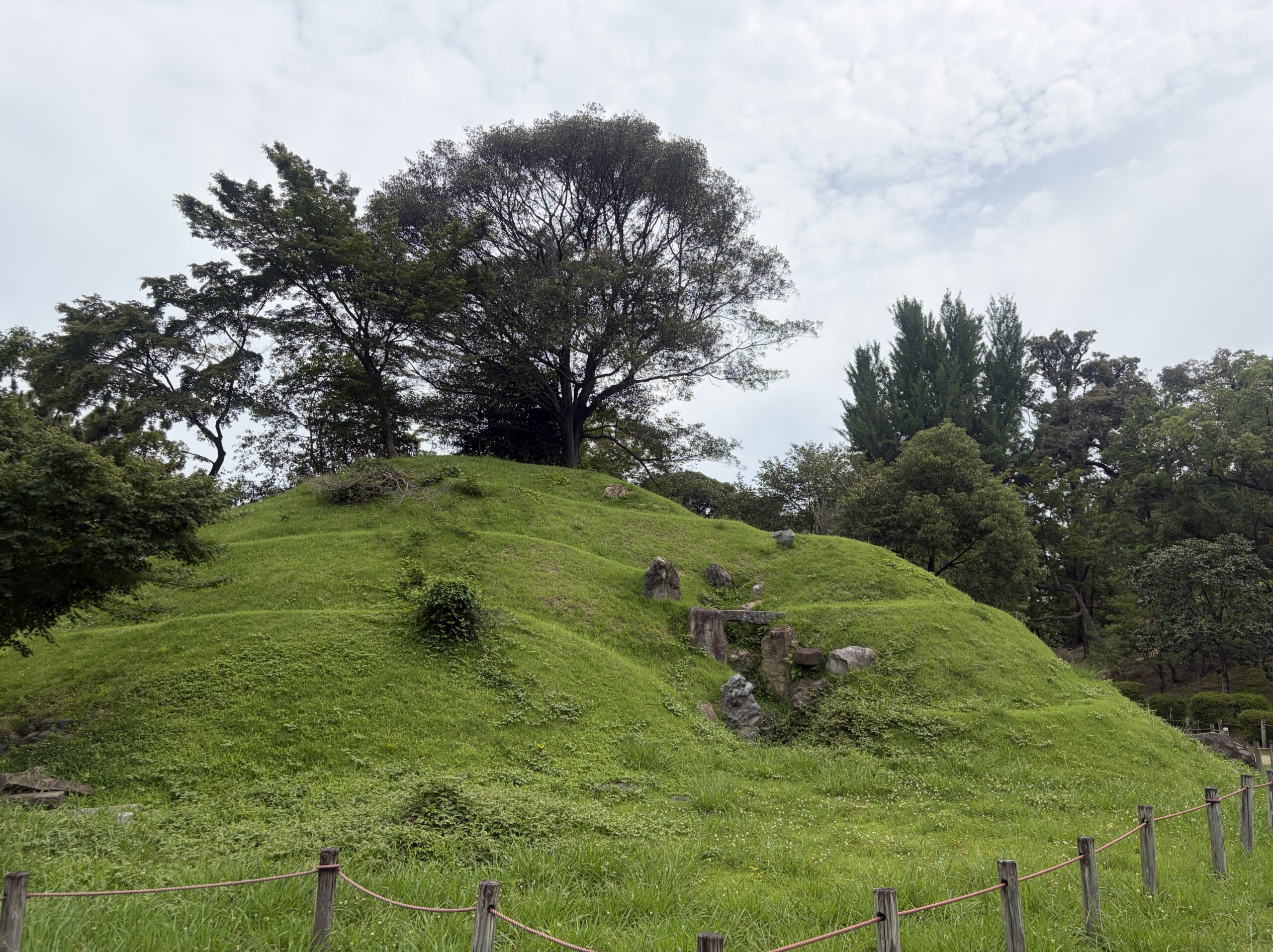
The garden was built exclusively for the lords of the castle, and it unfolds in a series of bold rock arrangements and artificial hills. The whole garden is beautiful — worth the visit on its own.
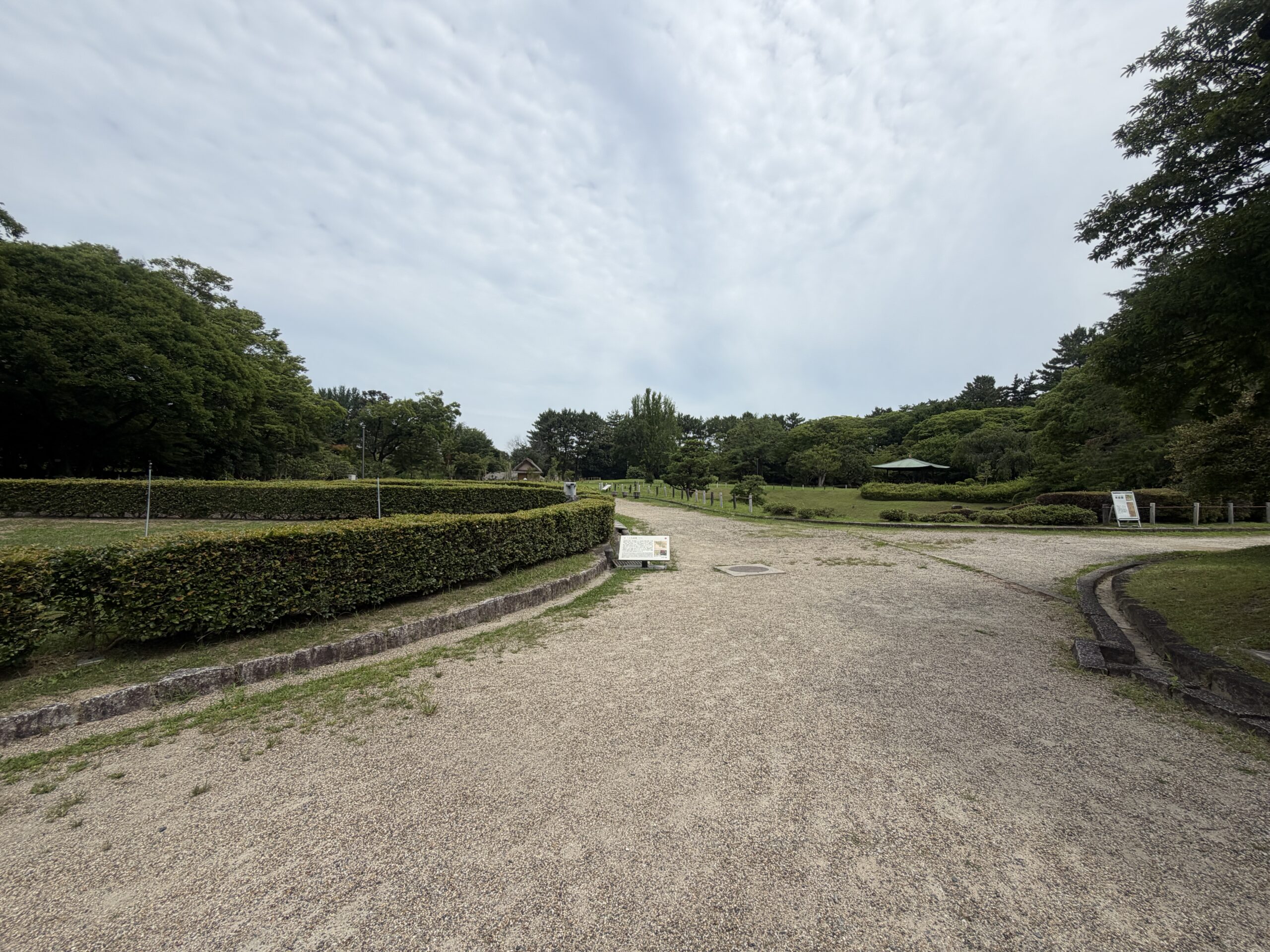
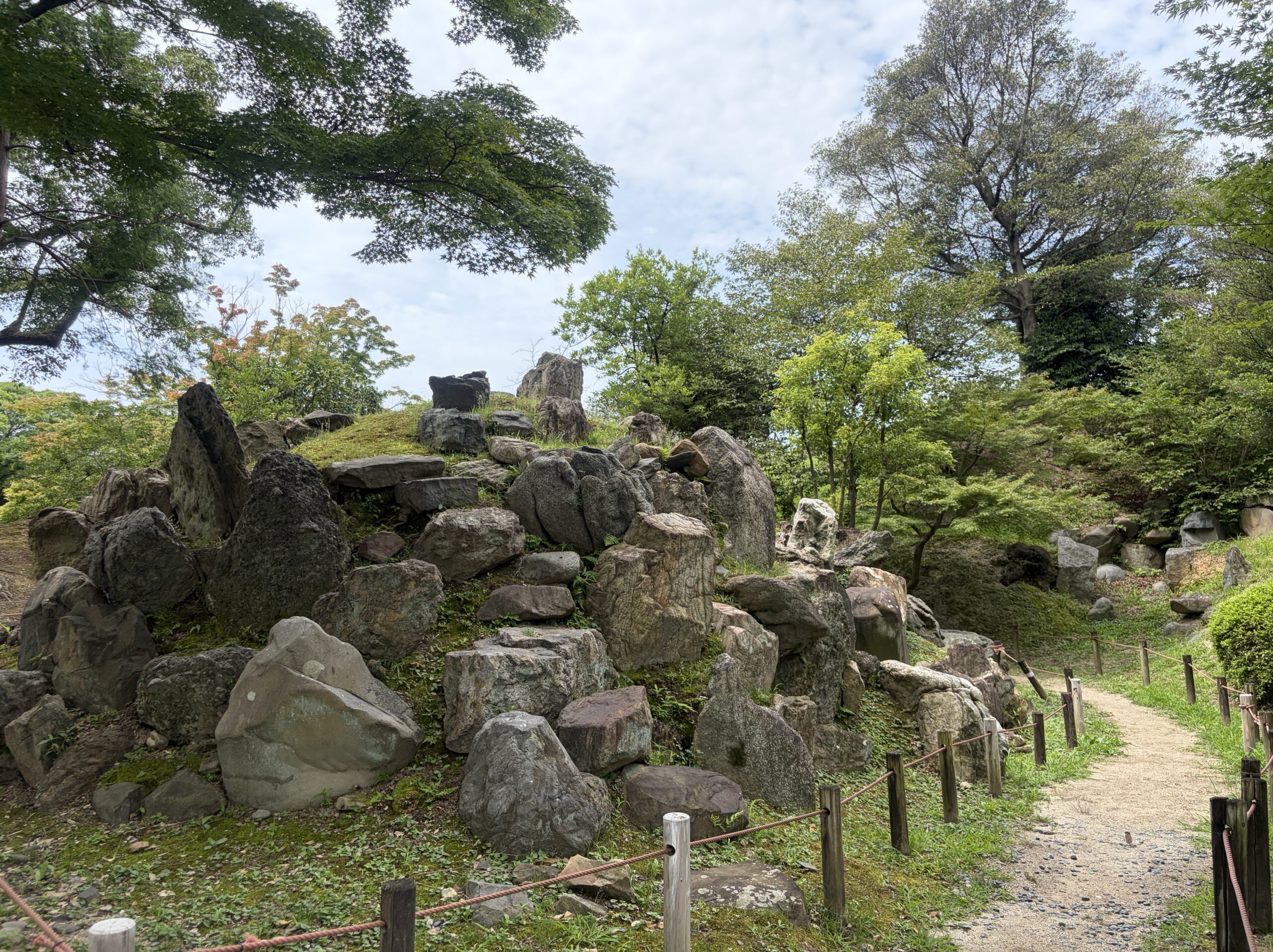
The fluffy green hillocks like Gongen-yama and Sazae-yama were adorable too, and it was a perfect spot for an unhurried walk. Though the heat wore me out in record time.
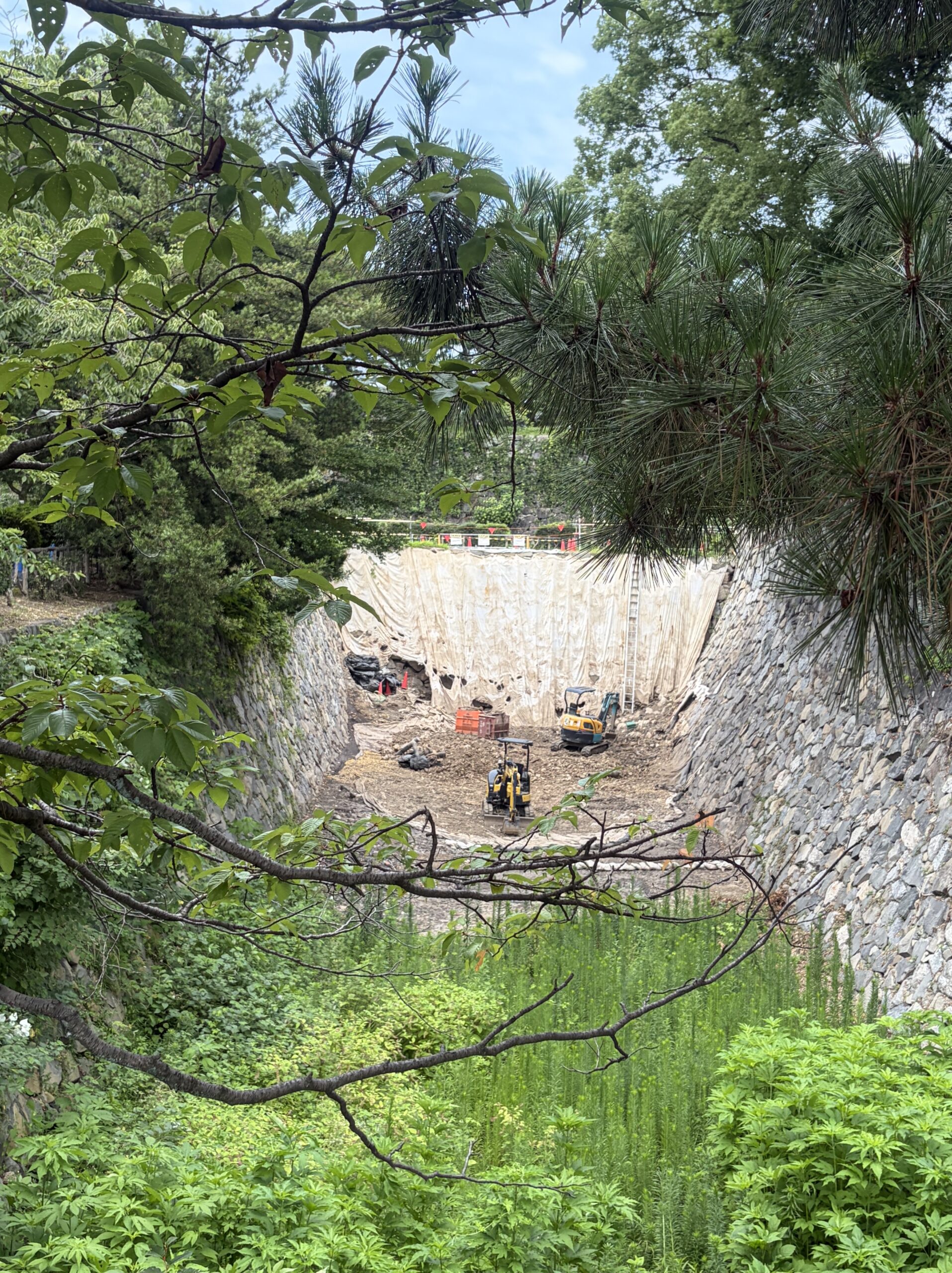
Stone Walls Under Repair, Moat Drained
As I walked along, I came across an area in which the stone walls were being repaired.
I stumbled on a repair site at Fukuoka Castle too, and here was Nagoya Castle showing me its work-in-progress side as well. Getting to see a castle not only in its finished form but “in the middle of being protected” feels like a little bonus. A scene worth keeping as a record of 2026.
Kiyomasa Everywhere
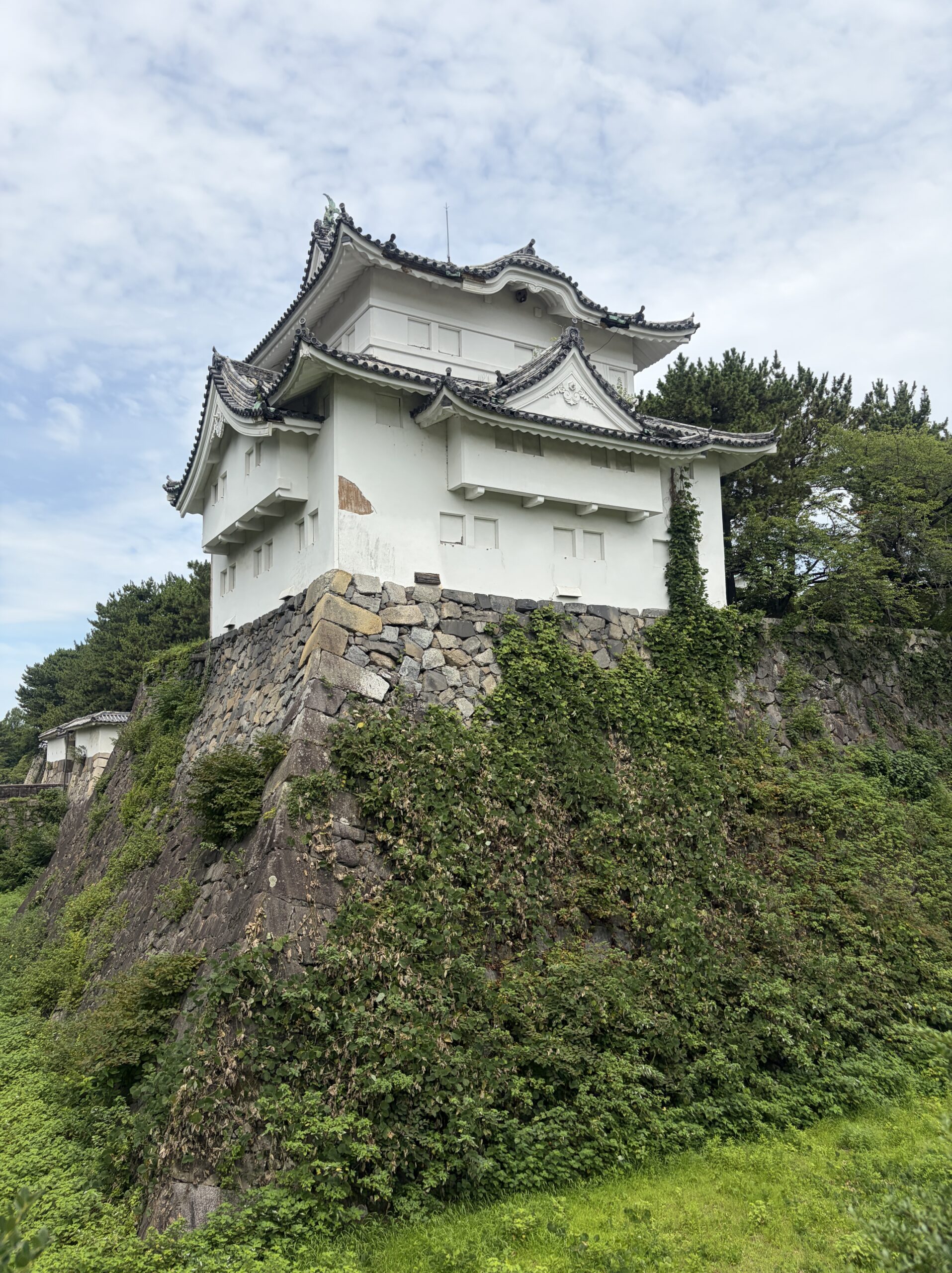
After admiring the Southeast Corner Turret, I was greeted on the way to the Honmaru (main enclosure) by the statue of Kiyomasa pulling a giant stone — that famous pose, standing atop the boulder and leading the chant. Kiyomasa hauling a megalith! So cool! He also cuts a fine figure at Kumamoto Castle, and meeting this hero of stone wall construction here got me excited all over again.
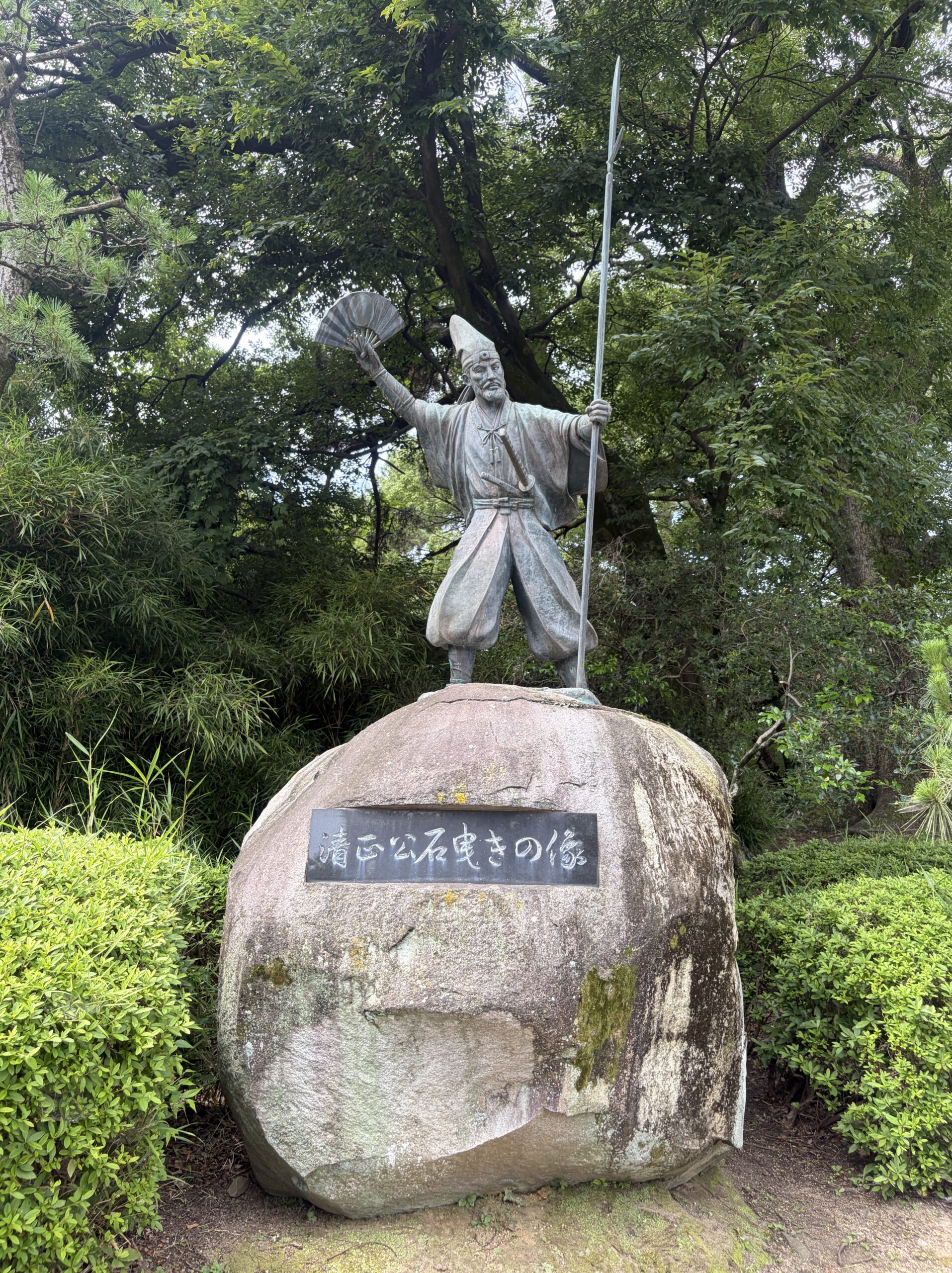
Through the Omote-Ninomon Gate and into the Honmaru. By the way, even the manhole covers here have a Nagoya Castle design — spotting little details like this is one of the small joys of a castle walk.
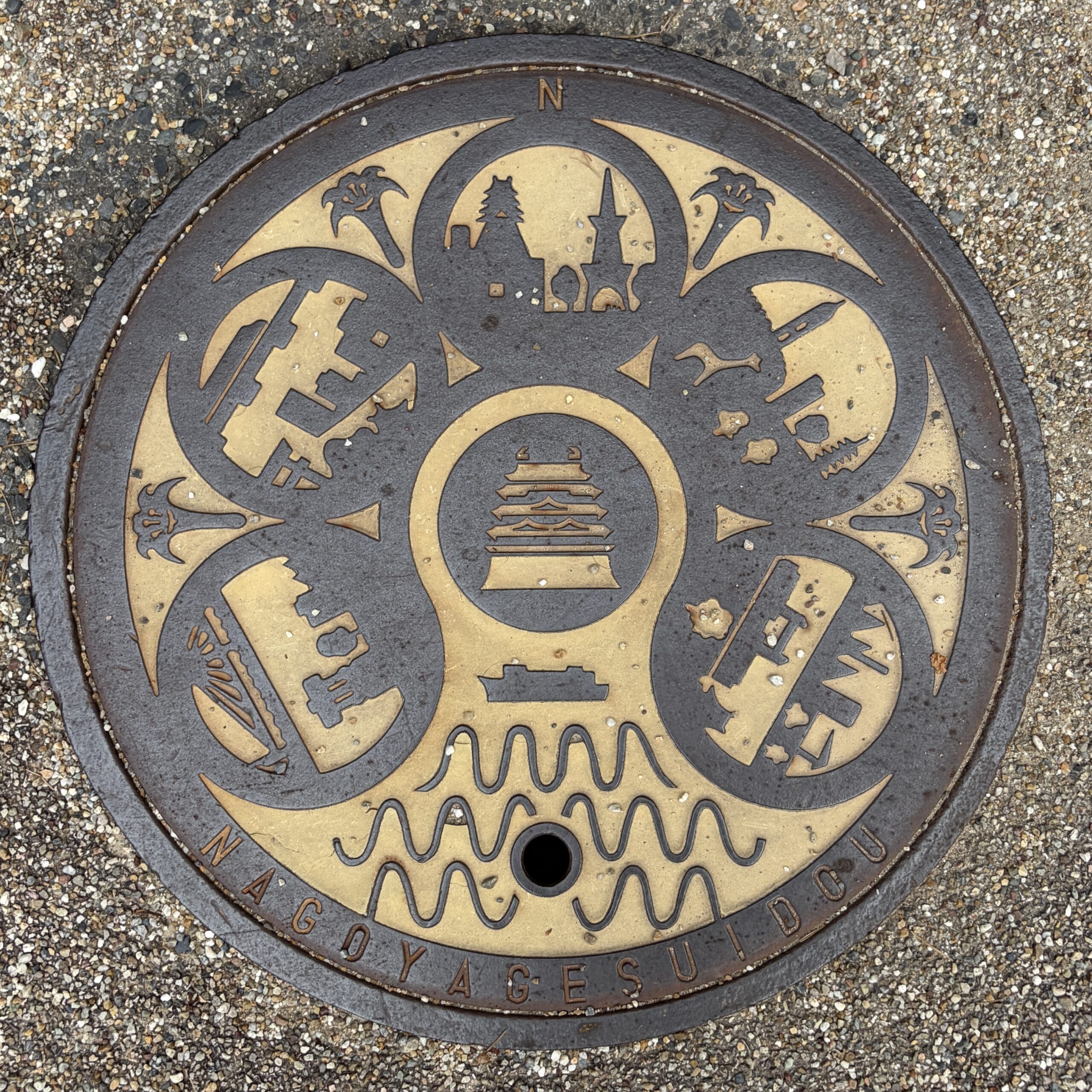
Inside the Honmaru, the plaza in front of the keep was packed. With the keep closed, the crowds seem to funnel into Honmaru Palace instead, and a long line stretched from the tent at the palace entrance… I didn’t have the energy to queue, so the palace will have to wait. Saving it as a treat for next time.
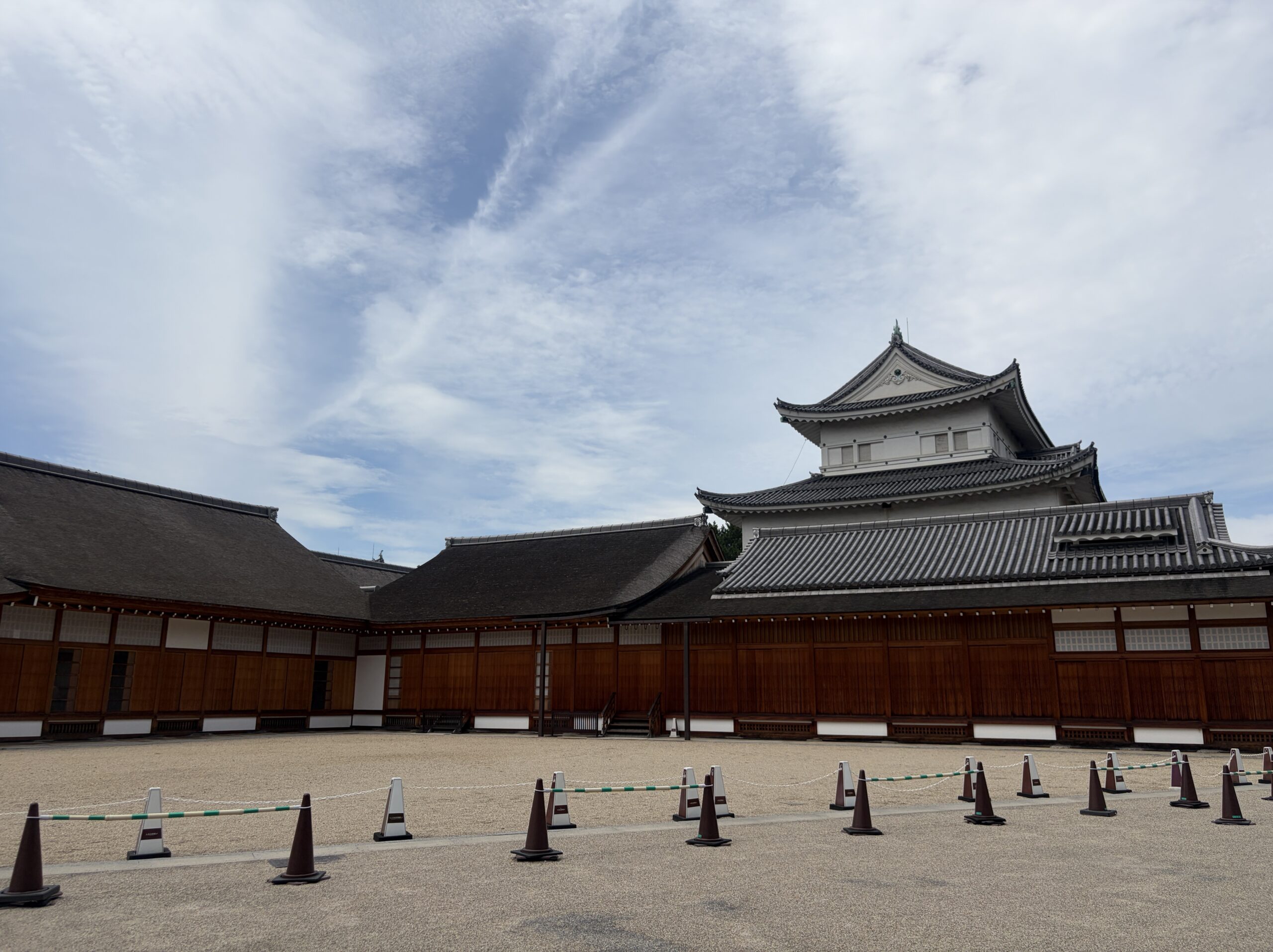
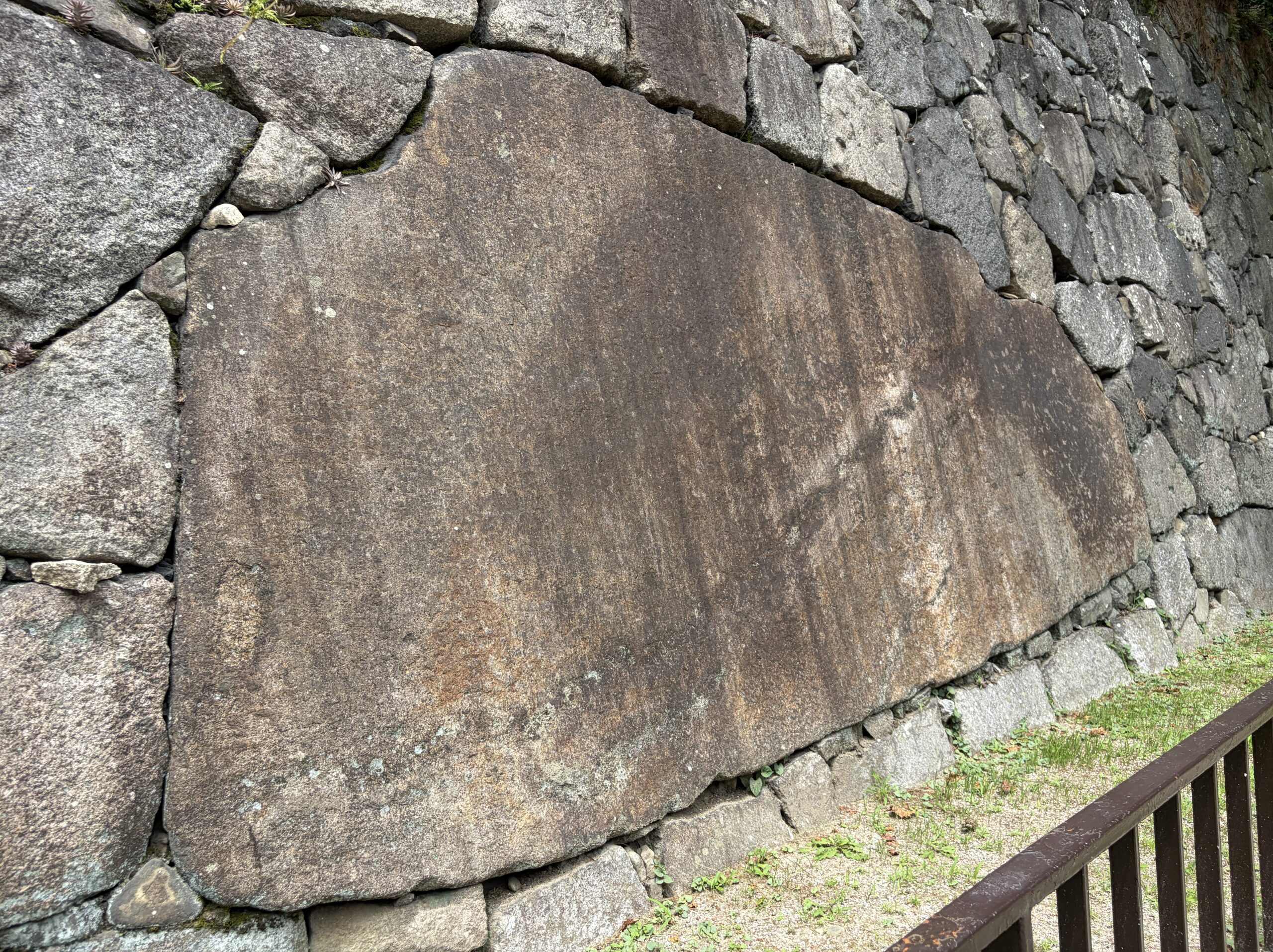
And here in the Honmaru you can meet the castle’s largest megalith, the “Kiyomasa Stone.” It sits massively in the wall with an overwhelming presence. The name comes from the legend that Kiyomasa hauled it here — but the daimyo actually in charge of this section of wall was Kuroda Nagamasa. The fact that it still ended up being called the “Kiyomasa Stone” says everything about the power of the Kiyomasa stone-pulling legend.
Obsessed with the Masons’ Mark Hunt
The most fun I had this time was hunting for masons’ marks (kokuin) on the stone walls. During the tenka-bushin, each daimyo carved their own marks into the stones they hauled, and many of those marks still remain in Nagoya Castle’s walls today.
Can’t Find a Single One
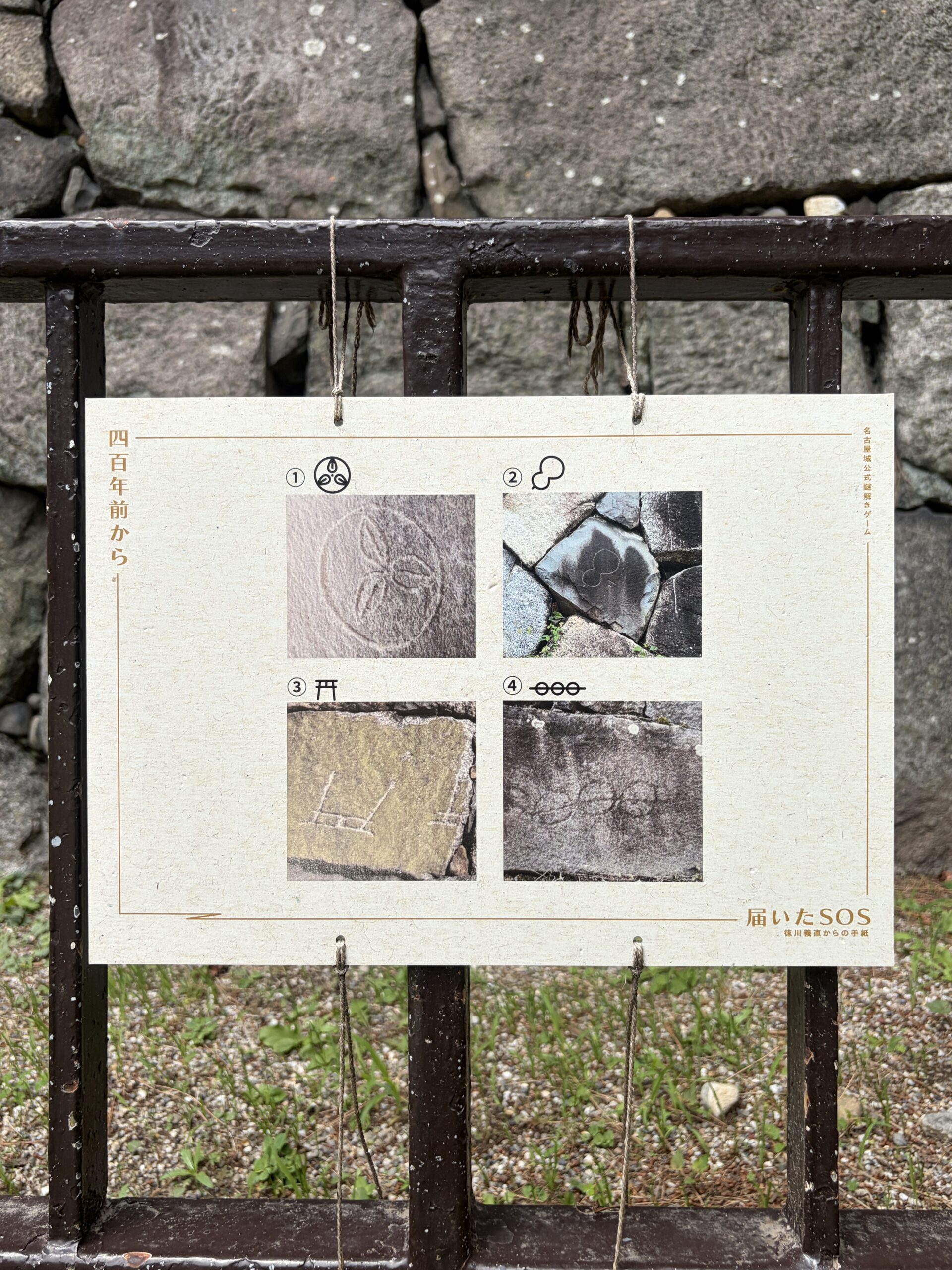
I learned about the marks from an information board and set off with a hearty “let the hunt begin!”… and found absolutely nothing (laughs). I paced back and forth in front of the walls, squinting hard — is that a family crest? Nope, just a pattern in the rock… deflating.
And Then, the Best of Kokuin
Once I got the knack, circles and lines started popping up here and there, and from that point I was hooked.
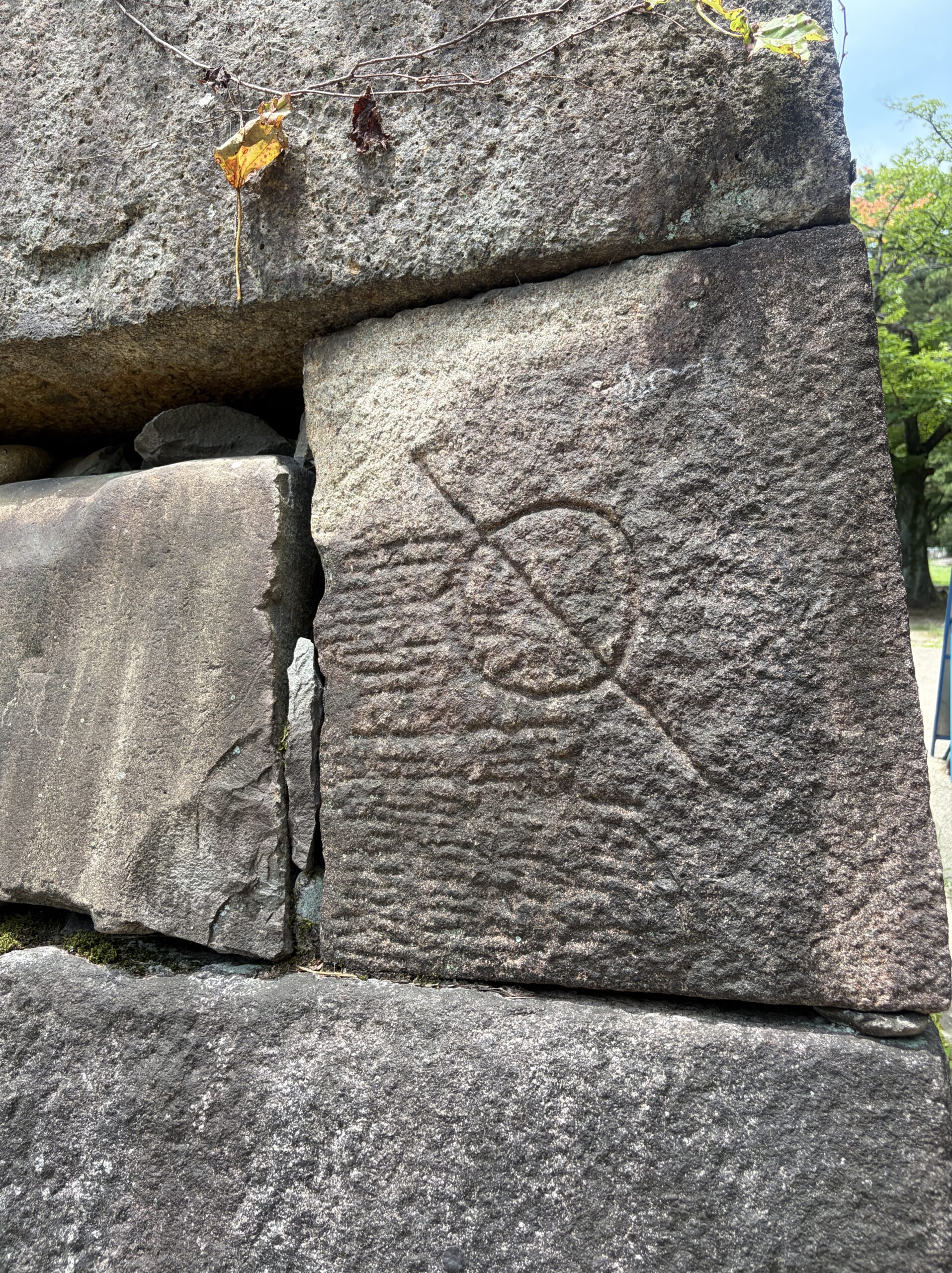
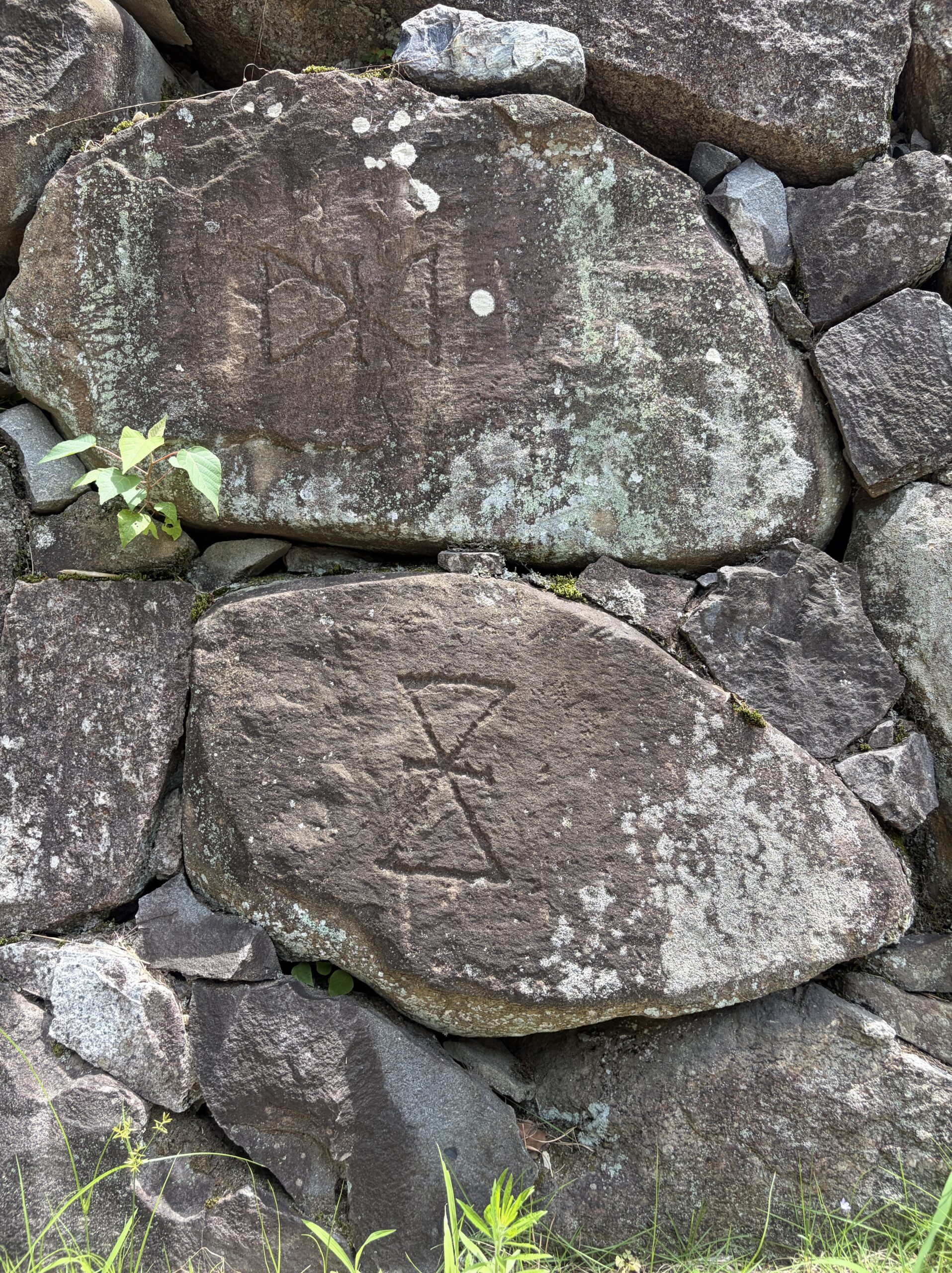
Then, at the stone wall just outside the Fumeimon Gate on the way out of the Honmaru, it happened.
Marks everywhere.
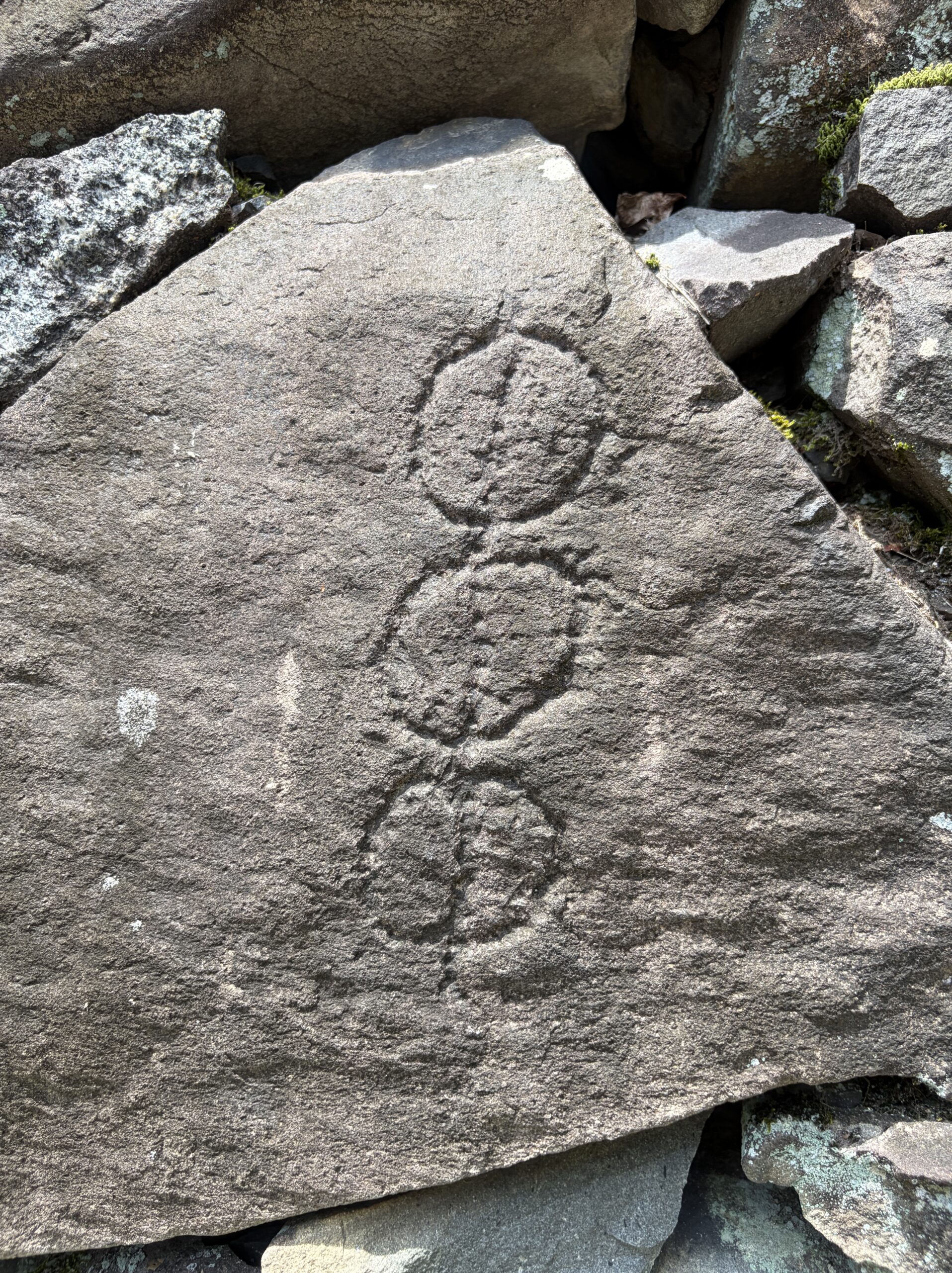
One single stretch of wall carved with mark after mark after mark — I shouted “BEST OF KOKUIN!!!!” in my heart. A massive haul. Honestly, coming to Nagoya Castle just for the mark hunt would be time well spent.
All that mark-gazing left me craving mitarashi dango. (Those circles stacked in a row — I wonder which domain’s mark that is?)
Castle Stamps and the Castle Card
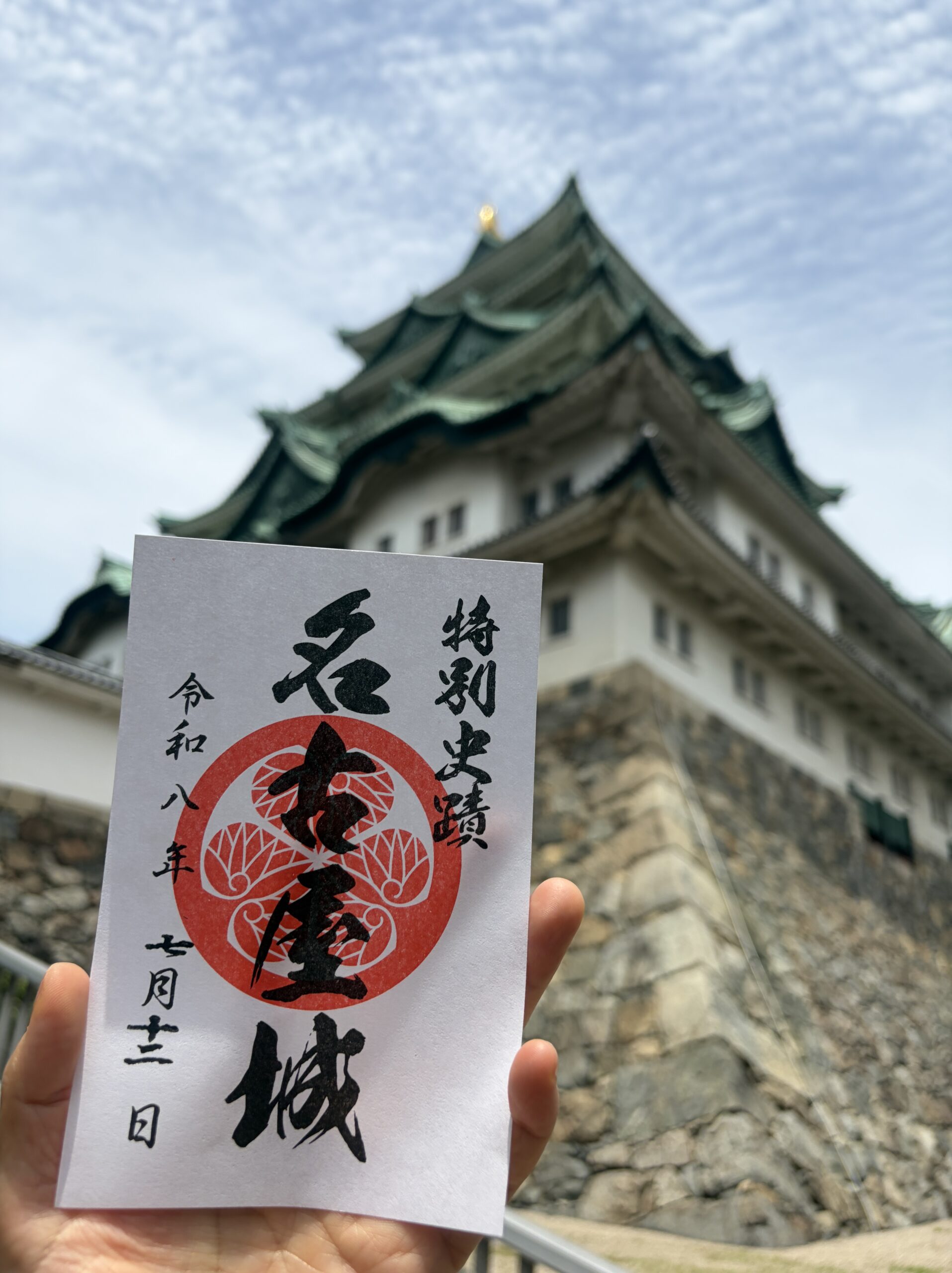
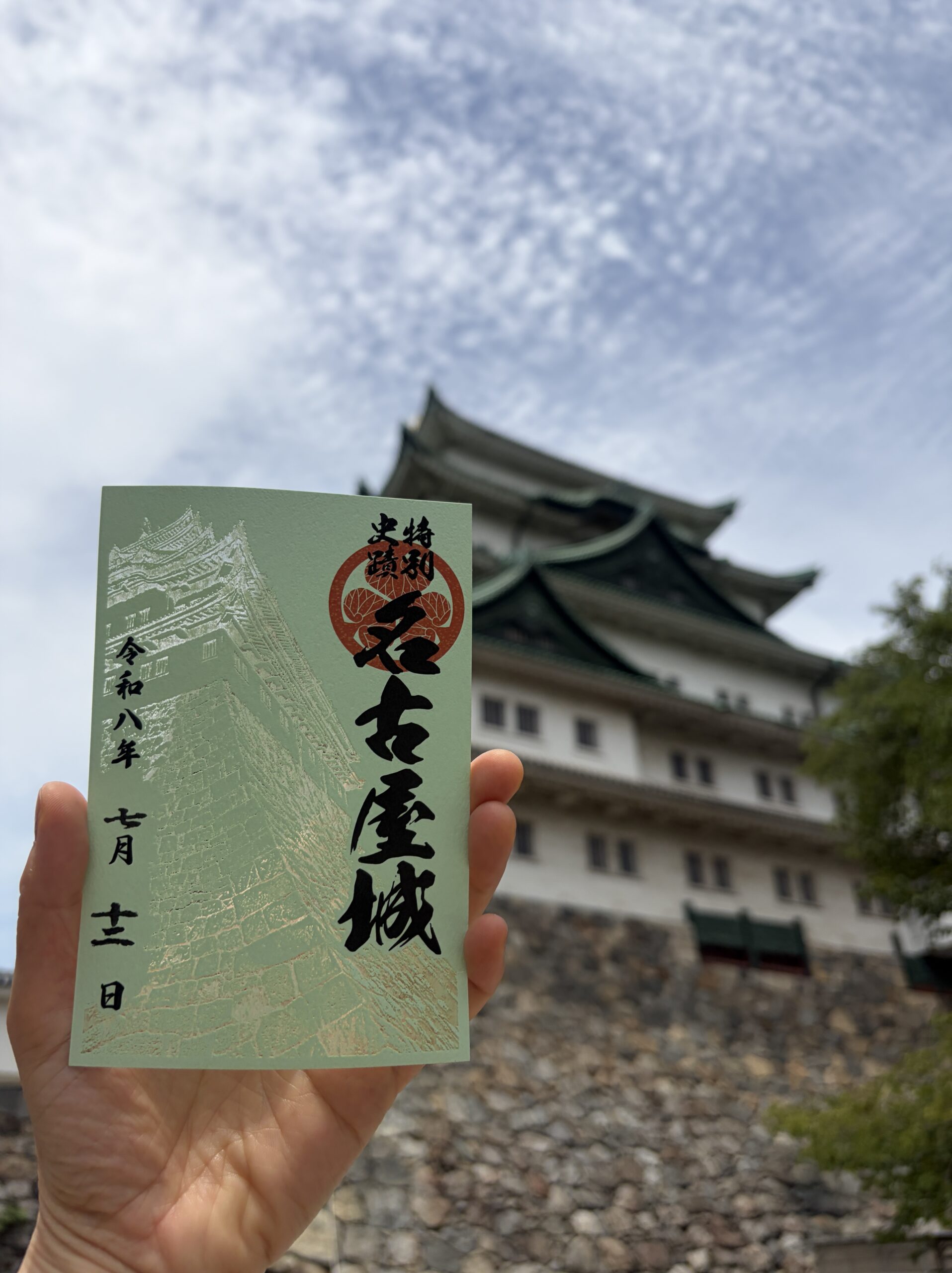
At the shop just before the keep, I picked up goshuin-style castle stamps and a castle card. I held a regular Nagoya Castle stamp up against the keep for a photo. I wanted to browse the museum shop next door too, but it was too crowded — I gave up.
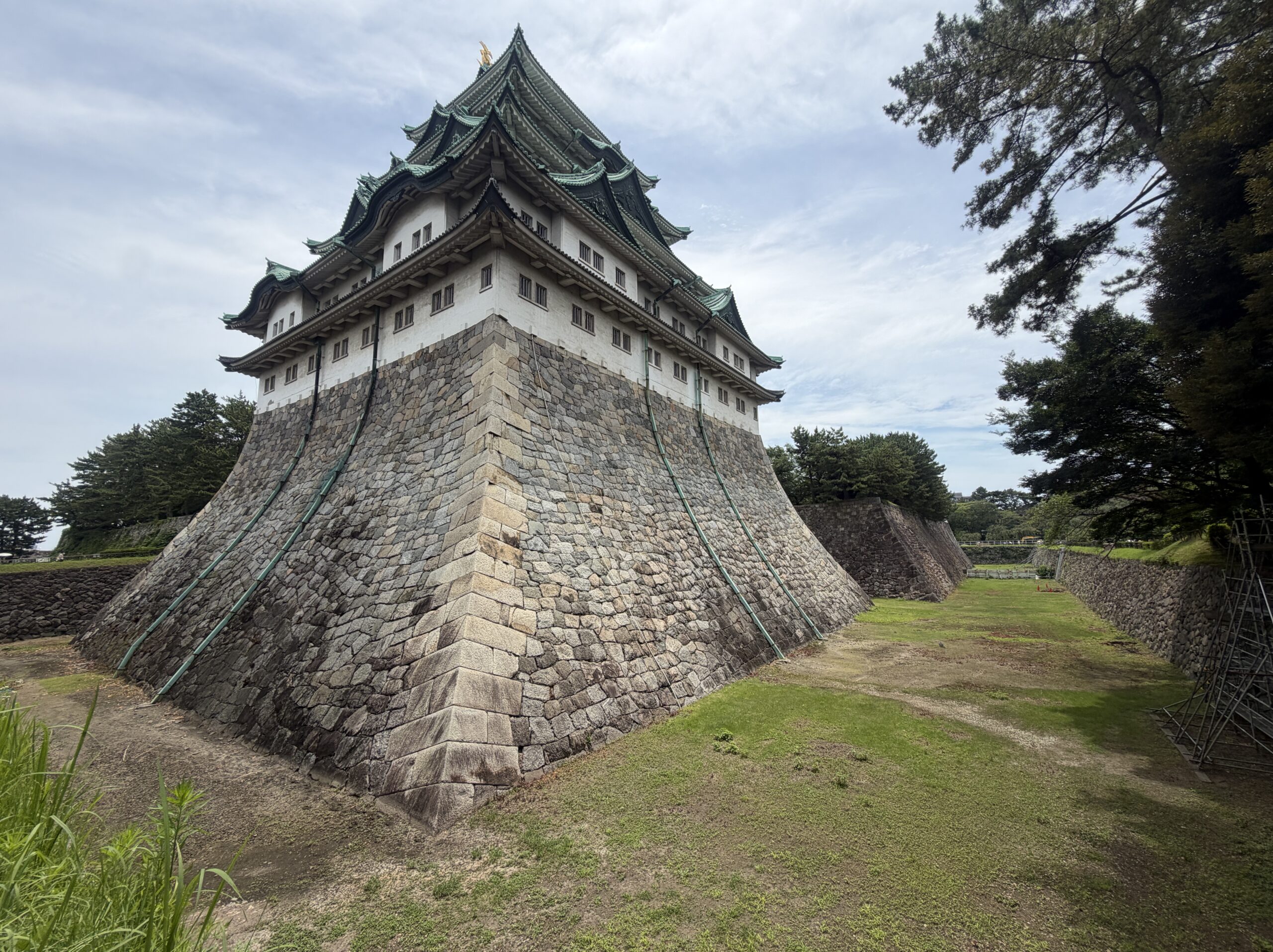
From the recessed photo spot near the keep, you can look up at the tower together with its stone base — seriously impressive. This little nook makes photos so much easier, bless it (laughs).
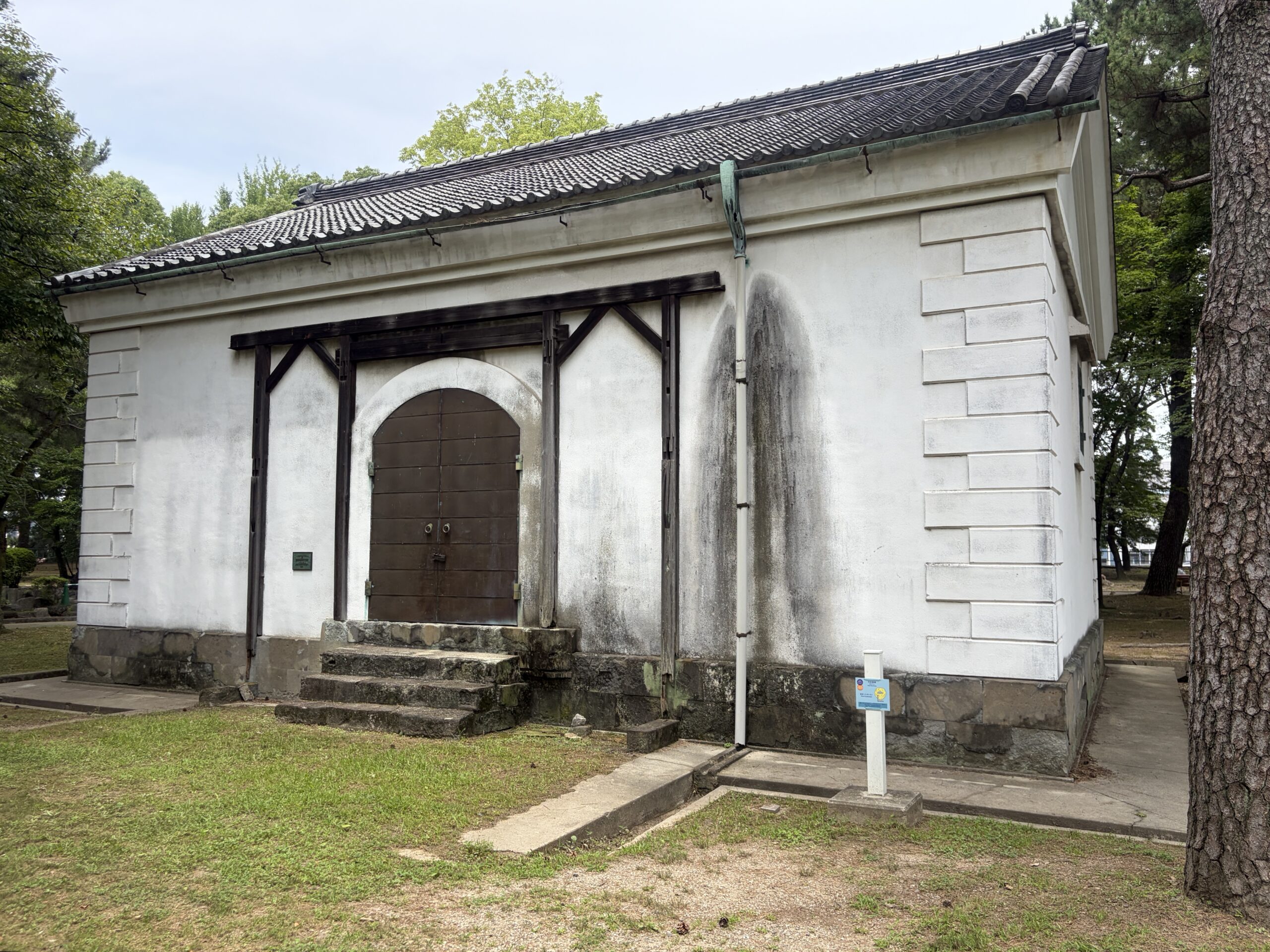
Nogi Storehouse and the Turrets on the West Side
Just past the Fumeimon Gate stands the Nogi Storehouse. It was once an ammunition depot for the former Imperial Army, and during the air raids, the wall paintings of Honmaru Palace had been moved here — which is how they escaped the flames. Quiet, heartfelt thanks to this benefactor (bene-storehouse?) that saved the paintings.
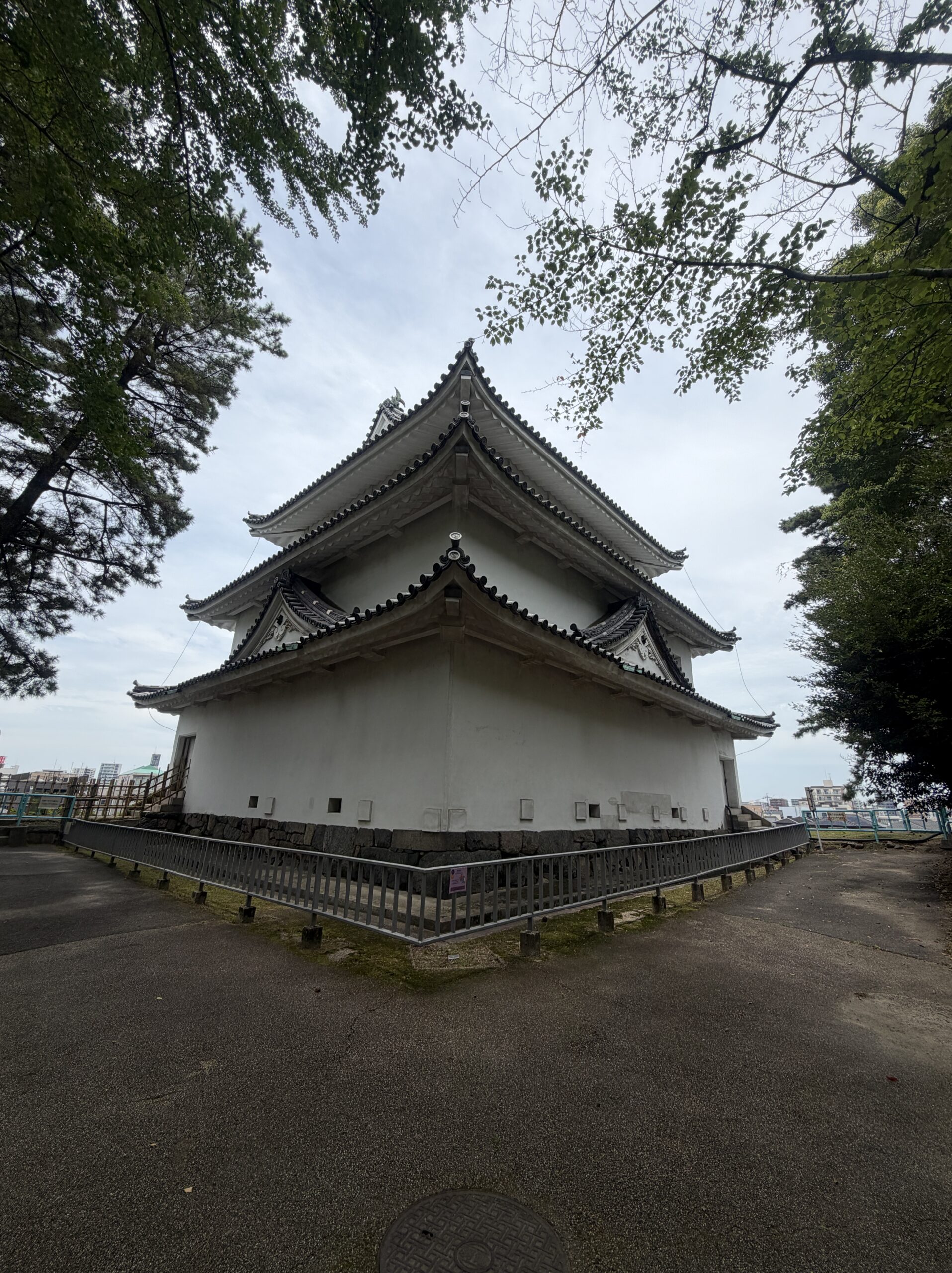
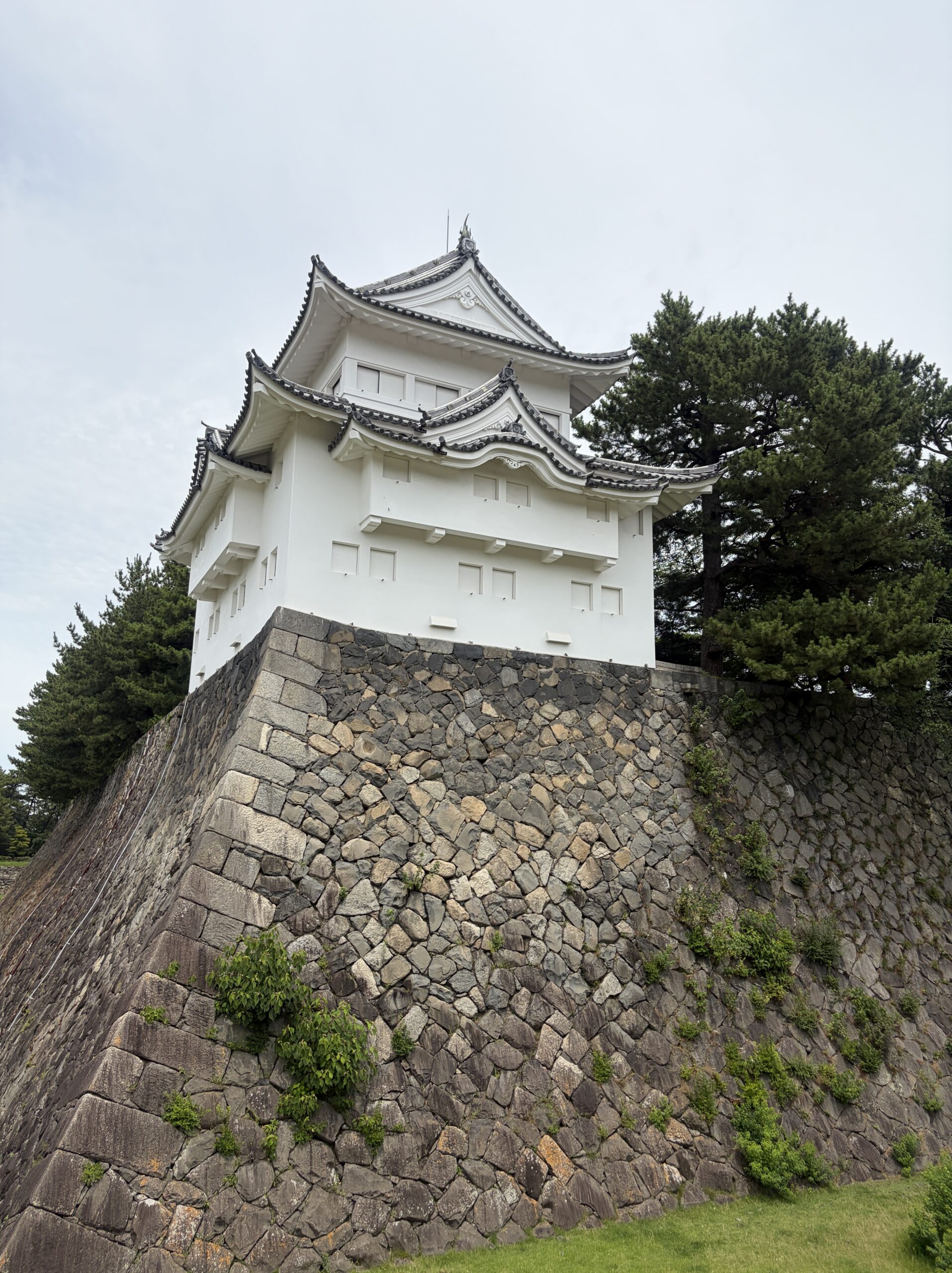
From there I made my way to the Northwest and Southwest Corner Turrets. Nagoya Castle has three turrets surviving from the Edo period, all designated Important Cultural Properties. Seeing buildings that made it through the war still standing quietly today — it gets you right in the chest.
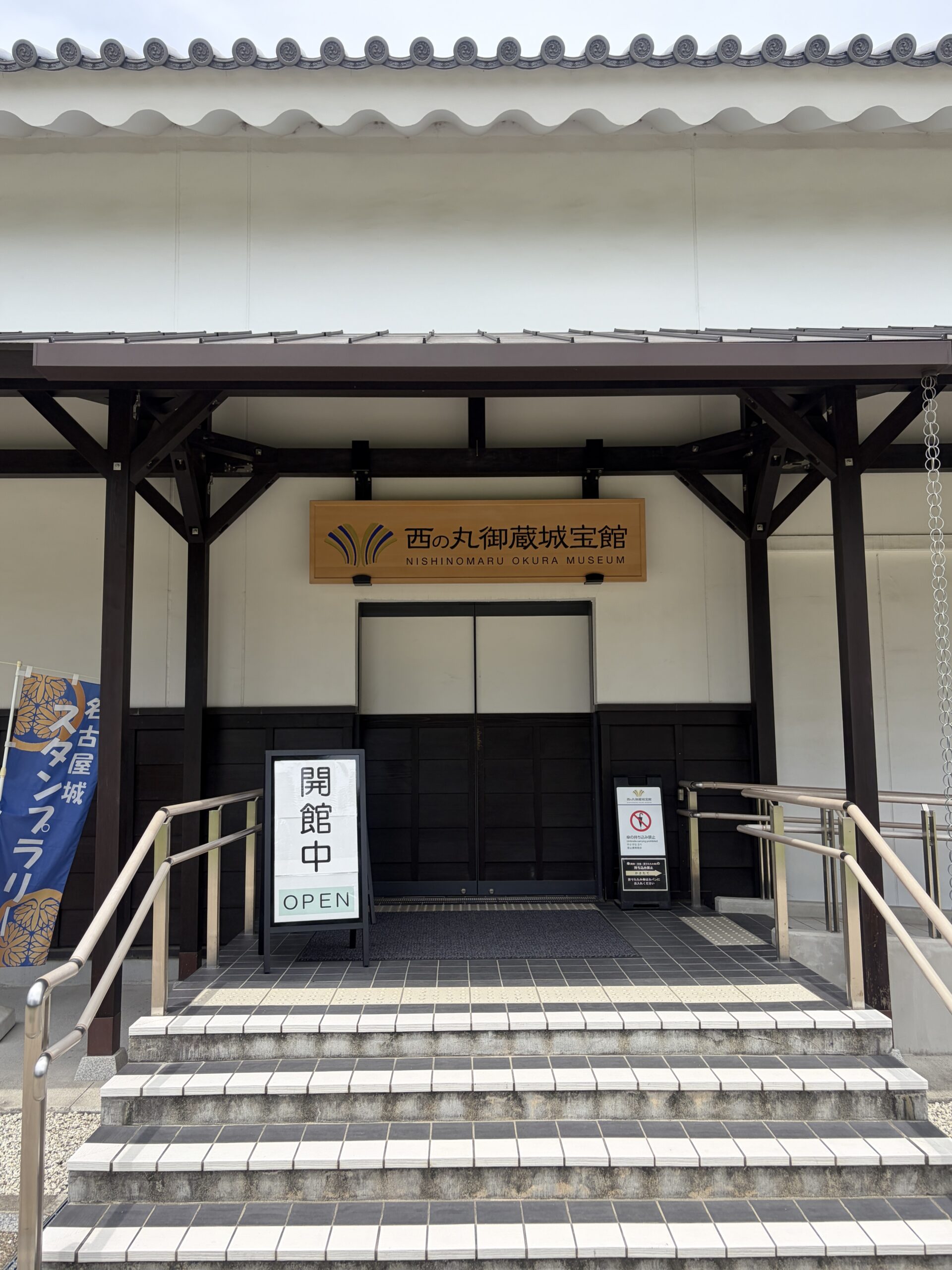
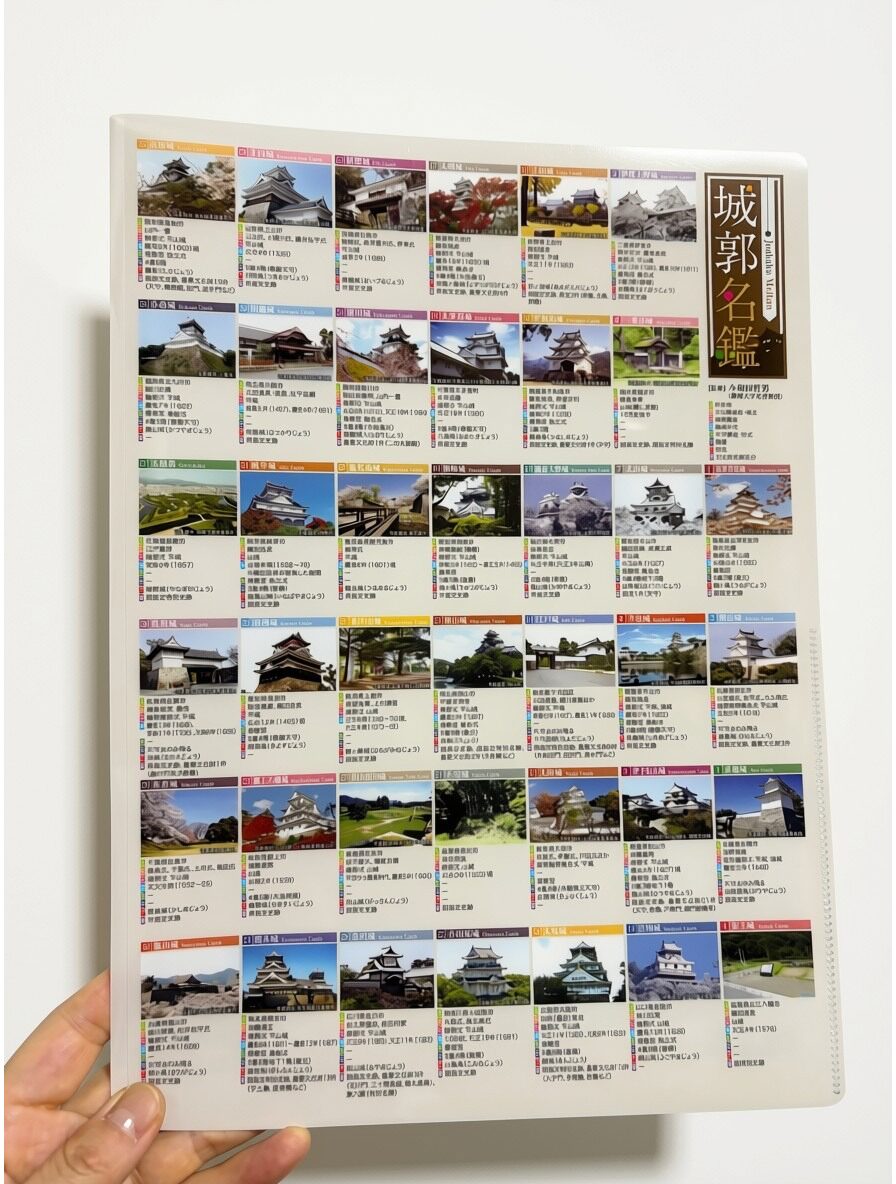
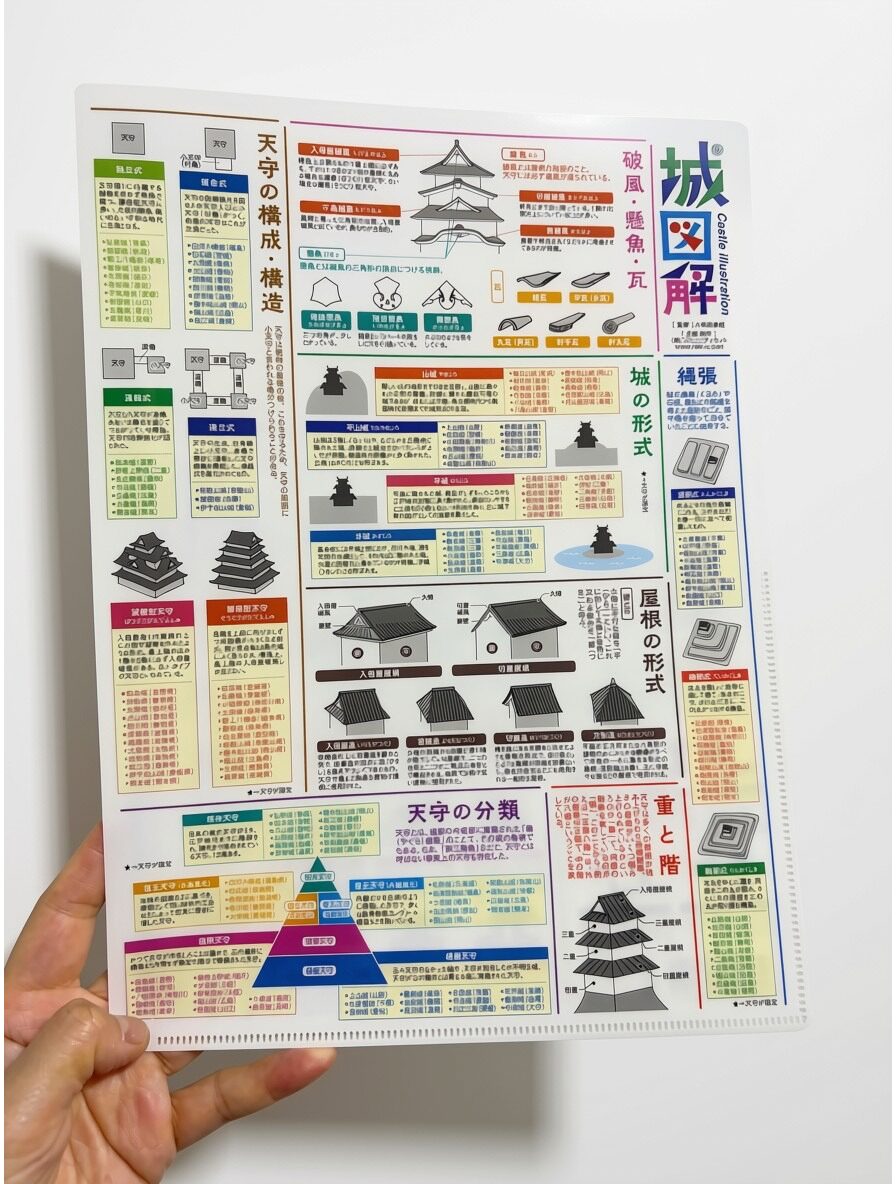
My last stop was the Nishinomaru Okura Museum. The air conditioning was on and it was blissfully cool… (a true refuge on a summer castle walk). At the shop inside, I bought two clear file folders: a “castle encyclopedia” and a “castle anatomy” design. Clear folders are essential castle-hopping gear — for stashing leaflets and bringing your castle stamps home in pristine condition. For a castle beginner like me, they’re the perfect textbooks.
Finishing with Miso Nikomi Udon
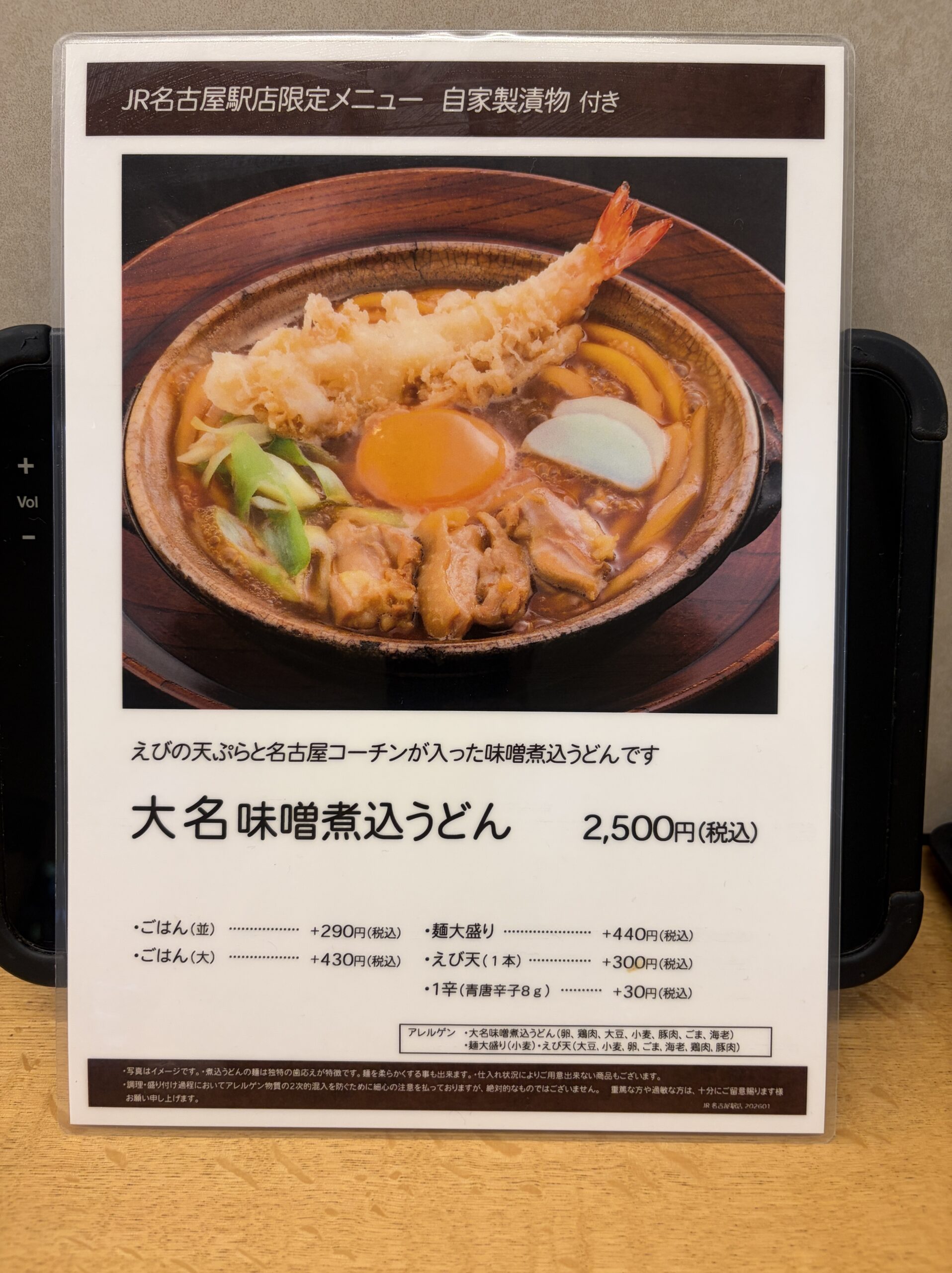
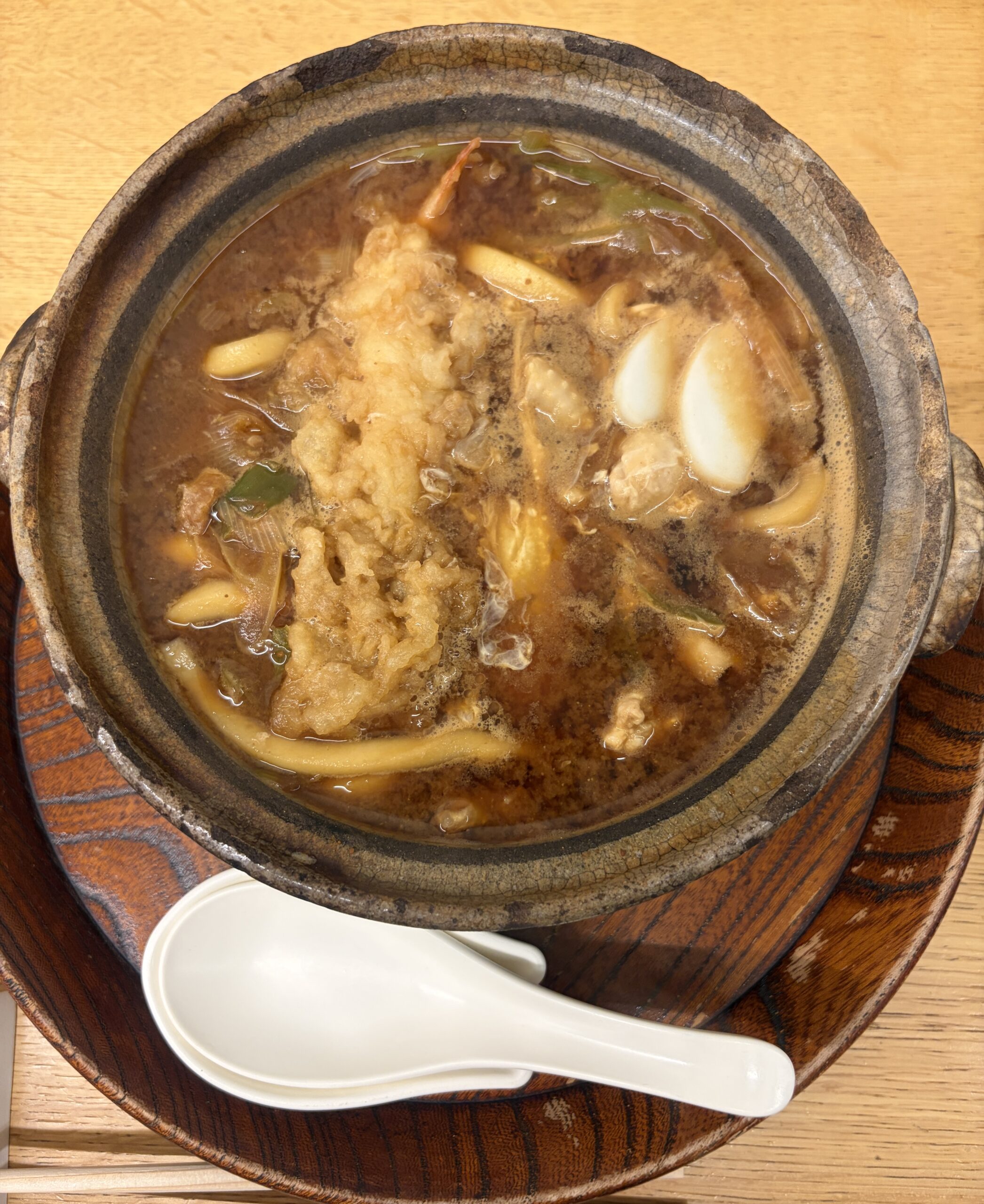
The last stop in Nagoya has to be miso nikomi udon. At Yamamotoya Sohonke, I had the “Daimyo” miso nikomi udon, loaded with shrimp tempura and Nagoya Cochin chicken.
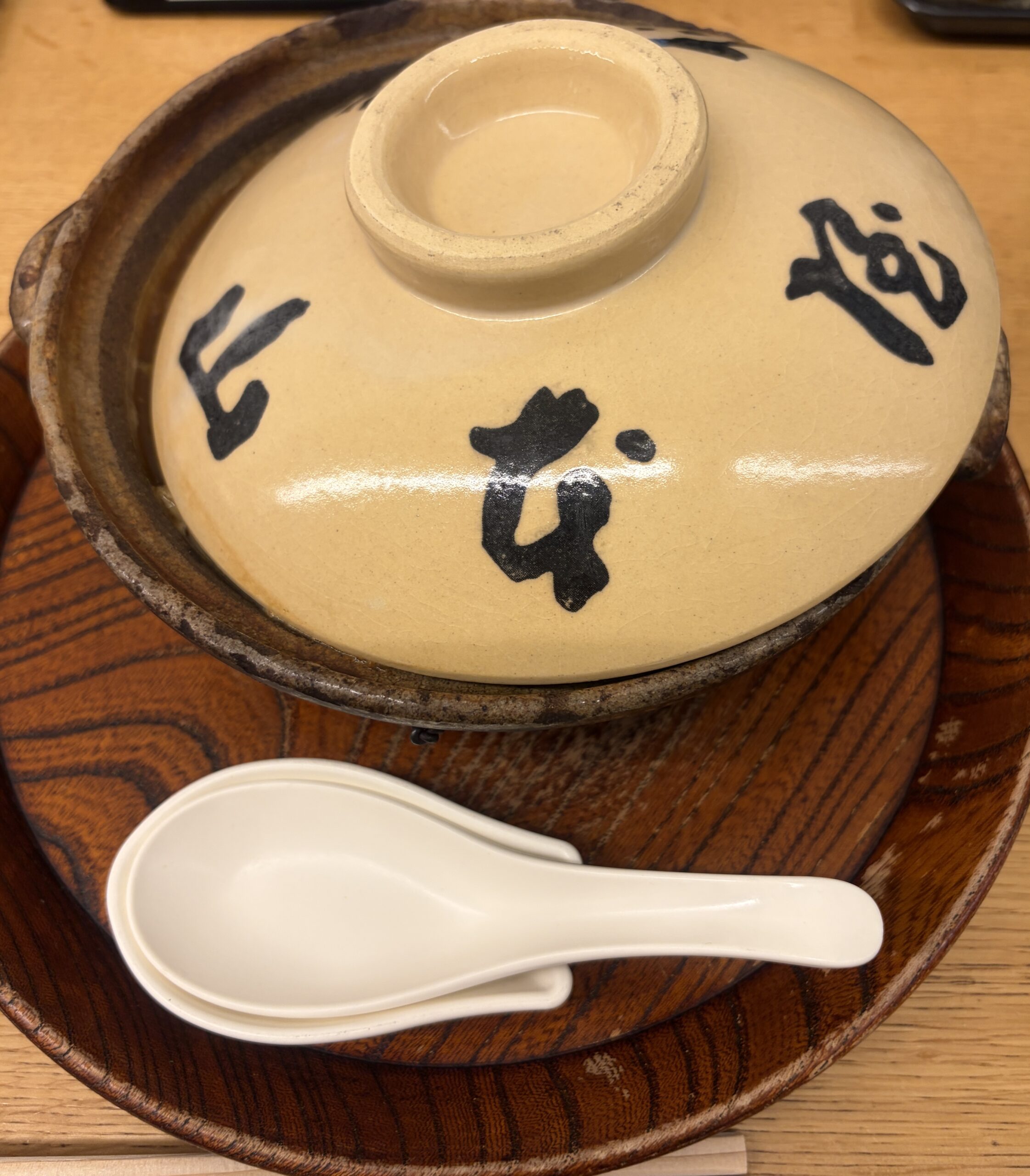
The bubbling clay pot, the little thrill of lifting the lid. Rich miso broth and properly firm noodles! After a hot day of walking, it hit the spot completely.
Final Thoughts
Even with the keep closed, Nagoya Castle is packed with things to see. The garden, the repair works, the surviving turrets, and the mark hunt. I walked and walked, and finished my lap thoroughly satisfied.
Next time: more mark hunting! (I know, I know.)
Oh, and Honmaru Palace too