Plans at 2 p.m., nothing before that. So — Edo Castle it is! That’s how I slipped into the Imperial Palace East Gardens to fill an empty morning. Awed by the sheer size of the keep base, replaying Chushingura in my head at the Great Pine Corridor site. Today, as always, was the best.
See the walking route in photos → Castle Hopping: Edo Castle Route Map (March 2026)
What kind of castle is Edo Castle?
Edo Castle was one of Japan’s largest castles and the Tokugawa shogunate’s central castle. Today, parts of the honmaru (main bailey), ninomaru, and sannomaru are open to the public, free of charge, as the Imperial Palace East Gardens.
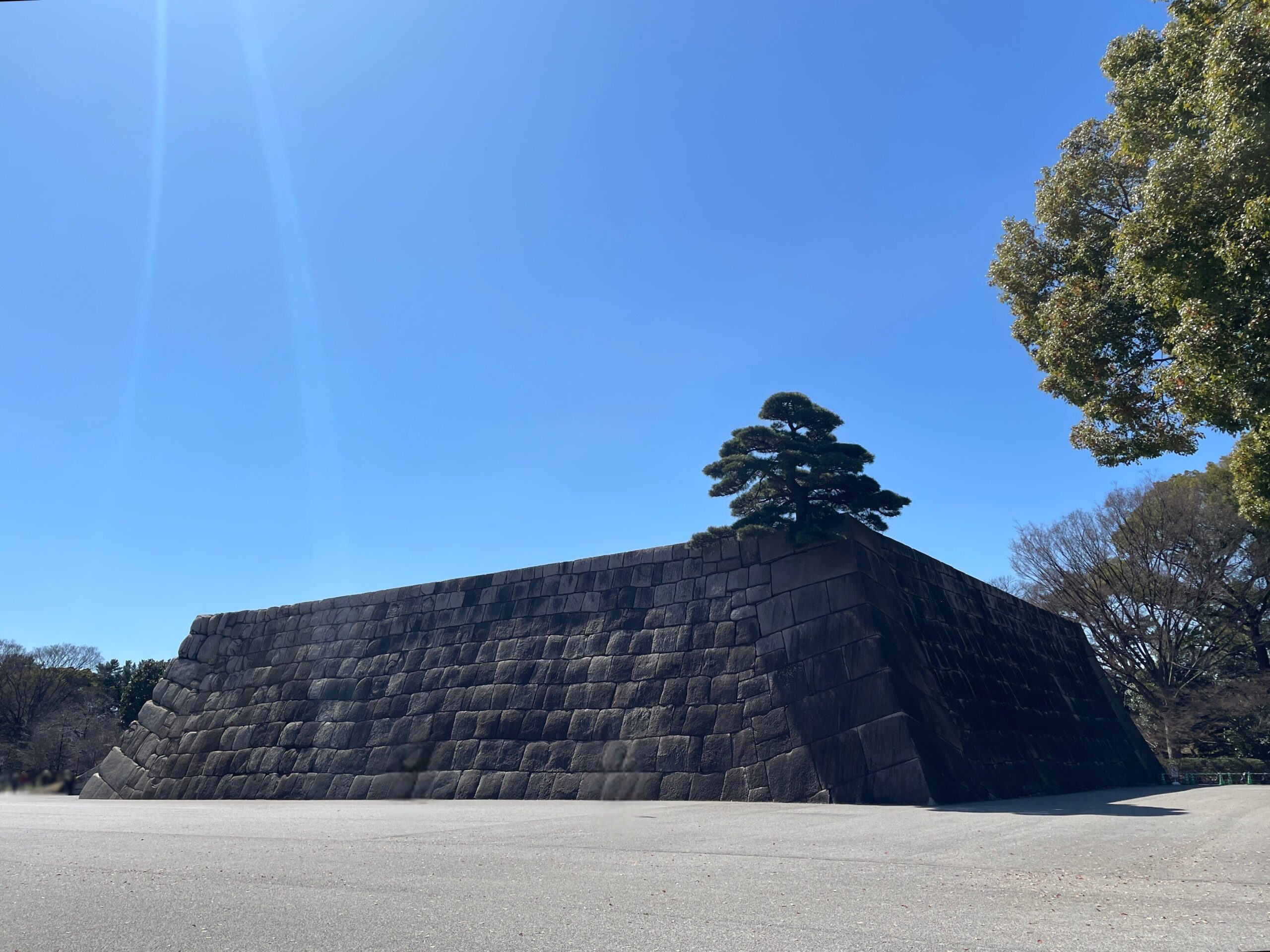
The keep was completed in 1607, rebuilt twice, and lost in the Great Meireki Fire of 1657. A new base was prepared, but Hoshina Masayuki, advisor to the fourth shogun, argued that city recovery should come first. The tower was not rebuilt.
So the keep base you see today is a foundation that has never once held a keep — brand new, for some 370 years. It feels like a symbol of peace, and somehow I rather like that.
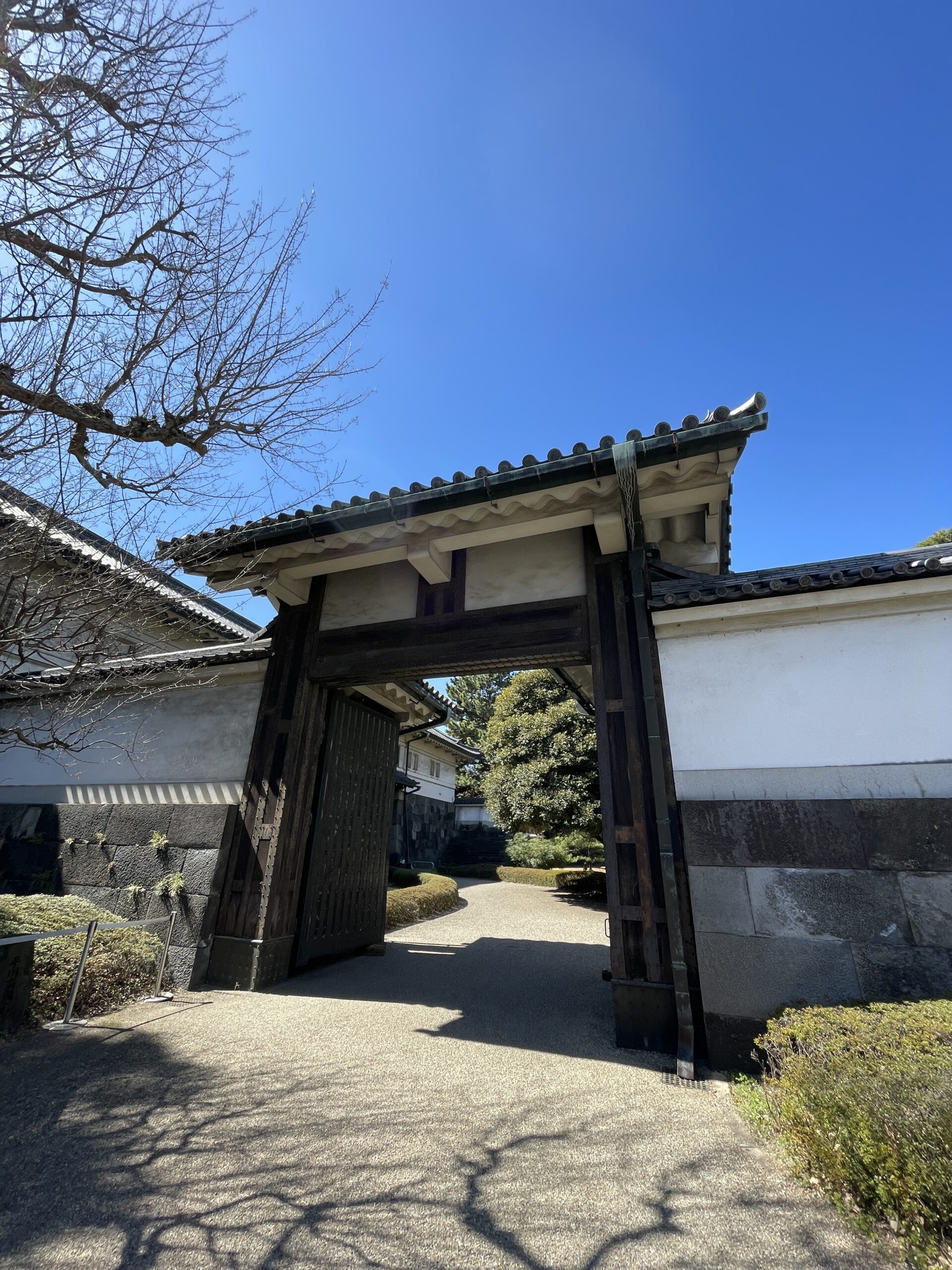
The main gate was crowded, so I went to Hirakawa-mon
The nearest gate, Ote-mon, was quite the crowd. So instead I strolled along the moat to Hirakawa-mon, the gate on the north side.
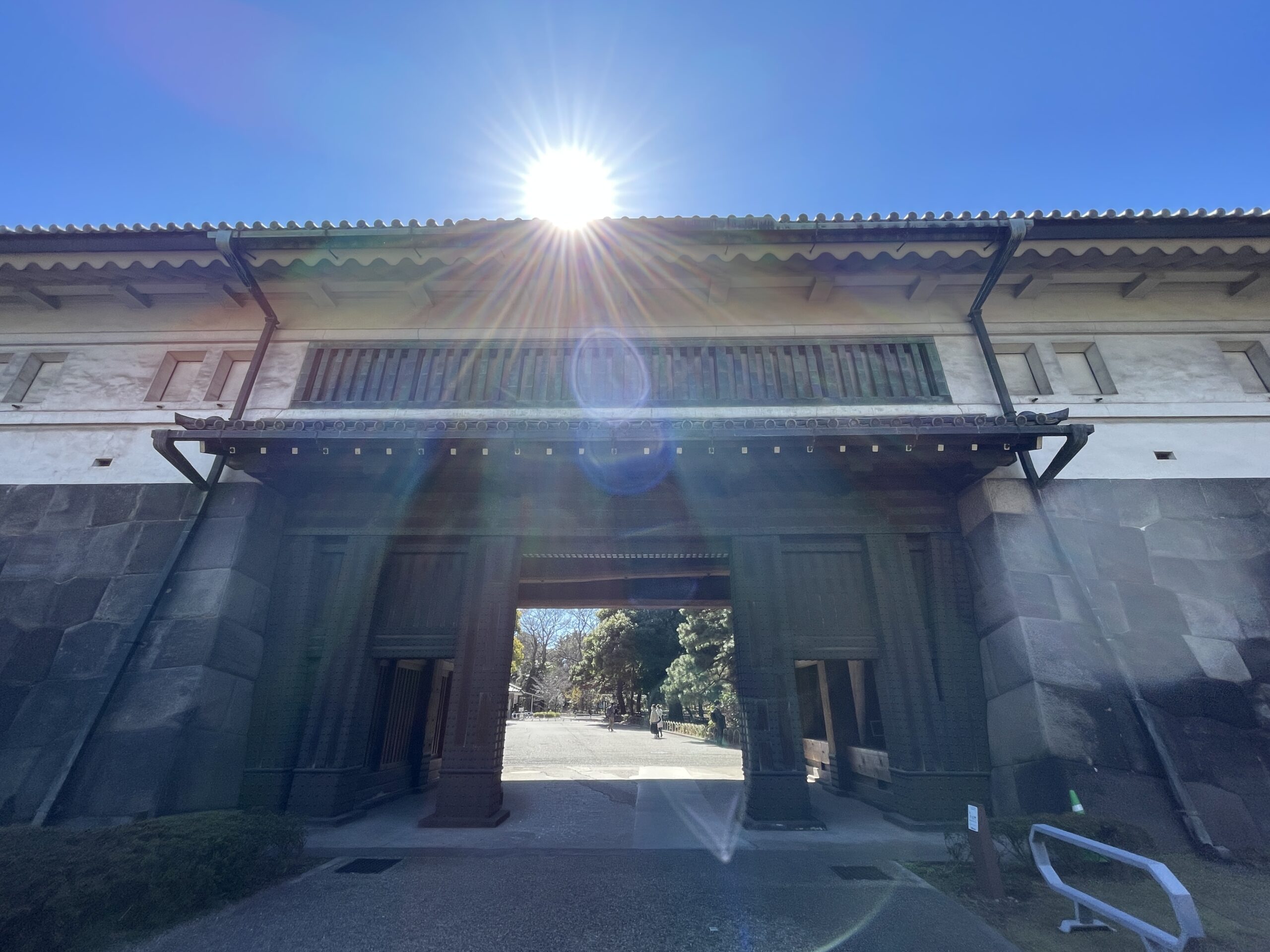
Admiring the stone walls
You notice the sheer number of stone walls almost right away. The stones look quite different from place to place, which led me to an amateur’s discovery: maybe the walls differ by era, too.
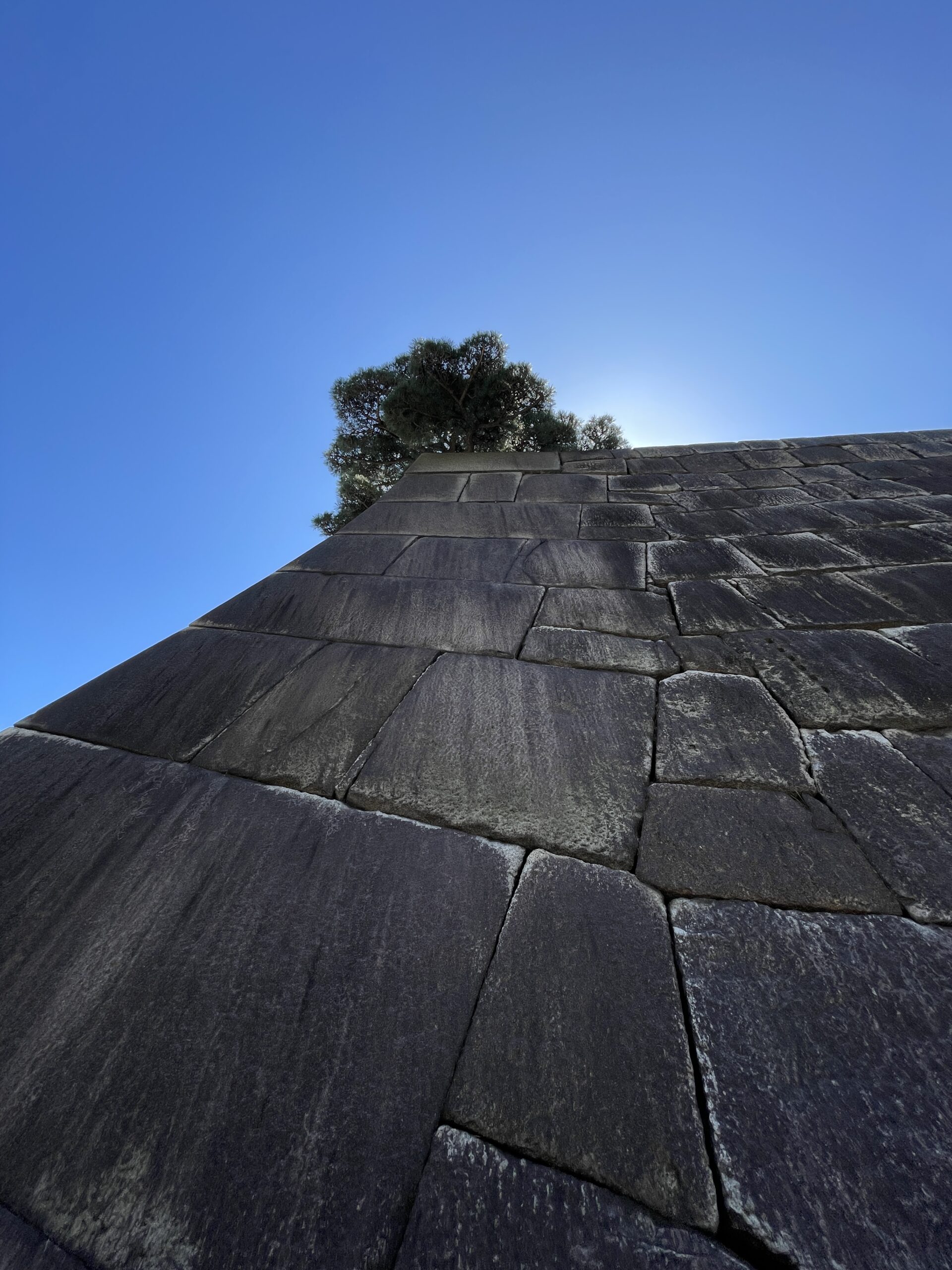
The kirikomi-hagi stonework looked crisp and beautiful. Every so often I’d spot a chisel mark in the stone, and those little details made me happy.
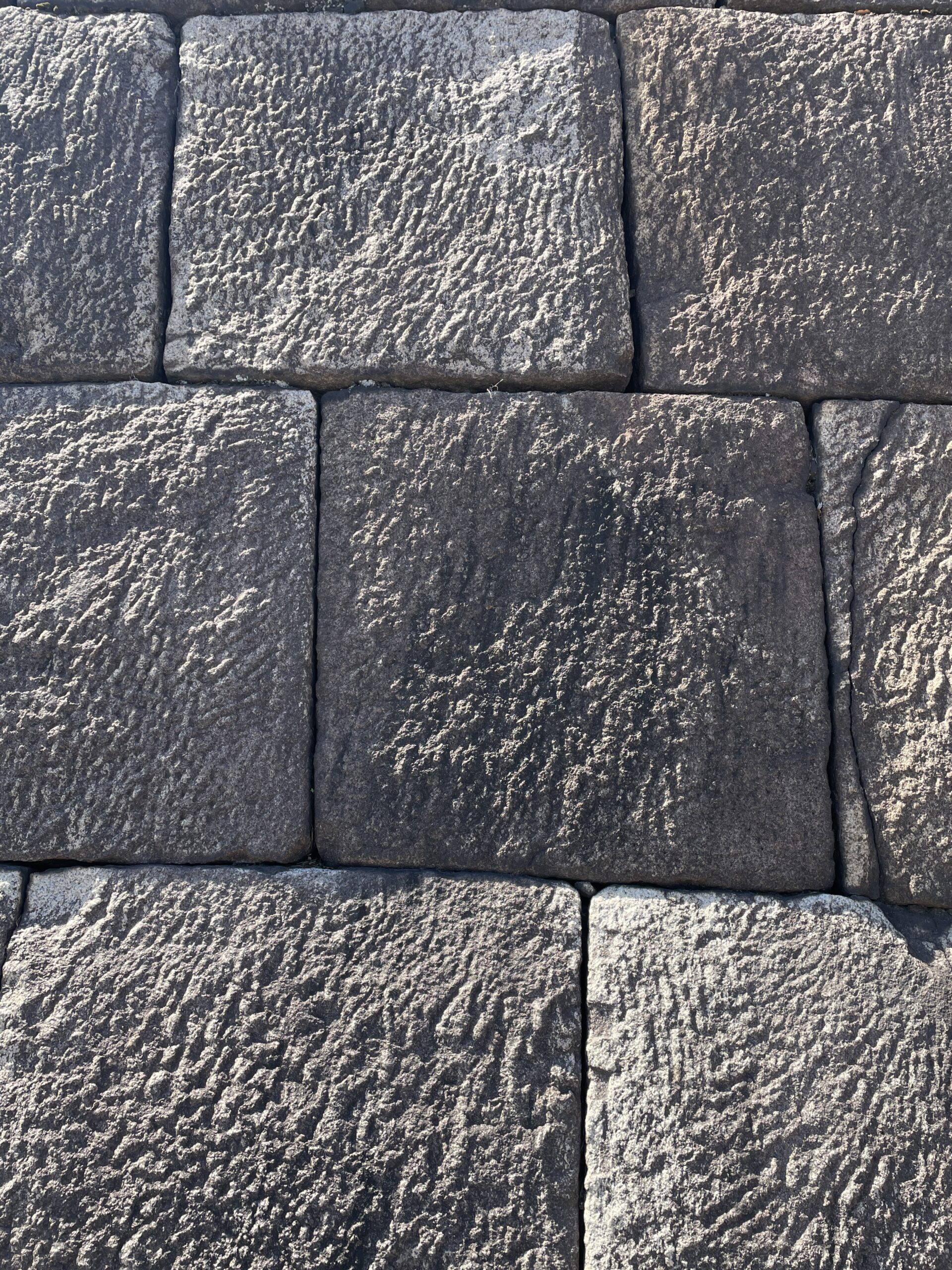
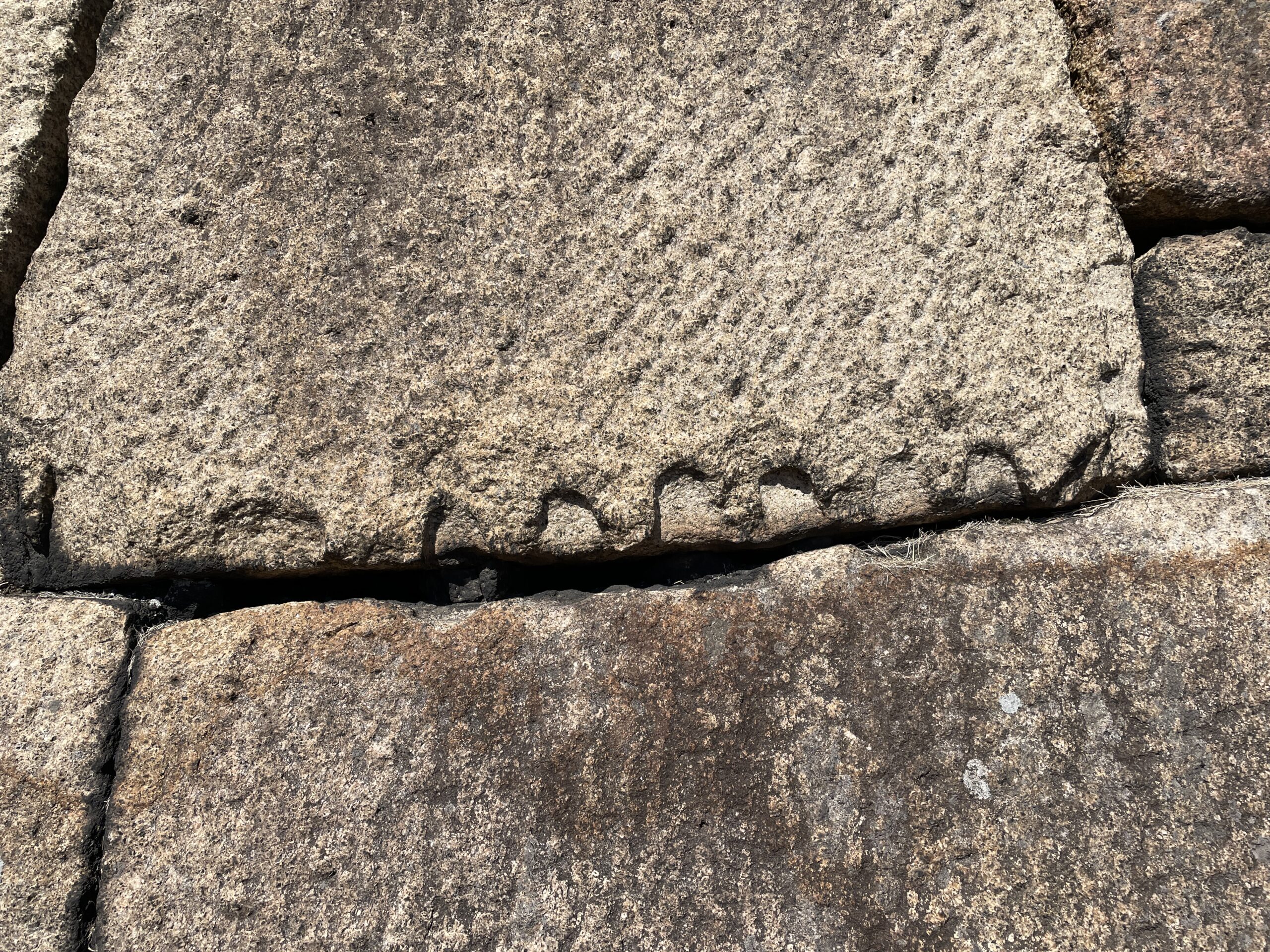
Brand new for 370 years: the keep base
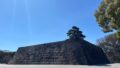
And then, the keep base. Simply huge. I did climb up, but honestly I had more fun admiring the stonework from below (laugh).
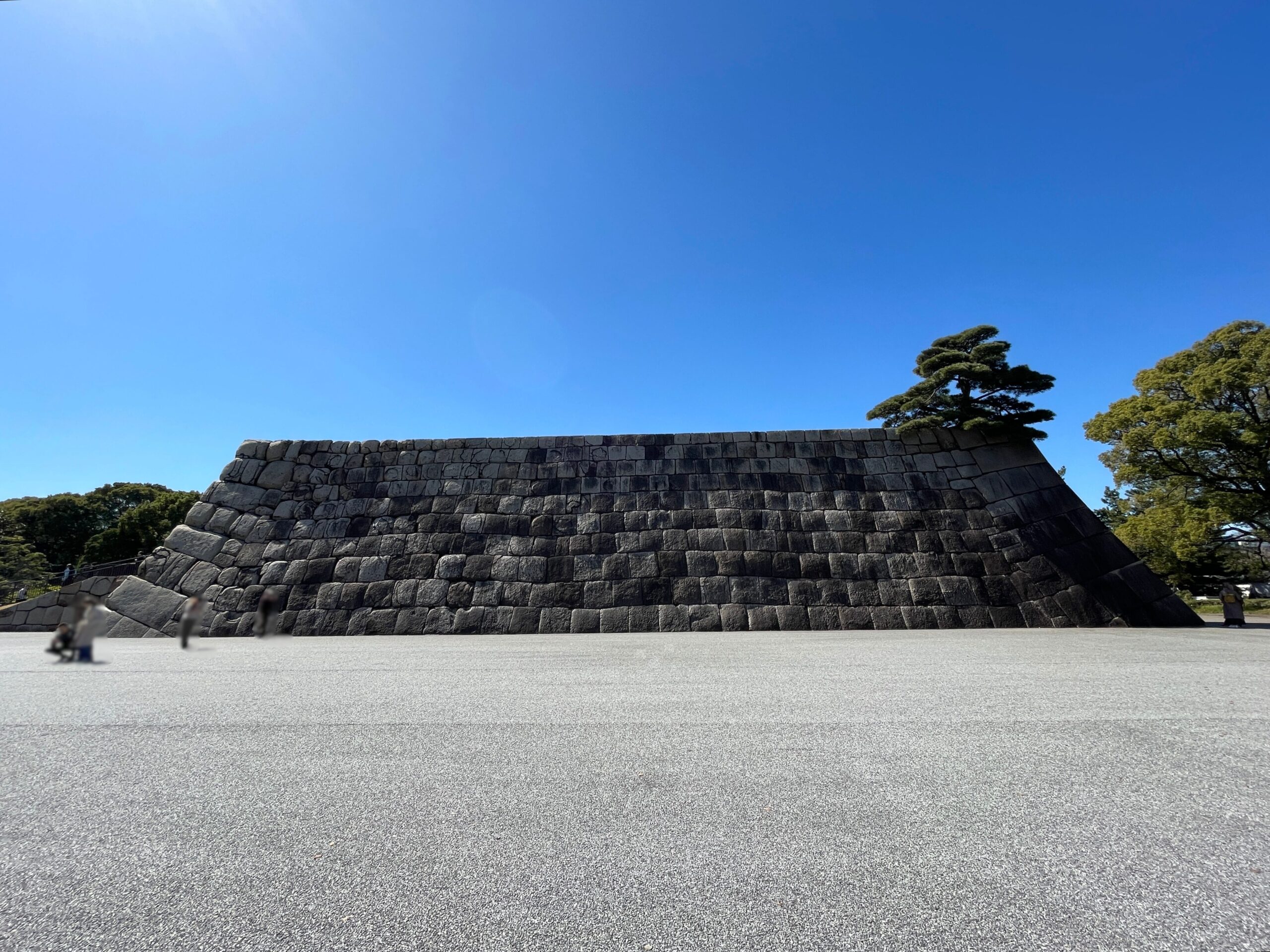
Japan’s largest keep was meant to stand here — and never did. Looking up with that in mind, the sturdy base started to seem almost endearing.
Chushingura at the Great Pine Corridor
As a kabuki lover, the one place I couldn’t miss was the site of Matsu no Oroka (the Great Pine Corridor). It’s the scene of the sword incident that inspired Kanadehon Chushingura — the famous tale of the loyal retainers (the forty-seven ronin).
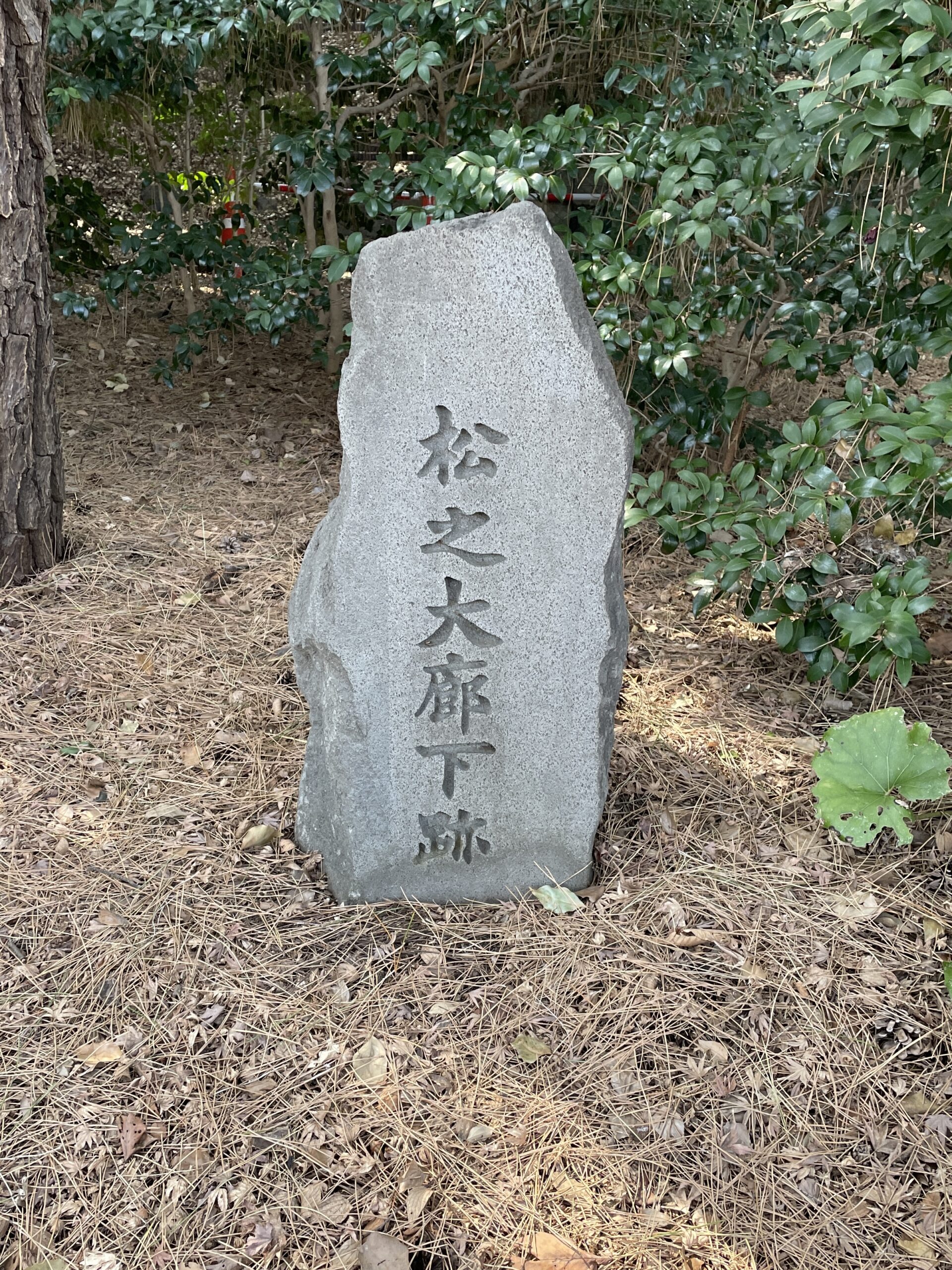
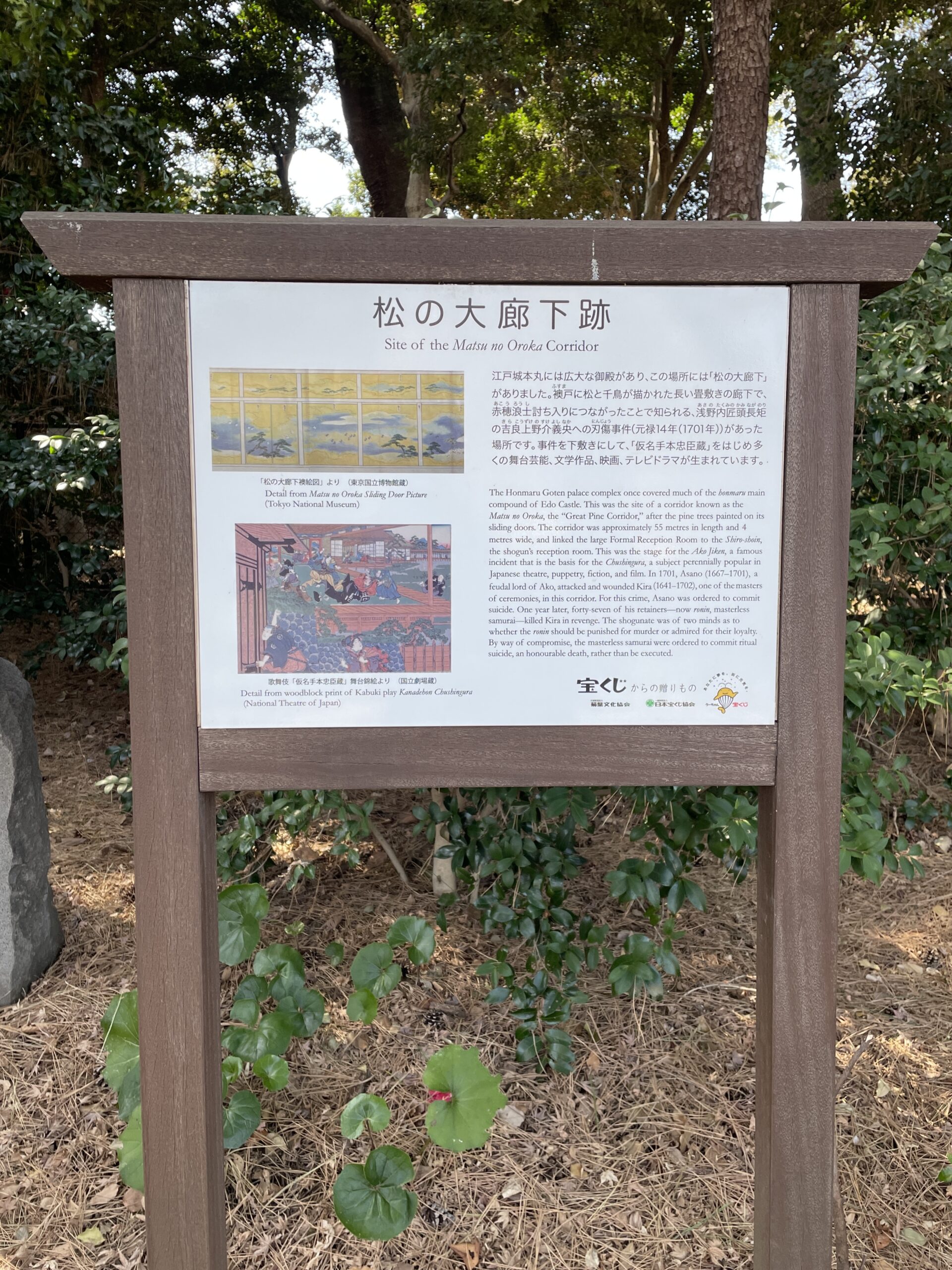
Today there’s just a stone monument and a sign among the trees. So I stood a little way off and rebuilt it in my head — “a long corridor ran right about here…” (laugh). It’s because nothing remains that the imagination runs free. A classic castle-ruins thing, really.
The day I couldn’t buy a stamp or a castle seal
At the shop near Ote-mon, I asked about the 100 Famous Castles stamp and the goshuin-style castle seal. The answer: “Those are run by a different operator, so we don’t carry them here.”
Looking into it later, the 100 Famous Castles stamp turns out to be set up outside the East Gardens, at rest houses on the Imperial Palace Outer Garden side such as the Kusunoki Rest House. As for the castle seal, there’s no permanent shop at all — it’s mainly sold at events and tours run by an NPO. Just turning up and getting everything in one day isn’t quite how it works, so be warned.
Wrap-up
Did I make my 2 p.m. appointment? More like I made myself make it (laugh).
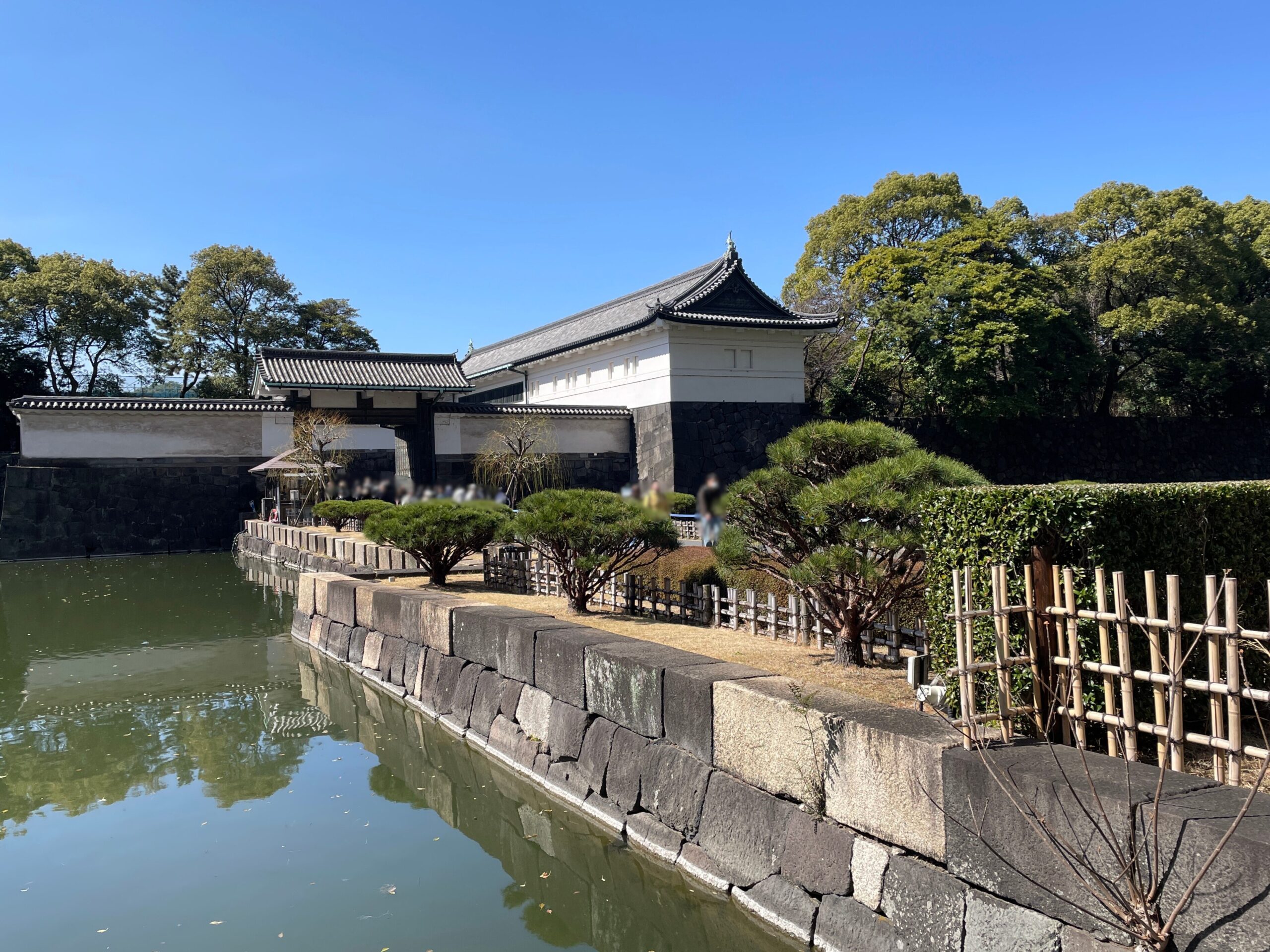
Edo Castle is vast, and I only managed a small part of it this time. I’d love a rematch with the spots I missed, and I want to go hunting for traces of Edo Castle scattered across Tokyo — the outer moat and beyond. The book on Edo Castle I bought on the way home? Still unread. More on that another day.