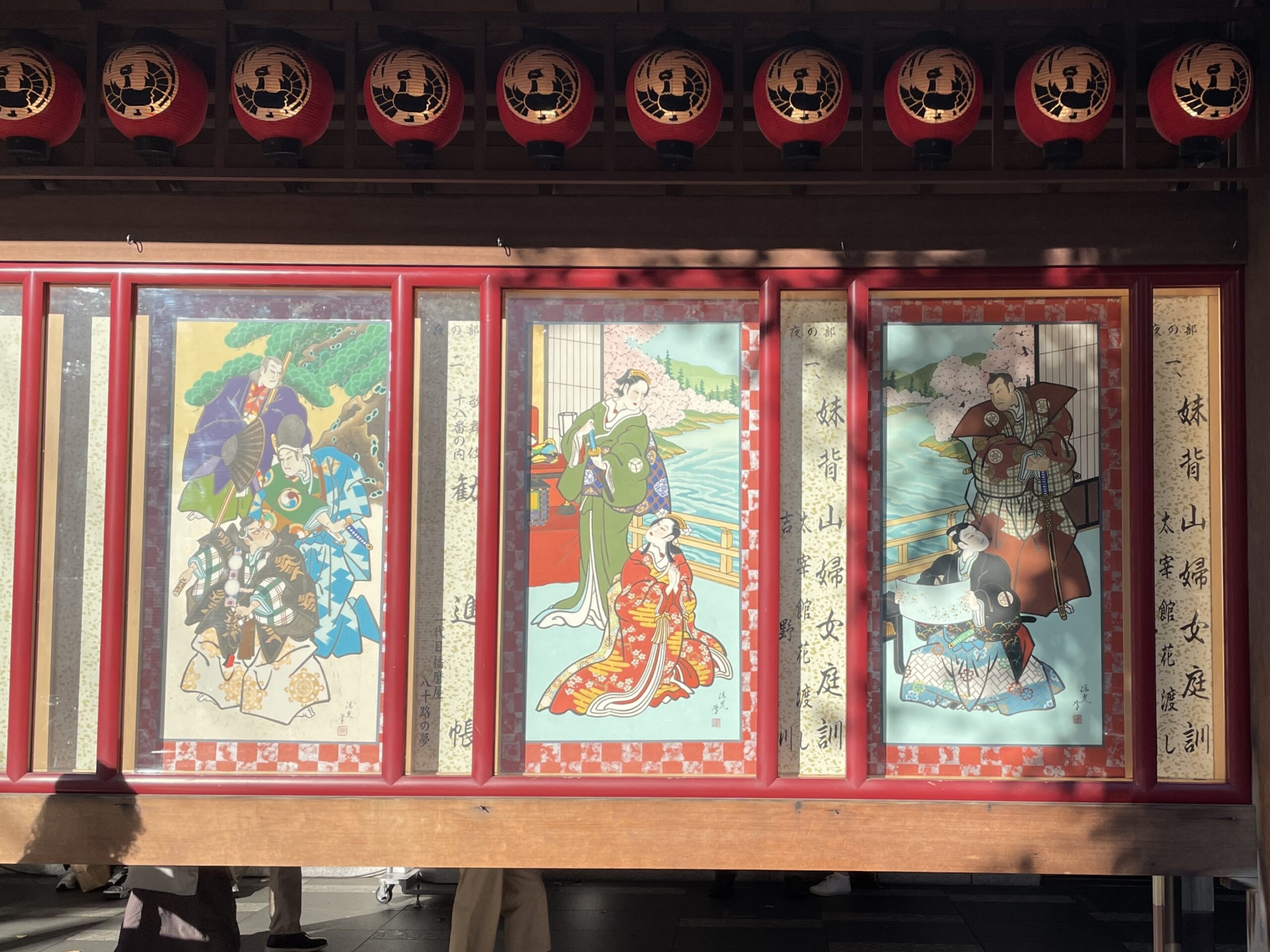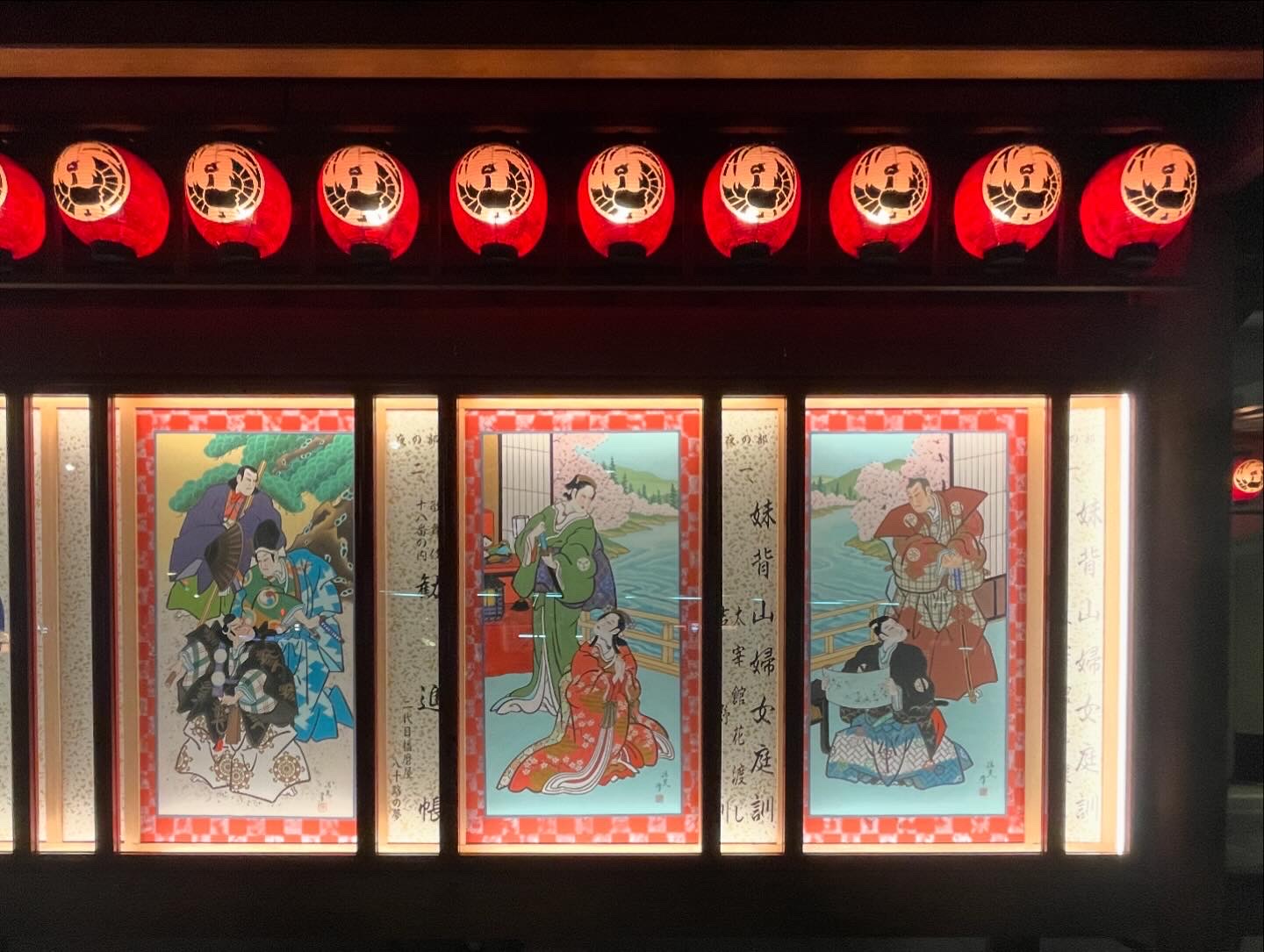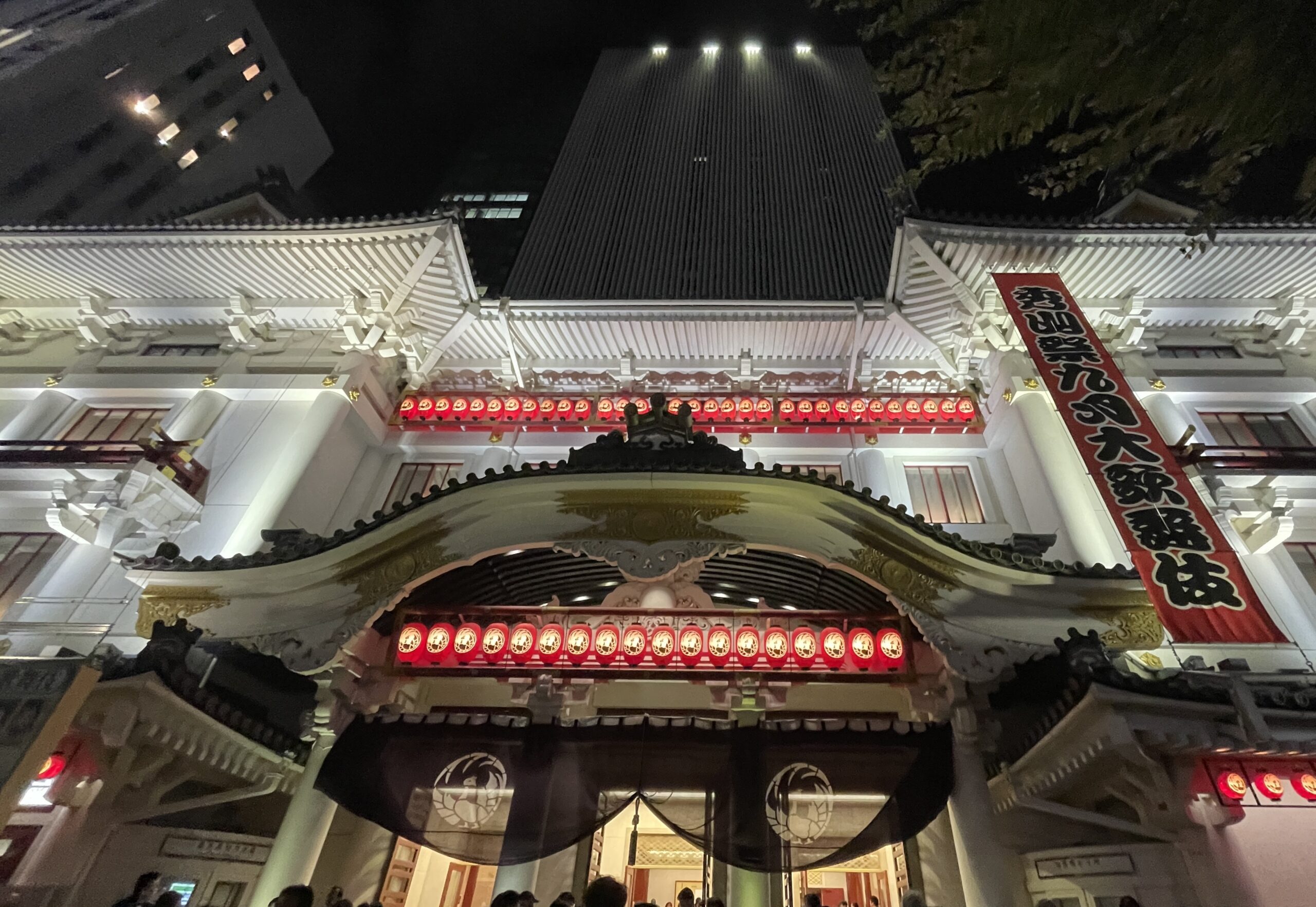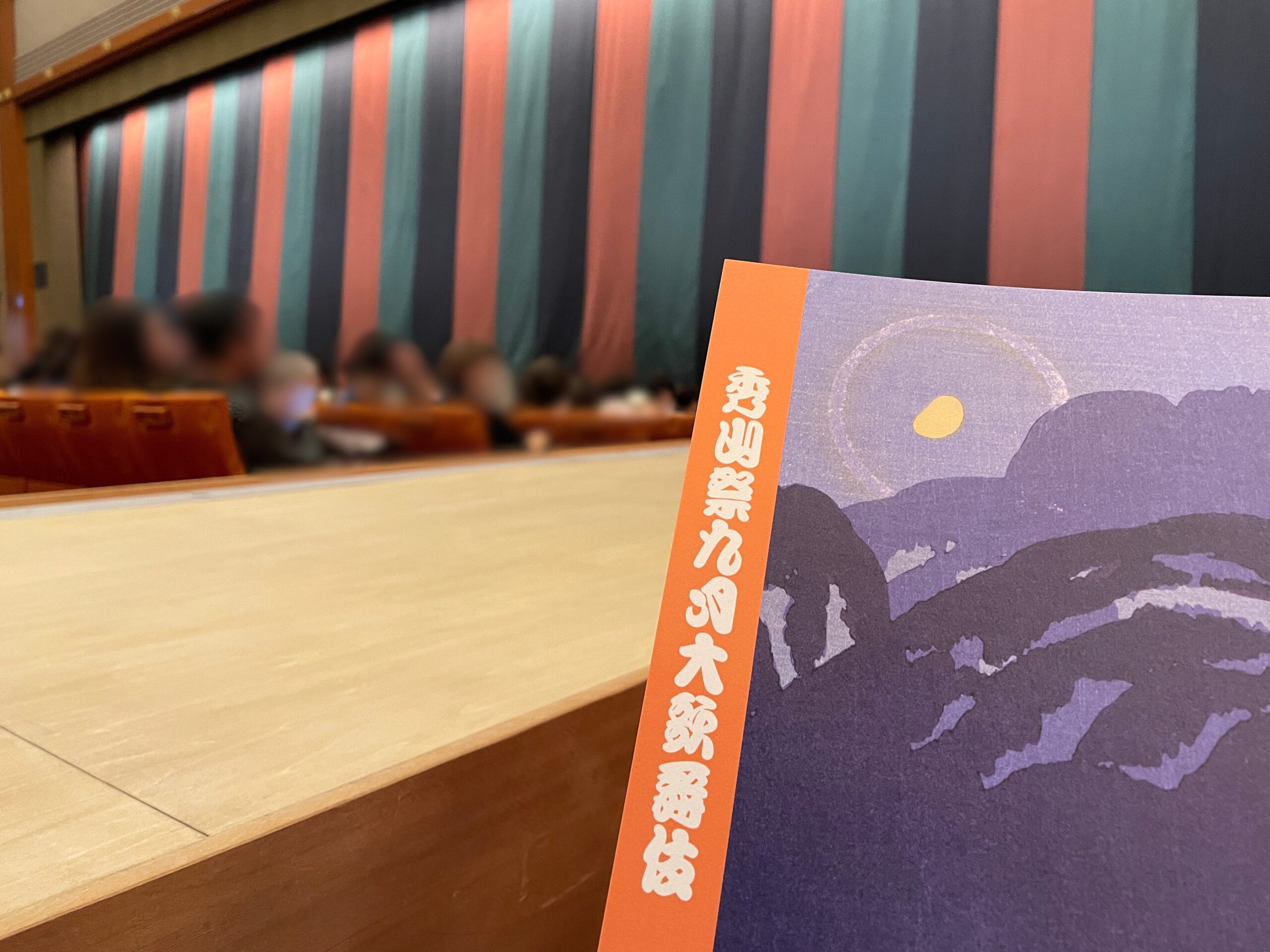
Right beside the temporary hanamichi — what was once called a “dobu” seat. Watching a staging in which the audience becomes the river, from the riverbank. As always, it was the best.
What Is the Shuzan-sai?
Held every September at the Kabukiza Theatre, the “Shuzan-sai” (Shuzan Festival) honours the achievements of Nakamura Kichiemon I, whose pen name was “Shuzan”.
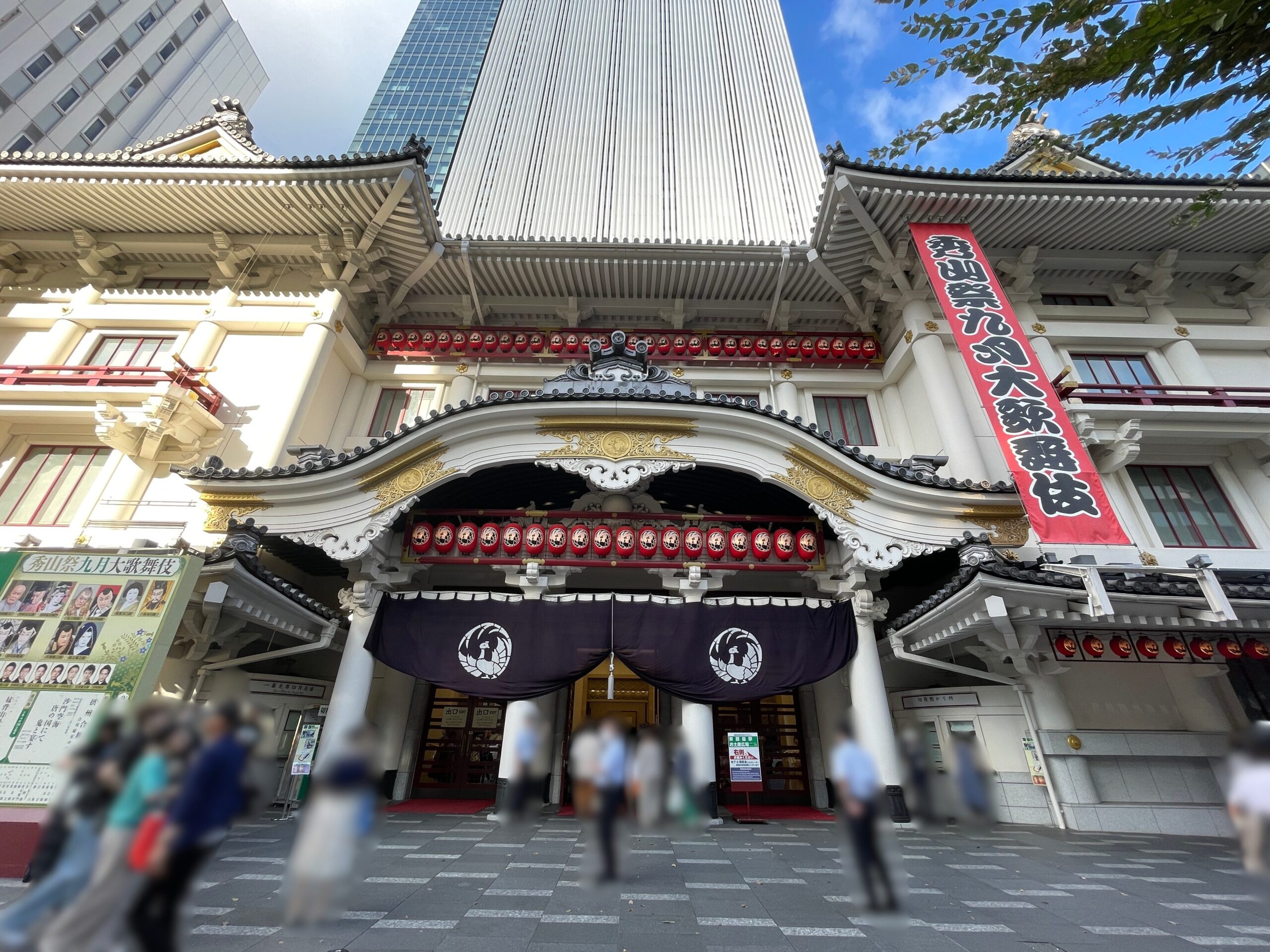
The Evening Show this year was a double bill: the “Dazai Yakata Hanawatashi” and “Yoshinogawa” scenes from Imoseyama Onna Teikin, followed by Kanjincho, one of the Eighteen Favourite Kabuki Plays. In Yoshinogawa, Tamasaburo Bando played Sadaka, Shoroku Onoe played Daihanji Kiyosumi, Somegoro Ichikawa played Koganosuke, and Sakon Onoe played Hinadori. It was apparently the first time in these roles for both Somegoro and Sakon.
Which Bank of the River?
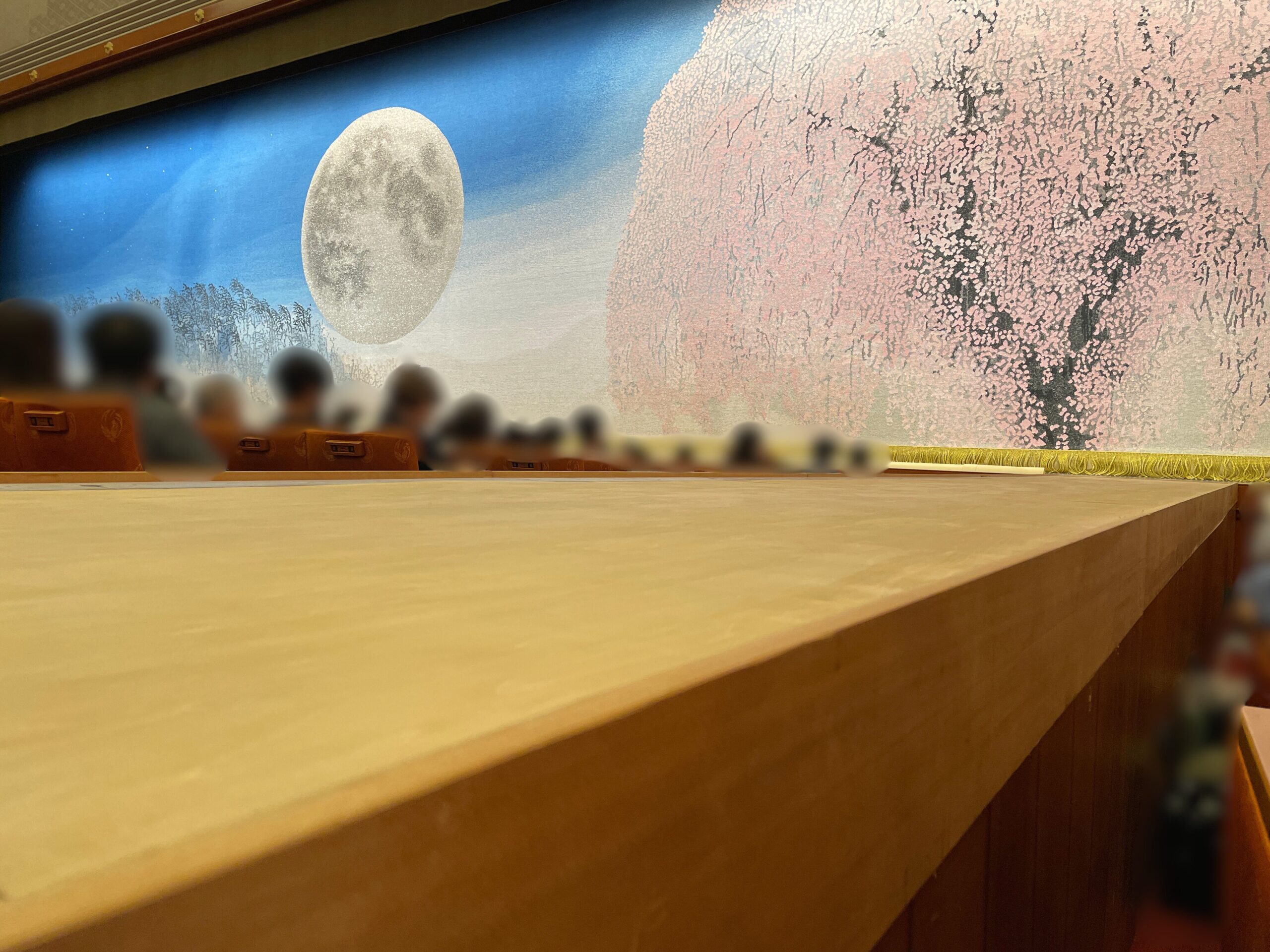
The Yoshinogawa staging is a grand device: both the main hanamichi and a temporary one become the riverbanks, and the audience seats are the flowing river. Koganosuke waits on Mt. Se on the right side, Hinadori on Mt. Imo on the left, and the story unfolds across the water.
Which means the view changes depending on which side you sit. I went straight for the right side, beside the temporary hanamichi, in which Shoroku and Somegoro would be.
…Or so I planned. Koganosuke spends much of the story slumped face-down (sob). And when I glanced across to the other side, Sakon’s Hinadori was simply adorable. Tamasaburo was over there too. “The left side would have been just fine,” I did think to myself (laughs). In other words, you can enjoy it from either side (laughs).
By the way, my seat was on the outer side of the temporary hanamichi — the position known as the “dobu” (the gutter) in Edo-period playhouses. So I was watching from the far bank, outside the seats that stood in for the river. Next time, I would love to try soaking in the river itself.
A Japanese Romeo and Juliet
Koganosuke and Hinadori love each other across the river, yet the feud between their families keeps them apart. Truly a Japanese Romeo and Juliet. So heartbreaking — I thought it again and again as I watched.
And the two parents: the intensity of Tamasaburo’s Sadaka and Shoroku’s Daihanji was overwhelming. As heads of two feuding houses, their exchanges across the river were terrifyingly tense — and yet both were so striking, so magnificent. Frightening yet mesmerising, a strange and wonderful time.
This play is beautiful no matter how many times I see it, and it makes me cry every single time.
A Luxurious Cast for Kanjincho
The second half was Kanjincho, one of the Eighteen Favourite Kabuki Plays. Koshiro Matsumoto as Benkei, his son Somegoro as Yoshitsune, and Kikunosuke Onoe as Togashi — what an absolutely, absolutely, absolutely luxurious cast! Almost too good to be true 🥺
Well, it was the best. Especially Kikunosuke’s Togashi. Togashi supreme. I have no further words.
A Bromide and a Medetai-yaki
At the bromide counter on the basement level, I bought a stage-photo bromide of Yoshinogawa, because there was something I had been dying to try: photographing the bromide against the actual stage, across the hanamichi!
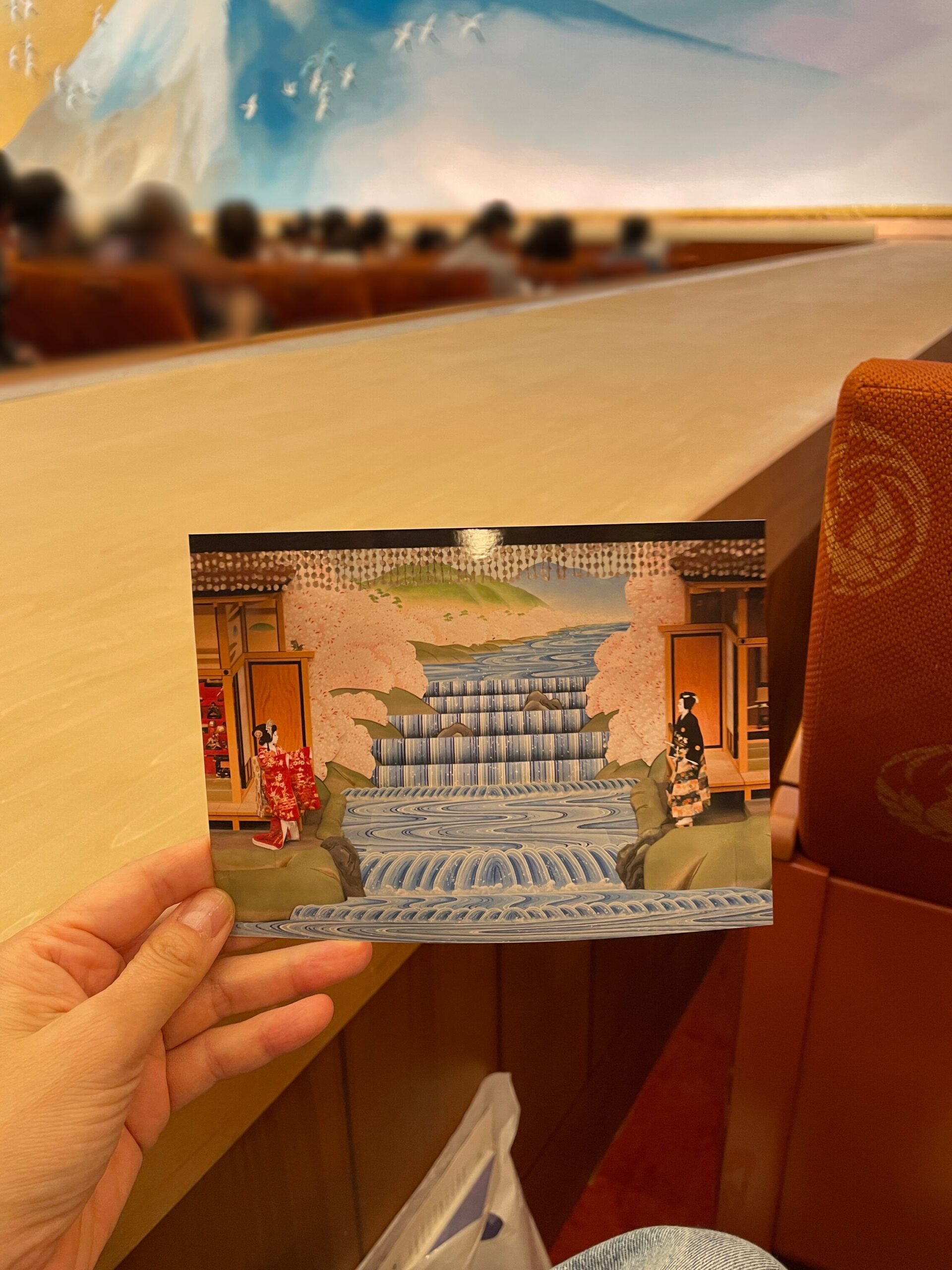
It came out rather nicely, and I was very pleased. I might make this a little series. One note: bromides are usually not yet on sale in the early days of a run, so it depends on your timing.
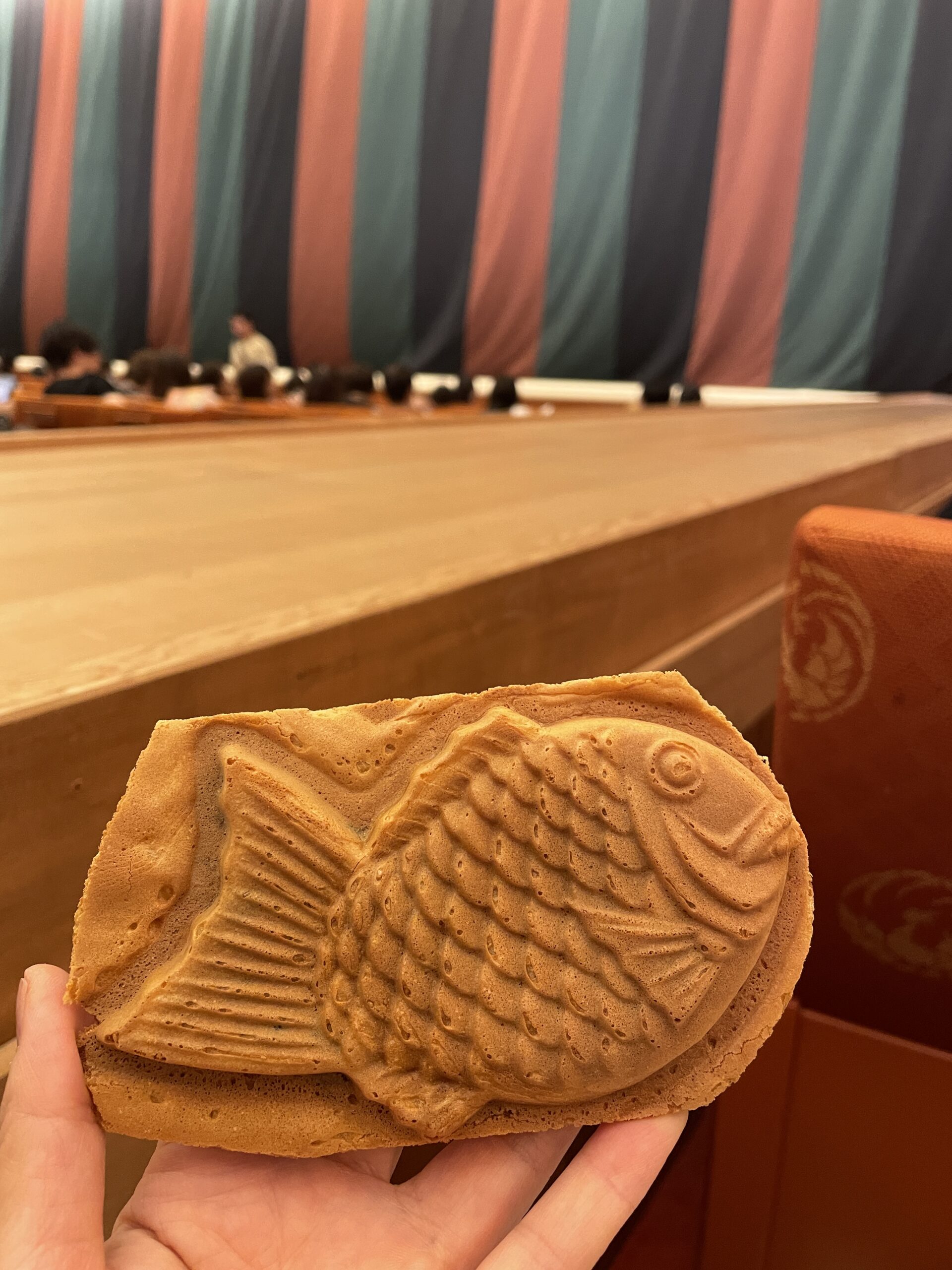
And during the interval, my usual medetai-yaki (a celebratory sea-bream-shaped cake sold at the theatre). I dashed off to buy one (laughs). The 1st floor to the 3rd floor is quite a trek! Mission accomplished, and it was as delicious as ever.
Final Thoughts
The which-bank-to-sit-on dilemma of Yoshinogawa, the formidable parents, the luxurious cast of Kanjincho, and a medetai-yaki. A thoroughly satisfying Evening Show.