Nizaemon Kataoka’s Shunkan. The wavering heart of a man left behind, all alone, on an island — portrayed not through big movements, but through the smallest gestures, expressions and shifts in the voice. This is what it means to be left speechless. I simply sat there, utterly absorbed. As always, it was the best day.
What Is Kaomise?
Every December, the Minamiza Theatre in Kyoto hosts the Kichirei Kaomise, the annual “face-showing” production in which kabuki actors from east and west gather on one stage — one of the great year-end events in Kyoto. Back in the Edo period, theatres signed their actors on one-year contracts and unveiled the new line-up every November, which is said to be how it all began. Even now, for Kyoto, it’s the sign that the year is drawing to a close.
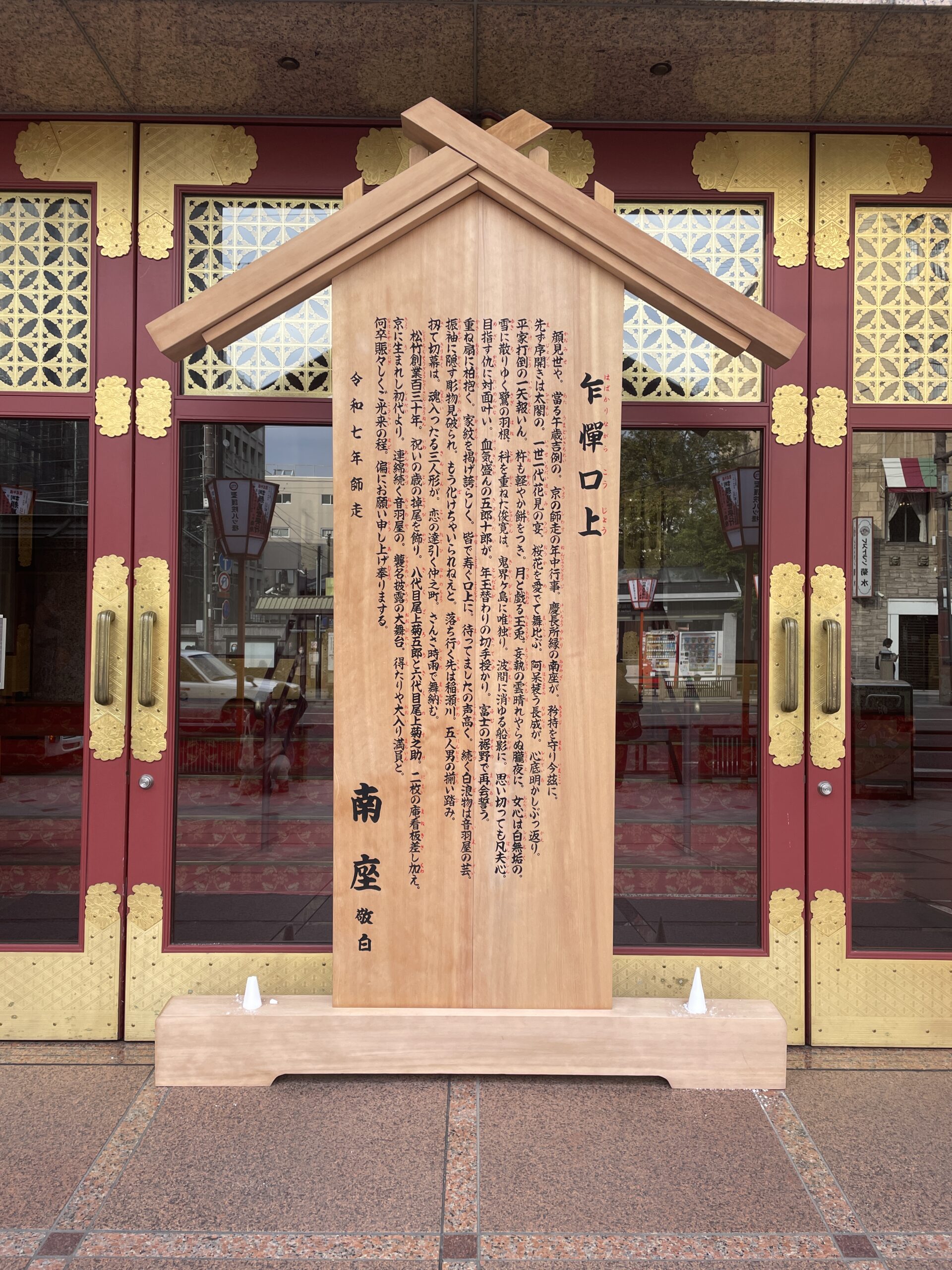
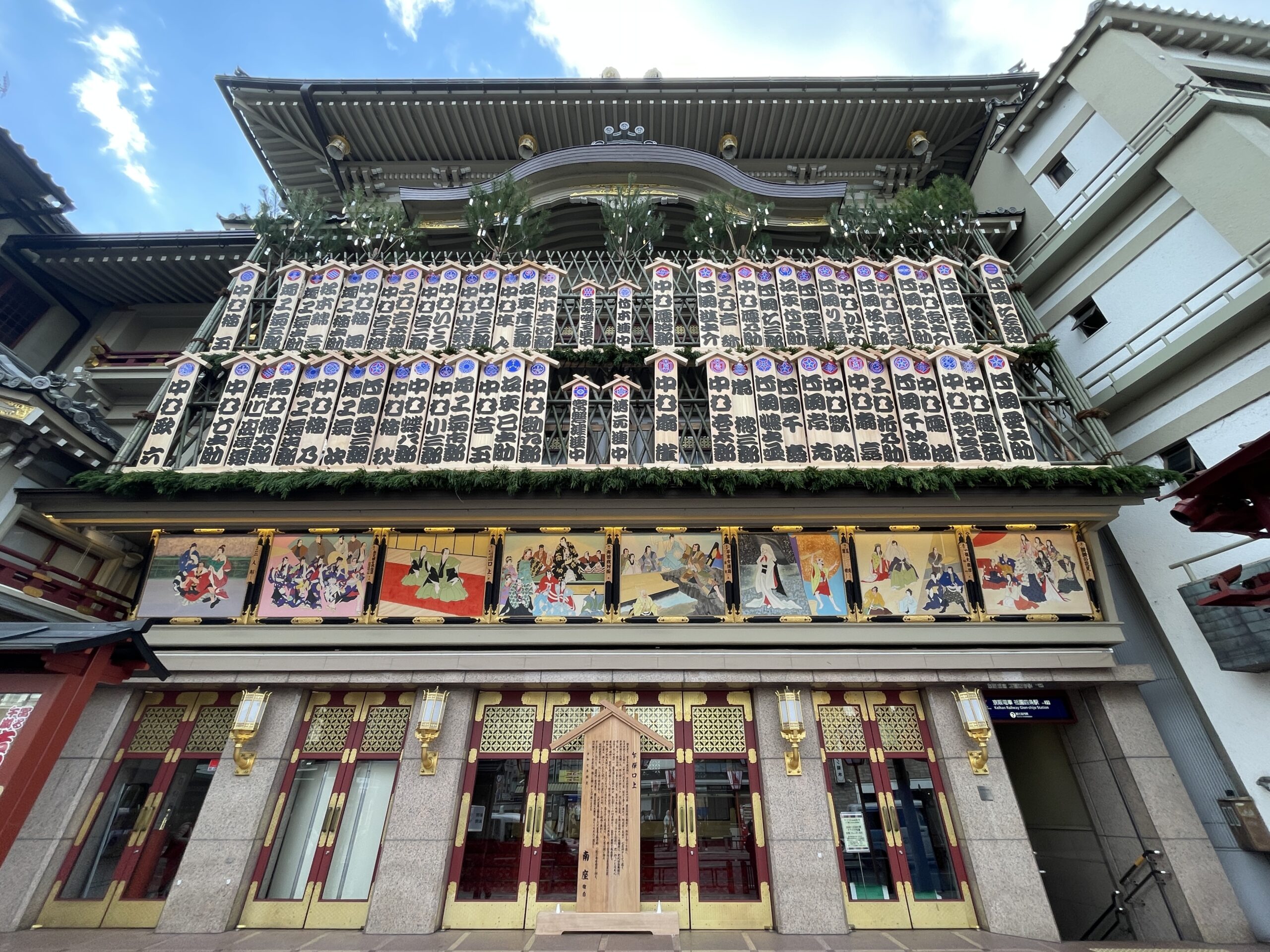
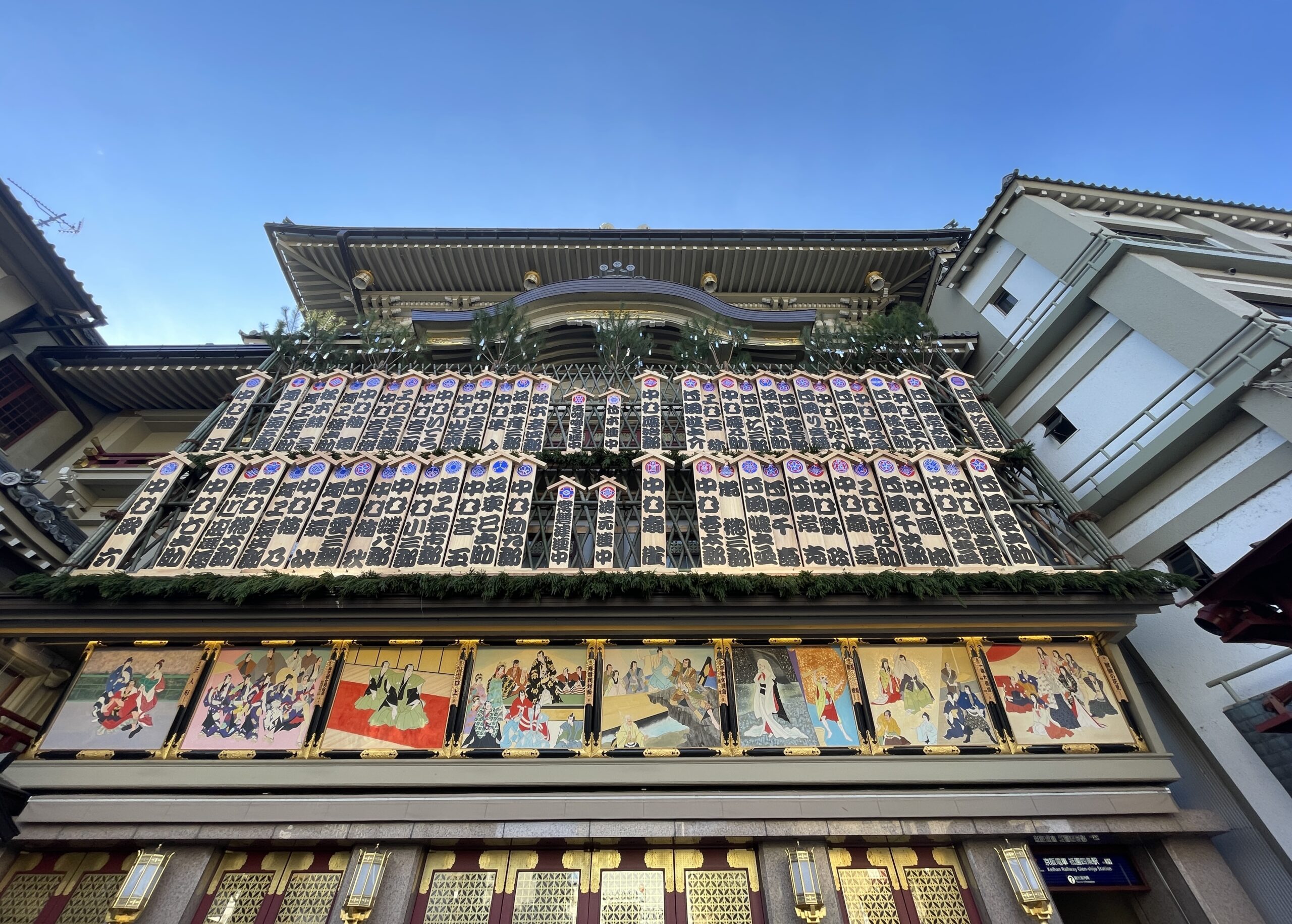
When the maneki — wooden signboards bearing the actors’ names in kanteiryū, that plump, rounded calligraphy style — go up across the theatre’s façade, the whole street seems to brighten. The maneki appear, the big red lantern is hung, and then one day a notice goes up: “Opening today.” Watching the Minamiza gradually take on its kaomise face is a pleasure unique to this season.
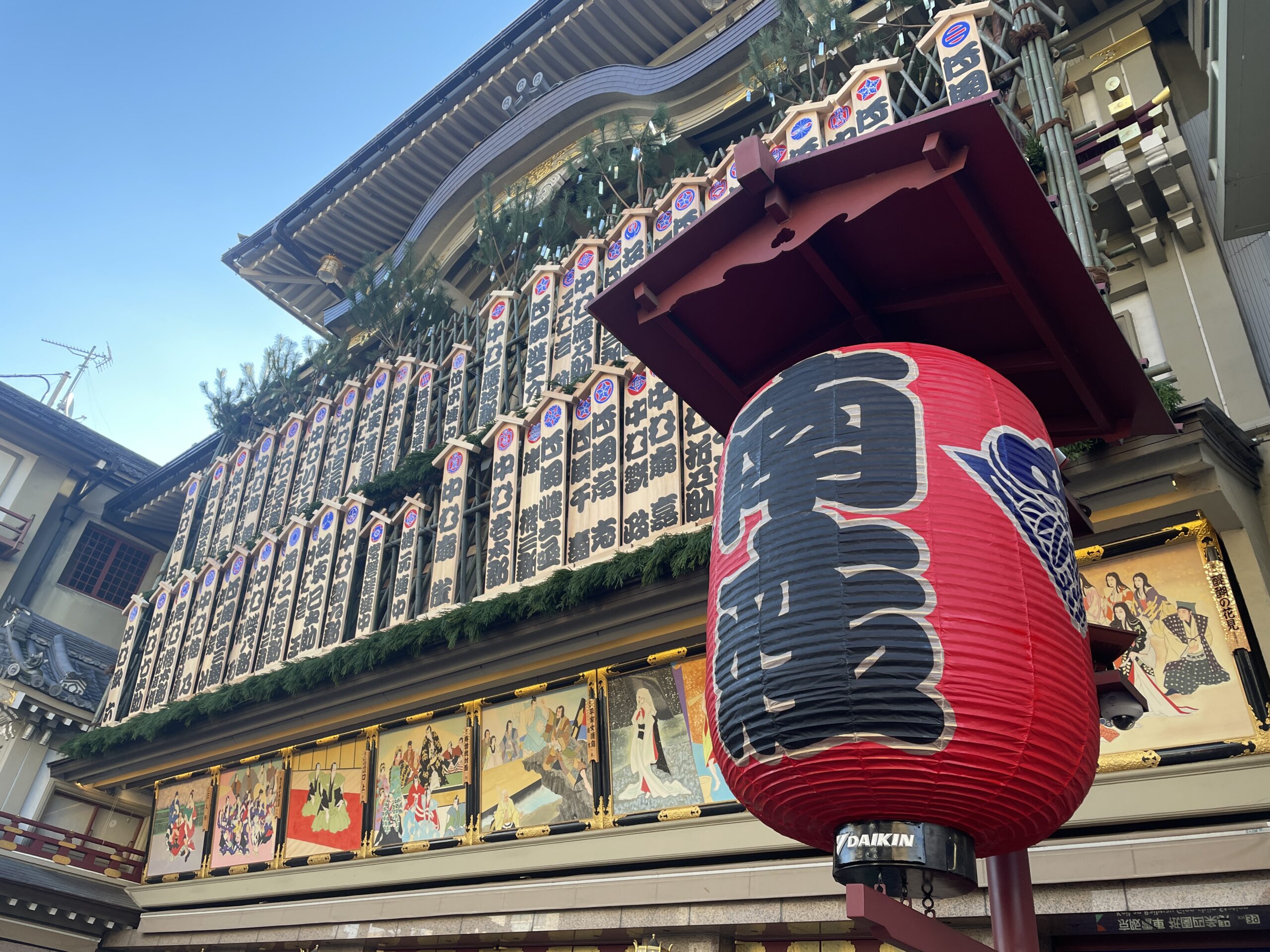
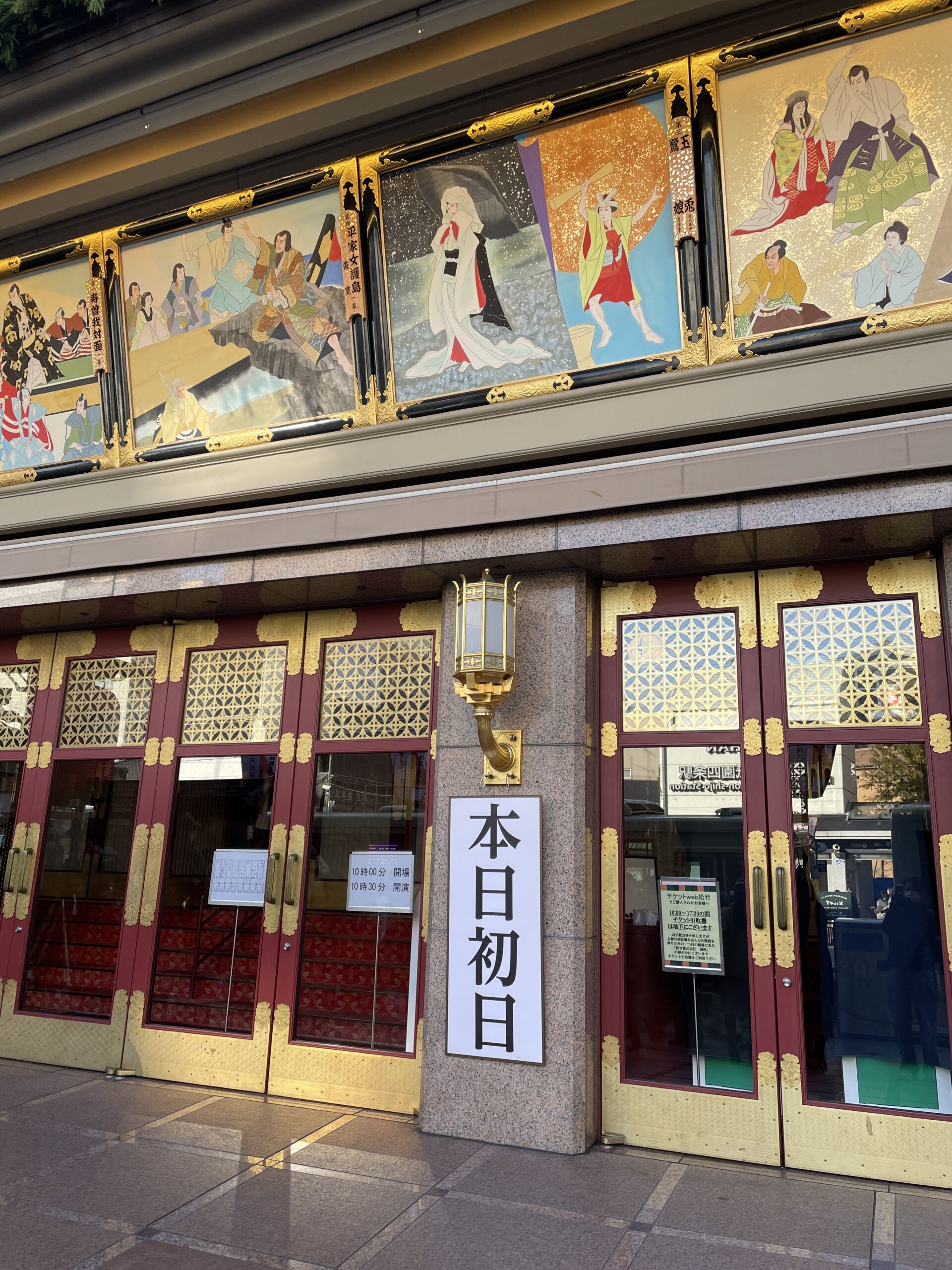
This year marked the name succession of Kikugoro Onoe VIII and Kikunosuke Onoe VI, coinciding with the 130th anniversary of Shochiku’s founding — the celebratory mood was at full tilt.
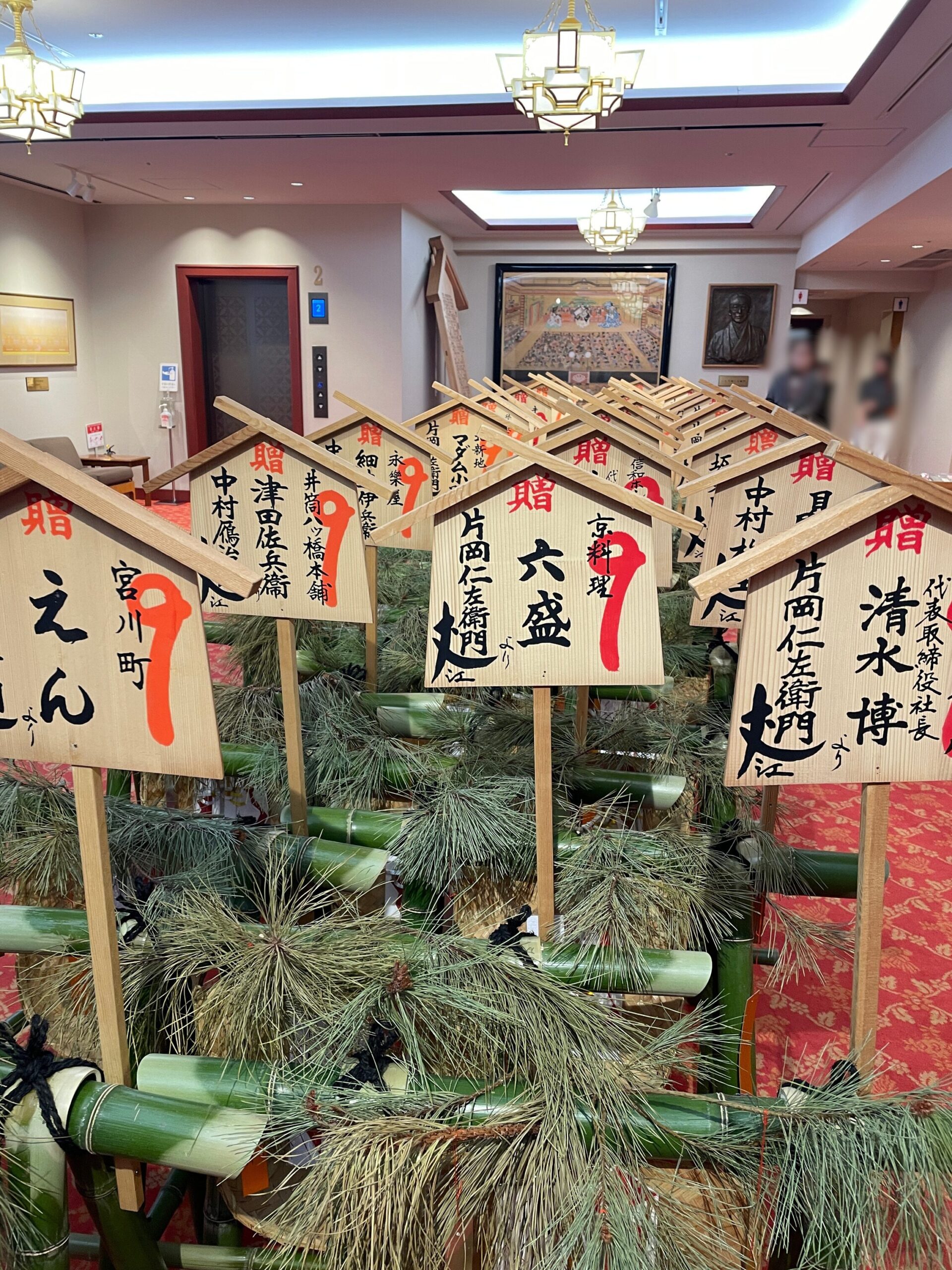
Another thing you’ll only find here: the chikuma in the lobby. These are congratulatory decorations sent to the actors by their patrons, and apparently they can be seen only at the Minamiza’s kaomise. It’s fun working out who is cheering for whom. Quite a few Kyoto restaurant names in there, too — very true to this city.
Just reading the names made me hungry.
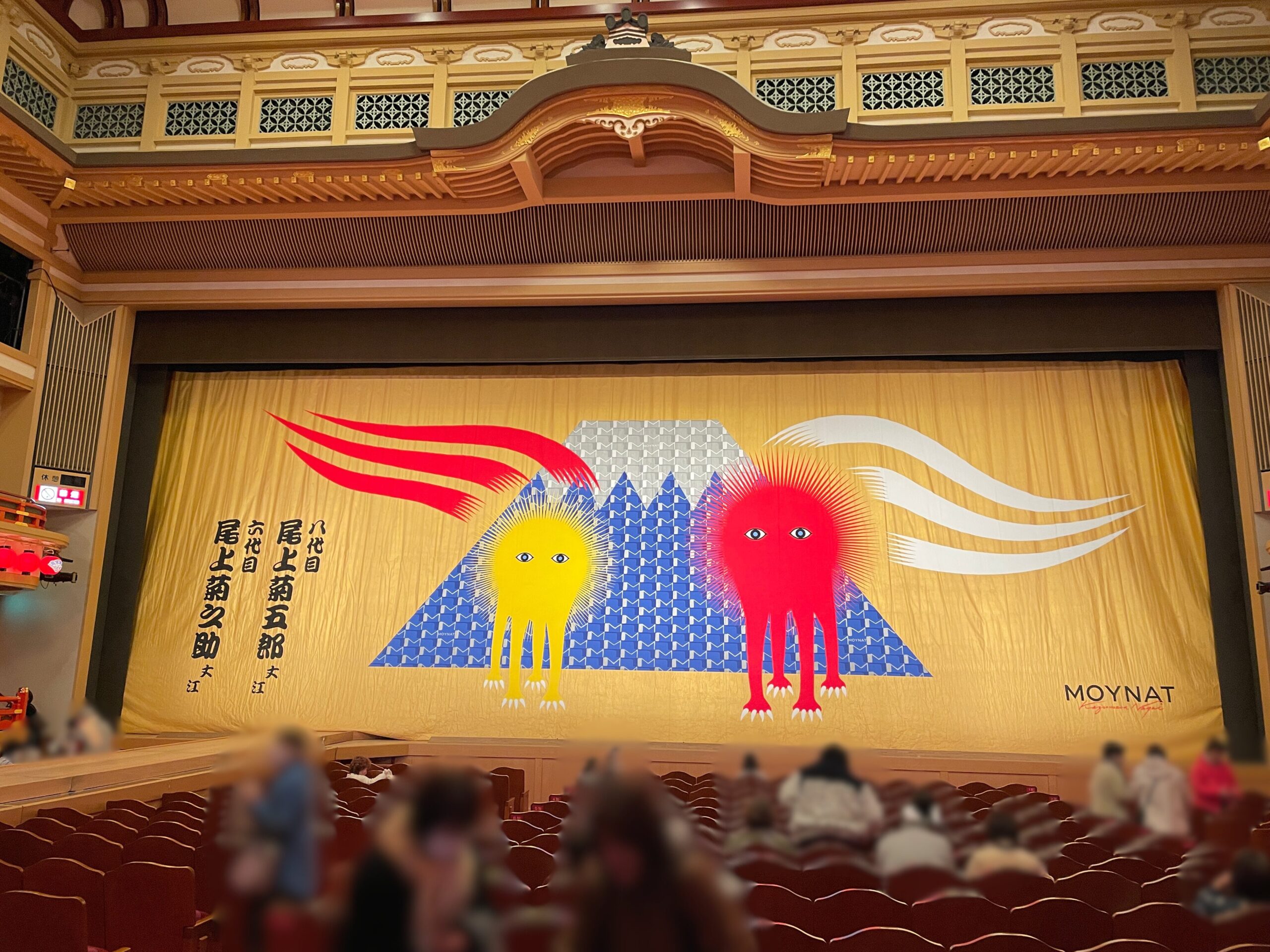
And then, stepping into the auditorium, my eyes went straight to the celebratory stage curtain, the iwaimaku. Blue mountains, and two roundish creatures in yellow and red. What on earth are these? I kept looking — they were lions. The curtain was newly created for this name succession, a collaboration with the venerable French house MOYNAT, with original artwork by graphic designer Kazumasa Nagai. The motif is the parent and child lions from Renjishi, performed at the Kabukiza this June. Pop, adorable, and it put me in a good mood before the curtain even rose.
From a Sajiki Box Seat
My seat this time was a sajiki box seat on the house-left side — one of those slightly raised, tatami-room-like boxes. They do make you feel a little special. The Matinee opened with Daigo no Hanami, a gorgeous dance set in Kyoto, followed by Ichijō Ōkura Monogatari, in which a nobleman feigning foolishness lets his true heart show; then the name-succession pieces Tamausagi and Sagi Musume (The Heron Maiden); and finally “Shunkan” from Heike Nyogo no Shima. A programme with plenty to feast on.
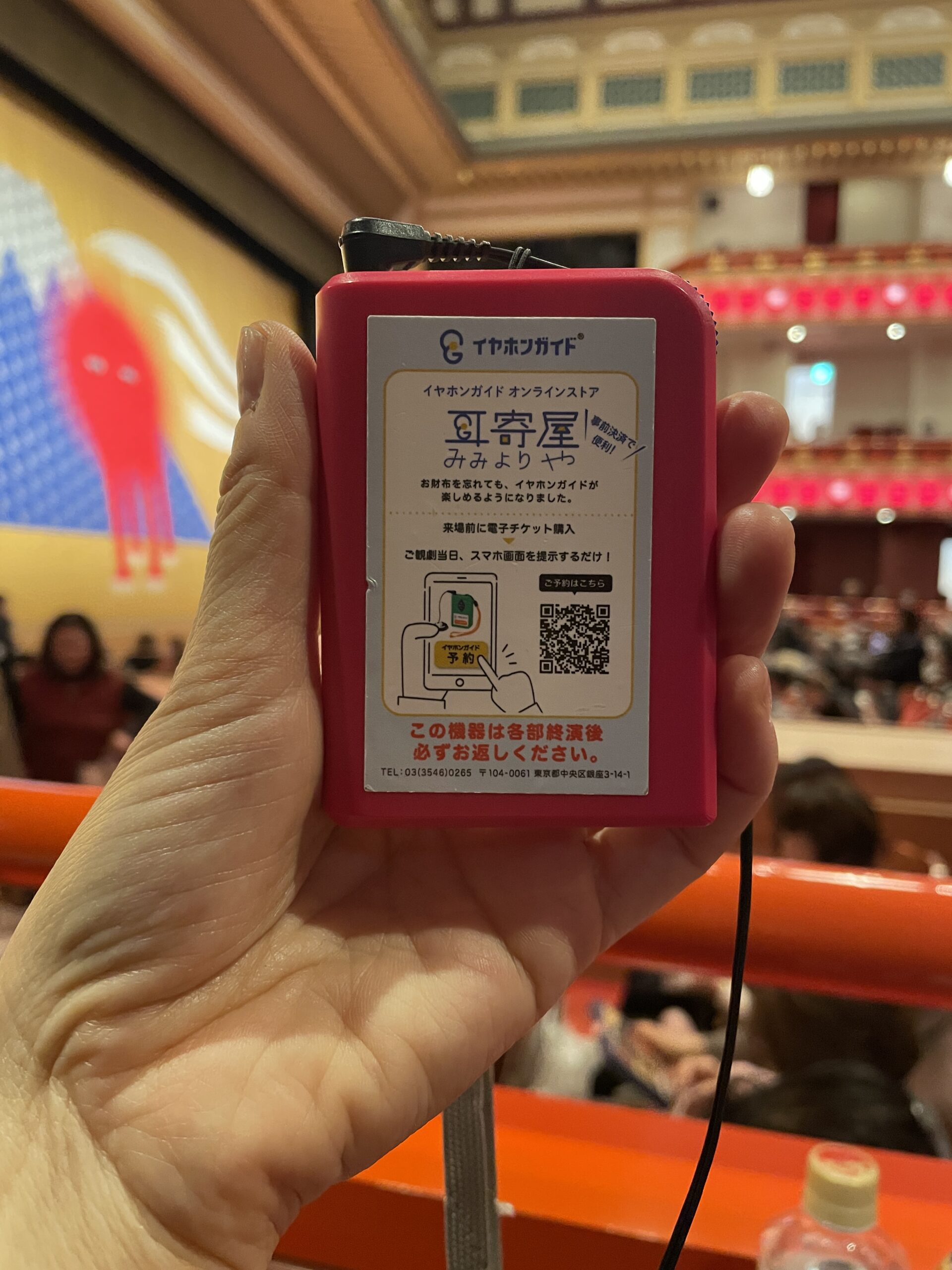
And of course, the earphone guide came along again. It quietly fills you in on the story and background as you watch — reassuring as ever for a beginner. Clear and easy to follow, as always.
Shunkan Left Me Speechless
And the highlight, for me, was “Shunkan”.
Exiled to a remote island, Shunkan rejoices at the news that he may return to the capital — only to find his name, and his alone, missing from the letter of pardon. That story. Nizaemon’s Shunkan was extraordinary.
The heart of it isn’t a flashy fight scene or a grand pose; it’s the wavering of the heart itself. The hope that he might go home, the despair when it’s snatched away, and still, the will to send his companions off with a blessing. All of it comes through, straight and true, in the smallest gestures, expressions and colours of the voice. Can human feeling really be conjured with such delicacy? I was left without a word to say.
The final image of him standing on the cliff stayed with me for a long time. Seeing this alone made the journey to Kyoto worth it.
A Mad Interval Dash for Nishin Soba
Now for a little tale of solo-theatregoer bravado.
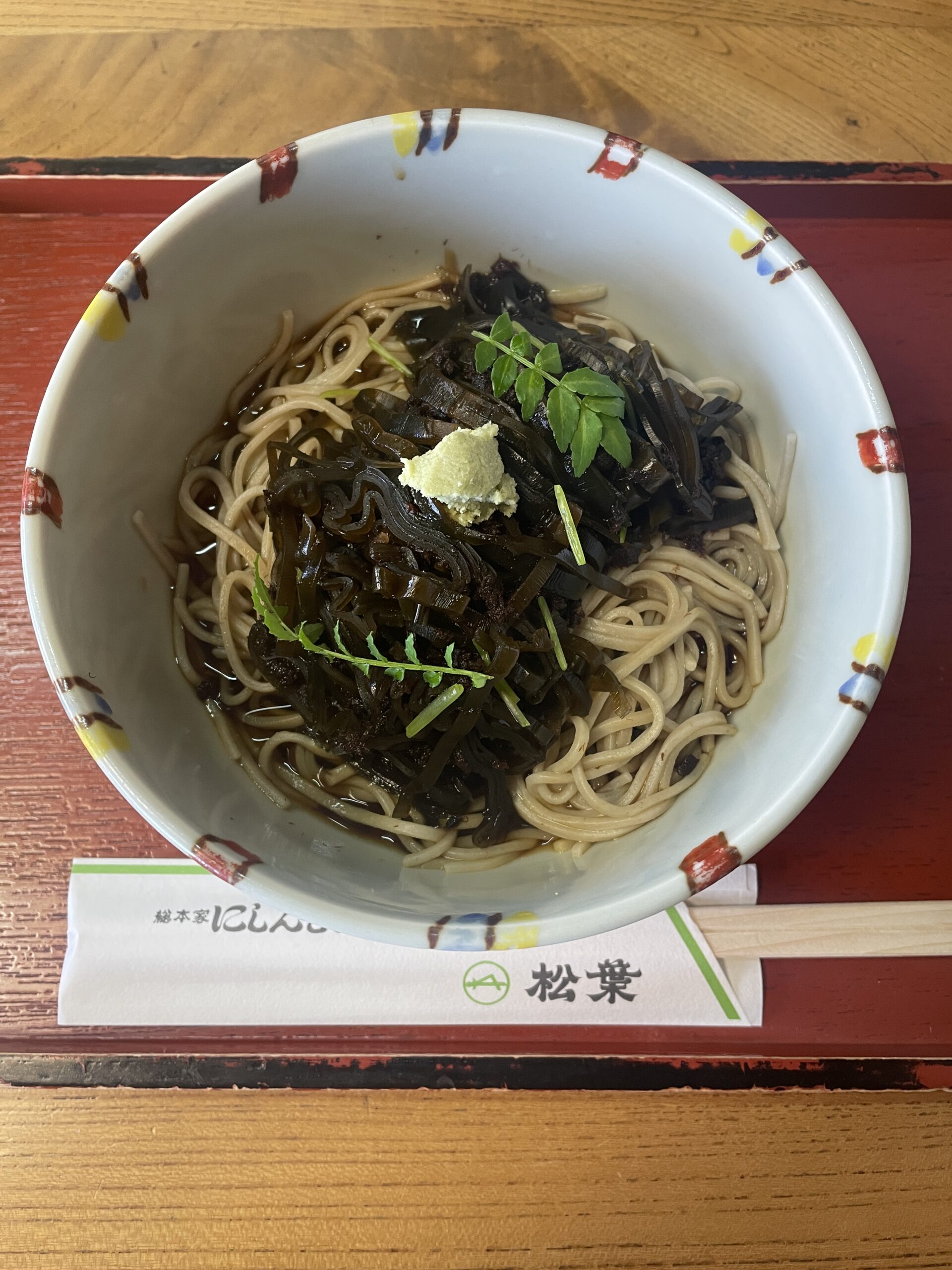
Right next door to the Minamiza stands Matsuba, the birthplace of nishin soba — buckwheat noodles topped with sweetly simmered herring. Founded in 1861, it has been going for more than 160 years. There’s even a notice saying they take bookings for the interval; that’s how much this restaurant is part of theatregoing here.
And yet I, boldly, had made no reservation — but off I went anyway. A dash out at the interval. I slid into a seat, and when the soba arrived I ate it at full speed (ha!).
Sweet-savoury simmered herring and a light, very Kyoto-style broth. Even eaten in a hurry, it was properly delicious.
Would I make it back before the curtain rose? My heart was pounding — but I made it. Bless the neighbours. (I never did manage a trip to the bathroom, though — ha!)
Final Thoughts
A special Matinee: a name-succession milestone, seen at the Minamiza in Kyoto, a city with deep ties to the first Kikugoro. The kaomise glamour, the leisurely time in the sajiki box, and above all Nizaemon’s Shunkan — every piece of it has stayed with me.
Gazing at the chikuma, swooning over the celebratory curtain, dashing out for soba at the interval — being on my own meant I could savour every last bit of it at my own pace. Deeply satisfied.
Related Links