To be honest, I only knew the rough outline of the story going in. As it turned out, it was one big Tamasaburō festival. Once again, today was the best.
What Is Furuamerika ni Sode wa Nurasaji About?
Written by Sawako Ariyoshi, this is a classic play in which Tamasaburō Bandō took over the role of Osono from Haruko Sugimura, going on to perform it many times. What I saw was the film of its very first staging as kabuki, at the Kabukiza Theatre in December 2007 (running time: 164 minutes).
The setting is late Edo-period Yokohama, shortly after the port opened, at a pleasure house called Gankirō. Osono, a shamisen-playing geisha, is nursing Kiyū, a courtesan recovering from illness. Kiyū is in love with Tōkichi, an interpreter. But when an American named Illus takes a fancy to Kiyū, he asks to buy out her contract (paying to take a courtesan out of the pleasure quarter), and Kiyū takes her own life.
In a time swept by jōi (the movement to drive foreigners out of Japan), her death gets twisted into a heroic tale of a “patriotic courtesan” who chose death over giving herself to a foreigner… That’s the story. The title comes from a line of Kiyū’s farewell poem, as printed in a kawaraban (a street broadsheet). It plays on furu ame, “falling rain”, with Amerika hidden inside 🇺🇸
September’s Tsuki-ichi Kabuki at MOVIX Kyoto
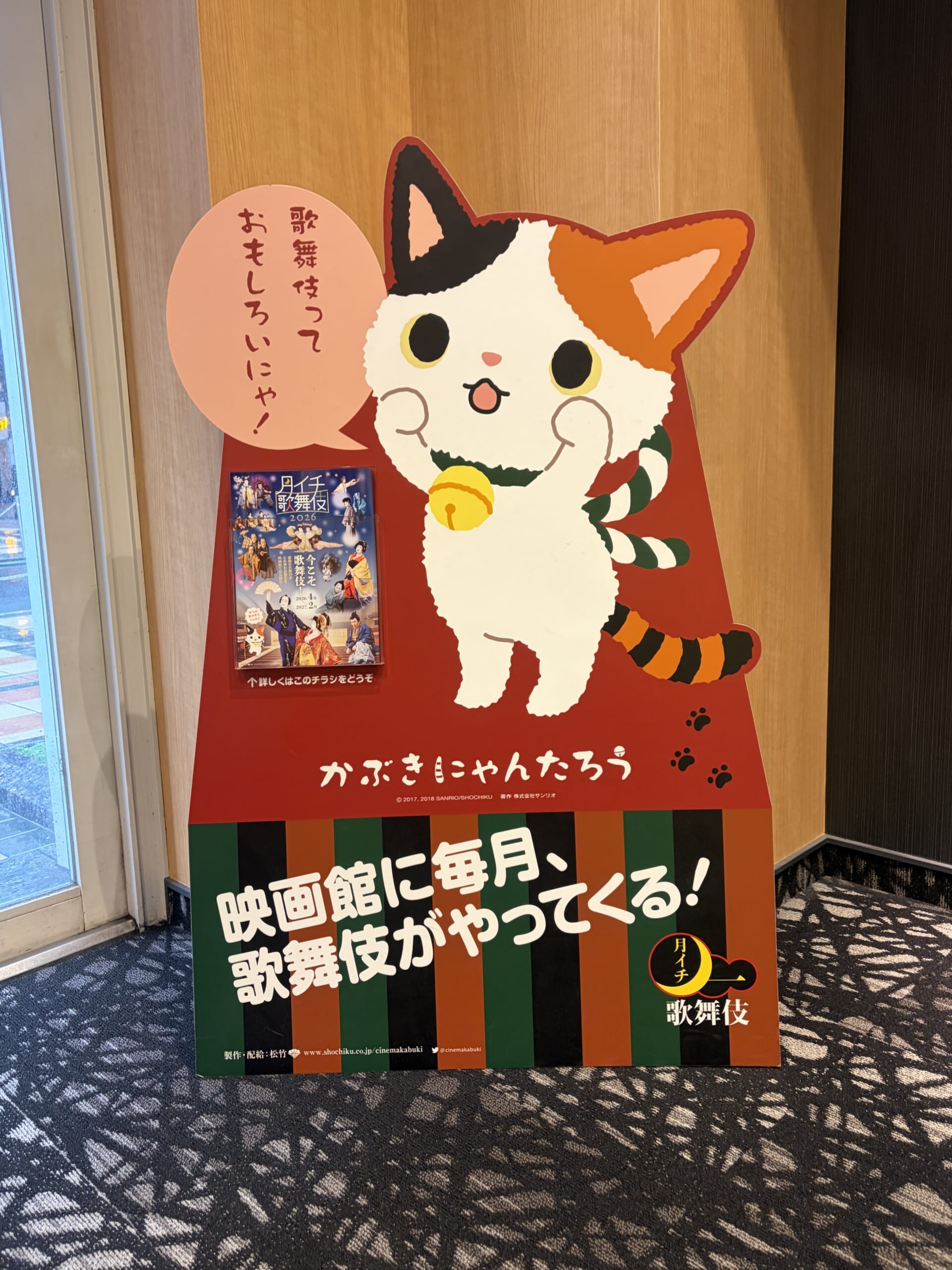
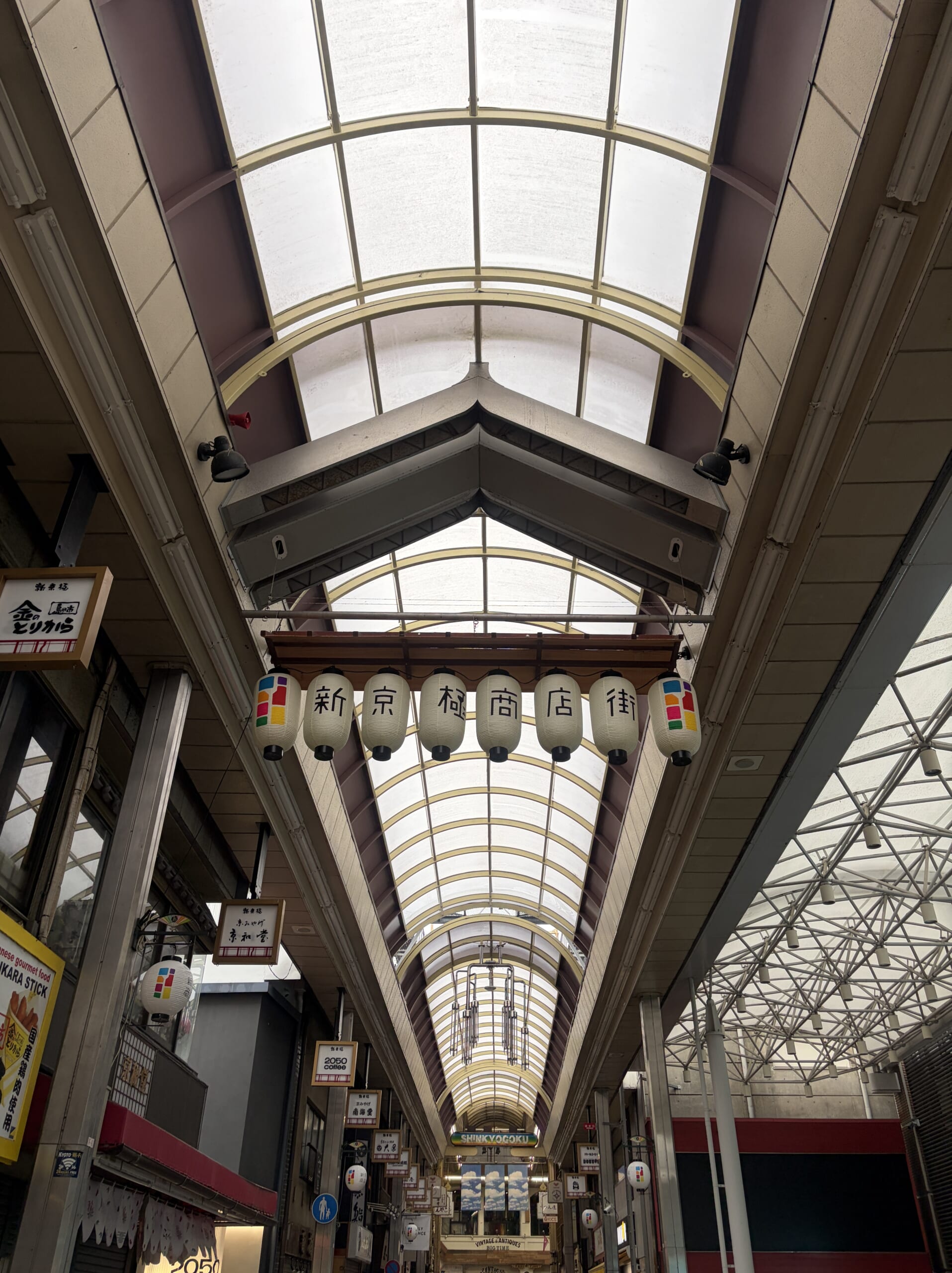
As usual, I headed to MOVIX Kyoto on Shinkyogoku Street. Inside, Kabuki Nyantaro (the cat mascot of the monthly Tsuki-ichi Kabuki series) was there to welcome me. Always so cute 🐈 I had made up my mind to bring along the Nyantaro plush toy I bought recently, yet I completely forgot it. I’m still not used to taking him out with me (haha)
Theatre 6 is on the sixth floor, but today I took the escalator. The seats weren’t sold out, yet plenty of people had come. The Tamasaburō effect, I suppose. Just what you’d expect.
Of course, I rented the earphone guide. The app screen said “100 days left”. I could keep using it for ages, but the screenings will end long before that 😭


What helped me in the commentary was the part about which characters were on the jōi side. However, the actors are introduced by the names they used at the time, so if your head has already updated to their current names, it gets a little confusing 😵💫 A guide saying something like “Ebizō Ichikawa, now Danjūrō Ichikawa” would help a lot. Then again, doing that would mean revising lots of other guides too, so I imagine it would be a big job…
Following the Story
It Should Be Heavy, Yet It’s Light and Funny
The first half is about buying out a courtesan’s contract, so it should feel heavy. Yet overall it was comical, and I could watch it with ease.
Shidō Nakamura as Tōkichi was young, fresh-faced, and felt new to me. At the banquet, Yajūrō Bandō as Illus was funny, just like Shidō as the interpreter.
What really made me laugh were the tōjinguchi courtesans (courtesans who entertained foreign clients). Fukusuke Nakamura as Maria was hilarious 😂 Costumes like nothing I’d ever seen, comical make-up… Even more than that, the movements were so comic that you laugh at first sight. Matsuya Onoe was funny too, as was Shingo Bandō.
I Was Hoping for “Surprise, She’s Alive!”
In the scene where Kiyū takes her own life, I couldn’t help hoping for a “surprise, she was alive all along” twist. But then it would become a different story, wouldn’t it. Oh, it hurts.
A Storyteller’s Performance, Plus Osono’s Lie
Before long, a kawaraban spreads that turns Kiyū into a “patriotic courtesan”. At first Osono laughs it off as “such a lie”. Then the master of Gankirō (Kanzaburō Nakamura) tells her to give the customers a story they’ll enjoy, so she reluctantly begins to tell it. This exchange with Kanzaburō is hilarious. It’s also so human that I could completely relate. Anyone in her place would probably have got through the moment the same way.
Once she begins, she seems to have something like a harisen in her hand, the paper fan that a kōdan storyteller (a traditional oral storyteller) slaps on the desk… Take away the missing shakudai (the small desk placed in front of the storyteller), and it’s practically kōdan! Because Osono is so talkative, with such a knack for reading the room, the story naturally keeps growing.
What she tells is nothing but lies. But were they just lies that came out in the flow of the moment? Or was she protecting Kiyū with them? Which is it?
Tōkichi Must Have Suffered Too
In the scene where Tōkichi meets Osono before leaving for America, I thought it must have been hard for him too… If Kiyū had lived, he would have had to watch in tears as the woman he loved was bought out by someone else. Now that she’s dead, he can’t buy out her contract himself either. Besides, she was far too expensive to begin with. There was never any way Tōkichi could have bought her out… Neither future held a bright tomorrow for the two of them.
A Tamasaburō Festival
I had no idea Osono was such a comic character, so from the very first nursing scene she grabbed my heart firmly. That’s no longer Tamasaburō. Any way you look at it, it’s Osono.
The shamisen scene, the storytelling scene… It was one “Tamasaburō is amazing!” after another, one “Tamasaburō is so funny!” after another. His timing, of course, plus (this may sound obvious) his acting is just too good. It’s not even acting anymore; it’s as if Osono has possessed him. On top of that, there’s a certain brazenness, in the best sense, that women in their 50s to 60s have. It’s so perfect, so charming, so adorable! I absolutely love it.
Anyway, there’s so much to see that I’ll need to watch it at least once more to take it all in (haha)
Summary
Wrapped up in a story made of lies, Osono may have found herself unable to back down. Put another way, though, thanks to that, perhaps Kiyū’s pure love was never mocked by anyone. That one thing belonged to no one else, only to Tōkichi with Chie (Kiyū’s real name). In the end, perhaps Osono was the only one who could protect it. Maybe I’m reading too much into it (haha)
I thought I might not make it this month because of my schedule, but I’m glad I rearranged things. It was more fun than I expected. As always, I wished I could have seen it on stage, yet getting to see Kanzaburō on the screen made me happy.
Next month, it’s Heisei Nakamuraza, the playhouse Kanzaburō founded!