I sat down in my usual seat beside the hanamichi (the raised walkway that runs through the audience), only to find nobody to my left, nobody to my right, nobody in front, nobody behind. Left all alone in a two-metre bubble, I watched Part 2 begin. Talk about standing out (haha). Even so, as always, today was the best.
More from this production → October Program at the Kabukiza Theatre: Part 1 (October 2026) / October Program at the Kabukiza Theatre: Part 3 (October 2026)
What’s On in Part 2?
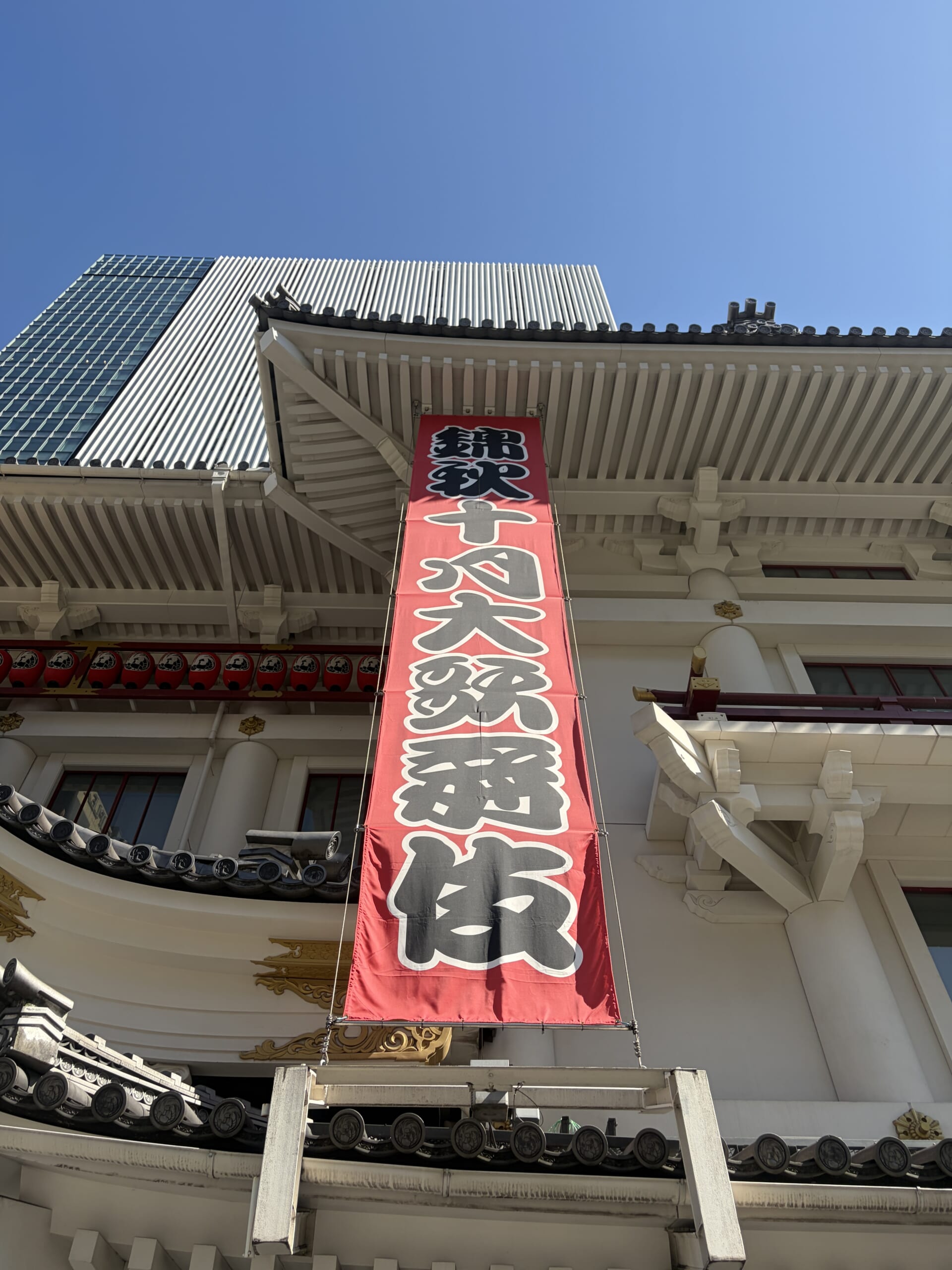
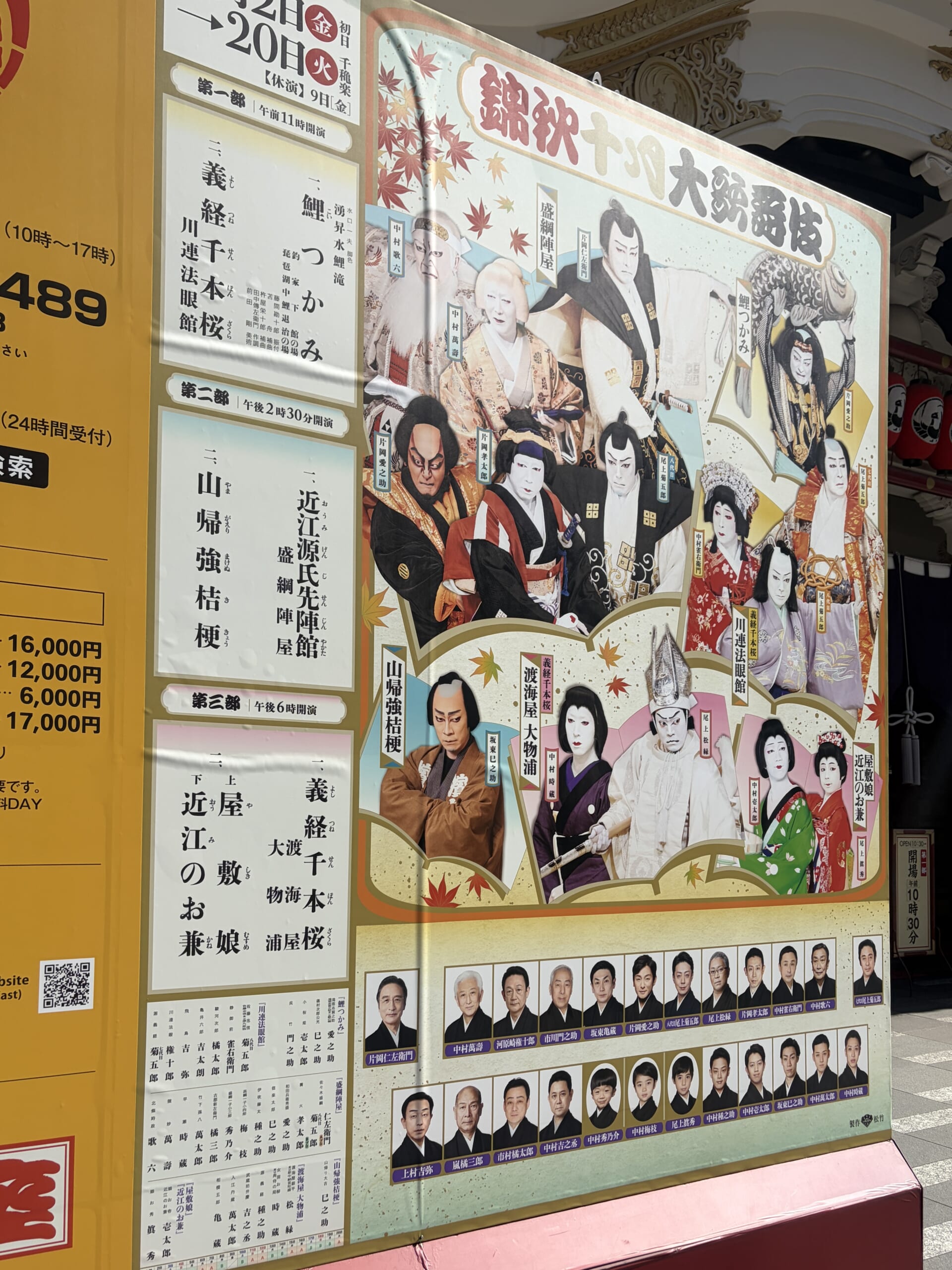
This month’s October Program at the Kabukiza Theatre runs in three parts, from Part 1 to Part 3. Part 2 is a double bill: the grand history play Ōmi Genji Senjin Yakata: Moritsuna Jin’ya (‘Moritsuna’s Battle Camp’), followed by the dance piece Yamagaeri Makenu Kikyō.
Moritsuna Jin’ya is the story of the Sasaki brothers, who end up fighting on opposite sides of a war. Koshirō, the son of the younger brother Takatsuna, is captured, then brought to the battle camp of the elder brother, Moritsuna. Soon, news arrives that Takatsuna has been killed, so Moritsuna must carry out a kubi-jikken (an inspection to confirm whether a severed head really belongs to the person in question). But the head is a fake. Behind it lies a desperate scheme, staked on their lives, by Takatsuna with his son Koshirō… that’s how it unfolds. Apparently the story is modelled on the Sanada brothers at the time of the Siege of Osaka.
Moritsuna is double-cast; at my performance, the role went to Kikugorō Onoe VIII. On top of that, Manju Nakamura plays Mimyō, Koshirō’s grandmother; Tokizō Nakamura plays Hayase, Moritsuna’s wife; Baishi Nakamura plays Koshirō. In real life, they’re grandfather, father, son: three generations of one family sharing the same stage.
My Usual Seat by the Hanamichi, Left All Alone
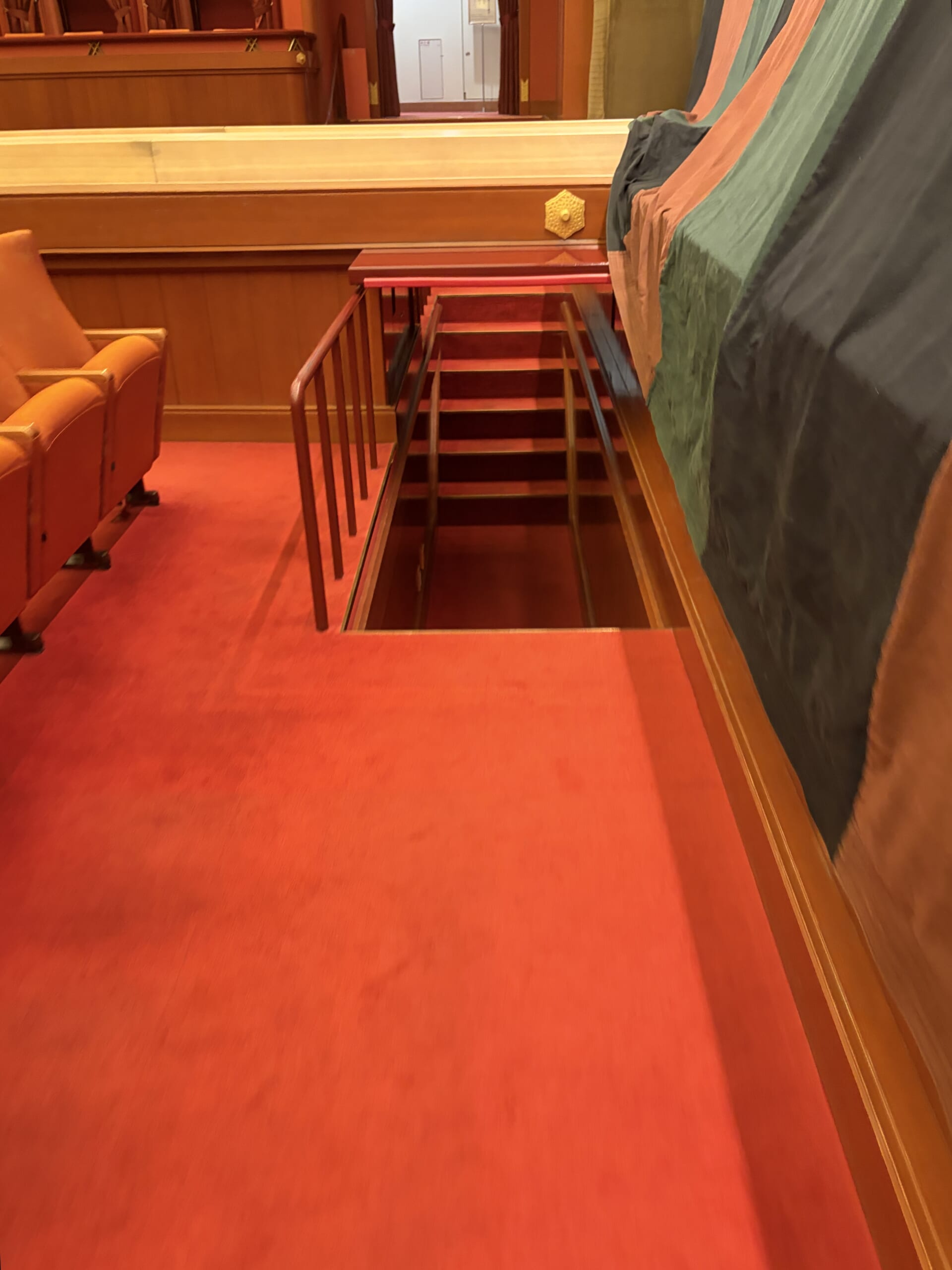
That day, I came in through the wrong entrance, on the kamite side (stage right, as seen from the audience). My seat was in the area nicknamed the “dobu” (literally “the ditch”), on the outer side of the hanamichi. So I had to take the stairs that pass under the hanamichi to cross over to the other side of the “river” (haha). It’s not a route I usually take, so I snapped a photo while I was at it.
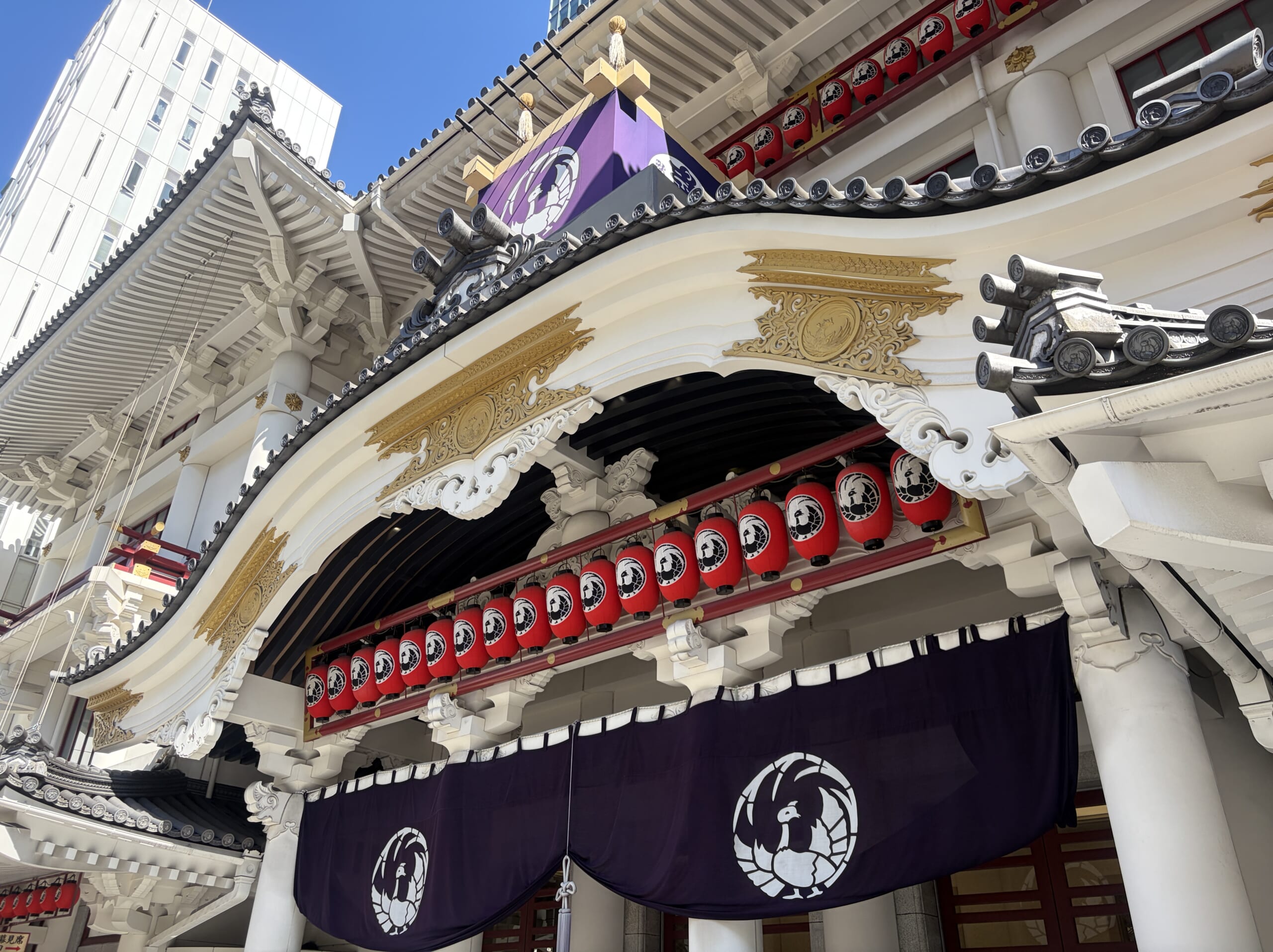
I also took a photo of the theatre before the show, when nobody was there yet.
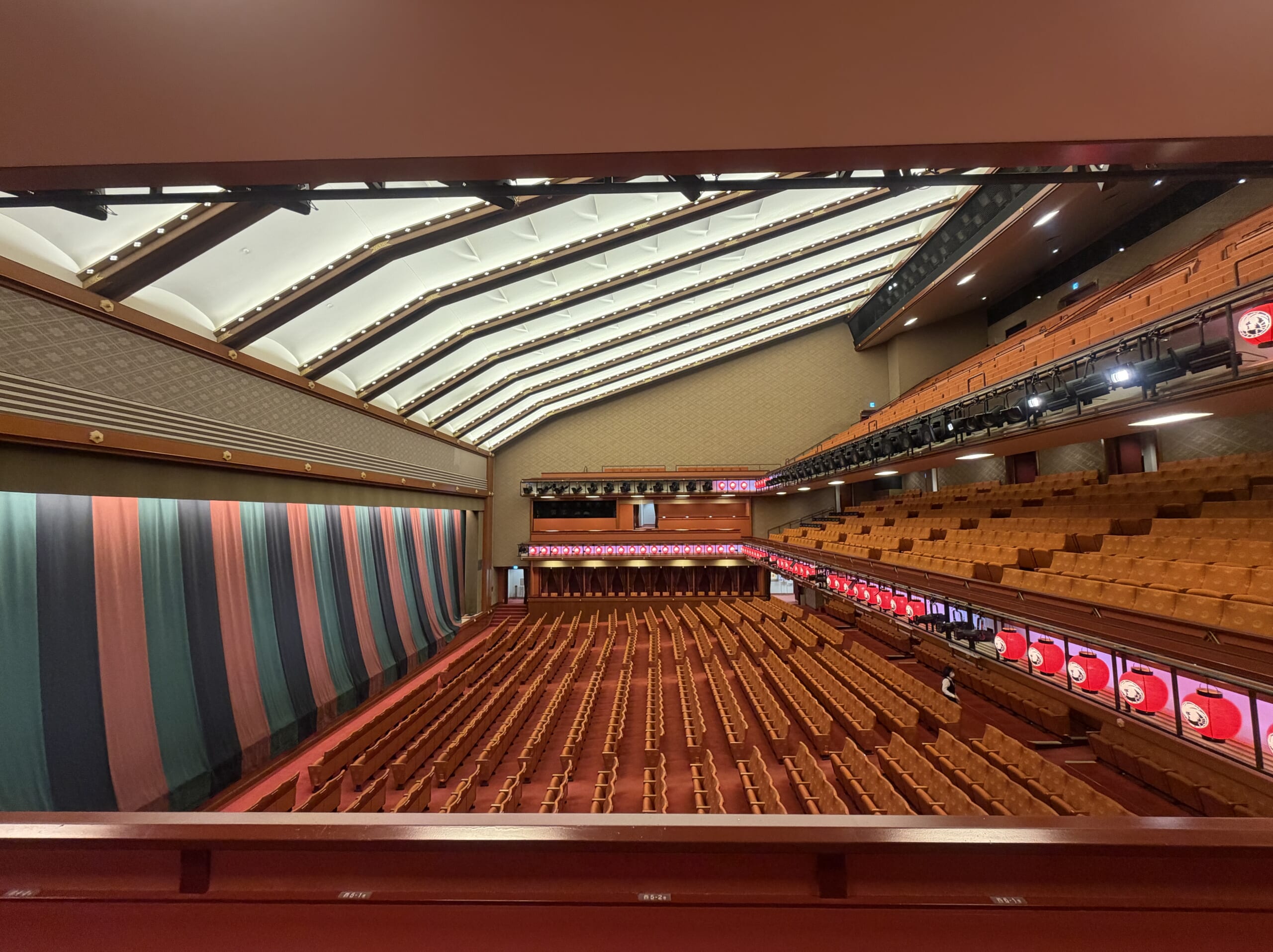
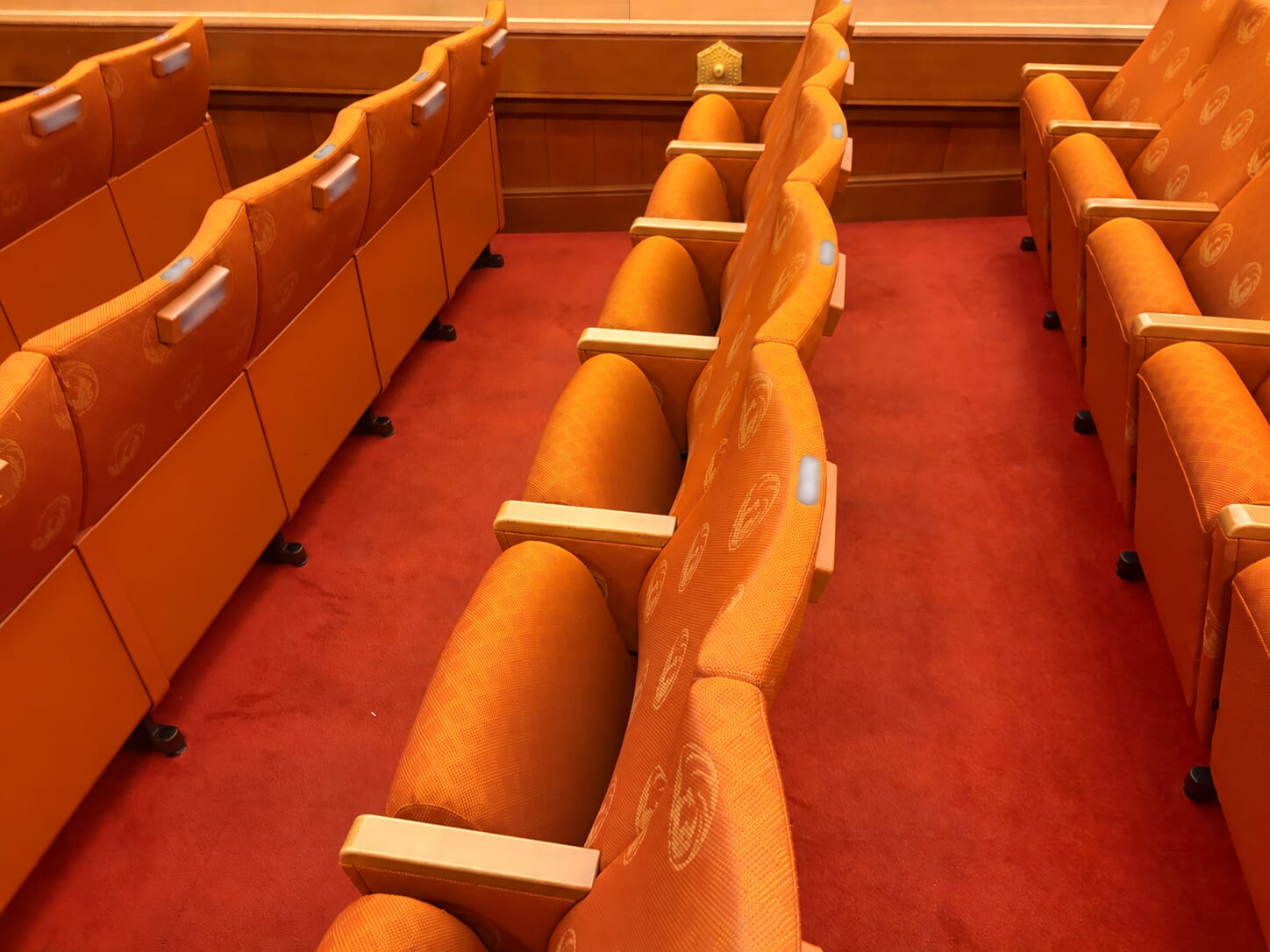
But when I got to my seat… nobody in my entire row. The three seats right in front of me were empty, with hardly anyone in the row ahead either. The row behind me was completely empty, while the one behind that was sparse. Only the space around me was one big empty pocket.
What’s more, it stayed like that for the whole of Part 2. Being left all alone in the dobu seats was a first, even for me. This is… um, kind of conspicuous, isn’t it? But thanks to that, I could watch more comfortably, more freely than usual (haha). It felt a bit like being at home…
Moritsuna Jin’ya, Plus Yamagaeri Makenu Kikyō
Moritsuna Jin’ya: Koshirō Nailed It
I’d seen Moritsuna Jin’ya at the Osaka Shochikuza Theatre in May, too. This time, what stayed with me most was Koshirō, played by the child actor Baishi.
Even when his grandmother Mimyō urges him to commit seppuku (ritual suicide), he deliberately acts reluctant. Then, at the very moment the head box is about to be opened for the inspection, he takes his own life. Carrying his father’s scheme on his shoulders, he’d been waiting for exactly the right moment. Koshirō really nailed it.
Three generations in one cast: honestly irresistible. Tokizō’s Hayase was especially gorgeous… Kazutarō Nakamura, who played Hayase at the Shochikuza, was wonderful too, but Tokizō has a calm, grown-up womanliness that’s lovely in its own way.
Yamagaeri Makenu Kikyō: Full of Edo Flair
Daikichi (Minosuke Bandō), a fireman on his way home to Edo after an Ōyama mairi (a pilgrimage to Mt. Ōyama in Sagami, hugely popular with the people of Edo), comically recounts the mischief he got up to on the excuse of the pilgrimage. It’s a dance set to Kiyomoto music. The piece is closely tied to Minosuke’s family, the Bandō Mitsugorō family, plus this was its first staging in 23 years.
It was my first time seeing this piece, so the earphone guide was a must. Minosuke’s Daikichi had iki (understated Edo chic) with a good dose of inase (the bold, spirited swagger of Edo’s firemen, as well as its young men about town). He looked so cool.
Curious About the Shosadai, Plus Some Happy News
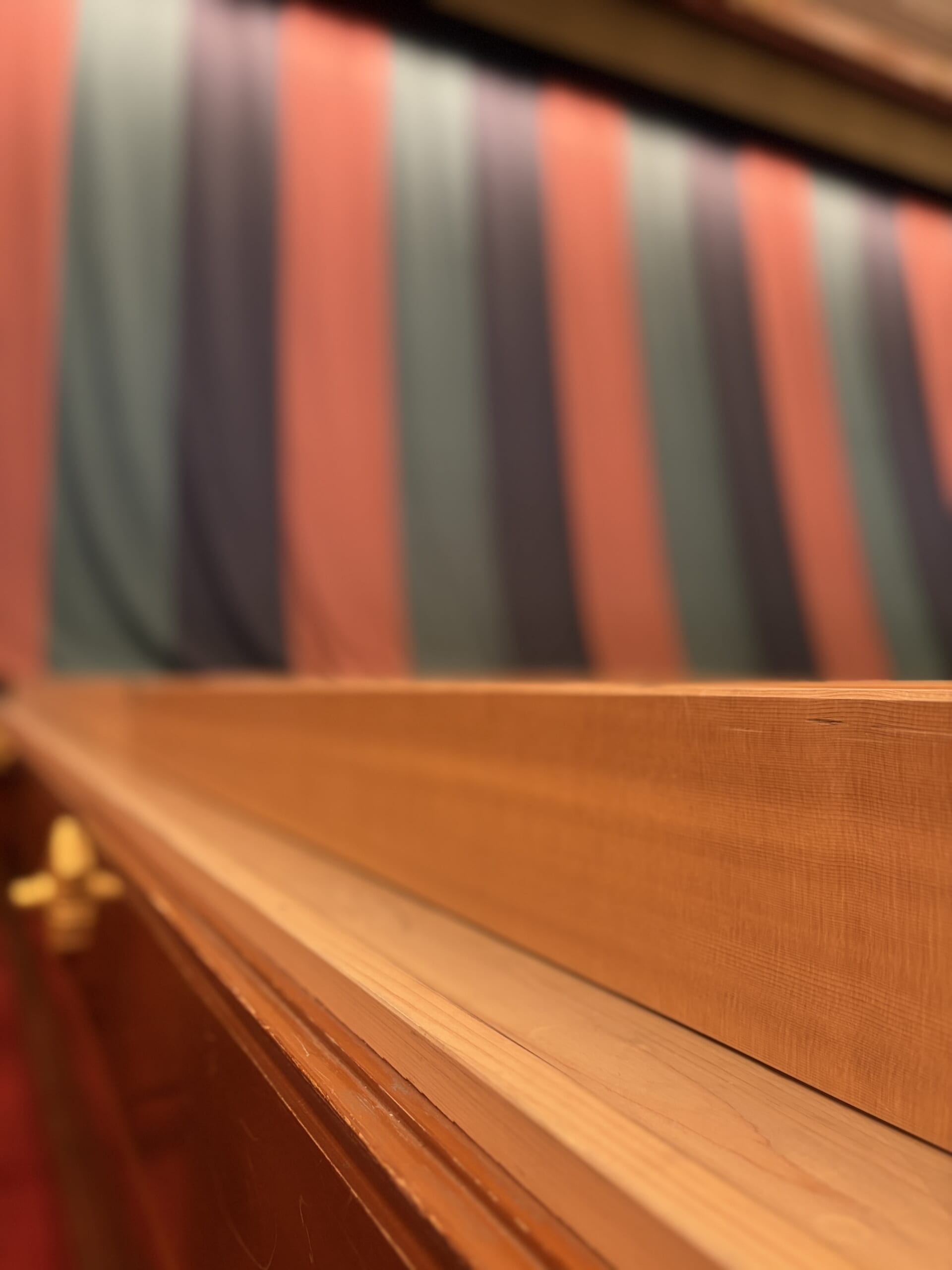
Lately, I’ve grown fond of the shosadai (cypress boards laid over the stage for dance pieces; they make stamping footwork ring out beautifully). My latest curiosity: do they ever decide which plays to stage depending on whether the shosadai needs to go down? Which plays to pair, which actors to ask, how to fit their schedules… the people at Shochiku must have a lot to juggle. If I’m saying something way off, how embarrassing (haha).
In the theatre, I also came across a flyer that made me happy: “Wait, kōdan? It’s Shōri Kanda!”
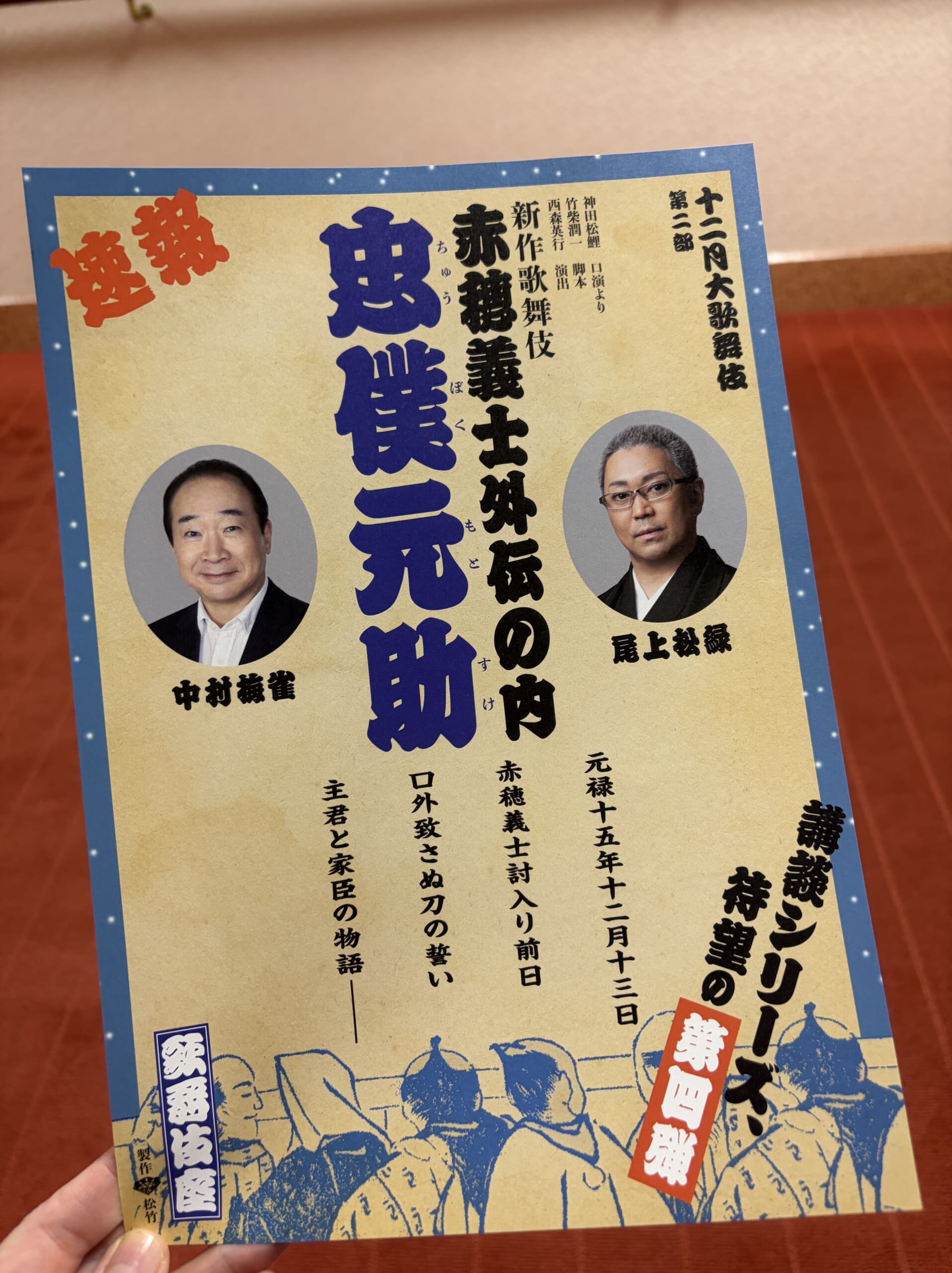
The long-awaited fourth instalment of Shōroku Onoe’s kōdan series is coming to the Kabukiza in December: a new kabuki play, Akō Gishi Gaiden no Uchi: Chūboku Motosuke, about a faithful servant named Motosuke, drawn from the side stories of the Akō loyal retainers (the famous 47 rōnin). It’s based on a kōdan (traditional Japanese storytelling) piece performed by Shōri Kanda, a Living National Treasure, with Shōroku sharing the stage with Baijaku Nakamura. I’ve been curious about kōdan for a while now. I’d also been looking forward to this series, so this was very happy news. I haven’t seen Shōri Kanda live yet, so I can’t wait. So happy, so happy, so happy! In December, I want to pack my theatre schedule around this play!
The Medetai-yaki Rule
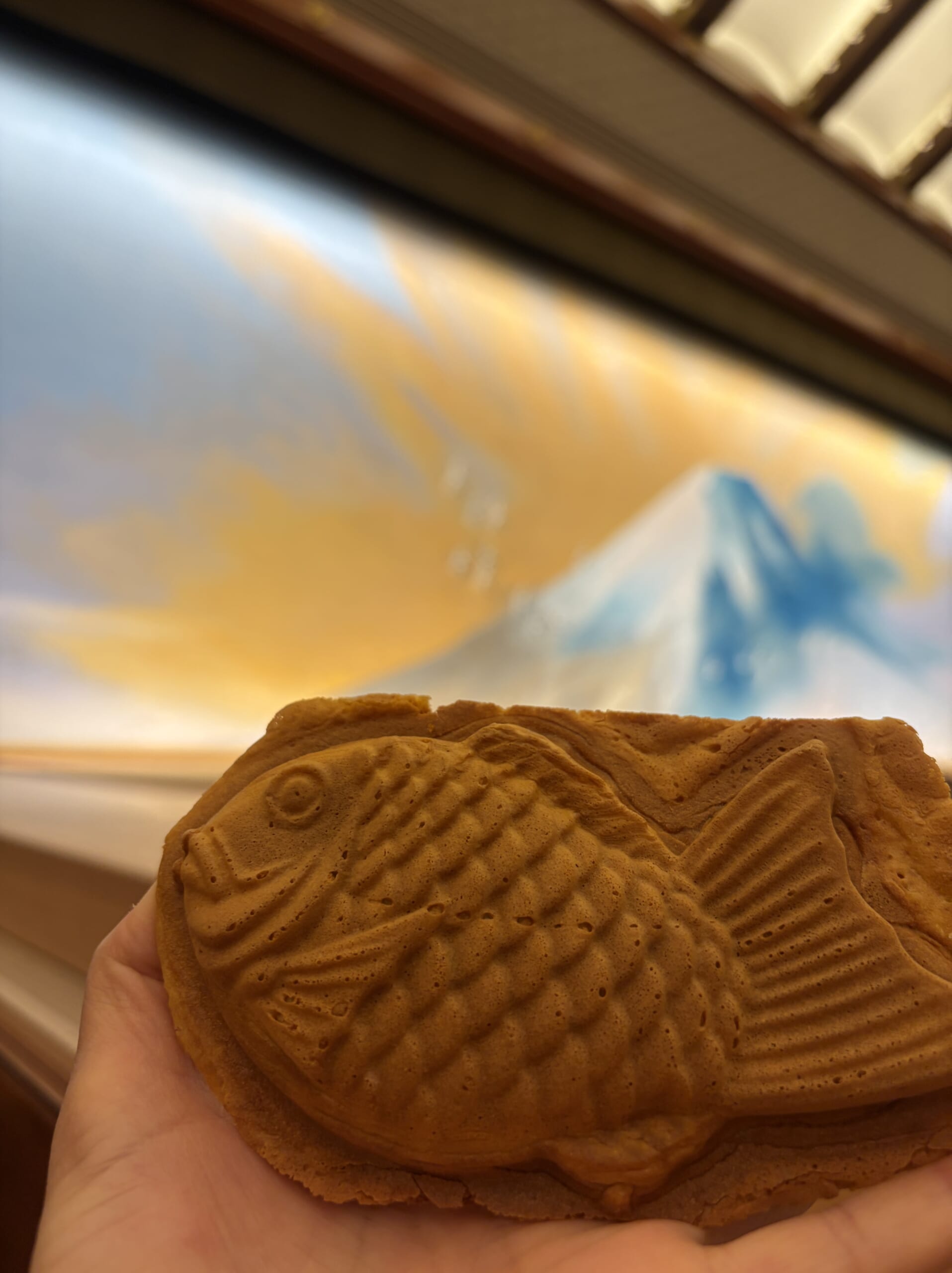
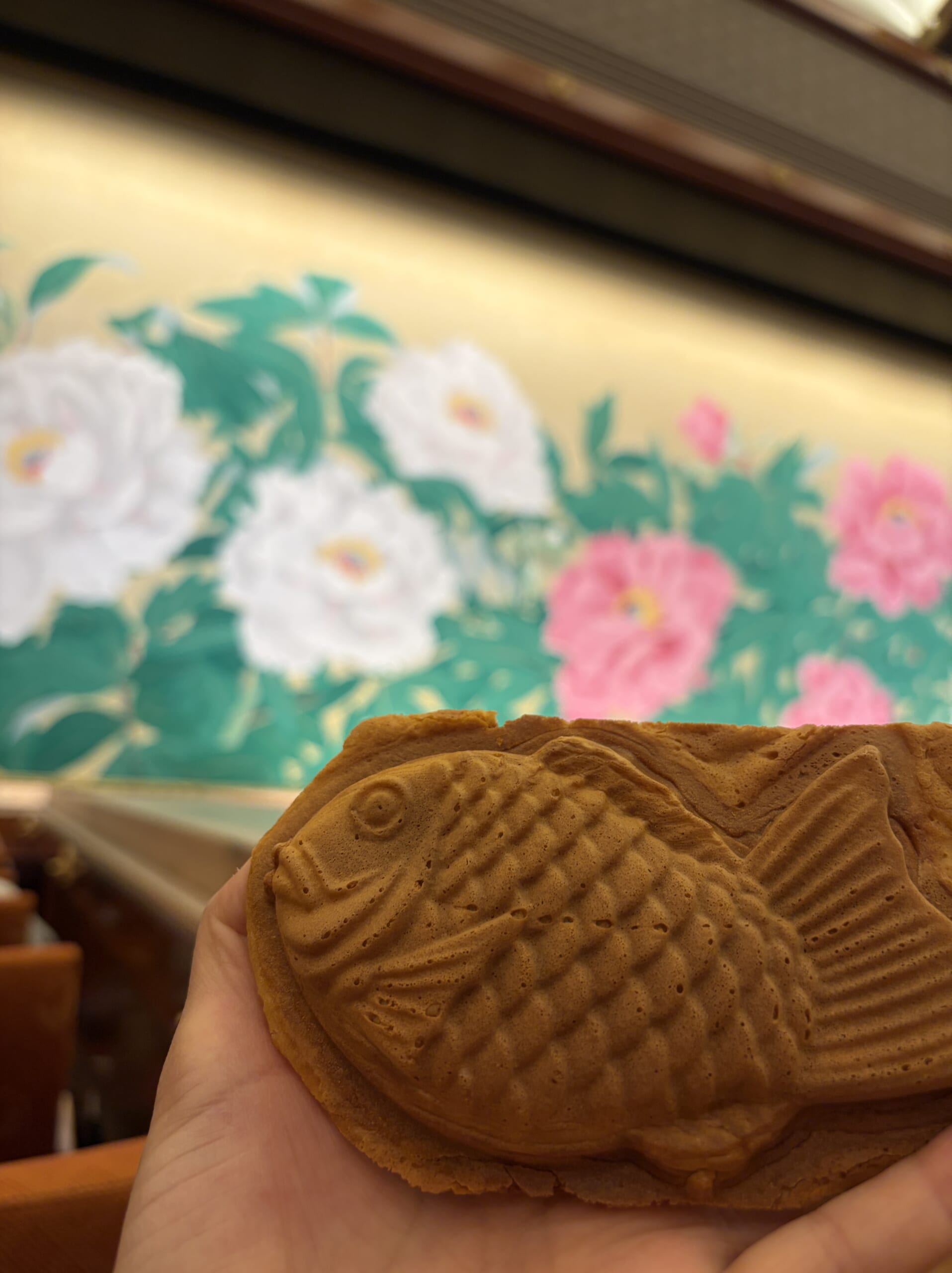
While I was queuing for medetai-yaki (the Kabukiza’s sea-bream-shaped cake filled with sweet bean paste), the gentleman making them asked me, “How many?” That doesn’t usually happen. I told him, then it turned out the person after me was the last one; to the next person, he said, “Sorry, we’re sold out.” So he’d been asking how many to check when they’d run out.
If you make it to the till without the gentleman asking how many, you can buy one. If he does ask how many, they’re nearly sold out, but you can still buy one. In the end, as long as nobody says “sold out”, you can buy one. Yes, I think this rule holds. Well, obviously (haha).
Wrapping Up
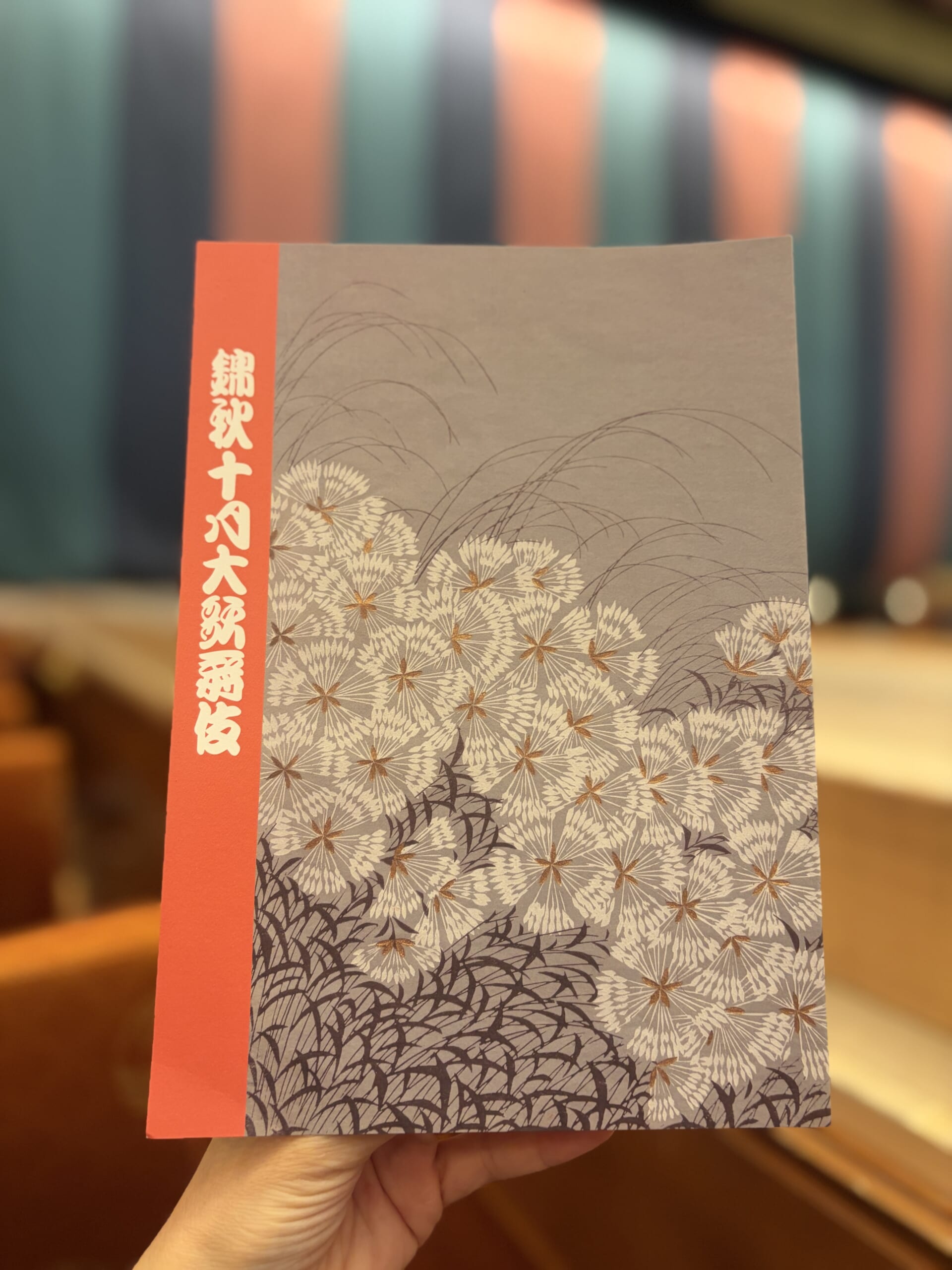
Alone in my spot beside the hanamichi, with three generations on stage in Moritsuna Jin’ya, a dashing Minosuke, plus medetai-yaki bought just before they sold out. I stood out, but I got to spend Part 2 more freely than usual (haha).
I’m already looking forward to the kōdan series in December.