At long last, Sengakuji Temple. I knelt at the graves of the Akō Gishi, putting my hands together for each of them in turn. As a bonus, my knees went wobbly on the station stairs on the way home (haha). Once again, it was the best day.
What Kind of Temple Is Sengakuji?
Sengakuji is a Sōtō Zen temple in Takanawa, Tokyo. It is the bodaiji (family temple, where generations of a family are laid to rest) of the Asano clan, lords of the domain of Akō. The grave of Asano Takumi-no-kami, together with those of the Akō Gishi (the loyal retainers of Akō, known abroad as the 47 Rōnin), lies in the temple grounds.
Briefly, the Akō Incident went like this. In 1701 (Genroku 14), in the Pine Corridor of Edo Castle, Asano Takumi-no-kami attacked Kira Kōzuke-no-suke with his sword. He was ordered to commit seppuku that very day, while the Asano house was abolished. The following year, on the 14th day of the 12th month, his former retainers, led by Ōishi Kuranosuke, raided the Kira residence. After taking Kōzuke-no-suke’s life, they offered his head at their lord’s grave here at Sengakuji.
This incident became the basis of Kanadehon Chūshingura (The Treasury of Loyal Retainers). In kabuki, Asano Takumi-no-kami appears as Enya Hangan, while Ōishi Kuranosuke appears as Ōboshi Yuranosuke.
A Day That Was All Chūshingura
In November I saw the full-length staging of Kanadehon Chūshingura at the Kabukiza Theatre. I also watched videos of the December 2025 nakaseki (the mid-month run at the yose, traditional variety theatres, from the 11th to the 20th) on Hakuzan TV, the YouTube channel of kōdan (traditional storytelling) performer Kanda Hakuzan… Lately everything had been Chūshingura, so I thought, “Time to pay my respects at Sengakuji too!” So here I am!
On this day, too, I saw the site of the Pine Corridor at Edo Castle before heading to Sengakuji. This time, simply everything was Chūshingura.
Chūshingura from the Station Onwards
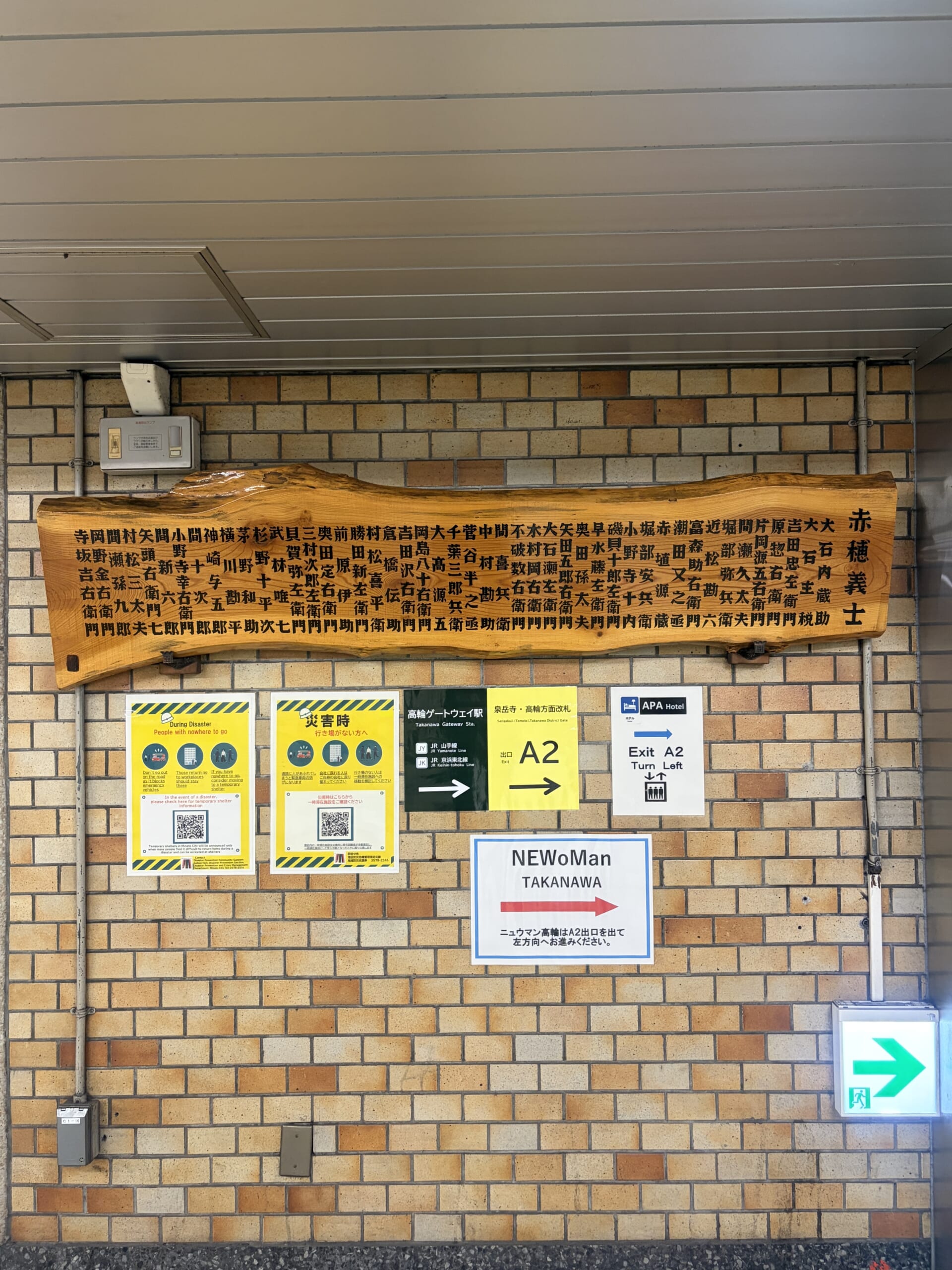
When I arrived at Sengakuji Station on the Toei Asakusa Line, there was a sign in the station with the names of the Akō Gishi written all across it. Chūshingura before I’d even reached the temple.
Come to think of it, the station is named after the temple. Isn’t that amazing?
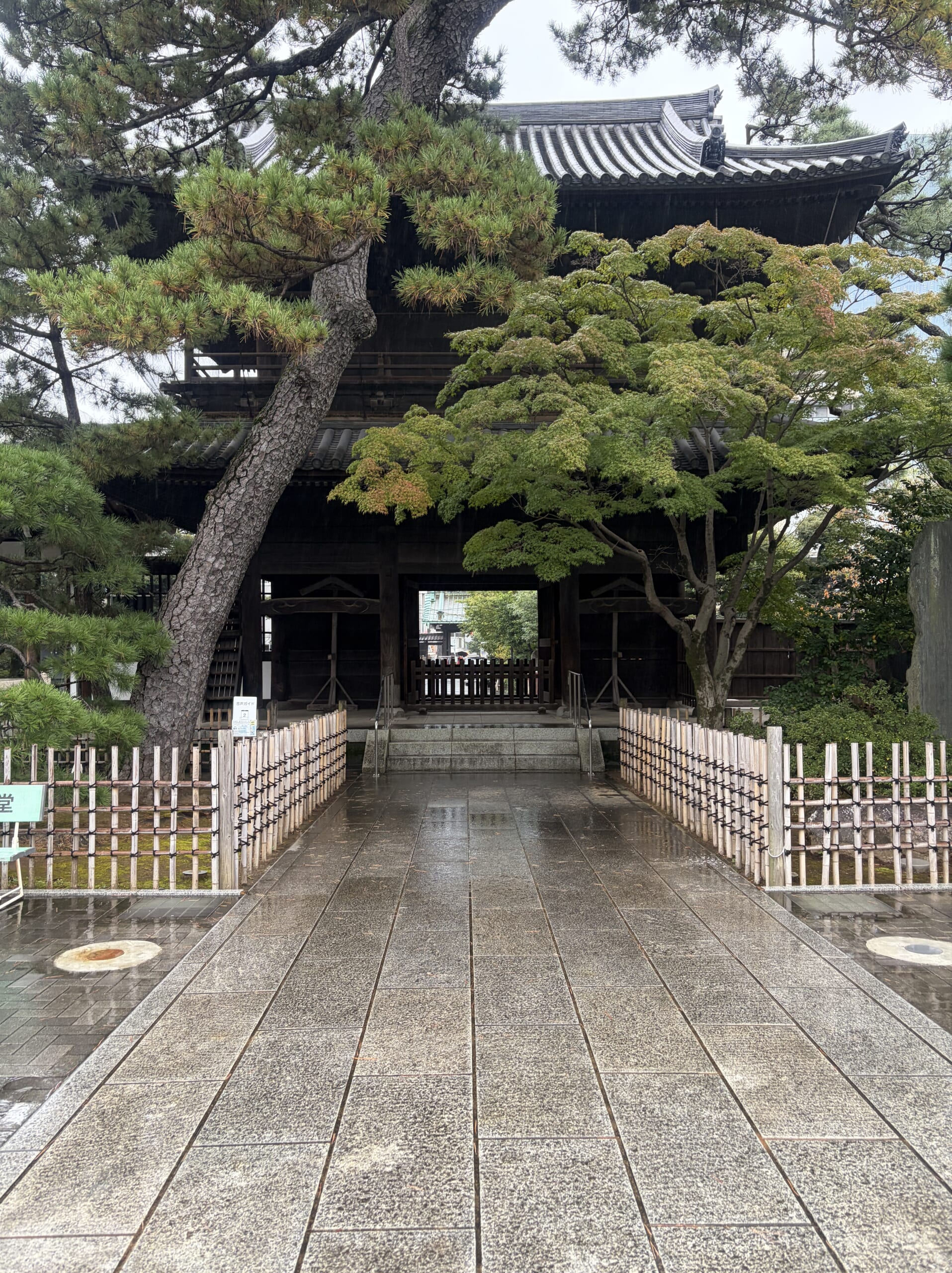
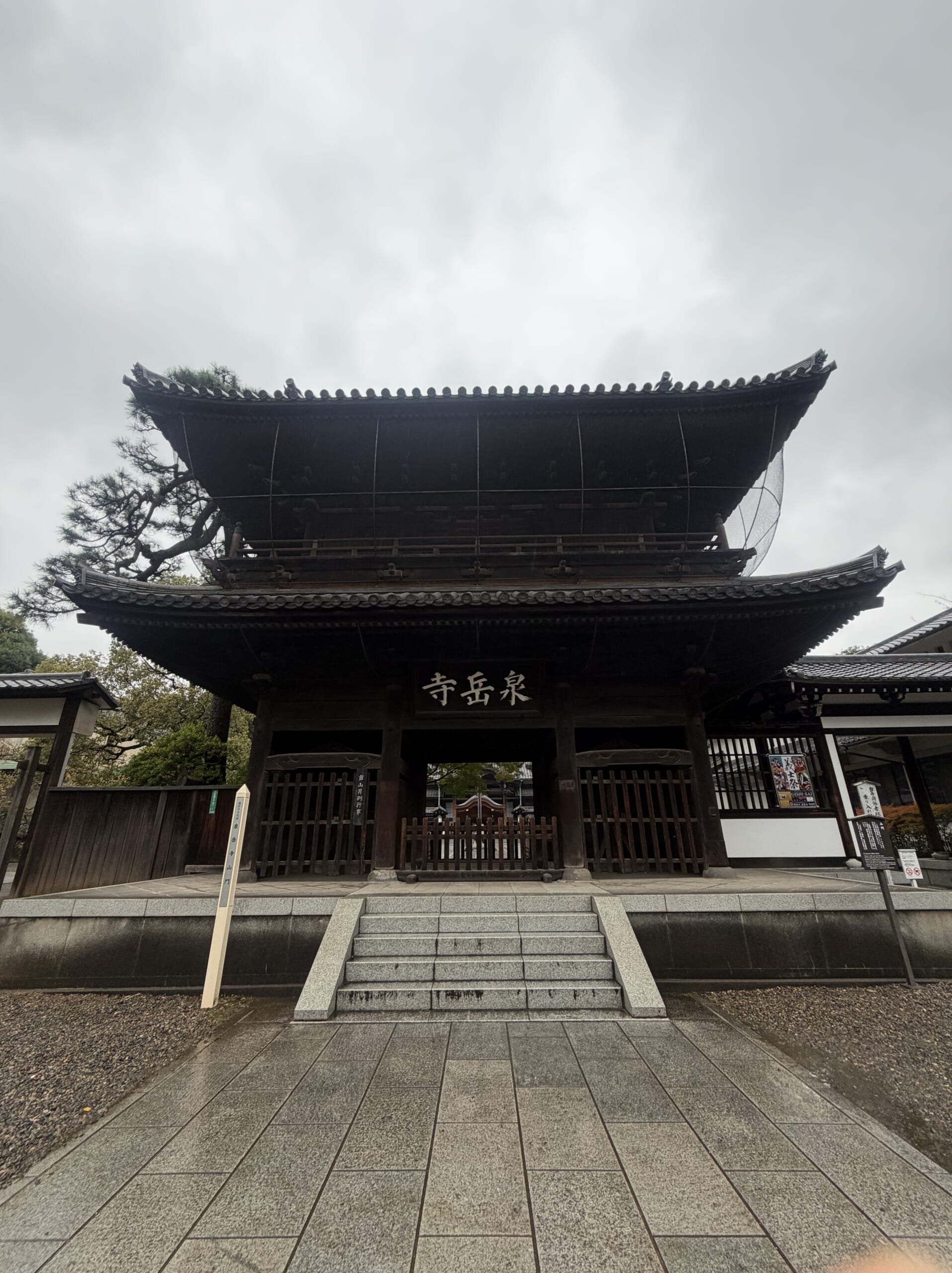
It’s just a short walk from Exit A2. Through a rain-soaked gate, I arrived at the Sanmon, the temple’s main gate!
Rainy Grounds with the Statue of Ōishi Kuranosuke
Right by the entrance stands a statue of Ōishi Kuranosuke. Apparently he is holding the pledge scroll listing the retainers who joined the raid, gazing at the eastern sky (towards Edo).
Behind the temple grounds, high-rise buildings poke up into the sky. A temple in the middle of the city: such a Tokyo view~~~.
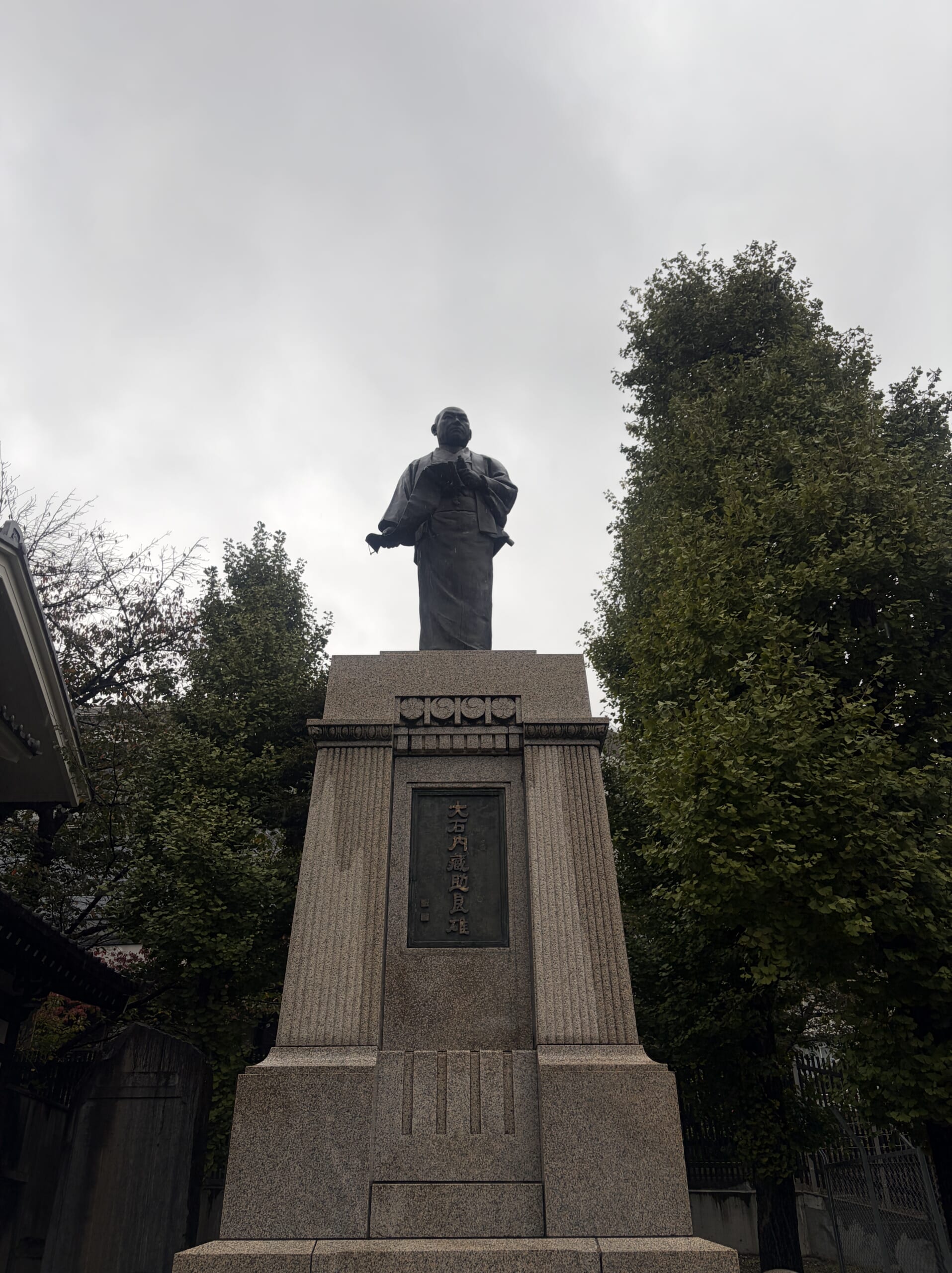
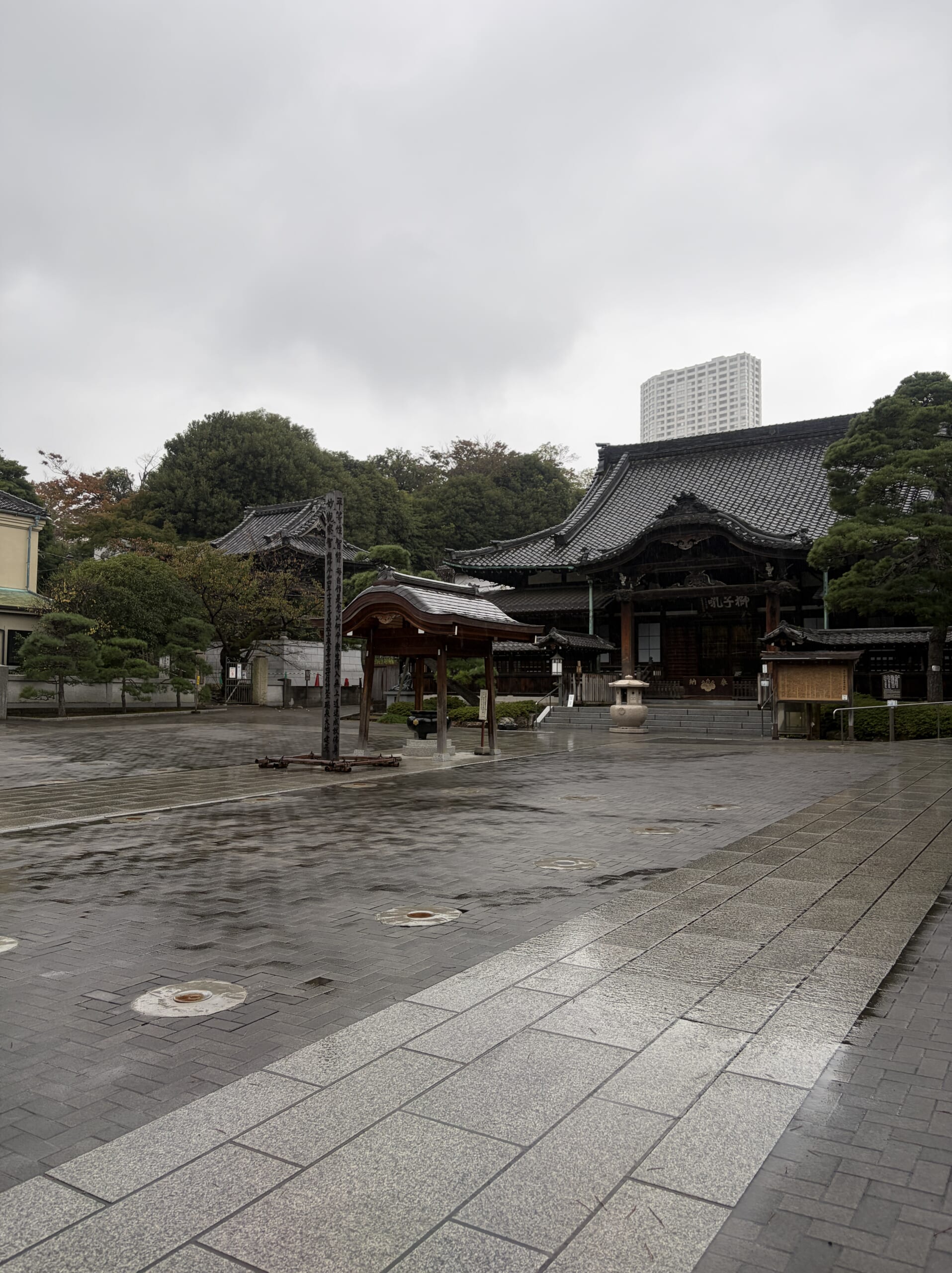
Looking back from the grounds: the Main Gate framed by trees, with rain-soaked stone paving. A beautiful view. There was also “Chikara’s Plum,” linked to Kuranosuke’s son, Ōishi Chikara.
Putting My Hands Together, One by One
After praying at the Main Hall, I headed to the graves of the Akō Gishi.
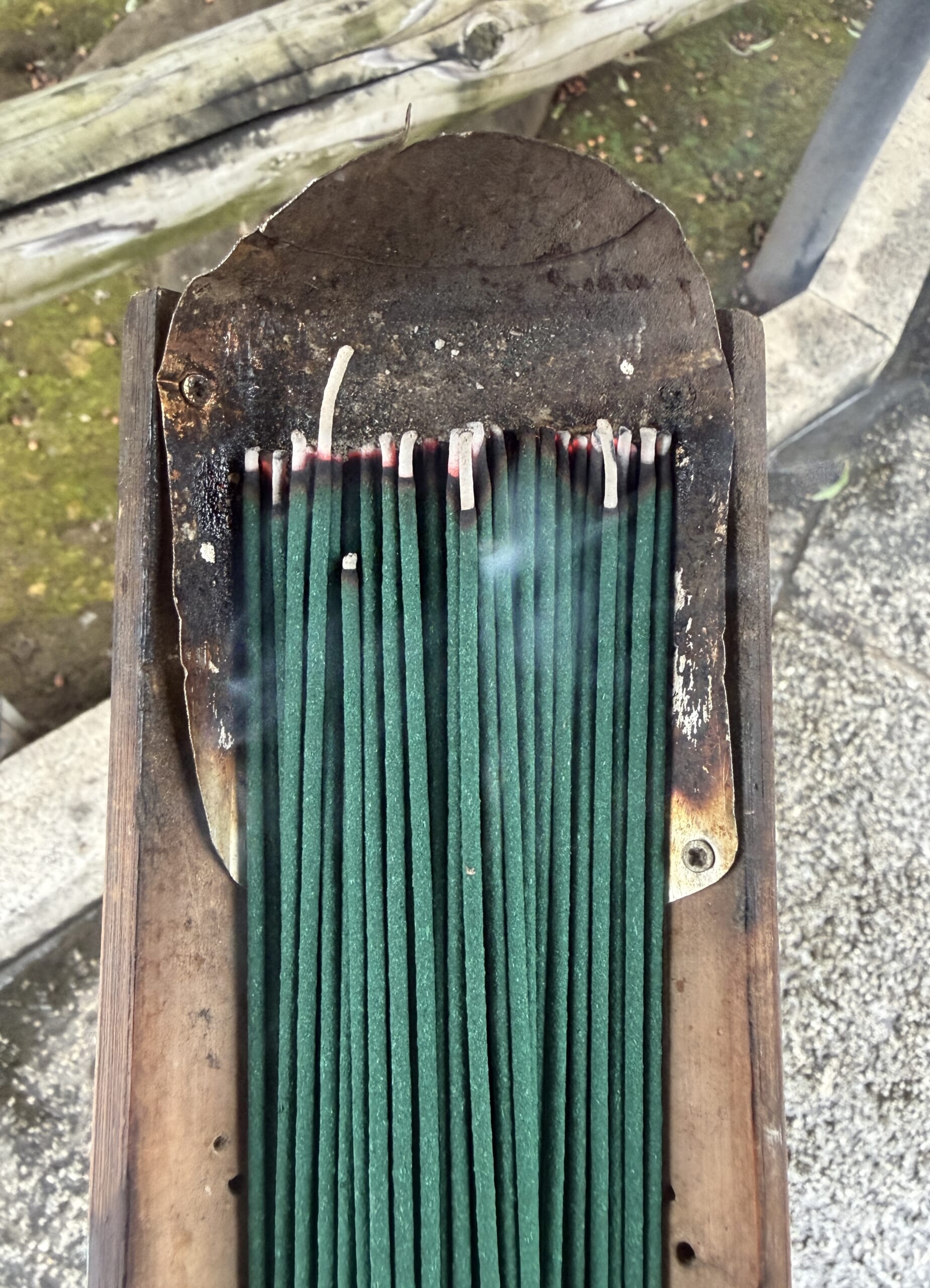
Incense sticks are offered for 500 yen. A temple staff member told me that, given the number of graves, about two sticks each would be right, so I made my way round, offering a little at each one.
From here on it’s a burial ground, so I didn’t take any photos. I also held back from photographing the Head-Washing Well (where, it is said, Kōzuke-no-suke’s head was washed after the raid).
Not taking photos (well, not being able to) was out of respect for those who have passed, I suppose. I thought they might not like a camera suddenly pointed at them… though of course the Akō Gishi have never even seen a camera… I also didn’t want to mix up taking photos with paying my respects.
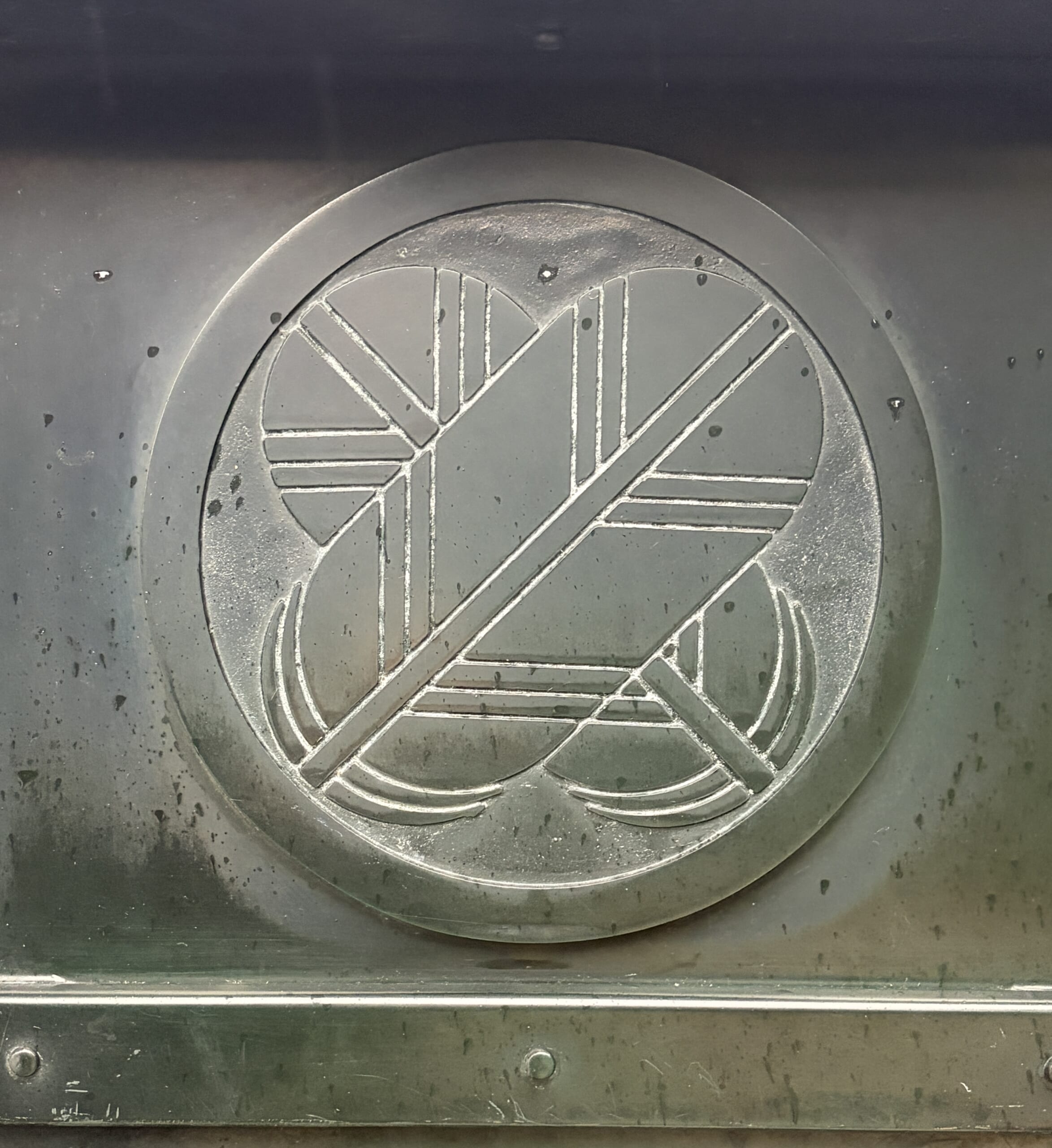
Oh, one more thing: the only thing I photographed at the burial ground was a crest, after asking the staff for permission.
The graves of Asano Takumi-no-kami, plus Ōishi Kuranosuke, were special, just as I’d expected. Then there was Isogai Jūrōzaemon, the role Tsurumatsu Nakamura played at the Kabukiza in November, as one of the retainers in the night raid of Act XI. He is appearing at the Kabukiza in December too, so that’s one more thing to look forward to.
Many people had come to pay their respects, so the smoke was billowing. No photos of the graves, but I did snap the incense smoke drifting up into the sky. The smell of incense soaked into my hat as well as my jacket. With a favourite outfit, that could be a bit of a problem. Still, after a day of airing, the smell was gone, so don’t worry about a thing. Just pay your respects from the heart!
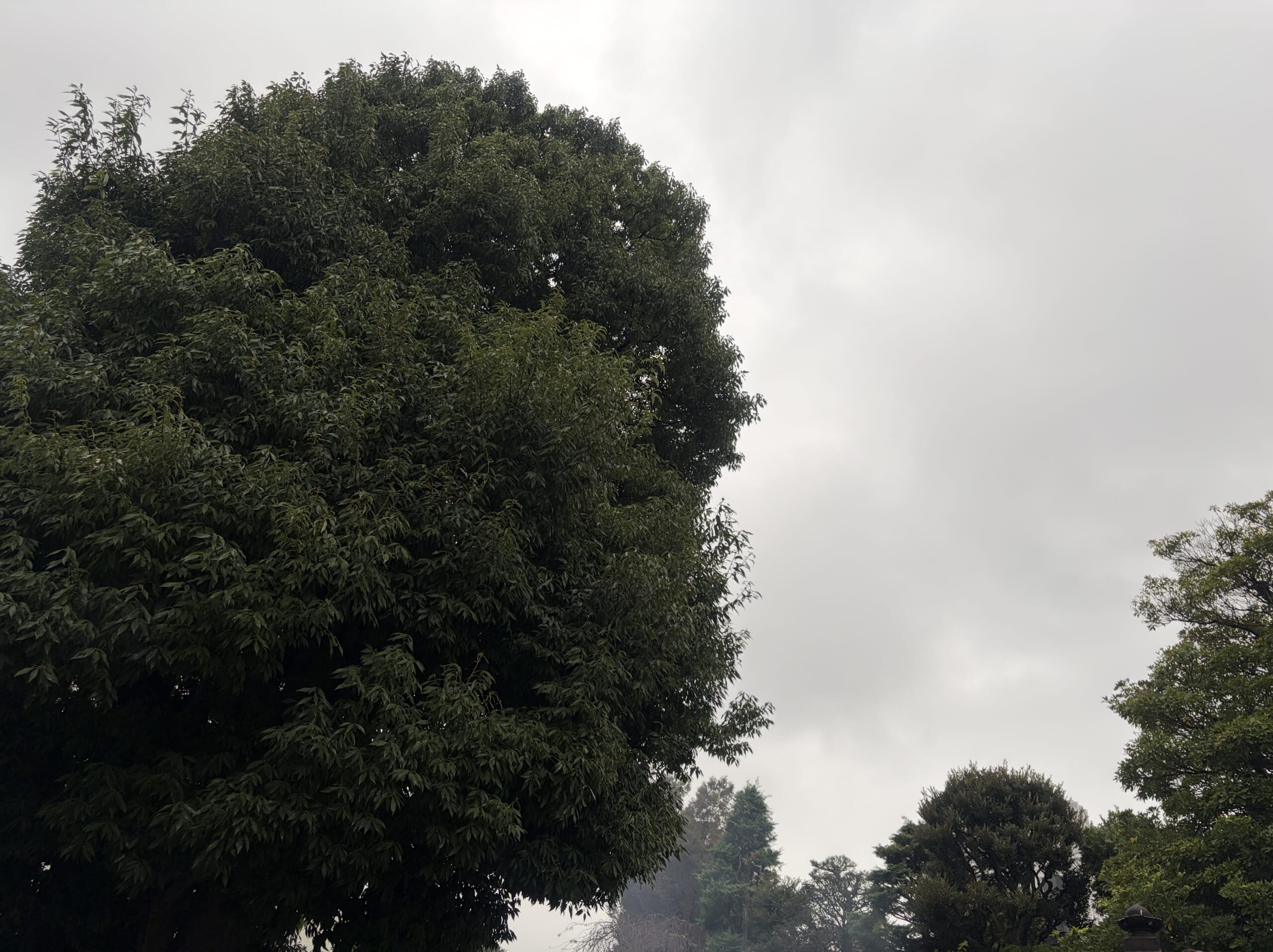
“Thank You” to the Main Gate
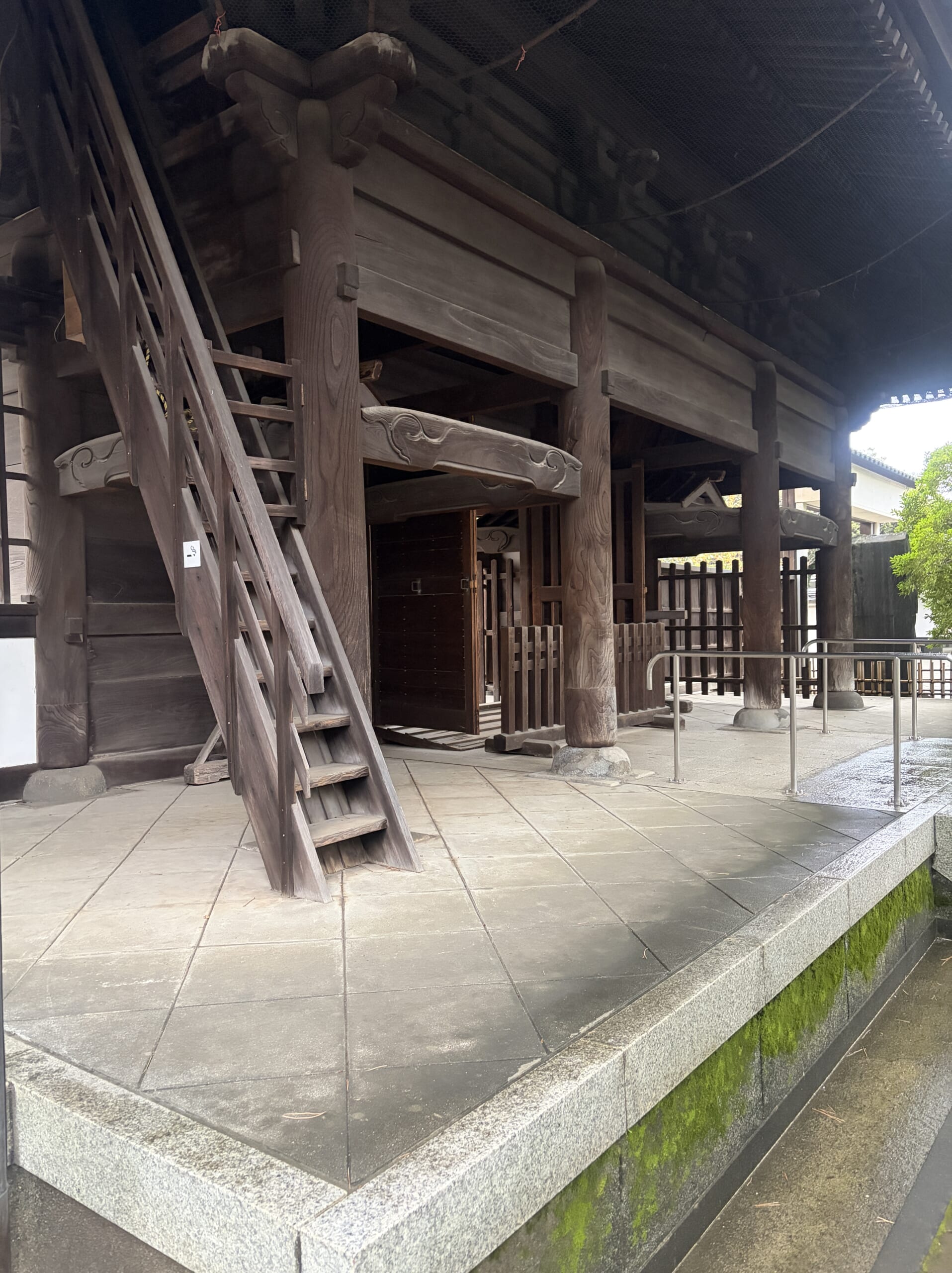
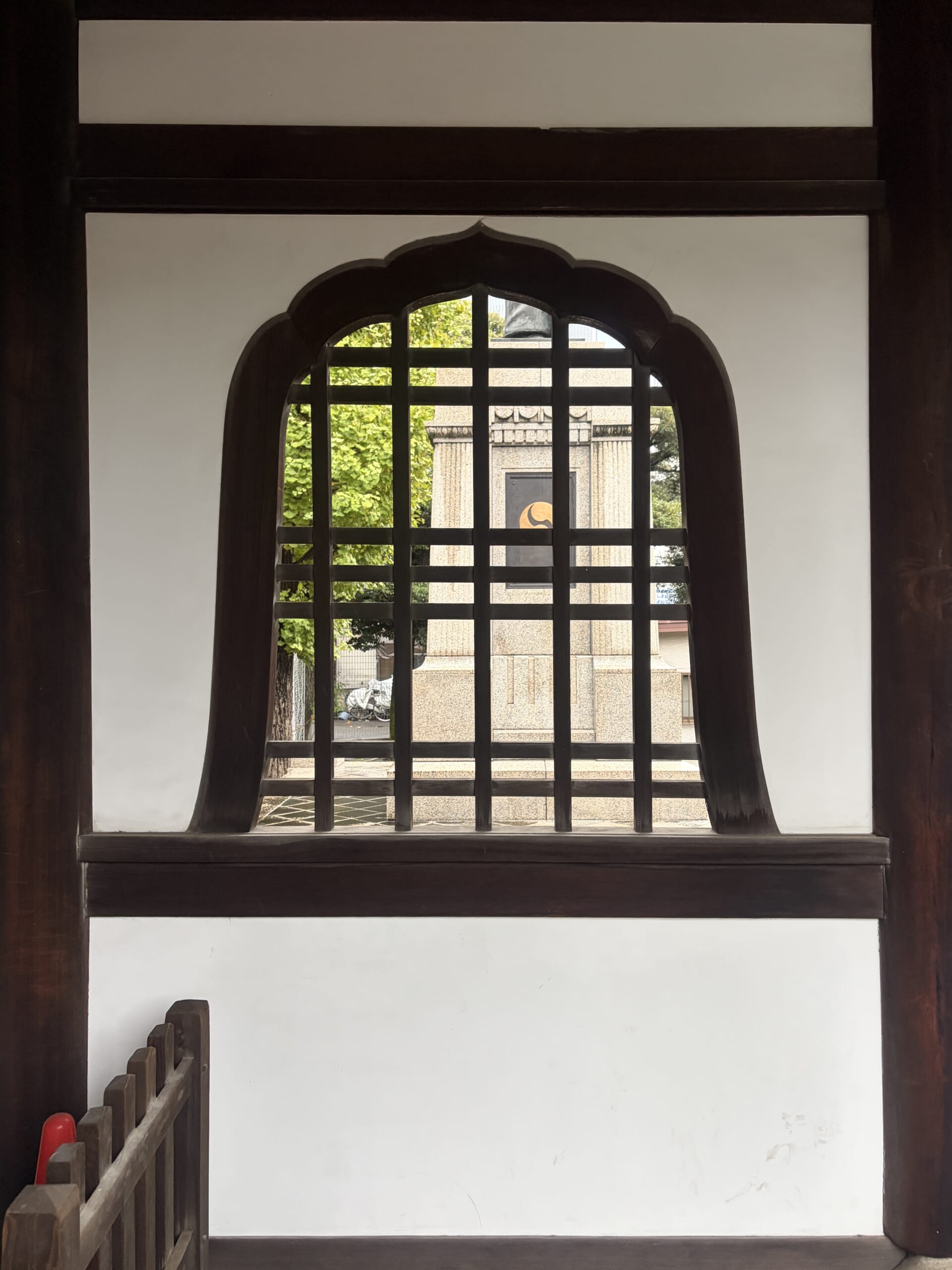
On my way out, I looked up at the staircase of the Main Gate. I wonder what it’s like up there~~~. The view through the lattice of the katōmado (a window whose top curves like an arch) was lovely too.
For one last time, I looked up at the Main Gate. Thank you.
Knees “Laughing” on the Station Stairs
On the way home, as I went down the station stairs, my knees were laughing for some reason (in Japanese, “laughing knees” means wobbly knees). Huh? Why? Then it clicked. I had knelt at each grave, one by one, so the fronts of my thighs were completely worn out. From the next day on, my muscles ached terribly (haha). I never imagined that visiting graves would leave me with sore muscles.
“An Outline of the Akō Incident,” Read on the Way Home
On my way home, I read the explanatory leaflet from Sengakuji. It introduces the historic spots in the grounds with illustrations, very thoroughly.
Its section “An Outline of the Akō Incident” is very simply written, yet everything is in there: the frustration of Enya Hangan… no wait, Asano Takumi-no-kami, plus the anger of the Akō Gishi.
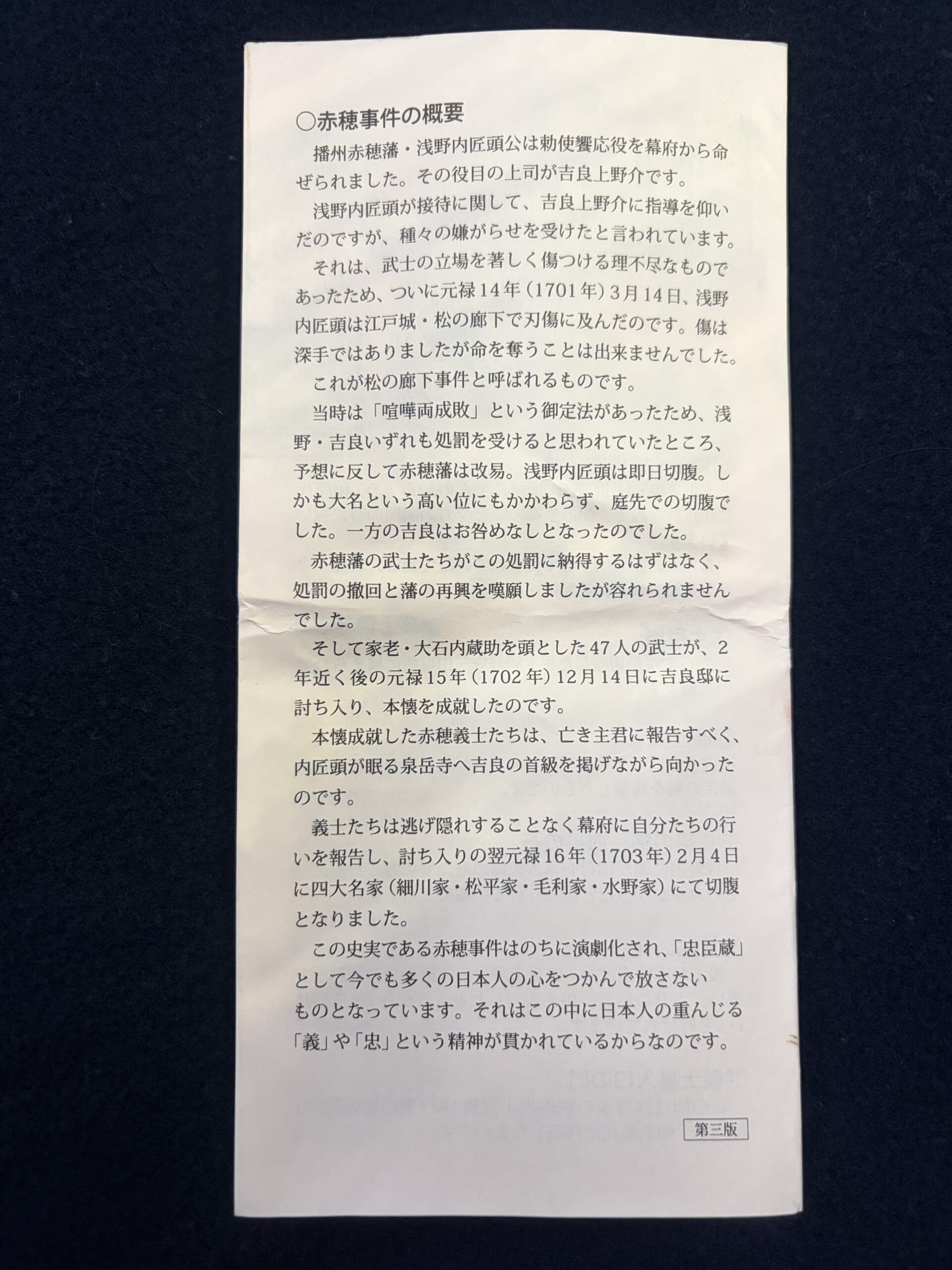
In this short text were packed sorrow, frustration, righteousness, gratitude, loyalty, resolve. Before I knew it, I was in tears.
Summary
This time, I only prayed at the Main Hall plus the graves. The Akō Gishi Memorial Hall, with the Gishi Wooden Statue Hall, will have to wait for next time. The Gishi-sai festival in December will probably be crowded, but I’d still love to go.
Then, back home: Seppuku Monaka (monaka are crisp wafers filled with sweet bean paste). It’s a sweet from Shinshōdō, a wagashi (Japanese sweets) shop in Shinbashi. The shop stands on the former site of Lord Tamura Ukyō-no-daibu’s residence, where Asano Takumi-no-kami committed seppuku, so I’m told. I bought it at the shop on the ground floor of the Kabukiza; the box reads “Kabukiza Souvenir, Limited Edition.” Inside there’s gyūhi (soft rice-flour mochi), which makes it so tasty. I’ve eaten far too much anko (sweet bean paste) these past few days (haha). If I can get back to buy more, I’d love to have them again.
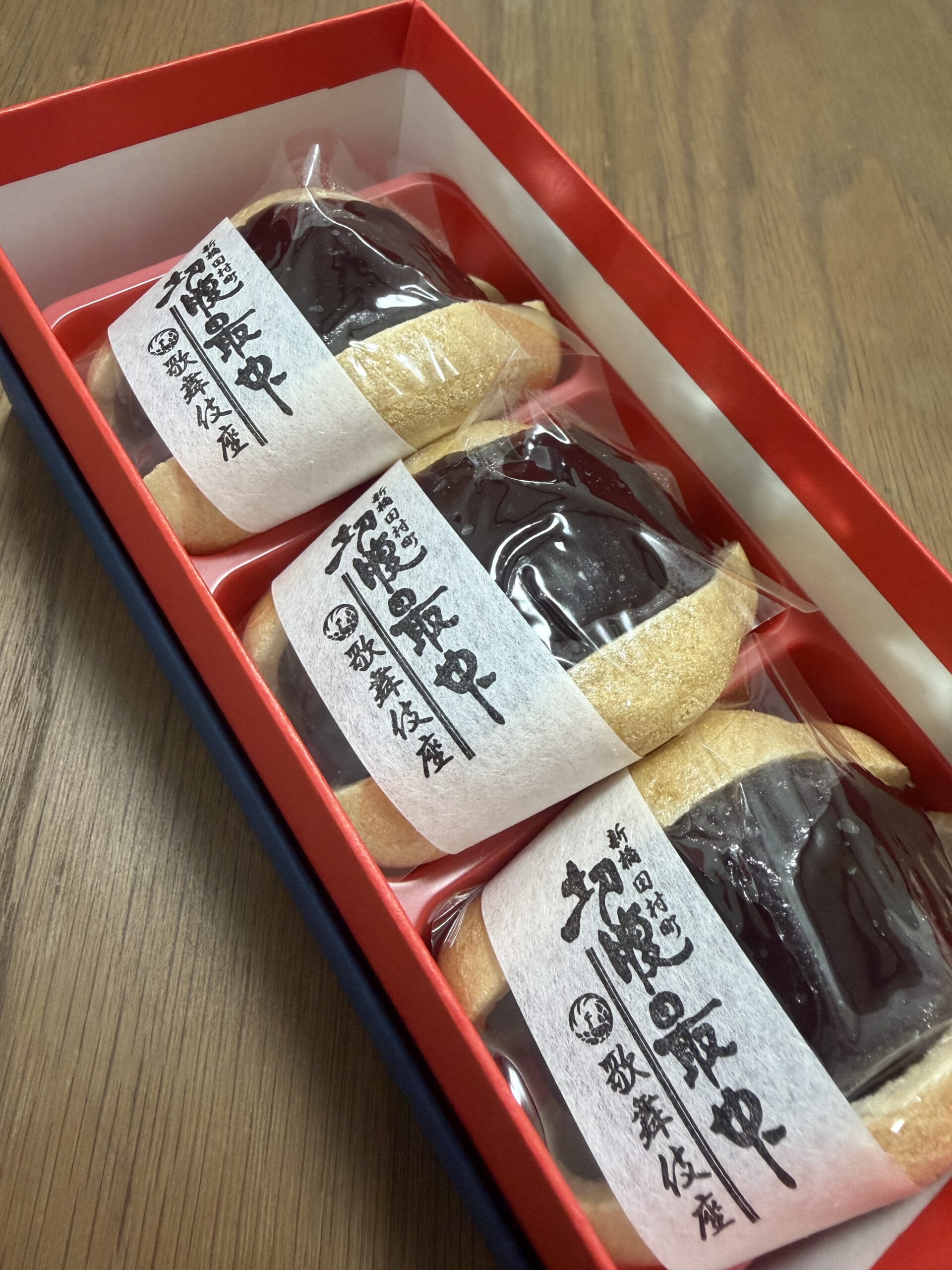
Right to the very end, everything was Chūshingura.