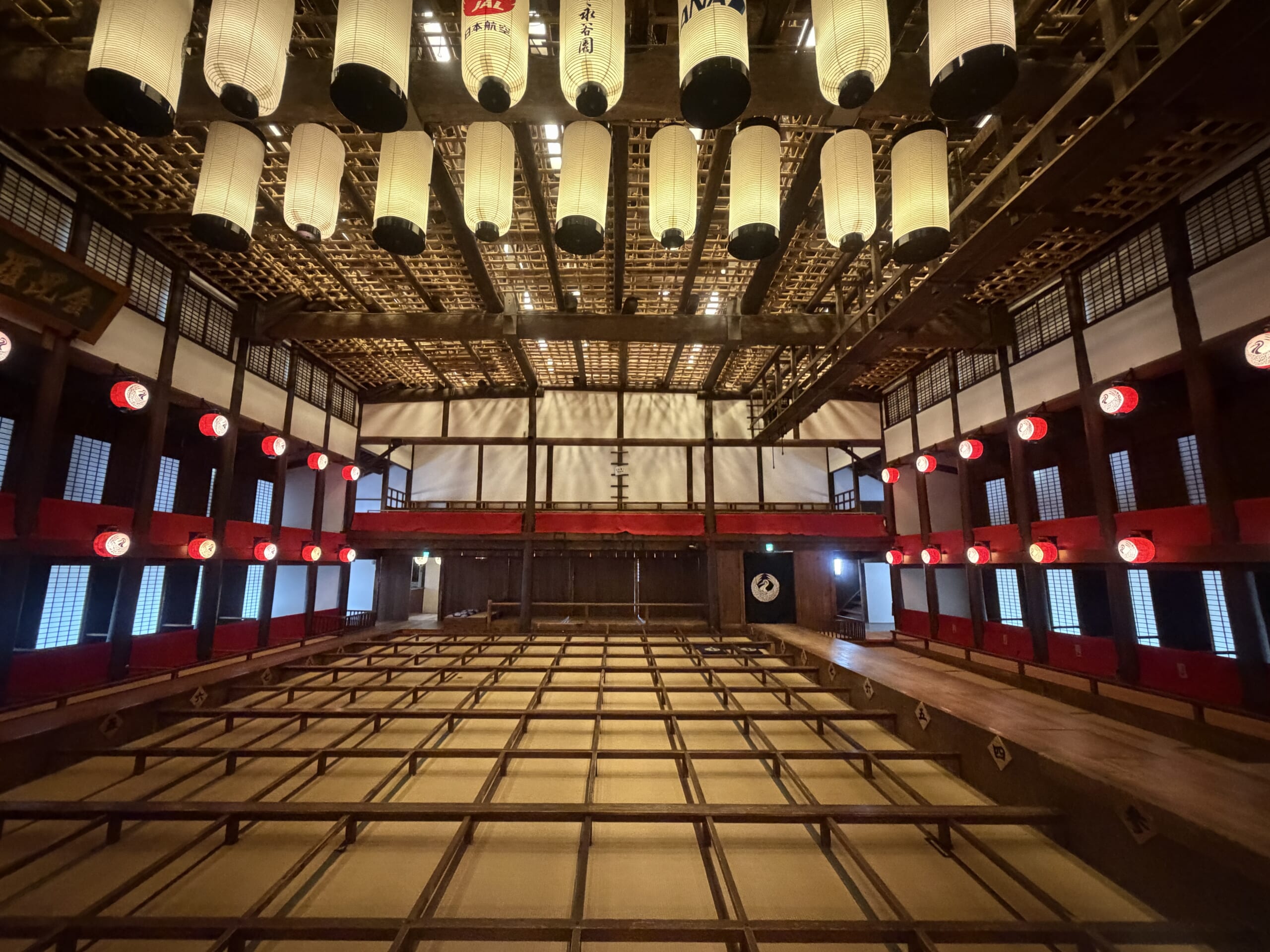
When you sit beside the hanamichi (the raised walkway that runs through the audience), the rules are simple: don’t touch it, don’t put anything on it, never cross it. Today, I ended up standing right on top of it. Kanamaruza on a rainy day — once again, it was the best.
🗺️ See the route I walked in photos → [Travel Walks: Former Konpira Grand Theater, Kanamaruza Route Map (October 2026)](https://happy-go-solo.com/en/kanamaruza-route-map-202610-en/)
More from this place → [Shikoku Konpira Grand Kabuki: Part 1 / Part 2 (April 2024)](https://happy-go-solo.com/en/konpira-kabuki-202404-en/)
What Is Kanamaruza?
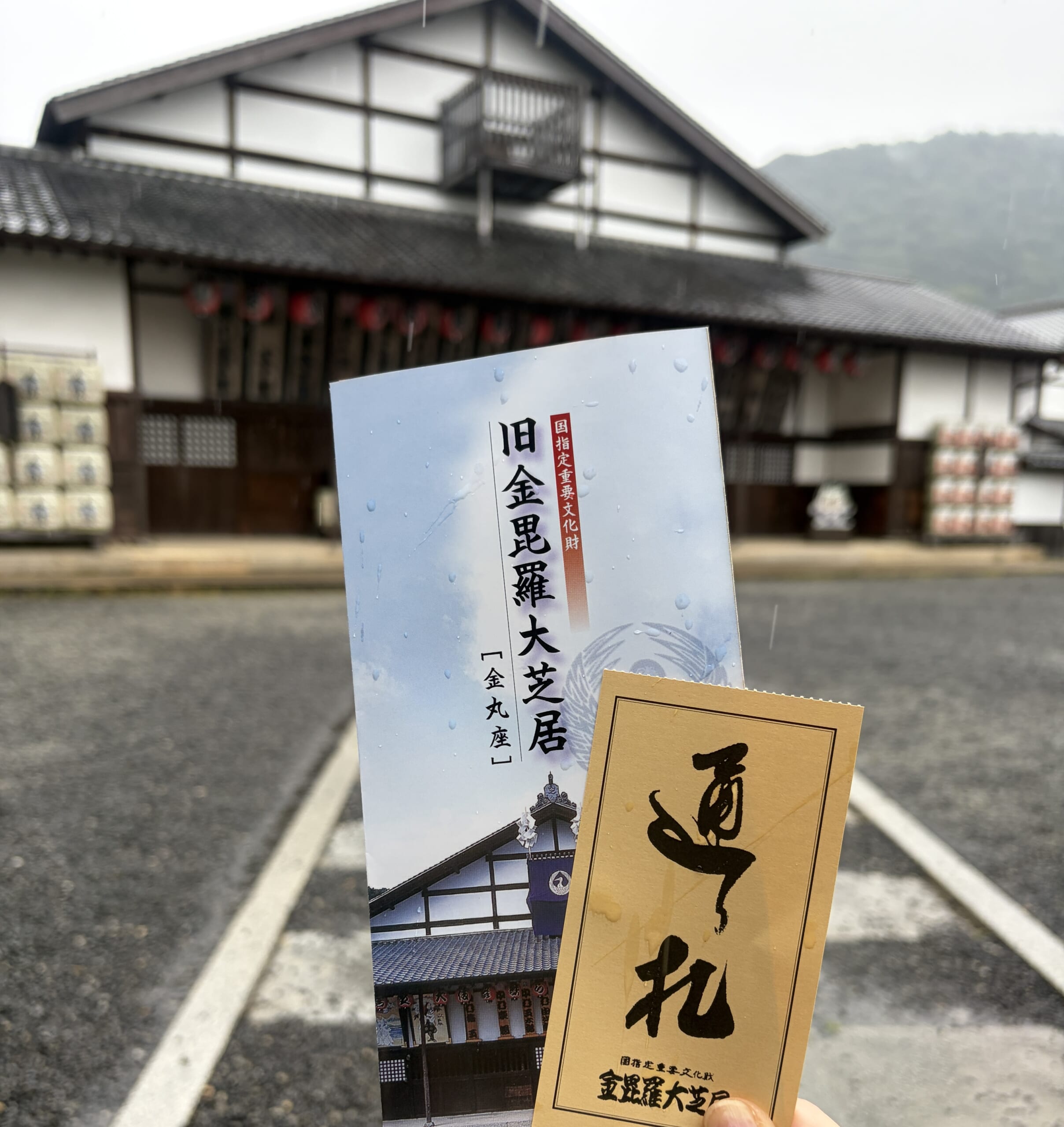
The Former Konpira Grand Theater in Kotohira, Kagawa Prefecture, known by its nickname “Kanamaruza”, was built in 1835. It is the oldest surviving kabuki theatre in Japan. It is a nationally designated Important Cultural Property, with the Shikoku Konpira Grand Kabuki held here every spring.
On days with no performances, you can explore the hanamichi, the stage, the dressing rooms, even the naraku (the space beneath the stage). This was my first return since seeing a show here in 2024.
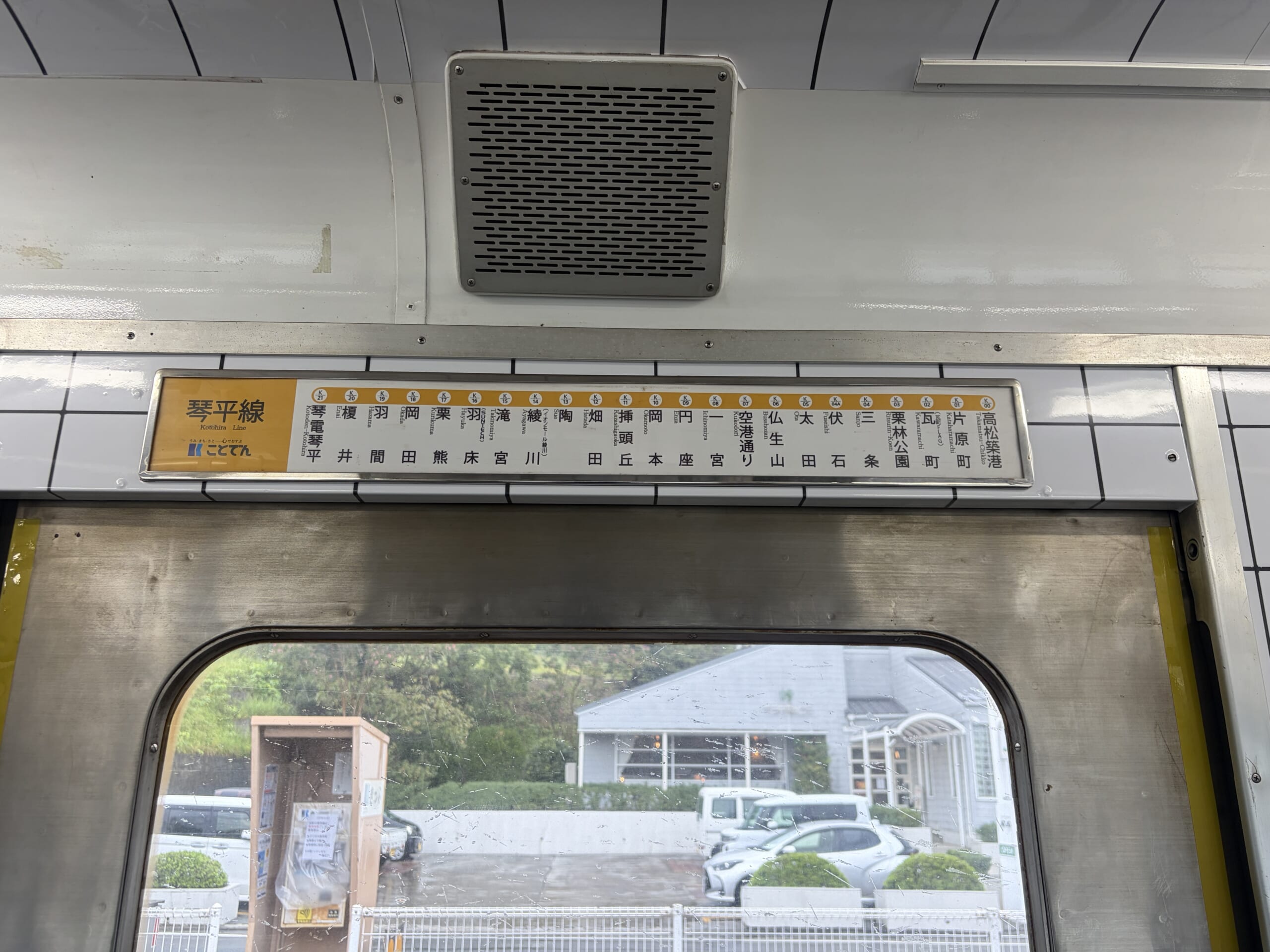
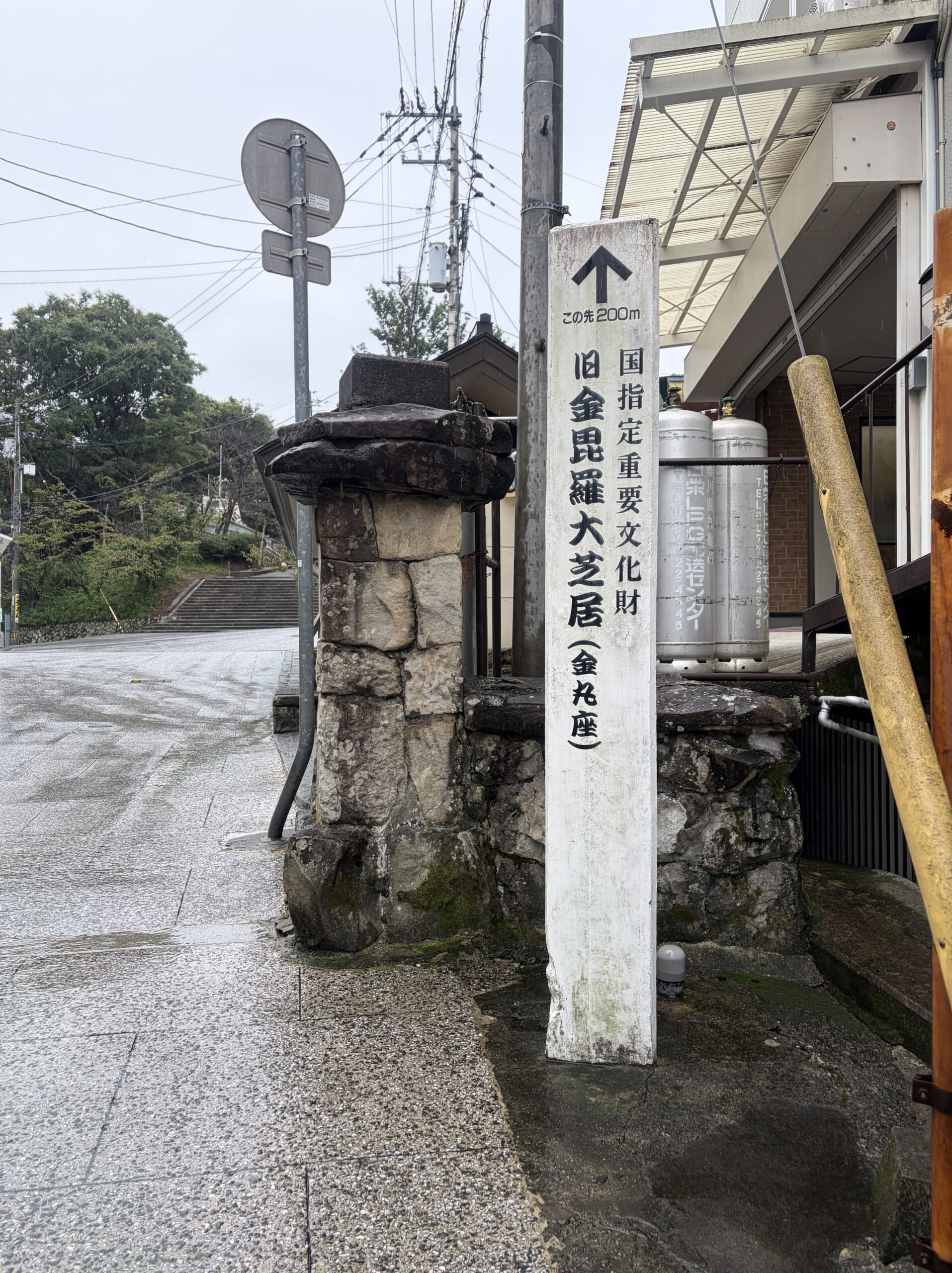
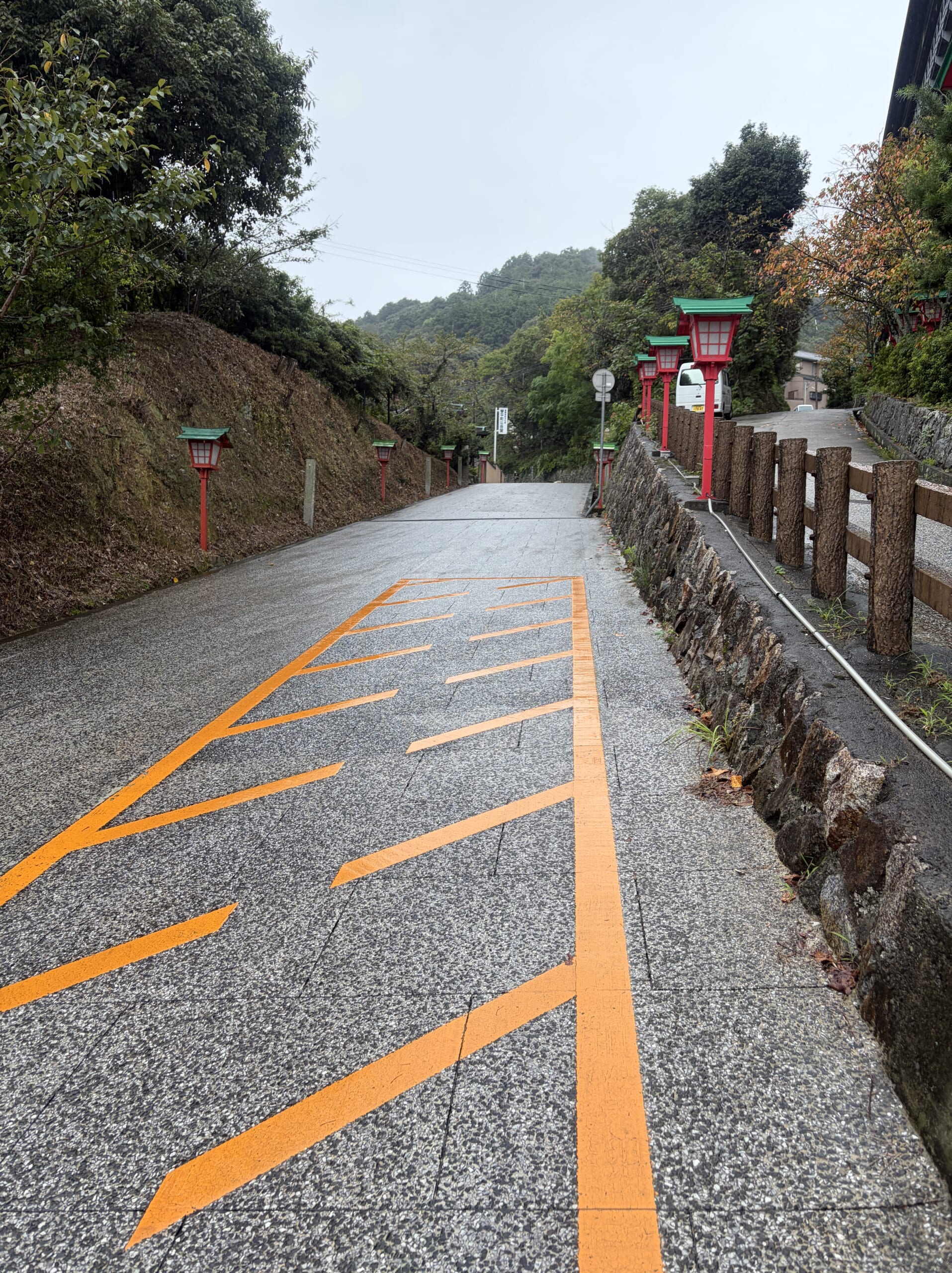
This time I trundled along on the Kotoden line from Takamatsu-Chikko Station. From Kotohira Station I headed for the long stone staircase up Mt Konpira, turning left very near the start (I didn’t climb it). The slope after that was quietly tough…
Kanamaruza With No One Around
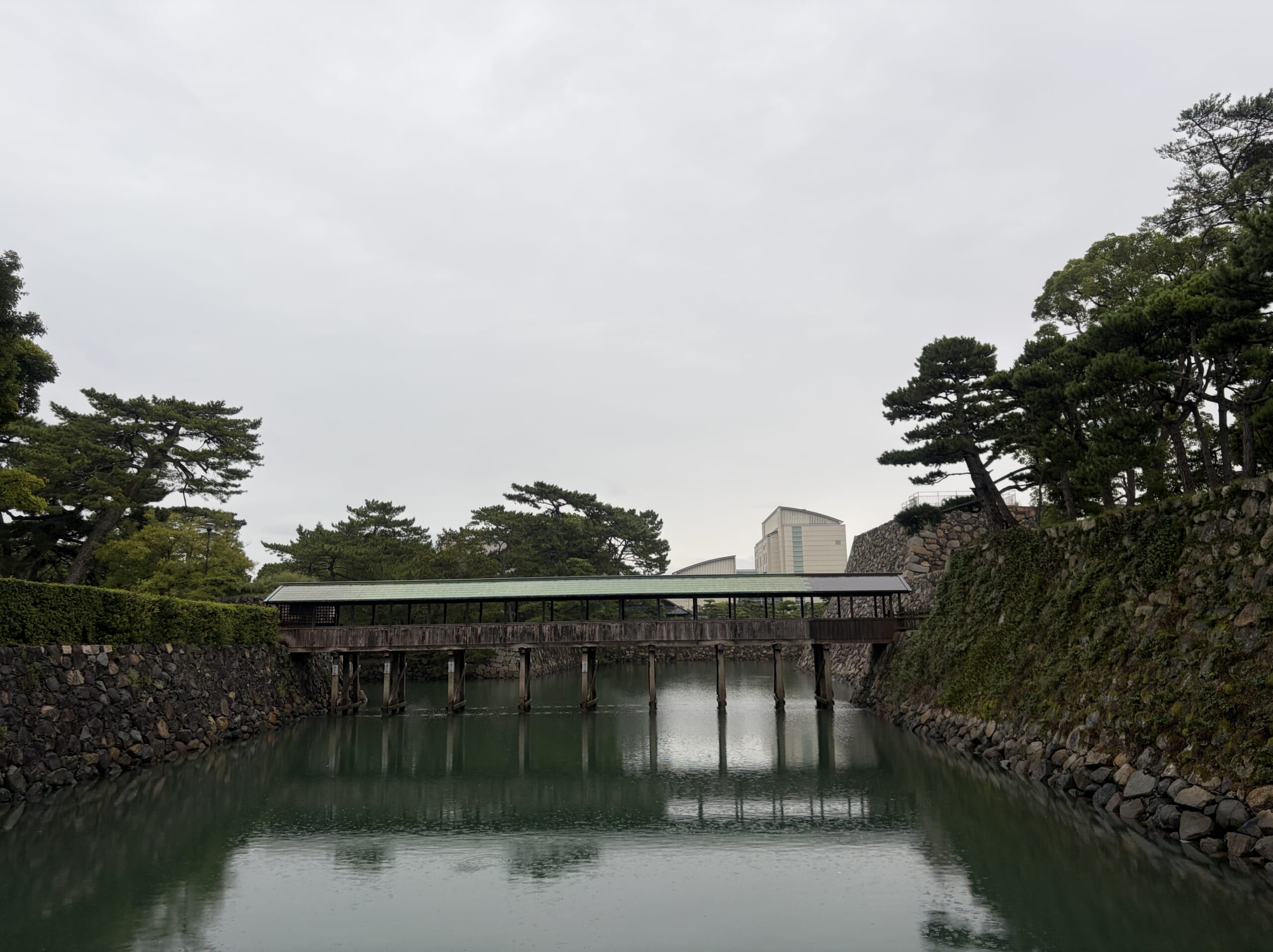
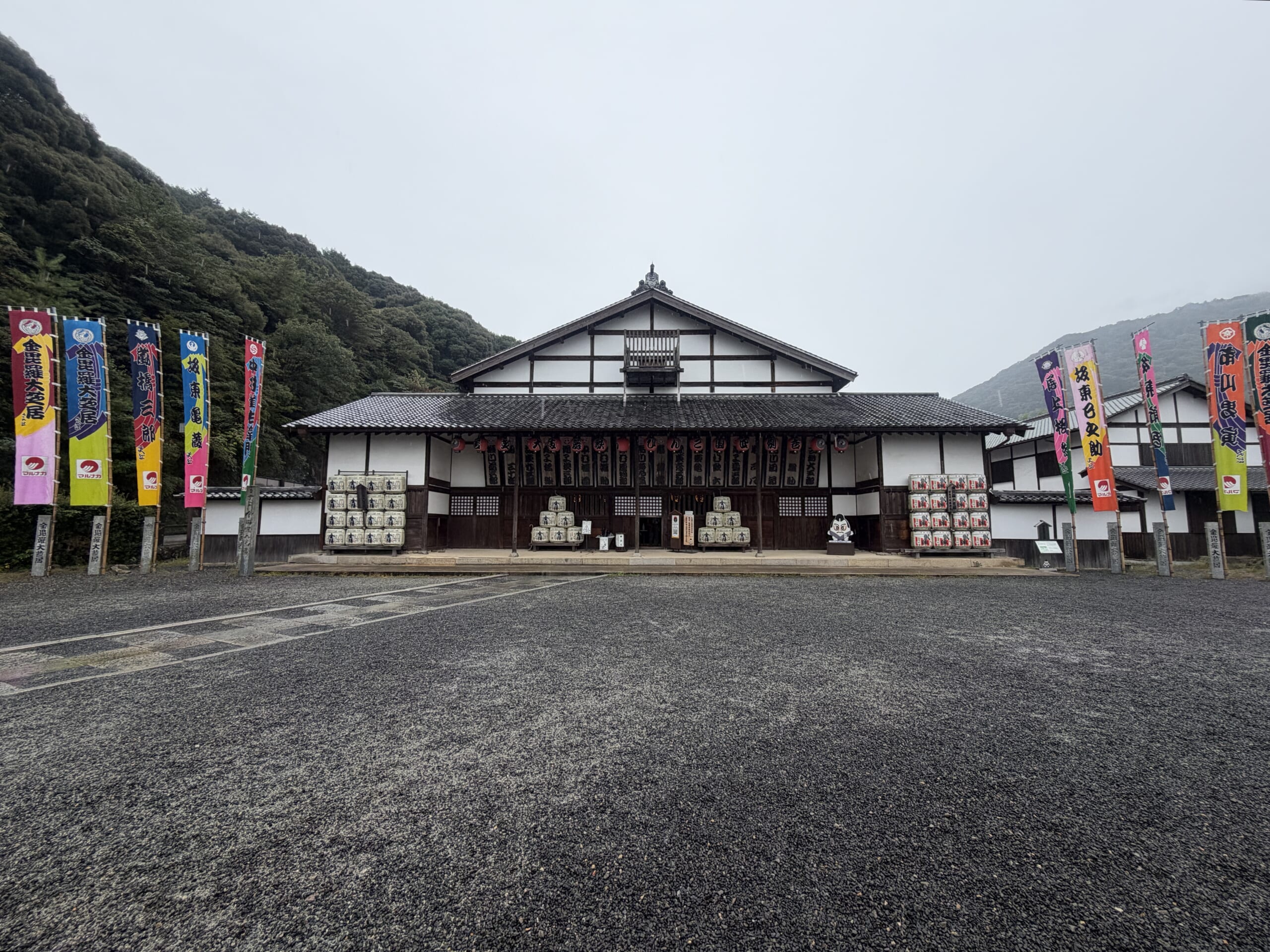
The first thing I noticed on arrival: the square in front of the building is huge! During the performance season it’s packed with people, plus food stalls. Today it was empty, quiet. Last time, this was the square where I browsed the stalls until the interval ran out (haha). With no one around, the building’s own character really comes through.
Inside, a guide showed me around. “My tour takes about fifteen minutes, so if you feel you’ve heard enough partway through, feel free to look around on your own,” they said at the start. But I’m the type who likes to hear everything. I kept asking questions, so before I knew it I’d taken up quite a lot of their time (haha).
They shared fun backstage stories with me, along with some rare photographs. Some of the stories felt almost off the record, so if you’re curious, go hear them in person ⭕️
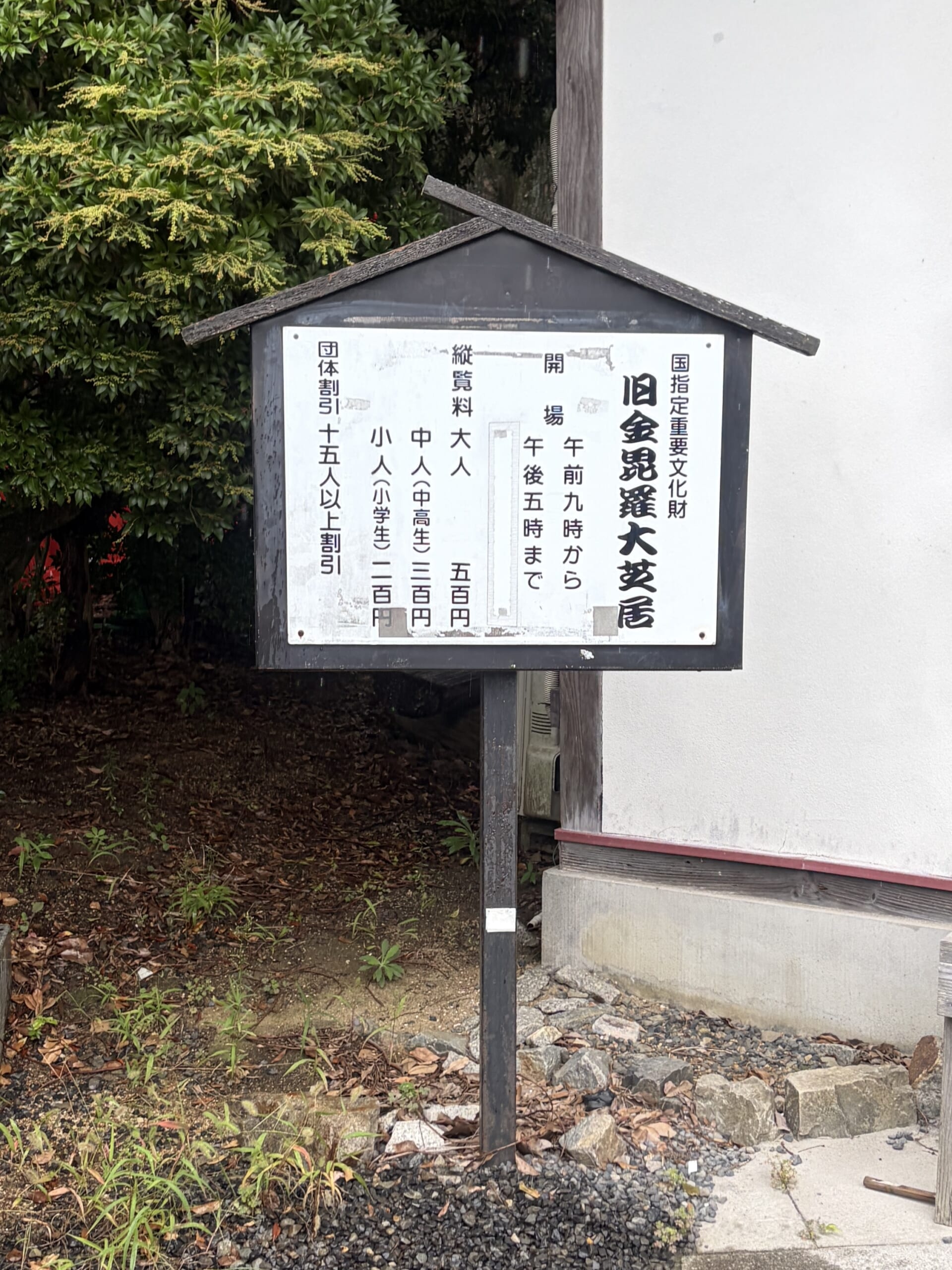
They even took photos of me, a solo visitor. It was a different kind of solo outing, a little nerve-racking, but I was really happy to have them. All this for an adult admission of 500 yen. For this quality, that’s a bargain!
I Ended Up Standing on the Hanamichi
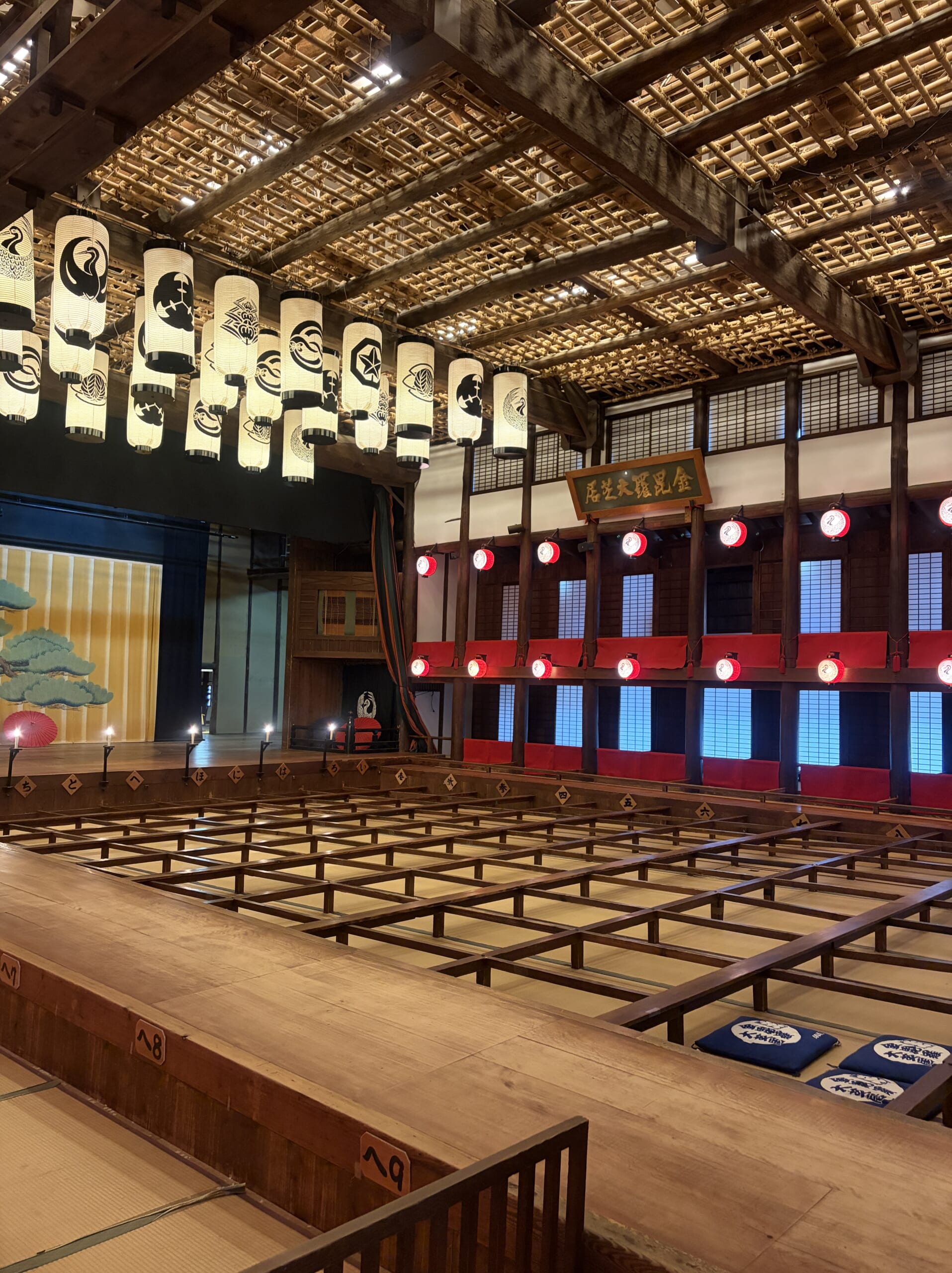
The first time I set foot on the hanamichi, I was nervous. Was I really allowed to stand somewhere so sacred…? Good grief. I felt so overawed that I hesitated a long time before that first step. Even now I half wonder if I shouldn’t have stood there at all. Having said that, I went on to walk all over the stage too (haha).
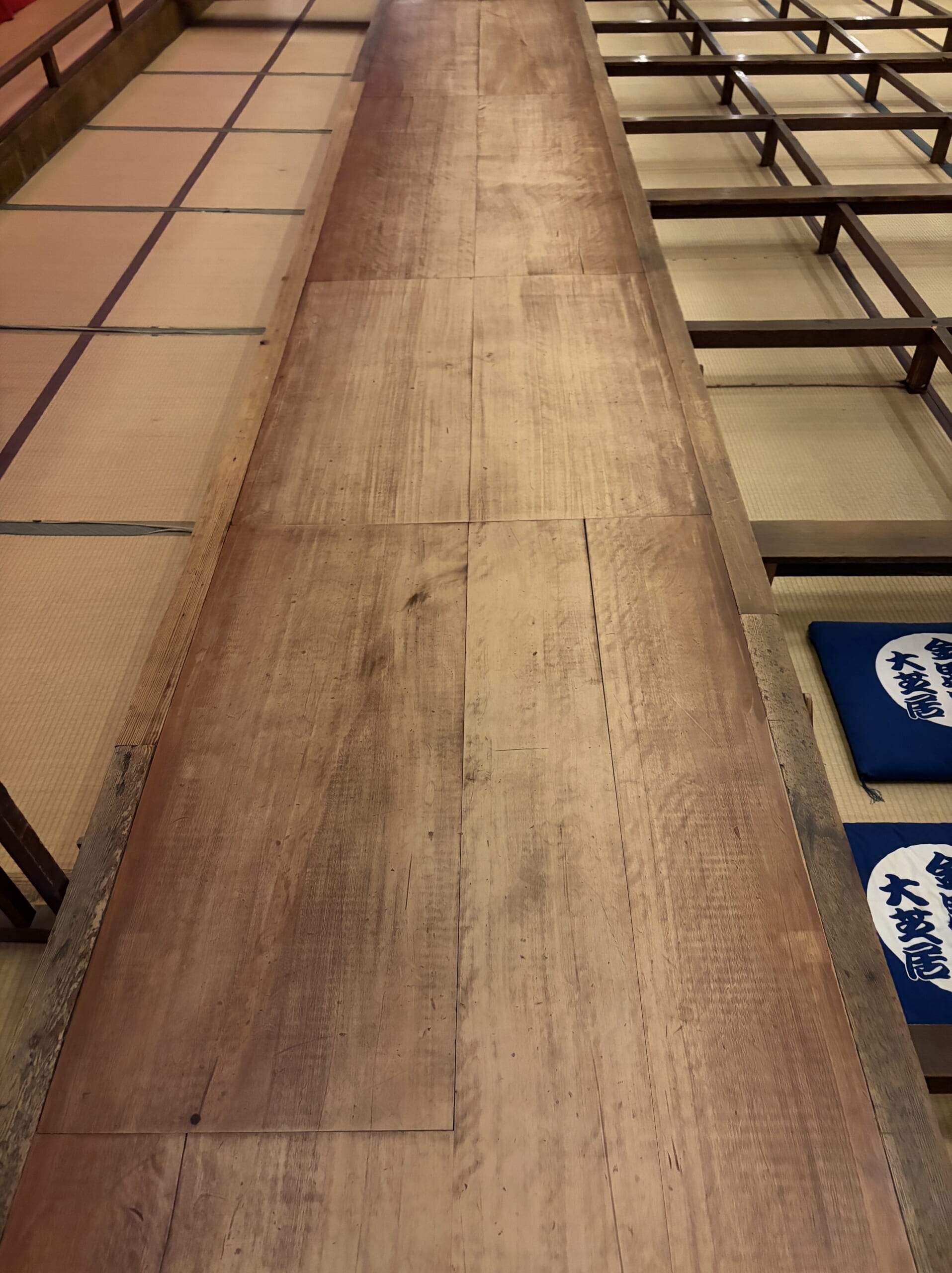
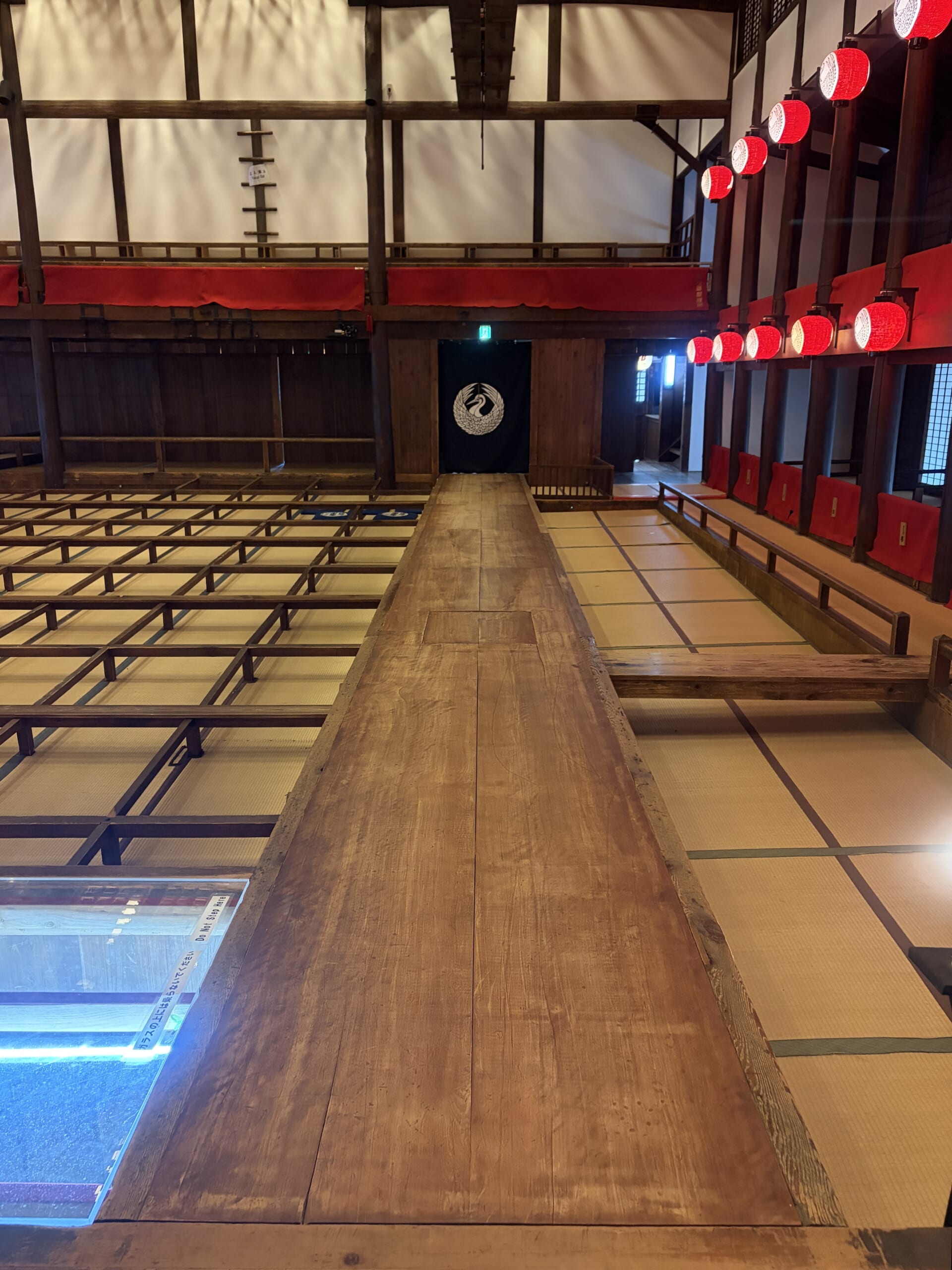
The view from the hanamichi is the view the actors always see. Thinking that, I was moved.
I looked down at the suppon (a small trap lift set into the hanamichi) from directly above. I also saw the karaido (a trap actors pass through, where the hanamichi meets the stage) for the first time. At first I mixed it up with karabori, a dry moat… I was heading to a castle afterwards, so maybe my heart was already there (haha).
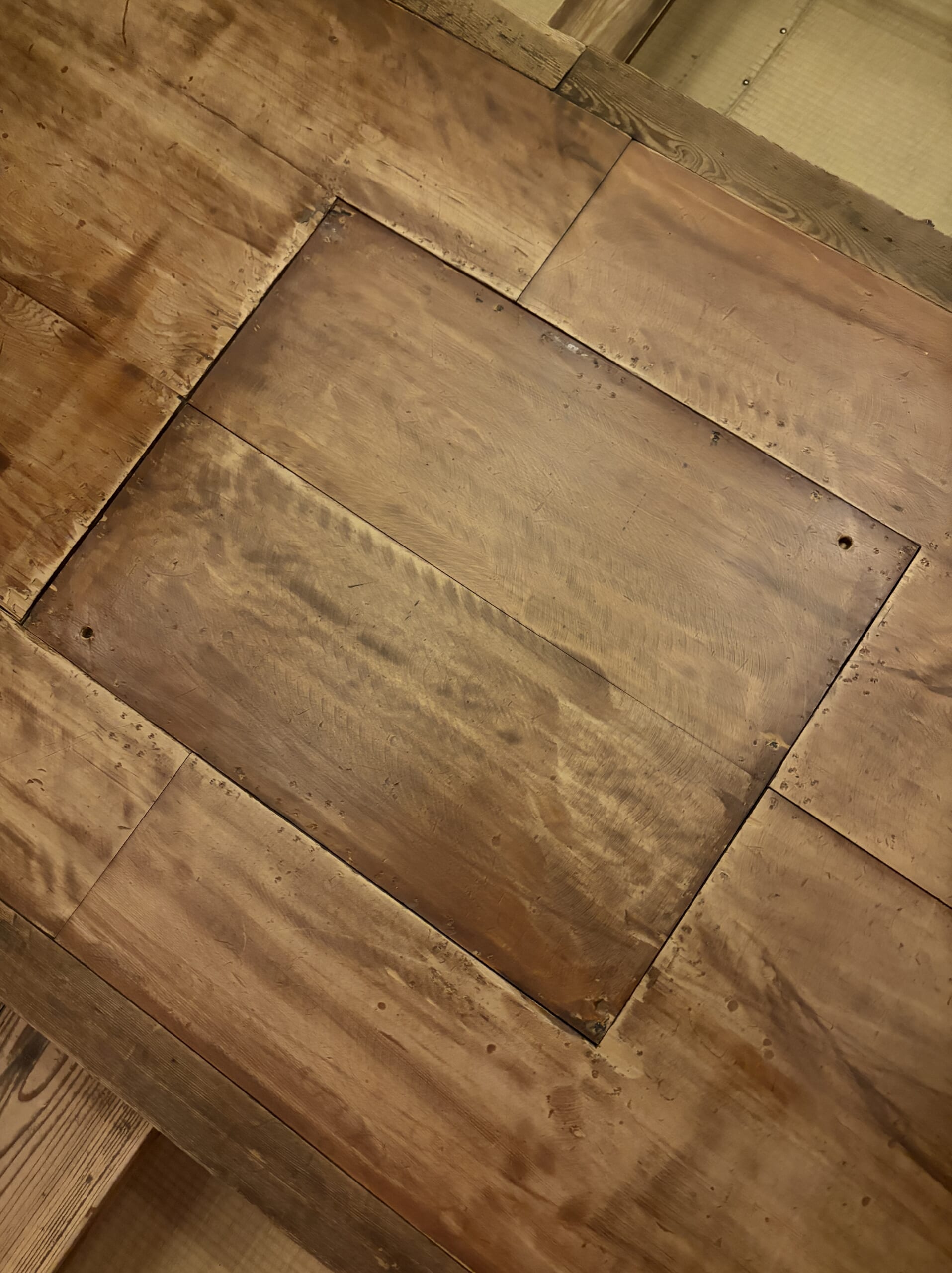
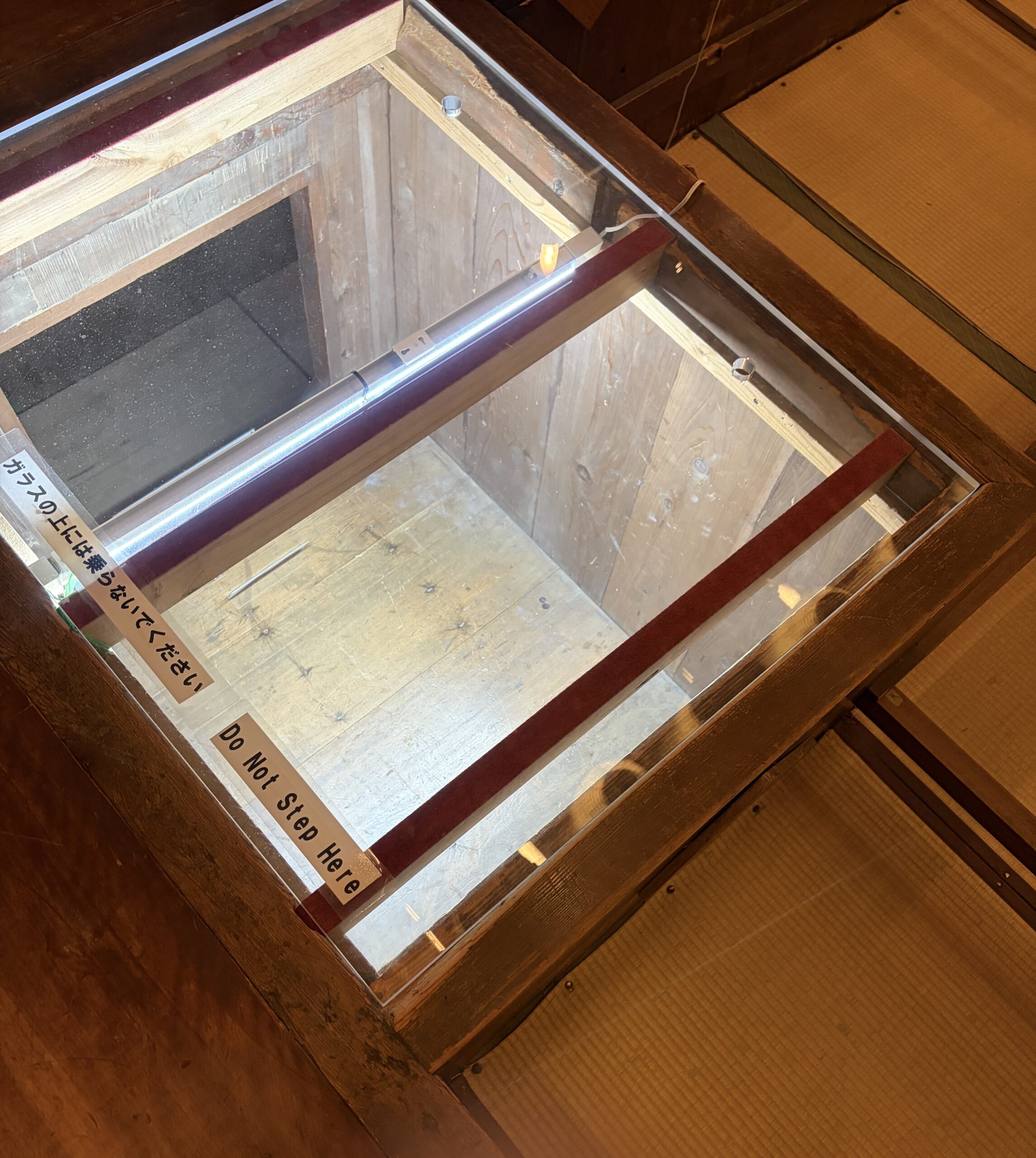
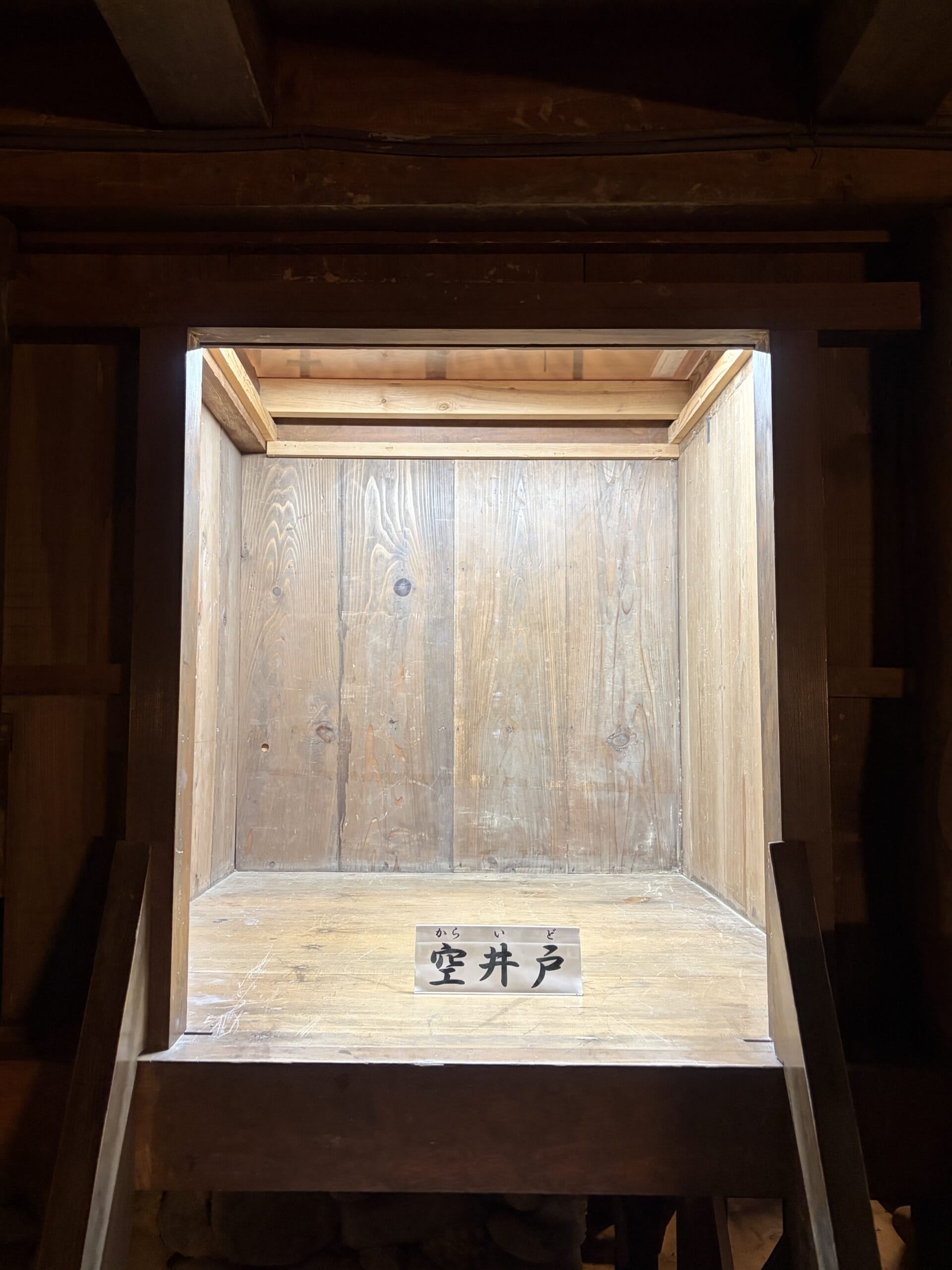
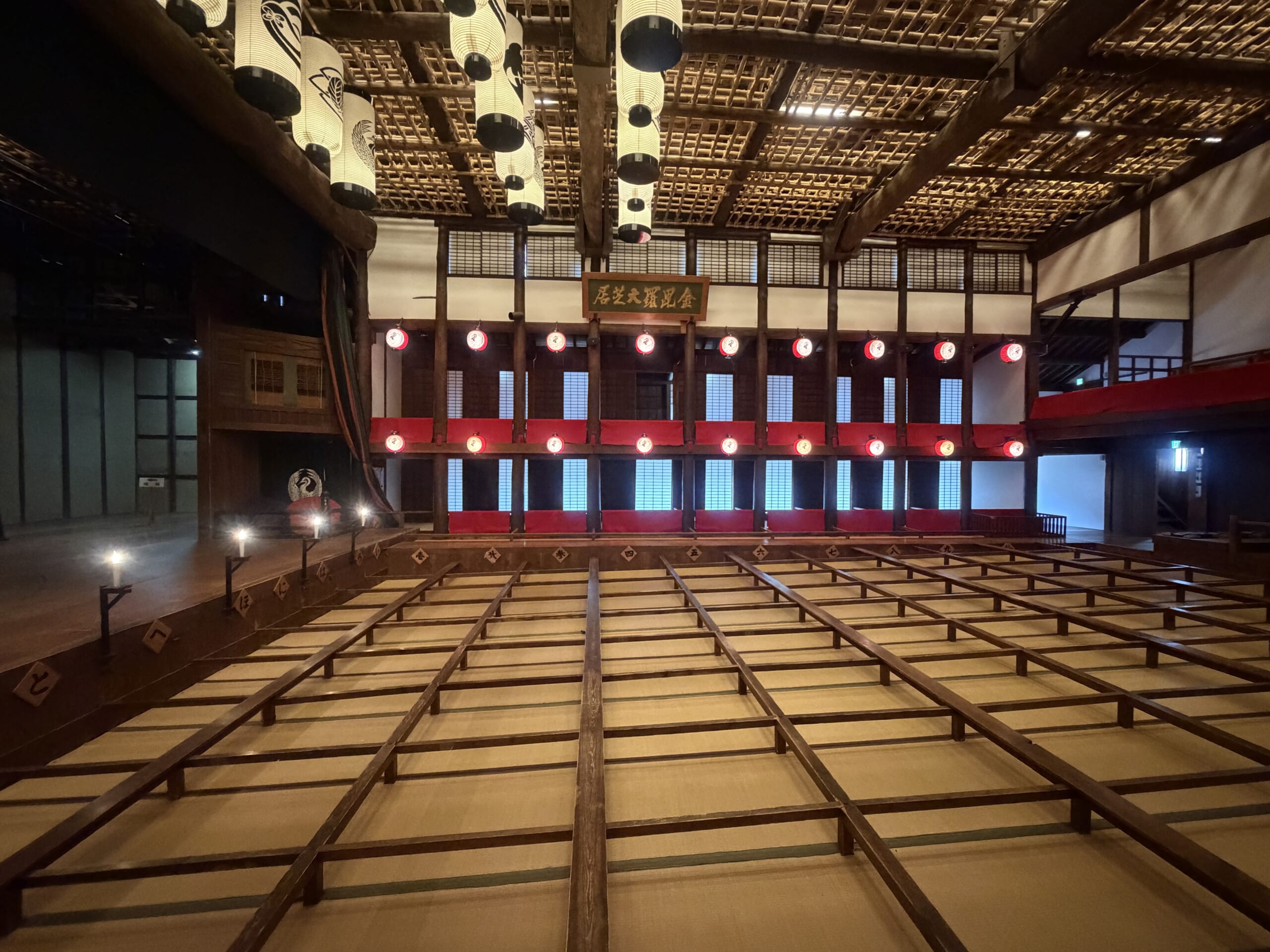
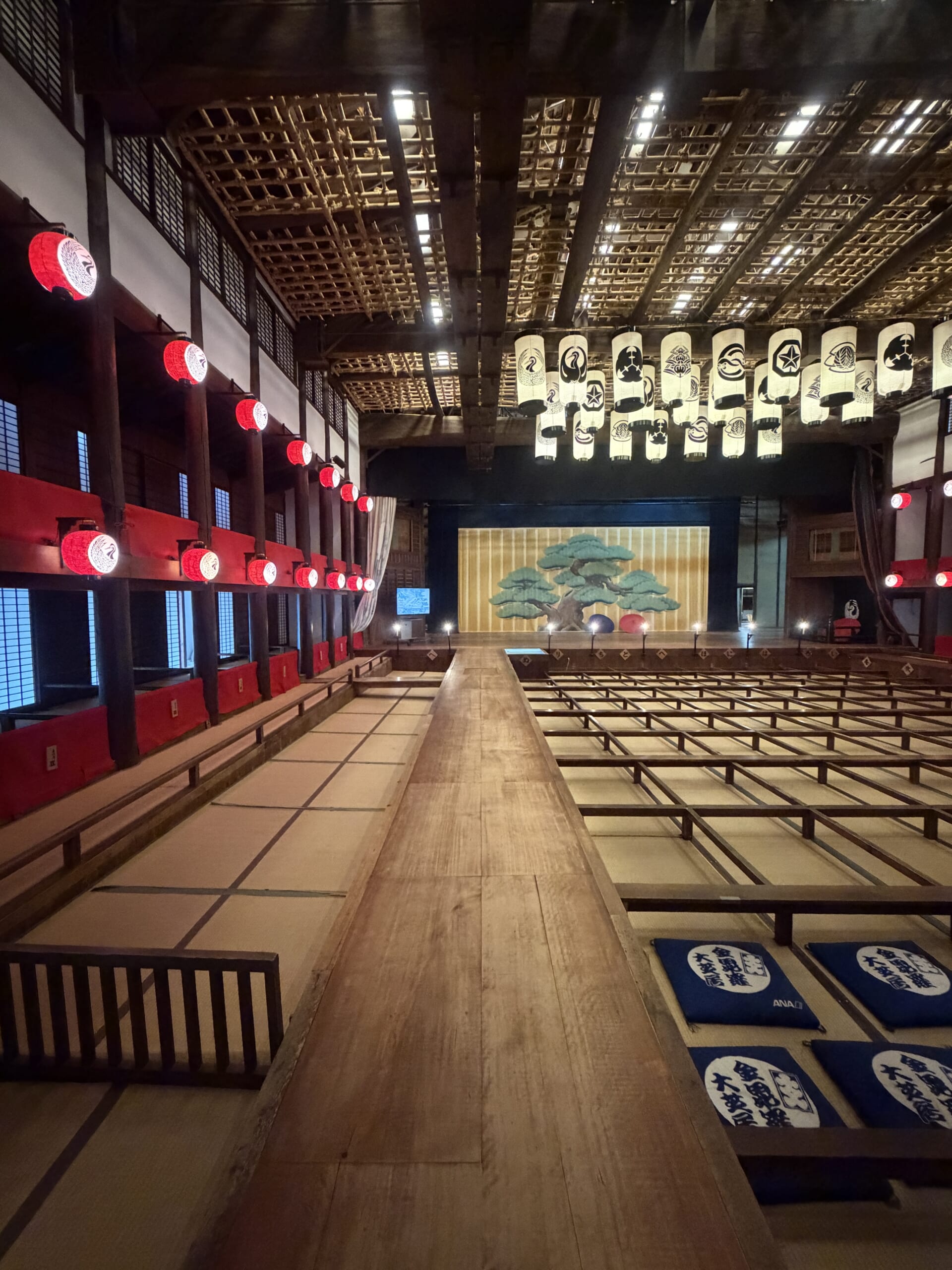
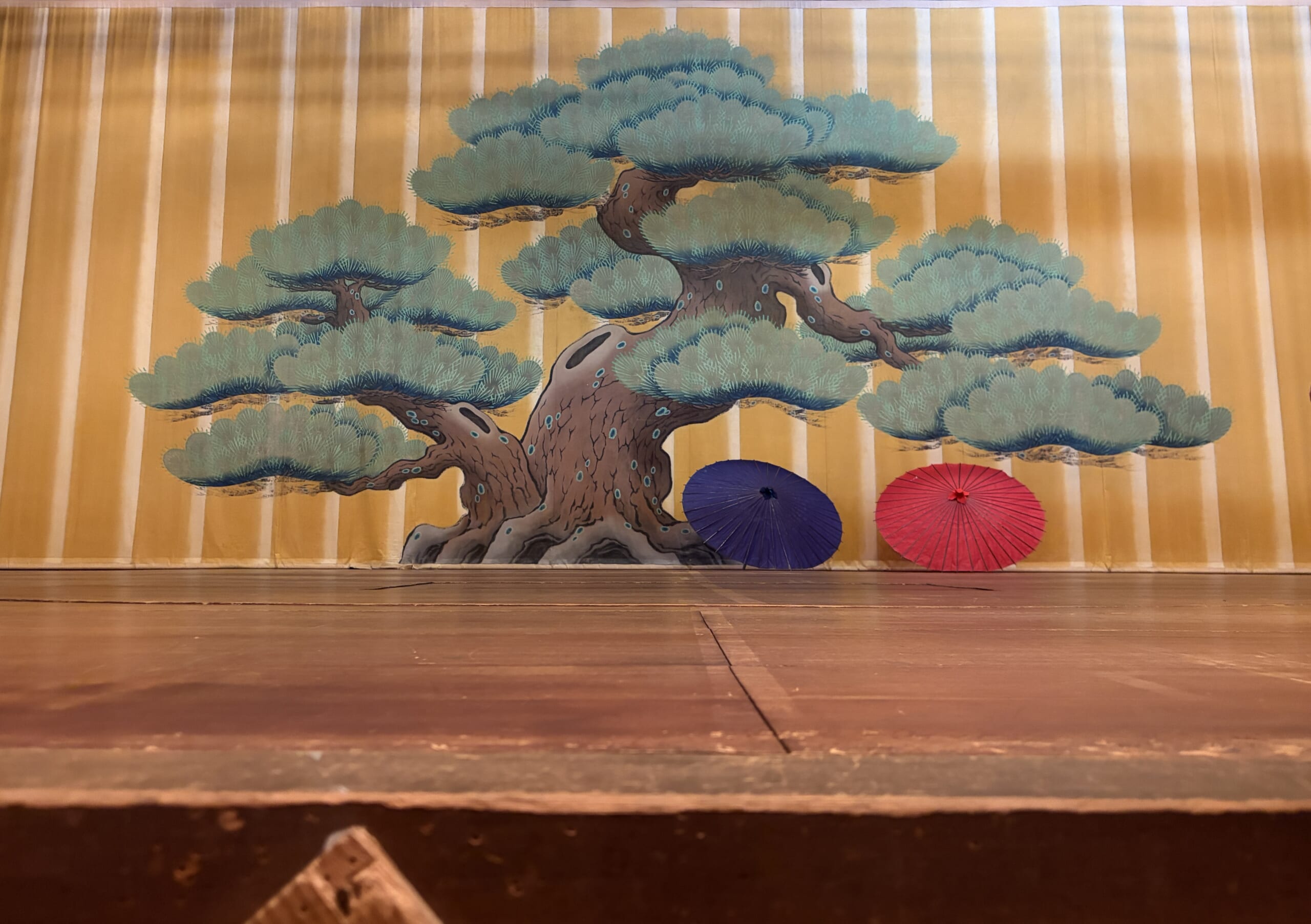
Standing on the stage, I could take in the whole auditorium at once. Breathtaking. I even sat in the seats I’d had last time. Jakuemon Nakamura flying above the audience in Hagoromo (The Feather Robe). Somegoro Ichikawa sinking down into the naraku. Koshiro Matsumoto with Ganjiro Nakamura coming down into the audience in Numazu (a staging where actors walk through the seats). So many memories came back: “They were walking HERE?!” (haha)
Walking Backstage
The Dressing Rooms, the Sound of Rain
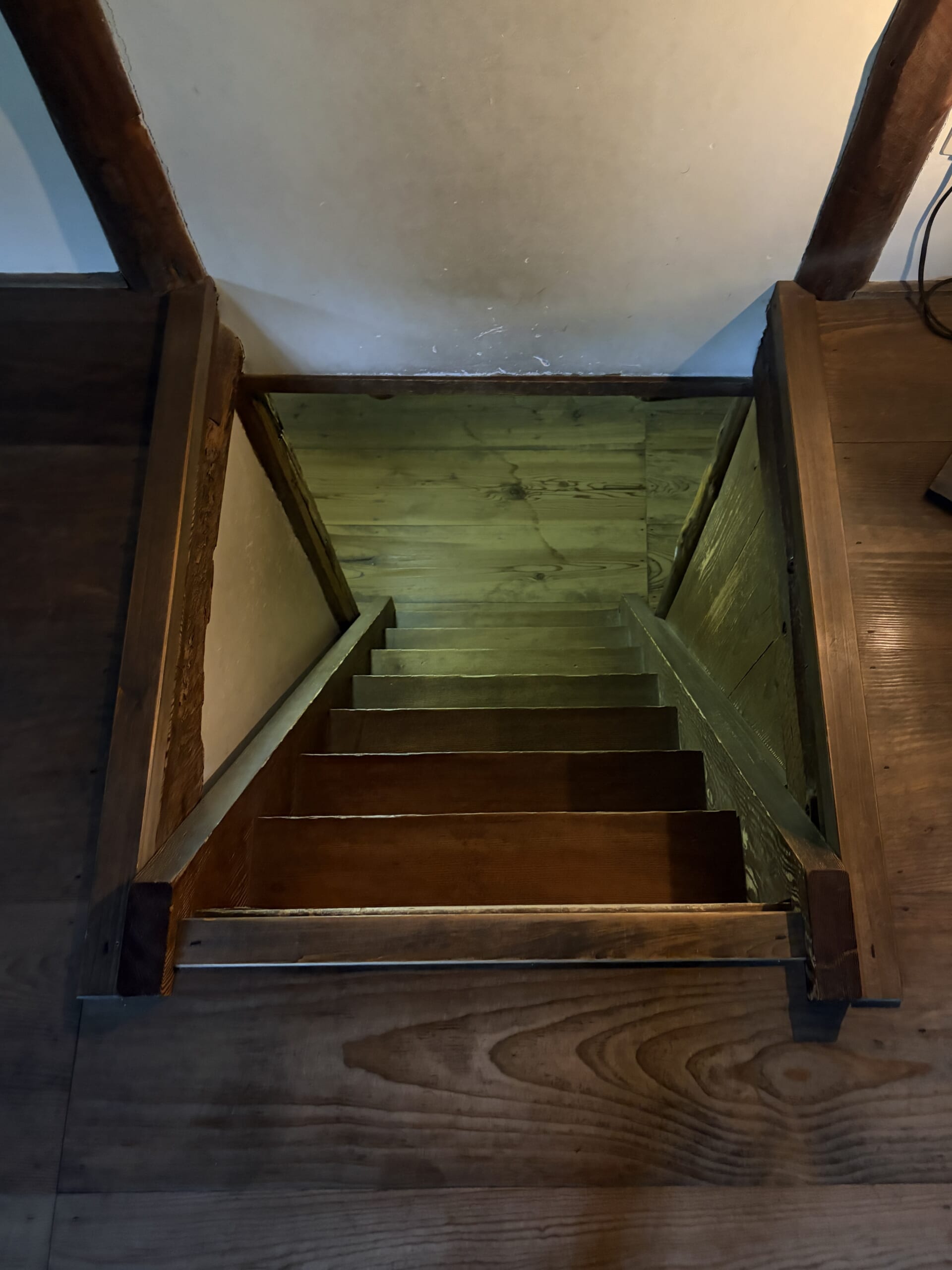
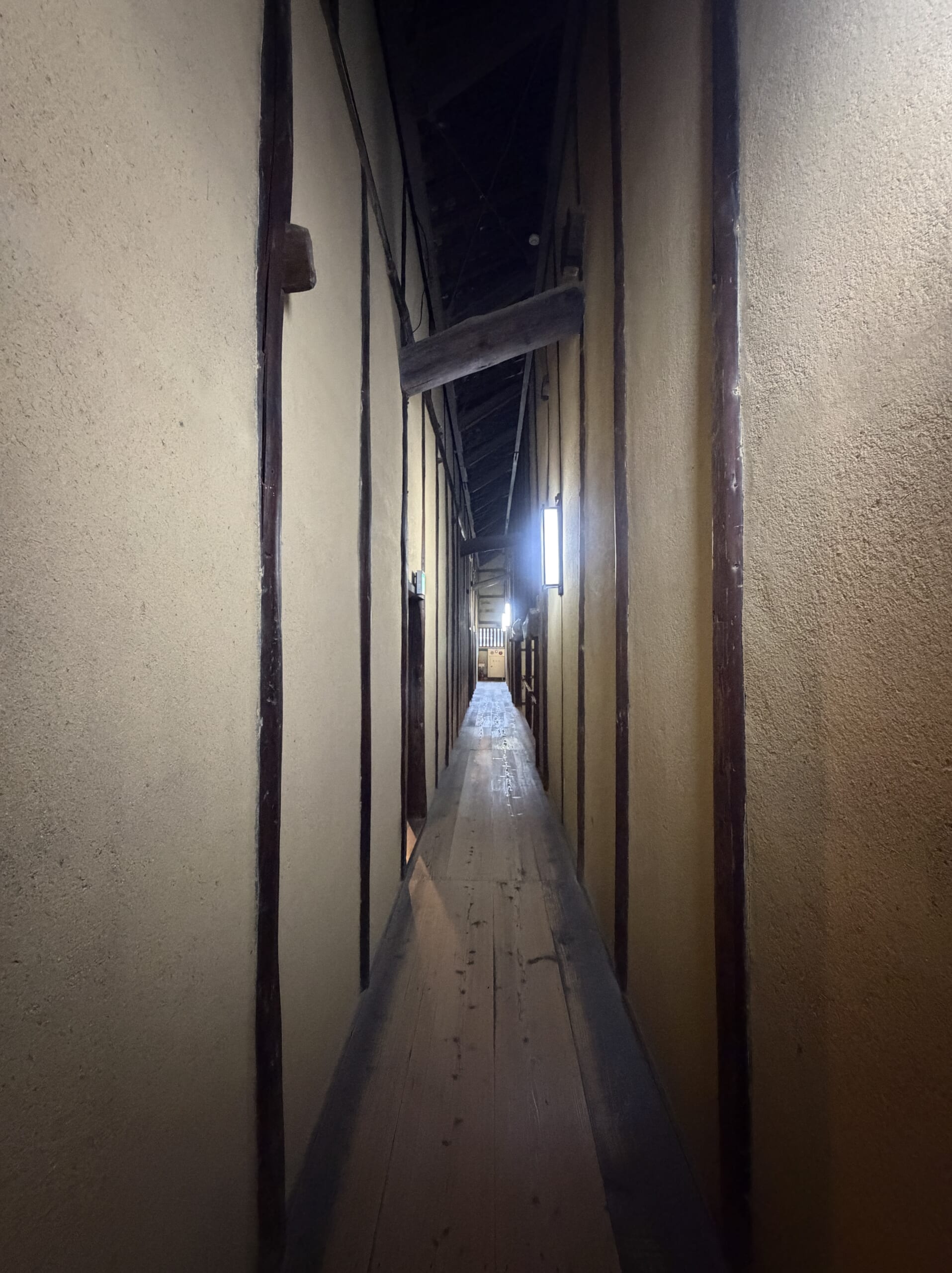
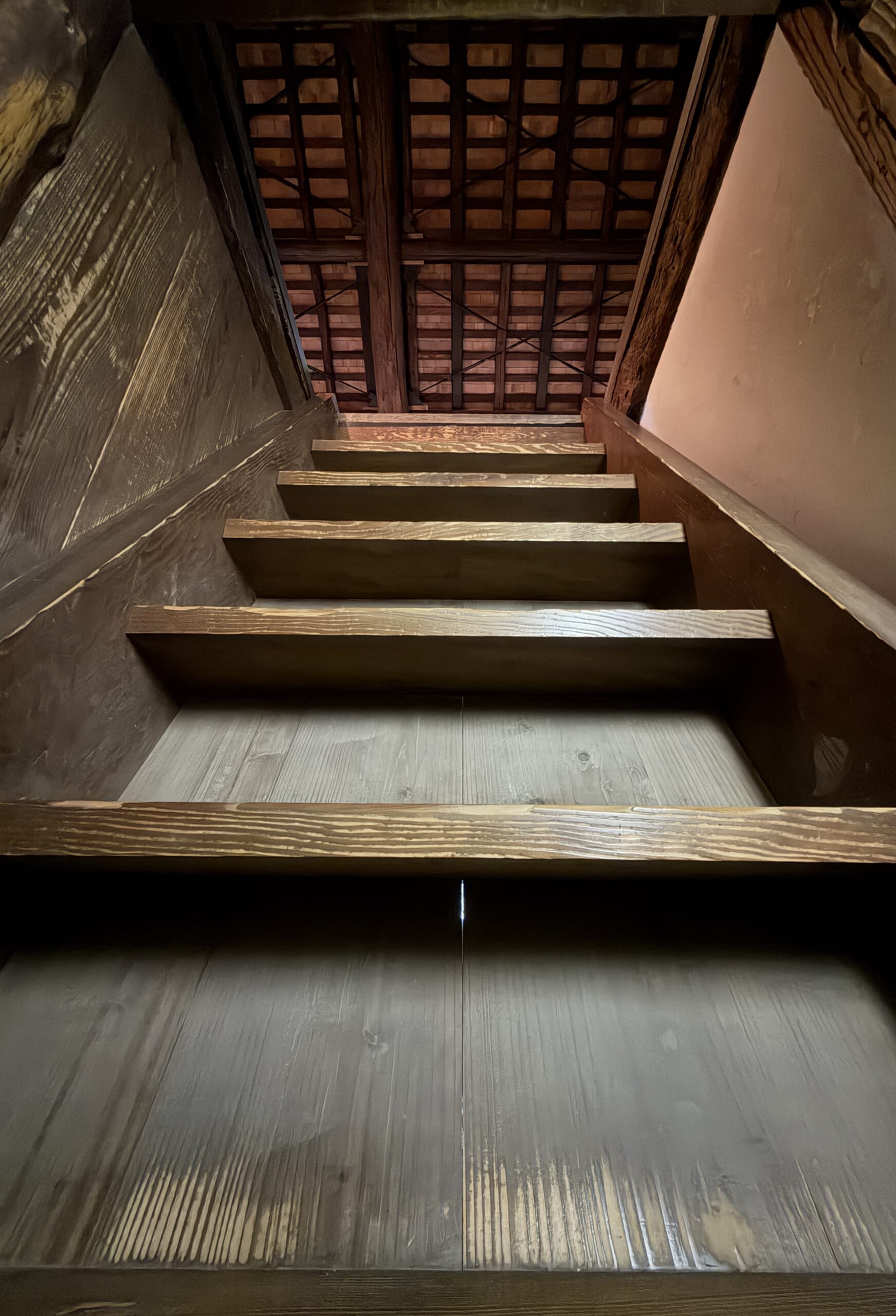
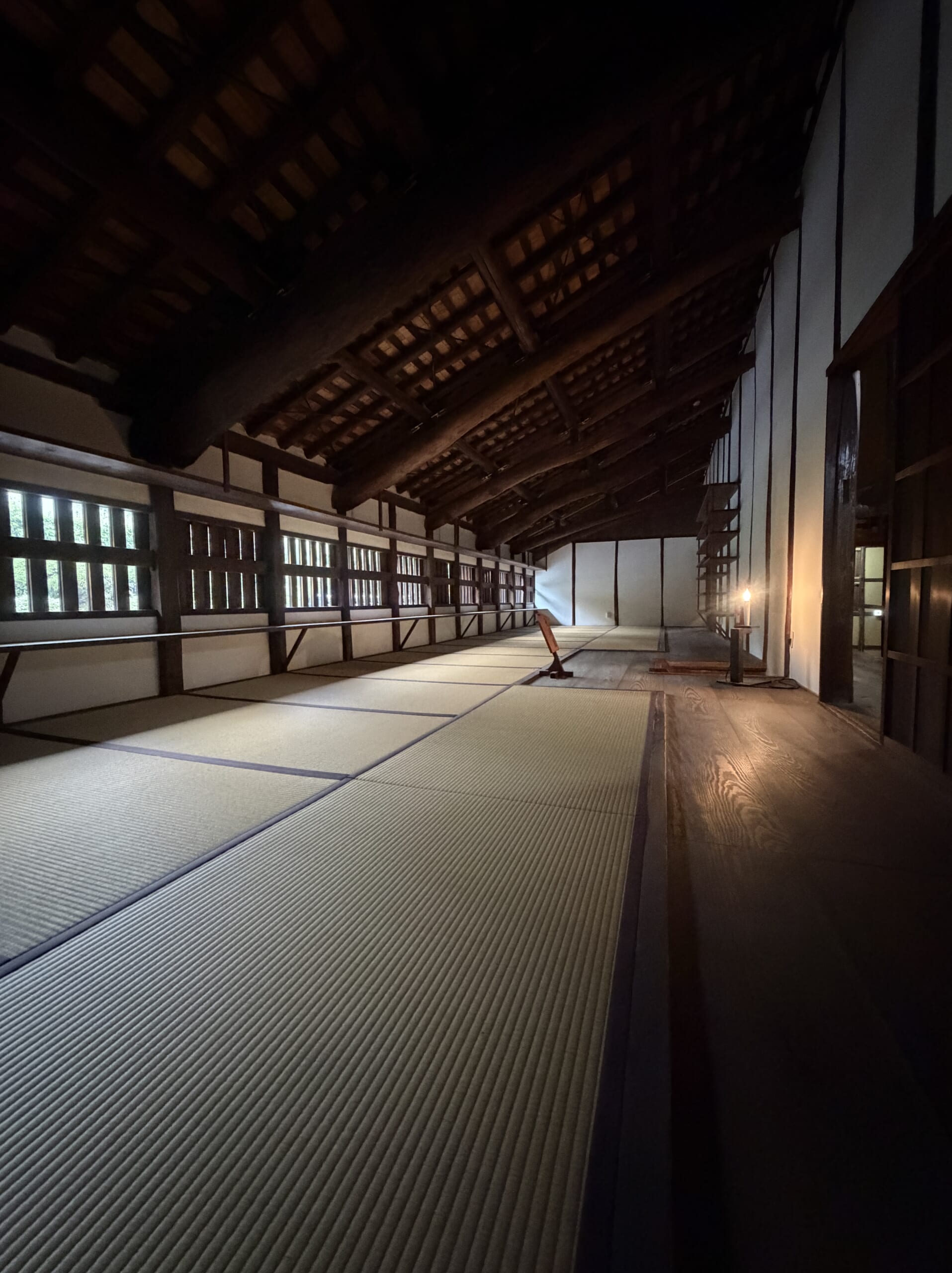
The stairs in the dressing-room area are all steep, almost scary. The upstairs corridor is surprisingly narrow too; passing someone in full costume must be a challenge. If the onnagata (actors who play female roles) have their rooms upstairs, aren’t these stairs hard work for them…?
In the ōbeya (the large dressing room upstairs, shared by many actors), I could clearly hear the rain outside. Most visitors didn’t stay long, so I had plenty of time to look around on my own. A room that should be full of actors during the season held nothing but the sound of rain. It probably never gets this quiet then. Thinking that, the stillness felt precious, a little poignant. I could have stayed for hours. I wanted to stay for hours. I really didn’t want to leave 😭
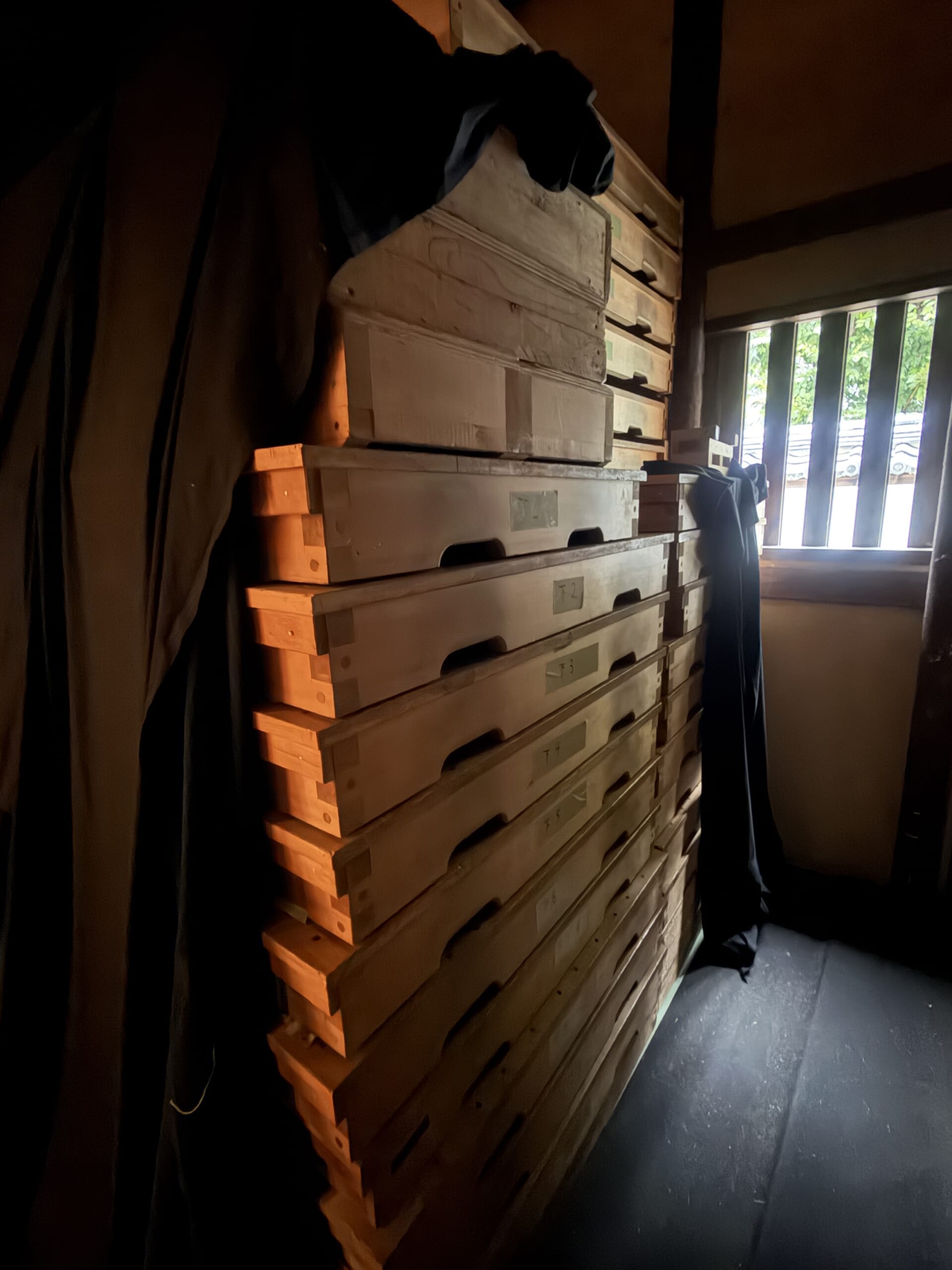
Inside, I also spotted a neat stack of wooden platforms. Could this be shosadai (the Japanese cypress platforms laid over the stage for dance pieces), which I’ve recently fallen in love with?! Sorry if I’m wrong (haha)
From the Naraku to the Toya
When I went down to the bottom of the naraku, I was moved. With no one around, it was a little scary too. I even got to see beneath the audience seating. How amazing is that?
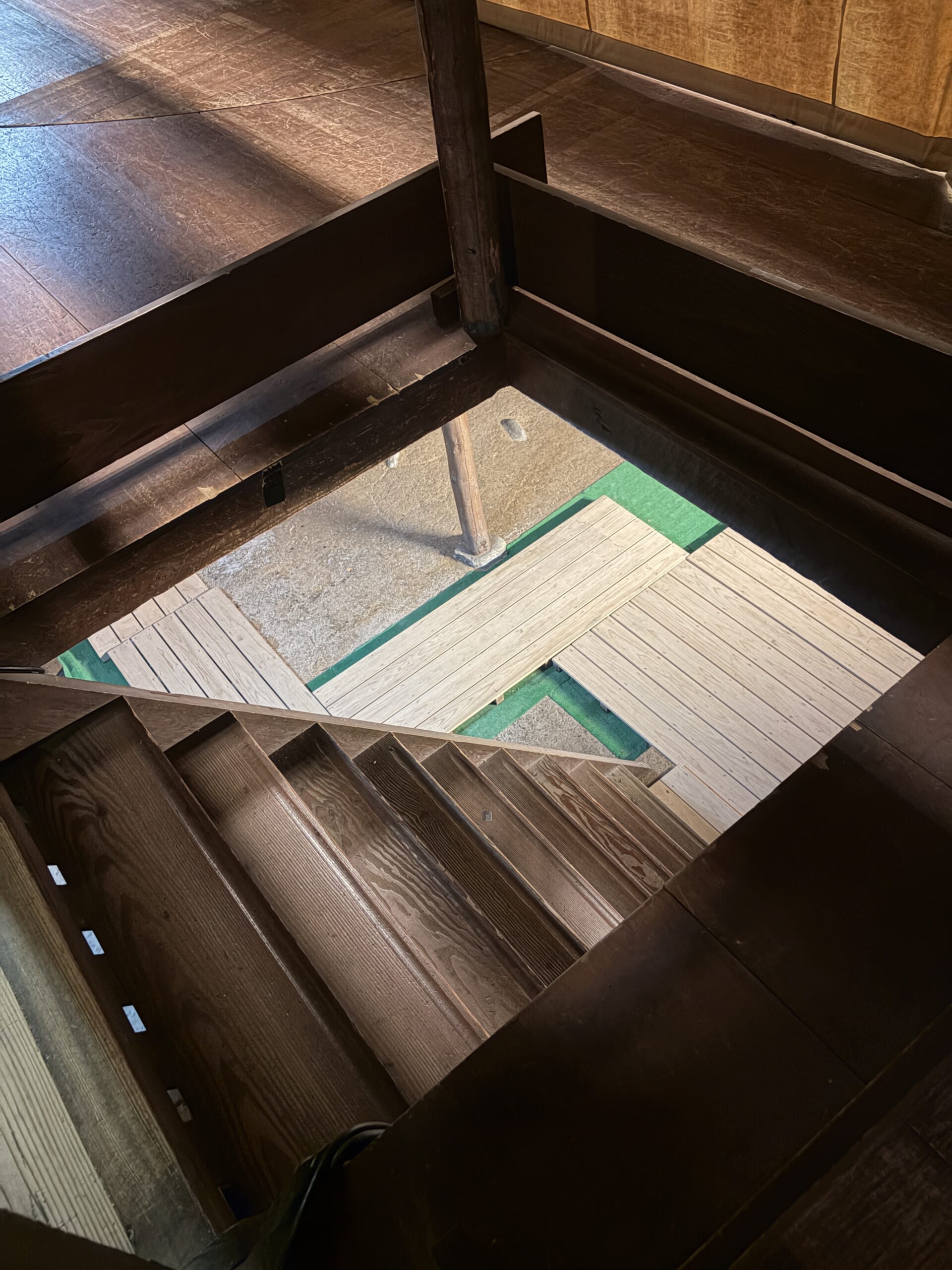
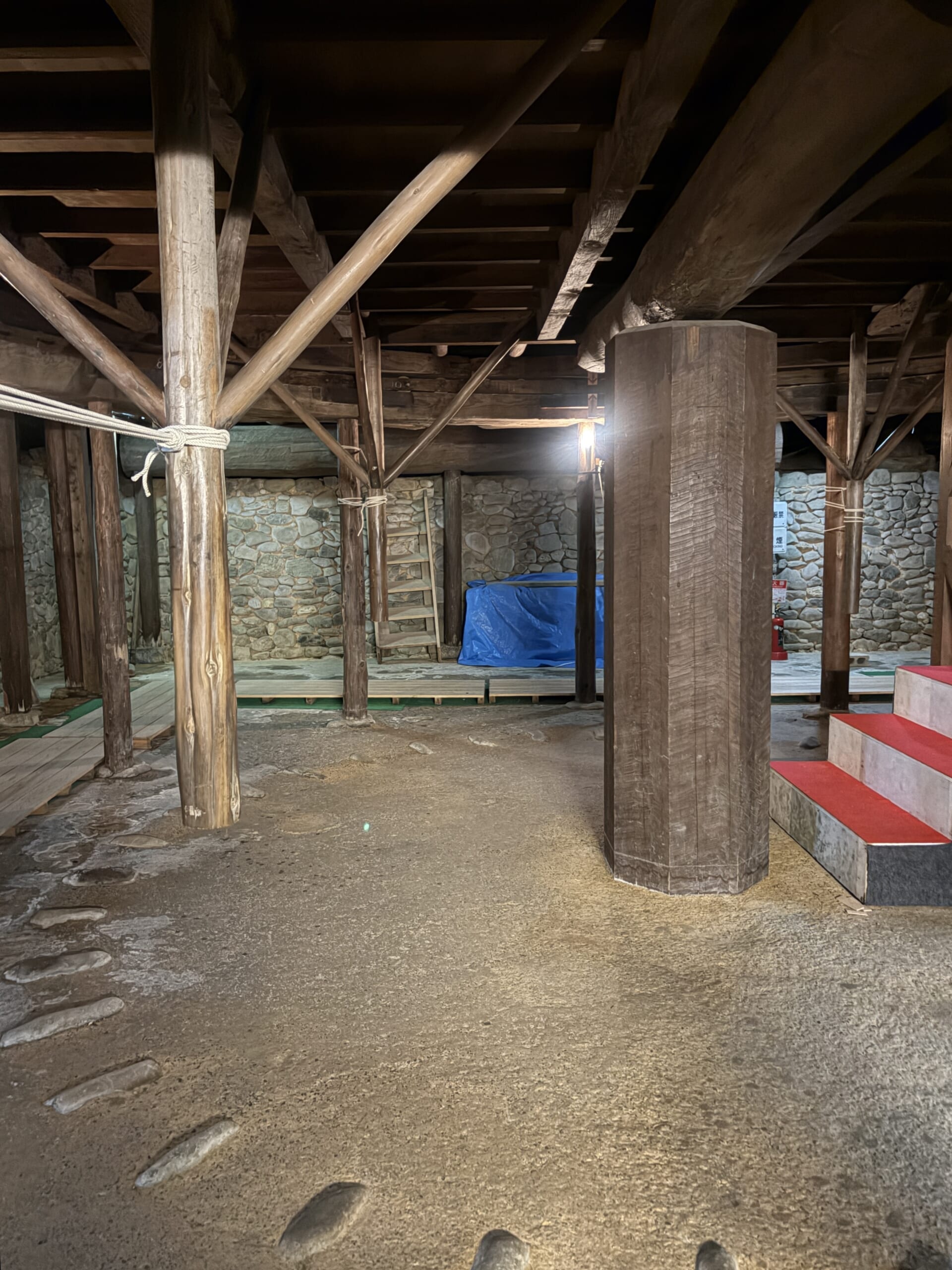
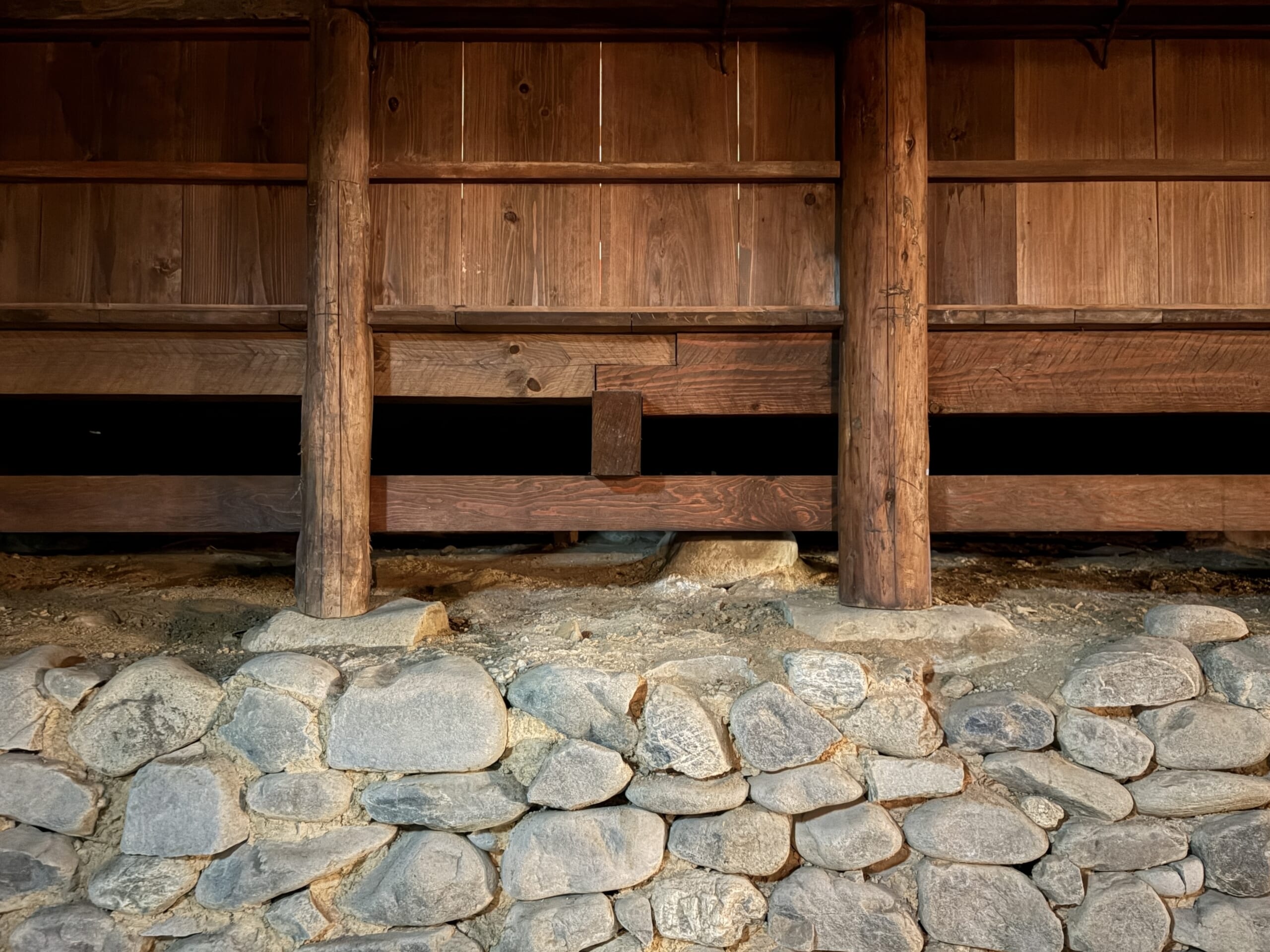
From there, I took a narrow passage to the toya (the small room at the far end of the hanamichi, behind the agemaku curtain). The seating is right above this passage. How much of a scramble is it when actors hurry through here? Can the audience hear their footsteps? I’d never thought about it before…
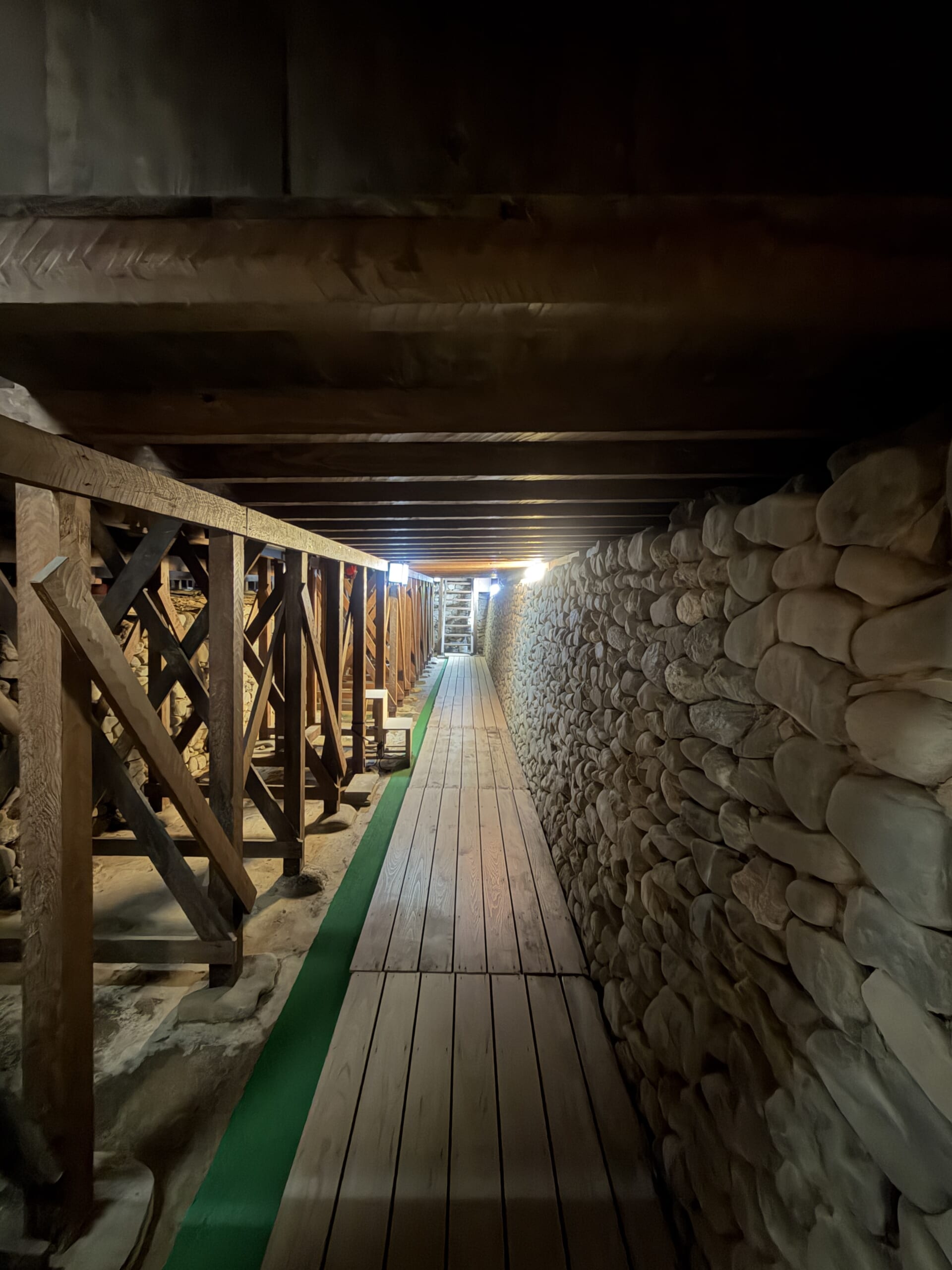
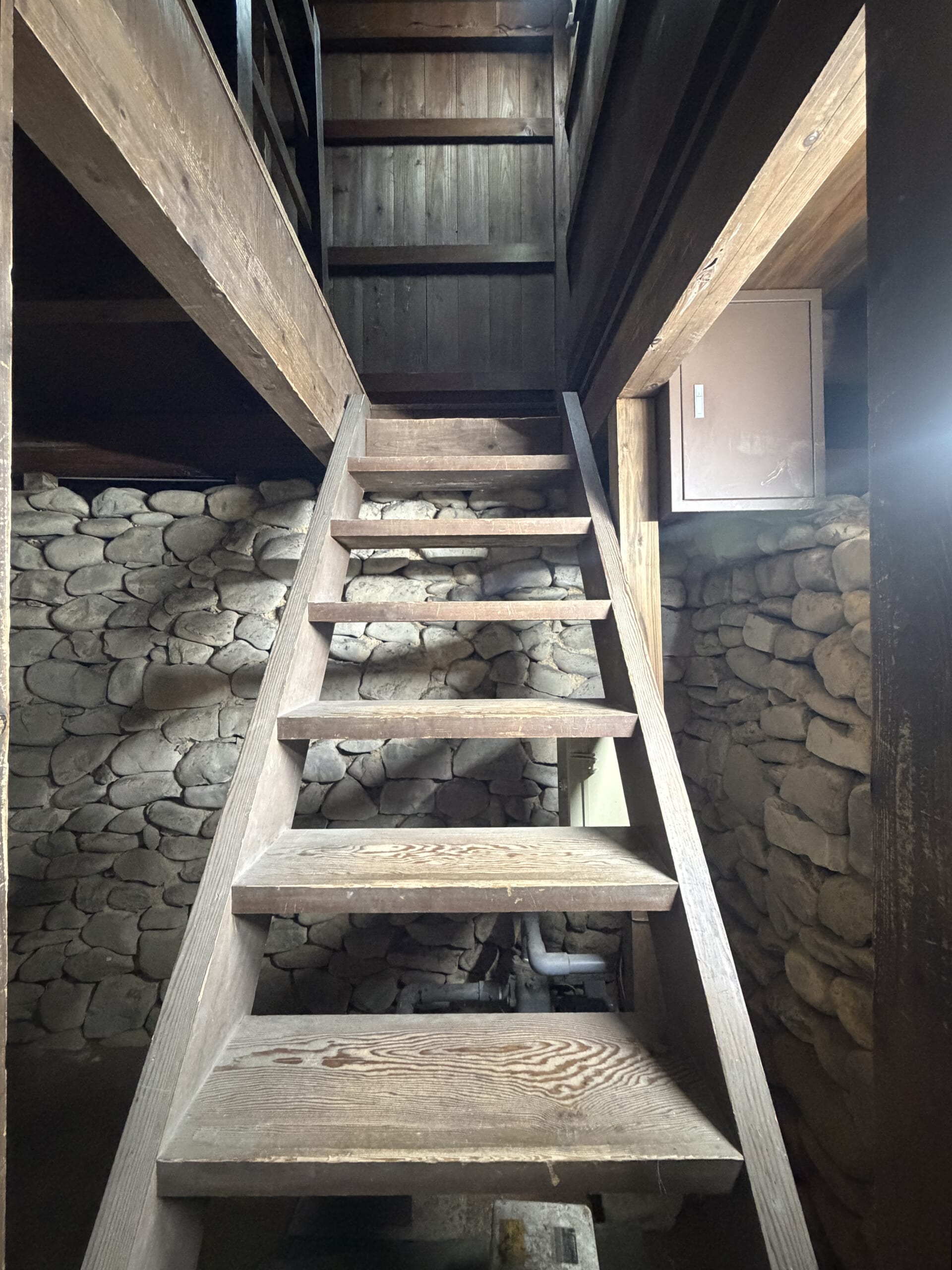
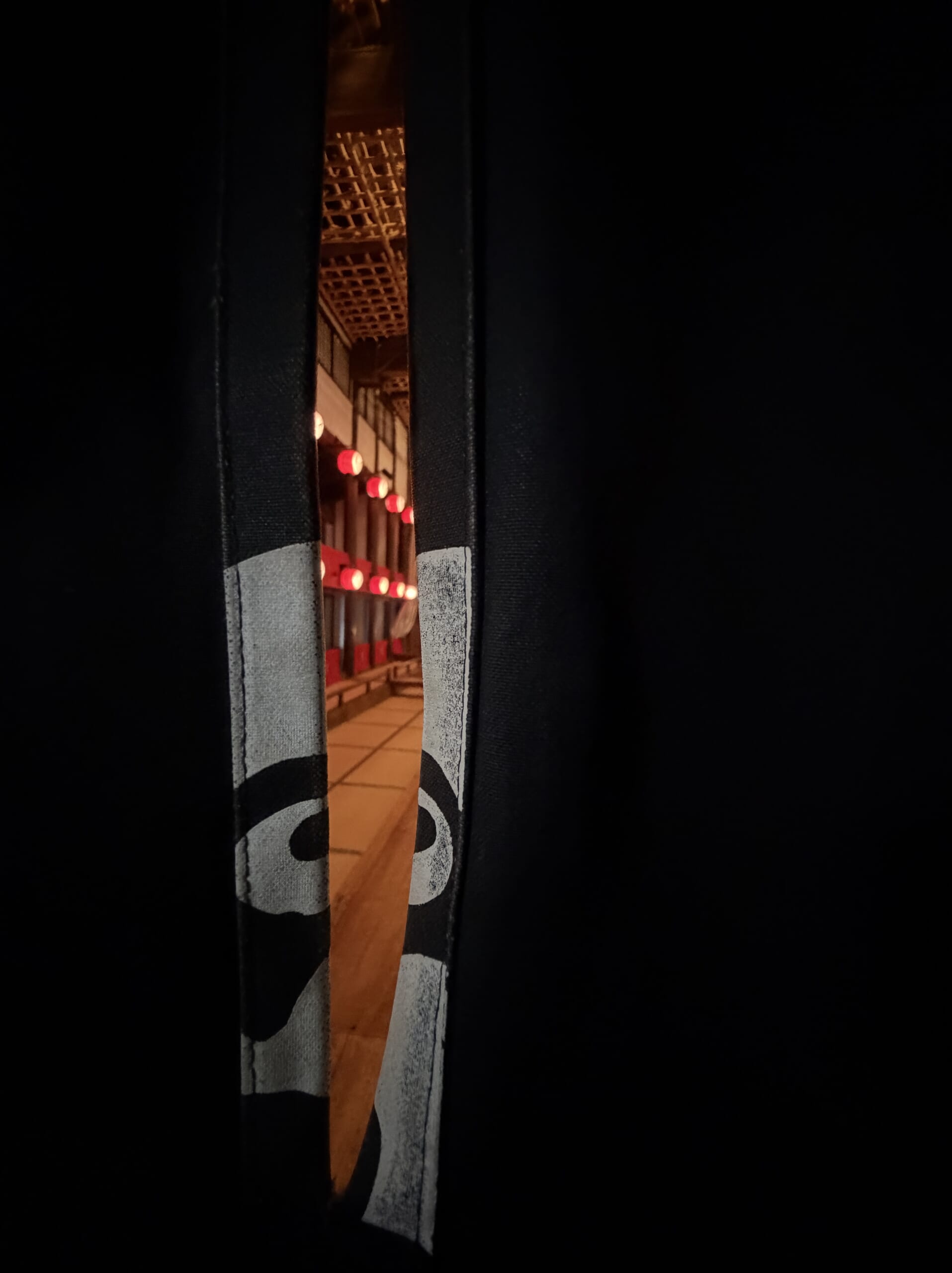
Up the stairs, then ta-da, the toya! The hanamichi seen from here was an unbelievably precious view. I also sneaked a little peek out through the agemaku.
What surprised me was the source of the agemaku’s “ching” sound. I’d assumed bells were attached, but it was just plain rings (haha).
Which Seat Next Time?
The view from dead centre upstairs is easy to watch, a favourite of mine. Still, in a playhouse like this, the ground floor is the place to be, specifically the hiraba (the box seating in the middle of the ground floor). If I could get one, I’d love to sit in the kaburitsuki (the seats right in front of the stage). The special seats next to the kari-hanamichi (the second hanamichi, on the right as you face the stage) look lovely too 💕
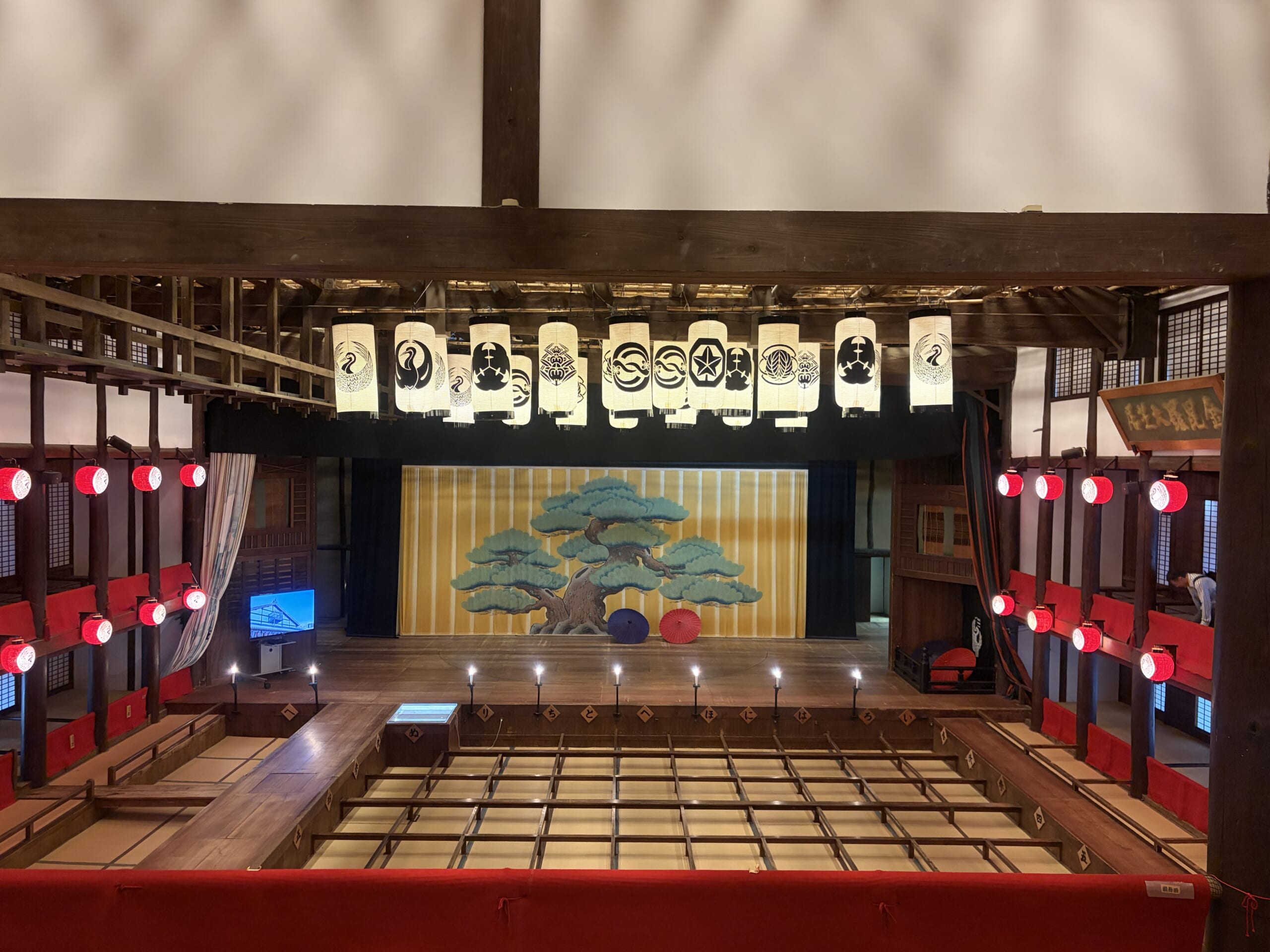
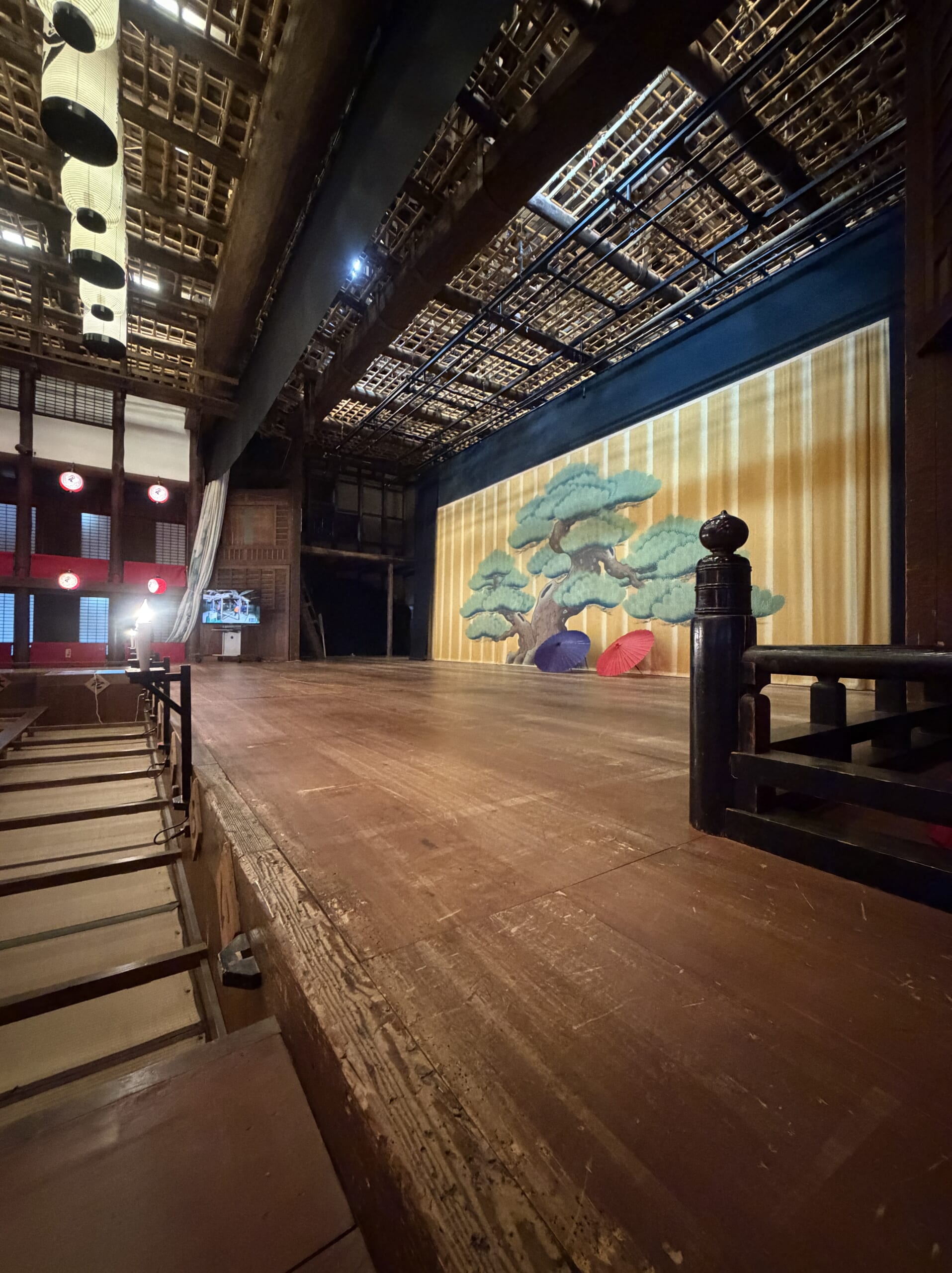
…Having said all that, I’ll probably end up picking my usual dobu seats (right beside the hanamichi) again (haha).
I told the guide, “With the hanamichi there, you don’t have to worry about the heads in front of you, so it’s easy to see.” They replied, “Oh, I get that. You only see the actors’ backs, but it’s a good view, isn’t it?” It made me happy that they understood (haha).
Summary
A playhouse with no one in the seats, no one in the corridors, is something you almost never see. That’s exactly why the building’s own character stood out so clearly. It felt fresh.
The guide told visitors who didn’t seem very familiar with kabuki, “In April there are real kabuki performances here, if you’re interested.” Everyone looked surprised: “Wow! We’d love to see that!” If lots of people come to watch, maybe Shochiku will think, “Shall we add more performances?” (wink)
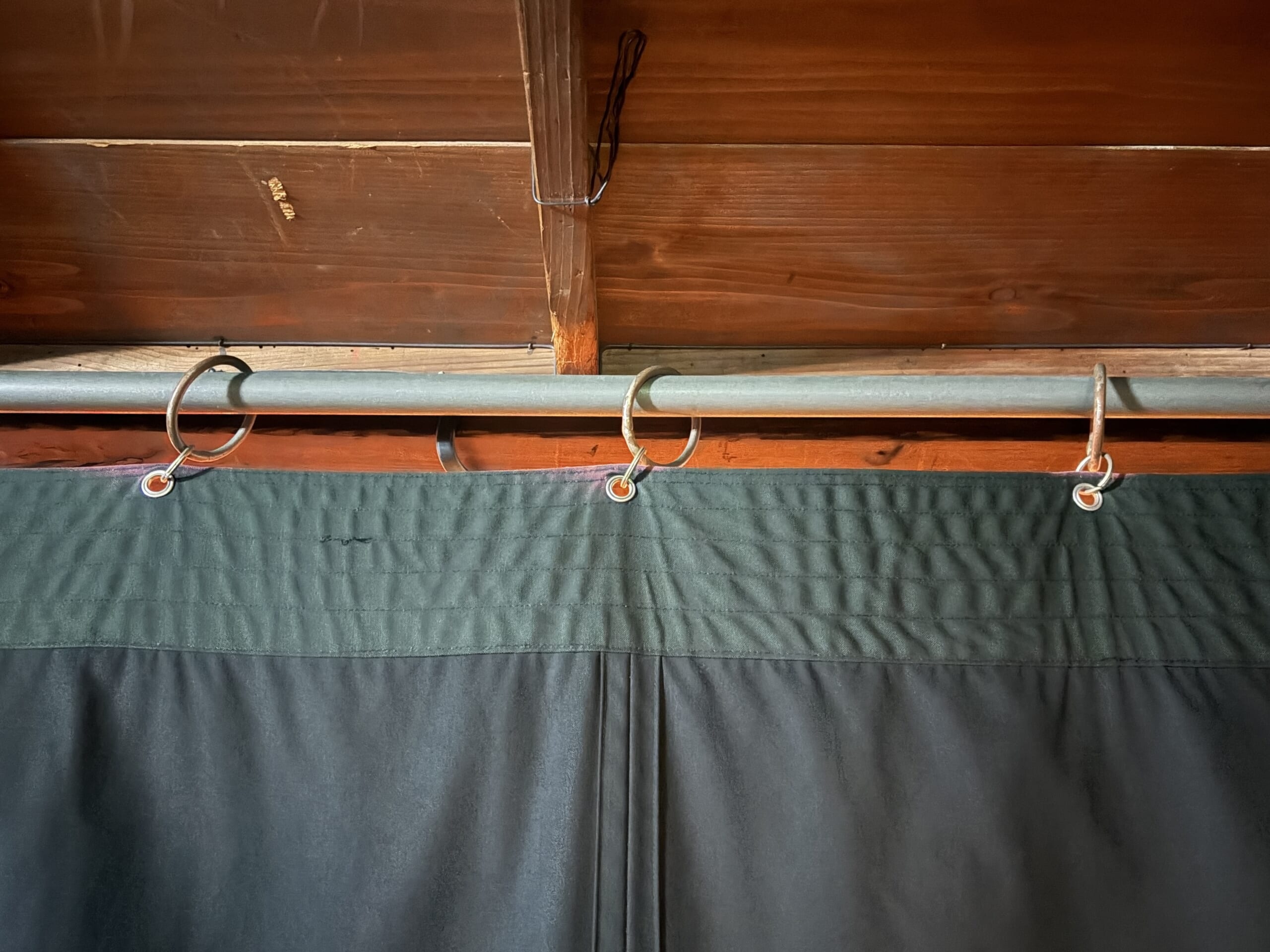
In summer there’s no air conditioning, so apparently they lend out uchiwa fans. I couldn’t make it to this year’s Konpira Kabuki, so I took a snap of an uchiwa printed with this year’s programme, the stage as a backdrop. The final sight of my visit was the jōshiki-maku (the familiar three-colour striped kabuki curtain), gathered up in a bundle.
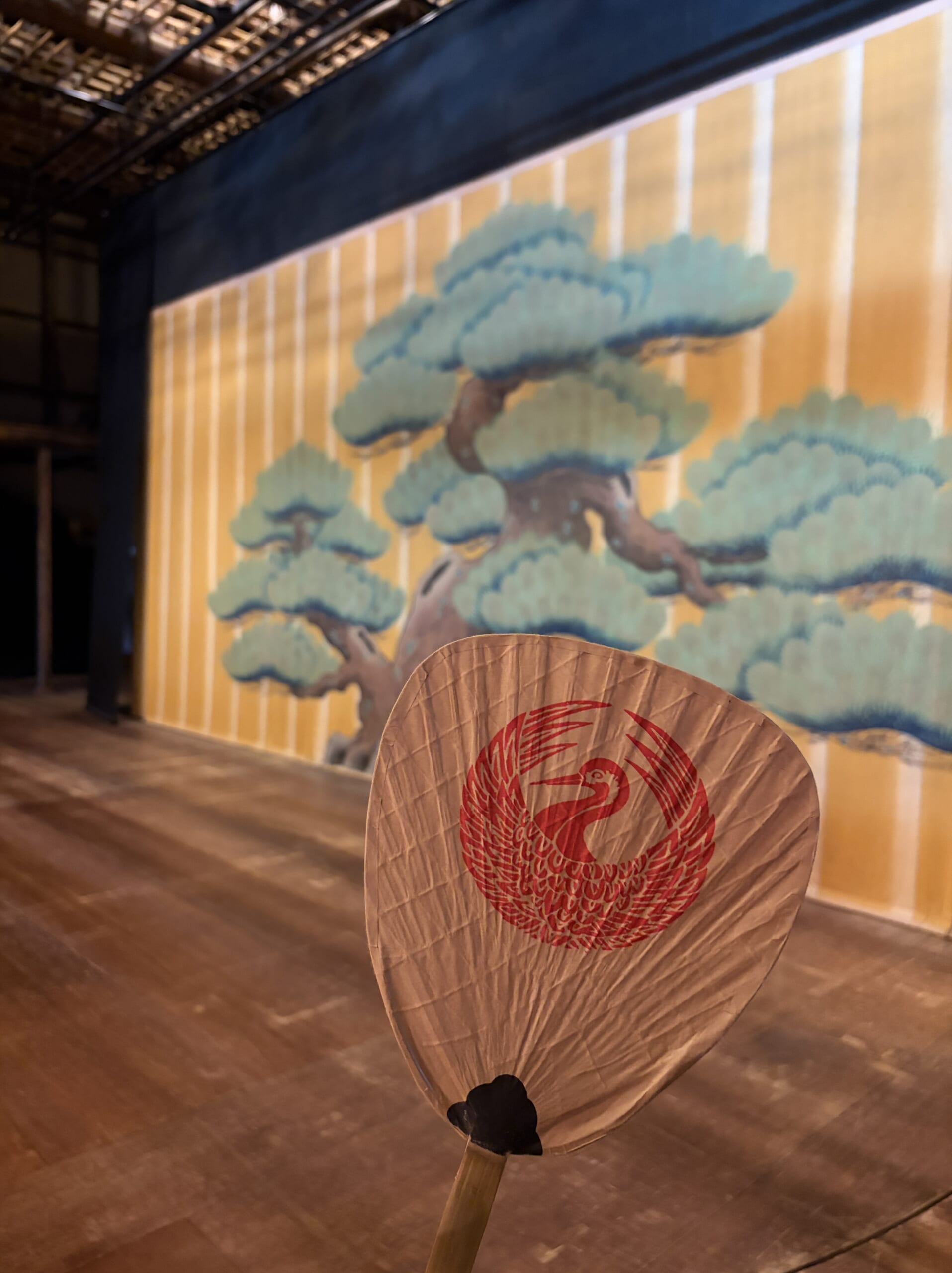
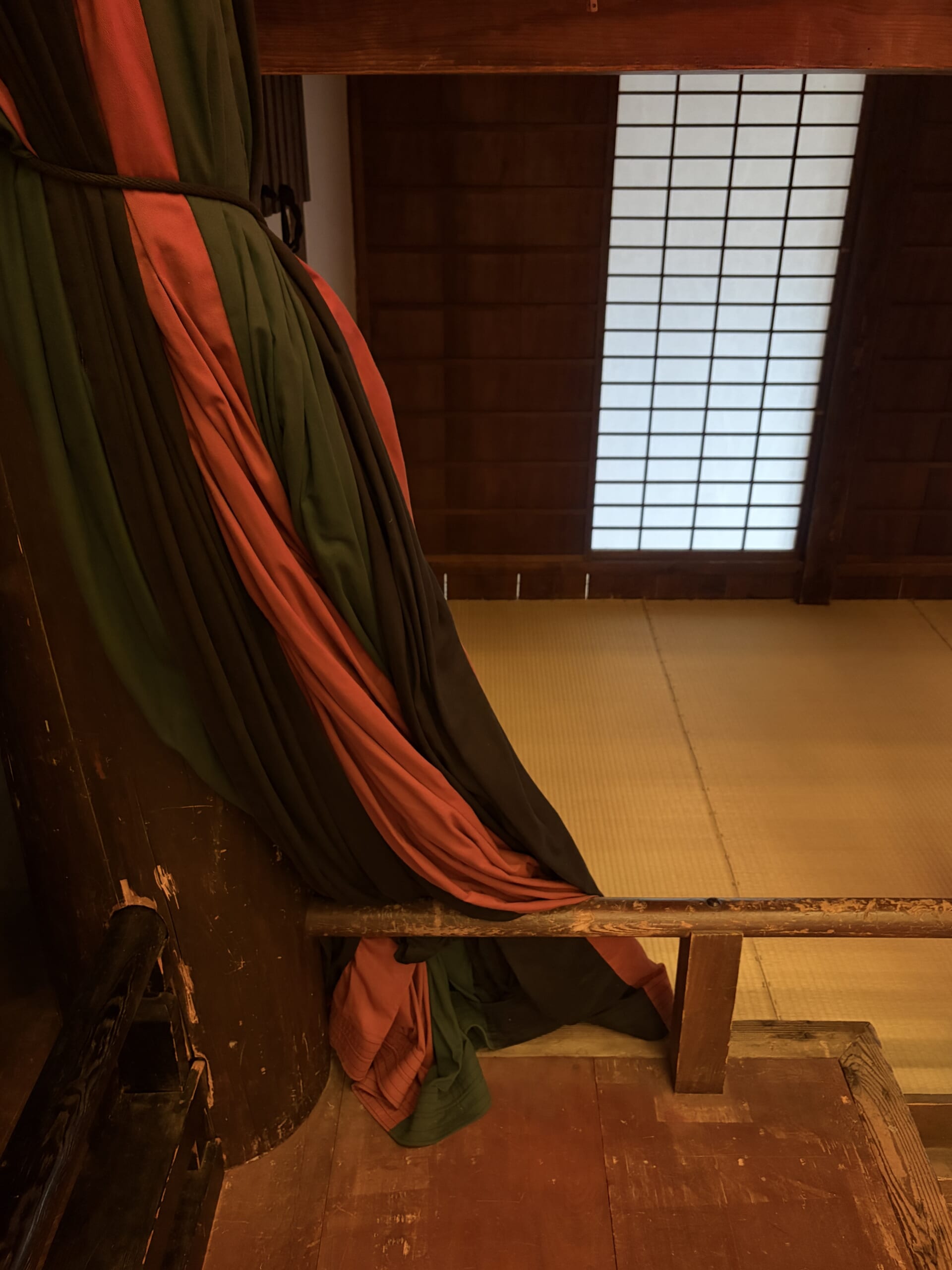
Next time, I’d like to come back to see a performance with all this in mind. Also, someday I’d like to finally climb Mt Konpira. I never seem to manage it (haha).