Shouldering an anchor, Tomomori leaps into the sea. The moment I glimpsed the soles of his feet, I was simply moved. I watched Tokaiya, Daimotsu no Ura from Yoshitsune Senbon Zakura from a dobu seat beside the hanamichi. As always, today was the best.
More from this production → October Program at the Kabukiza Theatre: Part 1 (October 2026) / October Program at the Kabukiza Theatre: Part 2 (October 2026)
What Is Tokaiya, Daimotsu no Ura About?
This month’s October Program at the Kabukiza Theatre runs in three parts, from Part 1 to Part 3; Part 3 starts at 6 pm. Part 3 opens with Yoshitsune Senbon Zakura, one of the three great masterpieces of kabuki. This time, the programme presents Tokaiya (‘The Tokaiya Boathouse’) with Daimotsu no Ura (‘Daimotsu Bay’), which together form the second act of the full play.
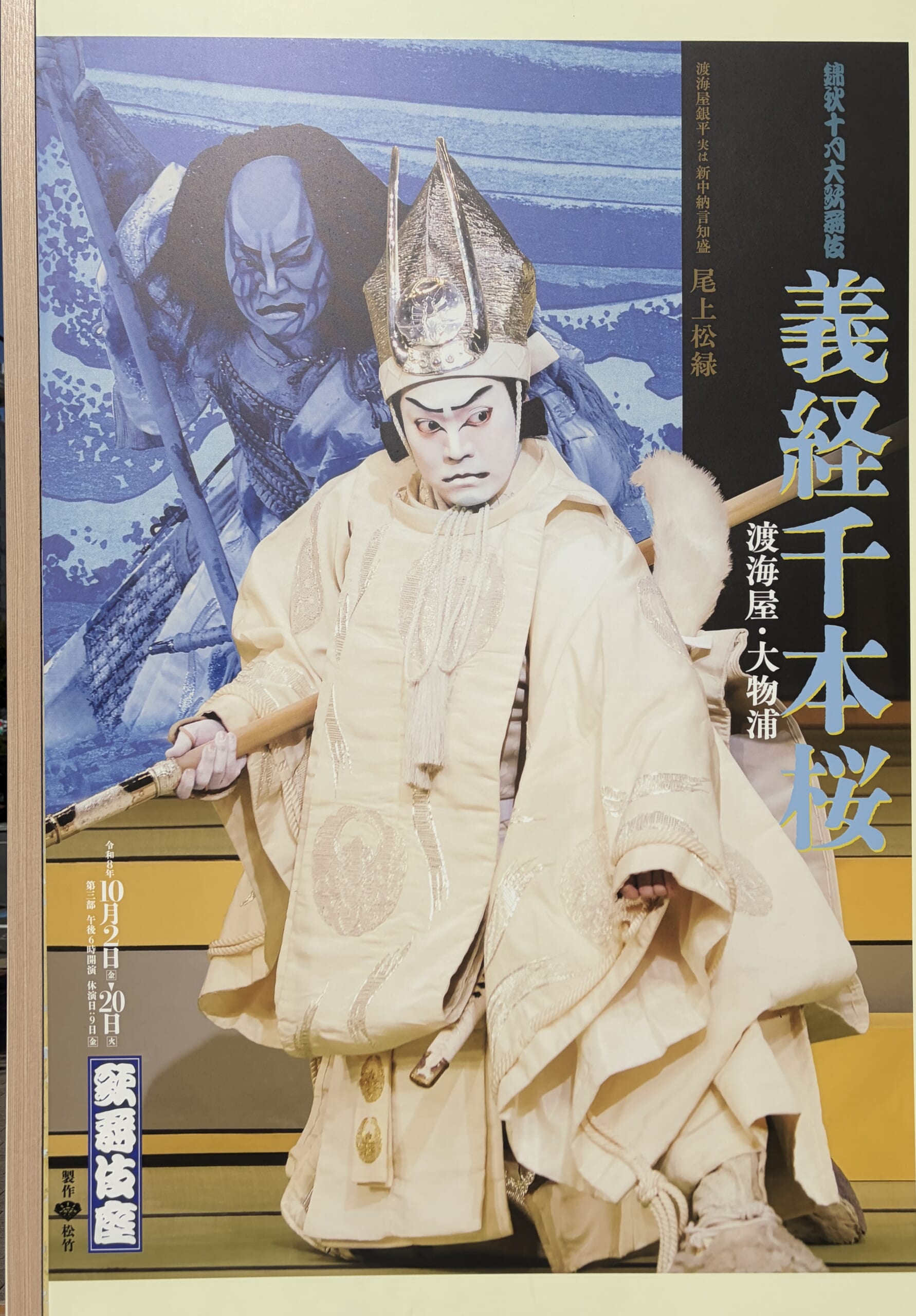
The setting is Tokaiya, a shipping agent’s house at Daimotsu Bay. Pursued by his elder brother Yoritomo, Minamoto no Yoshitsune is fleeing to Kyushu, with his party waiting here for their ship to sail.
But Ginpei, the master of Tokaiya, is really Taira no Tomomori, a Heike general who was supposed to have died at the Battle of Dan-no-ura. His wife Oryū is in fact Suke no Tsubone, nursemaid to the child emperor Antoku, while their daughter Oyasu is none other than Emperor Antoku himself. On a stormy night, Tomomori sets sail, planning to strike down Yoshitsune out at sea.
Yoshitsune, however, has seen through the plot. Learning that Tomomori has been defeated, Suke no Tsubone tries to enter the sea with the emperor in her arms, but Yoshitsune stops her. She entrusts the emperor’s future to Yoshitsune, then takes her own life. Gravely wounded, Tomomori returns. At the very end, he shoulders an anchor, then casts himself into the sea.
At Tokaiya, Ginpei is a dependable shipping agent. At Daimotsu Bay, he becomes a Heike general burning for revenge. The highlights are his great tachimawari (a stylised fight scene), fought while covered in wounds, plus his final moment, sinking into the sea with the anchor.
Tokaiya, Daimotsu no Ura from a Dobu Seat Beside the Hanamichi
This time, my seat was in the dobu (literally “the ditch”), the area on the outer side of the hanamichi (the raised walkway that runs through the audience). To be honest, I don’t remember much of the part at Tokaiya where Ginpei reveals who he really is. I was too captivated by Tokizō Nakamura (haha).
From Oryū to Suke no Tsubone: Captivated by Tokizō
I love the air Tokizō has as Oryū, the wife at Tokaiya, too. But once she becomes Suke no Tsubone at Daimotsu Bay, her courtly grace is lovely all over again.
The duty to protect the young emperor, with all the weight it carries. I could feel it, which made it so poignant…
Then comes the scene where she entrusts the emperor to Yoshitsune, then takes her own life. Honestly, I wish I’d seen this from the front row on the kamite side (stage right, as seen from the audience)… (haha)
Shōroku’s Tomomori: A Cool Tachimawari
Covered in wounds, Tomomori closes in on Yoshitsune’s party in a great fight scene. Shōroku Onoe’s tachimawari is always so cool, isn’t it? This time, too, he was just as cool.
Still, thinking about what happens to Tomomori next, it hurts…
With the Anchor: The Moment I Saw the Soles of His Feet
At last, Tomomori shoulders the anchor, heading for the sea. The breathless tension just before he leaps was irresistible.
Then, at the moment he jumps, he leaps showing the soles of his feet. This is truly, truly incredible! The thrill of seeing the soles of his feet was wonderful! Shōroku is way too cool.
Before the Show: A Meal at Kitcho
Rewinding a little, to before the show. Right after Part 2 ended, I headed to Kitcho on the third floor of the Kabukiza. I always love Kitcho for its roomy seating. By the way, the founder of Kitcho apparently adored kabuki.
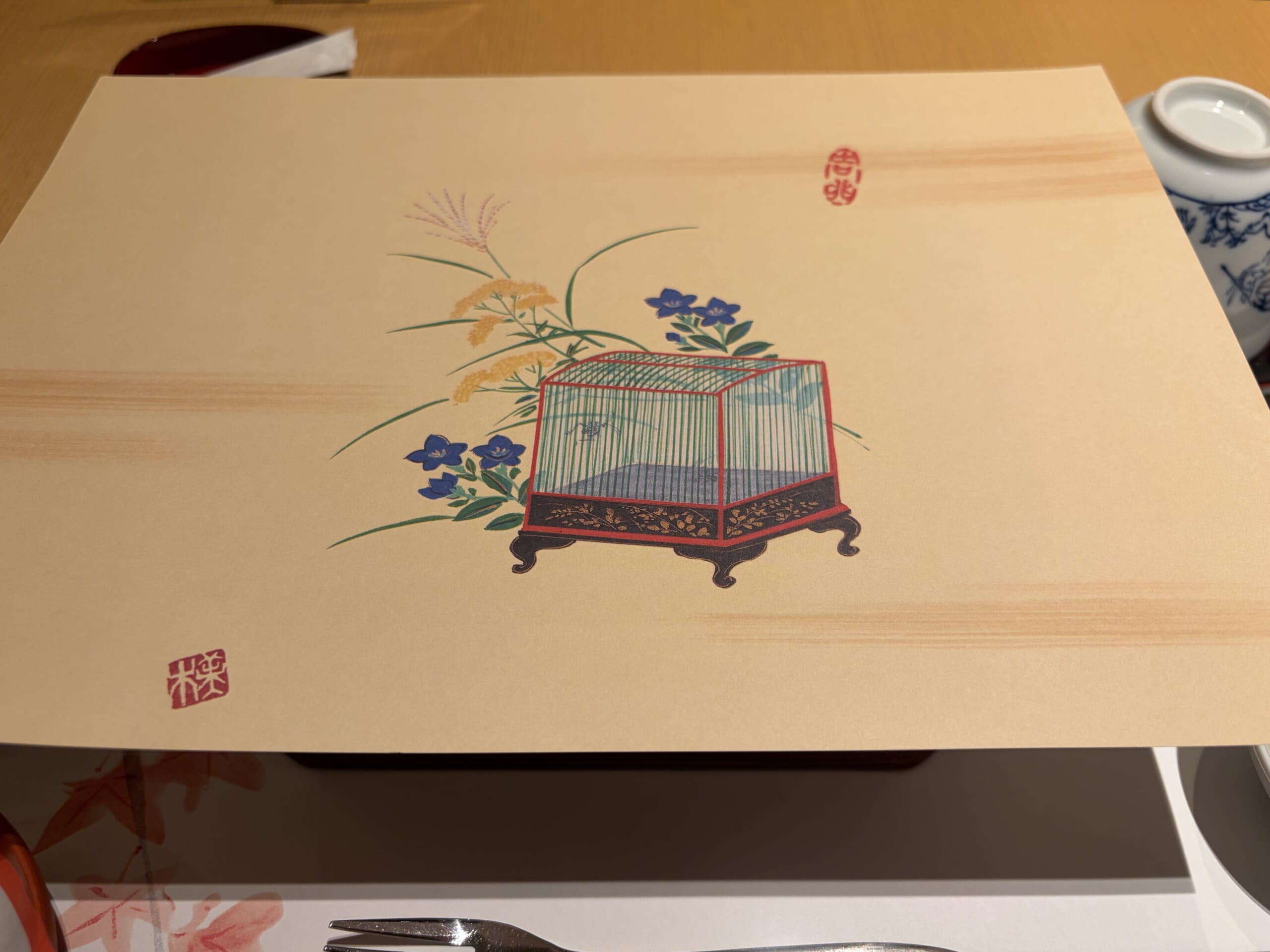
On top of the fuchidaka (a lacquered box with raised sides, a bit like a tiered jūbako) lay a sheet of paper painted with autumn grasses plus an insect cage. The Kannazuki (October) menu listed sea bream sashimi with the skin on, Spanish mackerel grilled in a yuzu-scented miso marinade, chestnut rice, nyūmen (thin noodles in a warm broth), among other dishes.
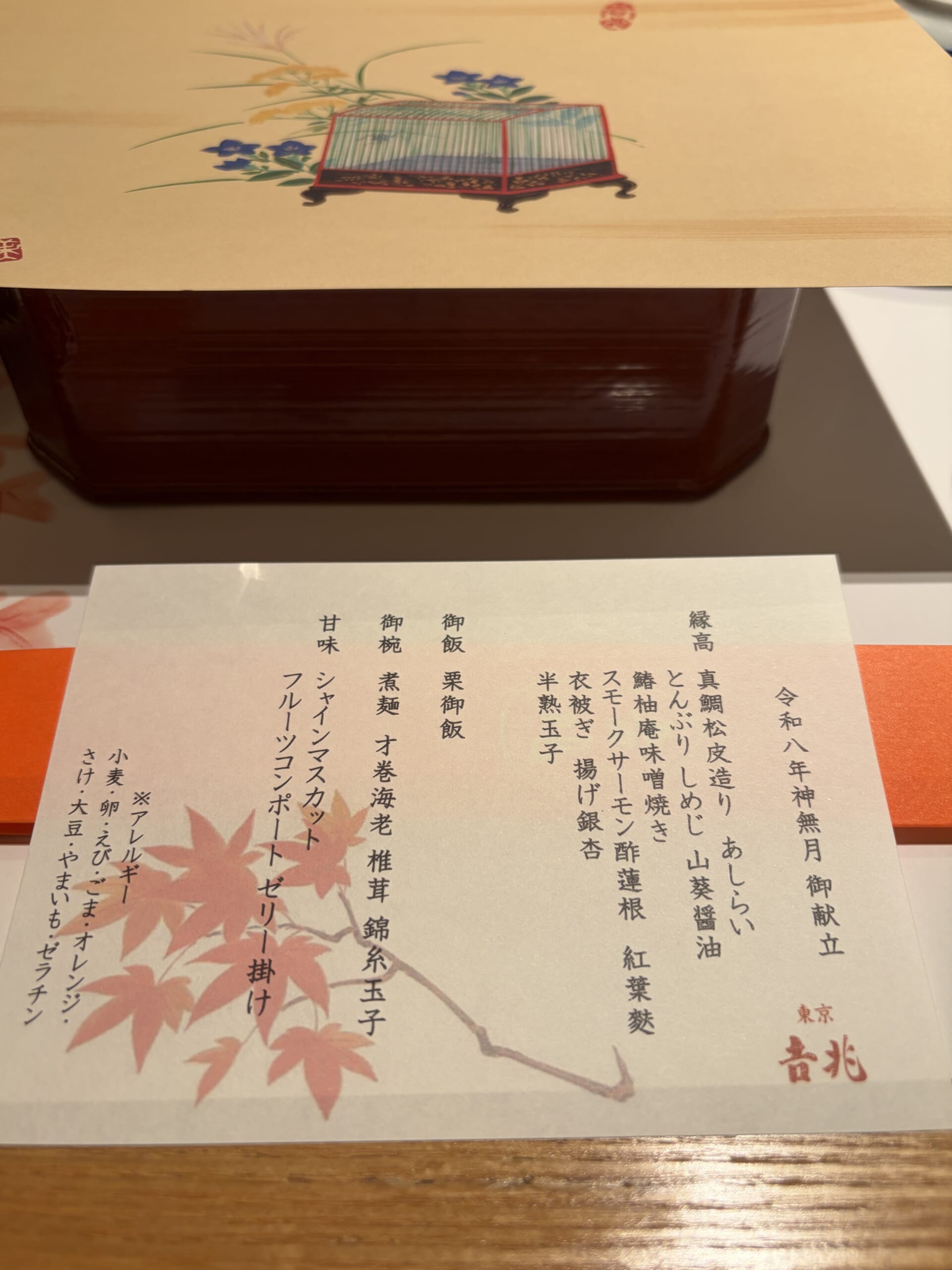
My favourite was the sea bream. Also, the chestnut rice was my first of the year, which made me happy.
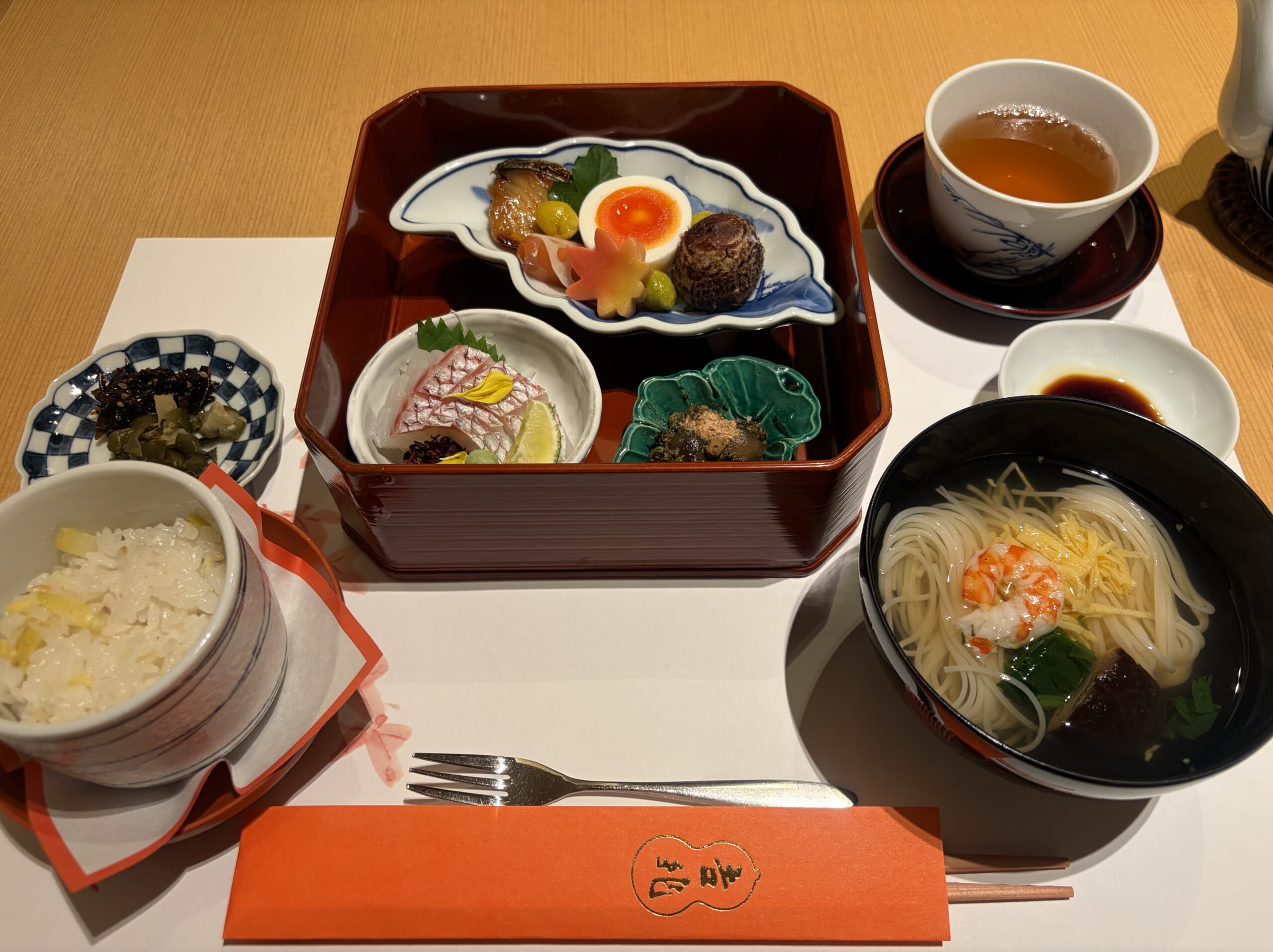
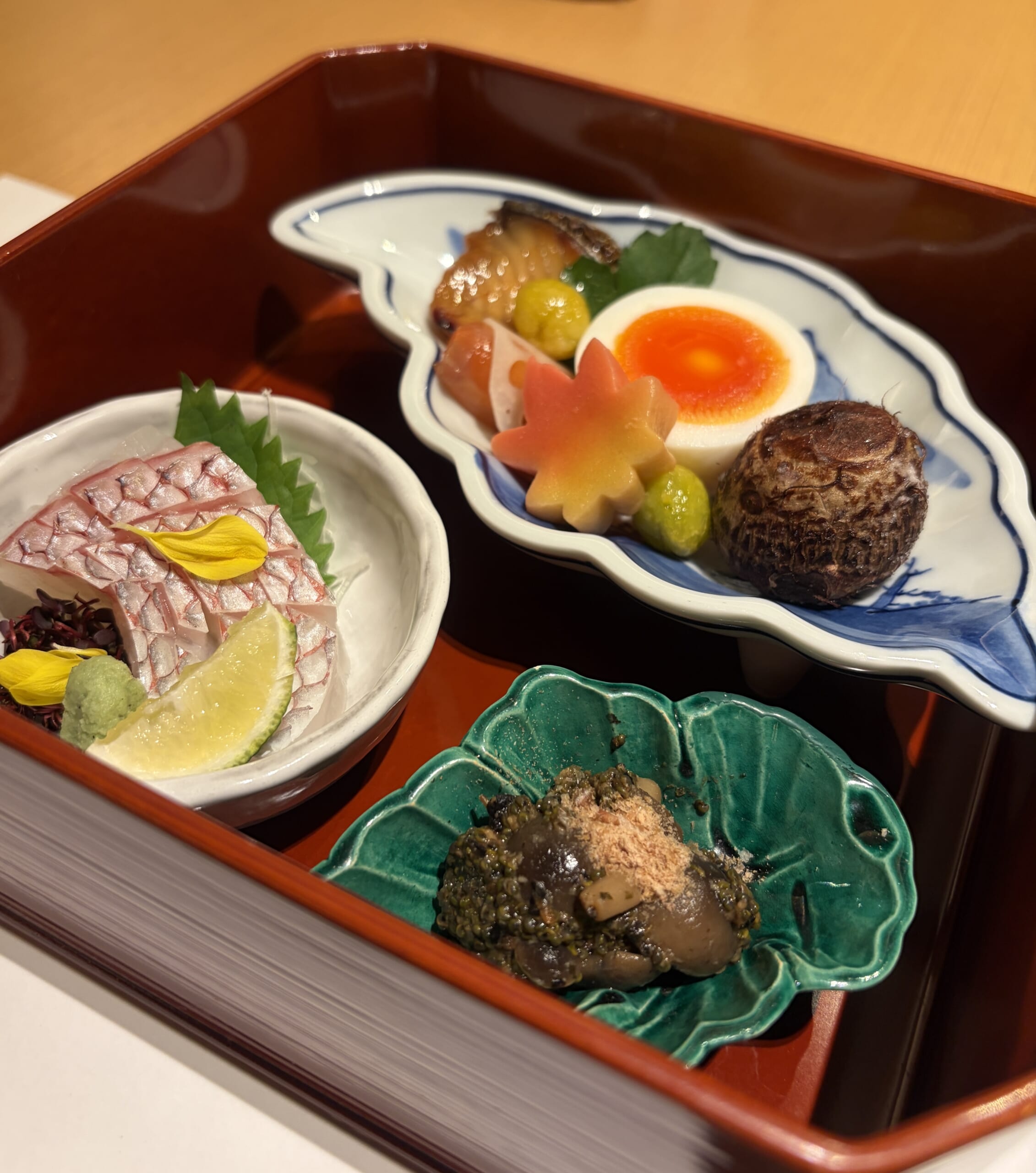
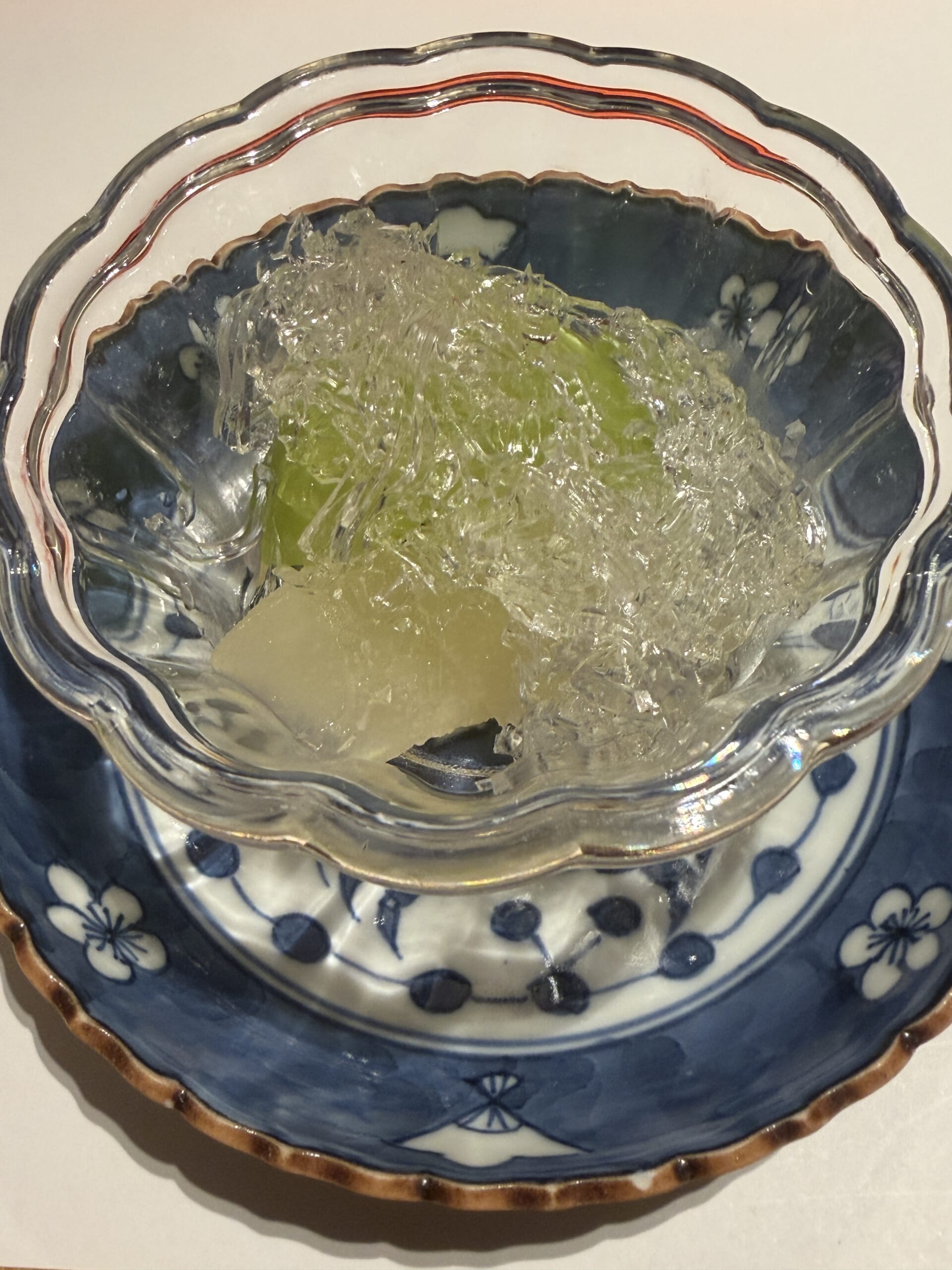
It’s always delicious. It looks like a small amount, yet it’s surprisingly filling, so I had to work hard to finish it (haha). Dessert rounded things off: Shine Muscat grapes with fruit compote under a jelly glaze. The price was 6,600 yen (tax included, as of October 2026).
The Kabukiza at Night, Plus Some Senjaku Ame
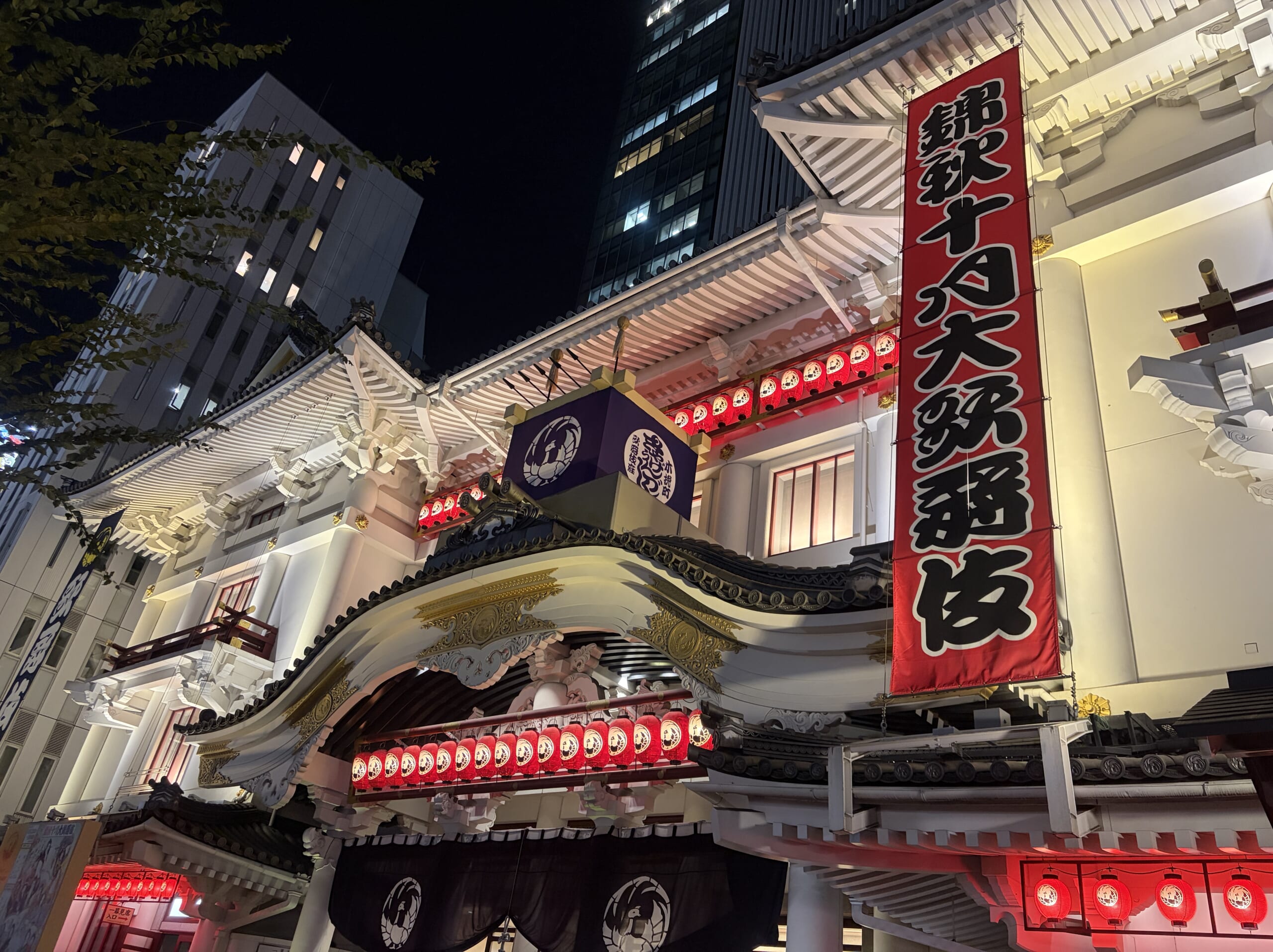
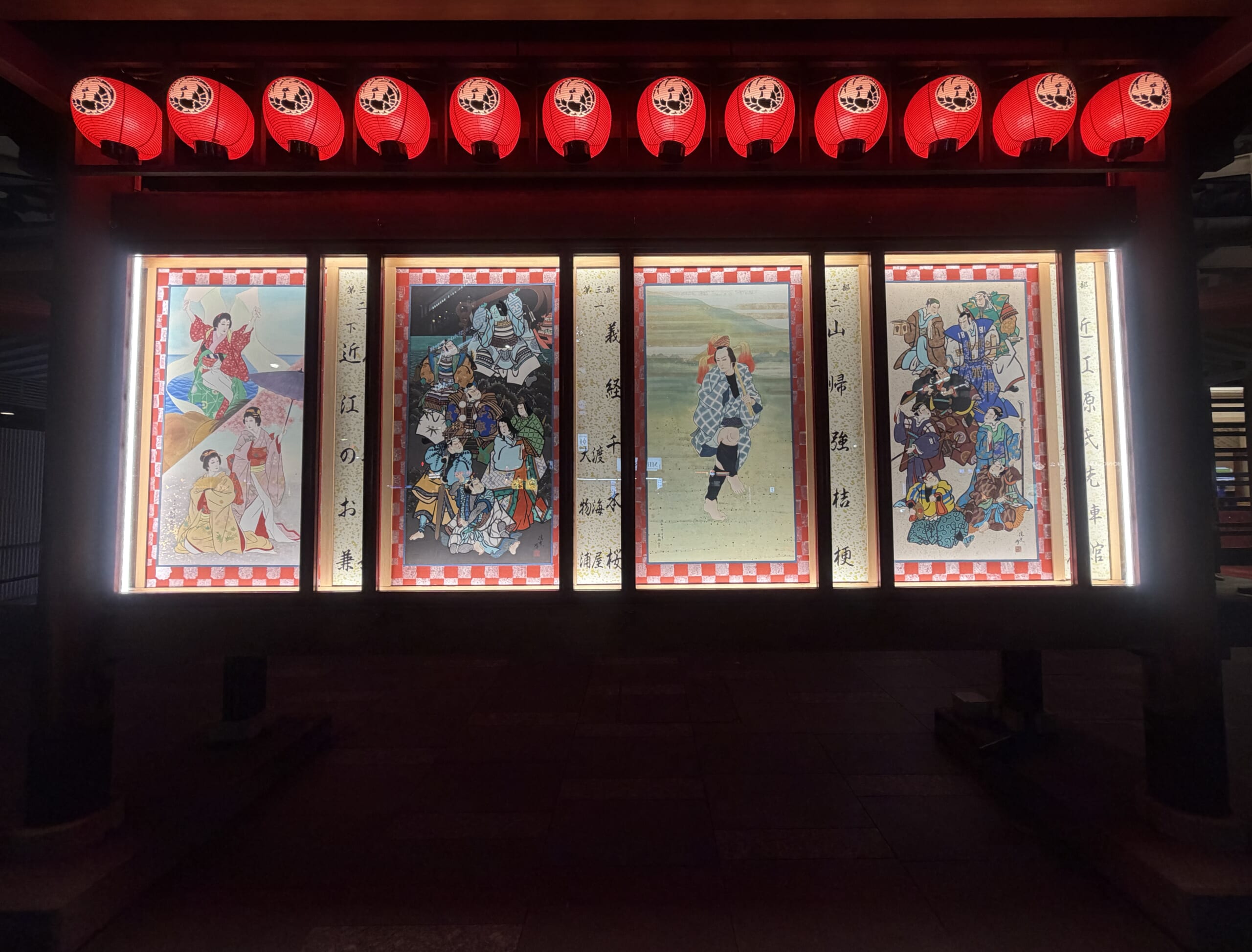
At night, the Kabukiza shows off its red lanterns, white walls, a purple yagura (the ceremonial turret above the entrance), plus the great banner for the October Program. Beneath the lanterns, picture billboards for this month’s plays are lined up.
Then, a small happy moment from that day. The candy I was given on my morning flight turned out to be Senjaku Ame 🍬 Since I had the chance, I snapped a photo of it with the Kabukiza in the background.
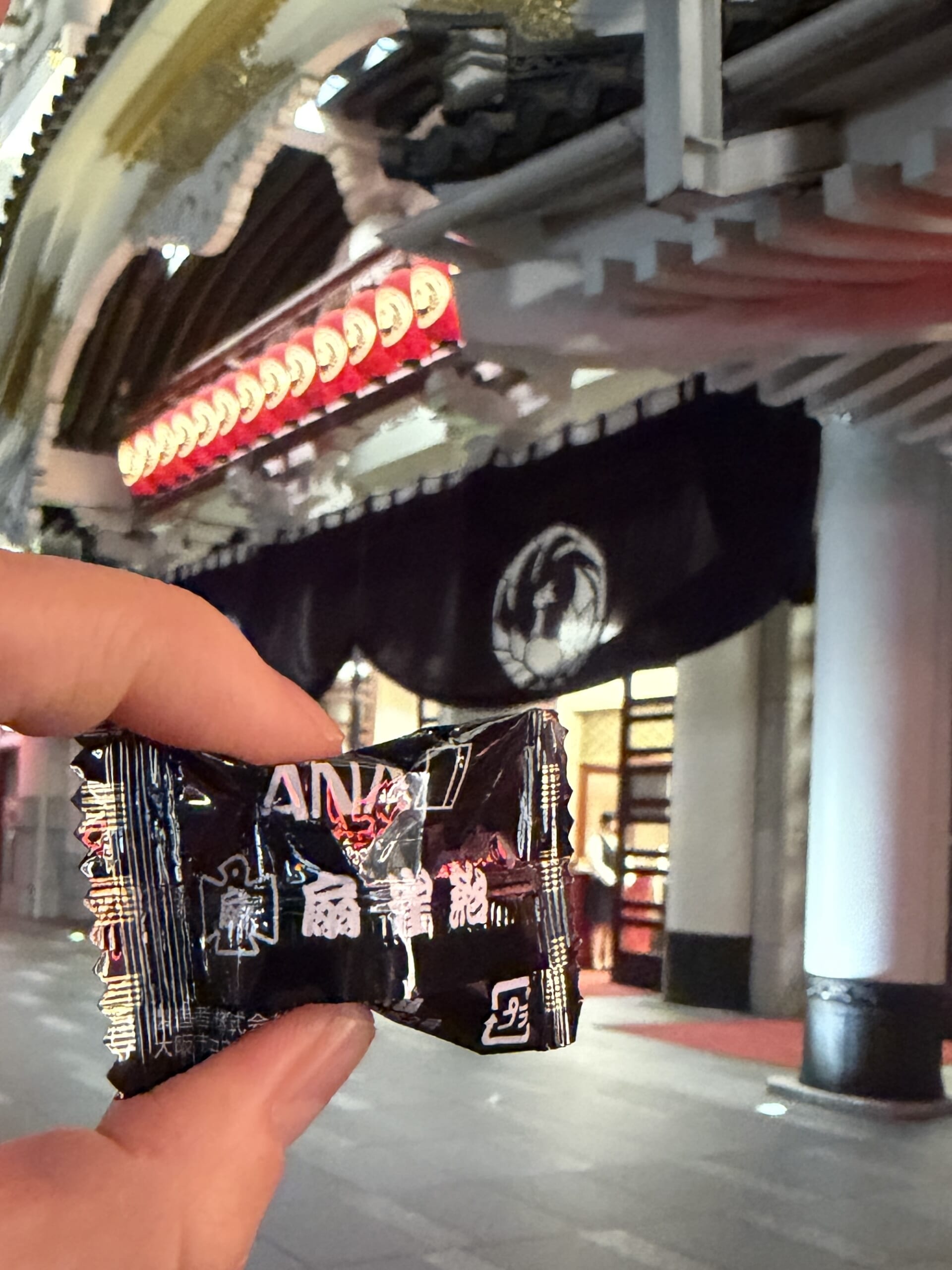
Having Senjaku Ame again after a long time, I found it just as tasty as ever. I’m a little hooked (haha). If you ask the cabin crew, they’ll put together a little candy set for you, so I ended up asking again on my return flight. Careful not to eat too many 🍬
Wrapping Up
When I finish watching a classic, I always feel a sense of accomplishment. There were so many moments that felt crushing, plus scenes that left me holding my breath…
Tokizō’s Suke no Tsubone, graceful yet heartbreaking; Shōroku’s cool Tomomori; plus those soles of his feet at the very end. It was an evening of taking in the full weight of a classic from a dobu seat beside the hanamichi.