In the opening piece, the wall at the back of the stage opened up and the real view outside became the backdrop. You could even see a block of flats (haha). The Heisei Nakamuraza is back in Asakusa for the first time in four years. I watched Part 1 from a dobu seat right by the hanamichi, and once again, today was the best.
More from this production → October Program at the Heisei Nakamuraza Theatre: Part 2 (October 2026)
What Is the Heisei Nakamuraza?
The Heisei Nakamuraza is a temporary theatre that recreates an Edo-period shibai-goya (kabuki playhouse) for a limited run. It was born in Asakusa in 2000 out of the wishes of the 18th Kanzaburō Nakamura, and it has toured across Japan as well as overseas. This time, it stands behind the main hall of Sensō-ji Temple.
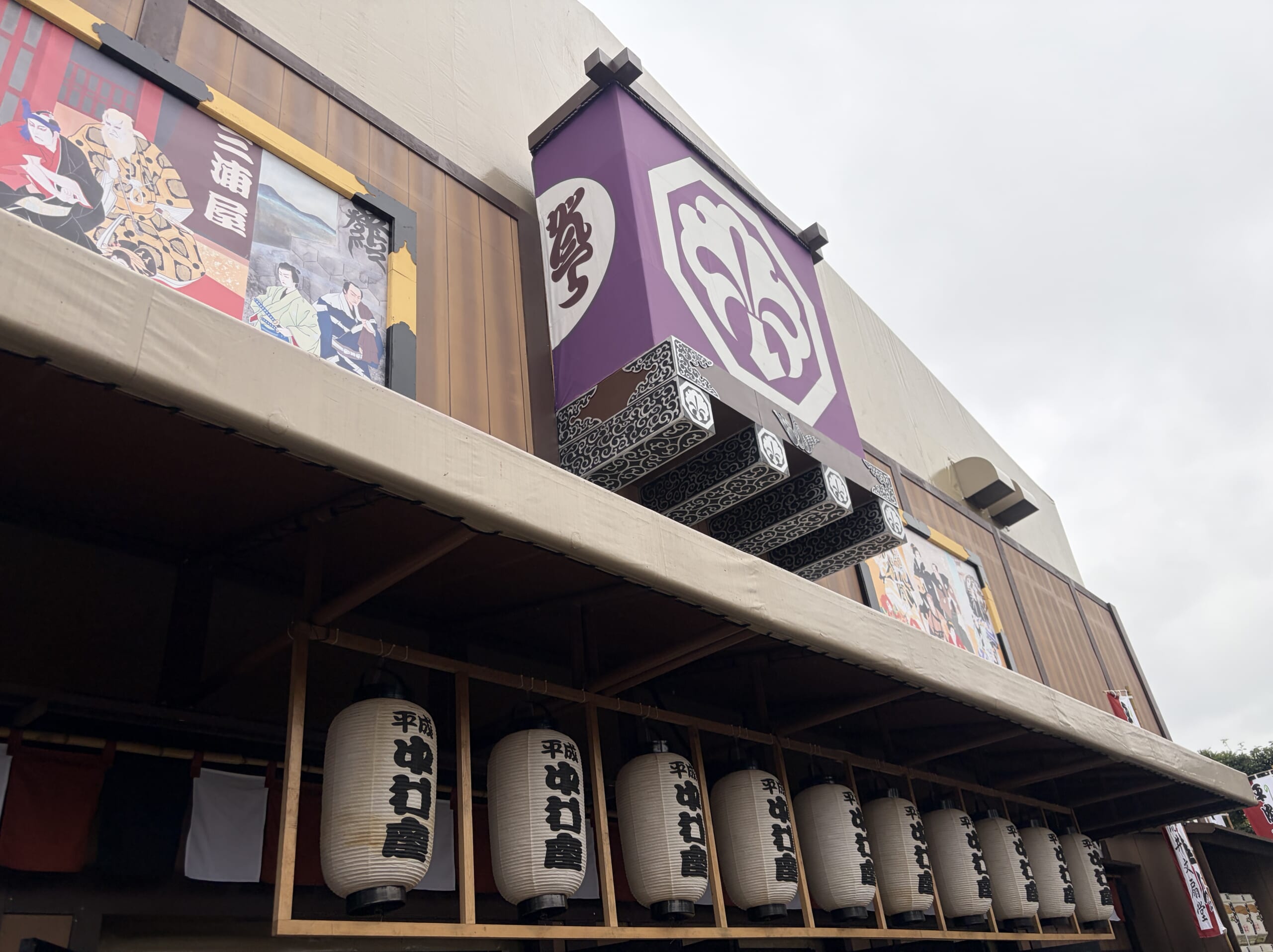
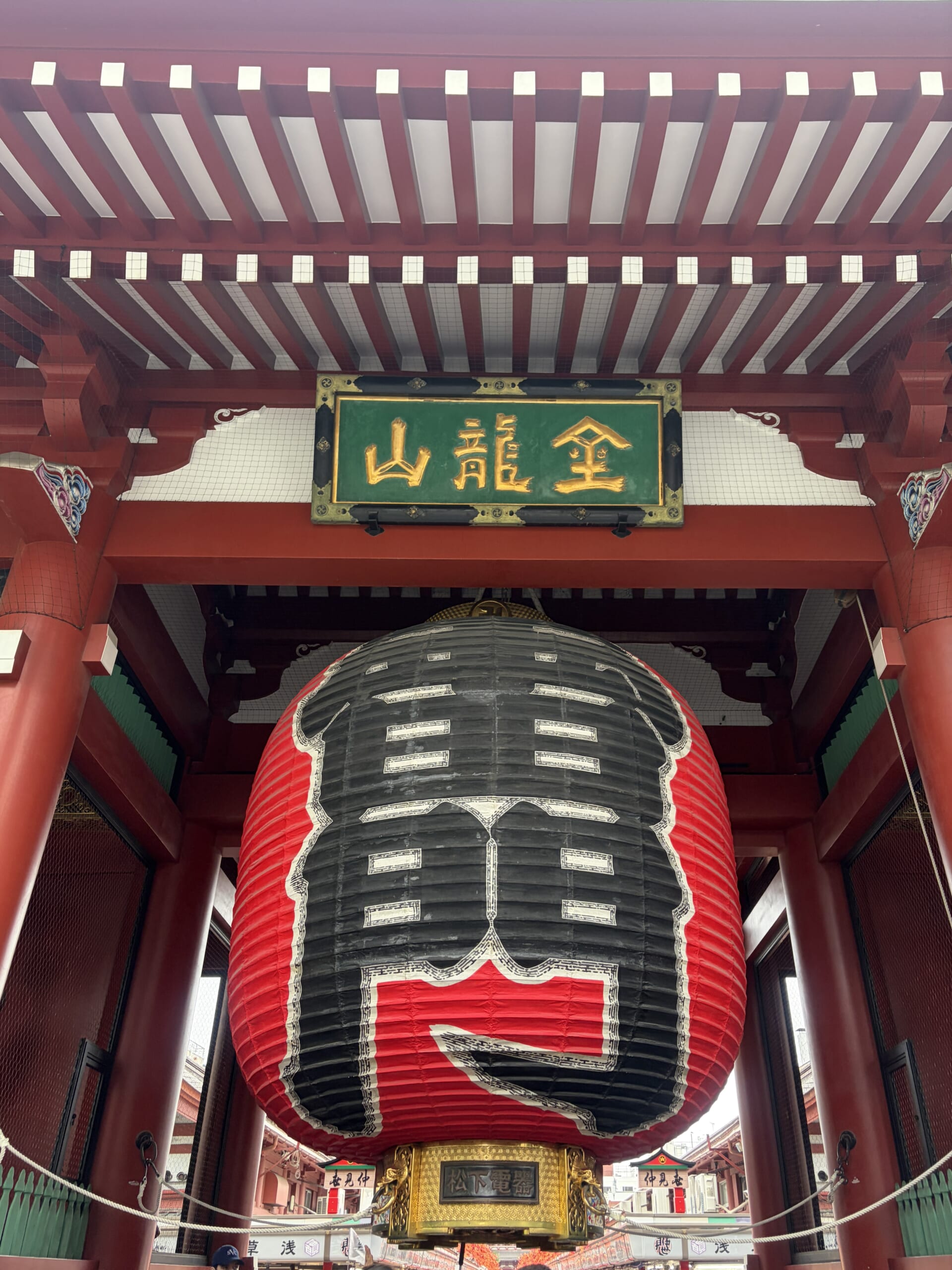
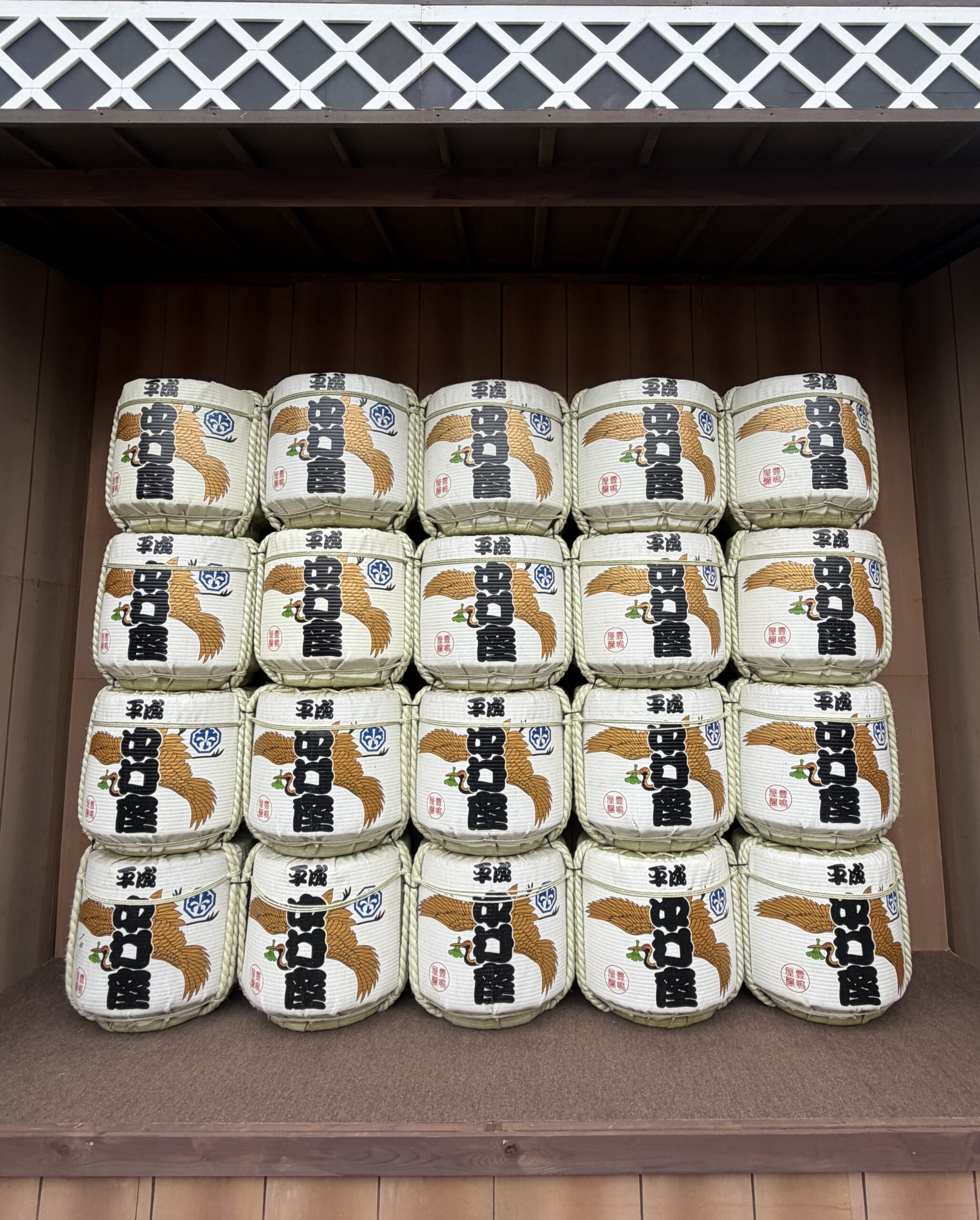
Since I was in Asakusa anyway, I stopped by the Kaminarimon Gate too. You’ve just got to take a photo when you’re here, right? 📷 White lanterns line the theatre entrance, with nobori banners and sake barrels bearing the name “Heisei Nakamuraza” all around. Round the back, lots of tour buses were parked as well.
Part 1 is a triple bill: Ho Agete Iou Takarabune, Kanadehon Chūshingura (The Treasury of Loyal Retainers) Act 9: Yamashina Kankyo, and Renjishi (Parent and Child Lion Dance).
A Dobu Seat by the Hanamichi, Under a Ceiling of Lanterns
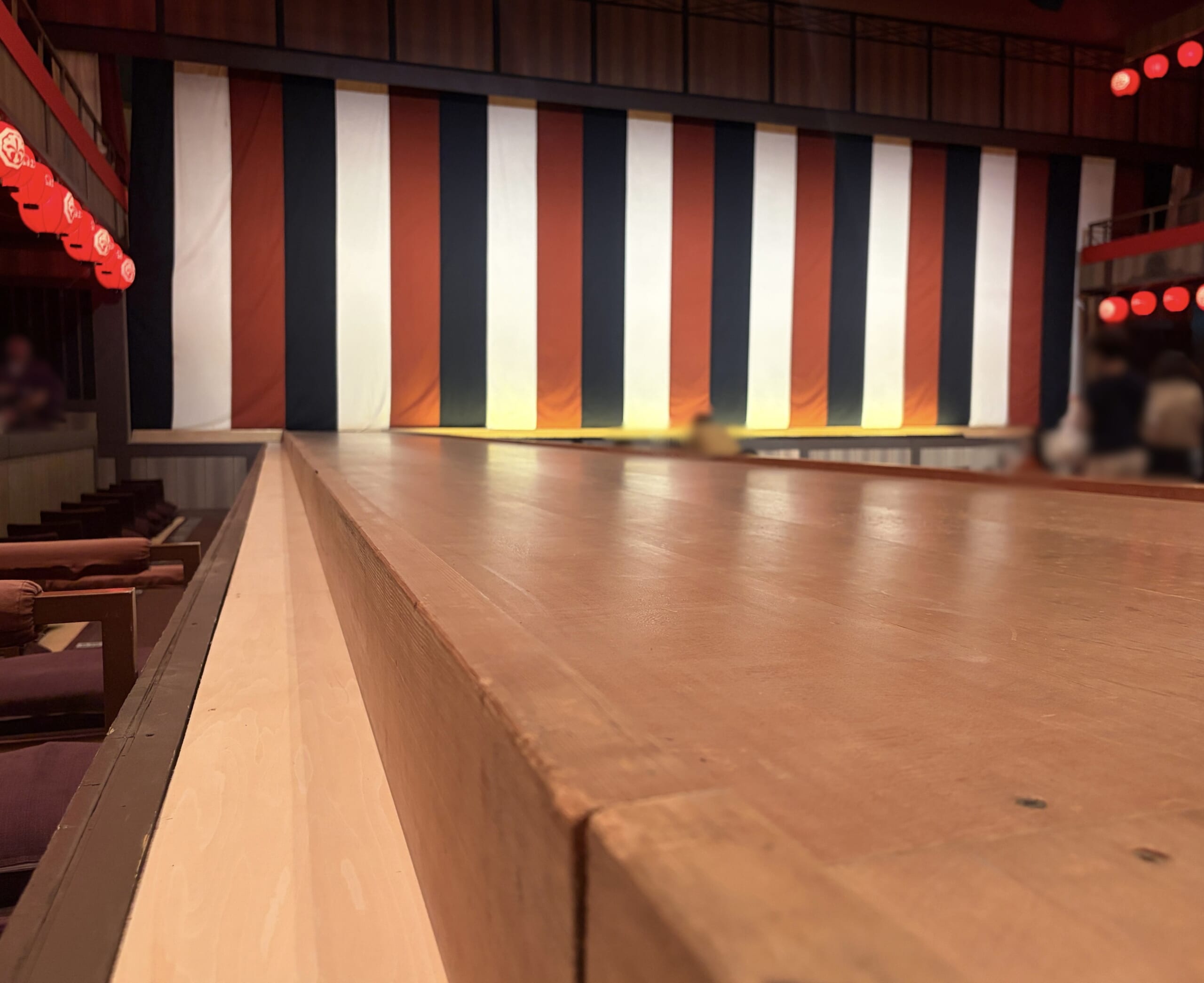
My seat this time was a dobu seat (a seat right alongside the hanamichi, the walkway that runs through the audience), so the boards of the hanamichi were right in front of me. A purple zabuton cushion sat on the chair, which was soothing in itself. Unlike the seating at a theatre such as the Kabukiza, though, the rows are close together with very little rake, so the head of the person in front often blocked my view.
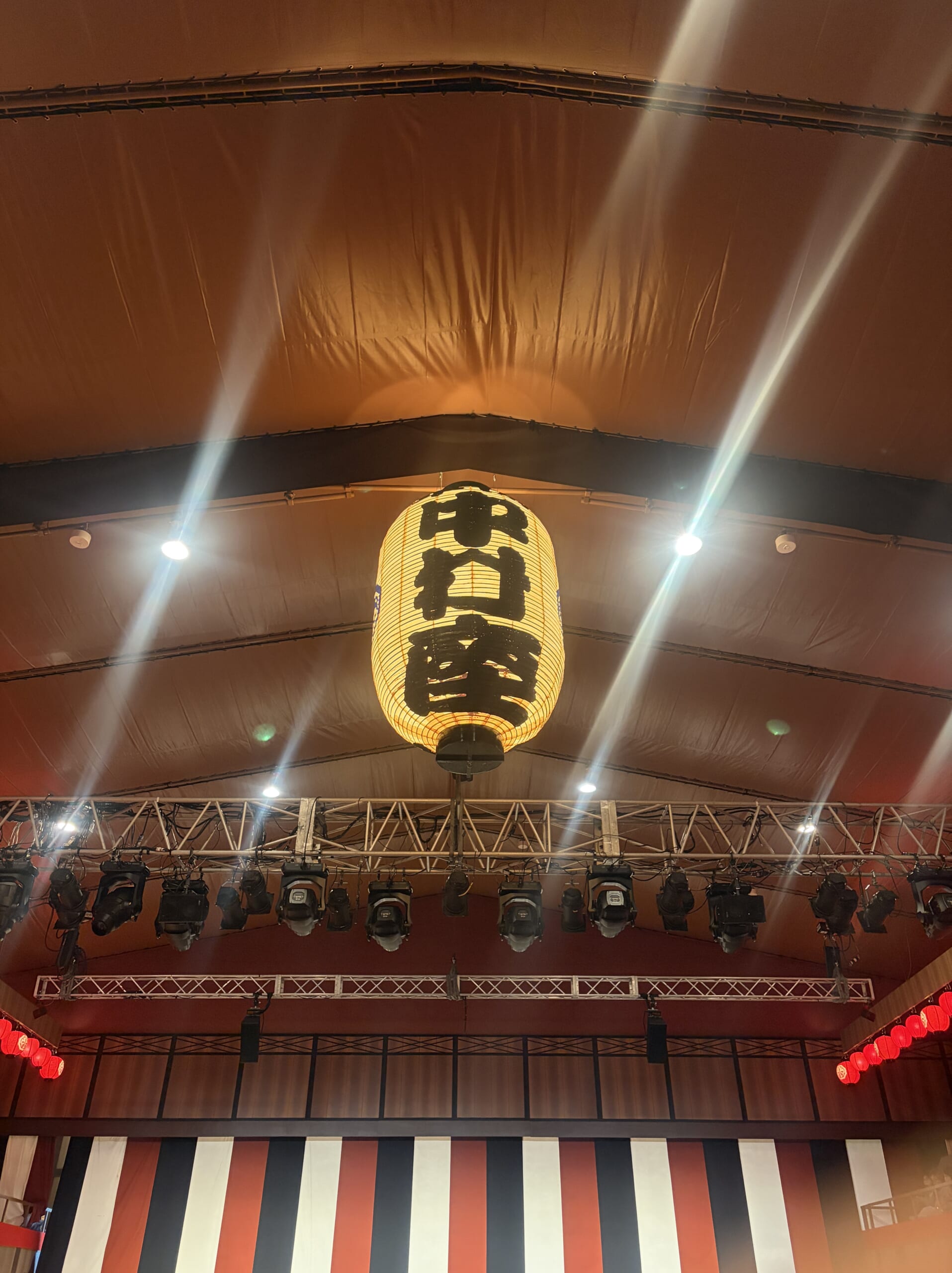
Look up, and there’s a giant lantern reading “Nakamuraza”, with strings of red lanterns running across the ceiling. The big lantern is huge. Seriously impressive!
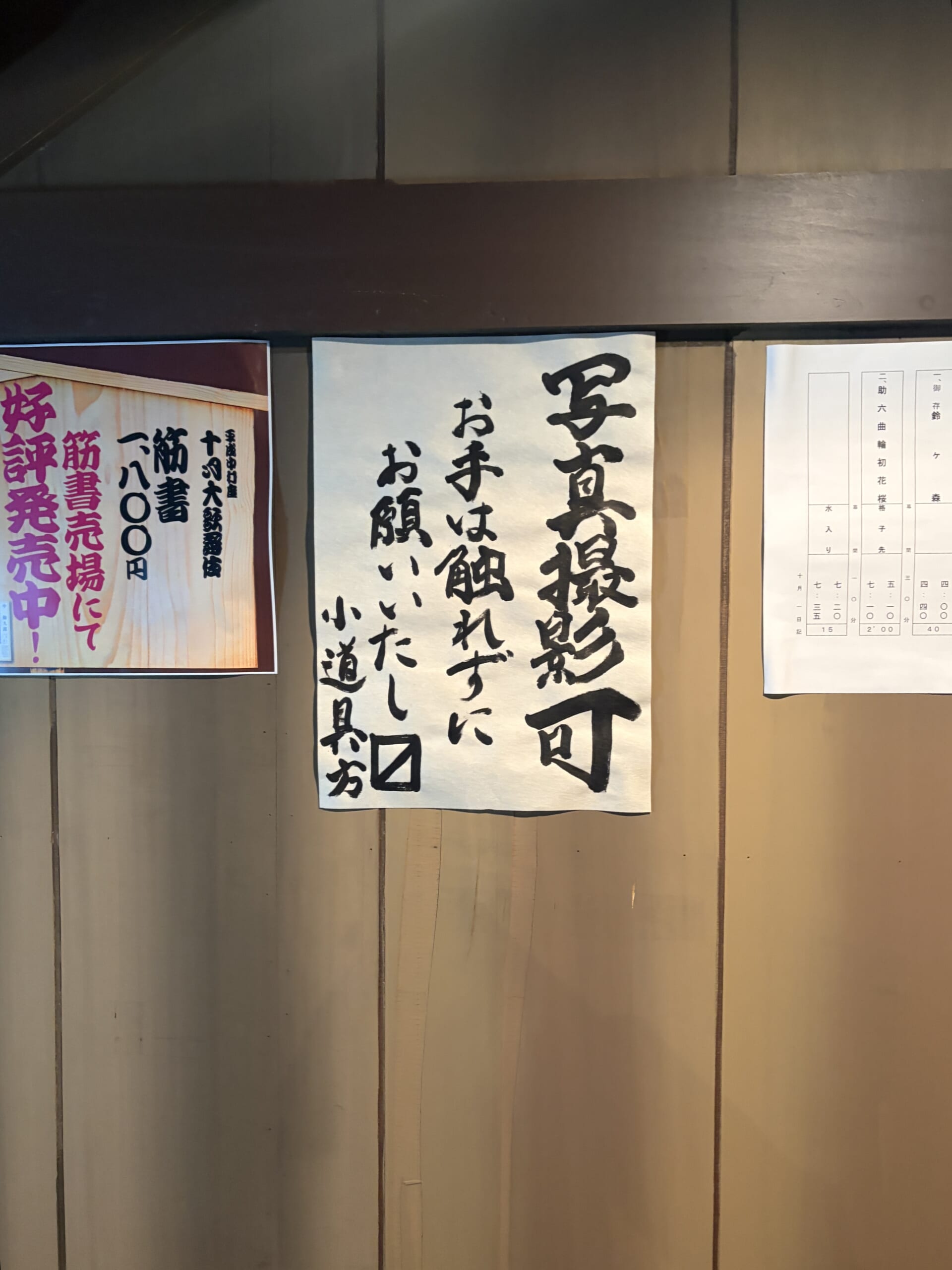
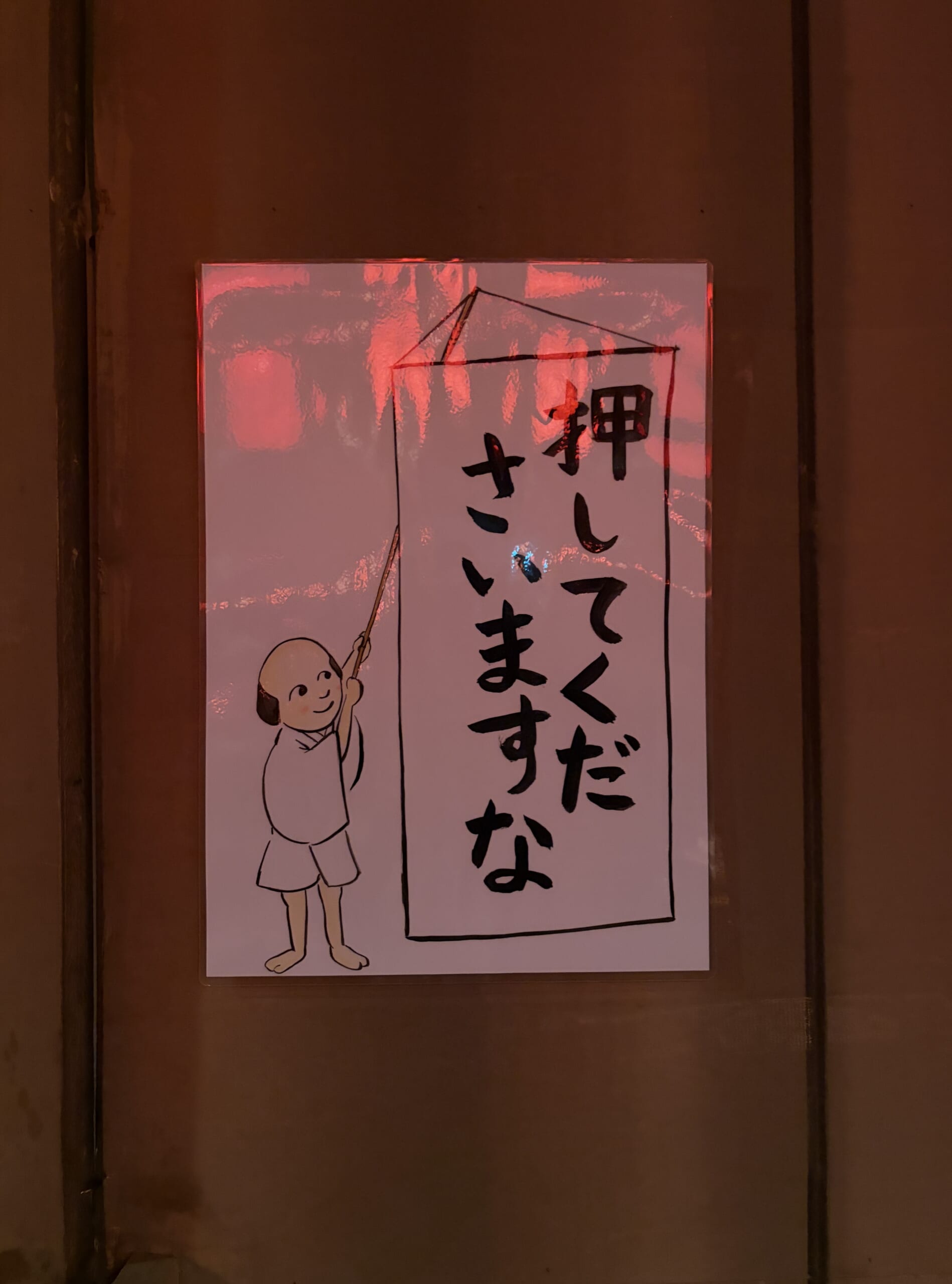
The notices around the theatre have real character too. I somehow love the brush-written “Photography Permitted” sign by the kodōgu (props) team, while the “Pray, Do Not Push” sign with its little illustrated figure is adorable 😍 There were cute illustrations everywhere. I wish I’d made more time to go round and see them all!
The Three Pieces in Part 1
Ho Agete Iou Takarabune
This dance was written for the name-taking ceremony (shūmei) of the three Narikomaya brothers: Hashinosuke Nakamura, Fukunosuke Nakamura and Utanosuke Nakamura. Contemporary artist Akira Yamaguchi is one of its creators, and this is its first staging in ten years.
As the prow of the treasure ship turned towards the audience, the wall behind it opened, turning the view outside into shakkei (borrowed scenery). Amazing! Then I noticed a block of flats in view too (haha). The painted backdrop even included Sensō-ji, Tokyo Skytree and the Heisei Nakamuraza itself, which was just brilliant.
Kanadehon Chūshingura Act 9: Yamashina Kankyo
Tonase (Shichinosuke Nakamura), wife of Kakogawa Honzō, travels with her daughter Konami (Tsurumatsu Nakamura) to the home of Ōboshi Yuranosuke (Kankurō Nakamura) in snowy Yamashina. They hope to see Konami married to her fiancé, Ōboshi Rikiya (Utanosuke). However, Yuranosuke’s wife Oishi (Senjaku Nakamura) refuses them. In despair, Tonase resolves to kill Konami, then herself… At that moment Honzō (Ganjirō Nakamura) appears dressed as a komusō (a wandering monk), deliberately lets himself be struck by Rikiya’s spear, then reveals his true intentions.
Thinking about Tonase’s feelings made my heart ache… She wants to give her dear daughter the wedding she longs for, but Konami isn’t actually her own child. So why go that far? It seems that precisely because she’s the stepmother, she couldn’t face her husband if the daughter he entrusted to her were turned away.
Still, isn’t Yuranosuke always one step too late? (haha) Time after time I think: if only he’d come out sooner, none of this would have happened! Though in Act 9, you could read it as him having already seen through Honzō’s resolve, so maybe he’s one step behind on purpose…
By the way, during a scene with only Tonase and Konami on stage, there was a fly on the hanamichi. It drifted lazily along the hanamichi, then flew off towards the audience. Was it Kanzaburō dropping by, I wonder?
And it was my first time seeing Tsurumatsu since January this year! When his casting was announced, I literally jumped for joy! Finally seeing him on stage after all that waiting made me so happy, and he was utterly adorable. Truly, truly the best!! Looking forward to the next one ⭐️
Renjishi
This great dance piece has been carefully handed down from parent to child in the Nakamuraya (the Nakamura family’s guild name). Apparently, this is the very first time Kankurō has danced it together with his two sons, Kantarō Nakamura and Chōzaburō Nakamura.
In the Earphone Guide special broadcast, Chōzaburō talked about rehearsing while recalling the last time he danced it, saying that as he has grown inside, he has also come to feel anxious… 🥺
A Renjishi danced by a real father with his sons: I couldn’t help seeing them both as kabuki actors and as a father with his children, and I couldn’t watch it without tears. While Kantarō danced with Chōzaburō, I kept my eyes glued on Kankurō the whole time (haha). He was watching the two of them intently, nodding slightly now and then… A father’s worry and a teacher’s strictness both came through, and I watched thinking, how complicated that must be~~~~.
In the keburi (the climax where the lion spirits swing their long manes) in the second half, the manes swung on the hanamichi reached right into the audience, smacking people. I was a little jealous.
Kankurō, Kantarō, Chōzaburō: I was truly moved by the power of everyone’s keburi.
A Theatre Bentō with a Placemat for the Interval
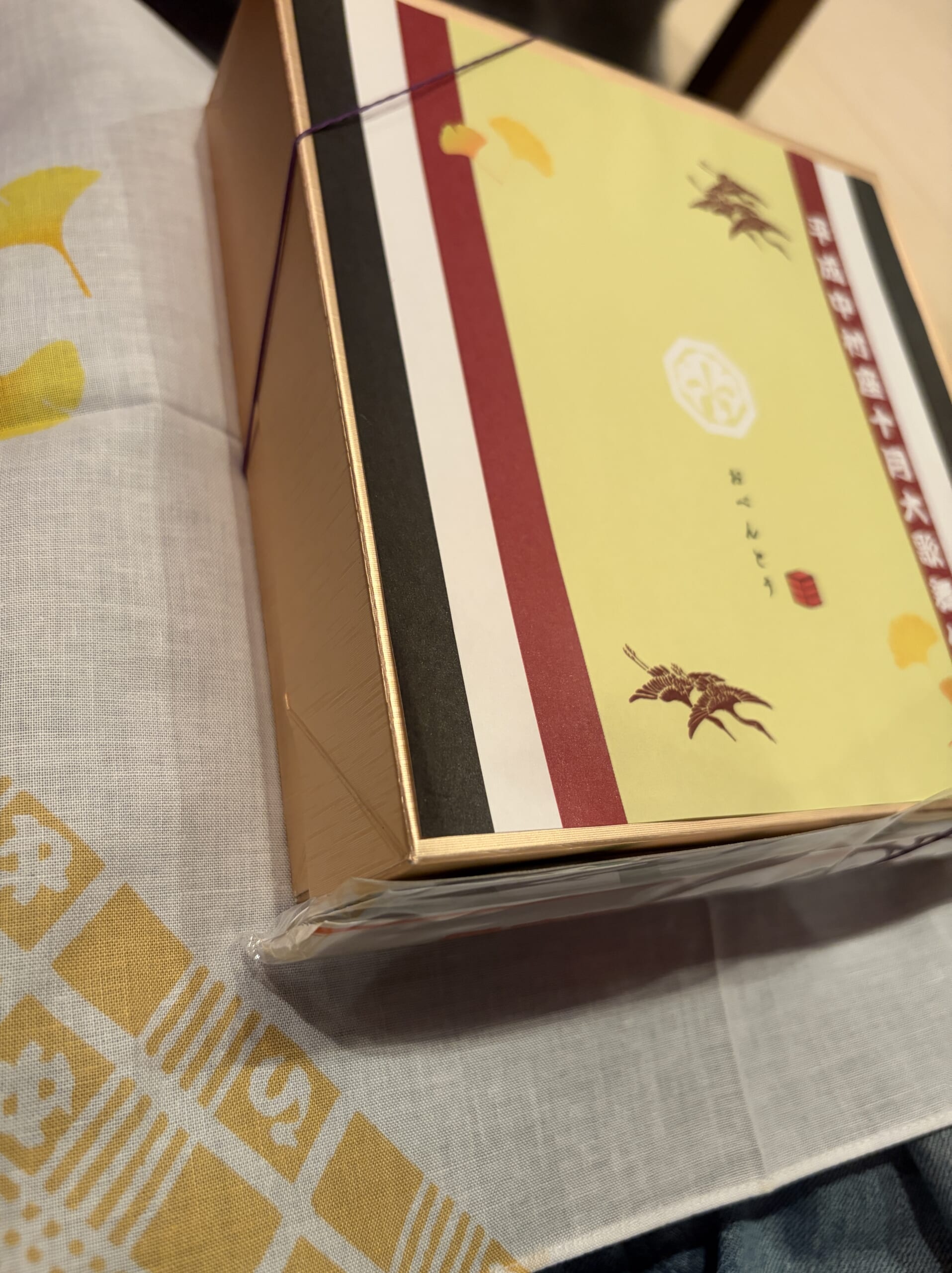
My lunch was the theatre bentō I had reserved in advance through Shochiku, complete with a Nakamuraya placemat featuring a yellow crest with ginkgo leaves!
I opened it in the first interval: inari sushi, chirashi sushi, rice topped with tempura like tendon… There were more rice dishes than side dishes, so it was a very hearty portion. I was stuffed~.
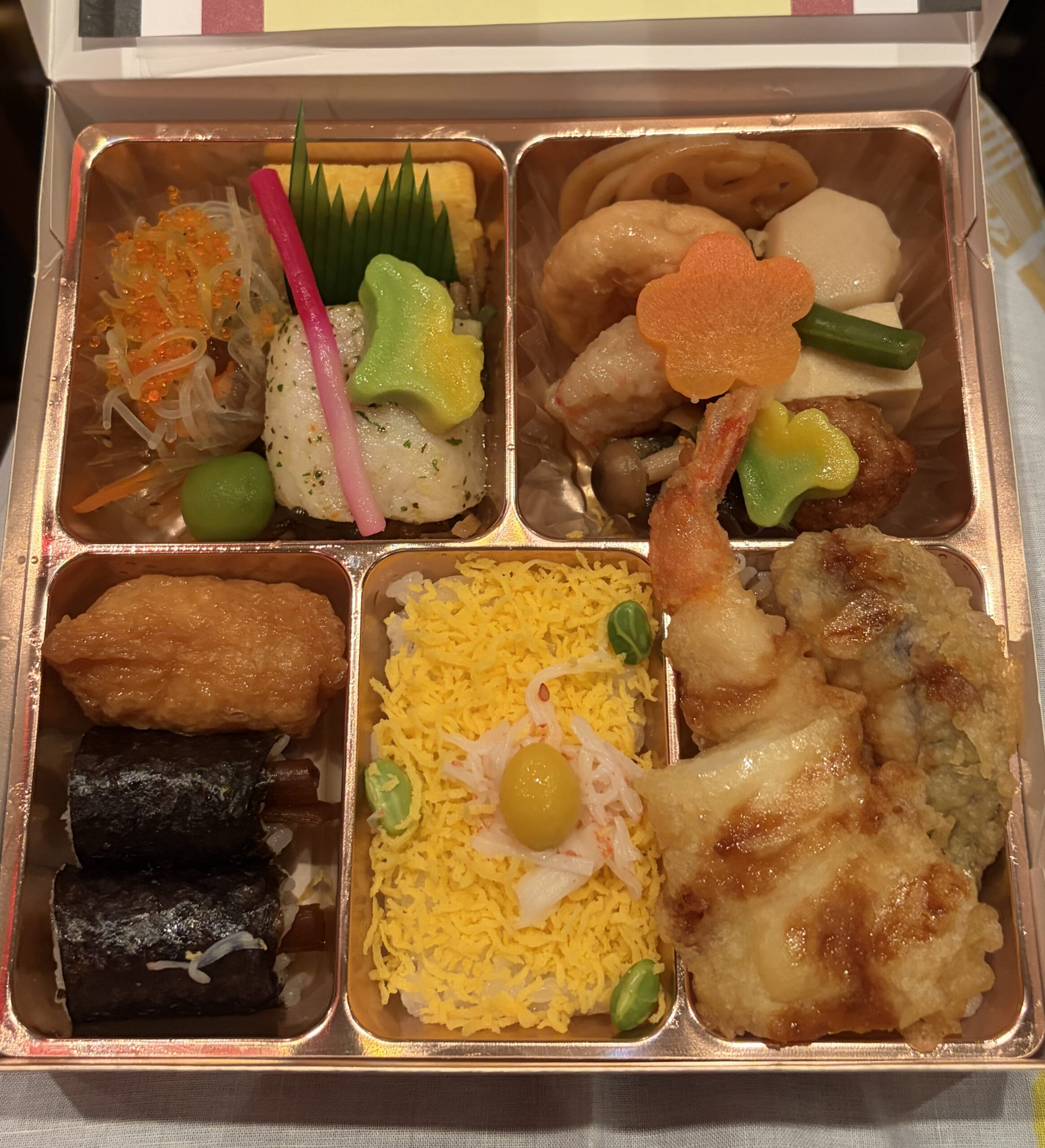
However, outside the theatre they were also selling bentō from Asakusa Imahan, Sukeroku bentō, Maisen and more. That had completely slipped past me. I ordered online in advance, thinking it would be a hassle otherwise, but I really wish I’d had Imahan’s sukiyaki bentō too~. I should have checked first 😭
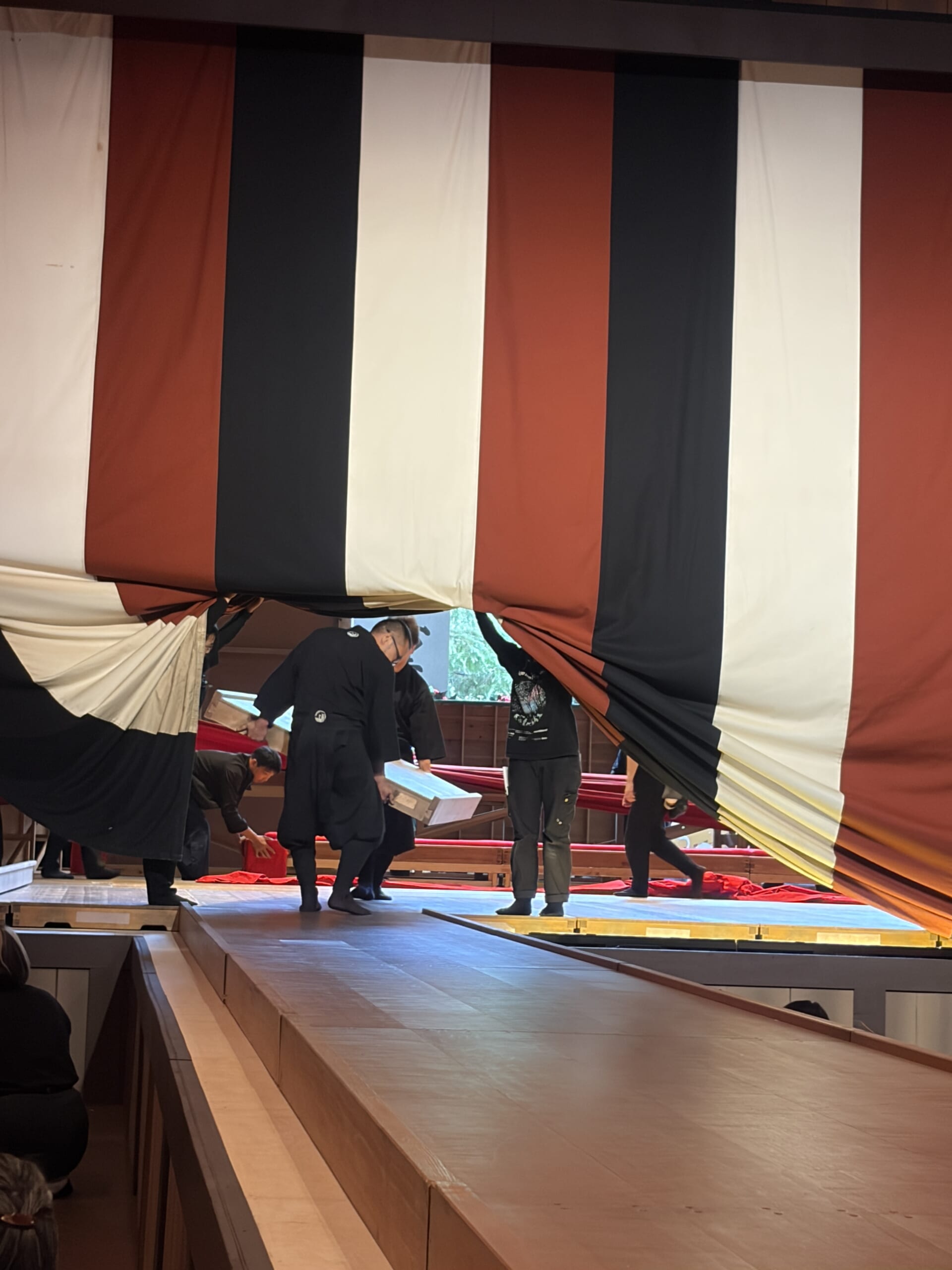
During the interval, I caught a glimpse of the scene change through a gap in the curtain. The shosadai (a platform laid on the stage for dance) was used for Takarabune, cleared away before Chūshingura, then set up again before Renjishi. What a job! Behind the curtain the wall was open, so you could see outside too.
Summary
Real Asakusa peeking through behind the play, lion manes reaching into the audience: the stage sits so close to the seats, and the theatre so close to the town. It was a time only the Heisei Nakamuraza can offer. As for the father-and-sons Renjishi, it brought tears, of course.
The Asakusa run continues until 25 October. The atmosphere of an old-style playhouse is something you can fully enjoy on your own. That said, there seemed to be fewer solo theatregoers than usual this time 👀