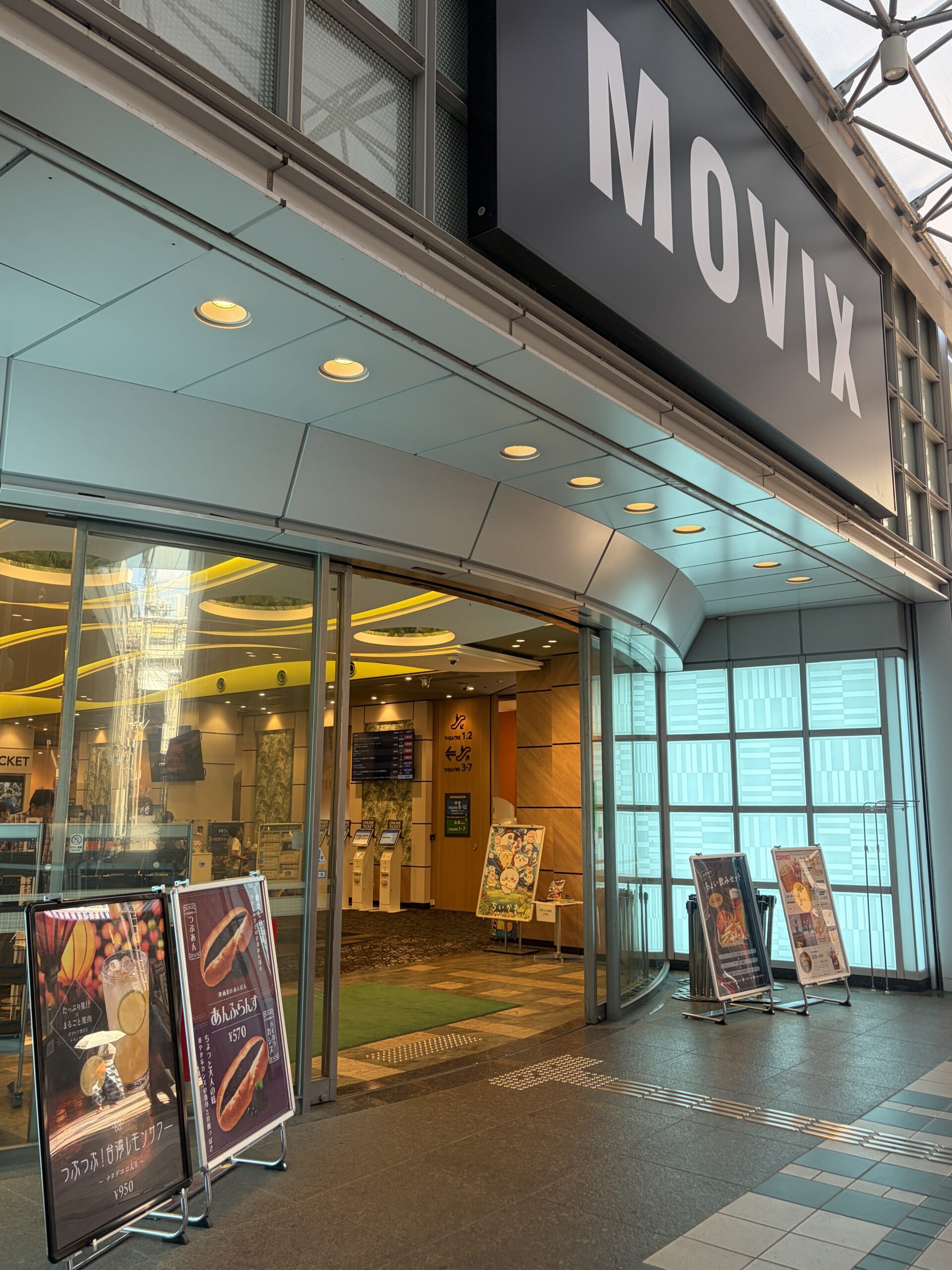
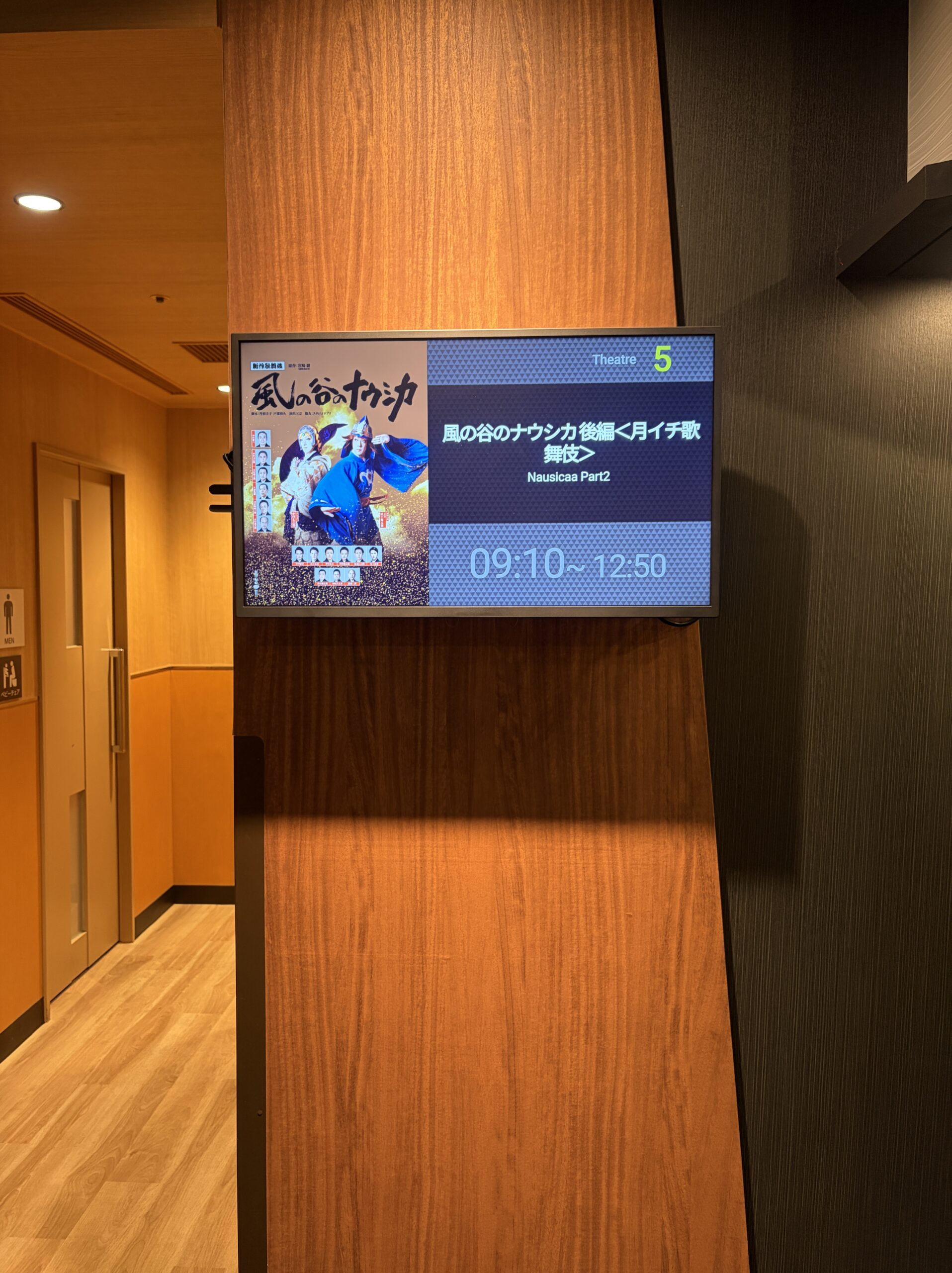
A 9:10 a.m. start and a running time of over 200 minutes. On a midsummer morning, I went to see Cinema Kabuki Nausicaä of the Valley of the Wind (Part 2) at MOVIX Kyoto. Kabuki, Nausicaä, and a giant screen — the combination was even better than I imagined, and once again, today was the absolute best.
What Is Cinema Kabuki?
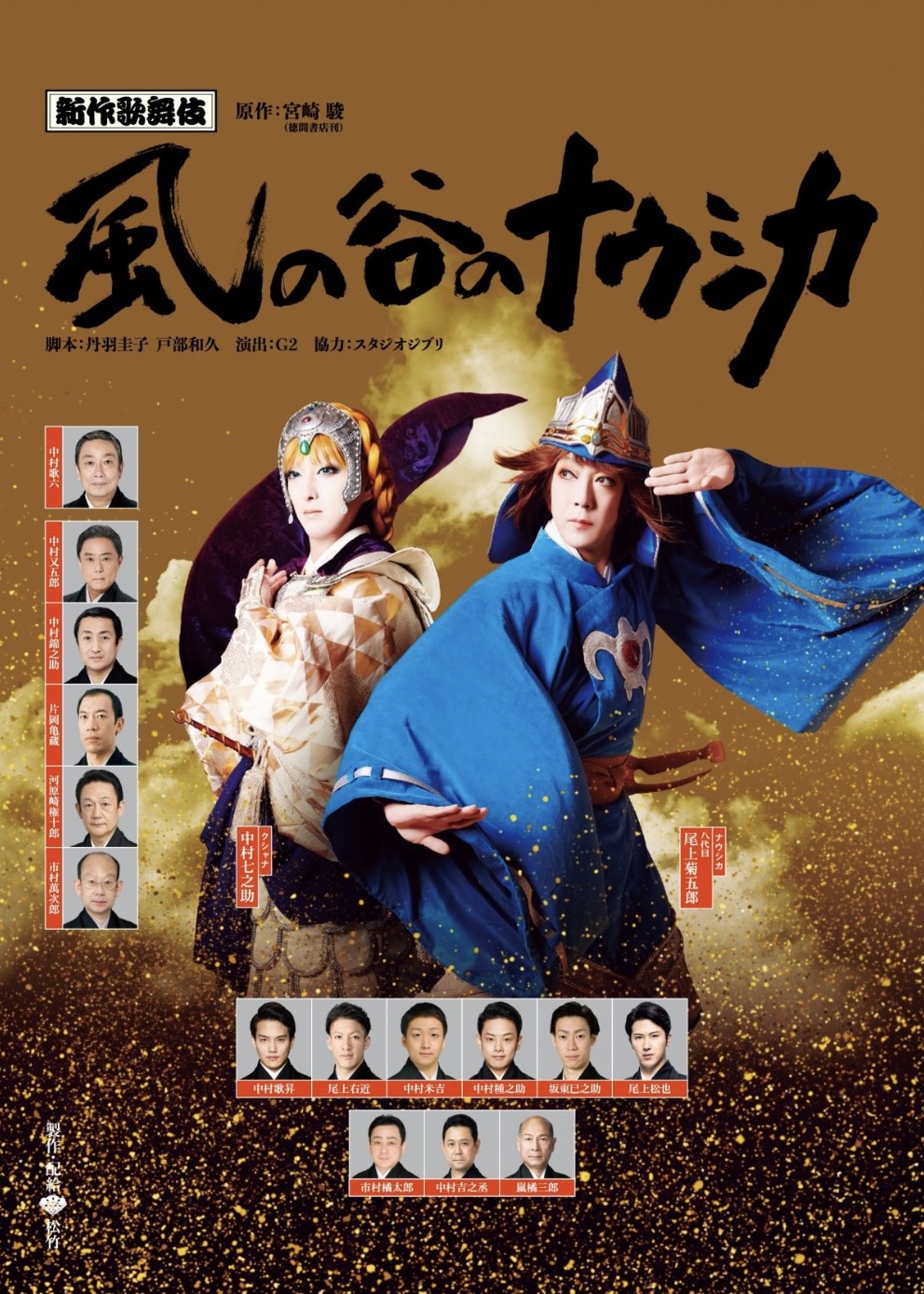
Cinema Kabuki is a series by Shochiku that brings kabuki stage productions to the big screen. Nausicaä of the Valley of the Wind is a large-scale new kabuki work based on all seven volumes of Hayao Miyazaki’s original manga, first performed at the Shimbashi Enbujo Theatre in 2019. It comes in two parts, and this time I watched Part 2.
In the lobby of MOVIX Kyoto, a panel of Kabuki Nyantaro 🐈 (the official kabuki cat mascot) welcomed me. The shop even sold Nyantaro goods — I loved how the cinema had a proper kabuki atmosphere.

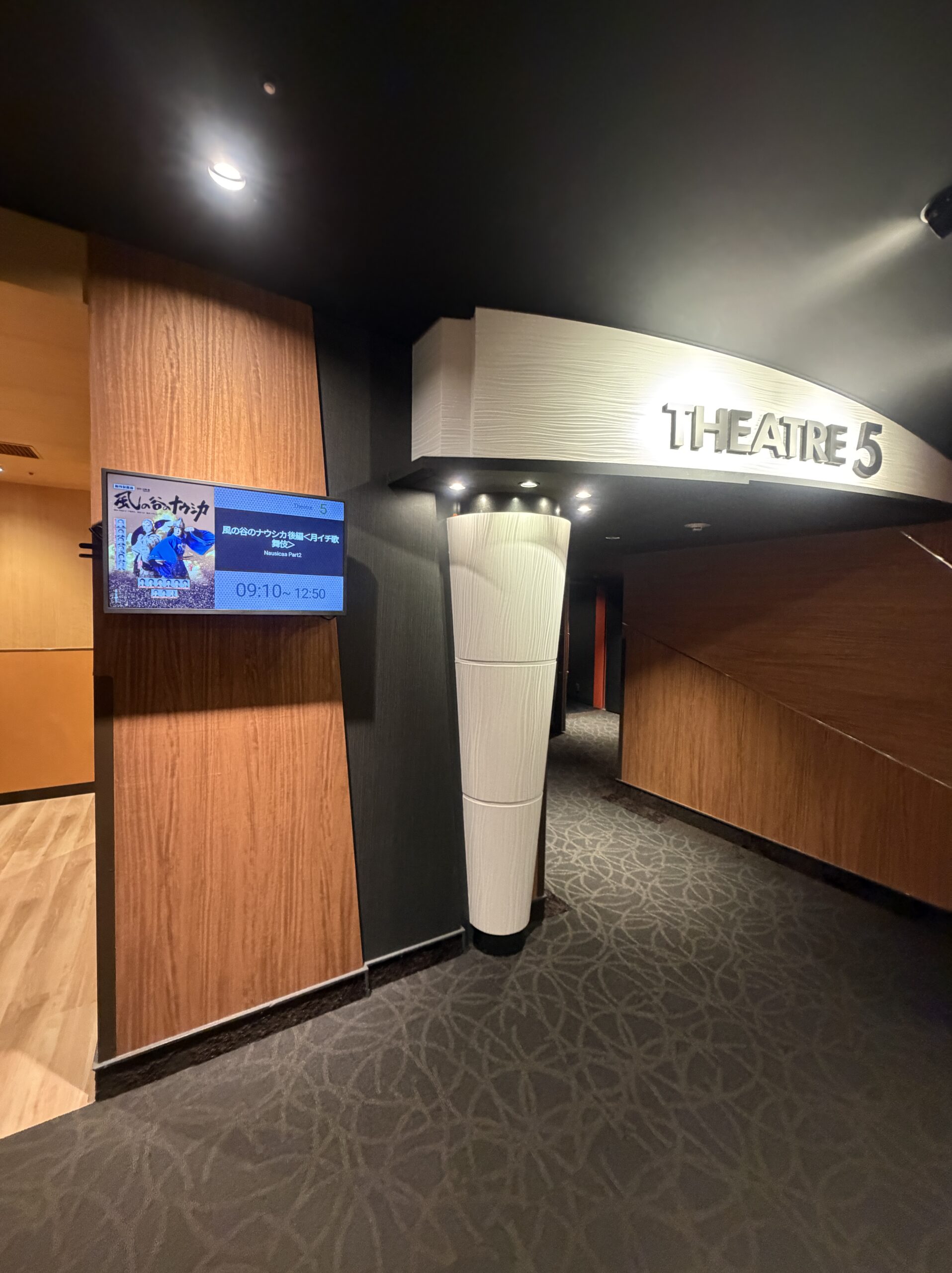
Still, a 9:10 a.m. start is far too early… I strolled through the Shinkyogoku shopping street and headed to Theatre 5, drink in hand. My seat was in the dead centre of row E, in which the screen fit perfectly into view. That said, a slightly further-back seat might have been even better. Row E has extra legroom because it doubles as an aisle — great for stretching your legs, but the viewing angle was a little tiring for my neck.
I Thought It Was Super Kabuki (Sorry)
To be honest, since Princess Mononoke is currently running at the Shimbashi Enbujo Theatre as Super Kabuki, I had somehow assumed Nausicaä was Super Kabuki too (oops). It is actually a shinsaku kabuki — a newly created kabuki work. With both being Ghibli adaptations, my brain got completely tangled 🌀
Nausicaä is played by the current Kikugoro Onoe VIII. At the time of the performance he was still Kikunosuke, and thinking “ah, he was still Kikunosuke back then” felt quietly moving. He was as beautiful as ever — the makeup was so lovely that I seriously considered buying red eyeshadow for myself (laughs). An adorable yet strong-willed, wonderful Nausicaä.
A Feast of Dance and an Epic Hair-Swinging Finale
What struck me most as kabuki was Kikugoro’s dance sequence. Pure bliss for the eyes ❤️
And the finale — an epic kefuri (the dramatic swinging of long lion-like manes)! Watching Ukon Onoe and Kasho Nakamura perform that grand hair-swinging was beyond amazing. The use of the revolving stage also felt more spectacular than usual. Though that might just be me (laughs).
The world of Nausicaä was depicted with such faithfulness, and it was wonderful. One thing I hadn’t expected: quite a lot of insects appear. Even knowing they were props, they were slightly creepy (laughs) — which just shows how realistic they were.
What Makes Cinema Kabuki Special
First of all, the sound. In a theatre, depending on your seat, voices can occasionally be hard to catch, but in Cinema Kabuki every line comes through crystal clear, which makes the story so much easier to follow. No more “wait, what did they just say?” moments (laughs). Ukon’s voice, by the way, is big and clear whether on screen or on stage 💛
The camera work is superb too. On stage I tend to watch my favourites the whole time (though as an all-around kabuki fan, I don’t really have one fixed favourite…), but here the camera guides you — “look, this is the moment!” — which is such a help. You also get to see the performers from distances and angles you could never experience in the theatre, and I loved that.
The stage design, the costumes, the sets, the props — everything was magnificent. Honestly, it would be such a waste not to stage this again! The Kabukiza Theatre, the Shimbashi Enbujo Theatre, or even the Paris Opera House (wait, Paris?! I’d go. Absolutely.) — somewhere, please revive it.
A Hot Drink in Midsummer
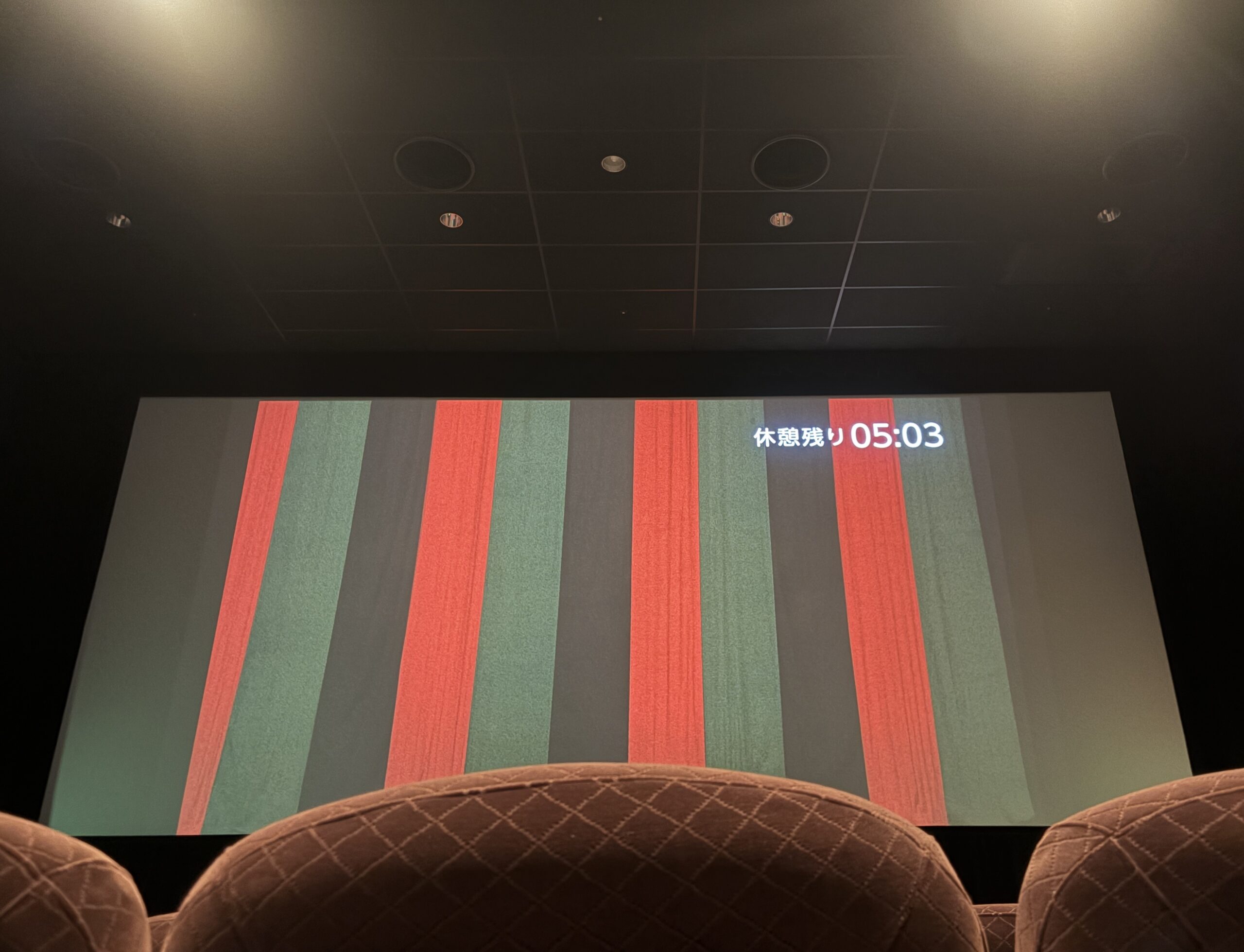
Being such a long production, there was an intermission of about 20 minutes, which was a great help. The auditorium, however, was freezing — so during the break I got a hot drink from the drink bar. Imagine drinking something hot at this time of year (laughs). For summer Cinema Kabuki, a cardigan or wrap is reassuring. No — essential!

Final Thoughts
Two hundred minutes of pure satisfaction. You get a full immersion in authentic kabuki, yet the story is not a classical play but a Ghibli-related story based on Miyazaki’s manga, so it is wonderfully easy to follow. An audio guide would make it even better, but I truly felt this is a work I would recommend to first-time kabuki viewers most of all.
I’ve conveniently half-forgotten the anime version of Nausicaä as well, so I think I’ll rewatch it soon.