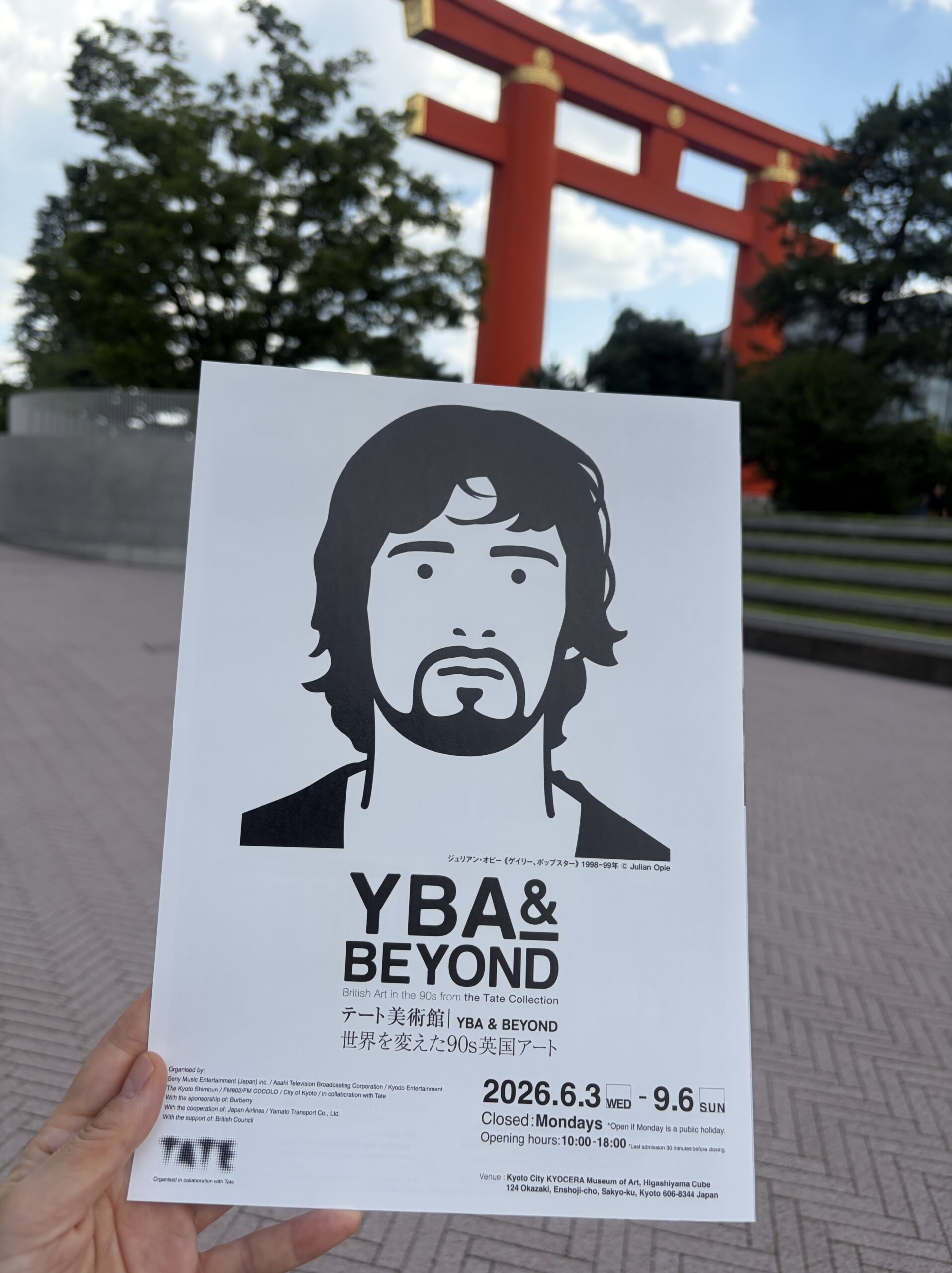
In the sweltering heat of midsummer Kyoto, I headed to the Kyoto City KYOCERA Museum of Art. My destination: “YBA & BEYOND: British Art in the 90s from the Tate Collection”. Soaking in a space packed with all things British 🇬🇧 for the first time in ages, I found myself thinking, with much affection, how wonderfully twisted it all is. Yet again, a brilliant day.
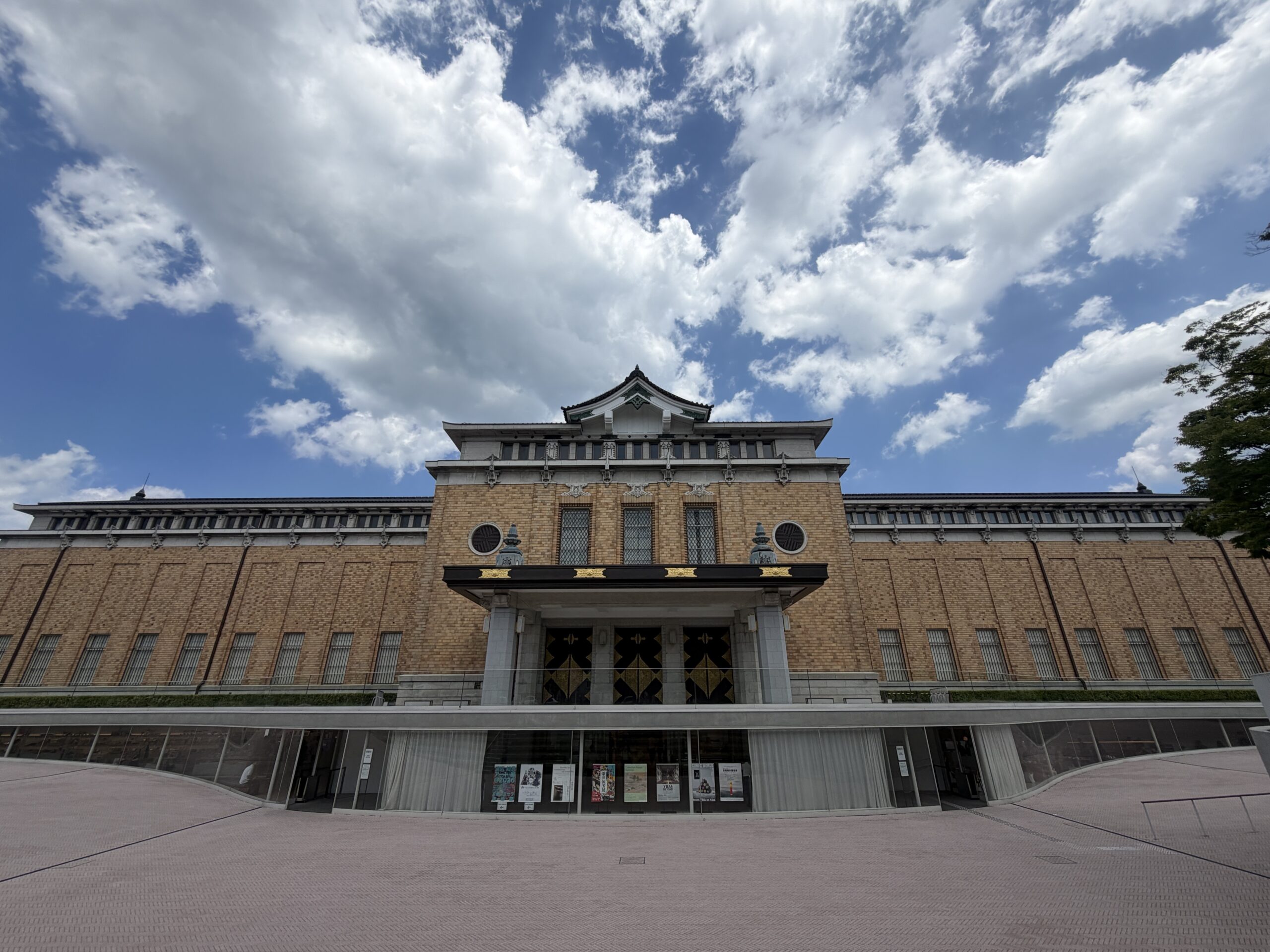
Back at the KYOCERA Museum
My first words on arrival: “It’s so hot 🫠” Still, as the building came into view, my excitement started to build.
The KYOCERA Museum was renovated a few years back, and my memories of its old appearance are getting a little hazy. We humans adjust to the new version of things surprisingly quickly, don’t we. I took a good look at the glass-fronted facade before heading inside.
What Is YBA?
YBA stands for “Young British Artists”, the name given to a generation of artists who emerged in Britain from the late 1980s through the 90s. They shot to fame after “Freeze”, the 1988 exhibition organised by Damien Hirst, and went on to shake up the global art scene with work that refused to fit inside the existing frames of art. This exhibition brings together around 90 works by more than 50 artists, drawn mainly from the Tate collection. The venue is the Higashiyama Cube in the museum’s new wing.
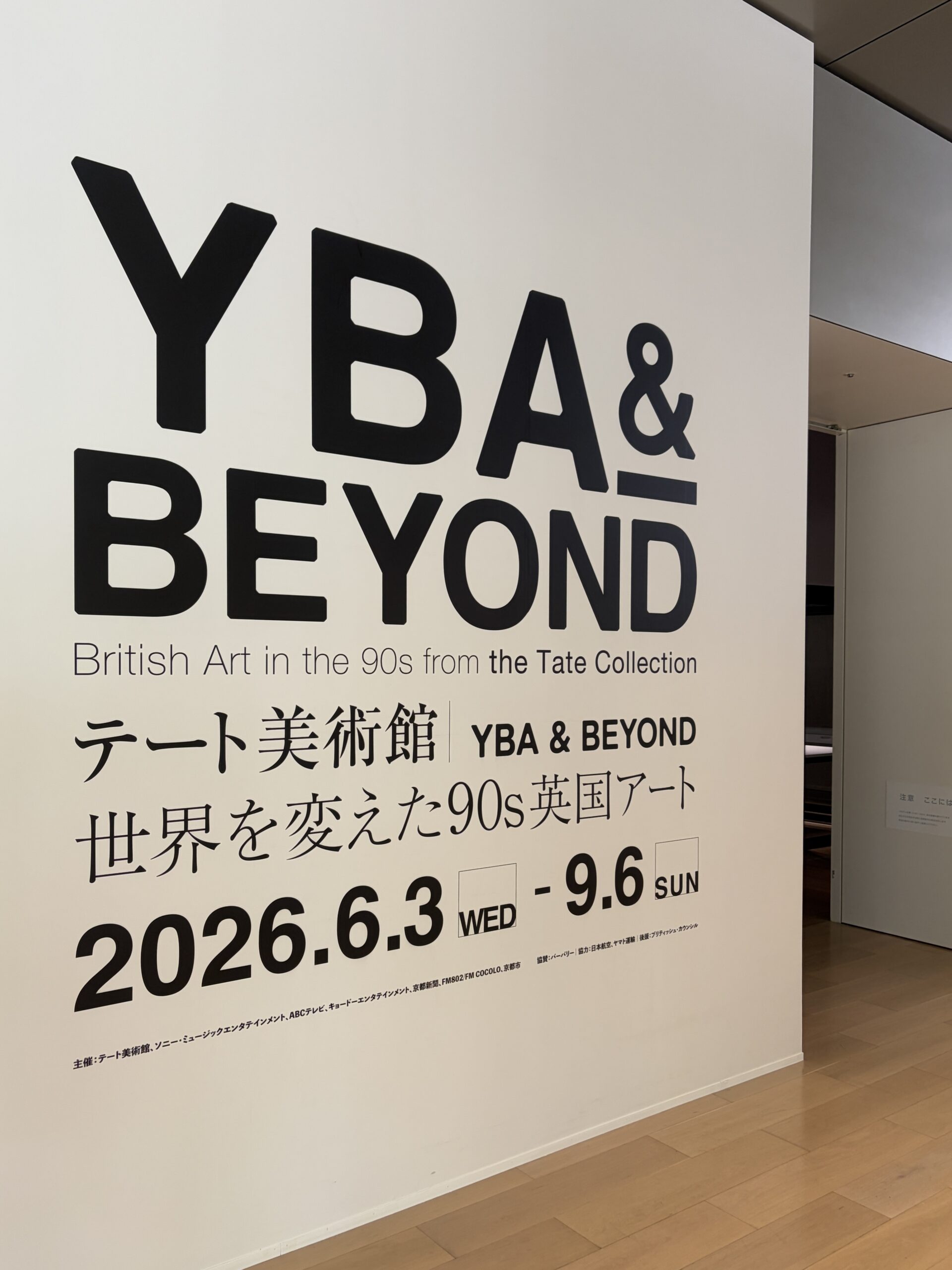
I left my bag in a locker and wandered the galleries hands-free. You put in a 100-yen coin, and you get it back afterwards! How considerate 🥺
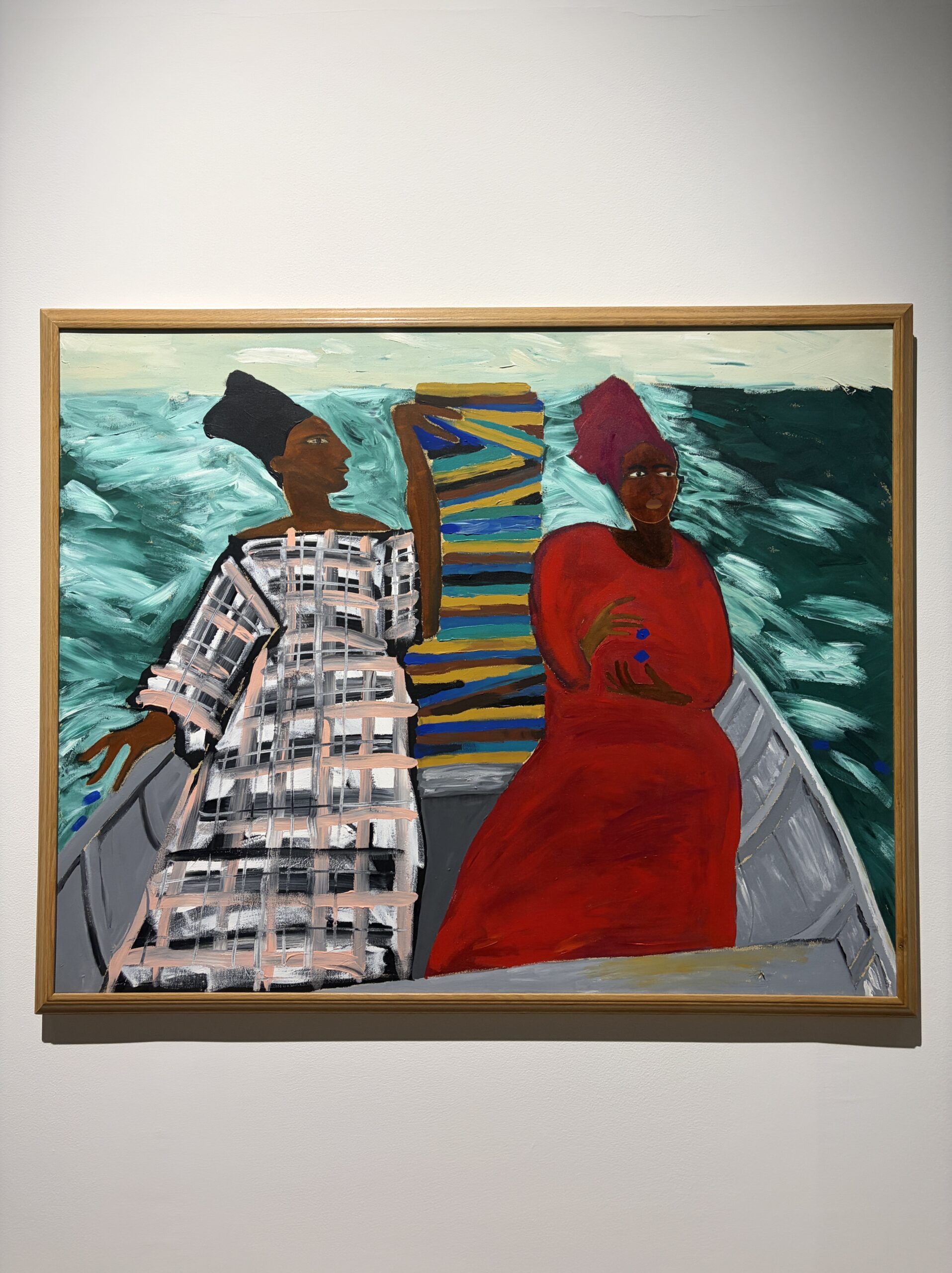
Heavy Themes, Vivid Colours: Lubaina Himid
The first work that stopped me in my tracks was Lubaina Himid’s Between the Two my Heart is Balanced. The subject matter is heavy, and yet the colours are endlessly vivid. That gap from weight to brightness is what caught my heart.
I Love Tillmans!
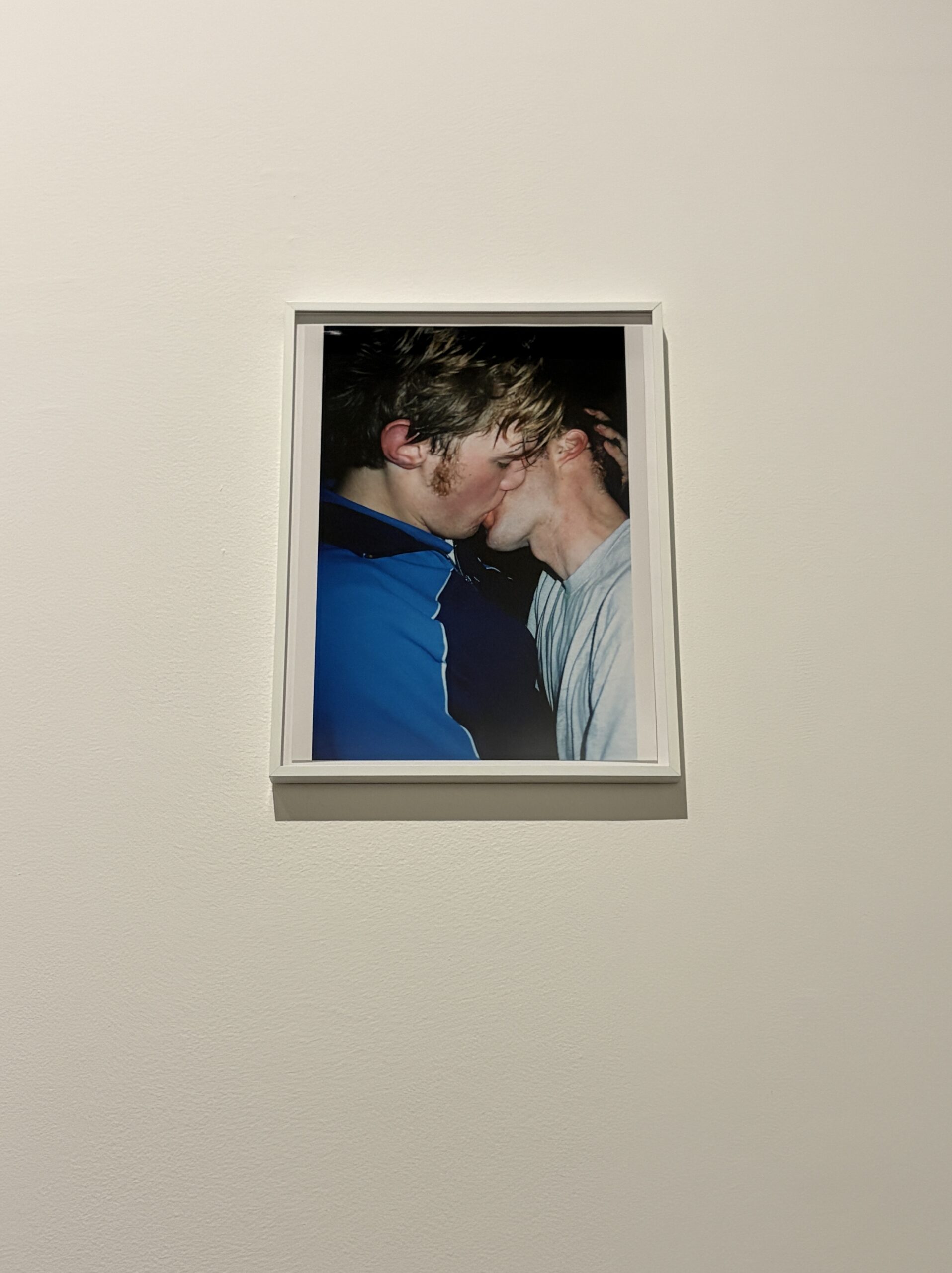
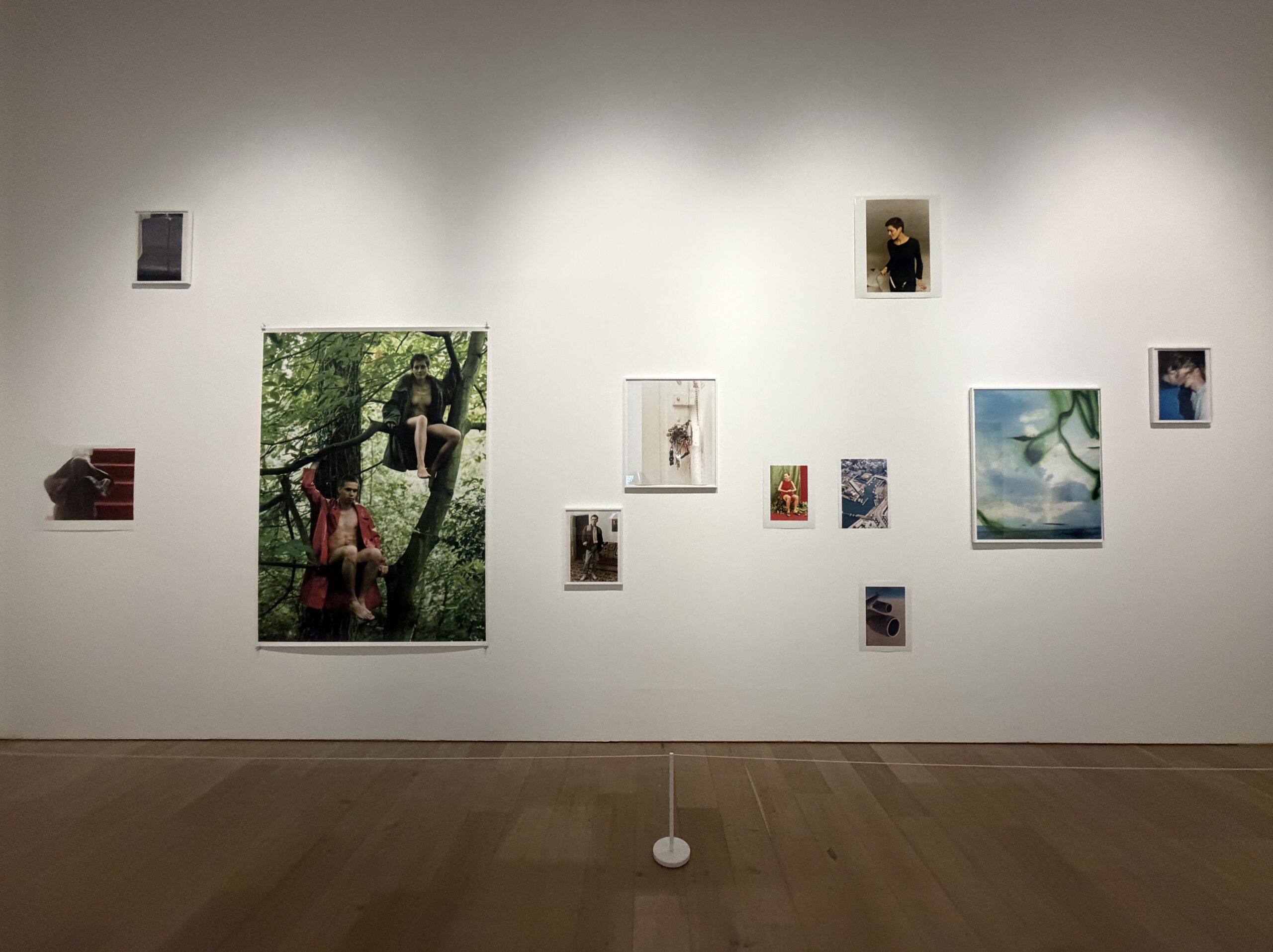
I was also reunited with a group of photographs by Wolfgang Tillmans. “I love Tillmans!” I shouted inwardly, taking my time with each print.
The ones that really held me were The Cock (Kiss), which had made its way onto postcards and other goods, and JAL. Bumping into works by an artist you love at an exhibition is such a happy thing.
Questions Without End: Derek Jarman
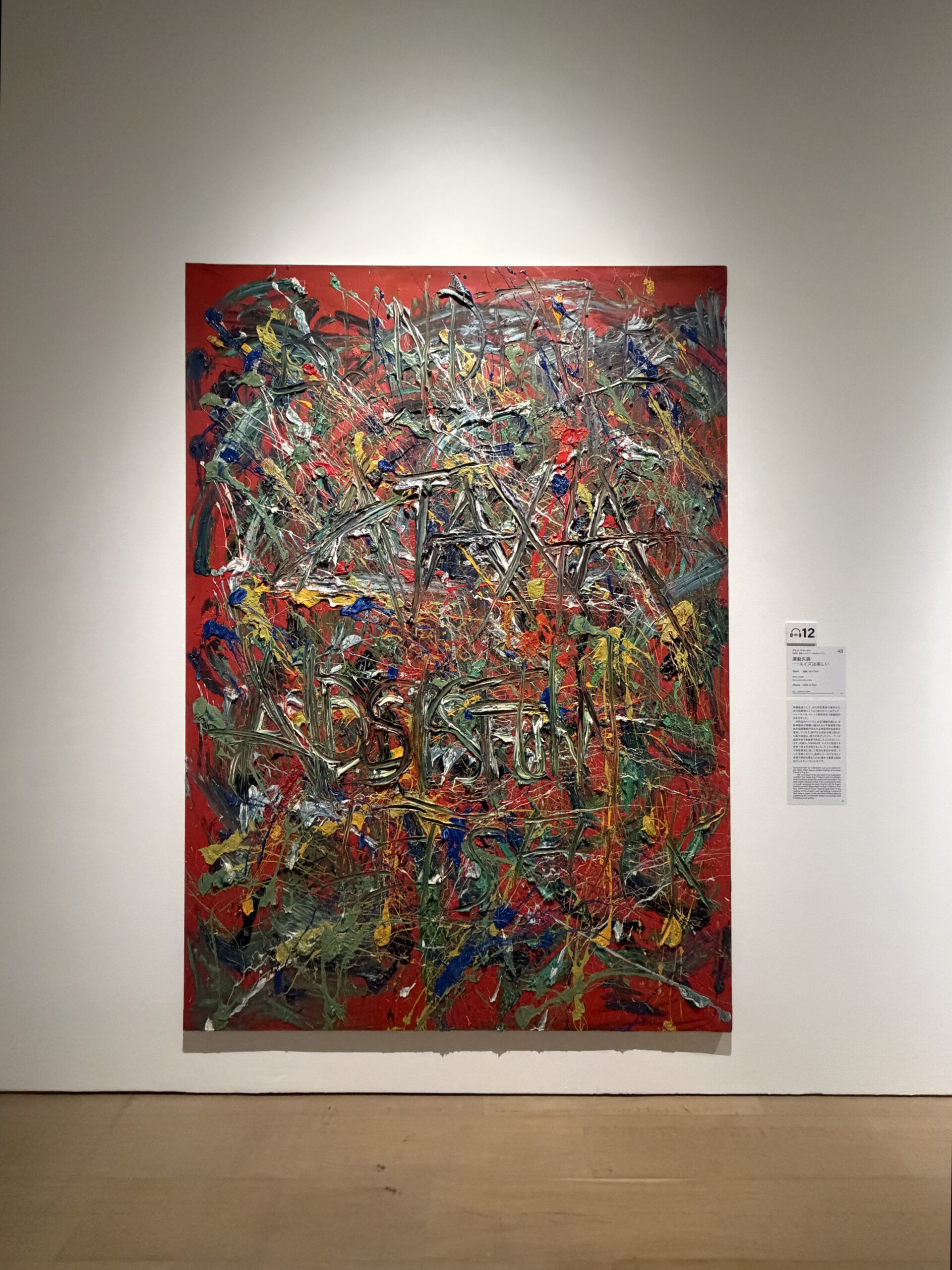
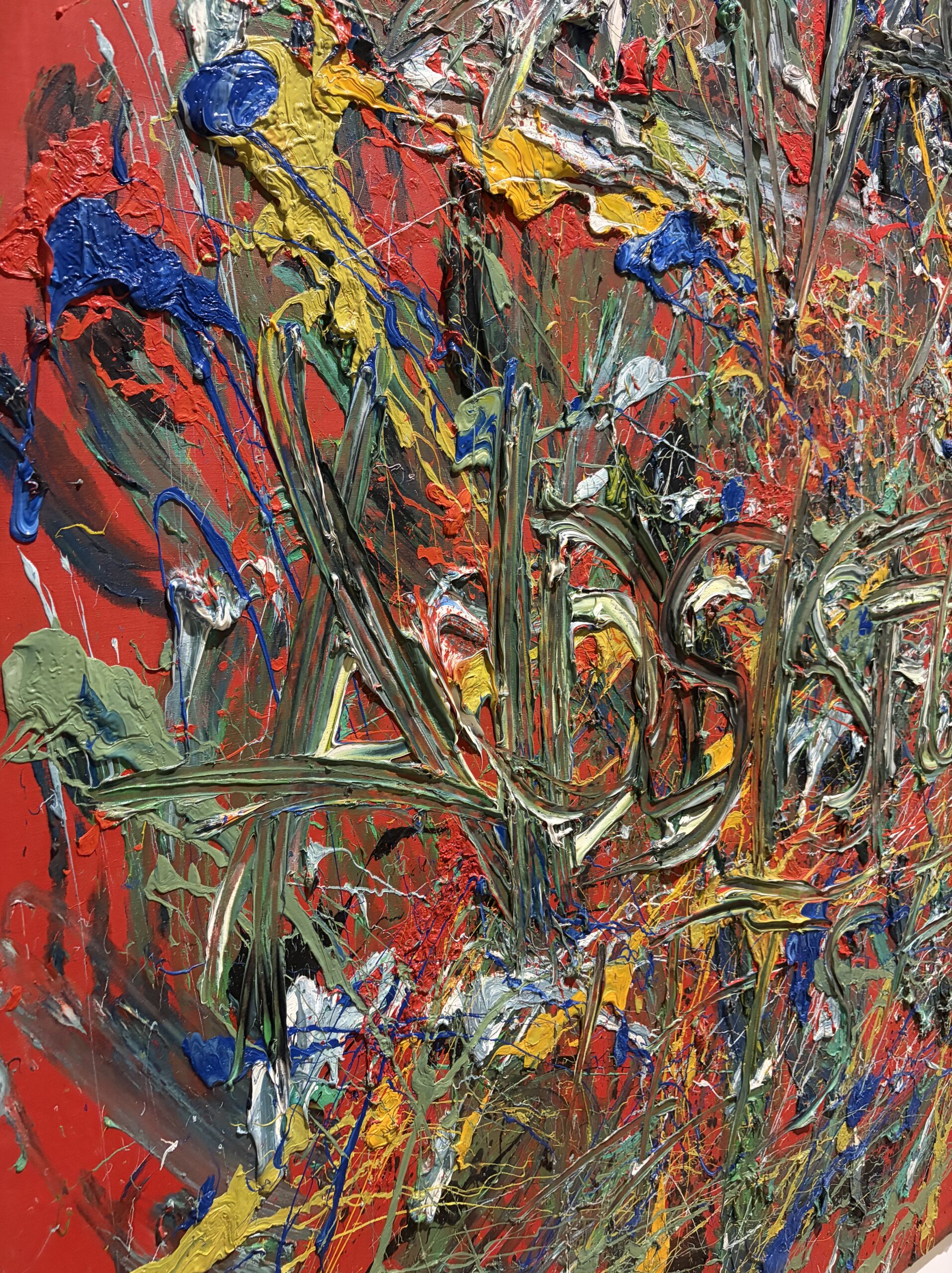
An unexpected reunion came in the form of Derek Jarman’s Ataxia – Aids is Fun. Years ago, I borrowed his film BLUE from the library and watched it over and over.
This painting, I learned, was made as his eyesight was gradually failing, painted with his fingers instead of a brush. Could he see the colours? How much could he see, and how much could he not? Was he relying on the feel of his fingertips? What was he looking at — and what told him the painting was finished? Why is it so colourful? Colourful, yes, but in which the colours mix, they turn muddy…
Questions with no answers kept welling up, one after another. That is the kind of time I spent in front of this one.
And he passed away just a year later…
Even the Shadows Are Part of the Work: Cornelia Parker
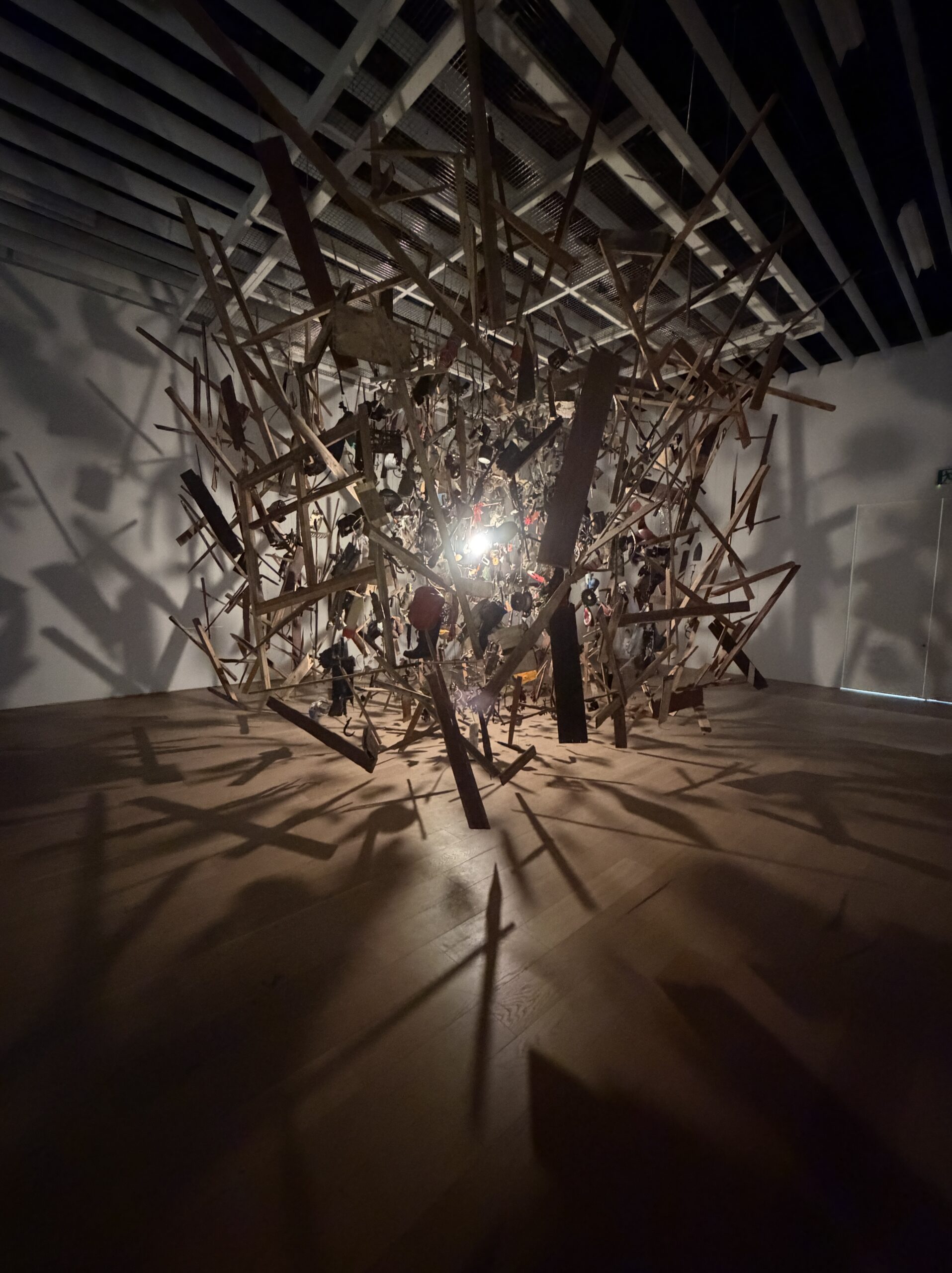
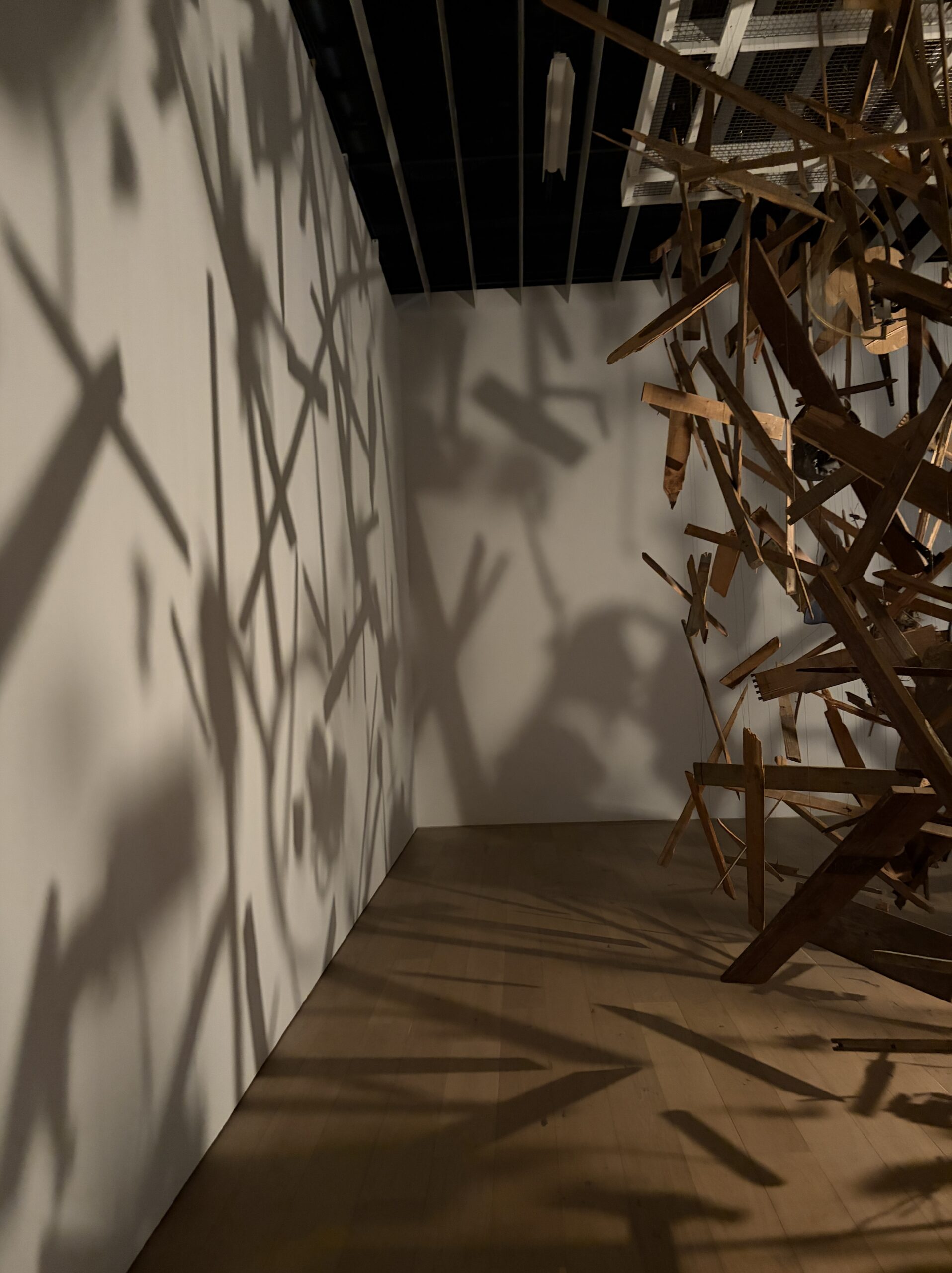
Cornelia Parker’s Cold Dark Matter: An Exploded View is a large installation of countless fragments suspended in mid-air. The light was strong, and in places I couldn’t quite make out the shape of each object — but in exchange, the shadows spreading across the walls were overwhelming. It felt as though not just the objects but the shadows themselves were part of the work. I circled around it, looking from every angle, taking photo after photo.
Incidentally, photography was allowed almost everywhere — to the point in which I couldn’t tell which works were off-limits — and yet hardly anyone was taking pictures. Maybe because it’s not exactly Instagrammable 😂 This shadow piece was the one exception, with everyone snapping away. I completely understand.
The Jake and Dinos Chapman works, for one, are about as far from “Instagrammable” as it gets…
Martin Creed, of All Artists
And the biggest thrill of the day: Martin Creed. Work No. 74 and Work No. 88 were both on display. He is one of my favourite artists, and since I hadn’t done any homework beforehand, I never imagined I would get to see his work here. I was so happy…
Creed makes art out of the things we see every day — household objects, office supplies. The moment something utterly ordinary is placed in a glass case, it becomes an artwork. Added value? The importance of context?
A perfectly unremarkable ball of crumpled paper becomes a work of art through the context of a glass case and a museum. Fascinating, isn’t it.
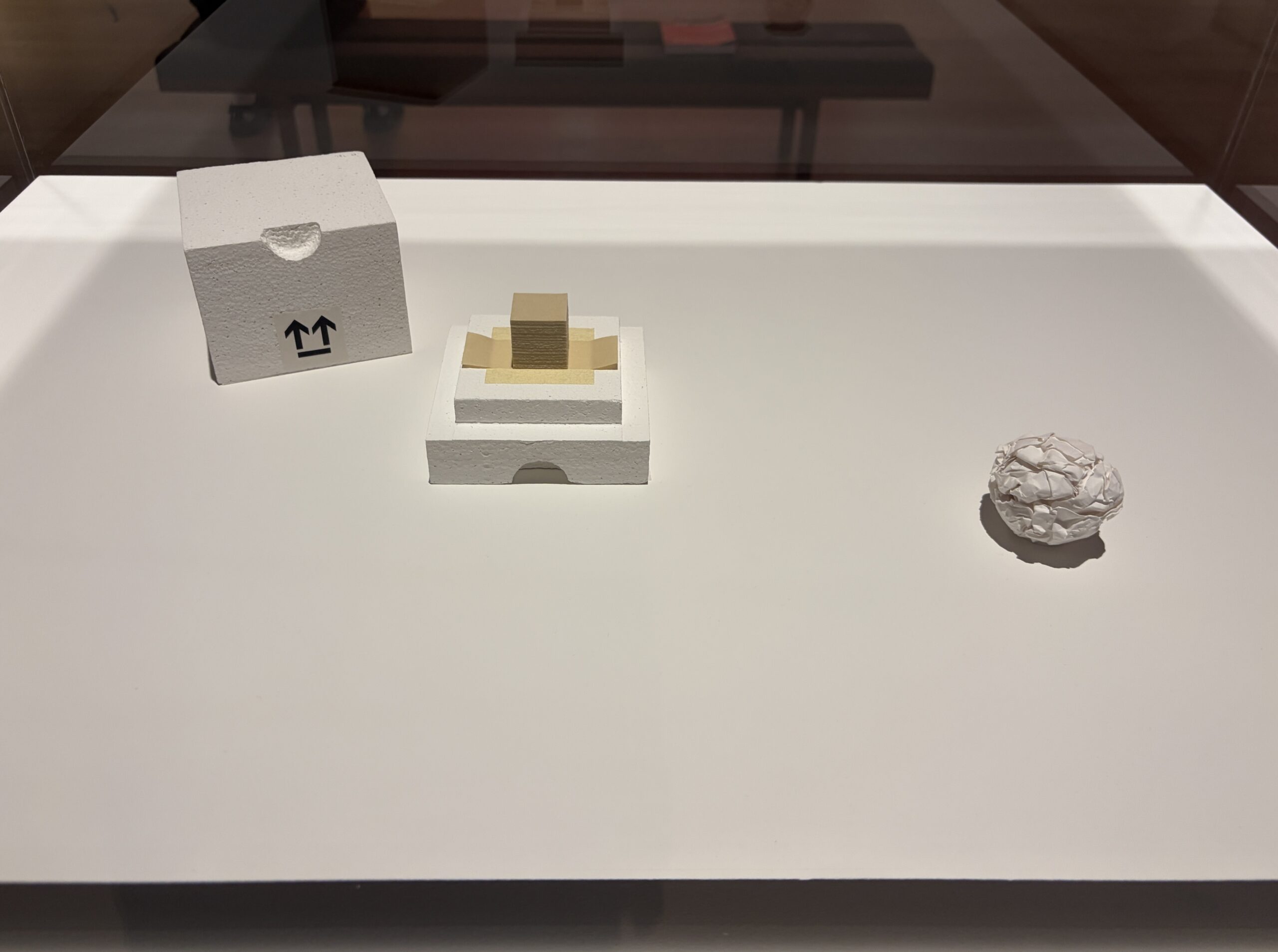
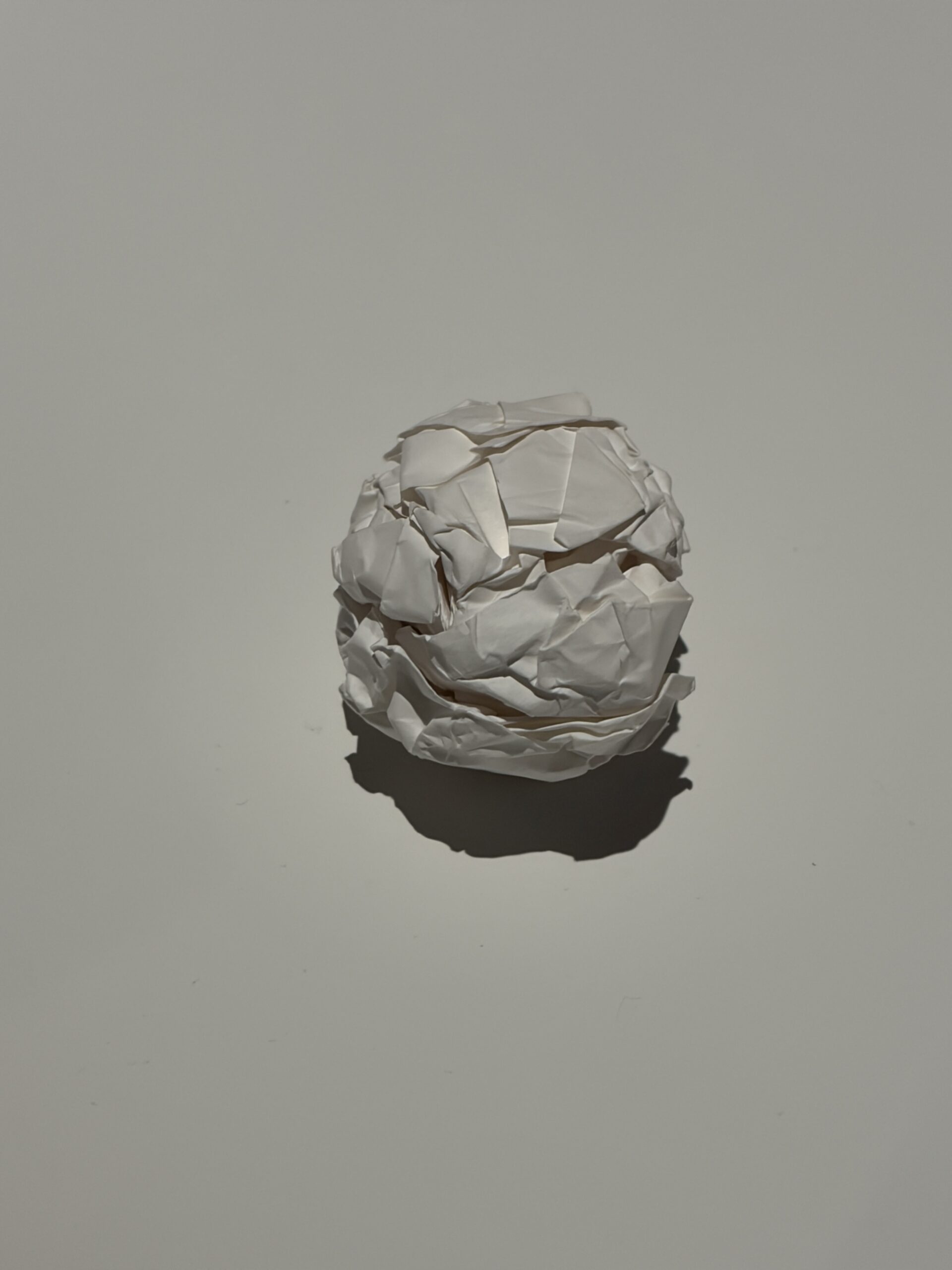
I stepped closer, stepped back, looked from every angle, grinning to myself. I also spent a little while watching the visitors “appreciating” a ball of scrap paper in a glass case, exactly the way one appreciates fine art.
Final Thoughts
Each artist’s individuality comes through so strongly, and the range of media is wide: painting, photography, film, installation. It is an exhibition in which you can breathe in the whole atmosphere of 90s British art at once. I spent a little over an hour inside.
I also got to see works by the Chapman Brothers and David Shrigley — a whole cluster of my favourites in one go. British art really is wonderfully twisted. And that is exactly what I love about it.
Stepping outside, I found the great torii gate of Heian Jingu Shrine right in front of me. I photographed the flyer against it for my closing shot: Opie and the torii. A summer day that left my heart completely full. Kyoto, though, is far too hot 🥵