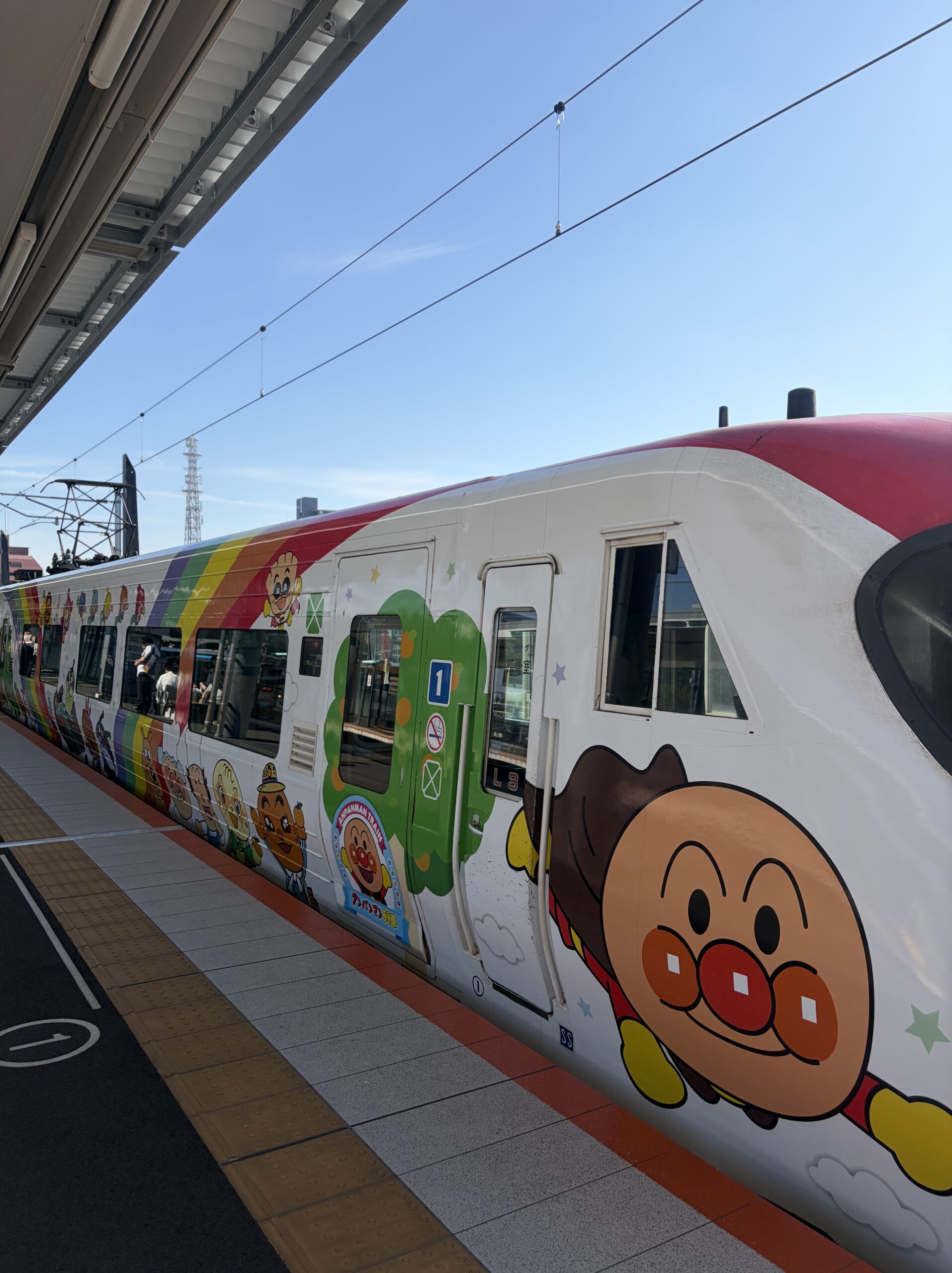
The train that pulled into the platform was, of course, an Anpanman train. Once the kids on the platform had hit peak excitement, off I went to Imabari. I’d actually planned to visit Matsuyama Castle, but I was drawn to Tōdō Takatora and switched destinations at the last minute. Imabari Castle — and as always, today was the best.
See the walking route in photos → Castle Walk Route: Imabari Castle
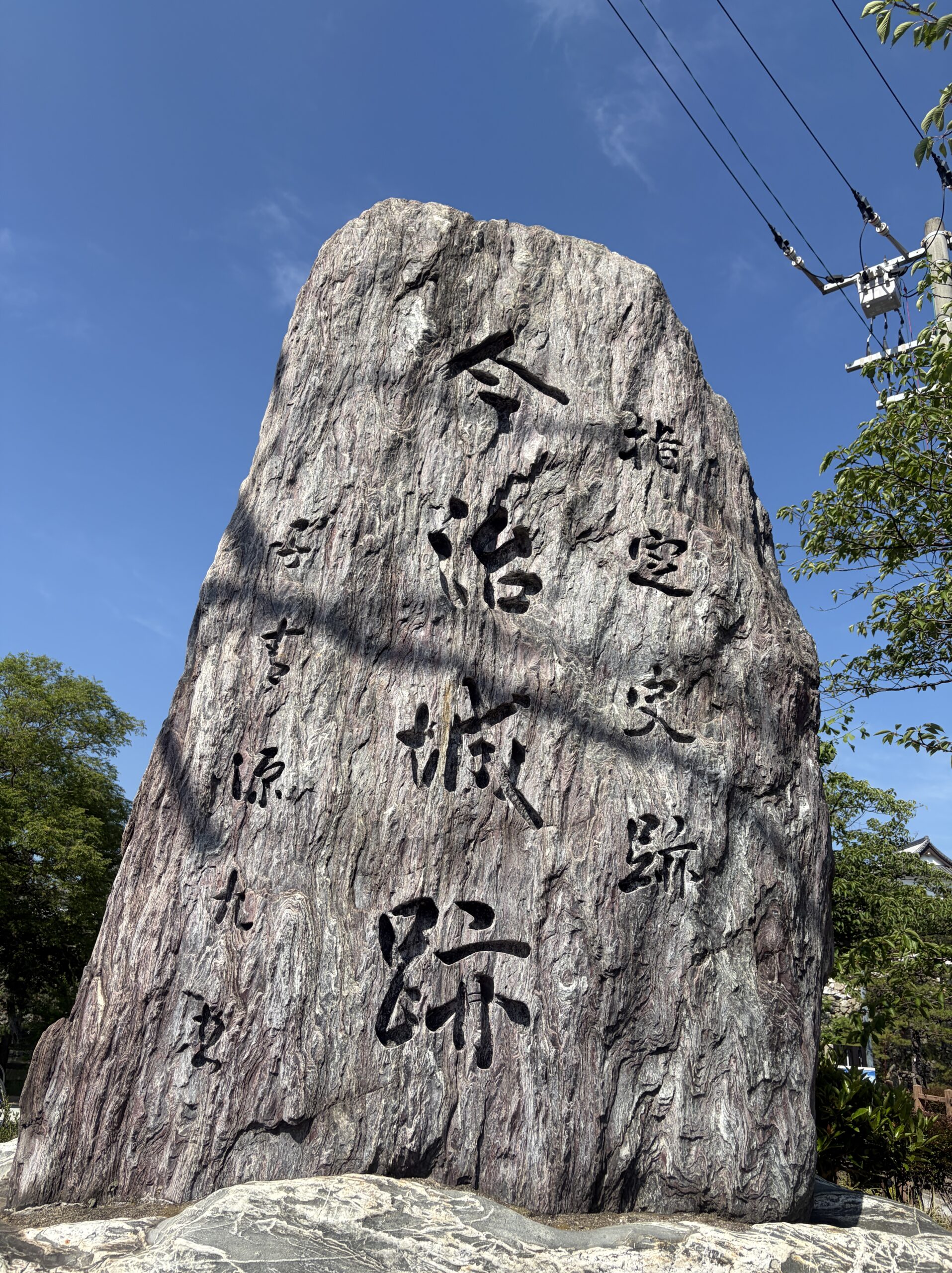
What kind of castle is Imabari Castle?
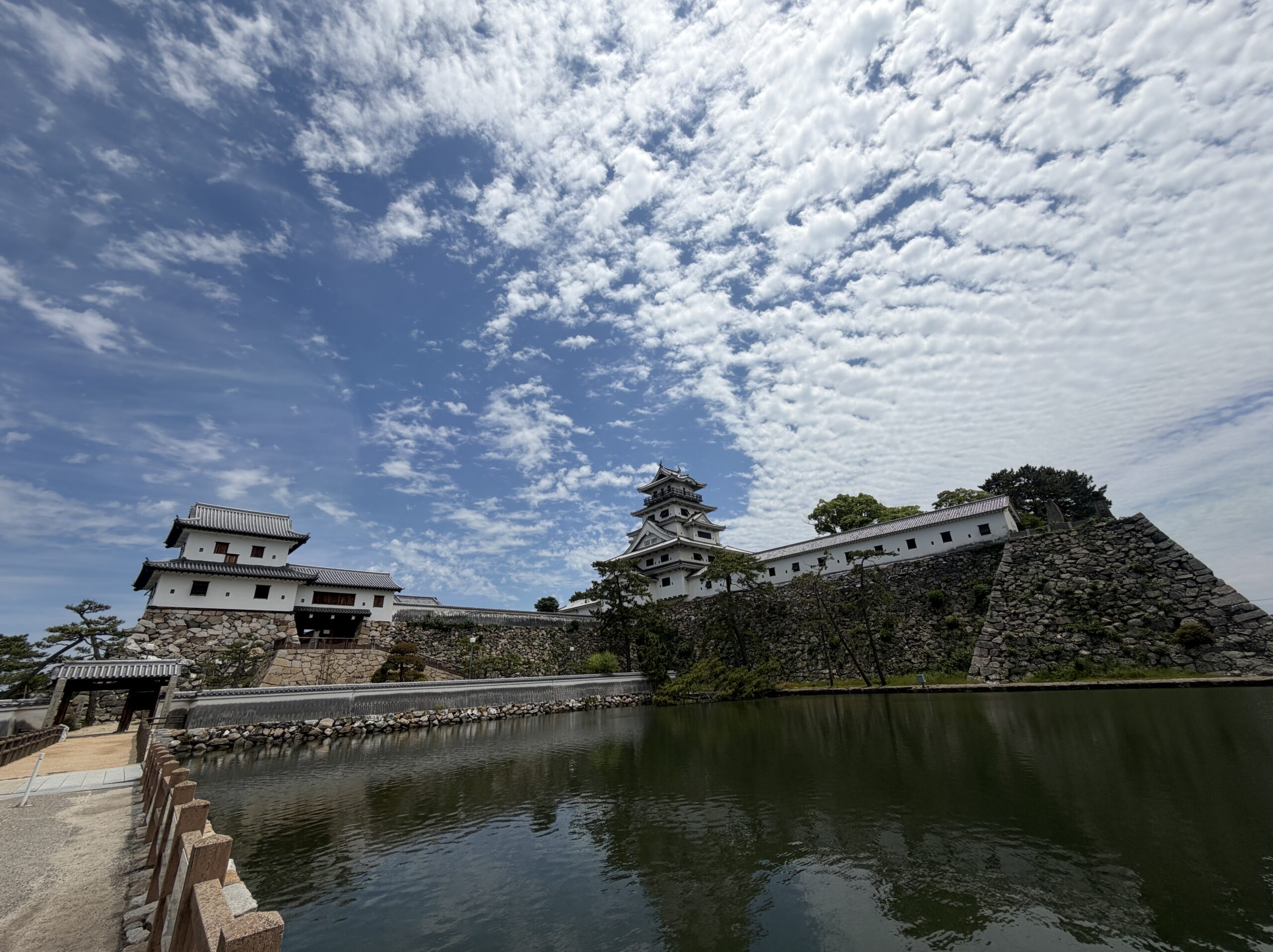
Imabari Castle was built starting in 1602 by Tōdō Takatora, a renowned master of castle construction. It’s a “sea castle” (umijiro) with a moat fed by seawater, and one of Japan’s three great water castles, alongside Takamatsu Castle and Nakatsu Castle. Because it stands on Fukiage Beach — a beach formed by sand blown up from the sea — it also goes by the name Fukiage Castle (Fukiage-jō).
As for the keep (tenshu), there’s a theory it was dismantled and relocated when Takatora was transferred soon after the castle’s completion, and another that there never was one at all, since the castle has no keep base. The debate still isn’t settled. After Fukuoka Castle, here’s yet another keep mystery. So which is it, already?
JR Imabari Station is the nearest station, roughly 20 minutes away on foot. Since it was a little hot, I took a taxi.
A seawater moat, with fish swimming in it
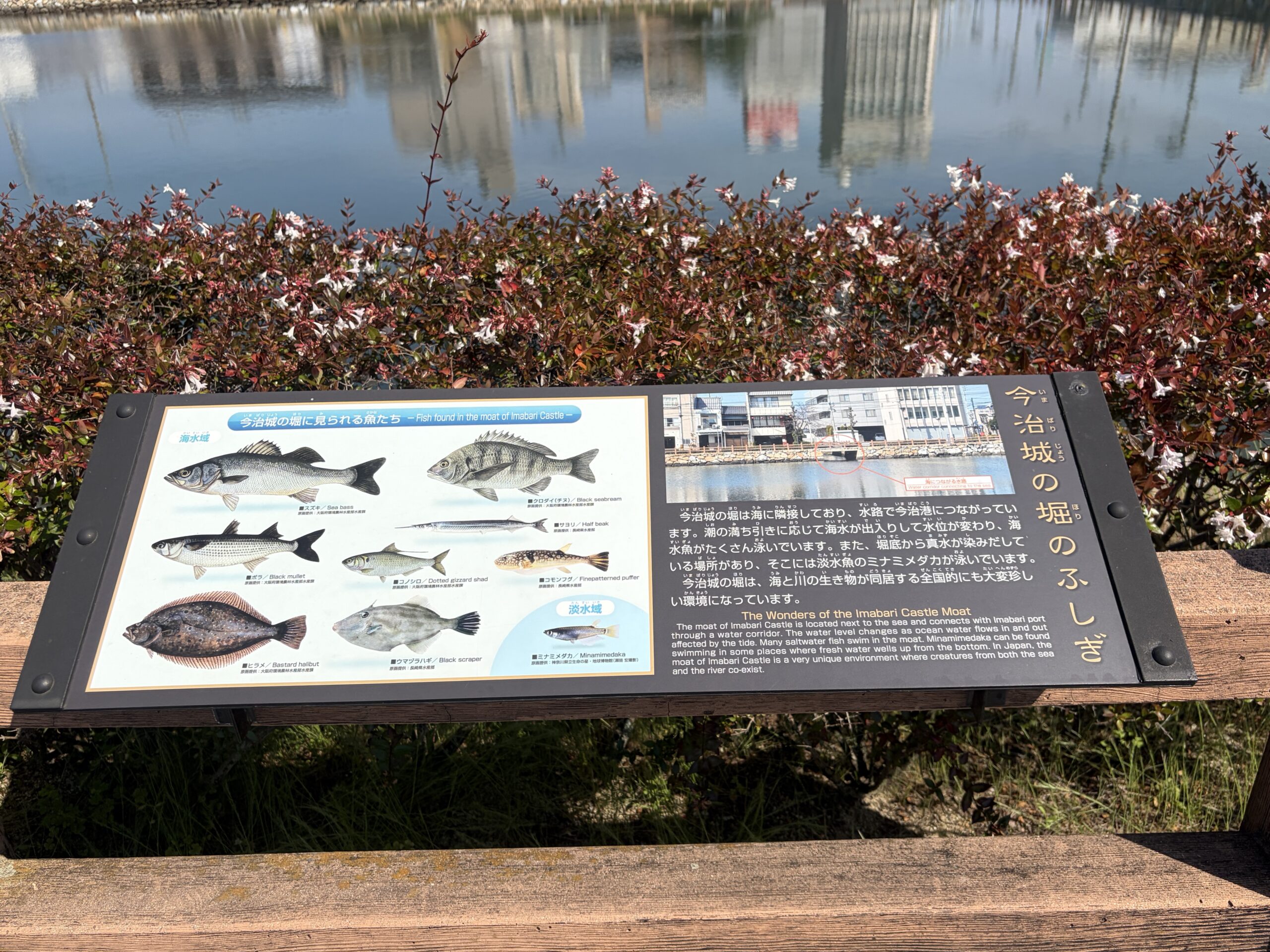
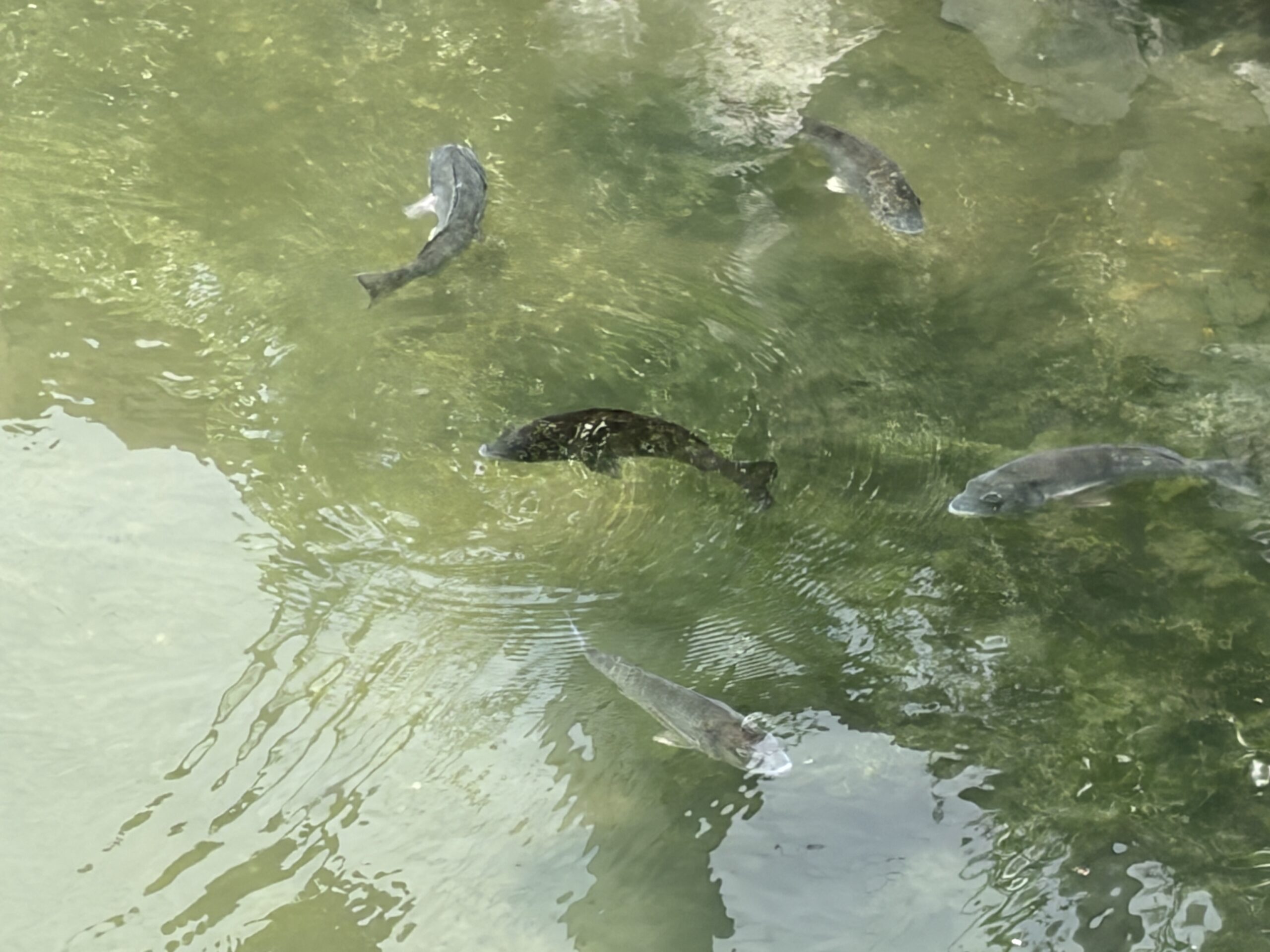
Peer into the moat and you’ll see fish drifting along. They are sea fish, not river fish. Seawater flows into the moat, so sea creatures such as black sea bream (kurodai) live here. A sign titled “The Wonders of Imabari Castle’s Moat” even introduces the different species. For a moment, this castle felt like an aquarium.
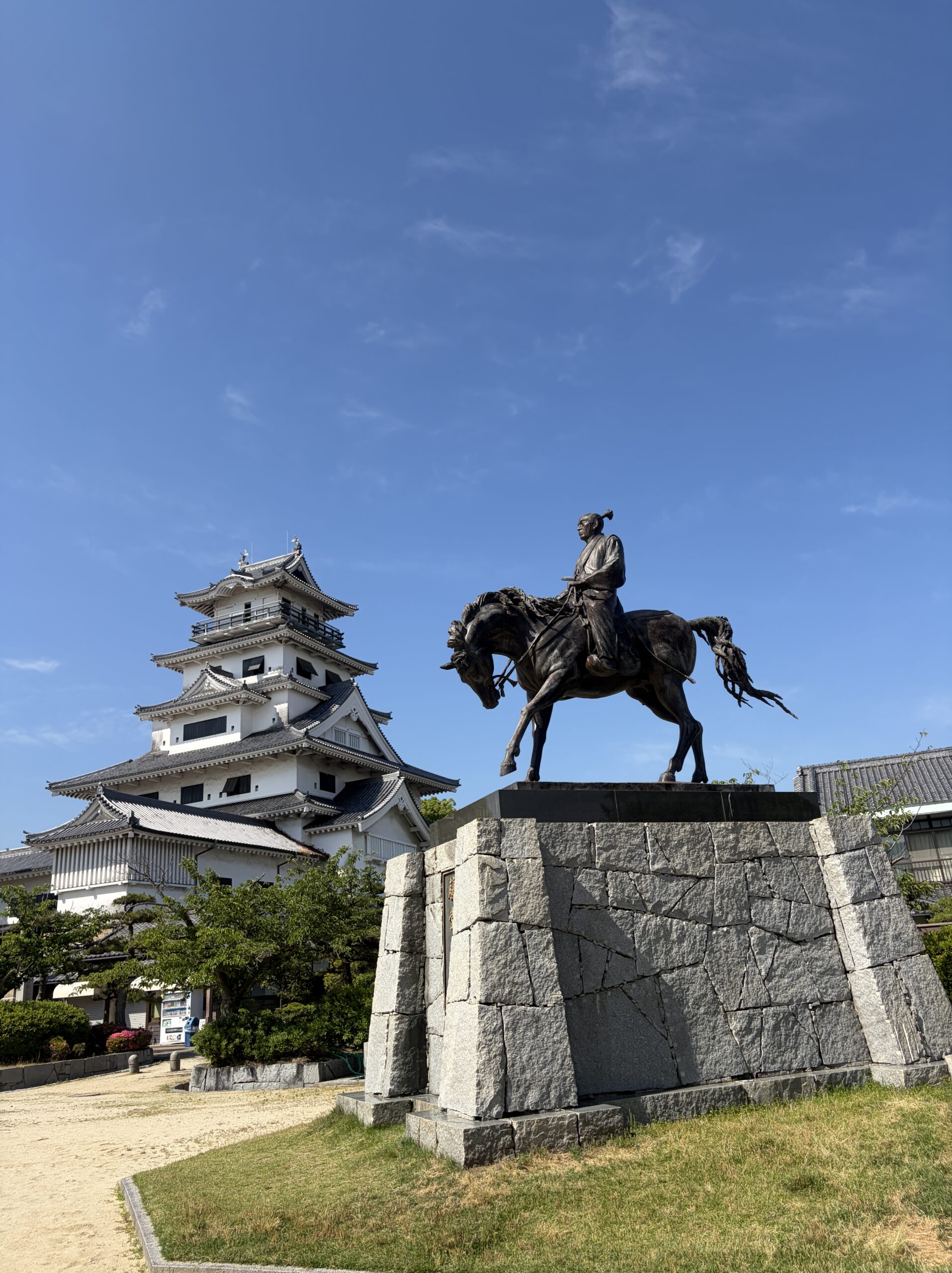
The statue of Tōdō Takatora, and the view from the keep
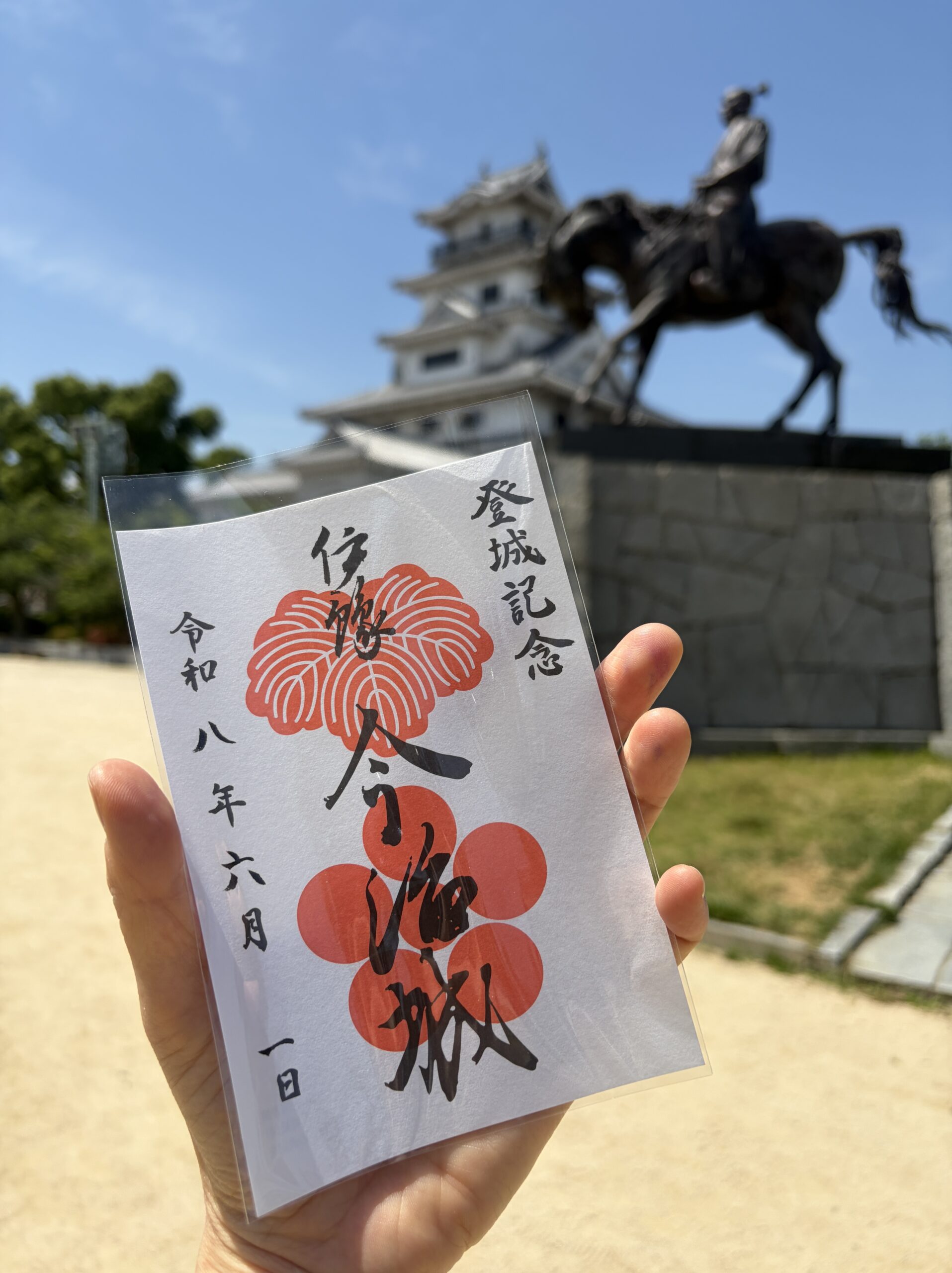
In the plaza, Lord Tōdō Takatora greets you on horseback. So cool. He looks fantastic with the keep behind him, and I ended up taking shot after shot.
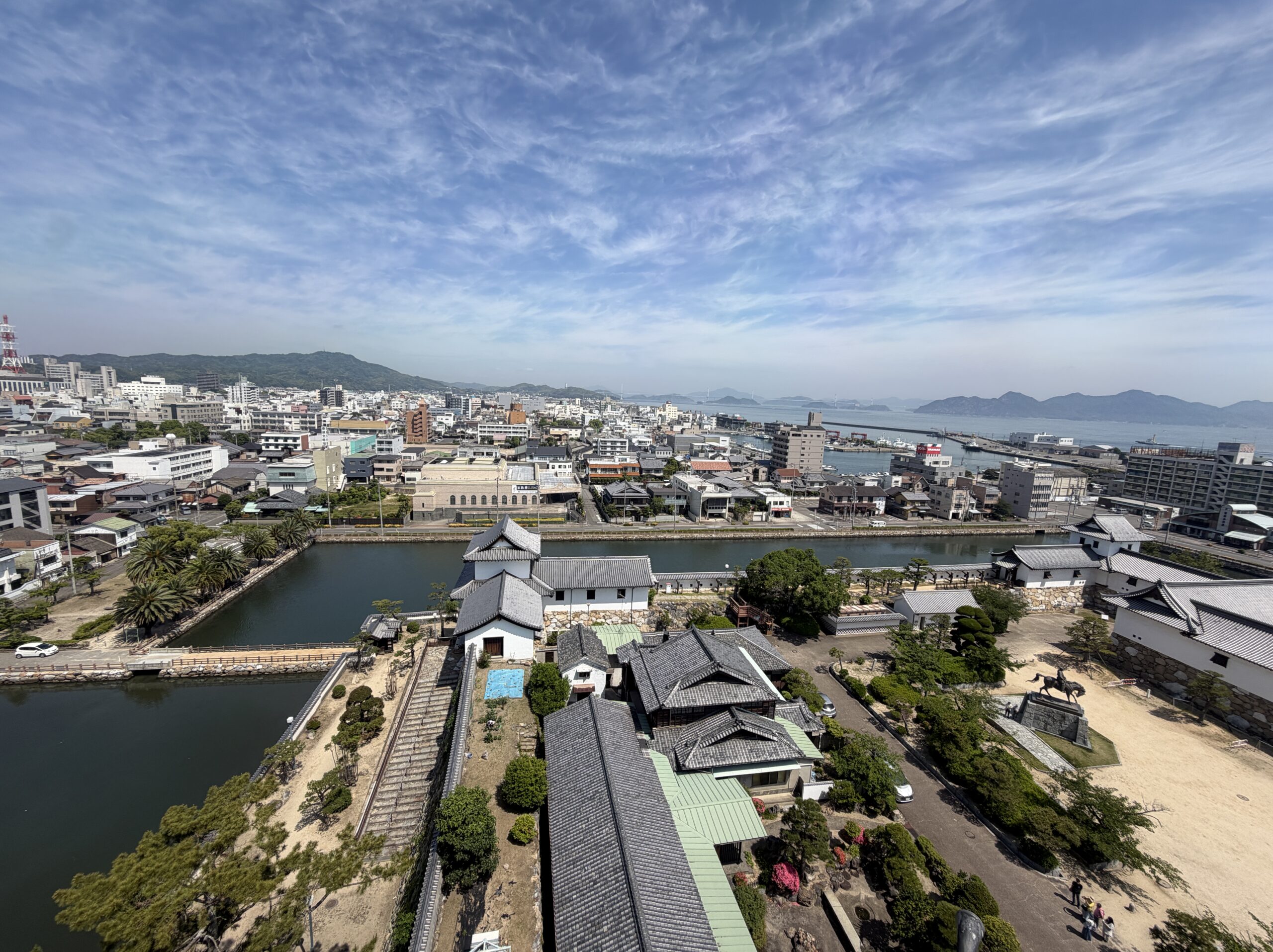
Inside, the keep is a museum, and I took my time with the castle diorama and the displays. From the top floor you can see across the town of Imabari to the Seto Inland Sea and even the Shimanami Kaidō. From up there, it’s easy to see why this was a sea castle.
By the way, part of the wall in the keep’s restroom was a stone wall! It made me jump the moment I walked in (laughs). And the power switch for the information-video monitor is one you flip yourself. There’s a charming homemade feel to it — which I honestly kind of love, and it made me smile (laughs).
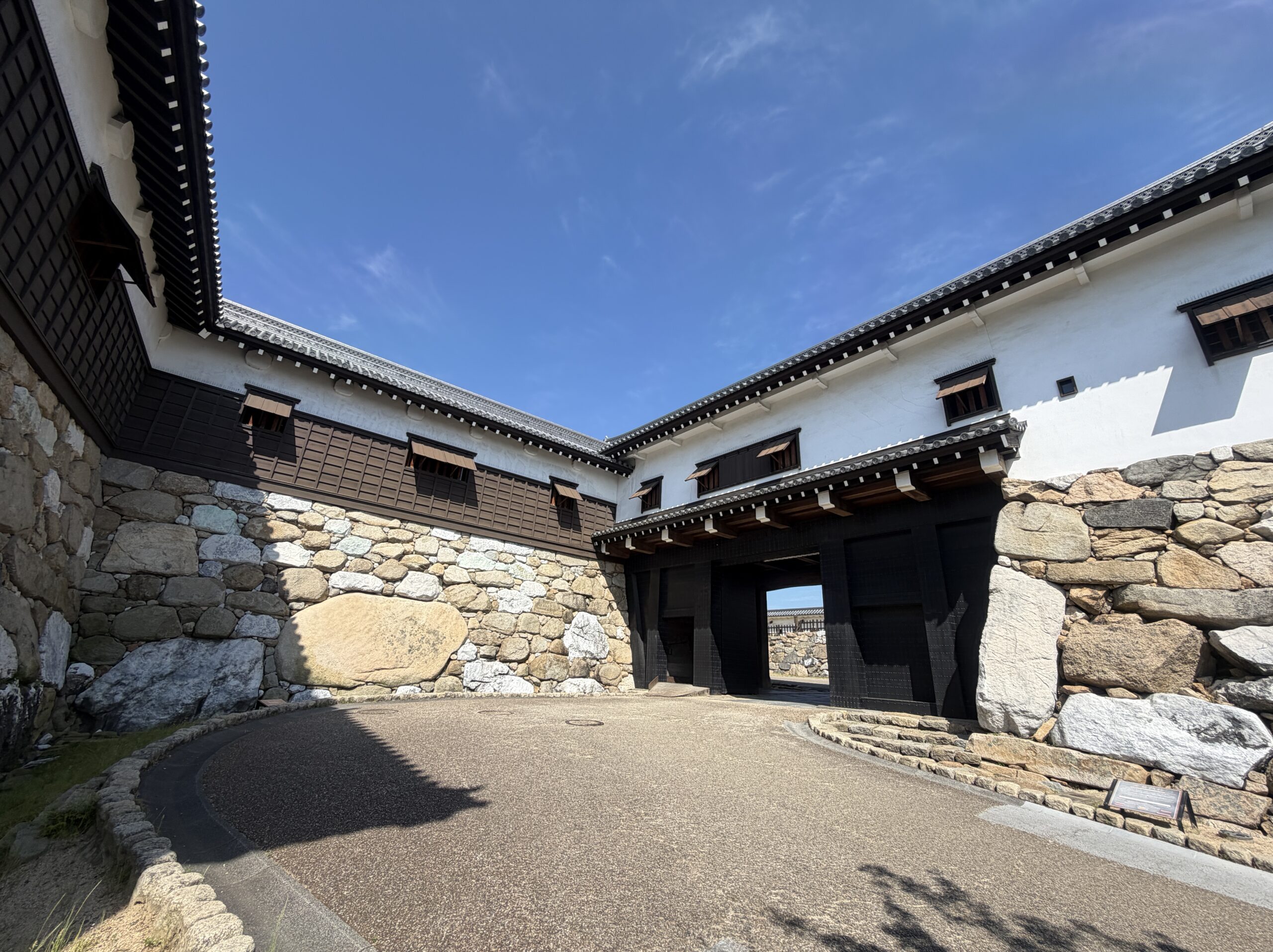
The faithfully reconstructed Bugu-yagura and Kurogane-gomon
Imabari Castle’s buildings were torn down after the Meiji era, but starting with the keep’s reconstruction in 1980, they’ve been gradually restored over some thirty years. The Kurogane-gomon (the Iron Gate) and the Bugu-yagura (the armory turret), completed in 2007, were faithfully recreated in their original form based on historical records.
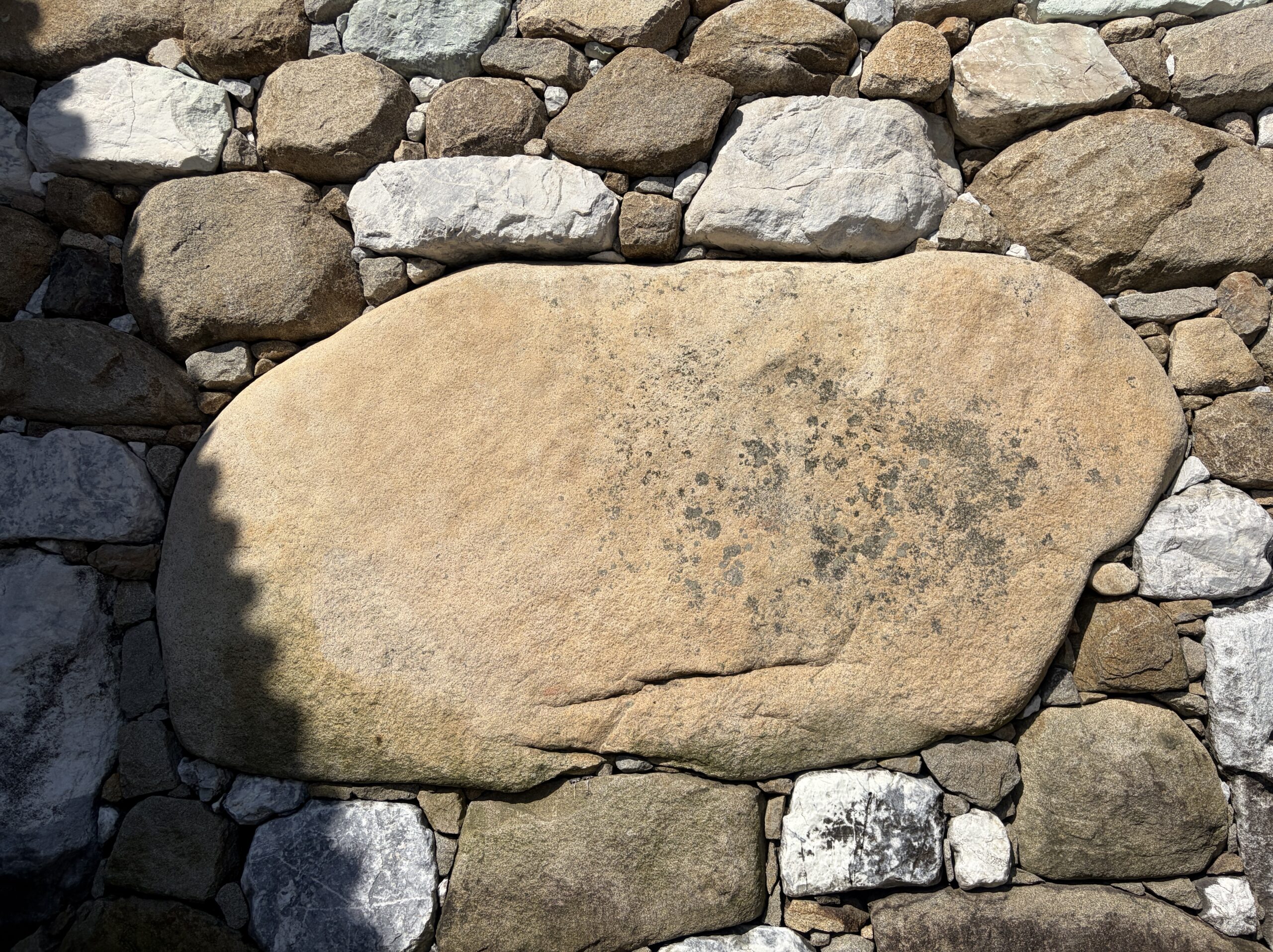
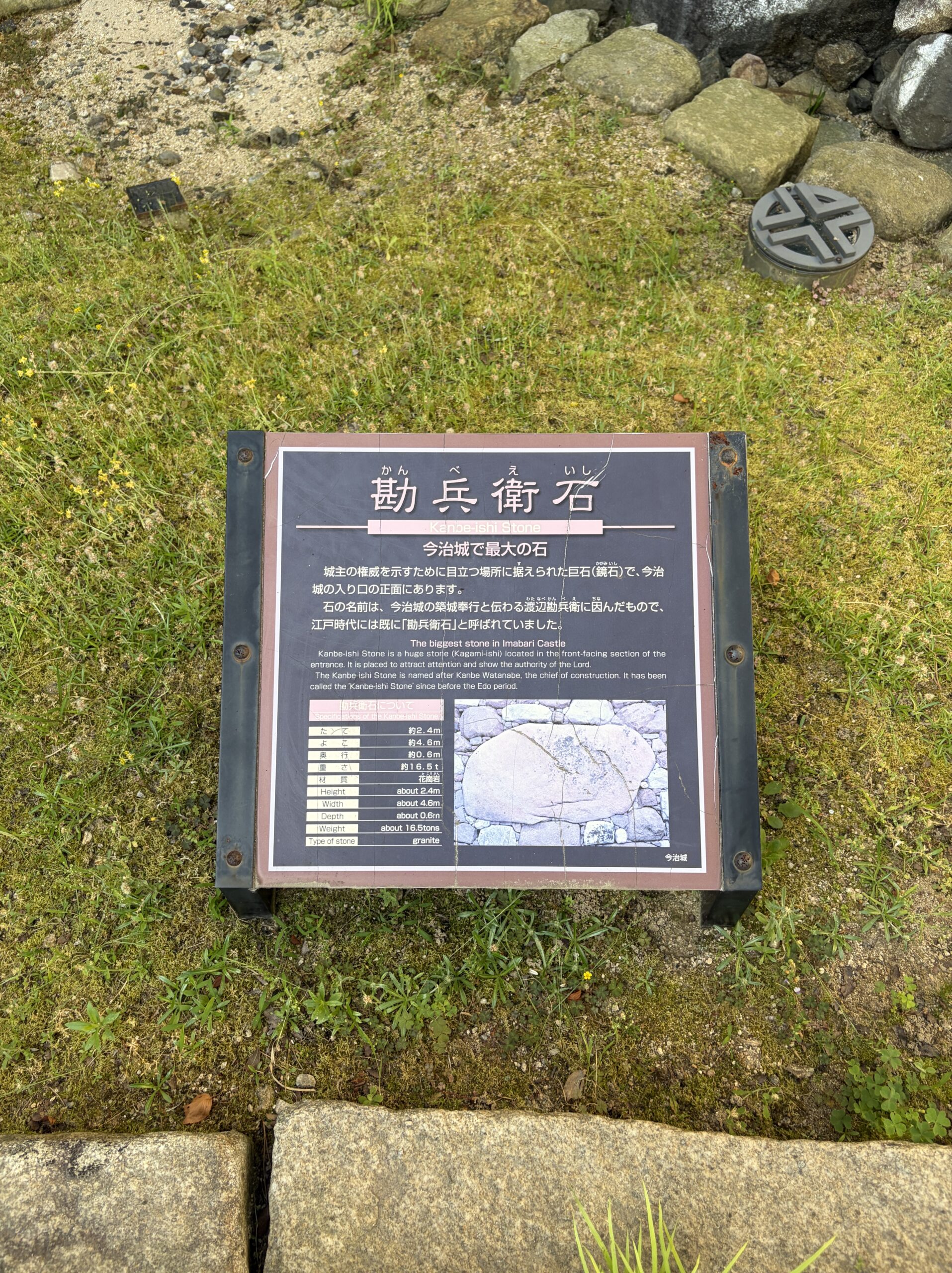
In front of the Kurogane-gomon is a masugata — a square enclosure ringed by stone walls. Once attackers push in, that’s the end: they’re targeted from all four sides, like rats in a sack. Set into the wall is a massive stone called the Kanbei Stone, named after the construction magistrate Watanabe Kanbei. It’s Takatora’s style, in which looks and defense go hand in hand. So cool. (…wait, how many times today? laughs)
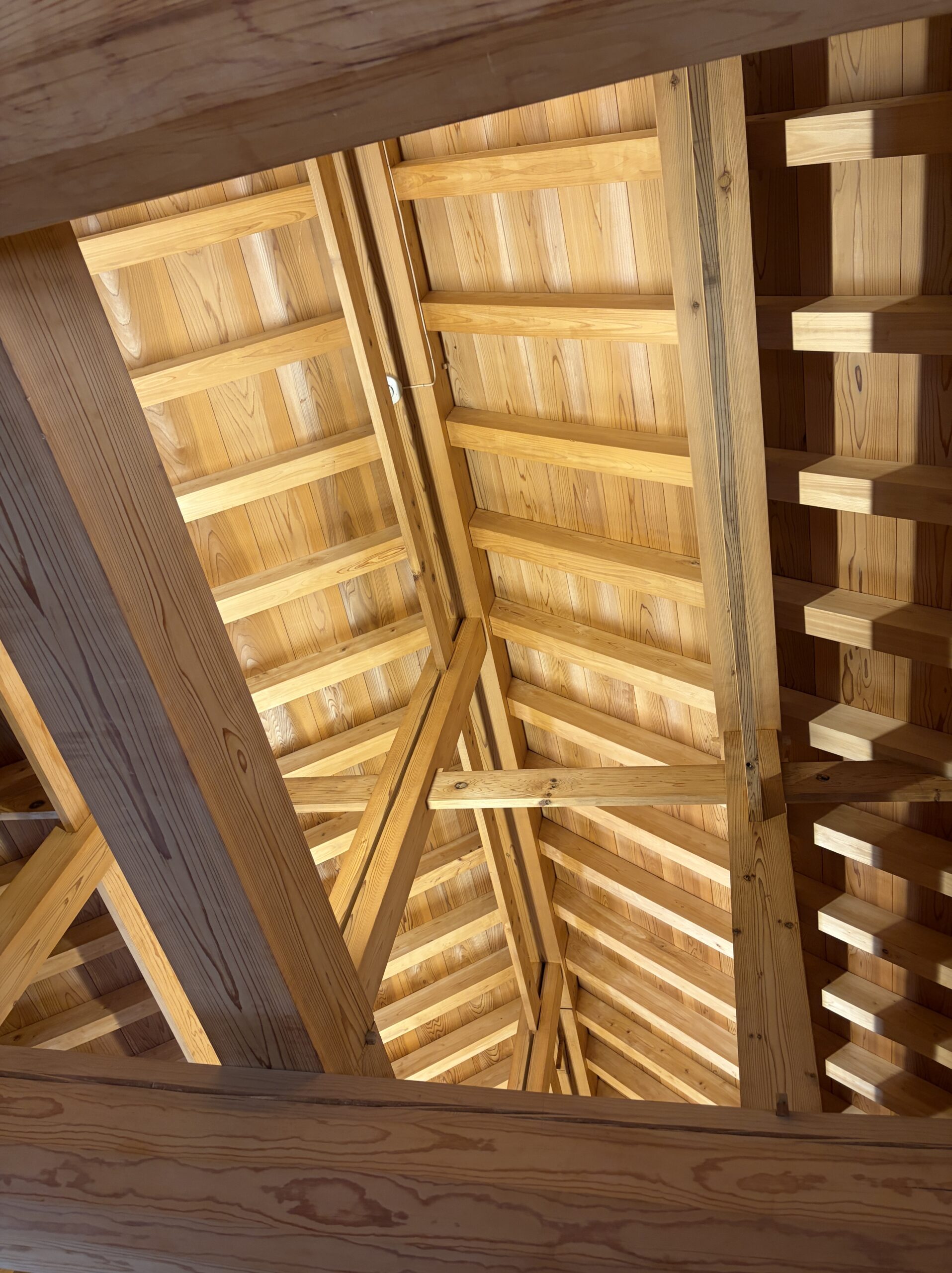
Inside the Bugu-yagura, don’t forget to look up at the timber-framed ceiling. The fresh wooden beams are beautifully fitted together, and through a gap in the floor you can peek at an ishi-otoshi — a “stone drop” chute for dropping rocks on enemies climbing the wall. I peered down, took aim at the (imaginary) attackers below… “Yep, I could do this,” I decided, all by myself.
Every time I come across a reconstructed building, I seem to get moved at the exact same pitch — and I’m pretty sure I’ll react this way every single time from now on, too (laughs). Records survived, there are people who lovingly turn them back into form, and now I get to walk through them like this. I felt quietly grateful.
A full loop around the moat
After leaving the keep, I strolled a leisurely loop along the moat. The breeze off the sea felt lovely, and just walking was enough to fill me up.
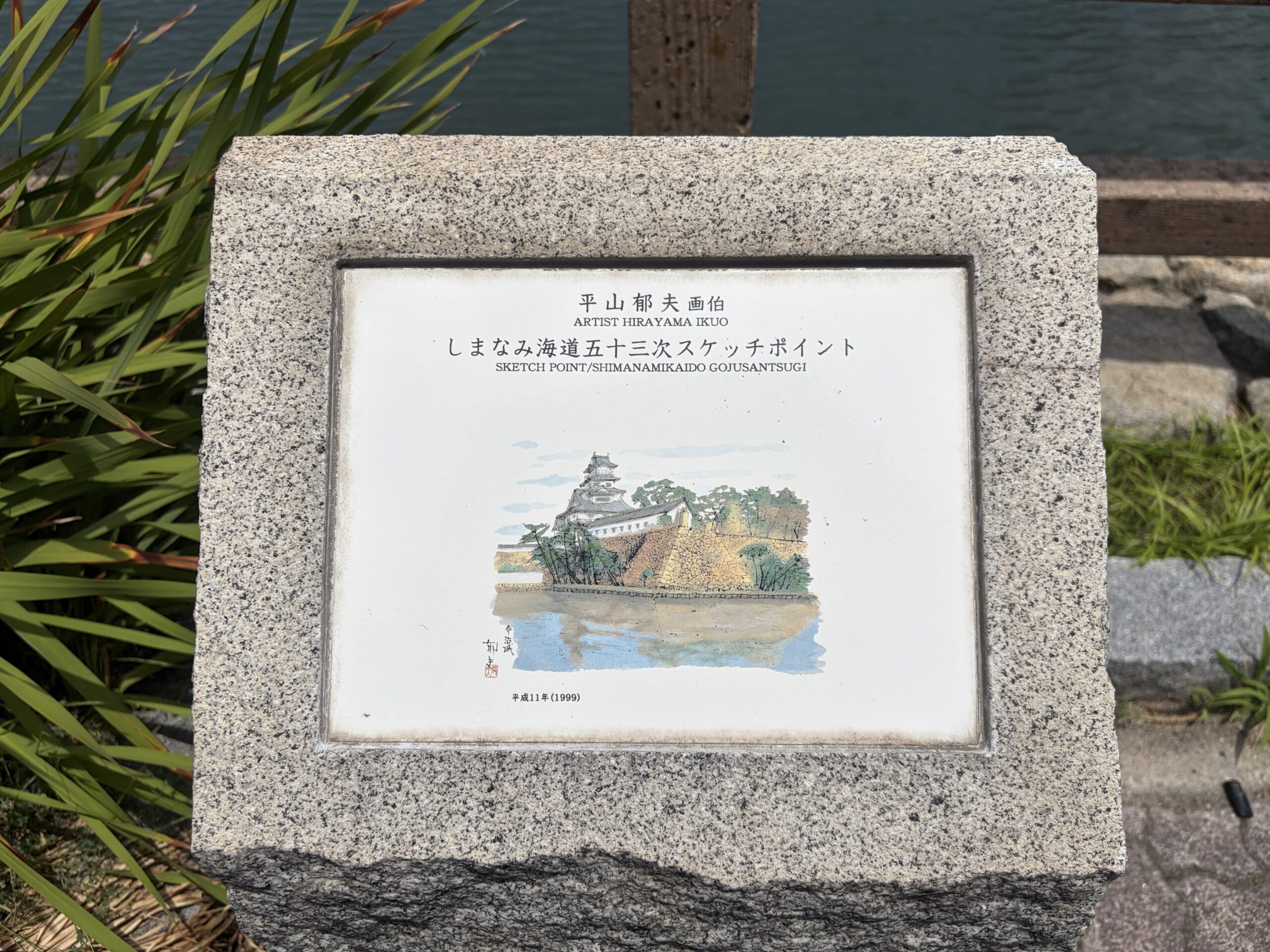
Along the way I spotted a “Fifty-three Stations of the Shimanami Kaidō” sketch point by the painter Hirayama Ikuo. It’s a spot in which you can view the keep in the same composition as the sketch on the marker, and the thought that I was seeing the same scene as the master felt like a little luxury.
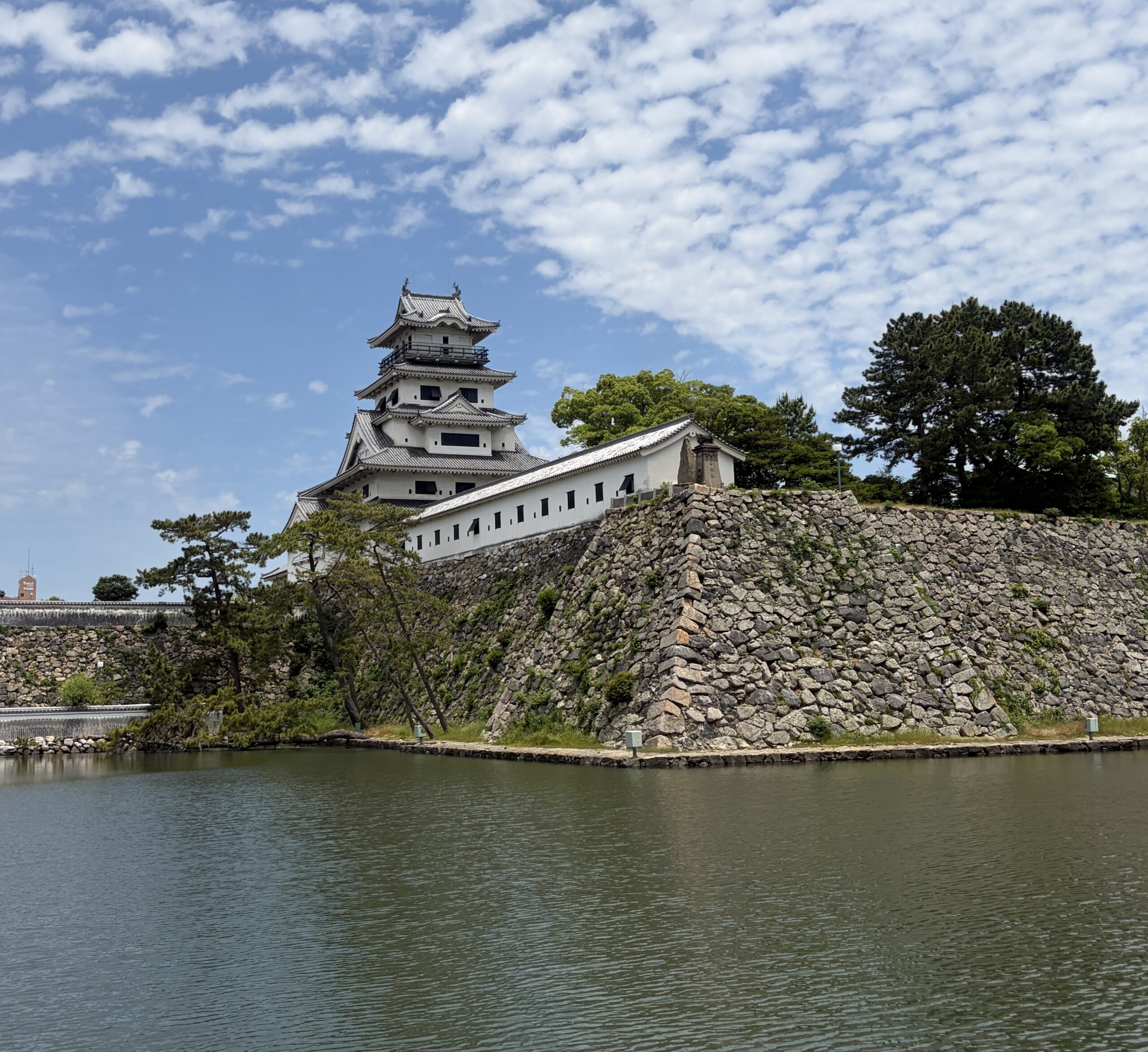
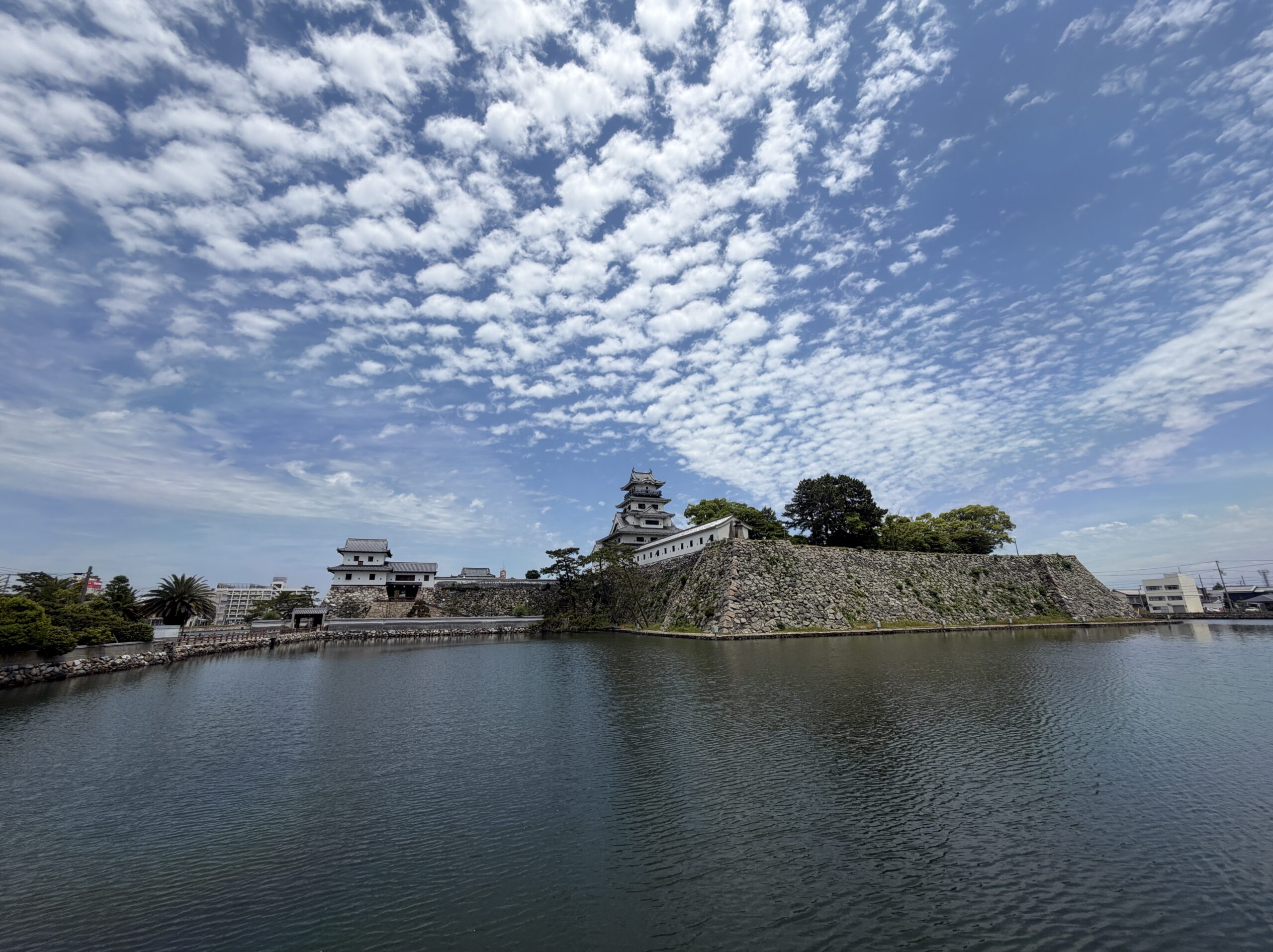
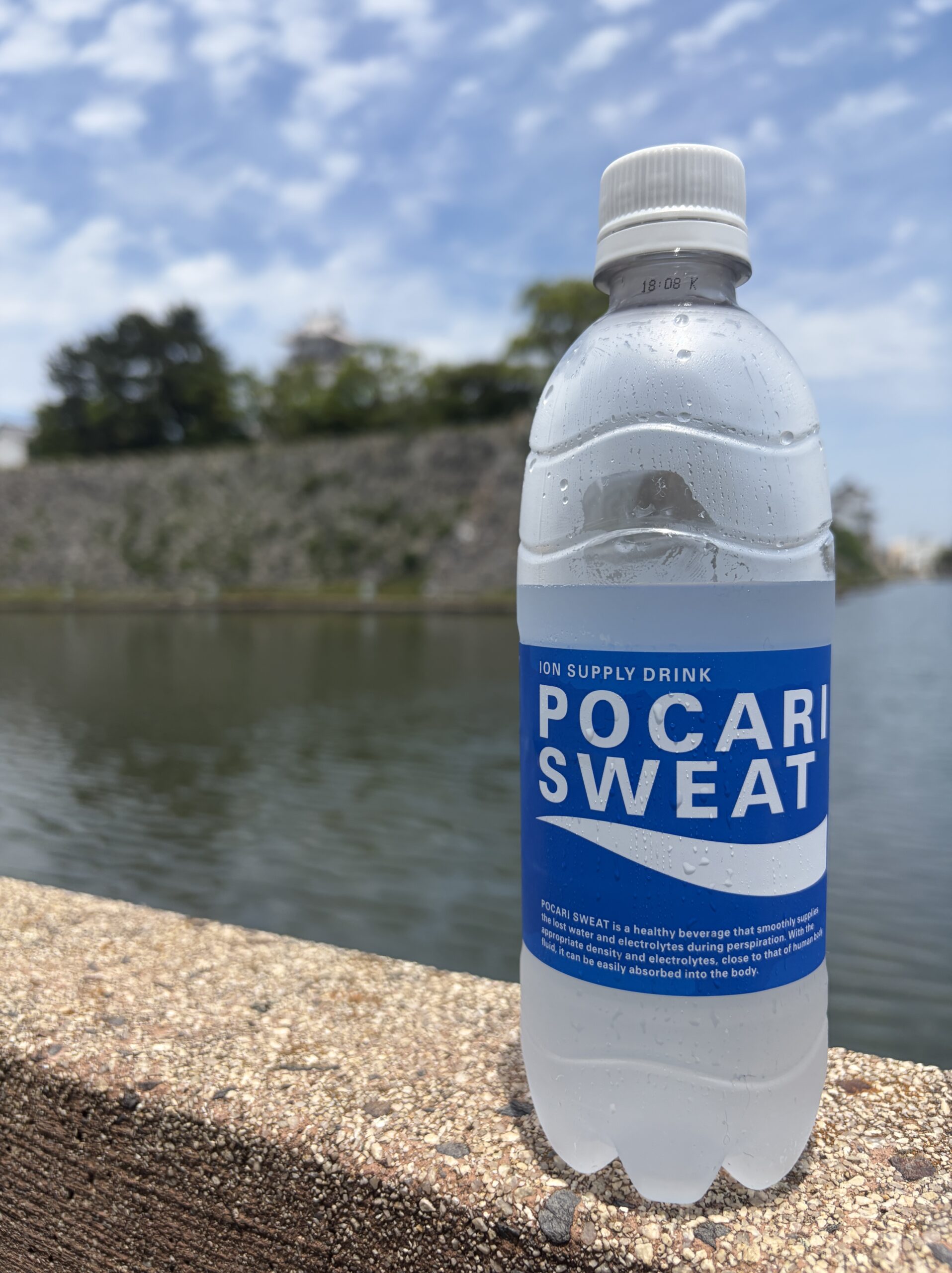
I sat on a bench, drank some Pocari Sweat, and took a break. Rehydrating while gazing at the moat and the keep — the best. (Those stone walls are so cool~)
Oh, and there’s a water gate that lets seawater in and out of the moat — a staff member kindly told me, “That’s in which it connects to the sea.” On a solo trip, little exchanges like this are such a treat. Without being told, I’d definitely have missed it. That’s how small it is.
Castle seals, cards, and Imabari towels
For a keepsake I bought a commemorative castle seal (goshuin), the standard “visit commemoration” version. When I photographed it with the Takatora statue and the keep behind it, even I had to admit it came out as a perfect shot 📷 I also grabbed the Japan 100 Famous Castles card (No. 79).
And since Imabari is famous as a towel town, I bought Imabari towels in a Tōdō Takatora design — a hand towel and a face towel. For this quality, 1,500 yen is a steal. I’d happily come back just for the towels.
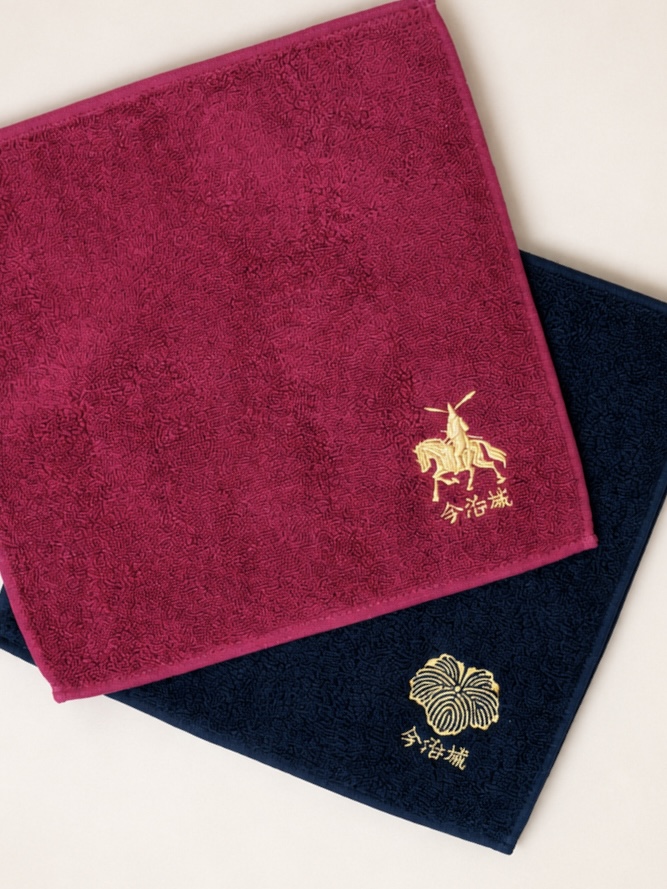
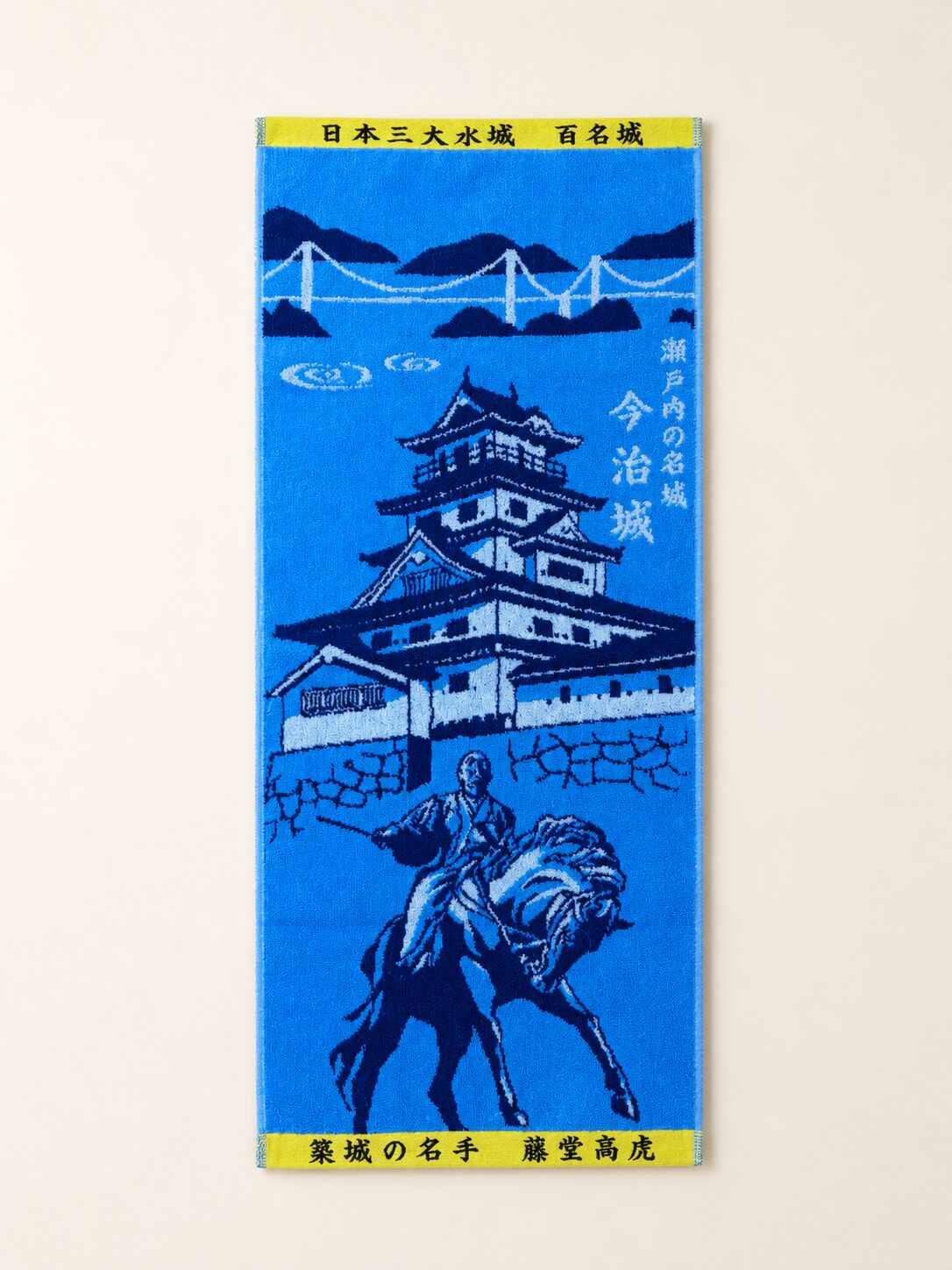
I got both at the reception desk on the keep’s first floor. There’s a ton of merch, so I agonized over it properly (laughs).
Final thoughts
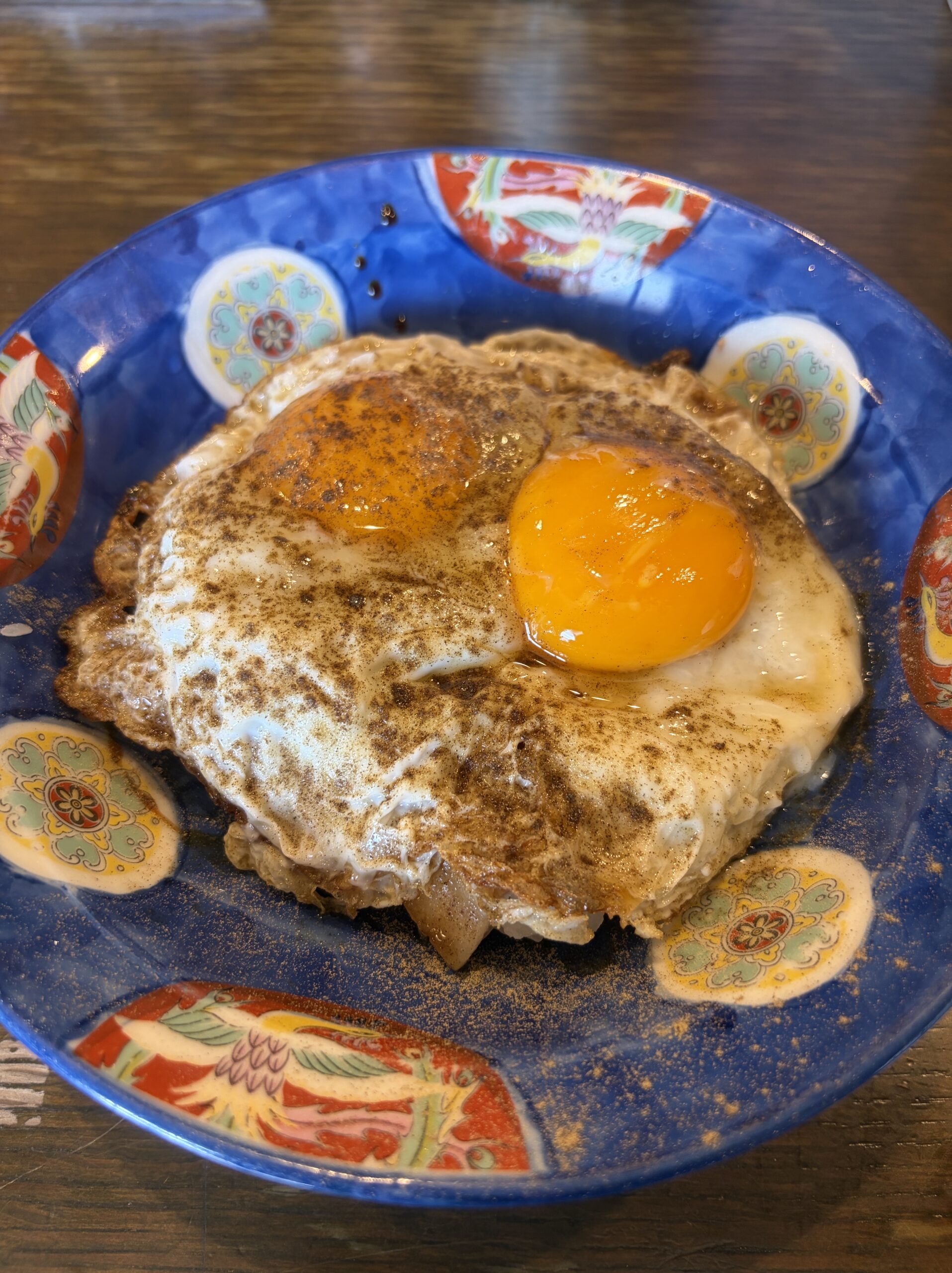
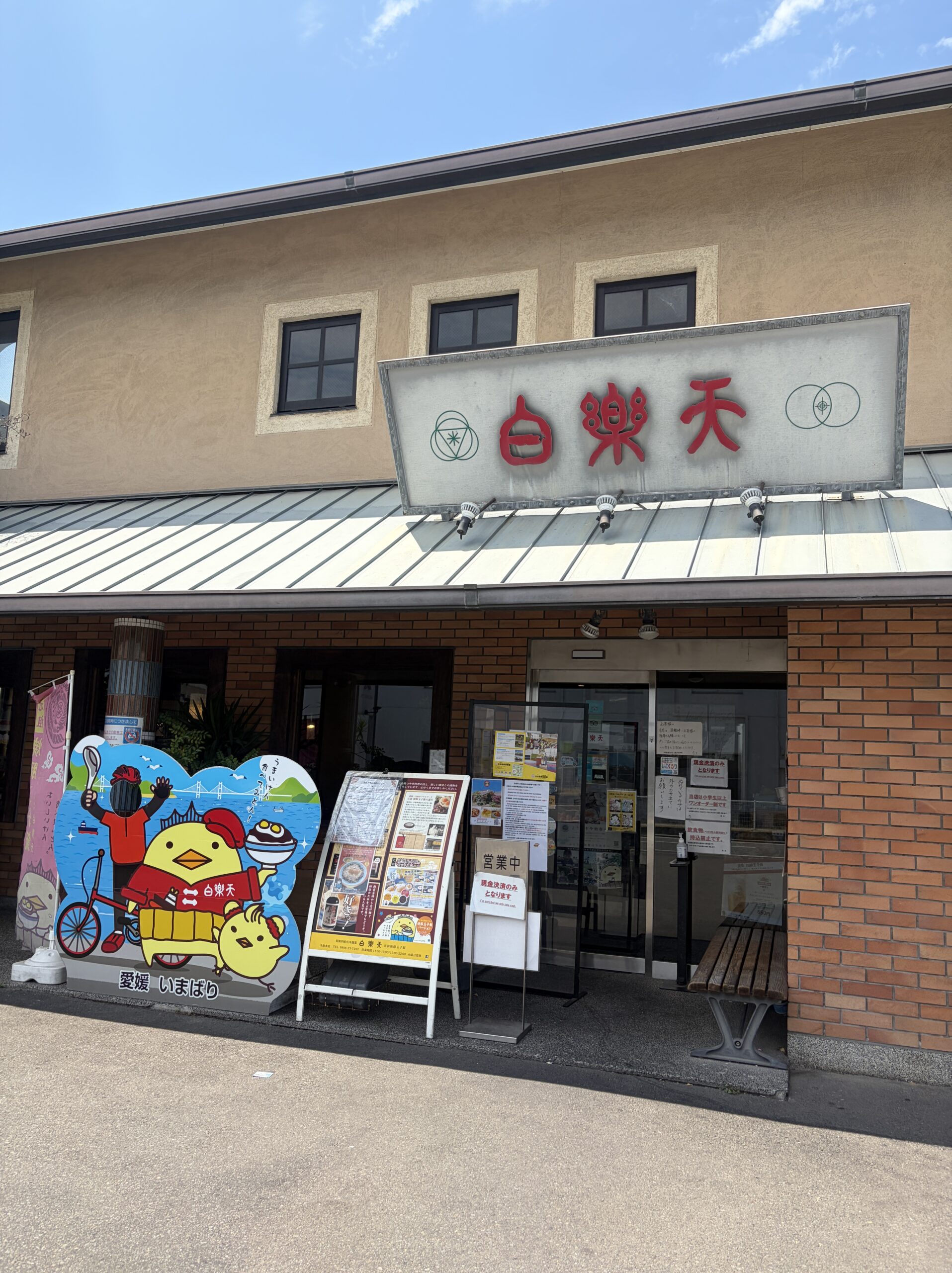
Before heading home, I had Imabari’s soul food, yakibuta tamago meshi (roast pork and a fried egg over rice), at Hakurakuten 🐖 The parking lot was full and there was a line at the entrance, but since I was on my own they seated me at the counter right away. Sweet-savory sauce, a soft-set egg, a smaller portion of rice — I polished it off in no time. The perfect reward meal after a castle. The kind of taste you start craving.
A moat connected to the sea, faithfully reconstructed turrets, and Imabari towels. Imabari Castle turned out to be a wonderful castle, packed with the kind of joys only a sea castle can offer.
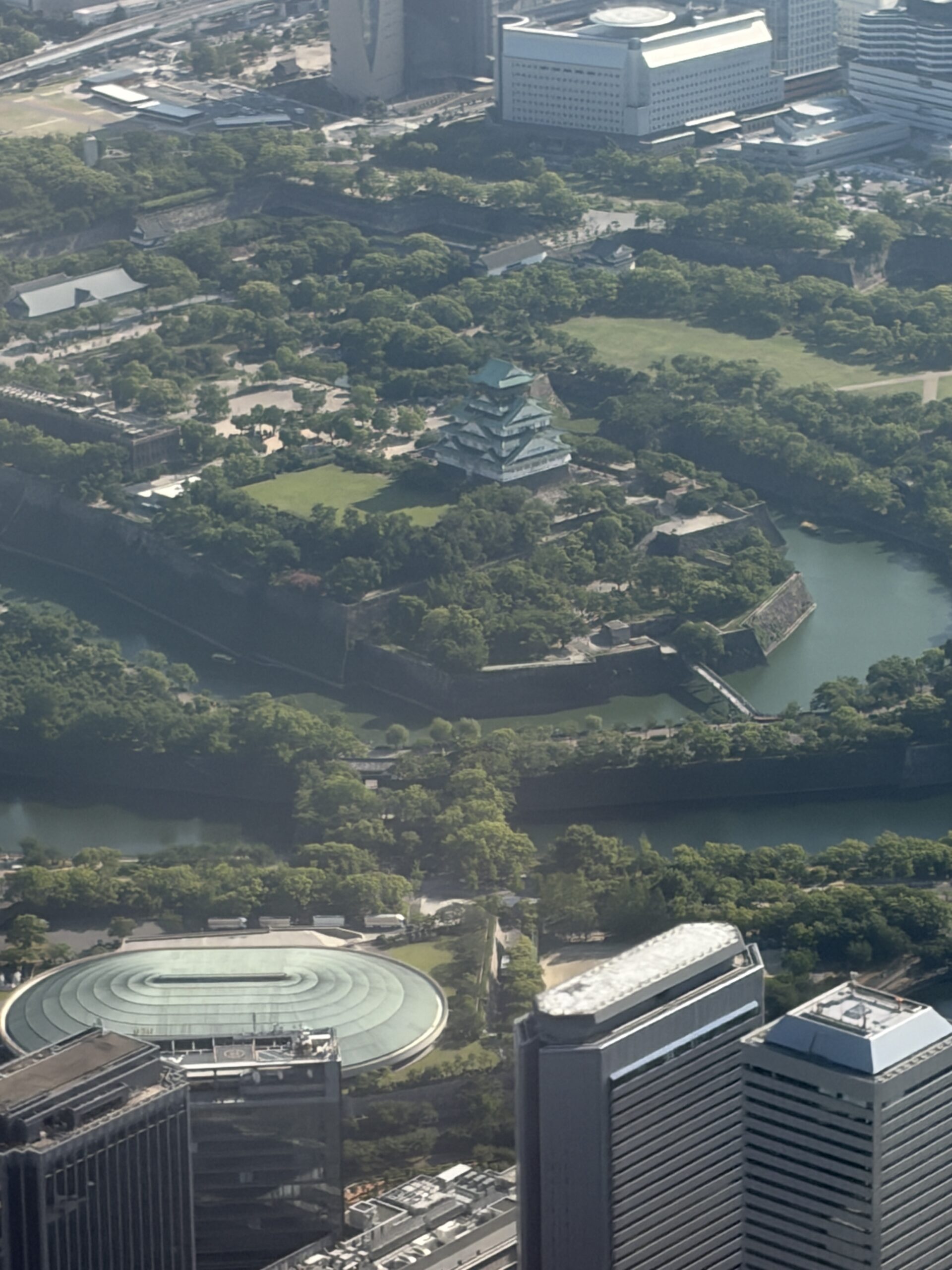
From the plane home, there was Osaka Castle right below me. I’d managed to go castle-hopping from the sky too — a day full of castles from start to finish.