In Act 7, an actor quietly sat down right beside my seat, a dobu-seki next to the hanamichi (the raised walkway that runs through the audience). His costume told me this was no minor role, yet he was so close I couldn’t tell who it was… From the flow of the scene, I had a pretty good guess… but all I could actually make out at that moment was that his shins were smooth, lovely 👀 After the Matinee, the Evening Show was more ‘Kanadehon Chūshingura’. As always, it was simply the best.
Read about the Matinee → November Program at the Kabukiza Theatre: Matinee, Program B (November 2026)
Kaomise, with a Full-Length ‘Kanadehon Chūshingura’
In November, the Kabukiza Theatre holds its kaomise, literally ‘face-showing’. In the Edo period, actors signed one-year contracts with a theatre, with November being the month to present the new company to the audience. That tradition lives on, so November is still treated as a special month.
This year’s play is ‘Kanadehon Chūshingura’ (The Treasury of Loyal Retainers), staged as a tōshi kyōgen. Rather than picking out only the popular scenes, a tōshi kyōgen tells the story in one continuous run. This time it spans the Matinee plus the Evening Show, with the Evening Show covering Acts 5, 6, 7, then 11. You get to see it all in one go: the tragedy of Hayano Kanpei with Okaru, the Ichiriki Teahouse in Gion, right up to the night attack by the forty-seven retainers.
There are two casts, Program A plus Program B. I saw Program B.
I suppose you could watch the two halves separately, but since it is staged as a full-length play, I want to see it in full, so I watch both shows back to back. In the Matinee’s michiyuki (a travel dance scene), Okaru is played by Tokizō Nakamura, Kanpei by Somegorō Ichikawa. In the Evening Show, Okaru switches to Ukon Onoe, Kanpei to Hayato Nakamura, so I sometimes think you don’t really need to watch them in a row. Still, carrying the momentum straight through helps me get more emotionally involved, which is why I love doing it this way.
Before the Evening Show
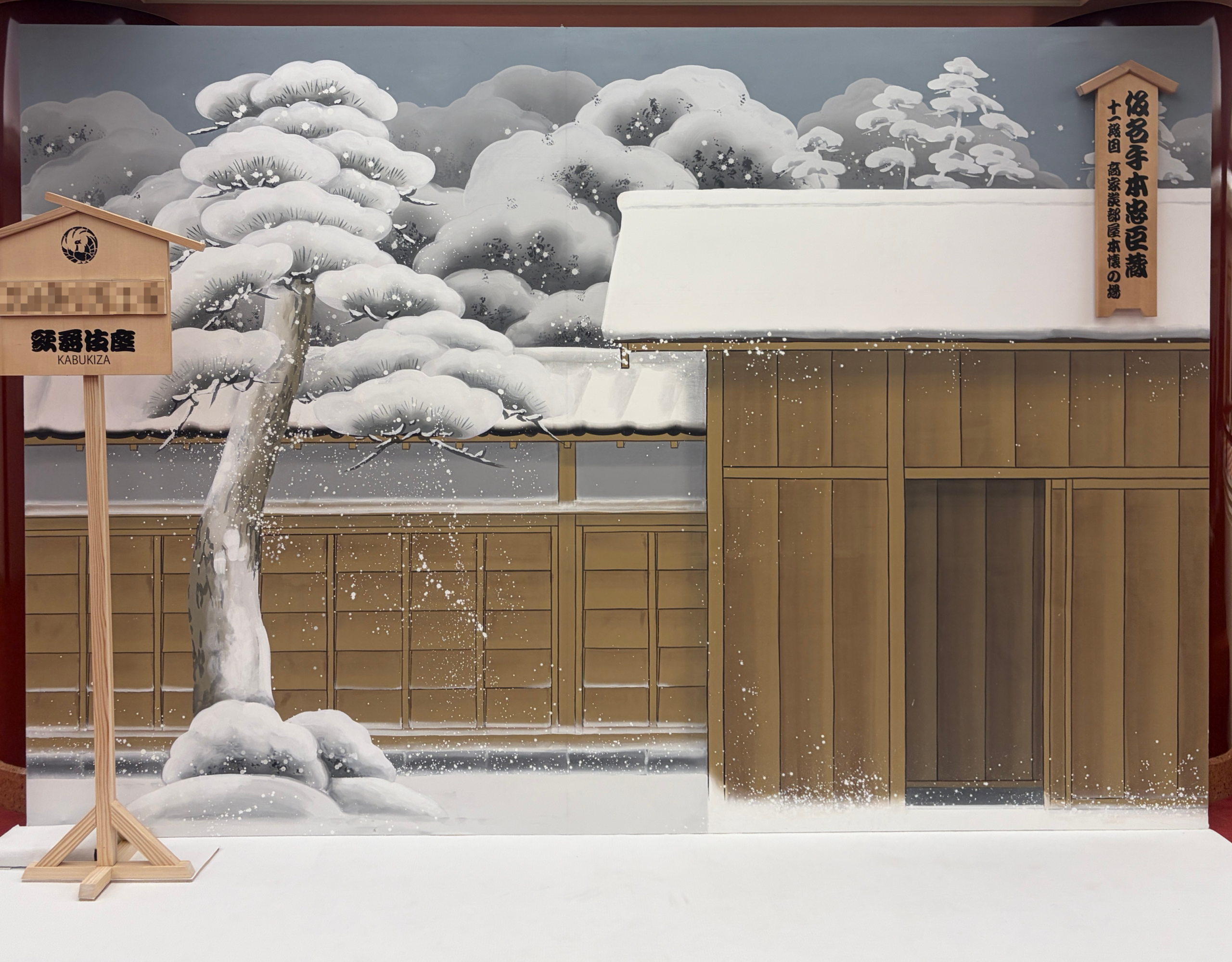
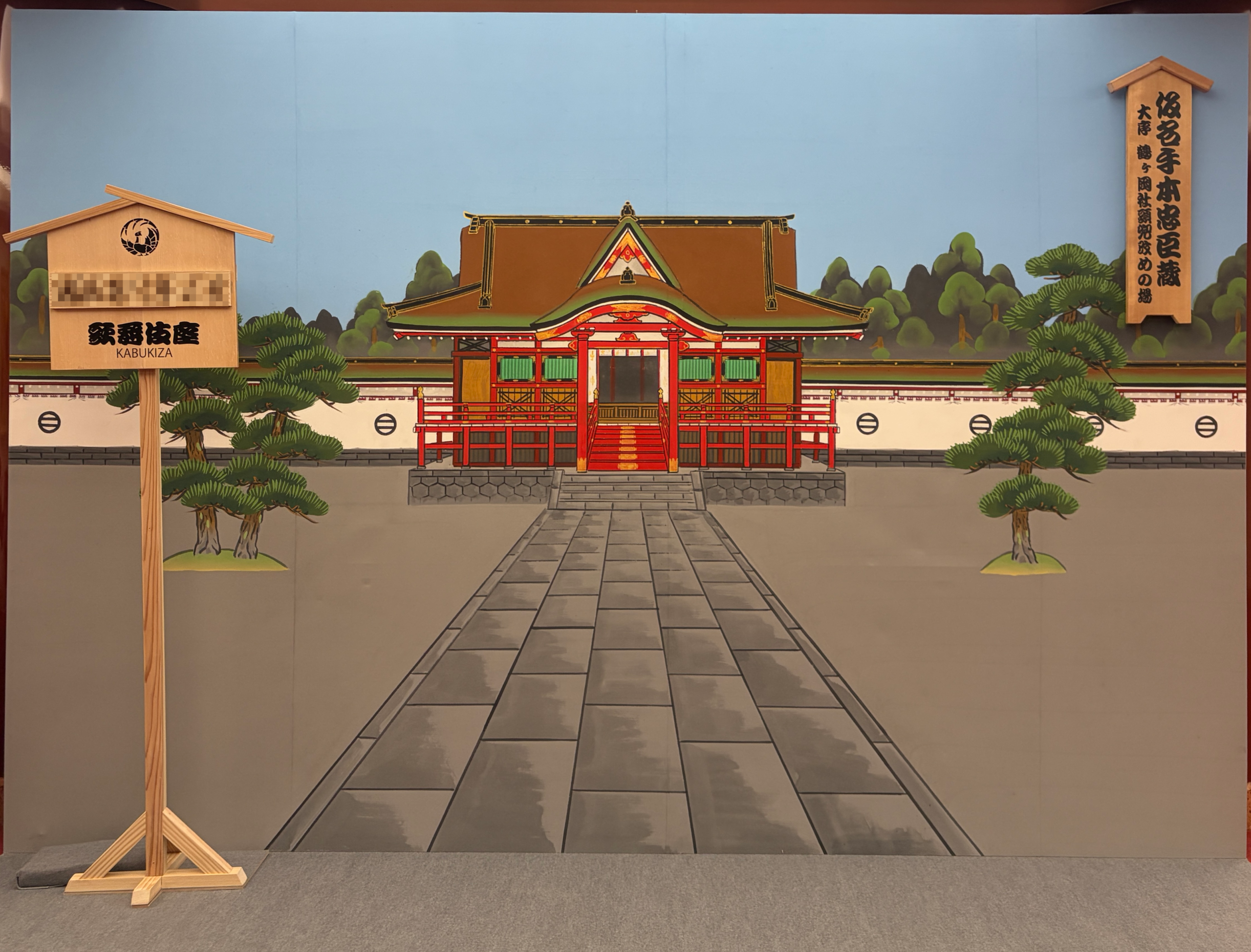
When the Matinee ended, I went to wait in the lobby on 2F. Not a single free spot on the sofas! There were so many people… I killed time wandering about, snapping the photo spots (the snowy main gate from Act 11, plus Tsurugaoka Hachimangū from the prologue), popping to the loo.
After leaving my things at my seat, I headed down to Yagura in the basement for a bentō. Truth be told, I had been trying to prove that ‘skipping meals is the best solution’ for staying awake, but it was hopeless. I was after the sukiyaki bentō, the yakiniku bentō, maybe the tenmusu (rice balls with shrimp tempura)… Sold out, every last one 😭 Before the Matinee, I could have taken my pick of anything…
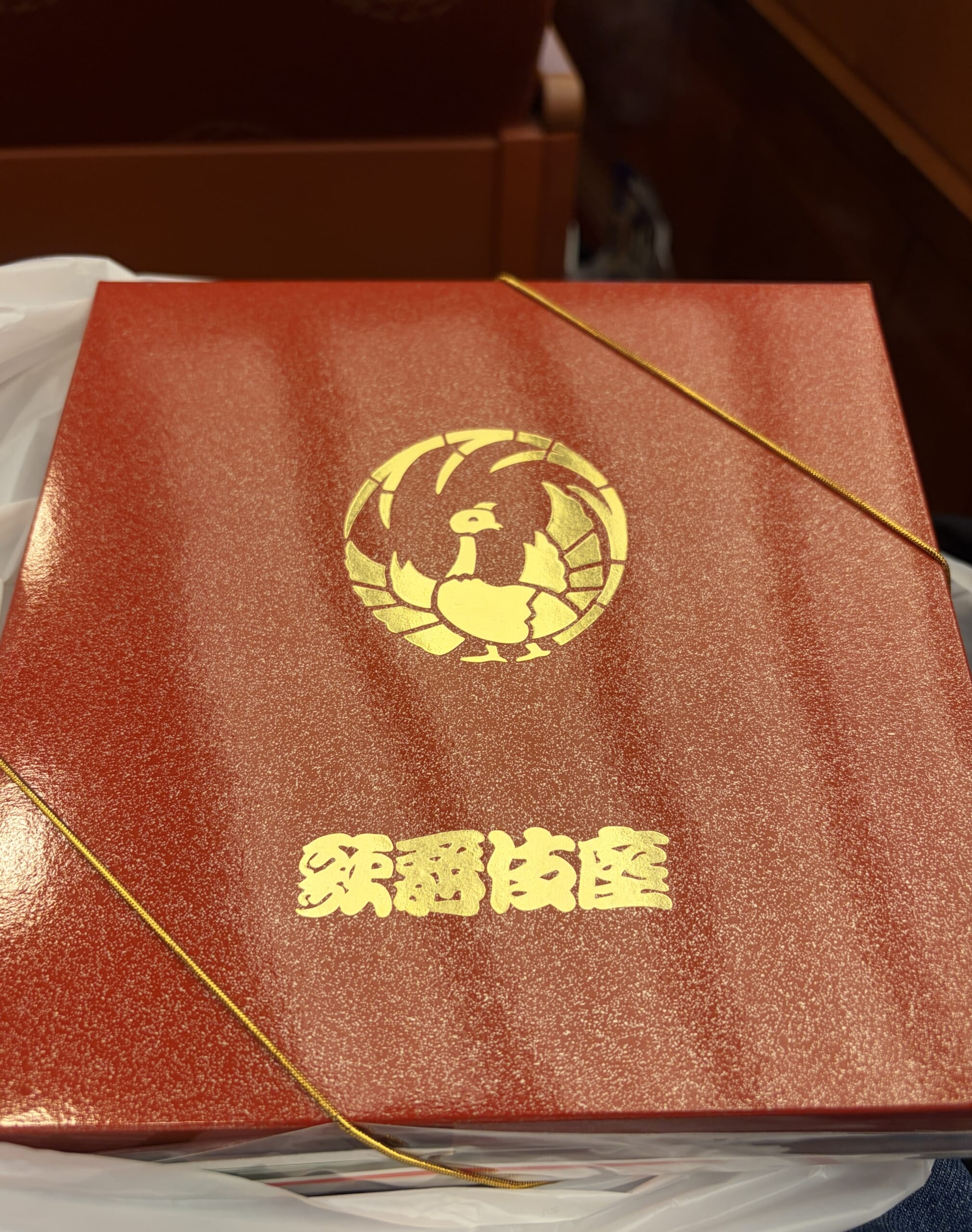
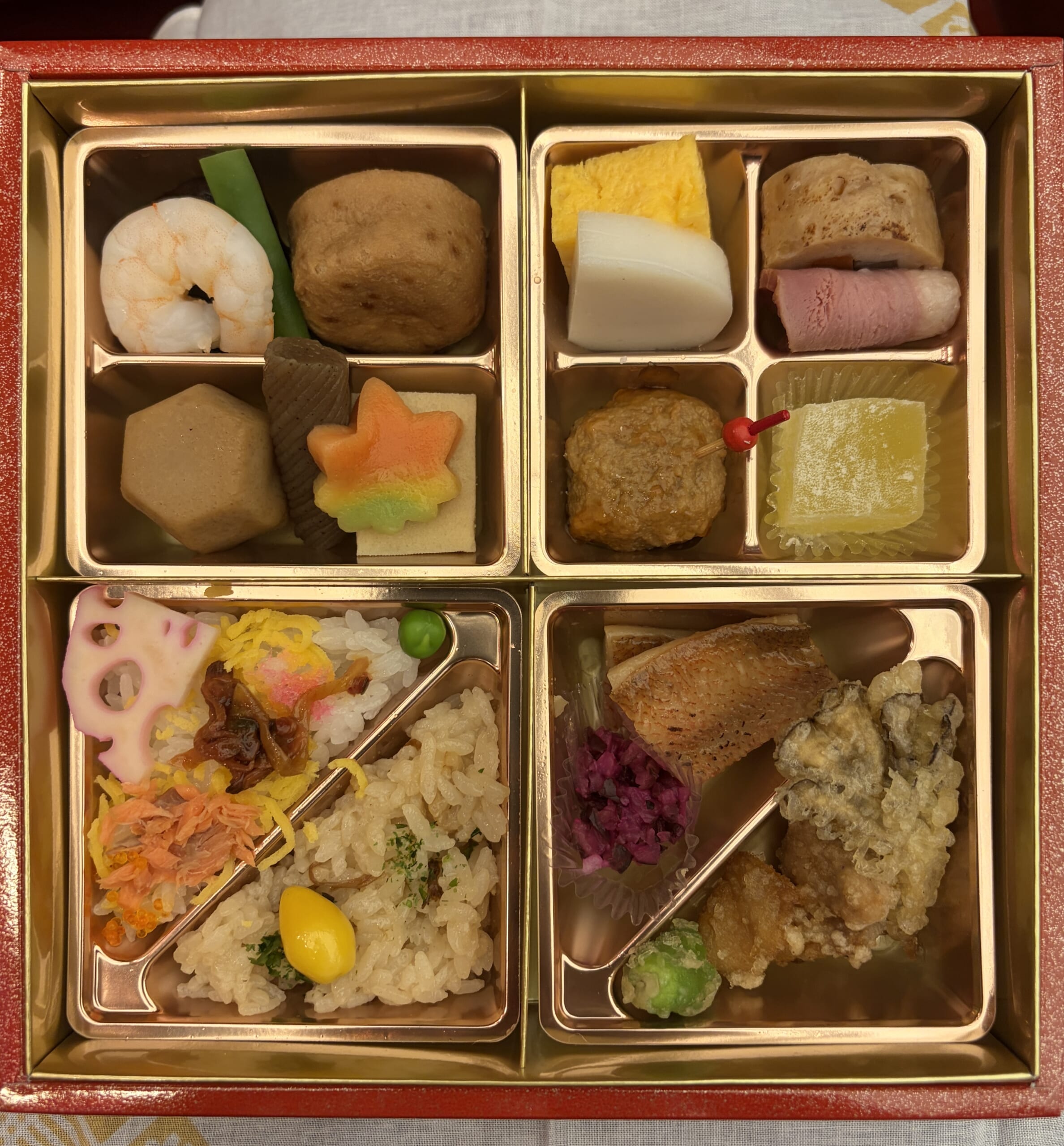
In the end, I bought the ‘Akō Gishi Bentō’ (the Akō Retainers Bentō) at the shop on 1F inside the theatre. A red lid with the Kabukiza crest in gold. Well, the name alone is a winner (haha). Even so, I never worked out which part was the ‘Akō Retainers’ bit. I was so hungry I couldn’t really savour it… By the way, I also bought seppuku monaka (crisp wafers filled with sweet bean paste). The chestnut version is delicious.
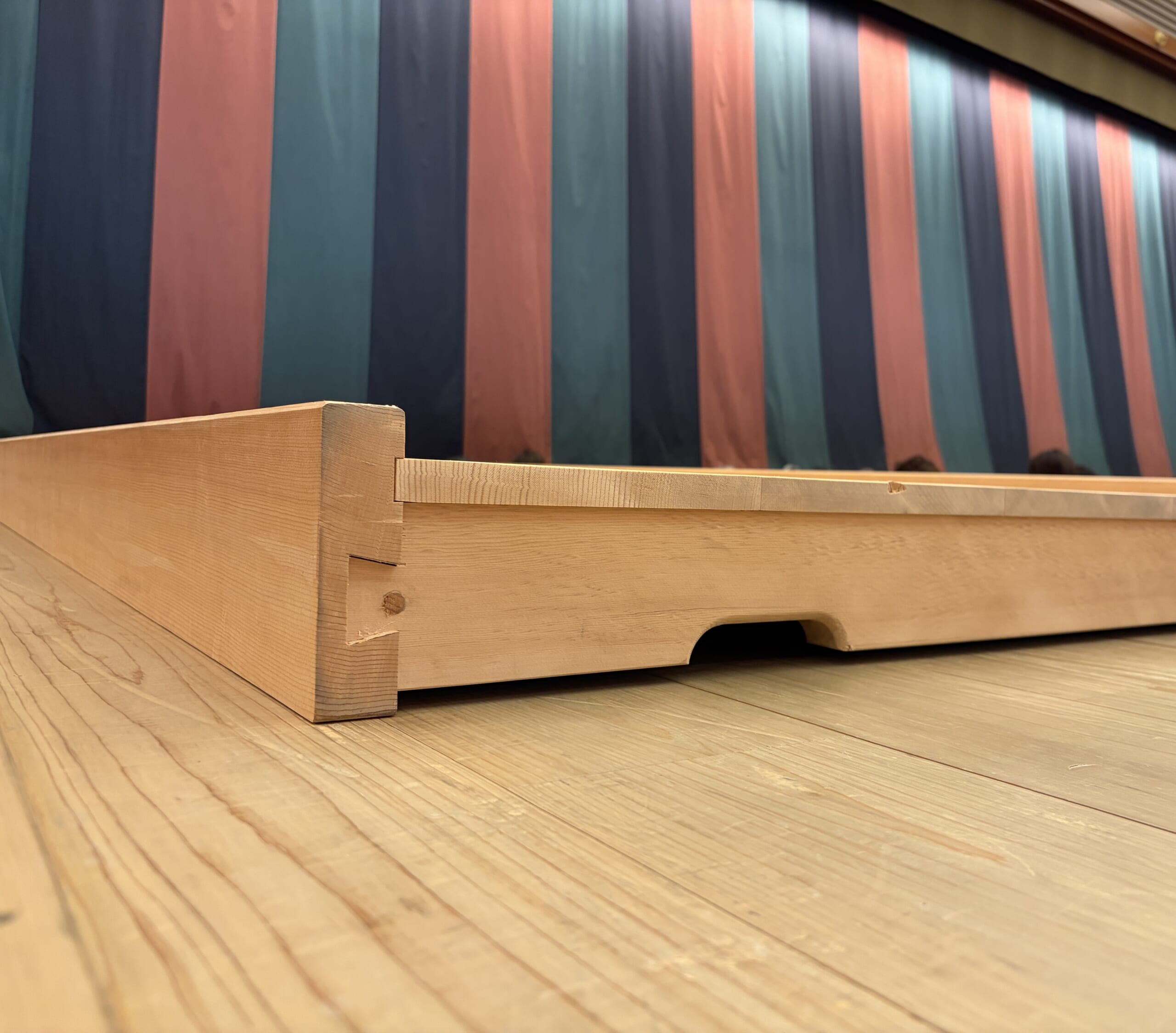
Inside the theatre, I took a good look at my beloved shosadai (the wooden platform laid over the stage for dance scenes). It has notches along the edge for your hands — a small discovery.
Evening Show, Program B: My Impressions
Act 5: Only One Line, “Fifty Ryō”
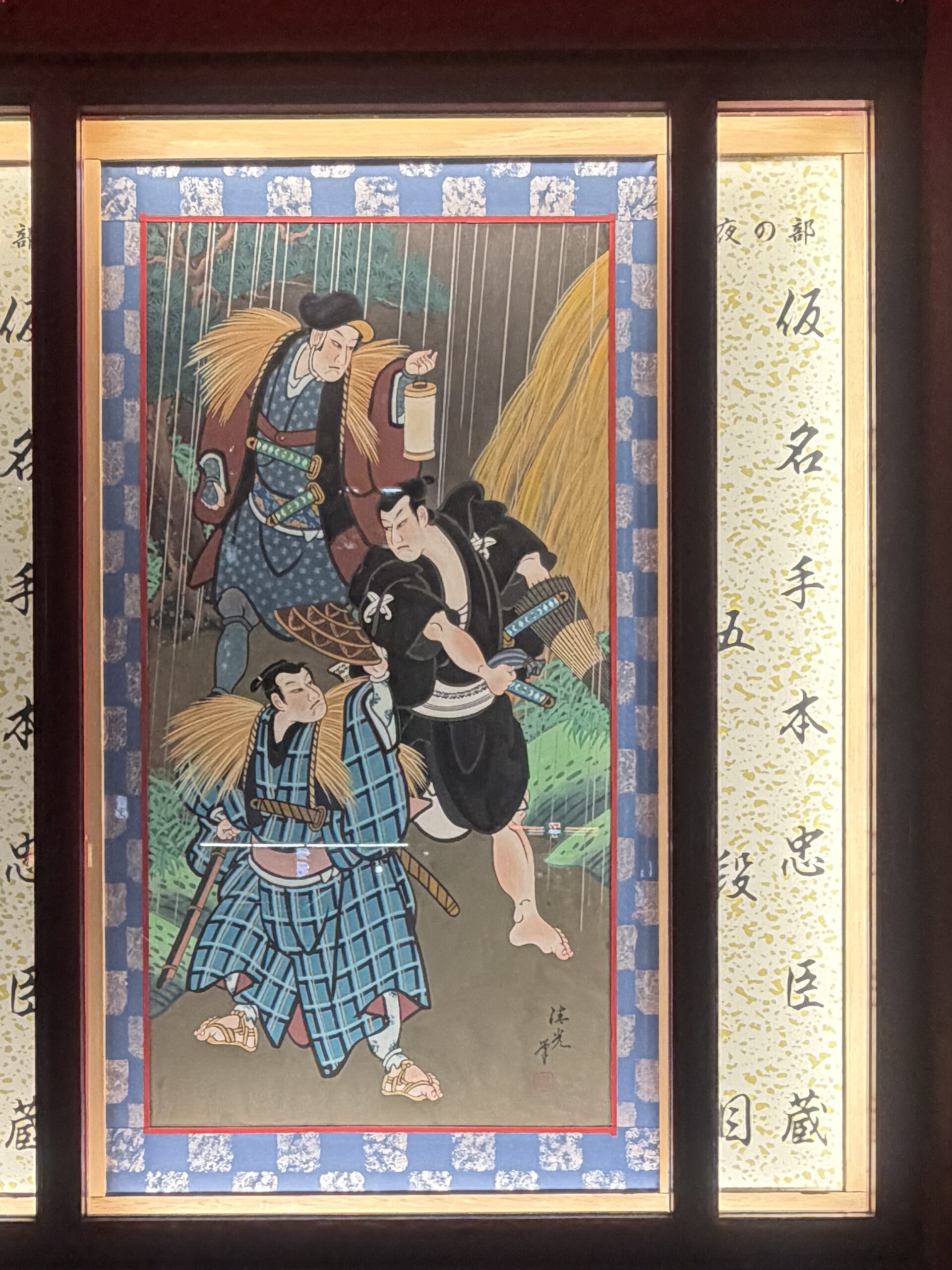
What struck me most in Act 5 was Shidō Nakamura’s Ono Sadakurō, the villain who ambushes Okaru’s father, Yoichibei, on a dark road to steal fifty ryō. His only line is “Fifty ryō”. He doesn’t win you over with dialogue, nor with dance. It is the kind of acting that tests an actor’s true ability. Well worth watching.
On top of that, I heard Sadakurō was a signature role of Nakazō Nakamura I, which made me go “Nakazō, really?!” with a thrill all to myself. Today’s look — white make-up, a black kimono, the ragged rōnin — is said to be a style Nakazō devised.
Then there’s Hayato’s Kanpei: he fires at what he thinks is a wild boar, realises he has hit a person, then grabs a purse in the dark. Honestly, I couldn’t grasp the depth of his inner conflict yet, but one thing is for sure. He was cool.
Act 6: A Huge Misunderstanding, an Ending That Made Me Cry
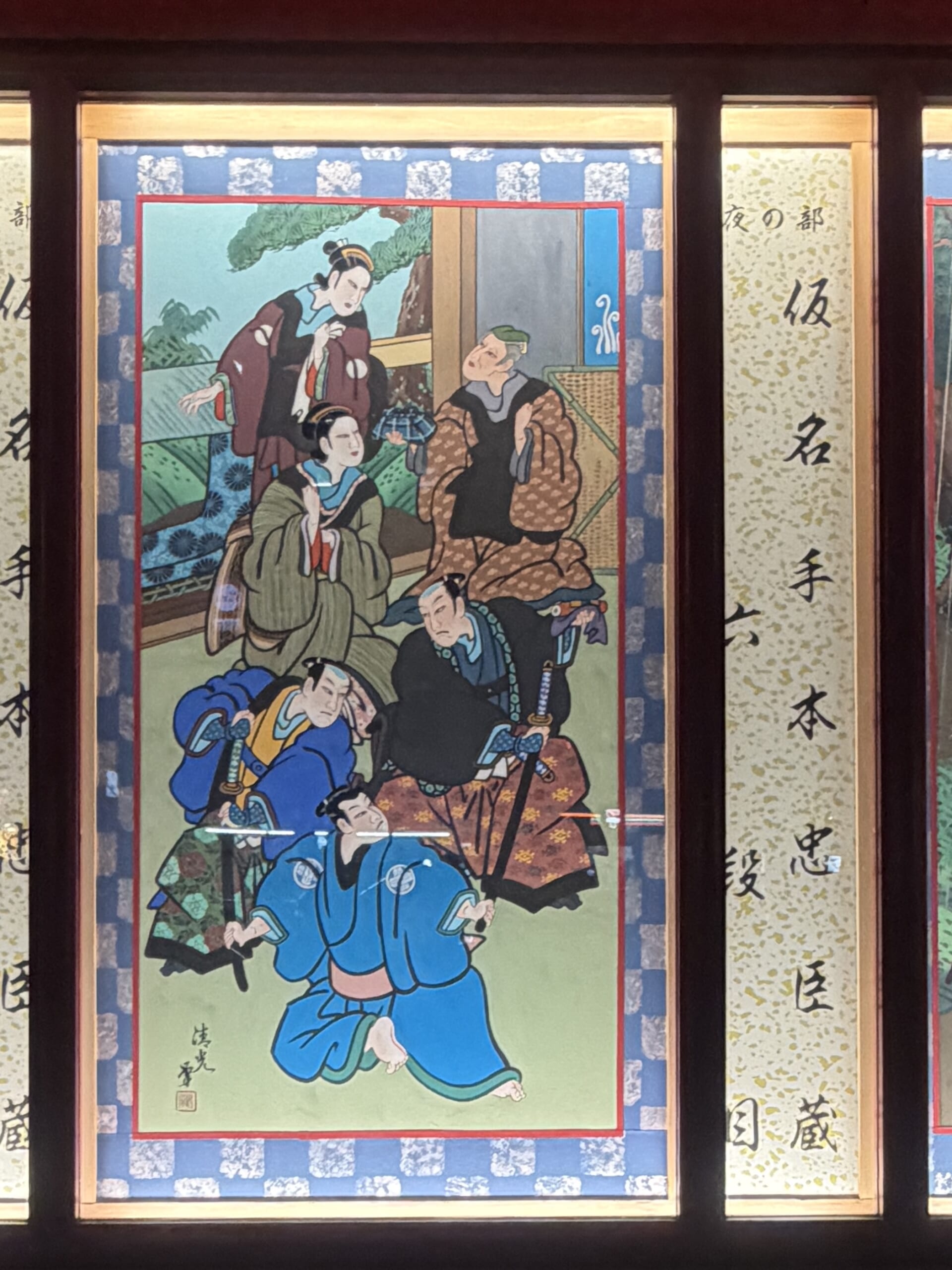
Act 6 is rather complicated. The man Kanpei shot was Sadakurō, who had just robbed Yoichibei of the fifty ryō. The purse Kanpei grabbed in the dark had actually belonged to Yoichibei. Inside was half the money Okaru had raised by selling herself into service in Gion.
The next morning, listening to Osai of the Ichimonjiya, who has come to take Okaru away, plus Okaru’s mother Okaya, Kanpei becomes convinced he has shot his father-in-law (a huge misunderstanding), then commits seppuku.
Afterwards, it turns out Yoichibei’s wound came from a sword, meaning he did not die from Kanpei’s gunshot… (Too late, one step too late. Please check before you cut! 😭)
Cleared of killing a parent, Kanpei is even allowed to add his name to the pledge of revenge before he finally dies. Loyalty, a sense of duty… I simply cried.
Act 7: Beautiful, Funny, Way Too Close
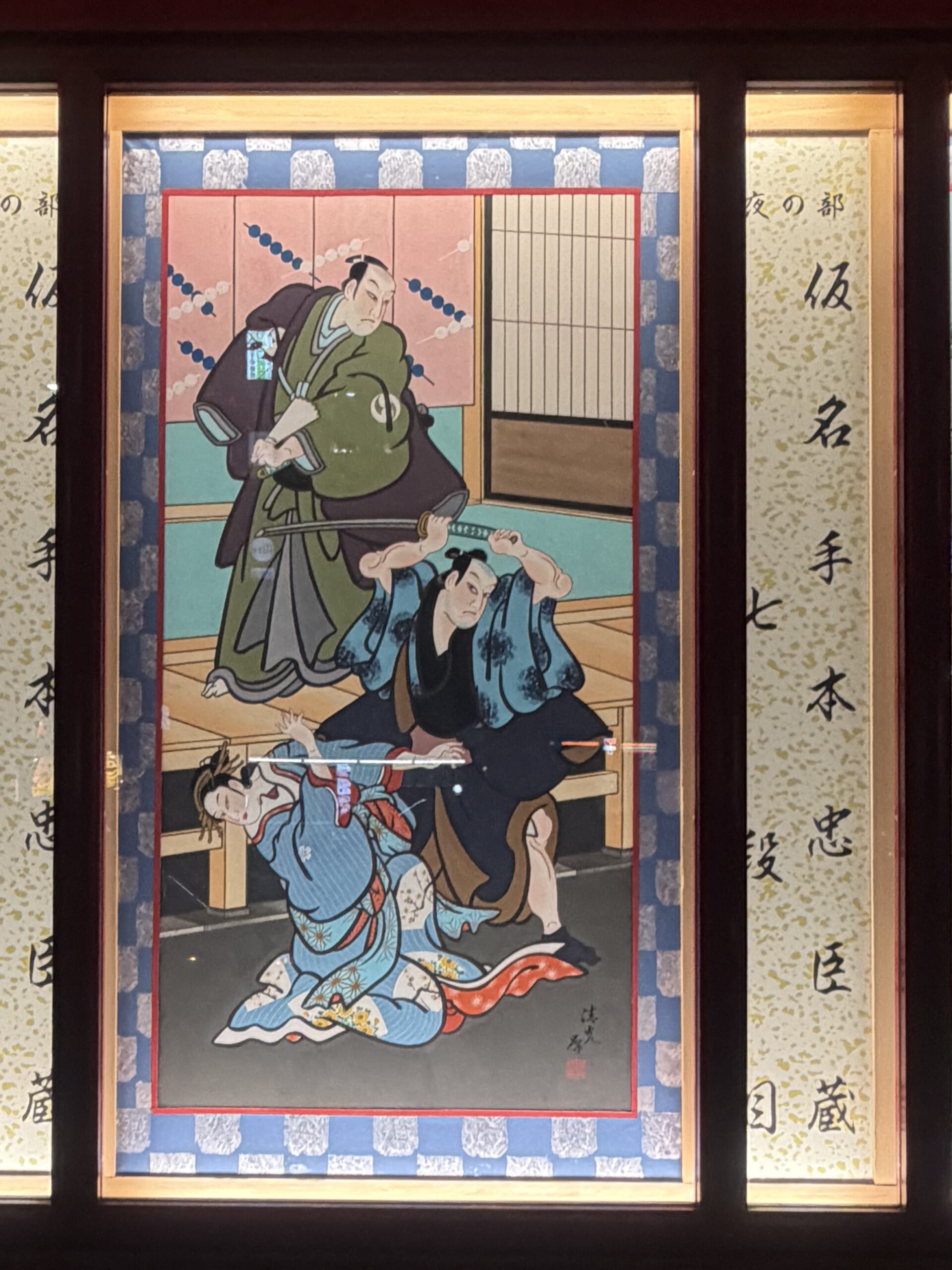
Until now, I had only ever seen Yuranosuke played by Nizaemon Kataoka. So I was glad to see Kōshirō Matsumoto’s Yuranosuke for the first time. Even in the same role, a different actor changes the whole impression.
Then there’s Ukon’s Okaru. The scene where she secretly reads the letter Yuranosuke is reading is just gorgeous. Ukon is always so beautiful, so skilled in onnagata (female) roles too, which made her lovely yet funny at the same time.
The brother-sister scene, where her brother Heiemon tries to cut her down after she learns the secret, is full of laughs. I laughed at it as pure comedy (haha). Sometimes I feel Ukon is basically out to make us laugh. It is an innate sense of humour, not something you can learn… Who do I think I am? With Kikugorō Onoe VIII’s Okaru in Program A, I imagine the laughs would come more quietly, through atmosphere, through timing — which makes me want to see that one too. The same role can become something completely different depending on the actor. That’s the fun of having Program A plus Program B!
As for the actor right beside me at the start — that was during this Act 7. He was too close to recognise at the time, but it turned out to be Shōroku Onoe as Heiemon. What stays with me: his smooth, lovely shins… a closeness only the dobu-seki can give you.
Act 11: Fight Scenes I Couldn’t Look Away From
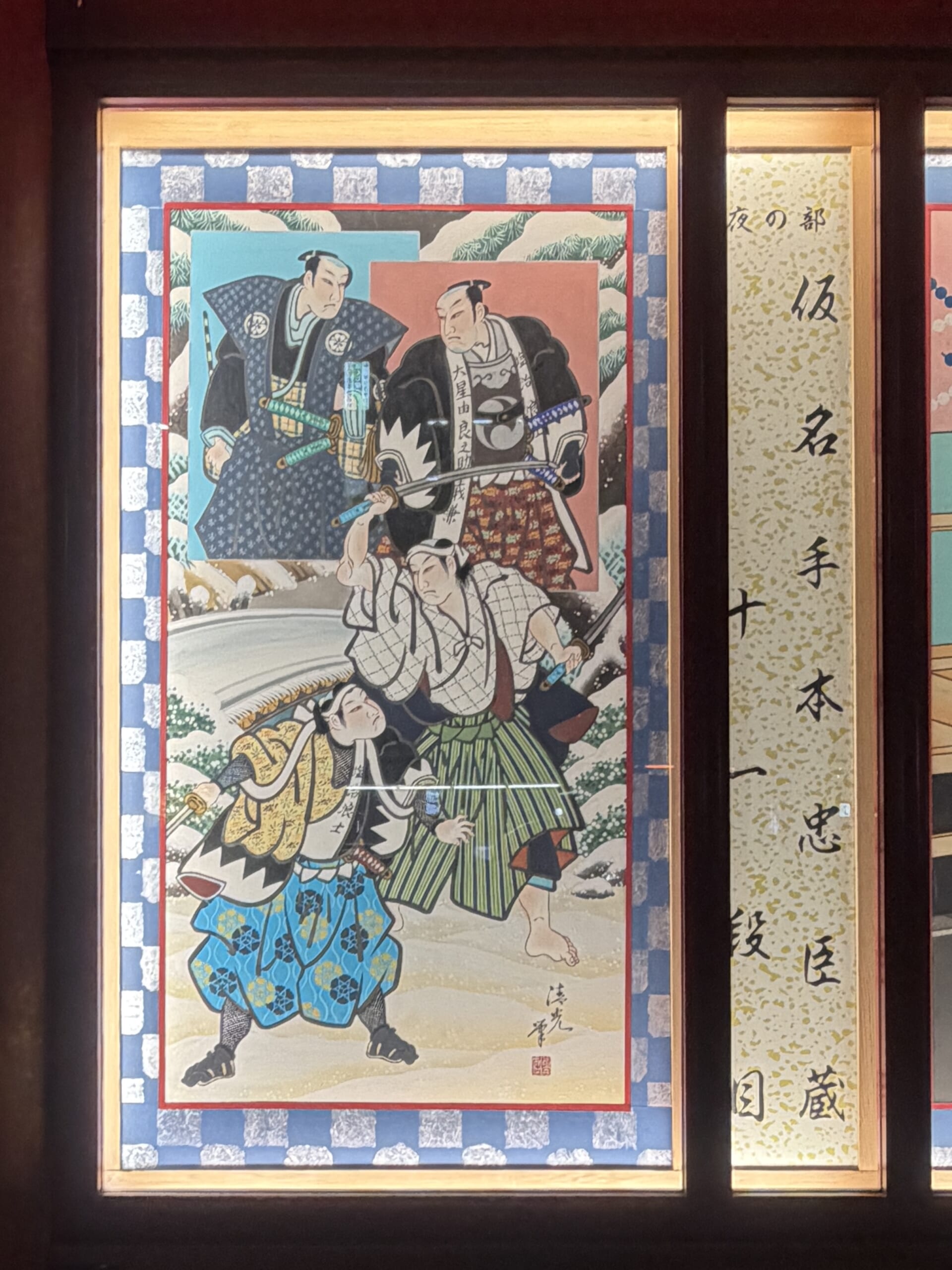
Act 11 is, at last, the night attack. Watching the fight scenes from beside the hanamichi was hugely powerful.
Above all, the scene with Takanosuke Nakamura as Kobayashi Heihachirō facing Tatsunosuke Onoe as Takemori Kitahachi moved me. Tatsunosuke, usually so adorable he puts me, a woman, to shame, was simply cool here. I couldn’t look away. I’d barely had time to think “how lovely to see Takanosuke again after so long” before the frantic fighting stole my heart. Then it was over.
As for the very end of Act 11… I’m always in a daze, so I barely remember it (haha).
Wrap-up
The drowsiness I’d worried about? None at all during the Evening Show. Come to think of it, I often get drowsy in the early afternoon anyway, so eating doesn’t seem to make much difference. When drowsiness hits, it hits. Next time I’ll try the ‘in bed by 10 p.m. the night before’ plan.
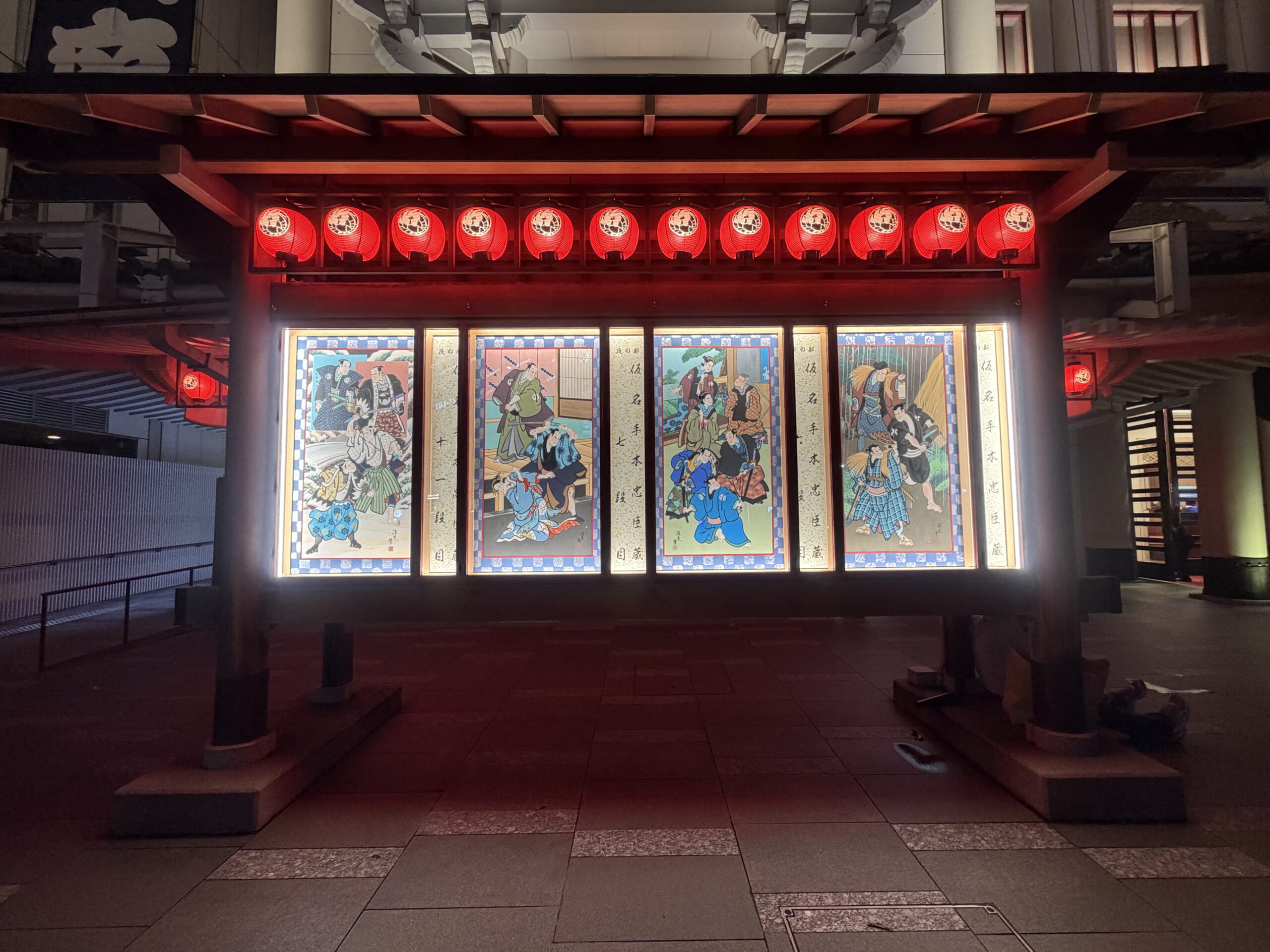
After the show: the picture signboards lit up at night, the ōiri (full-house) sake barrels, plus the red nobori banner for ‘Kanadehon Chūshingura’. I love this banner sooo much!
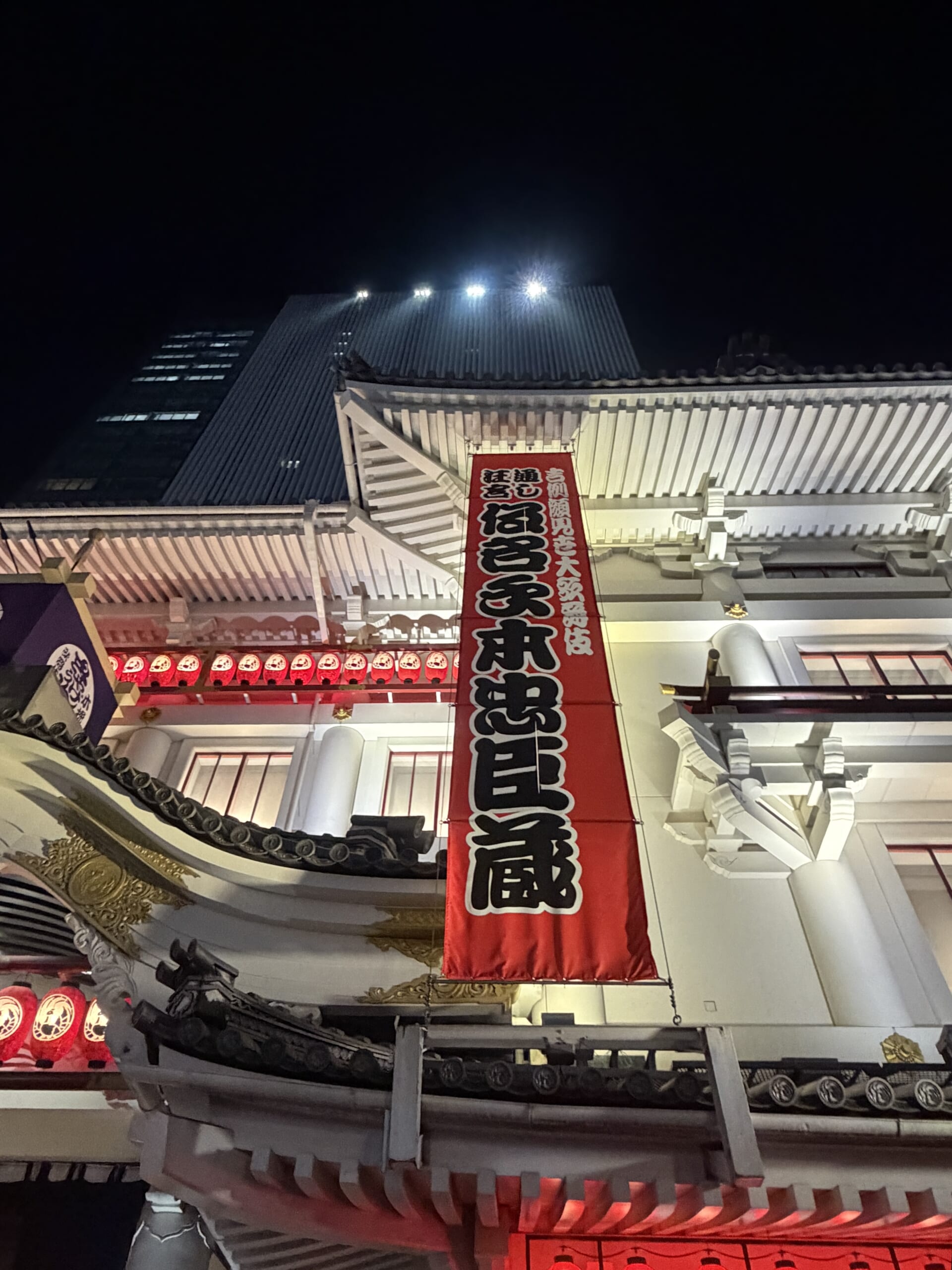
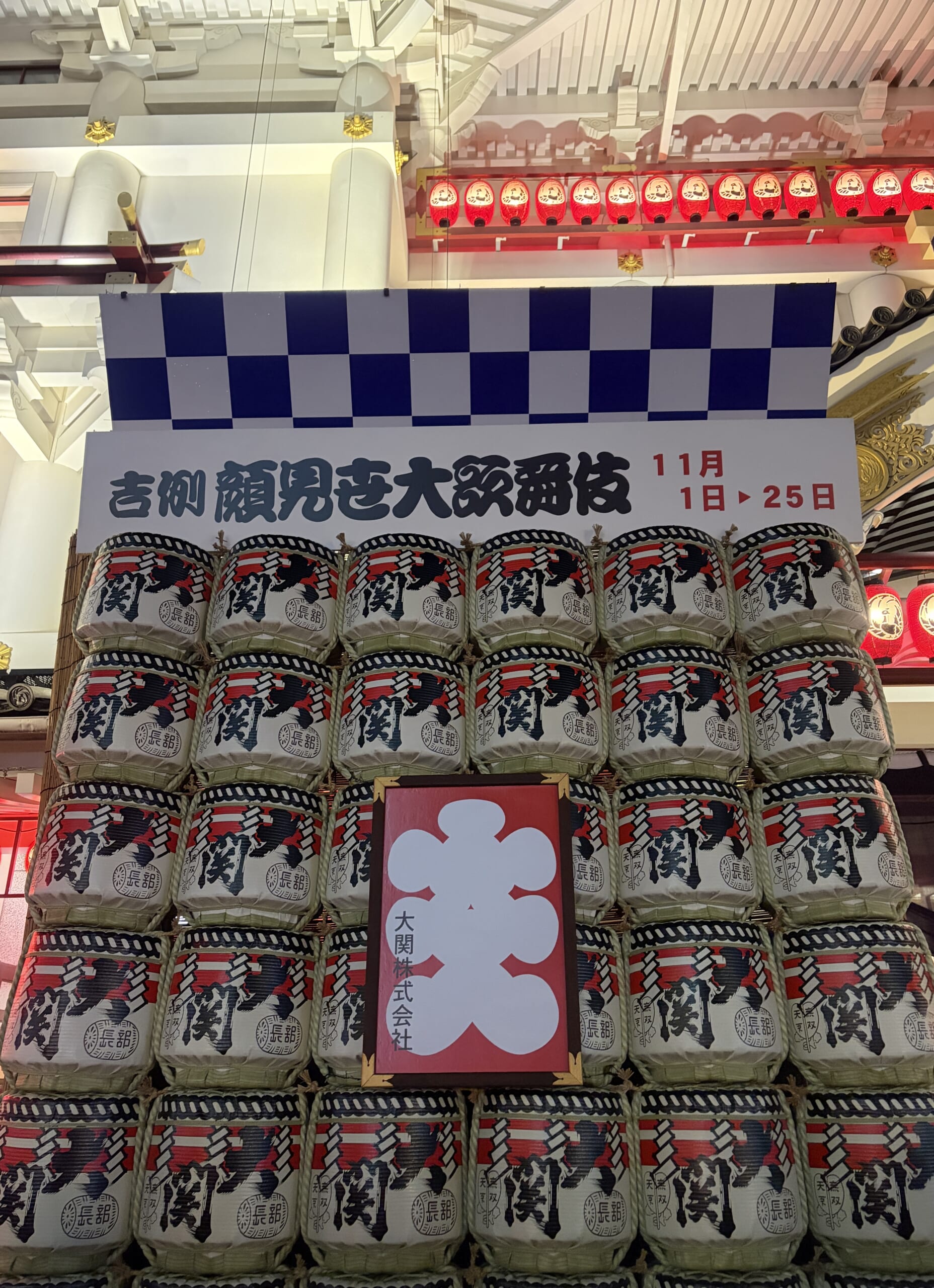
Crying at Kanpei’s end, laughing with Ukon’s Okaru, losing my heart to the attack. A rich day, made possible by watching the Matinee straight through to the Evening Show. I’d love to see Program A too.
Bonus: My Paperback Companion, Now with a Book Cover
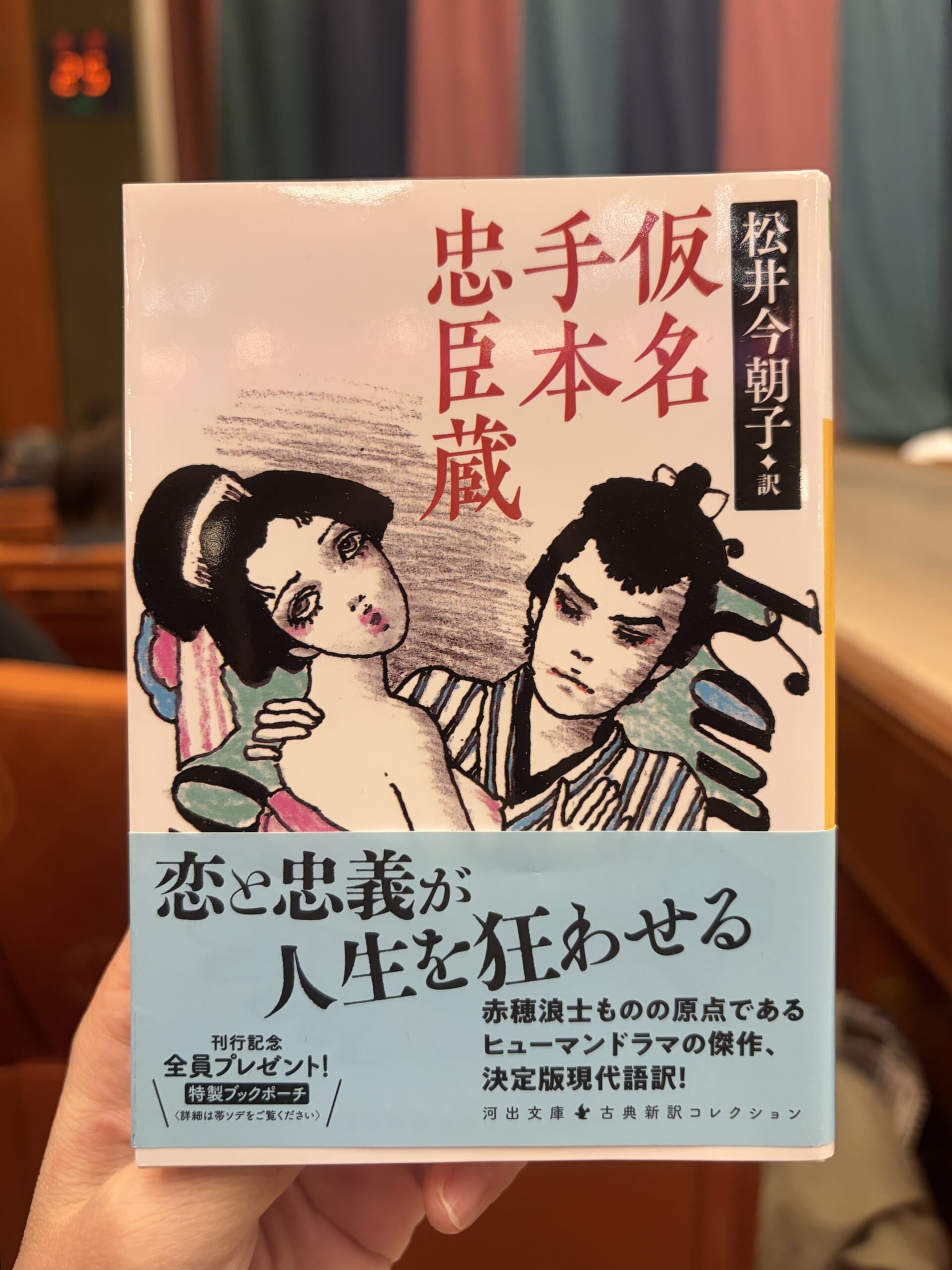
The book I brought along this time was Kesako Matsui’s modern translation of ‘Kanadehon Chūshingura’ (Kawade Bunko). It was also on sale at the shop on 3F of the Kabukiza. I’m still partway through, but after seeing the play, the characters in the book get ‘recast’ as the actors I saw. That’s the fun part.
The paperback I took to the theatre is in Japanese.
View on Rakuten Books (affiliate link)

Later, I bought a ‘Kanadehon Chūshingura’ book cover at the Kabukiza shop, then put it on this paperback. It made me happy. As a souvenir, I picked up plain seppuku monaka this time, without chestnut. I’m looking forward to eating them at home.