When I asked a castle lover, “Which castle is your favourite?”, the answer came without a moment’s hesitation: Hikone Castle. With a day suddenly free, I popped over for a quick visit, only to find that three hours was nowhere near enough. As always, it was the best day.
🗺️ See the route I walked in photos → Castle Hopping: Hikone Castle Route Map (October 2026)
What Kind of Castle Is Hikone Castle?
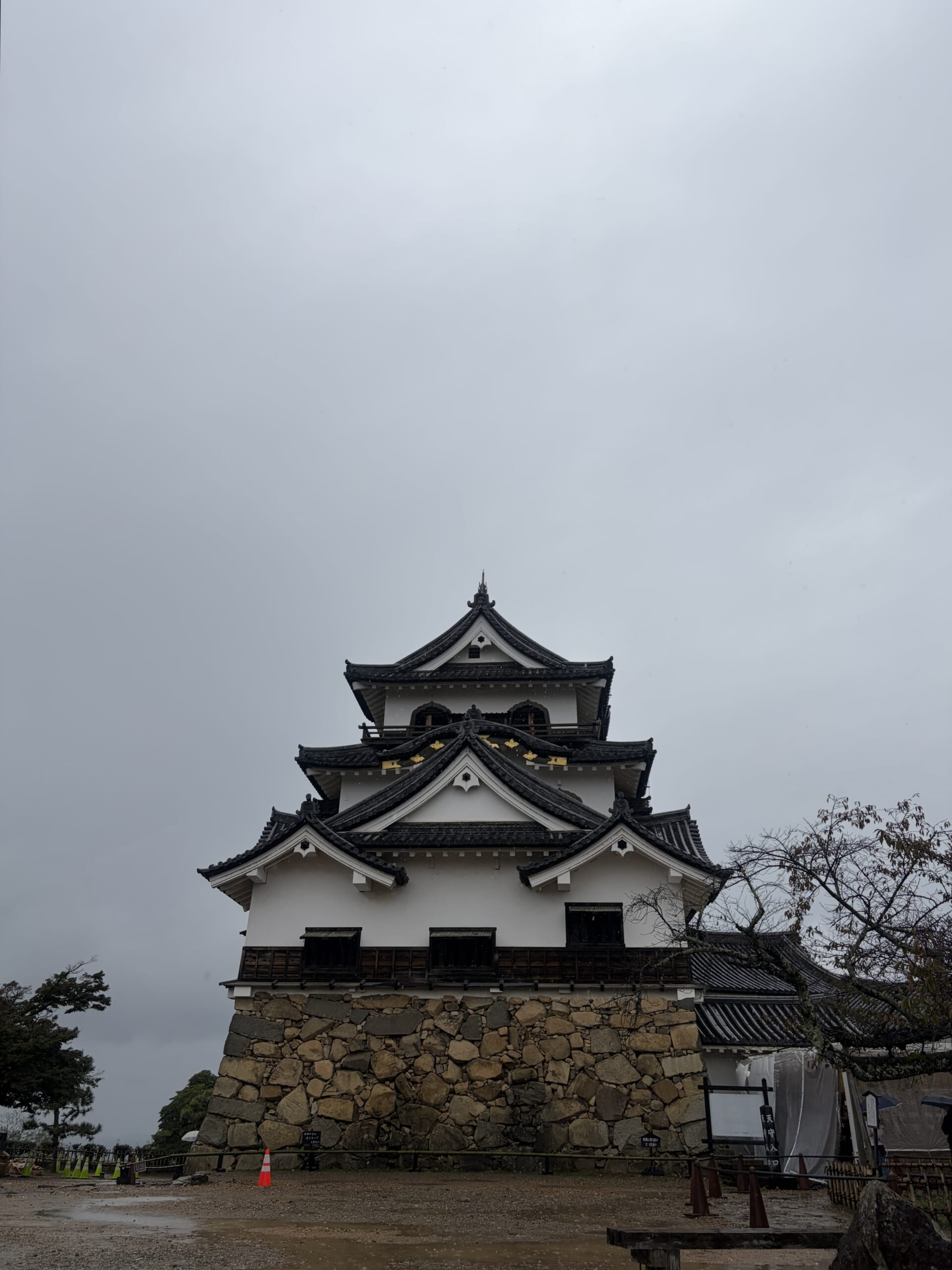
It was the castle of the Ii family, completed at the start of the Edo period after roughly 20 years of construction. Its keep is one of only five keeps in Japan designated as National Treasures. Many turrets designated as Important Cultural Properties survive too. In September 2026, it was also chosen as Japan’s next candidate for World Cultural Heritage nomination.
I prepared by watching a video on U-NEXT. On the day, it rained, with a few spells of downpour ☂️
The Defences on the Way to the Main Bailey
Hooked on the Stone Walls Straight Away
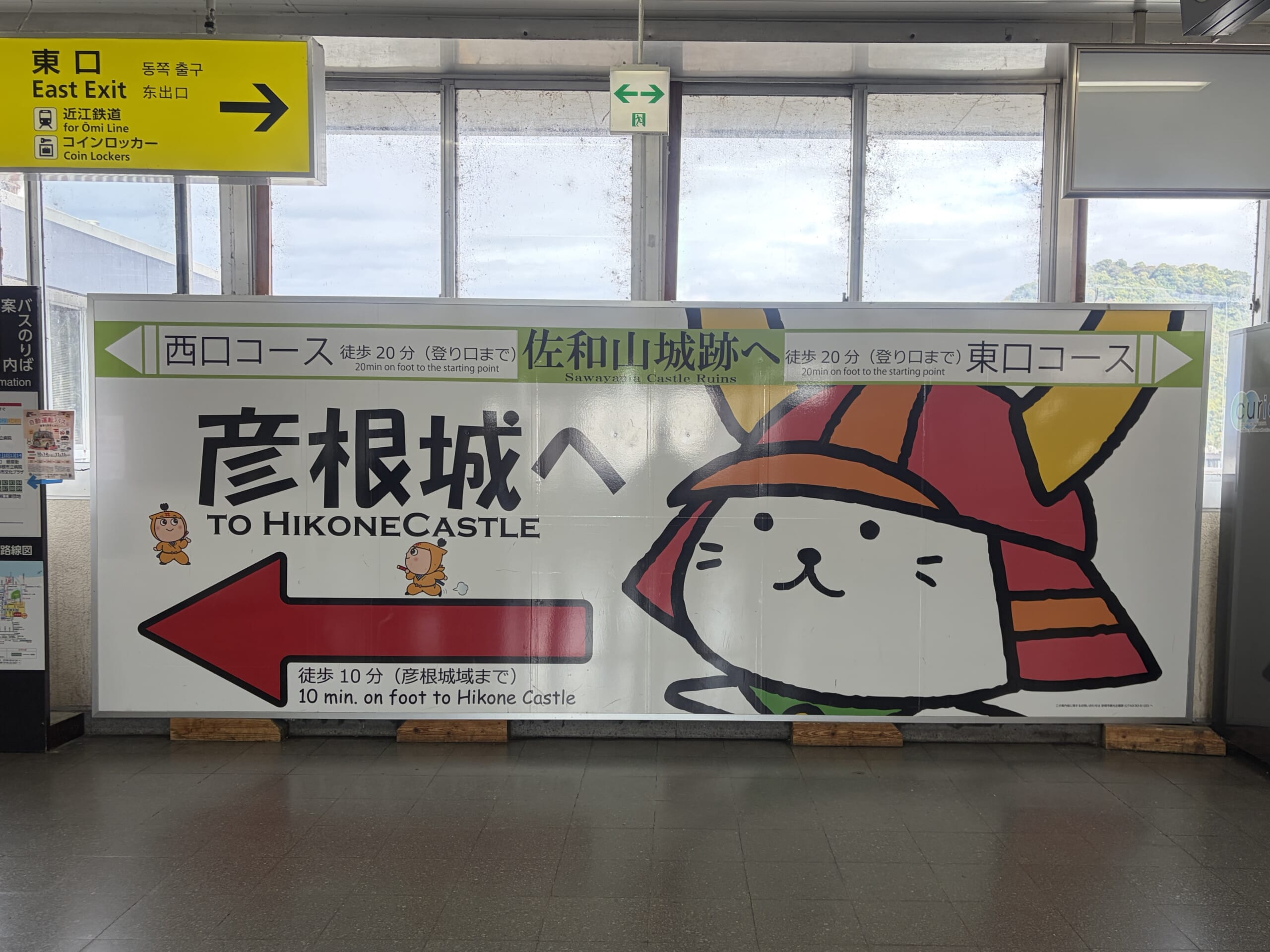
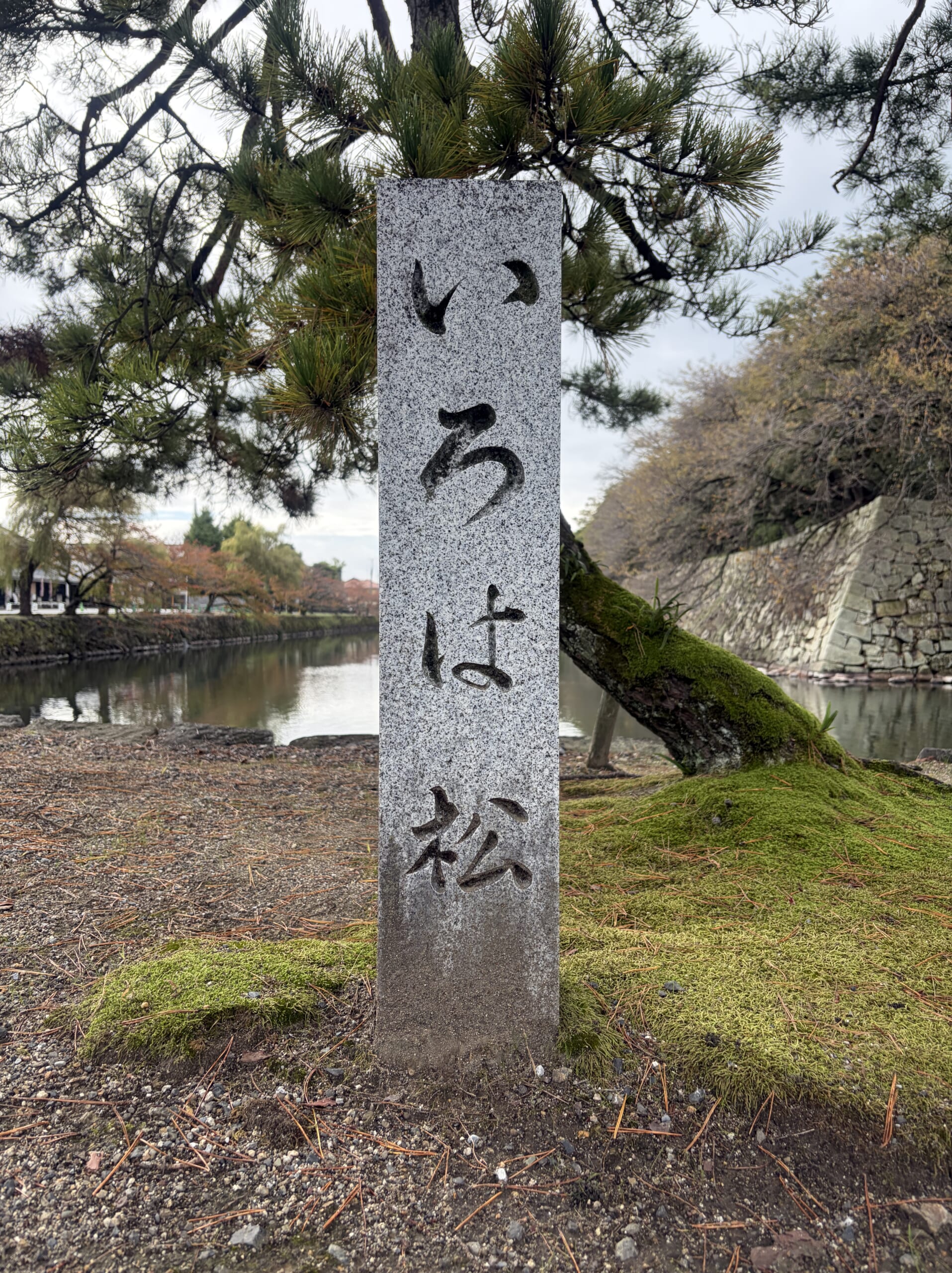
The moment I arrived at Hikone Station, Hikonyan was there to greet me. The road from the station is almost a straight line, so I walked along the moat lined with the Iroha Matsu pines to the castle.
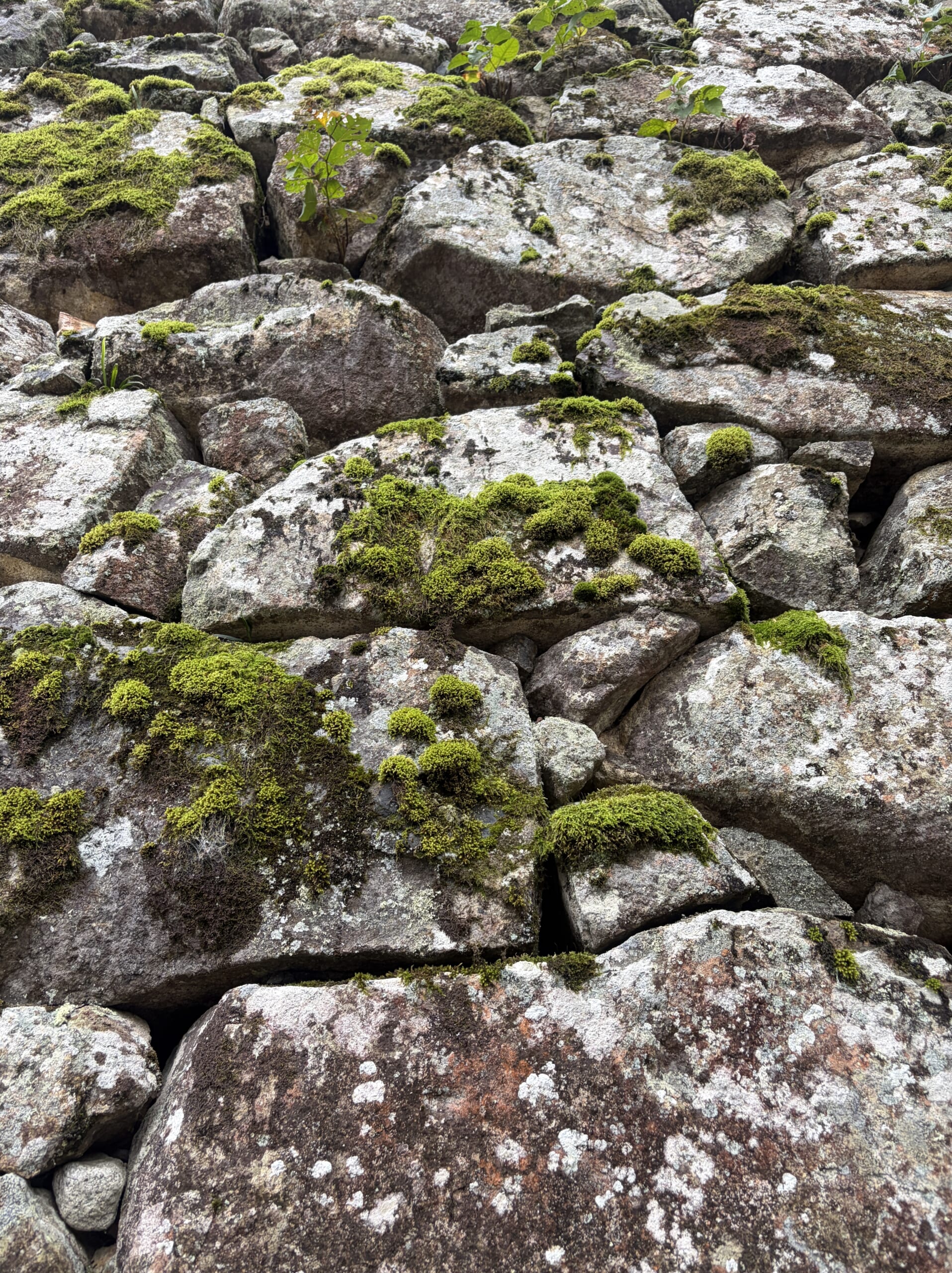
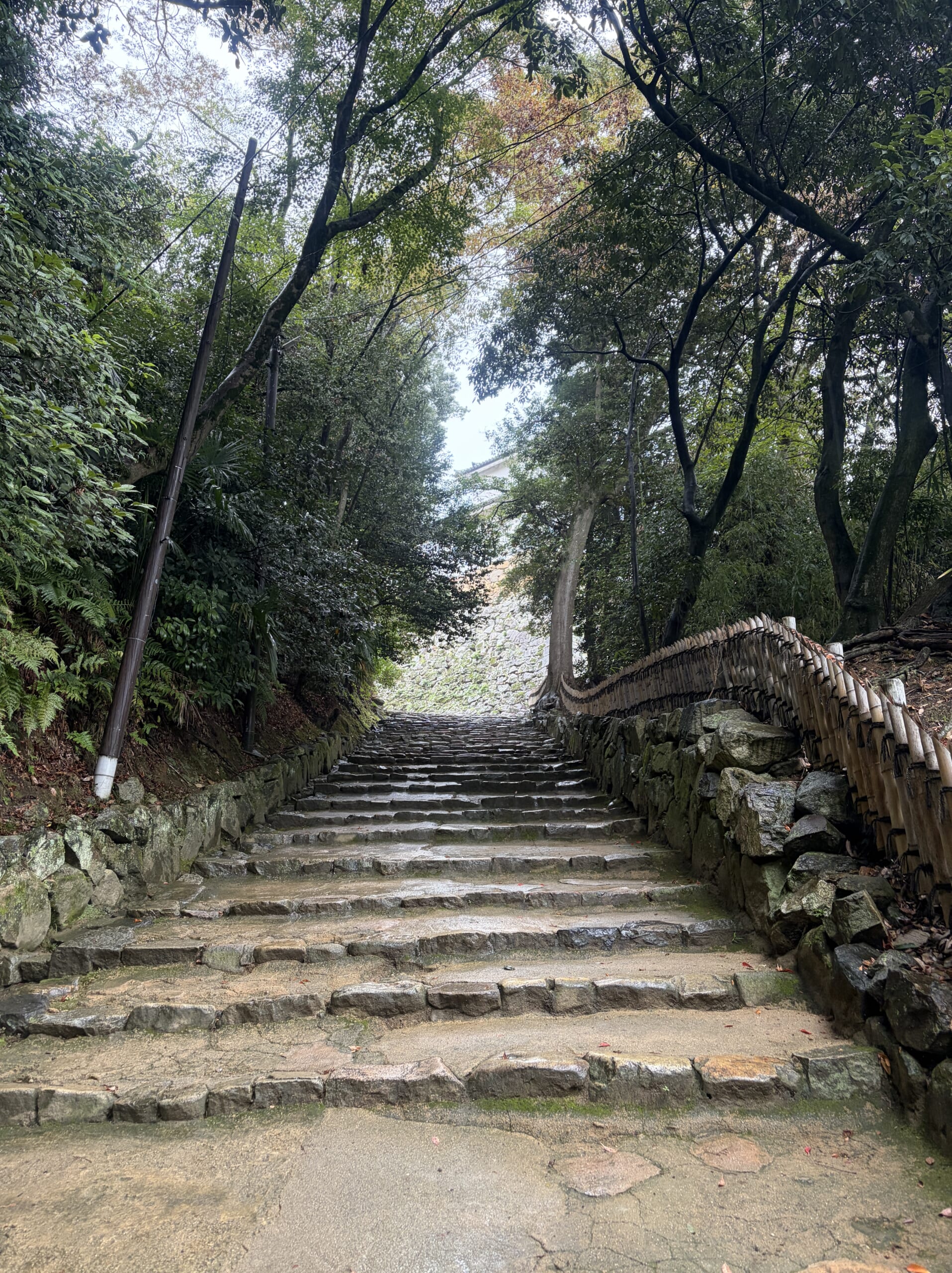
Right after entering through the Omote-mon Gate, I got caught up in the mossy stone walls (ishigaki), barely able to move forward. The wide stone steps went on for ages, slick with rain. “This is tough.” It was only the beginning of a day full of slopes, full of stairs.
Tenbin Yagura (the Balance Turret) with Its Corridor Bridge
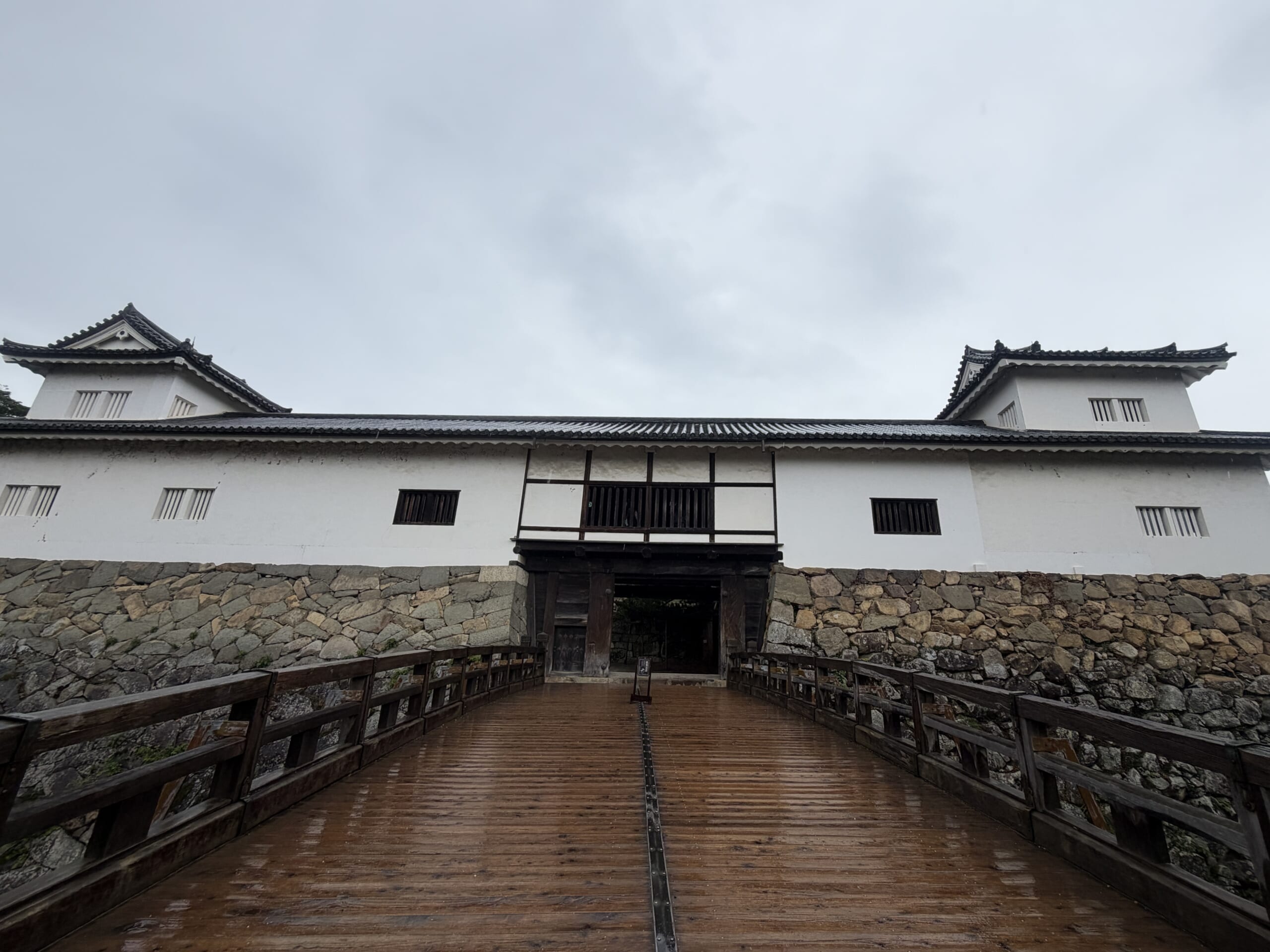
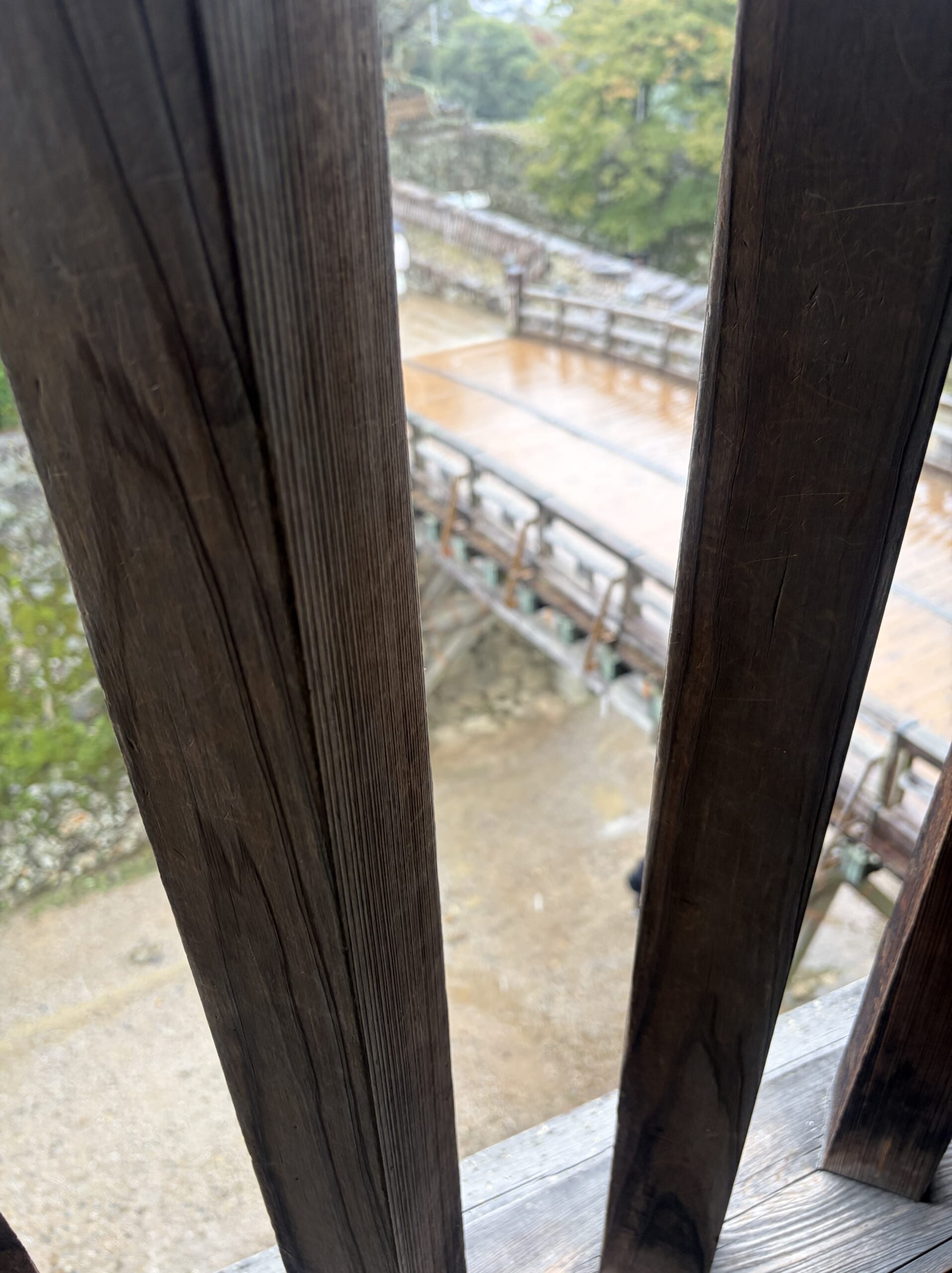
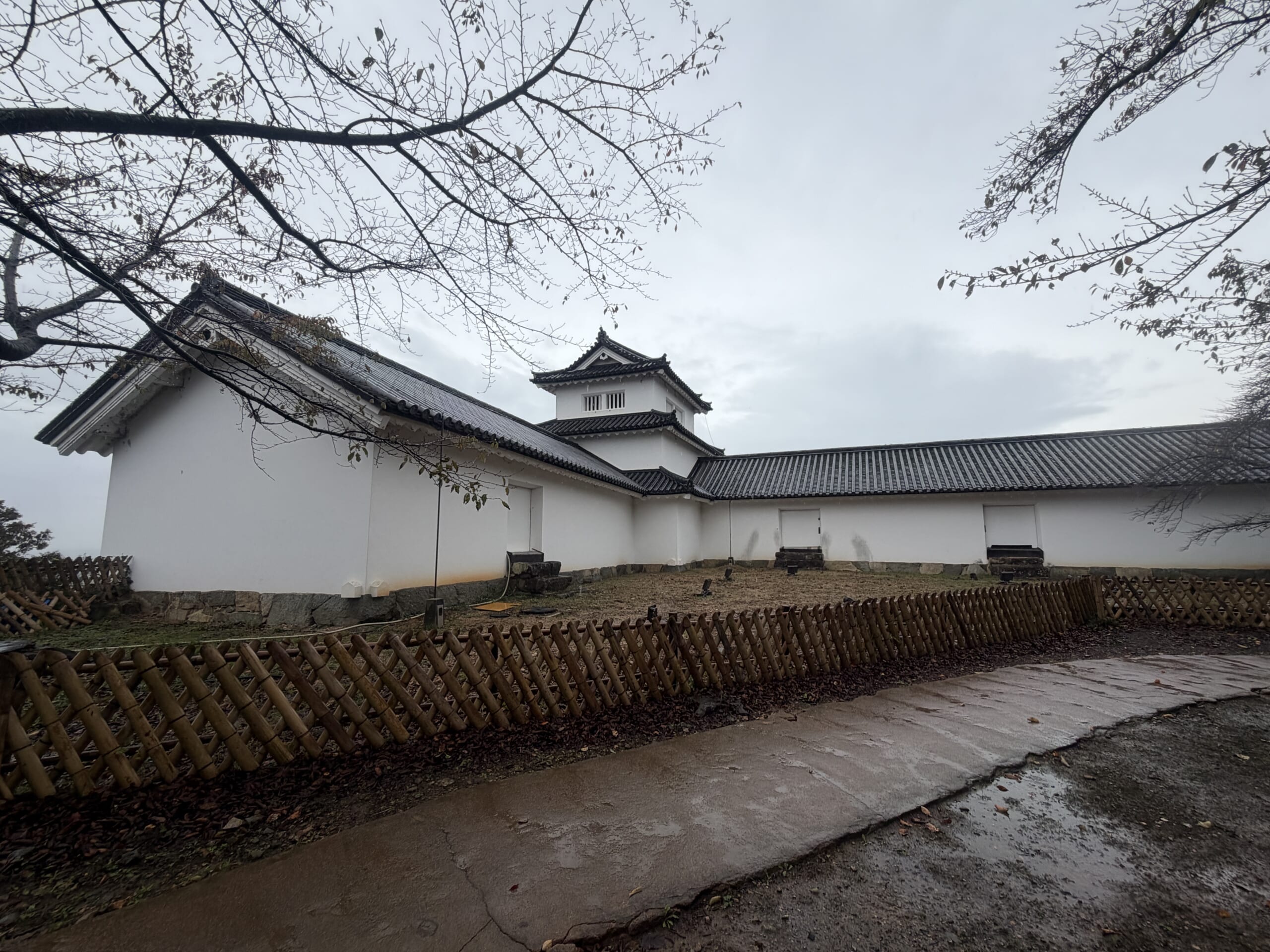
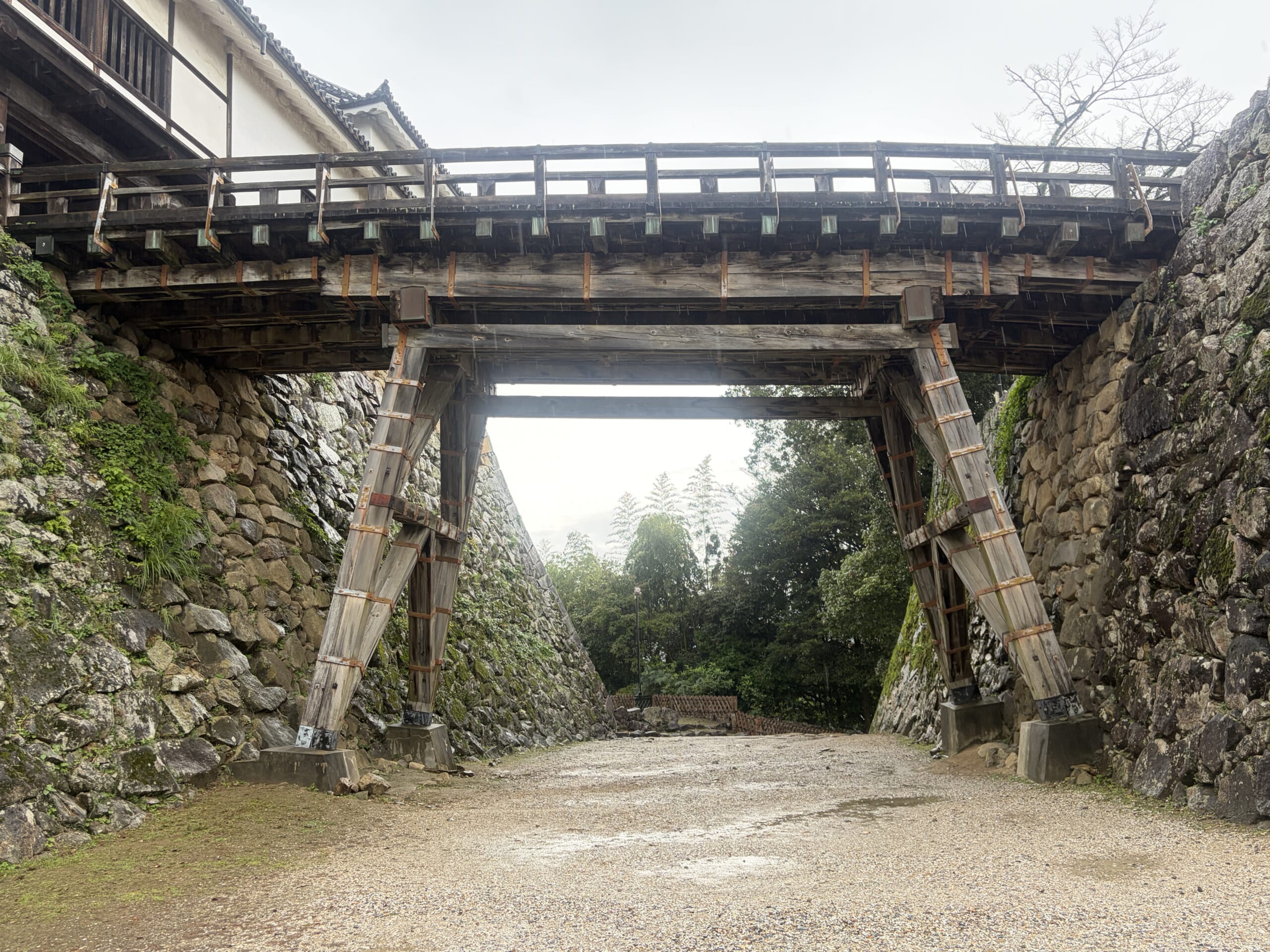
At the top of the steps, Tenbin Yagura sits on the stone wall. With a turret jutting out on each side plus a bridge in the middle, it looks just like a set of balance scales. Apparently this corridor bridge (roka-bashi) was meant to be brought down in an emergency. Looking down through the wooden lattice from inside the turret, anyone crossing the bridge is in plain sight. Easy targets, I’m telling you~.
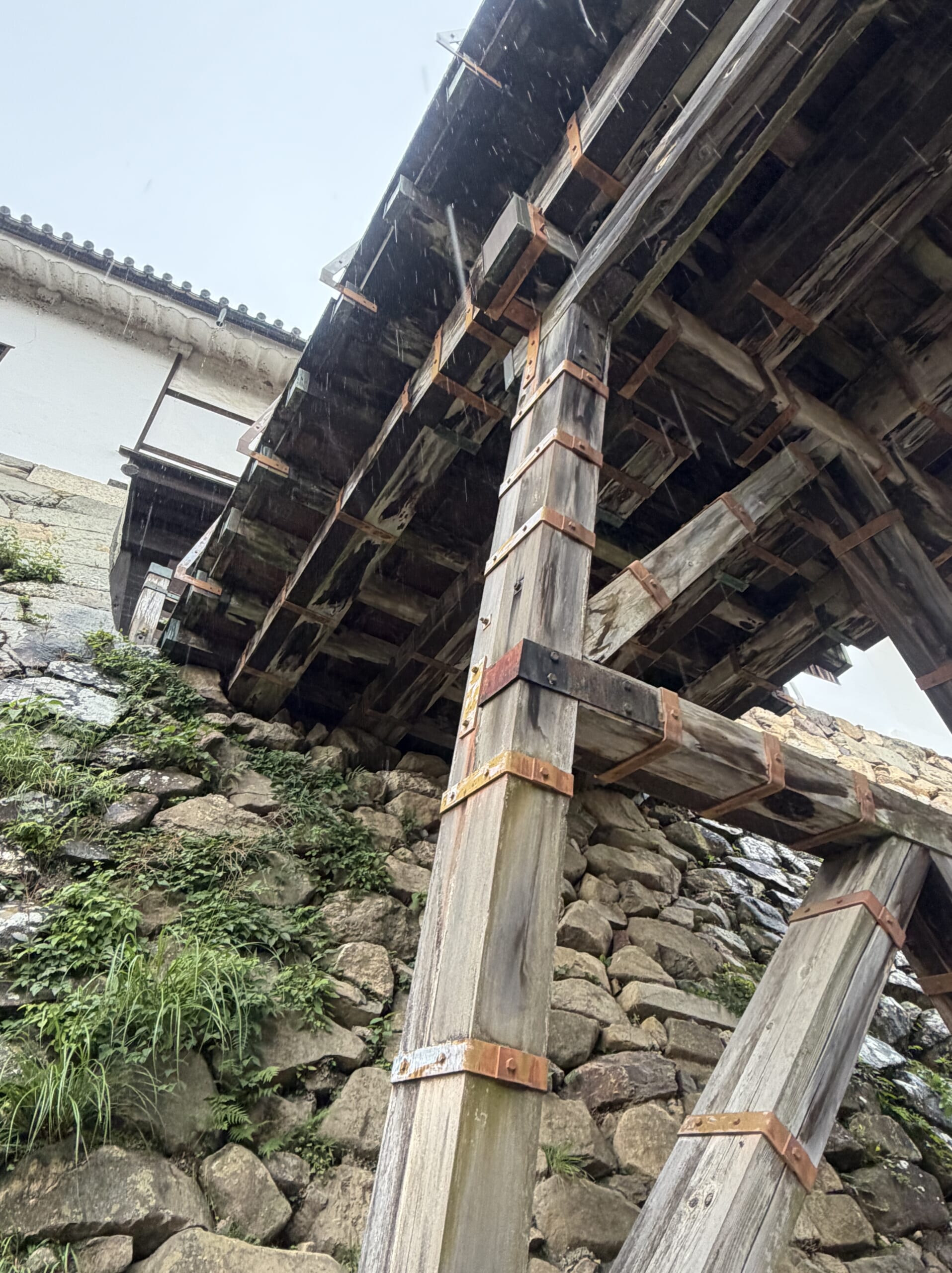
I already knew from the preview video that the roofs face different directions on each side, with the stone walls built in different styles too. But seeing the real thing, “cool!” just doesn’t cover how deep it all is. I need to study properly. Still, it’s so cool… I promise I won’t climb it, nor damage it in any way. May I please cling to it for just a moment?!
Taikomon Yagura (the Drum Gate Turret) with Giant Bedrock
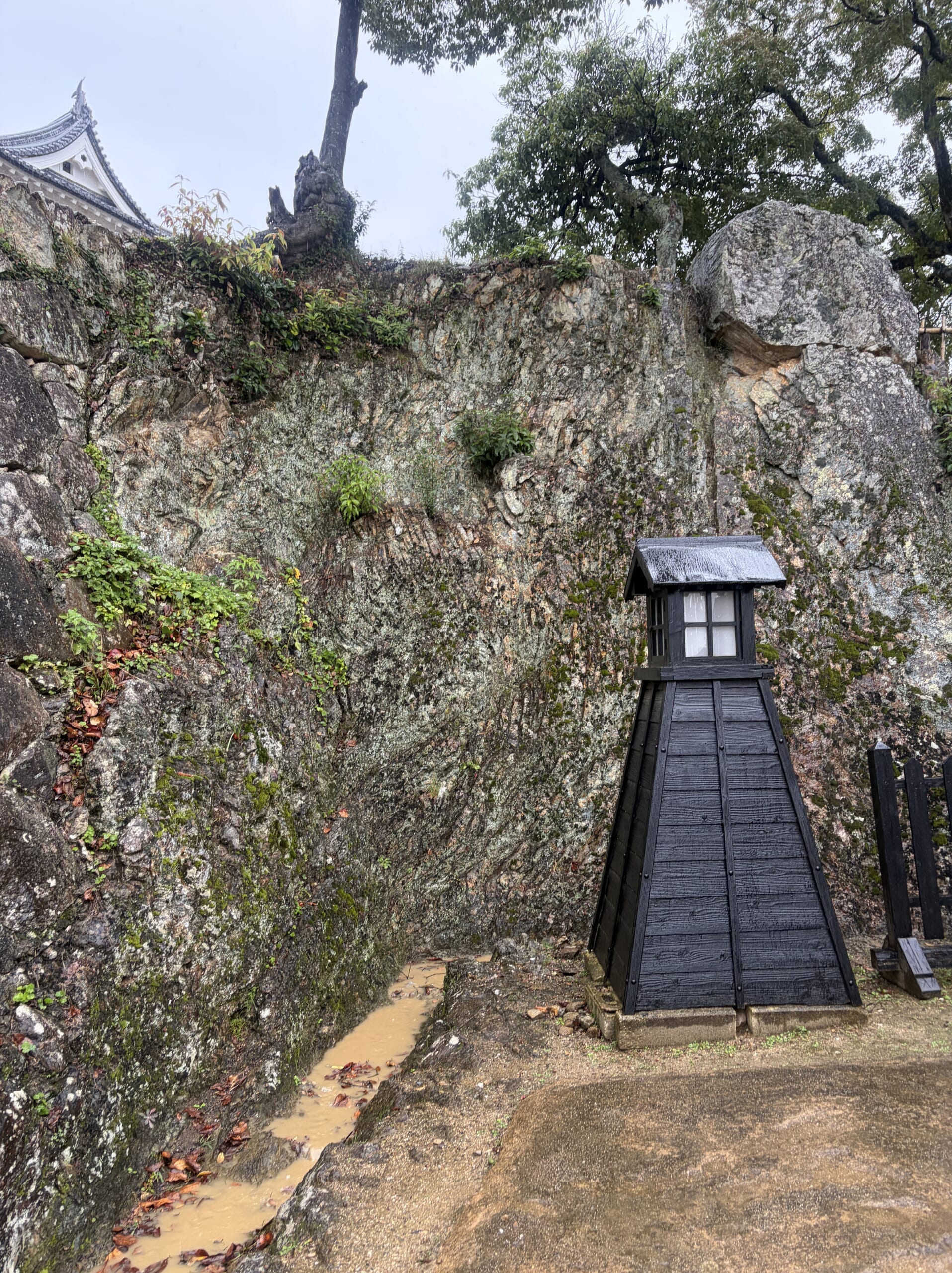
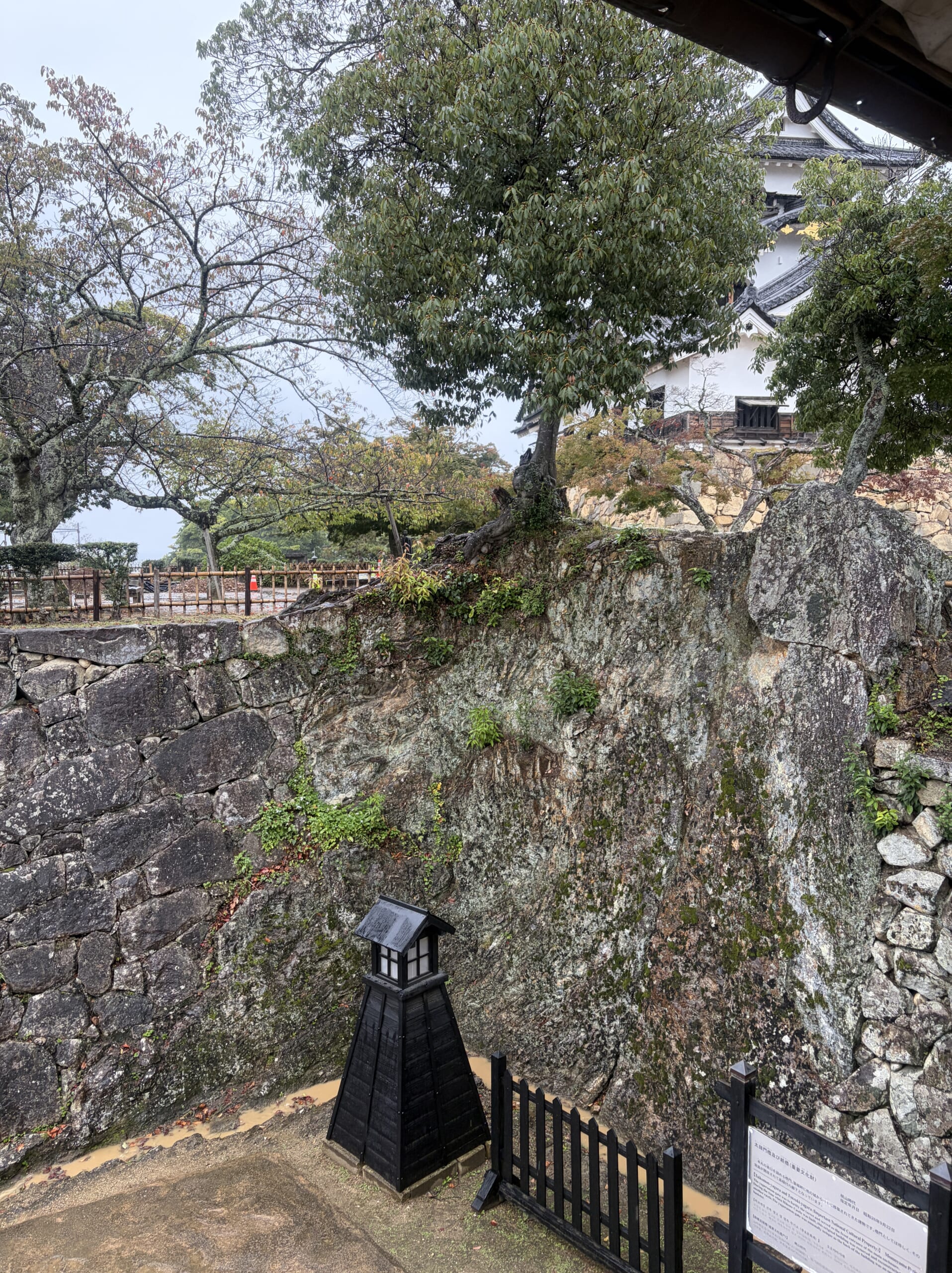
Beside Taikomon Yagura, which guards the entrance to the main bailey, a huge mass of bedrock is exposed instead of a stone wall. Oh, so there are spots like this too. The castle simply takes the shape of the mountain into its design. Speaking of bedrock, I’d love to visit Bitchu Matsuyama Castle again!
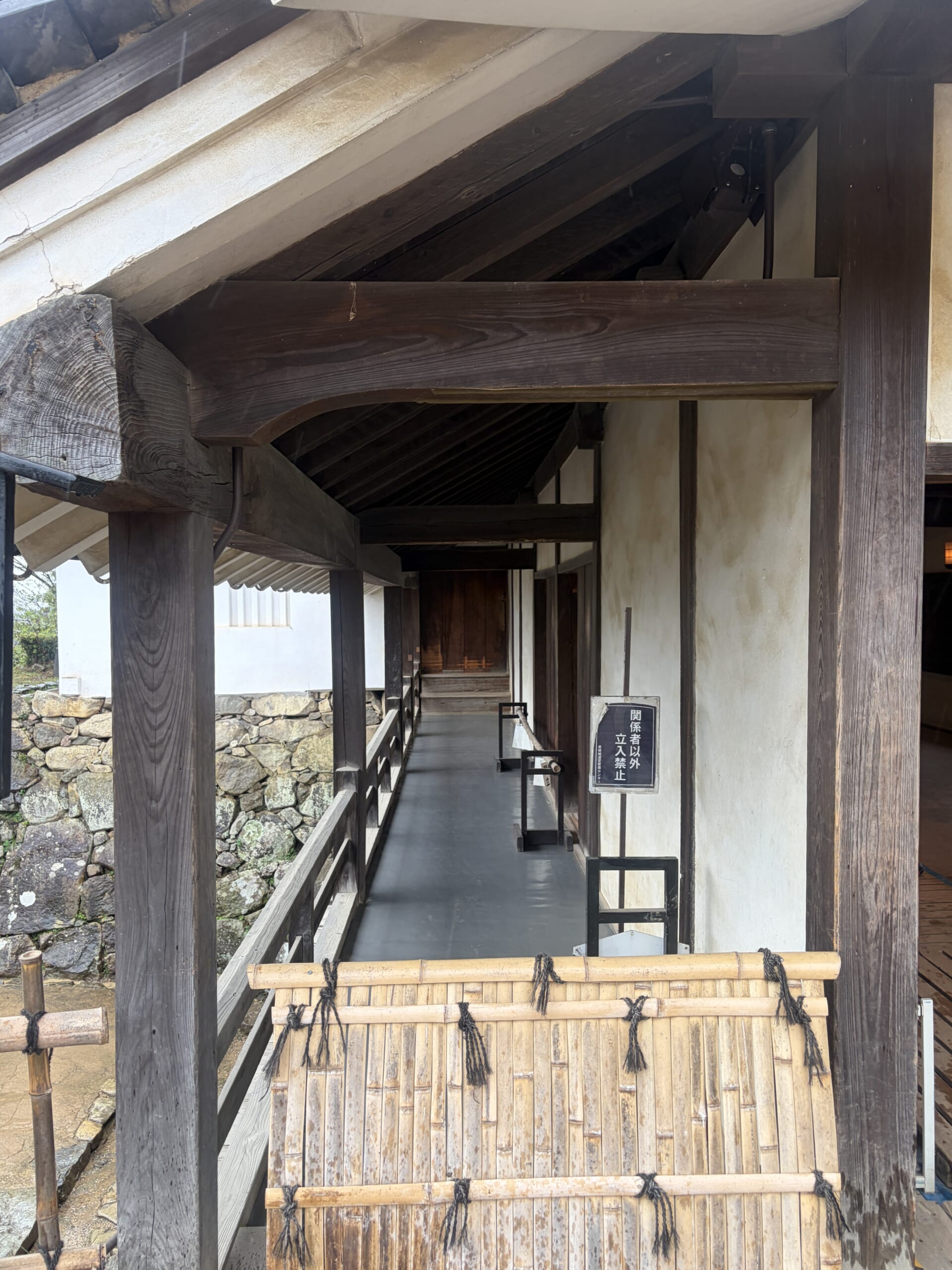
The back of Taikomon Yagura is a long, narrow corridor like a veranda (engawa). Such an unusual design. Apparently a turret with an open corridor at the back is very rare.
The National Treasure Keep: Fascinating Inside as Well as Out
Up Like a Ladder, Down Facing Backwards
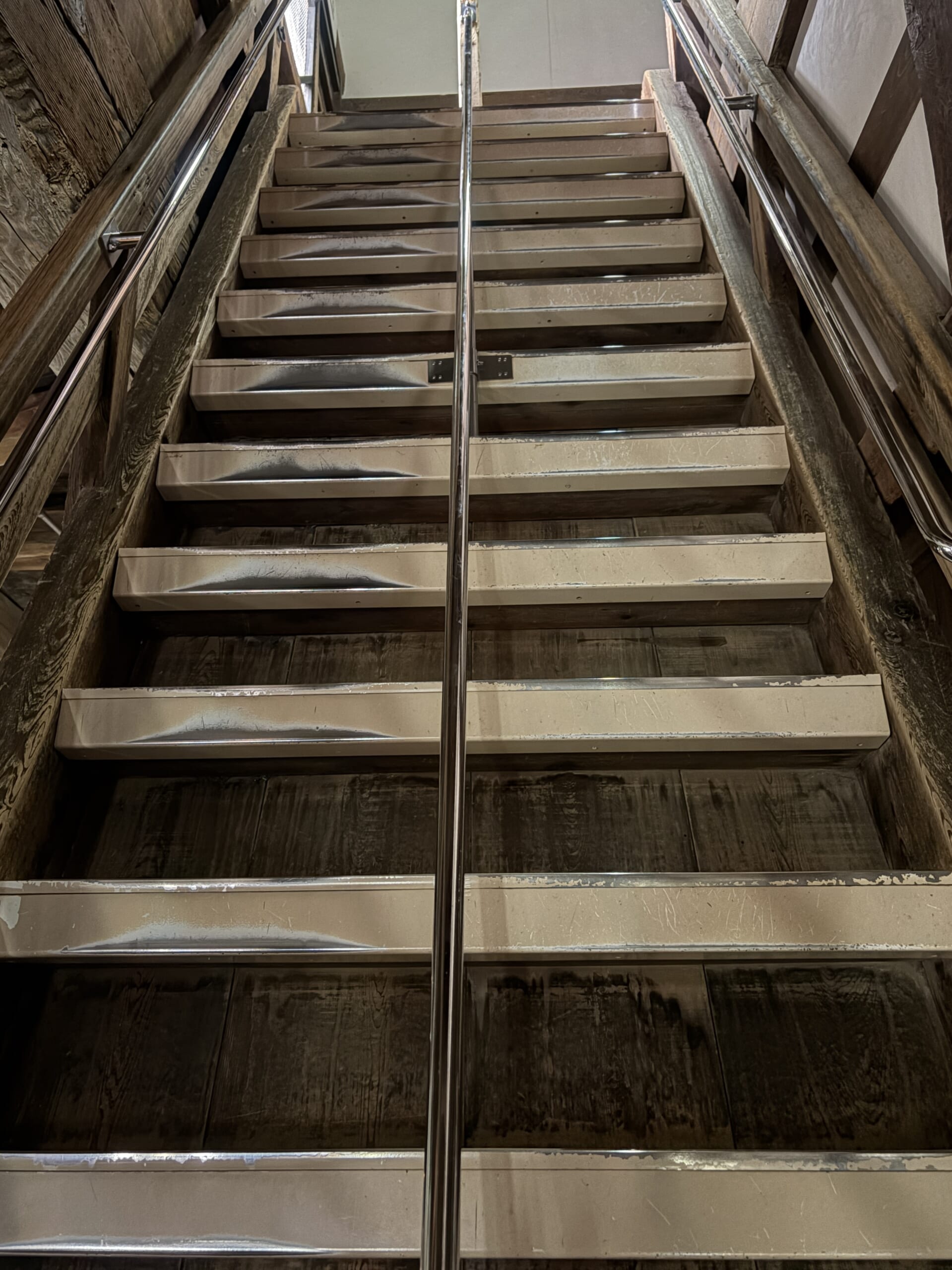
I reached the keep! The stairs inside are steep, but going up you can climb them like a ladder, so it might even be easier. Coming down, I went backwards, of course. For steep castle stairs, I think going down backwards is the best way.
A Hidden Room Inside the Gable
One fascinating feature was a hidden room built into the attic space of a hafu (the triangular gable of the roof). Apparently it has two kakushi-zama (hidden loopholes, invisible from outside, for firing guns, arrows).
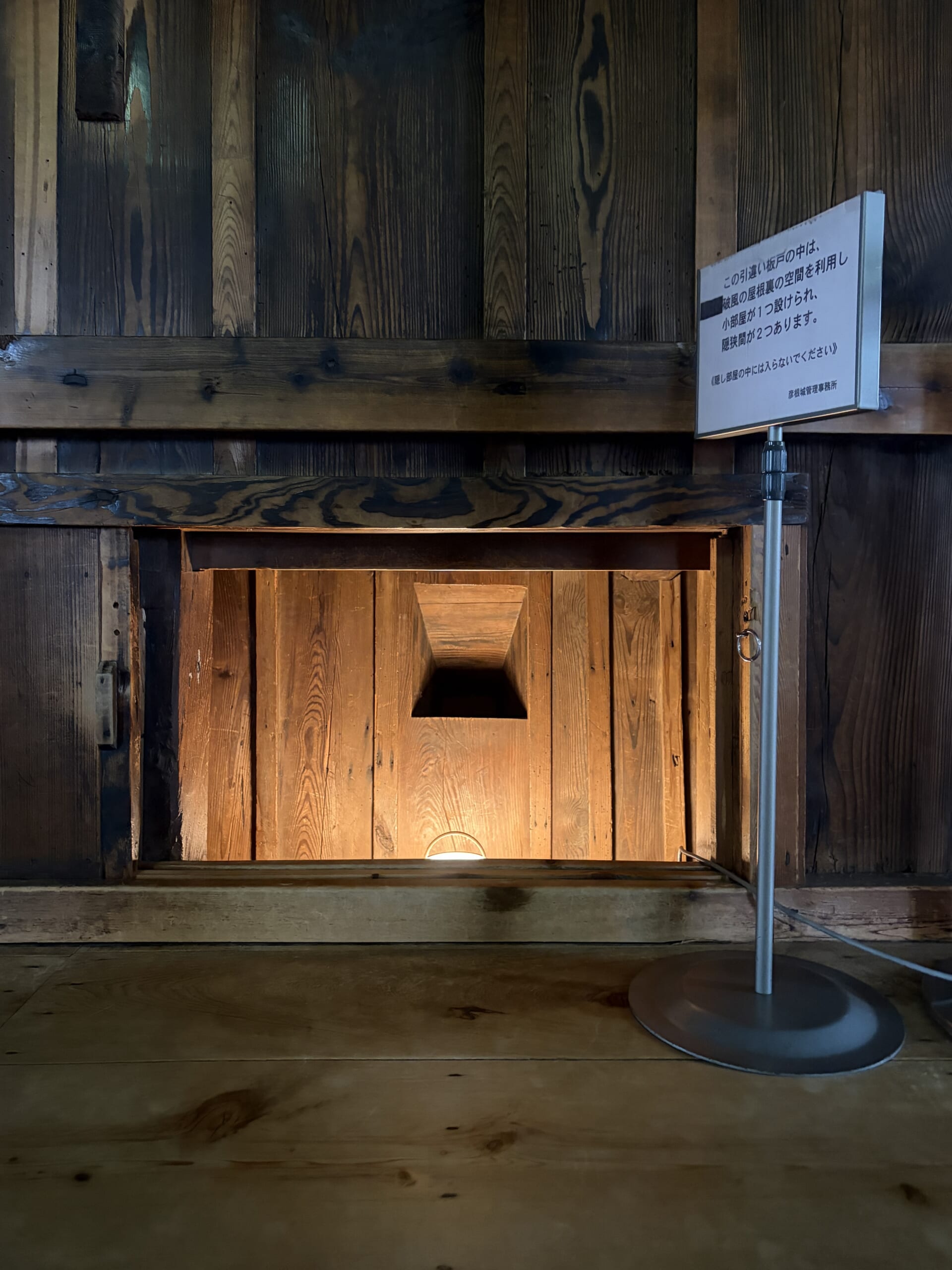
From outside, the gables look small, but up close they’re quite big, with a roomy space inside. You know how a traffic light up on its pole doesn’t seem that large, yet one sitting on the ground looks surprisingly huge? It’s that feeling. Still, cramming five people in there would be tight~.
Once I learnt the gables weren’t just decoration, looking at them from outside made me think, “There’s a space for people in there,” which somehow made them feel precious. I wonder why (haha). It’s like spotting a bird’s nest in a tree you’ve only ever seen from far away. That’s the closest feeling 🦆
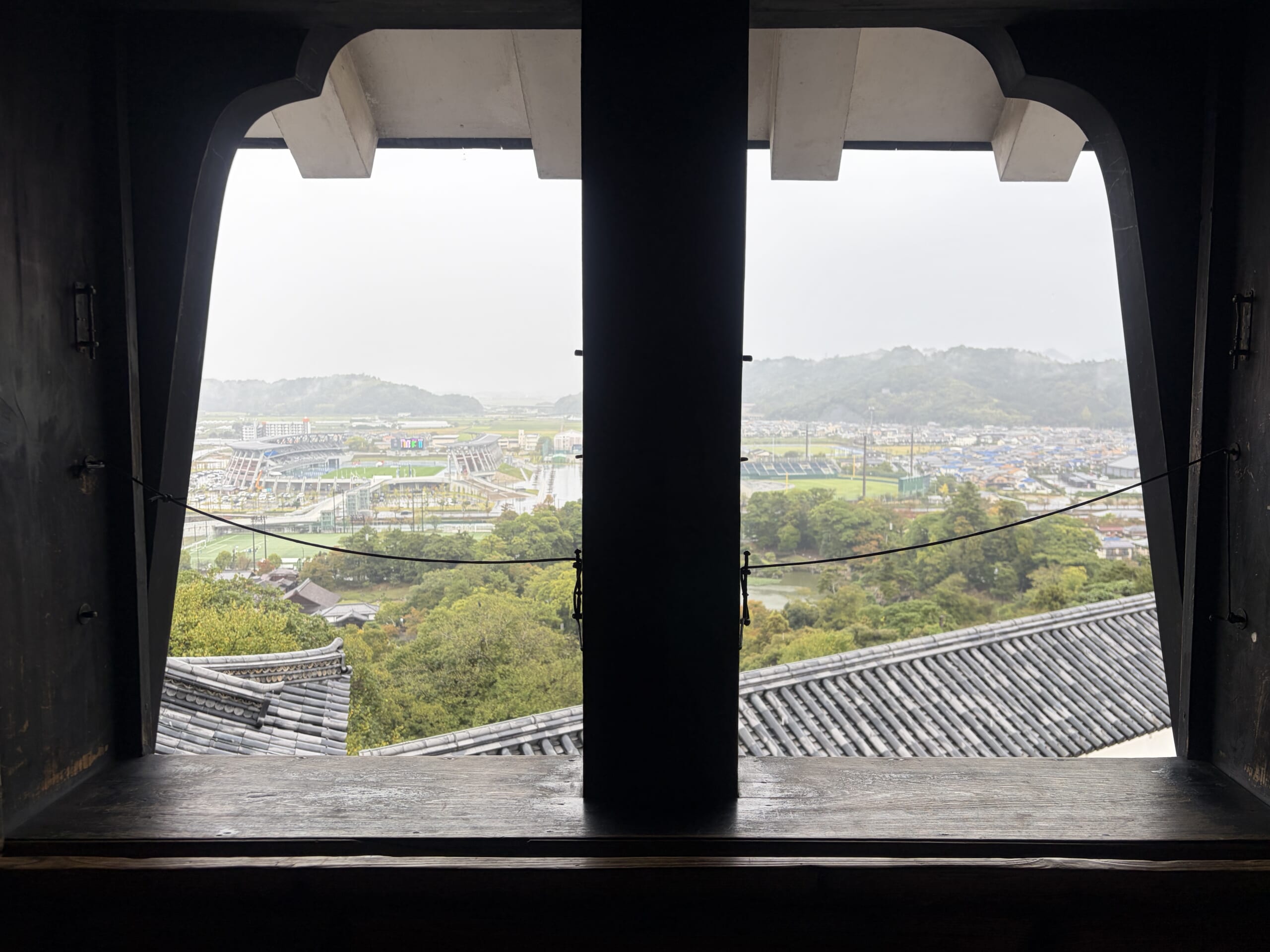
The view from the windows: overcast skies, Lake Biwa nowhere to be seen~. I wasn’t expecting it, so that’s fine (haha).
A Keep That Changes With Every Angle
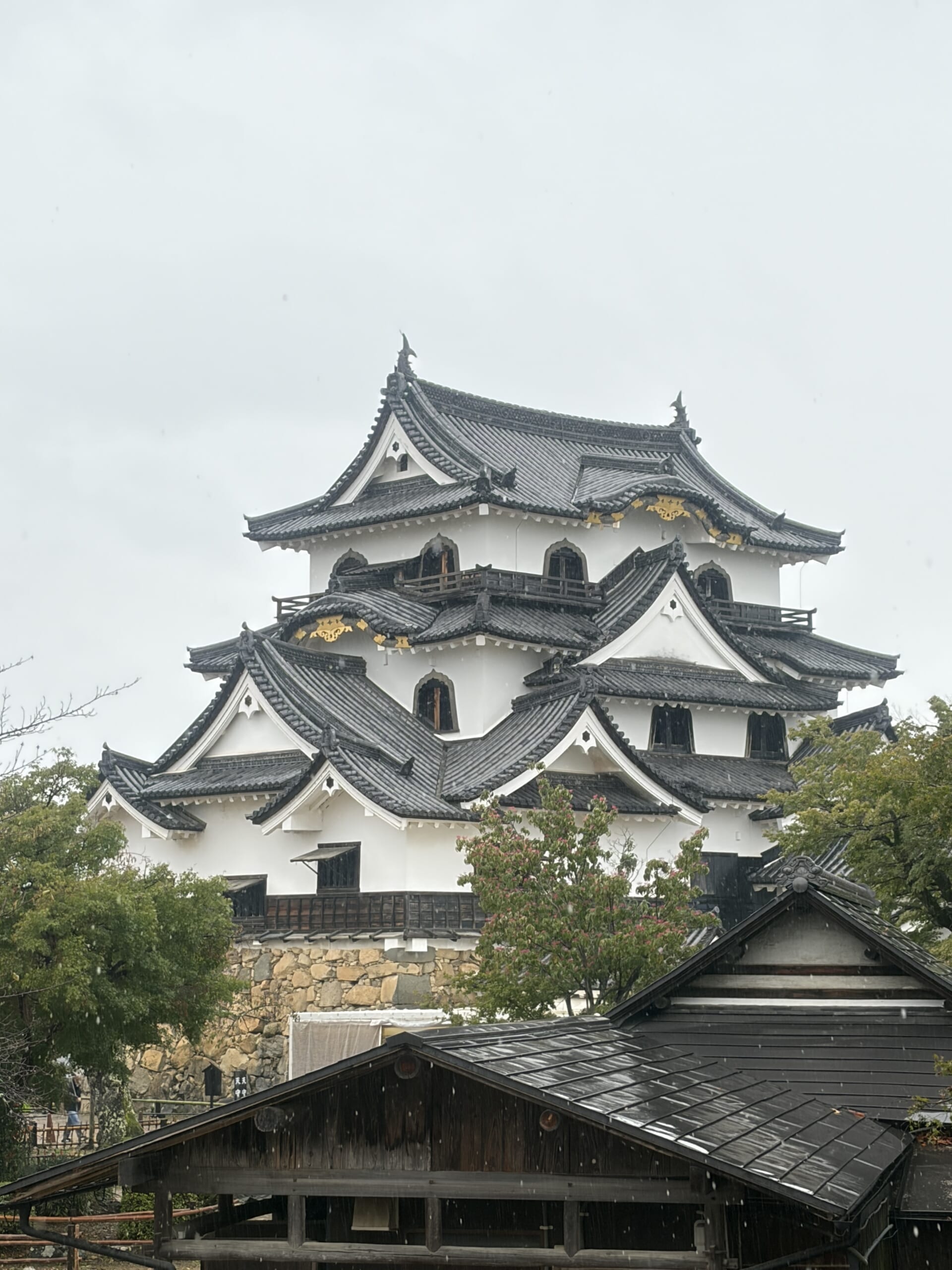
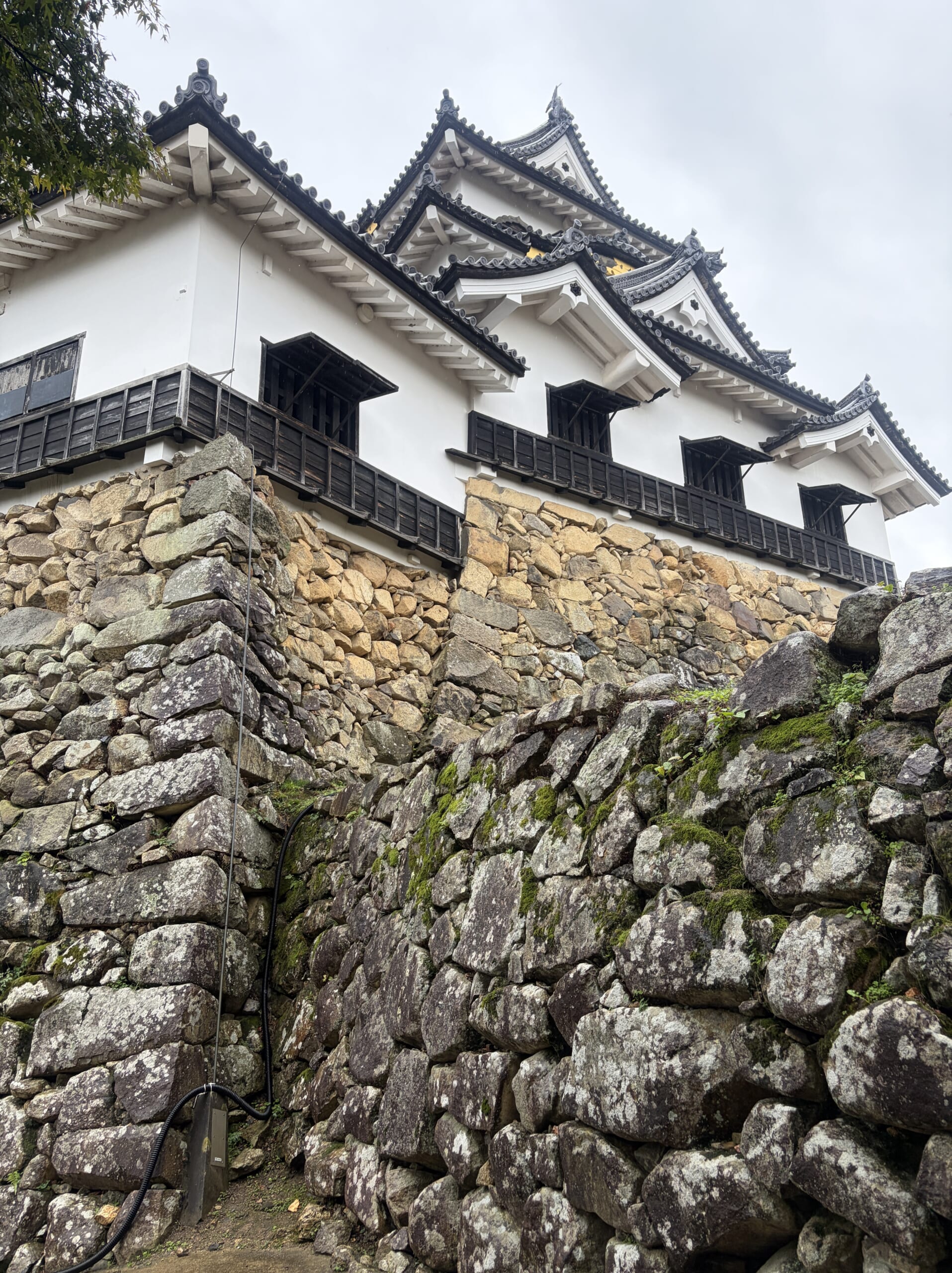
At the edge of the main bailey is the Tsukimi-dai. I assumed it was a moon-viewing terrace, but no: it was the site of a watchtower. From here, the keep looks completely different from the front, with the gables overlapping differently depending on where you stand.
My favourite was the keep seen from below the stone walls on the Kuromon (Black Gate) side. A luxurious angle where my beloved stone walls share the frame with the keep.
Down to the Black Gate, Back Up Again: Feeling “Impregnable” First-Hand
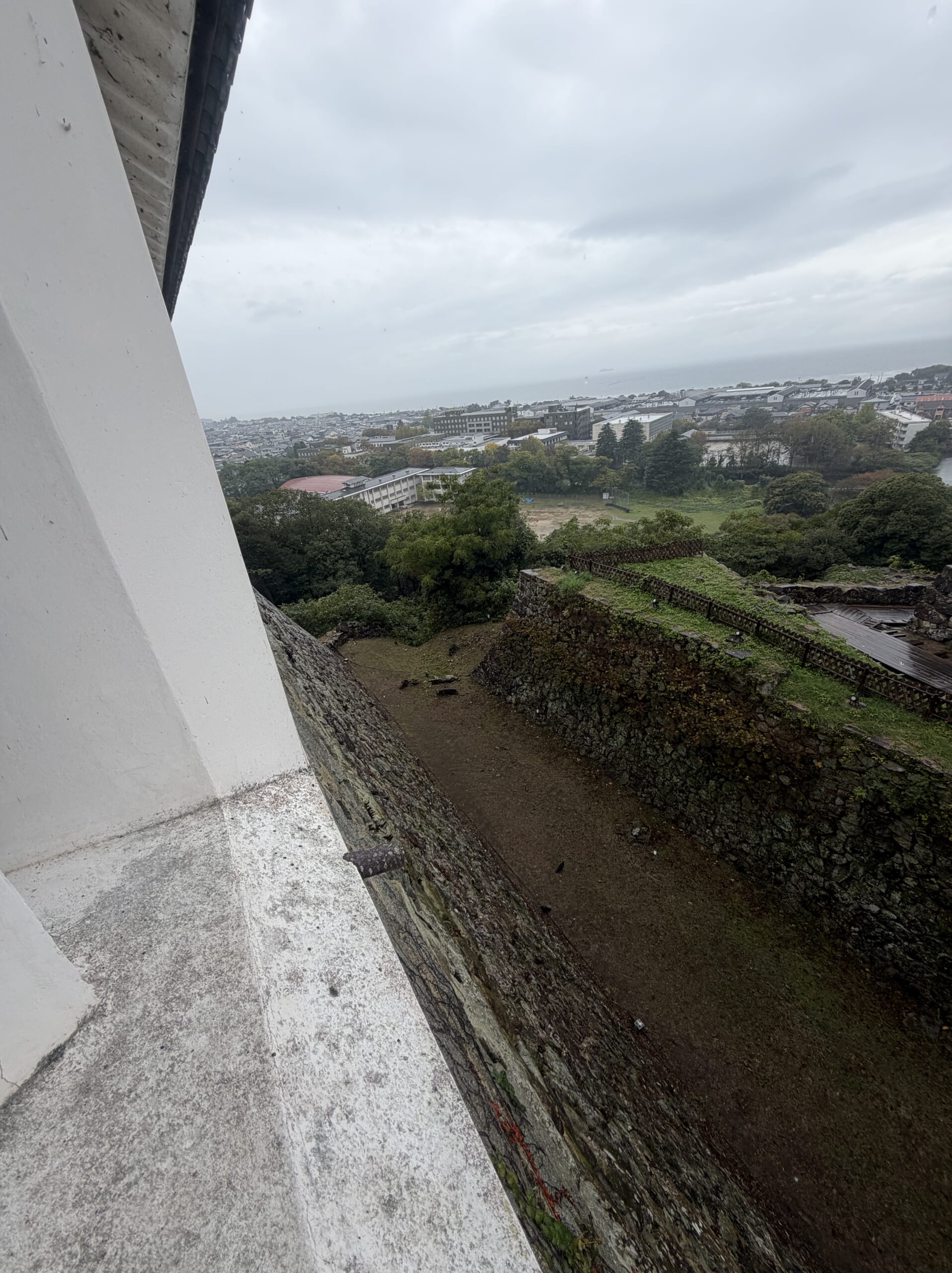
I climbed the Nishi-no-maru Sanju Yagura (the three-storey turret in the West Bailey) too. The stairs here were steep as well (haha). The deep dry moat (horikiri) I looked down on from the turret turned out, when I checked later, to be a different one from the Great Dry Moat below Tenbin Yagura. Someday I’d like to go down to see it. Homework for next time. The nearby Yamazaki mountain path is closed too, since the West Bailey corridor bridge has grown old. I wonder how long the works will go on~~~.
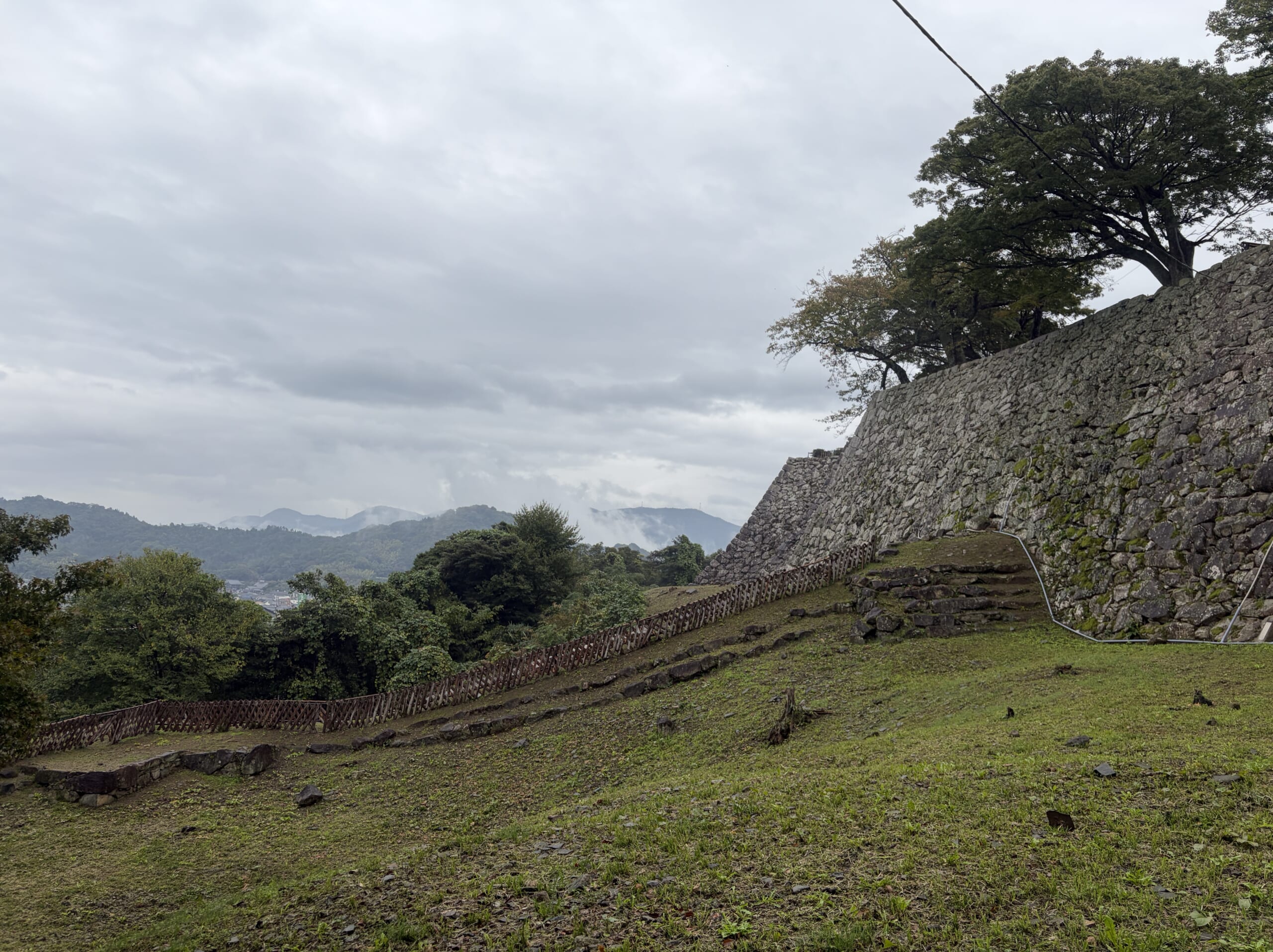
After the turret, I crossed the West Bailey towards the Black Gate. I love this view of intricate stone walls stretching on. But the downhill slope in the rain was slippery, which was scary. I saw people slipping on the slope too. I hope nobody got hurt 🥺
Once I reached the site of the Black Gate, I left the gardens for next time, turning straight back up the way I’d come.
This was the hard part. The slope is steep yet awkward to climb, leaving me out of breath. The path twists this way, that way, so you can’t see what lies beyond each corner. Overwhelmed by the maze of baileys (kuruwa) with towering stone walls, I was amazed at how utterly impregnable Hikone Castle is. Climbing up, rather than only going down, completely changed how it looked.
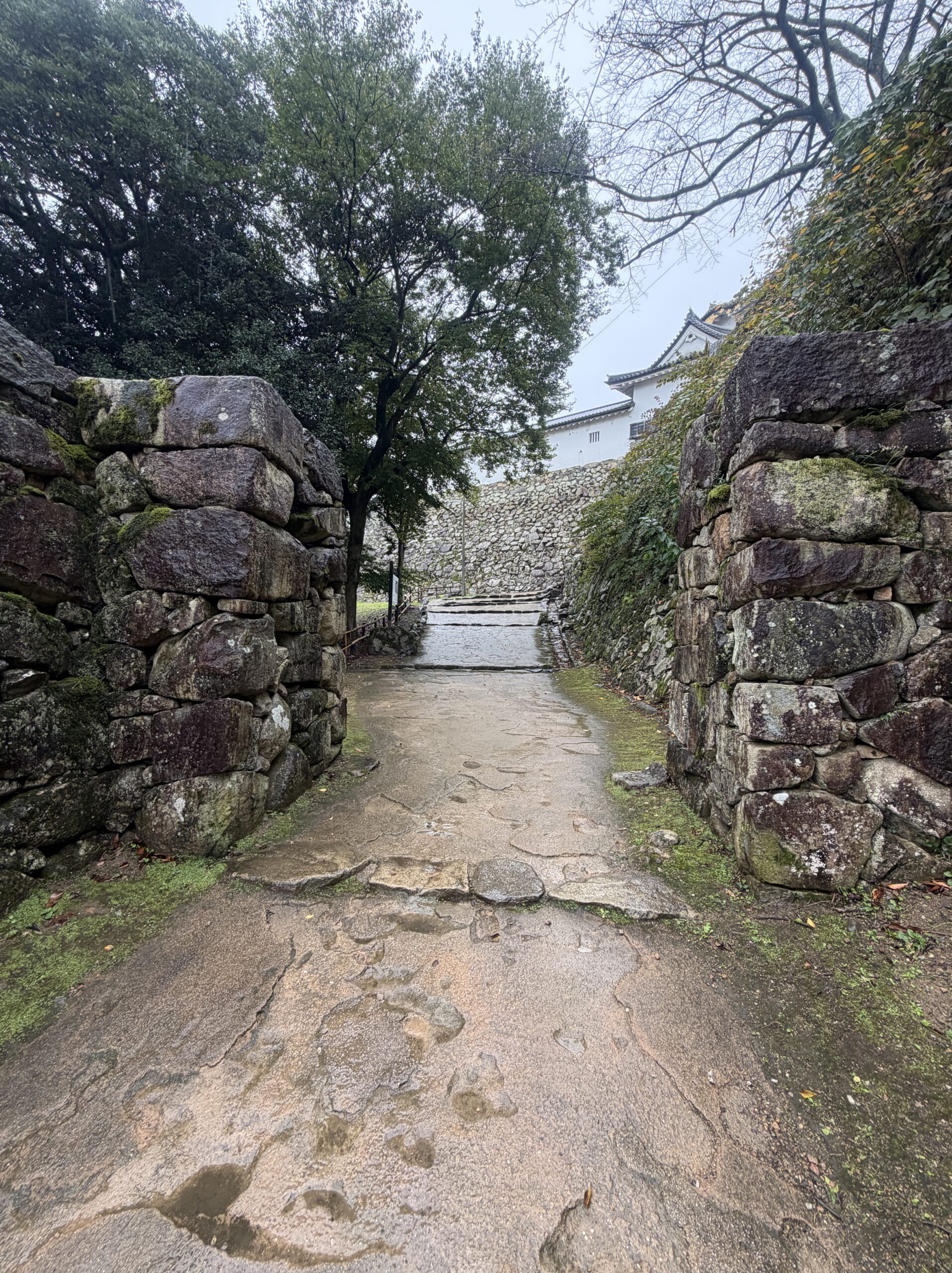
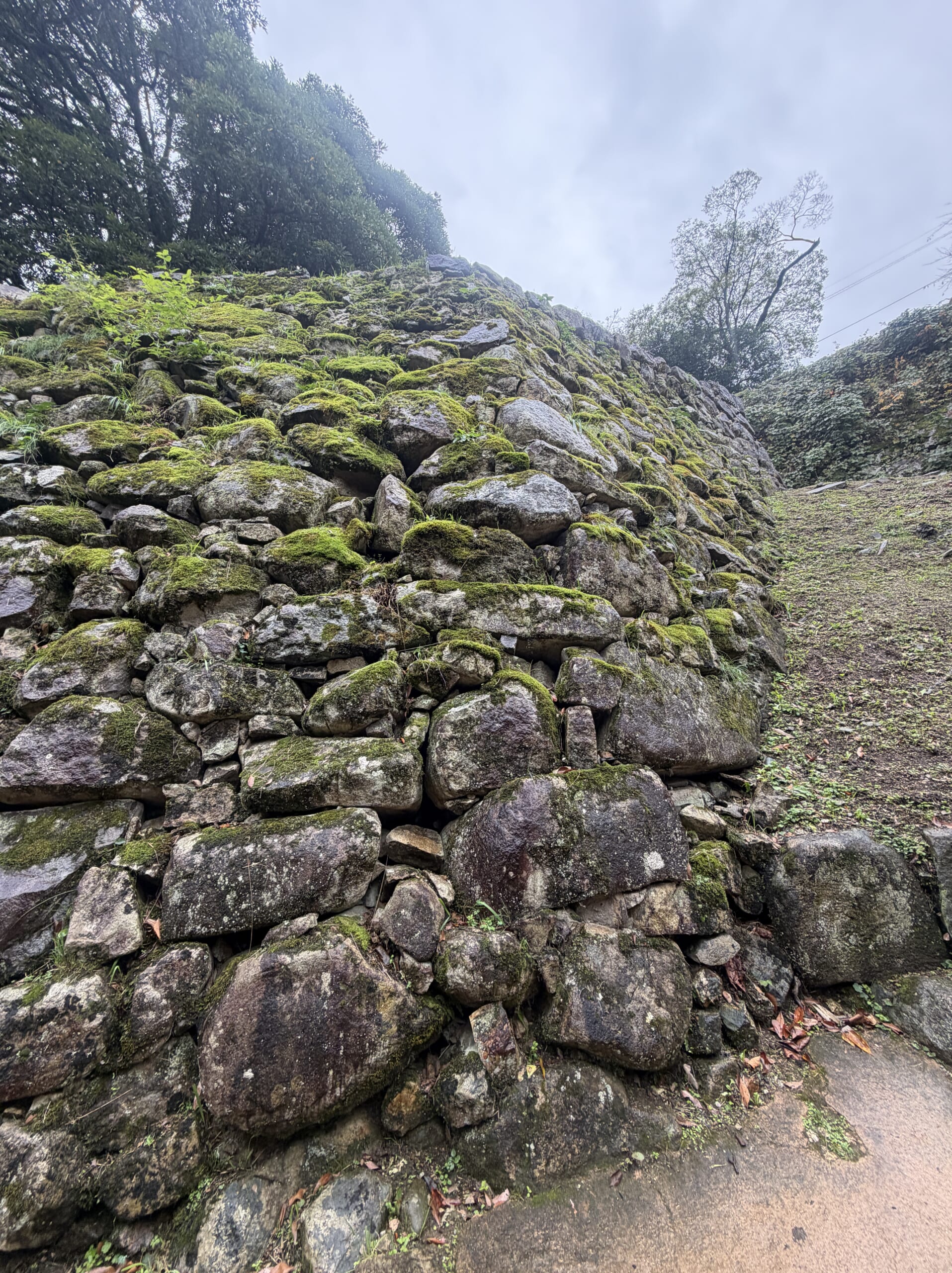
If there had been fewer trees back then, attackers would have been in plain view, with nowhere to hide… That’s what I thought, but when I looked it up, Hikone Castle turned out to be the opposite: Ii Naotaka had bamboo, as well as trees, brought in from provinces across the country to plant here. The Iroha Matsu pines I’d walked past first thing are among them. There’s also an explanation that the trees hid the layout of the castle. Either way, the attackers couldn’t see what was coming (haha).
Finally, down to the Great Dry Moat (Ohorikiri) below Tenbin Yagura. The corridor bridge I’d looked down on earlier, I now looked up at from the bottom of the moat. Tall stone walls on both sides. These defences are irresistible~.
Hikonyan to Finish
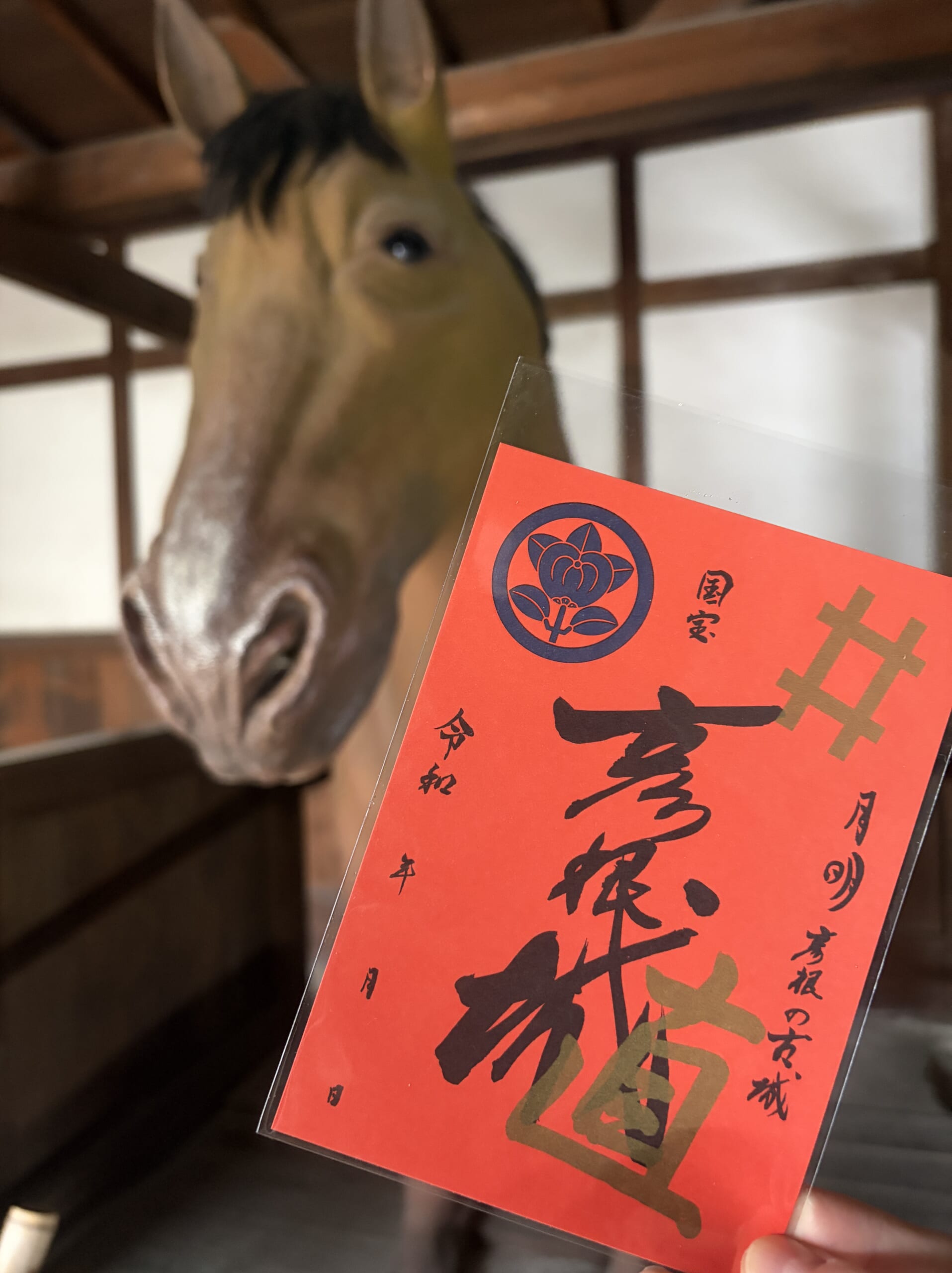
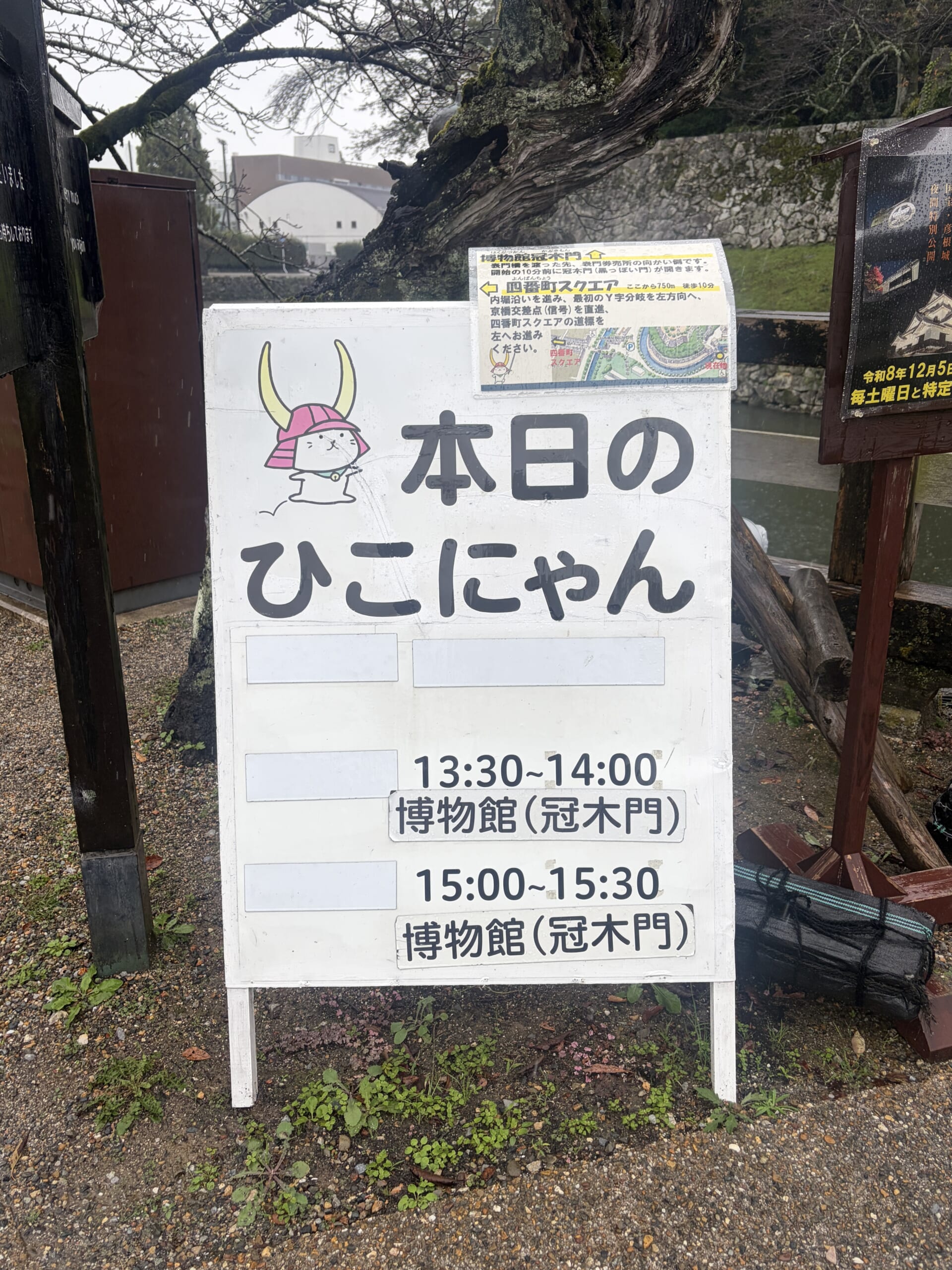
I took a photo of the goshuin (castle seal) I’d bought on entry, with the horse model in the Umaya (stables, an Important Cultural Property) in the background. Then I remembered the “Today’s Hikonyan” sign I’d spotted on the way in. I went back to the Omote-mon Gate to check, only to find I could still catch the 13:30 to 14:00 appearance! Right nearby, too!
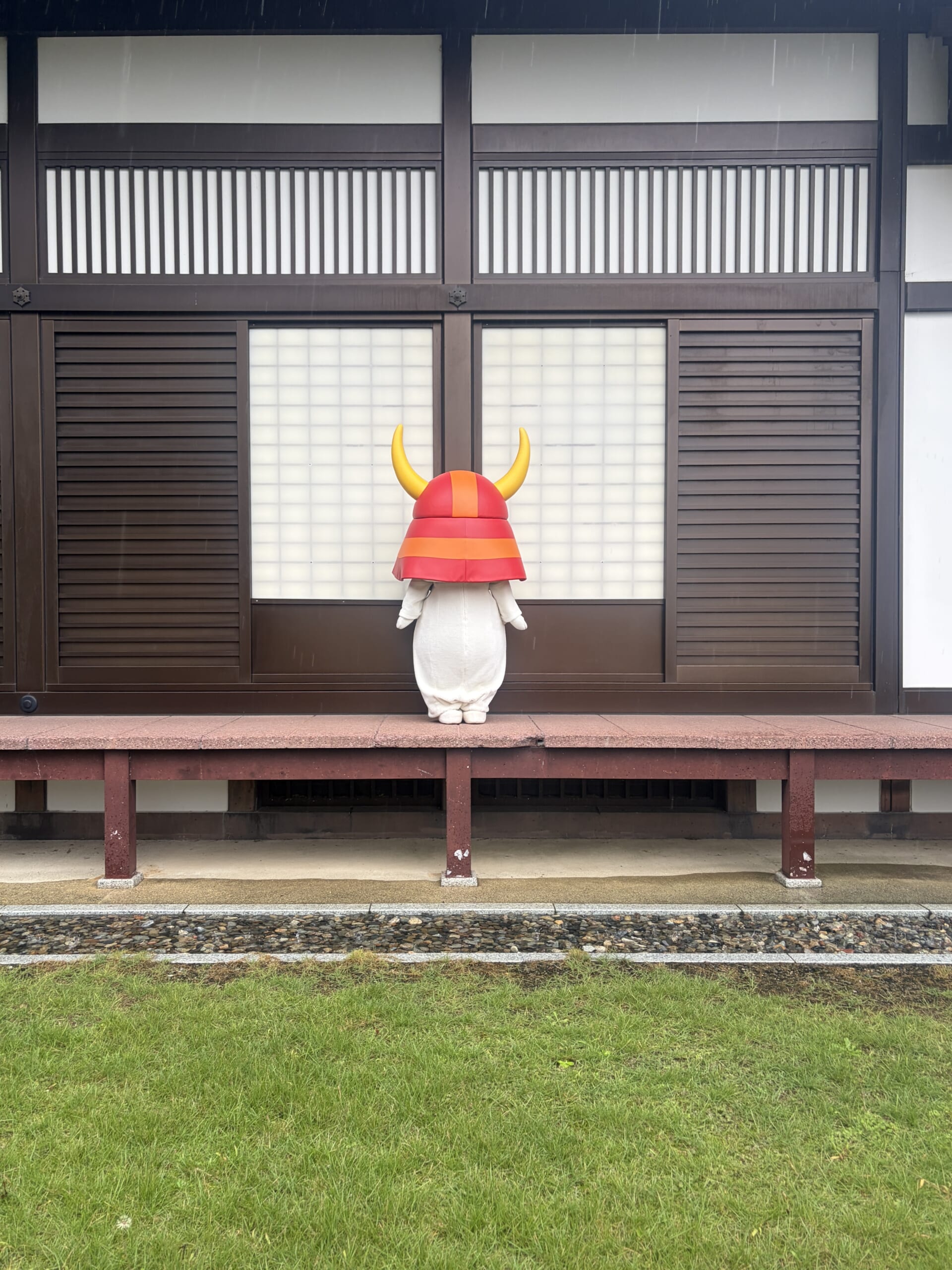
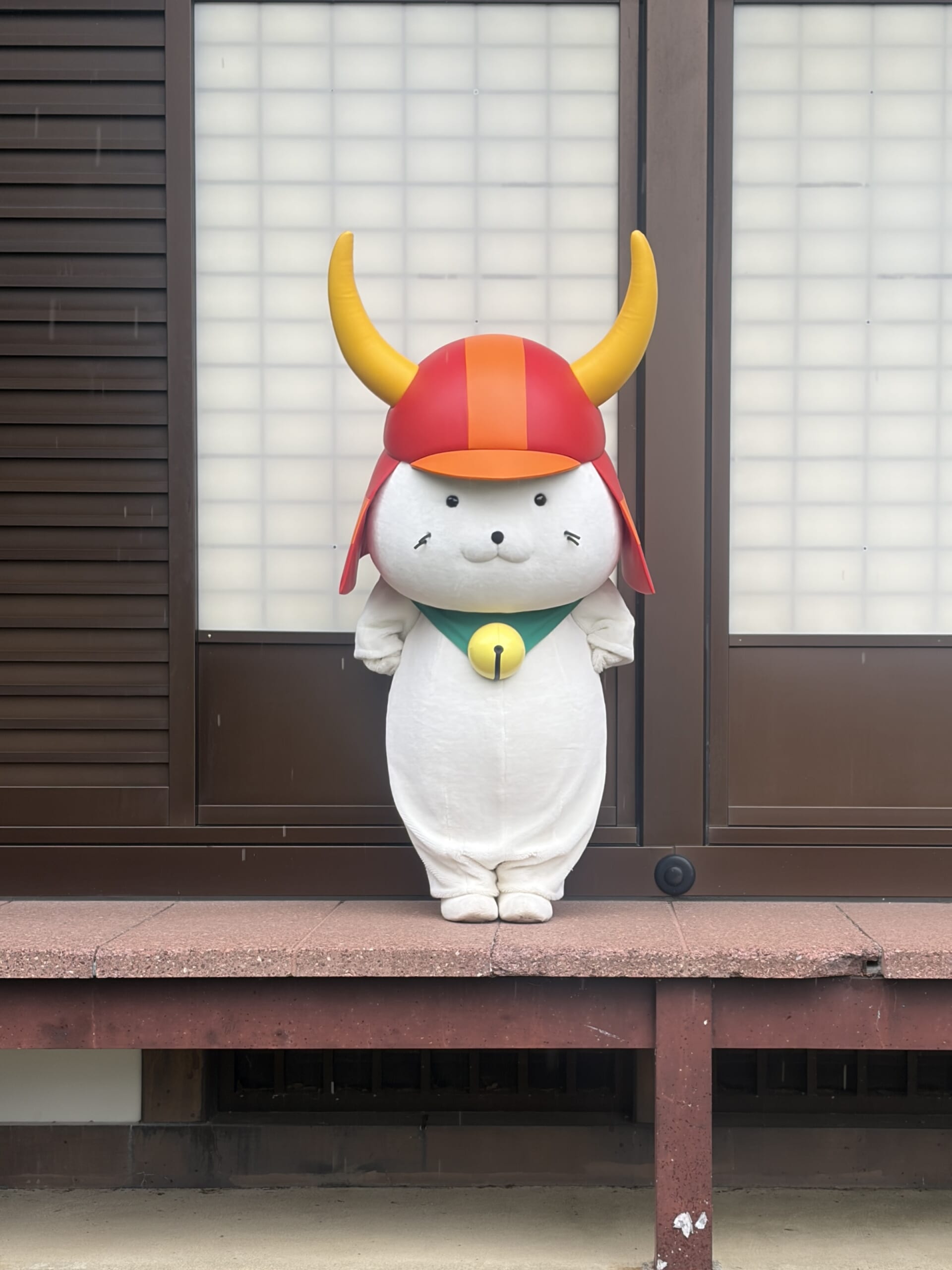
It was already past 13:30, but when I went to look, there was Hikonyan on the veranda of the museum. My first contact with Hikonyan: its back. Smaller than I’d imagined, with such cute movements. What a cute little bottom (haha). Plenty of people took a quick look, then moved on, so I got a proper look, with plenty of chances for photos.
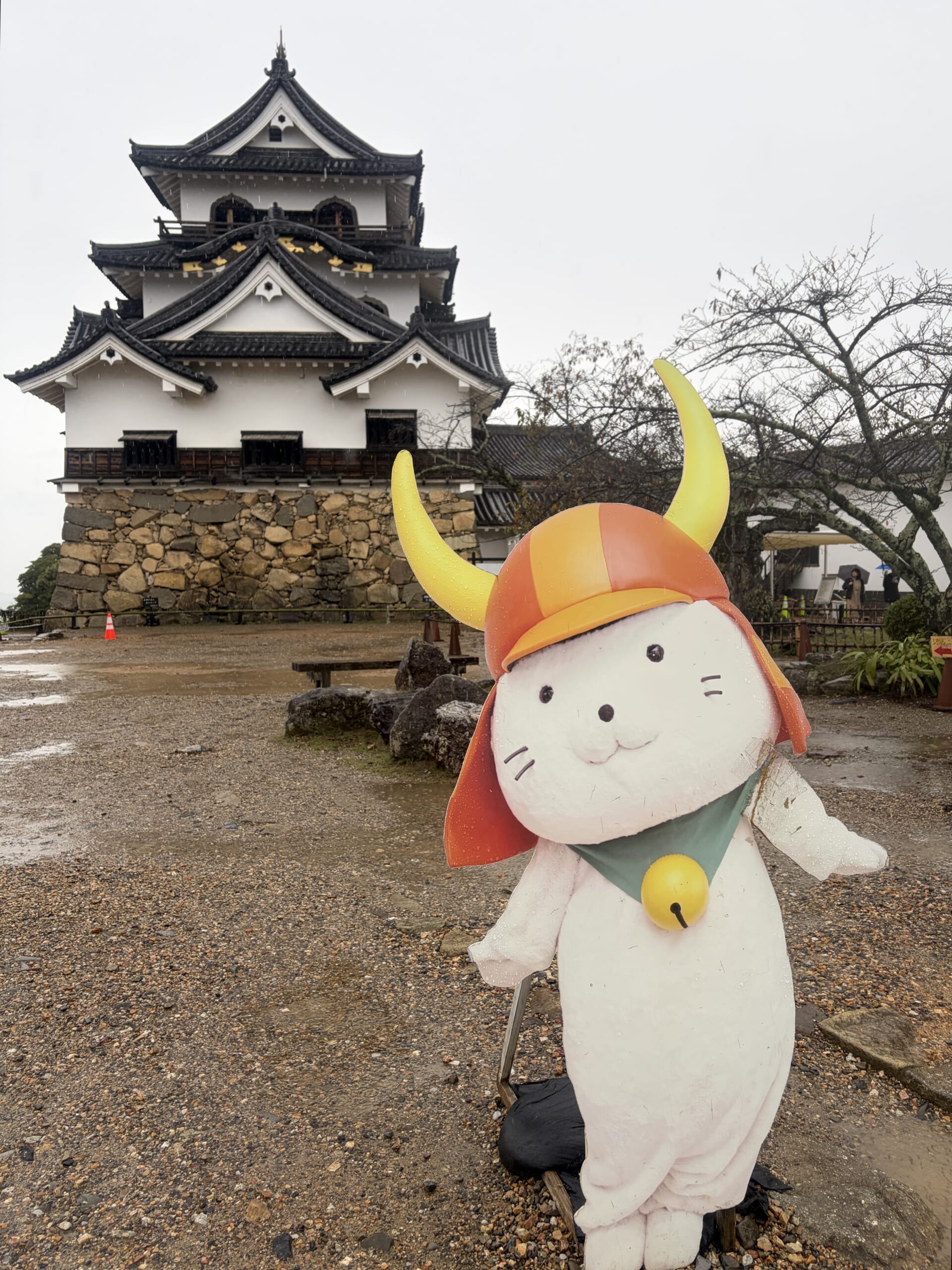
Come to think of it, at the Hikonyan cut-out panel in front of the keep, everyone was having fun taking group photos. As a solo traveller, of course, I photographed Hikonyan with the castle.
Summary
I thought three hours would be enough. Not even close. Stone walls, turrets, dry moats, slopes… once you start looking, you can’t stop. I think I understand a little why it was called “my favourite castle”.
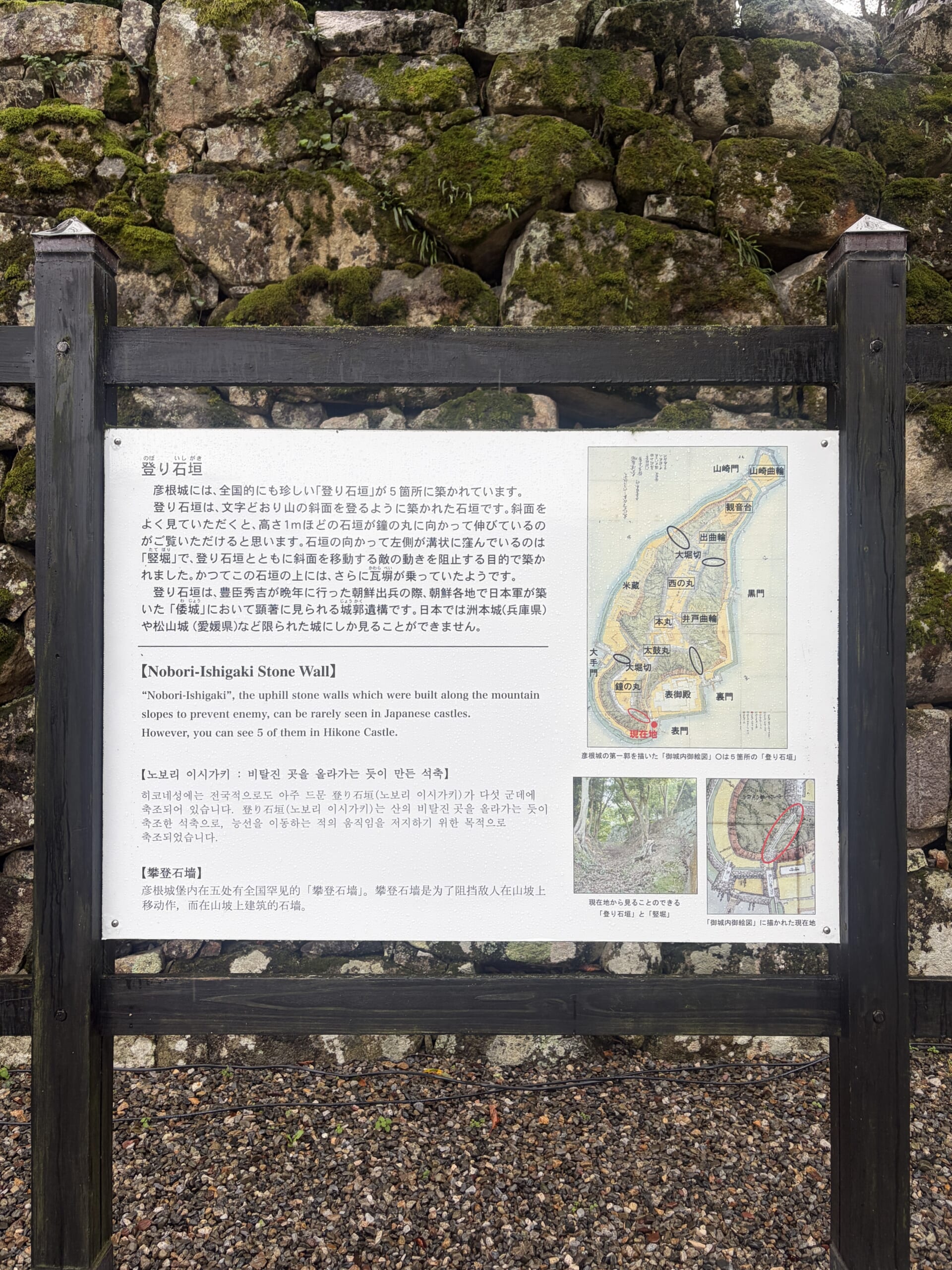
Genkyu-en Garden, Rakuraku-en, the museum, the inside of Umoregi-no-ya: I couldn’t make it to any of them this time. On my way out, I found an information board about the nobori-ishigaki (climbing stone walls running down the slope). “I should have read up before walking round!” That’s homework too.
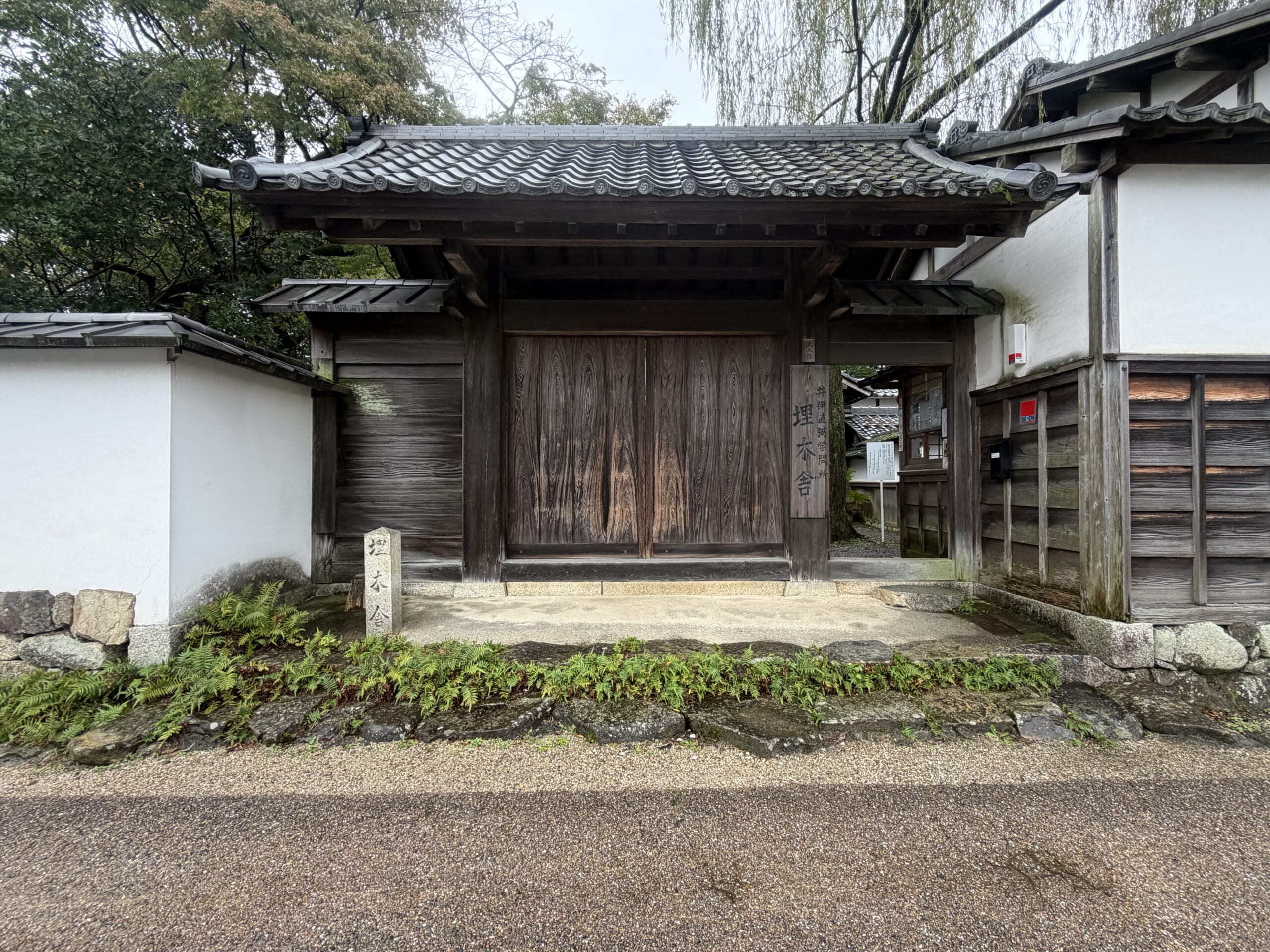
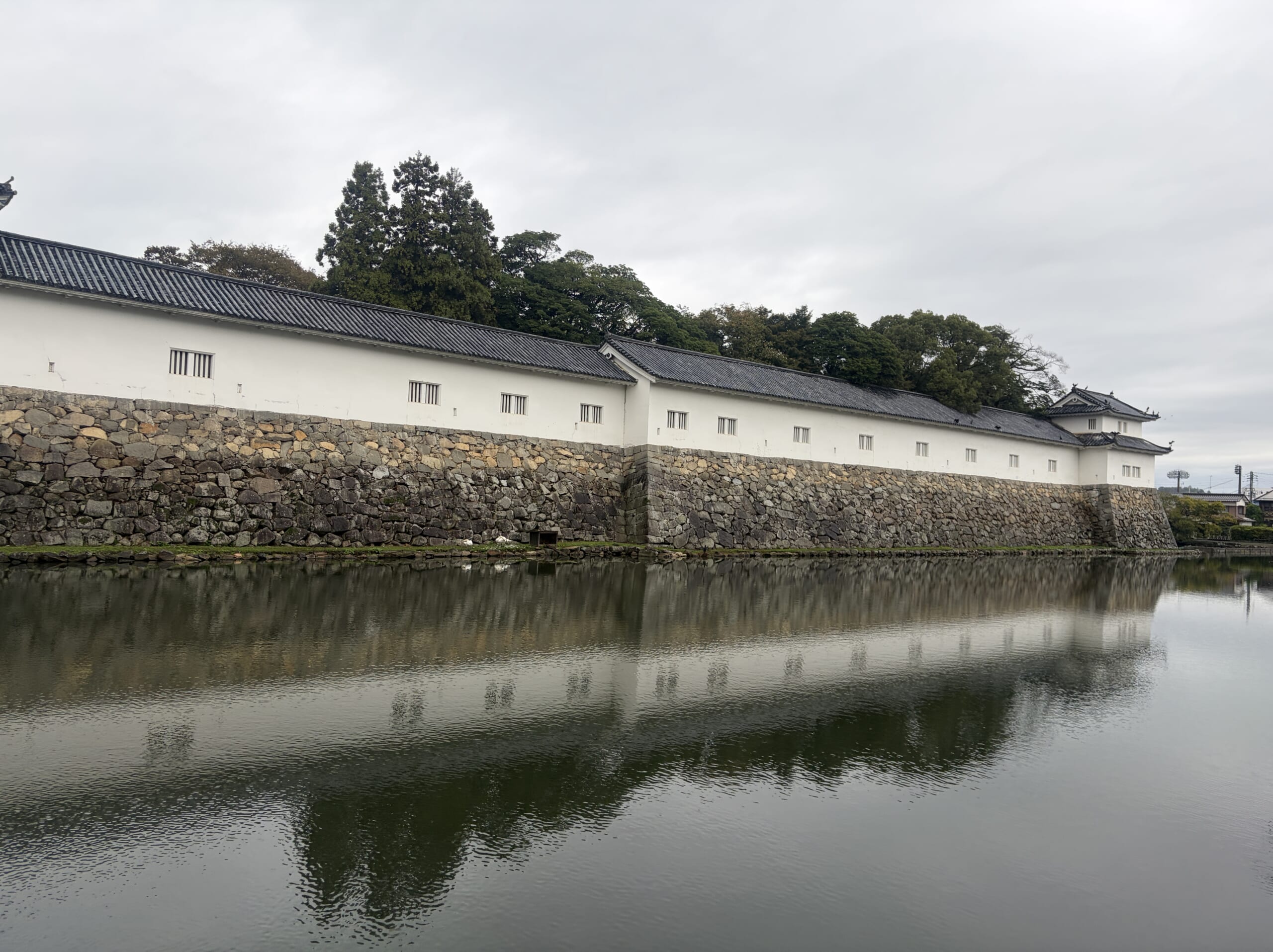
Along the moat where I walked last, the white-walled turrets were beautifully reflected on the water. It’s a little disappointing that I couldn’t see everything, yet honestly I’m also a bit happy there’s still more to look forward to. Next time, on a sunny winter day, I’ll take it slowly from the morning. I’d love to try the sukiyaki at Sennaritei too 🐮