I had assumed Miyajima was just a stone’s throw from Hiroshima Station, but I ended up swaying on the train for longer than expected. Miyajima is a little further away than I had imagined. But to cut to the chase: I enjoyed every bit of it. The anago rice, the low-tide Itsukushima Shrine, the noh stage on the sea, and the okonomiyaki finale. All of it. As always, it was another wonderful day.
See the walking route in photos → Travel Walks: Miyajima and Itsukushima Shrine Route Map (November 2025)
Fuelling Up with Anago Rice at Ueno
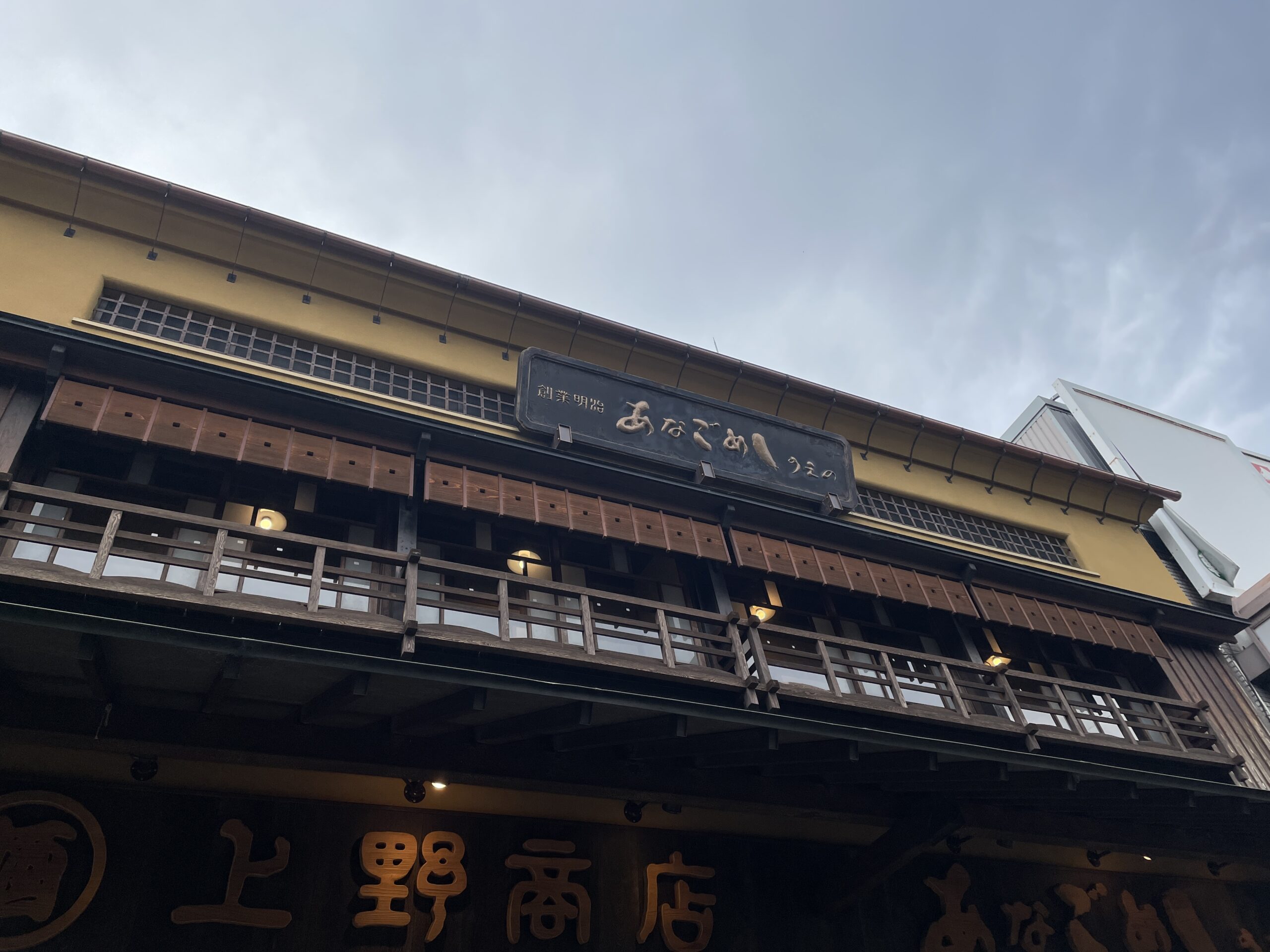
Before boarding the ferry, I headed to Anagomeshi Ueno at Miyajimaguchi. Founded in 1901, it is said to be the birthplace of the anago rice ekiben (station bento). I knew it was famous, but the queue took about an hour…
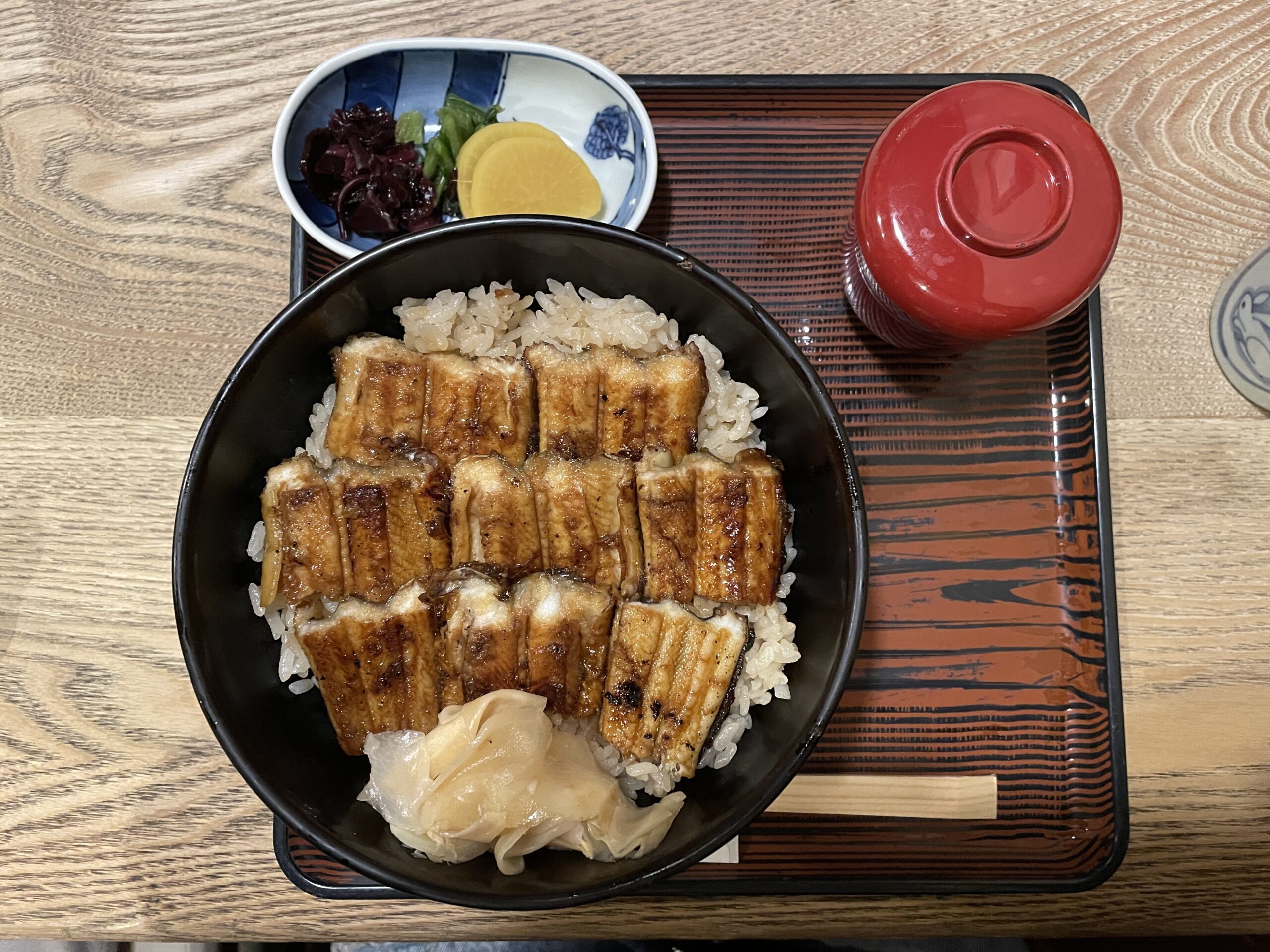
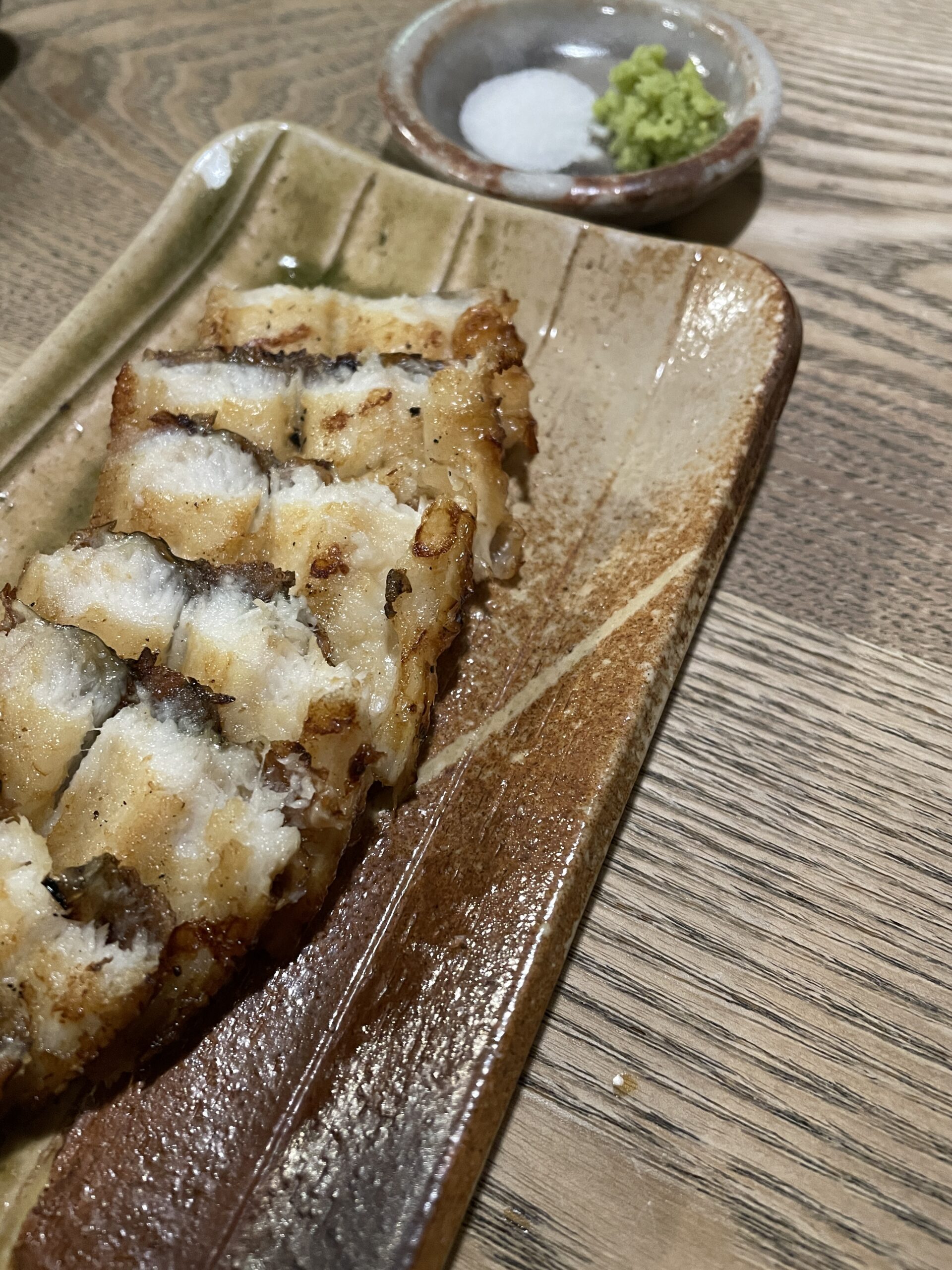
Still, one bite of the anago rice and I forgot all about the wait. The shirayaki (plain grilled conger eel) I ordered as an extra was kept simple, with wasabi and salt. Absolutely delicious. Well worth the queue.
Ferry to Miyajima
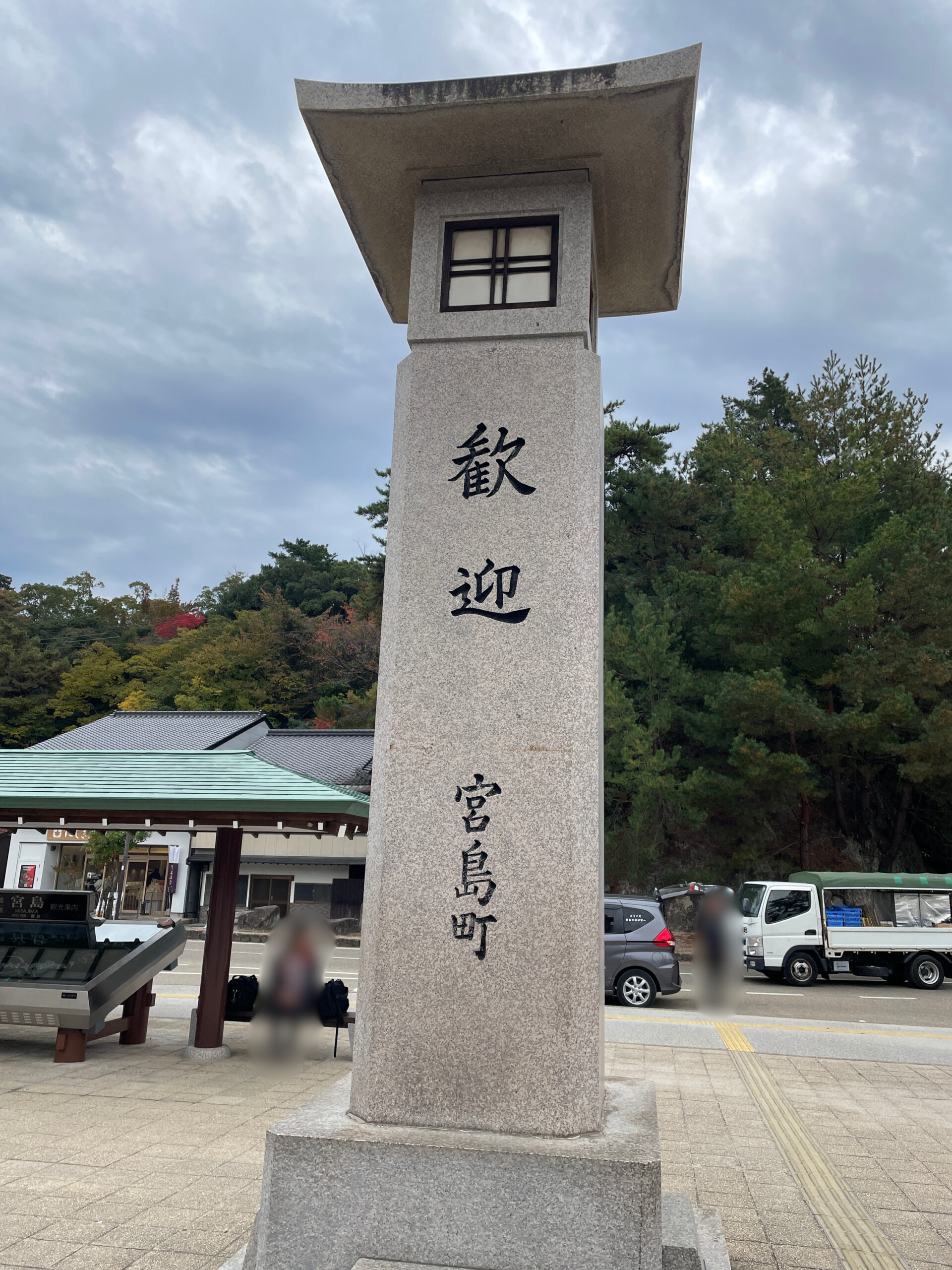
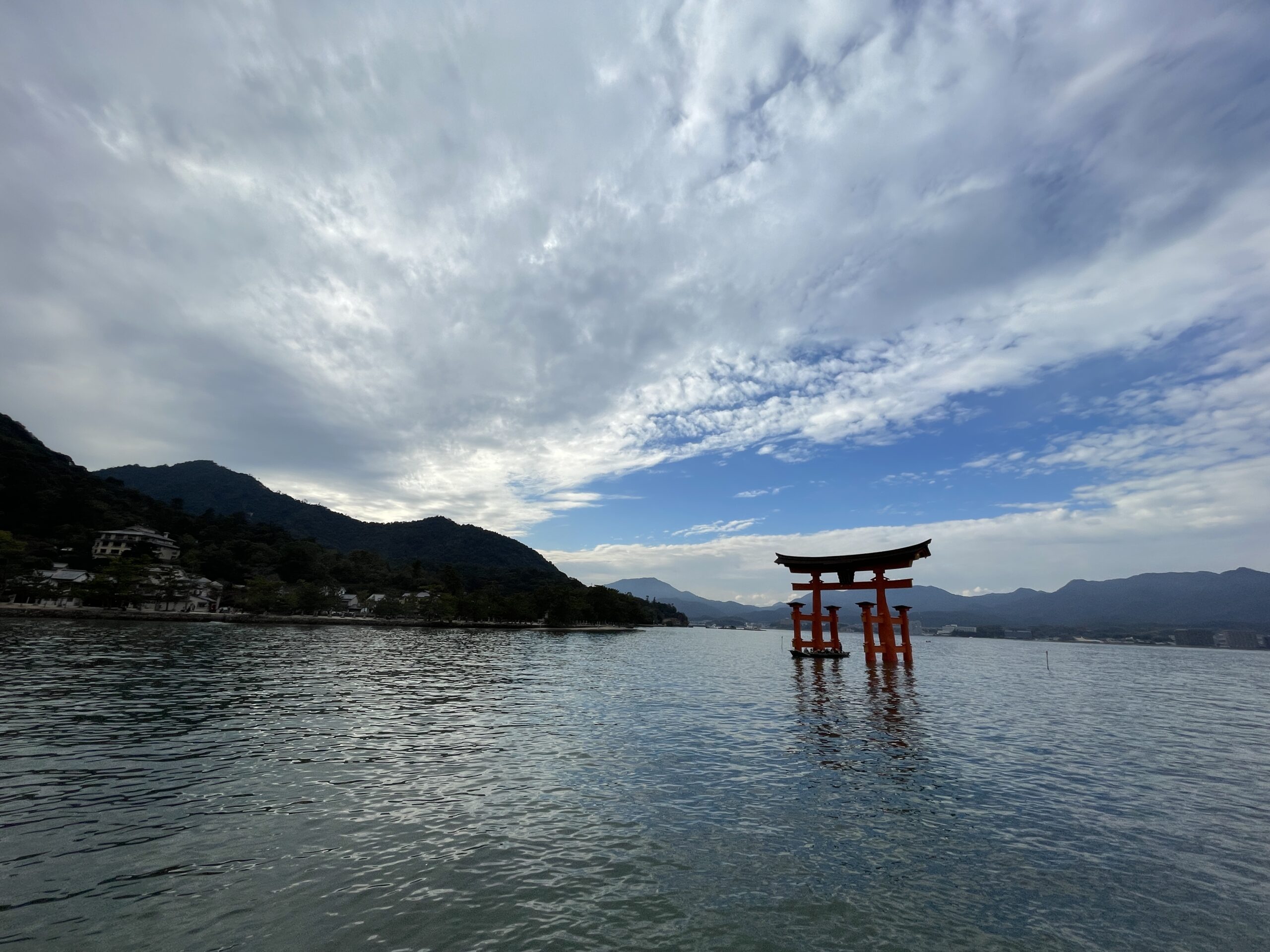
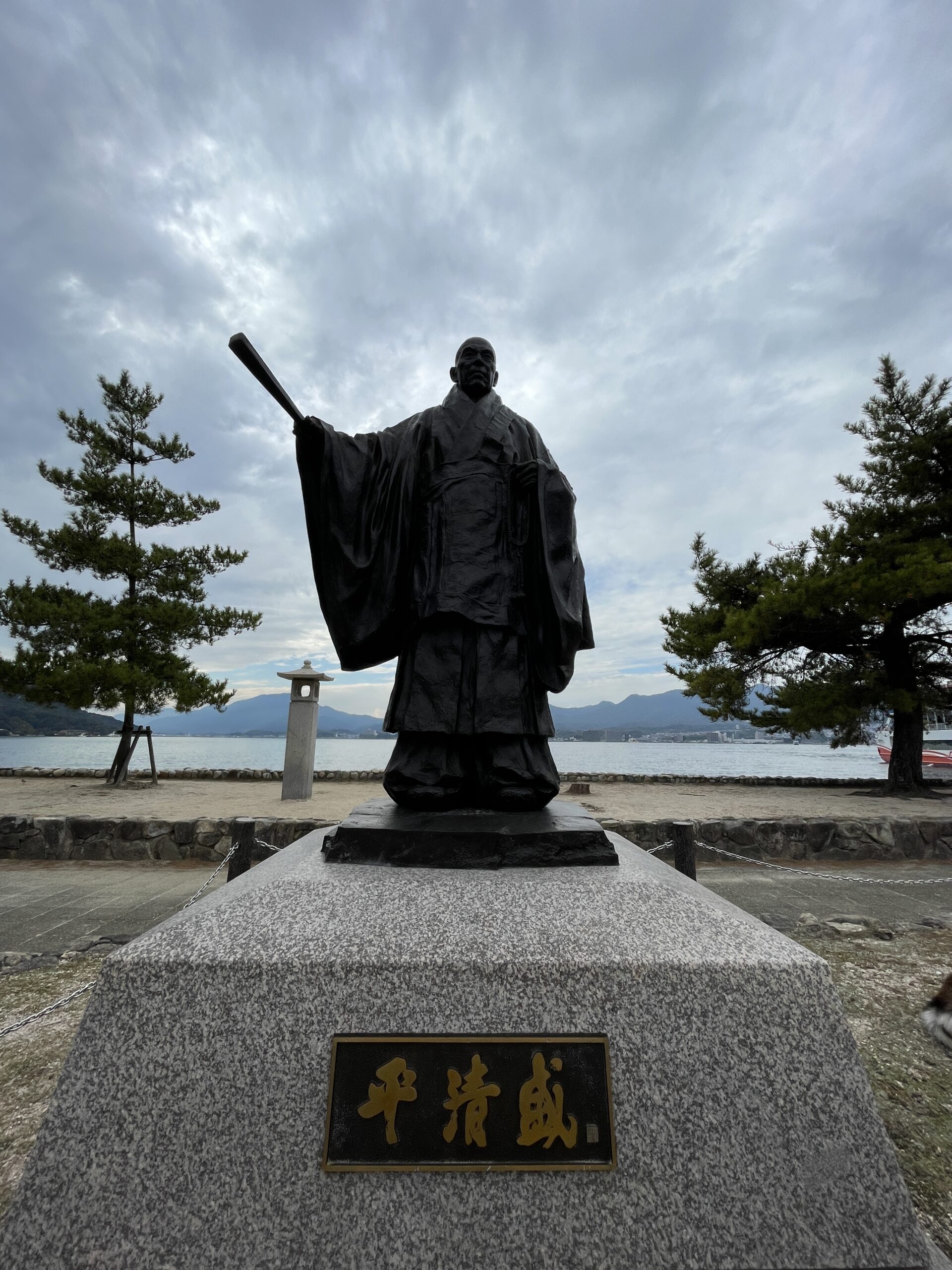
With a full stomach, I hopped on the ferry, and about ten minutes later I was on Miyajima. The stone pillar welcoming visitors and the statue of Taira no Kiyomori greeted me, with the great torii out across the water. I did not walk up close this time — I simply admired it from a distance — but the sky, the sea, and the torii alone made for quite a picture.
Low Tide at Itsukushima Shrine, and the Mysterious Timbers
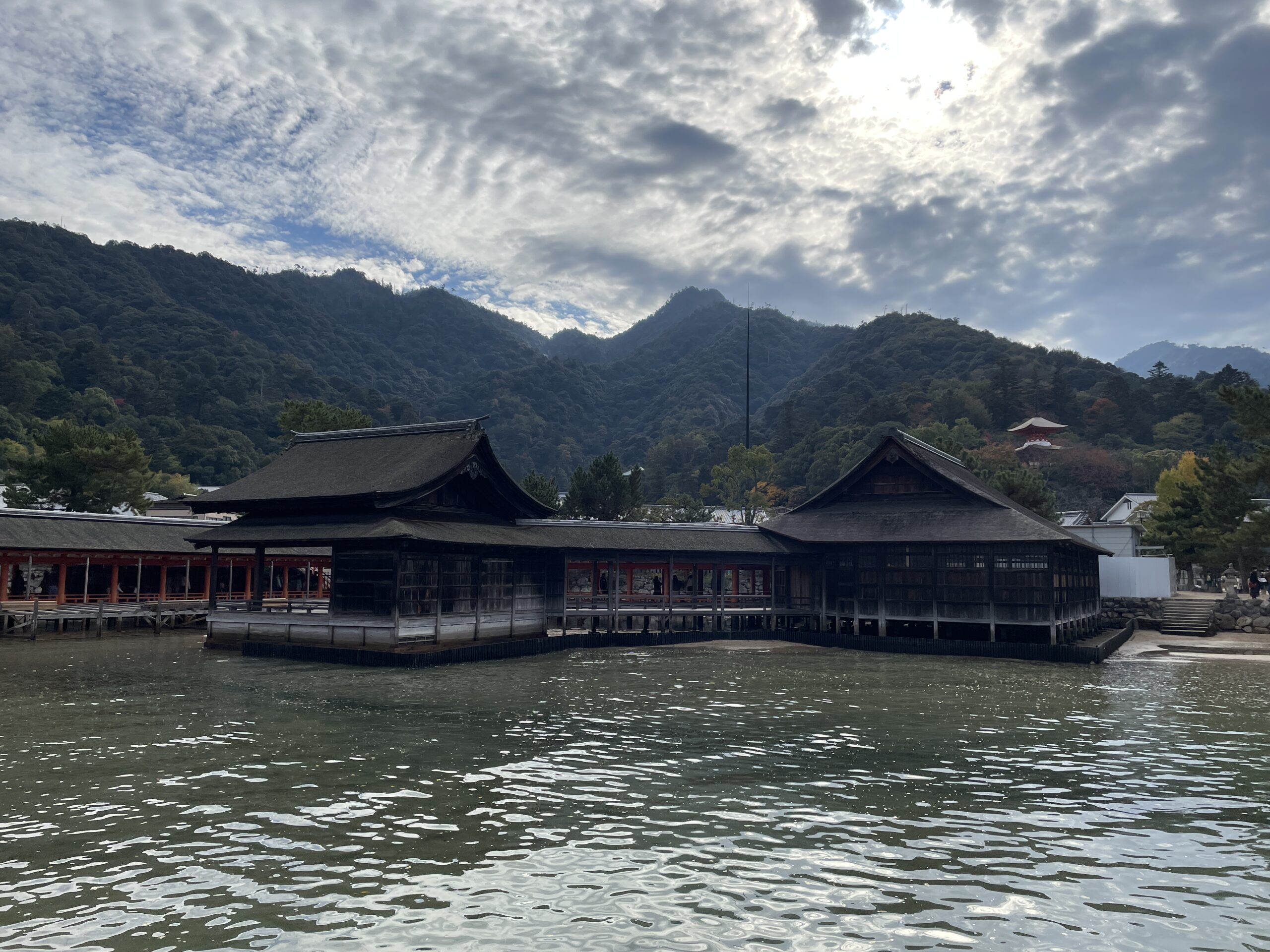
When I arrived at Itsukushima Shrine, the tide happened to be out. Instead of halls floating on the sea, I found myself looking at halls standing on the sand. This was fascinating in its own way — I could see the bases of the pillars and the seabed itself.
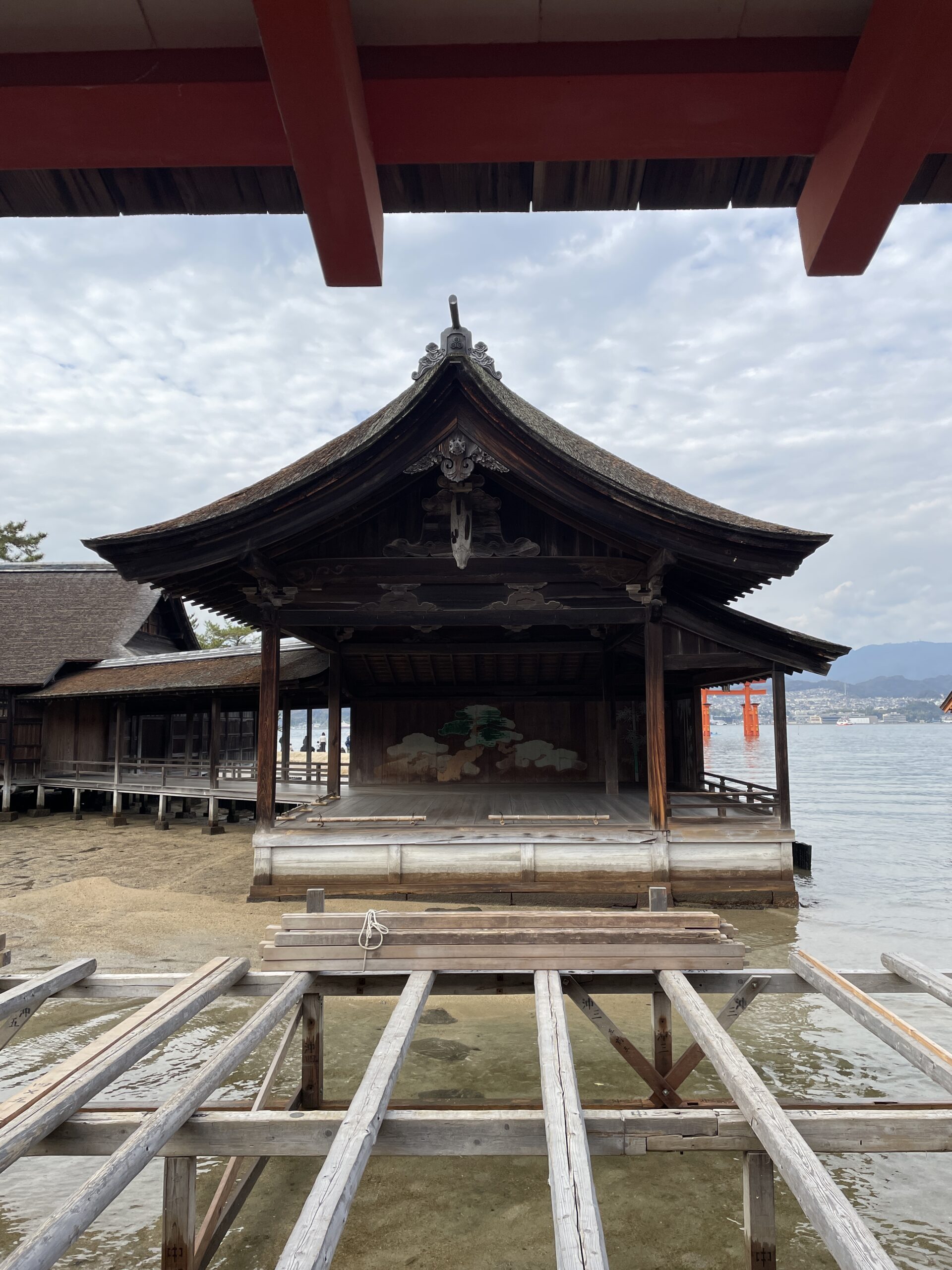
What really caught my eye were the square timbers laid out in neat rows on the sandy grounds. Construction work? I wondered as I walked past, but I never did find out. When I looked into it after getting home, this is as far as I got: they seem to be the foundations for the temporary tiered seating set up for festival rites (though I cannot say for certain). Even without knowing what they were, the evenly spaced rows of timber were strangely beautiful.
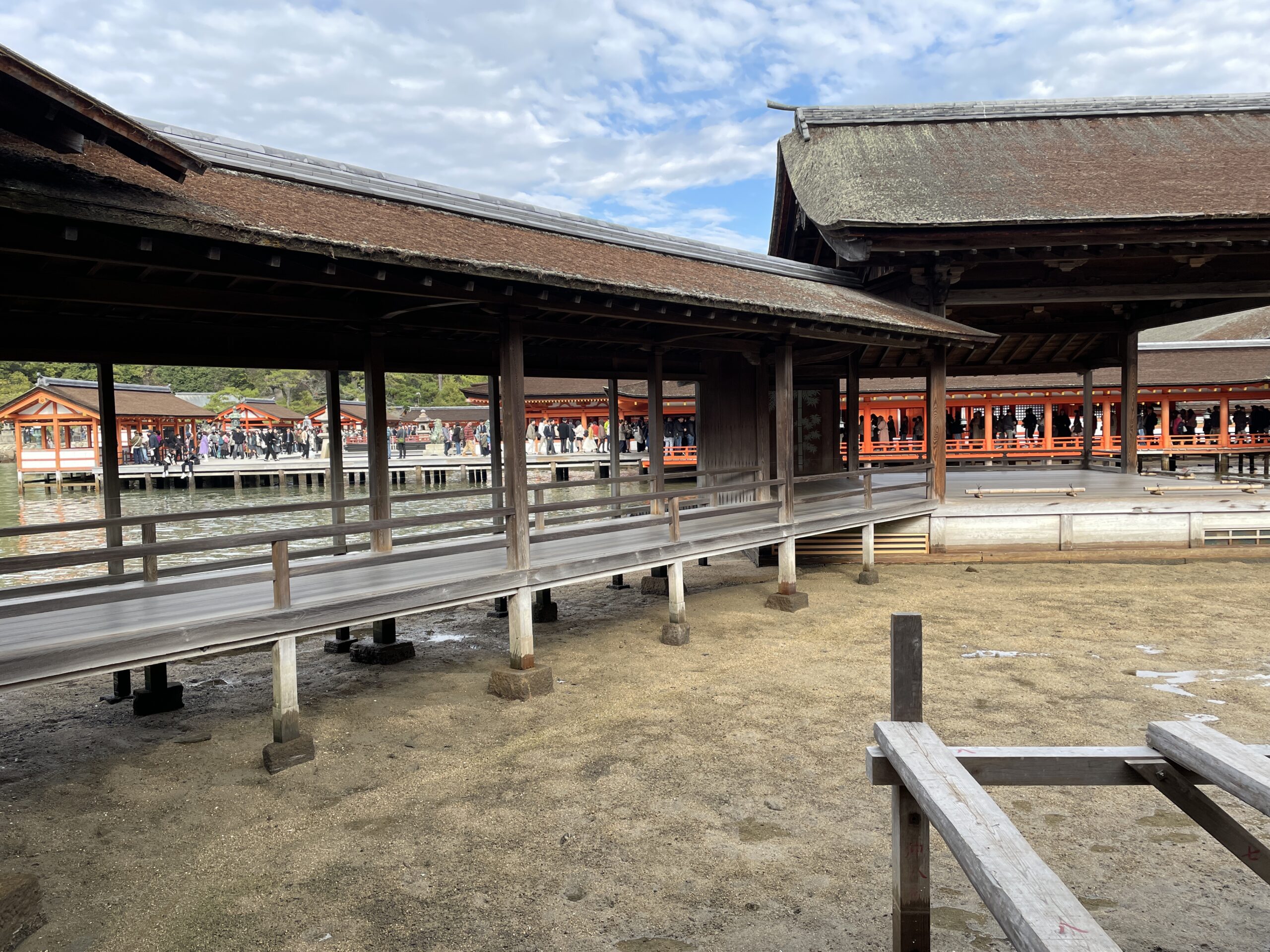
Falling in Love with the Noh Stage on the Sea
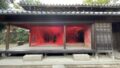
What stole my heart most of all, though, was the noh stage! Of all the noh stages designated as Important Cultural Properties in Japan, it is said to be the only one built over the sea.
I want to see noh performed here! And the play I would most love to see is, of course, Funa Benkei. Beyond the stage lies the actual sea. If the ghost of Taira no Tomomori appeared there… just imagining it made my day. Every April, at the Tōkasai Goshinnō — the sacred noh performances of the shrine’s Peach Blossom Festival — noh and kyogen performers gather from all over Japan to perform on this very stage. And if those mysterious timbers really are the foundations for the festival seating, then perhaps one day I will be sitting on them, watching.
The Finale: Okonomiyaki at Micchan
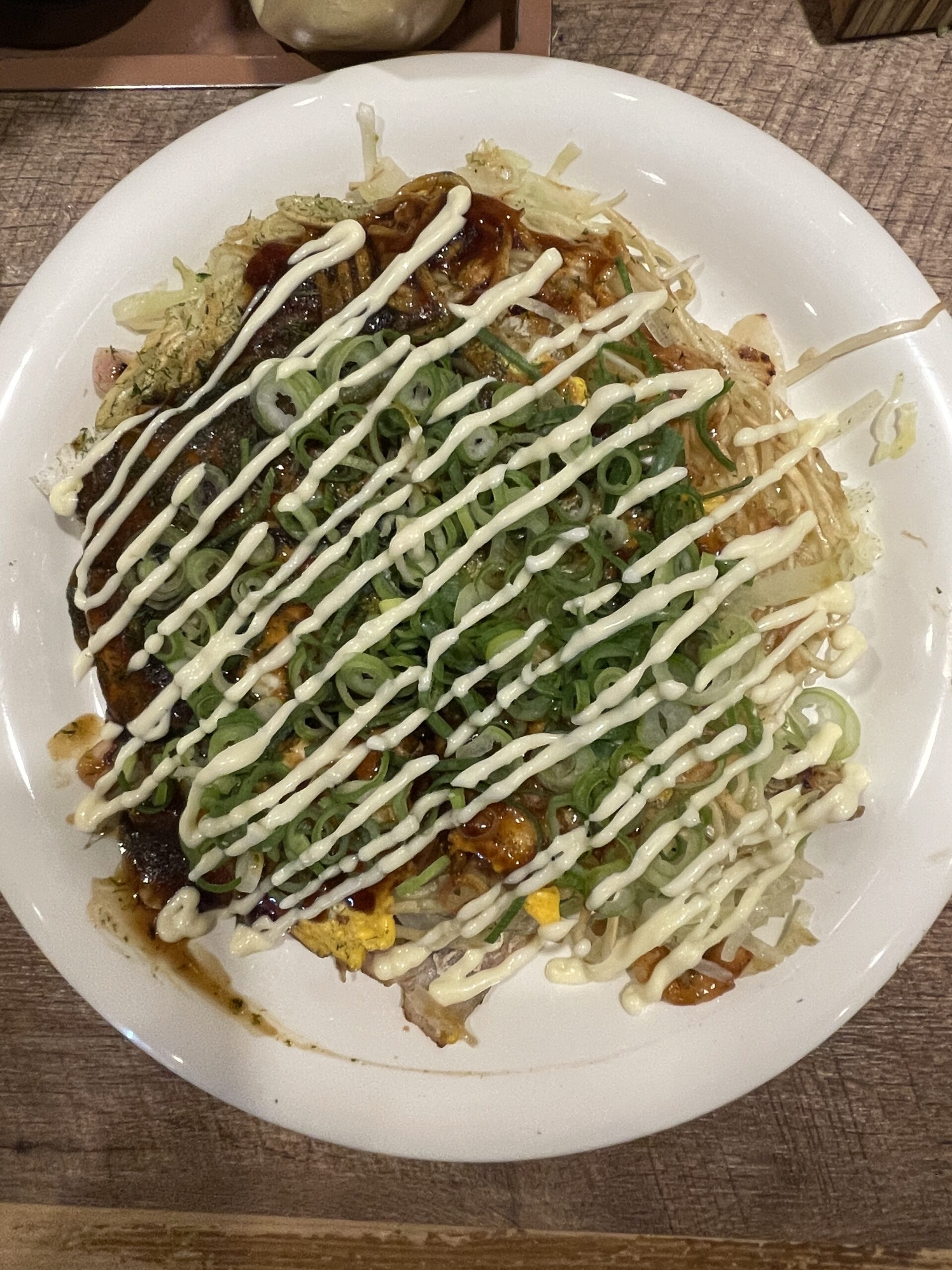
Back at Hiroshima Station, I went to Micchan Sohonten in ekie, the shopping complex directly connected to the station. Founded in 1950, it is known as the originator of Hiroshima okonomiyaki. Crisply grilled noodles under a generous pile of spring onions. It was so good I found myself thinking I would come back just for this.
In Closing
Miyajima turned out to be a little further away than I had thought. But I am so glad I went, and I had a wonderful time. Every single bit of it!
My next ambition: the Tōkasai Goshinnō in April. Funa Benkei on that stage over the sea… that part depends on the year’s programme, of course, but one day, without fail!