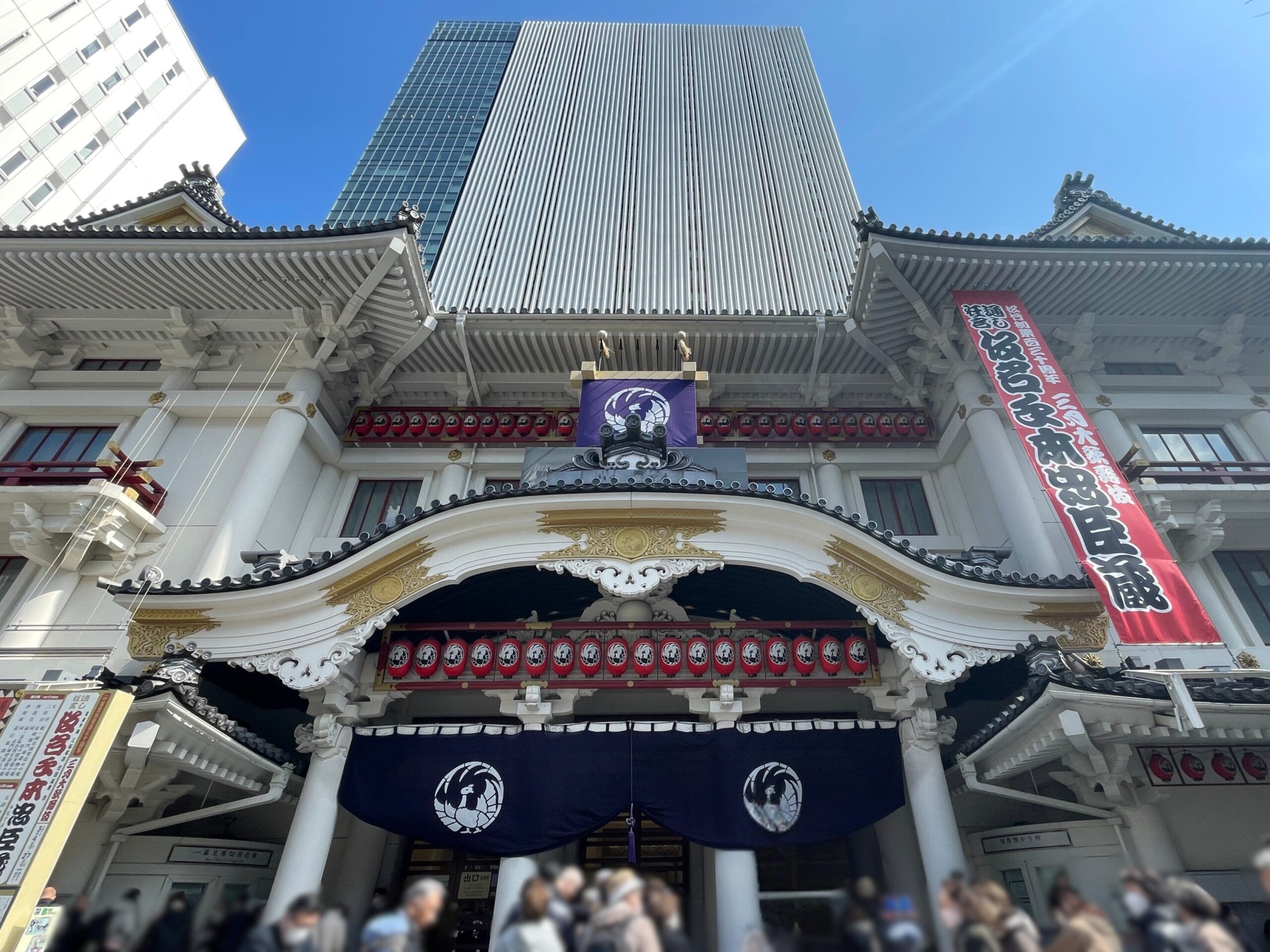
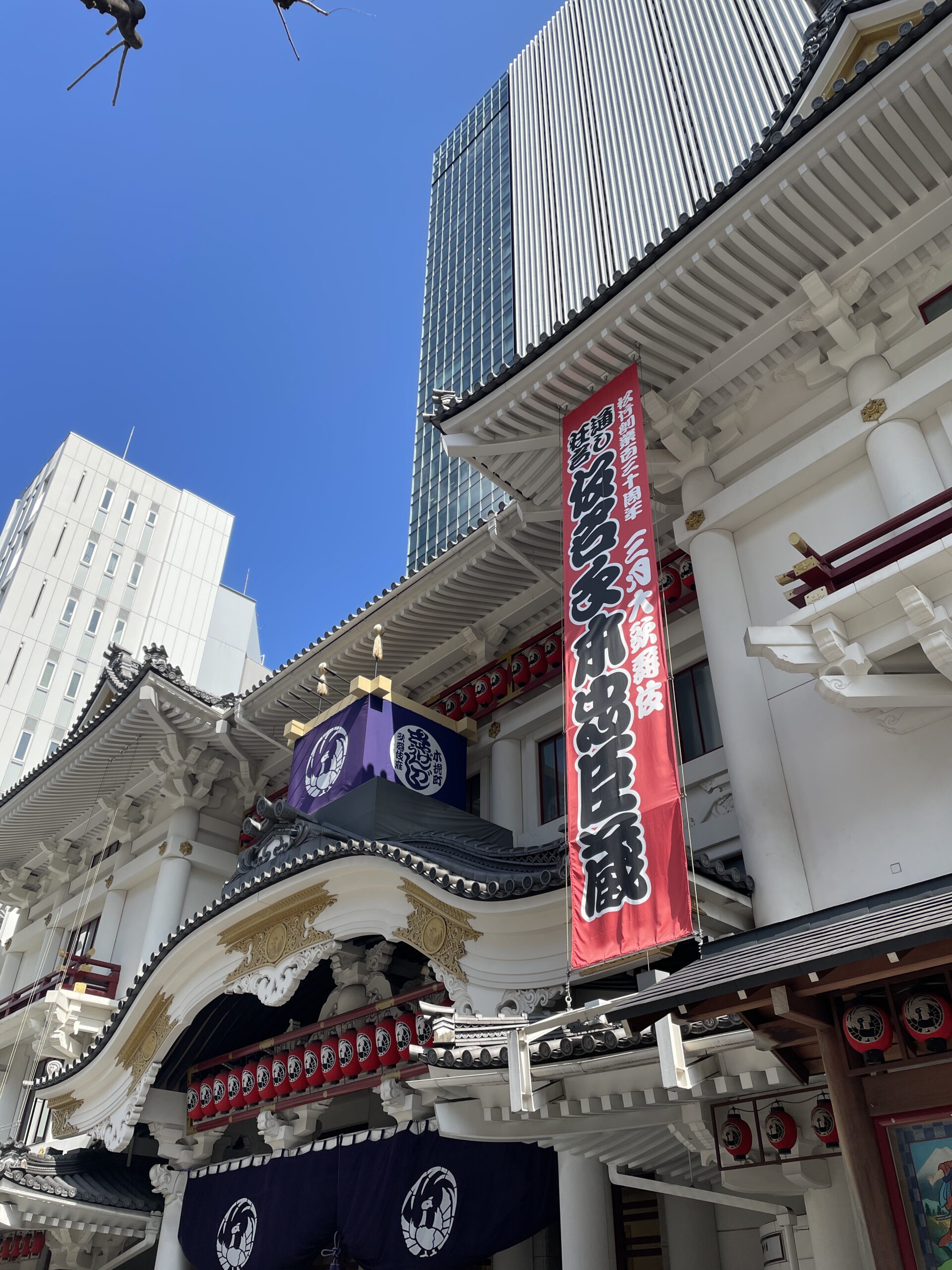
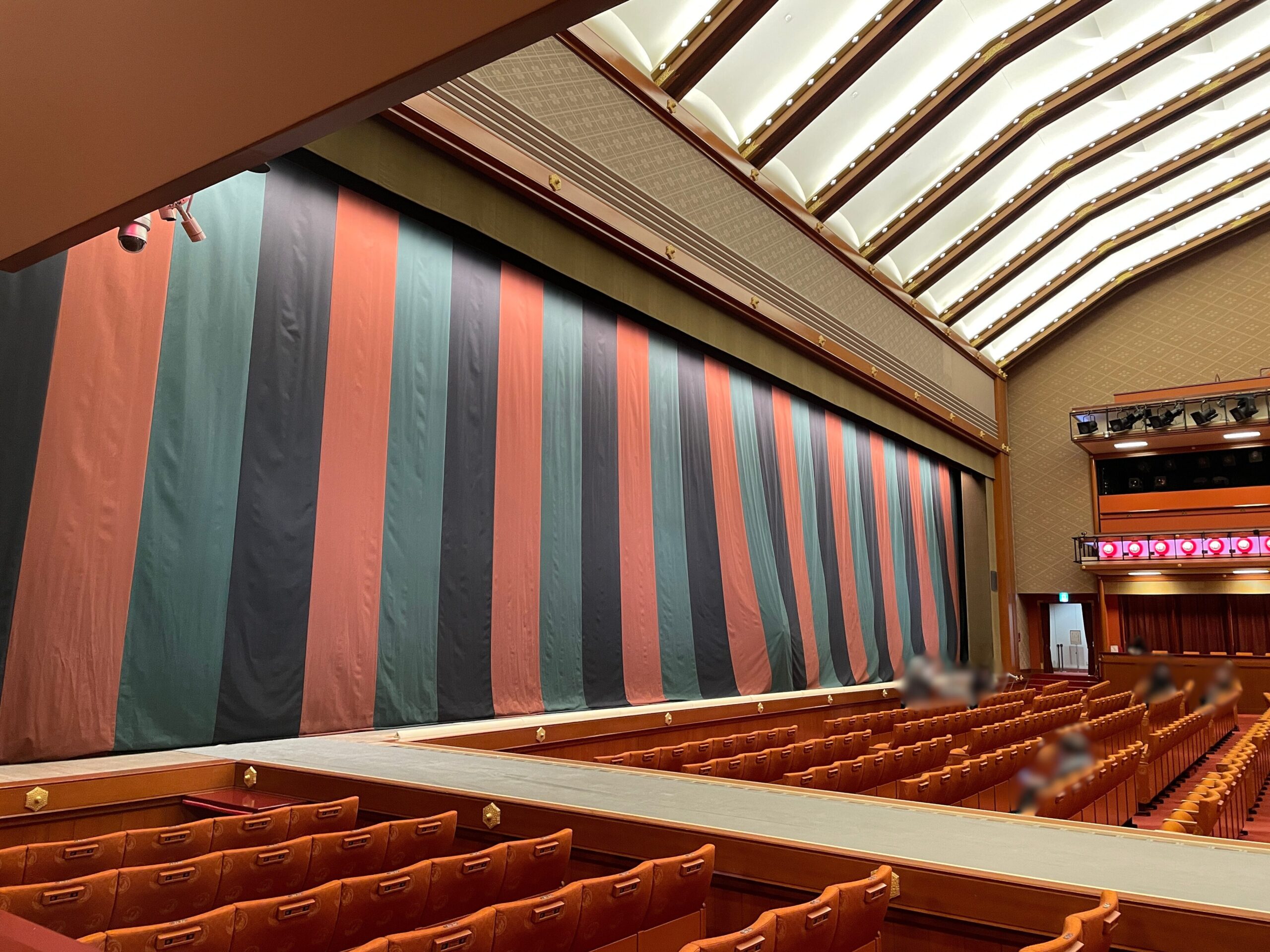
The full-length production of Kanadehon Chūshingura — the Matinee from a sajiki box seat on the west side, the Evening Show from a seat on the east side of the second floor. From 11 in the morning until past 9 at night, I spent the whole day happily steeped in Chūshingura. What a luxurious day. And yes, today was wonderful too.
- What kind of story is Kanadehon Chūshingura?
- Taking in every act of the picture boards before curtain-up
- A hot-blooded Wakasanosuke and a commanding Yuranosuke
- A bentō in the sajiki seats, and a medetai-yaki at the next interval
- A wait in the lobby, then on to the Evening Show
- My own personal raid: the Ichiriki Teahouse
- The whirlwind of Act XI
- Final thoughts
What kind of story is Kanadehon Chūshingura?
Kanadehon Chūshingura is based on the real-life raid by the loyal retainers of Akō in the Edo period. It is an eleven-act masterpiece depicting Ōboshi Yuranosuke and the forty-seven samurai as they avenge their late lord, and it is counted among the Three Great Classics of kabuki.
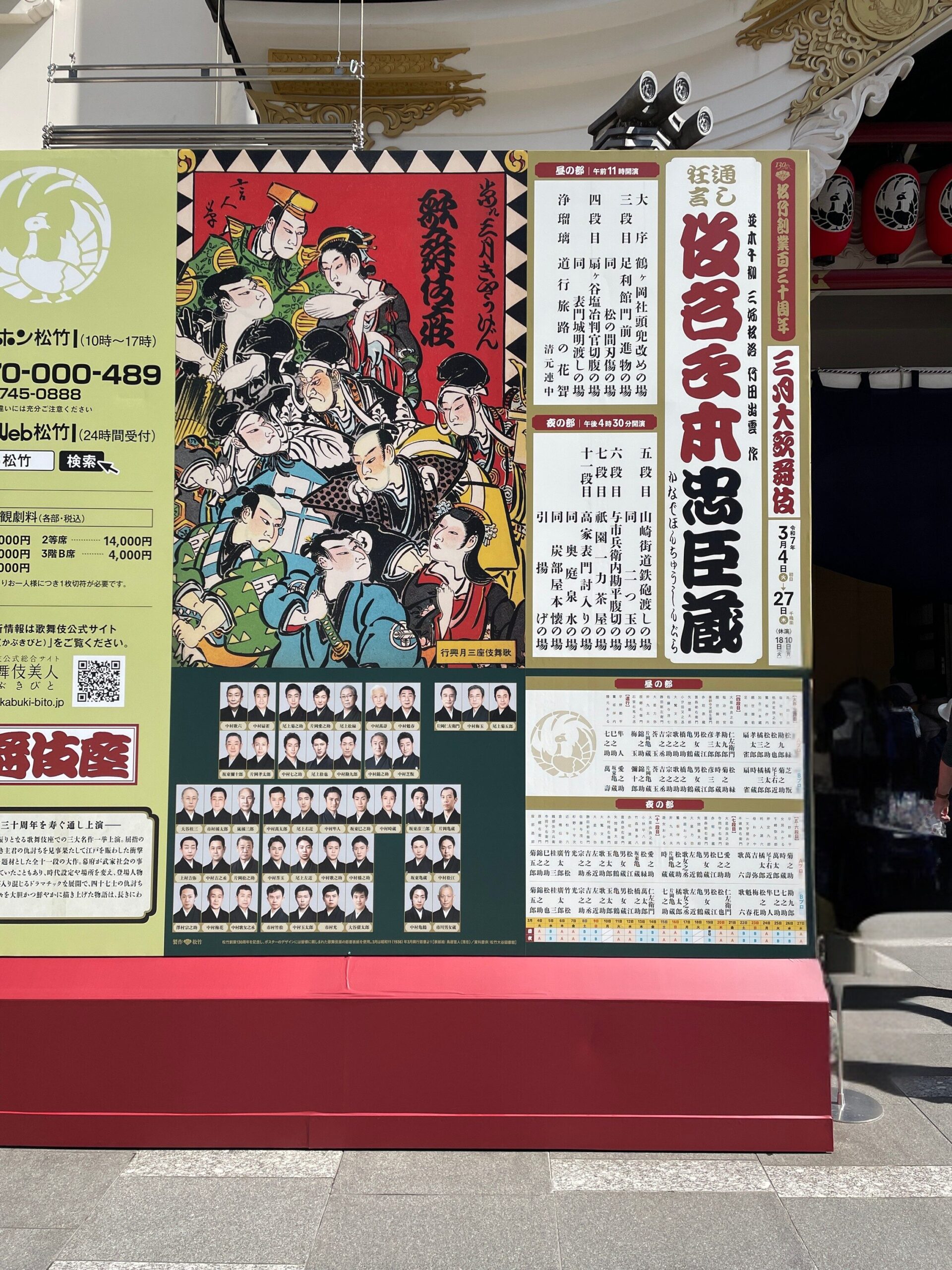
That month, the Kabukiza marked the 130th anniversary of Shochiku’s founding with a project to stage all Three Great Classics in full, and this was the first instalment: Kanadehon Chūshingura performed across both the Matinee and the Evening Show. Apparently it had been about twelve years since the last full-length production at the Kabukiza. There were even two alternating casts, Program A and Program B — I saw Program B. The Matinee covered the first half of the story with the Prologue, Act III, Act IV and the travel dance Michiyuki Tabiji no Hanamuko, while the Evening Show ran the second half — Acts V and VI, Act VII, and Act XI — all the way to the raid.
Taking in every act of the picture boards before curtain-up
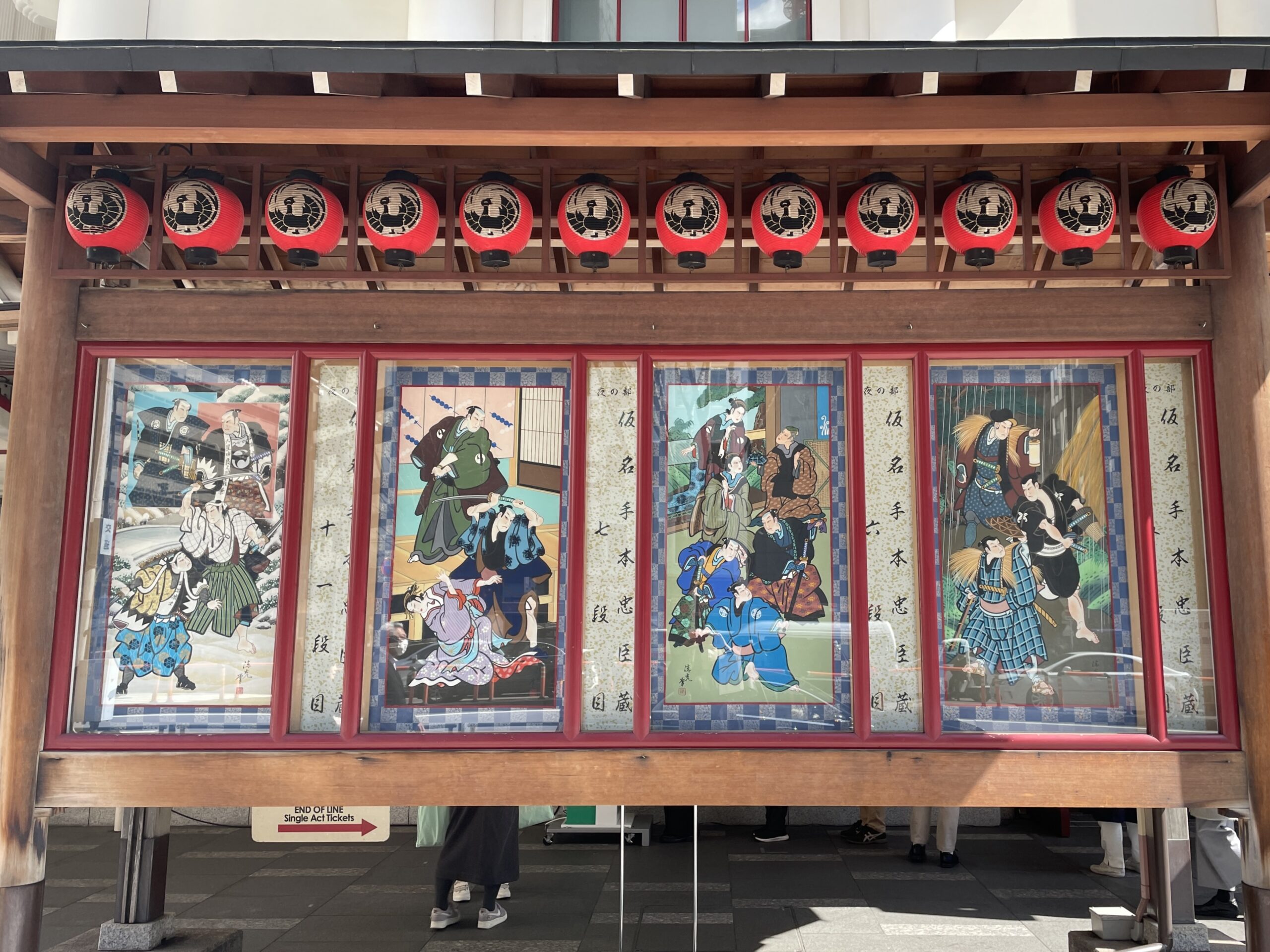
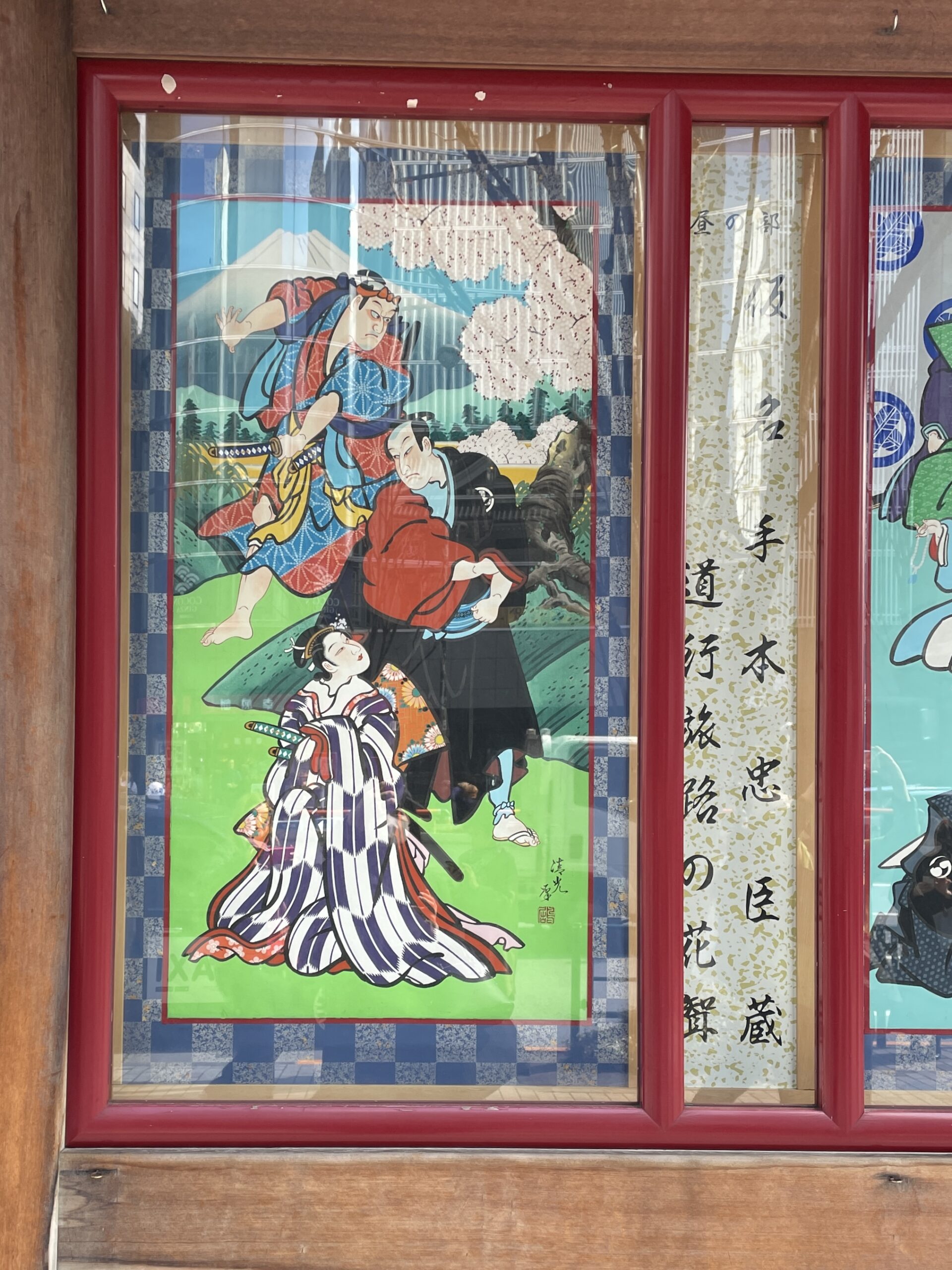
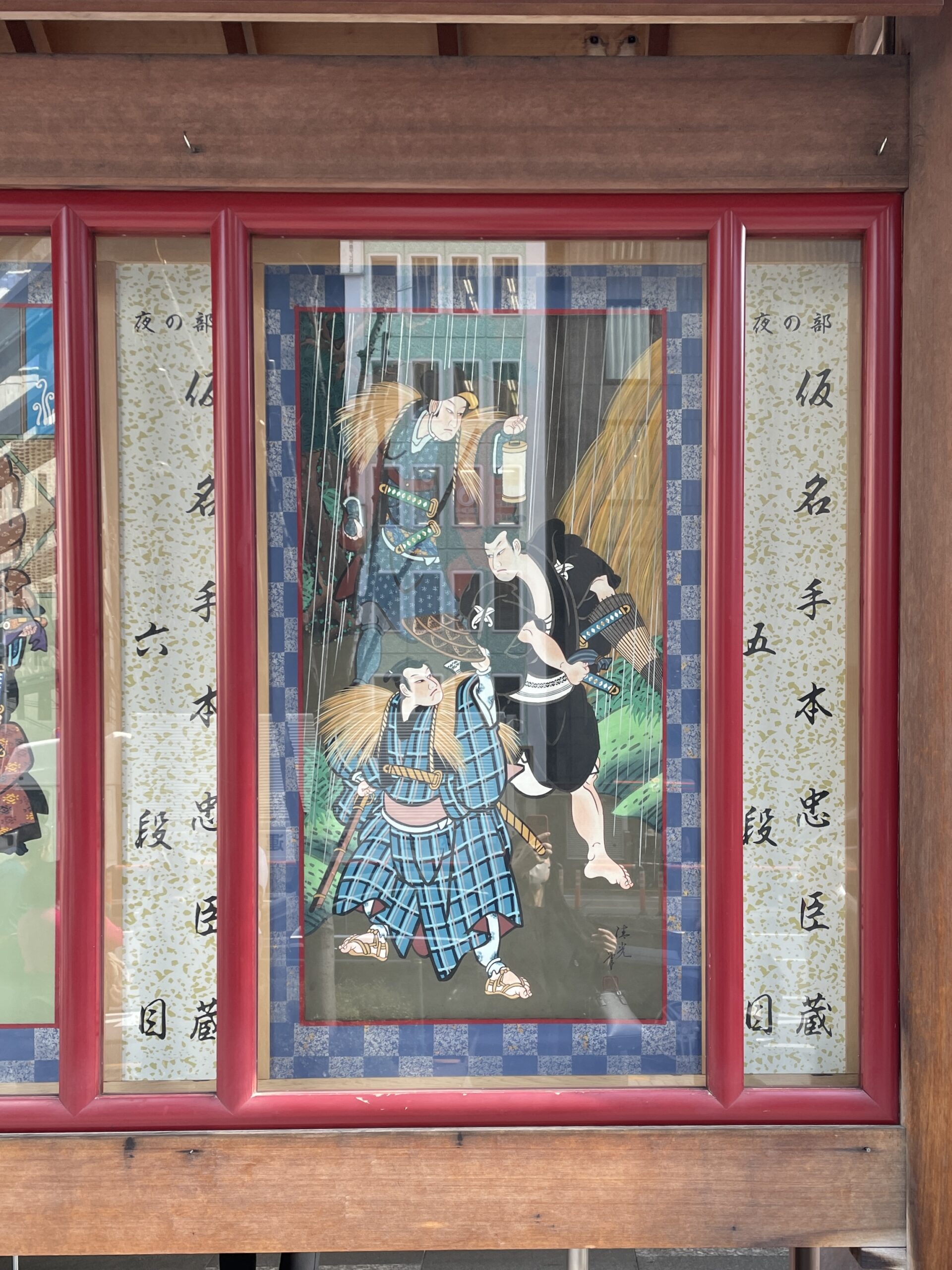
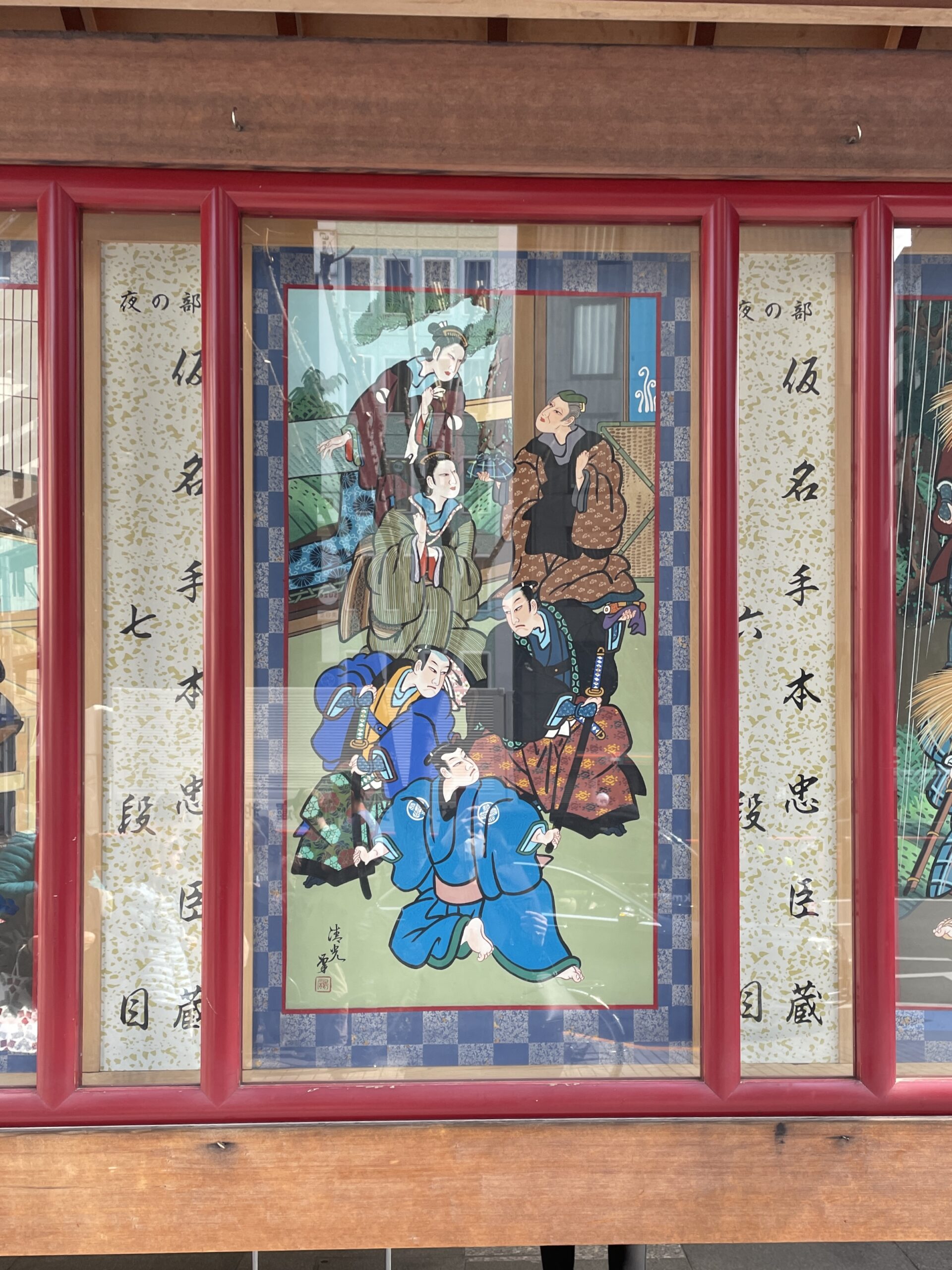
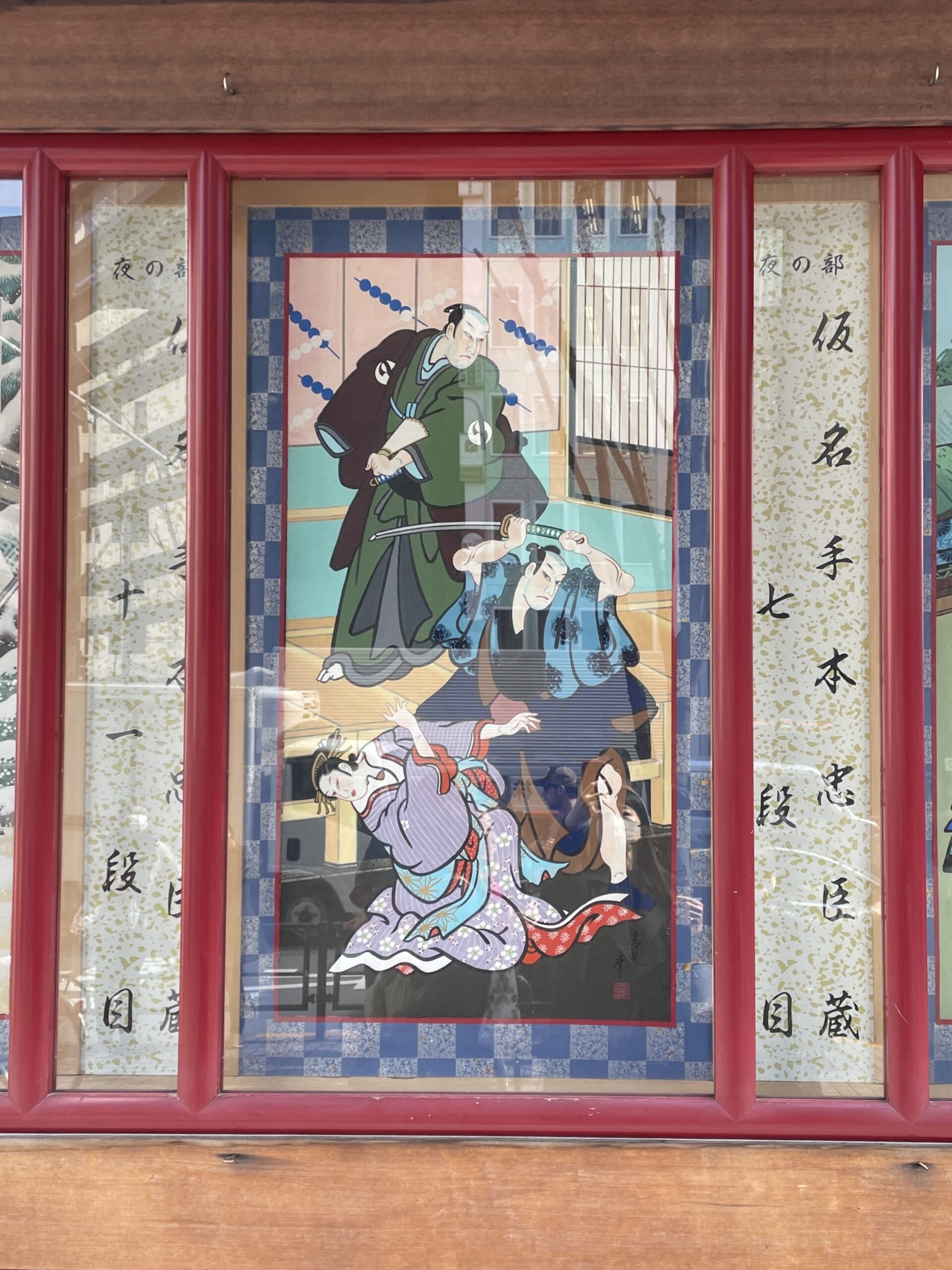
My pre-show treat was the row of picture boards at the front of the theatre. Because this was a full-length production, every act from the Prologue to Act XI was lined up in a grand parade. Looking at them one by one, in order, I felt as though I had already travelled through the whole story once. You rarely get to see the boards this complete, so I savoured them thoroughly before the curtain rose.
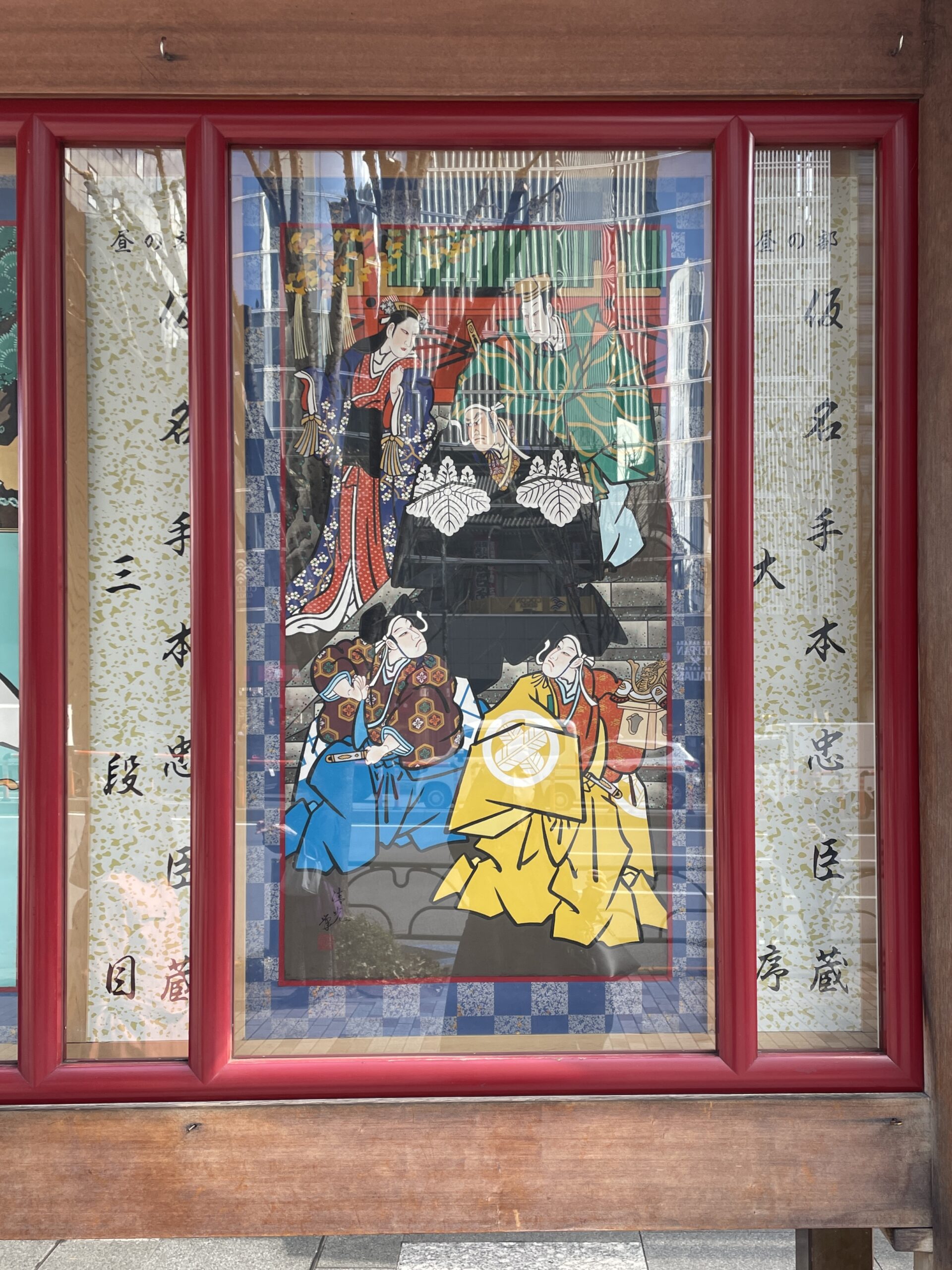
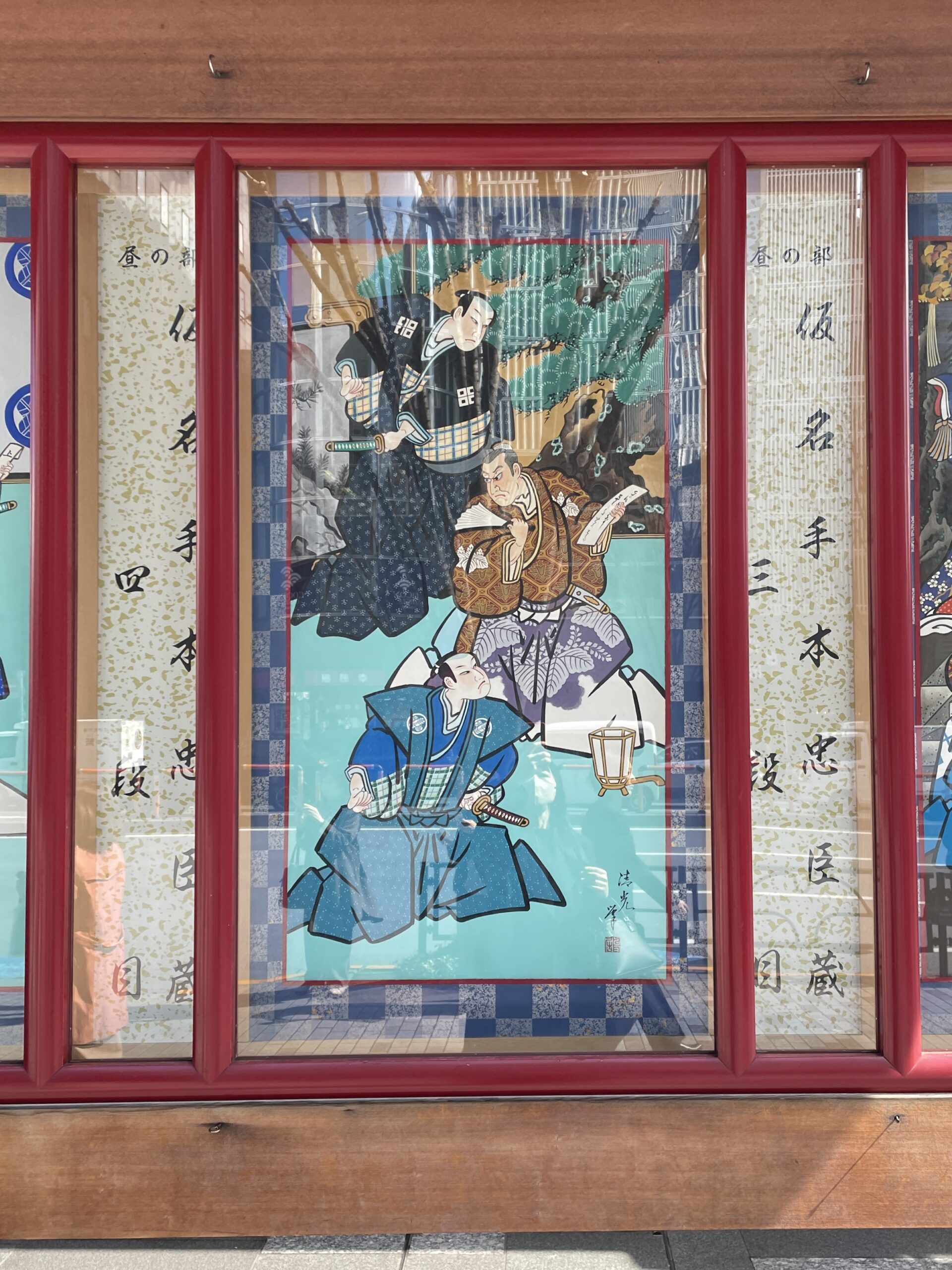
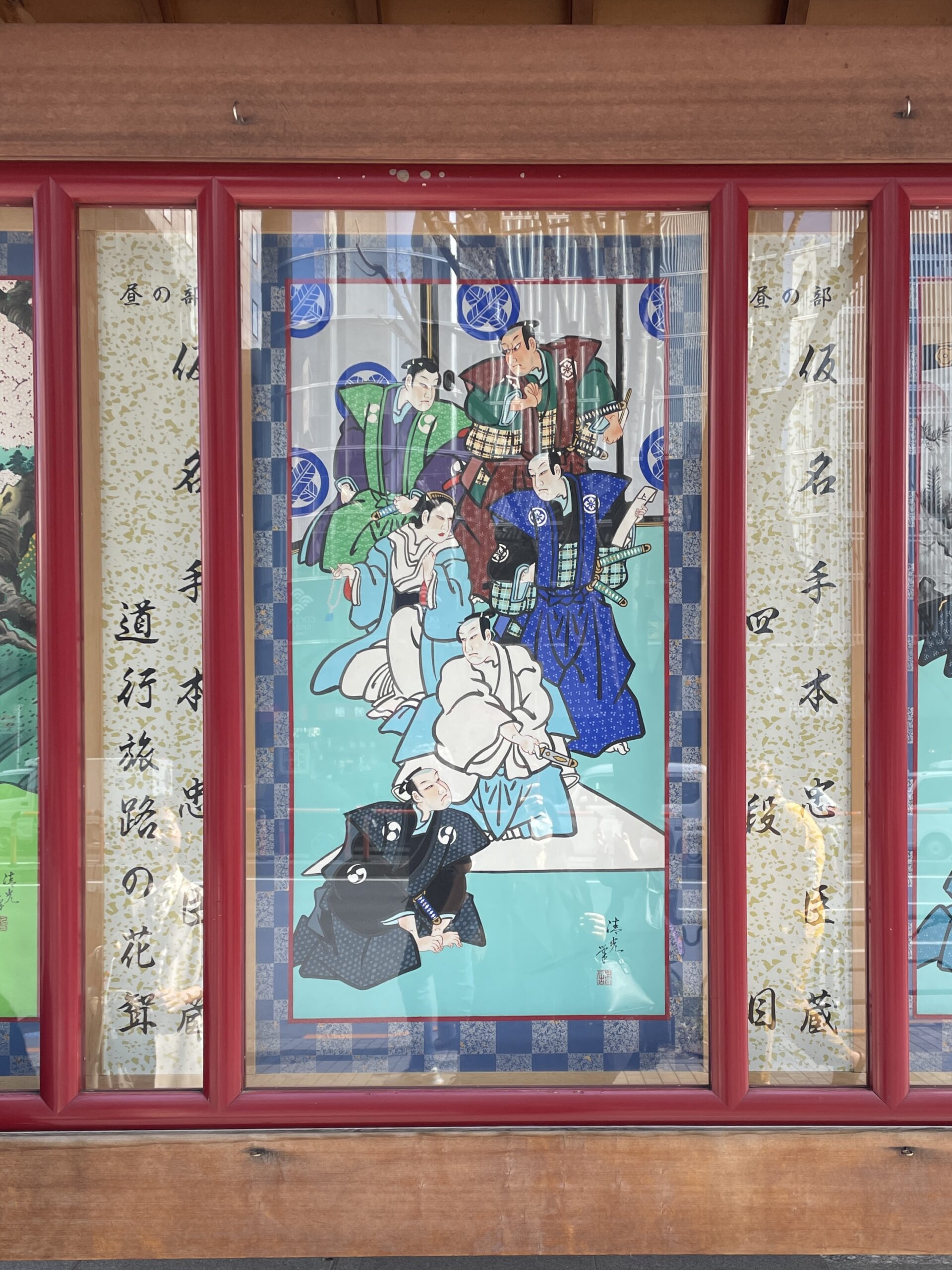
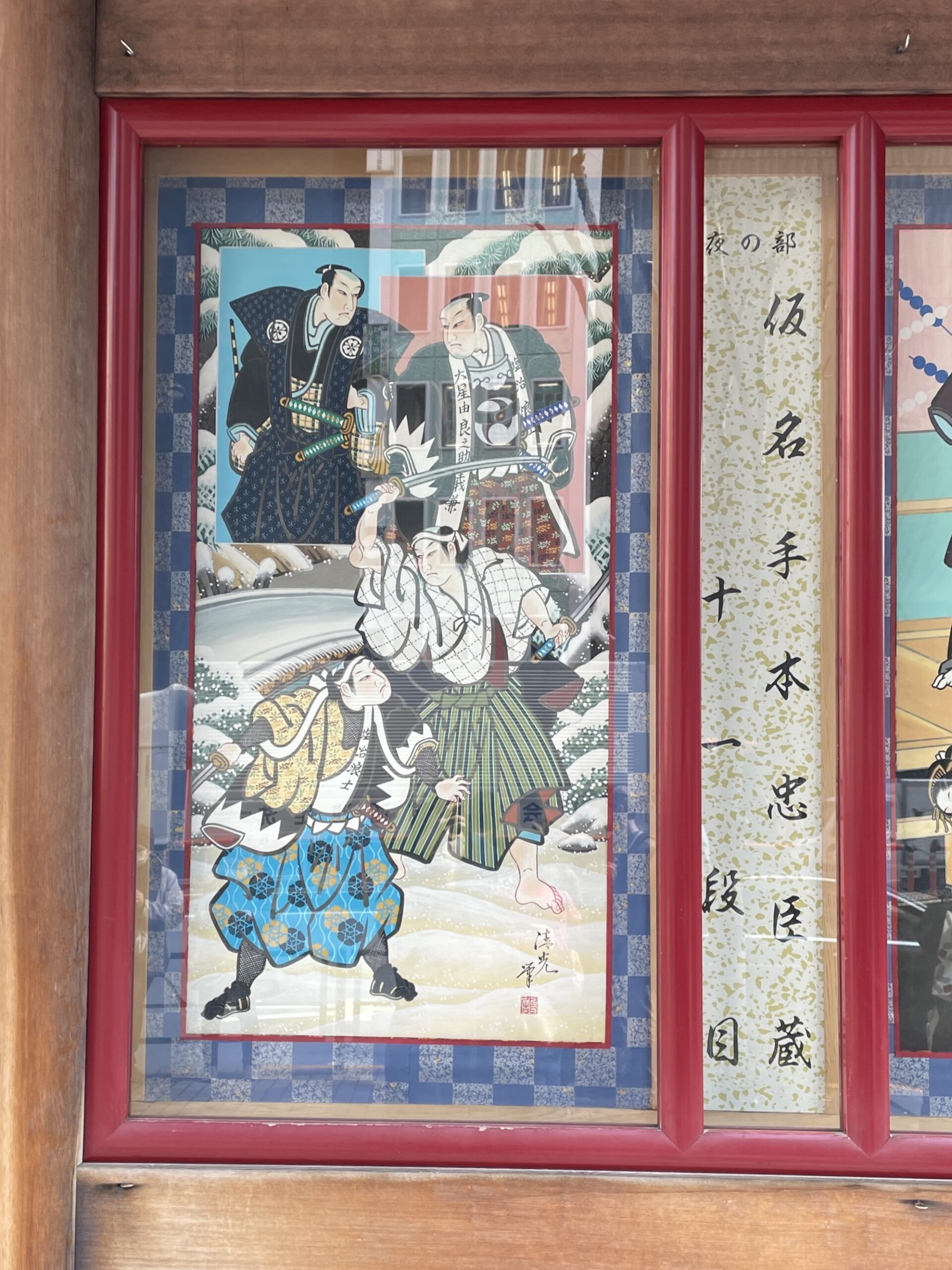
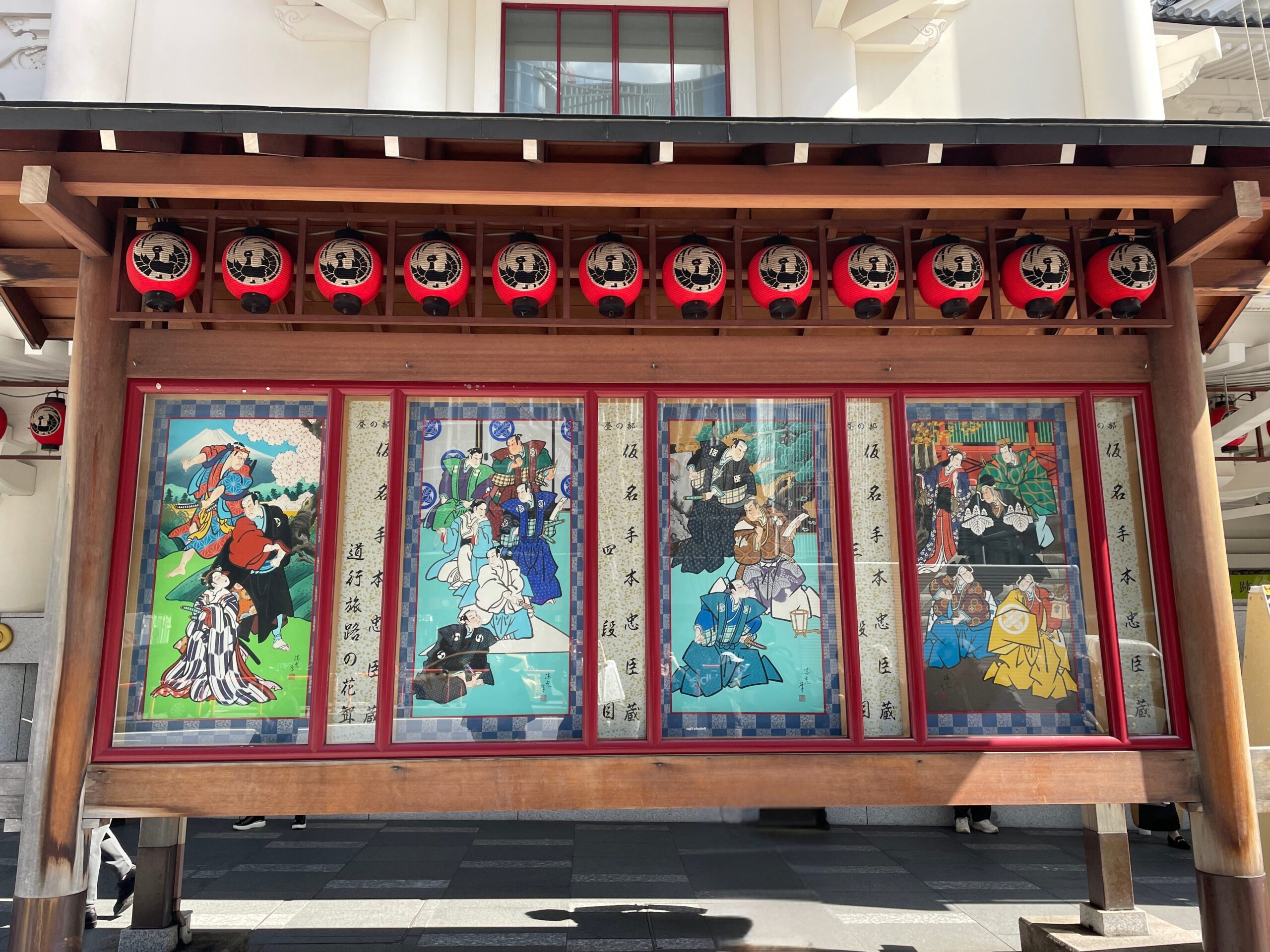
A hot-blooded Wakasanosuke and a commanding Yuranosuke
Right from the Prologue, Ukon Onoe’s Momonoi Wakasanosuke was magnificent. Needled relentlessly by Moronao, he looked ready to reach for his sword at any moment — a young lord bursting with hot blood. That youth and heat came straight across the footlights and pulled me into the world of the story at once.
And then Act IV: Shōroku Onoe’s Ōboshi Yuranosuke. From Hangan’s seppuku to the surrender of the castle, the intensity was overwhelming… It is a quiet scene, and yet I couldn’t look away. Shōroku really is wonderful.
A bentō in the sajiki seats, and a medetai-yaki at the next interval
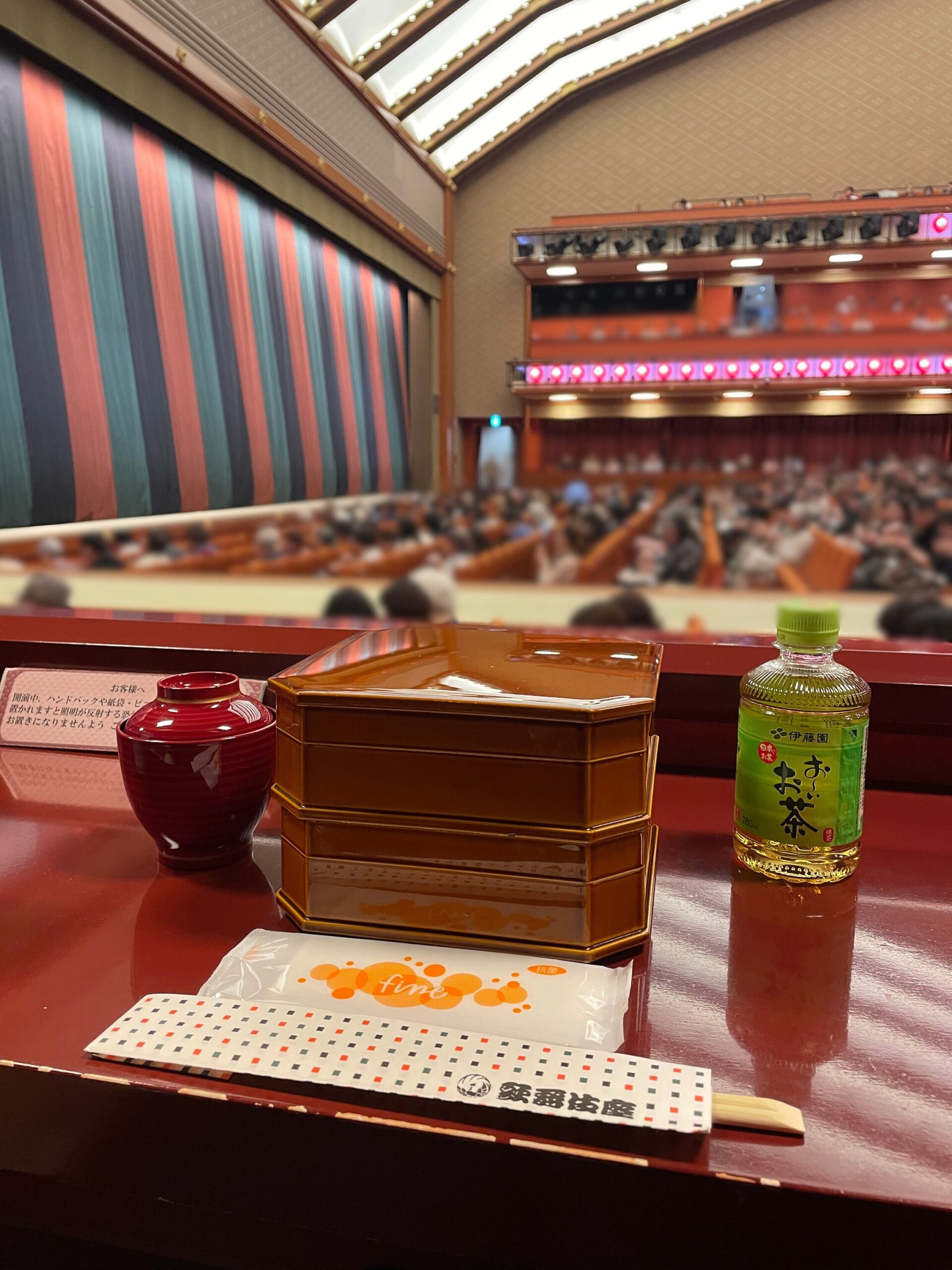
This time I was in a sajiki box seat on the west side. At the little table by my seat, I enjoyed the bentō I had reserved for the sajiki seats🍱A two-tiered box filled with sashimi and sushi, as lovely to look at as to eat. I kept eating right up to the end of the interval. Gochisōsama.
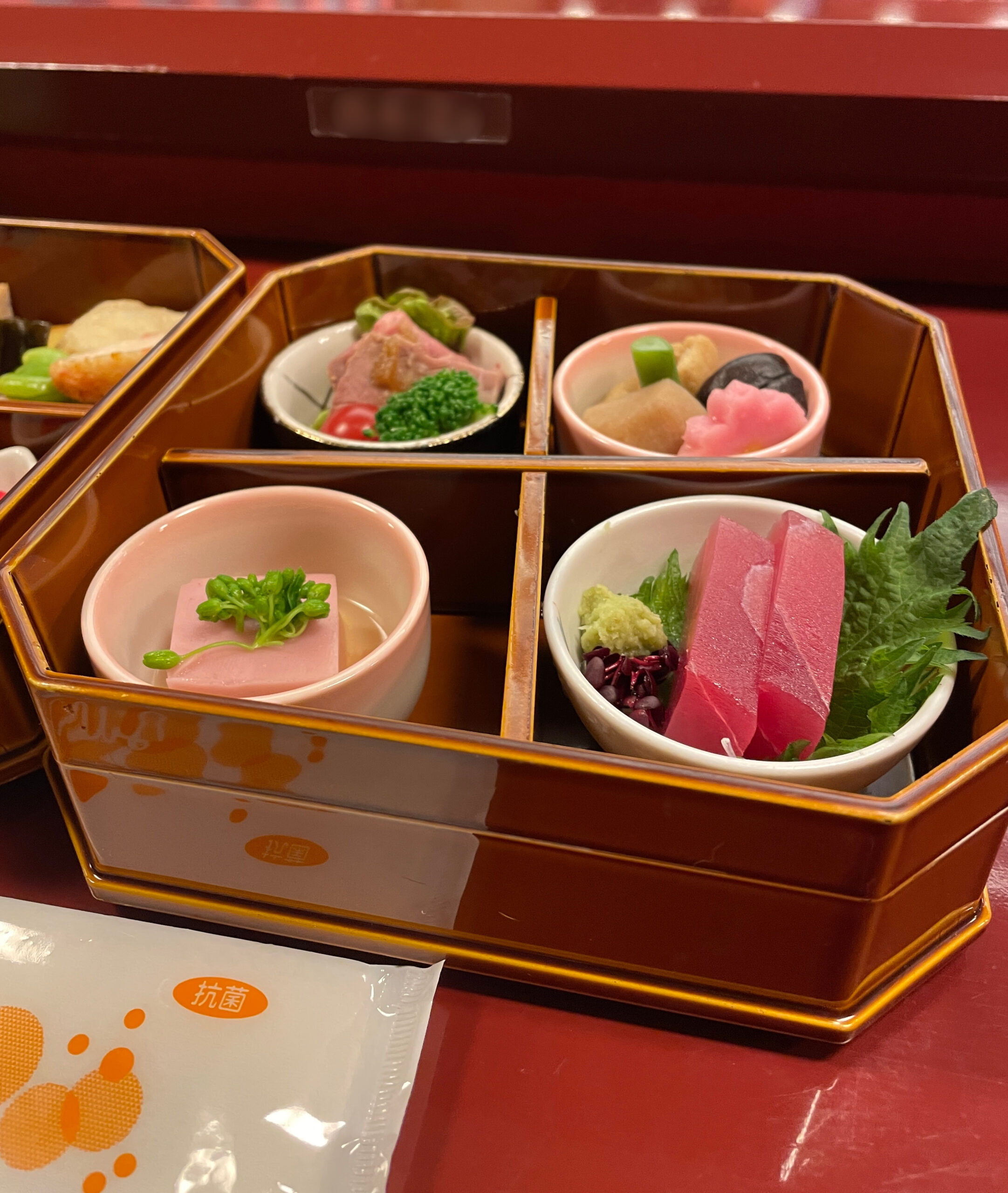
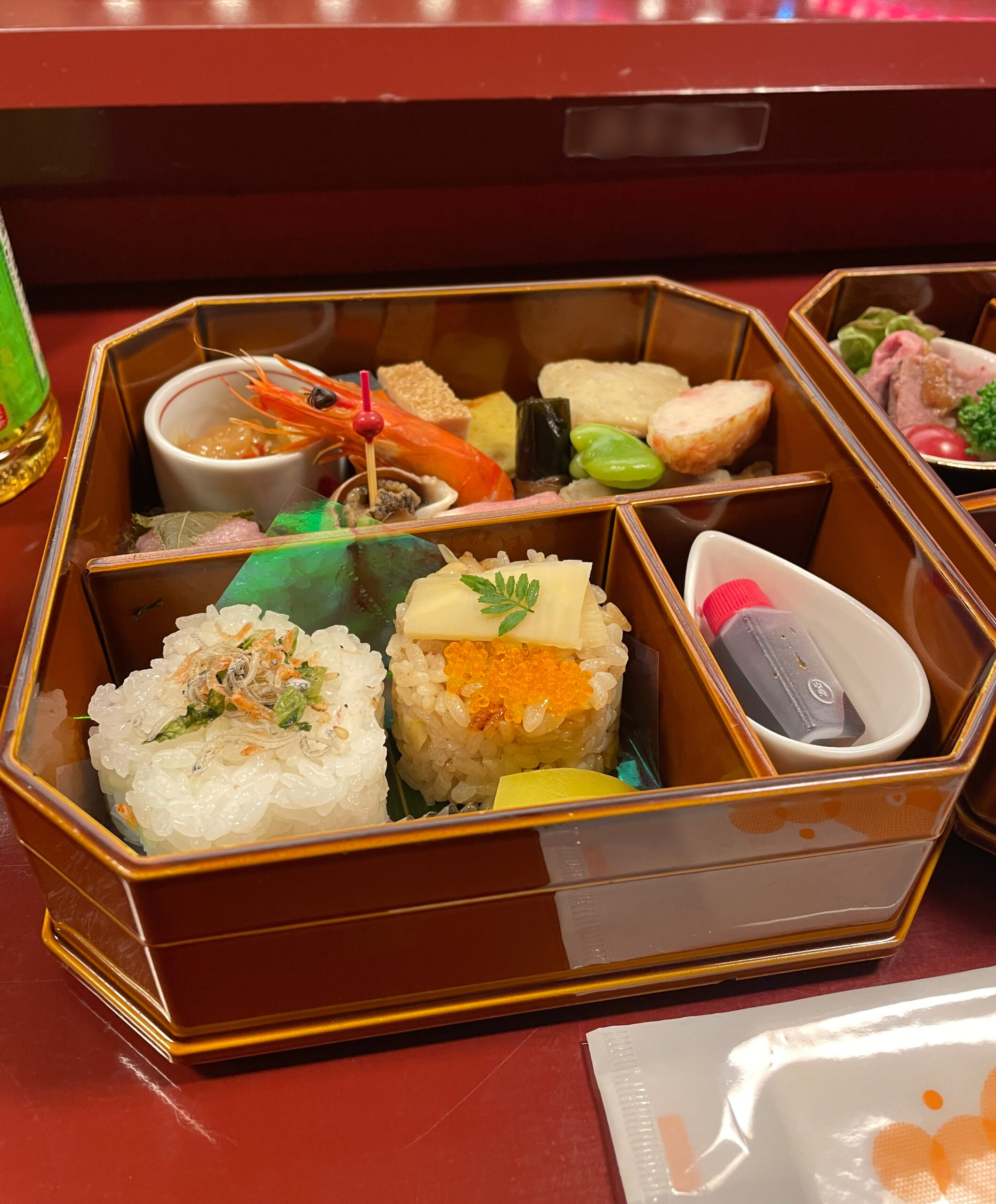
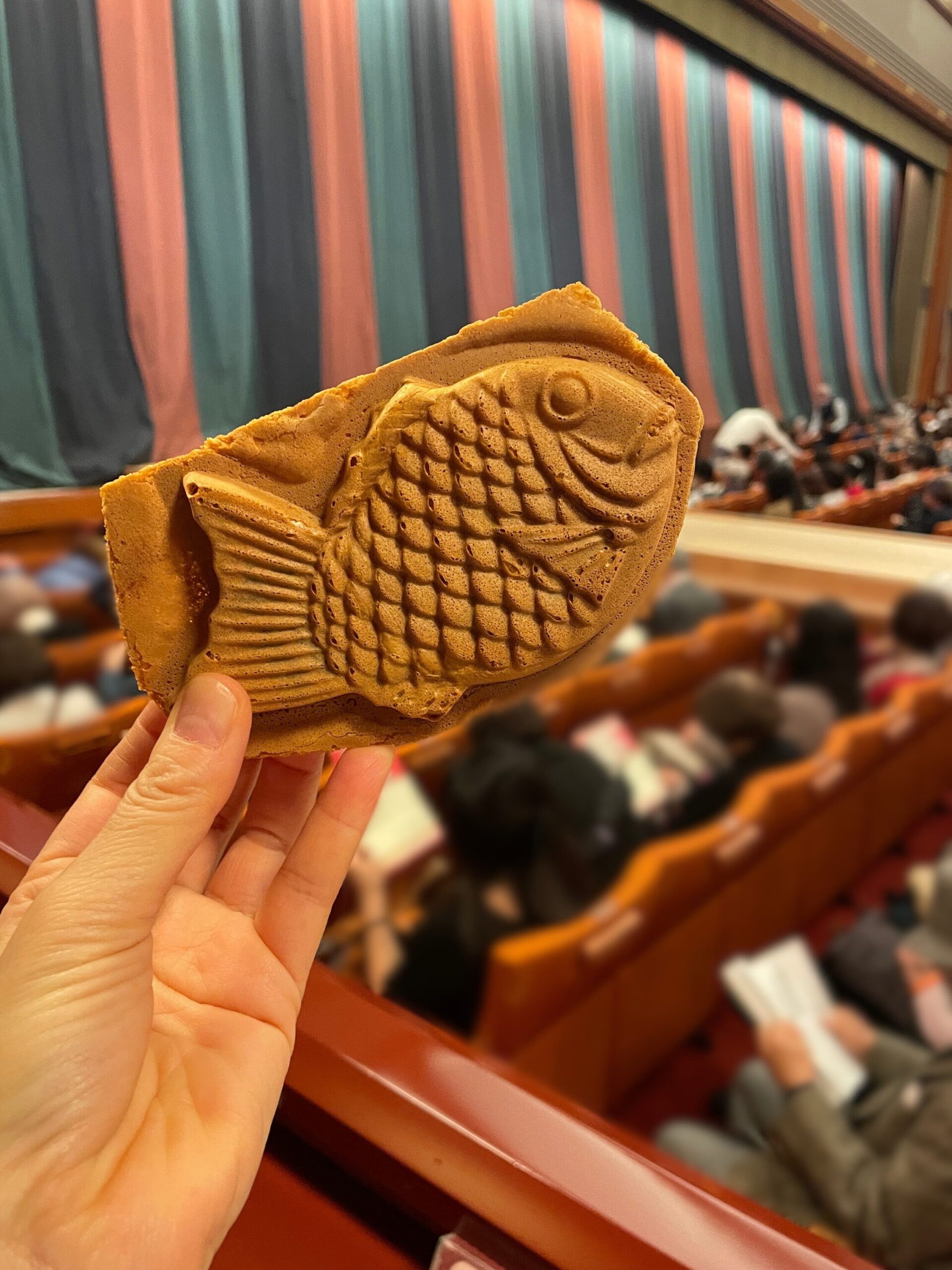
And at the next interval: a medetai-yaki🐟The bentō and the medetai-yaki — a two-stage strategy in which I surrender neither. A full-length production comes with several intervals, which is exactly what makes this kind of plan possible (laughs).
A wait in the lobby, then on to the Evening Show
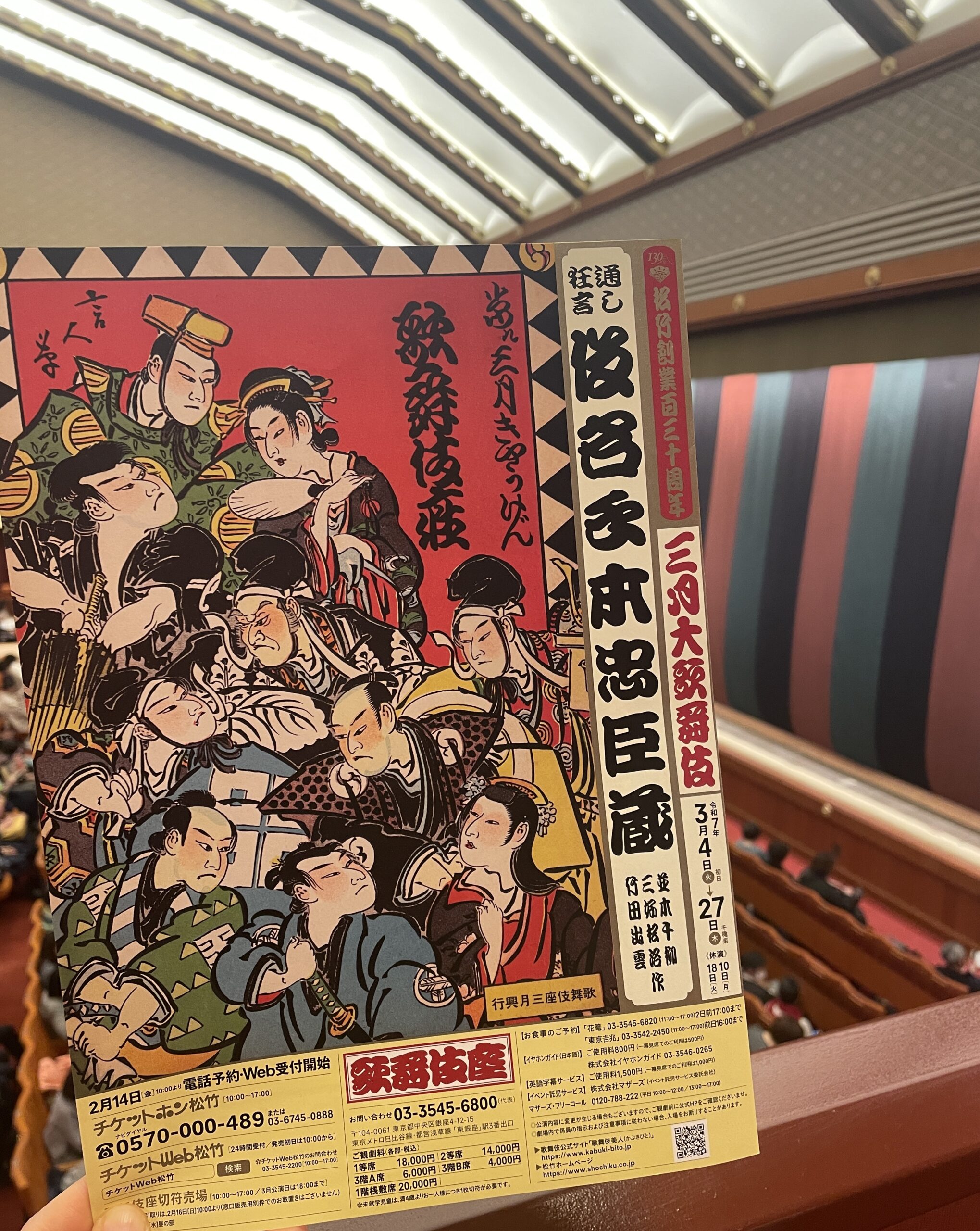
When the Matinee ended, I waited a little while in the lobby and went straight into the Evening Show. My seat moved house from the sajiki box to the east side of the second floor. Knowing the evening would be even richer, I could hardly wait — a very happy stretch of waiting time.
My own personal raid: the Ichiriki Teahouse
What I had been looking forward to most in the Evening Show was Act VII, the Ichiriki Teahouse in Gion. With my beloved Shichinosuke Nakamura as Okaru and the utterly wonderful Nizaemon Kataoka as Yuranosuke, it was the most glorious combination imaginable. In a way, this was my own personal raid (laughs).
The act has everything — comic interludes alongside tense, serious probing between the characters. It reminded me that this one act holds enough drama to be performed on its own; but in a full-length production you arrive at the teahouse with Kanpei’s story still fresh in your heart, and the emotional weight is completely different.
The whirlwind of Act XI
And then the real (?) raid, Act XI. The sheer force and fighting spirit of it left me almost forgetting to breathe. The actors’ intensity filled the stage until the air in the auditorium seemed to thin. It swept by like a storm, and the curtain fell in what felt like an instant — all the more fleeting for how much I had been looking forward to it.
Final thoughts
From the picture boards in the morning to the raid at night, I watched the story through from beginning to end in a single day, thoroughly steeped in Chūshingura. My imaginings of what theatregoing must have felt like in the Edo period suddenly became much more vivid.
Kanadehon Chūshingura is a story that keeps you wanting to know what happens next, so if you ever come across a full-length production, do see both parts — pacing yourself and your stamina, of course. The sense of fulfilment at seeing it through to the raid was something special.