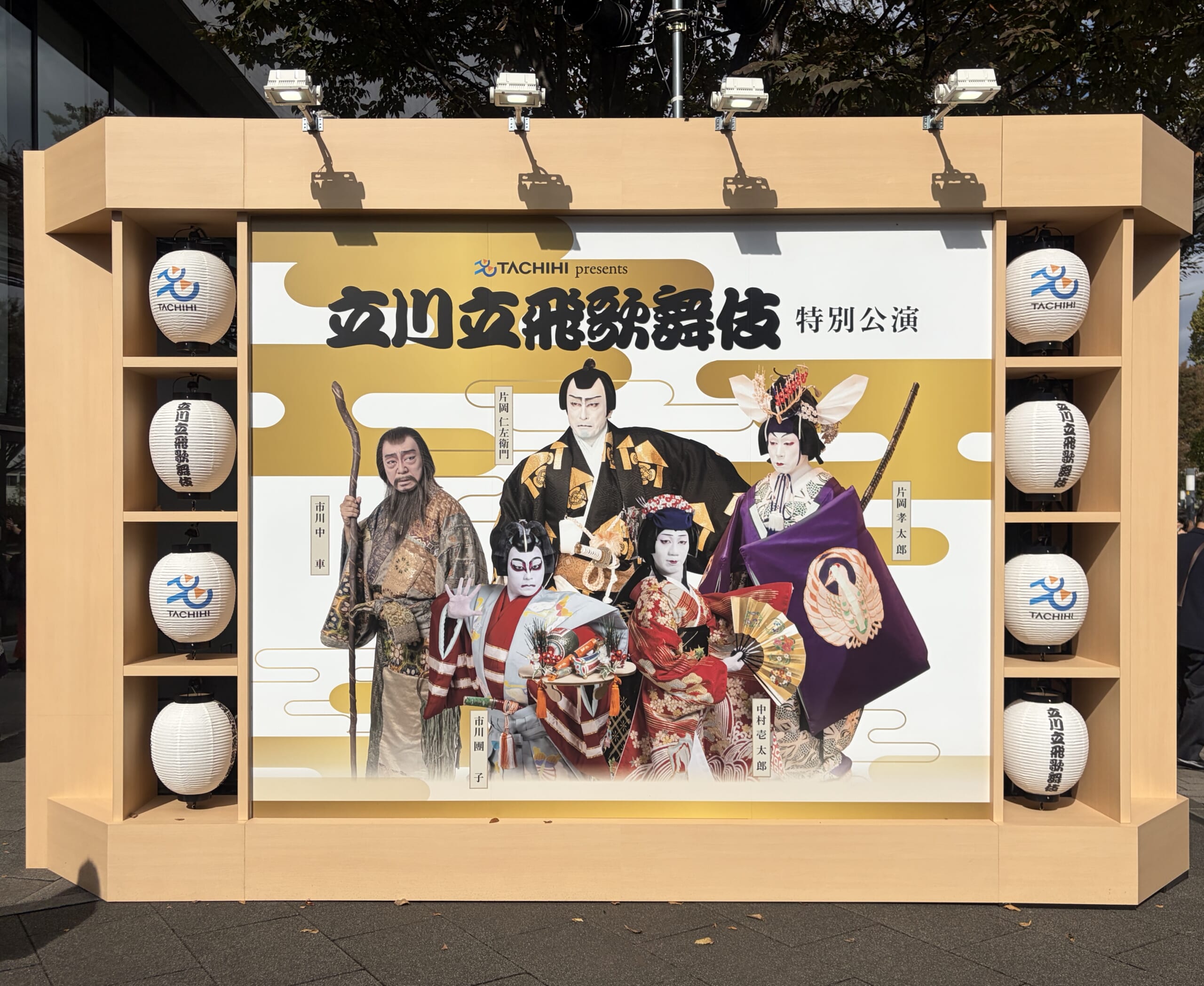
Step out of the station ticket gates: banners bearing the actors’ names. On the way home: sparkling illuminations. In Tachikawa, a town that rallies behind kabuki, Nizaemon Kataoka’s voice gave me goosebumps, while Kazutarō Nakamura flew past at exactly my eye level. Once again, today was the best.
What Is Tachikawa Tachihi Kabuki?
This kabuki performance is hosted by the Tachihi Group, based in Tachikawa. It began in 2023, so this year was its fourth run. The venue is Tachikawa Stage Garden. This year, Nizaemon Kataoka appeared for the first time, together with his son Takatarō Kataoka.
The actors I was most looking forward to: Nizaemon, En’ya Ichikawa, Danko Ichikawa, plus Chūsha Ichikawa, playing Shunkan for the first time. Of the three plays, Kumo no Hyōshimai was the only one I had never seen before.
From the Station to the Theatre, the Whole Town Is Kabuki
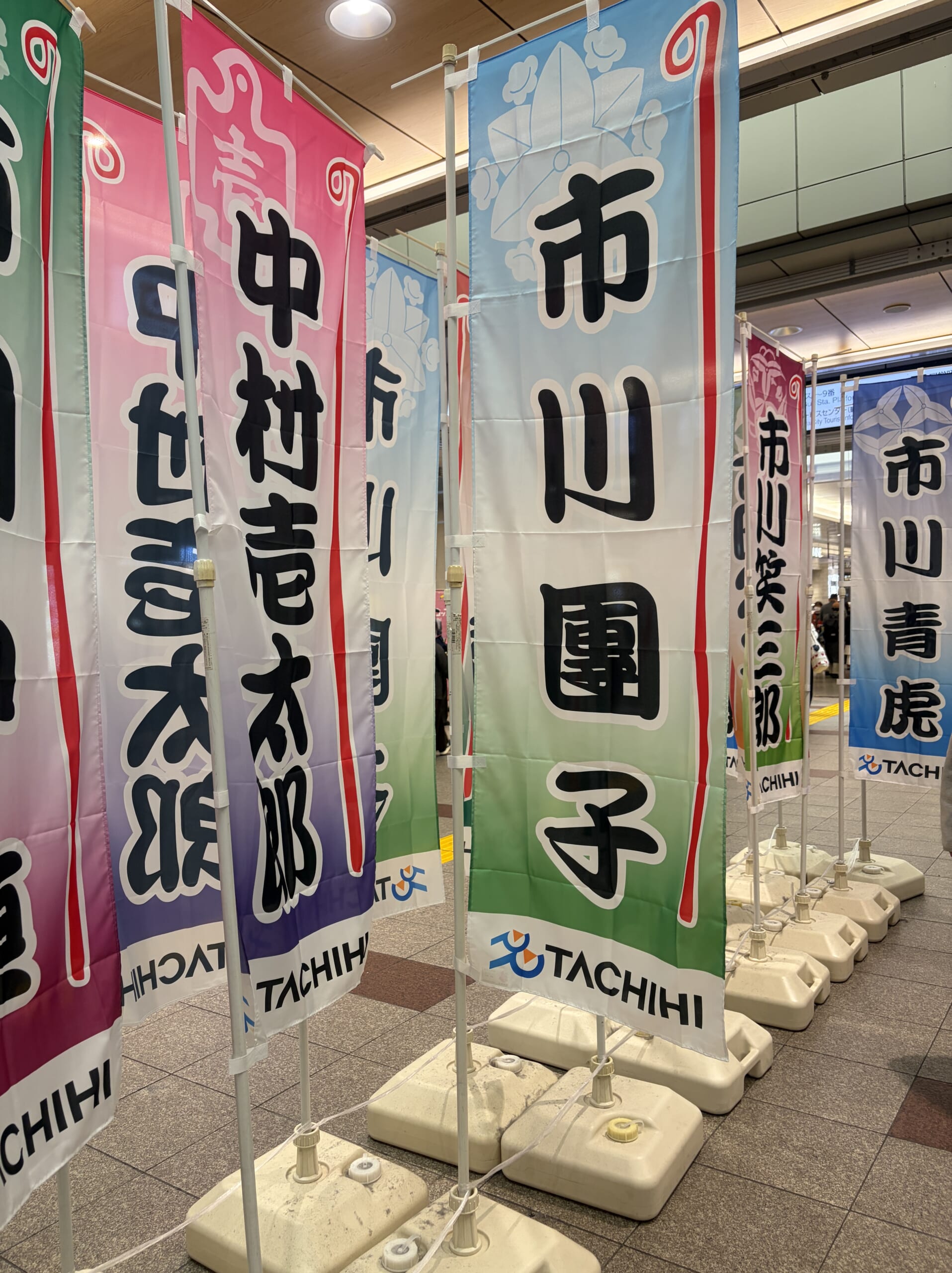
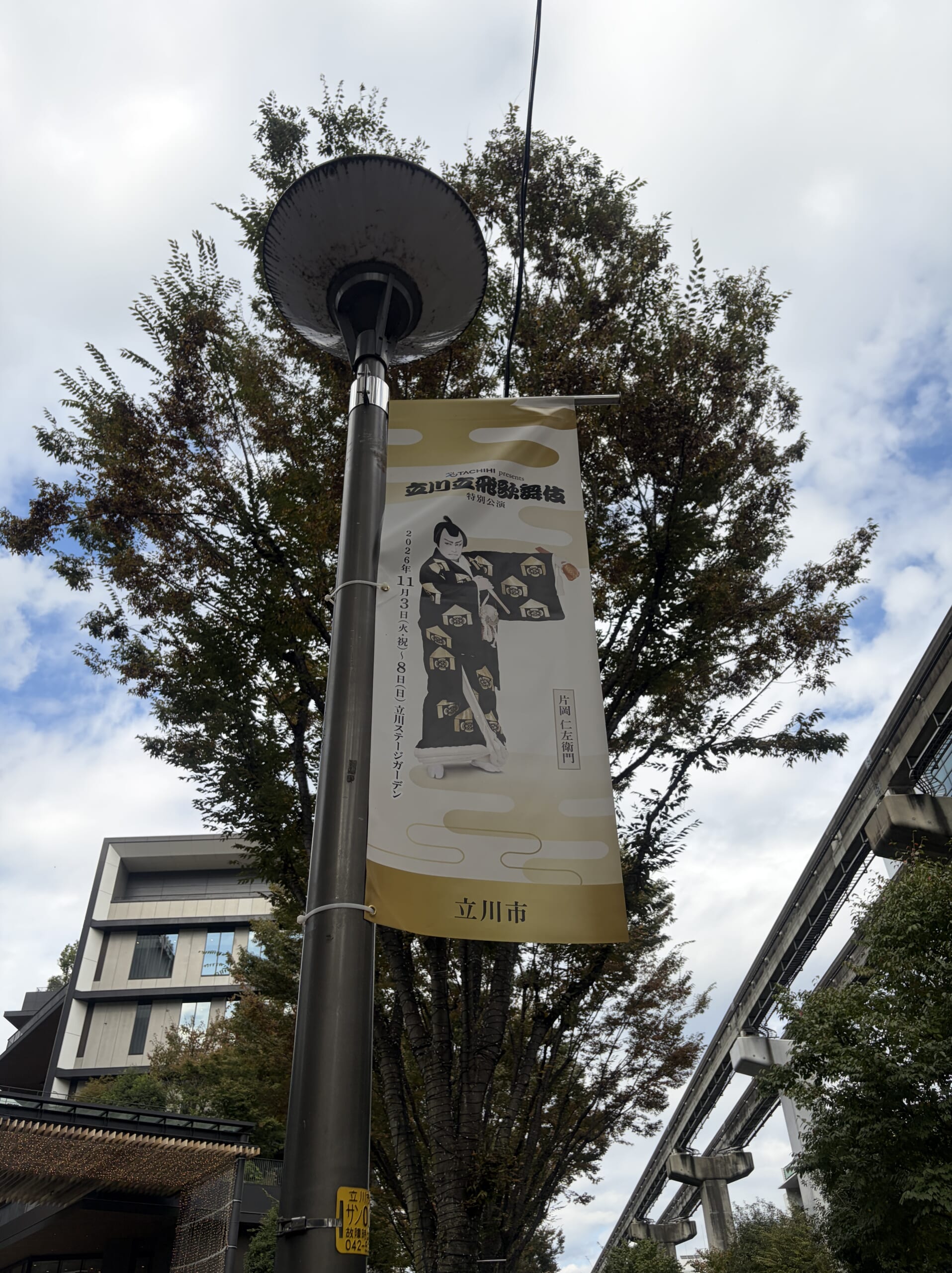
Right outside the ticket gates stood a row of nobori (tall banners) with the actors’ names. My excitement shot up the moment I arrived ⤴️ The street lamps all the way to the theatre carried tapestries too. The whole town seemed to be celebrating, which I loved.
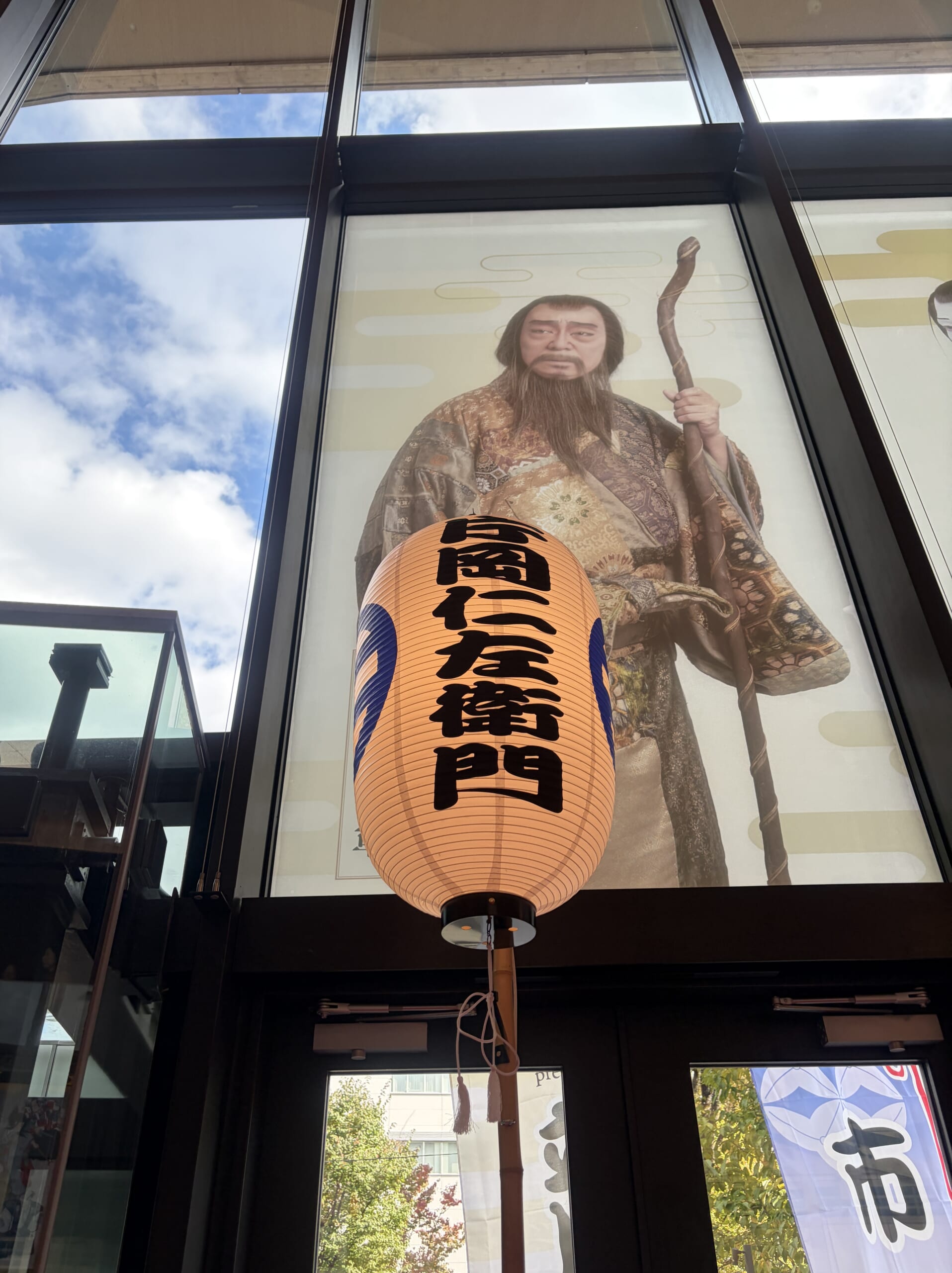
The theatre lobby was lined with lanterns bearing the actors’ names. However, Nizaemon’s lantern was hanging right in front of Chūsha’s photo… they could have thought a little more about the placement, right? 😂 Above the stage, too, hung red lanterns with family crests. I love Kazutarō’s crest, the character for “ichi” (one) from his name.
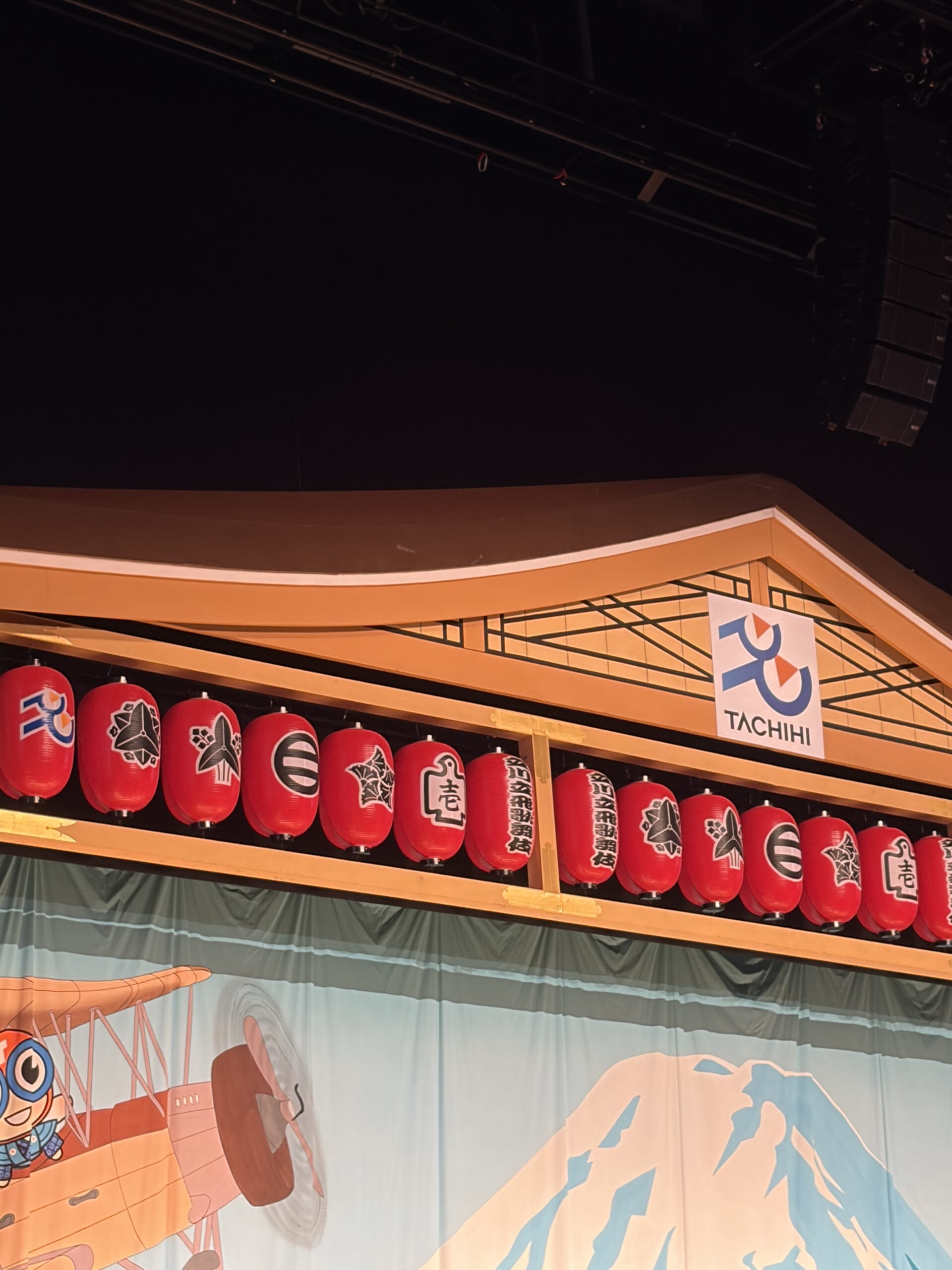
Opening Remarks, Commentary, Plus a Photo Session I Missed
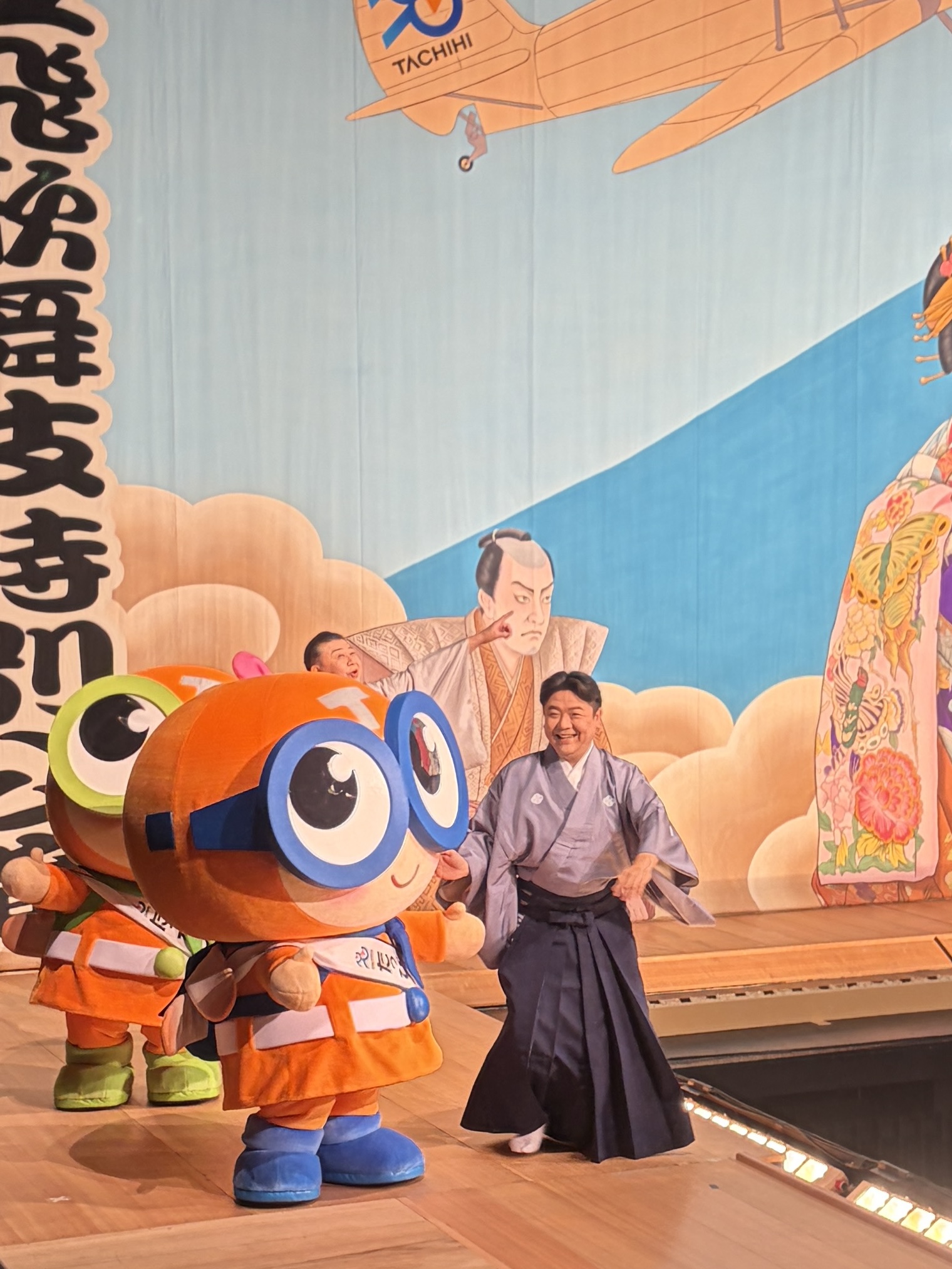
The show opened with a greeting from Chūsha. His face looked so bright; it was lovely to see. Next came the commentary: Seiko Ichikawa’s explanation was perfect, while En’ya pretended to get bored halfway through, keeping the audience laughing. En’ya is wonderful just standing there. I adore him.
After the commentary, Tappi-kun with Tappi-chan (the Tachihi Group’s mascots) came out too, for a photo session. However, as always, I had switched my phone off before the curtain went up, so it took ages to start up. In the end I barely got any shots. So sad! My big chance to photograph En’ya! When there’s a photo session, please announce “Keep your phones on silent” instead. I just can’t make it in time!
Three Plays Seen from the Second Floor
My seat was near the front of the second floor. A little far from the stage, yet the view was open, so it was easy to see. This time, En’ya appeared in all three plays. I had been quietly, hugely looking forward to that, yet somehow I don’t remember all that much of him. Why is that? (haha)
Kotobuki Soga no Taimen
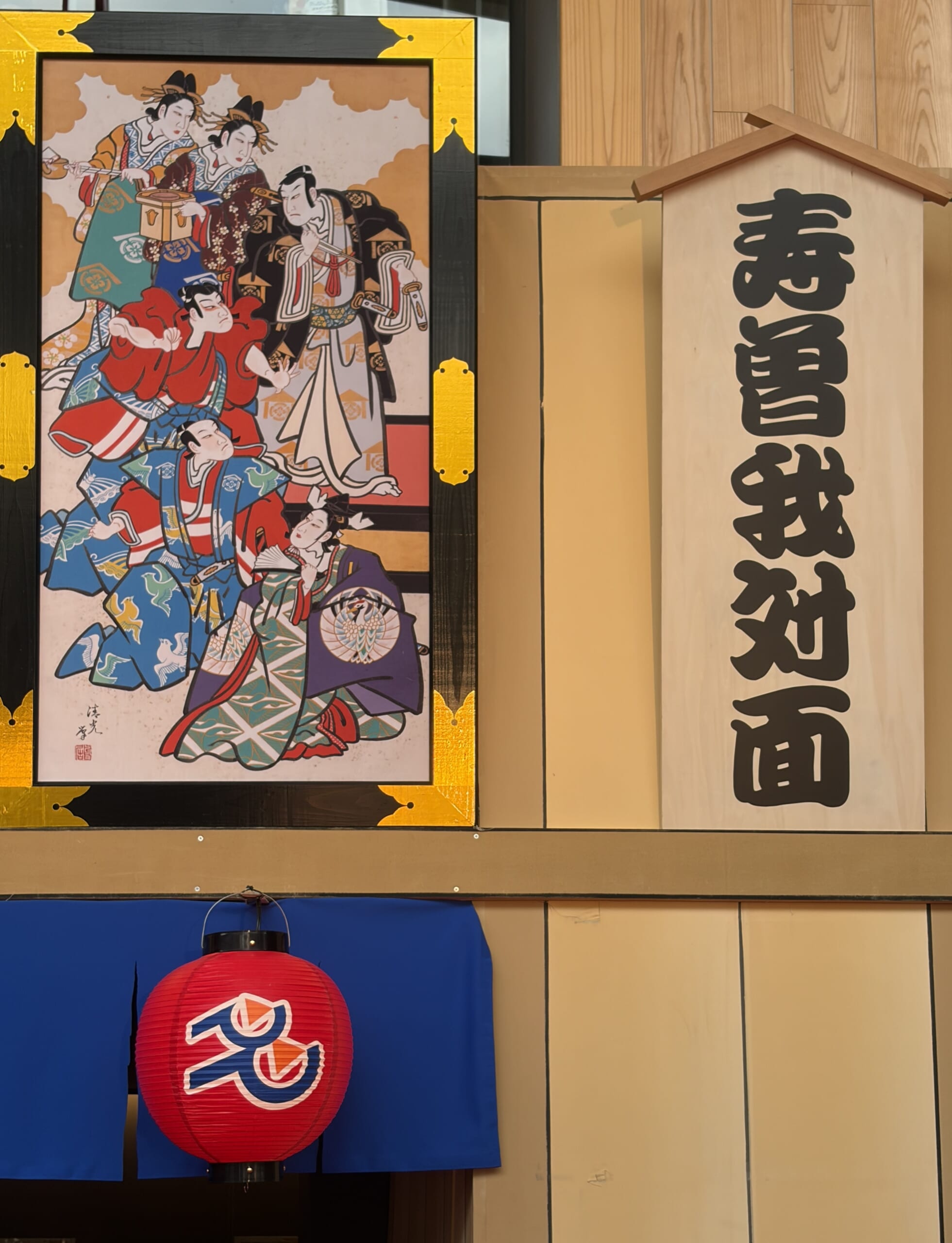
The Soga brothers, Jūrō with his younger brother Gorō, arrive at the mansion of Kudō Suketsune, the man who killed their father. Before Nizaemon’s Kudō even appeared, I heard his voice from offstage, which already gave me goosebumps. Once he came on, he was simply cool.
Danko’s Gorō, pressing in on Kudō, had a beautifully low stance, while Kazutarō’s Jūrō, calming his brother, was as polished as ever. What I remember of En’ya’s Onio Shinzaemon is his superb build. The play ended in a beautiful tableau, leaving me with that classic “I’ve just watched kabuki!” satisfaction.
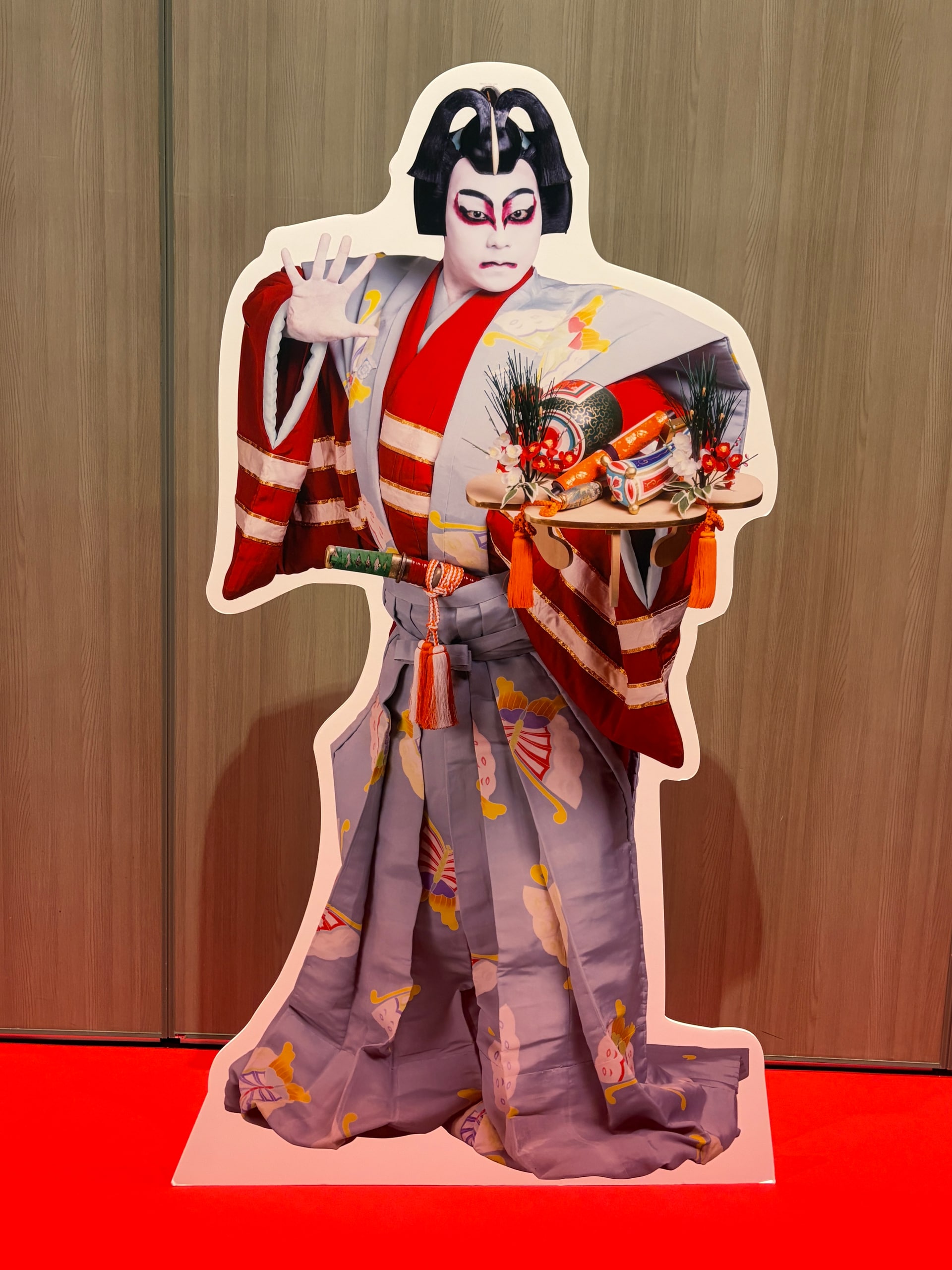
After the curtain came the tenugui-maki (throwing hand towels to the audience), as announced during the commentary. En’ya came over to the hanamichi (the walkway through the audience) side, yet the towels still didn’t reach me… I was kind of aiming for one!
Heike Nyogo no Shima: Shunkan
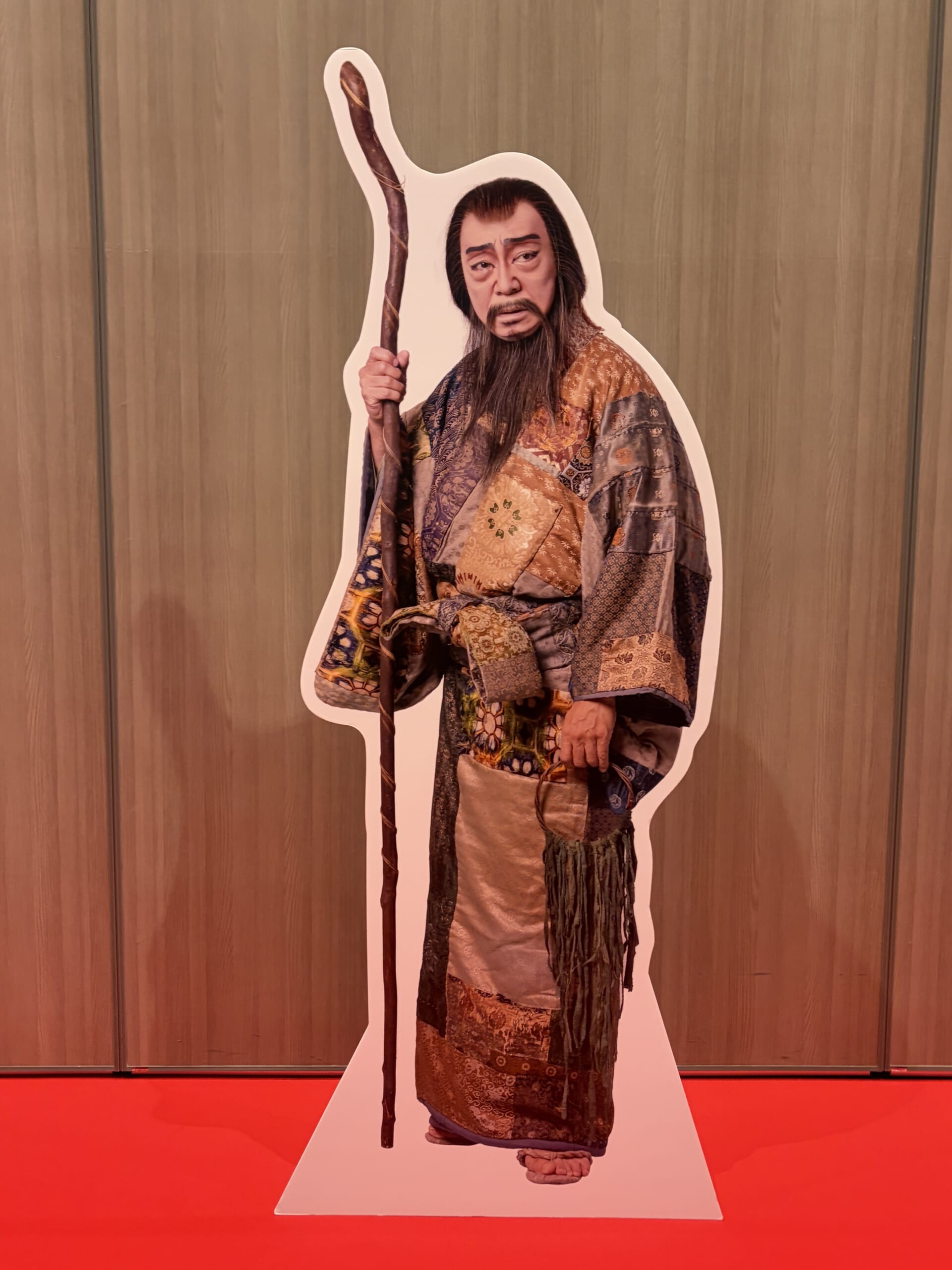
The story of Shunkan, exiled to the island of Kikaigashima, when a pardon ship arrives from the capital. From my seat, his entrance was hidden behind a rock. Applause broke out, so I thought, “Ah, he must have come out somewhere I can’t see” — then there he was, clear as day on the monitor beside the stage. That’s when I realised: if something is out of view, just check the monitor.
Chūsha’s Shunkan, haggard, radiated sorrow. When he learnt his name wasn’t on the pardon, I could see his anger, his panic; it was painful to watch. Kazutarō’s Chidori was so lovely that I wanted to cheer her on, so when Senoo (En’ya) refused to let her board the ship, my first thought was “How infuriating!”, which drew me right into the story.
When Shunkan kills Senoo, choosing to stay behind on the island himself, I sensed grace, resolve, despair, resentment, regret, all mixed together. Feelings beyond words. In the final scene, as he watches the ship sail away, there is the fear of being left behind, the loneliness, the battle with the immense solitude to come…
At Minamiza’s Kaomise (the annual all-star December programme) in 2025, I saw Nizaemon as Shunkan. I felt his Shunkan killed Senoo out of a wish for Chidori’s happiness, already prepared to accept his solitude. Chūsha’s Shunkan seemed to unleash his anger, which ended up saving Chidori as well: a Shunkan still holding on to hope for the future. Neither one is the correct one; the same Shunkan can feel so different. …It’s hard to put into words (haha). This is just how I took it, so I may well be wrong.
Kumo no Hyōshimai
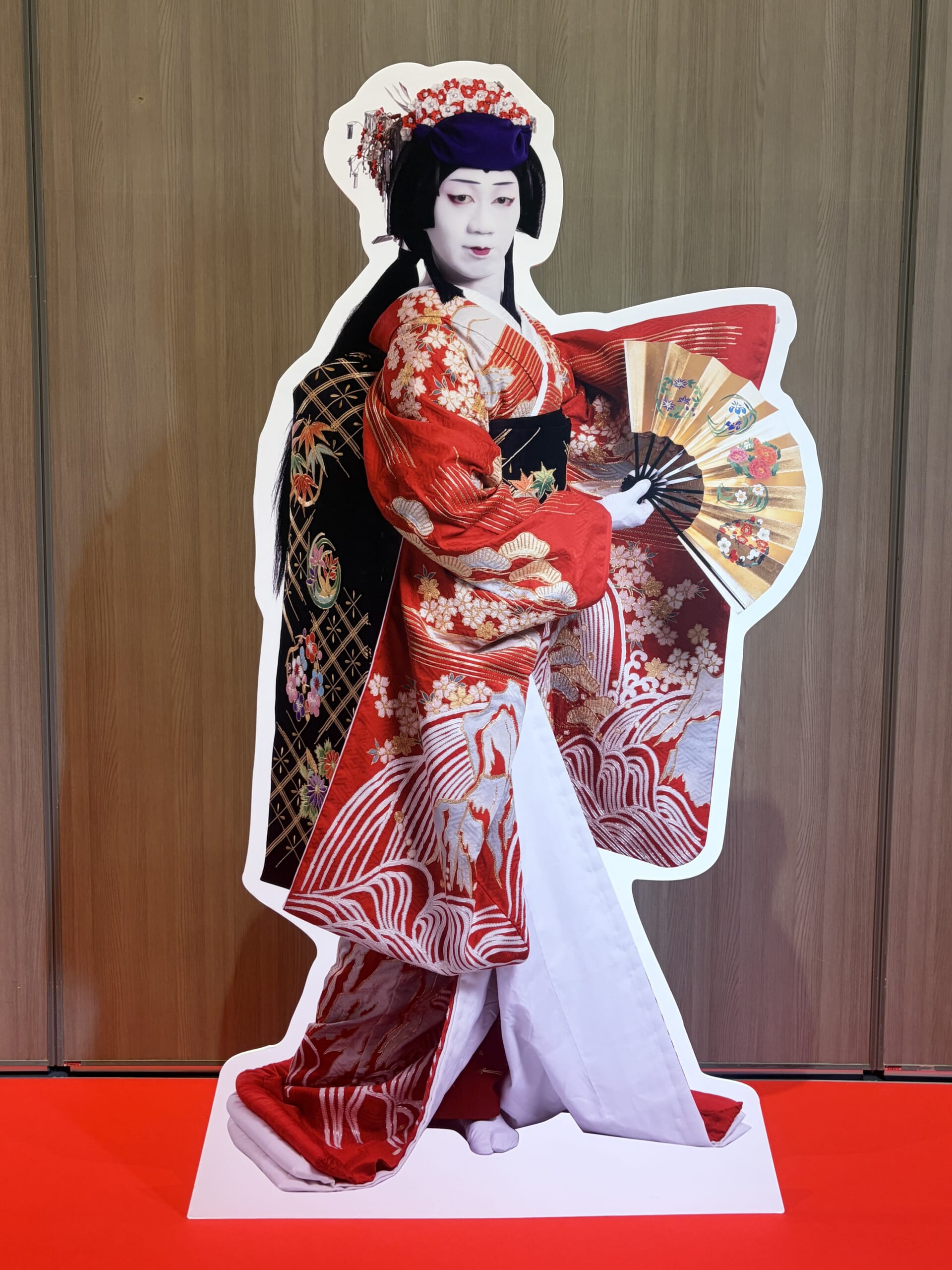
A dance drama in which Tsumagiku, who brings medicine to the ailing Minamoto no Raikō, turns out to be a spider spirit (“hyōshimai” means dancing while speaking lines to the rhythm). During Tsumagiku’s dance, I finally heard the ōzatsuma I had been looking forward to (a style of nagauta, kabuki’s sung music with shamisen, performed powerfully, almost like narration). The melody packs in everything cool about the shamisen plus nagauta. It gets my blood pumping! It makes me want to take up the shamisen. I wonder if it’s difficult…
Meanwhile, Emisaburō Ichikawa’s mosquito spirit was such fun to watch, his movements, his expressions, that the whole audience relaxed. At Minamiza’s kabuki version of Lupin III, he played Daisuke Jigen; this time, a mosquito spirit. Such a versatile actor.
Then, in the second half, Kazutarō threw out his balls of spider thread, but they wouldn’t unfurl, so he tried several times. These things happen. Still, quite a few of them did fail… Then, for the finale, Kazutarō’s chūnori (flying above the audience on wires)! The starting point was right at second-floor height, so Kazutarō was at exactly my eye level. I may have missed Shunkan’s entrance, but this moment was a perk of the second floor. So moving!
Based on the same legend as the Noh play Tsuchigumo, it shows its roots in Noh clearly, making it very approachable. Maybe because I’ve been exploring Noh lately, pieces like this feel familiar, which makes them fun.
Intervals Are Packed
There are two 30-minute intervals. They sound relaxing, but they’re actually quite busy. In the first, I headed to the merchandise stall, only to find Nizaemon’s acrylic stands already sold out… Please sell them on Shochiku’s online shop!
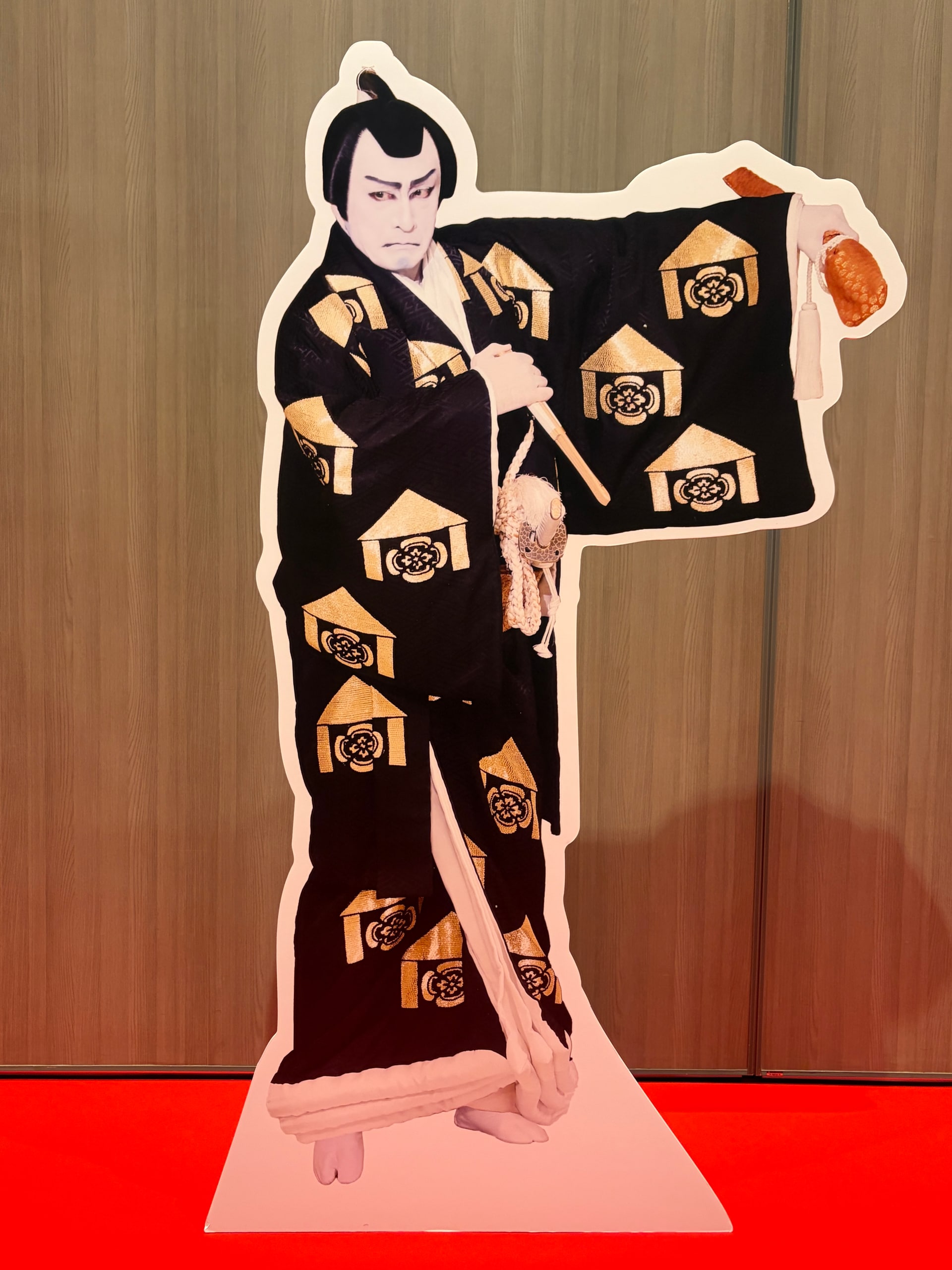
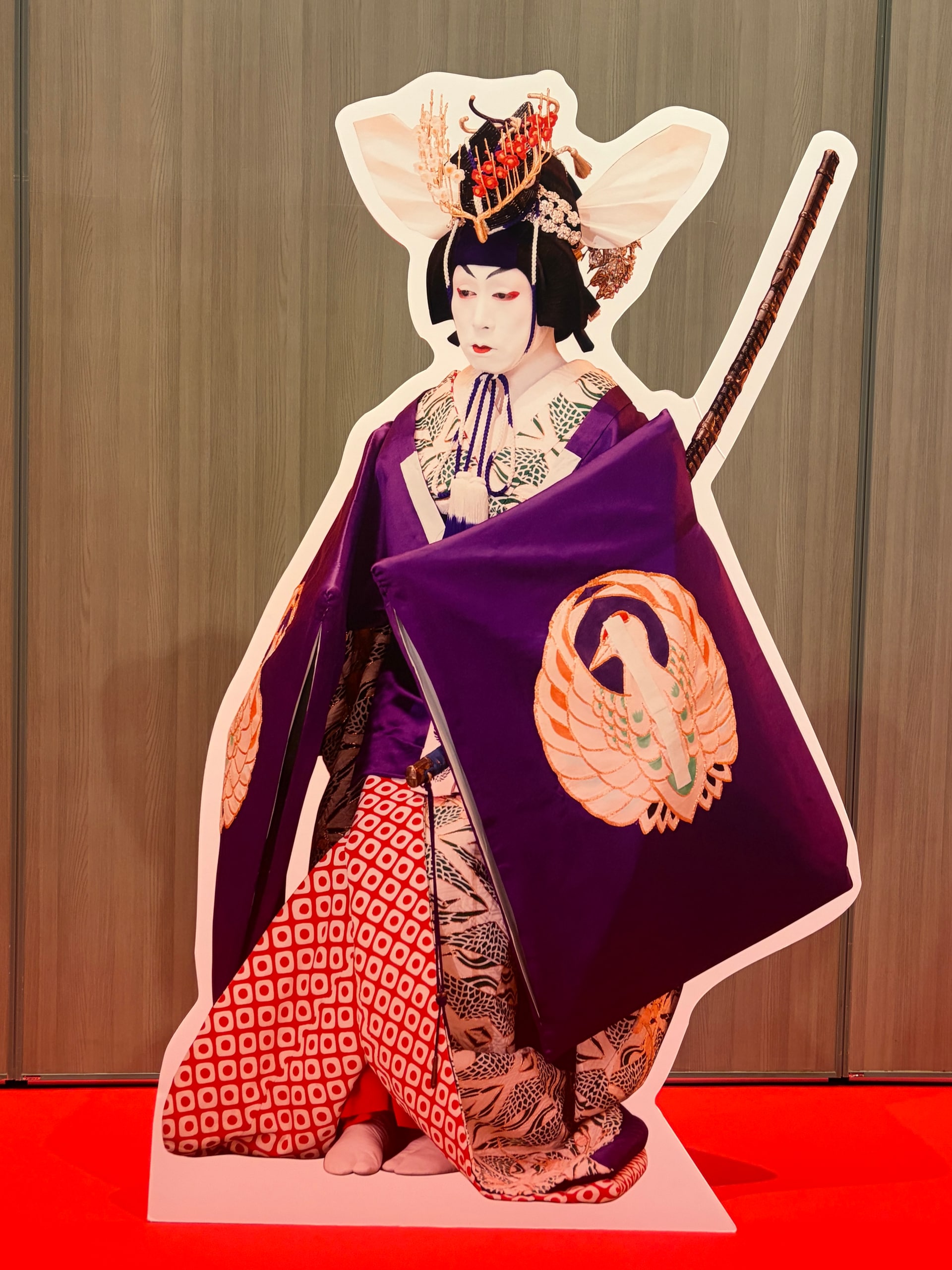
In the second-floor lobby, I bought a Maisen pocket sandwich. Even though it was so busy, the staff member was brisk, with a cheerful voice, which made it a pleasant purchase. Since it was a special edition with the show’s name branded on it, I took a souvenir photo with Nizaemon’s cut-out… a souvenir of what, exactly? 🐷
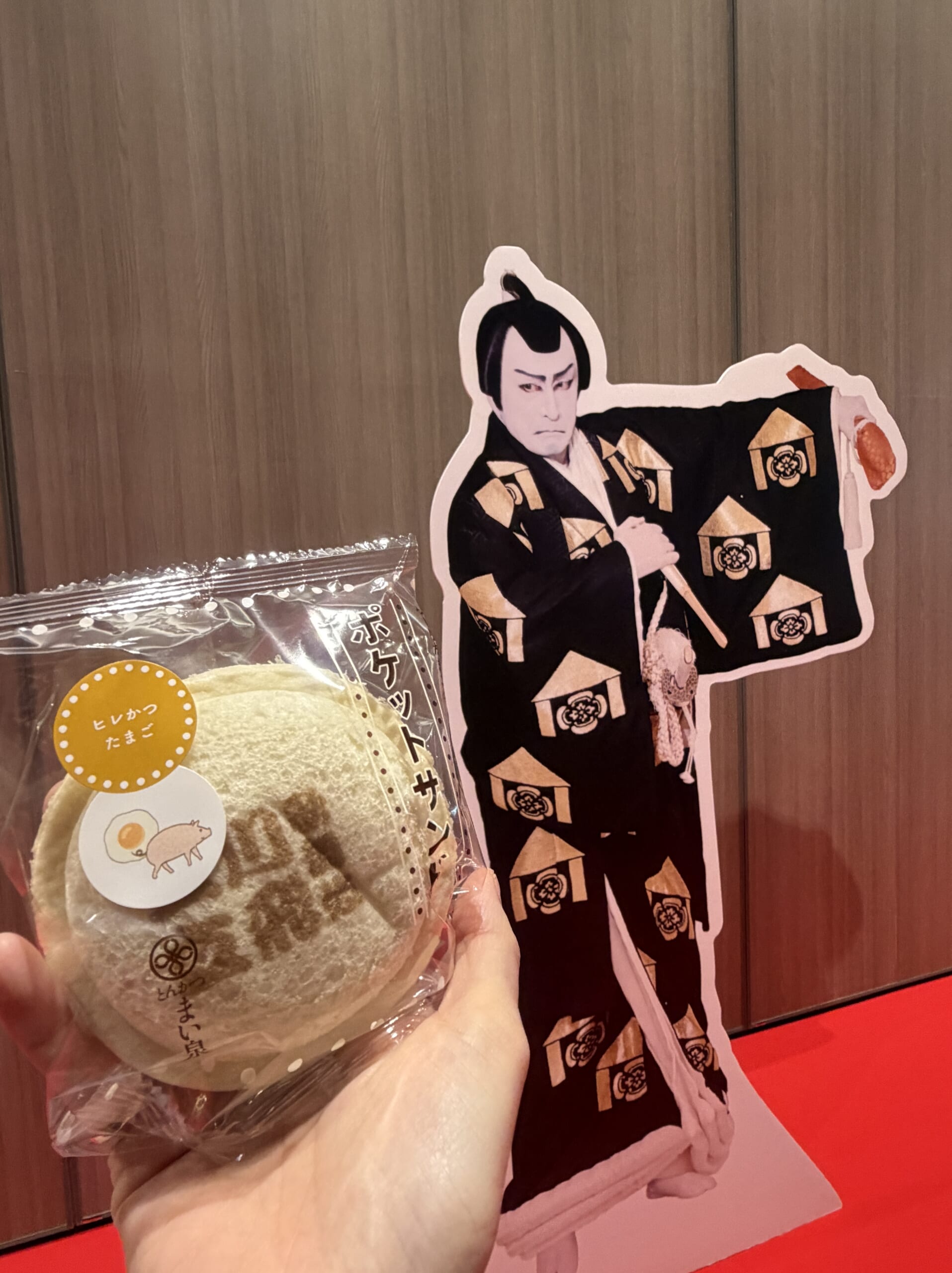
In the second interval, I photographed the life-size cut-outs, then read the programme. The whole venue felt a little restless, so I told myself not to rush, then took my break.
Summary
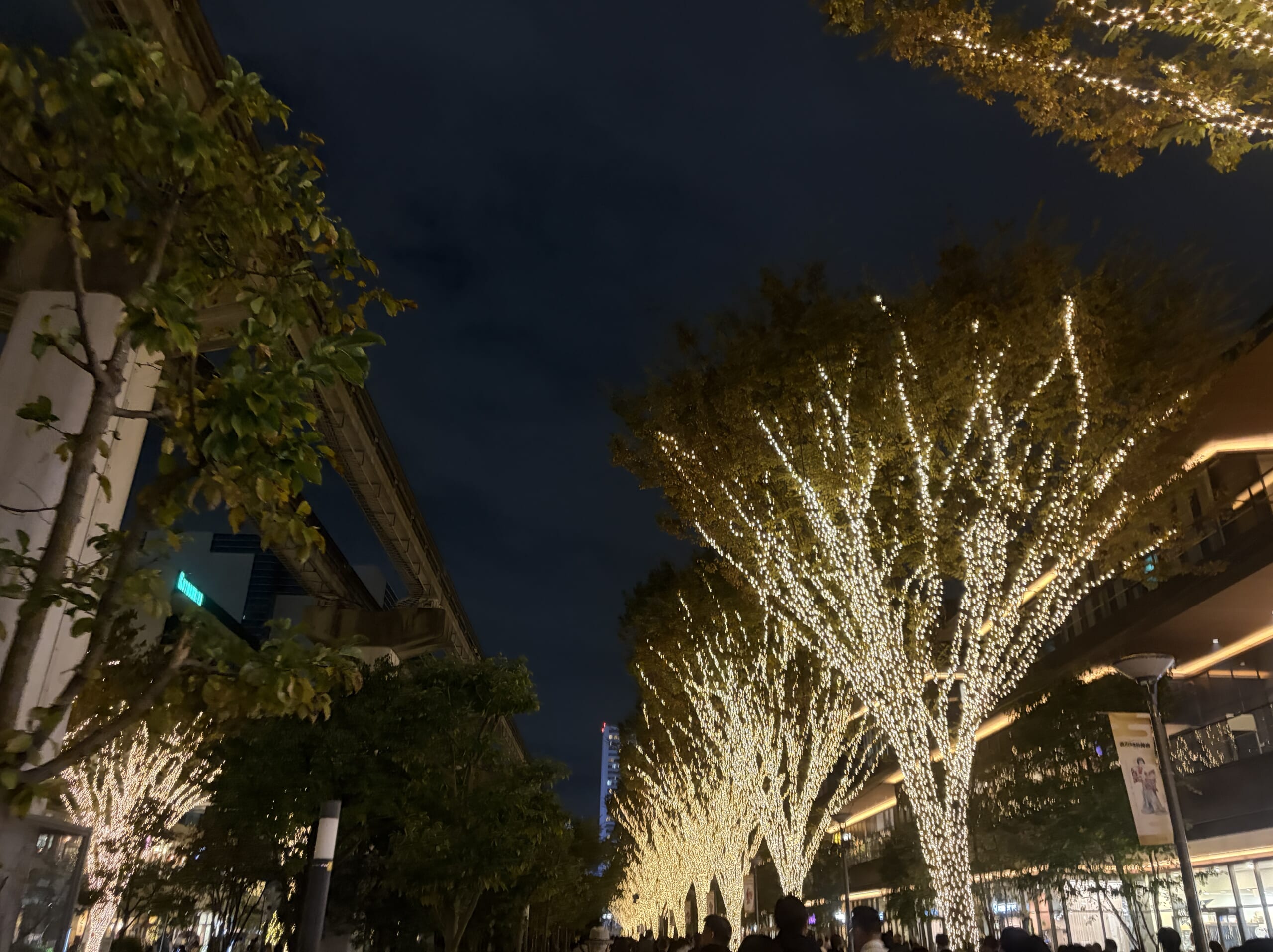
Outside, it was already pitch dark. The illuminations on the street right by the theatre were gorgeous; the slightly chilly autumn breeze mixed with the winter air, with the night all sparkling. Honestly, this may be what stayed with me most (haha).
From the banners at the station to the walk home, being able to enjoy kabuki throughout the whole town is what makes Tachikawa Tachihi Kabuki special. I headed home thinking what a lovely day it had been. I love winter nights! I want that acrylic stand!!!