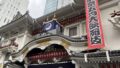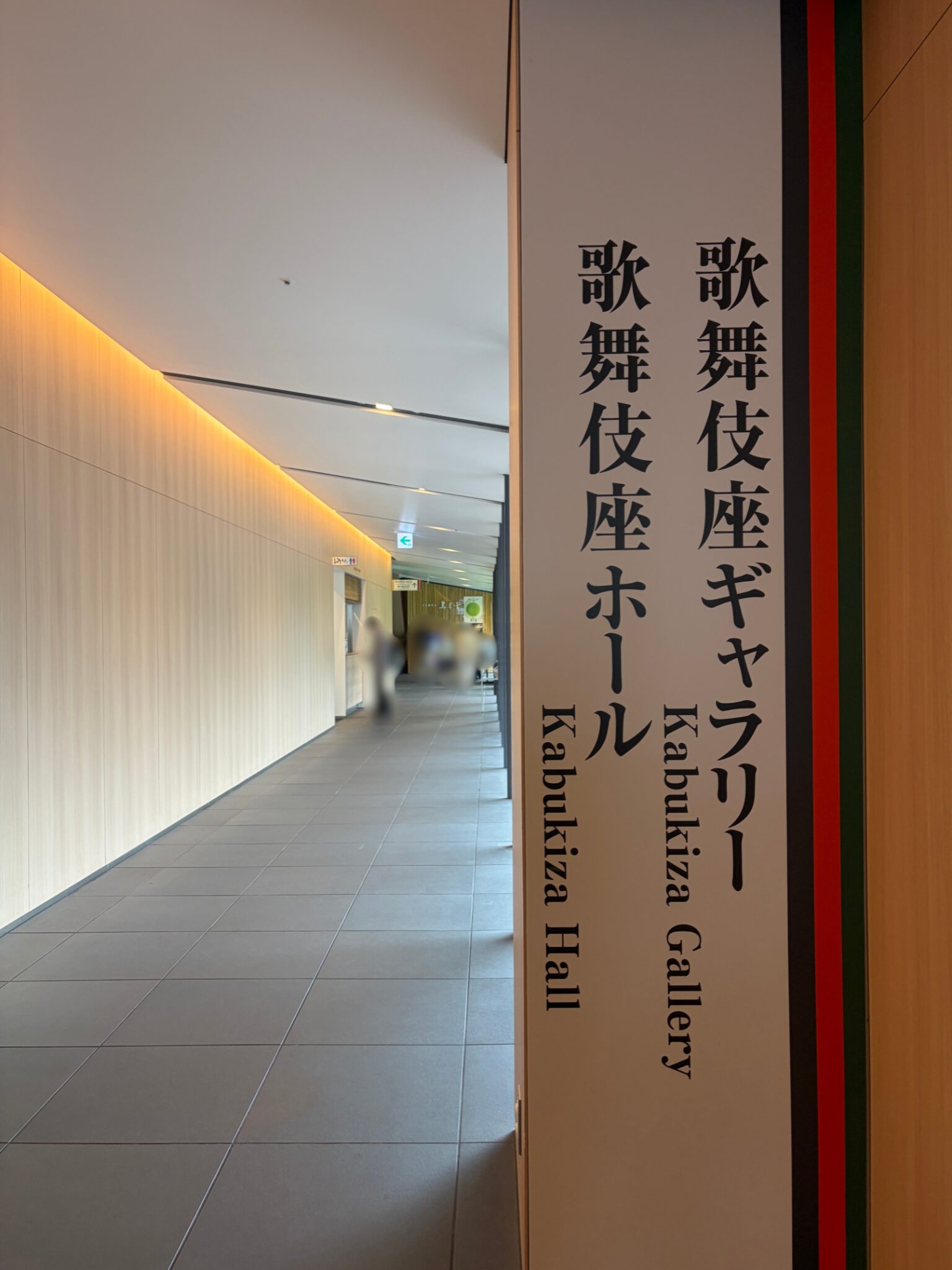
Still warm from the matinee of the May Dangiku Kabuki Festival, I had a little time to spare, so I popped into the Kabukiza Gallery on the 5th floor of Kabukiza Tower. Yet another wonderful day.
The Elevator Took Me to the 7th Floor
After the matinee, with a bit of time on my hands, I hopped into an elevator heading for the gallery on the 5th floor. I pressed “5,” but… the button wouldn’t light up. It wouldn’t stop. I ended up on the 7th floor.
Turns out this elevator was for the Kabukiza Tower offices and basically skips the 5th floor. I found a bench on the quiet 7th floor and zoned out for a while (lol). I even had some tea — just casually turned into someone taking a break on the 7th floor.
Well, this is the kind of detour you can enjoy when you travel solo, I suppose. Back down to the 1st floor, switched to a different elevator, and finally — arrived at the 5th floor.
What is the Kabukiza Gallery?
The Kabukiza Gallery is a permanent exhibition space on the 5th floor of Kabukiza Tower. Through panels and models, it offers an accessible introduction to the history of kabuki and the mechanics of its stage. The same floor also has a café and a rooftop garden, making it a perfect spot to visit around showtime.
Beginner’s tip: Use the elevator marked Rooftop Garden / Gallery. Other elevators serve the office floors, which is how I ended up on the 7th floor 💔. It sounds obvious, but checking the destination first matters (lol).
Compact, but Surprisingly Rich
The gallery itself isn’t huge — you can take in the exhibits at a leisurely pace. But each panel — kabuki history, old programs (tsuke-cho), stage mechanics — is neatly summarized, and I found myself thinking, “Wow, kabuki really is fascinating.”
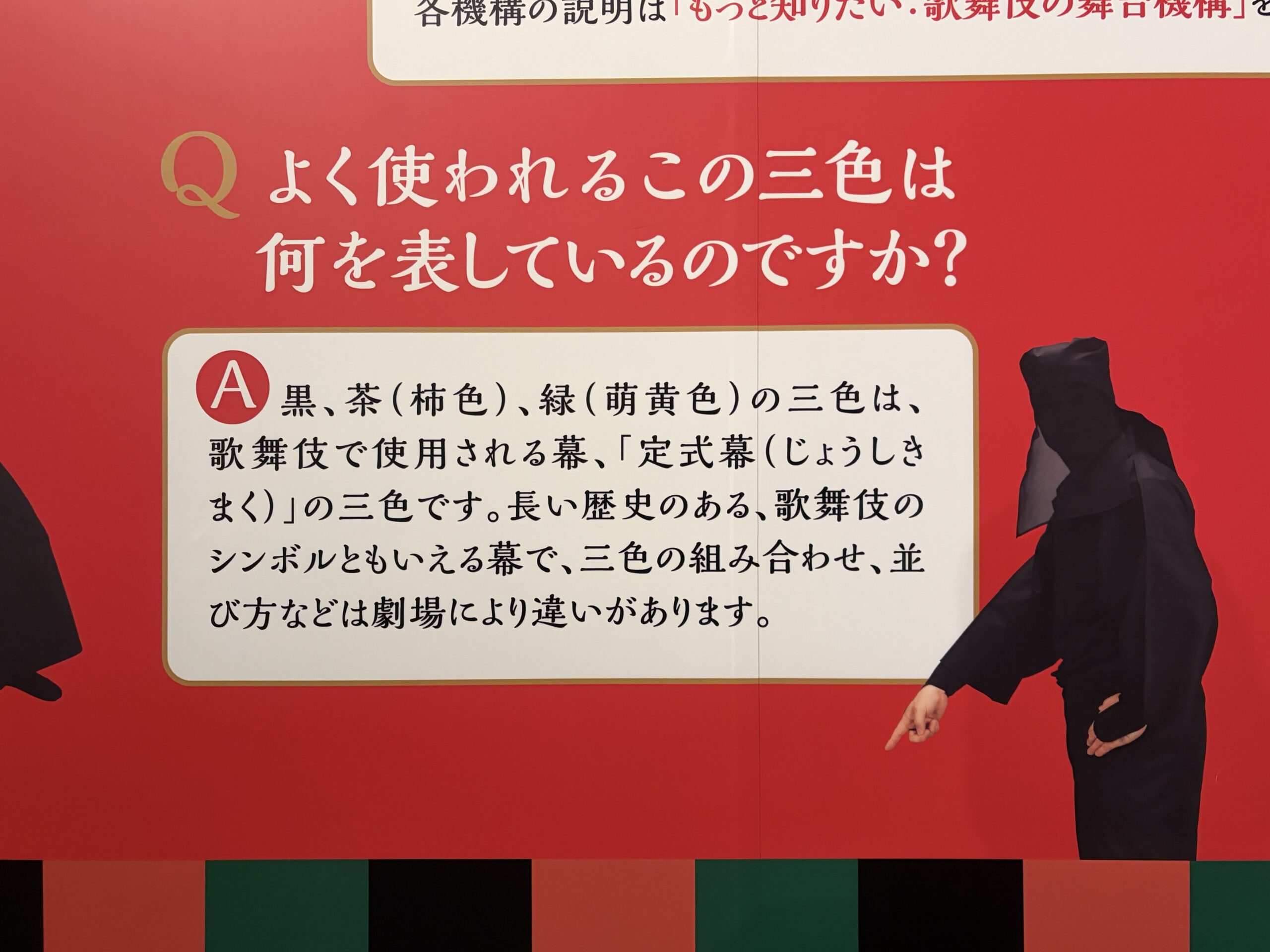
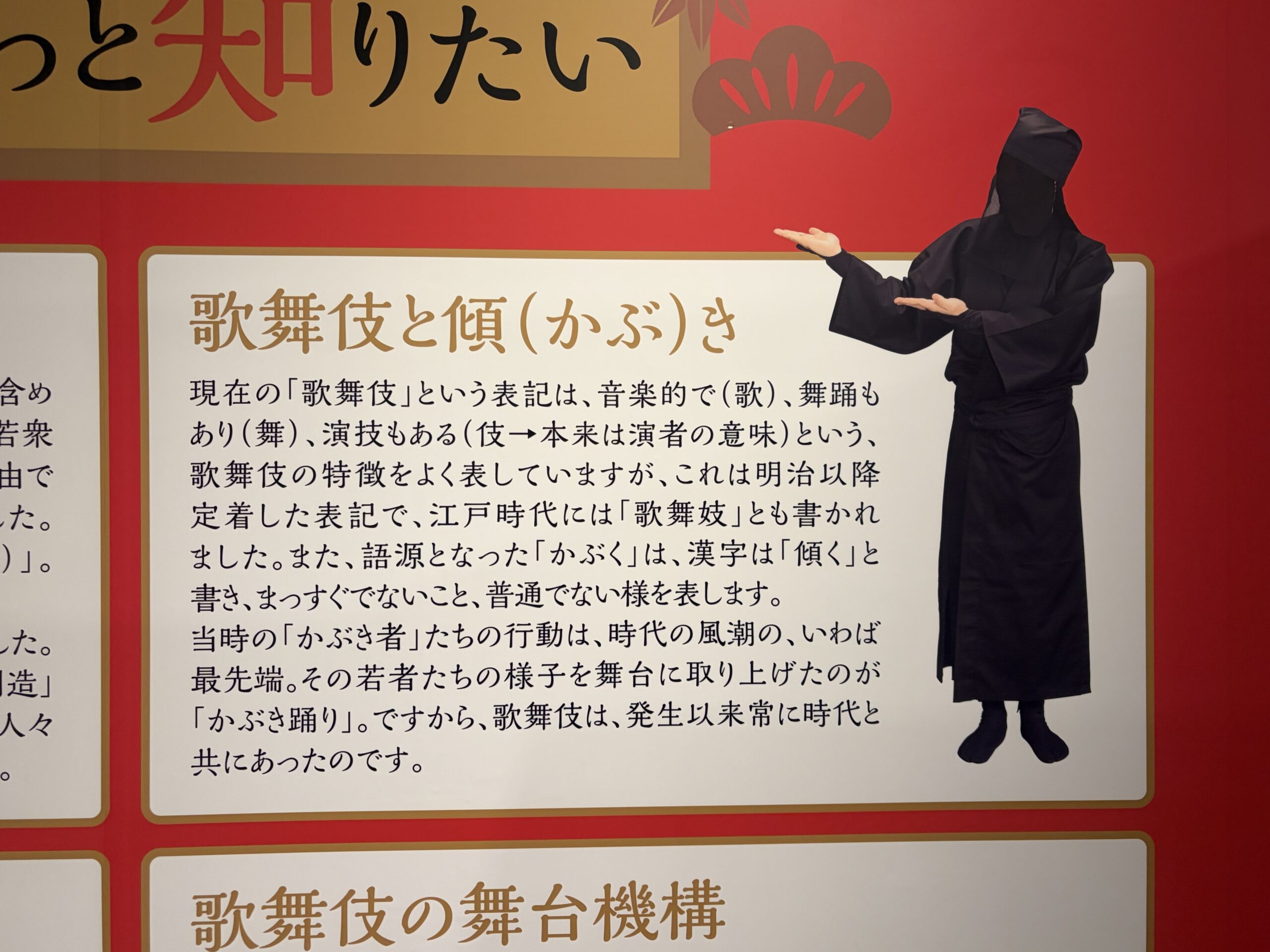
My favorite was the panel narrated by a kuroko (the black-clad stagehands of kabuki). The question reads, “What do these three colors represent?” — and the kuroko points at the answer for you. The three familiar colors of kabuki stage curtains — black, persimmon orange, and moss green — make up the joshiki-maku, the iconic curtain of kabuki. Who knew!
The 5th-floor location means some visitors may overlook it. For kabuki beginners, it is worth the detour.
A Cool Breeze in the Middle of Ginza — The Rooftop Garden
Step out from the gallery and you’re in the rooftop garden. A gentle, cool breeze drifted through — suu~~~ — and I found myself taking a deep breath without thinking.
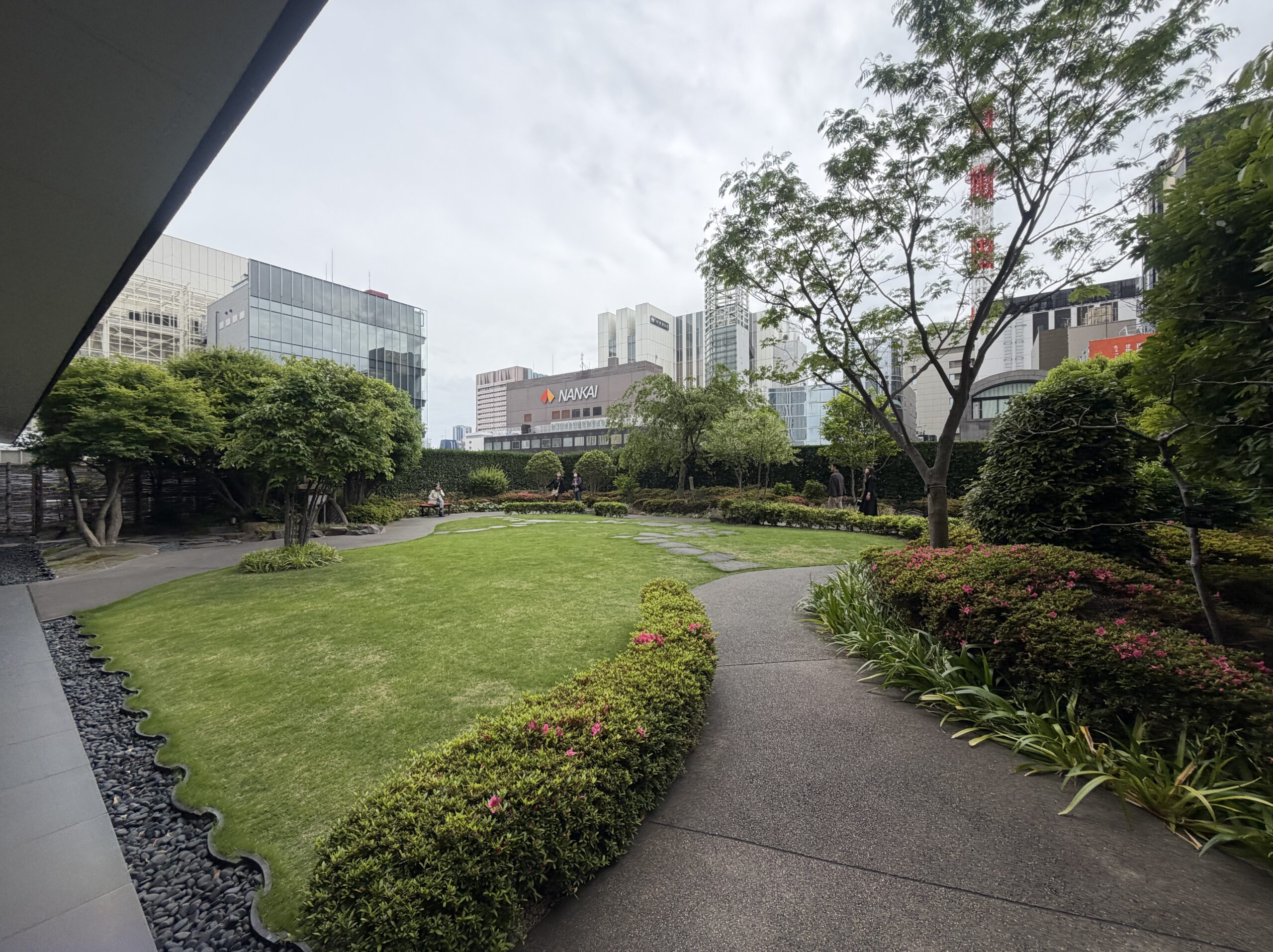
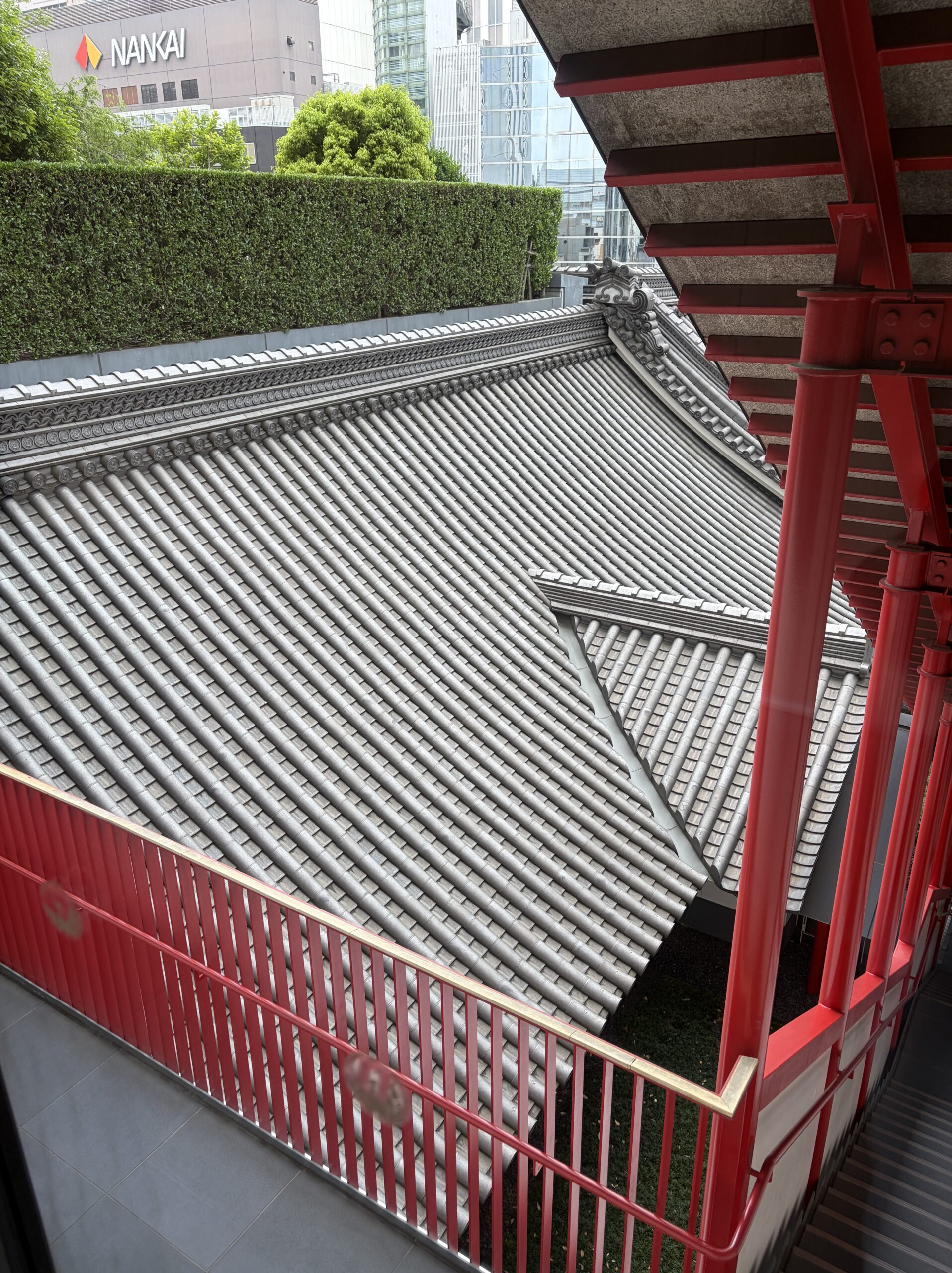
The space is compact but packed with Japanese elements — a lawn, tiled roofs, onigawara (decorative roof-end tiles), stone lanterns. A wonderful little spot. Hard to believe this kind of nature exists right in the middle of Ginza.
People taking photos in kimono, others waiting in line for the café, a few resting on benches. The few benches were all taken, so I did a slow loop and headed back inside. Even that was enough to feel refreshed.
Tiny Me, Walking Inside the Models
From the rooftop garden, I went down the stairs to the 4th floor — in which the models of the historical Kabukiza theaters are displayed. The 1st through 4th generations of Kabukiza are rendered in detailed miniature. Quite a sight.
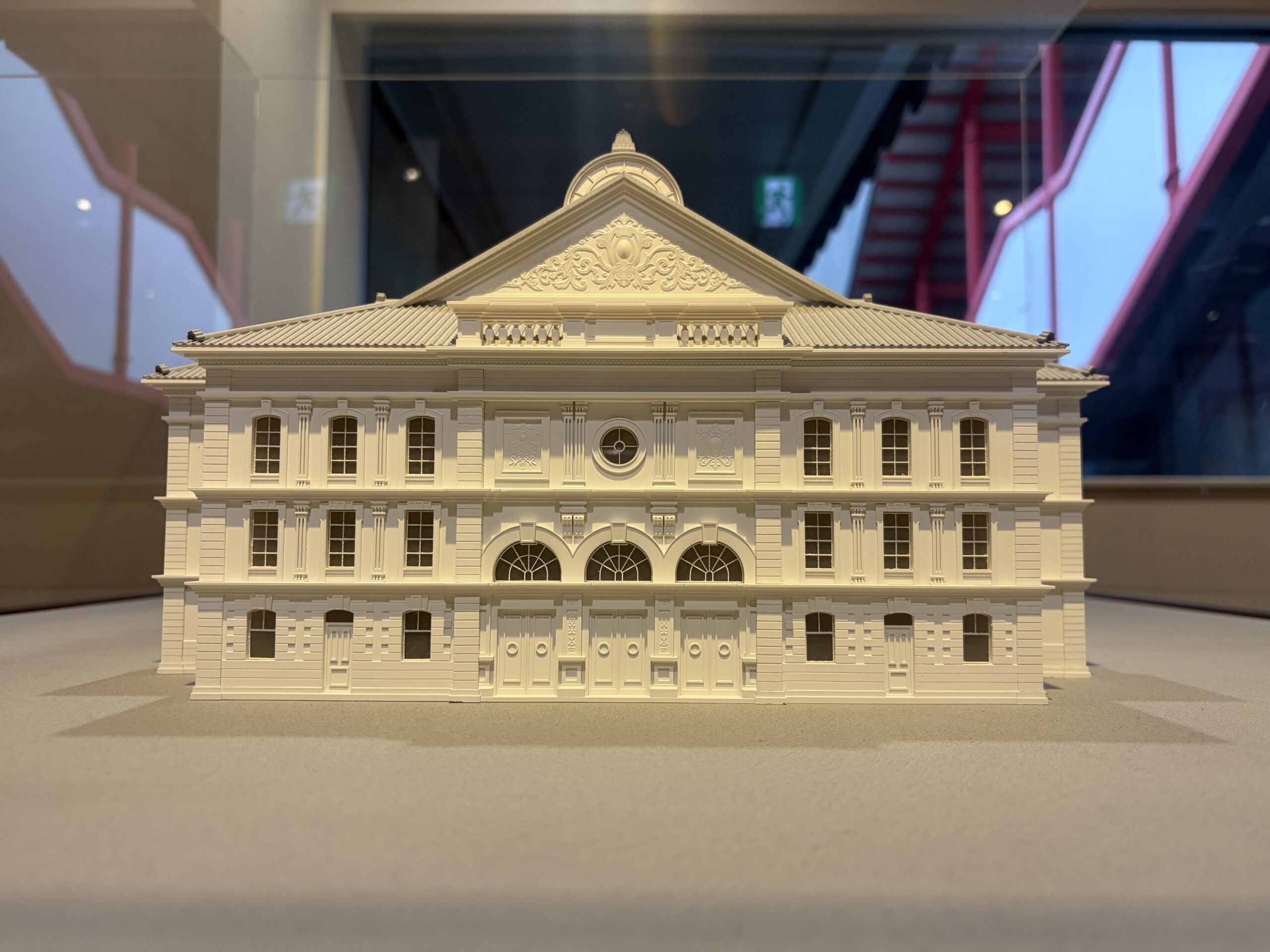
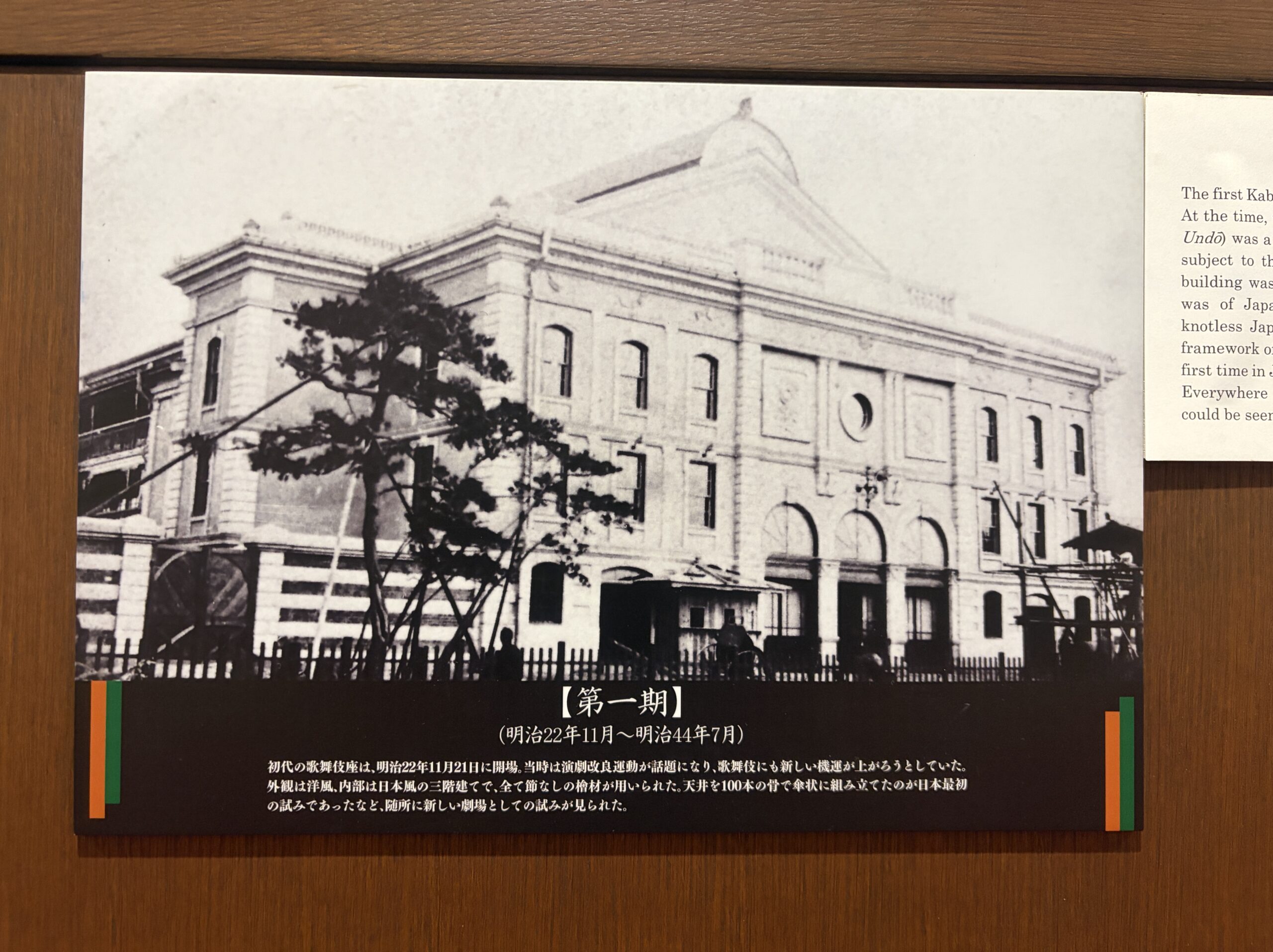
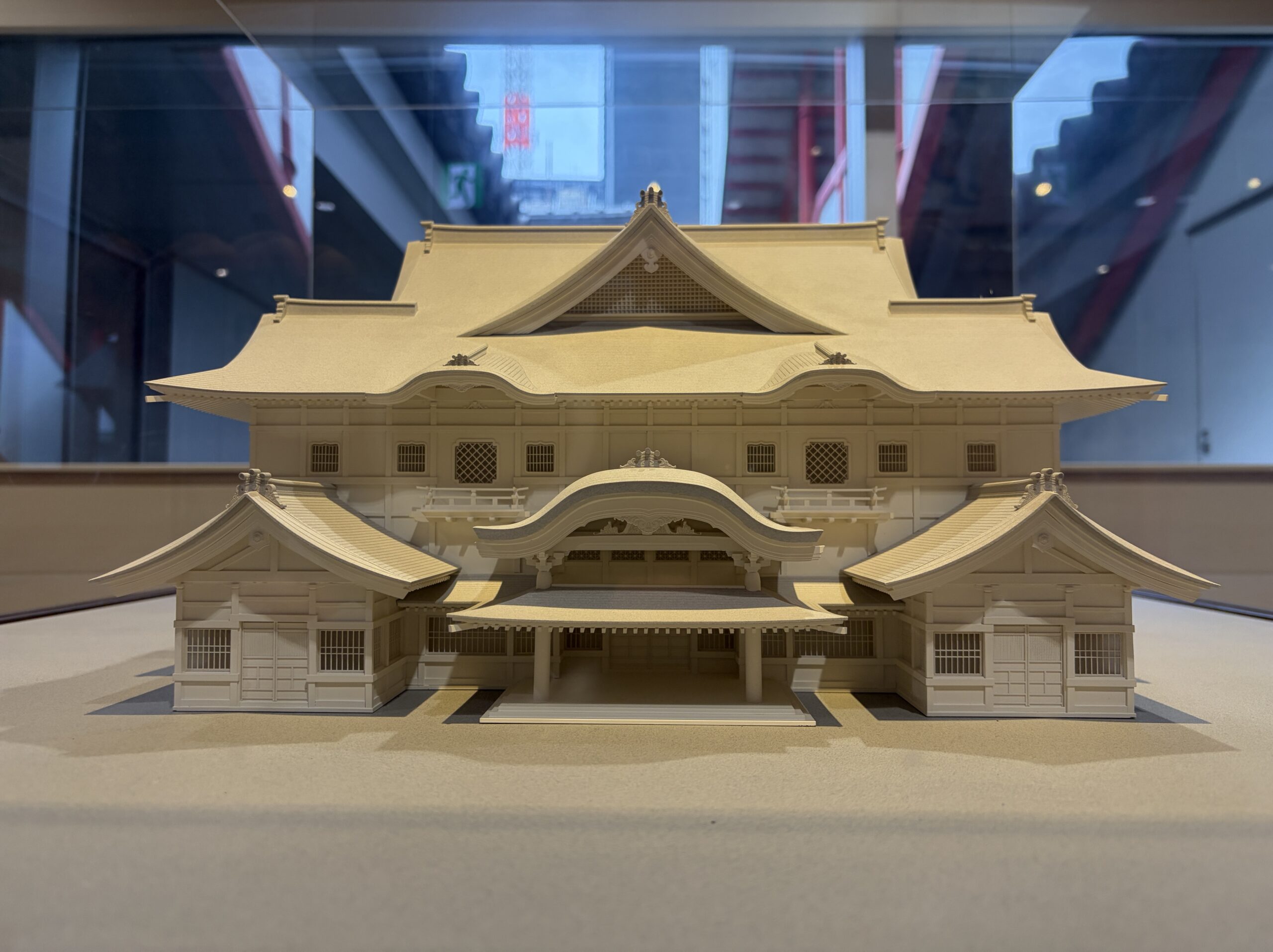
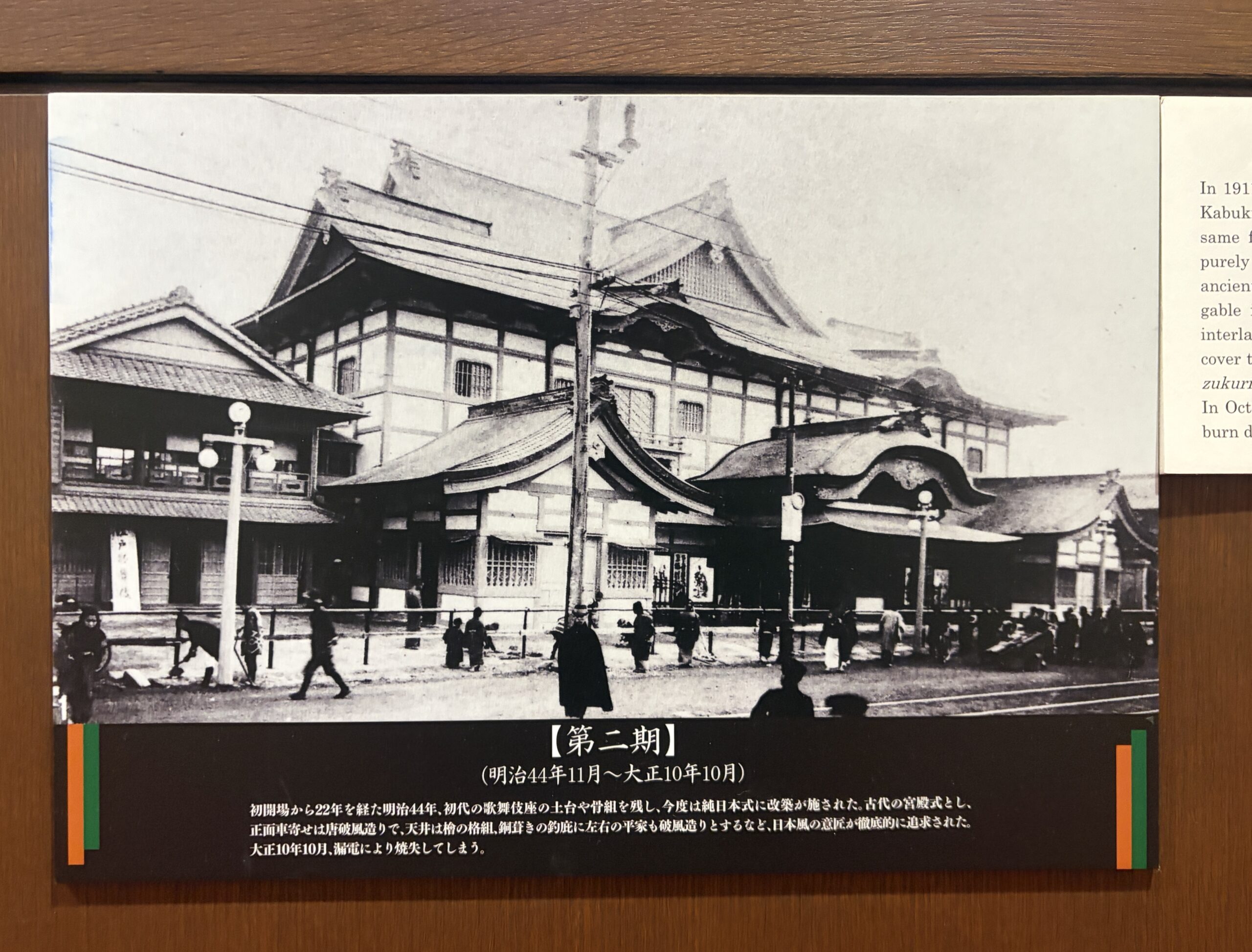
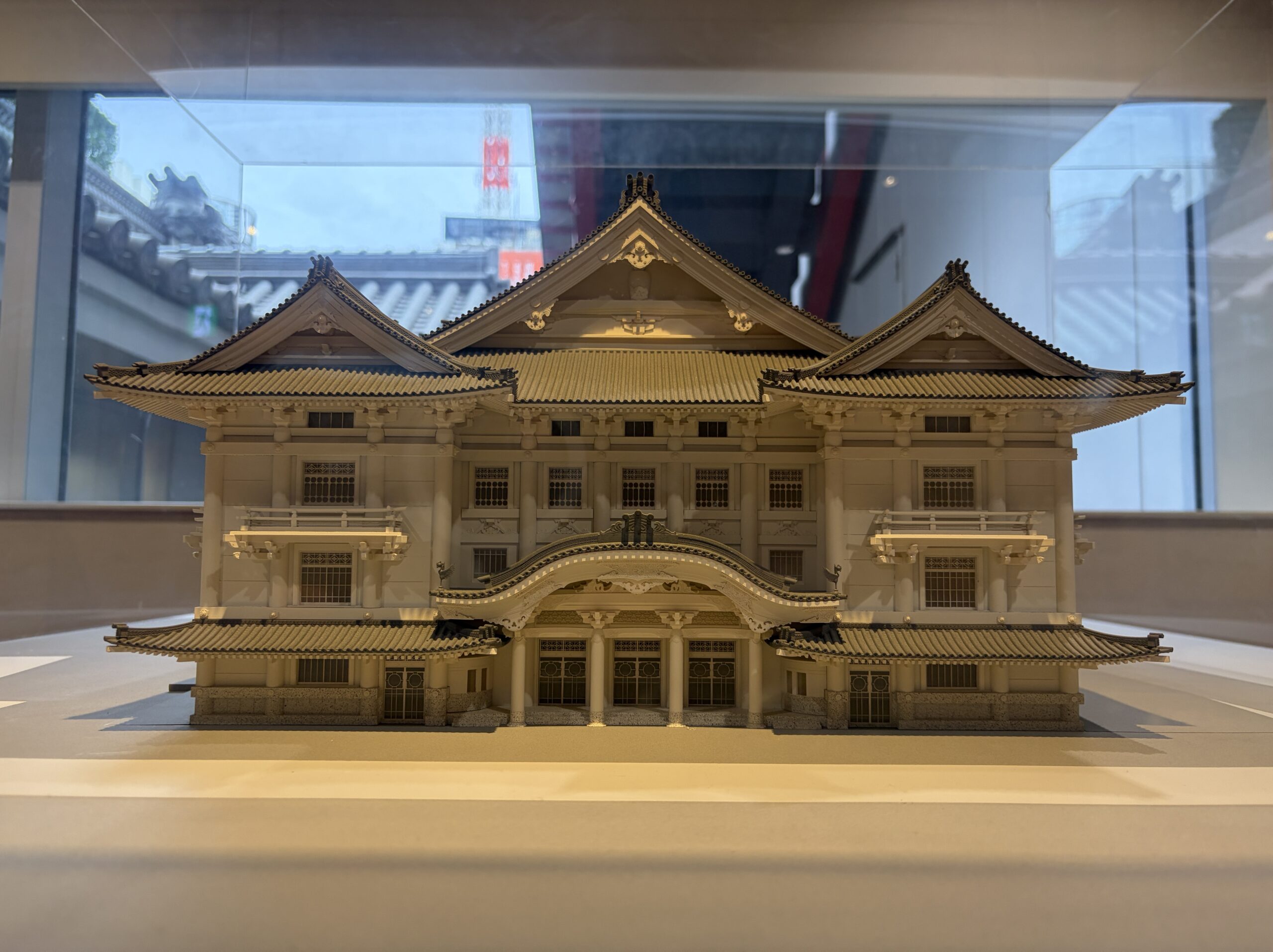
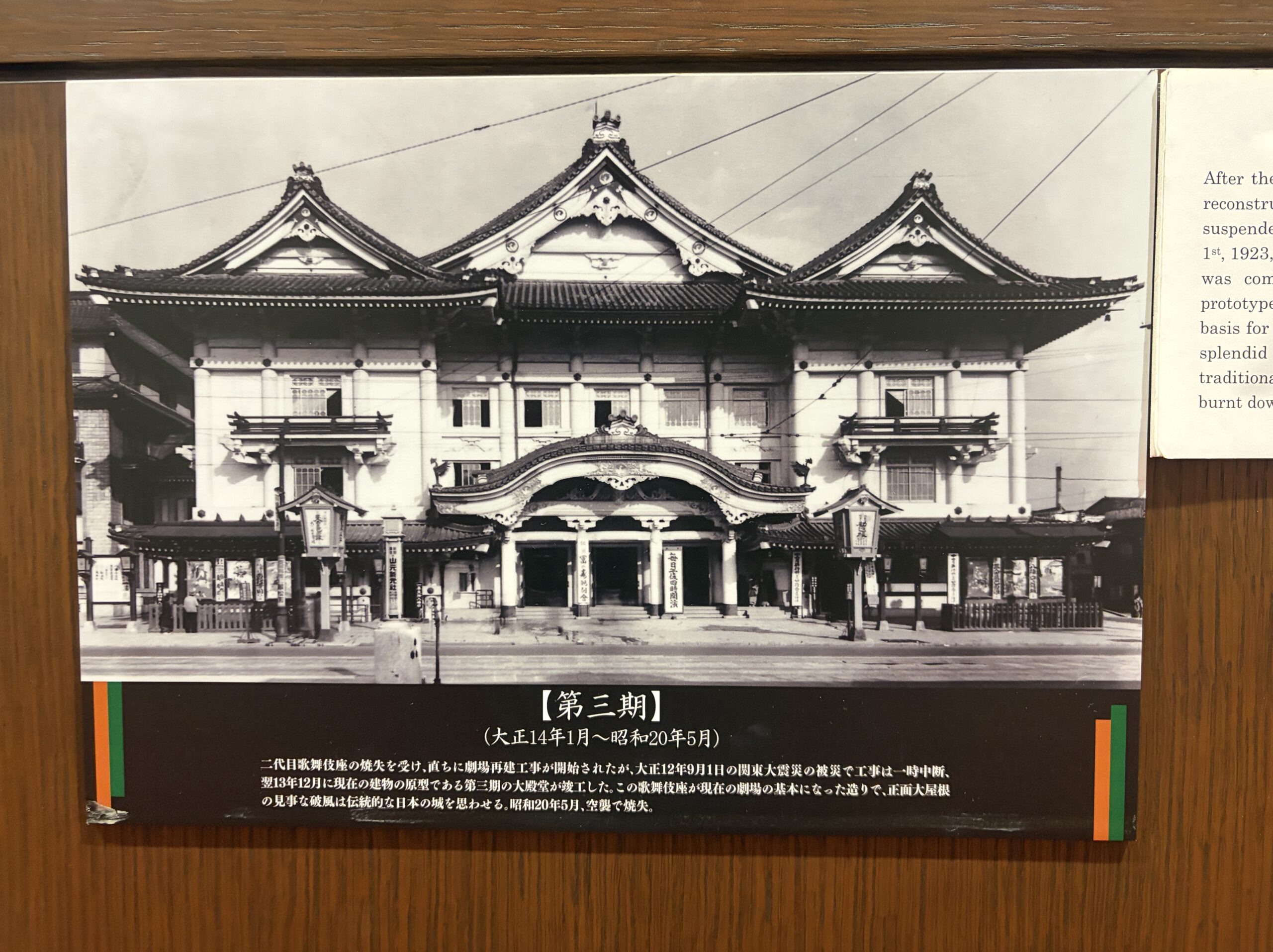
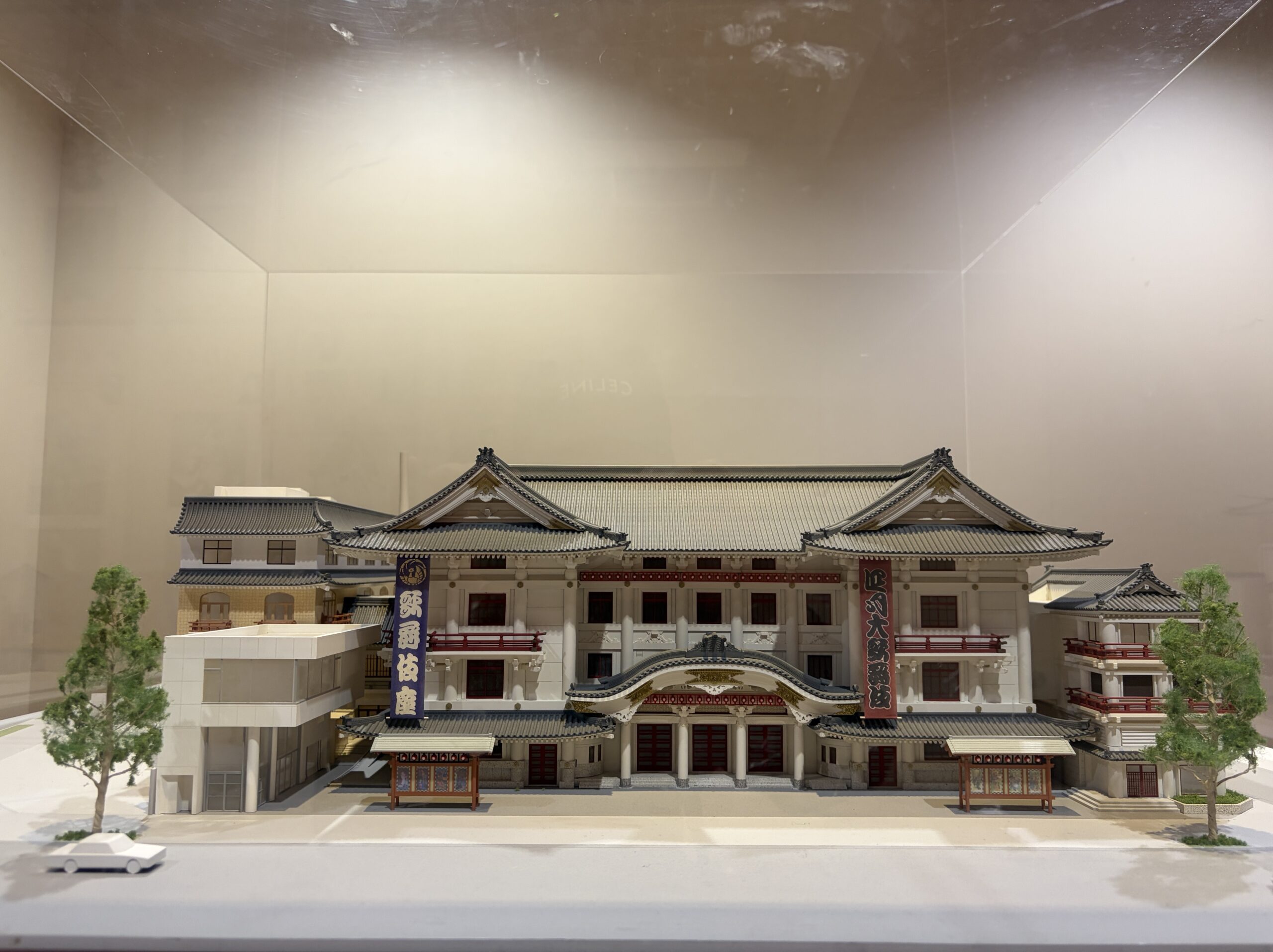
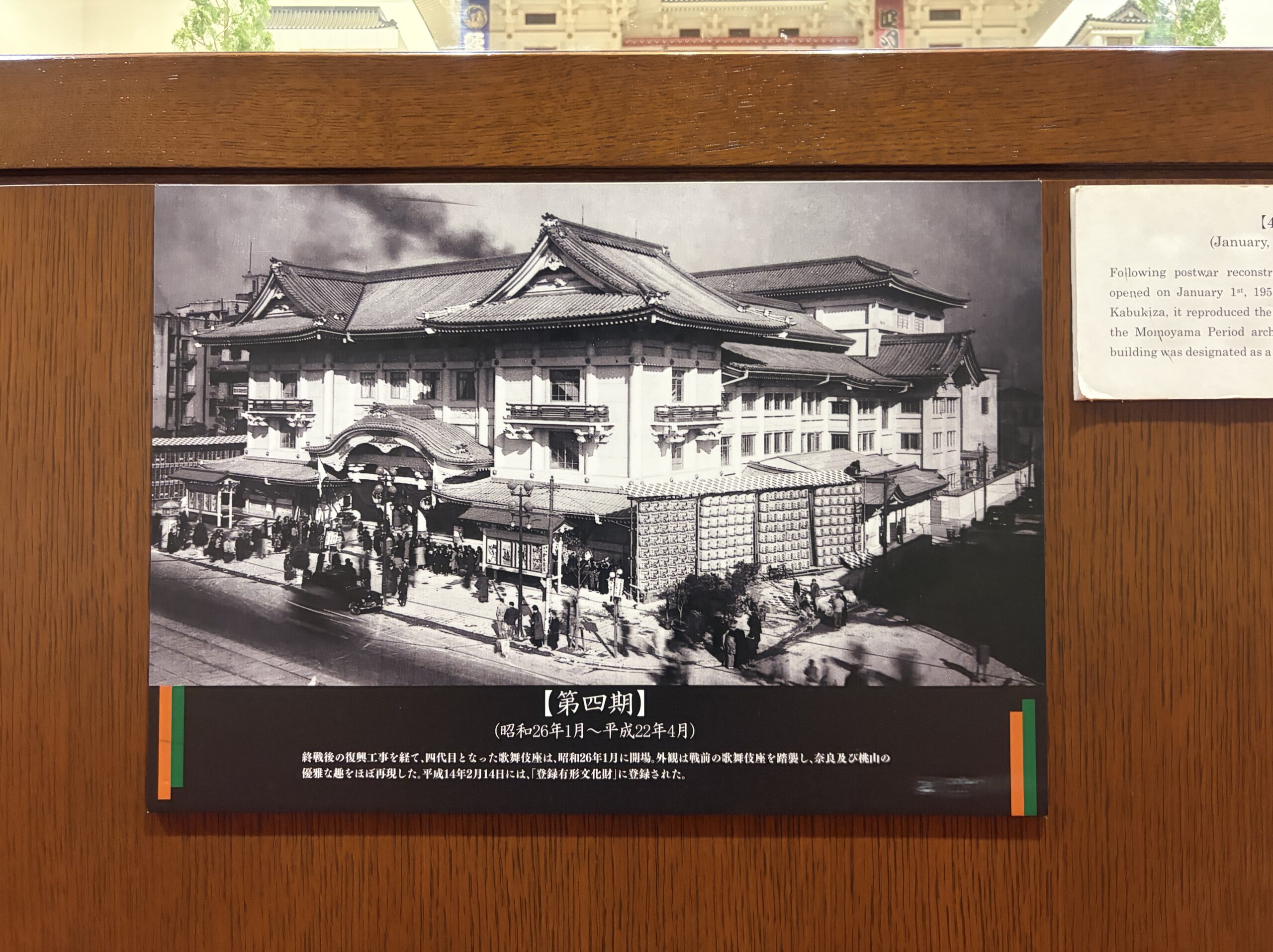
The 1st generation, opened in 1889, was a Western-style building. The 3rd, from the Taisho era, sported a dramatic karahafu (cusped gable) roof. The 4th was the dignified post-war reconstruction. It’s fascinating how the style transforms from one era to the next.
But the one that truly captured my heart was the 2nd generation — a stately, Japanese-style structure with a sweeping tiled roof, from the late Meiji into the early Taisho era. As I peered into the model, I started to feel like I had shrunk and was walking around inside it.
“Oh, how I’d love to watch a kabuki performance in this theater!” — I actually thought, in earnest. It’s a wish that will never come true, but imagining it is half the fun. Can’t VR sort this out somehow?
In Closing: Next Stop, the Shochiku Otani Library
After making the rounds of the gallery, I came away thoroughly charmed by the history of the Kabukiza. My next destination: the Shochiku Otani Library, said to house a treasure trove of kabuki-related materials. Old programs, documents on the interiors of the 2nd generation Kabukiza — I’d love to dig into them. …Except when I went, it turned out to be a public holiday and the library was closed 😭. Every time — I really should check opening hours in advance. I’ll save it for next time.
For a side trip around a performance, the Kabukiza Gallery is a lovely choice. A compact space packed with reasons to fall in love with kabuki. Paired with the lingering glow of a grand performance like the Dangiku Festival, it sinks in all the more deeply.