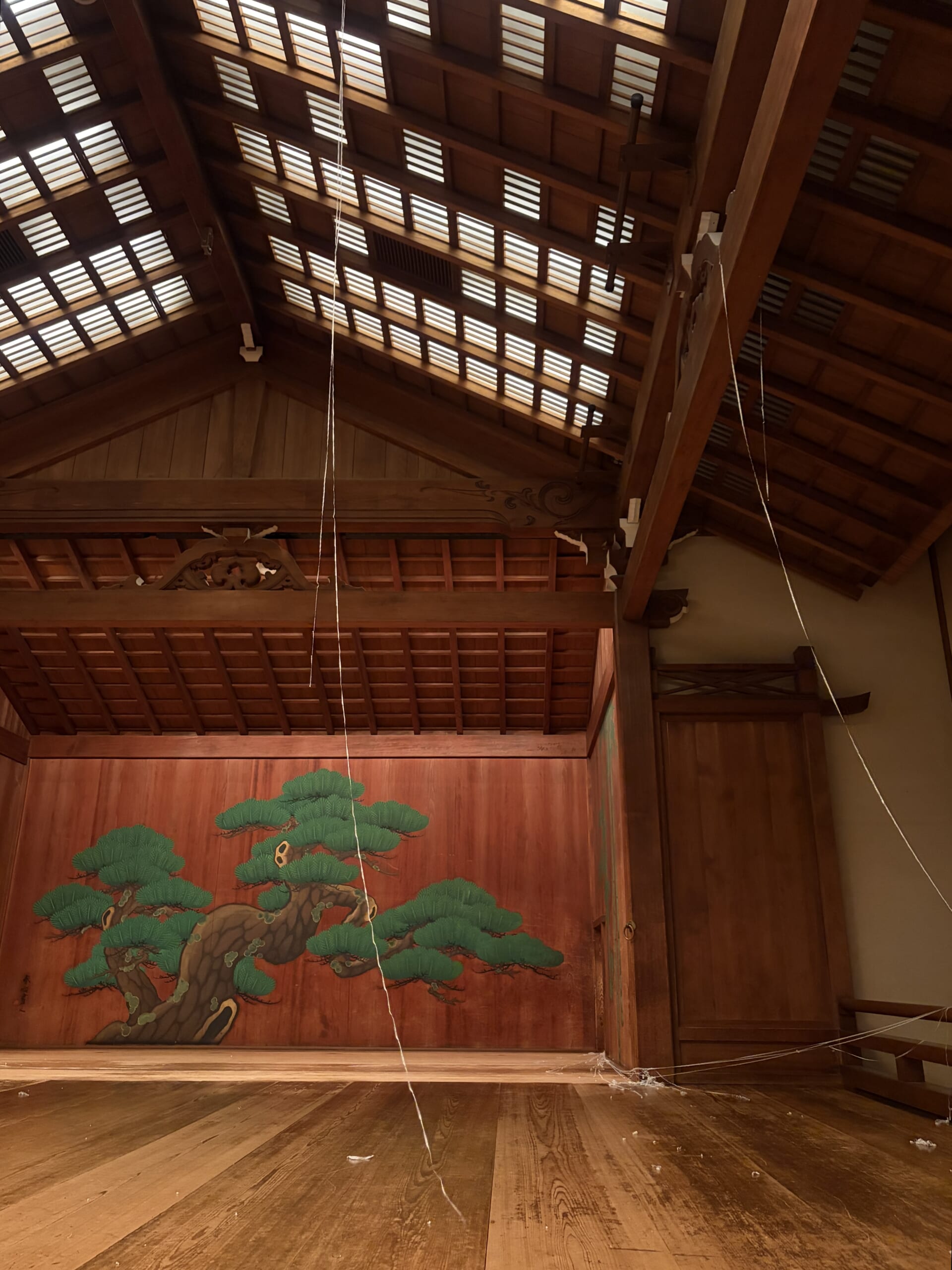
After the performance, the earth spider’s white threads were everywhere on stage — on the pillars, on the railings, even on the pine branches. Conventions I had learnt at the pre-show lecture came together right in front of me, plus I got to compare many forms of noh in a single day. Once again, today was the best.
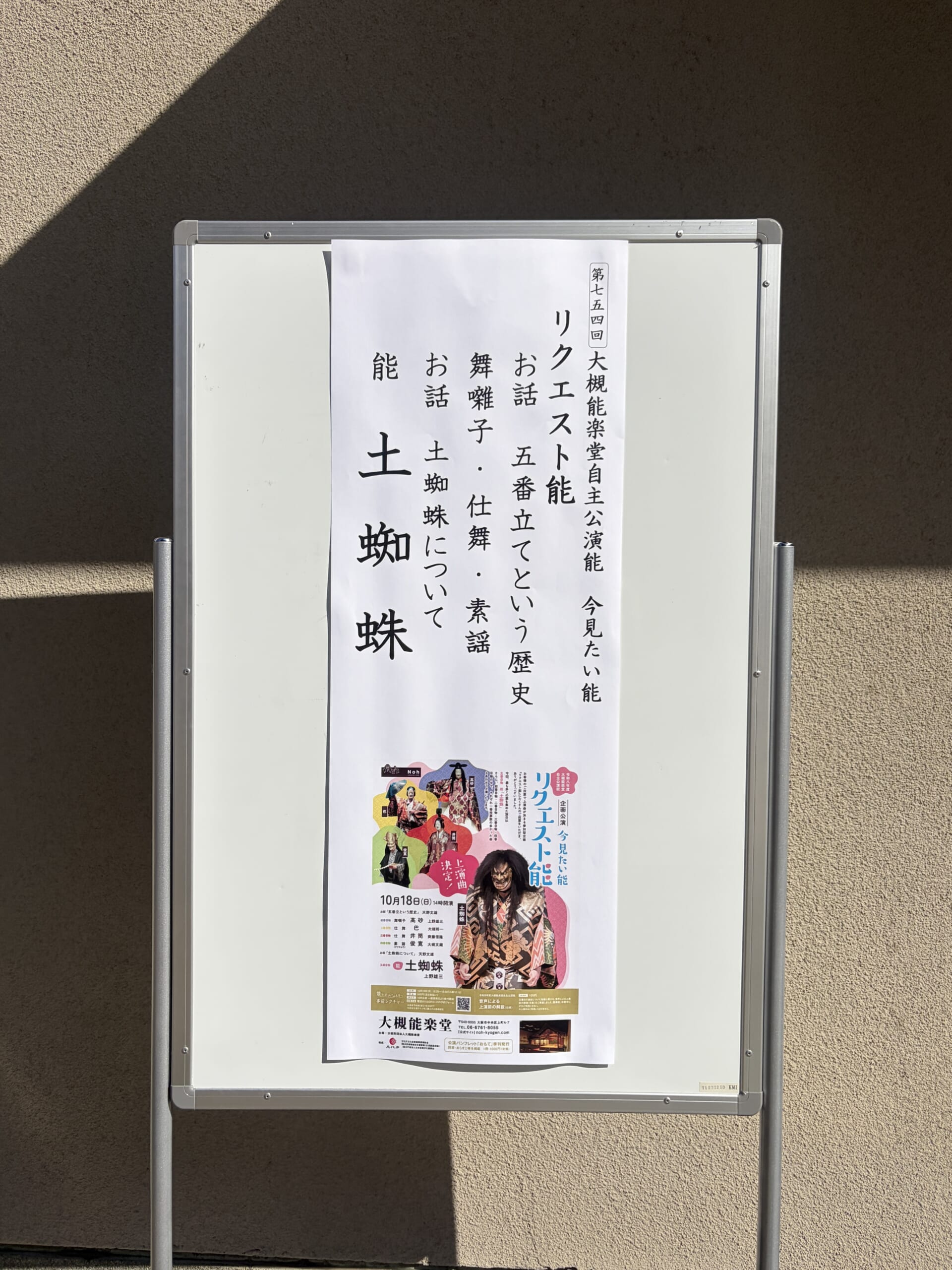
What Is Request Noh?
Request Noh at the Ohtsuki Noh Theatre is a participatory programme: the audience votes to decide which pieces are performed.
Noh plays fall into five groups: gods, warriors, women, madness, demons. In the old days, it was customary to stage one play from each group, in that order, over a single day — a format called gobandate (the five-play programme). These days, most programmes end after about two pieces.
This time, Tsuchigumo (The Earth Spider), the top vote-getter, was staged as a full noh play. It belongs to the fifth group, the demon plays. The most popular pieces from the first to fourth groups were also performed, in shorter forms: maibayashi, shimai, su-utai. The line-up let us taste the whole five-play flow in one afternoon.
From Tanimachi 4-chome to a Sunny Noh Theatre
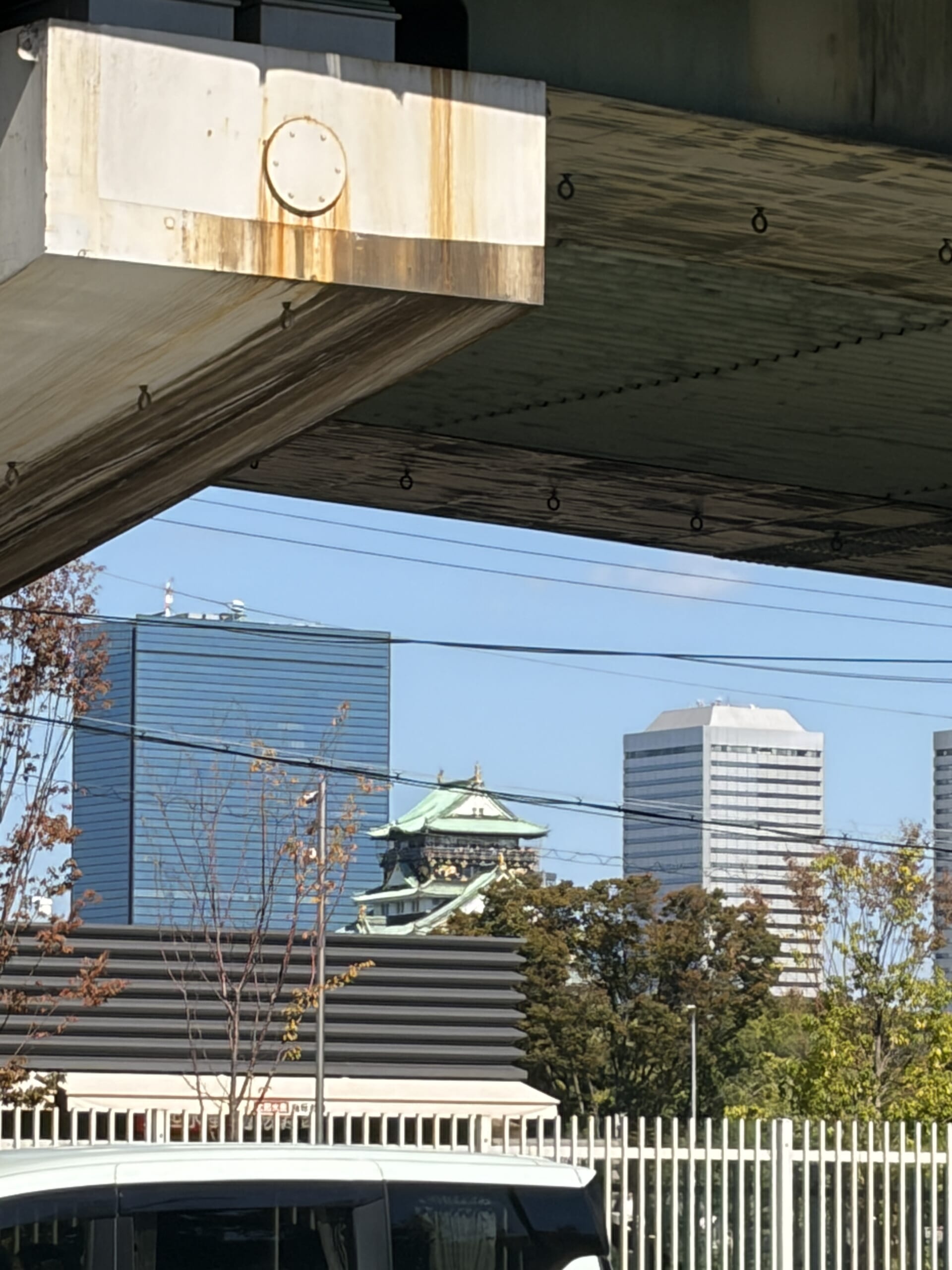
From Exit 10 of Tanimachi 4-chome Station, the nearest stop, I walked to the theatre. Along the way, I snuck a peek at Osaka Castle through the gaps in the buildings 🫣 I want to go… 🏯
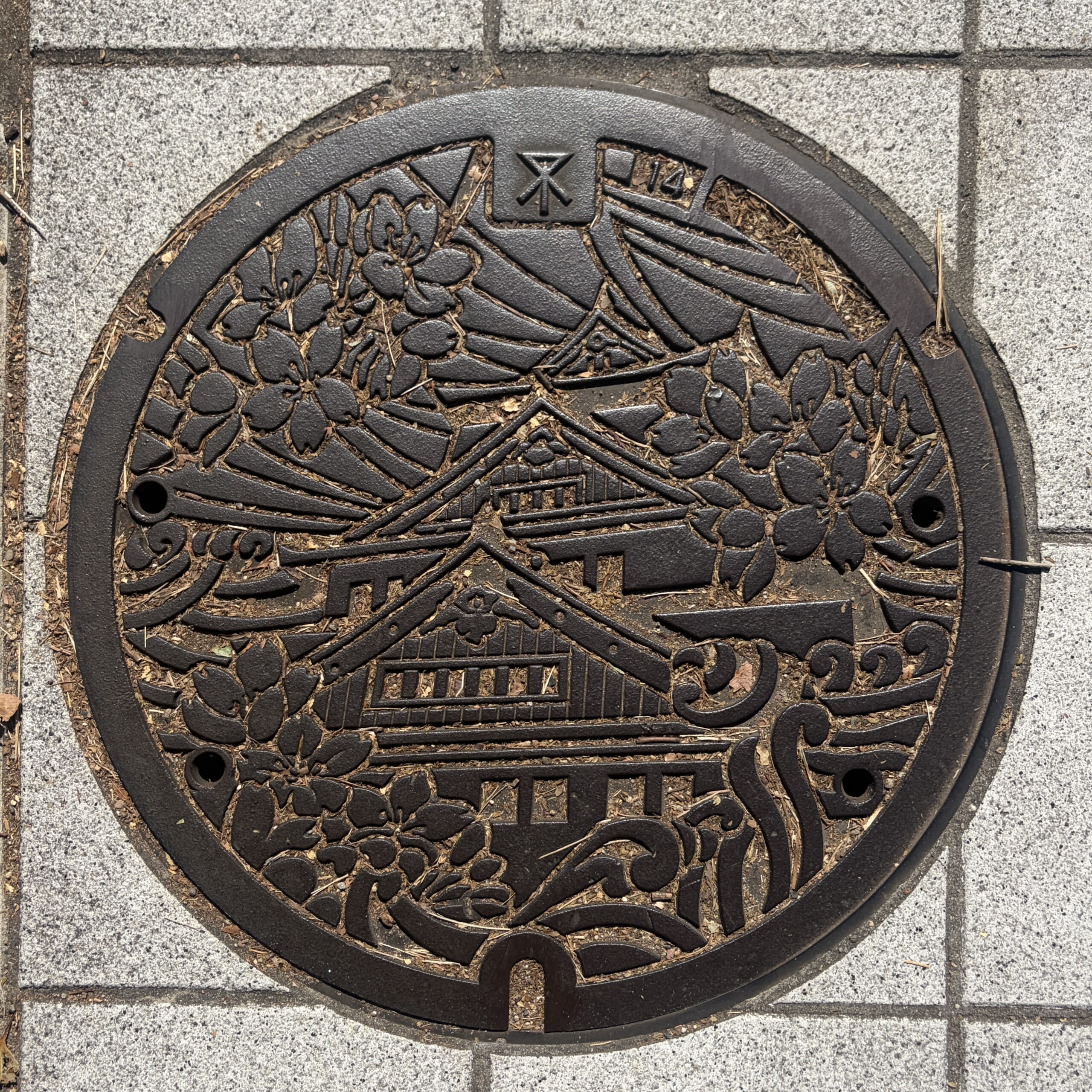
At my feet, a manhole cover featuring Osaka Castle, framed by cherry blossoms.
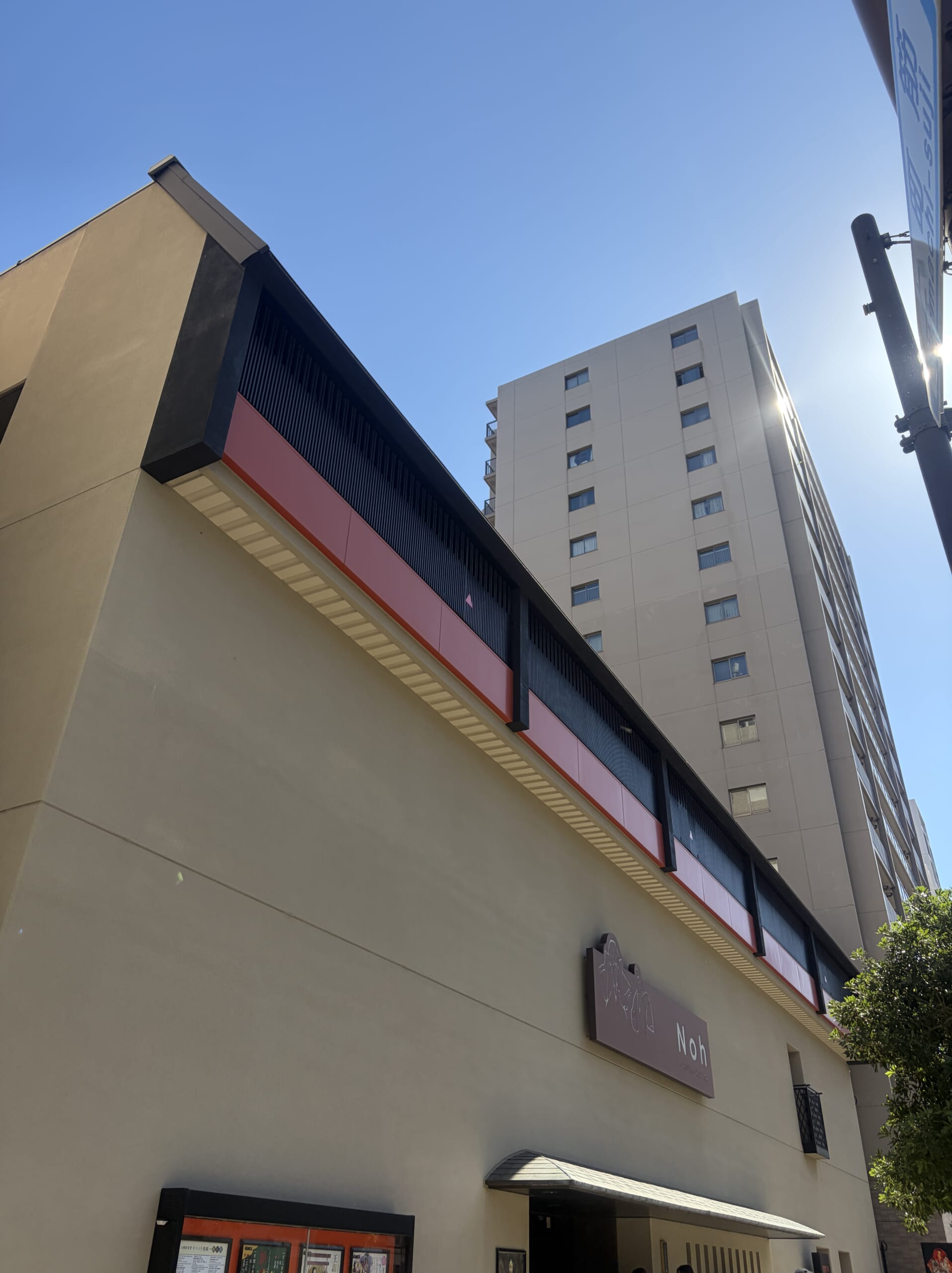
When I arrived, a clear blue sky stretched over the Ohtsuki Noh Theatre. Lovely weather!
A Pre-show Lecture on the Conventions of Noh
Before the show, I joined a 30-minute pre-show lecture. It covered everything from “What is noh?” to the pieces on today’s programme — I enjoyed hearing about so much. In my notes, I also wrote down: “Noh is ichigo ichie” (a once-in-a-lifetime encounter). The same performance never happens twice.
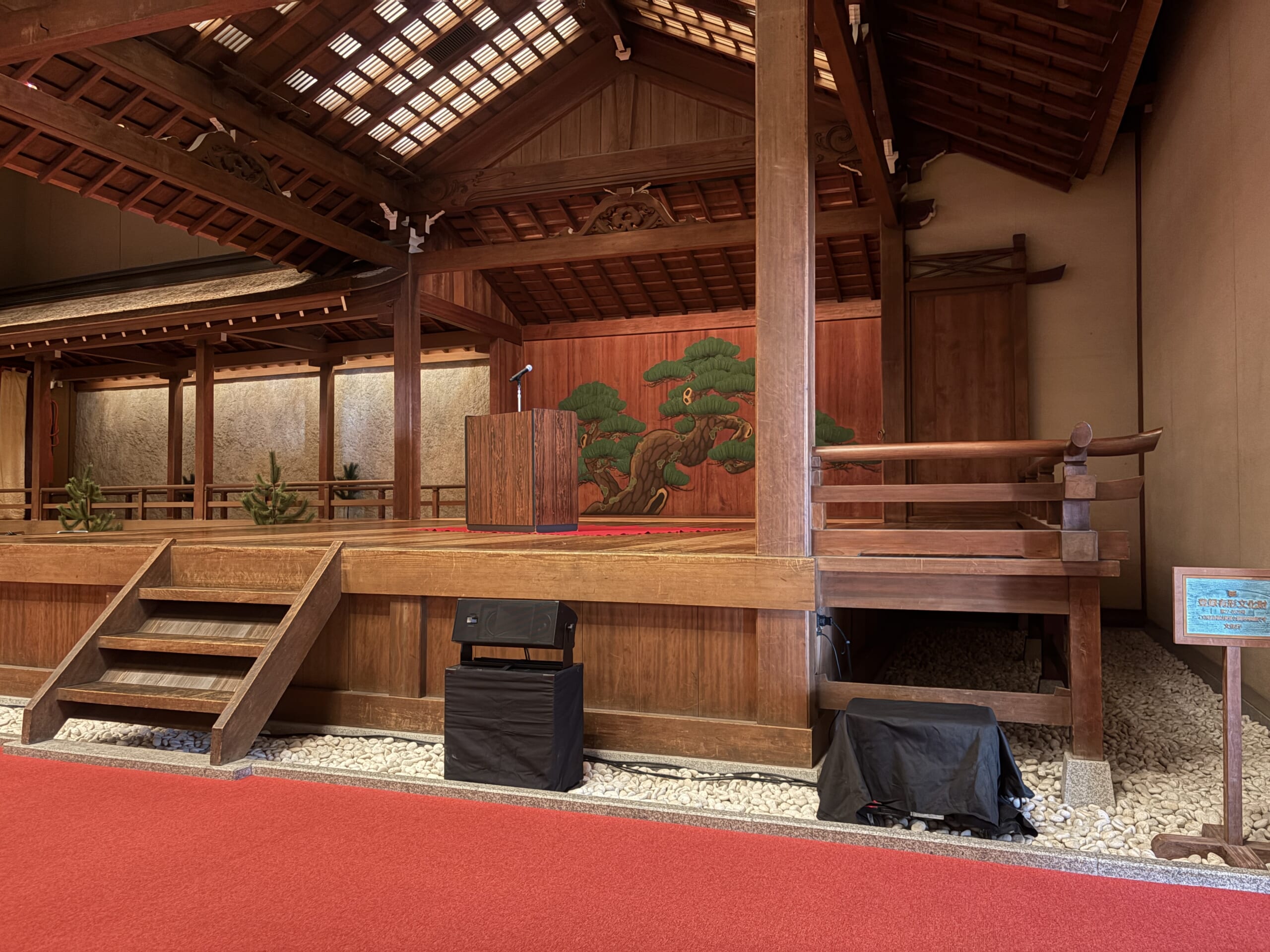
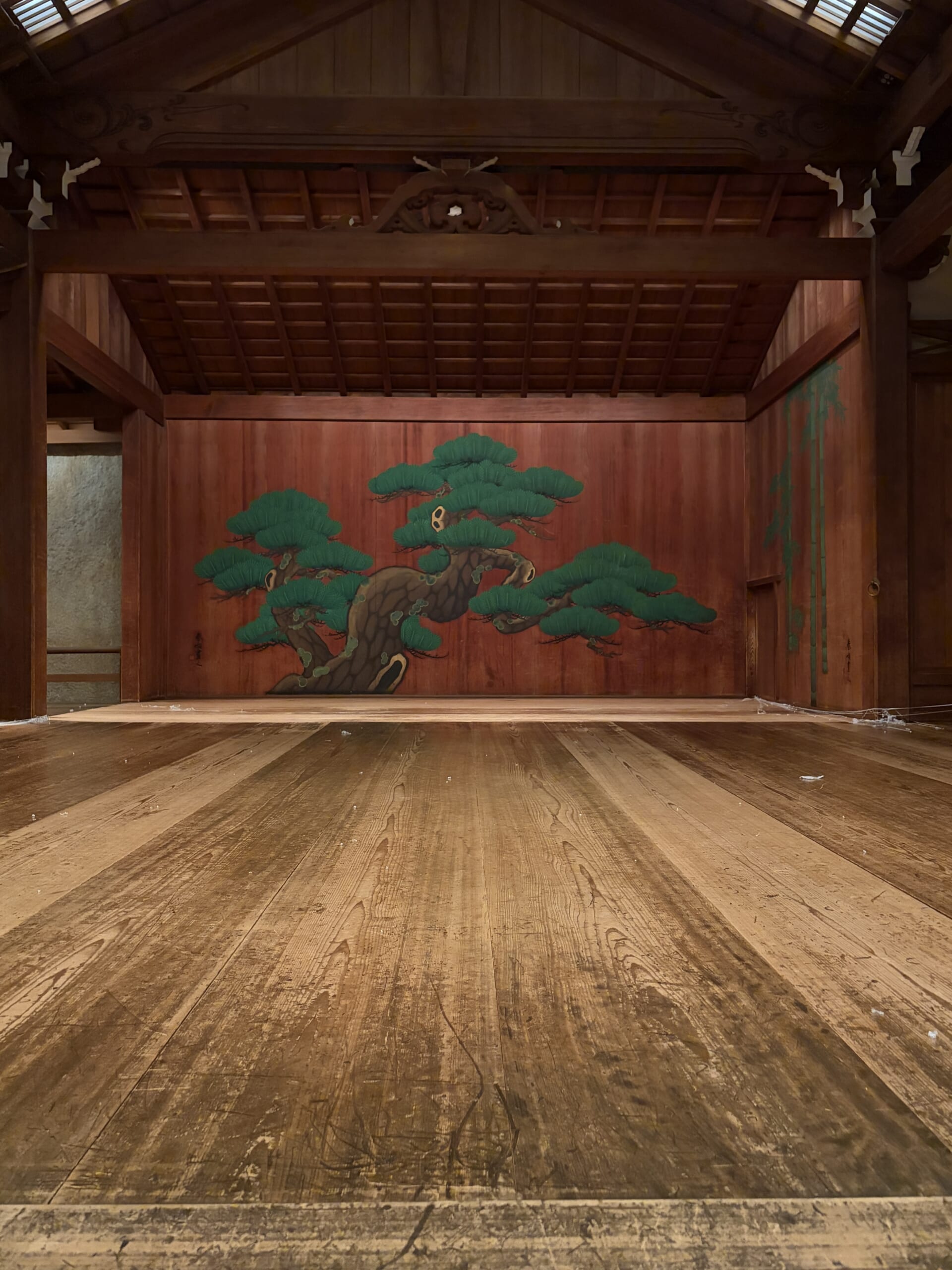
The talk also covered the noh stage right in front of us. The white pebbles laid around the stage work like a reflector board. Yes, that one I knew! Underneath, the stage is hollow, with many large jars (kame) placed there, so stamping feet ring out beautifully, apparently. The pine at the back is painted as if it were a mirror image of a pine that once stood in front of the stage. The performers act with that sacred pine at their backs. Having heard all this at the lecture, I found each part of the stage fascinating just to look at.
Costumes have their conventions too. A red robe draped over the shoulder is a sign of illness. In kabuki, it’s a purple headband, isn’t it? So there are differences like that~. Fun! I would meet this red robe again very soon, in Tsuchigumo.
A Programme with the Full Text, plus an Audio Guide
The lecture wasn’t the only study aid.
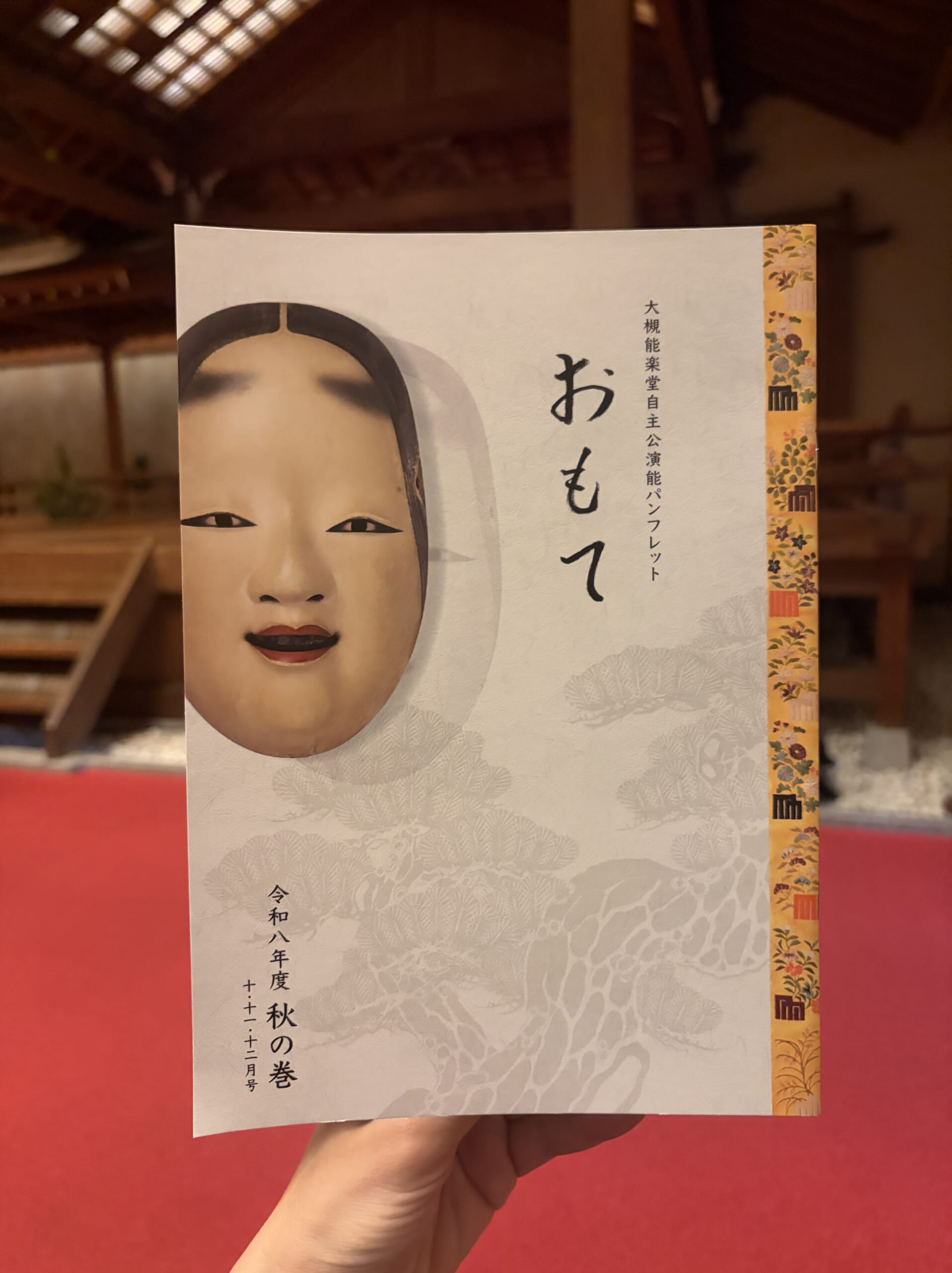
I chose a ticket that came with the performance programme. I handed over my voucher, then received Omote, the theatre’s programme 📕
Inside, just like the yukahon (the chanter’s script) in bunraku, the full shisho (the words of the play, sung as well as spoken) was printed, so the flow of the stage was easy to follow.
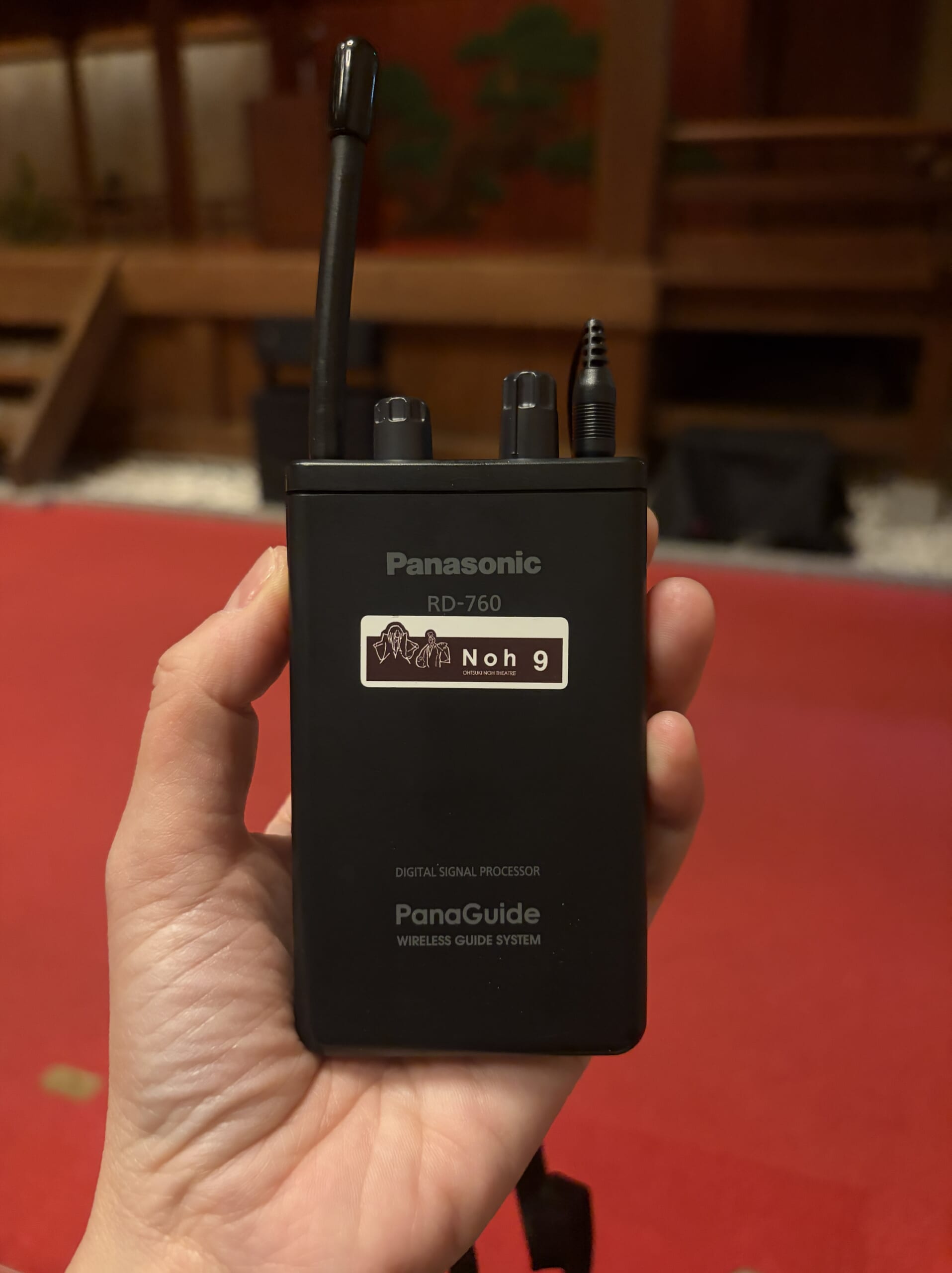
The audio guide was a roughly five-minute explanation of Tsuchigumo, to listen to before the show. Since it wasn’t live commentary, I found myself wishing for simultaneous commentary after all. The Earphone Guide at kabuki is just so handy…
Many Forms of Noh in One Day
After all that preparation, the main performance at last. It opened with a talk, then moved through maibayashi, shimai, su-utai, finally a full noh play.
Talk: “The History of Gobandate”
A talk by Fumio Amano. Maybe it was the speaker placement, but it was a little hard to hear… I would have liked to hear more about how the gobandate system works. Still, it was certainly a fascinating talk.
Maibayashi: Takasago
In maibayashi, the performer dances in formal kimono (montsuki with hakama), with no mask, no full costume, accompanied by the chorus (jiutai) with the instrumental ensemble (hayashi). Yuzo Ueno performed the latter half of Takasago, in which the god of Sumiyoshi dances to celebrate a peaceful reign.
The music was fairly intense, which surprised me a little. Was it always this intense? The kamimai (god dance) in the second half is a fast-paced dance with the taiko drum, so that may be why.
Shimai: Tomoe, Izutsu
Shimai is danced to the chorus alone, with no instruments.
Yuichi Ohtsuki performed Tomoe, the story of the ghost of Tomoe Gozen, who served Kiso Yoshinaka. The move where he spun in mid-air, then landed seated in a flash — so cool!
Next came Izutsu by Nobutaka Saito, starting seamlessly with the same chorus members still in place. So that’s how it can go, huh~.
Su-utai: Shunkan (from the Kudoki)
Su-utai has no dance, no instruments — just chanting, performed seated. Bunzo Ohtsuki sang the role of Shunkan, in the scene of his lament at being left alone on Kikai Island.
I see this play in kabuki from time to time, but the noh version has no Chidori, so I imagined that Shunkan’s feelings, his inner struggle, might be a little different here.
Maibayashi, shimai, su-utai, one after another — today I really got to see so many forms of noh~.
Noh: Tsuchigumo
Last came Tsuchigumo, the winner of the vote. A suspicious monk appears beside the bedridden Minamoto no Raiko, throwing threads at him. In the second half, the spirit of the earth spider emerges from an ancient mound to fight the warriors.
Watching Raiko get ready at the start was fun. When I saw the red robe draped over his shoulder: “Oh! That’s it! The sign of illness from the lecture!” Once you know what it means, it’s interesting.
The spirit of the earth spider (Yuzo) must have had limited vision behind the mask, yet he kept throwing the threads to just the right spots. That was fun to watch too.
Then, at the very end. I think Yuichi, who was sitting in the chorus, was laughing 😂 I was watching from the side, so I can’t say for sure… but wasn’t he half-smiling, enough to shift his posture a little? (lol)
Maybe it’s just me?
The Earth Spider’s Leftovers 😂, plus a Beautiful Stage
After the show, lots of threads were left on stage. Some hung long from high up, some were tangled around the base of the pillars, some clung to the railings, some lay in clumps on the red carpet. Even the pine branches by the bridgeway (hashigakari). Like a Christmas tree 🌲
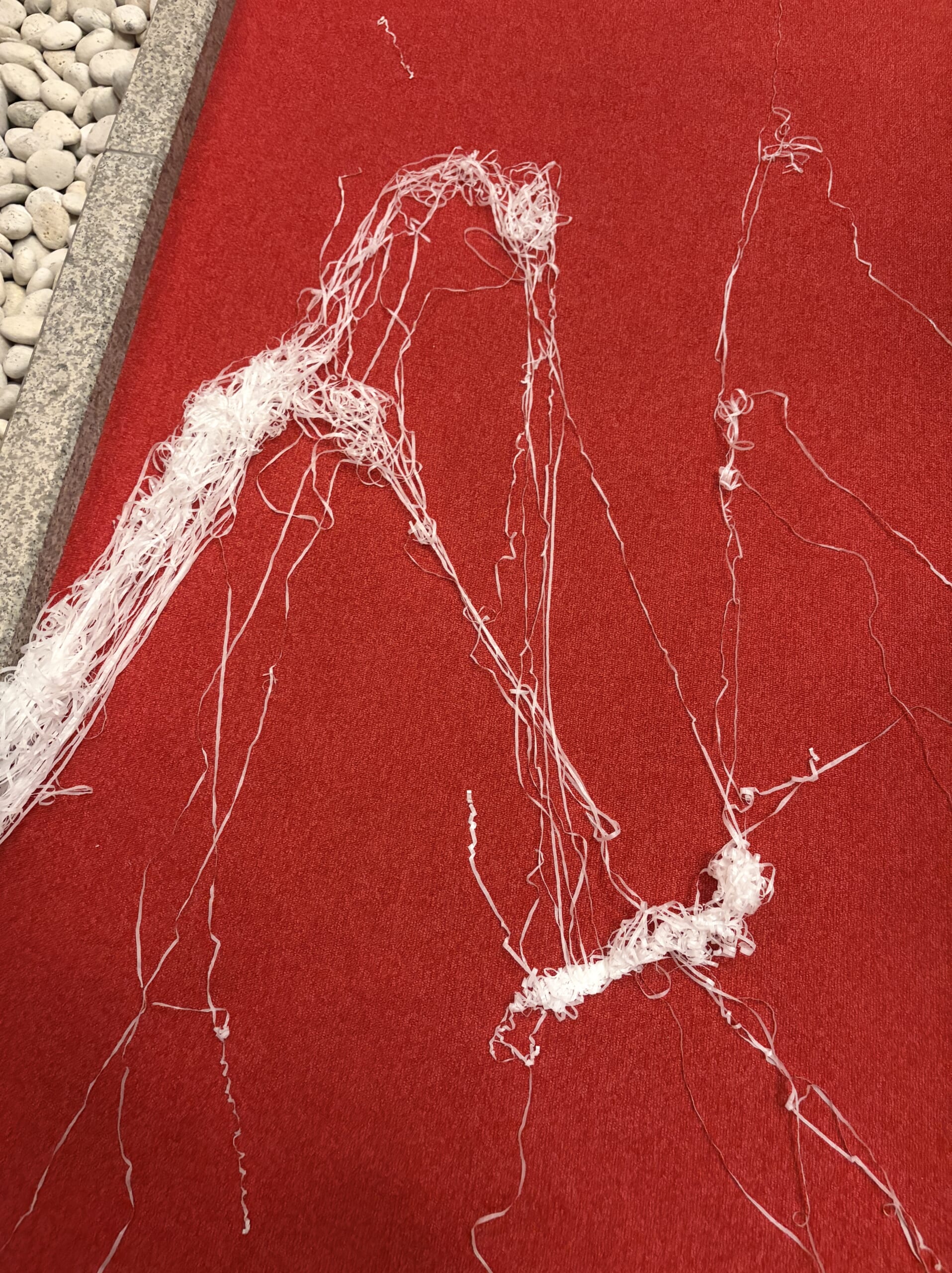
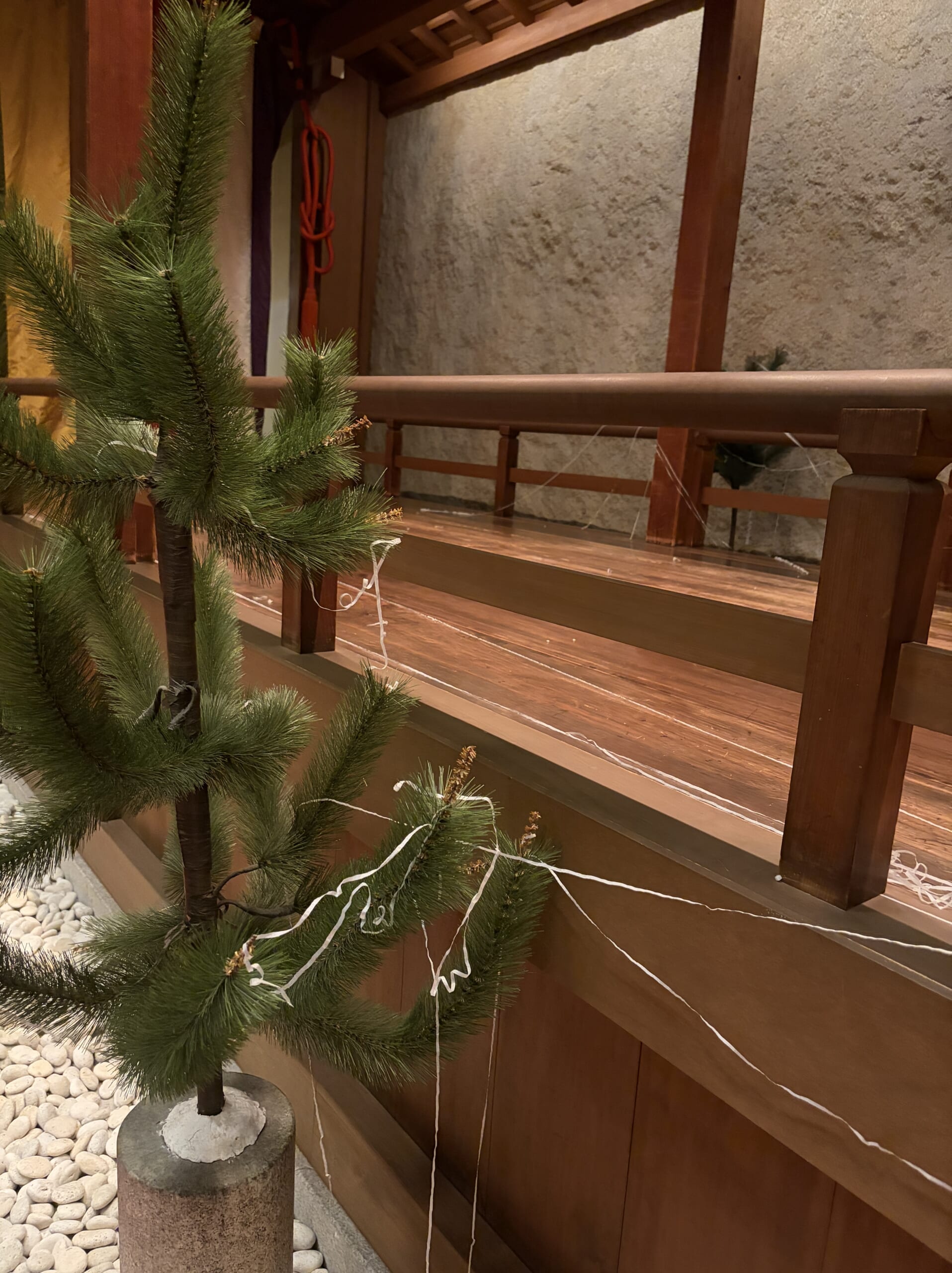
The earth spider’s leftovers 😂 So many of the threads that had flown across the stage were still there — I never got bored of looking at them. Apparently, the staging with this many threads was devised in the early Meiji era.
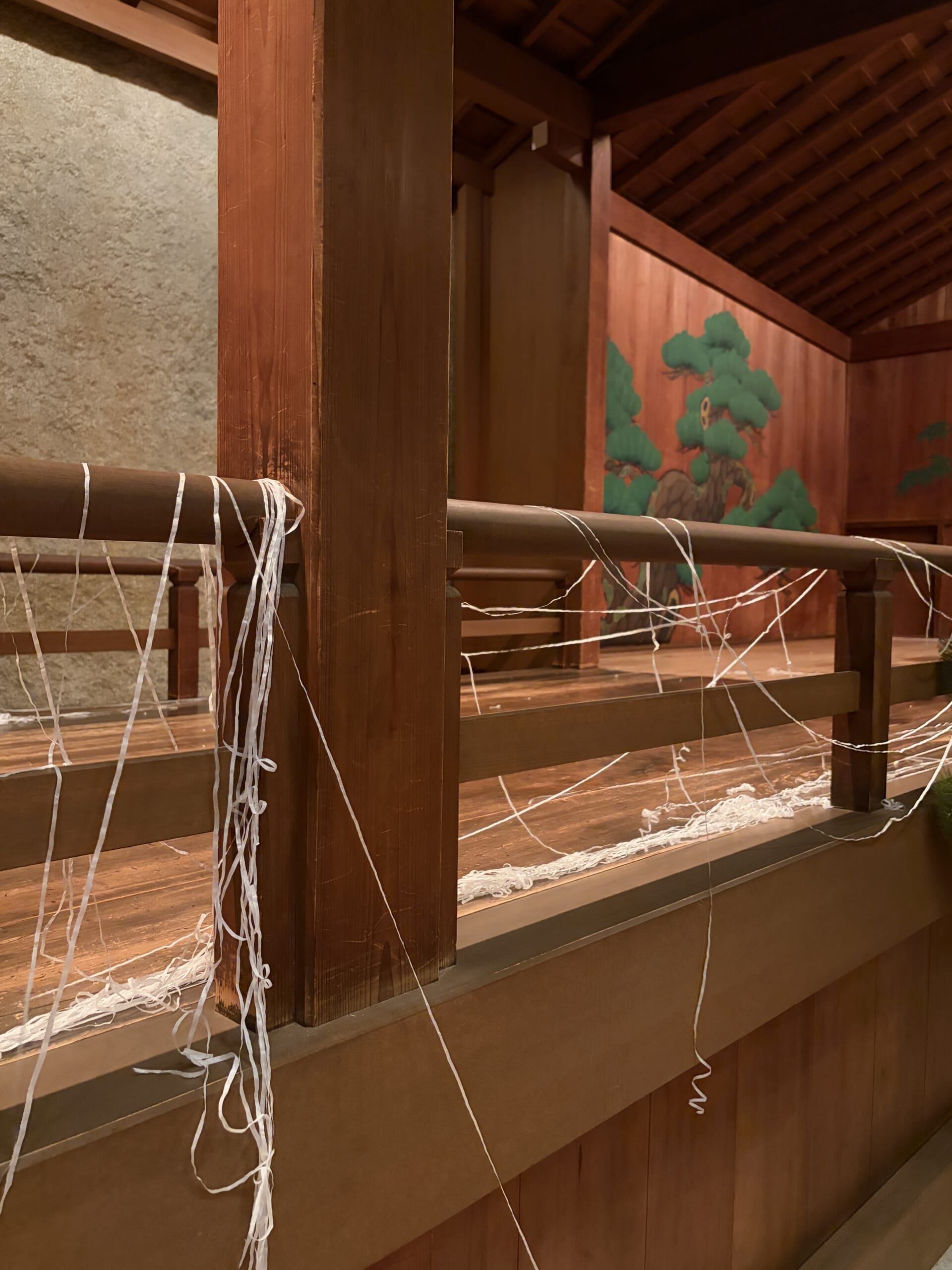
From the front: a few fragments remain, but such a beautiful stage.
Final Thoughts
This wasn’t my first time seeing noh, but noh is hard, so every single time I’m a beginner — always, forever, a total beginner. Even so, this time there were so many ways in to “knowing” noh. The fun of seeing lecture conventions come together on stage, plus the fun of comparing many forms of noh in a single day. In the end, I even enjoyed the spider’s leftover threads (lol)
Someday I’d like to see the noh stage at Higashi Honganji too. I’ve also become a little curious about the outdoor noh stages across Japan.