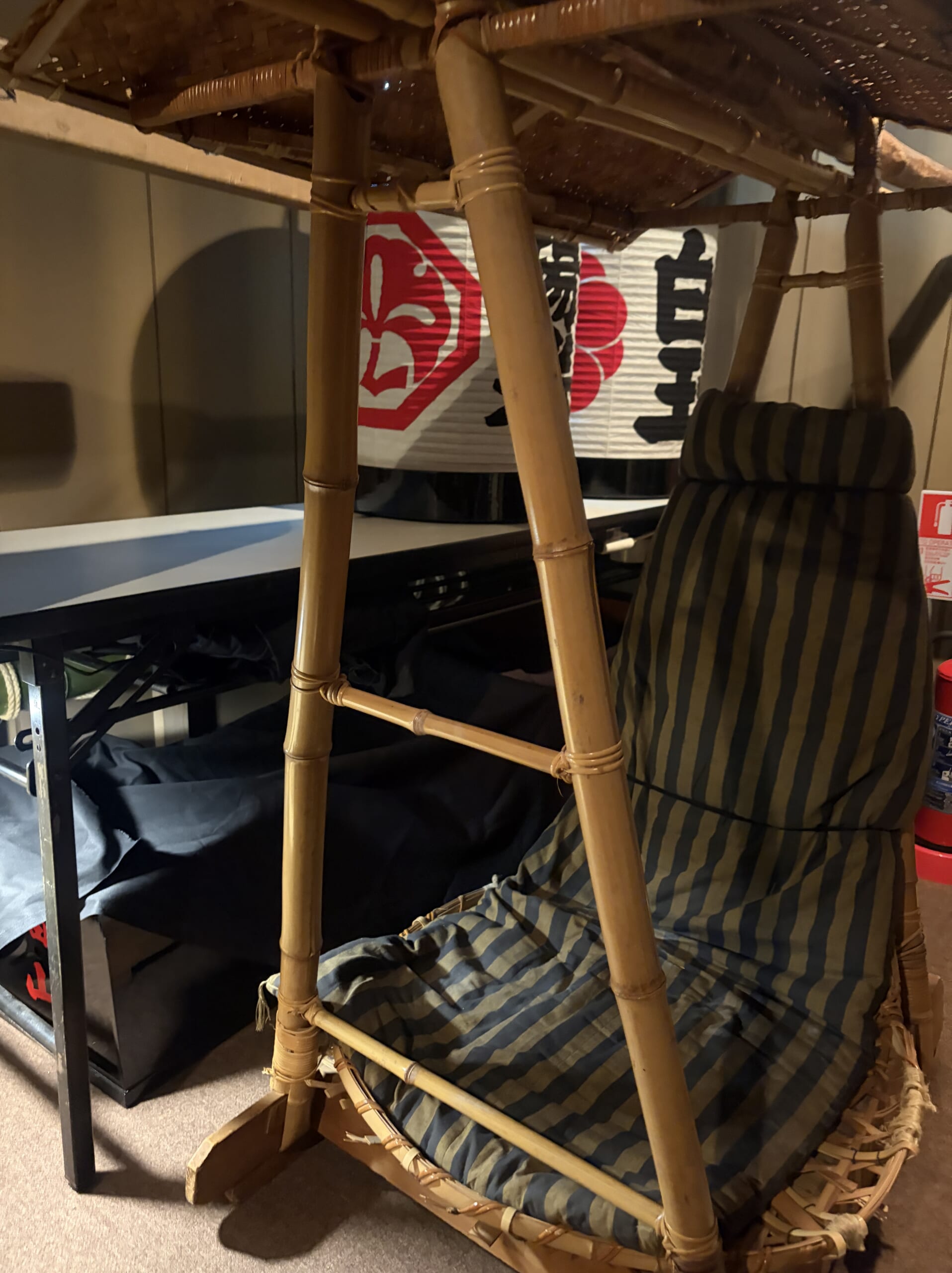
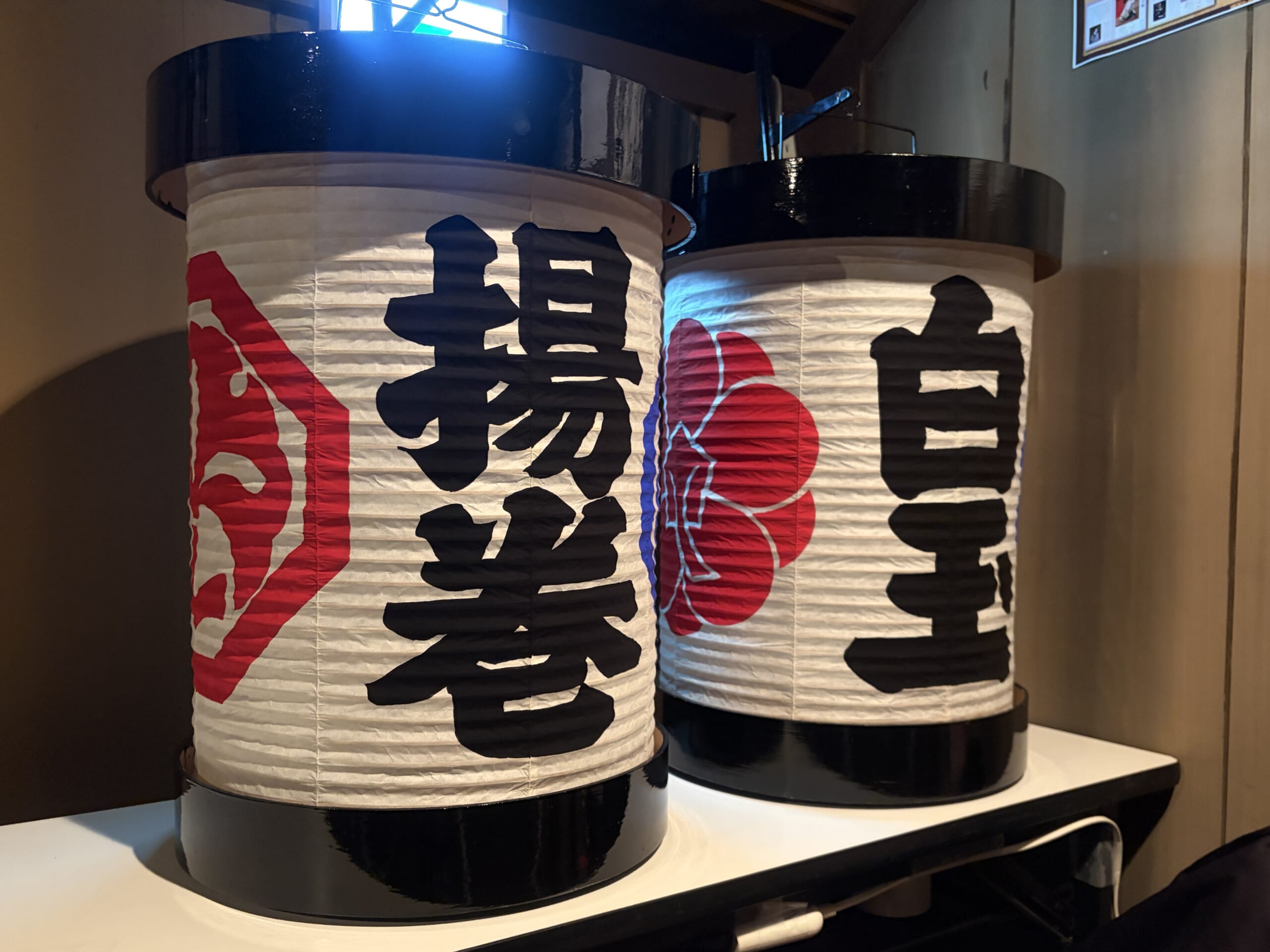
A palanquin with a striped cushion, plus two huge lanterns, one marked “Agemaki”, the other “Shiratama”. Props that are about to be used on stage, just sitting there inside the building. A playhouse is fun even before the curtain opens. Once again, it was the best day.
More from this production → October Program at the Heisei Nakamuraza Theatre: Part 1 (October 2026)
What Is the Heisei Nakamuraza?
It is a temporary theatre, open for a limited time, that recreates an Edo-period playhouse. It was born in Asakusa in 2000 out of the wishes of the late Kanzaburō Nakamura XVIII. This time, it has returned to the grounds behind the Main Hall of Sensō-ji for the first time in four years. Inside the theatre, you take off your shoes.
Part 2 has two plays. Gozonji Suzugamori is a single scene in which Shirai Gonpachi (Kantarō Nakamura), a young fugitive, meets Banzuiin Chōbei (Shikan Nakamura), a famous chivalrous boss of Edo.
Sukeroku Kuruwa no Hatsu Zakura is the story of Hanakawado Sukeroku (Kankurō Nakamura), who keeps picking fights in the Yoshiwara pleasure quarter. He is really Soga no Gorō, picking fights to make people draw their swords so that he can find Tomokirimaru, a treasured sword that has gone missing. The title is different from the Ichikawa Danjūrō family’s version, Sukeroku Yukari no Edo Zakura, with nagauta (shamisen music with singing) accompanying Sukeroku’s entrance. This is Kankurō’s first time in the role, with Nizaemon Kataoka coaching him, I hear 🫶
Before Part 2
After Part 1, bento boxes were on sale outside the theatre too. But my lunch bento had been so big that I was still full… In the end, I skipped the bento, taking a rest on a bench at Sensō-ji while gazing at the five-storey pagoda. “Right, Part 2!” I looked up at a banner to take a photo, only to find I was shooting it from the back, so the writing came out reversed (haha).
Inside the building, there are palanquins — a bamboo one, one with a bamboo blind — plus big lanterns. Perhaps the toya (the small room at the far end of the hanamichi runway) is too small? Props lined up like this give off a real playhouse vibe, which I love 💕 The lanterns were so lovely that I kept taking photos of them. Agemaki-san ♡
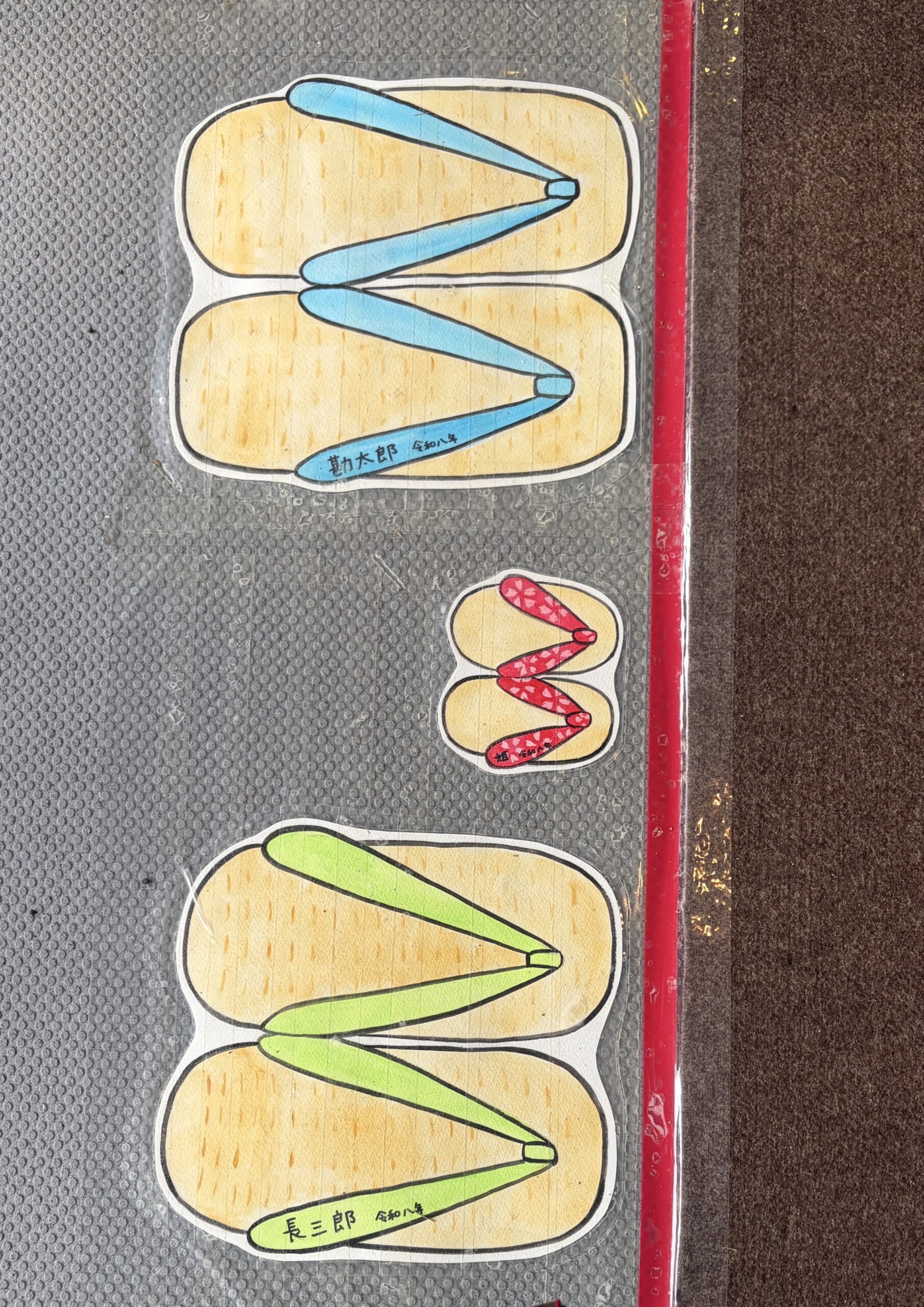
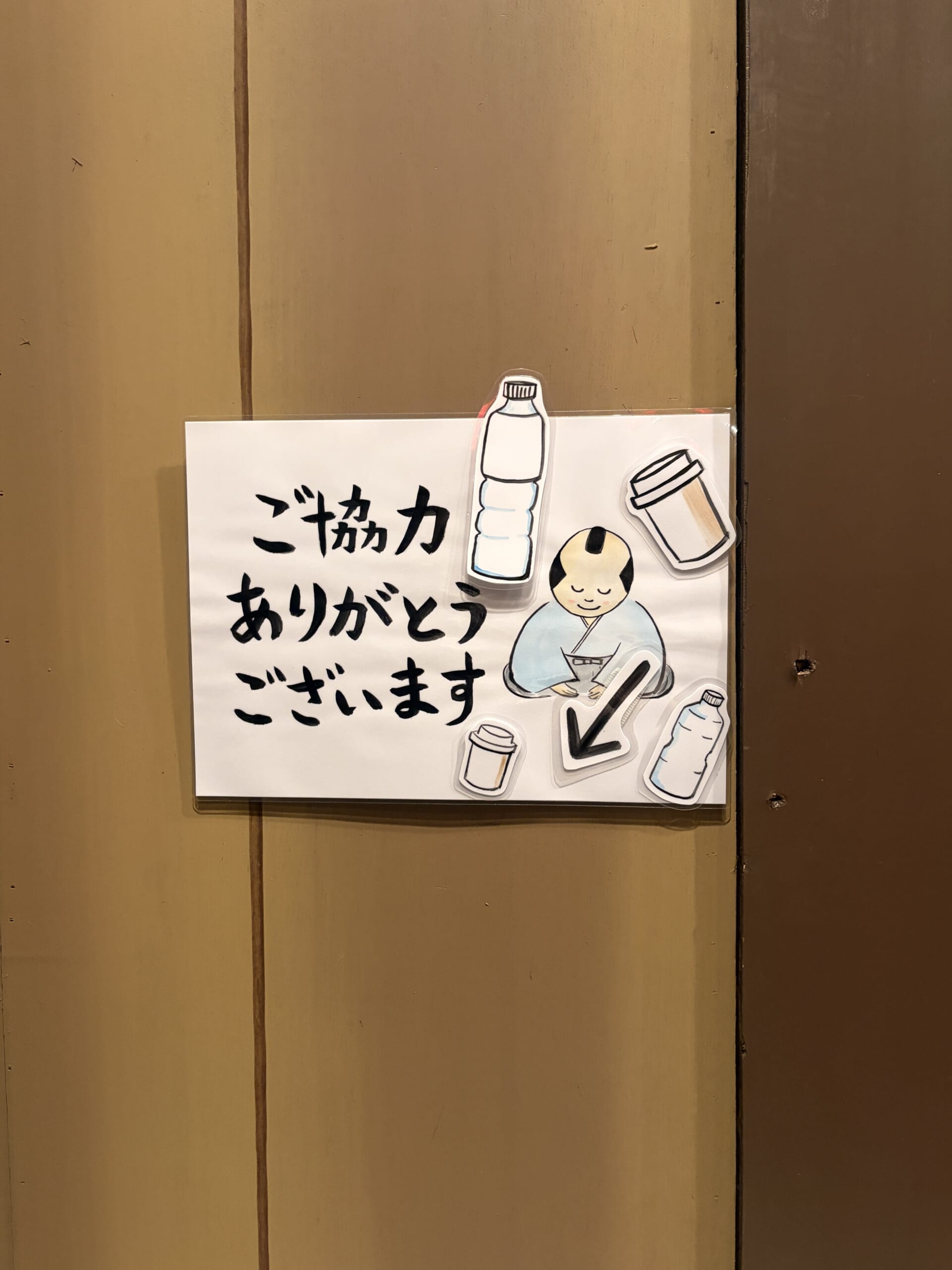
Where you take off your shoes, there is a drawing of sandals: a large pair with blue straps labelled “Kantarō”, a large pair with green straps labelled “Chōzaburō”, plus a small pair with red straps labelled “Hime” (princess). Too cute ♡ The “Thank you for your cooperation” sign on the wall has a drawing of a bowing person, too. I love this kind of thing. I wonder who drew them. On the staircase near the entrance, there were also decorations of yellow ginkgo leaves.
From a Bench Seat on the Shimote Side
My seat was on a bench on the shimote side (the left side as seen from the audience). First impression: “It’s at such a steep angle, there’ll probably be lots of blind spots… but it looks easy to see!” As expected, part of the stage on the shimote side was out of view, but the hanamichi runway was perfectly visible, like the view from the sajiki (the raised box seats along the side). It was the best.
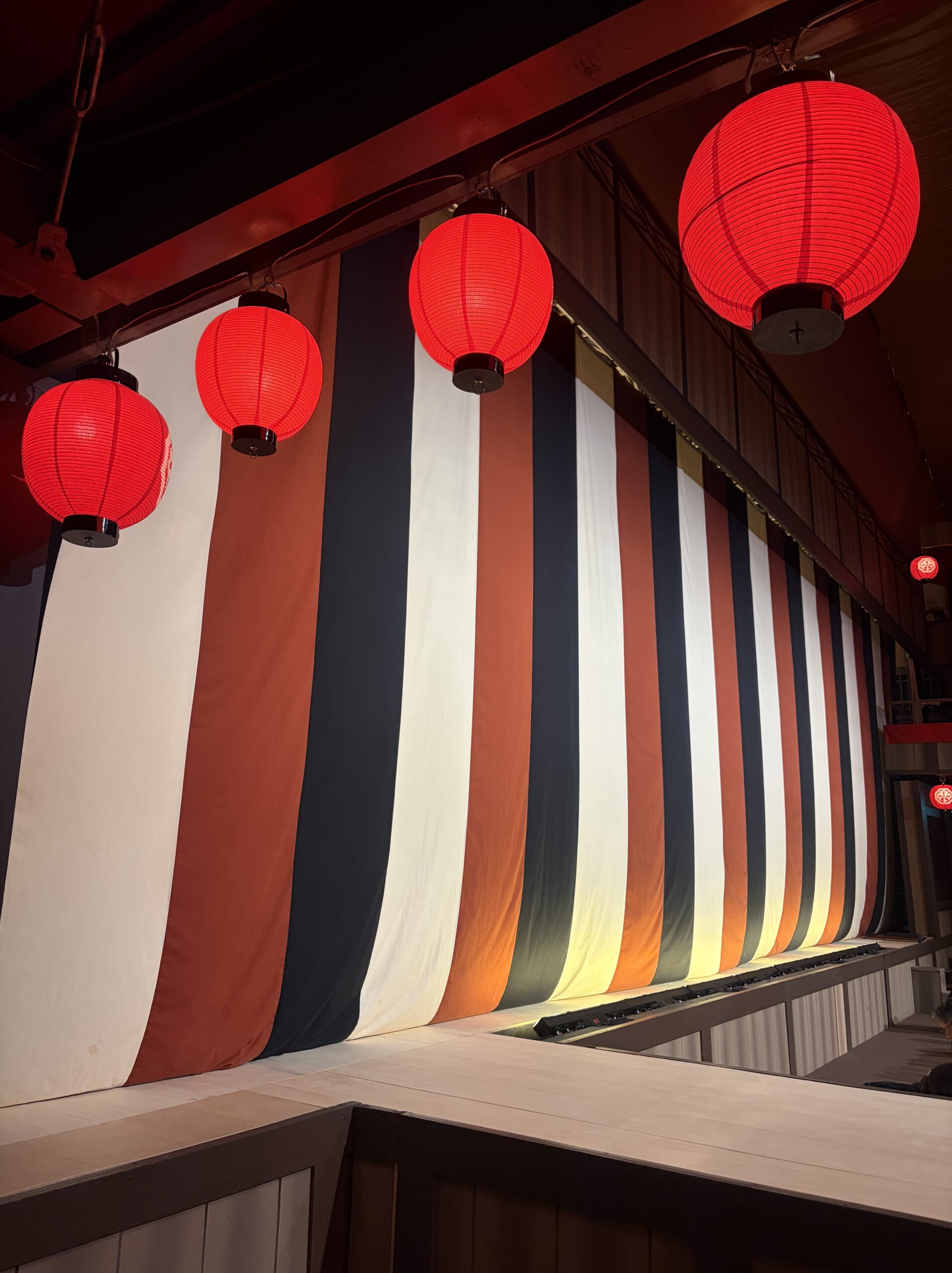
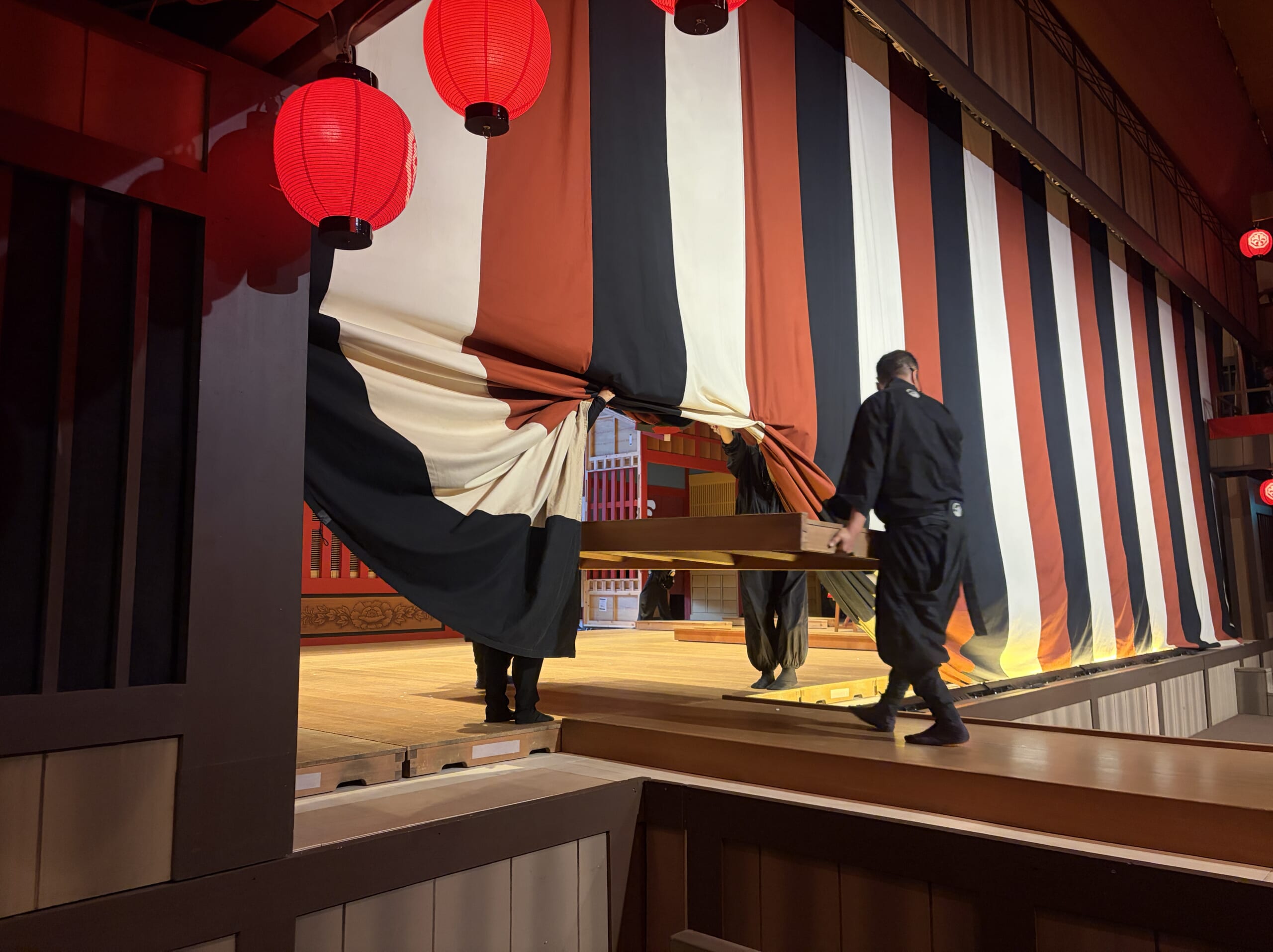
Sometimes the edge of the curtain lifted a little, so I could see the crew carrying set pieces. That little glimpse is irresistible. Looking up, red lanterns in a row. Beautiful.
Also, it was freezing inside the theatre! As it is a temporary building, maybe they are still adjusting the temperature as they go… Something to put on over your clothes is an absolute must. I almost wanted a down jacket (haha).
The Part 2 Plays
I also spotted the props I had seen inside the building up on stage.
Gozonji Suzugamori
In the dark, Gonpachi (Kantarō) cuts down the kumosuke (roadside thugs) one after another as they attack him. Feet, arms, a nose, a face, a head… it’s gruesome, yet a little comical.
Then came the 30-minute interval. I had been so full, but no way… I was already starving! I should have bought one before the show, knowing I’d get hungry… I really wanted Asakusa Imahan’s sukiyaki bento 😭
Sukeroku Kuruwa no Hatsu Zakura
Shichinosuke Nakamura’s Agemaki was as wonderful as ever. I love her slightly mean streak. She’s a woman, yet so gallant!
Then came the incident. Right in the hidden part of the shimote side was Tsurumatsu Nakamura, playing the courtesan Kochō. Nooooooo, so that’s the punchline… What a twist… But thanks to that, I could focus on Shichinosuke’s Agemaki, so it actually turned out well (haha). I mean that quite seriously.
When Sukeroku (Kankurō) appeared on the hanamichi, it was like, “Ahh, Sukeroku really is great 💕” Even while watching, I felt deeply how much I love this play. According to the earphone guide, Sukeroku’s costume belongs to Nizaemon!
Lately I seem to have mostly seen a comical Kankurō (in Rakuda, for example), so the stylish, cool Kankurō actually made me laugh (haha). Like, “Wow, you’re so cool!” There was no comedy at all this time, which I missed a little, but I had a wonderful time even without it.
Chōzaburō Nakamura as Fukuyama no Katsugi (the noodle-shop delivery boy) was the best, I love him 😂 Roles like that really suit him, so funny. He truly is Kankurō’s son (haha).
Ganjirō Nakamura as Tsūjin Rigyō (the dandy) was hilarious again. Maybe the first time I’ve seen him in this role since the 2023 Kaomise (the annual face-showing performances) at the Minamiza Theatre? When Sukeroku made him crawl through his legs, he sprayed on perfume, calling it “the Ralph Lauren I’ve used since high school”. I thought he was just miming, but I could actually smell it. He told Kankurō, “You’re the spitting image of Kanzaburō Nakamura XVIII!” To Senjaku Nakamura as Shinbei the white sake seller, he said, “Like a brother of mine by blood… oh, that couldn’t be!” (In real life, Ganjirō is Senjaku’s brother.)
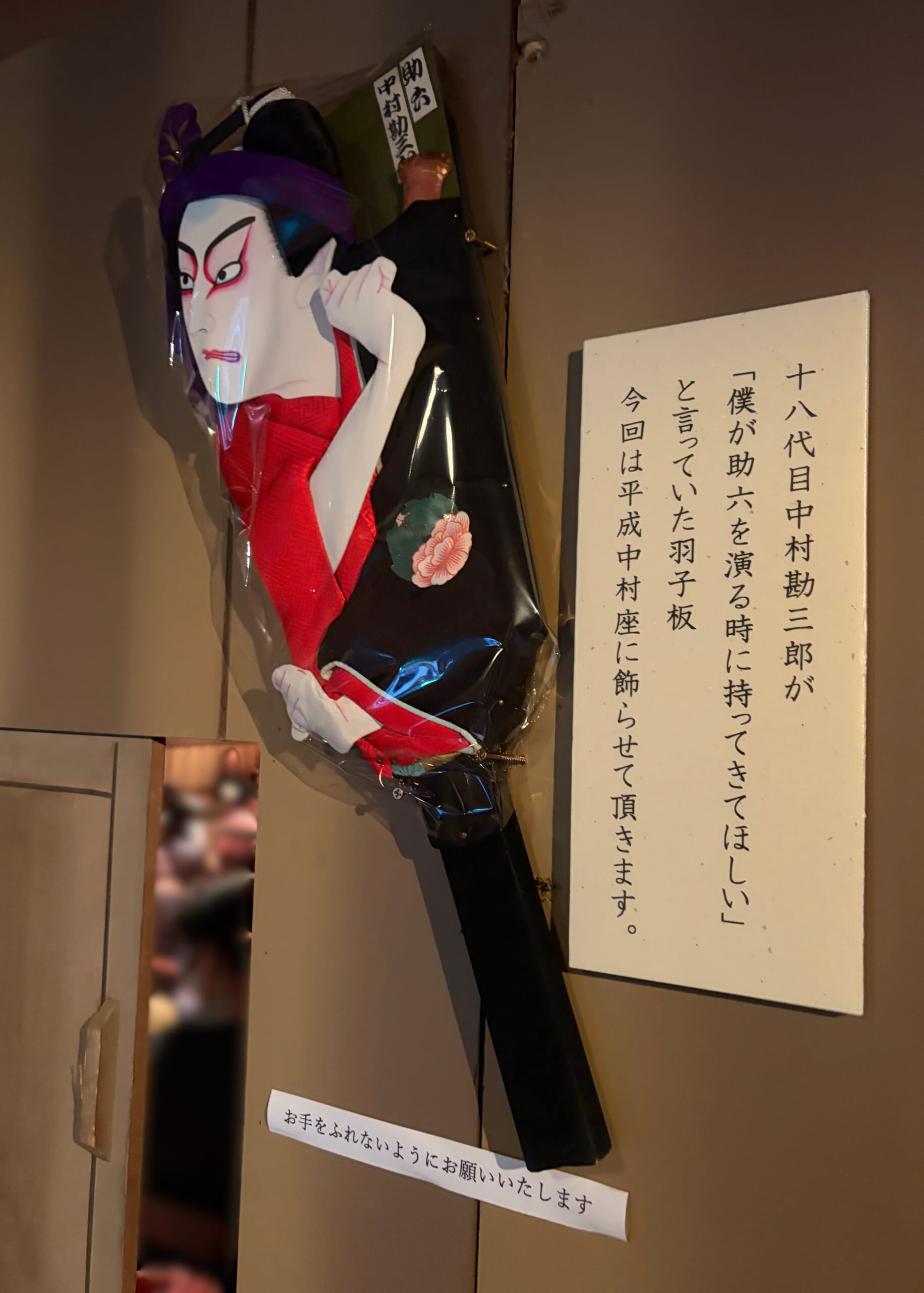
He also said something like, “Kanzaburō always said he wanted to play Sukeroku. I bet he’s envious, watching from heaven~”, which warmed my heart 🥺 Inside the theatre, there was also a hagoita (a decorated battledore) on display, the one Kanzaburō XVIII had asked people to “bring along when I play Sukeroku”.
In the final Mizuiri (water) scene, Sukeroku goes into a tensuioke (a large water barrel kept for firefighting). It looked so cold, plus it was a chilly day, so I couldn’t help thinking, “Please don’t catch a cold…”
The Heisei Nakamuraza at Night, Then Sensō-ji
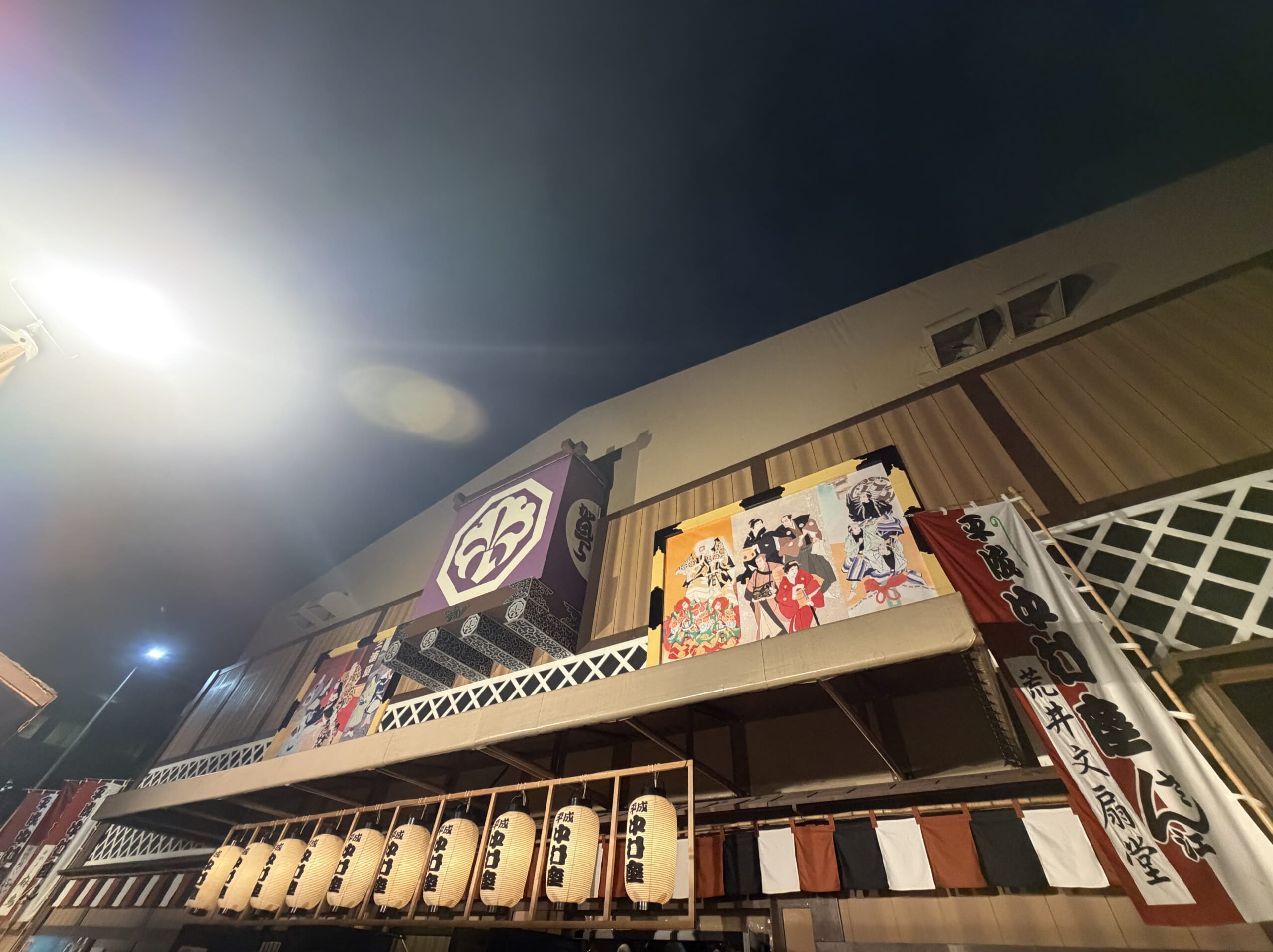
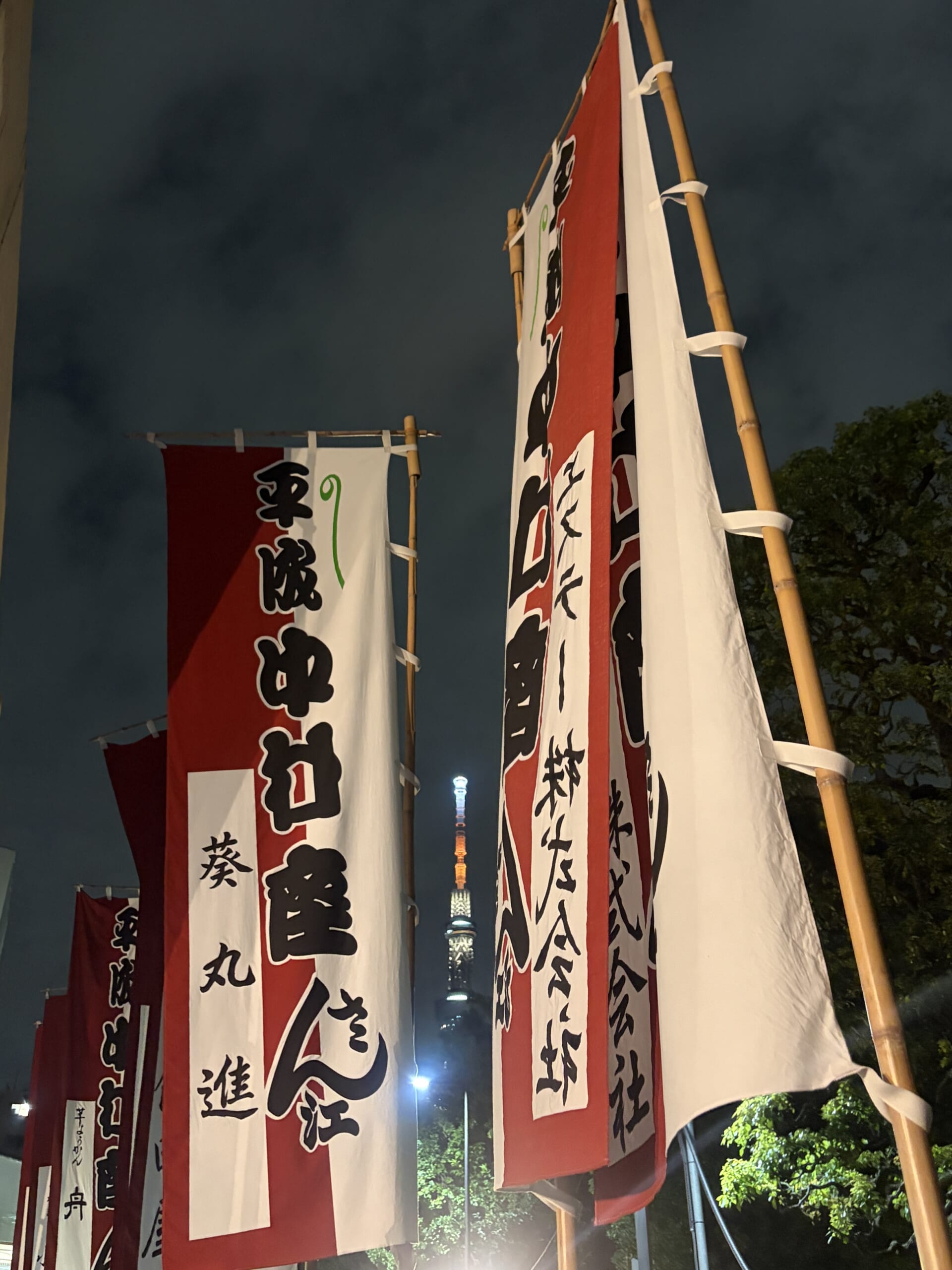
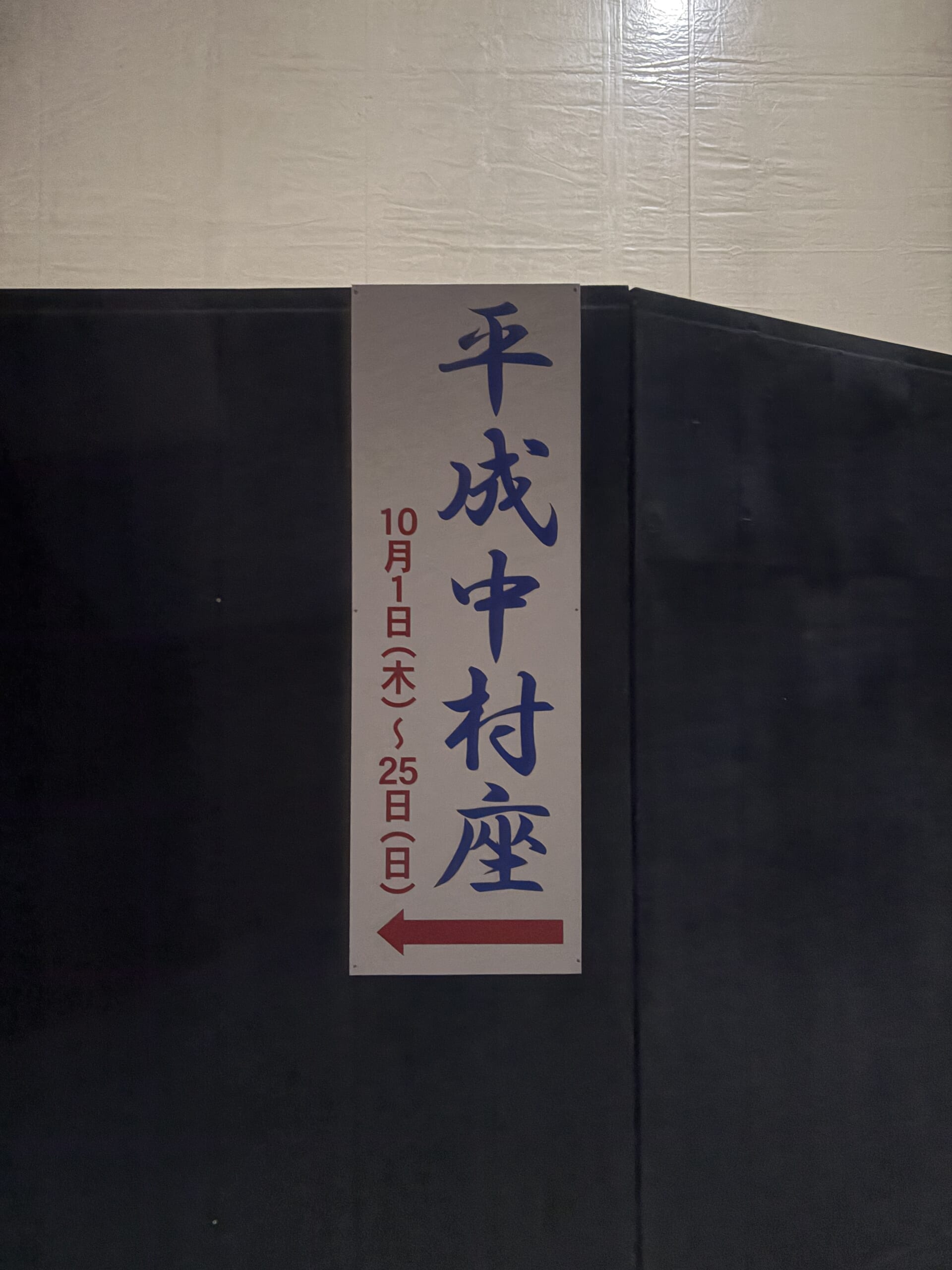
Stepping outside, there was the Heisei Nakamuraza at night, its lanterns lit. Through the gaps in the banners, I could see the Tokyo Skytree too. On the outer wall was a simple sign with just the run dates plus an arrow. It had a sort of Shōwa-era feel, so nostalgic.
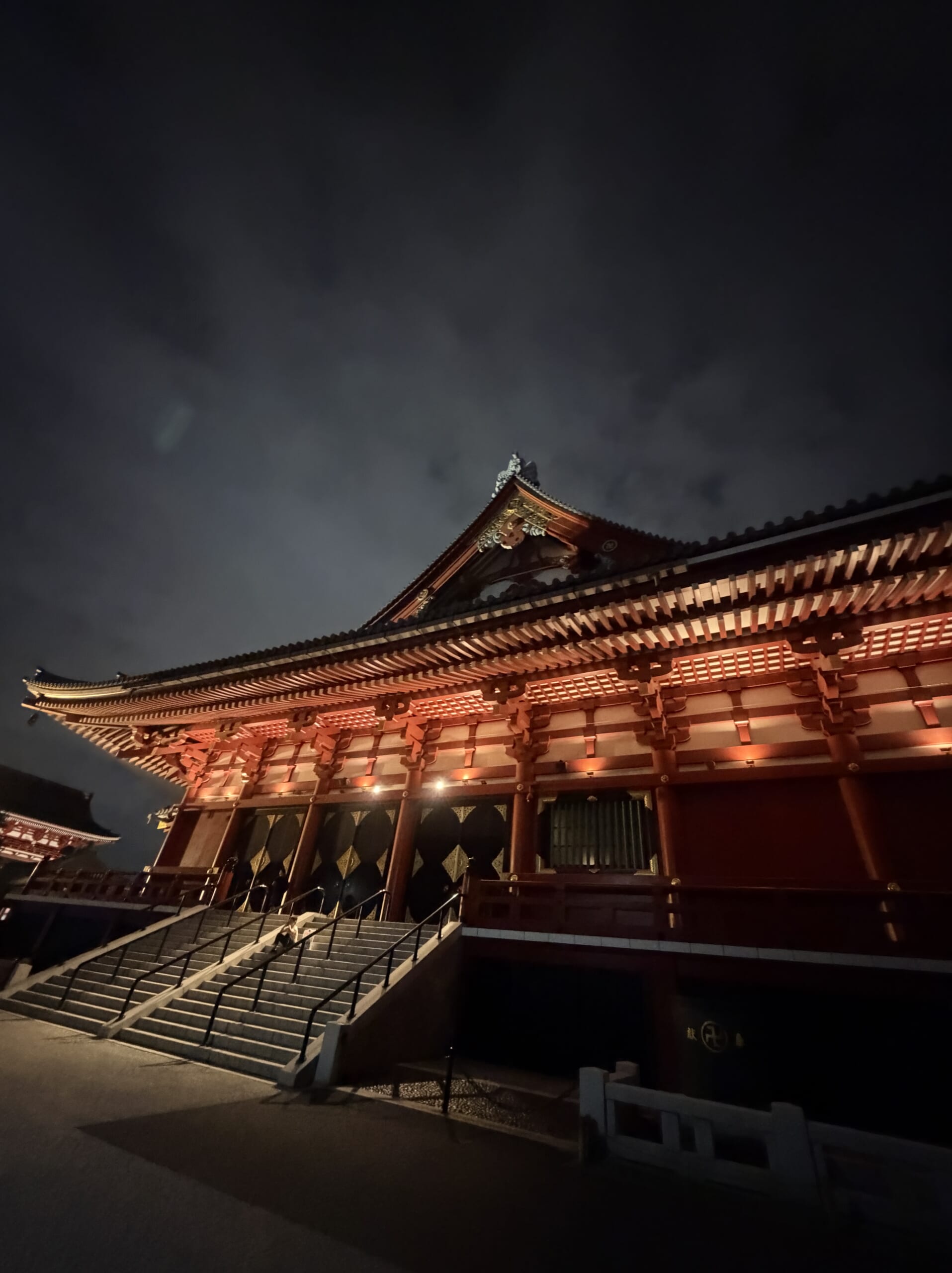
On the way home, I stopped by Sensō-ji, whose Main Hall was lovely too. The night breeze felt nice.
Summary
Props, hand-drawn signs, set changes. In Part 2, I enjoyed the whole playhouse, realising once again how much I love Sukeroku. I think you’d enjoy soaking up the atmosphere of an Edo playhouse at least once. Looking forward to the next Heisei Nakamuraza!