When the maneki signboards go up on the Minamiza’s facade, I know it’s that time of year again. Kaomise season! And December 2023 was no ordinary kaomise: it celebrated the shumei (name succession) of Ichikawa Danjuro XIII Hakuen and the very first stage appearance of his son, Ichikawa Shinnosuke VIII. I did not expect to spend part of the day in tears. As always, it was the best day ever.
What Is Kaomise?
Every December, the Minamiza Theatre in Kyoto holds the Kichirei Kaomise, a kabuki event so woven into the city’s calendar that locals count it among Kyoto’s annual traditions. When the maneki—wooden signboards painted with each actor’s name in bold, rounded calligraphy—line up above the theatre entrance, the whole city shifts into year-end mode.
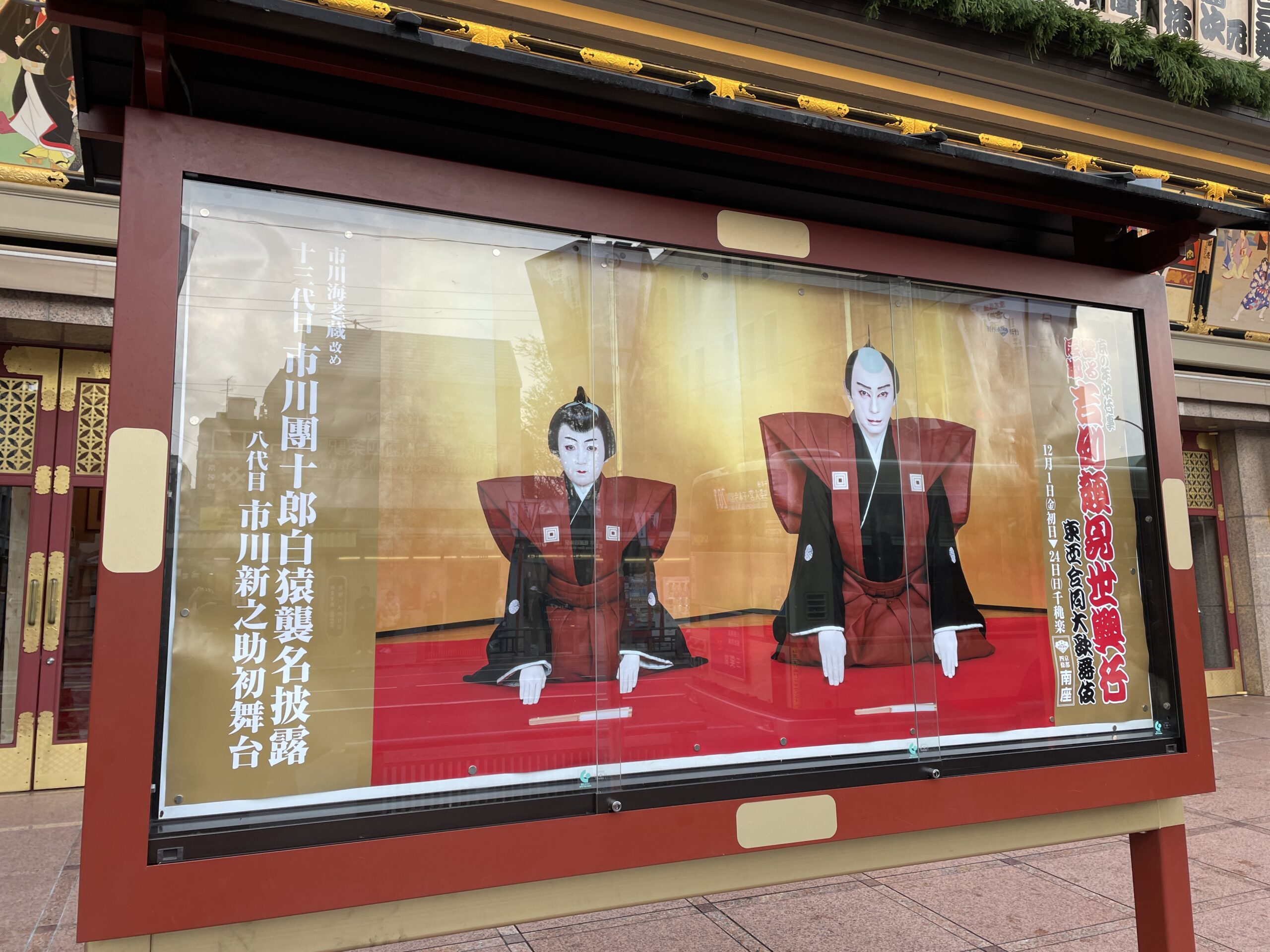
That year’s program doubled as a grand celebration: Ichikawa Ebizo formally took the illustrious name Danjuro XIII Hakuen, while his ten-year-old son debuted as Shinnosuke VIII.
A Whole Town Saying “We’ve Been Waiting!”
From November, weeks before opening night, banners reading “We’ve been waiting!! Gion loves kabuki” fluttered through the Gion district, and I grinned every time I walked past one. Signboards and formal announcements stood in front of the Minamiza too. The whole neighborhood seemed to be holding its breath for the curtain to rise.
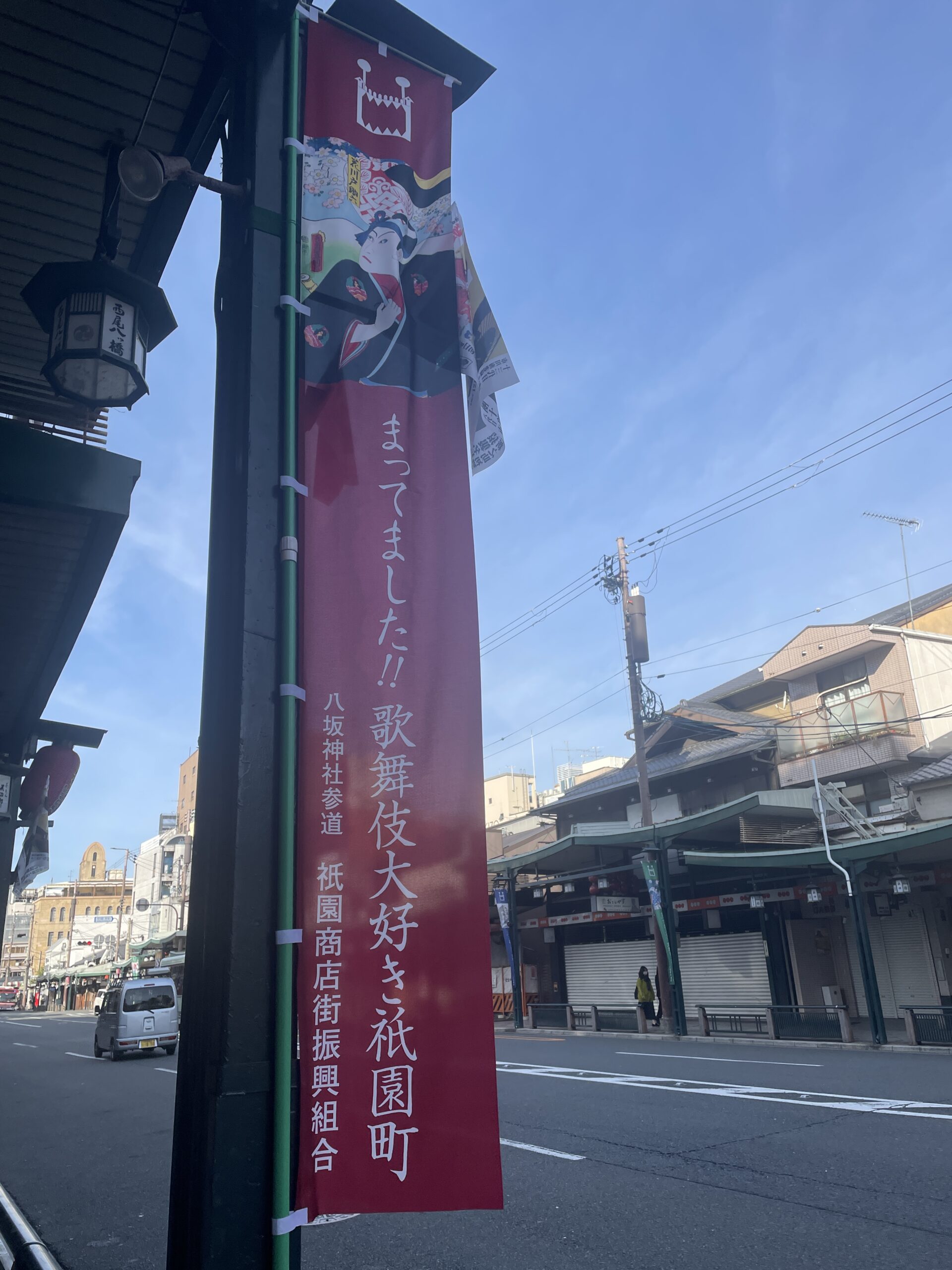
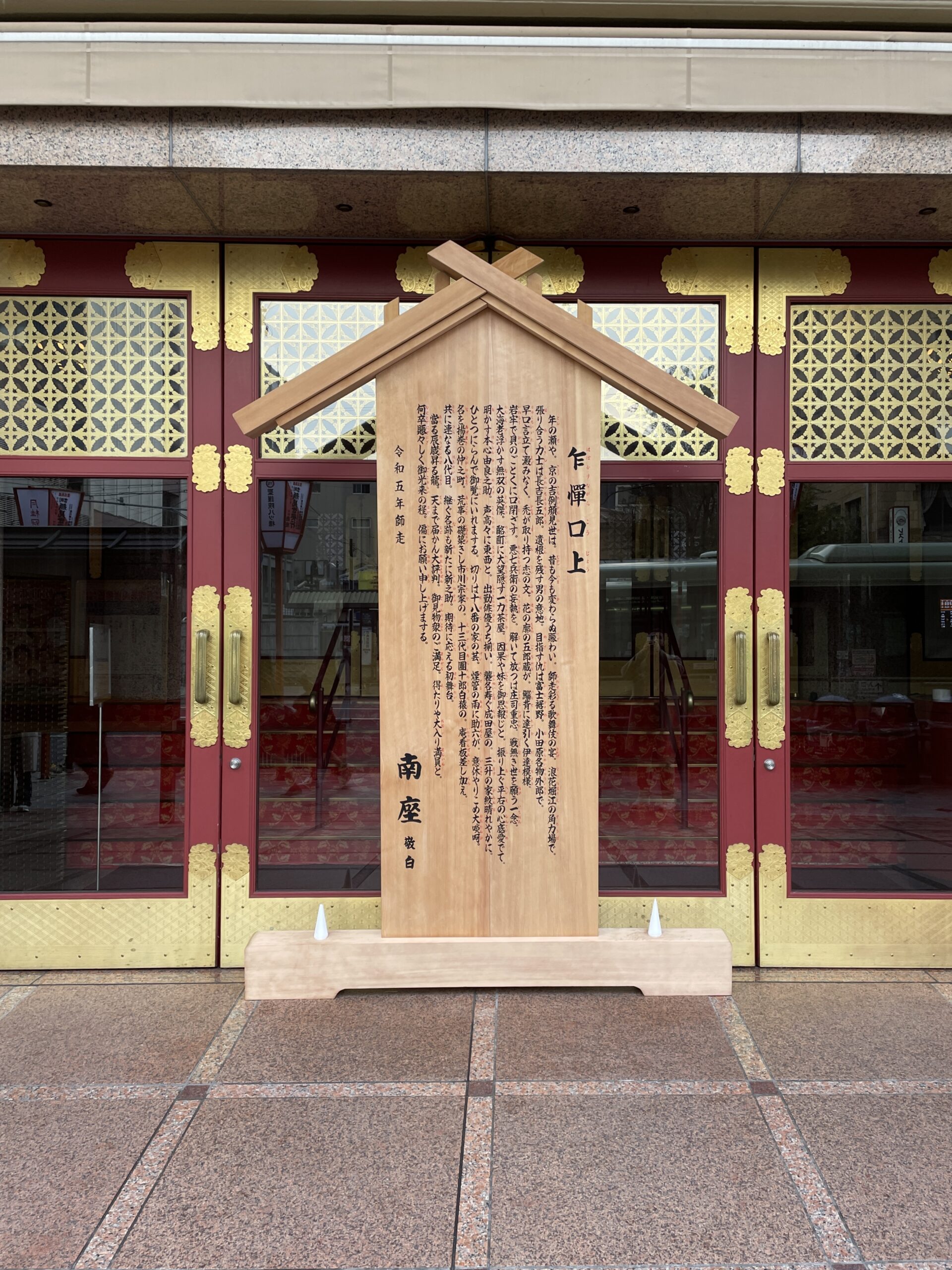
Honestly, this waiting period is part of the kaomise experience itself.
Sweet and Endearing Yogoro
My seat that day was front row center on the second floor. Not as close to the actors as the seats beside the hanamichi (the runway that extends through the audience), but with a beautiful, unobstructed view of the entire stage.
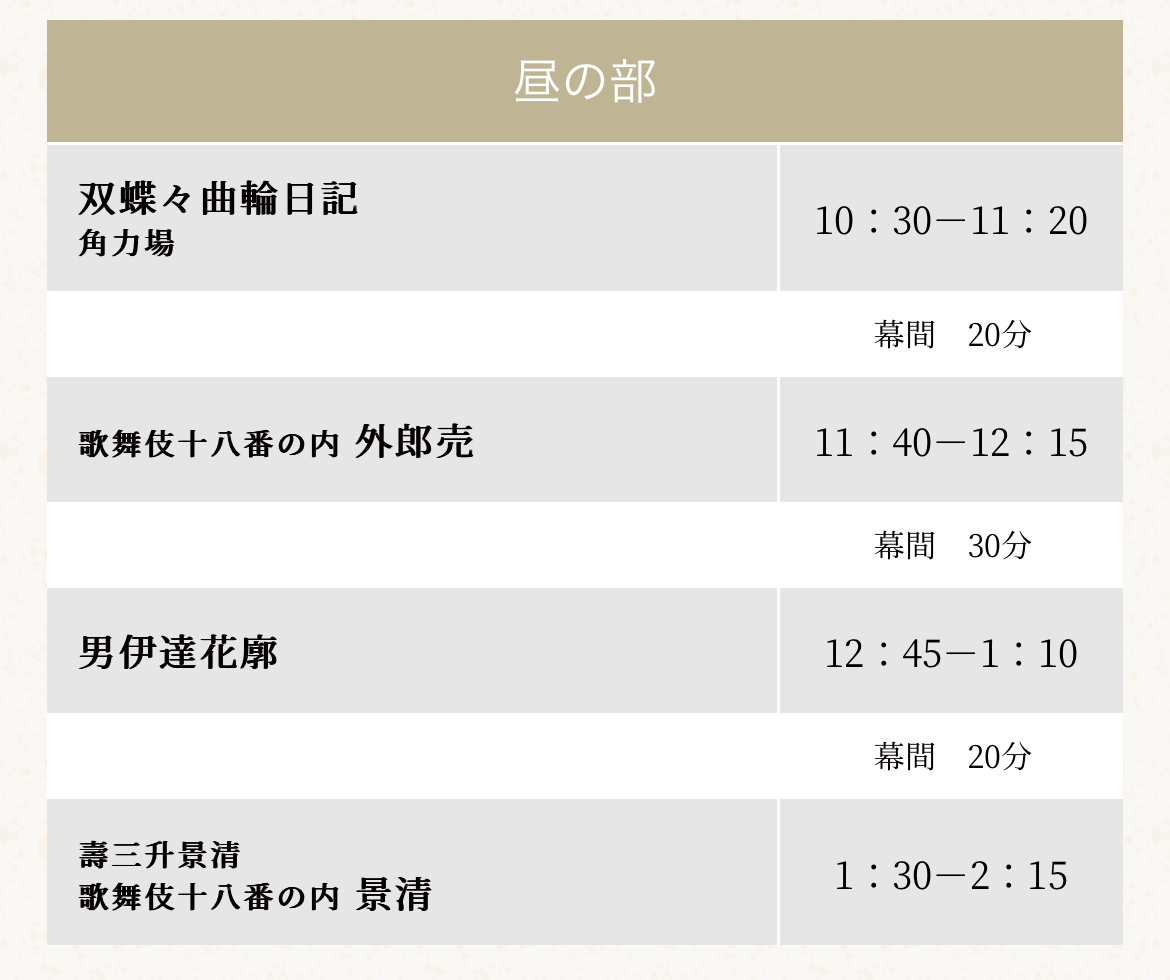
The matinee opened with the sumo-arena scene from Futatsu Chocho Kuruwa Nikki. Ichikawa Somegoro, one of the actors I’d most been looking forward to seeing, played Yogoro, a wealthy young shopkeeper’s son. Yogoro is a classic tsukkorobashi—a soft, endearingly helpless type of male role. Watching him mutter “Nanjai, nanjai… nanjai” (“What’s it to you…”) in frustrated defeat was impossibly sweet. Discovering these gentle, lovable characters is one of the joys of kabuki.
Tears for a Ten-Year-Old’s Debut
Then came Uirouri, the famous tongue-twister piece. Ten-year-old Shinnosuke performed its legendary rapid-fire monologue for his stage debut.
Seeing how much he had grown, and sensing the weight this little boy carries onto the stage with such courage, I found myself crying. I couldn’t help imagining his father Danjuro’s daily devotion behind it all, too.
Thinking about the human story before the artistry—that’s how I know I’m a true kabuki beginner. And you know what? That’s fine by me. Even superhuman performers are human ⭐️
Intermission: The Celebration Curtain and a Nadaman Bento
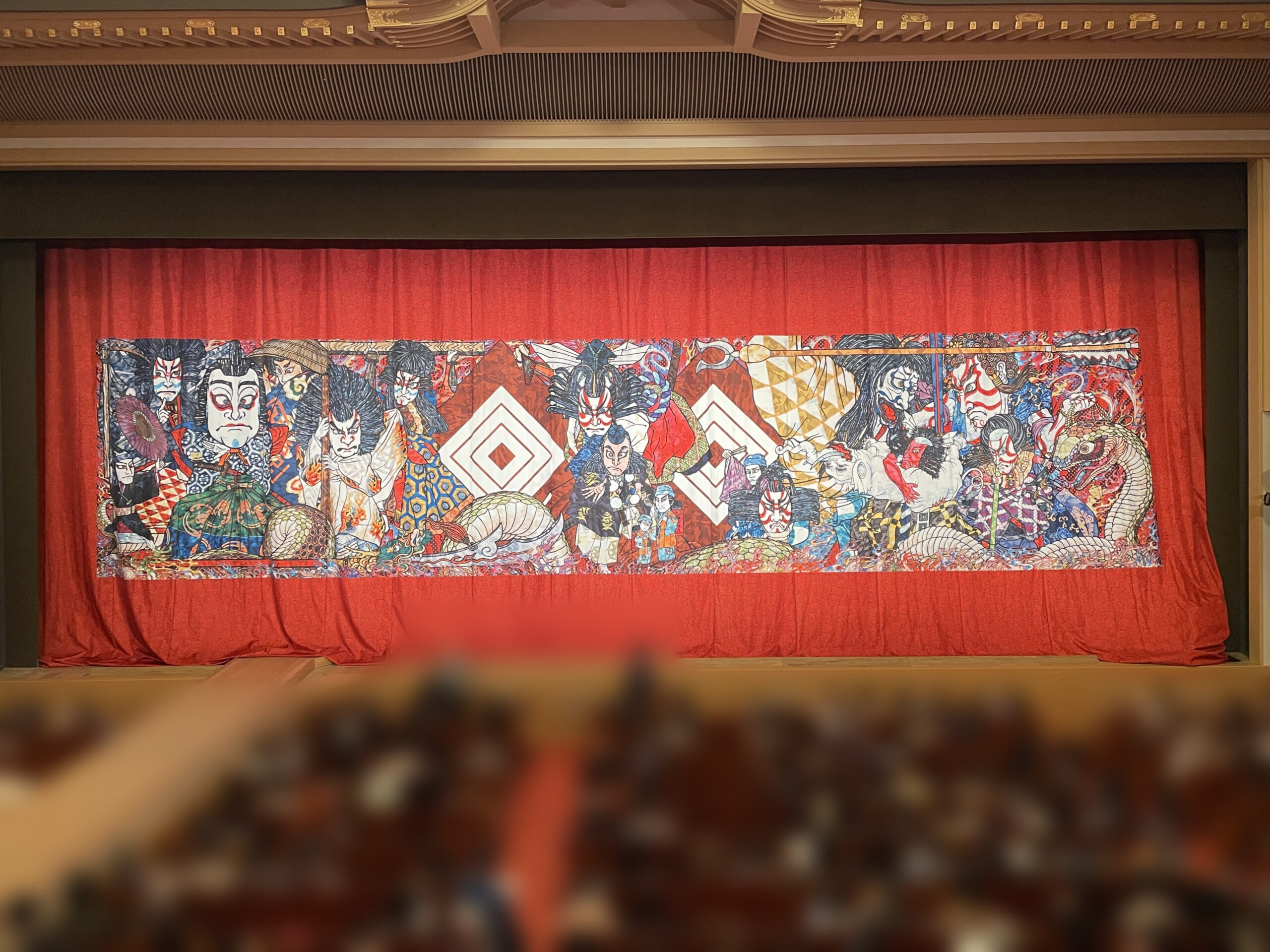
The intermission highlight was the iwaimaku, a special celebratory curtain created for occasions like a name succession—this one based on original artwork by Takashi Murakami. It had attracted a lot of attention, so seeing it in person was a thrill. There was so much to take in that the intermission would have vanished before I finished looking, so I admired the curtain while eating my bento (multitasking!). The Nadaman boxed lunch I queued for inside the theatre was delicious.
Final Thoughts
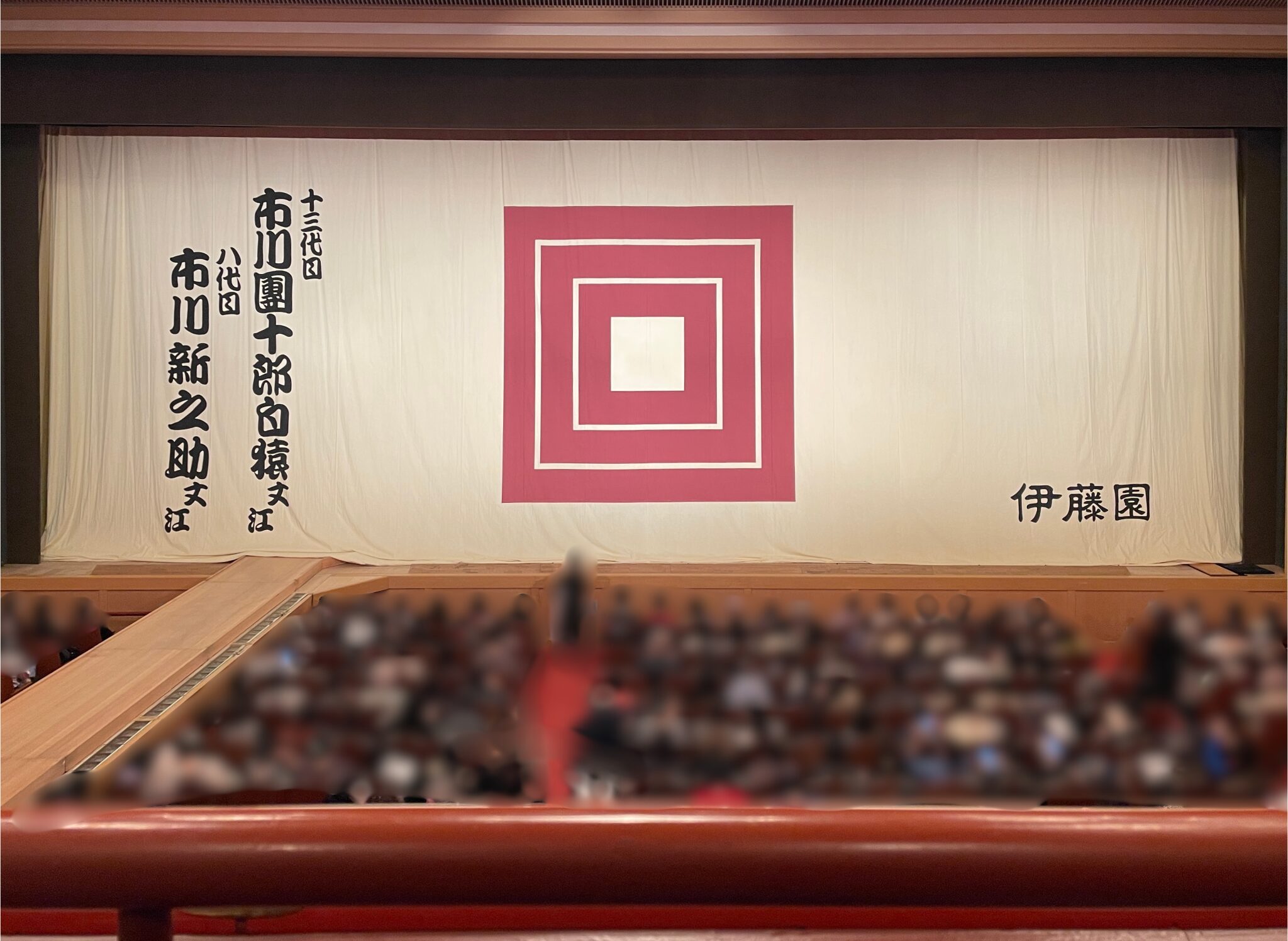
A name succession, a debut, a Murakami curtain: this kaomise had it all. The white celebration curtain bearing the mimasu (triple-square) crest of the Danjuro line added the perfect festive touch.
I also got to savor Danjuro himself in Otokodate Hana no Yoshiwara and Kagekiyo, which made for a thoroughly satisfying matinee. Witnessing the next generation grow up on the kabuki stage is a special kind of happiness for us in the audience.
And since I already had tickets for the evening program, there was still more to look forward to, so I could head home without feeling reluctant to leave.
Read about the evening program here → Kaomise at Kyoto’s Minamiza Theatre: Evening Program (December 2023)