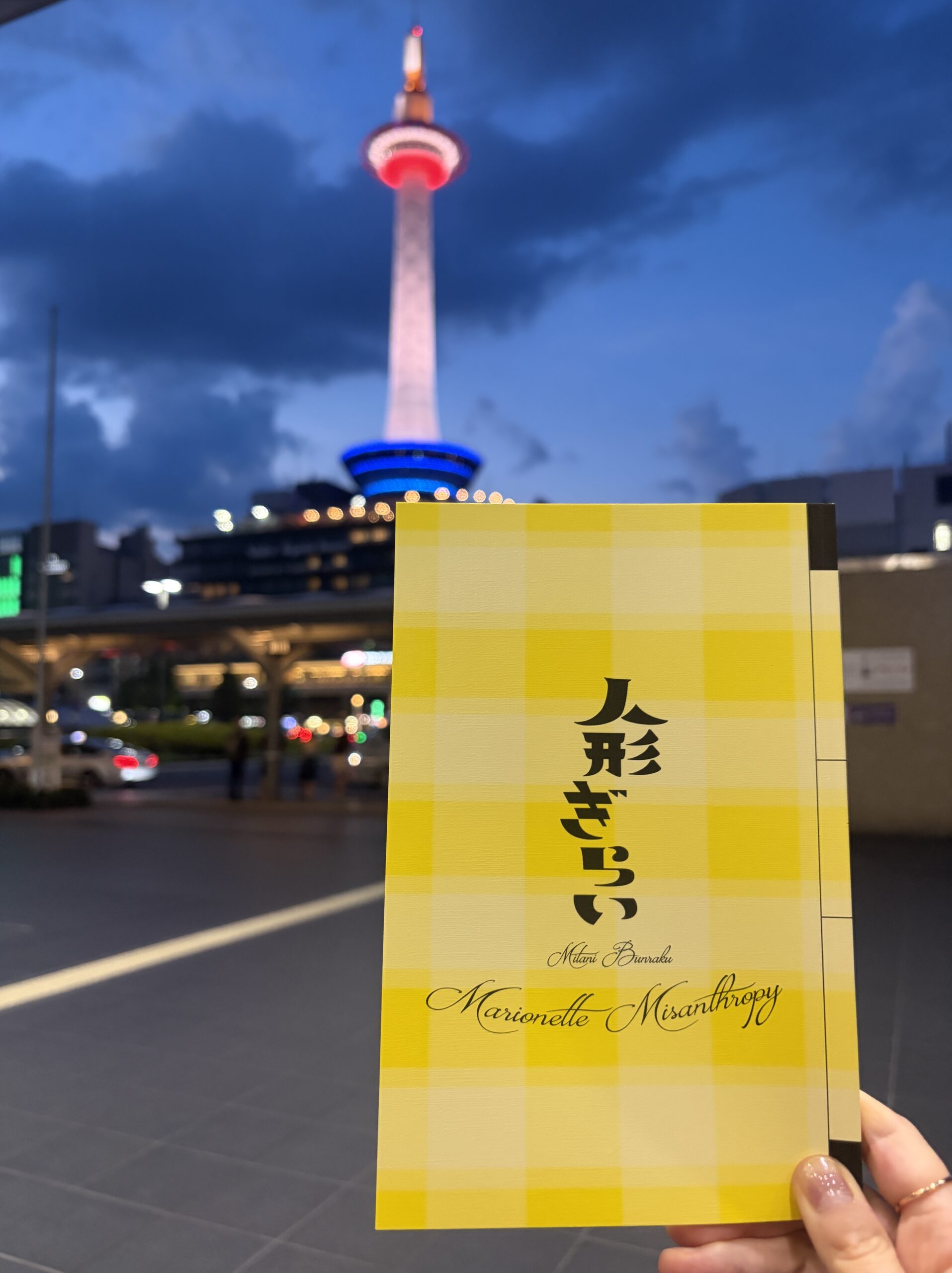
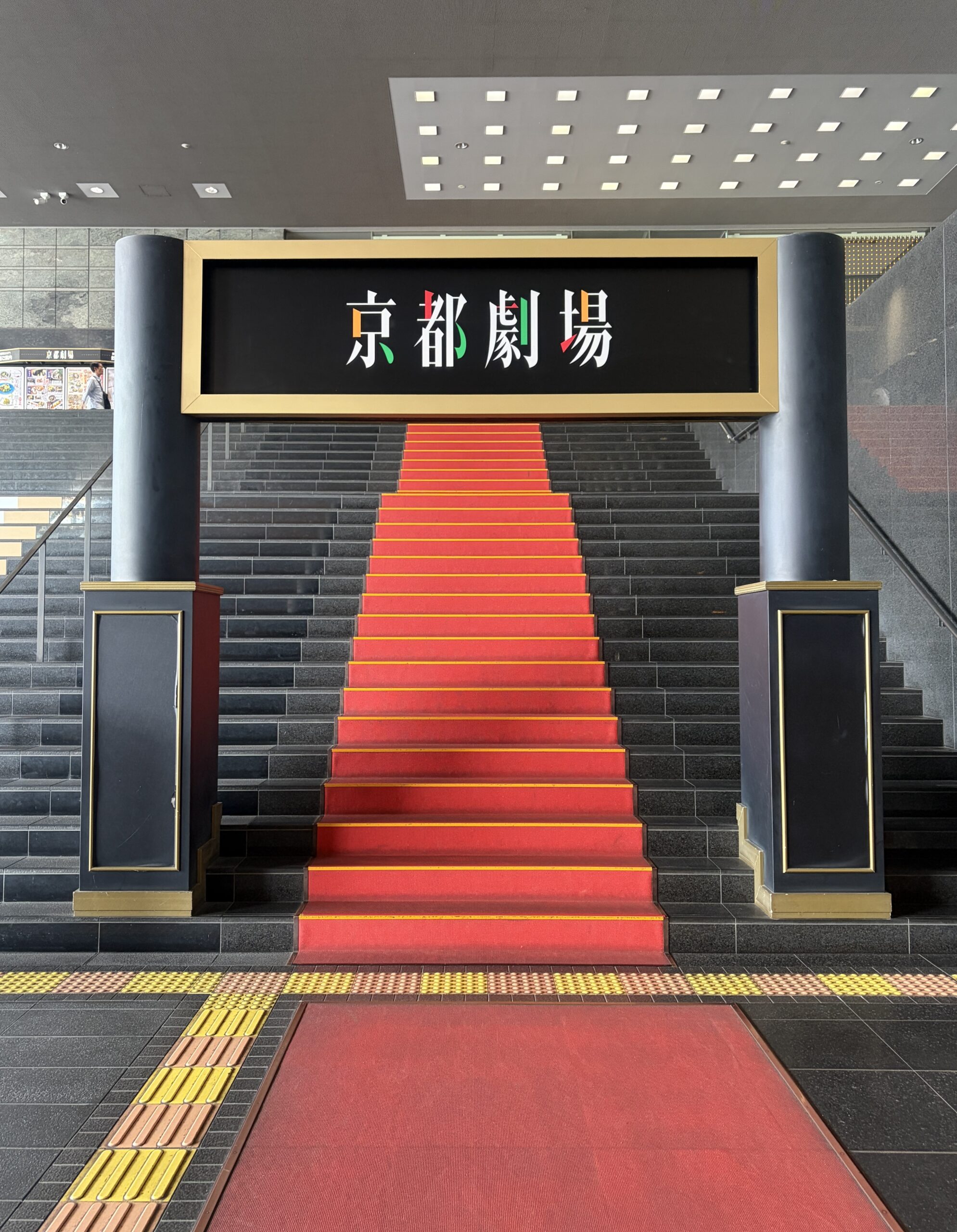
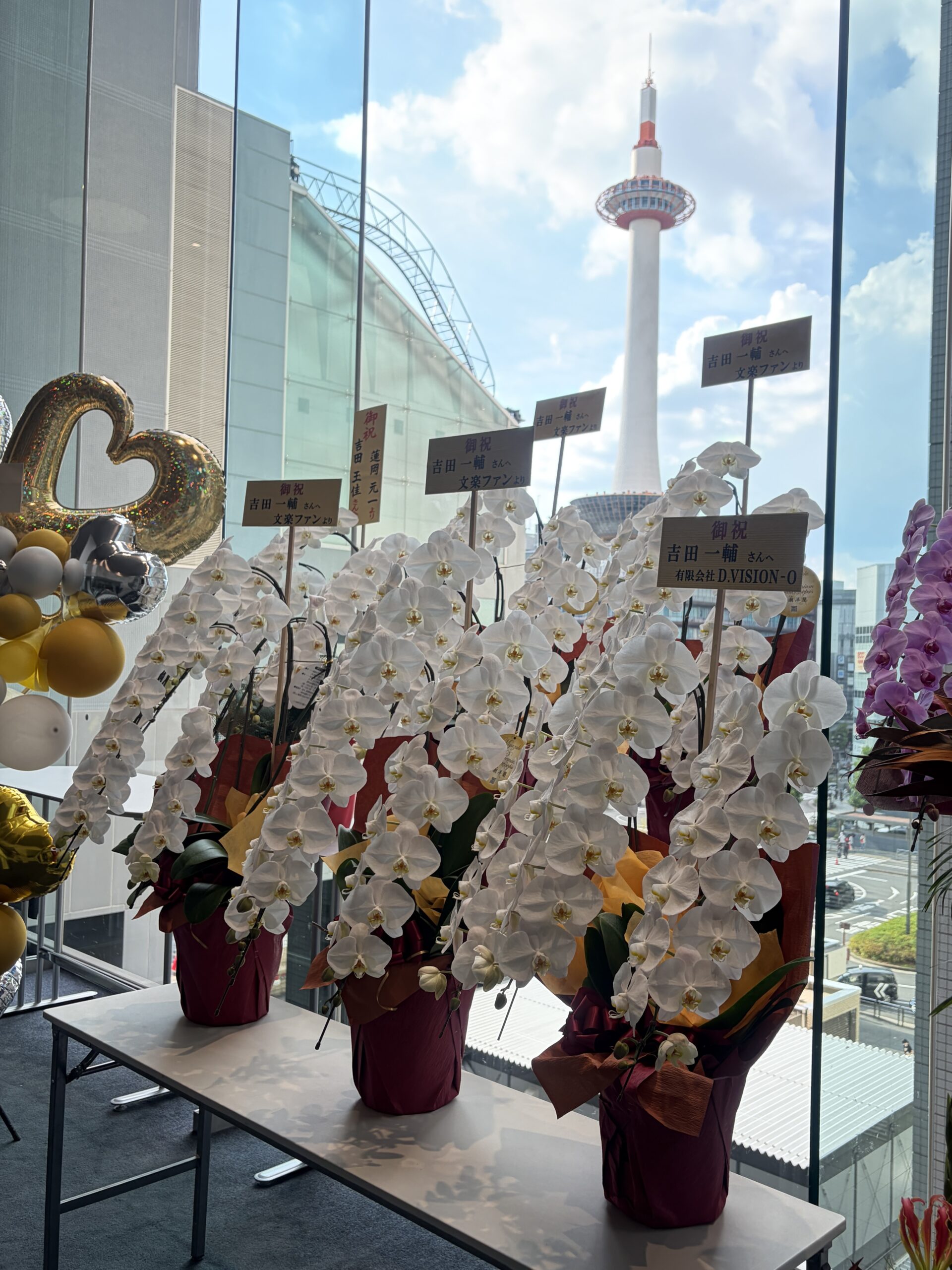
I went to see Mitani Bunraku’s “Marionette Misanthropy” at Kyoto Gekijo, a theater directly connected to Kyoto Station. The star of the show: a bunraku puppet. It’s a story about the puppet itself — the one who plays the roles. I laughed and laughed, cried, and laughed again at the end. Yes, today was wonderful as always.
What Is “Marionette Misanthropy”?
“Mitani Bunraku” is Koki Mitani’s project of creating new works for bunraku. “Marionette Misanthropy,” which premiered in 2025, is his first new bunraku in 13 years since “Sorenari Shinjū” (2012). Inspired by Molière’s “The Misanthrope,” the protagonist is Darasuke, a kashira (puppet head) that specializes in hateful villain roles. Within the play, Chikamatsu Monzaemon’s “Yari no Gonza Kasane Katabira” is being staged — and Darasuke’s frustration at always being cast as the villain finally explodes . . . that’s the story.
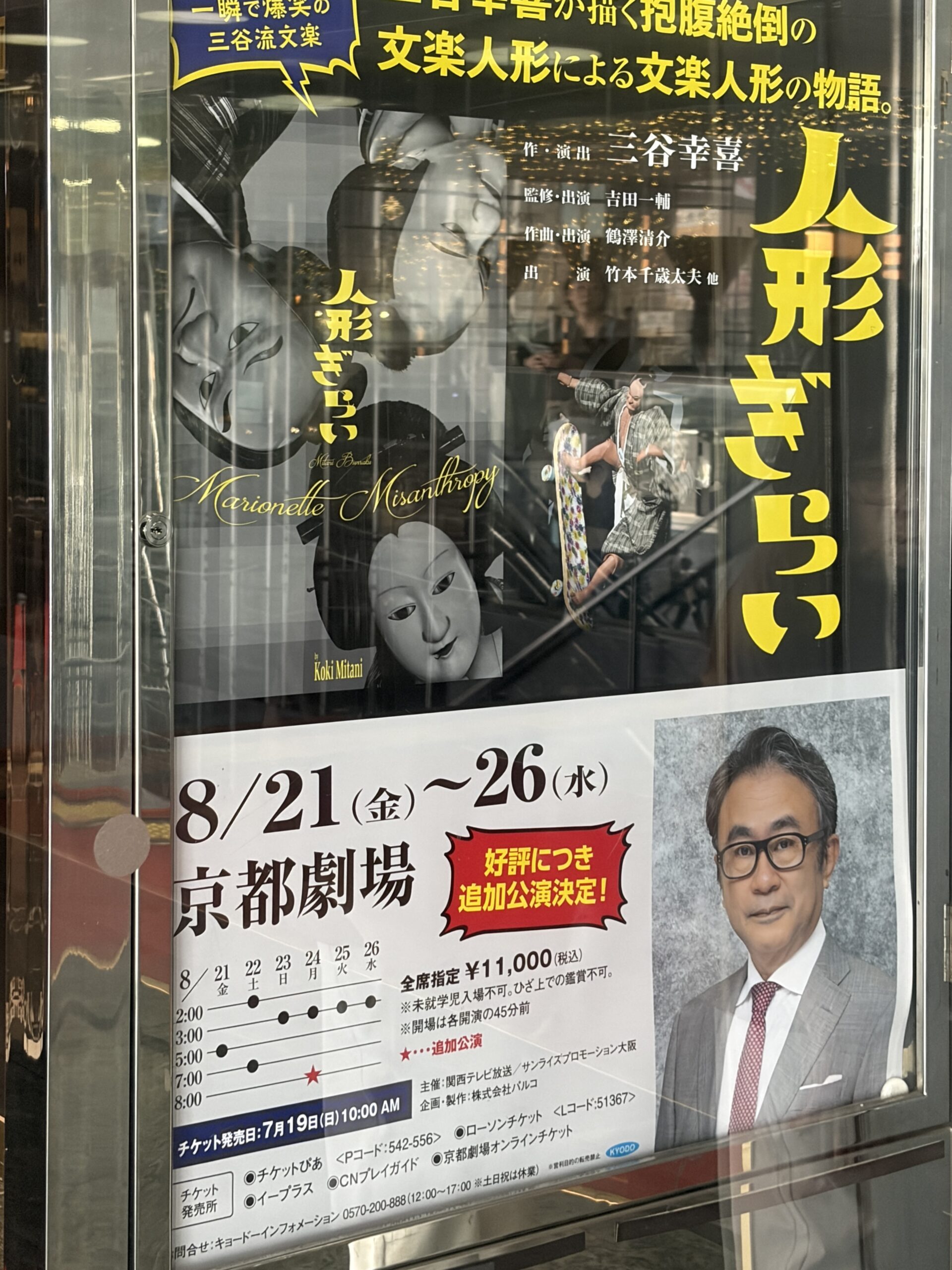
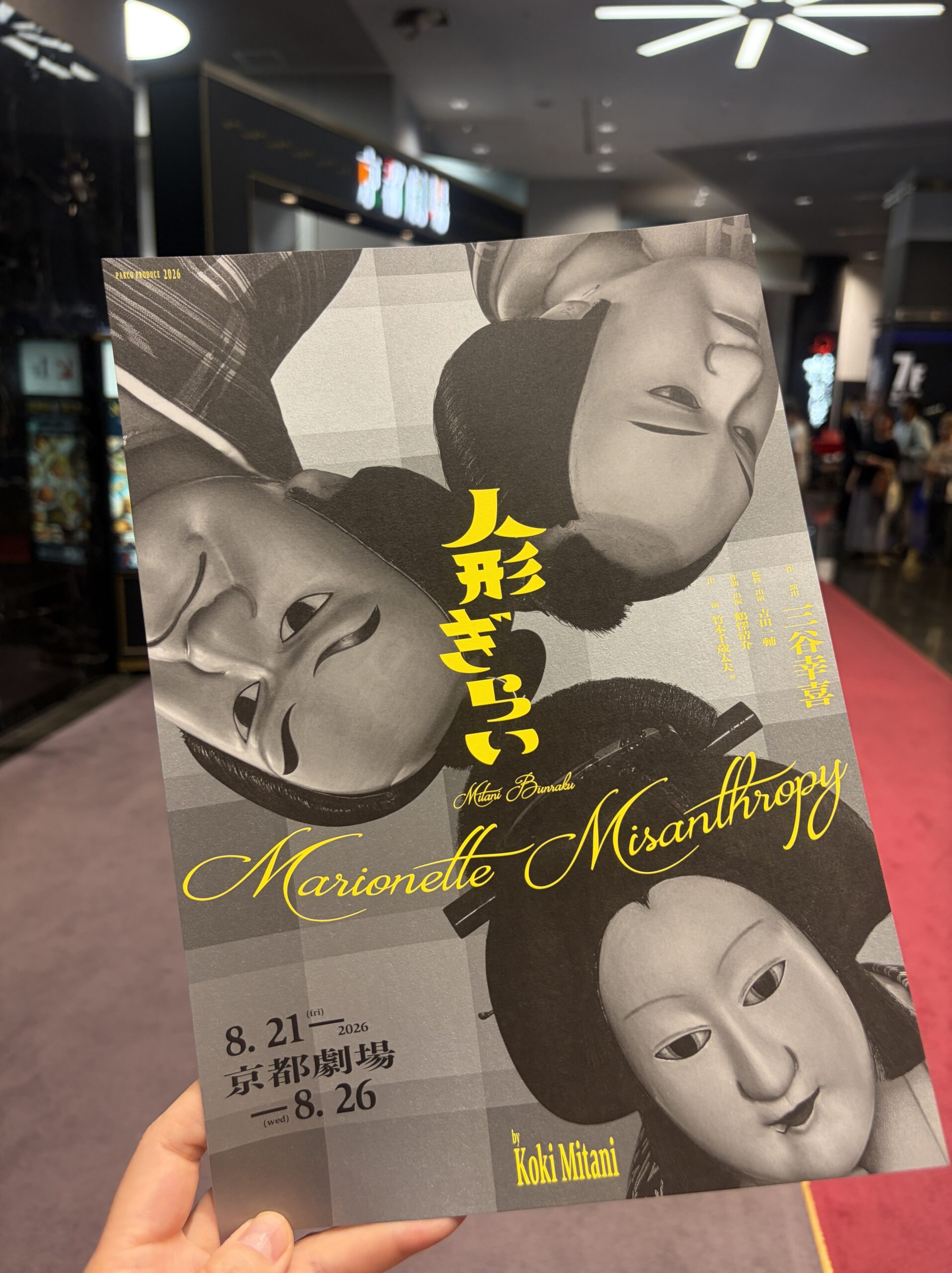
Here, the bunraku puppet is portrayed not as “a tool for playing roles” but as an actor in its own right, taking on many parts just like a human performer. That’s a perspective you would never encounter in classical bunraku — the premise alone is brilliantly fun.
No Floor?! A Stage Unique to Kyoto Gekijo
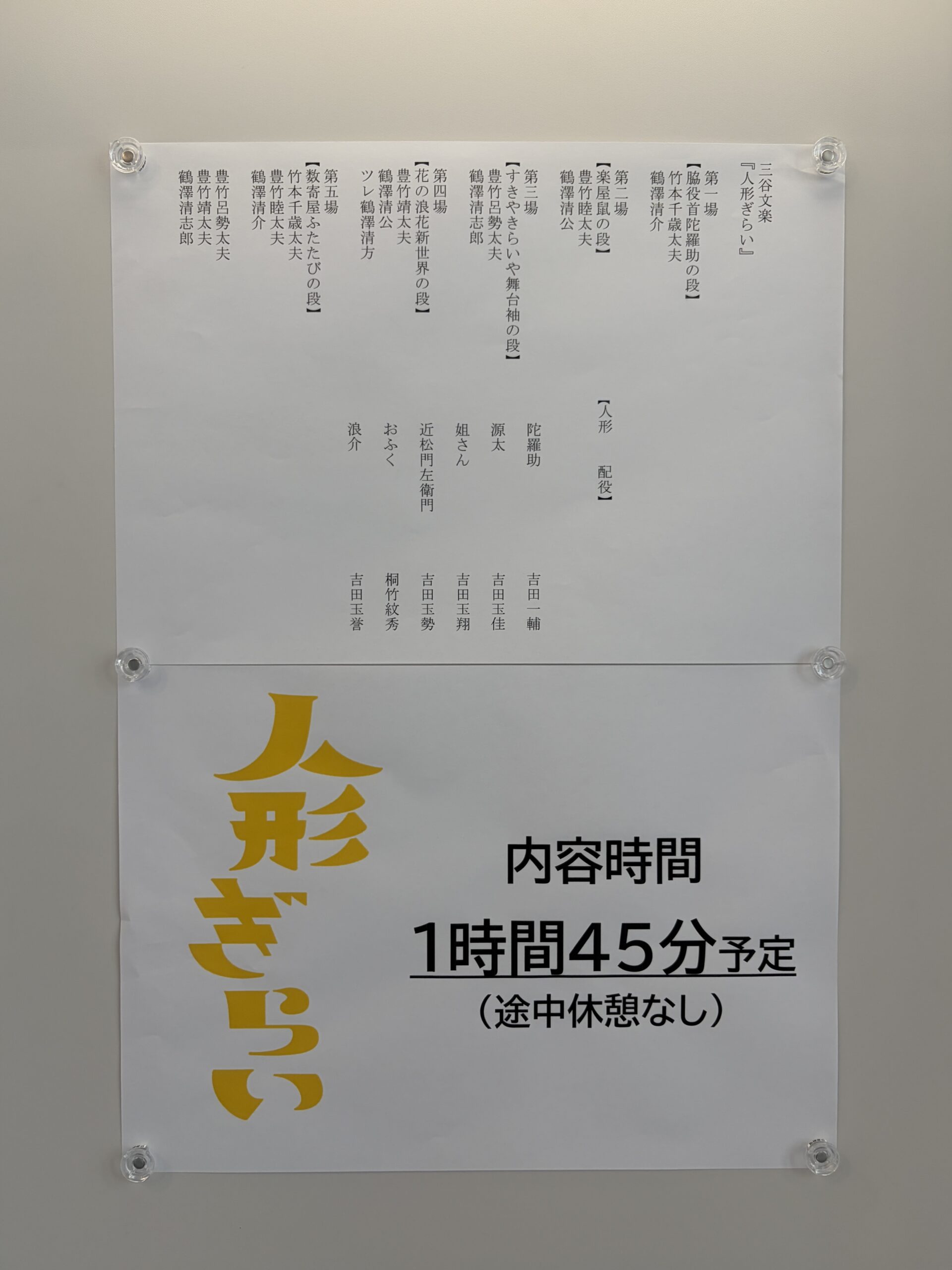
Before the curtain, I couldn’t find the usual yuka — the platform for the tayū and shamisen player. I wondered about their position, and then they appeared above the komaku, the small curtains used by the puppets as entrances and exits, near the area that would correspond to the misu-uchi in a regular bunraku theater. And on both sides, stage right and stage left! My favorite, Chitosedayū Takemoto, was on stage right (so was my seat. Perfect.)
By the way, at the usual yuka, when a tayū checks the puppets’ movements on stage, he steals a quick sideways glance — but in this arrangement, the tayū leaned forward to look over the stage. Watching the tayū lean out to follow the puppets, I could see how the three arts of bunraku — tayū, shamisen, and puppeteers — build the stage on mutual trust, and it moved me. In this setup, I imagine the puppets truly place themselves in the tayū’s hands . . .
“Lookism!”
Skateboards, bullet trains, Tsūtenkaku Tower, and USJ. The show is packed with modern words.
From the gravitas of the play-within-a-play straight into everyday speech in gidayū-bushi chanting — hearing words that would normally never, ever be used, delivered in that gidayū style . . . my heart was captured from the opening. Above all, when Chitosedayū — a kiri-gatari, the highest rank of tayū entrusted with the most important scenes — declaimed “Lookism!”, it was so charming it gave me chills.
Creating humor by planting the unconventional in the middle of a world’s conventions — that’s the very root of comedy . . . and I fell for it completely (laughs).
The Puppet Left Behind, and the Puppeteers Who Came Back
(*The following touches on the latter part of the story.)
Near the end, there is a scene in which the puppet, in despair, asks the puppeteers to just leave him there on the stage.
The moment the puppeteers’ hands let go, the puppet truly looks as if its soul has left. Watching the puppet left alone on stage, tears welled up: “Please, don’t leave him behind!”
And then the puppeteers came back. The instant their hands touched the puppet, I could see the soul return. This time, I cried from happiness.
For the puppet, the puppeteers are the ones who give it a soul; for the puppeteers, the puppet is a precious partner they breathe life into. They simply cannot be separated. Just remembering this scene brings tears to my eyes again . . .
Chitosedayū, and the Curtain Calls
Chitosedayū is wonderful in every way — his expressions as he chants, his voice, everything. Whenever he is on, I somehow end up watching him instead of the puppets . . . (which is, honestly, what always happens).
At the curtain call, the puppeteers, shamisen players, and tayū lined up to take their bows. The encore calls went on and on, and at the very end everyone waved to the audience — such a rare sight of them all, a feast for the eyes. And the charm of Chitosedayū waving! Thank you for a wonderful performance!
The Joy of Searching by Kashira
After this show, there was something I wanted to try: looking up a kashira’s performance history.
The National Theatre’s Cultural Digital Library has a “search by kashira” page, that lets you trace which roles each puppet head has performed over the years. It’s genuinely fascinating — do give it a try.
Search by kashira → Cultural Digital Library search by kashira
Final Thoughts
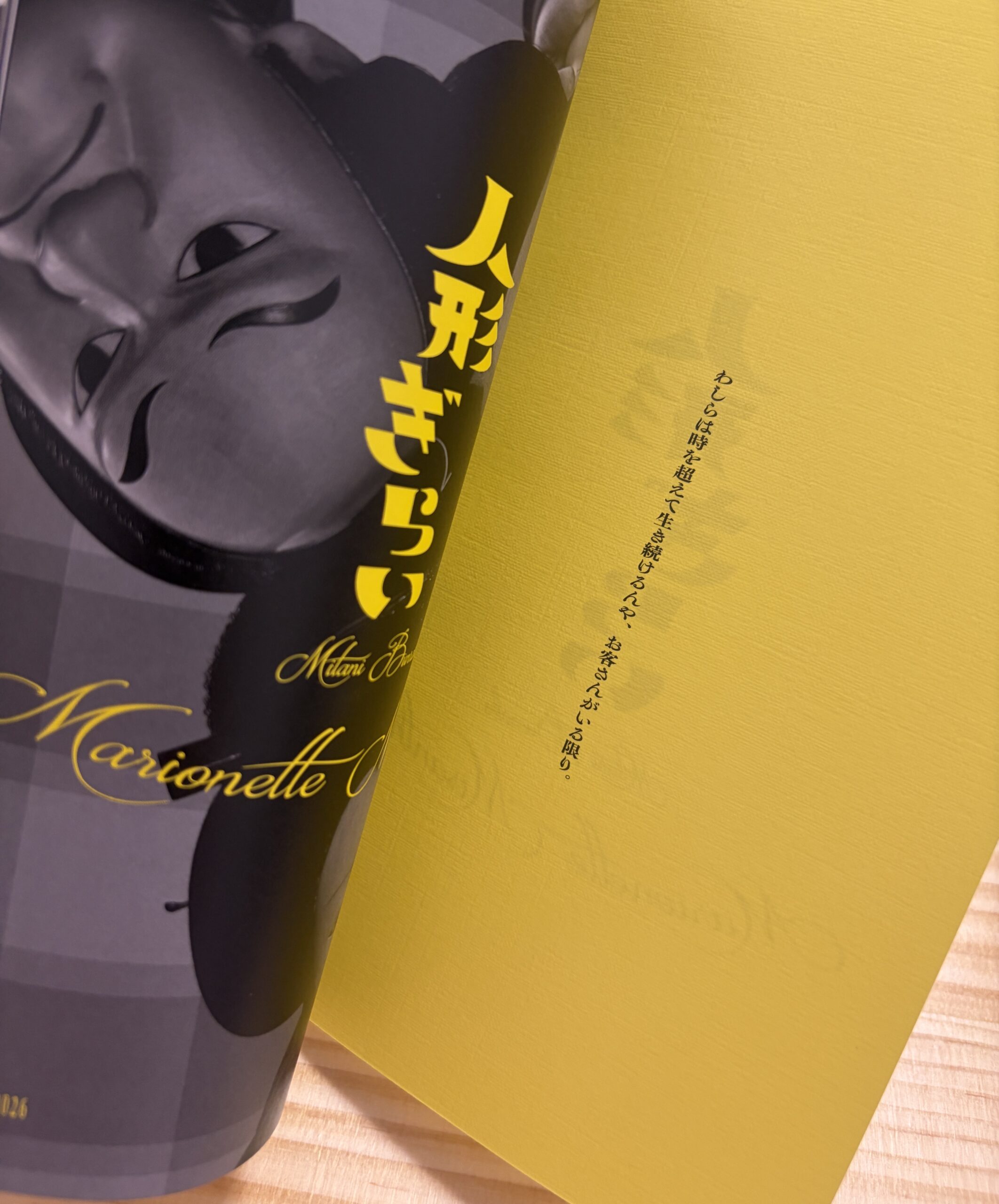
The moment I opened the program, this line
“We live on beyond time — as long as the audience is there.”
Through the puppeteers, tayū, and shamisen players passing down their art and tradition, puppets keep performing far, far longer than any human — across time. I think the way I see kashira will change from now on.
If you look at a kashira as an actor with a personality of its own . . . Miyuki and Ohatsu are both played by the same musume (young woman) kashira . . . “Wow, this girl has played so many roles!” — you might find yourself thinking. Actually, I already do.
The words “live on beyond time” reminded me of something: the restoration of Kumamoto Castle.
With inherited skills and modern engineering, and with respect for the builders of the past, the castle is being brought back to its original form. Castles and puppets alike live on across time, as long as there are people who carry on the craft and people who keep watching. I will keep watching, with all my heart!
It was a performance with the accessibility of a modern play, while still letting you fully savor the fascination of bunraku, born from the coming together of the three arts — tayū, shamisen, and puppeteers. Starting with a work like this and then moving on to classical bunraku sounds like a fine way in.
Mitani Bunraku, I want to see it again. I won’t ask for four times a year. Not even twice a year. Once a year is enough — please make it happen.
I want to see it one more time!