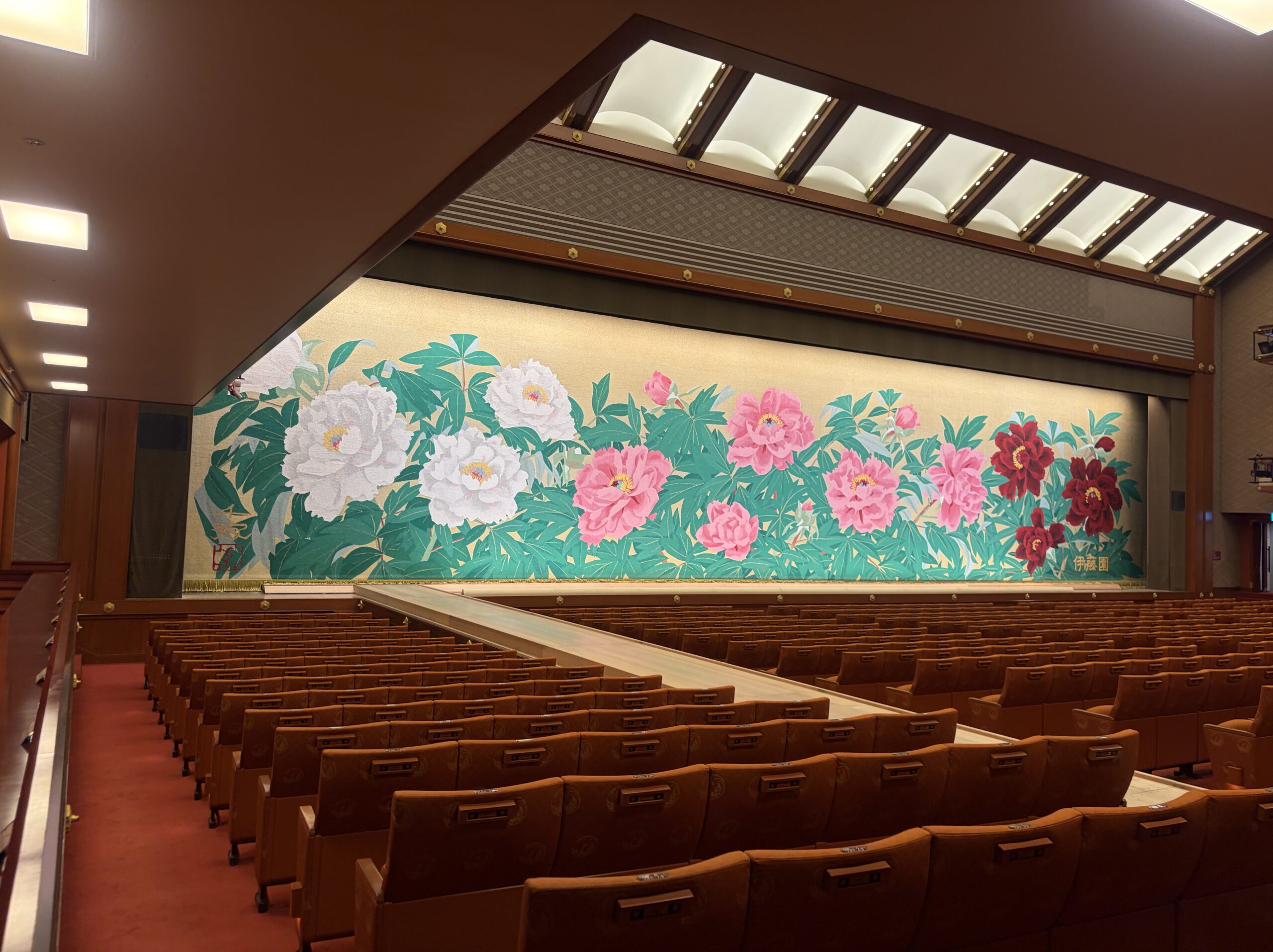
The doors had just opened, and there was no one in the auditorium. The peony-painted curtain, the hanamichi runway stretching toward the stage — for a moment it all felt like mine alone, and the evening already felt like a win before the curtain even rose.
What’s in Part 3?
Part 3 of the August Program is a triple bill of dance: “Bukaku Setsugekka” plus two jiuta-mai pieces, “Yuki” (Snow) and “Zangetsu” (The Lingering Moon of Dawn), performed by Tamasaburō Bandō. It starts at 7:00 PM and ends just before 9:00 PM — a perfect size for a night out. Three short pieces, each with a completely different flavor.
Little joys before curtain
Walking into the auditorium right after the doors opened, I found it nearly empty! The Kabukiza is usually packed, so getting to photograph it like this had me doing a small victory pose, alone.
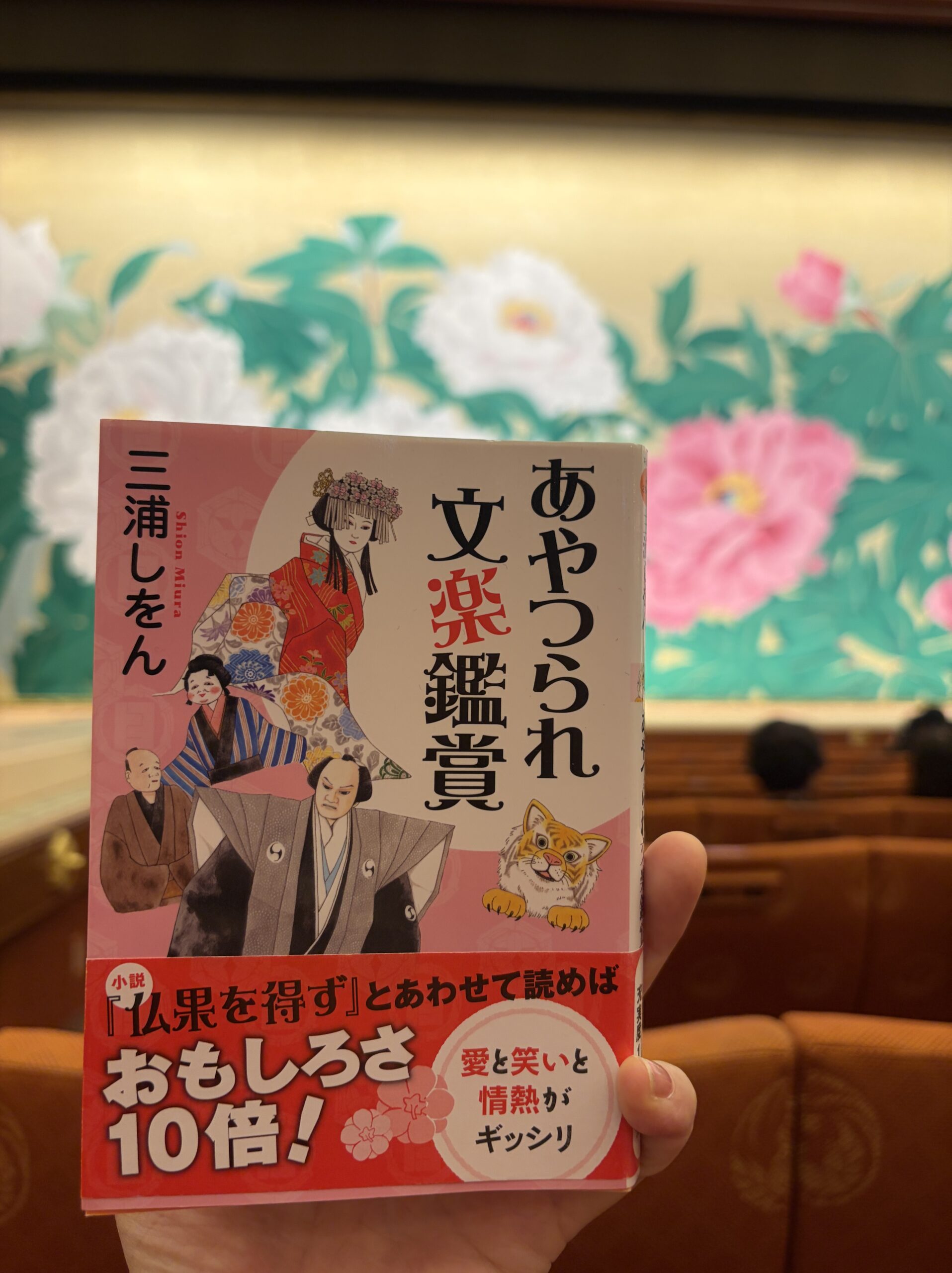
Then, reading time until curtain. My companion for the evening: Shion Miura’s “Ayatsurare Bunraku Kanshō,” a book about bunraku. Yes — the book I was reading at the Kabukiza was about bunraku, not kabuki (laughs). The chapters about Kanjūrō are so good I keep rereading them… Next up, I clearly need to read Kanjūrō’s own books ❤️
The Matsumushi duo stole the show
“Bukaku Setsugekka” is a dance in three scenes — snow, moon, and flowers. The highlight for me was the Matsumushi (pine crickets) danced by Kantarō and Chōzaburō. Those two together are almost too precious for words. Shichinosuke was beautiful as always, and Kankurō delivered his reliably funny turn. And Kantarō seems to have grown up again — so poised and elegant! I can hardly wait to see what comes next; October at the Heisei Nakamura-za can’t come soon enough!!!
One note: Part 3 barely uses the hanamichi at all. And there I was, sitting right next to it (laughs). Still, watching Kantarō appear and exit at the shichisan spot up close was a lovely consolation prize.
Tamasaburō’s “Yuki” and “Zangetsu”
Honest confession: I probably understand no more than 20% of jiuta-mai. But it was simply beautiful. Is “beautiful” not enough…? It’s probably not enough…
During “Zangetsu,” when the black backdrop shifted to pale blue, the blue around Tamasaburō looked slightly deeper to me. “Wait — can I see auras? I always thought I was ordinary, but may I introduce myself as ‘the aura-seeing type’ from now on? …No. I may not.” (laughs) It was probably an afterimage, but even that was part of the beauty. Such a mysterious, wonderful bit of staging.
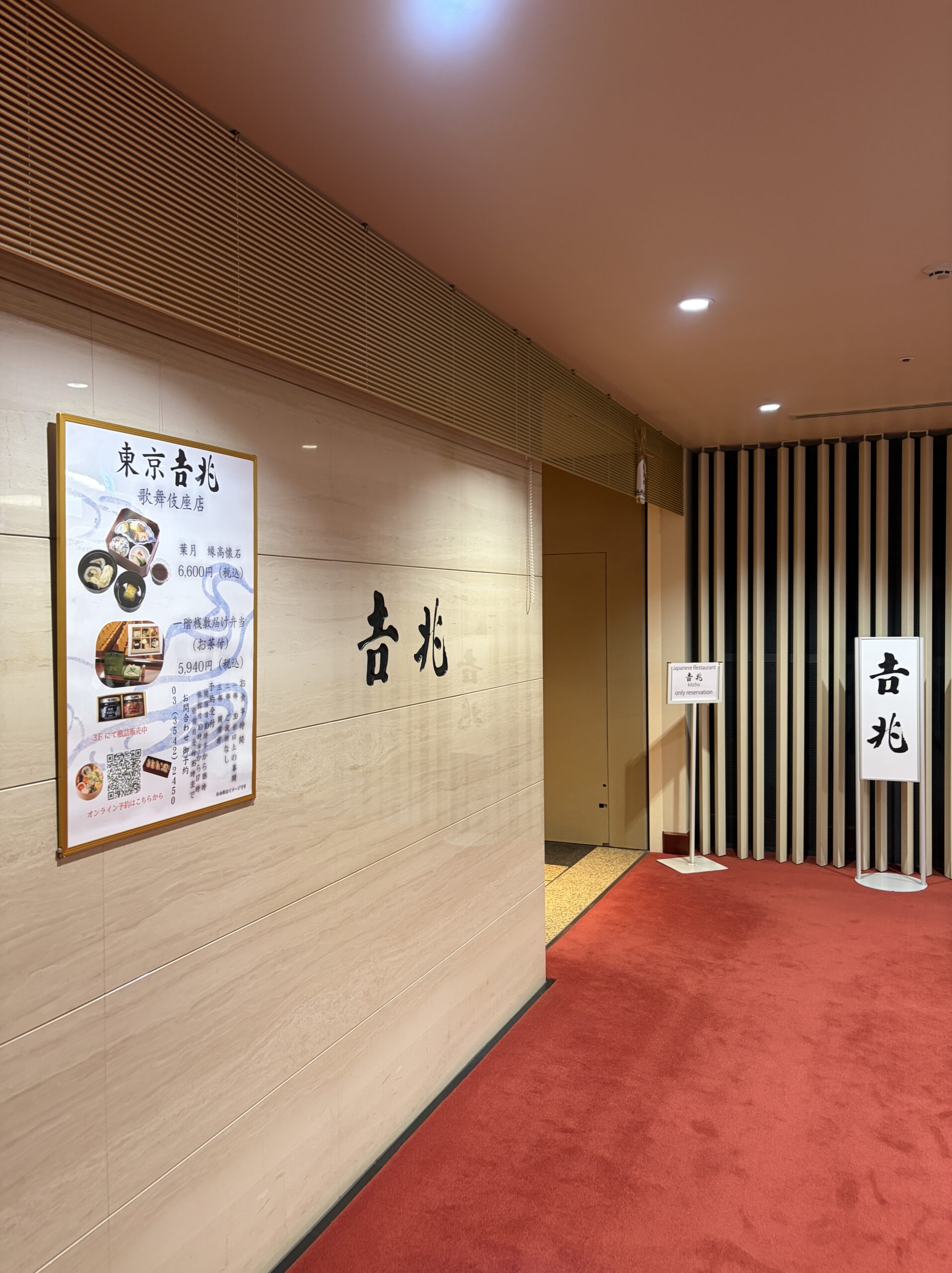
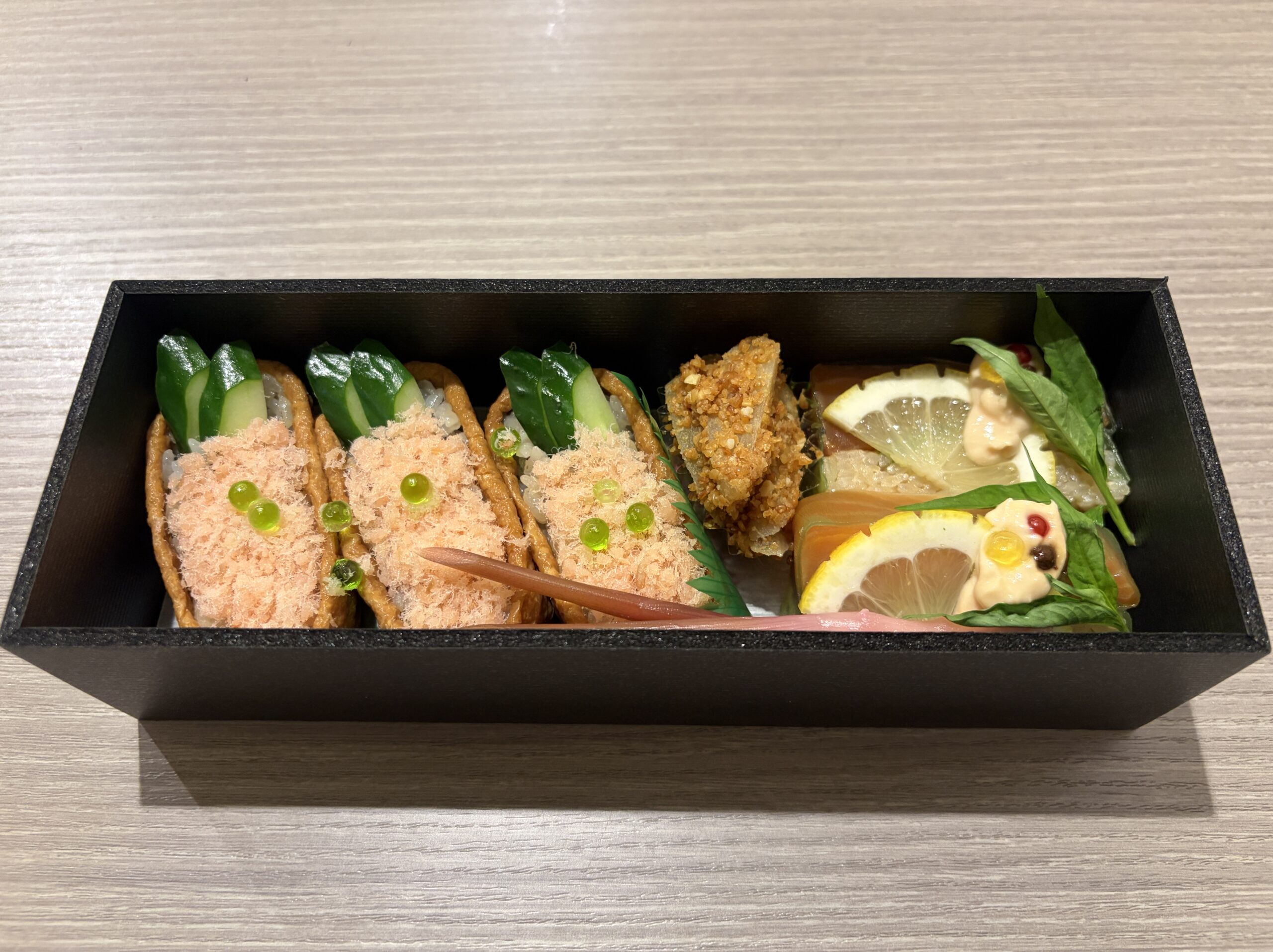
Intermission bento: Tokyo Kitcho’s Yukari Sukeroku-zushi
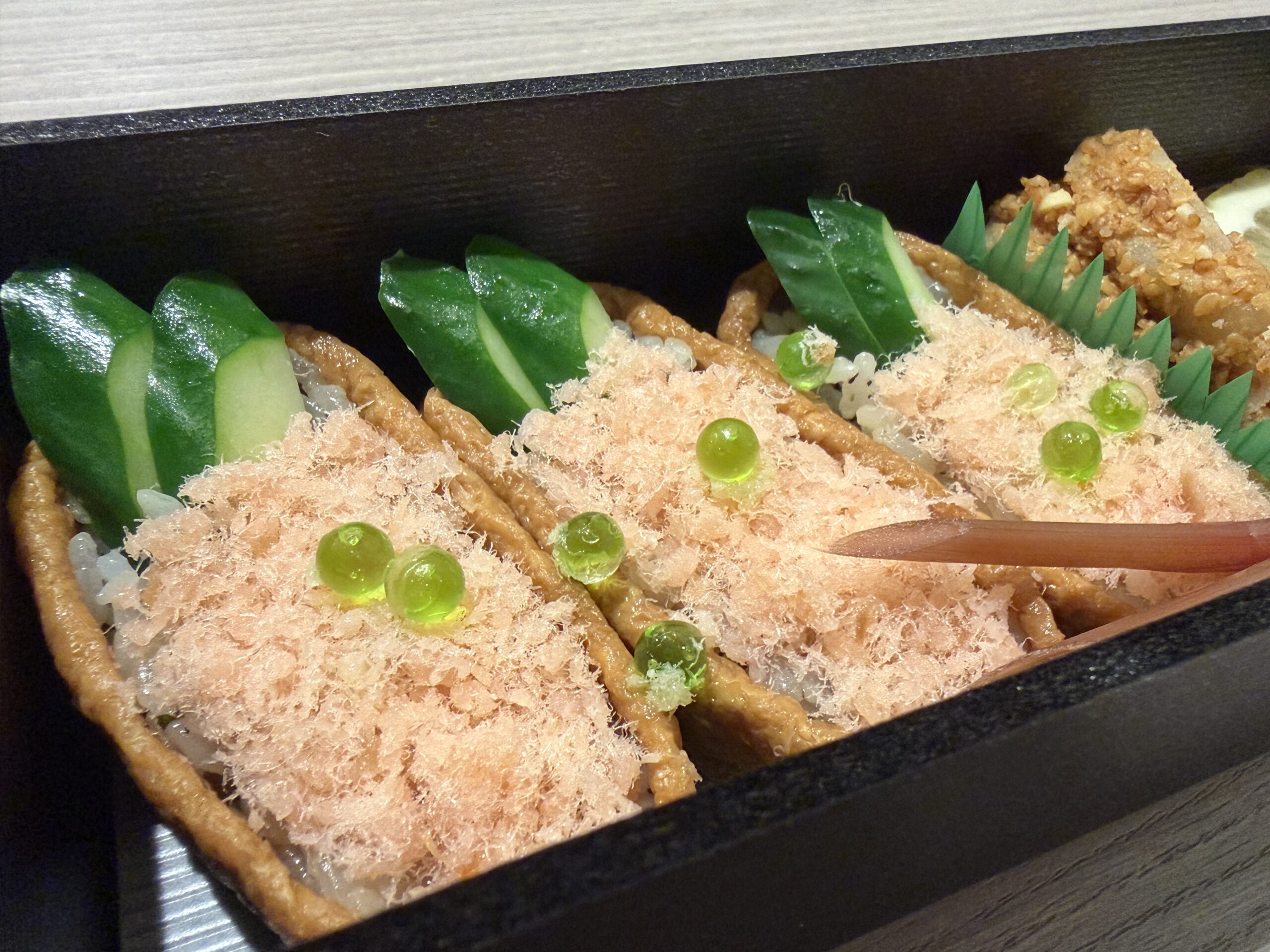
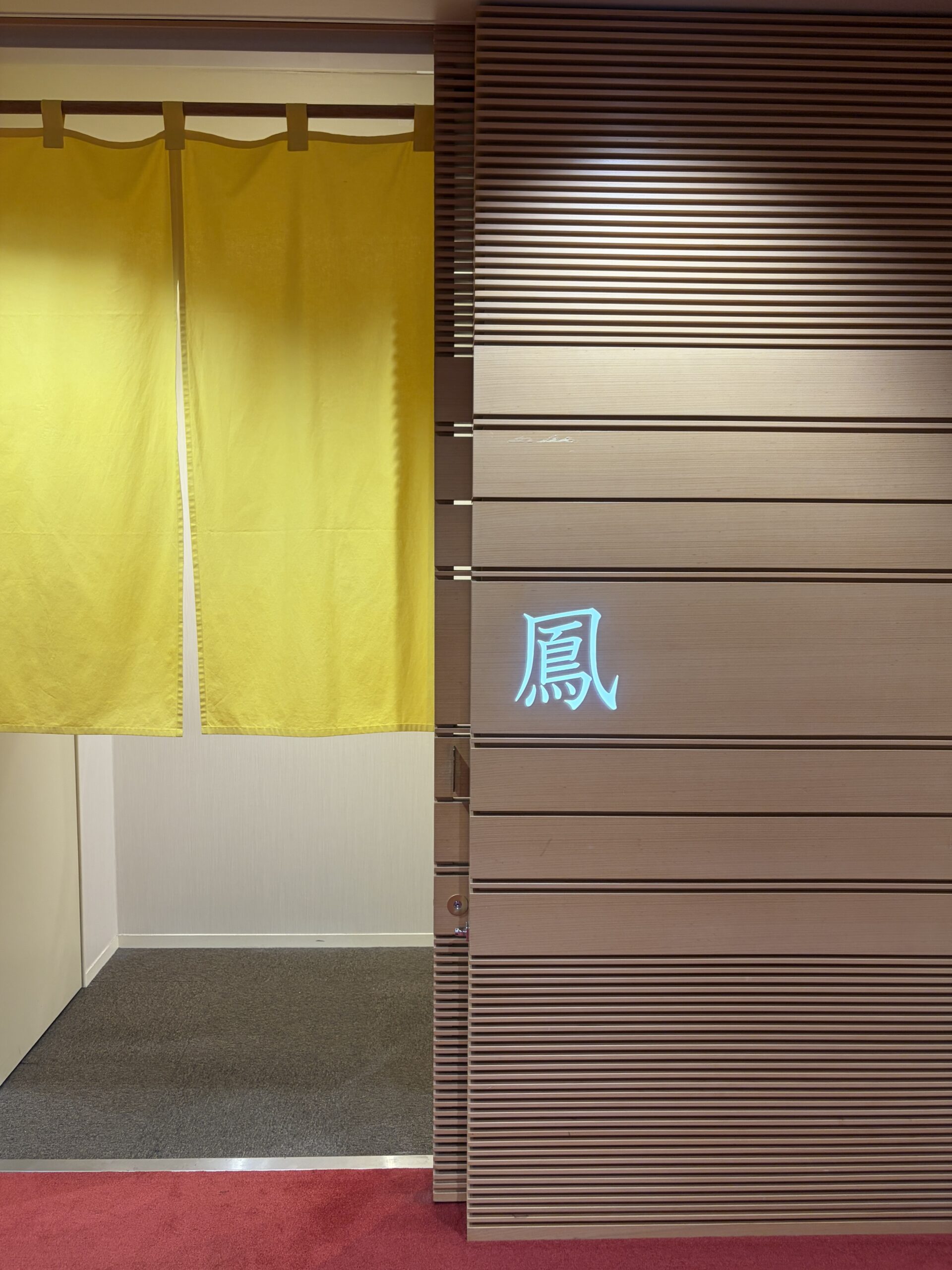
My intermission treat: a Tokyo Kitcho boxed bento called “Tokyo Kitcho Yukari Sukeroku-zushi,” reserved online in advance. I picked it up during the first 30-minute intermission and ate at “Hō,” the second-floor lounge 🍱 It’s usually crowded, but that night there were plenty of open seats. Lucky ⭐️⭐️⭐️
The salmon sushi was delicious, and the portion was just right — too much and I can’t finish it, so this size is a blessing. Also: green ikura exists? What even is this?!
Rain, lockers, and Kabuki Nyantaro
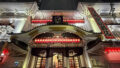
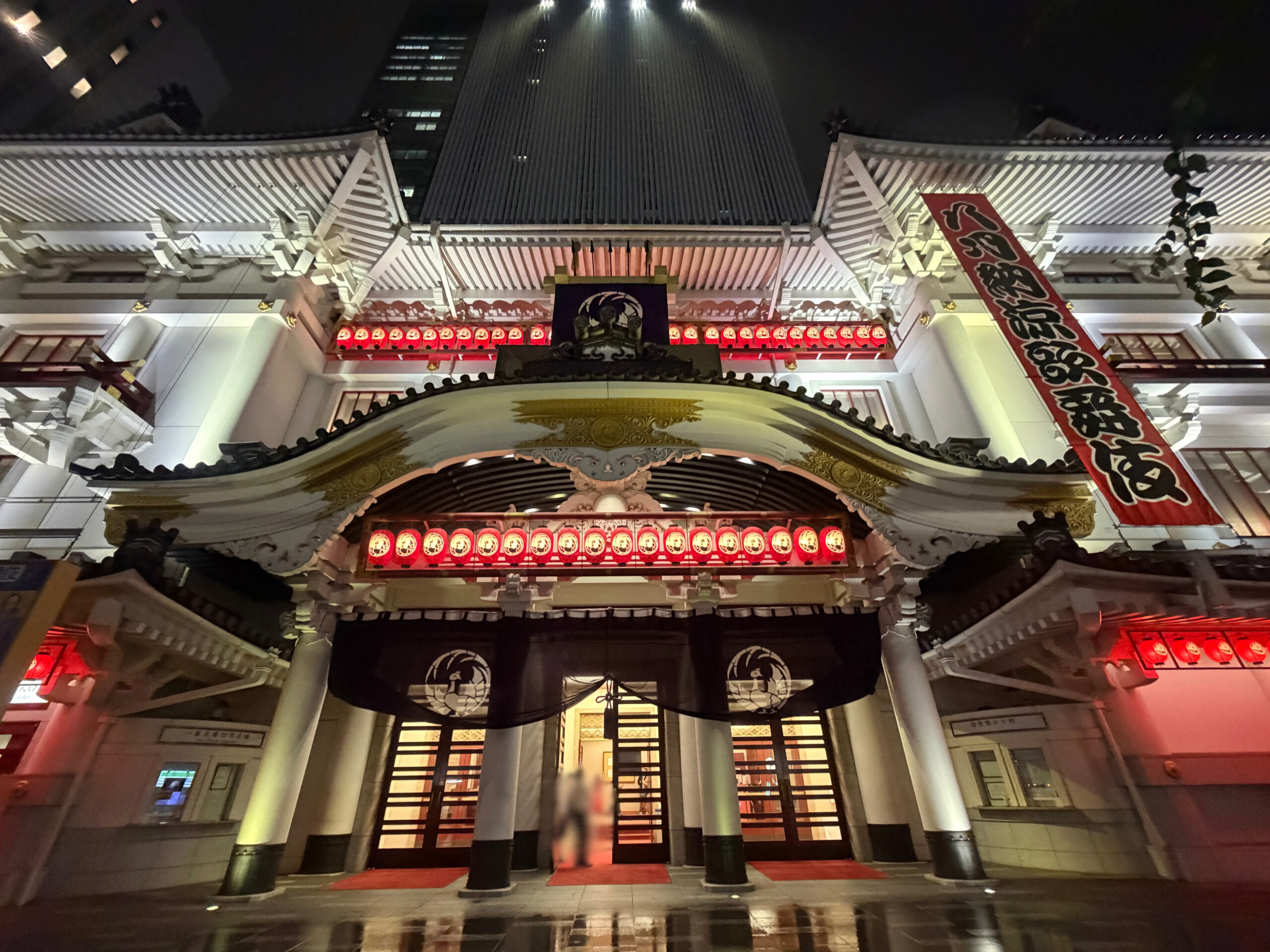
At the second intermission, I debated going up to the third floor for a Medetai-yaki (the theatre’s famous sea-bream-shaped cake), decided the stairs were too much effort, and stepped outside instead. Straight into a downpour! The Kabukiza at night, its lights reflecting off the wet pavement, was rather beautiful — but I got soaked just taking a few photos. A typhoon passing through, maybe? 🌀
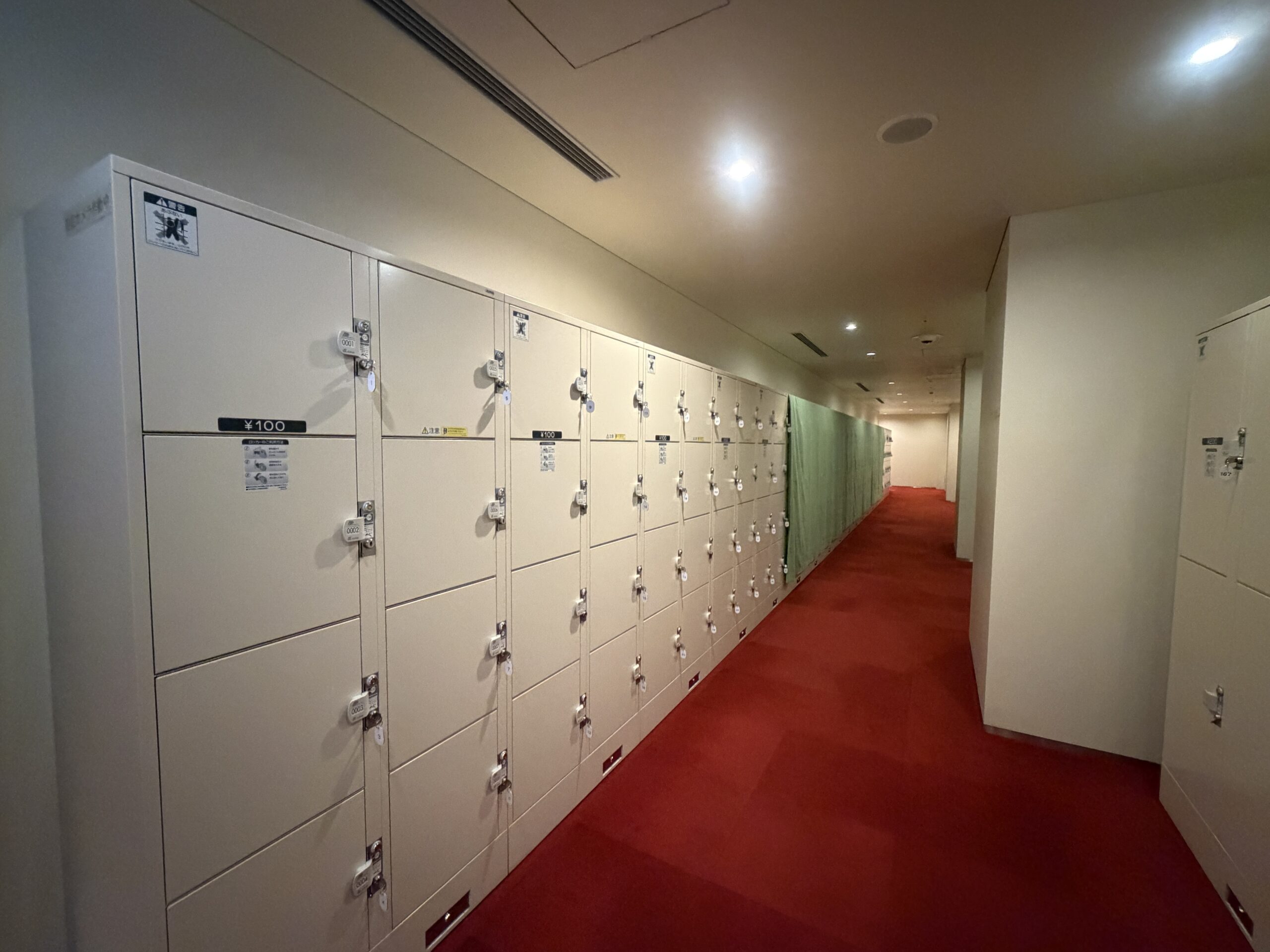
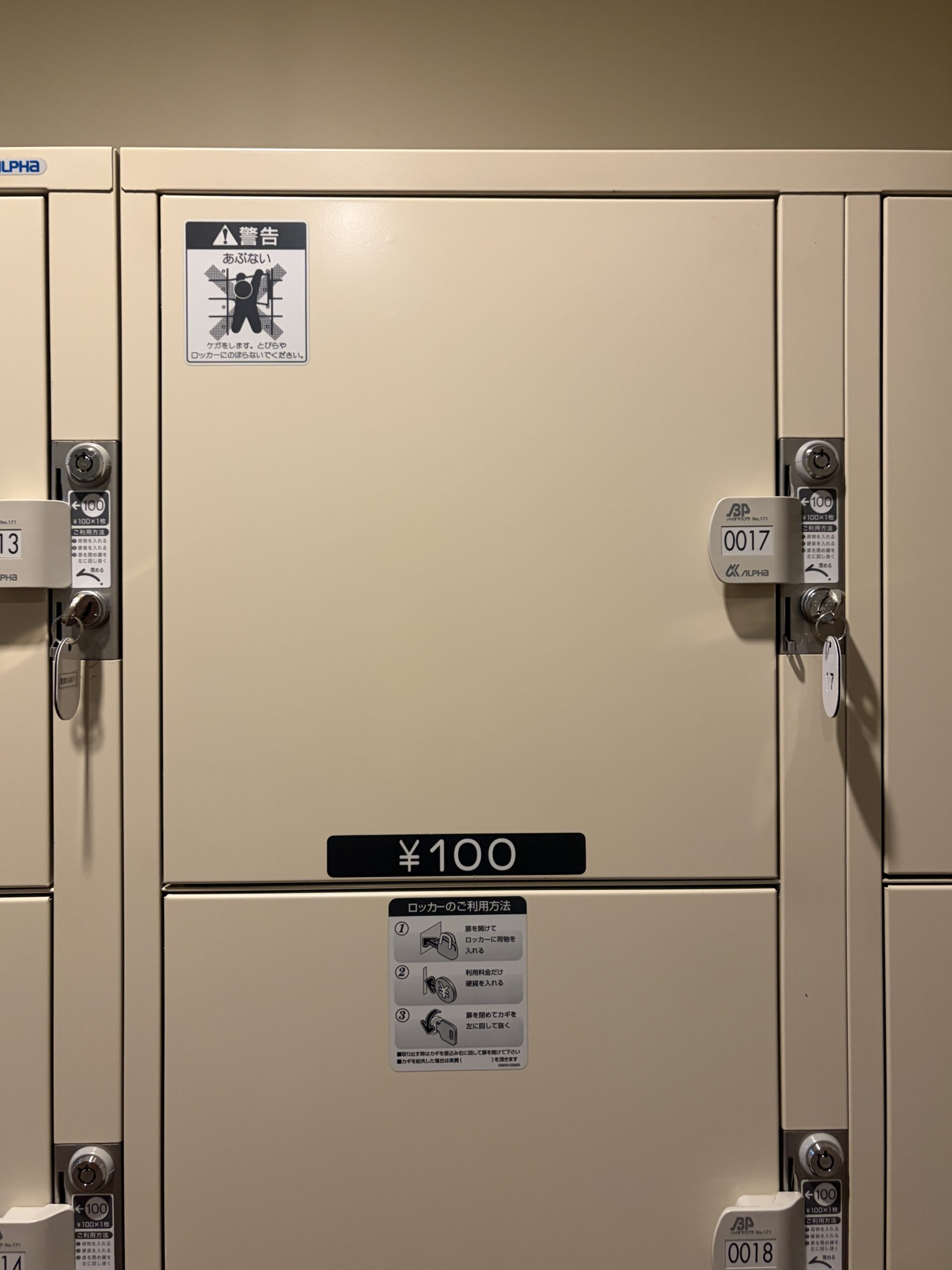
By the way, there are coin lockers in the Kabukiza basement: 100 yen for the standard size, 200 yen for the slightly larger ones. Handy on days when you’re carrying a lot.
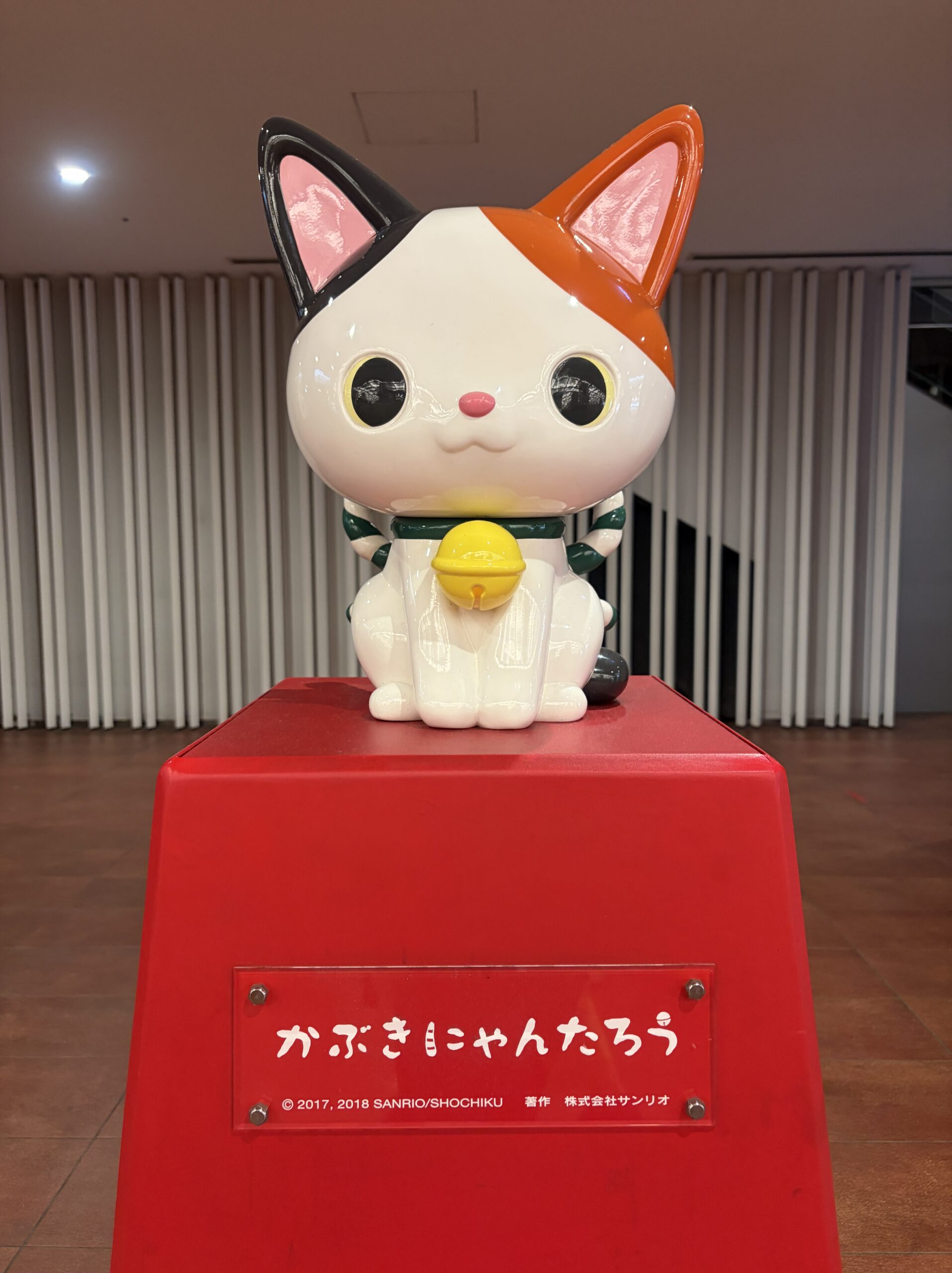
And on rainy days, you can walk straight to Higashi-ginza Station through the underground passage. That’s in which I found a big statue of Kabuki Nyantaro, right in which his merchandise is usually sold. What an adorable little creature… Tomorrow I’m bringing one home. He’s by Sanrio — who knew!
Final thoughts
There’s clearly a depth to classical dance that “how beautiful” alone can’t reach — a feeling not unlike standing in front of contemporary art. Time to study up on dance.
As always, today was the best!